





A group of women sitting and standing wear “Local 23-25” hats and hold pro-union picket signs. The group looks off camera-left.
Module 4: The Strike
Did the collective action of New York City Chinatown’s Chinese American garment workers positively change their working conditions and their lives?
The stories of the garment industry, the union, and the immigrant workers weave together in an extraordinary moment in New York’s Chinatown in 1982. Immigrant women organized and attended two enormous rallies and a strike that summer, leading to a victory with long-lasting impacts on the community. “We are one” was a rallying cry during the strike. A common Chinese saying that was used to translate it was 萬眾一心, which literally means “thousands of people, one heart.”
The International Ladies’ Garment Workers’ Union (ILGWU) had just negotiated an industry-wide contract renewal with hundreds of employers. The agreement covered nearly 150,000 garment workers along the entire East Coast. All the employers agreed to the contract except for a group of contractors belonging to a Chinatown employers’ association. This obstacle ultimately led to the workers in their shops coming together in unprecedented ways. The groundwork had been laid by the union in the preceding decade and the result was extraordinary.
In this module we learn what sparked the idea of the garment workers’ strike and the preparations that led to the very brief but successful strike in 1982.
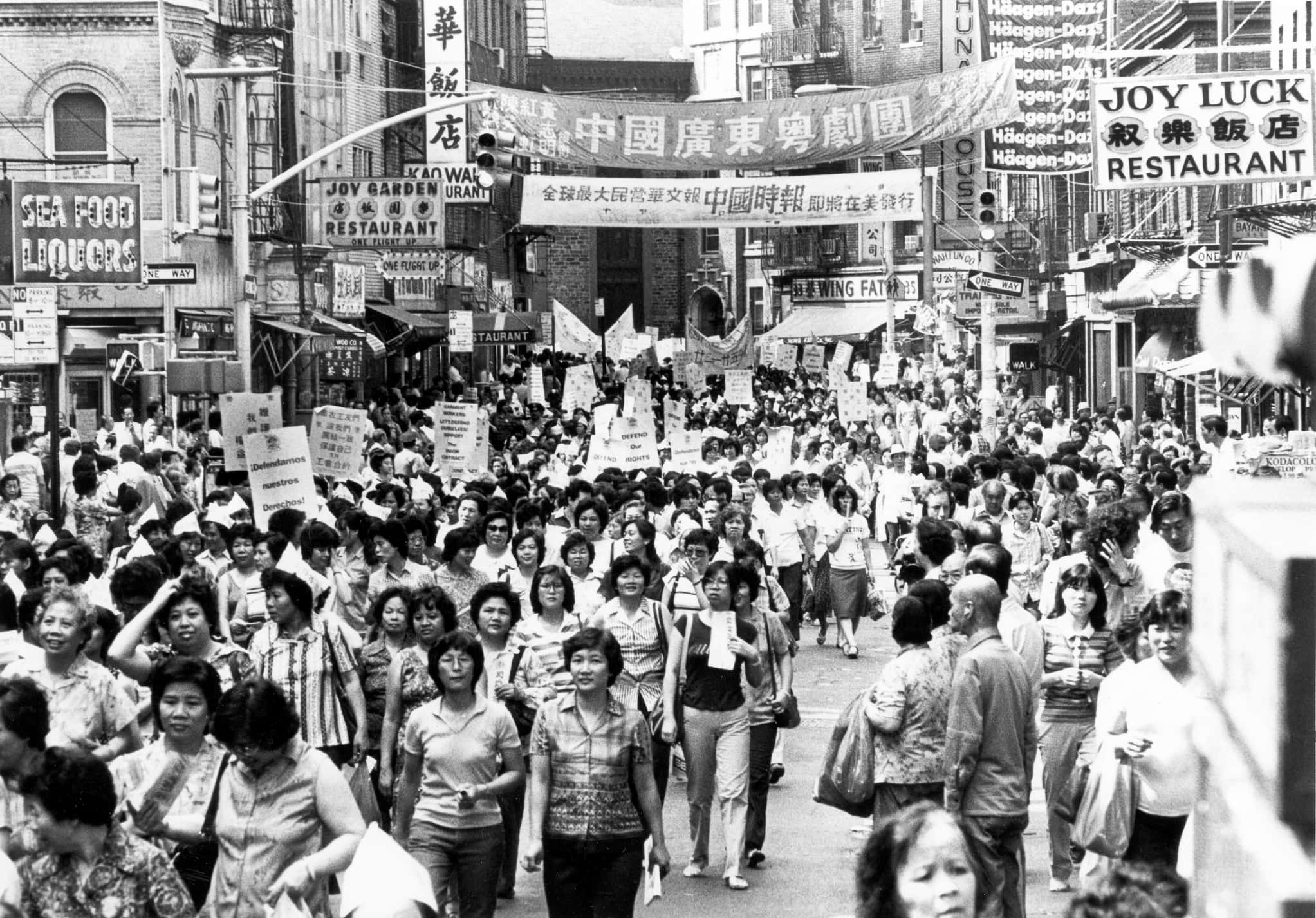
Image 47.04.01 — Twenty thousand garment workers and their supporters marched through New York City’s Chinatown following a rally in Columbus Park on July 15, 1982.
Why was there a garment worker strike in 1982?
How did the union and the workers socially, politically, culturally impact each other?
What did it take to build the solidarity that resulted in victory?
Before the Strike
Striking was not the first option for the union and the Chinatown community members. They tried several different strategies in the months leading up to the summer strike. Different pressures and attitudes made bargaining difficult.
First, many of the Chinatown contractors felt neglected and underrepresented in the various employers’ associations that negotiated with the union. The garment manufacturers had already settled their union contract and threatened to take their work out of the Chinatown factories if Chinatown contractors refused to bargain with the union. This meant that contractors and their workers would all lose their jobs. In the years before 1982, Chinatown contractors were already feeling the squeeze of lower prices and smaller orders from manufacturers that had accepted the union’s contract. Some employers and contractors felt they would be better off without the union, its rules, and regulations.
Second, many Chinatown shop owners were men. They believed that immigrant women, many of whom did not speak English, were unlikely to support the union. They felt that ethnic loyalties between Chinese immigrant workers and Chinese employers should be stronger than the common interests of the diverse garment workers.
For months, the union tried to negotiate with these shop owners. They tried to extend their existing contract to buy time. Union organizers went to the employers who would not sign the contract to persuade them individually, shop by shop. Their efforts paid off: a majority of Chinatown contractors agreed to the contract. However, pushback from the employers who did not agree to the contract grew, and garment workers and union staff increased the pressure on these holdouts.
The workers and their union formed an action group, the Committee to Defend the Union Contract. They saw that the holdout contractors were using an “us versus them” mentality to divide the workers from the non-Chinese union leaders and staff. Upon learning this, hundreds of garment workers volunteered and signed up thousands of ILGWU members to support the contract.
How were they able to get such large numbers? They relied on relationships developed in their shops—time they had spent working next to one another, eating together, and talking about the union and the bosses. They printed leaflets in English and Chinese, called people, and reached out to the Chinatown media. The Chinatown workers were aware that they would lose many rights and benefits if the union contract was not renewed.
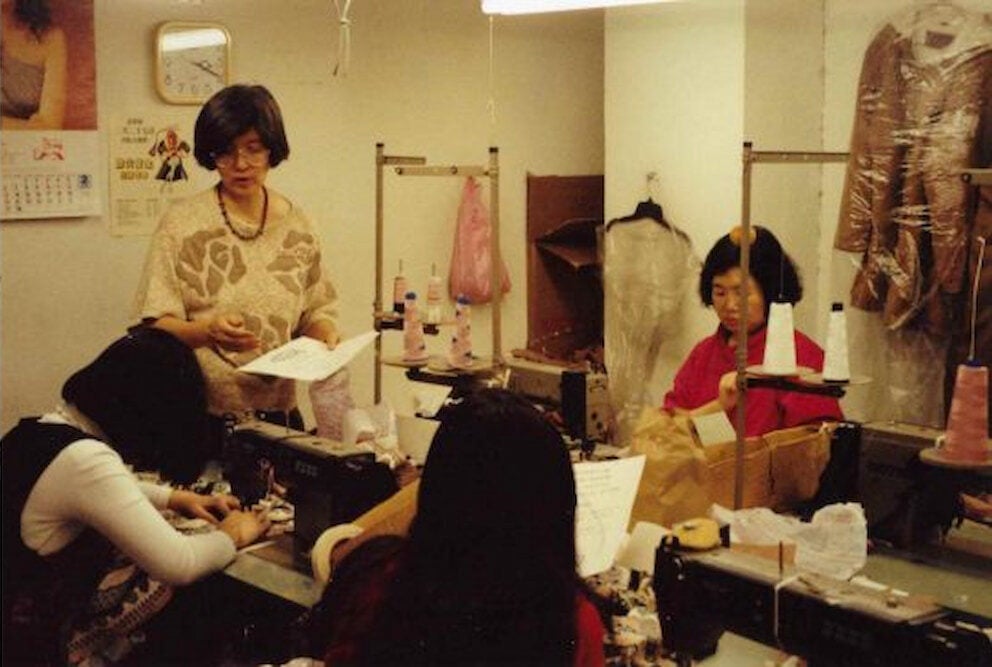
Image 47.04.02 — May Chen (standing) distributes leaflets to New York Chinatown garment workers as part of the mobilizing effort to support union programs.
To Strike or Not to Strike?
Union leaders hoped to reach an agreement using various organizing and negotiation strategies before resorting to a strike. When employees strike, they stop work in protest of unfair labor conditions or other problems in their workplace. By striking, workers draw greater attention to these issues and show both their employers and the public the importance of their jobs. Union leaders saw striking as a last resort. But by the end of spring 1982, a significant number of Chinatown employers still refused to come to an agreement. The union planned a rally, or a large march, to show the strength of the workers and to warn employers that there could be a strike.
Reflection Question
Can you give an example of how a convincing threat—of a strike, or maybe of a new job offer, or something else entirely—can be a vital part of any negotiation?
In some shops, garment workers were more eager to strike than ILGWU leaders, who assumed it would be challenging to mobilize the Chinese women. But on the contrary, garment worker and union organizer Katie Quan remembered how workers would press a dime into her palm and push her to a phone booth, telling her to call the union and demand a strike. Others enlisted their English-speaking children to call the union to make the same demand. A few groups of workers went on a “wildcat strike” in their shops—unsanctioned strikes organized by workers without the approval or support of their union’s leadership.
Workers and the union built momentum for contract negotiation. They relied on broad relationships in the factories, strengthening ties to other community organizations, and ensuring they were doing good for all the Chinatown families. Katie Quan described how the women in her shop worked together to get their demands met:
“At the meeting the union officials did not promise to strike, but they did ask for our help in mobilizing for a rally, and looked a bit surprised when all of the women in my shop volunteered to pass out leaflets. The next day at 5 p.m., we all turned off our machines, picked up Chinese leaflets from the union’s staff, and fanned out to different parts of Chinatown. For the first time the community was deluged with dozens of immigrant Chinese women with plastic shopping bags full of leaflets who were talking up a storm about the need to come to a rally.
A couple of days later one union staffer called to ask a few of us to be on a radio program that would be broadcast to most garment factories. My coworkers were very group-oriented, and they decided that if anyone was to go, the whole shop would, so we all turned off our machines and walked across Chinatown to the radio station which was located in an old tenement building. The stairwell was so narrow and there were so many of us that it seemed like the hordes had descended on the radio station. The station manager thought we were protesting his coverage of our labor dispute and started freaking out. After we calmed him down, some of us stepped up to the microphone, and in very rough-hewn village dialects, expressed our feelings that the contractors were being unreasonable in not signing the contract, and called on other garment workers to come to the rally to support the union’s efforts to secure a good contract.” 1
The Committee to Defend the Union Contract galvanized support from workers and important community groups such as the Chinatown History Project (now the Museum of Chinese in America), the Asian American Legal Defense and Education Fund (AALDEF), a number of churches, and other advocacy groups. As more people in the community showed support, more employers signed individual contracts. But there were still holdouts, so plans for the rally progressed.
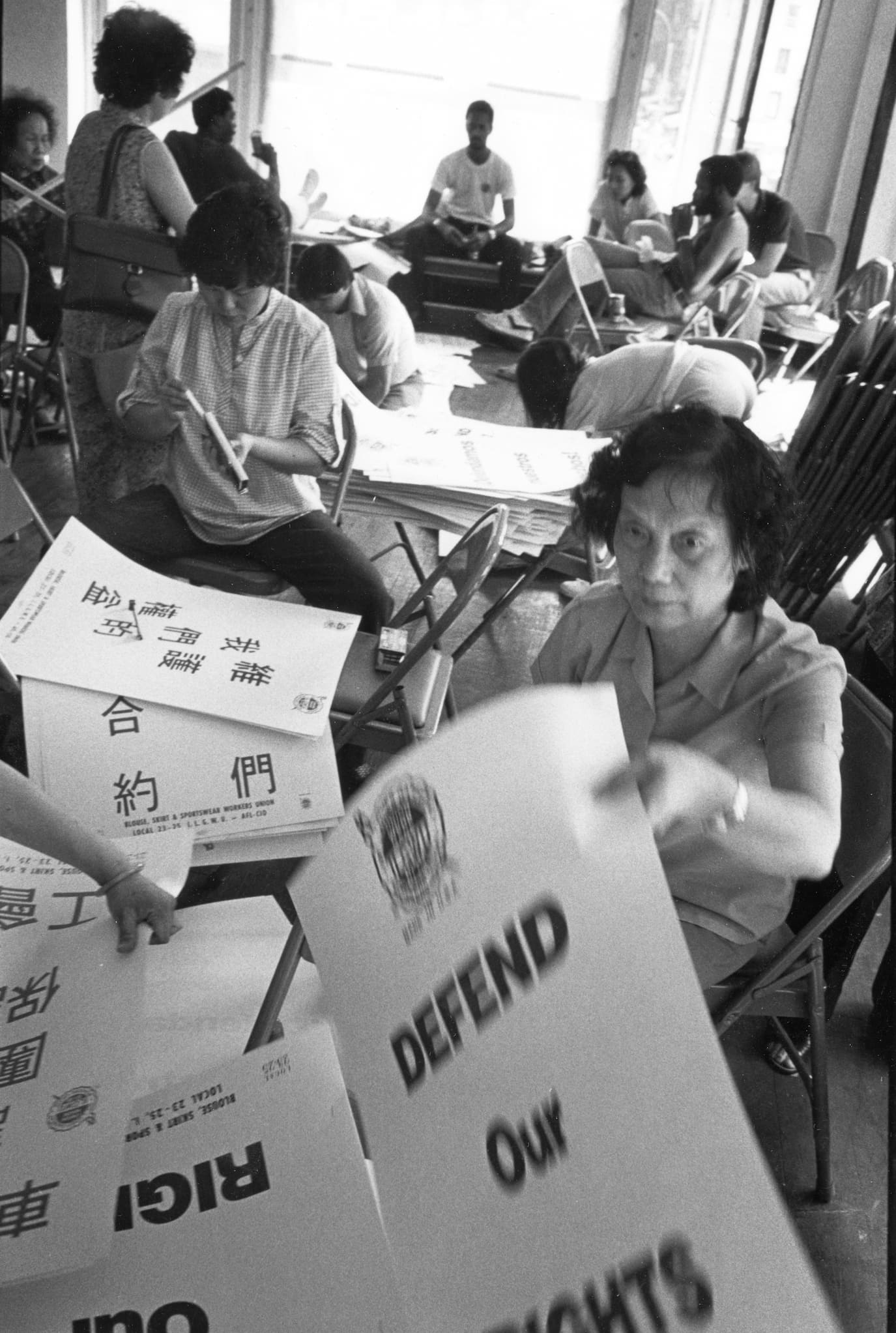
Image 47.04.03 — Worker volunteers, members of the Committee to Defend the Union Contract, mobilize to make signs for the Columbus Park rally in New York City’s Chinatown.
The union’s preparation paid finally off. A rally was held on June 24, 1982 in Columbus Park, a meeting place for the Chinatown community and scene of other protests over the decades. It was among the largest gatherings in the history of the Chinatown community, with twenty thousand garment workers who skipped work that day, together with their supporters pouring into the park. They demanded a contract equal to the one garment workers across the country had. Speeches from union and worker leaders rang out in English and Chinese. The slogan “We are one!” captured the spirit of the enormous crowd in the park. The chant was heard over and over.
Activist and shop representative Shui Mak Ka and union organizer Alice Ip gave rousing speeches. Mrs. Ka quoted a line from a poem by Chinese revolutionary leader Mao Zedong as she called for unity: “It is not yet spring unless all flowers blossom.”
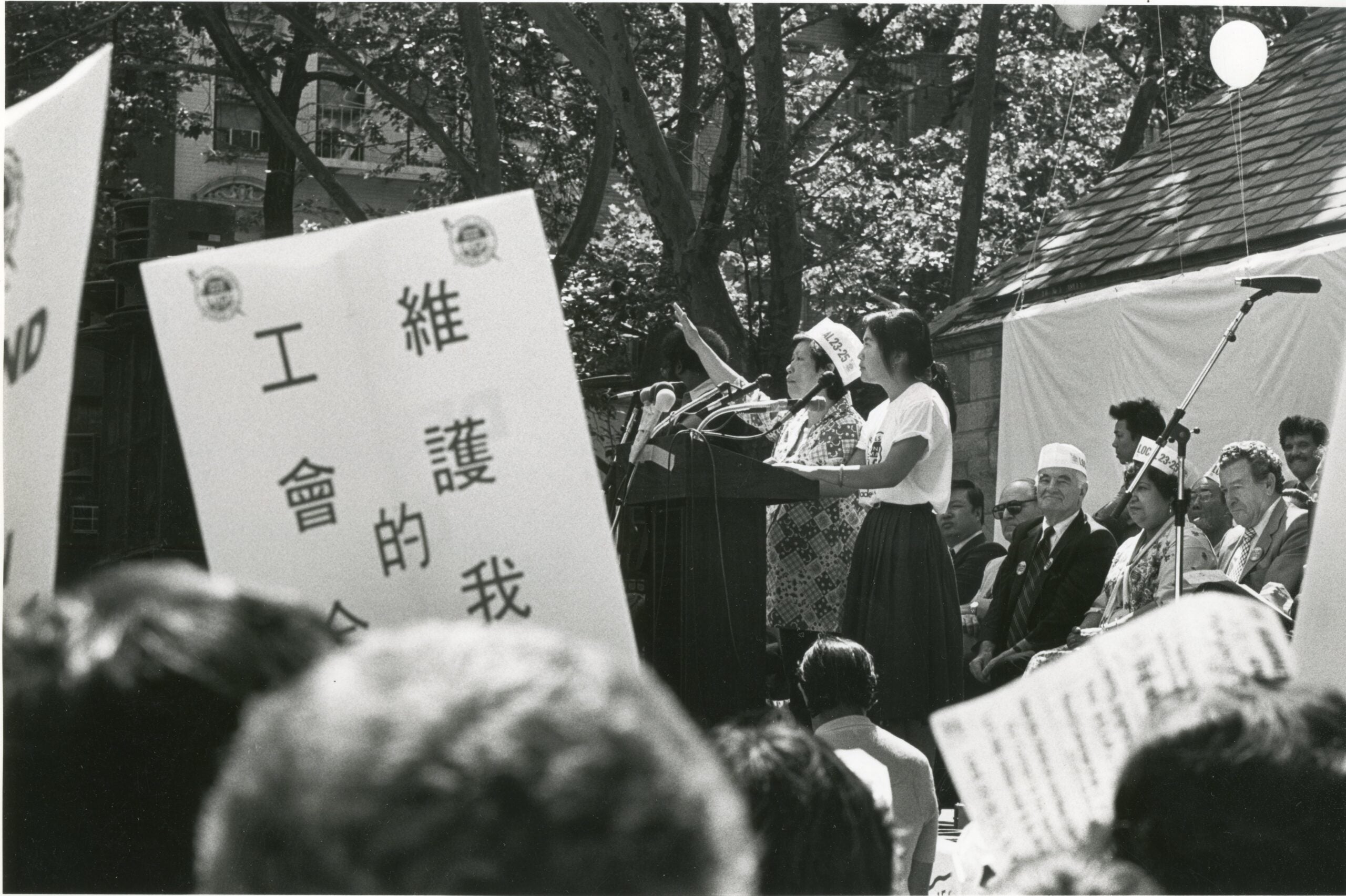
Image 47.04.04a — Alice Ip spoke at the rallies in Columbus Park in New York City’s Chinatown on June 24 and July 15, 1982: “The workers all know how hard it is to make a living. We will struggle to the end until we win!”
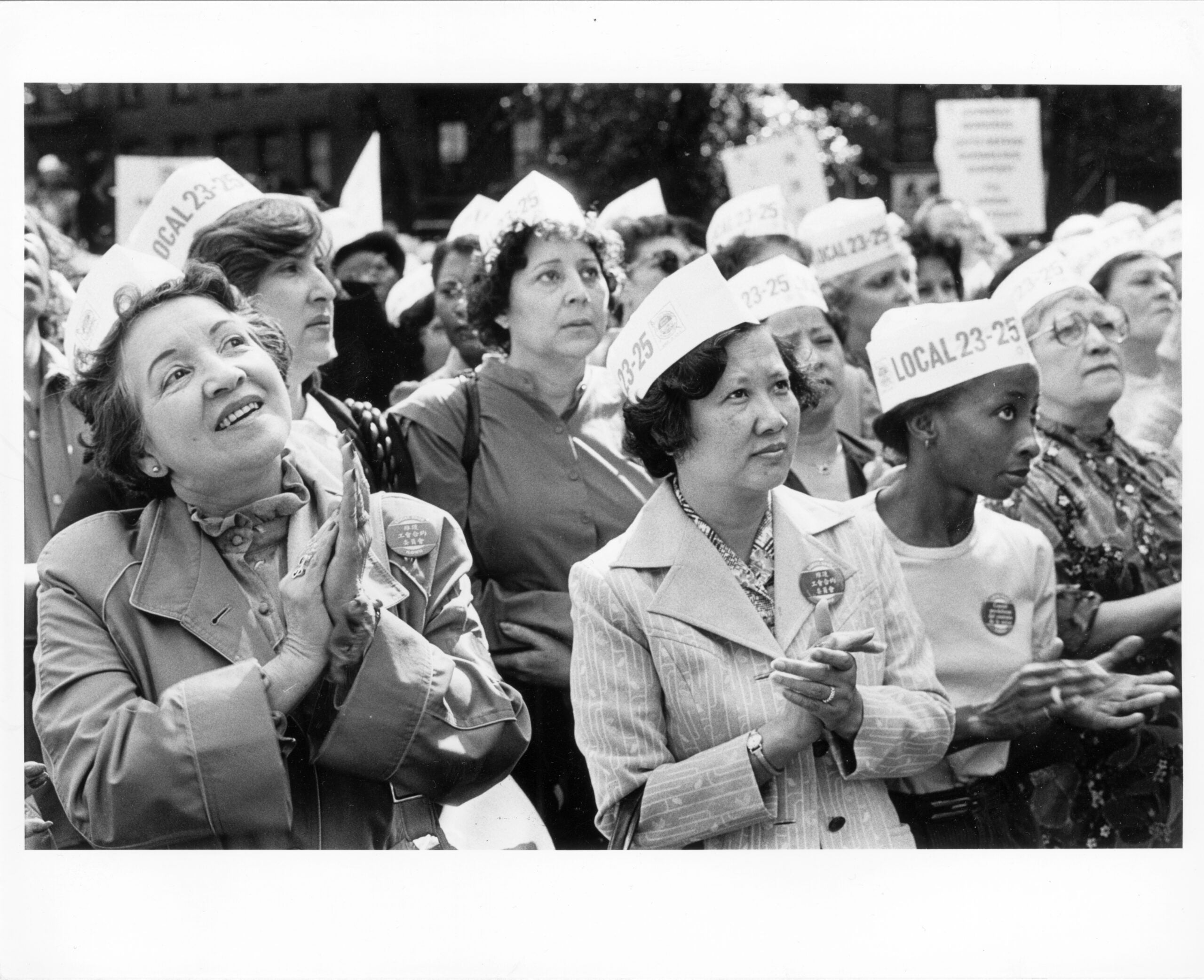
Image 47.04.04b — A multiracial group of union supporters listen to the speeches at the Columbus Park rally in New York City’s Chinatown.
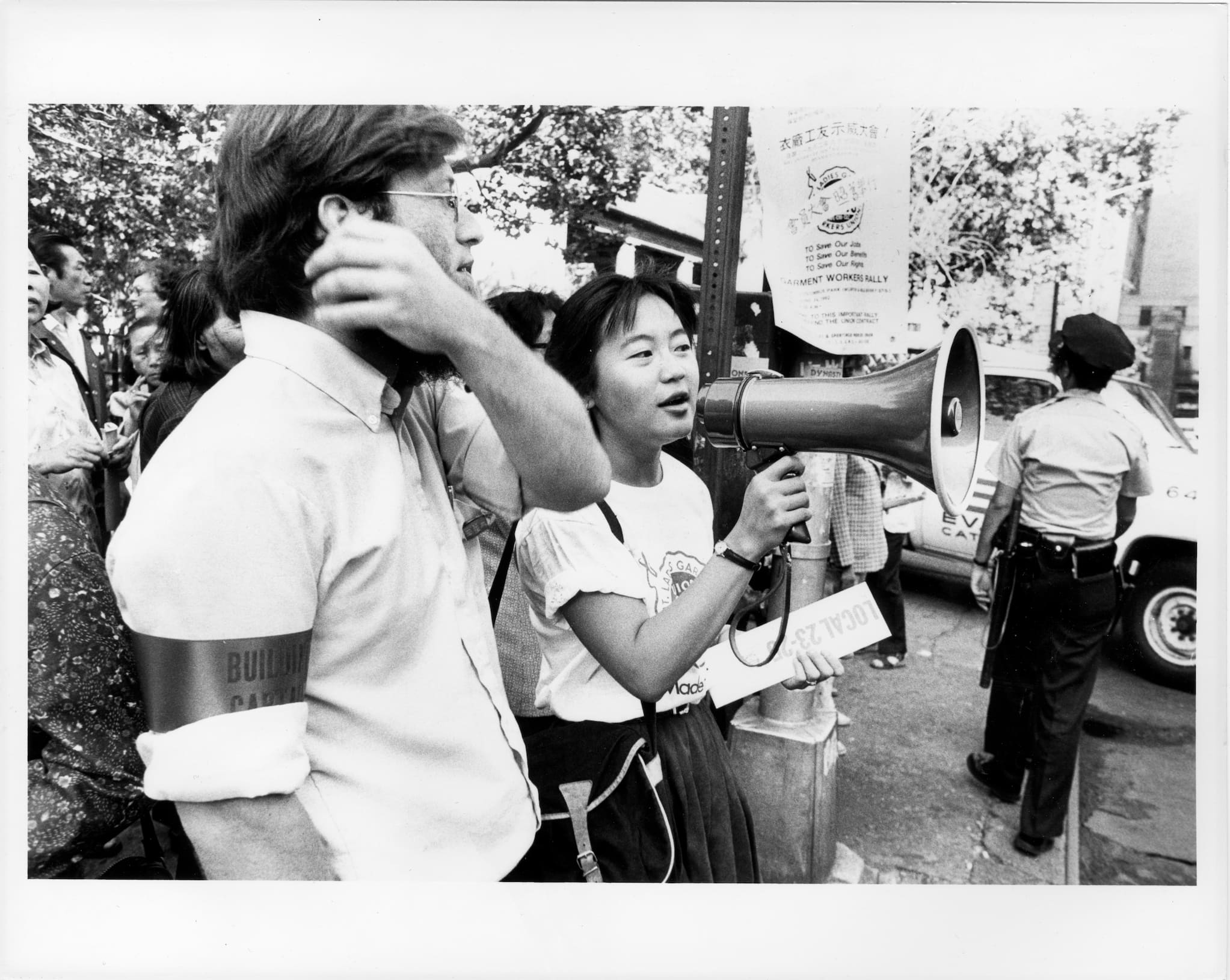
Image 47.04.04c — Organizer and interpreter Shiree Teng with a loudspeaker at the Columbus Park rally in New York City’s Chinatown. Support to defend the union contract was multigenerational.
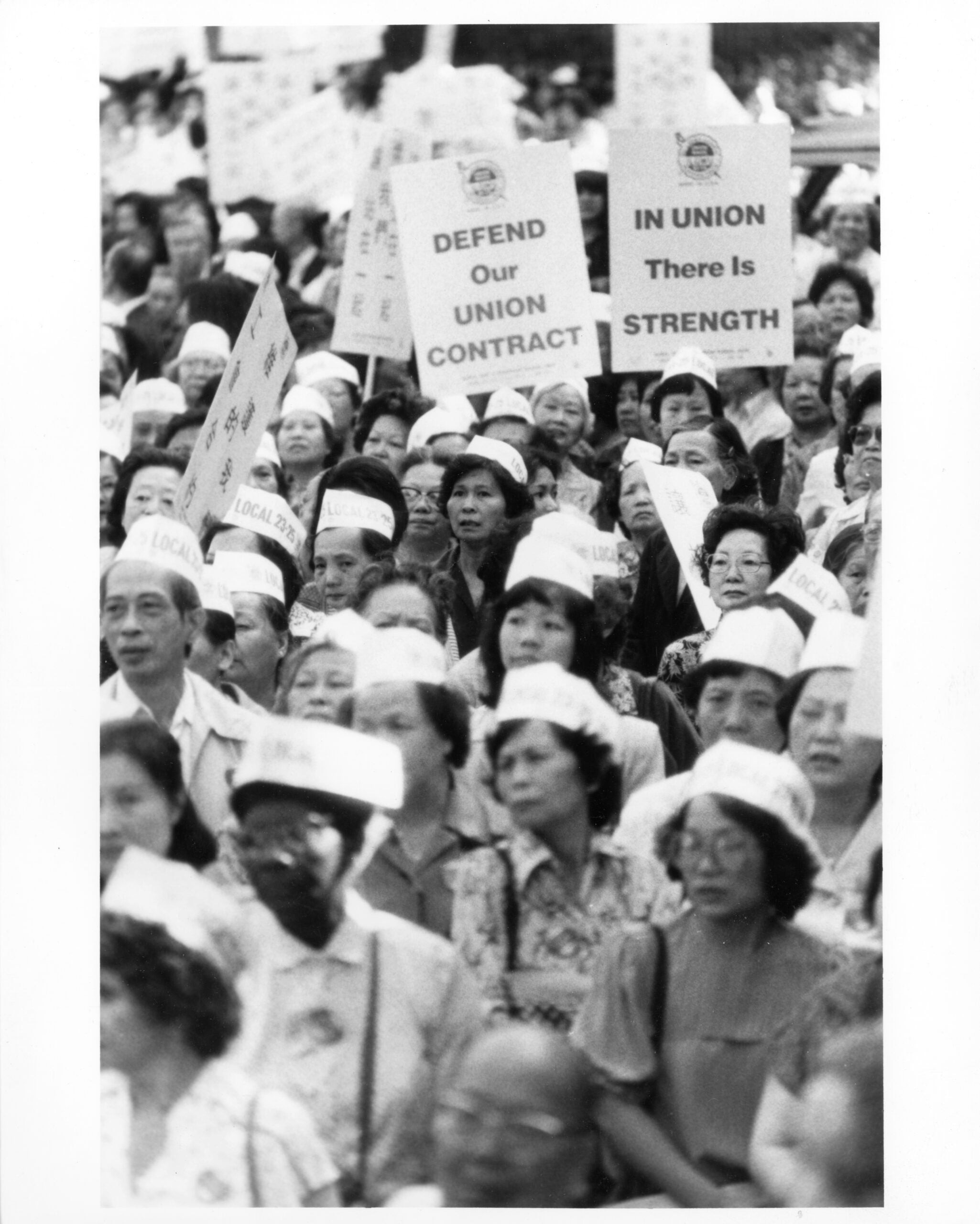
Image 47.04.04d — Workers and supporters gathered at the Columbus Park rally in New York City’s Chinatown hold signs that read “In union there is strength,” and “Defend our union contract.”
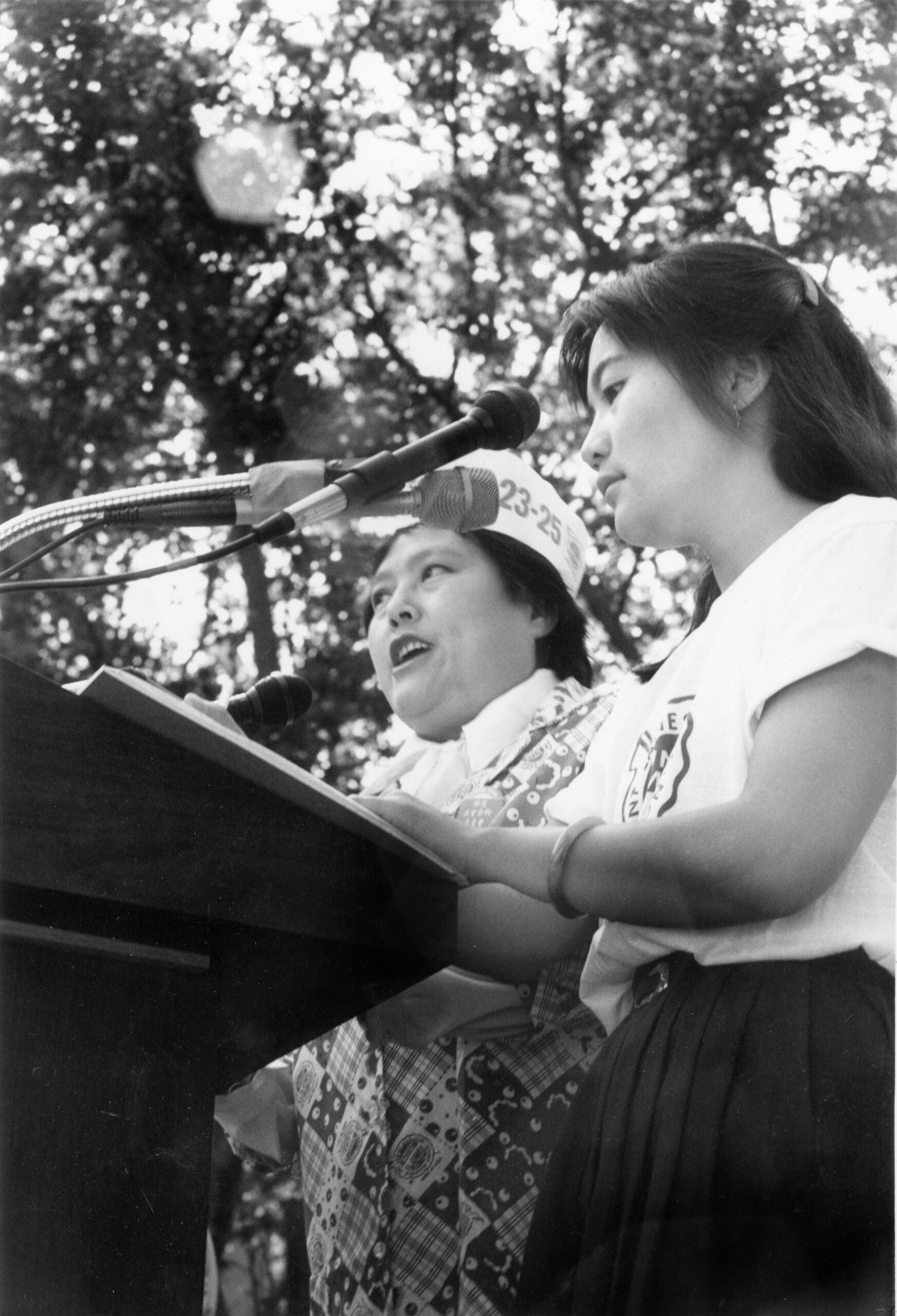
Image 47.04.04e — Mrs. Ka (left) addresses the Columbus Park rally in New York City’s Chinatown with calls for unity. Shiree Teng (right) interprets Mrs. Ka’s speech into English.





Reflection Questions
What community organizations or student groups would you reach out to if you were organizing to change something in your school? What about changing something in your neighborhood?
Us versus Them
The Columbus Park rally made a huge impression in the Chinatown community with support from local organizations and churches growing dramatically. It also made an impression on the employers as more of them advocated for their employer organizations to sign the agreement. However, there were still holdouts who refused to agree to the new union contract.
Employers and contractors heightened their “us versus them” rhetoric, pressuring the Chinese workers, mostly women, to side with their employers, often Chinese men. The holdouts argued their case every day in the Chinese newspapers, playing on arguments for ethnic militancy. “In the past few decades, we Chinese were oppressed, fooled, and deceived in the foreign land. But today, all of us Chinese must wake up immediately. We should fight… All Chinese must unite to the end for our common goal. The survival of the garment industry is the survival of us Chinese.” 2
The union, however, renewed their press outreach, increased organizing, and announced a strike date scheduled for July 15, 1982. They decided to hold a second rally that morning to offer employers a final opportunity to sign the contract before officially calling the strike later the same day. Empowered and inspired by the June rally, many workers ramped up their efforts.
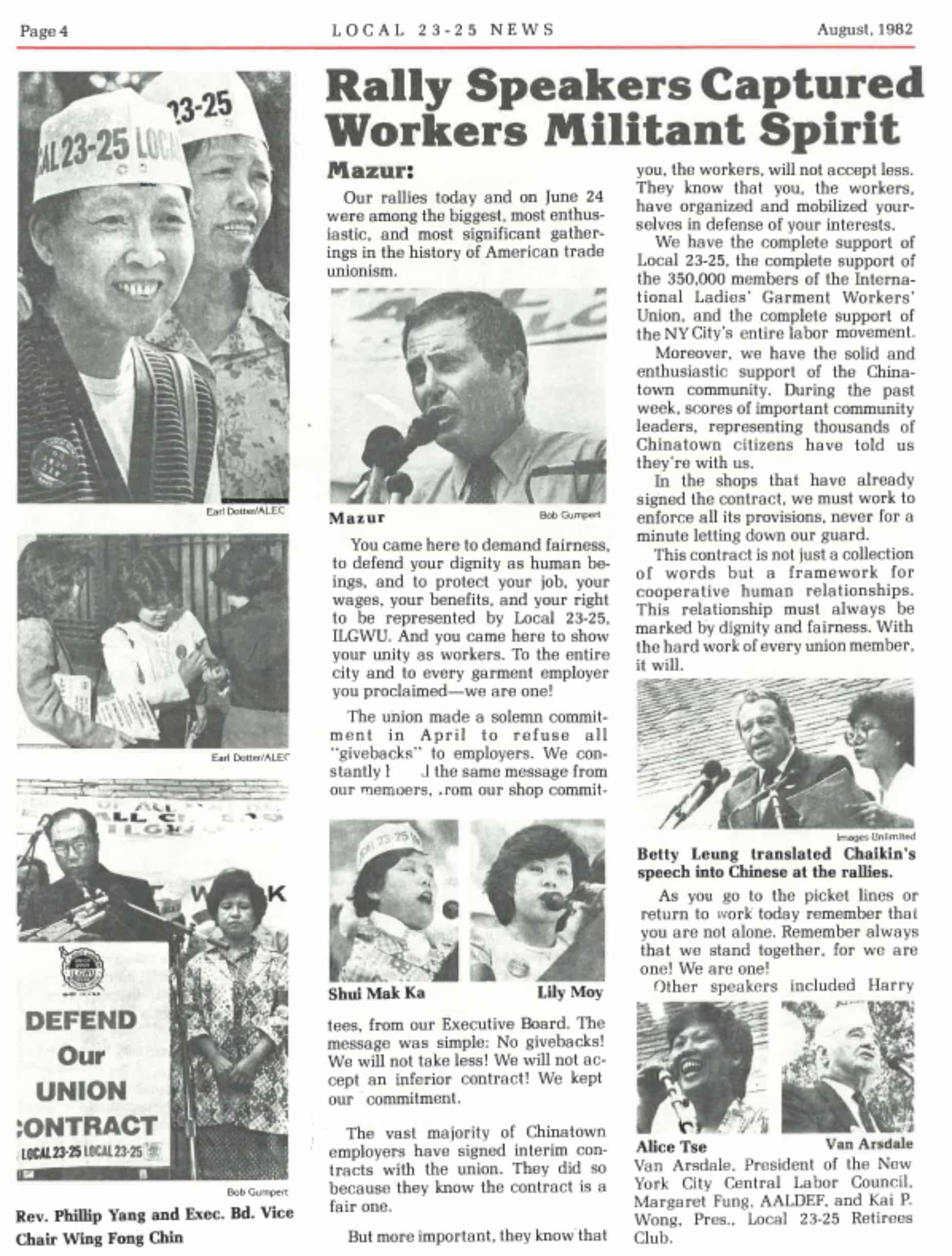
Image 47.04.06 — This page from the Local 23-25 News describes the rallies, with organizing efforts illustrated throughout the 10 pages. These newsletters were published in Chinese, Spanish, and English.
Holdout employers responded in the press and in the shops. In an attempt to intimidate their workers, some contractors closed their shops for the two days leading up to the union’s planned strike. The action of locking the doors and preventing workers from coming to work is called a lockout. These contractors claimed they were going on a “strike” against the union. They wanted to scare their workers, who would not have work for two days. However this tactic was not effective at all; the workers’ resolve was not broken.
With the organizing efforts of the union, workers, and community groups, more than two-thirds of employers had signed an interim contract by July 13. However, workers wanted 100 percent participation; they wanted to act in solidarity with all the other shop workers and did not want to leave anyone behind.
As the July 15 strike deadline approached, the union hoped for a settlement with the remaining employers, but the agreement never came. The holdout contractors misread the situation and expected to win. Early on the morning of the deadline, union staffers and worker volunteers walked through Chinatown and reminded shop workers about the strike and about worker solidarity.
Meanwhile, the contractors had cars with loudspeakers urging for ethnic solidarity. Imagine the noise in the neighborhood that day, with its narrow streets and garment factories. If a worker went downstairs, they would likely be met by workers from nearby shops.
Reflection Question
What is the importance of location to organizing?
The Strike
The second rally on July 15, 1982 was as overwhelmingly large as the first. More than twenty thousand garment workers and their supporters surged into Columbus Park again. Union leaders made speeches, including ILGWU president Sol Chaiken, who said, “Our union has always helped workers who want to help themselves.” Worker leader Alice Ip proclaimed, “We cannot accept any treatment that is inferior. Chinese workers are people, too!” 3 Ip’s words echoed the civil rights slogan prominent in the 1968 Memphis sanitation workers’ strike: “I am a man.” The energy in the park was electrifying.
Reflection Question
Can you describe current examples of slogans that reflect this theme of “we are people, too”?
That energy carried into the streets as people marched through Chinatown. Workers stopped at the shops where the last holdout employers had not yet signed the contract.
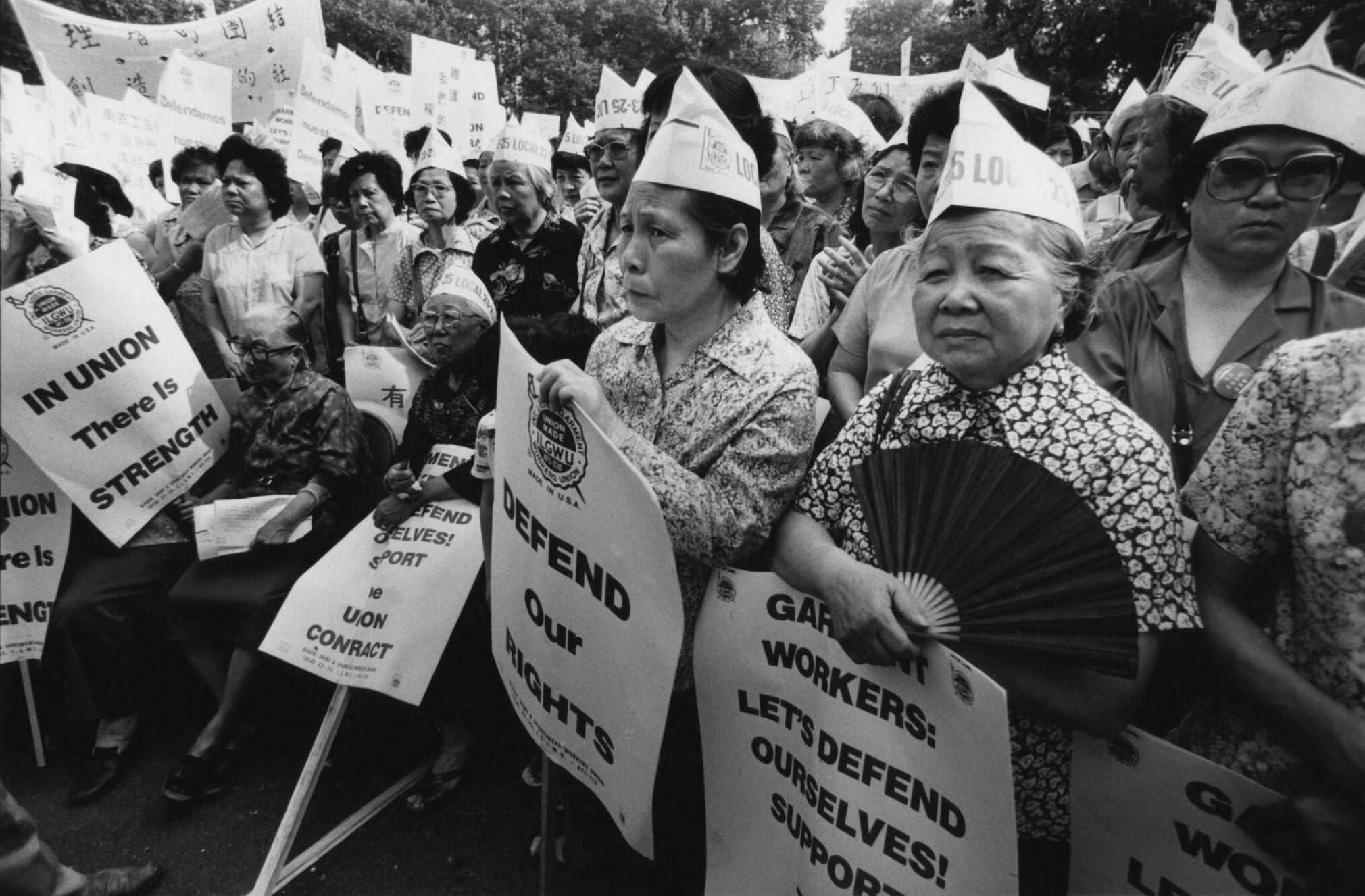
Image 47.04.07 — An intergenerational group of Chinese women garment workers and supporters listen intently to speakers at the rally.
The strike was officially announced at 11 a.m. Witnessing a second mass rally with twenty thousand workers and sympathizers made quite an impression on the employers. Just two hours later, all but one of the contractors had signed the agreement. Mrs. Ka led a group of workers to find the last holdout. They climbed the stairs to his shop, but he was not there. They eventually found him in a restaurant, and convinced him to sign the agreement right then and there! The strike was a victory.
Brief Strike, Big Impact
In the short term, Chinatown garment factories continued to operate as union shops, and unionized Chinatown garment workers received the benefits that their counterparts received in shops across the northeast. These wage and health benefits were essential and improved the lives of their families, with so many of the women workers’ husbands in restaurant jobs that did not provide health coverage.
The right to gather collectively and resolve common grievances was important. These benefits, however, only lasted as long as the jobs did. The garment industry was volatile, as it had been for over a century, and the decline of US-made clothes that started in the 1970s had not halted.
The long term impact of this brief strike was the power the women found for themselves with their community. They had new strength in organizations where traditional gender roles—including an expectation for women to be silent in public—had prevailed. Lasting relationships and solidarity were forged in the months leading up to the rally. These women also gained the skill to organize, build bridges with different organizations, and above all believed that together, they could make change.
Years after the strike, exuberant workers remembered that the rallies and strikes were some of the most important events in their lives. Worker Chen Miaoying said, “Never before did I feel the sky was so blue and the day so bright. I was so powerful when I was marching with the crowd.” 4
Glossary terms in this module
contractors Where it’s used
Factory owners who get work orders from garment manufacturers (brand name designers) and hire workers to sew garments for the manufacturer to ship and sell.
garment workers Where it’s used
Workers who are involved in the production of clothing items.
International Ladies’ Garment Workers’ Union (ILGWU) Where it’s used
A union dedicated to fighting for garment workers’ rights to fair wages, benefits, and safe working conditions.
lockout Where it’s used
When employers prevent employees from coming to work during a labor dispute, often by locking the doors.
solidarity Where it’s used
Shared beliefs and experiences that lead to group action and a feeling of mutual responsibility and support; when a group of people understand their fates are tied together.
strike Where it’s used
When workers stop work and withhold labor in protest about workplace problems, often involving picket lines where striking workers march in a line with signs outside the workplace asking others not to go in.
union Where it’s used
An organization formed by workers, typically from the same industry or company, representing the workers’ collective needs in the workplace; locals are units of an umbrella “international” union (internationals include U.S. and Canadian locals).
wildcat strike Where it’s used
A strike organized by a group of workers without the approval of their union officers.