





Union activist Shui Mak Ka, in blue jacket, raises hand as she speaks to crowd while seated at table.
Module 5: Legacy
Did the collective action of New York City Chinatown’s Chinese American garment workers positively change their working conditions and their lives?
How often do we think about the people who make our clothes? Garment workers are complex people who are often women with strength and skills that are invisible in the larger society. Despite the decline of the garment industry in New York City’s Chinatown, the experiences and skills for collective action that the garment workers learned carry through to today. Remembering their stories can influence today’s decisions—about when and why to get involved and even how to shop. In this module we learn about the lasting legacy of the New York Chinatown garment workers in spite of the decline of the US garment industry.
How has the memory of these events shaped the lives of the garment workers and their families? Why is the legacy significant today?
How has Manhattan’s Chinatown evolved and changed through the decades?
How has the garment industry and the union changed since the 1980s?
The Garment Industry Moves Overseas
In New York, major brands, including many of the formerly unionized manufacturers, began to globalize production, sending work to Mexico and Latin America, the Caribbean, and various Asian countries. This move cut costs for companies because the garment industry abroad had much lower wages and fewer government regulations. The remaining work in the US was forced to compete with the lower costs of global production. Chinatown factories and workers felt the intense pressures of global capitalism’s “race to the bottom.”
Clothing produced overseas became a larger and larger part of the market. Lower manufacturing costs were one reason. Others included US trade policy and a growing commercial relationship with China. One statistic makes the underlying conditions vivid: in 1980 the average wage of a garment worker in the US was five times more than that of a garment worker in Hong Kong, where most imports were coming from at that time. By 1990, when clothing made in China was taking over, the average wage of the US garment worker had not changed significantly, but was forty times that of a garment worker in China. Fewer hours of work and lower wages led many US garment workers to look for other jobs.
Meanwhile, workers in China, Bangladesh, India, and Latin American countries were living the centuries-old experiences of garment production in poorly paid and unsafe environments. The safety issues that had periodically plagued the industry in the US surfaced wherever the garment industry boomed. A 2012 factory fire in Bangladesh, in which more than one hundred workers died, eerily echoed the tragedy of the 1911 Triangle Shirtwaist Factory fire. Again in Bangladesh, the 2013 collapse of the Rana Plaza building was on a much larger scale, resulting in the deaths of 1,134 people, most of them garment workers pressured to work in extremely unsafe conditions.
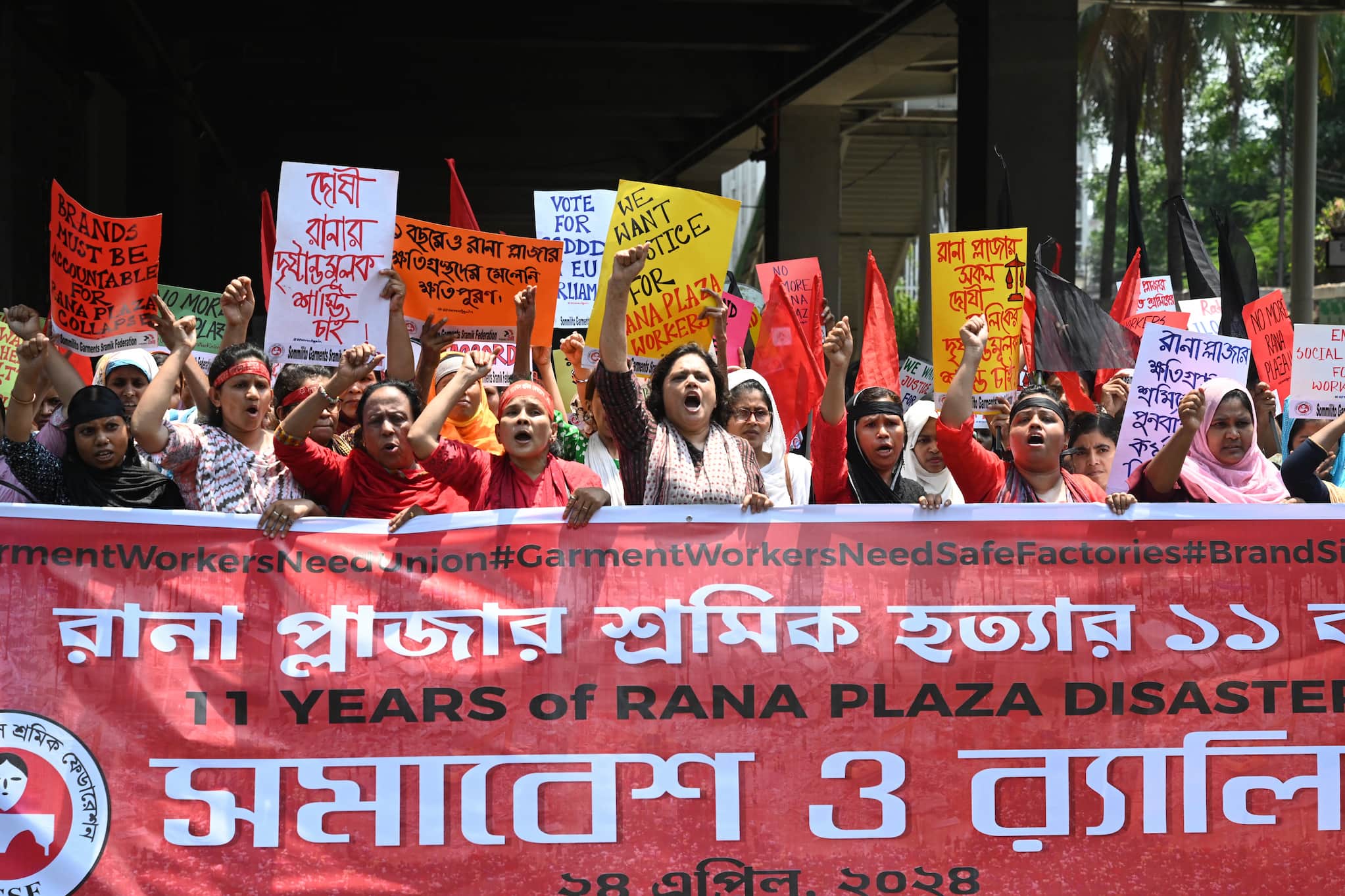
Image 47.05.01 — Garment workers in Dhaka, the capital of Bangladesh, participate in a 2024 rally on the anniversary of the Rana Plaza building collapse to raise awareness of workers’ need for unionizing and safe working conditions.
These tragedies galvanized workers and supporters in the US and around the world. Efforts to hold manufacturers and brands responsible for the conditions in the shops led to the Bangladesh Accord on Fire and Building Safety in 2013. The international agreement covers millions of women in the Global South who make clothing for over one hundred major brands. Since an accord is an agreement and not a law, major companies including Walmart, did not join the brands who signed on. Enforcement also remains an uphill battle, even for brands that are committed to the agreement.
The Decline of the US Garment Industry
Globalization was not the only reason for the garment industry’s decline in New York’s Chinatown and in the US overall. Garment worker wages here and abroad were a smaller part of the cost of clothing. Large retailers drove out small retailers and large companies took over purchasing and often garment manufacturing.
The percent of a garment’s purchase price that went to workers pay declined dramatically as manufacturers, distributors, retailers, and brand owners pushed for profits. By 1989, the amount of money that went to garment workers was less than half of what it had been in 1970. New York was especially hard-hit. More and more non-union factories were opened by Chinese and other contractors in the outer boroughs of New York City and beyond.
Reflection Questions
What can be done about garment workers’ wages and treatment? How would you inspire consumers to think about the conditions of the people sewing the items they purchase?
“Fast fashion” became a consumer trend pushed by a changing industry, which sought to make rapidly changing fashion available to consumers at low cost. This industry relied on an increased pace of clothing manufacturing and decreased wages paid to workers for faster fashion changes and lower prices so consumers could make more and more purchases that they used for shorter and shorter times. By the early 2000s, more than half the clothing purchased in a year ended up incinerated or in landfills. Sweatshops, which were factories with numerous labor law violations and poor working conditions, reemerged in greater numbers both in the US and internationally.
When the garment industry was strong in Chinatown, its critical mass of factories and affordable space with thousands of workers kept the immigrant community oriented toward the needs of these workers and their families. The industry decline occurred at the same time as rents rose in the neighborhood. Real estate developers took over large factory buildings for upscale uses intended to attract people from outside the neighborhood, including fancy offices, hotels, restaurants, and tourist destinations. This resulted in gentrification, a process in which neighborhood developers invest in targeting wealthier customers and displace earlier, less wealthy residents.
A final death blow to the New York Chinatown garment industry occurred on September 11, 2001. The terrorist attacks and collapse of the World Trade Center closed the entire area of Lower Manhattan, including the Chinatown garment factories. Workers and bundles of work had to negotiate armed checkpoints to get to the factories. Work orders evaporated and shops chose to close to cut their losses. Chinatown’s garment workers trained for new jobs as home health care workers, hotel housekeepers, and food industry workers. Many of these jobs took them out of Chinatown.
The Power of Organizing
The 1982 strike and union victory could not stop the overall industry decline. So what did “winning” mean? The process of organizing, community building, and rallying were important for the Chinese immigrant garment workers, worker activists, and the ILGWU staff who were the backbone of the strike. It made a difference in their lives and the lives of their families for decades to come as they embodied the principle of social unionism. These women became more active in community organizations and coalition building, particularly around schools and healthcare. They made sure the union responded to their needs, and expanded child care centers, immigration services, and healthcare, educational, cultural and political programs in Chinatown. As garment workers moved to jobs in other industries, such as hotel housekeeping and home health care, they became members in new unions. Collective action was a transferable skill.
Bringing people in communities together is organizing, and this takes special knowledge that the Chinatown garment workers in the union learned and honed through their struggles. This knowledge came in handy for decades to come, including in a 1983 fight against a planned jail in the heart of Chinatown. The construction of a new jail building would displace hundreds of small shops and even more affordable apartments.
Chinatown organizers publicized the issue to community members and lobbied city government officials. Twelve thousand people marched to protest the jail. Although the construction of the jail proceeded, the government listened to the community’s concerns, and through their organizing efforts, they won a piece of land next to the jail dedicated to community needs. There, the city granted the construction of a mixed-use building that included housing for low-income elderly residents and commercial spaces for local businesses.
Completed in 1992, the Chung Pak building is still part of the New York Chinatown community today and has senior housing, a day care center, and a health clinic. A number of the strike veterans continued to be involved there long term and went on to become leaders in the day care center. Even though the jail was still built, the community was able to limit its size and win important neighborhood services through organizing and negotiation tactics.
Speaking at a community workshop about the historic Chinatown garment industry of the 1970s–1990s, Shui Mak Ka imparted an important lesson to future community leaders: “The next generation needs to learn how to organize. Know that other peoples’ issues are your own. If you don’t organize, you will lose all of your benefits.” 1

Image 47.05.04 — Shui Mak Ka (center, with raised hand) uses her voice and union experience to empower younger generations to organize.
In a panel discussion at Columbia University, the adult children of garment workers reflected on their experiences growing up in these families. Amy Chin, an assistant professor of American Studies and Asian Studies at Vassar College, noted how the normalization of unions shaped her understanding of politics:
“The word union in Chinese was a common term that we used in our family more than other words, and I always associated it with something good. It’s kind of that basic fact that inspired me to apply to a labor school for college. How many 18-year-olds know that—the importance of a union? The presence of the union was so implicit in the family. It shaped my political consciousness in very interesting ways. … The question I think about now, for the second gen, is what kind of labor politics do we have compared to our parents? … whether we have the same kind of labor and political solidarity our mothers did.” 2
The Legacy of the Strike: From the Women Who Led It
The women who led and participated in the strike described long lasting impacts—some becoming leaders in the community and the labor movement. Many spoke out more freely and were treated with a newfound respect in their families and community. A sense of collective awareness and responsibility was strengthened among workers. This is a critical legacy of the 1982 strike. The ILGWU’s commitment to community organizing and collective action resonated with the worker members in Chinatown. Success, however, always relied on the individuals who made extraordinary efforts and took risks in their daily union jobs.
Chinese immigrant women garment workers not only gained respect within the union, but some even saw changes within their families. Ann Wong, a union member and activist, recounted a funny story that also serves as an observation of an increased respect within her household:
“When I first attended the executive board meetings of the local and the Chinese CLUW [Coalition of Labor Union Women] my husband always said, “What good would it bring when you people keep talking about the saam fuk peih [Cantonese : the same three old blankets, meaning the same things]?! I said, “well, those ‘three old blankets,’ may not mean anything to you, but they mean a lot to me. …” I have been actively involved in all the union’s activities. I have also attended the English classes offered by the union to improve my English. Recently, I spoke on behalf of workers at the congressional hearing to condemn NAFTA. It was a pleasant surprise for my husband when he saw my picture in the local news. For the first time since we got married, he said, “How about this? To show you some support, I’ll cook dinner for you every Monday and Wednesday night when you come late after attending the English classes.” I simply couldn’t help laughing.” 3
Women in the Labor Movement
The women who organized and participated in the 1982 strike continued to participate in the labor movement in different ways. Some leaders expanded their presence in the labor movement directly. For example, a decade later, Katie Quan, May Chen, and other organizers founded the nationwide Asian Pacific American Labor Alliance (APALA), joining a diverse group of Asian American and Pacific Islander union activists from a variety of occupations.
Many Local 23-25 members attended APALA’s founding in 1992. Similar to the outcomes of the 1982 strike, the organization’s mission is to foster ethnic and labor solidarity: “Many folks in our communities show care by offering food and asking if you’ve eaten yet. At APALA we believe that it is up to ALL OF US to make sure WE ALL EAT. It is our collective responsibility to care for one another.” 4
Many garment worker union activists were empowered by the strike and continued to work locally on a community level. They joined lobbying efforts in New York City, Albany, and Washington, DC. It was the first time that many elected officials spoke to Chinese immigrant lobby teams.
The activists registered thousands of new citizens to vote. The women lobbied for more child care and after-school programs and for family leave laws. They joined movements and rallies for immigrant rights. They fought attacks on social security and pushed for more benefits for seniors and retirees. The workers and union also fought for zoning to protect the midtown garment district and programs to defend the Chinatown garment industry, which included safety and health education, enforcement of labor laws and union contract rights, and promotion of Chinatown’s important role in the New York garment industry. They joined fights for social and economic justice and against racial discrimination.
The ILGWU’s belief in social unionism was especially important to many of the women working in the garment industry. The women organizers made the connection between the workplace and the home by demanding daycare services, taking citizenship classes, and building long lasting friendships with coworkers. The children of these workers went on to college and beyond, with some returning to enrich and spark positive change in the neighborhoods where they grew up, and others resettling across the US to inspire new ideas in scholarship about immigration and the history of Asian Americans. Doctors, entrepreneurs, educators, and organizers are among them.
Garment workers used their sewing skills not just for work, but in creative ways too. They used their skills for leisure, rest, and recreation—and the combination of their skill and creativity resulted in a beautiful community archive of the movement they propelled. Many workers collaborated to make a quilt commemorating the 1982 strike. Examine closely and you will see that many of the women who stitched it are the same women who are quoted in this chapter!
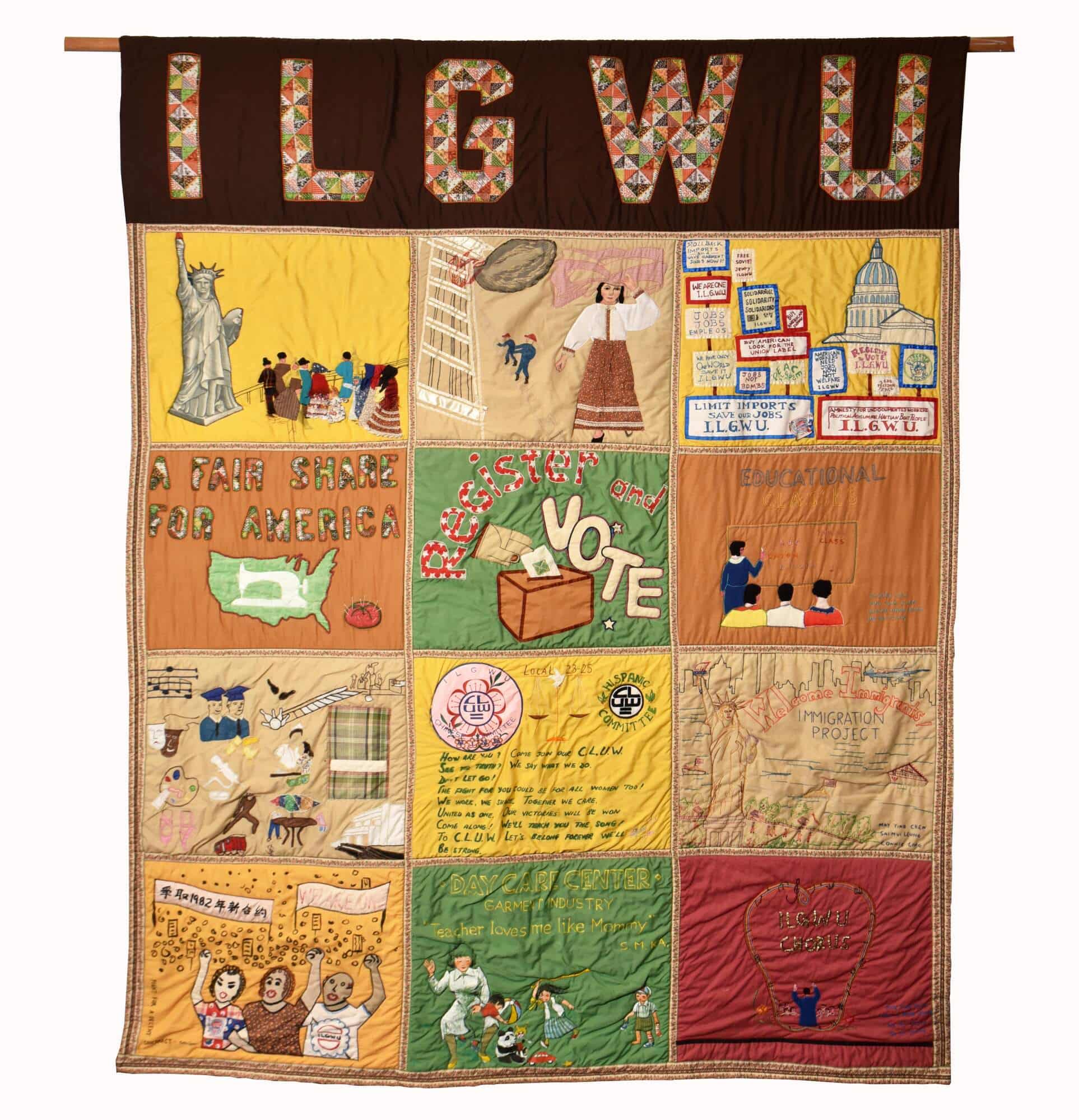
Image 47.05.05a — ILGWU’s social unionism in the 1980s is vividly depicted in this quilt made by members of Local 23-25 from the Chinese and the Hispanic committees of the Coalition of Labor Union Women (CLUW). The twelve squares illustrate their history and values.
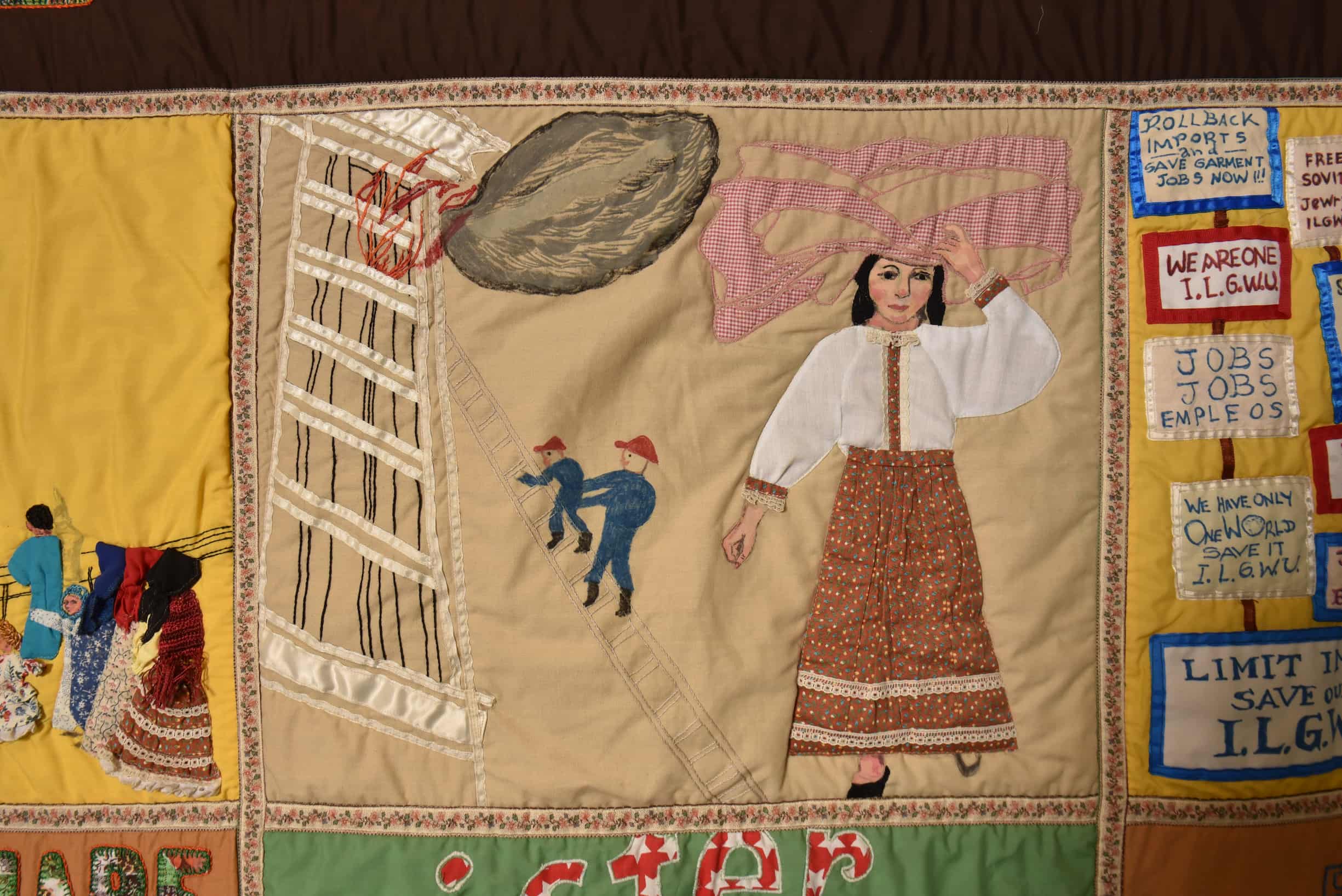
Image 47.05.05b — This square pays respects to the legacy of garment worker unionism through depicting the Triangle Shirtwaist Factory Fire (1911). Massive protests following the fire pushed for new workplace safety regulations and energized the ILGWU’s growth.
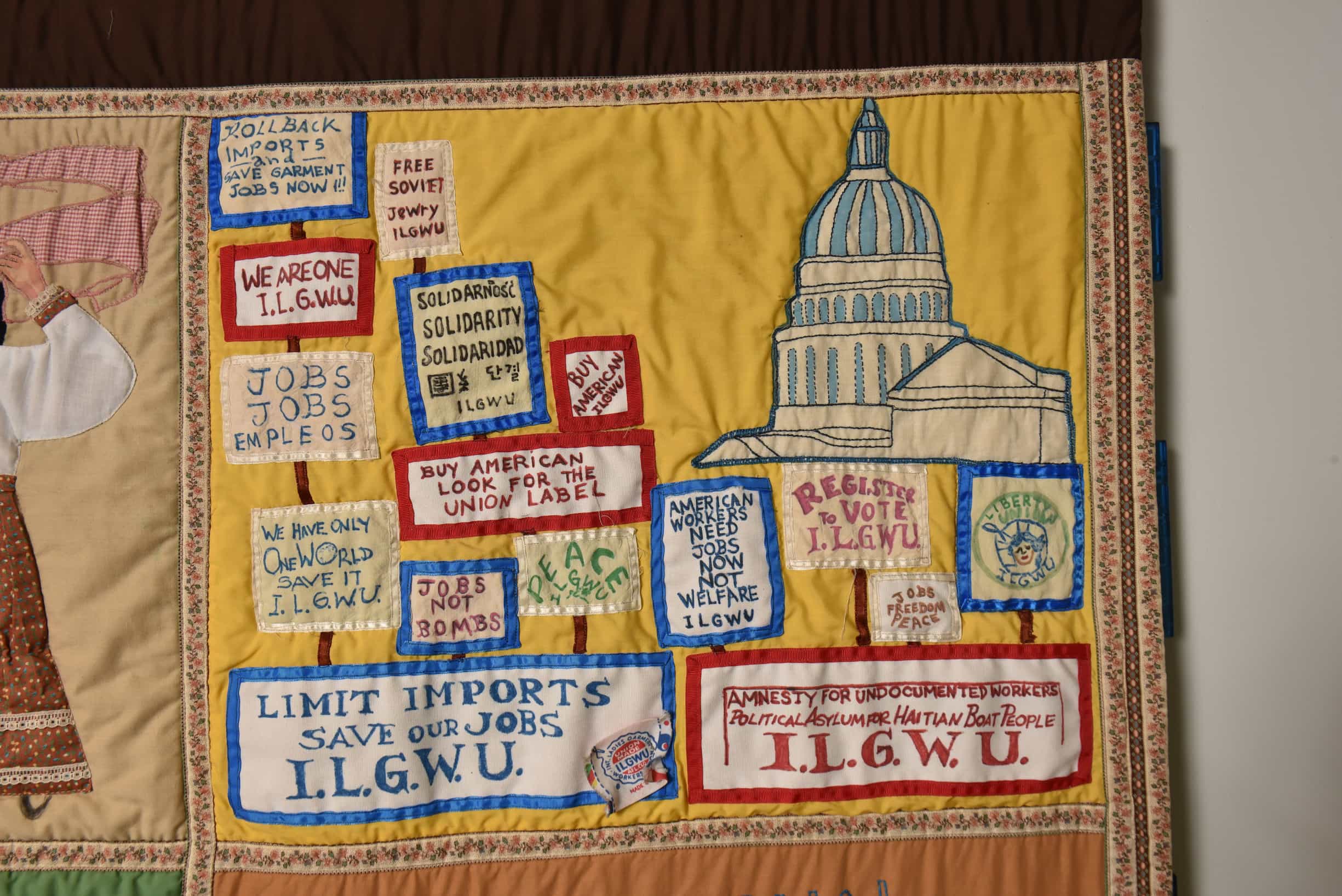
Image 47.05.05c — Protest signs in front of the capitol building in Washington, DC, where ILGWU members frequently attended demonstrations in support of immigrant and worker rights.
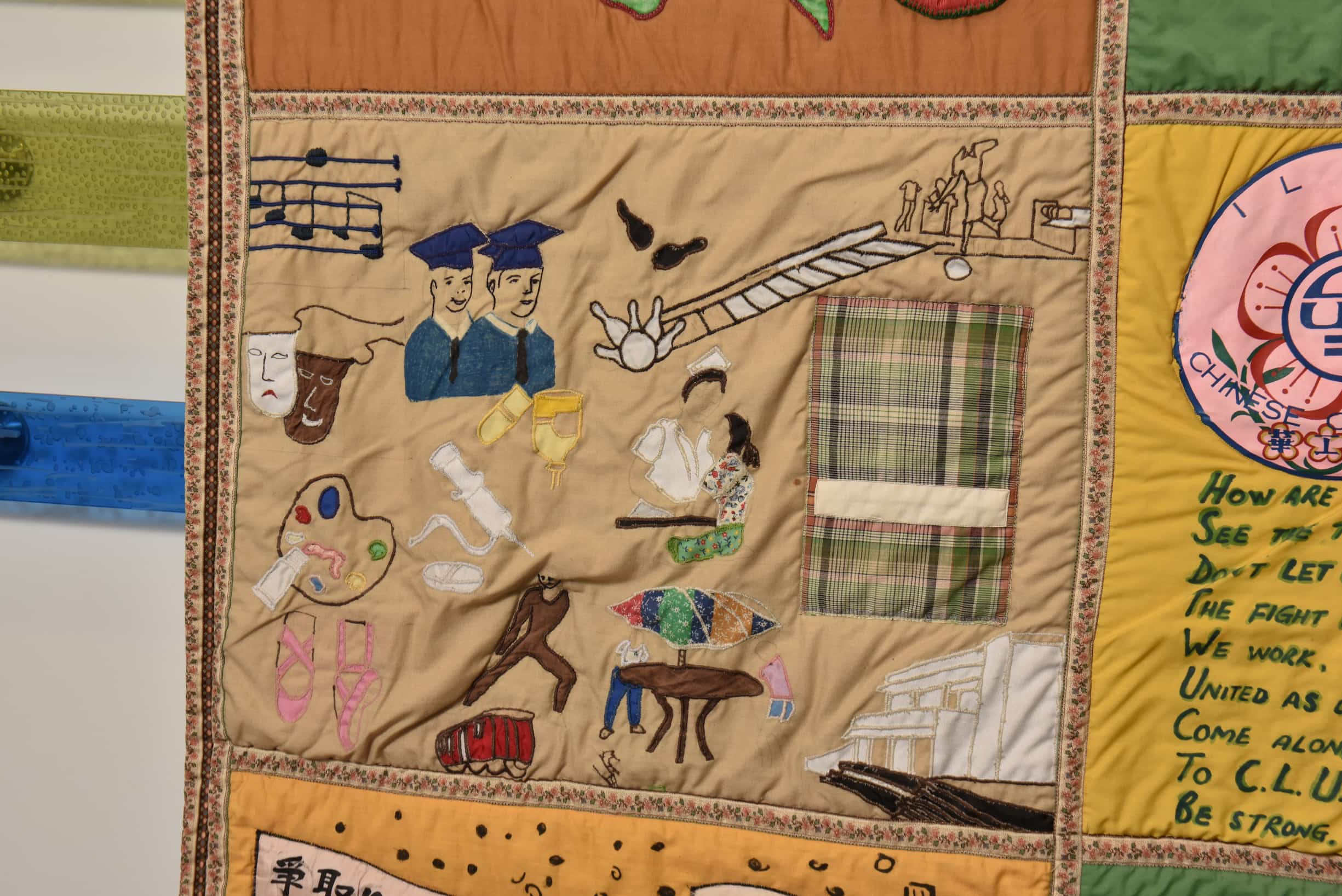
Image 47.05.05d — This square highlights social unionism activities including bowling, painting, theater, dancing, and music.
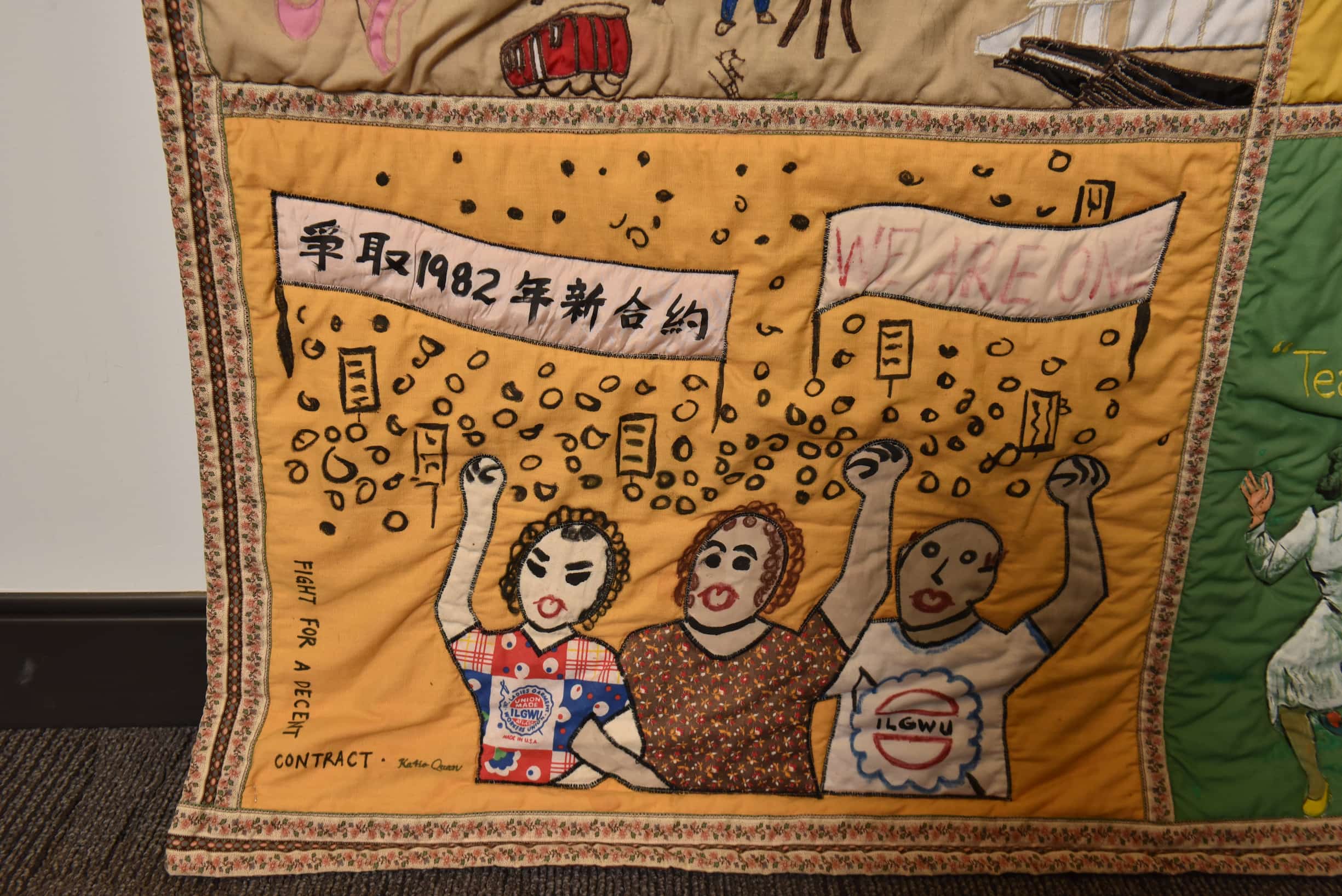
Image 47.05.05e — This square, made by Katie Quan, pays tribute to the successful 1982 ILGWU strike.
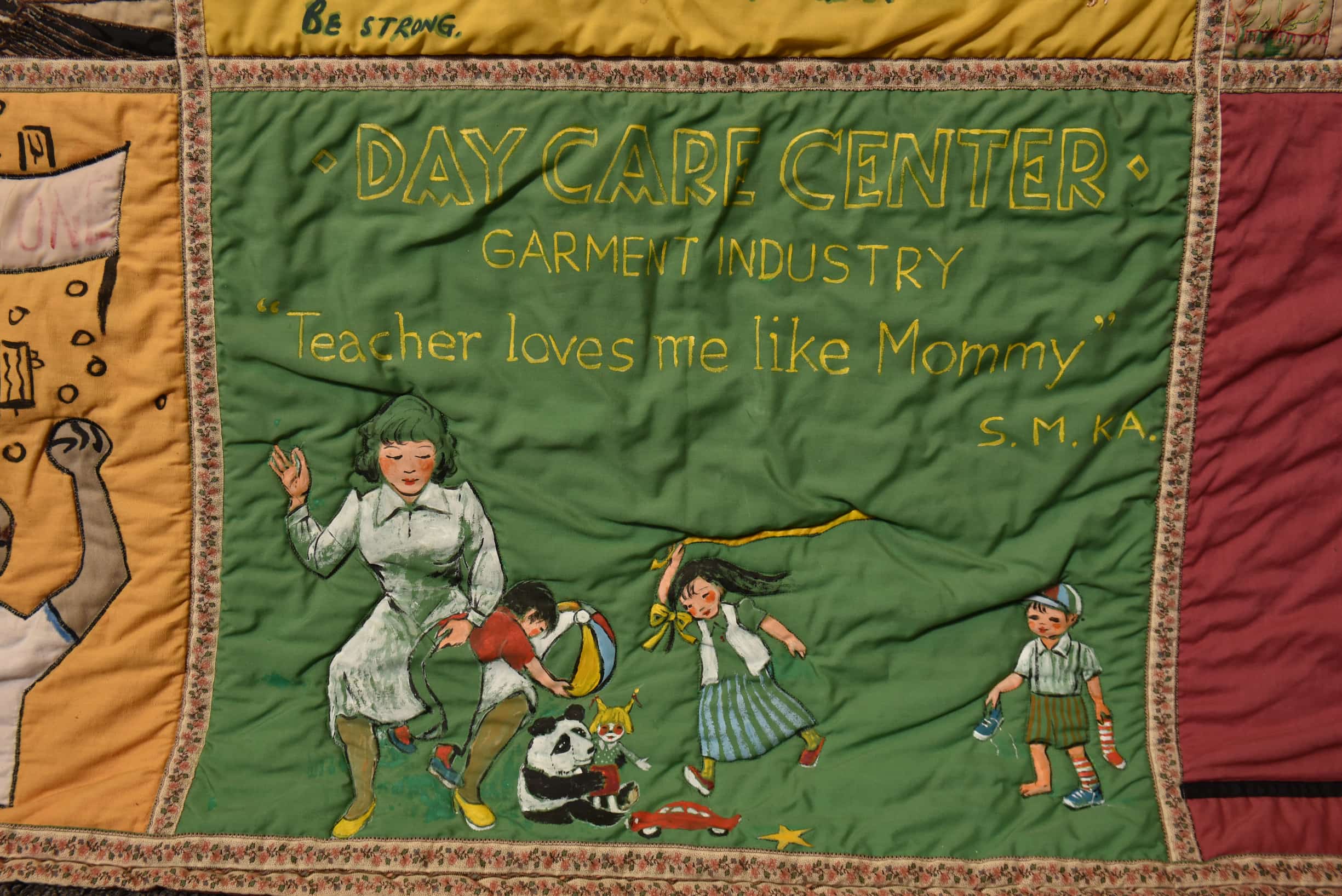
Image 47.05.05f — Childcare was an extremely important issue for Chinese women garment workers. Through organized efforts, Chinese women members of Local 23-25 made their voices heard. The Garment Industry Day Care Center of Chinatown opened in 1983.






The Twenty-first Century: Who Are You Wearing Now?
Everyone still needs to wear clothes, and so clothing manufacturing remains essential, as do the questions of how and where clothing is made. In the 2020s a new generation—again, many of them immigrants—has been searching for ways of manufacturing clothing that is both affordable and sustainable. There is also a new generation of shoppers, many of them concerned about the environmental impact of “fast,” disposable fashion that can be bought cheaply and often ends up in landfills. As was the case in 1910, New York in 2020 was once again a city of immigrants: 30 percent of the city’s 8.8 million people are immigrants, and another 30 percent are children of immigrants.
The ethical fashion movement today advocates for methods of clothing production that values the environment as well as fair wages and safe conditions for garment workers. Chinese American fashion designer Joy Mao calls her method of design “slow fashion.” Mao sees the value in investing time and money to create decent working conditions for the people who make garments. She does this while also selling her work at price points with the average consumer in mind. Will she and other small manufacturers push the garment industry forward in a positive way?
More to explore
Video
01:47
Invisible Seams
The documentary Invisible Seams (2022), by Jia Li, is a multigenerational story of eight women in New York’s garment industry. The women have weathered the pandemic, the rise of anti-Asian hate crimes, trials of immigration, and the never-ending demands of fashion cycles. The film documents their talent and expertise, and acknowledges that their devotion to their craft is also a means of survival.
In the past and present, immigrants have provided an important workforce for many industries and the garment industry in particular has long been a workplace for immigrants. In New York’s Chinatown, immigrants brought their work ethic and drive to improve their lives and their families. They found comfort in the company of other immigrants striving to get ahead, even as they struggled with poverty and hard working conditions. Union organizing brought the bright promise of collective action and power to exploited immigrant women workers. The children and grandchildren of these immigrant workers continue to feel the broad lessons of these experiences, and many are concerned about the garment industry to this day.
Glossary terms in this module
community organizing Where it’s used
Educating and engaging groups of people in activities that contribute to the empowerment of a community.
contractors Where it’s used
Factory owners who get work orders from garment manufacturers (brand name designers) and hire workers to sew garments for the manufacturer to ship and sell.
garment workers Where it’s used
Workers who are involved in the production of clothing items.
gentrification Where it’s used
When land use or real estate development in a struggling neighborhood benefits wealthy people or corporations, resulting in increasing property values and the displacement of lower income people and businesses.
globalization Where it’s used
The growing interdependence of the world’s economies, cultures, and populations; in the garment industry, this has led corporations to move their manufacturing overseas where wages are very low.
labor solidarity Where it’s used
The act of workers coming together across different backgrounds to collectively demand for better working conditions and benefits.
social unionism Where it’s used
Social unionism distinguishes itself from other forms of unionism by connecting the struggles in the workplace to greater issues of human rights, social justice, and democracy; it shapes both the culture of unions and the tactics they utilize.
solidarity Where it’s used
Shared beliefs and experiences that lead to group action and a feeling of mutual responsibility and support; when a group of people understand their fates are tied together.
strike Where it’s used
When workers stop work and withhold labor in protest about workplace problems, often involving picket lines where striking workers march in a line with signs outside the workplace asking others not to go in.
sweatshops Where it’s used
Factories with numerous labor law violations and poor working conditions.
union Where it’s used
An organization formed by workers, typically from the same industry or company, representing the workers’ collective needs in the workplace; locals are units of an umbrella “international” union (internationals include U.S. and Canadian locals).
Endnotes
1 River 瑩瑩 Dandelion, “How Chinese American Women Changed U.S. Labor History,” The Margins, May 1, 2019.
2 Amy Chin, “Celebrating Our Roots – Panel Discussion to Honor the 40th Anniversary of the 1982 Chinatown Garment Worker Rallies,” panel discussion, CUNY Asian American/Asian Research Institute, October 19, 2022, https://youtu.be/AcB0mBLWuhg?si=yXDwo8nSVIp2rnE7.