




A large group of ILGWU members in festive clothing march down a New York City street holding a banner with the phrase “Look for the Union Label.”
Module 3: The International Ladies’ Garment Workers’ Union (ILGWU)
Did the collective action of New York City Chinatown’s Chinese American garment workers positively change their working conditions and their lives?
Workers band together in unions to fight for their collective needs at work: better wages, fair hours, health insurance, workplace safety, and other concerns. Unions help workers achieve fair treatment in the unequal power relationship with their boss. As the Chinatown garment industry grew in the 1960s and 1970s, Chinese garment workers in New York joined a union that protected garment workers, the International Ladies’ Garment Workers’ Union (ILGWU).
As a self-described “union of immigrants,” the ILGWU knew the importance of outreach to the garment workers in New York City’s Chinatown. The ILGWU organized the Chinatown factories through incentives to Chinese employers, such as brokering connections between employers and unionized manufacturing brands, and outreach to workers. Worker outreach included offering English language classes, writing newsletters in Chinese, giving news stories to the local Chinese press, and providing education about benefits such as health insurance.
There were 1,500 Chinese members in the local ILGWU chapters by 1968, and this increased to 6,000 in 1974. By 1982, there were about 20,000 members, and the New York Chinatown workers made up one-third of the workers in Manhattan’s outerwear industry. The union experiences transformed the workers, and in turn, the Chinese immigrants who joined the ILGWU made an impact on the union, and advocated for the union to represent their needs and concerns through the industry’s rapid changes. This module focuses on the ILGWU and how Chinese immigrant workers joined the union and shaped its history and direction.
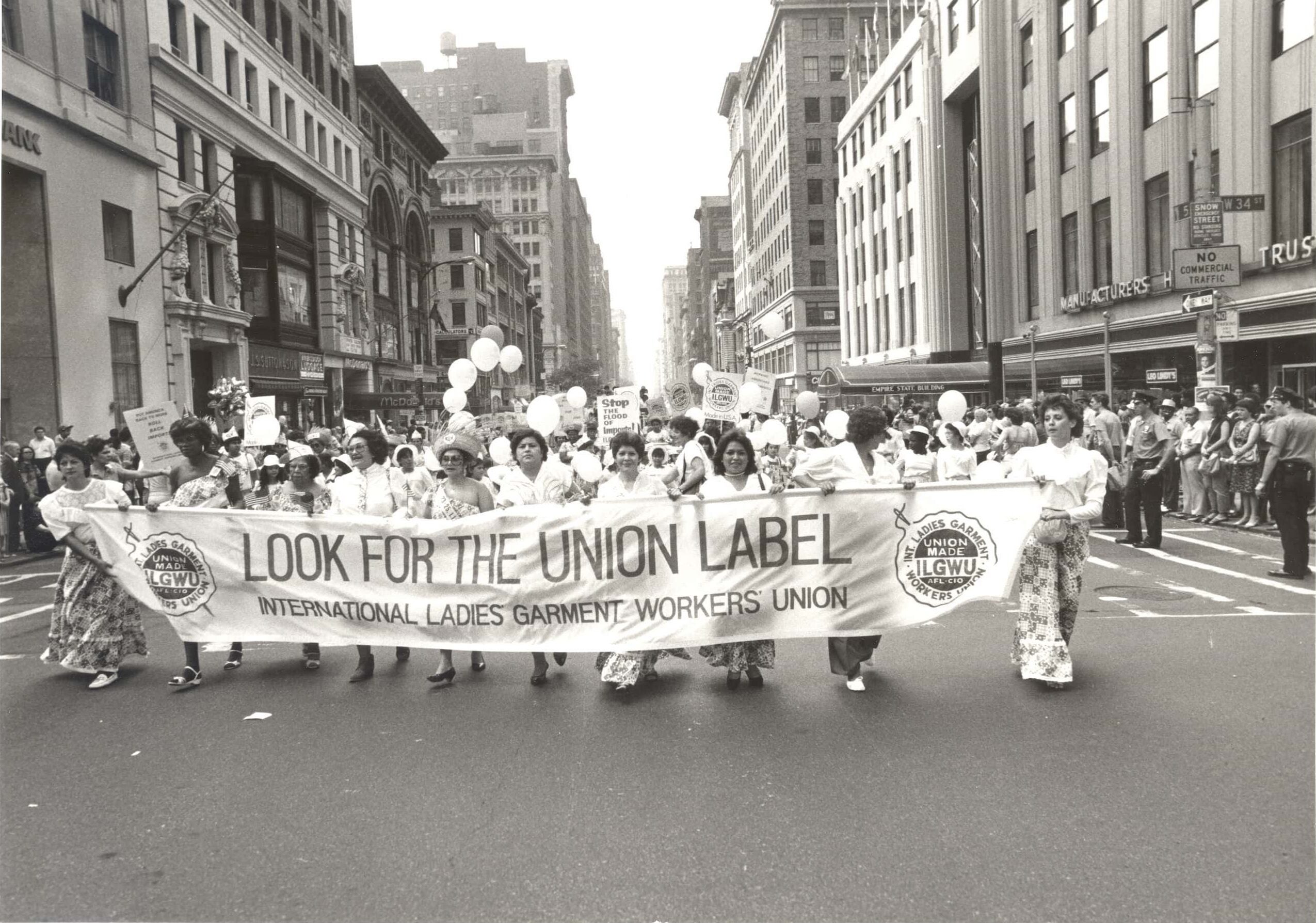
Image 47.03.01 — A multiracial group of ILGWU members participate in the Labor Day Parade. The group proudly holds a banner in support of the union as they march on Fifth Avenue, New York, New York.
What is the role of a union and what made the ILGWU distinct?
How and why did Chinese immigrant women workers bring their collective voice and sense of solidarity to the union?
How did ILGWU union culture (social unionism) align with the Chinese community/family culture of the workers?
What is a Union?
A union is an organization of workers, typically from the same industry or company. The union represents the collective needs of all the workers. There are small unions and large ones, national and international. When a union represents workers in multiple places, cities, or workplaces, local unions—often called “locals”—are established. For example, since the ILGWU was an international union which operated in the US and Canada, each local represented a certain part of the garment industry—including sportswear, pajamas and underwear, coats, dresses, and knitwear.
New York’s Chinatown garment workers made sportswear and were part of Local 23-25. The “rank-and-file” members are the employees in a unionized workplace. In the ILGWU, rank-and-file workers vote to elect their union leaders, as well as a coworker in each factory to be a shop representative, also known as a shop steward. The ILGWU also had full-time paid staff including organizers and business agents (BAs) who visited the factories regularly, made announcements for the union, and kept in touch with workers.
Throughout history and today, unions have protected workers by responding to problems in the workplace and negotiating better work conditions and wages for workers. The agreement that workers and unions negotiate with a boss is called a collective bargaining agreement or union contract. Unions have different histories and priorities. In the late twentieth century, the ILGWU emphasized broad membership participation in union meetings, educational activities, and social justice issues.
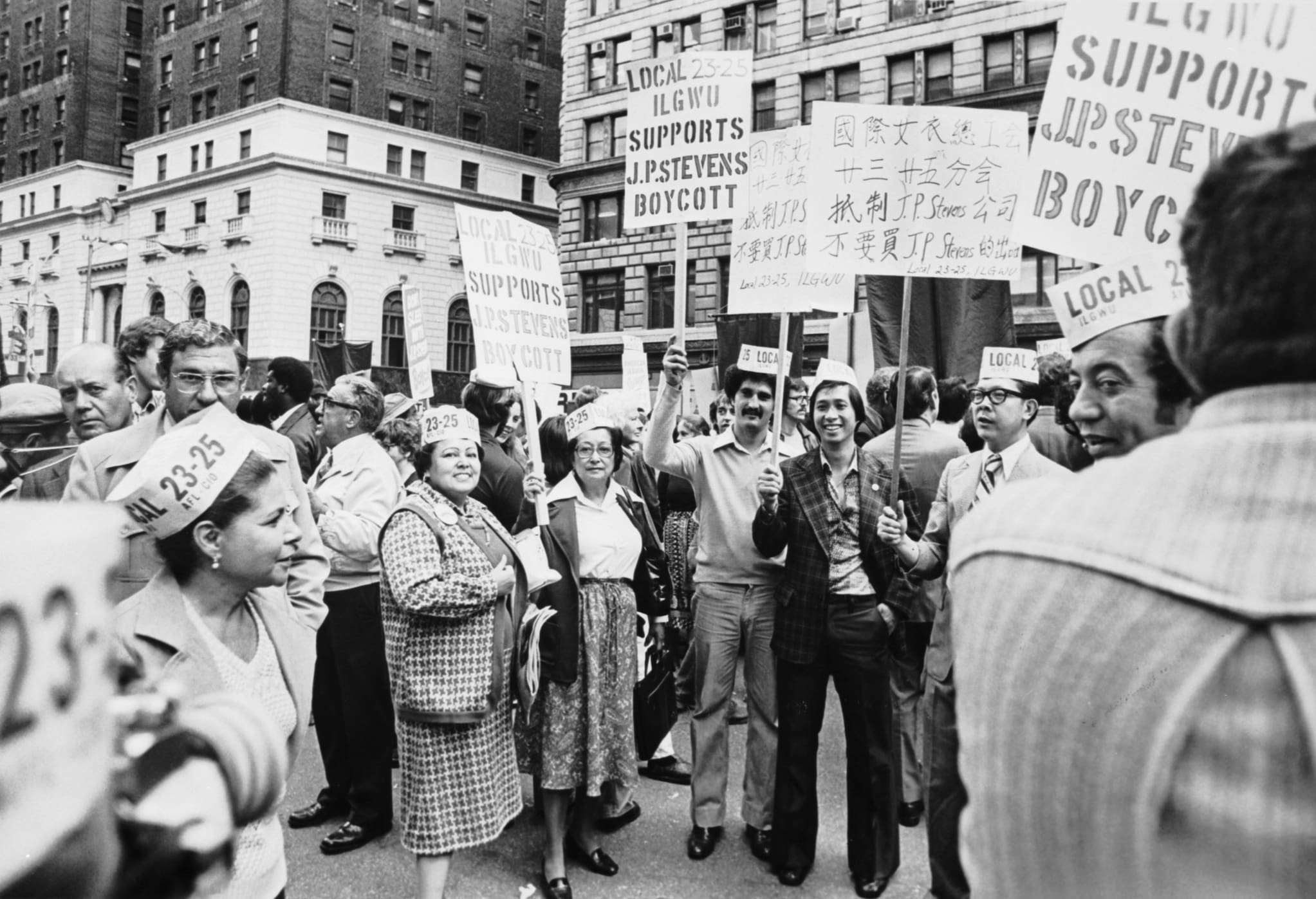
Image 47.03.02 — Local 23-25 Education Director Kathy Andrade (checkered coat) leads supporters of the J.P. Stevens textile company boycott in 1977. Andrade was a dynamic leader of union education activities and social justice issues in and beyond the ILGWU.
More to explore
Image
Kathy Andrade (1932–2021)
Kathy Andrade was a pioneering immigrant rights activist, labor organizer, and leader. Arriving from El Salvador in her twenties, it was not long before she became director of education for Local 23-25 of the ILGWU. From the 1950s to the 1990s, she developed a wide range of educational and cultural programs in many languages, and pushed the garment workers’ union and the labor movement to take on the cause of defending immigrants.
Reflection Questions
Do you or your family members belong to labor unions? Can you think of any workplaces and industries that might benefit from a union?
“The Workers Are the Union”
“The workers are the union.” This popular labor slogan seems simple, but has not always been true. Some unions lose touch with their members, become too bureaucratic, or only help or represent certain workers. Some unions focus mainly on bread-and-butter issues related to their members’ wages and benefits, but not on the larger, systemic issues of low wages or poor working conditions faced by both union and non-union workers in certain industries or jobs. The mostly Jewish socialist immigrants who energized the early years of the ILGWU in the 1910s organized on the principle of social unionism, which connected bread-and-butter issues to greater issues of human rights, social justice, and democracy.
Unions and collective worker actions have played a key role in shaping US history. For example, the garment workers’ demonstrations and strikes in 1909–1910 contributed to a growing public awareness that workers should have basic labor rights and that they needed unions to negotiate for better conditions and to settle disputes about workplace rules. The outpouring of public protest after the Triangle Shirtwaist Factory Fire in 1911 led to major reforms in workplace safety laws and other labor law protections.
A key demand workers and their organizations have long advocated for is health insurance. The US stands alone among industrialized countries as the only one without universal health insurance. The consequence of this is inequality with great disparities among different communities’ access to care and in outcomes. The astronomical cost of health care—hospitals, serious illness, accidents or even regular routine check-ups—was a great challenge to new immigrant families. Employer and union-sponsored health insurance plans have filled the void for union members and others, but a majority of workers who do not without insurance are still left vulnerable.
Union advocacy for worker protections has not always existed. Some unions in the past played a role in violent, racist activities, including blaming immigrants for their poor working conditions and attacking Asian American communities. Many Chinese immigrants were aware of this history and the ILGWU had to build trust when expanding their membership through local unions and organizing with the Chinatown workers and community.
The union hired Ben Fee, an early Chinese organizer in California, and eventually sent him to organize workers in New York’s Chinatown. He played a pivotal role in gaining community trust for the ILGWU. By 1960, Fee created the first handwritten Chinese newsletter for the union, and in 1968 the union offered free English classes for Chinatown members using classrooms at a local church. Through these efforts and other programs, more Chinese workers, especially women, became increasingly involved with the ILGWU. Some even became shop representatives and activists for the union, promoting trust and solidarity among the workers and shaping the union to meet their needs.
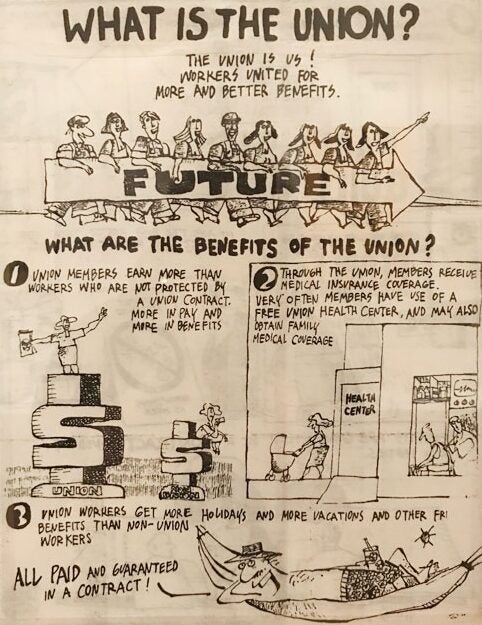
Image 47.03.04 — In the 1980s and 1990s, ILGWU Local 23-25 distributed flyers like this one in both English and Chinese to describe the benefits of unions. Above, an English-language flyer.
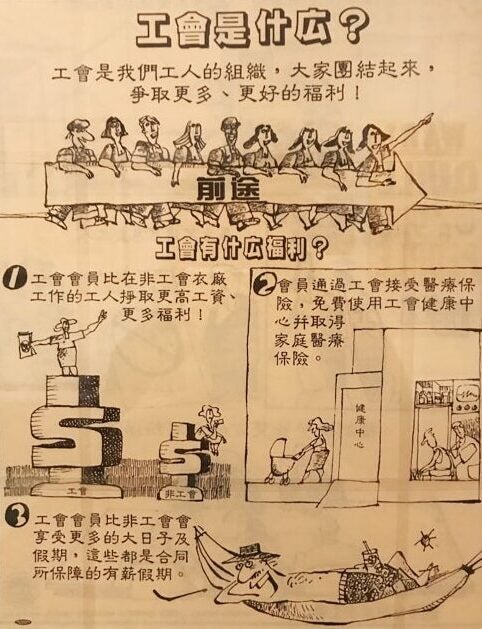
Image 47.03.05 — In the 1980s and 1990s, ILGWU Local 23-25 distributed flyers like this one in both English and Chinese to describe the benefits of unions. Above, a Chinese-language flyer.
The Women Who Shaped the Union
Many Chinese immigrant women took leadership roles in the union. One dynamic union activist was Shui Mak Ka, who grew up in China where she was an outspoken young supporter of the 1949 Chinese revolution. She later left China with three young children, lived in Hong Kong, and eventually immigrated to the US. Mrs. Ka began working in a garment shop and, soon after, joined the ILGWU. Ka recalls the assistance she received from the union:
“I had a lot of trust in the union at that time, because I could not get any help from my family, but I could get a lot of help from Lily Moy, the first Chinese woman business agent in Chinatown. She inspired me. She made me feel that the union was my true family. At one time I even had a dream, dreaming that I was talking to the president of the ILGWU about all my suffering in the family and in life. … At that time I was very confident because I believed that the union was for the workers, and with the union’s backing I was powerful.” 1
Mrs. Ka felt empowered by the union. She was elected as her workplace’s shop representative repeatedly because the workers knew they could rely on her to speak up for them to the boss, bargain for good piece rates, and stay in contact with the union. The garment workers fought together for every penny and nickel in their piece rates to add up to a living wage for their families.
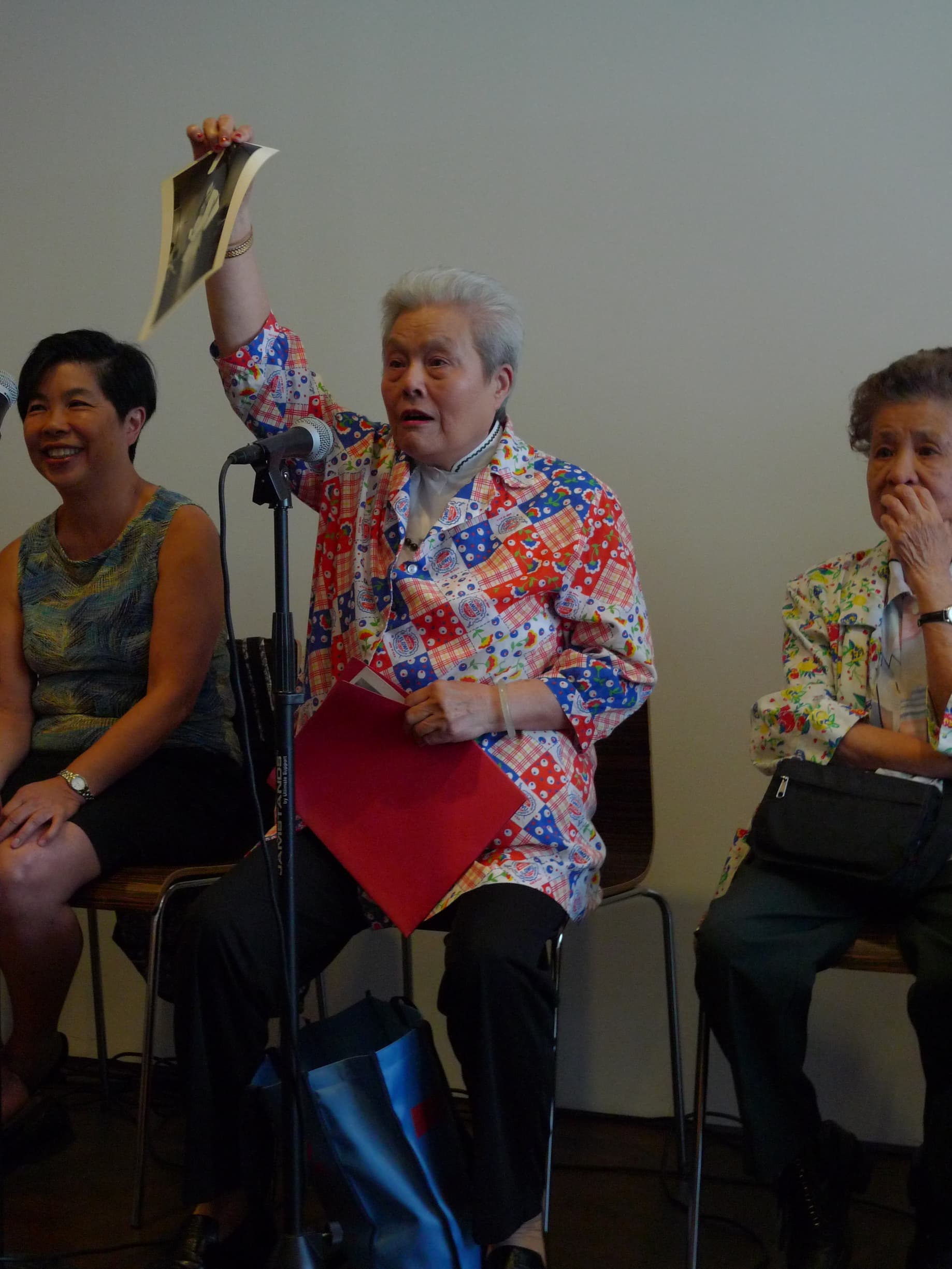
Image 47.03.06 — Shui Mak Ka (center), also known as Mrs. Ka, at a 2012 workshop honoring the 1982 strike’s thirtieth anniversary. Seated next to her is Katie Quan (left) and longtime union worker and Local 23-25 Executive Board officer Wing Fong Chin (right).
Workers were encouraged to speak up if there was a problem because the union had processes for complaints and grievances as well as collective job actions that could solve problems with bosses. This was especially important since most Chinese women were socialized to keep quiet and just endure hardships. The ILGWU had a huge impact on the workers and community in the 1970s, 1980s, and 1990s, since there were thousands of Chinese union members who needed a sympathetic place to discuss and resolve their complaints.
Katie Quan was an important figure in the ILGWU. She was a garment worker, shop representative, and organizer who later became the first Chinese American to be elected as international vice president of the union. Born and raised in the San Francisco Bay Area in California, Quan became inspired by the political movements of her college years at UC Berkeley as well as by her parents’ immigration experiences, and committed herself to improving the lives of Chinese immigrants in the US. In 1975 she moved to New York to work in Chinatown factories and went on to become a full-time, paid union staffer and leader.
She wrote about job actions in the union factories:
“The most effective way of getting the boss to increase our piece rate was to all stop working until a fair price was negotiated. But work stoppages were hard to organize. Shops in New York averaged about fifty workers each, and I would have to make sure that each person agreed to the plan. I would talk it up while we were sewing, during lunch break, and after work while we were buying groceries. I would call my coworkers at home at night and bring it up on weekend outings. Some workers didn’t like having direct confrontation with the bosses, and others were afraid of being identified as trouble-makers. A few workers might promise to participate but then would pull out at the last moment. But when we did stick together and win a higher piece rate it was a sweet victory.” 2
Women Workers – Juggling Multiple Identities
The Chinese women garment workers learned to speak up for their collective needs and to negotiate relationships inside and outside of Chinatown. Garment factory bosses were also Chinese and the dynamic between a boss and the workers was complicated. Union organizers also faced challenges as they managed multiple responsibilities at work, at home, and in their communities.
Katie Quan spoke about the many responsibilities she balanced to maintain trust in the Chinese immigrant community and fight for change within the union:
“The boss chided me if I helped my fellow workers…, the union business agent scolded me if I was too active in organizing my fellow workers; and my fellow workers were unhappy if I did not manage to get good prices for them. I usually could not fall asleep the night before a work stoppage was scheduled to take place. I was afraid my fellow workers would change their minds. I was also worried that the boss would come up with another unexpected dirty trick.” 3
Alice Ip was another organizer and garment worker. Ip immigrated to New York in 1976 and worked in garment factories for six years, always elected by her fellow workers to be their shop representative. The ILGWU recruited her as a full-time union organizer and she moved up to become a business agent and the community affairs director. She remembered the challenge of juggling her multiple identities:
“It was not easy being both a union activist and a mother. … At first there were certainly some conflicts. My children didn’t want me to work in the union. They wanted me to spend more time with them. It was very difficult, especially when they were young. I tried to explain to them the significance of my work, helping them to understand me. My mother-in-law didn’t want me to work in the union either. She was afraid I would become too good for her son.” 4
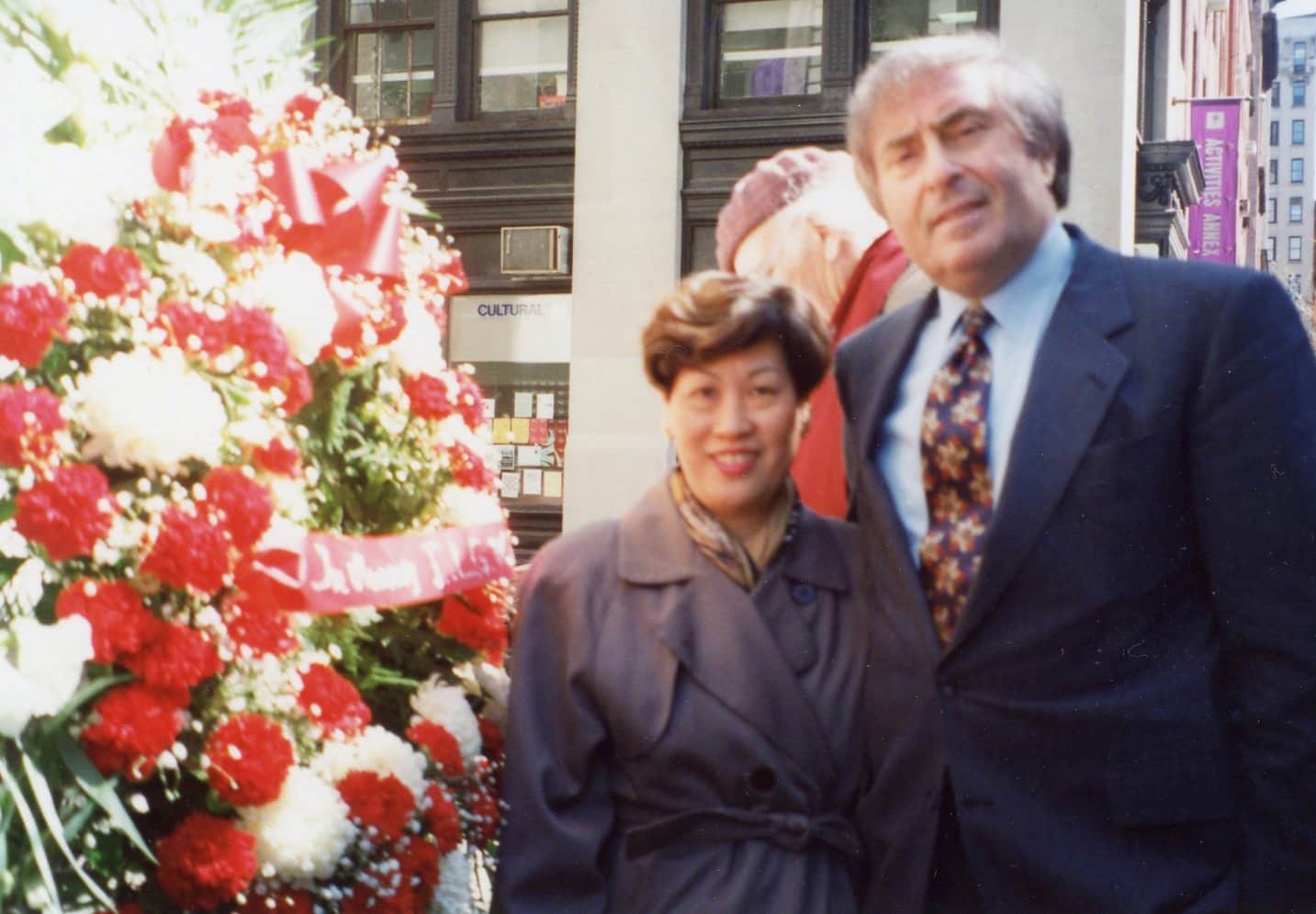
Image 47.03.07 — Alice Ip (left) with ILGWU President Jay Mazur (right) at the Triangle Fire Memorial in New York City, c. 1990.
Ip was like many other Chinese women workers who managed multiple responsibilities—worker, mother, activist, shop representative, friend, coworker, and union leader. This was one reason why members connected to the ILGWU’s philosophy of “social unionism,” which was concerned about the overall lives, education and well-being of workers, not only at work, but also with their families and communities.
Susan Yan, another garment worker, explained how she and other workers came to trust the union for information and advice:
“It is not easy for both shop owners and workers to make a living in Chinatown. … But rice has to be shared and both sides have to be fair to each other. I only hope that we workers can be fairly treated by the bosses. It is not right for them to go so far and treat us as if we were not human beings. … I’ve suffered enough, and I don’t want to be fooled by my bosses any more. To protect ourselves, which itself is also to protect our children and our families, we should know our rights as workers. Joining union activities is a good way for us to know our rights.” 5
Union members could attend classes, health workshops, vacation trips, musical programs, and sporting events, as well as the usual workplace-related meetings about the union contract and conditions at work. The Chinese women benefited from these events and activities, but they and others like them sometimes had to advocate for better representation within the union itself.
Reflection Questions
What are the most important qualities of the shop representative? What do you want or expect from the leaders you vote for?
The Fight for Daycare
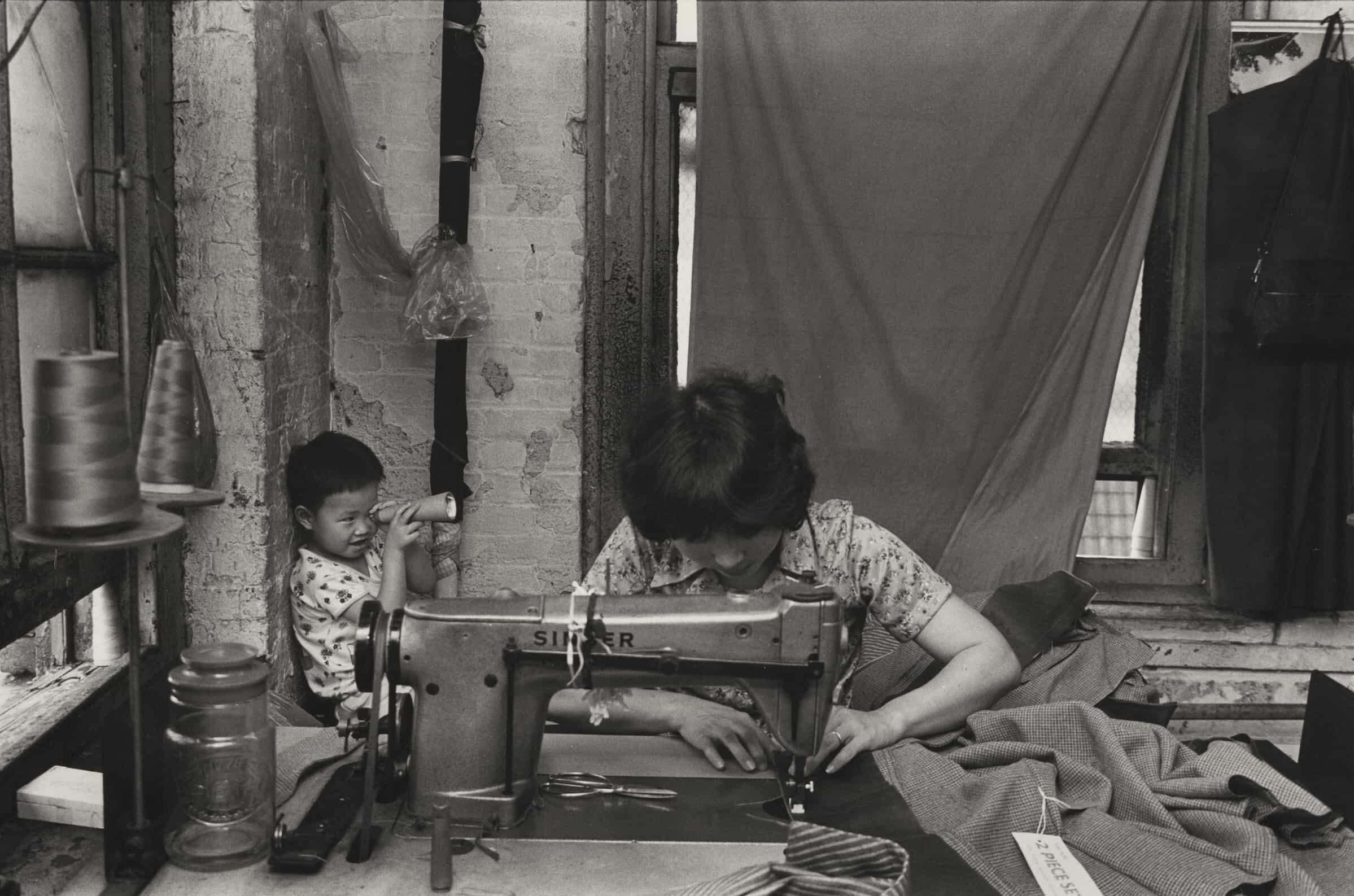
Image 47.03.08 — A Chinatown factory worker in New York City is hard at work while her child sits behind her. The lack of childcare services forced many mother garment workers to bring their children to their workplaces.
The Chinese women garment workers put the union to the test in a campaign demanding increased day care services within the community. These working mothers were dedicated to the education and future of their children. In 1977, they organized a parents’ group to express their plight in an open letter in the China Daily News:
“We are members of Local 23-25 and workers busy with their work. We find it difficult to choose between our work and our children. If we bring them to work, it is very dangerous; the union will not allow that, and it is also illegal; if we leave them at home, it is also extremely dangerous. Many members of our parents’ association leave their children at home, or even bring them to work. Especially during those public holidays when we have to work, we simply don’t know what to do. It is indeed very hard on us working mothers who are torn by our financial need and our children. Under these circumstances, children become victims. We are forced to leave them home without any care.” 6
Initially, the ILGWU leaders were unresponsive. They thought it was enough to focus on improved wages, working conditions, health benefits, and classes for workers. These leaders did not understand the importance of child care and families in the lives of the Chinatown union members. There were no high-level female or Chinese leaders in the ILGWU at that time.
Chinese women workers, however, continued to organize and press for their case. Through their efforts, they gained sympathy and support from staff in Local 23-25. Finally, the Garment Industry Day Care Center of Chinatown opened in 1983. The Chinese-American Planning Council (CPC), who managed the center, also lobbied successfully for government funding for broader childcare and after-school programs in Chinatown. The Chinese women members of Local 23-25 connected their activism with ILGWU’s philosophy of social unionism to gain more support. Their loud, persistent voices benefited their own family’s lives and the lives of other families.
Garment Worker Solidarity
Solidarity evolved and deepened among garment workers as they shared experiences and developed mutual trust, collective responsibility, and accountability. So many intersections and alignments moved the Chinatown garment workers and the ILGWU to join forces in the 1970s, 1980s, and 1990s. Driven by a deep passion and commitment to their children, the Chinese immigrant women turned to the union for information about life and interactions beyond the Chinese immigrant community.
Within Chinatown, the Chinese workers worked with the union to resolve problems with their bosses and demand greater attention and respect for women in the community. The union hired more staff from the community, including many worker leaders from the factories. The union monitored and used the Chinatown press to publicize their messages and announcements.
The Chinese immigrant garment workers in New York City were lively and talkative. They sang songs, joked, and teased each other in the community and in the factories. Similar to American union culture, they called each other “sister” and “brother” even if they were not related. They conversed about working together and supporting the union. They spoke to each other in Chinese using union-related phrases such as 一“don’t be a pan of loose sand” (一盘散沙) and “it’s no good to be alone.”
The Chinese workers began to see themselves within the larger garment industry and aspire to fair and equal treatment, the same as garment workers all over the city. The union changed and shaped the immigrant women’s lives and the Chinese women made their mark on the union and its culture today.
Reflection Question
What difference does gender make in leadership styles, methods, and issue priorities?
The New York Chinatown garment workers were fortunate to have the support of the ILGWU, in contrast to non-union workers who had more limited means of gathering information and aid. The union gave the workers institutional support, a collective voice, bargaining power, a new home, and community. The union also responded to persistent pressure from the Chinese women to fight for family issues, to understand their needs at work, to listen to members, and to represent them. The workers made the union strong!
Glossary terms in this module
garment workers Where it’s used
Workers who are involved in the production of clothing items.
International Ladies’ Garment Workers’ Union (ILGWU) Where it’s used
A union dedicated to fighting for garment workers’ rights to fair wages, benefits, and safe working conditions.
social unionism Where it’s used
Social unionism distinguishes itself from other forms of unionism by connecting the struggles in the workplace to greater issues of human rights, social justice, and democracy; it shapes both the culture of unions and the tactics they utilize.
solidarity Where it’s used
Shared beliefs and experiences that lead to group action and a feeling of mutual responsibility and support; when a group of people understand their fates are tied together.
strike Where it’s used
When workers stop work and withhold labor in protest about workplace problems, often involving picket lines where striking workers march in a line with signs outside the workplace asking others not to go in.
union Where it’s used
An organization formed by workers, typically from the same industry or company, representing the workers’ collective needs in the workplace; locals are units of an umbrella “international” union (internationals include U.S. and Canadian locals).