




Module 1: Roots: History of Pakistan and Early Migrations
Do Pakistani Americans fit under the broad umbrella of an “Asian American” panethnic identity?
Pakistan is a modern nation created in 1947, but the Pakistani people share a long history and culture with India and other South Asian neighbors. The political, economic, and social causes of Pakistani migration overseas include the history of colonialism in India, the separation of India and Pakistan in 1947, and the politics of the Cold War.
This module builds a foundation in understanding the diverse identities that comprise Pakistan and Pakistani Americans. By outlining the history and larger context of Pakistani migration to the United States, this module also examines the idea of a larger, more encompassing “South Asian American” identity.
Where and what is the nation of Pakistan?
To what extent is Pakistani American history connected to a South Asian history of colonialism and imperialism?
What forces led to Pakistani migration to the United States before and after 1965?
Pakistani Origins
Pakistan is a young, modern nation-state, but it overlaps with the long and complex history of South Asia. As a partitioned nation, Pakistan and India were separated in 1947 when India defeated Britain, ending its three-hundred years of colonial rule over the subcontinent. Two independent nations, India and Pakistan, thus emerged within the boundaries of former British India, and Pakistani self-determination reflected the right of Indian Muslims to form a sovereign state.
Britain’s hasty exit from South Asia in August 1947 caused widespread violence and rioting, and the Partition of British India led to one of the largest mass migrations in human history. Millions of Muslims, Hindus, Sikhs, and others crossed borders to their newfound sovereign territories.
From 1947 to 1971, Pakistan was a single nation made of two physically disconnected territories, East and West Pakistan, surrounding India in the middle. Pakistan fought a civil war in 1971, the result of which transformed East Pakistan into the new nation of Bangladesh. Since 1971, then, the state of Pakistan refers only to what was formerly West Pakistan. The nations of India, Pakistan, and Bangladesh, along with Sri Lanka, Nepal, and Bhutan, constitute the region known collectively as South Asia.
In addition, members of the Sikh diaspora called for the formation of Khalistan, an independent Sikh nation in the Punjabi-speaking areas of India and Pakistan. While the modern Khalistan movement emerged in the early 1970s, Sikhs have advocated for a separate state since the 1930s, but their demands have not succeeded in creating a new nation. At the time of the Partition, a majority of Sikhs in South Asia migrated to India, where over twenty million live today, and sixteen thousand Sikhs reside in Pakistan.
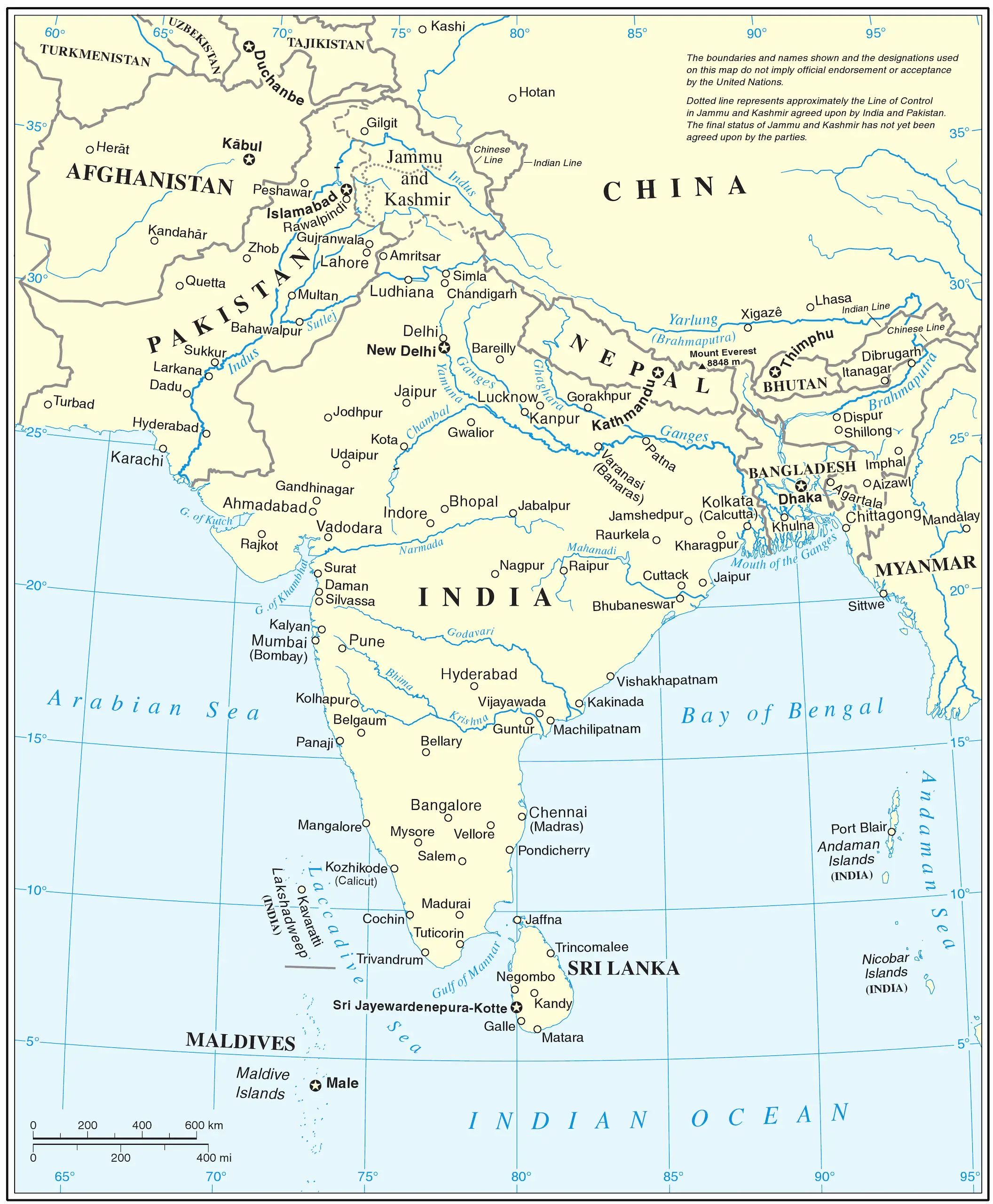
Image 16.01.01 — A map of contemporary South Asia, showing Pakistan in the northeast.
Contesting “South Asian” Identity
While Pakistan exists as a sovereign nation that roots the identity of Pakistani immigrants, the understanding of “Pakistani American” identity is also part and parcel of a contentious “South Asian” category. On the one hand, the term South Asia is itself a Cold War label constructed to shape US policy in the region. The term also does not reflect how many immigrants abroad have built community with others as part of the South Asian diaspora. For example, the label of Desi (meaning “of the South Asian homeland”) captures an identity based on both an imagined and broadly shared geographical and historical past.
On the other hand, some scholars, activists, and community leaders view the term “South Asian American” as anti-patriotic to one’s national homeland. Instead, they advocate for nation-based identities such as Pakistani, Indian, or Bangladeshi American. This perspective stems from historical and ongoing hostility between the governments of Pakistan, Bangladesh, and India and the rise of new nationalist movements in India in the twenty-first century.
Certainly, “South Asian” glosses over the numerous and serious political tensions between the countries and peoples of South Asia. These tensions have produced bitter inter-ethnic rivalries. India and Pakistan, for example, have fought several wars since 1947, and Bangladesh emerged from Pakistan’s Civil War of 1971. Despite the convenience of the umbrella term “South Asian,” the region’s inhabitants, both there and in the diaspora, do not universally embrace this label.
Consequently, in the United States and throughout the global South Asian diaspora, many increasingly reject the idea of a cohesive South Asian identity, preferring instead a discretely siloed, nation-based identity. They may also prefer to socialize exclusively or predominantly with their own co-ethnics, that is, with other Pakistanis, Bangladeshi, Indian, Sri Lankan, Nepalese, or Bhutanese Americans.
Pakistani identity is further complicated by the nation’s own postcolonial ethnic, geographic, and religious heterogeneity. Pakistan’s internal politics depend on various groups’ contested claims for power. The formation of Pakistani histories, languages, and cultural practices also constitute the Pakistani American community. An examination of the longer history of South Asia and the region bound by the modern nation-state of Pakistan can help explain the ethnic heterogeneity of the country and its diaspora. Doing so also complicates ideas about what a modern nation-state is and the claims that its inhabitants make on it.
This history begins around 3200 BCE with the rise of the Indus Valley civilization, one of the world’s oldest and complex ancient civilizations. The Indus Valley archaeological sites at Harappa and Mohenjo Daro are located in the contemporary Pakistani provinces of Punjab and Sindh, respectively. As their power declined, the Aryans, an Indo-Iranian subgroup of Indo-Europeans, arrived in the region around 1500 BCE. Subsequently, Punjab’s Taxila site, composed of three successive cities, was conquered and settled first by the Greeks, then the Persians and Mauryans, among others, before being destroyed by the White Huns in the fifth century CE. Later arrivals include the Arabs, Delhi Sultanate, Mughals, and finally, the British in the early seventeenth century.
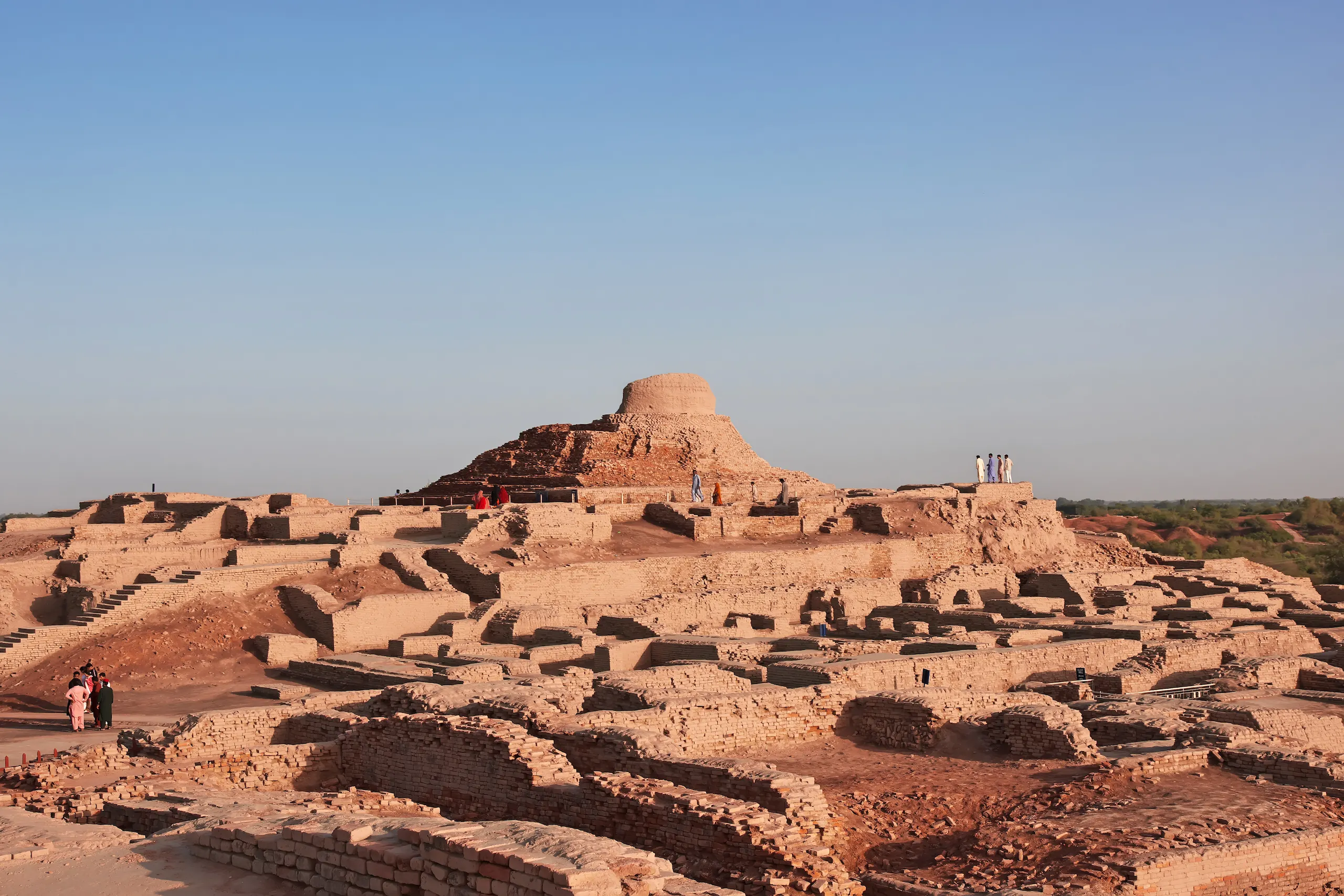
Image 16.01.02 — The ancient Indus Valley civilization, one of the world’s oldest and complex civilizations, began to form around 3200 BCE. The ruins of Mohenjo Daro in Sindh, Pakistan, are one of the Indus Valley archaeological sites.
Thus, Pakistan is home to descendants of many ancient, medieval, and modern peoples, as well as post-Partition migrants from throughout India and its neighboring countries. The heterogeneous cultures, traditions, and languages represent the many provinces and subgroups of people whose origin points, histories, and cross-cultural encounters highlight the porous border within this region.
Pakistan is bordered by India to the east, Iran and Afghanistan to the west, China in the northeast, and the coastline of the Arabian Sea to the south. The country has a varied topography and terrain, with the soaring Karakoram and Himalayan mountain ranges in the north and the Thar Desert in the South. The vast majority of Pakistanis descend from pre-Partition communities, but a large minority of Indian-origin, mostly Urdu-speaking Muslims also reside in Pakistan since the post-Partition-era, and they are known as Muhajirs. Pakistan’s five main ethnic groups include Balochis, Muhajirs, Sindhis, Pakhtuns, and Punjabis. Pakistani Americans trace their roots to all five provinces of Pakistan, but especially its larger cities.
The word “Pakistan” was created by Pakistan movement activist Chowdhary Rahmat Ali in 1933 as an acronym compiled from the names of the five provincial regions including Punjab, Afghania, Kashmir, Sindh, and Baluchistan. The government’s official languages are Urdu and English, but they coexist alongside the Indigenous languages of Punjabi, Sindhi, Pashto, Balochi, Saraiki, Hindko, and Brahui. Such ethno-linguistic heterogeneity has resulted in internal tensions that have often undermined national unity and security interests.
While nearly 97 percent of Pakistanis are Muslim, including Sunnis, Shias, Ismailis, Ahmadiyyas, and Bohris, the largest religious minorities are Hindus and Christians. Smaller groups include Zoroastrians, Baha’i, Sikhs, and Buddhists. As a result of this heterogeneity, the history of Pakistani migration to the US is embedded in this broader South Asian and Indian migrations.
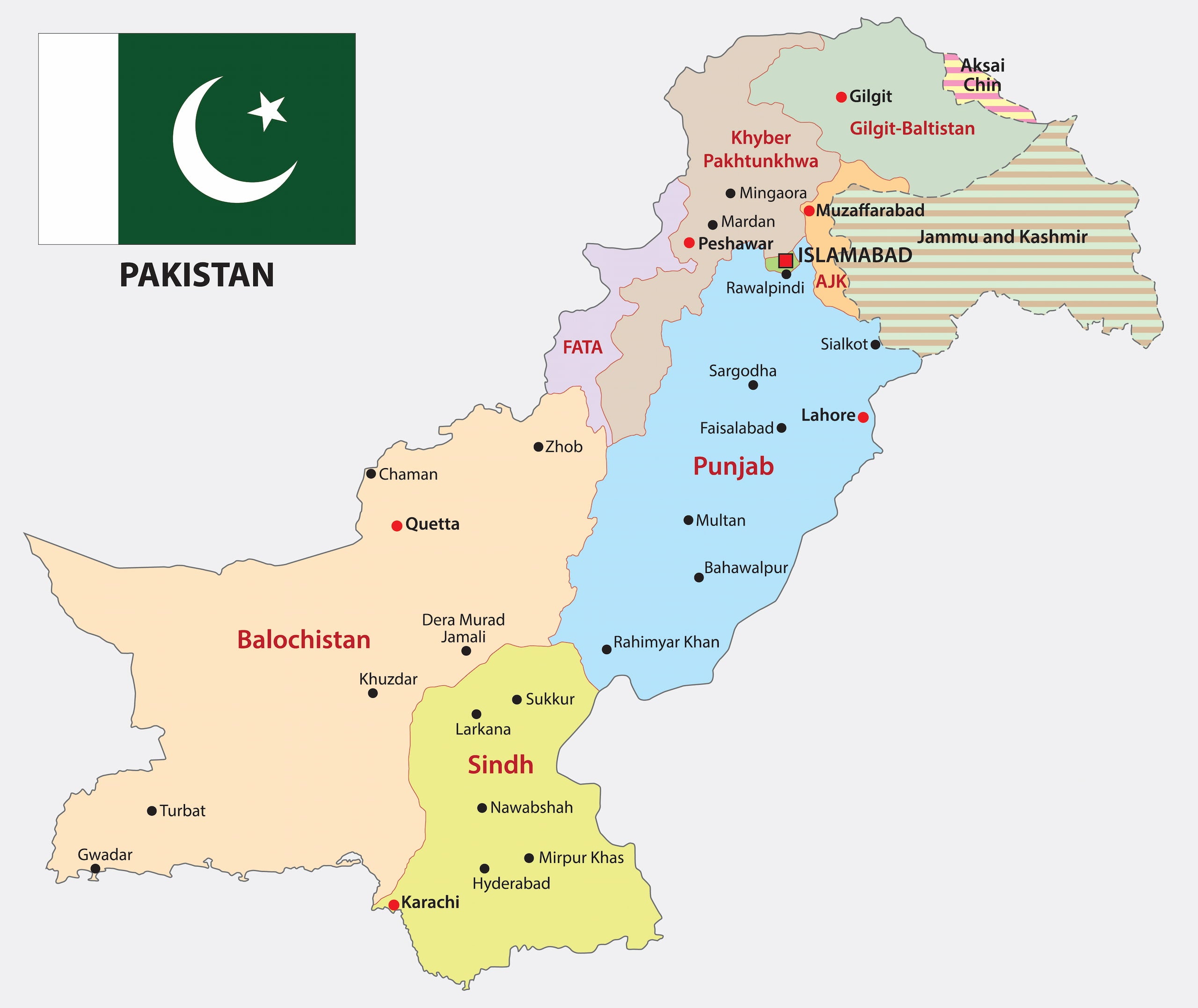
Image 16.01.03 — This map of Pakistan shows the country’s provinces and major cities. The capital city of Islamabad lies in the northern Punjab region.
Pre-1947 Migration
Prior to Partition and the end of World War II, four main waves of South Asians migrated to the US starting in the eighteenth century including sailors, vendors, laborers such as railroad workers and lumberjacks, as well as agricultural laborers and university students.
The first to travel to the US were sailors on American ships who came as part of the trading of goods between the US and India after the 1776 founding of the US and the signing of the Treaty of Paris in 1783. The United States began a brisk trade for exotic goods with the British Indian port cities of Bombay and Calcutta. By 1800, numerous American ships returned with goods and Indian laborers who were mostly sailors.
Some of the sailors settled in Massachusetts’ bustling port cities of Salem and Derby to work the docks. It is recorded that a half dozen South Asian mariners representing the East India Marine Society marched in a Fourth of July parade in Salem in 1851. While it is not a large community, the so-called “lascars,” or Indian sailors, came mostly from coastal Bengal and elsewhere in British India. The word “lascar” originated from Portuguese and refers to a sailor from the East Indies.
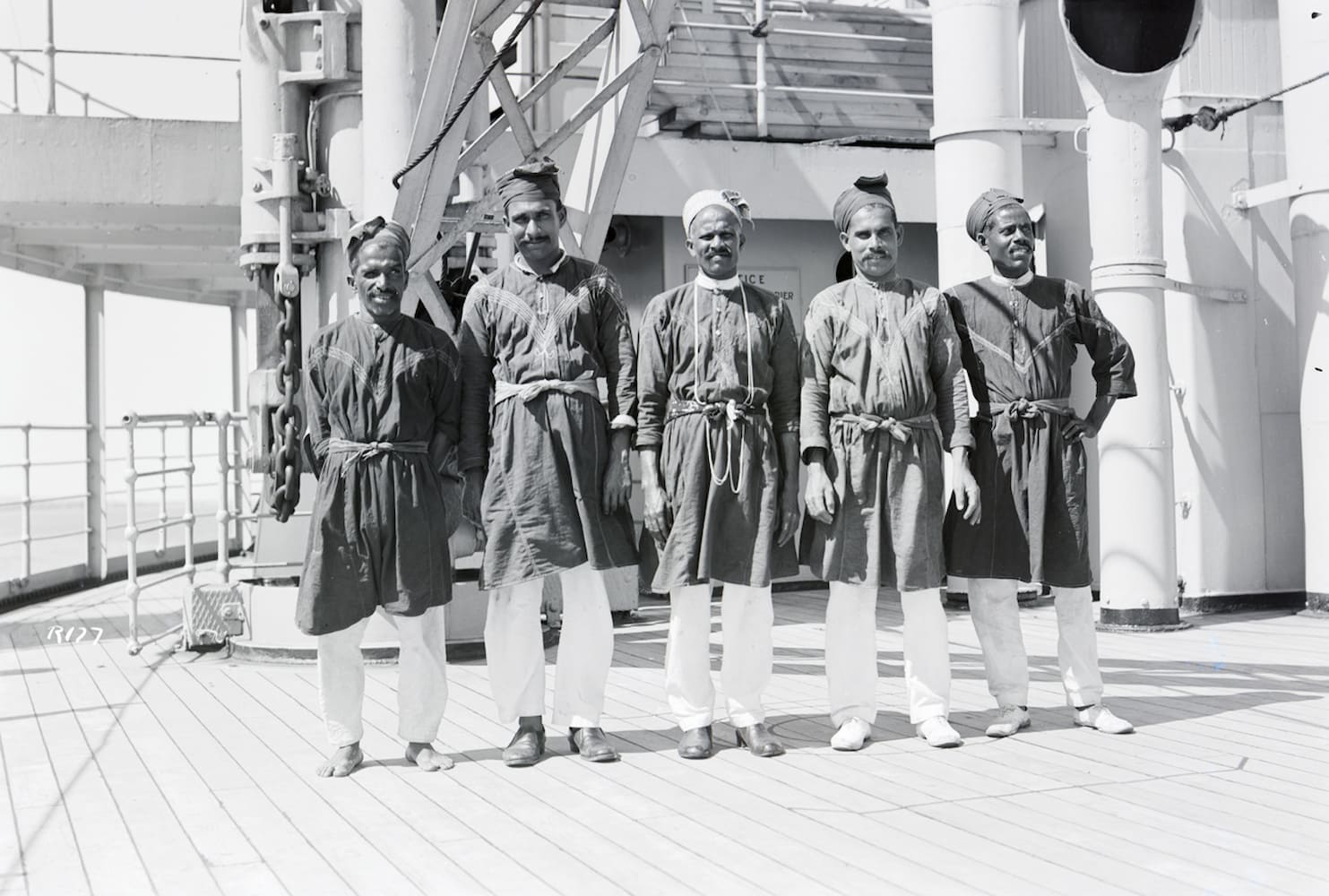
Image 16.01.04 — A group of lascars poses on the promenade deck of the Viceroy of India, a colonial British ship. The word “lascar” referred to sailors from “the East Indies,” which is known today as South Asia.
The first wave of lascars from the eighteenth to the early twentieth centuries made up the first wave of South Asian migrants to the US. The former seamen who had long toiled in the hot engine rooms of British merchant steamships began abandoning their berths in search of work. While ship-jumping was illegal in the 1800s, many Indians avoided capture and were successful in finding re-employment on British and American vessels. Employed in American factories, these ex-seamen helped manufacture ships, steel, munitions, and automobiles.
The second wave of Pakistani immigrants to the US occurred during the late nineteenth and early twentieth centuries, and they came as vendors or street peddlers from colonial Bengal and South Asians from other parts of present-day northern Pakistan including Kashmir and Khyber Pakhtunkhwa. The Bengali Muslim vendors who traveled along the eastern and southern coasts of the United States from the 1880s sold wall decorations, tablecloths, and other textiles made by Bengali women.
From the boardwalks of New Jersey to the streets of New Orleans, Louisiana, they tapped into a growing American fascination and demand for “exotic” goods. Like the South Asian sailors who settled in Massachusetts and other port towns, these tradesmen integrated into African American, Puerto Rican, and Caribbean communities of color along southern and eastern coasts of the US. Also, in the late nineteenth century, numerous vendors from the northern Pakistan and Afghanistan border region sold tamales, a turn-of-the-century food craze, in big cities and small towns throughout the American West.
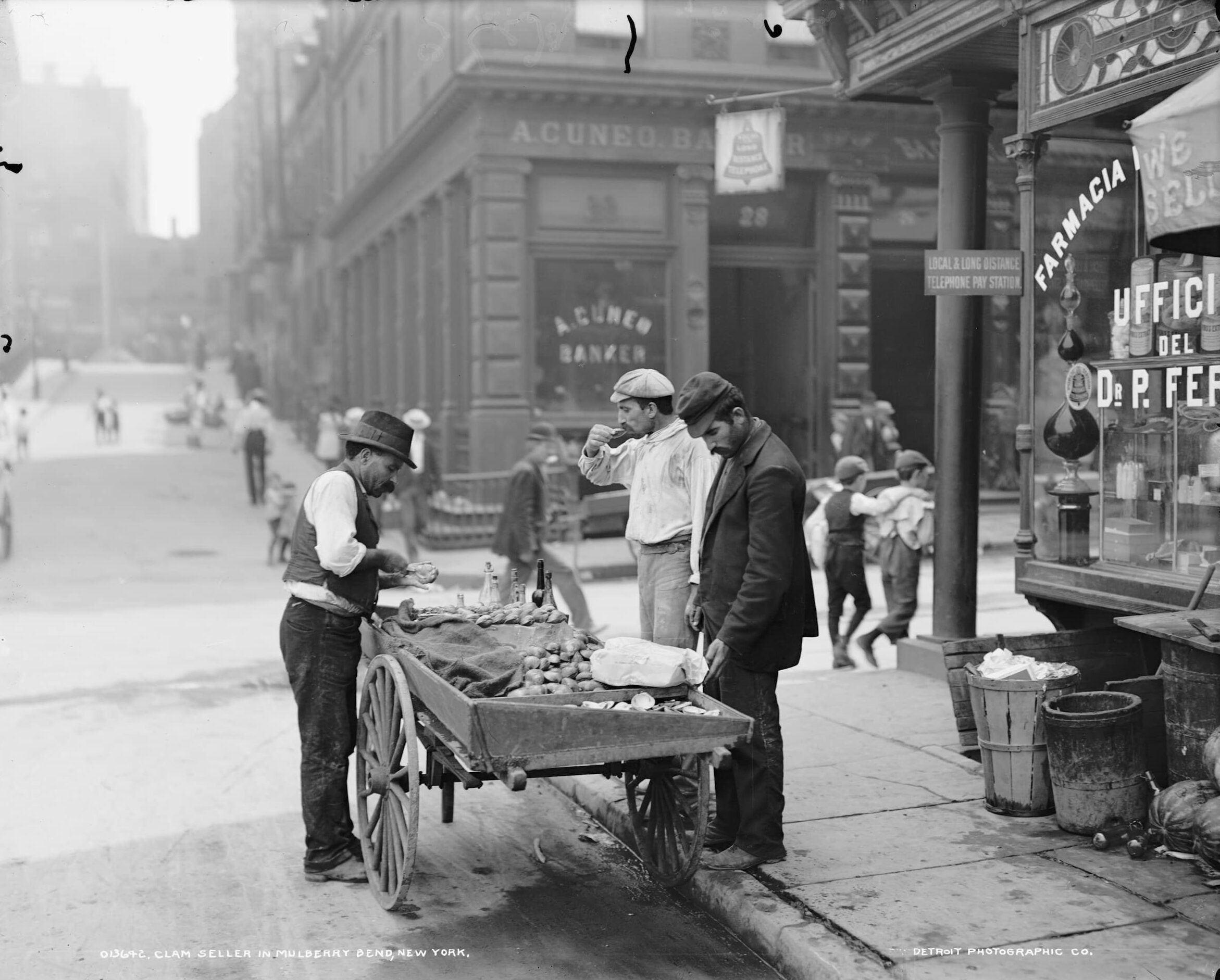
Image 16.01.05 — An immigrant clam seller on Mulberry Bend in New York City, circa 1900. A second wave of migrants who moved to the US in the late nineteenth and early twentieth centuries included many South Asians who became vendors and traders.
On the West Coast, around 1900, a third wave of South Asians began settling from Canada down to the states of Washington, Oregon, and California. Originating mostly from colonial Punjab, a region that today straddles Pakistan and India, British repression and high taxation of its Indian colonial subjects forced them to leave their homeland. Such conditions forced movement abroad and resistance within. Yet, others went on to serve in the British Army or were recruited by Canadian railroad and lumber companies for work. Most of these North America-bound migrants came from Sikh religious backgrounds, with a sizable minority of Muslims.
As Canada tightened its anti-Asian immigration laws in the early twentieth century, South Asian workers faced increasing violence at the hands of other workers, and moved southward into the United States, joining their brethren who arrived via San Francisco around the same time. A majority of this wave of South Asian migrants either worked in agriculture or owned small businesses, while others studied at local universities.
As with other South Asian settlers, they assimilated into nonwhite communities, in this case, among Mexican Americans. Gulam Rasul, for example, migrated to the Central Valley of California in the early 1900s, found work as a farmer, and married Inez Aguirre, a Mexican American. Together, they ran a restaurant called Rasul’s El Ranchero and raised thirteen children. A final fourth wave of Pakistani Americans arrived following the Immigration and Nationality Act in 1965 with the influx of immigrants entering as skilled professionals in fields such as medicine and engineering.
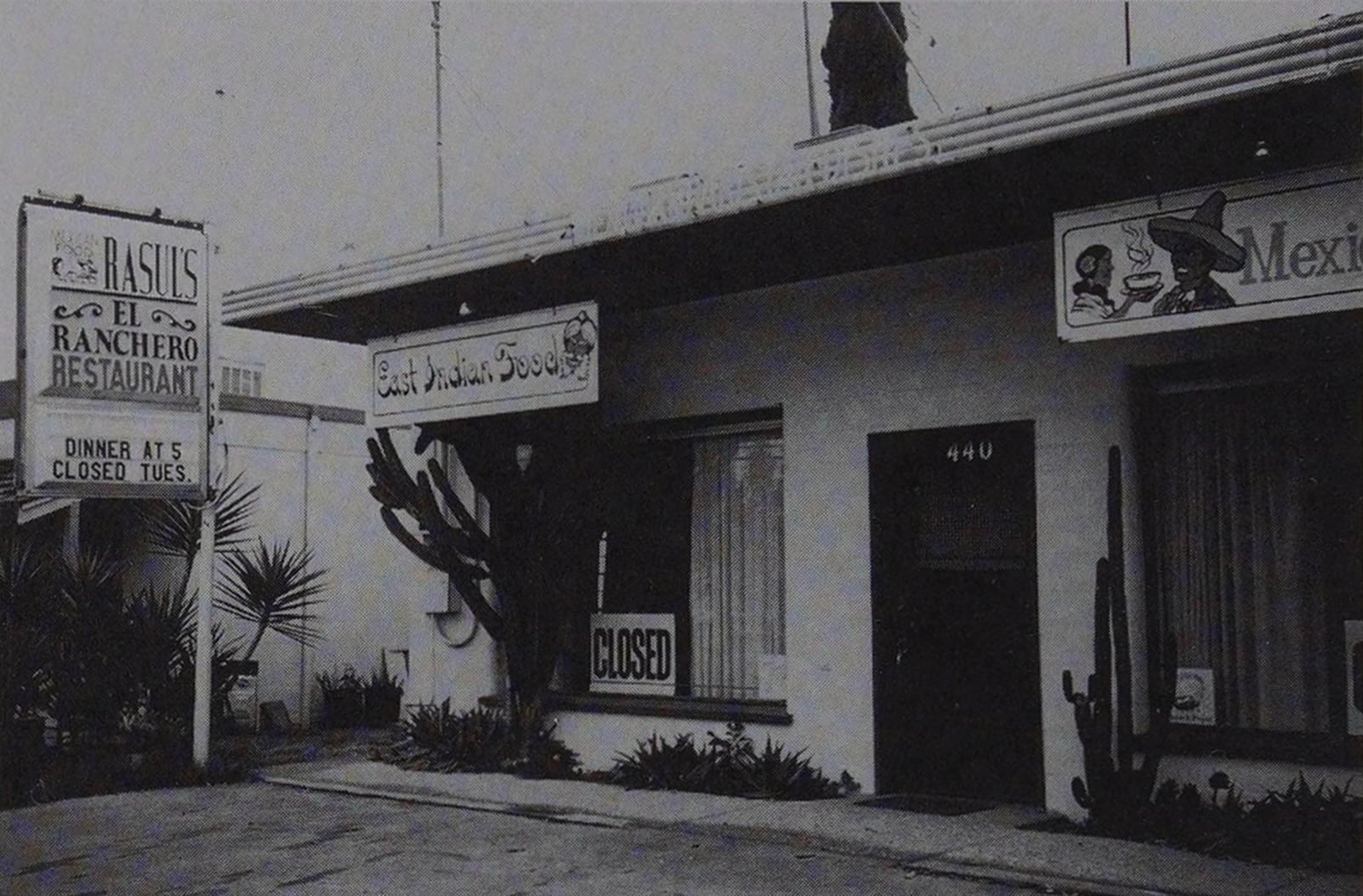
Image 16.01.06 — Gulam and Inez Rasul’s El Ranchero Restaurant in California’s Central Valley operated from 1954 to 1993, serving both South Asian and Mexican food. The restaurant advertises “East Indian Food,” a now outdated colonial term that referred to British India, and which includes current-day Pakistan.
Migration to the United States did not shield South Asian settlers from racial discrimination and violence. Mob attacks in places such as Bellingham, Washington, and Chico, California, in the early 1900s forced migrants to escape for safety elsewhere due to destruction of property and physical violence. Nevertheless, these early settlers and their descendants worked on and owned farms along the West Coast, especially in California’s Central Valley.
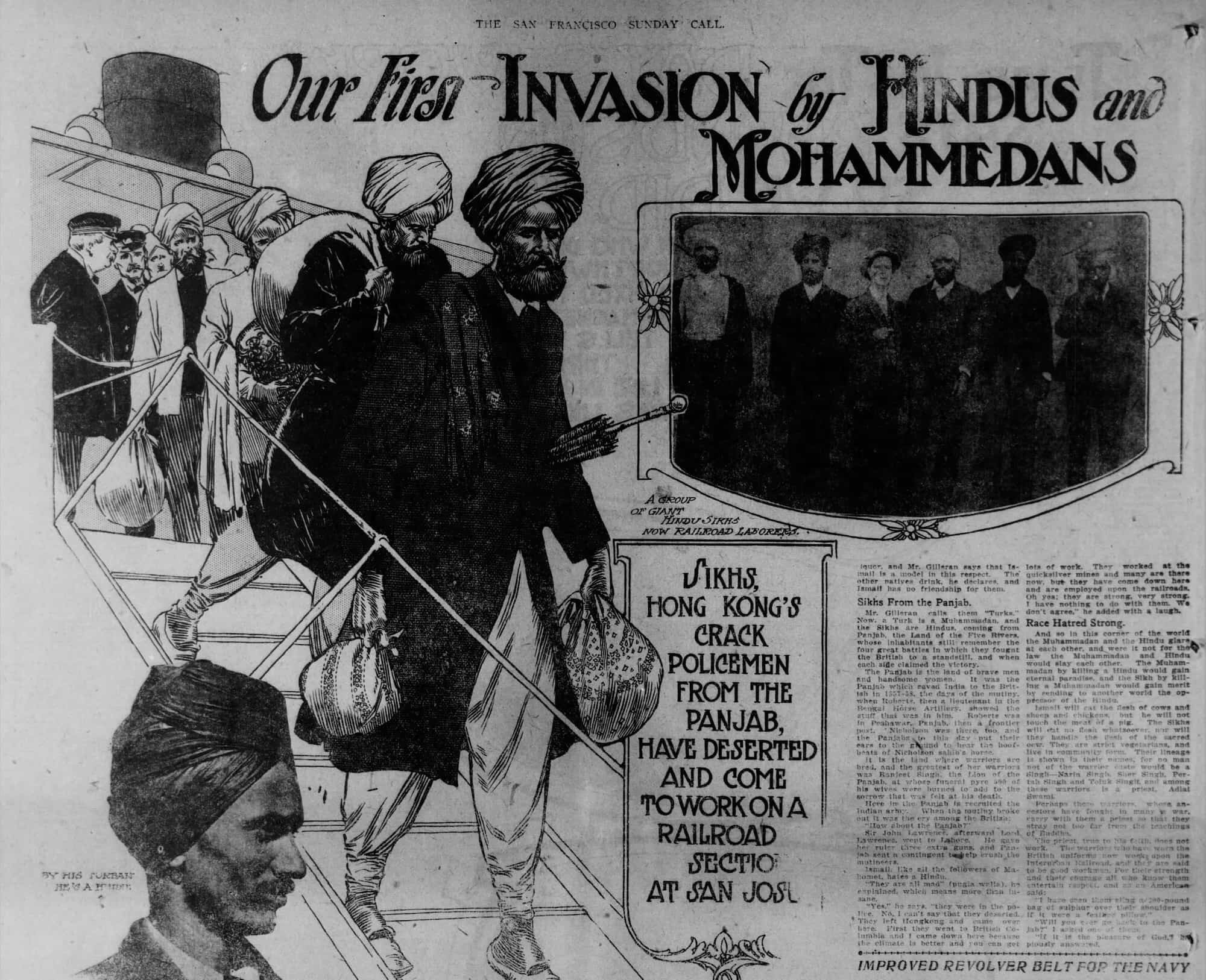
Image 16.01.07 — An article in The San Francisco Sunday Call from 1906 titled “Our First Invasion by Hindus and Mohammedans,” uses discriminatory language against South Asian migrants to the US.
Having faced political pressures in British India and open discrimination and violence in the US, South Asian migrants on the West Coast mobilized by joining the anticolonial Ghadar Party (revolution party) in the early 1900s. These agricultural laborers, lumber mill workers, and university students organized resistance efforts against anti-Asian immigration laws in the US and against British colonialism in India, and attempted to foment a democratic election and uprising in India during World War I. Their plans were thwarted, their leaders arrested, and the affair was named the Ghadar Conspiracy.
The subsequent trial from 1917 to 1918 in San Francisco, California, was, at the time, the longest and most expensive trial in US history. It resulted in guilty verdicts for charges of violating American neutrality laws. Although the Ghadar Party’s influence diminished after 1918, many South Asian Americans nevertheless continued to support the idea of Indian independence from British colonial rule.
Post-1947 Pakistani American Migration
Rising to new heights as the world’s leading power after World War II, the United States sought to expand its global sphere of influence against Communism. The Cold War that ensued primarily between the United States and Soviet Union shaped American foreign policy for over four decades. Throughout the Cold War, the US justified military, political, and financial involvement in distant lands like Vietnam, Afghanistan, Iran, Pakistan, and numerous other countries, often inadvertently producing migration links in new countries.
With the defeat of the British in India in 1947, the US enhanced its relationships with India and Pakistan. American Cold War aims for the region created new migration push and pull factors affecting Pakistan and its neighbors. First, by establishing exchange and study programs in the early 1950s and 1960s, the Cold War loosened anti-Asian immigration laws such the 1882 Exclusion Act and the 1924 immigration policies. The US State Department sent American technical, educational, cultural, and political experts to countries such as Pakistan to help “modernize” and “democratize” those countries. At the same time, it invited influential Pakistanis to visit and train in the US. After their US tours, these Pakistani exchange visitors returned to their home country and shared positive impressions of the country, which fostered Pakistani support and interest in the US.
In addition, the US government opened American libraries across Pakistan; distributed pro-American propaganda through various media such as magazines, newspapers, and radio broadcasts; and hosted pro-American lectures and events. The US government’s heavy promotion of American higher education abroad attracted increasing numbers of Asian students to universities and colleges in the country. Some Pakistani students with degrees from American universities found work after their studies and were able to remain in the US.
Image 16.01.08 — Pakistani students at Columbia University, New York, 1952. The US government’s heavy promotion of American higher education abroad attracted increasing numbers of Asian university-bound students. Some Pakistani students with American degrees would remain after finding work in the US.
These initiatives to promote American interests, develop exchange programs, and encourage study in the US fostered migration to the US in the latter half of the twentieth century. Returning Pakistani degree-holders and trainees also gained an advantage in finding better, higher-paying jobs as they helped grow Pakistan’s middle class. Having American connections and credentials boosted these Pakistanis’ status and career options, encouraging others to pursue American opportunities as well.
Post World War II, the Pakistani American population in the United States slowly grew in this context. Most new Pakistani immigrants to the US in the early postwar era were ethnically diverse city dwellers who had the cultural and economic capital to move abroad. They migrated from Pakistan’s largest urban centers such as Karachi in Sindh province, Lahore in Punjab, and Islamabad, the capital of Pakistan. As a result, most Pakistani Americans speak Urdu or Punjabi, and even more are also fluent in English prior to migration. While many settled in large American cities, others moved to small towns. Unlike in the early twentieth century, postwar migrants could now apply for naturalized citizenship and bring their Pakistani spouses and children. As a result, the greatest increase in the immigrant population of Pakistani Americans occurred after 1965.
Conclusion
The Cold War migration shifts were relatively small at the time, but they foreshadowed the coming transformation in Pakistani immigration patterns to the United States. Although the history of Asian migration is routinely segmented as pre-1965 and post-1965 due to the Immigration and Nationality Act of 1965 (INA), the INA actually incorporated existing Cold War migration policies. These policies permitted professional and skilled laborers into the US, particularly among Asian American communities, contributing to the growth of what became known as the “model minority” and thus, pitting them against other minorities. Together, the Cold War migrations, INA, and a handful of other immigration laws passed in the postwar decades, helped reshape the profile of Pakistani American and Asian American communities in the United States.
Glossary terms in this module
colonialism Where it’s used
When one country takes partial or complete control over another country economically and politically, usually exploiting its natural resources for profit. The colonizer forces their beliefs and way of life onto the colonized.
Desi Where it’s used
Anyone of South Asian descent, typically including Bangladeshis, Indians, Pakistanis, Nepalese, and Sri Lankans.
diaspora Where it’s used
Ethnic minority groups residing and acting in different host countries while maintaining material and sentimental ties to their homelands.
Ghadar Party Where it’s used
Formed in 1913 by Punjabi expatriates, this international political movement’s primary goal was to overthrow British colonial rule in India.
Muhajirs Where it’s used
Muslim immigrants who migrated from various regions of India after the Partition of 1947.
nation-state Where it’s used
A nation ruled by its own sovereign state or government whose citizens share a common history, religion, language, and cultural practices.
nationalist movement Where it’s used
A political struggle for independent statehood, which challenges imperialist and colonial forces.
Partition Where it’s used
The 1947 separation of the two independent nations of India and Pakistan, ending the 300 years of British colonial rule over India.
South Asians Where it’s used
South Asians are people with ancestry traced back to Afghanistan, Bangladesh, Bhutan, India, Maldives, Pakistan, Nepal, Sri Lanka, and Myanmar (Burma).