




Young volunteers, all wearing “Proud Pakistani-American And I Vote” shirts, stand next to an American flag inside an office and smile for photo.
Module 5: Advocacy: Pakistani American Community Power
Do Pakistani Americans fit under the broad umbrella of an “Asian American” panethnic identity?
Pakistani American community and political groups have prioritized three important sectors to help regain a sense of place in the US: immigrant rights, community service, and political engagement. Pakistani Americans have found that they can represent and empower themselves through self-advocacy.
This module examines some of the organizational approaches Pakistani Americans have developed or embraced to tackle the urgent problems of community members as well as their strategies for political engagement. Organizers, lawyers, activists, and ordinary people have joined or founded numerous advocacy organizations that engage authorities at the local, state, and federal levels.
How are Pakistani Americans advocating for justice and equality?
How are Pakistani Americans working toward empowerment and representation?
How are Pakistani Americans helping to create more equitable access to basic social services for all?
Immigrant Rights
Immigrants of color, including Pakistani Americans, endure heightened surveillance and policing by law enforcement and immigration authorities. Such authorities routinely check the immigration status of those perceived as threats, even if their danger lies in simply being of foreign origin. Pakistani Americans contend with the added risk of profiling due to general perceptions of Muslims as a security threat.
Those with uncertain residency status face increased risk of raids, detention, and deportation. Pakistani American recipients of Deferred Action for Children of Arrivals (DACA) and Temporary Protected Status, refugees, and spousal and child dependents confront the ever-present specter of US Immigration and Customs Enforcement (ICE) agents approaching their workplaces and homes, or even on the street or in the courtroom for unrelated, minor violations.
Lack of financial resources, weak English language skills, and few family or community networks push poor and racialized immigrants even further into the margins and away from possible avenues of assistance when exploited or arrested. Due to a massive backlog in visa processing, immigrants from high-sending countries, or those with a high rate of immigration like Pakistan, must wait several years before the immigration system even considers their cases. In addition, the US “War on Terror” and resulting government association between Pakistani immigrants and terrorism further diminishes the likelihood of their visas being approved.
Pakistani immigrants may not possess full information about their rights, and as a result, community and national organizations demand remedies such as expanded pathways for legal residency, human rights protections from abuse under detention and deportation regimes, and labor protections. They also conduct community outreach to educate Pakistani American citizens and immigrants about their rights under the law and the resources available to them. The organizations distribute pamphlets in multiple South Asian languages including Urdu and Punjabi, informing them about residency options, work permits, and area legal clinics. These organizations stand by the principle that communities benefit most when they work toward uplifting their most marginalized members.
More to explore
Image
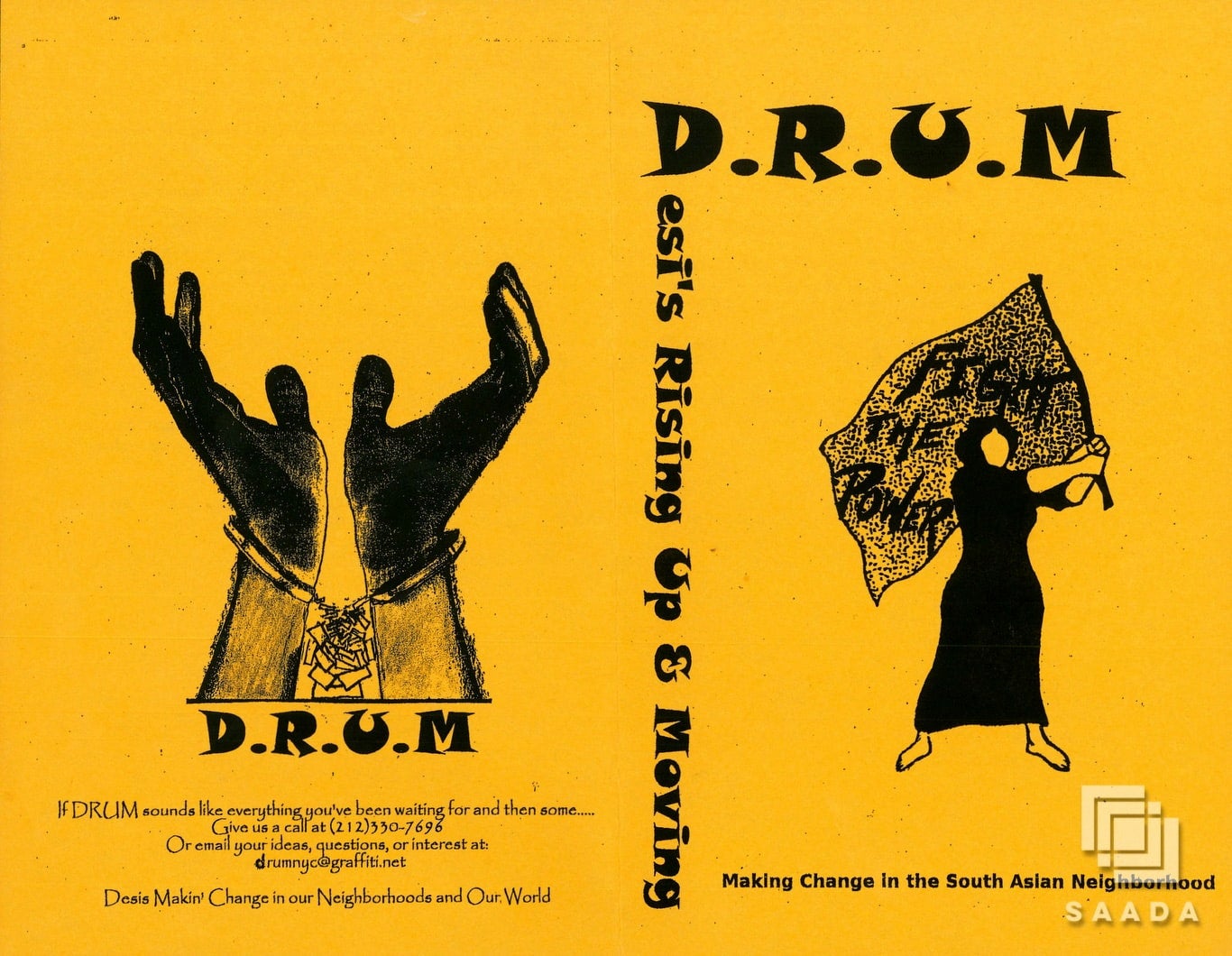
The History of DRUM
Working with other South Asian Americans, Pakistani Americans in the New York-based organization, Desis Rising Up and Moving (DRUM), help advocate for social and policy changes in immigrant rights, civil rights, and workers rights.
Community Service
At the local level, Pakistani Americans work toward meeting other immediate community needs, such as social, charity, and medical services. Across the country, registered Pakistani American charity and religious organizations collect money and goods for distribution to low-income families and individuals. Pakistani American women have spearheaded less formalized social charity initiatives, often shouldering the work of collecting and then handing out supplies and monies to community members in need of assistance.
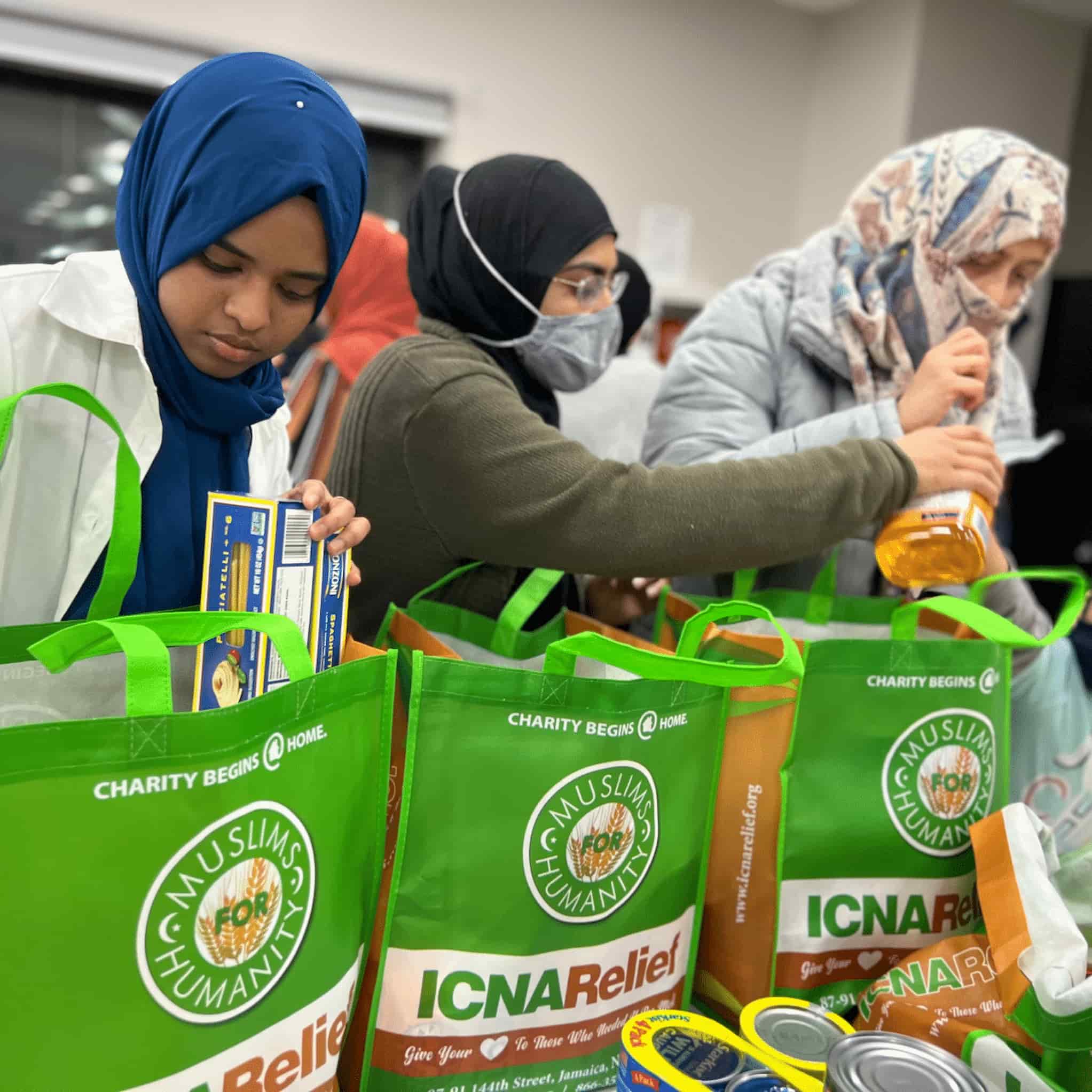
Image 16.05.02 — Islamic Circle of North America (ICNA) volunteers prepare food packages for free distribution through their food pantry. Pakistani Americans are often involved in charitable community efforts.
Pakistani American physicians have been at the forefront of founding medical missions in major cities across the United States. A large number of physicians joined the white-collar professionals who migrated from Pakistan in the 1960s and 1970s. By the early 1990s, these Pakistani American medical professionals were financially, professionally, and socially well-situated to establish health organizations to serve the underprivileged. As older, immigrant doctors, they wanted to give back to their communities.
Since then, newer generations of Pakistani Americans have joined the effort. Together, they generate the funding to build community clinics and volunteer their medical expertise and services. Houston’s Shifa Clinic and Ibn Sina Foundation Clinic, which were both established by immigrant Pakistani American physicians, provide affordable medical treatment to the city’s uninsured and underinsured residents. Pakistani American medical professionals have also founded clinics in places like Los Angeles, California; Atlanta, Georgia; Chicago, Illinois; and New York City—and even in Pakistan where the Pakistani American doctors work with international organizations to provide pro bono medical services.
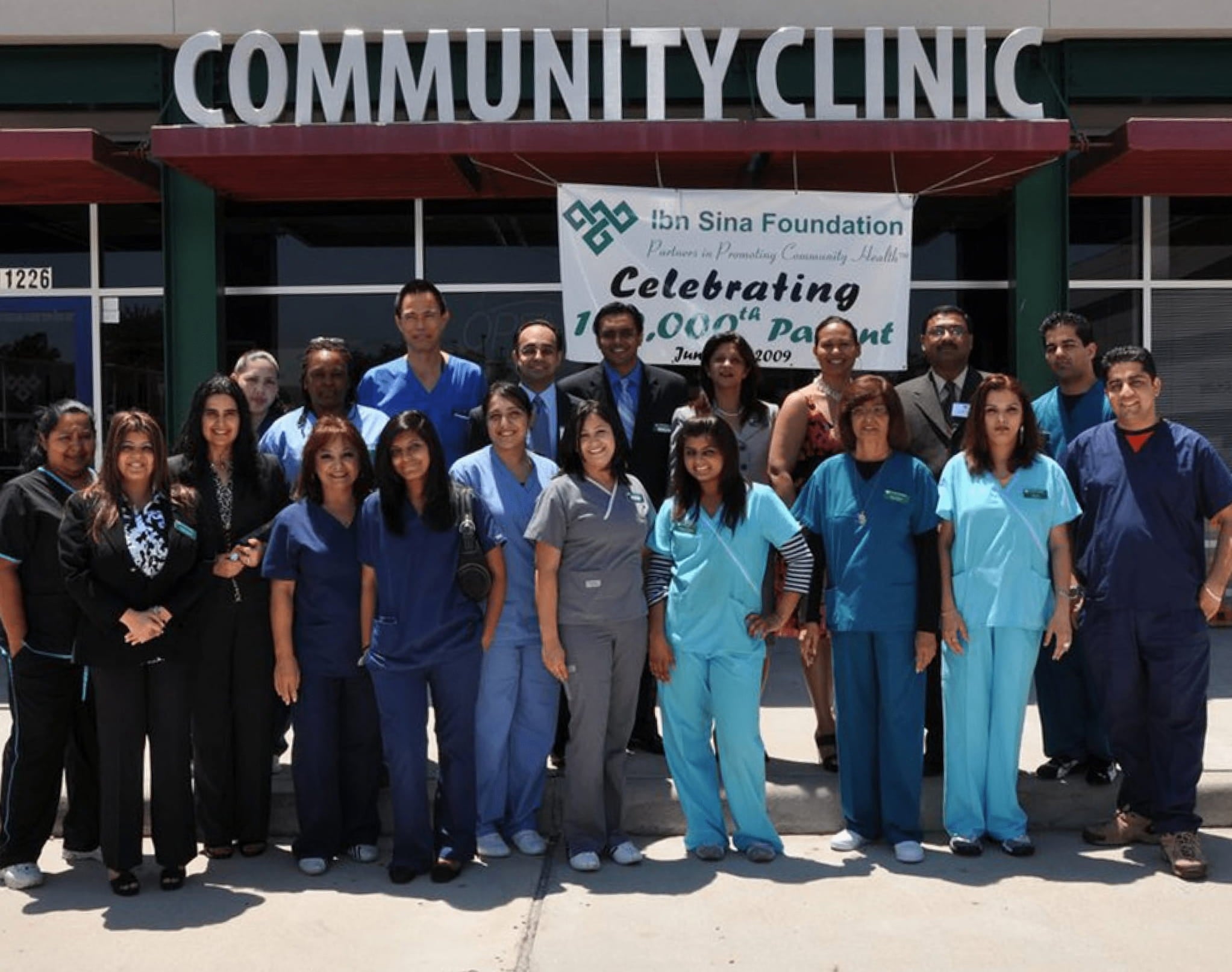
Image 16.05.03 — The staff at a clinic of the Ibn Sina Foundation, founded by Pakistani Americans. The Foundation provides medical, dental, diagnostic, specialty, mental health, and well-being programs throughout areas around Houston, Texas.
Some of the clinics serve mainly their co-ethnic community members, such as other Pakistani and American Muslims, while others serve the general public. Pakistani American physicians have similarly joined other South Asian American or American Muslim healthcare service missions. At their inception, some of the medical missions branched off from Islamic associations, such as the Islamic Circle of North America that helped establish Detroit’s Muslim Family Services.
The clinics provide free or reduced-cost healthcare, along with a host of other resources for marriage counseling, special needs, social services, and legal aid. Several were established by women and are dedicated to mental health care, such as the Niswa Association in Los Angeles and Sakhi in New York City that provide culturally and linguistically competent counseling to the underserved South Asian American communities. Yet others assist survivors of domestic violence by providing legal guidance, housing aid, and counseling.
Political Engagement
Many Pakistani Americans believe in amplifying their presence and participation in the American political system. While some organizations work to protect Pakistani American interests through political engagement, the level of political involvement has tended to increase as immigrant communities became more established. As seen with other immigrant groups, later generations have become more politically active than earlier generations.
Although Asian Americans lean much more heavily Democratic than Republican, by 2020, Pakistani and Bangladeshi Americans were the least likely of Asian American groups to identify as Republican. For example, while 13 percent of Asian Americans voted Republican during the 2020 elections, only 4 percent of Pakistani Americans identified with the Republican Party. Interestingly, 10 percent of Indian Americans identified as Republican.
Not only is Pakistani and Bangladeshi American party affiliation unique among Asian Americans, but it also stands apart from the other, much bigger South Asian American subgroup associated with India. The difference between Indian and Pakistani Americans’ party preferences was evident in the 2016 presidential election, in which 88 percent of Pakistani Americans voted for Hillary Clinton versus 79 percent of Indian Americans.
Likewise, in the same election, 14 percent of Indian Americans but only 5 percent of Pakistani Americans voted for Donald Trump. Pakistani and Bangladeshi Americans’ exceedingly low support of Trump was, by far, the lowest among Asian American subgroups. Overall, 22 percent of Asian Americans voted for Trump, but this proportion went as high as 34 percent of the Chinese American voters.
Pakistani Americans leaned heavily toward the Democratic Party because the latter championed their interests. Foreign policy toward Pakistan, other Muslim-majority countries, and international Muslim issues, such as the struggle for Palestine, have fundamentally shaped their voting preferences.
Compared to Pakistani Americans, other Asian American groups such as Chinese, Japanese, and Korean Americans have historically had longer and more expansive populations who have more established experience working within the political system. They also have many more elected officials who share their ethnic background and can potentially advocate for group interests.
Indian Americans also have much greater prominence in American politics than Pakistani Americans, even though the chronology of population growth among Indian Americans roughly parallels that of Pakistani Americans. By one estimate, Pakistani and Indian Americans were over 85 percent foreign-born in 2020. Indian Americans’ political impact can be attributed to their much larger population size, wealth, organized fundraising, power, and influential Senate India Caucus.
Still, not only have Pakistani Americans run for political positions, they have both established their own political organizations and worked through other organizations to achieve political representation. Americans of Pakistani descent elected to public office include Saud Anwar (D-Connecticut) and Sadaf Jaffer (D-New Jersey). Some of these organizations’ goals include increasing political participation among the Pakistani American voting public and endorsing candidates running for political office. Others focus on supporting progressive policies and training young Pakistani Americans to eventually assume political leadership positions. Some emerging leaders advocate for uplifting marginalized communities by representing their interests to the government. Lastly, individual Pakistani Americans fundraise within their communities for local, state, and national elections.
The Pakistani American Political Action Committee (PAKPAC), established in 1989, is a nonpartisan organization whose main aim is to contribute funds to Members of Congress who back their mission of enhancing US-Pakistan relations. They collect and donate sizable sums of money to candidates and political parties. Their influence, however, is limited by the more substantial influence of the pro-India caucuses, providing a good example of internal divisions within a potentially expansive South Asian panethnic identity.
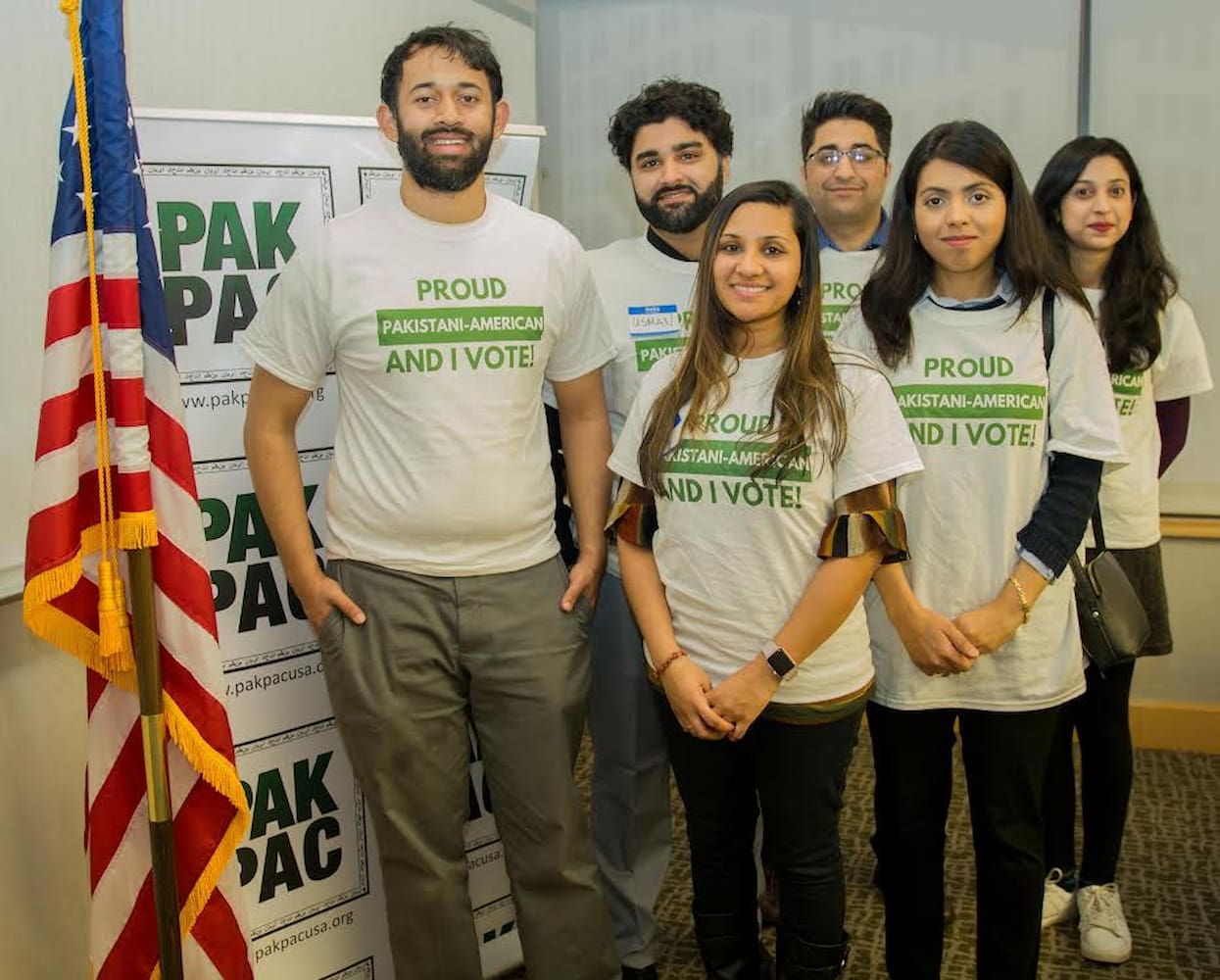
Image 16.05.04 — Pakistani American volunteers from the Pakistani American Political Action Committee (PAKPAC) gather in 2020 to mobilize voting in Nevada.
The 9/11 attacks impeded coalition-building efforts between South Asian American Muslims and other South Asians. In the fallout of the attacks, many individuals and organizations sought to distance themselves from a much-maligned Muslim population. Consequently, South Asian Muslims deepened their already-existing or forged new alliances with Arab and Middle Eastern Muslim American organizations that refused to remain silent in the face of government surveillance, deportation, widespread hostility, and violence against American Muslims.
Groups such as the Council on American-Islamic Relations (CAIR) and Emgage provide a vehicle through which Pakistani Americans are empowered through civic engagement. Founded in 1994 in the San Francisco Bay Area as a grassroots, nonprofit group, CAIR advocates for American Muslim civil liberties. By the 2020s, it had around twenty-five chapters in cities across the country. Emgage was formed in 2006 to mobilize American Muslims around policies that affected them and to engage them in the democratic process that empowered them. By 2020, Emgage had the largest American Muslim political action committee (PAC) in the United States.
While Pakistani Americans joined forces with American Muslim groups in the US, they also collaborated and cooperated with some South Asian American groups such as the South Asian Network (SAN) in Los Angeles and South Asian Americans Leading Together (SAALT). SAN is a community-based organization that first advocated for Muslim and Sikh Americans after 9/11, though their primary mission today focuses on access to health and civil rights. SAALT galvanized as a panethnic coalition to support South Asian Americans post-9/11 amidst anti-Muslim programs. In 2008, they expanded their coalition work to advocate against anti-Muslim race and religious profiling and have formed an umbrella group today called the National Coalition of South Asian Organization (NCSO).
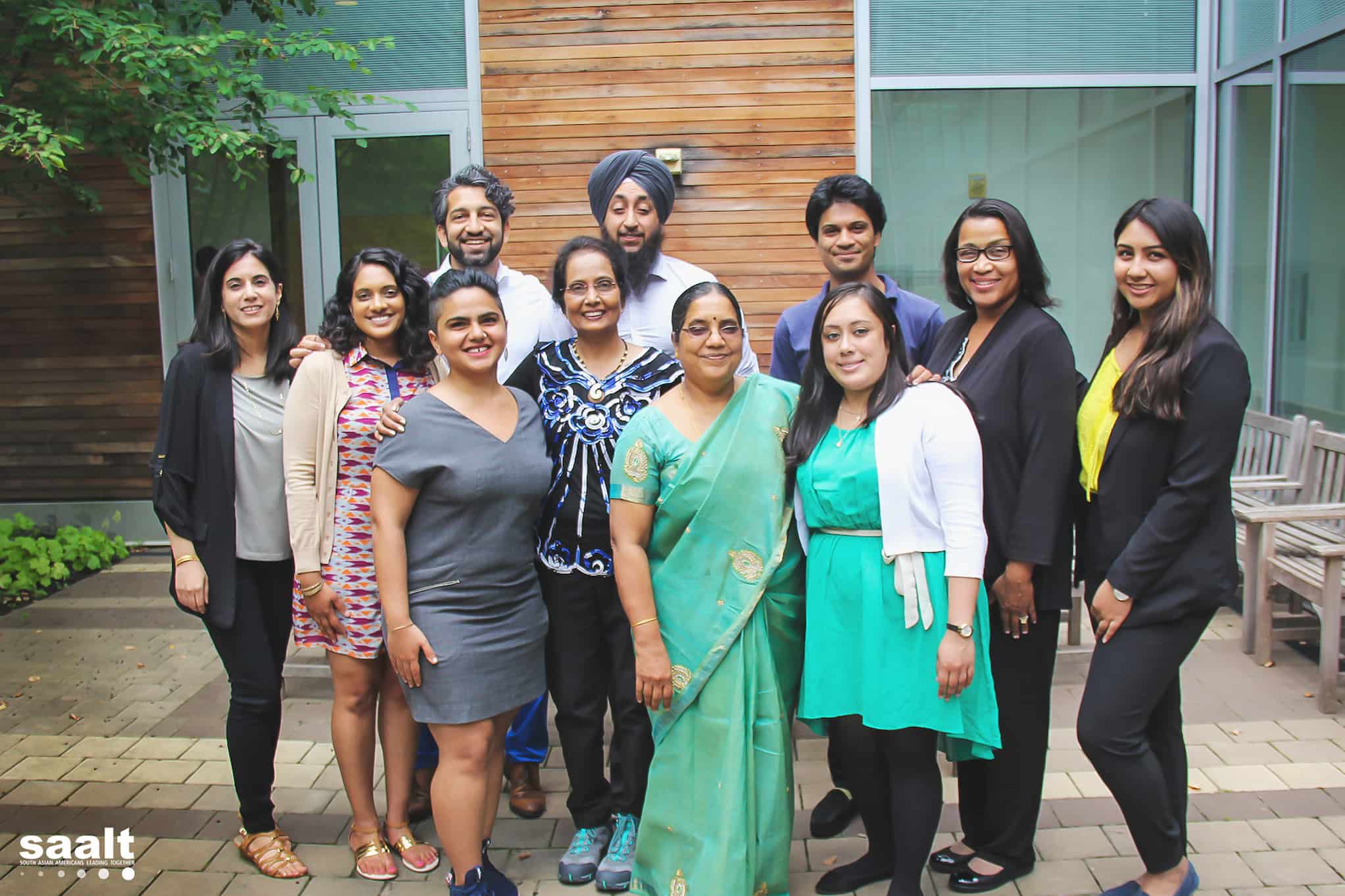
Image 16.05.05 — Members, staff, and colleagues of SAALT (South Asian Americans Leading Together), a panethnic South Asian American coalition that existed from 2000-2024.
SAN, SAALT, and others are just a handful of the organizations that have mobilized their communities’ strengths to create political power on behalf of Pakistani and South Asian Americans. Increasingly, they also work with Asian American panethnic organizations to achieve the same goals, though some Asian American groups may not regard South Asian American issues as widely shared, panethnic problems, but rather as uniquely South Asian or American Muslim issues.
Conclusion
This module has highlighted critical areas of mobilization and assistance for the advancement of Pakistani American communities including its most vulnerable segments. Activists continue to advocate for the interests of Pakistani Americans through a variety of initiatives, whether social, legal, economic, or political. Some of these programs support Pakistani Americans specifically, but in many instances, community members have aligned with other Muslim groups in the US, including Arab Americans, South Asian Americans, and others for panethnic solidarity in a show of support. They have also joined with non-ethnic advocacy groups. Such coalition building reflects the ever-shifting, historically situated consciousness and identity of Pakistani Americans.
Glossary terms in this module
medical missions Where it’s used
Medical professionals volunteering expertise and services to underserved populations and areas.
Pakistani American Political Action Committee (PAKPAC) Where it’s used
A nonpartisan organization whose aim is to contribute funds to Members of Congress who back their mission to enhance US-Pakistan relations.
Political Action Committee (PAC) Where it’s used
An organization that raises money to influence elections or legislation, especially at the federal level.
Senate India Caucus Where it’s used
A bipartisan coalition in the US Senate founded in 2004 by Senators John Cornyn (R-TX) and Hillary Clinton (D-NY) to work closely with Indian government officials and Indian-Americans in promoting US-India bilateral relations.
South Asians Where it’s used
South Asians are people with ancestry traced back to Afghanistan, Bangladesh, Bhutan, India, Maldives, Pakistan, Nepal, Sri Lanka, and Myanmar (Burma).