





Module 4: Challenges: Pakistani Americans and the Aftermath of 9/11
Do Pakistani Americans fit under the broad umbrella of an “Asian American” panethnic identity?
For Pakistani Americans, al-Qaeda’s 9/11 attacks and resulting intensification of the US security state has had a lasting impact. The consequences also include the rise of Islamophobia against Muslims in the US. The community experienced the fracturing of a South Asian American panethnic identity, the silencing of American Muslim voices, and the erosion of community trust. Conversely, the events of 9/11 also led to the galvanizing of new Civil Rights movements, mobilization by advocacy groups, and a deepening of solidarity. These paradoxical developments post-9/11 continue to wreak havoc and tension at the same time that community members find comfort in newly formed watch and advocacy groups.
This module explores the impacts of the attacks on the World Trade Center and the Pentagon on September 11, 2001. This includes how the intensification of the US security state and rise in Islamophobia affected Pakistani Americans, and how they coped with such difficulties.
Why did the US security state develop after 9/11?
To what extent did the American security state impact Pakistani Americans?
How have Pakistani Americans experienced Islamophobia?
The Post-9/11 Security State
After the 9/11 attacks, President George W. Bush swiftly signed the Patriot Act in 2001. Its aim was to enhance national security by expanding government surveillance and law enforcement powers, particularly related to terrorism and international money laundering. In effect, this overarching new law allowed for the monitoring of all Americans’ phone records, internet use, and banking activities. It also allowed government agents to search homes without a warrant. Moreover, the Patriot Act facilitated the targeting, detention, and deportation of American Muslims, and intensified the US government’s “War on Terror.”
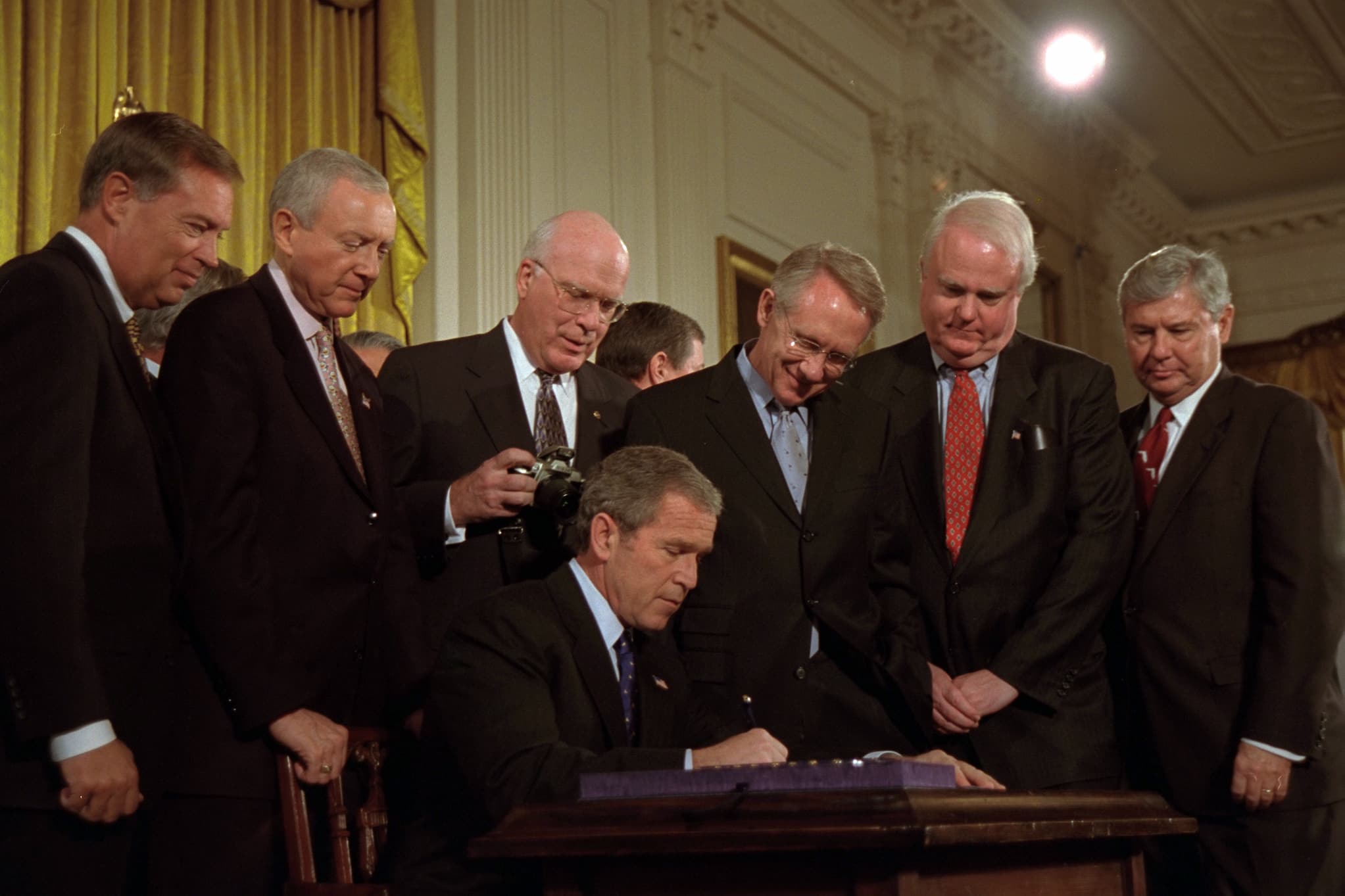
Image 16.04.01a — President George W. Bush signed the USA Patriot Act into law on October 26, 2001. The act enabled the targeting, detention, and deportation of American Muslims, including Pakistani Americans.
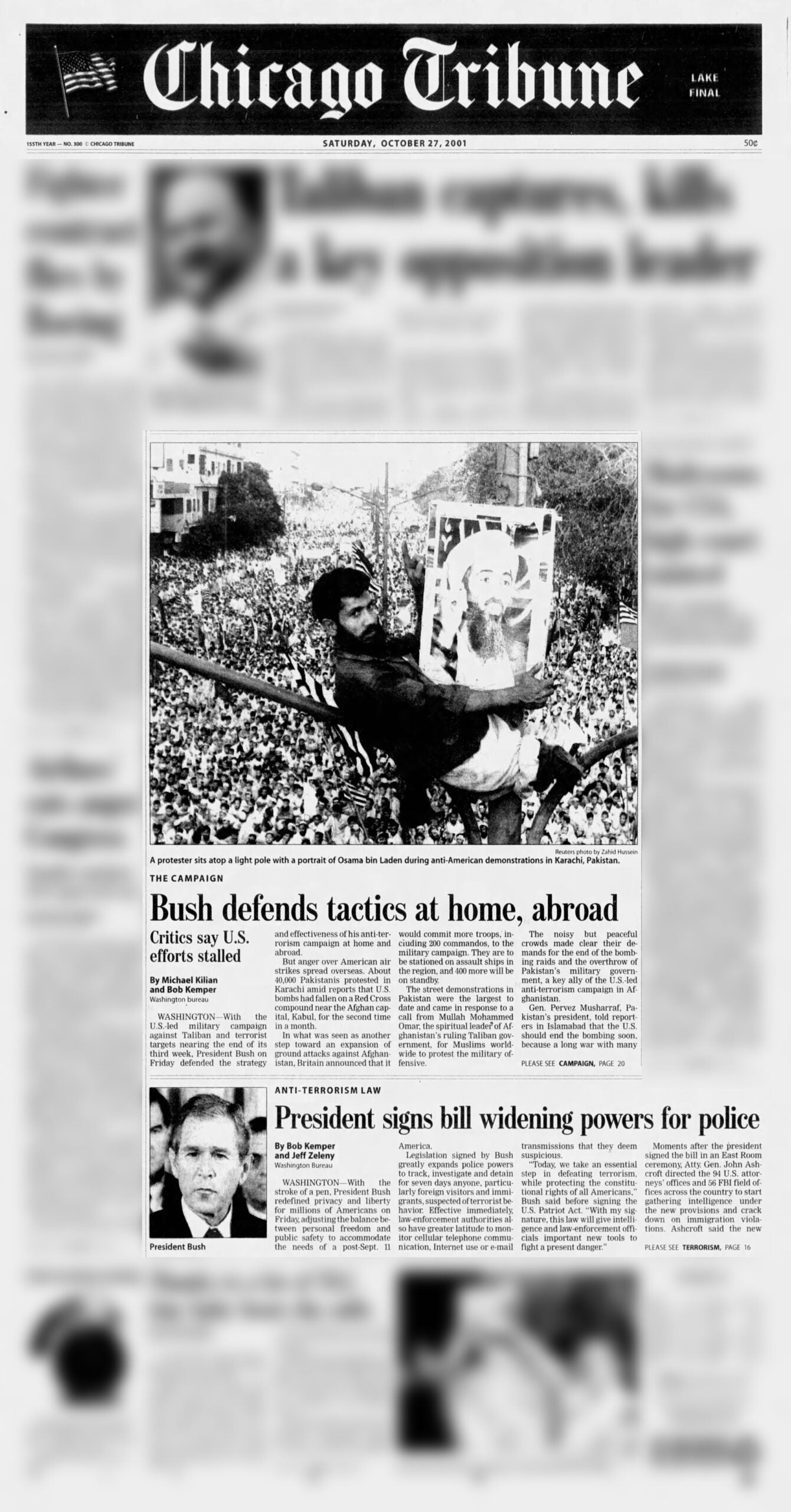
Text 16.04.01b — The Chicago Tribune reports on President George W. Bush signing the USA Patriot Act, just a few weeks after the events of 9/11. The Patriot Act became infamous for expanding surveillance and profiling of American Muslims, including Pakistani Americans.


As Pakistani Americans registered their shock and grief, as all Americans did, over the tragic 9/11 attacks on the World Trade Center and the Pentagon, the events also tested the meaning, experience, and limits of what it meant to be American for Muslims in the US. While the US government created counterterrorism programs to protect national security, American Muslims of various races and ethnicities, and particularly those racialized as “Muslim-appearing,” suffered from the anti-Muslim backlash that surfaced after 9/11.
Observable markers of Islam such as hijabs, beards, and the use of Arabic and other non-English languages converged with the presumed nonwhite foreignness of American Muslims to create a perceived racial threat. Muslims especially faced heightened risk in public service jobs and on public transportation. For those of Pakistani-origin, the impact was immediate and palpable.
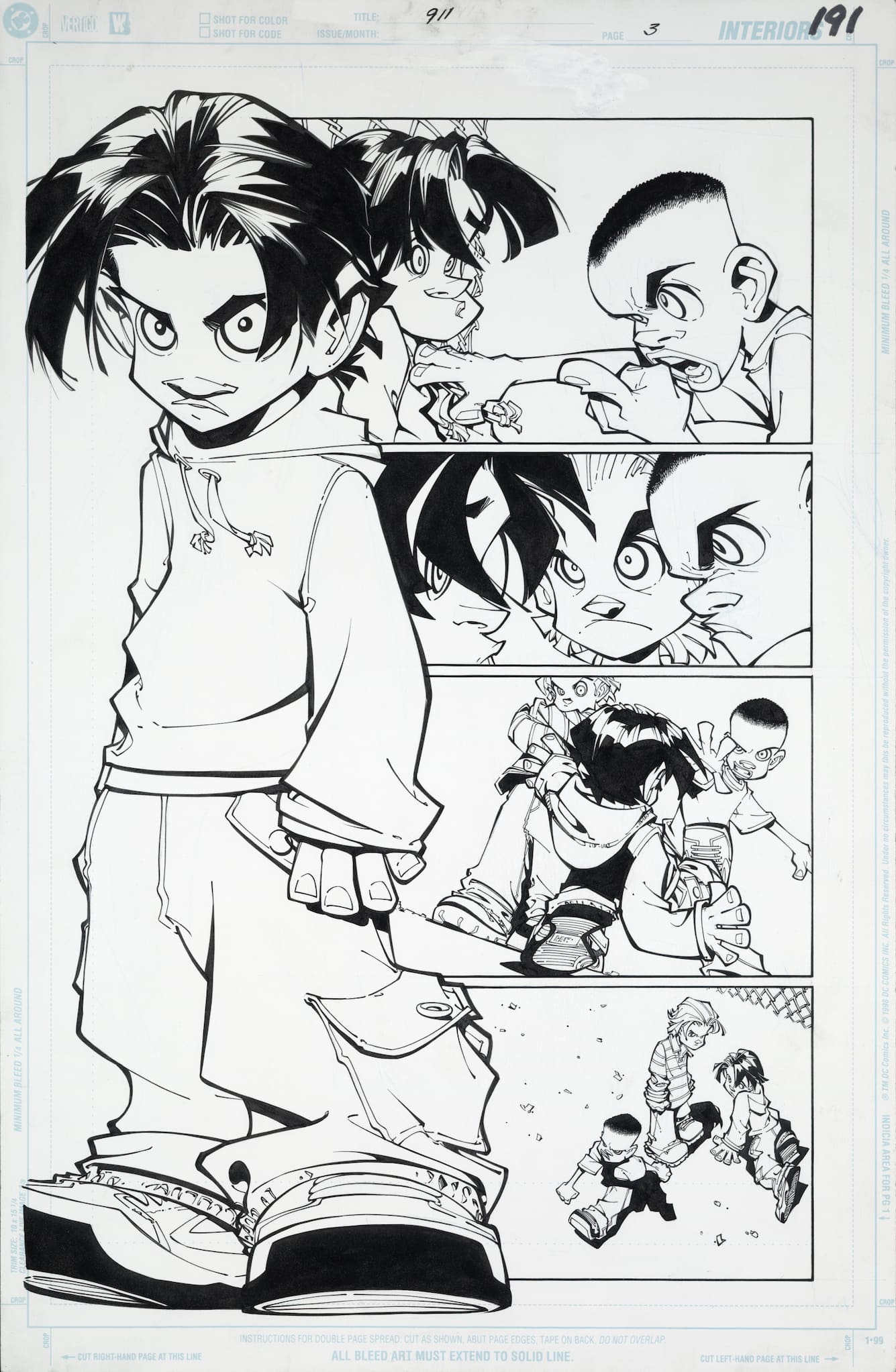
Image 16.04.02 — Drawings by Humberto Ramos and Sandra Hope for “A Burning Hate,” a DC Comics story in the graphic novel, 9/11: September 11th 2001, about the bullying of Pakistani American children by other American children following the 9/11 attacks.
In the absence of specific leads or evidence of national security threats and empowered by the Patriot Act, authorities profiled Arab American and South Asian American Muslims and their communities. The US Justice Department detained over one thousand Muslim immigrants who had overstayed their visas, later referred to as the “September 11 Detainees,” even though subsequent investigations found none to have had anything to do with the attacks. While mostly male migrants from North Africa, the Middle East, and South Asia, over one third of these detainees were of Pakistani descent. They went into custody for up to eight months without charge, and most were subsequently deported.
Within a few years, over half of all Muslim detainees rounded up in the post-9/11 dragnet were of Pakistani origin. The targeting of Pakistani Americans throughout the United States was so intense and pervasive that community members would often know other Pakistanis in the US who were detained, arrested, deported, or visited by the FBI for interrogation. It is a fact that the 9/11 hijackers were neither Pakistani nor American, but the US government’s sweep into thousands of Pakistani immigrants’ and Pakistani Americans’ homes and lives was because of al-Qaeda’s activities in Pakistan, as well as a result of anti-Muslim sentiment in the US.
Once incarcerated, detainees had little support and few resources. Detainees were often denied legal advice, translators, contact with friends or family, or other necessities for long periods of time. New laws passed in the wake of 9/11 allowed for detainees to be held without charge for an indeterminate amount of time. During incarceration, some detainees suffered violent physical abuse at the hands of law enforcement, while others were crowded into extremely congested units, forced to sleep on filthy floors, and denied health and medical care, even in the case of major medical emergencies.
From 2002 until 2011, the US government implemented the National Security Exit-Entry Registration System (NSEERS), a program that required nonimmigrant men from twenty-four Muslim-majority countries to register in a national database. Not only did over eighty thousand men over the age of sixteen submit their details, fingerprints, and photographs into this system for an unspecified time period, more than thirteen thousand were interrogated, detained, and/or deported as a result of this registration. The tracking program did not result in any terrorism-related convictions. Rather, it caught nonimmigrants with visa violations. Proponents of civil liberties and eventually the Justice Department pointed out that the violations did not warrant such sweeping and invasive legislation.
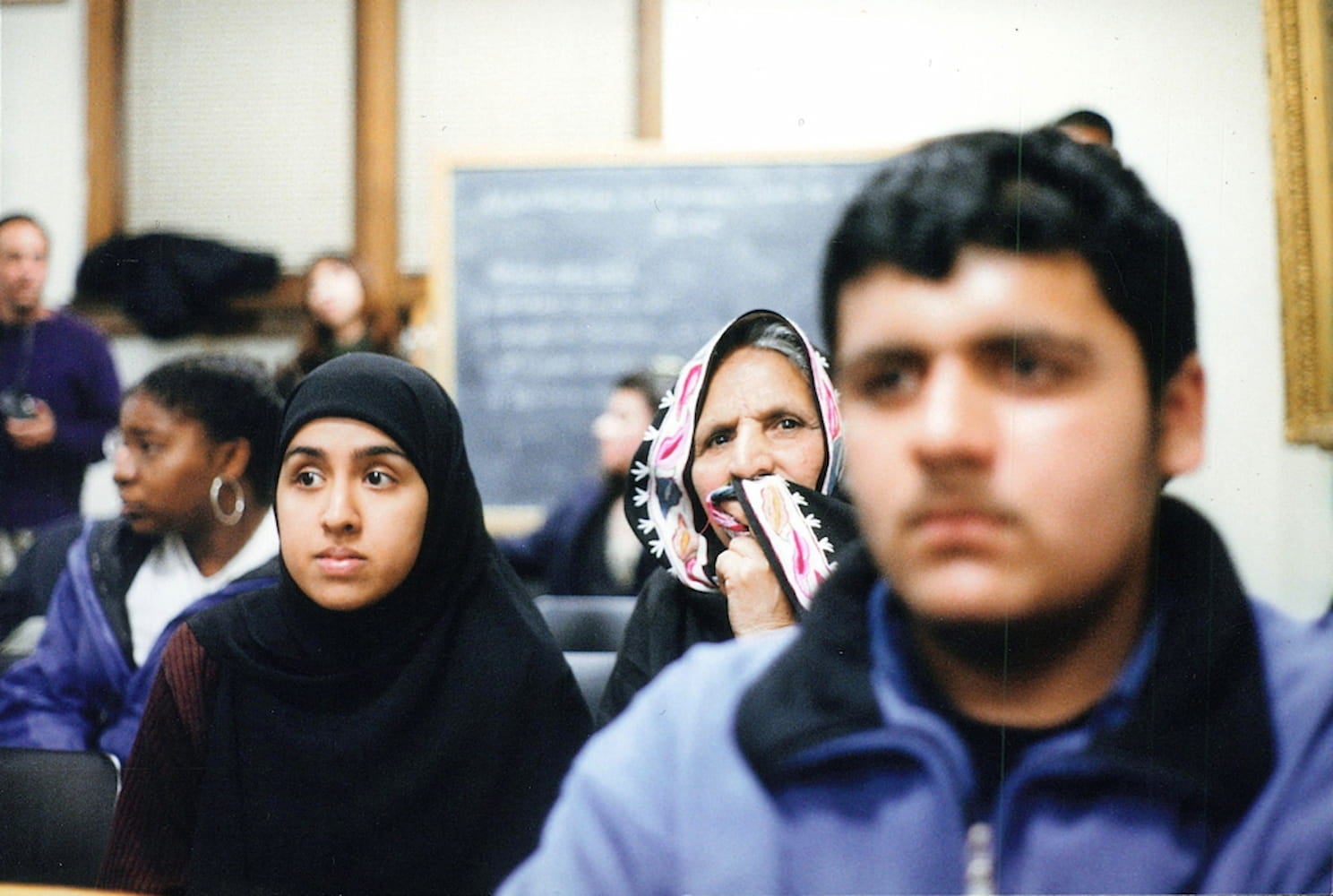
Image 16.04.03 — Zara Khan (middle), a mother of a detainee and a DRUM (Desis Rising Up and Moving) volunteer, attends a community forum organized in response to the National Security Exit-Entry Registration System (NSEERS) program in 2002, New York City.
NSEERS, often referred to as “Special Registration,” legitimized the systematic targeting of all Muslims in the US, upending the lives and livelihoods of thousands of Pakistani Americans and immigrants who arrived in the US through legal pathways. This moment in US history in the decade after the 9/11 attacks marked a turning point for immigrants par excellence as the US government revoked the rights and civil liberties of Americans and immigrants of Pakistani descent.
More to explore
The FBI took a leading role in these coordinated law enforcement efforts, which had a lasting impact on the lives of those singled out. FBI agents arrived unannounced at American Muslims’ homes, often in the middle of the day when men were away at work and interrogated those at home. Pakistani women reported intimidation tactics by the agents who pressured them to share personal details about their husbands, sons, and brothers. Agents also turned up at people’s workplaces unannounced. Such abrupt interruptions into Pakistani Americans’ daily lives led to mental stress.
Even though these interrogations rarely resulted in weeding out terrorism-related crimes, they jeopardized American Muslims’ job security, rendering them suspect in the eyes of employers, friends, and family. Thousands of terrified Pakistani Americans in the US simply left. In “Little Pakistan,” an ethnic enclave in Brooklyn, New York, thousands quickly and quietly fled to Canada, Pakistan, or elsewhere to escape targeting and potential detention. Businesses closed and families split apart. Though difficult to trace, anecdotal evidence indicates that many never returned to their homes in the US.
Local law enforcement also partnered with the federal government to surveil Muslims in the US. They rolled out an aggressive infiltration program in which plain-clothed operatives posed as converts to Islam who then informed on and secretly recorded conversations and activities at mosques and student organizations. Heavy policing and surveillance increased in Arab American and Pakistani American neighborhoods and religious centers. Reports on these organized programs show that authorities then coerced people who had committed minor infractions into spying on their communities, with inducements such as permanent immigration status and/or threats of deportation. One of the most notorious infiltration programs was the New York Police Department Muslim Surveillance Program that ran from around 2002 to 2014.
Such counter-terrorism security state programs impacted various segments of American Muslim communities differently. Many undocumented single men from South Asian and Middle East and North African (MENA) nations who worked at low-paying jobs, along with working-class immigrants and recent arrivals, became the main targets for detention and deportation. The operation also marked international students, many of whom were deported. Such acts deterred Muslim students in other countries from applying to American universities. Furthermore, the systematic profiling and infiltration of American Muslim communities across the nation stoked fear, sowed suspicion, and stifled open dialogue, as people no longer knew if they could trust community members.
Pakistani Americans and Islamophobia
Hate crimes, hate incidents, and discrimination against Pakistani Americans have only increased in the aftermath of the 9/11 attacks. Some scholars who study anti-Muslim hostility have advanced the terms “Islamophobia” to describe attitudes, while others prefer “anti-Muslim racism” to refer to behavior, but there is much overlap between the two terms.
Islamophobia is a combination of ideas, behaviors, and structures that express hostility, particularly in countries with Muslim minorities. Islamophobia may also refer to anti-Muslim and anti-Islamic discourse in the media, reinforced by a global, imperialist power structure that falsely reduces Islam (and Muslims) to an irrational religion mired in the past, incompatible with other faiths or modernity and rooted in violence and terrorism.
Anti-Muslim racism includes actions and policies that perpetuate prejudice against and harm toward Muslim minorities. In the US since 9/11, Pakistani Americans and others of Muslim heritage have faced harassment, discrimination, and violence. In response to the hundreds of anti-Muslim, bias-related offenses committed annually in the United States, federal agencies and local law enforcement have conducted numerous investigations.
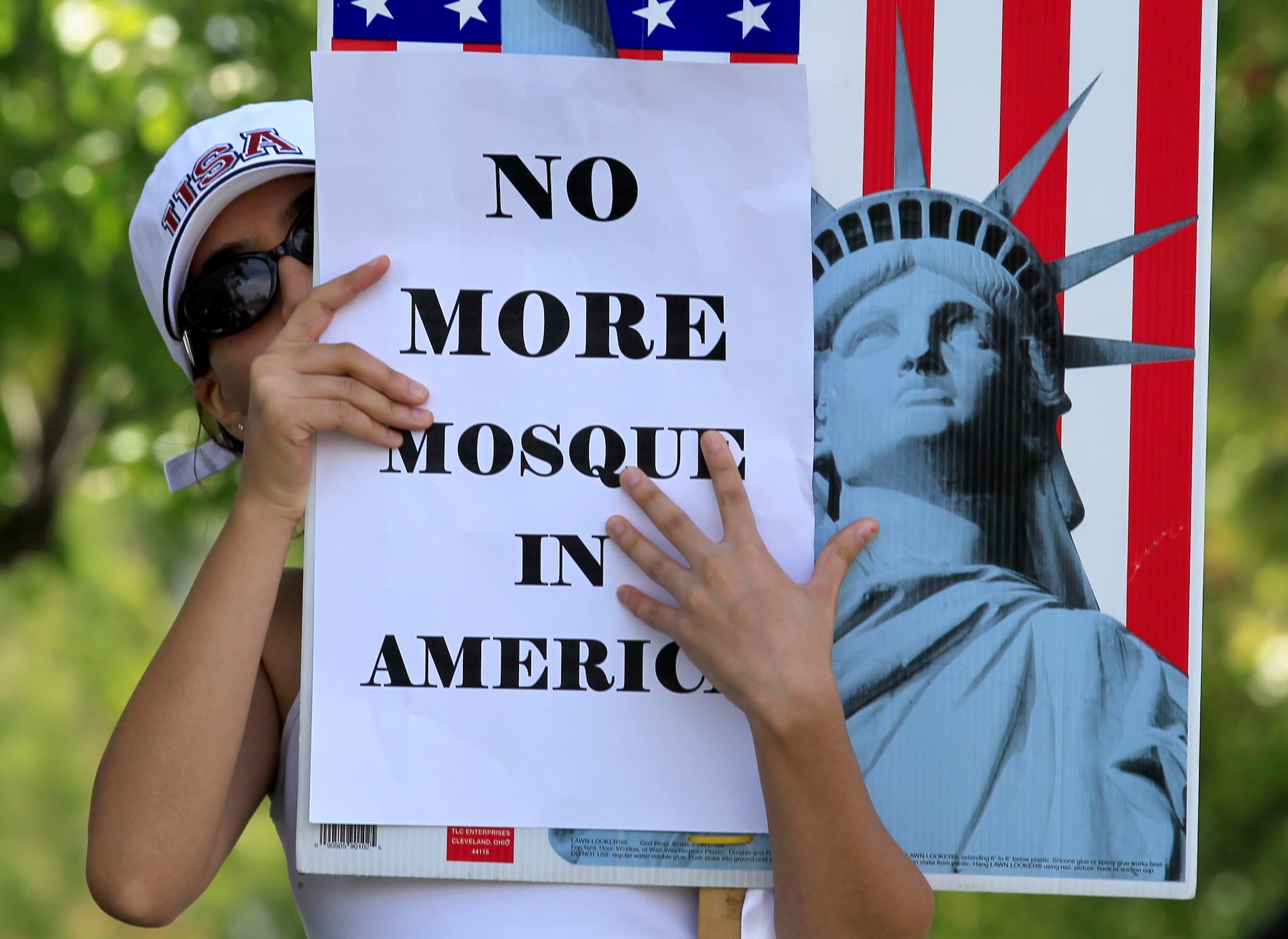
Image 16.04.05 — A protestor in Temecula, California, opposing the building of mosques in 2010. Such anti-Muslim hostility can be described as Islamophobia or as anti-Muslim racism.
However, hundreds more hate incidents go unreported and unrecorded. Anti-Muslim incidents include physical violence, workplace intimidation, school bullying, and racial and religious profiling at airports and elsewhere. Muslim schoolchildren in the US are especially susceptible to physical, verbal, and emotional bullying. While students have engaged in such bullying, teachers and administrators have sometimes tolerated it and some have even voiced Islamophobic ideas in the classroom.
Listen to
Shahjehan Khan’s “King of the World”
Audio 16.04.06 — Shahjehan Khan’s podcast, King of the World (2021), is a seven-part series about a Pakistani American Muslim teenager who comes of age post-9/11 and tries to make sense of it twenty years later.
After 9/11, some Americans began seeing Muslim women’s hijab as a threat. Whereas many Americans had already misinterpreted the headscarf as a symbol of Muslim women’s oppression, after 9/11 they associated it with terrorism or radicalism. They viewed the hijab as distinctly un-American. Although many American Muslim women do not wear a headscarf, hijab-wearing women became victims of violence, especially in public spaces like buses, trains, college campuses, and on the street. For many young Pakistani American women, wearing the hijab became too difficult. Concerned for their daughters’ safety, Pakistani American parents also pressured their daughters to remove their hijabs, even if temporarily. Hijab-removal was just one impact on American Muslim communities across the country.
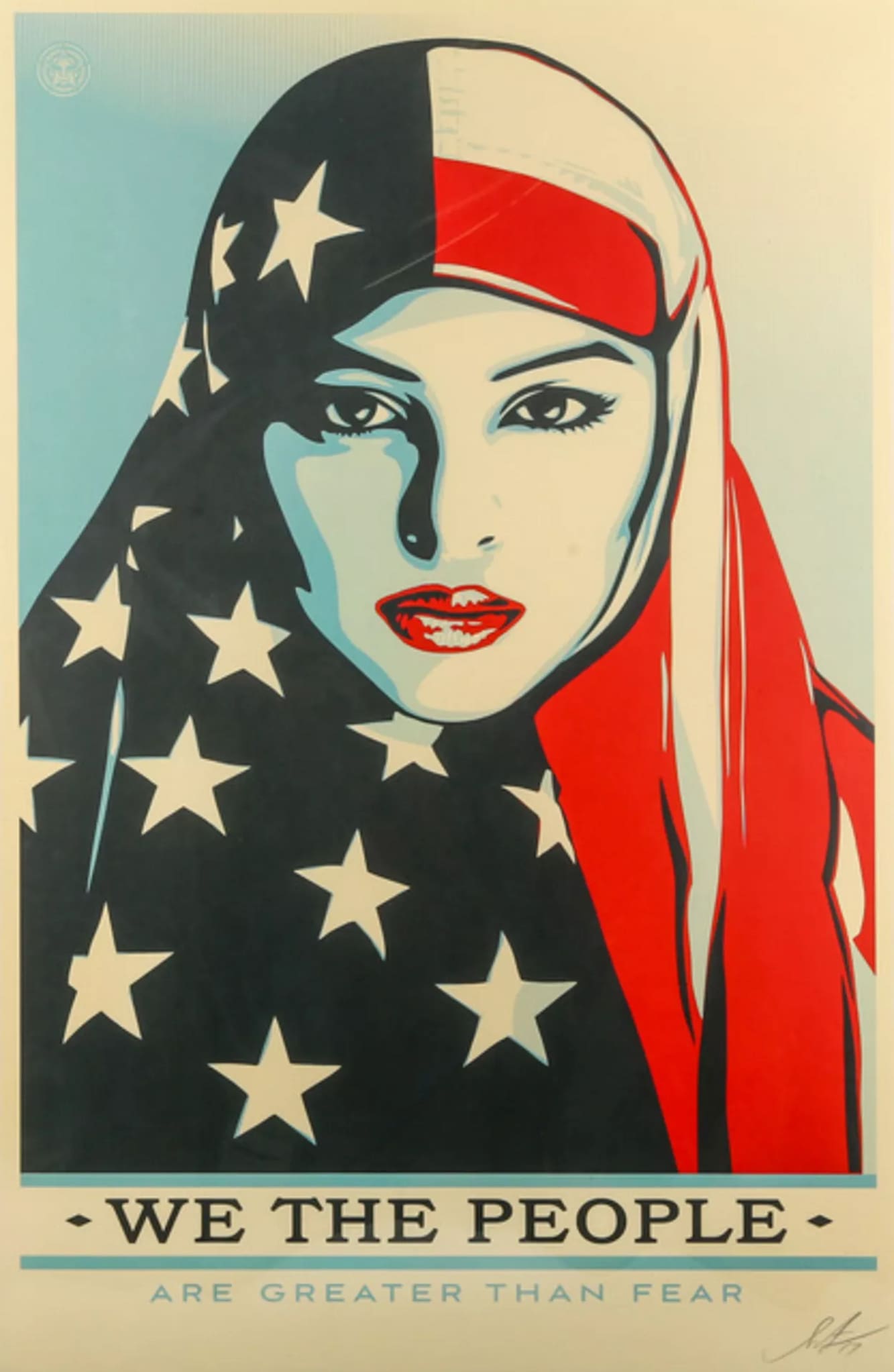
The Muslim headscarf emerged as a national symbol of inclusion in 2007 with photographer Ridwan Adhami’s image of an American flag draped as a hijab. Though neither the photographer nor the model was of Pakistani origin, the photograph, titled “I am America,” provocatively promoted the idea of American pluralism. Some have criticized the image as inherently problematic because it may suggest that overt patriotism is a prerequisite to national belonging. Later, artist Shepard Fairey recast Adhami’s photo as a poster that was widely used as a symbol of protest after the presidential election of Donald Trump in 2016.
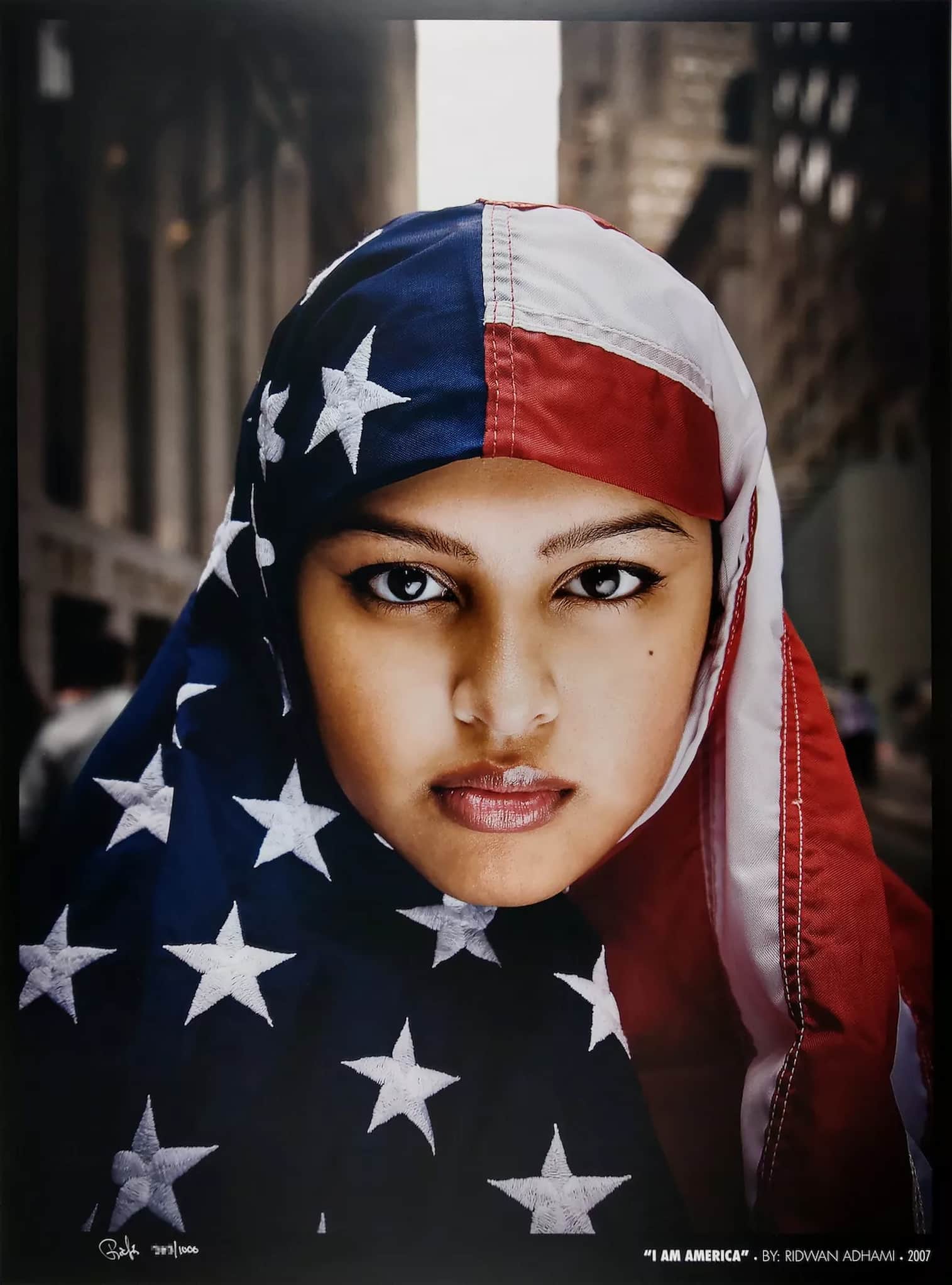
Image 16.04.07 — “I am America” photo by Ridwan Adhami, taken at Ground Zero in New York City 2007, in which a Muslim woman wears an American flag draped as a hijab.

Image 16.04.08 — This 2016 “We the People” poster by artist Shepard Fairey from 2016, recasts Adhami’s photo as a symbol of protest.
Although anti-Muslim groups and individuals have subjected mosques in the United States to threats and violence, in the decades following 9/11, these sites increasingly became targets of vandalism, arson, attacks, and threats. Since Pakistani Americans are mostly Muslim and attend mosques in the US, they feel directly impacted by the violence and hostility.
Islamophobic aggressors have scrawled swastikas, crosses, and obscenities on the walls of mosques across the country. In an oft-repeated method that curtails American Muslims’ freedom of religious expression, local governing bodies have routinely denied permits to build mosques, as local residents mounted grassroots movements to prevent the purchase of land or the establishment of area for mosques. Some cases involved the desecration of Islamic holy books and the smearing of mosque property with foul substances. Islamophobes also harassed and intimidated worshippers attempting to attend their local mosques. Attackers have set fire to or bombed several mosques, leaving them with extensive or irreparable damage.
Travelling through airports can prove to be particularly challenging for American Muslims, including Pakistani Americans. Due to their perceived foreignness and general racialization, they are often subject to extra scrutiny and investigation at airports. They have reported higher than average incidents of racial profiling, including additional screenings, extended questioning, and intimidation, giving rise to the descriptor, “flying while brown.”
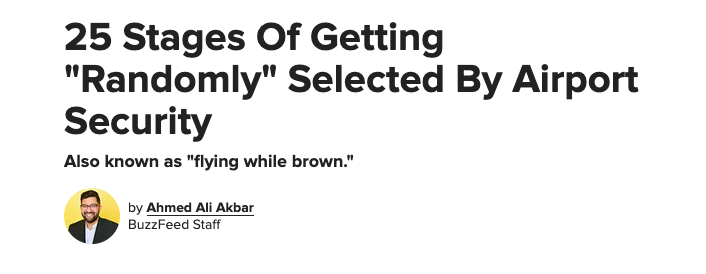
Text 16.04.09 — A 2014 Buzzfeed article by Pakistani American reporter and podcaster Ahmed Ali Akbar reports on the difficulties of “flying while brown.”
Airport security often flag Pakistani American women wearing a headscarf for additional physical searches. Pakistani American names may match or be similar to the names on “no-fly” lists—lists to which the government added thousands of Pakistani American names in the wake of 9/11, despite their innocence of any crime. In such cases, lengthy airport security questioning causes missed flights as travelers await permission to fly.
Even twenty years since 9/11 and the Patriot Act, innocent Pakistani Americans whose names were included on the lists are denied privileges enjoyed by other Americans, such as expedited entry into the US and automatic security clearances. Upon return from trips abroad, airport authorities are more likely to scrutinize Pakistani and American Muslims about the nature of their travel activities abroad.
Panethnicity and Division
The post-9/11-era targeting of American Muslims created new ruptures within the South Asian American panethnic identity. On the one hand, many South Asian Americans face anti-immigrant sentiment generally. In addition, Islamophobic assailants have attacked those who appear visibly Muslim in a range of hate incidents. Sikhs who wear a turban are also at high risk of assault, as are their gurdwaras, or temples. Hate crimes against Sikhs, particularly due to cases of mistaken Muslim identity, surged after 9/11. Indeed, those of Sikh heritage have experienced violence and racism for over a century in the US.
On the other hand, the US surveillance and security apparatus has singularly marked Pakistani Americans as distinct from other South Asian Americans. Post-9/11, the South Asian American population divided along religious lines of Muslim versus non-Muslim. South Asian American non-Muslims sought to deflect Islamophobic hostility away from themselves as a measure of protection.
As a result, Pakistani American Muslims have increasingly built community with other Muslims in the US based on their sense of shared injustice. As society continues to cast Islam and Muslims as perennial threats, the lived experiences of Pakistani Americans, Arab Americans, and other Muslims in the US have increasingly converged. Pakistani Americans still share much in common with other South Asian Americans, but the post-9/11 landscape challenges the ability to maintain the solidarity of a panethnic identity when such explicit anti-Muslim attacks continue.
The long list of discriminatory, hostile, and even violent actions and events experienced by Pakistani Americans aims to document the decades of recent difficulty in the aftermath of 9/11. The tragedy of the 9/11 attacks continued to echo across many Americans’ lives. The number of innocent lives that have been impacted by the backlash against 9/11 demonstrates the history of violations and transgressions against Asian American and Pacific Islander communities in particular, but they are noted in this chapter to show allyship with all communities of color and religious minorities in the US who are outcast and denigrated.
Glossary terms in this module
Anti-Muslim racism Where it’s used
Actions and policies that perpetuate prejudice against and harm toward Muslim minorities.
Islamophobia Where it’s used
A combination of ideas, behaviors, and structures that express hostility towards Muslims.
Patriot Act Where it’s used
Also known as the Uniting and Strengthening America by Providing Appropriate Tools Required to Intercept and Obstruct Terrorism Act, is a law enacted in October 2001 that expanded the power of law enforcement and intelligence agencies to combat perceived threats of terrorism through broad surveillance, detention, and deportation.
pluralism Where it’s used
The idea that diverse groups can coexist while maintaining their distinct identities, as opposed to completely assimilating to the majority or dominant group.