


Advanced Search
Asian American and Pacific Islander studies resources for the classroom
All chapters of Foundations and Futures include lesson plans and curricular tools that are designed for high school students and grounded in ethnic studies pedagogy. Feel free to search our repository of primary sources and material that helps bring Asian American and Pacific Islander histories and experiences into the classroom.
Multimedia
# of # results
Chapters
-
Image
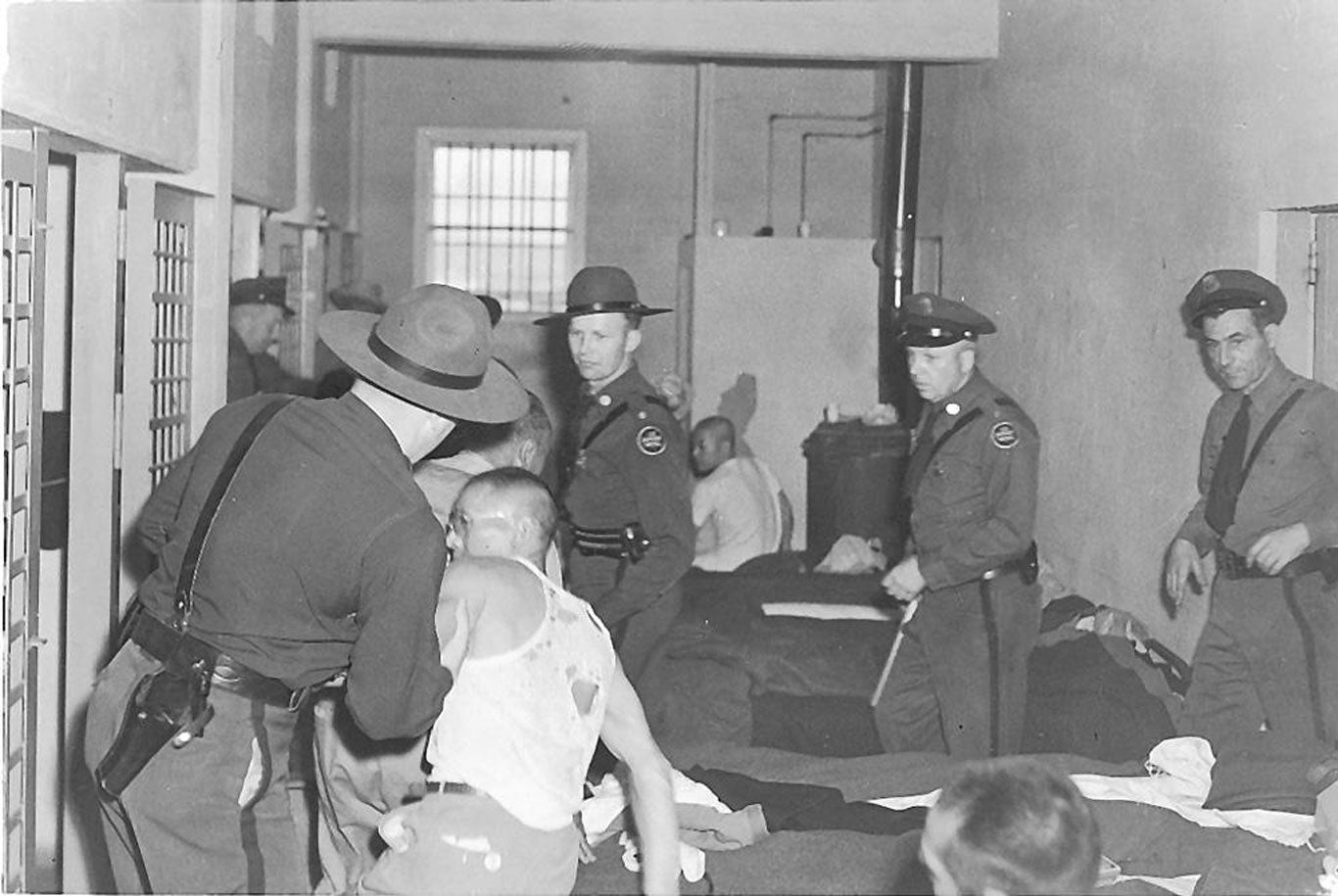
Tule Lake jail
A jail was built at Tule Lake which was co-managed by the border guards and WRA wardens. The building still survies today.
-
Image
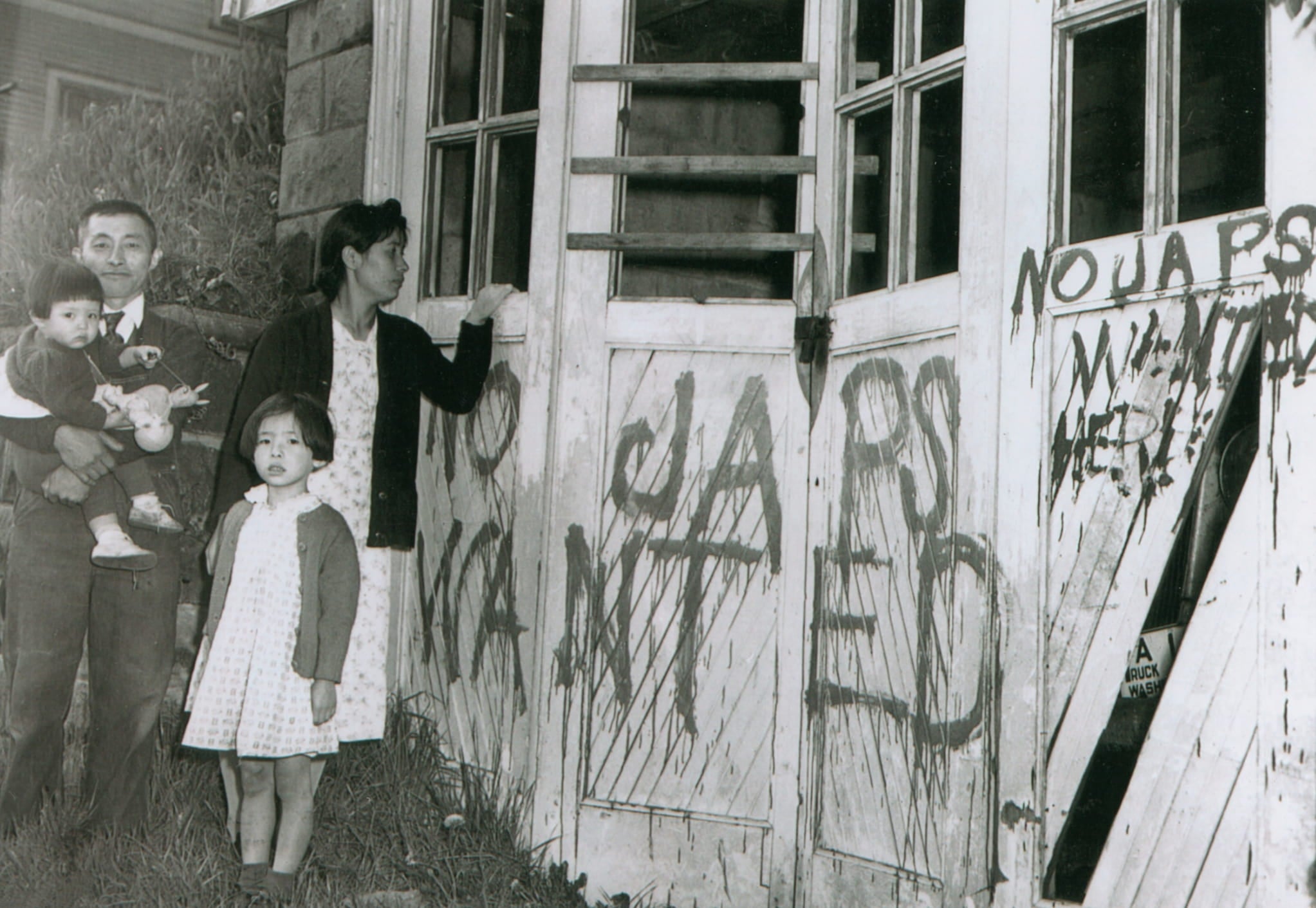
Returning Seattle Family’s Garage Vandalized
This family returned to their home in Seattle, Washington from a camp at Minidoka, Idaho to find their garage vandalized.
-
Text
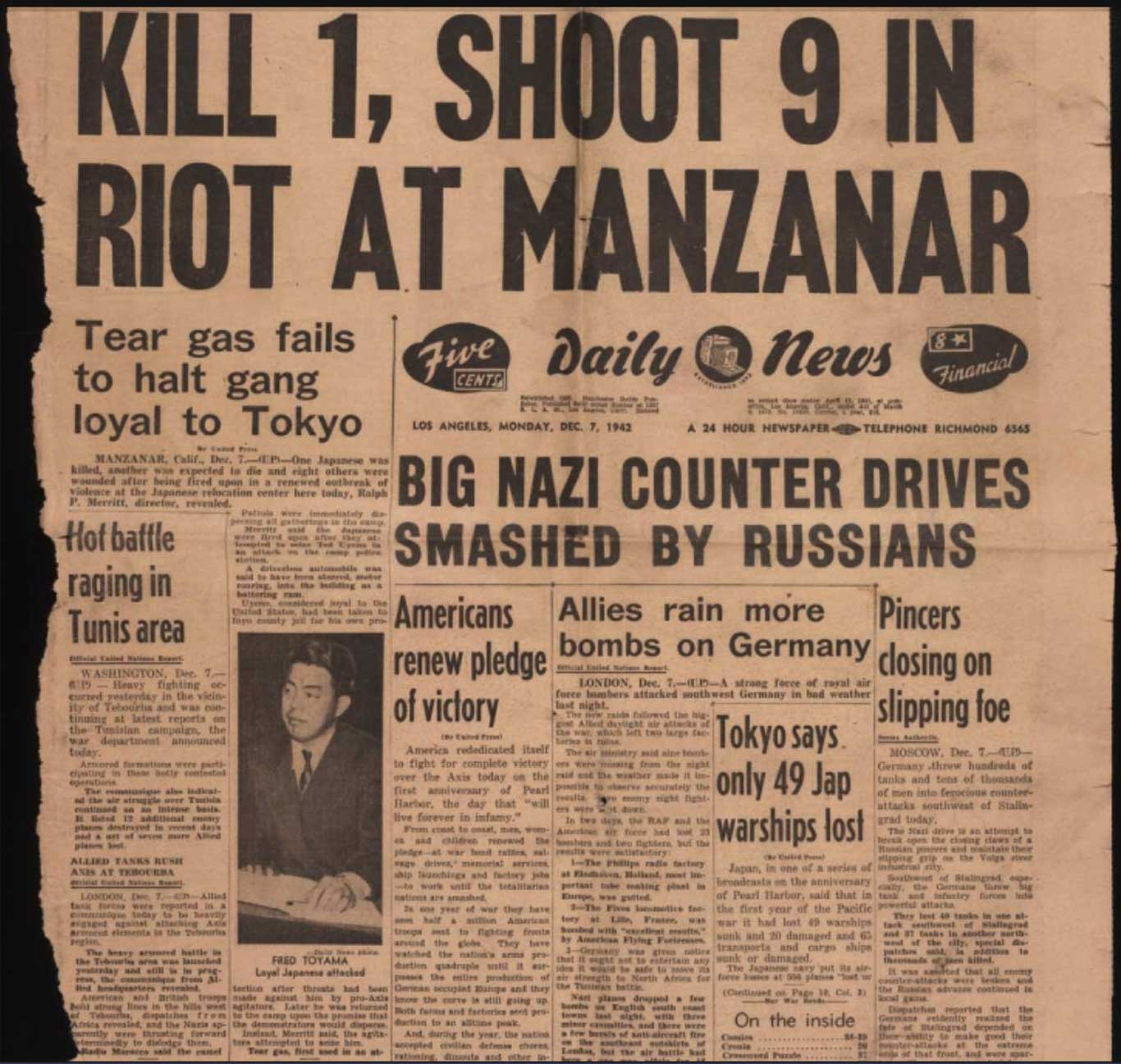
Riot at Manzanar headline
Walter Millsap was from 1916 to 1919 an active member of the utopian Llano colony, a socialist community which moved from its original location in California to Louisiana in 1917. Millsap was trustee of United Co-Operative Industries and head of the Llano Co-Operative Association.
-
Image
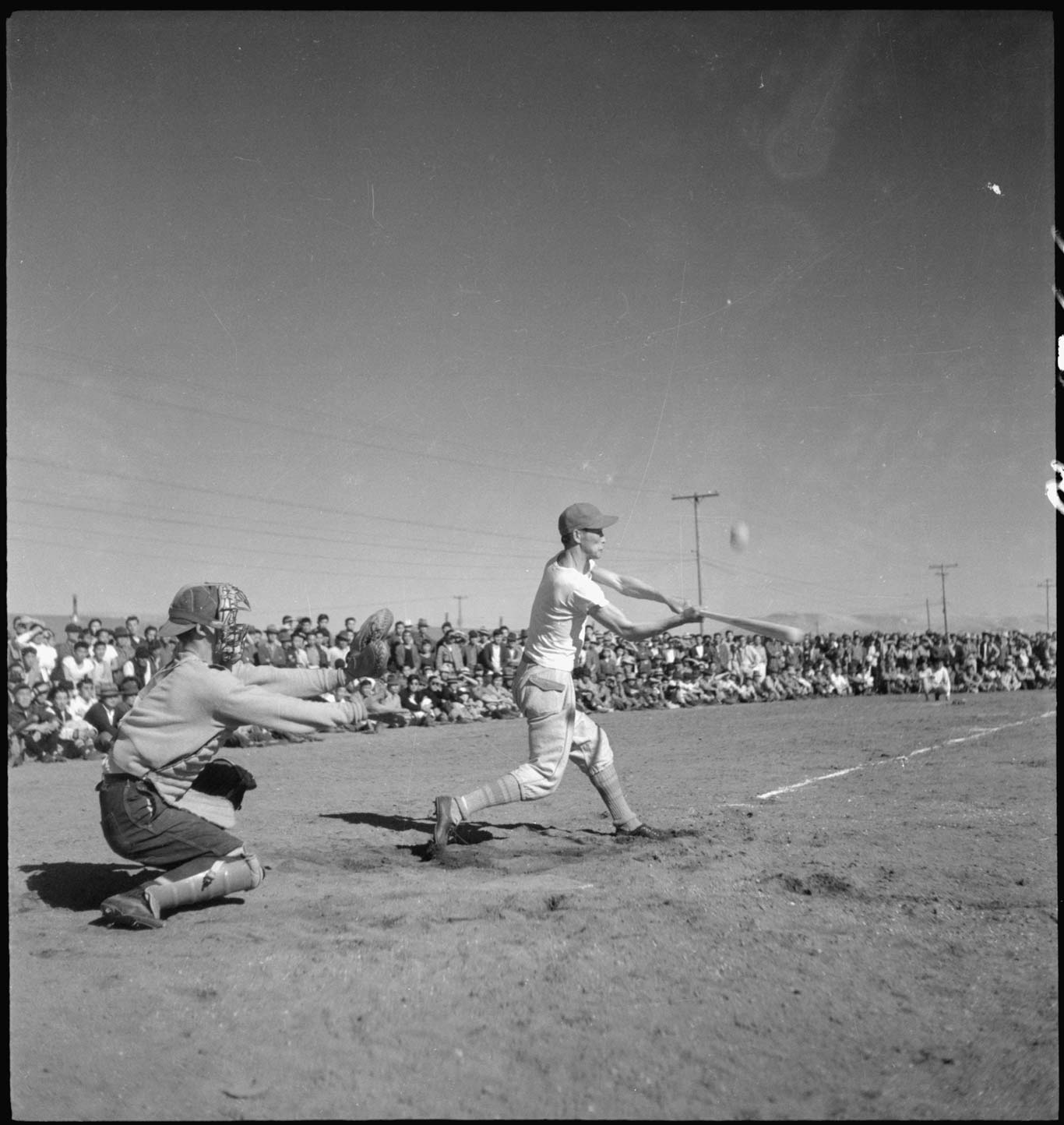
1944 league baseball game at the Tule Lake Segregation Center
The 1944 league baseball season got underway at the Tule Lake Segregation Center on April 19. Project Director Ray R. Best tossed out the first ball. Nearly half of the 17,000 residents of the center were present for the opening game
-
Image
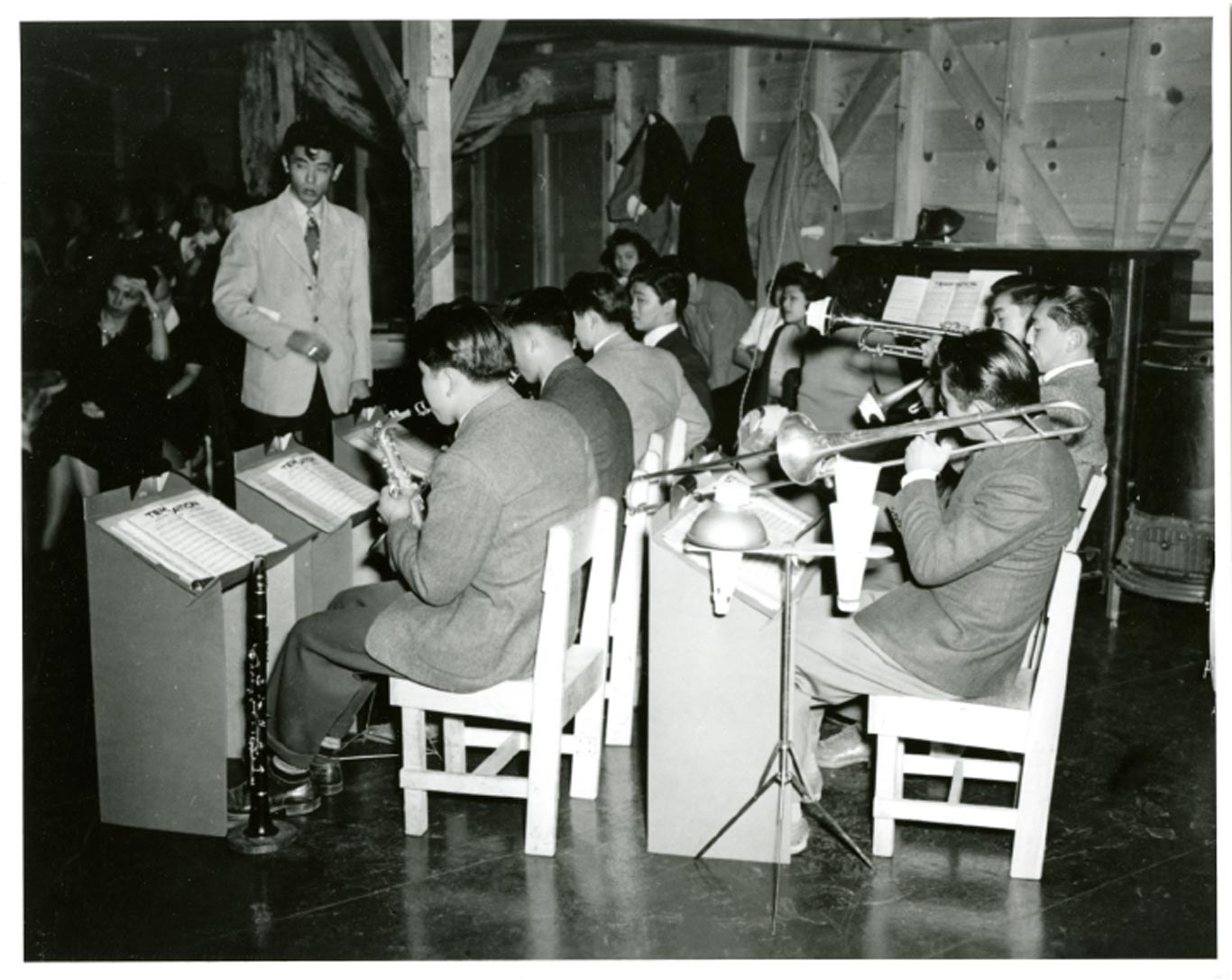
The Down Beats
Photograph of the Tule Lake Down Beats. Woodie Ichihashi is identified as the leader and Gordon Chang is identified from the Bancroft Library. No negative is with the file, note included that the negative was from Chang Gordon. Photograph is of the group playing for people, the crowd is visible on the left side. Group has 8 visible members: 4 in the front row and 4 in the back row. Group is directed by Woodie Ichihashi.
-
Image
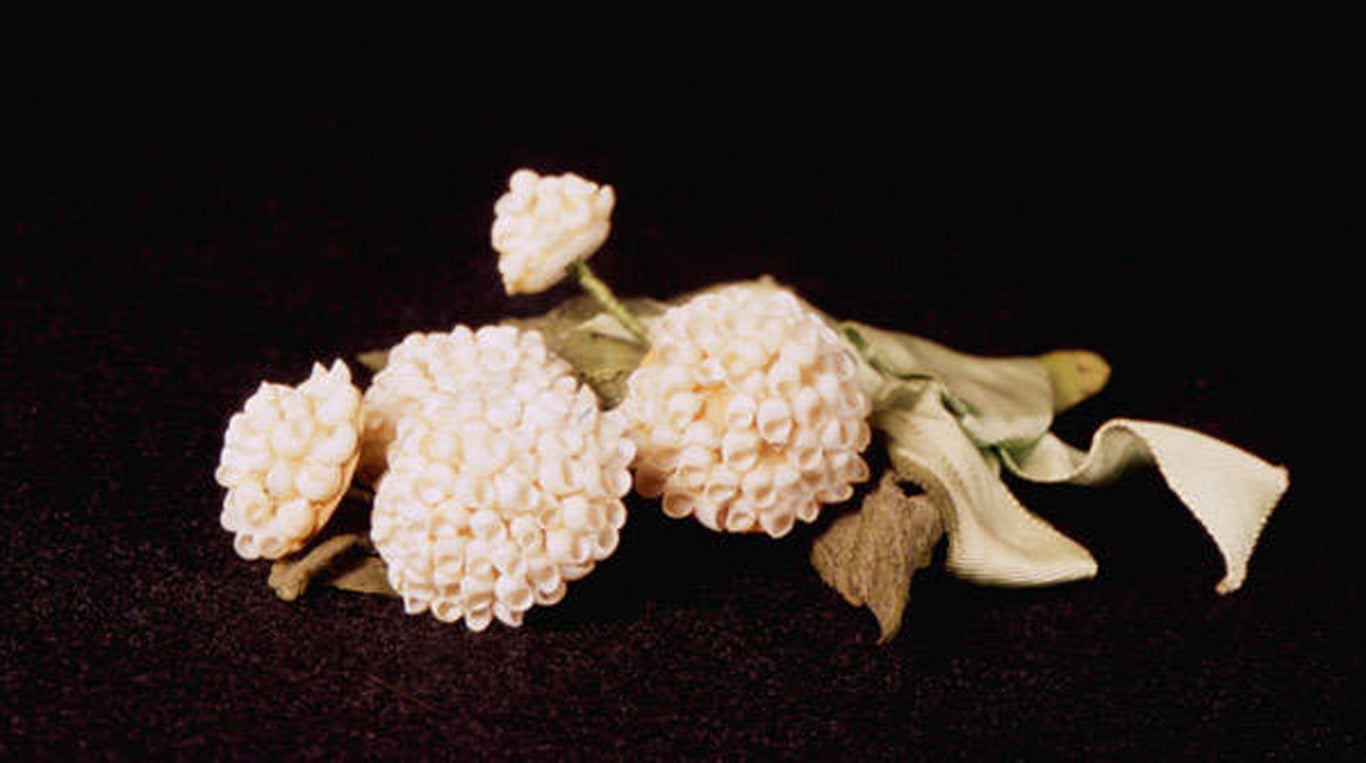
White shell corsage pin
Made from seashells at Tule Lake Relocation Center. Tule Lake Relocation Center and Topaz Relocation Center were on or near shell beds. When the surface supply of good shells was eventually exhausted, the internees dug for them in beds from one to four feet below the ground. After gathering, sifting, and sorting, the shells would be washed and bleached in a weak chlorine solution, then assembled and arranged into countless compositions. Shells would sometimes be carried from one camp to another, especially when internees were transferred to another camp.
-
Image
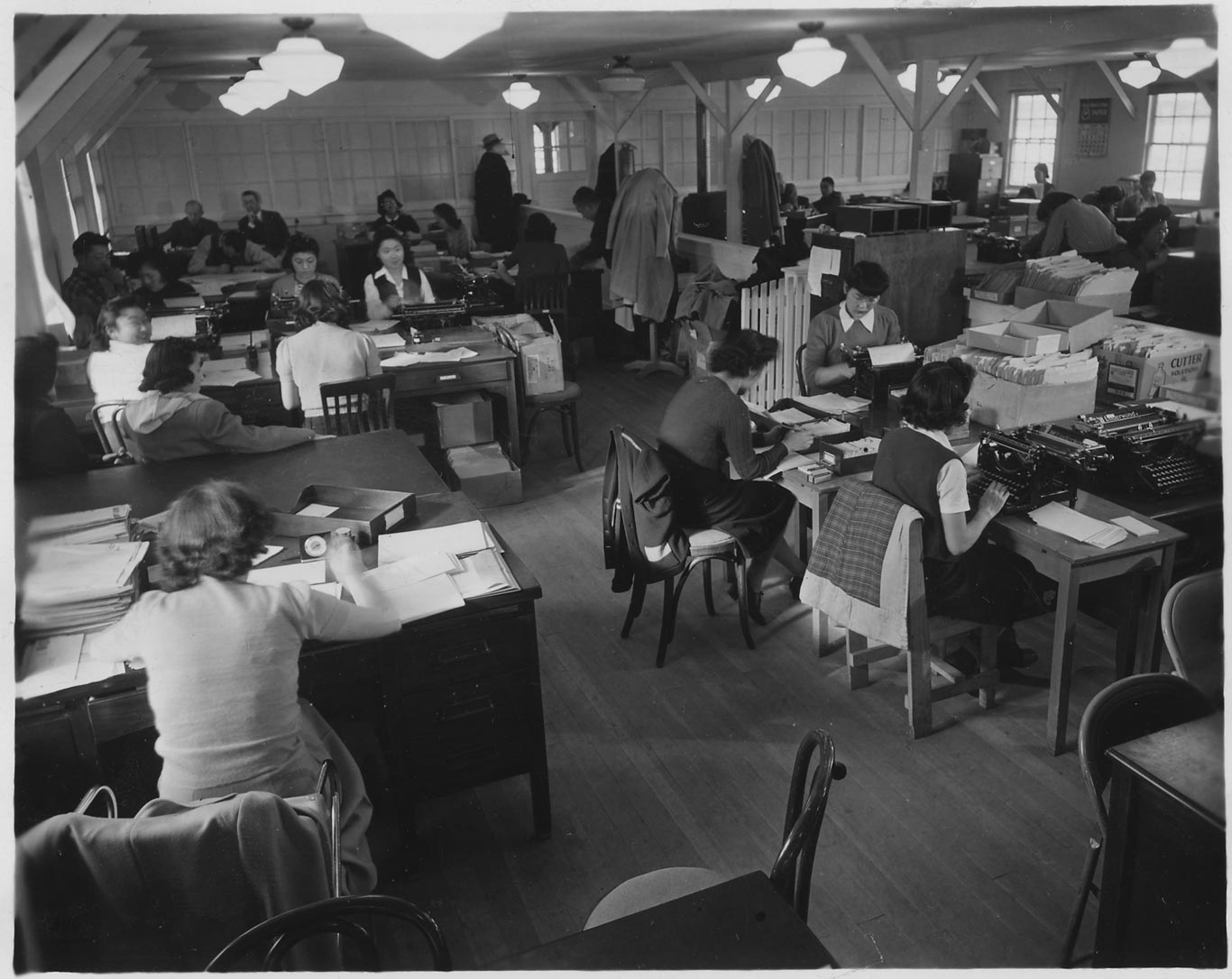
Evacuee stenographers and clerks at work in Administrative Office
Evacuee stenographers and clerks at work in Administrative Office
-
Image
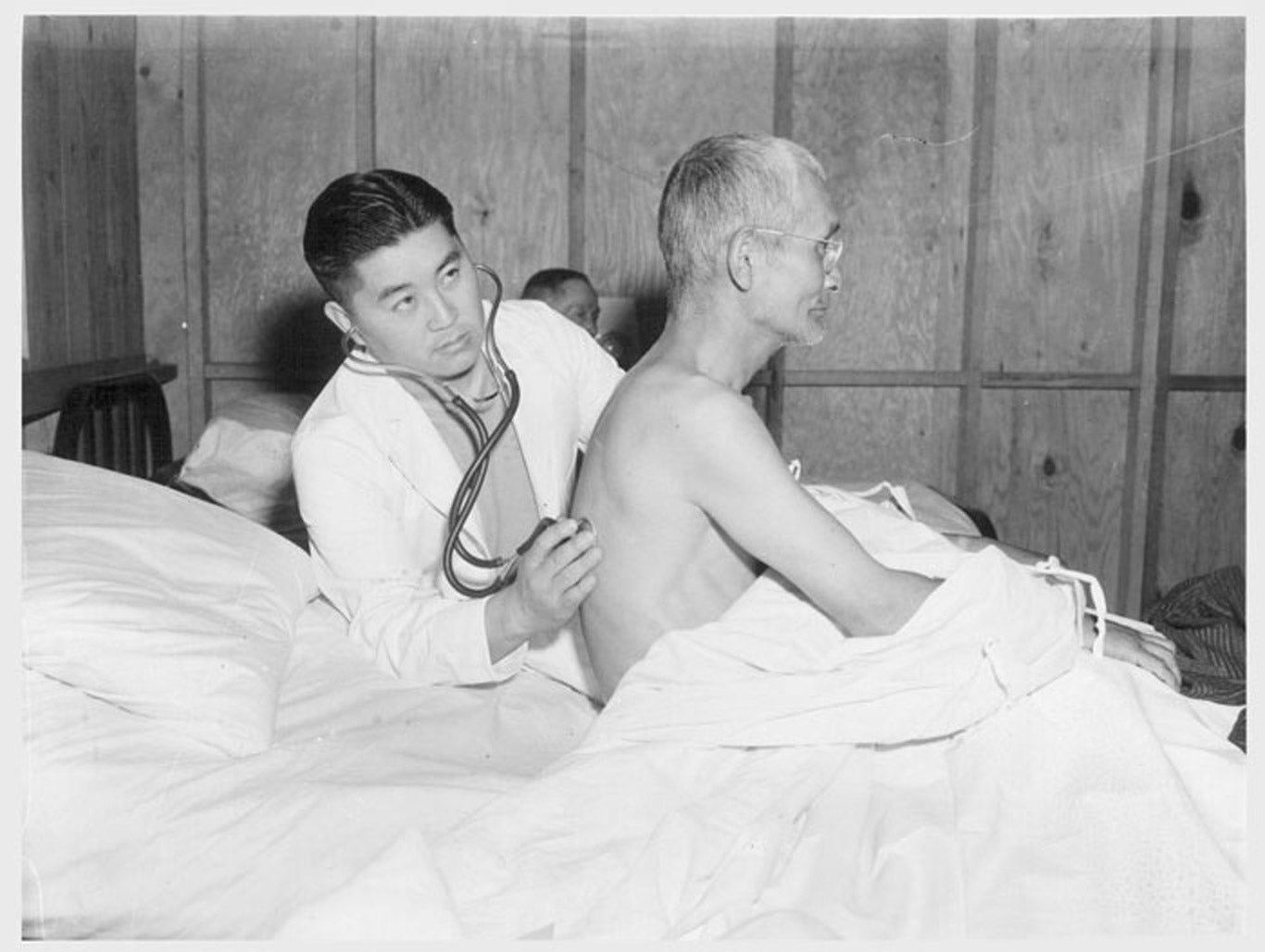
Dr. James Goto examining a patient at the Manzanar Concentration camp
Dr. James Goto, a Los Angeles physician and surgeon, examines a patient in the emergency hospital at Manzanar concentration camp, California, April 2, 1942.
-
Image
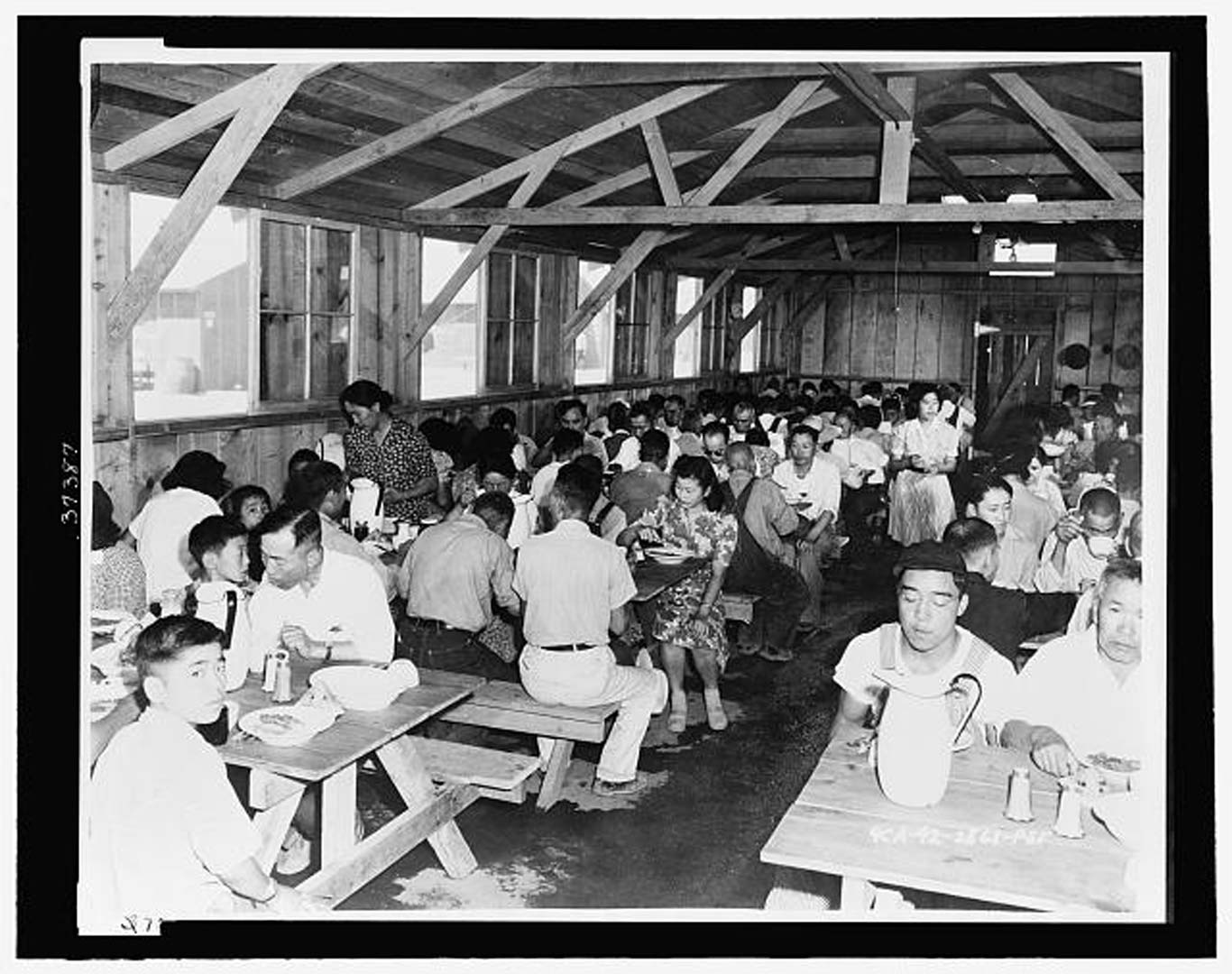
Pinedale (Calif.) Assembly Center Dining Hall
Photograph shows Japanese Americans young women in waitress uniforms during forced removal of Japanese Americans to temporary concentration camps during World War II.
-
Text
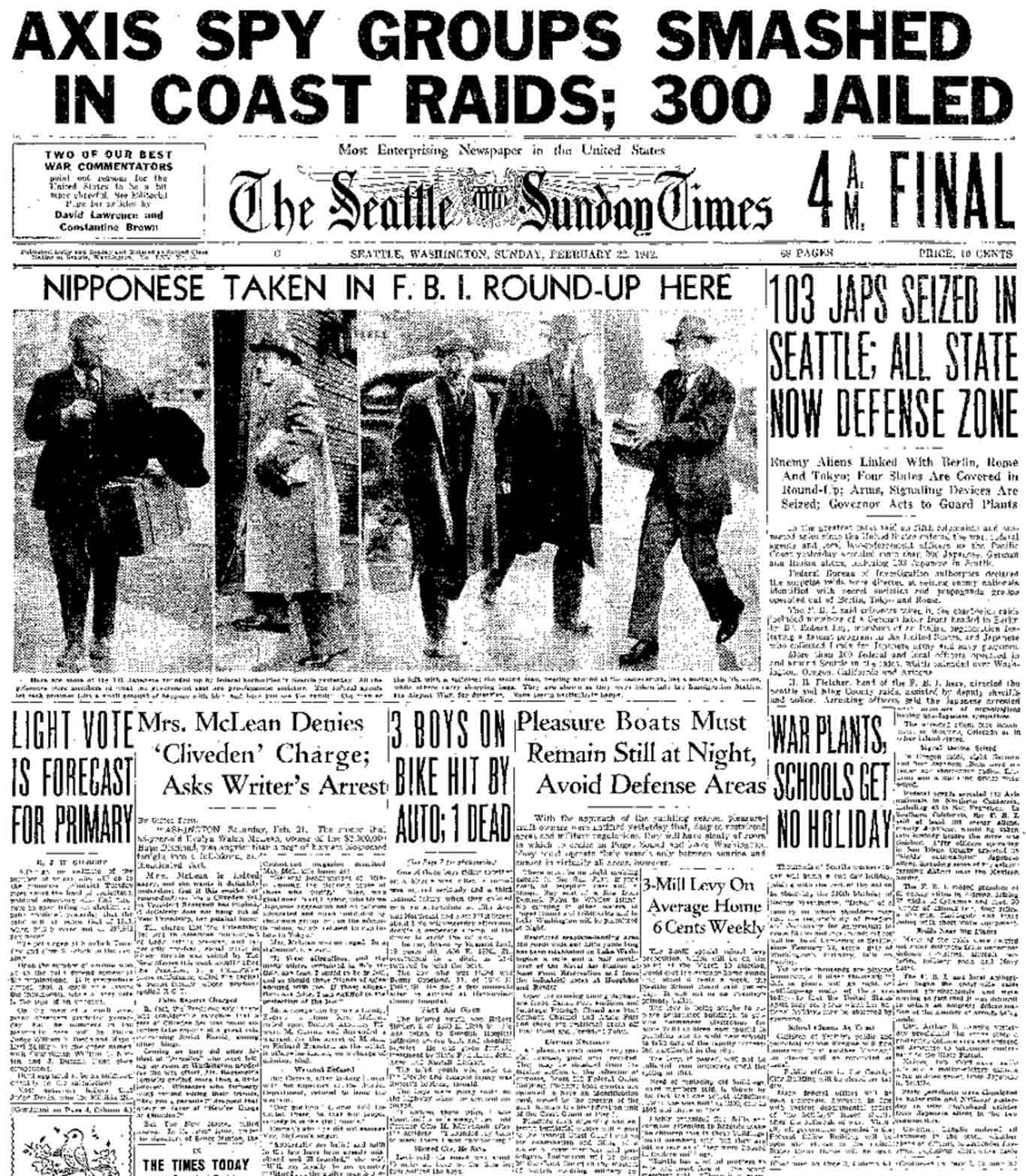
Seattle Times: “Axis Spy Groups Smash in Coast Raids; 300 Jailed”
Anxious Japanese Americans feared that the government would shoot or deport the Issei leaders that the FBI had arrested.
Chapters
# of # results
-
-
Module
-
-
-
-
Chapter
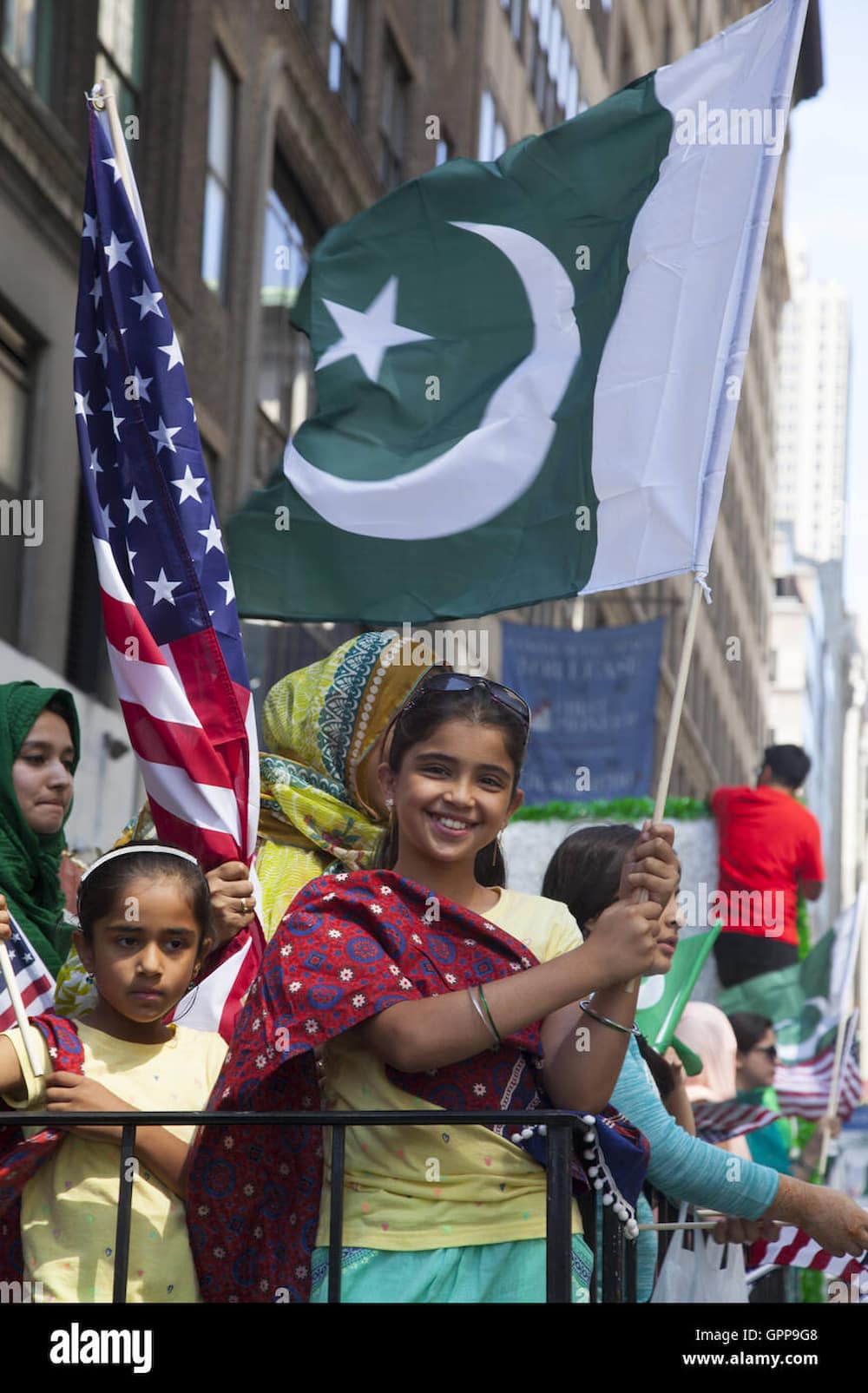
Chapter Overview: Pakistani Americans
Uzma Quraishi
-
Module
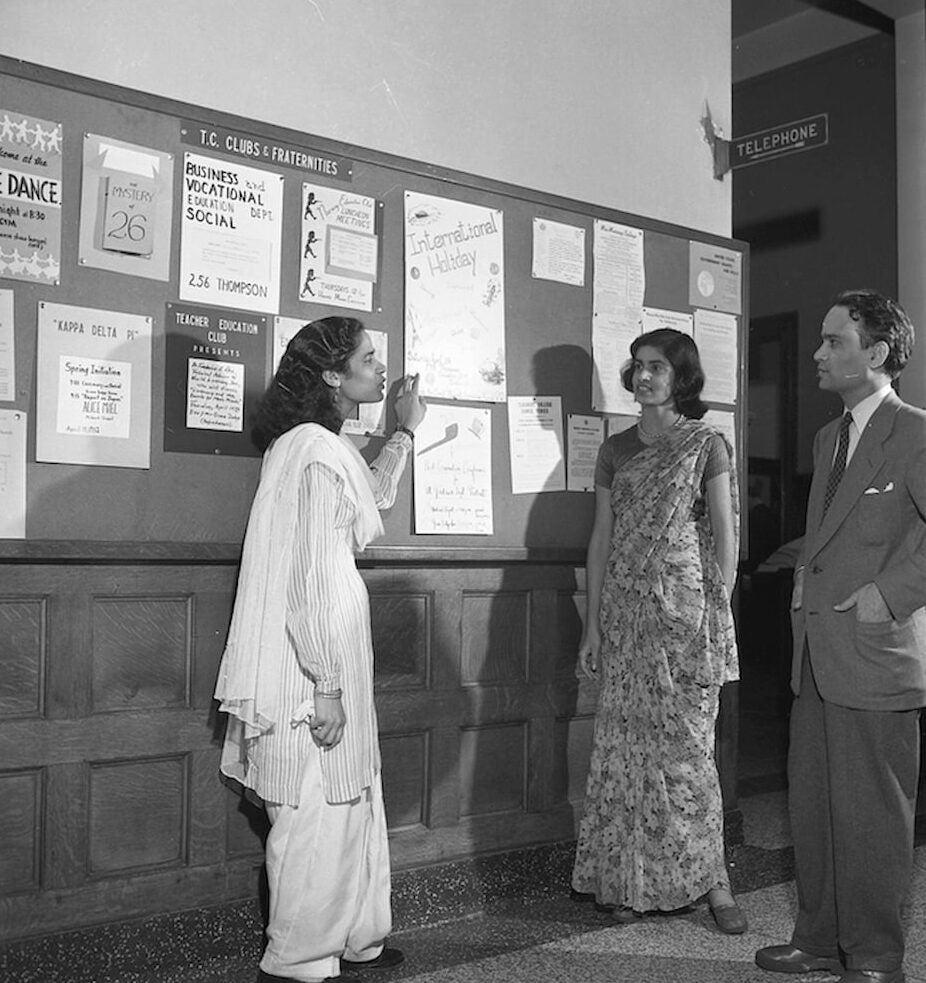
Module 1: Roots: History of Pakistan and Early Migrations
Uzma Quraishi
Chapter:
Pakistani Americans
-
Module
Module 2: Contours: A Profile of the Pakistani American Community
Uzma Quraishi
Chapter:
Pakistani Americans
-

Module
Module 3: Texture: Building Ethnic Community and Infrastructure
Uzma Quraishi
Chapter:
Pakistani Americans