



HMONG AMERICANS
Authors
Author’s note: This narrative draws from the writings of Ma Vang, History on the Run: Secrecy, Fugitivity, and Hmong Refugee Epistemologies (Duke University Press, 2021) along with Ma Vang and Kit Myers, “In the Wake of George Floyd: Hmong Americans’ Refusal to Be a U.S. Ally,” Amerasia Journal 47, no. 1 (2021): 20–34.
Author
Ma Vang
Ma Vang is an Associate Professor of Critical Race and Ethnic Studies at the University of California, Merced. Her book History on the Run: Secrecy, Fugitivity, and Hmong Refugee Epistemologies (2021) examines how secrecy structures both official knowledge and refugee epistemologies about militarism and forced migration. She is a coauthor of Departures: An Introduction to Critical Refugee Studies (2022) and coeditor of Claiming Place: On the Agency of Hmong Women (2016). She founded the program in Critical Race and Ethnic Studies and is a founding member of the Critical Refugee Studies Collective.
Have Hmong Americans found home in the United States?
Between 1960 and 1975, the United States waged a Secret War in Laos to assist with military and intelligence during the Vietnam War. The war was “secret” in that it was undeclared, and because the American public did not know about it. Waging this war also violated the 1954 Geneva Conventions, which prohibited foreign military intervention into the former French territories of Laos, Cambodia, and Vietnam.
This module discusses Hmong involvement in the Secret War, the impact of state secrecy, and ongoing Hmong experiences of state violence through forced migration and policing. Hmong experiences of racism and structural violence—and their resistance to it—are made invisible, overshadowed by narratives of Hmong military allyship with the United States and the “good refugee” model.

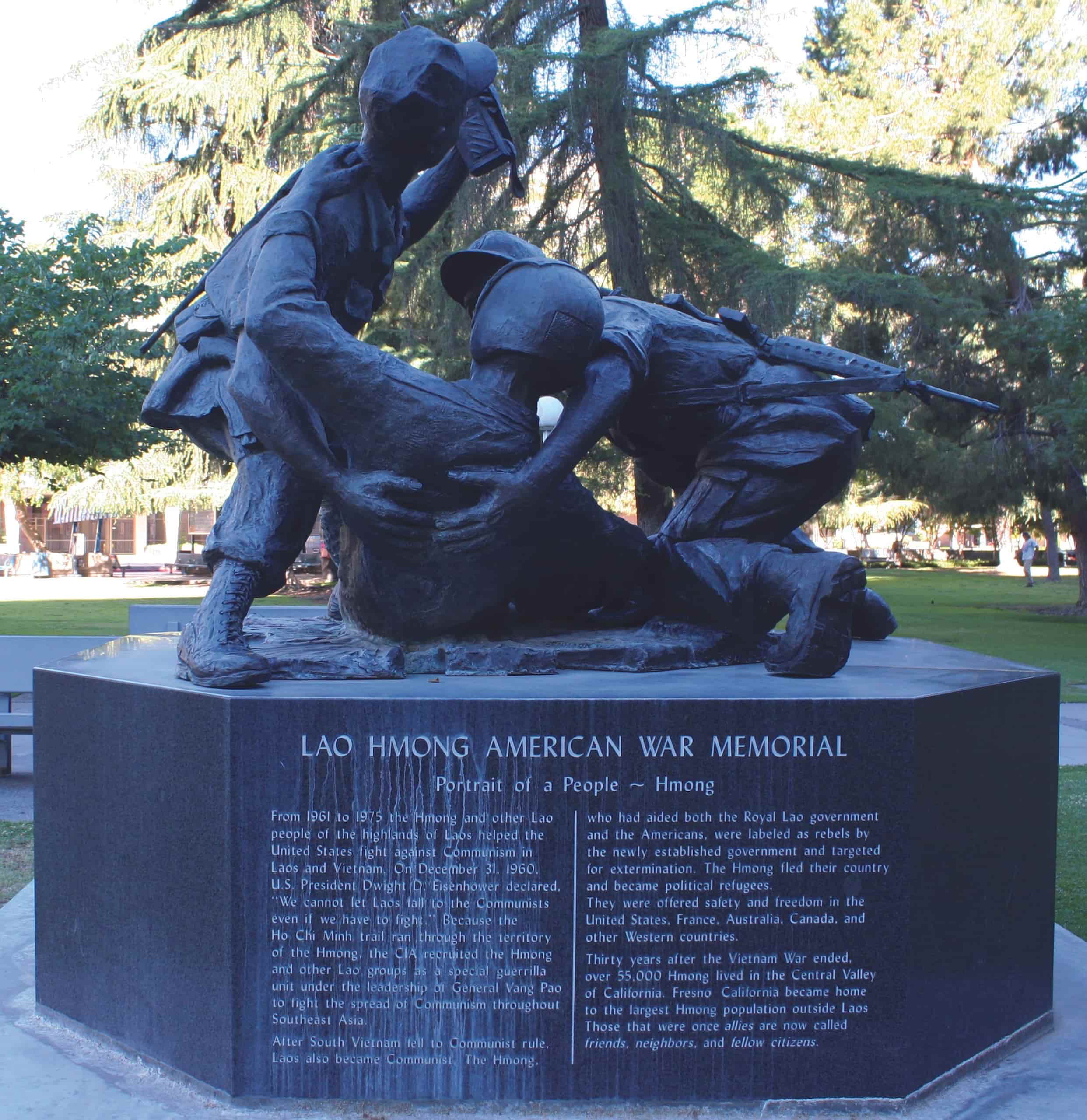
Image 11.02.01 — This memorial in Fresno, California, was completed in 2005 to commemorate the Hmong and Lao veterans who sacrificed their lives in service of the US in Vietnam and the “secret war” in Laos.
How was secrecy a war strategy during the American Secret War in Laos, and how has secrecy continued to impact Hmong American experiences?
How do Hmong refugee experiences show the ways that state violence and power operate?
How have Hmong Americans experienced policing after their resettlement in the United States?
War and Secrecy
Under US imperialism in the former French colonies, Hmong and other minority groups such as Mien, Khmu, and Kha were recruited by the Central Intelligence Agency (CIA) to be allies to aid in US military aggression in Southeast Asia (1960–1975). The United States supplied them with World War II-era weaponry with the goal of stopping Communist troops operating in Laos and of intercepting the North Vietnamese at the Ho Chi Minh Trail, which ran through eastern Laos.
The CIA recruited Hmong military leader General Vang Pao, who was a commander in the Royal Lao Army, to lead the “secret army.” At its peak, this “secret army” consisted of forty thousand soldiers, making it one of the largest clandestine CIA military operations. These soldiers provided intelligence, engaged in armed combat, performed rescue missions of American pilots, and took part in many other military duties. General Vang Pao and his army became a US global ally during the Vietnam War.
Video 11.02.02 — Dr. Chia Youyee Vang discusses the complexities of Hmong soldiers’ involvement in the Vietnam War, noting their critical role in rescuing American soldiers as well as fighting in place of US troops as “proxy soldiers.”
00:44
The United States recruitment of Hmong boys and men as “proxy soldiers” helped to create the illusion of no American military presence in Laos. American soldiers were discharged and re-enrolled as “volunteers,” piloting CIA Air America planes brandishing the Royal Lao Army insignia, erasing any paper trail of the United States as the aggressor.
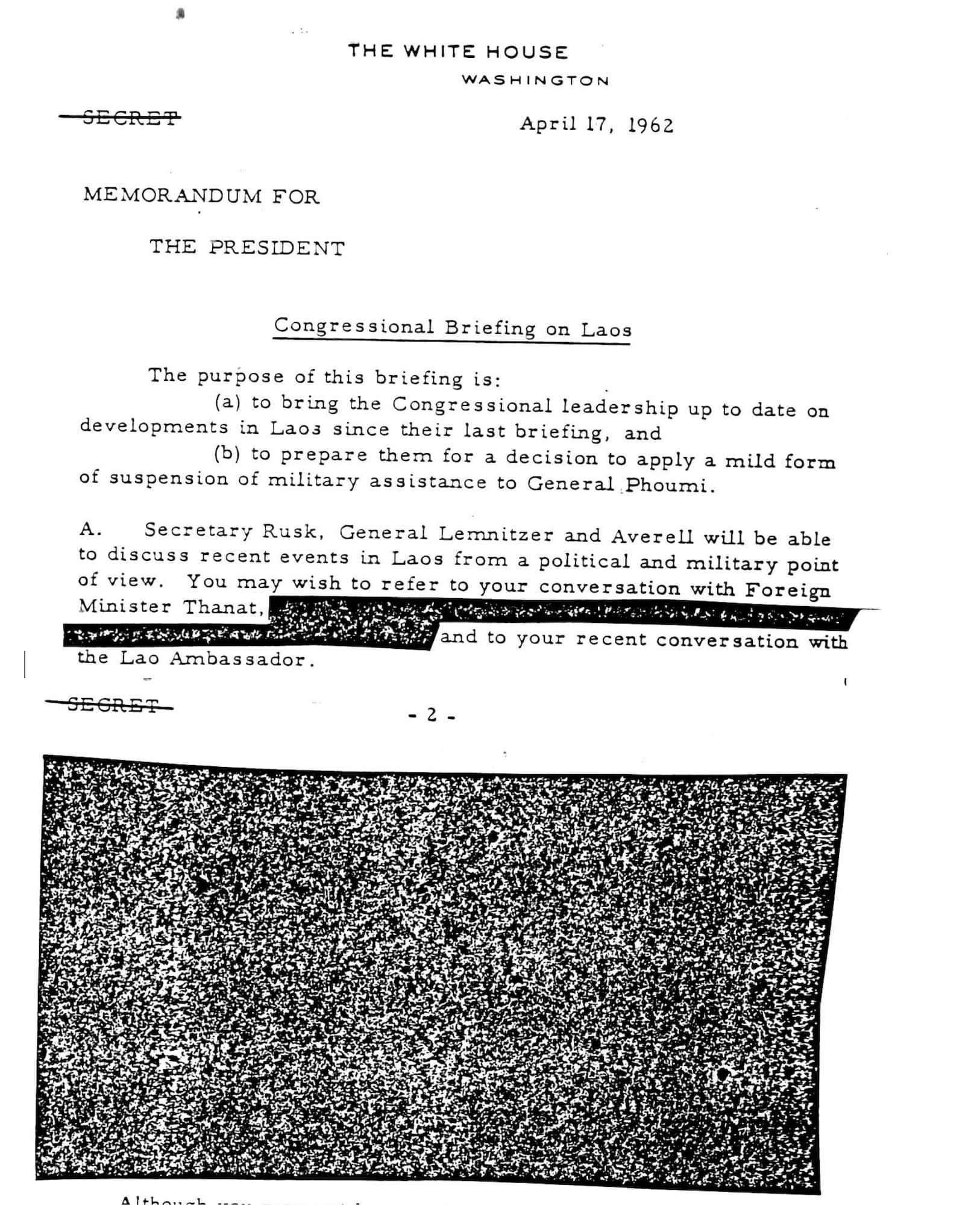
Text 11.02.03 — A declassified 1962 memorandum for President John F. Kennedy regarding a congressional briefing on Laos. The two-page memo was heavily redacted when it was made available to the public in the 1990s.
In addition, correspondences in the 1960s between the US Pentagon and President John F. Kennedy about military operations in Laos were classified and kept hidden from the American public until the 1990s, when Freedom of Information Act requests forced the government to release records. Although the requests were specifically to obtain information about Kennedy’s assassination, many records contained documents regarding the political situation in Laos. Even though these records became declassified and available to the public, they were heavily redacted, leaving wide gaps in information.
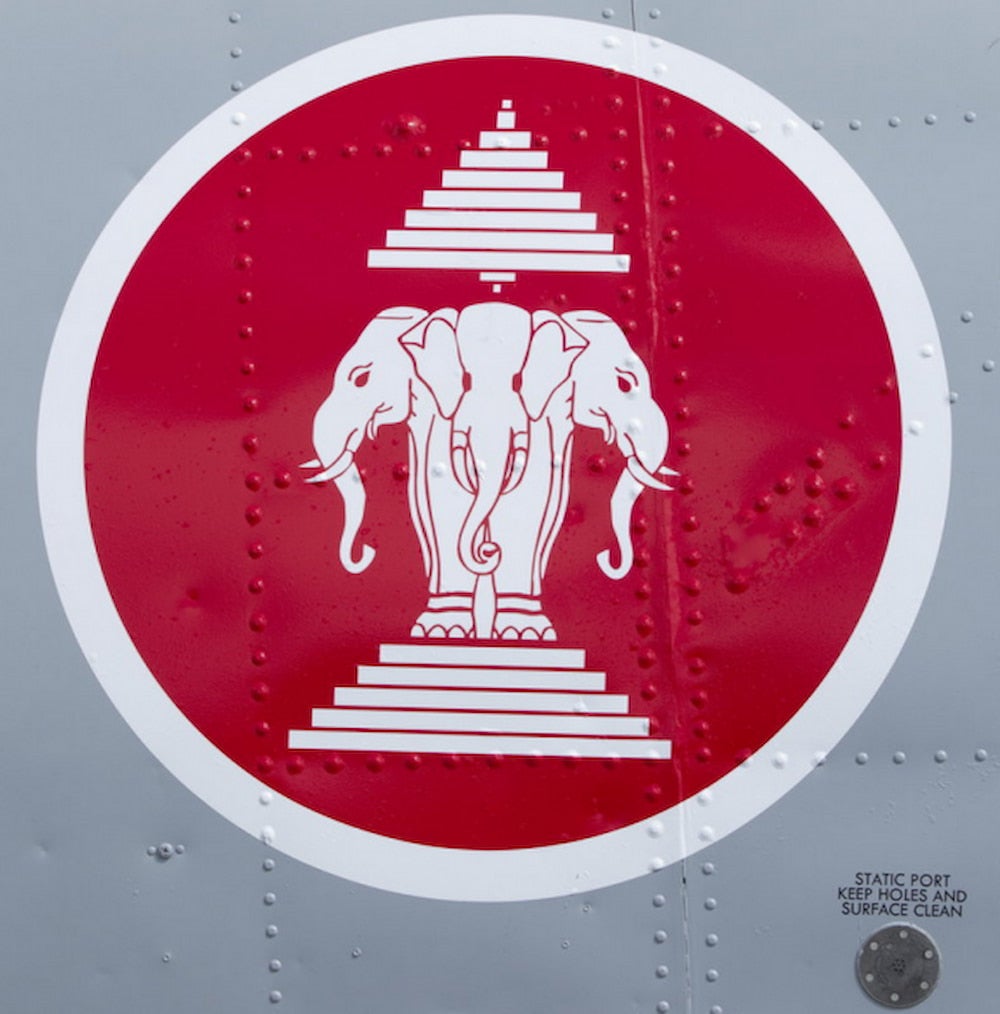
Image 11.02.04 — The Royal Lao Army insignia on a US plane. US T-28D planes were employed for training Hmong pilots and flying bombing missions in Laos, representing the US subterfuge about its “secret war.”
Soldiering
Based on the belief that soldiering is seen as a virtuous status or act, noncitizens and allies around the world who became soldiers for the United States are viewed as protocitizens, meaning first citizens or citizens-in-progress whose sacrifices can make them citizens. Yet for noncitizens and allies, soldiering for the US is also connected to the US military’s aim to harm their people and other marginalized peoples.
For Hmong people who served as proxy soldiers, soldiering had multiple meanings. First, it meant protecting their families and villages. Second, soldiering was an opportunity to fight for their autonomy to self-govern to define who they are and practice their way of life. These meanings make up Hmong political motivations, but they were interpreted through the US military frame as earning belonging to a country and being “saved” from their so-called primitive status as a people without a country. Despite Hmong people’s intended goals, the price was the possibility of being killed in the name of the imperialist project.
Years later, Hmong veterans would speak of the tremendous sacrifices they made in this Secret War. They describe how ten Hmong soldiers would be charged with rescuing or recovering the body of one white American pilot. Hmong soldiers experienced a heavy death toll, while few Americans perished in Laos. In addition, Hmong families were internally displaced, forced to flee their villages and unable to farm and support their livelihoods.
Impacts of Secrecy
Not only did Hmong people bear the brunt of physical violence during the Secret War, but they also experienced epistemic violence because of the US government’s secrecy. Epistemic violence is the erasure of historical information and knowledge, denying and disconnecting certain communities from history, and making experiences of racism invisible. While the war was not a secret for Hmong people, their stories have been silenced and denied by official texts on the US war in Laos.
The physical violence of war persists in the scars and impairments that Hmong soldiers and civilians carry, but epistemic violence also has long-term effects. These effects—such as the hidden character of secrecy—may be difficult to see because they are embedded in government institutions or agencies that may cast people as happy allies and grateful refugees to the United States or “bad” refugees and criminals. Secrecy did not end when the war ended; it continued in the daily lives of Hmong people resettling in the United States. Refugees carry the effects of a war unknown to most Americans as they encounter policing, medical abandonment, and other forms of state violence in their new home.
Hmong Refugees
During the war, Hmong and other ethnic minorities were displaced from their villages to refugee centers as the conflicts destroyed their villages and farms. However, many were forced to flee Laos altogether after the United States in effect lost the Vietnam War when the US evacuated its personnel from Southeast Asia without any formal declaration. Like in Vietnam, when North Vietnamese forces took over Saigon in April 1975, the Pathet Lao (Lao People’s Liberation Army and the communist political movement) also gained power in Laos.
In early May 1975, General Vang Pao’s family along with twenty-five hundred Hmong military officials and personnel and their families were airlifted out of Long Cheng, the secret army’s military base. Subsequently, Hmong soldiers and their families became targets for persecution by the Pathet Lao for aligning with the United States. Many tried to escape into the jungles, while others attempted to reach Thailand on foot or by boat across the Mekong River, where many Hmong people drowned.
After Hmong refugees arrived in Thailand, between 1976 and 1979, another eleven thousand Hmong migrated to the United States under the US Refugee Resettlement Program managed by the Department of State. During this time, some Hmong refugees accepted resettlement to France, French Guiana, Australia, Argentina, and Canada. The passage of the 1980 Refugee Act and its establishment of the Office of Refugee Resettlement would open a pathway for Hmong refugees to seek resettlement in the United States.
Although the refugee policy of the US and the Office of Refugee Resettlement were designed to help refugees, it instead often separated refugee families and dispersed them through resettlement centers throughout the country in places like Providence, Rhode Island, and Portland, Oregon. The policy aimed to reduce the resource burden of refugees on any single community. What is more, xenophobia and racism fueled beliefs that Hmong and other Southeast Asian refugees were threats to economic job security and limited social welfare resources. They also immediately faced prejudice wherever they were relocated; this prejudice was often rooted in fears that Hmong refugees would bring disease and Communist ideology into American communities.
Life in the United States
Specifically for Hmong refugees, public and government fears amplified social concerns about the Hmong community’s inability to assimilate into US society. Refugee organizations and advocates critiqued refugee resettlement as a failed policy because it created more burden and hardship for Hmong refugees due to family separation. This separation led in many cases to trauma, isolation, and loneliness, further exacerbating the difficulties Hmong people faced in remaking their lives. The refugee dispersal practice also placed refugees into under-resourced communities where existing Black, Latinx, and Indigenous communities were already engaged in long-term struggles for employment, educational, and housing equity.
The struggles within these communities positioned Hmong and other Southeast Asian refugees against Indigenous and other communities of color, at times casting them as the “model minority” immigrants. When Hmong refugees strove to make ends meet by working multiple jobs or living in multigenerational households, they were often seen as the model minority, the “good refugee,” who had succeeded despite arriving broken and traumatized. But this view masked the insidious context of soldiering and the failure of refugee resettlement to make refugee lives better. As the supposed model minority and good refugee, Hmong and other Southeast Asian refugees were expected to be docile subjects whose hard work would enable educational success and social mobility.
Militarization and Policing
As Hmong refugees rebuilt their lives with their American-born children, their experiences have been impacted by policing. The “good refugee” framing only told part of their story; at times, they were also seen as the “bad refugee” who has the tendency to commit violence. Part of the tendency toward violence came from the history of Hmong soldiering, which have often stereotyped Hmong as primitive warriors who were skilled fighters. Even though few Americans know about the history of Hmong people’s relationship with the United States, the limited information has provided a one-dimensional view that paints Hmong men as predisposed to violence.
Consider the case of Chai Soua Vang, the Hmong American man who killed six white hunters in northern Wisconsin in 2004 after he had unknowingly wandered onto their property. In the media, Vang was depicted as a skilled killer. The context of racial terror in which one Hmong American man faced eight hostile white hunters was ignored, as was the context of racial tensions around property and belonging. What became amplified was Vang’s swift reflexes and marksmanship at shooting–skills attributed to the fact that Vang had served in the US National Guard and had come from a Hmong American community that had served as proxy soldiers for the United States. Vang was found guilty and sentenced to life in prison.
In other cases, Hmong American boys have faced criminalization at school when they were surveilled as potential gang members by school officials in the school yard and by the police when walking home from school. Fong Lee, a Hmong American teenager, was killed by Minneapolis police in 2006 when he and some friends rode bikes near an elementary school. The police officers presumed criminal activity and chased Lee and his friends. The officer who killed Lee shot him in the back and planted a gun on him in order to claim self-defense. These examples of racial terror and policing show the criminalization of Hmong tendency toward violence that is linked to militarization, the process of organizing and supplying military materials to people and/or a region.
The intersections between militarization and policing for Hmong Americans became more complicated when police officers from Minneapolis, Minnesota, killed George Floyd on May 25, 2020. Americans watched in shock the video footage of police officer Derek Chauvin kneeling on the neck of hand-cuffed Floyd for over eight minutes, resulting in his death. The videos also showed the other three officers present at the scene. One of the officers was an Hmong American—Tou Thao, who was seen managing the gathering crowd of witnesses but did not intervene on behalf of Floyd to stop his fellow officer’s use of excessive force. Floyd’s death ushered nation-wide protests against policing and anti-Black violence and demands for justice for Floyd.
Many Asian Americans on social media condemned Thao for being a docile model minority because he did not intervene. Complicit in Floyd’s death, Thao served as an ally to the institution of policing and state-sanctioned violence even though policing has historically sought to diversify its institution by recruiting from communities of color to police their own communities. Hmong American activists who joined in the demands for justice for Floyd called for Hmong Americans to refuse allyship with policing and anti-Black racism.
In doing so, Hmong American activists made connections between allyship with policing and Hmong allyship with the United States during the Secret War and helped us to understand the intersecting impacts of militarization and policing. By extension, we can consider the image of the docile model minority as more than a set of “positive” stereotypes about Asian people’s success, but a form of racism that disciplines Asian Americans to align with state institutions.
In summary, the circumstances of war and secrecy not only hid Hmong political motivations and impacted their lives in Laos, they made historical experiences of war violence unthinkable and experiences of racism invisible. In addition to long-term physical impairments, Hmong also experience ongoing erasure of their experiences within institutions that are supposed to help, but that continue to cause hardship and more deaths.
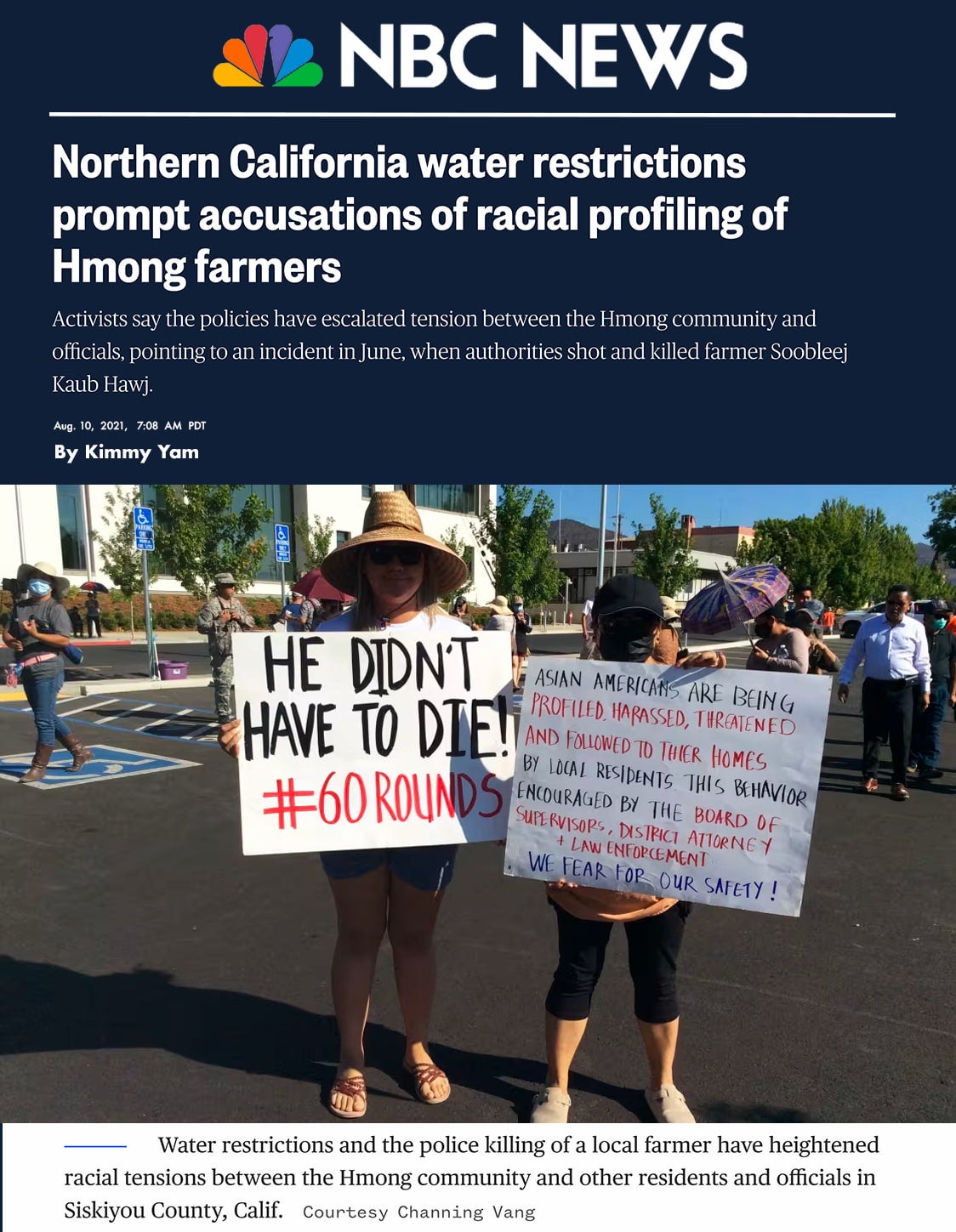
Image 11.02.05 — NBC News covered a rally against the 2021 police murder of Hmong American farmer Soobleej Kaub Hawj as he fled the Lava Fire in Siskiyou County. Activists claim the sixty times Hawj was shot belies the officers’ claim that he was the aggressor.
Glossary terms in this module
Indigenous Where it’s used
[ in-dij-uh-nuhs ]
Refers to people who were the original inhabitants of the land, predating colonialism, for whom land is a source of knowledge, resource, and cultural and spiritual connection. Indigenous peoples maintain sovereignty by resisting colonial power.
resettlement Where it’s used
[ ree-set-uhl-muhnt ]
The transferring of refugees from an asylum country to another state, where they are ultimately given permanent residence.
Secret War Where it’s used
[ see-krut wor ]
During the Vietnam War, the US Central Intelligence Agency conducted a covert operation, where the US militarily-supported Hmong and other ethnic groups in Laos to combat North Vietnamese forces and the Communist Pathet Lao. From 1964 to 1973 the United States dropped more than two million tons of bombs, which the American public did not learn about until the 1990s and 2000s.

Glossary terms in this module
Indigenous Where it’s used
[ in-dij-uh-nuhs ]
Refers to people who were the original inhabitants of the land, predating colonialism, for whom land is a source of knowledge, resource, and cultural and spiritual connection. Indigenous peoples maintain sovereignty by resisting colonial power.
resettlement Where it’s used
[ ree-set-uhl-muhnt ]
The transferring of refugees from an asylum country to another state, where they are ultimately given permanent residence.
Secret War Where it’s used
[ see-krut wor ]
During the Vietnam War, the US Central Intelligence Agency conducted a covert operation, where the US militarily-supported Hmong and other ethnic groups in Laos to combat North Vietnamese forces and the Communist Pathet Lao. From 1964 to 1973 the United States dropped more than two million tons of bombs, which the American public did not learn about until the 1990s and 2000s.
Indigenous
[ in-dij-uh-nuhs ]
Refers to people who were the original inhabitants of the land, predating colonialism, for whom land is a source of knowledge, resource, and cultural and spiritual connection. Indigenous peoples maintain sovereignty by resisting colonial power.
resettlement
[ ree-set-uhl-muhnt ]
The transferring of refugees from an asylum country to another state, where they are ultimately given permanent residence.
Secret War
[ see-krut wor ]
During the Vietnam War, the US Central Intelligence Agency conducted a covert operation, where the US militarily-supported Hmong and other ethnic groups in Laos to combat North Vietnamese forces and the Communist Pathet Lao. From 1964 to 1973 the United States dropped more than two million tons of bombs, which the American public did not learn about until the 1990s and 2000s.