





Set against gray fabric, this detailed story cloth shows Hmong people as they walk through lands with colorful buildings bisected by long river.
Module 1: Overview
Have Hmong Americans found home in the United States?
I am part of the generation of Hmong/HMong/HMoob children born in the refugee camps of Thailand after the American Secret War in Laos. The American public did not know about this undeclared war. From 1960 to 1975, the United States went against the 1954 Geneva Conventions, which formally ended the First Indochina War, and recruited Hmong and other minority groups for military duties and intelligence operations. This was part of the Vietnam War and the American government’s effort to stop the spread of Communism. At the end of the war, over 150,000 Hmong fled the country—about half the 300,000 estimated population in Laos.
You may wonder why Hmong people who came to the United States as refugees came from Laos and not from a country of their own. The reason is because Hmong people have experienced persecution for centuries and were forced to move from their ancestral homelands in China long ago. Thus, Hmong people do not have a geographic homeland. Today, they live as a minority group in countries around the world, including China, Vietnam, Laos, Thailand, the United States, Canada, Australia, France, and French Guiana, among other countries. Due to the colonial histories of East and Southeast Asia, Hmong people are not recognized as an Indigenous people. However, many Hmong elders and Hmong Americans claim Indigenous experiences even if they are not recognized by state governments.
This module explores who Hmong people are through storytelling. Hmong stories carry ancestral knowledge to younger generations and are filled with histories and experiences not easily found in written records. Hmong stories include folktales, origin stories, and life stories of people and events. These stories are passed down orally and through “paj ntaub” (Hmong embroidery) or other ritual practices. These methods hold ancestral practices, music and sounds, literature, and other art forms. Hmong storytelling anchors Hmong listeners to our ancestors, communities, and places. It helps us form words and sounds, connecting us to a past from both before and after Hmong were forced to migrate with few possessions. Simply put, Hmong stories tell us who we are.
What does “home” mean when Hmong people have been forced to migrate throughout their history?
Does being stateless mean Hmong people do not have a connection to land and place?
How do you tell the history and experiences of a group of people who do not have a country and who have very limited historical records?
Locating Hmong: The Limits of Understanding Home
“Where is ‘Hmong’?”
I have often felt uneasy with this question. I grew up with Hmong stories about an ancestral homeland in China and the longing of my elders for their childhood home in Laos. Many assume that locating people on a map is a fundamental way to learn about their cultural and linguistic origins. Under this assumption, people who do not have a geographically locatable homeland are characterized as “stateless.” With this assumption comes the belief that they do not have a political, cultural, and social connection to place and land.
Some groups have attempted to map Hmong communities for military purposes. For example, the United States Central Intelligence Agency (CIA) created maps during the Vietnam War to prove Hmong could be useful allies. Air Force pilot Ed Marek frequently flew over northern Laos during the Secret War and indicated Hmong locations by drawing a rectangular boundary onto an existing map of Asia. These maps assumed that Hmong were simply a natural part of the landscape. The maps were intended to know about Hmong people for military purposes, not to understand what “home” meant for us.
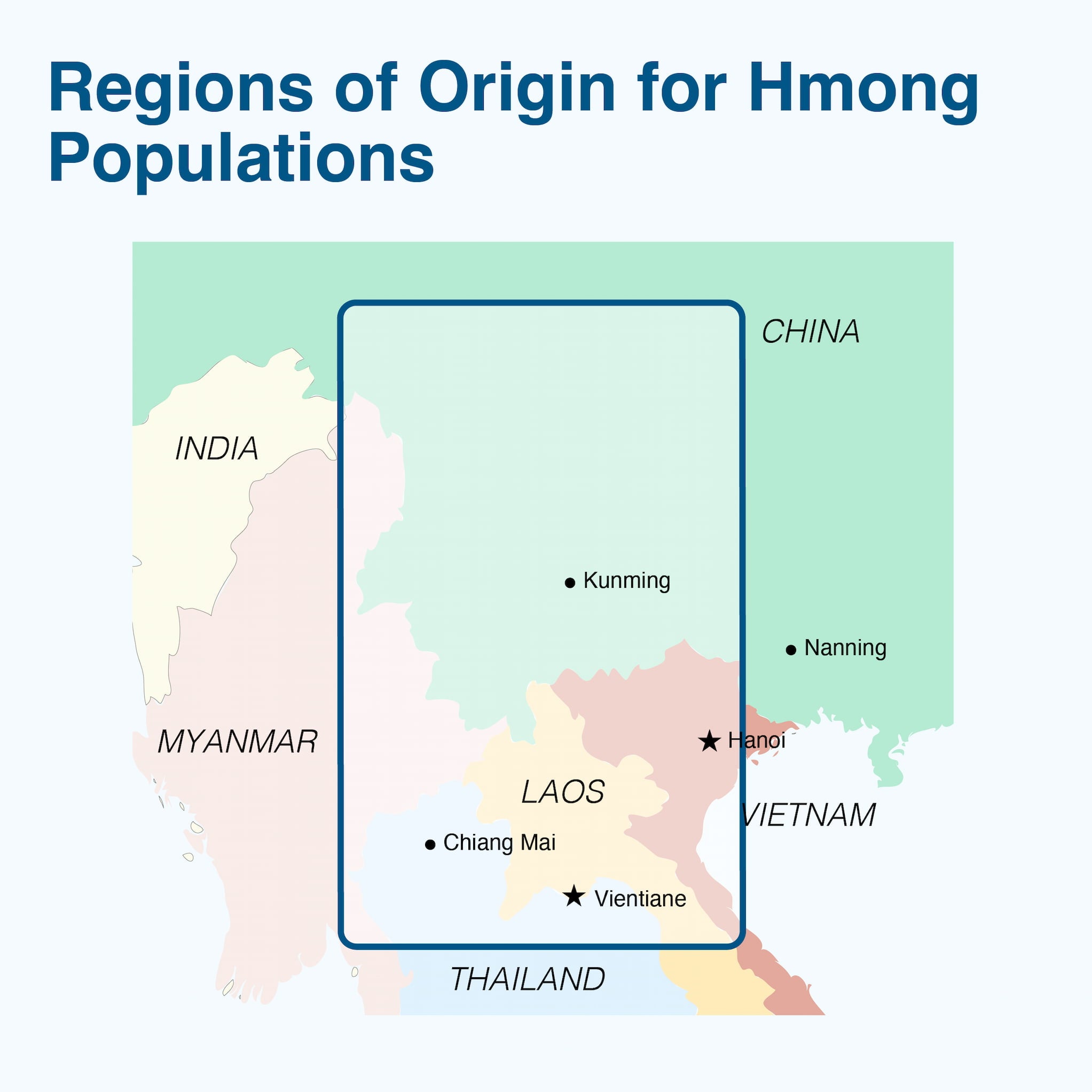
Image 11.01.02 — This map illustrates the geographic regions that Hmong populations originate from.
For many, being “stateless” signals a lack of place and a history, and it is associated with being primitive or deficient. But it is important to understand the conditions by which a group becomes stateless. Not only were Hmong people displaced by the US war in Southeast Asia, they were also forcibly displaced by Chinese, French, and Japanese colonialism. This complicates the idea of “home.” Is home a refugee camp in Thailand? Is it in Laos or China? In the United States?
The answer is different depending on who is asked. Clearly, home is not always one thing, but rather a constellation that encompasses the past, present, future, and what is imagined. Although maps can explain where Hmong people live in relation to geopolitical borders, they do not represent Hmong stories, including the violence and injustice they have experienced and the lives they continued living for centuries.
“Cloth as Land”
Women have been the primary keepers and producers of paj ntaub, a remarkable cloth and textile artistry that more specifically refers to the floral embroidery on clothing, hats, “hlab nyias” (baby carriers), and “noob ncoos” (funeral gifts). Paj ntaub is a form of ancestral knowledge that documents history, migration, change, and identity in a way that is visually depicted.
Embroidered motifs carry the lost Hmong writing script, histories of migration, and Hmong interactions with the environment. For example, triangles on the borders of paj ntaub represent mountainous regions of Hmong homelands in southern China and Southeast Asia. Spiritual energy also exists in this motif, and the mountainous borders symbolize a barrier against malevolent spirits. Pompoms are another motif, sewn into hats both for decoration and to disguise the children who wear the hats as flowers, protecting them from evil spirits.
Artist Pachia Vang has stated that paj ntaub are more than symbols; they also convey knowledge of the land. “Cloth as land” is a concept Vang created for an art exhibit to convey how cloth is a fundamental part of the Hmong journey through life and death. Vang sees clothing as a way to map Hmong people to the land, especially because Hmong clothing styles are region-specific.
Noob ncoos is an Hmong artform where past, present, future, and imagined notions of home come together. They are placed in the coffin and buried for wealth and prosperity in the afterlife. Noob ncoos represent a plot of agricultural land for the afterlife, and they are given by Hmong women who are the daughters, sisters, daughters-in-law, and sisters-in-law of the deceased.
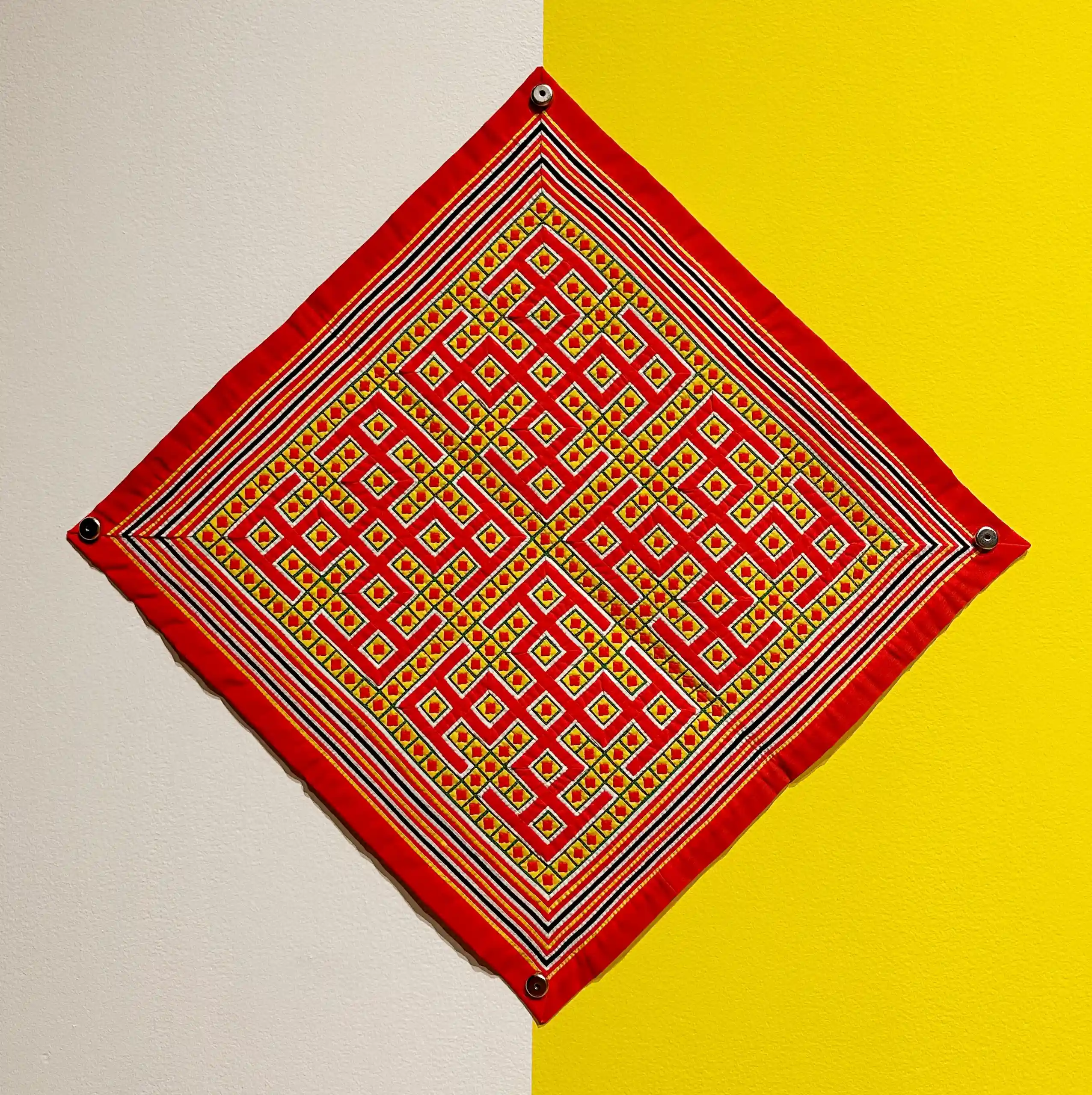
Image 11.01.04 — A noob ncoos, a gift for elders placed in the coffin and buried for wealth and prosperity in the afterlife.
The practice of paj ntaub shows that Hmong history is not absent of place; these stories, crafts, and traditions are filled with directional markers that give meaning to Hmong life. Vang sees paj ntaub as carrying “remnants of the land,” helping people stay “united in displacement through collective memories of land and place that anchor cultural identities.”
The Story Cloth
In the late 1970s, Hmong transformed paj ntaub into stories and mapmaking in the refugee camps. Story cloths, or “paj ntaub dab neeg,” depicted Hmong history of migrations, folktales, relationships to their environment, and memorable events. This is one of the most well-known Hmong refugee products to record Hmong experiences during and after the Secret War. Because Hmong families destroyed important evidence of their involvement with the United States, and CIA records were either kept secret or redacted, the story cloth has become a textile archive created by refugees to depict their patterns of migration intertwined with histories of colonialism, war, and violence.
Author Dia Cha’s mother had destroyed documents that showed her father’s involvement in the war to protect their family from retaliation. Without these documents, much of Cha’s story was unarchived. But Cha’s aunt and uncle, Chue and Nhia Thao Cha, stitched a story cloth in Thailand’s Chiang Kham Refugee Camp that tells the story of migration from China to Laos, refugee camps in Thailand, and preparations to resettle in the United States. In her book, Story Cloth: The Hmong People’s Journey of Freedom (1998), Cha explained, “The stitches in a Hmong story cloth make pictures of life. This story cloth will tell you about our life.”
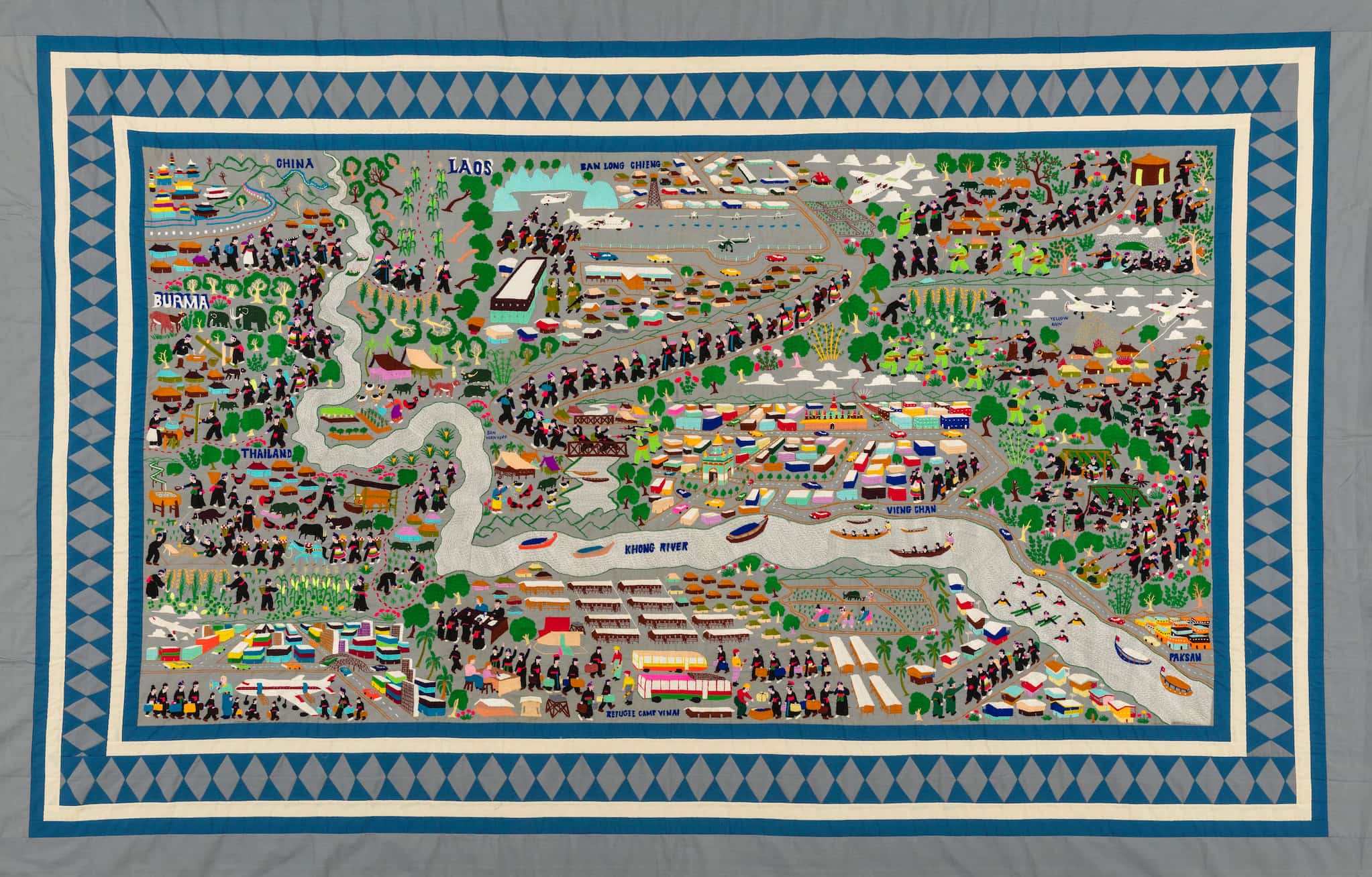
Image 11.01.05 — This story cloth includes a representation of Hmong way of life and forced migration across different borders in China and Southeast Asia.
The story cloth tradition infuses life into the absences. Where certificates, photos, and government reports related to Hmong life were hidden, redacted, or destroyed, the story cloths filled this missing information with narratives of movement, scenes of pastoral life, and representations of escaping war. And because the United Nation’s food rations were meager, these story cloths also supplemented the lives of Hmong people in the camps. Hmong cloth makers sold story cloths to aid workers in the camps or sent them to resettled family members to sell on their behalf.
Each story cloth is different; not all portray the same narrative of migration from China to Southeast Asia to the United States, but they all depict scenes of movement. From tending crops and animals, hiding in makeshift camps in jungles, crossing rivers, and living in refugee camps, these story cloths are maps of Hmong movement.
Read as a map, Chue and Nhia Thao Cha’s story cloth embeds the geographies of migration. It depicts Hmong relationship to land—both physical geography and imagined space—as a series of migrations. For example, looking at this image, no visible geopolitical borders separate China from Laos from Burma from Thailand.
Borders within the map are constituted by stitched paths through farms and jungles or roads through cities, while trees and qoob loo (crops such as corn or rice) surround farms. The most visible border is the Mekong River, shown originating in China and winding its way through scenes of Hmong daily life, including tending farms and raising animals. As a map and archive of Hmong ancestral knowledge, this story cloth depicts Hmong history and home beyond any one geopolitical boundary.
Glossary terms in this module
ancestral knowledge Where it’s used
Systems of knowledge, cosmology, cultural practices, or wisdom passed down through generations and carried across migrations, typically in written, oral, artistic, or spiritual formats.
displacement Where it’s used
The forced removal of a group of people from the place they live, often due to circumstances such as war, famine, natural disasters, or other forms of political persecution.
Indigenous Where it’s used
Refers to people who were the original inhabitants of the land, predating colonialism, for whom land is a source of knowledge, resource, and cultural and spiritual connection. Indigenous peoples maintain sovereignty by resisting colonial power.
Secret War Where it’s used
During the Vietnam War, the US Central Intelligence Agency conducted a covert operation, where the US militarily-supported Hmong and other ethnic groups in Laos to combat North Vietnamese forces and the Communist Pathet Lao. From 1964 to 1973 the United States dropped more than two million tons of bombs, which the American public did not learn about until the 1990s and 2000s.
stateless Where it’s used
Someone who does not have nationality to, or citizenship to, any country.