



Search the Media Repository
Discover the curated images, videos, and primary sources featured throughout Foundations and Futures
History is more than just text on a page; it is the photographs, voices, and artifacts of the people who lived it. The images and recordings featured across Foundations and Futures are part of a meticulously curated media repository. Whether you are building a lesson plan or investigating an artifact, you can use this database to trace the provenance of our media: discover who created an asset, the historical context behind it, and how it can be used to bring Asian American and Pacific Islander experiences into your classroom.
Multimedia
Chapters
-
Image
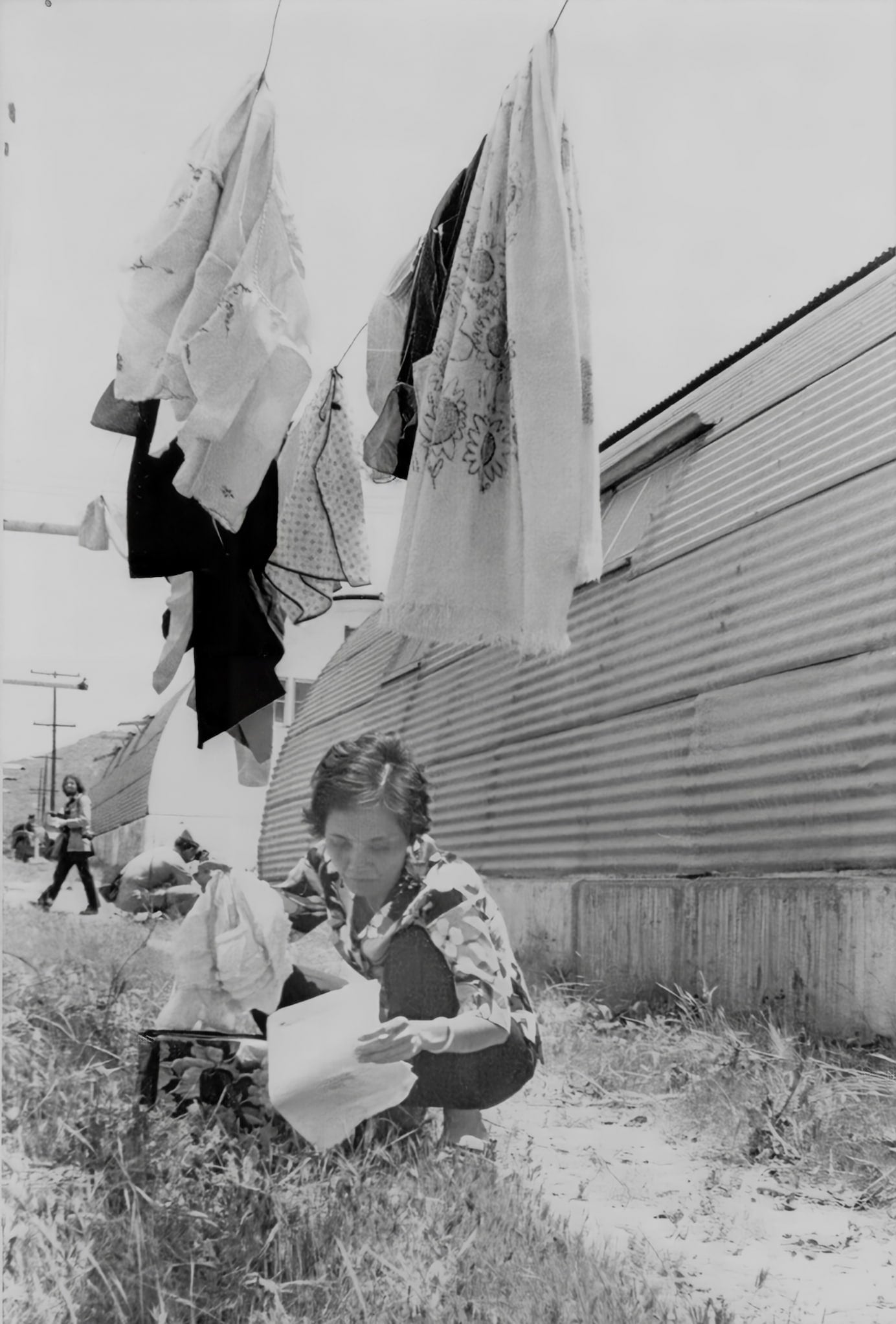
Vietnamese Refugee Settles in California
Many Vietnamese refugees temporarily housed at Camp Pendleton went on to resettle about sixty miles north in Orange County, California. Today, Orange County is home to the largest Little Saigon in the United States.
Featured in:
Vietnamese American Experiences, Module 4
-
Image
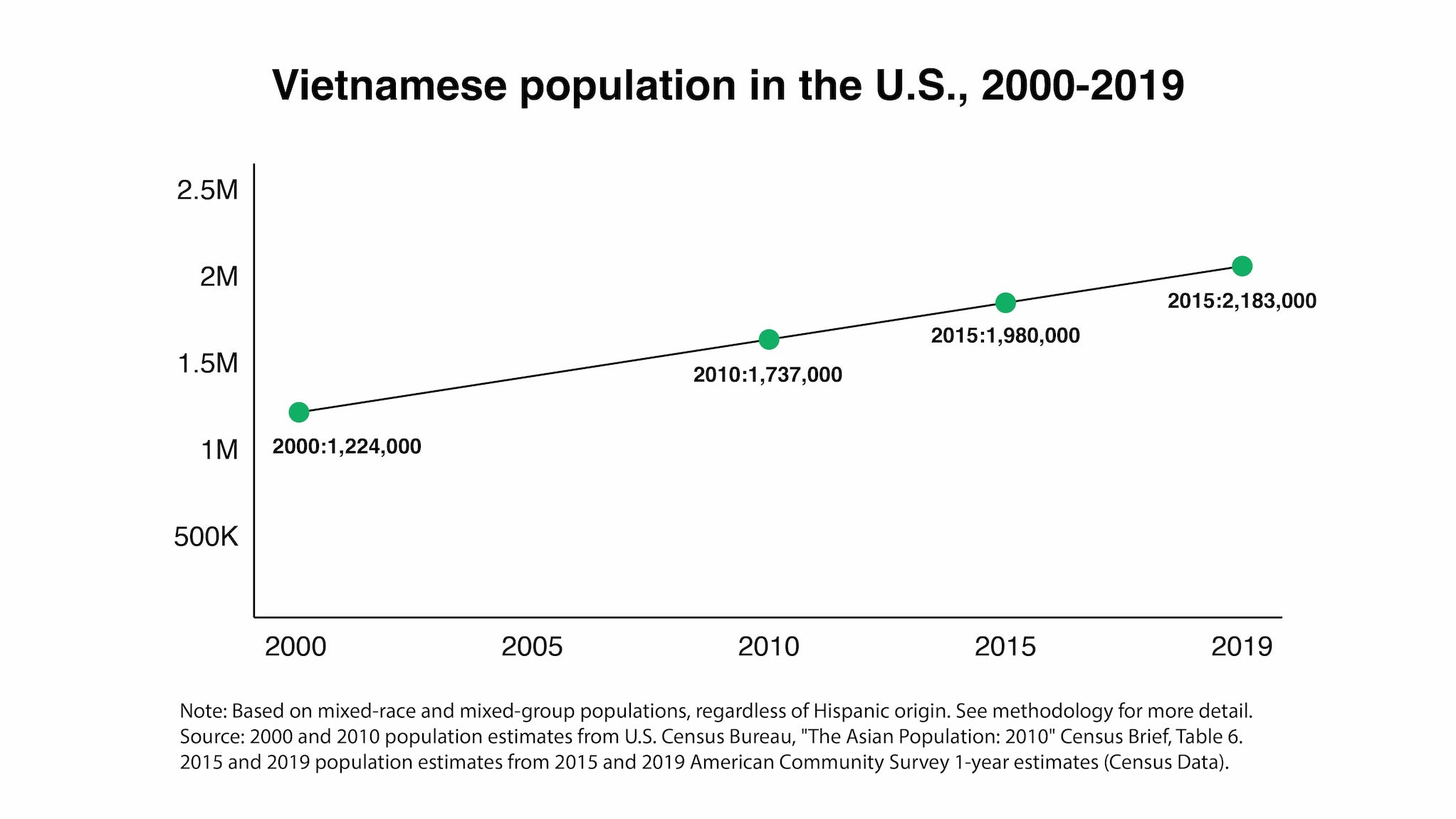
Vietnamese Population in the U.S., 2000-2019
Vietnamese population in the US, 2000–2019 by the Pew Research Center.
Featured in:
Vietnamese American Experiences, Module 4
-
Image
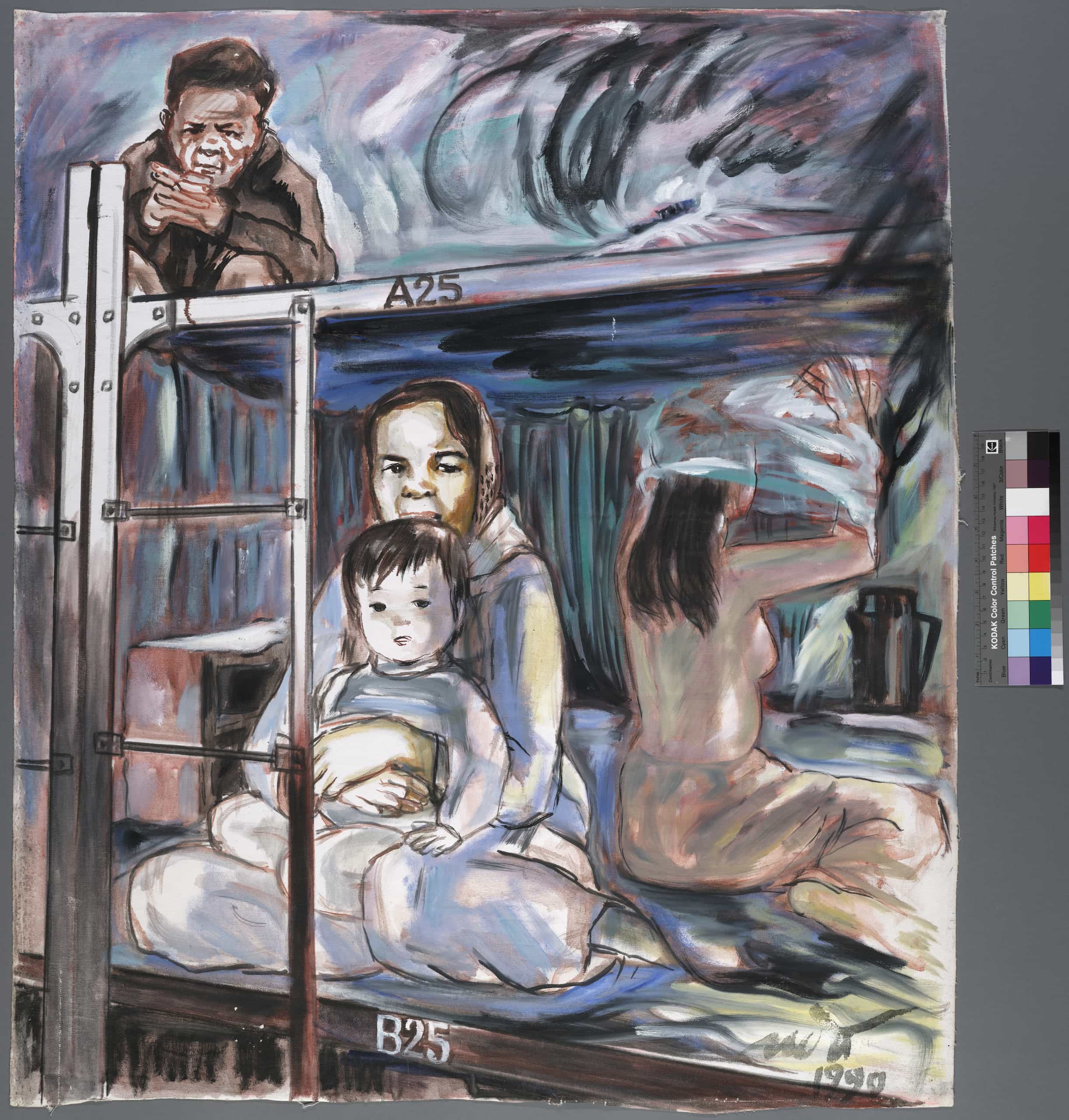
Life in the Camp by Nguyen Dai Giang
Life in the Camp (1990) by Nguyen Dai Giang. The artwork depicts the living quarters of a refugee family.
Featured in:
Vietnamese American Experiences, Module 3
-
Text
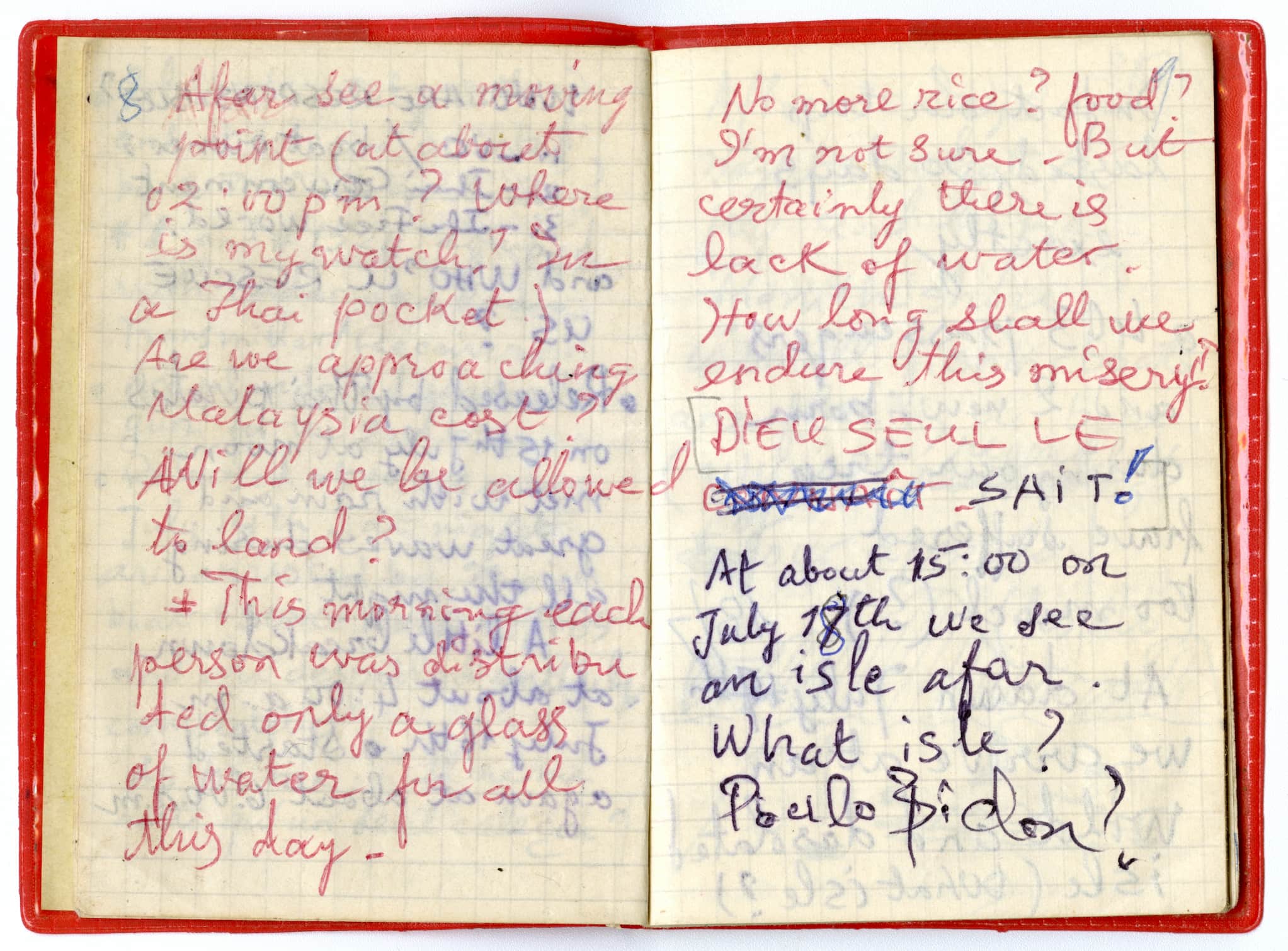
Pocket Diary of a Vietnamese Refugee (Pages 7-8)
These dairy pages are excerpts from Pocket Diary of a Vietnamese Boat Person Refugee, housed at the University of California, Irvine Libraries Southeast Asian Archive. The diary details an anonymous refugee’s boat journey beginning at 8:00 p.m. on June 17, 1979, from Cà Mau. This rare primary source object captures the experiences and feelings of an individual, but also sheds light on some of the first asylum countries’ roles in the refugee exodus.
Featured in:
Vietnamese American Experiences, Module 3
-
Text
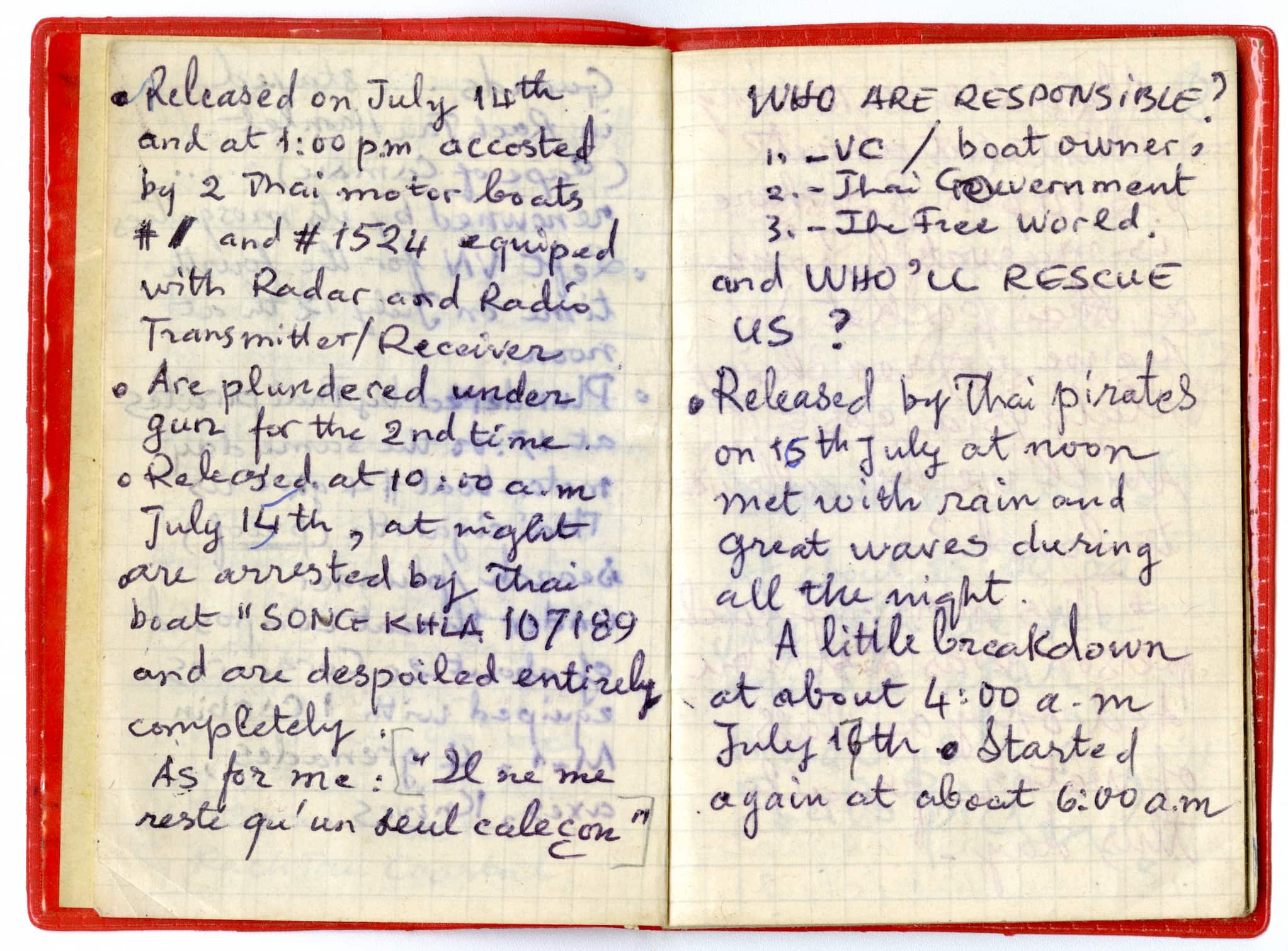
Pocket diary of a Vietnamese Refugee (Pages 5-6)
These dairy pages are excerpts from Pocket Diary of a Vietnamese Boat Person Refugee, housed at the University of California, Irvine Libraries Southeast Asian Archive. The diary details an anonymous refugee’s boat journey beginning at 8:00 p.m. on June 17, 1979, from Cà Mau. This rare primary source object captures the experiences and feelings of an individual, but also sheds light on some of the first asylum countries’ roles in the refugee exodus.
Featured in:
Vietnamese American Experiences, Module 3
-
Text
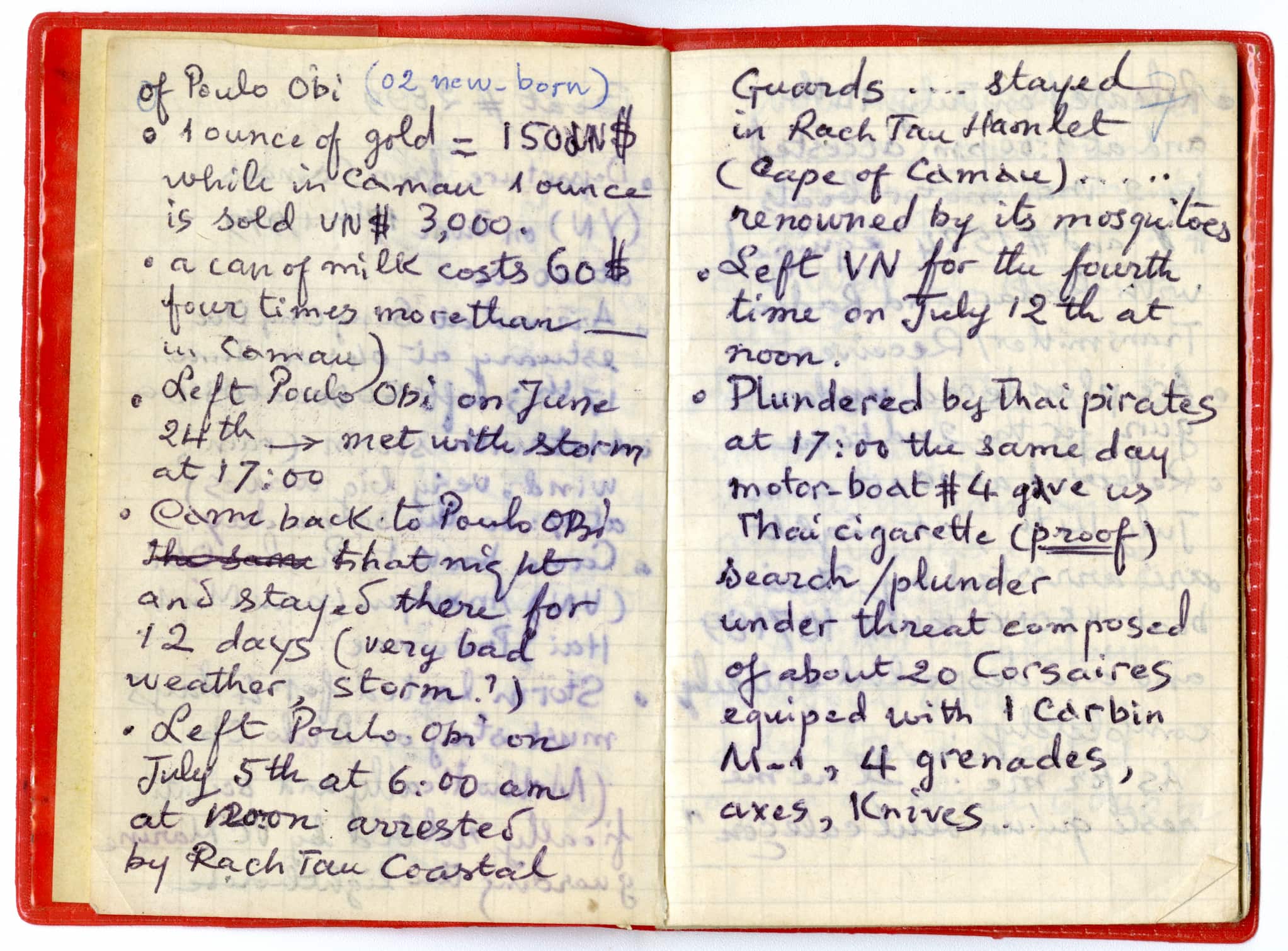
Pocket diary of a Vietnamese Refugee (Pages 3-4)
These dairy pages are excerpts from Pocket Diary of a Vietnamese Boat Person Refugee, housed at the University of California, Irvine Libraries Southeast Asian Archive. The diary details an anonymous refugee’s boat journey beginning at 8:00 p.m. on June 17, 1979, from Cà Mau. This rare primary source object captures the experiences and feelings of an individual, but also sheds light on some of the first asylum countries’ roles in the refugee exodus.
Featured in:
Vietnamese American Experiences, Module 3
-
Text
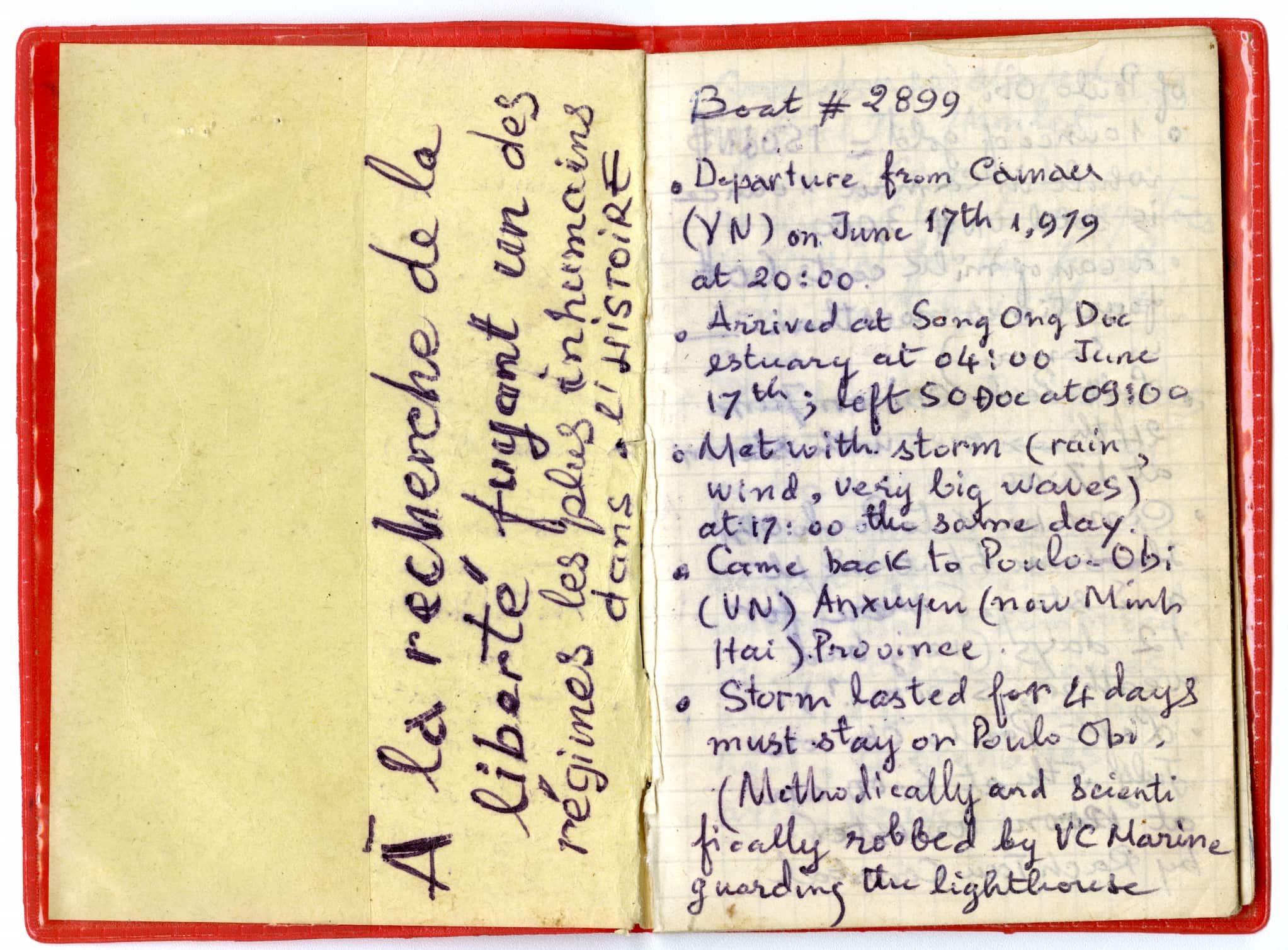
Pocket diary of a Vietnamese Refugee (Pages 1-2)
These dairy pages are excerpts from Pocket Diary of a Vietnamese Boat Person Refugee, housed at the University of California, Irvine Libraries Southeast Asian Archive. The diary details an anonymous refugee’s boat journey beginning at 8:00 p.m. on June 17, 1979, from Cà Mau. This rare primary source object captures the experiences and feelings of an individual, but also sheds light on some of the first asylum countries’ roles in the refugee exodus.
Featured in:
Vietnamese American Experiences, Module 3
-
Image
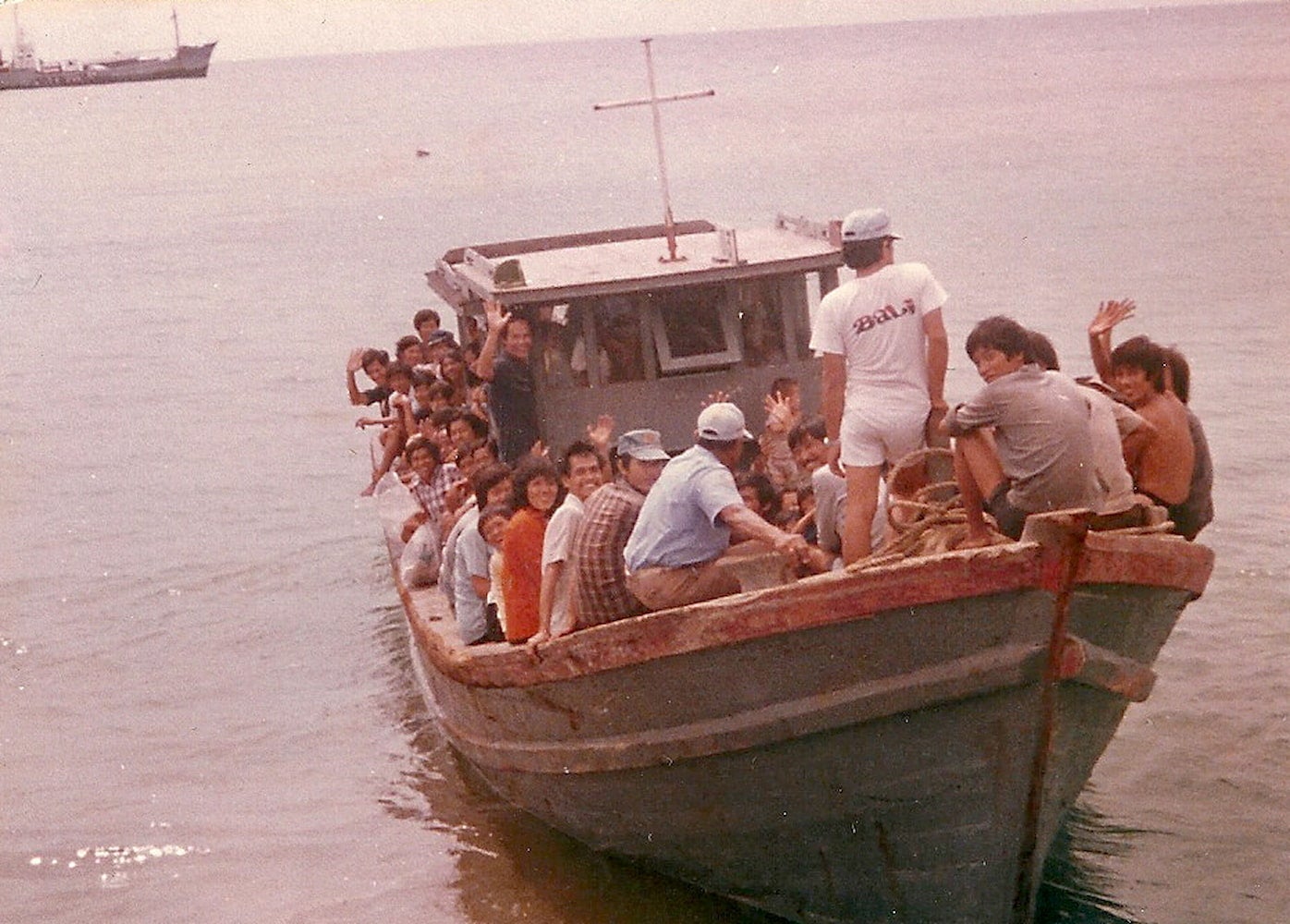
Huy Tran on a boat
In the years following the Fall of Saigon, many refugees left Vietnam secretly in unseaworthy and overcrowded boats. This second wave of refugees became known as the “boat people.”
Featured in:
Vietnamese American Experiences, Module 3
-

Image
Quynh-Trang Nguyen
Quynh-Trang Nguyen was thirteen years old in 1975 when she and her family were temporarily housed at Camp Pendleton. This photo was taken in 2012 by Brandon Nguyen as part of the Vietnamese American Oral History Project.
Featured in:
Vietnamese American Experiences, Module 3
-
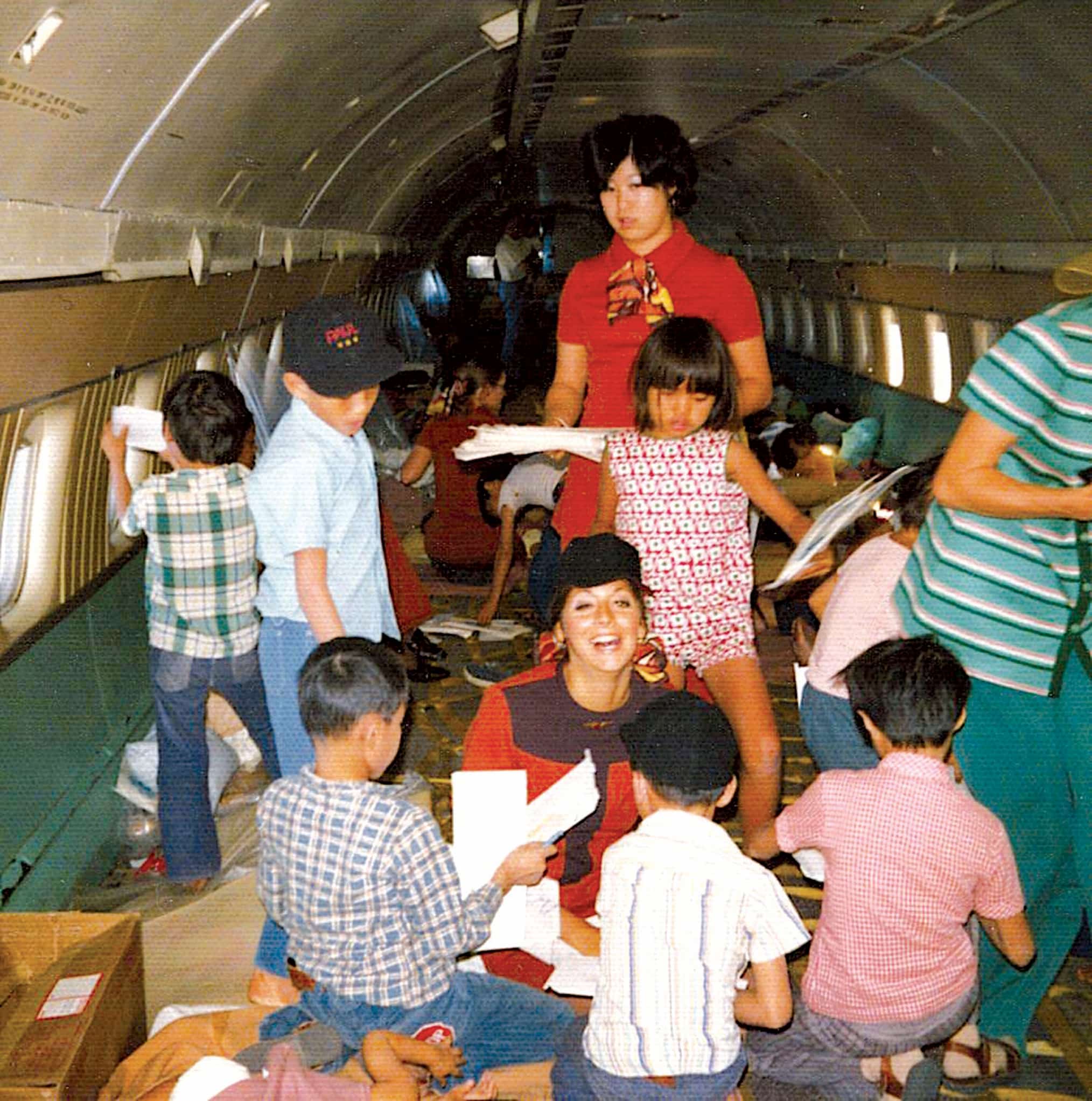
Image
Operation Babylift
Operation Babylift was the evacuation of children from South Vietnam to the United States and other Western countries. An estimated 3,000+ children were airlifted through this program in April 1975 and adopted by families around the world.
Featured in:
Vietnamese American Experiences, Module 3