



Search the Media Repository
Discover the curated images, videos, and primary sources featured throughout Foundations and Futures
History is more than just text on a page; it is the photographs, voices, and artifacts of the people who lived it. The images and recordings featured across Foundations and Futures are part of a meticulously curated media repository. Whether you are building a lesson plan or investigating an artifact, you can use this database to trace the provenance of our media: discover who created an asset, the historical context behind it, and how it can be used to bring Asian American and Pacific Islander experiences into your classroom.
Multimedia
Chapters
-

Image
The National Flag of the Philippines
The national flag of the Philippines features three stars, representing Luzon, the Visayas, and Mindanao, the three major island groups in the Philippines.
Featured in:
Filipinx American Histories, Module 4
-
Video
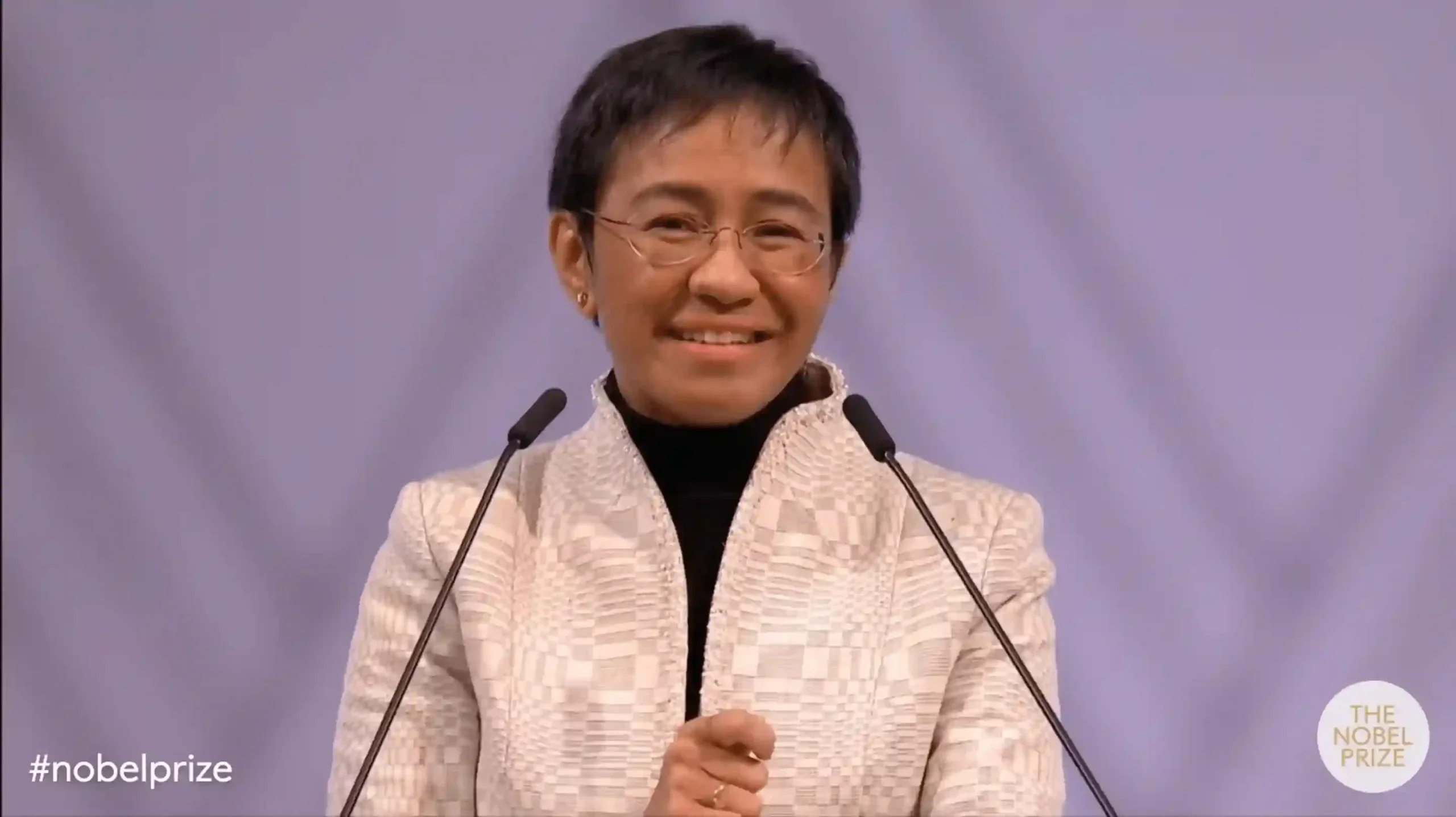
Maria Ressa’s Nobel Peace Prize Speech
In her 2021 Nobel Prize lecture, Maria Ressa emphasizes the importance of fighting for the truth in journalism, after facing a number of criminal charges in the Philippines for her reporting and criticism of Duterte’s regime.
Featured in:
Filipinx American Histories, Module 3
-
Image
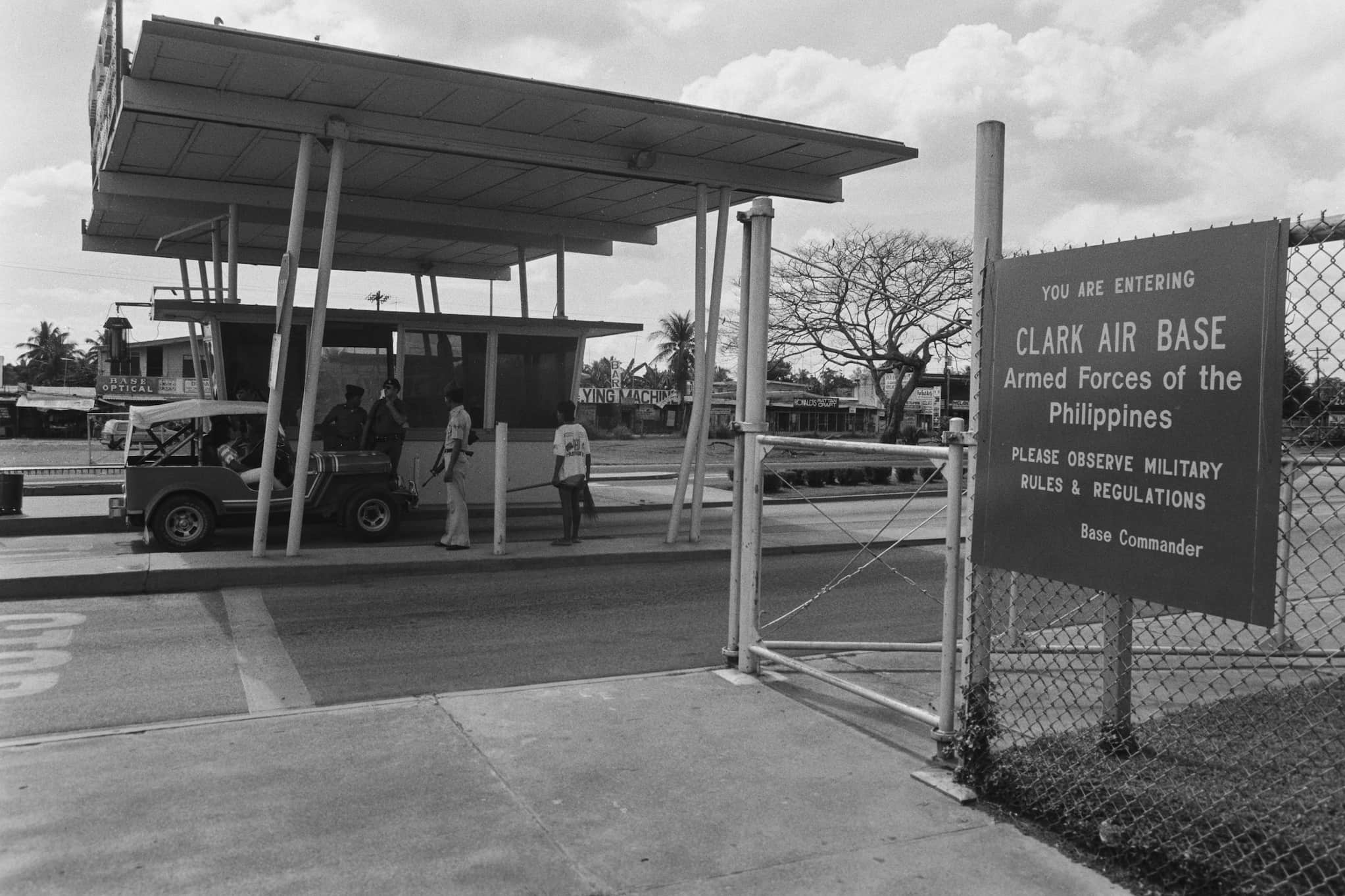
The Clark Air Base on Luzon Island
The Clark Air Base on Luzon Island, once the largest US military air base outside of the States, was a stronghold for both Philippine and American forces during WWII. Later, it became a key strategic hub for US operations during the Vietnam War.
Featured in:
Filipinx American Histories, Module 3
-
Image
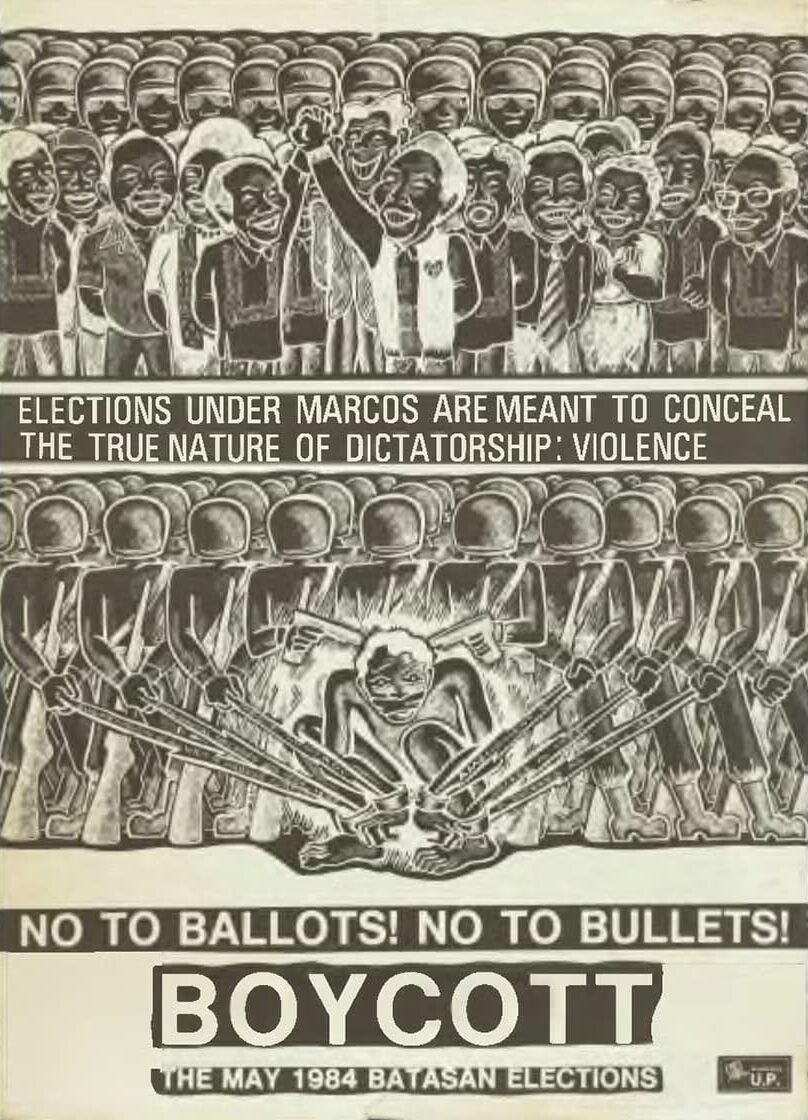
Boycott to the 1984 Batasan Elections
This poster was created by the student political organization Kaakbay UP, calling for a boycott of the 1984 election under Marcos.
Featured in:
Filipinx American Histories, Module 3
-
Image
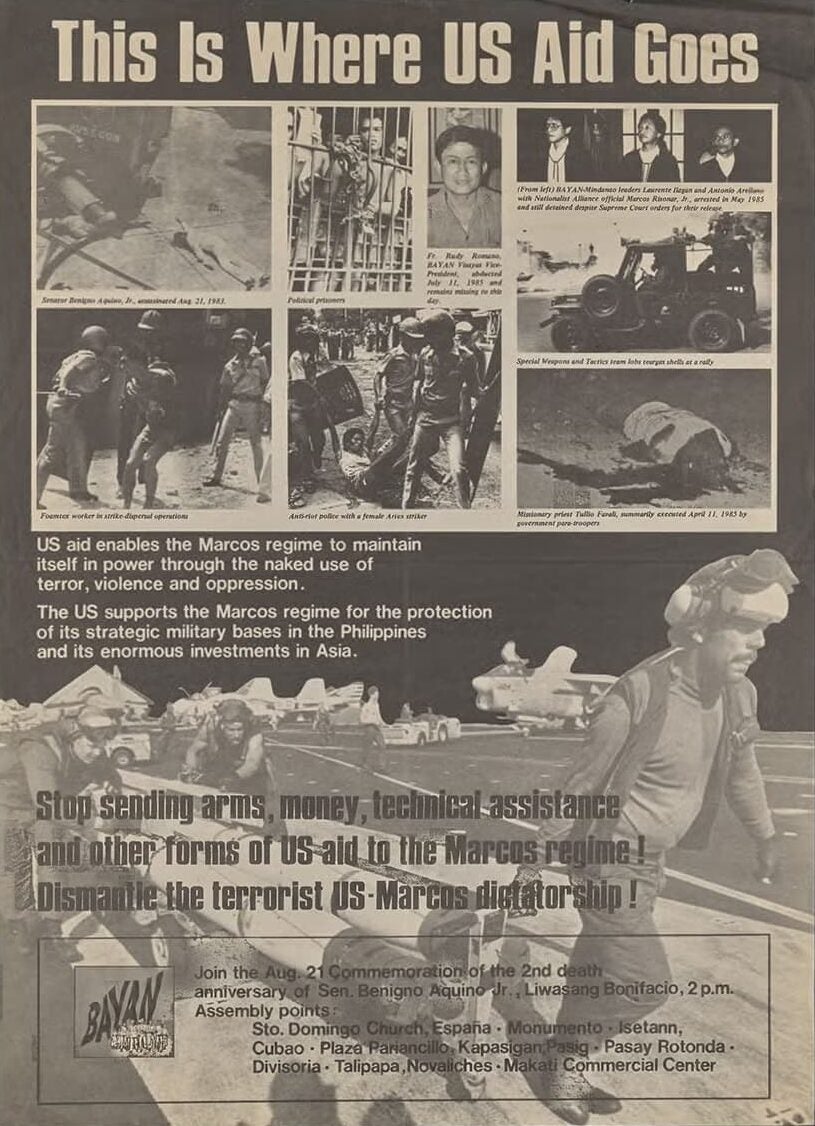
“This Is Where US Aid Goes” Poster
Filipino American activist organization BAYAN distributed this poster to highlight the relationship between US military funding and the violence and oppression experienced under the Marcos dictatorship.
Featured in:
Filipinx American Histories, Module 3
-
Image
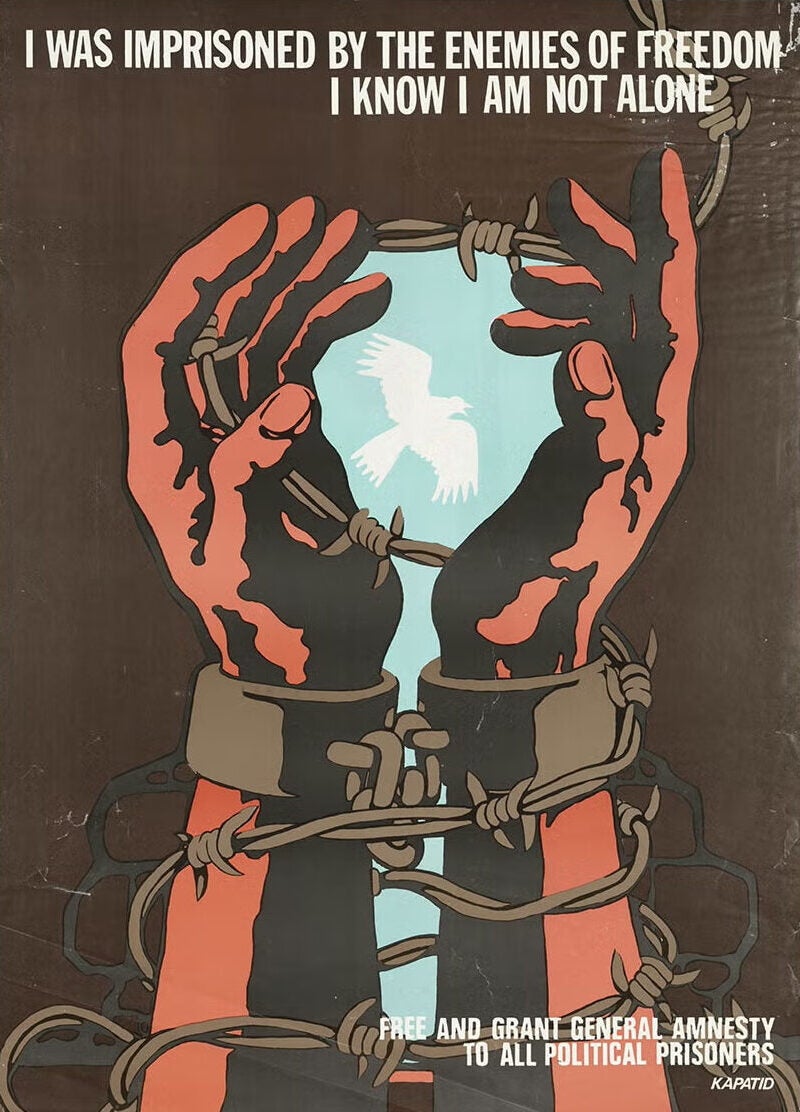
“Free and Grant General Amnesty to all Political Prisoners” Poster
Kapatid, a support group for families of political prisoners, created this poster advocating for the release of all political prisoners such as those deemed ‘enemies of the state’ by the Marcos dictatorship.
Featured in:
Filipinx American Histories, Module 3
-
Image
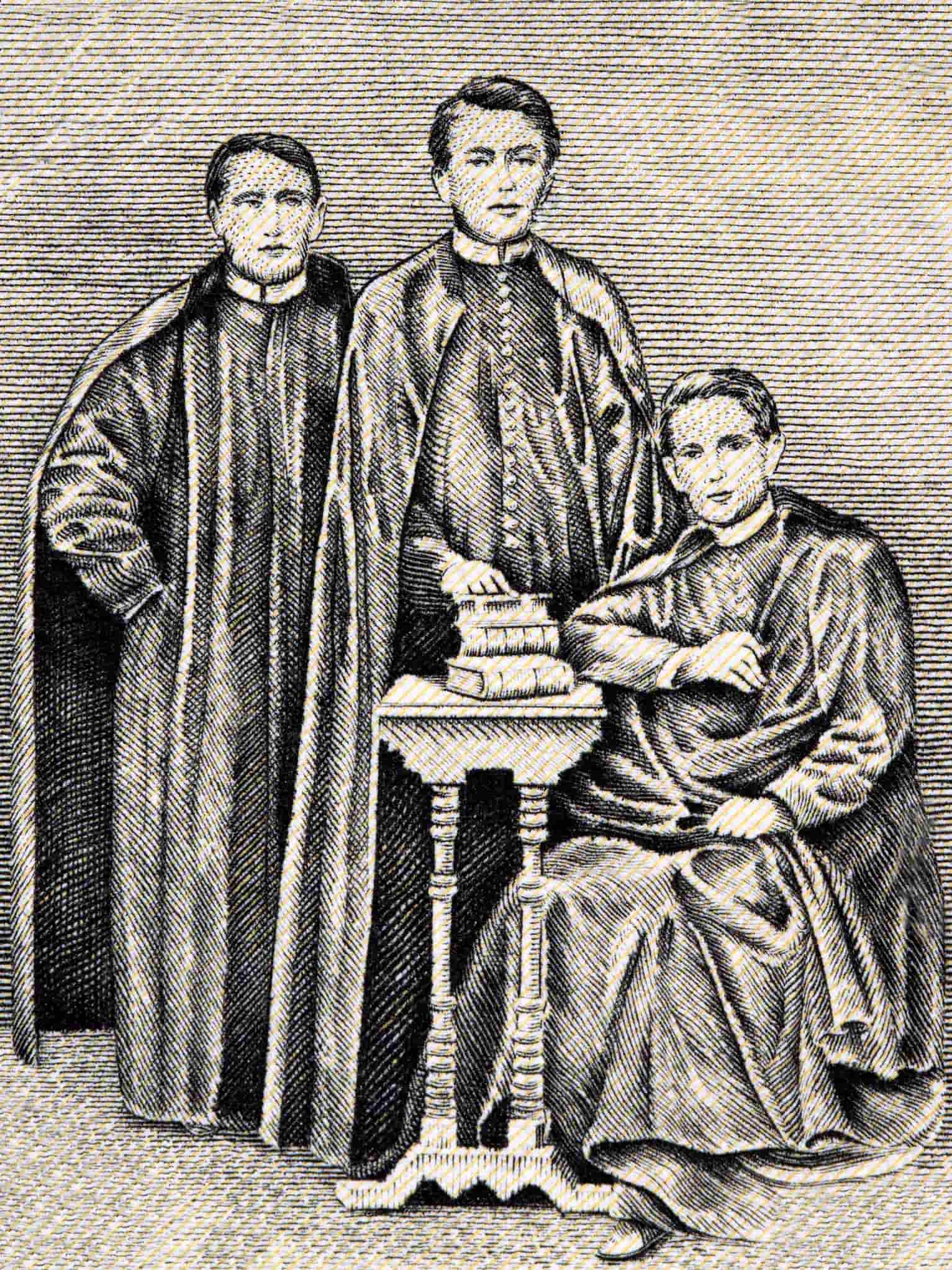
Illustration of Mariano Gómes, José Burgos, and Jacinto Zamora
Mariano Gómes, José Burgos, and Jacinto Zamora were three local priests publicly executed by Spanish colonial authorities for their alleged connection to the Cavite Mutiny. Their execution is widely recognized as a key event leading up to the Philippine Revolution.
Featured in:
Filipinx American Histories, Module 3
-
Image
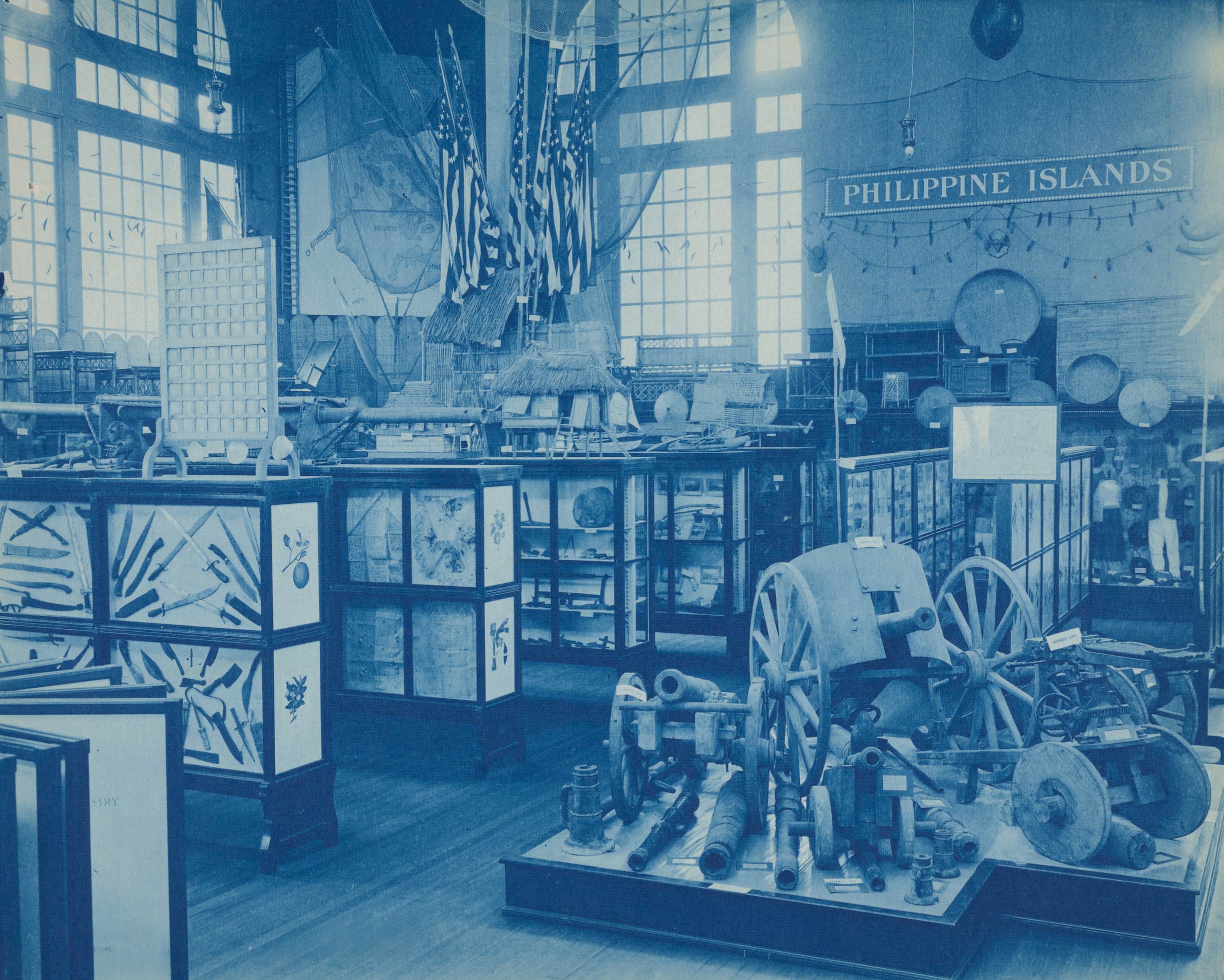
Pan-American Exposition Booth
Philippine Islands exhibit on display at the Pan-American Exposition, Buffalo, New York, 1901.
Featured in:
Filipinx American Histories, Module 3
-
Image
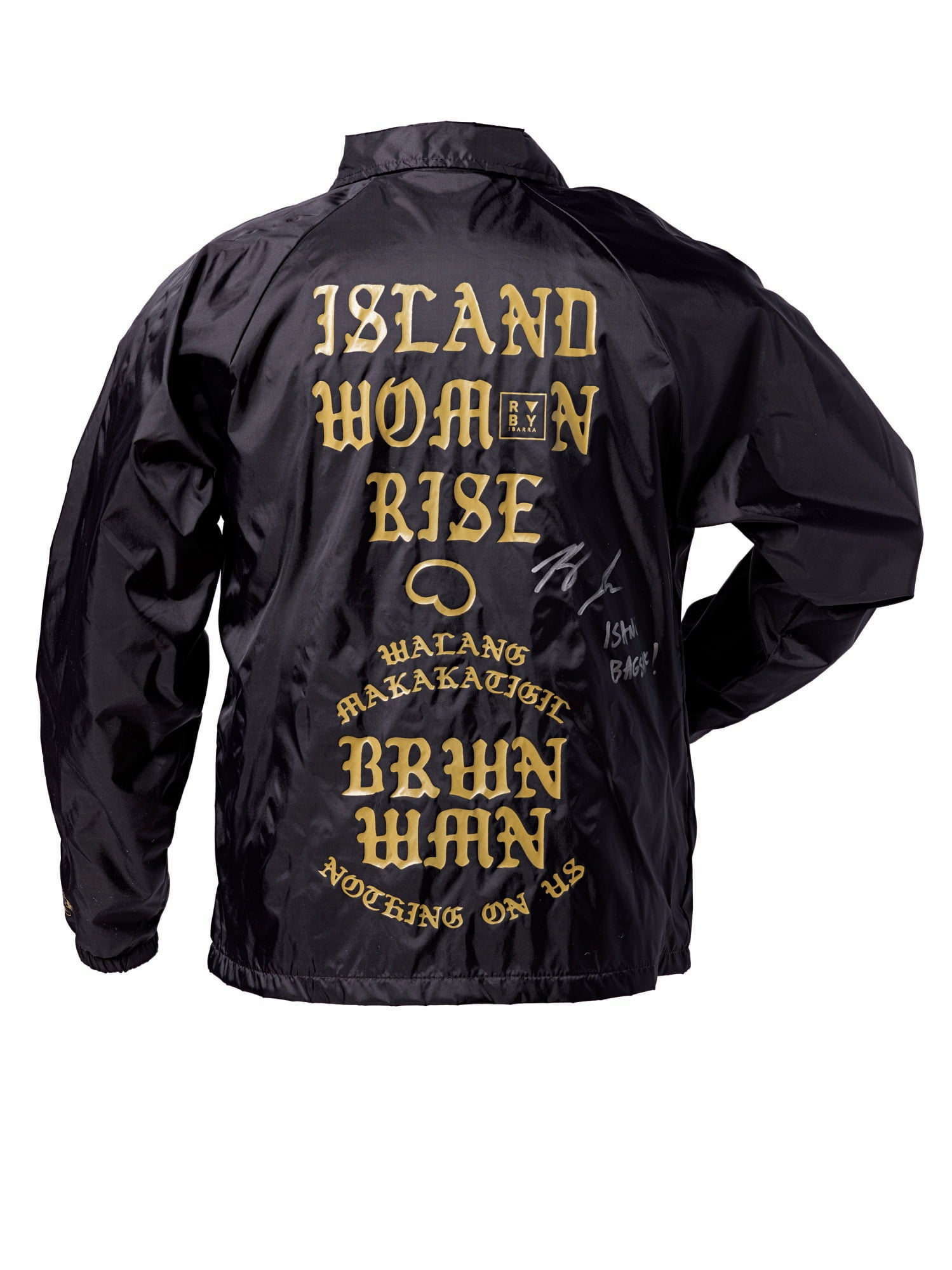
Ruby Ibarra Jacket
Philippine-born rapper Ruby Ibarra wore this jacket that features lyrics from “Us,” a song honoring the central role that women play in Filipino and Filipino American culture. Also featured on the track are Filipina rappers Rocky Rivera and Klassy and poet Faith Santilla.
Featured in:
Filipinx American Histories, Module 7
-

Image
Nurses Cap
Maria Jayme received this nurse’s cap during her graduation capping ceremony. In 1994, she immigrated to the United States and worked as a registered nurse in Florida. Between 1965 and 1988, more than seventy thousand foreign nurses came to the United States.
Featured in:
Filipinx American Histories, Module 6
-
Image
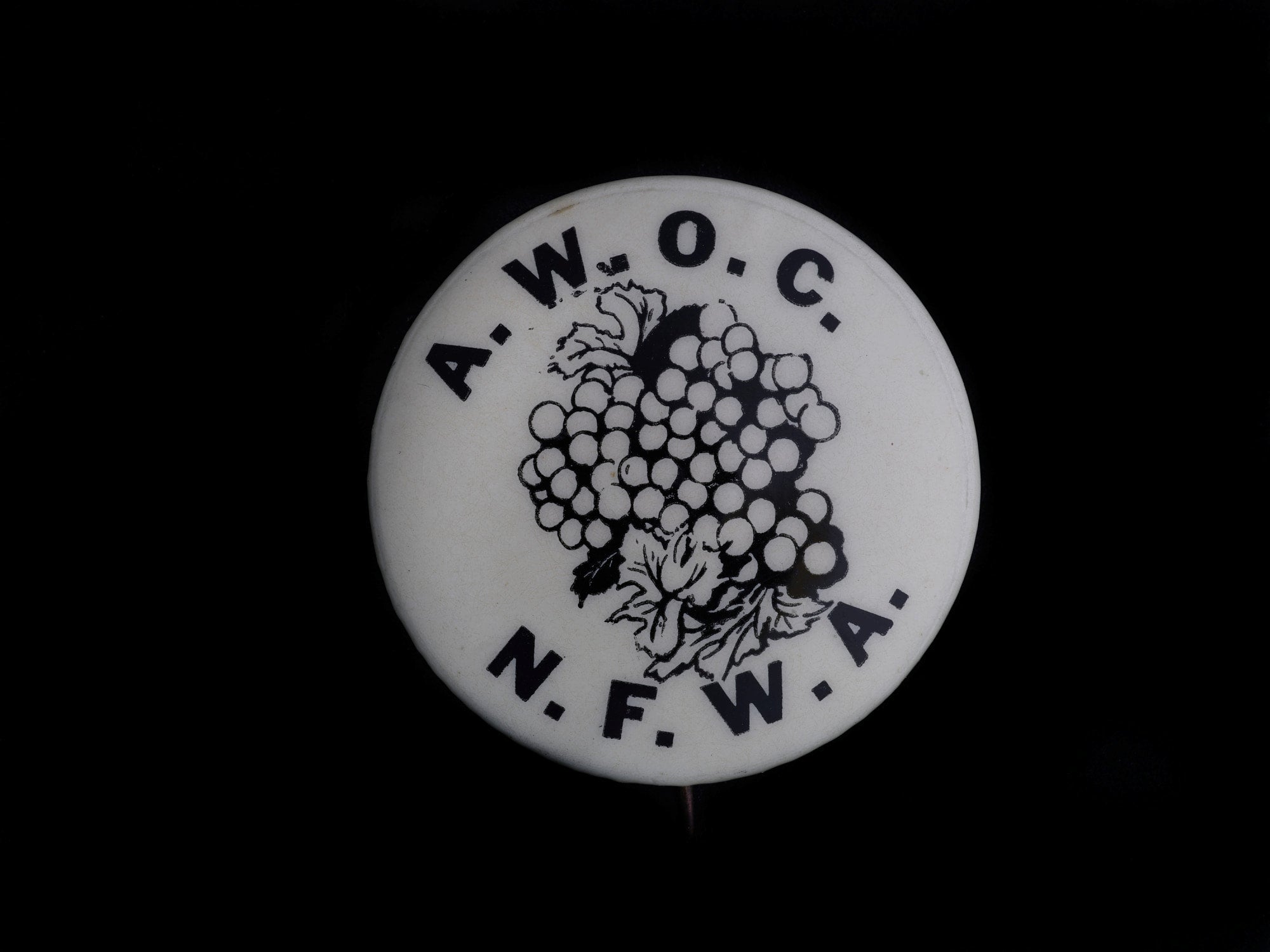
United Farm Workers Lapel Pin
The pin features the initials of two labor unions involved in the creation of the United Farm Workers: the Filipino-led Agricultural Workers Organizing Committee and the Mexican-led National Farm Workers Association. The union initiated a nationwide grape boycott to pressure growers to improve wages and working conditions.
Featured in:
Filipinx American Histories, Module 5
-
Image
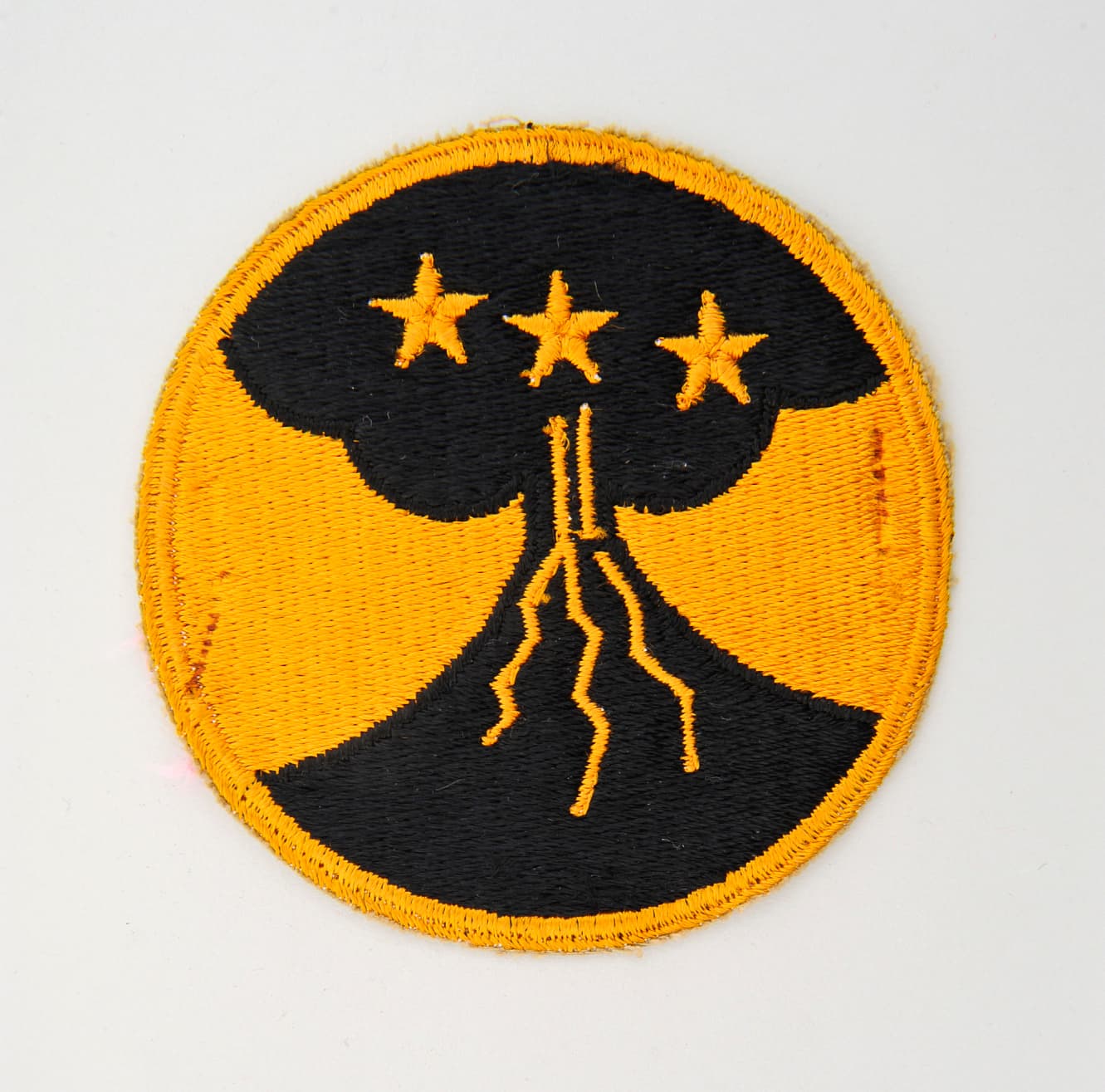
1st Filipino Infantry Regiment Patch
This is the shoulder sleeve insignia worn by members of the First Filipino Infantry Regiment, a US military unit primarily composed of Filipino Americans, 1942—1952. “Insignia,” National Museum of American History, AF.61624M.
Featured in:
Filipinx American Histories, Module 4
-
Image
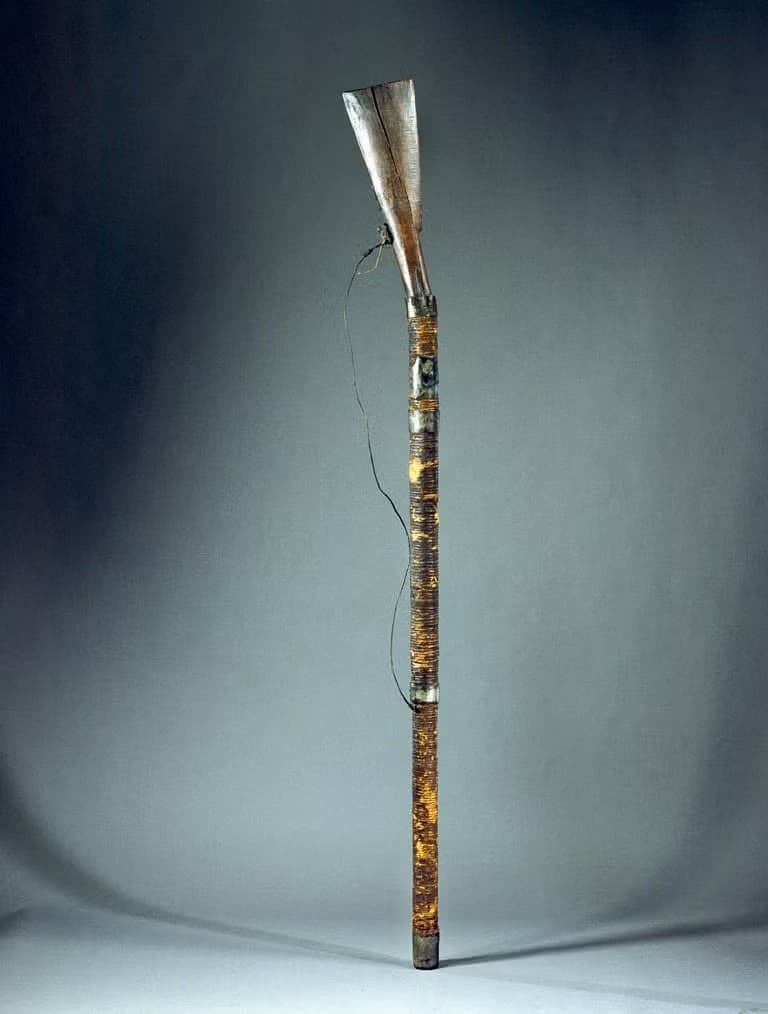
Homemade Filipino Gun
During the US-Philippine War (1899—1913), Filipino soldiers resorted to making their own firearms and ammunition. This homemade rifle dates to 1900. “Homemade Filipino Gun,” National Museum of American History, AF.NM367.
Featured in:
Filipinx American Histories, Module 3
-
Image
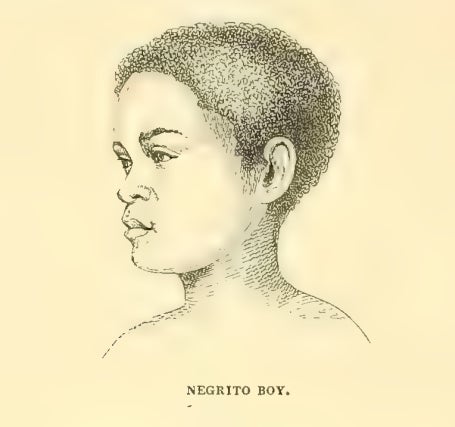
“Negrito Boy”
Drawings from the United States Exploring Expedition, 1838-1842. The following are drawings by Smithsonian naturalists of Filipinos.
Featured in:
Filipinx American Histories, Module 2
-
Image
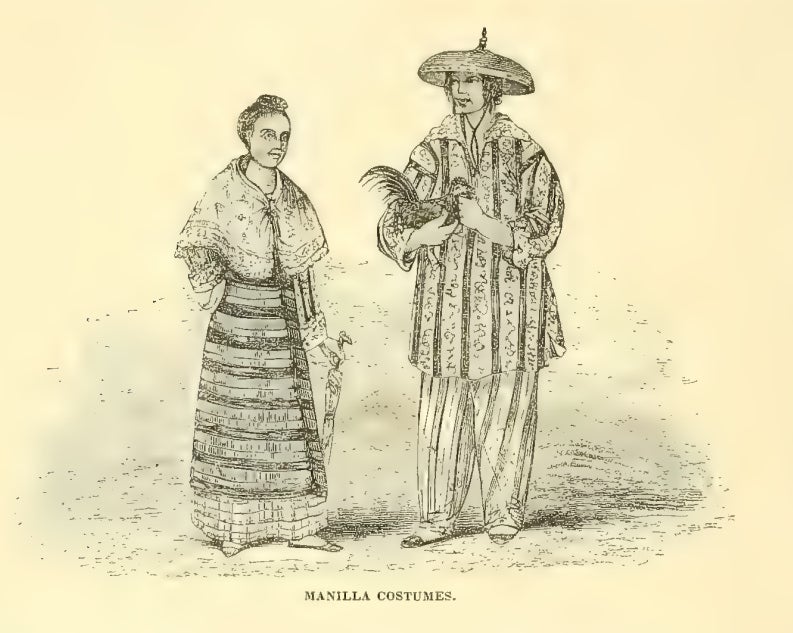
“Manilla Costumes”
Drawings from the United States Exploring Expedition, 1838-1842. The following are drawings by Smithsonian naturalists of Filipinos.
Featured in:
Filipinx American Histories, Module 2
-
Image
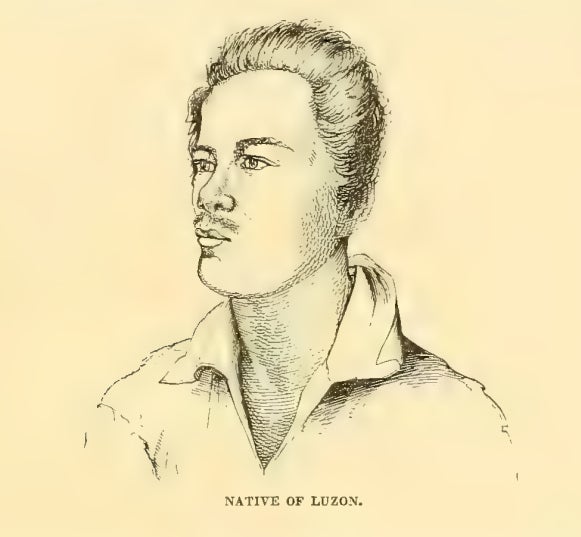
“Native of Luzon”
Drawings from the United States Exploring Expedition, 1838-1842. The following are drawings by Smithsonian naturalists of Filipinos.
Featured in:
Filipinx American Histories, Module 2
-
Image
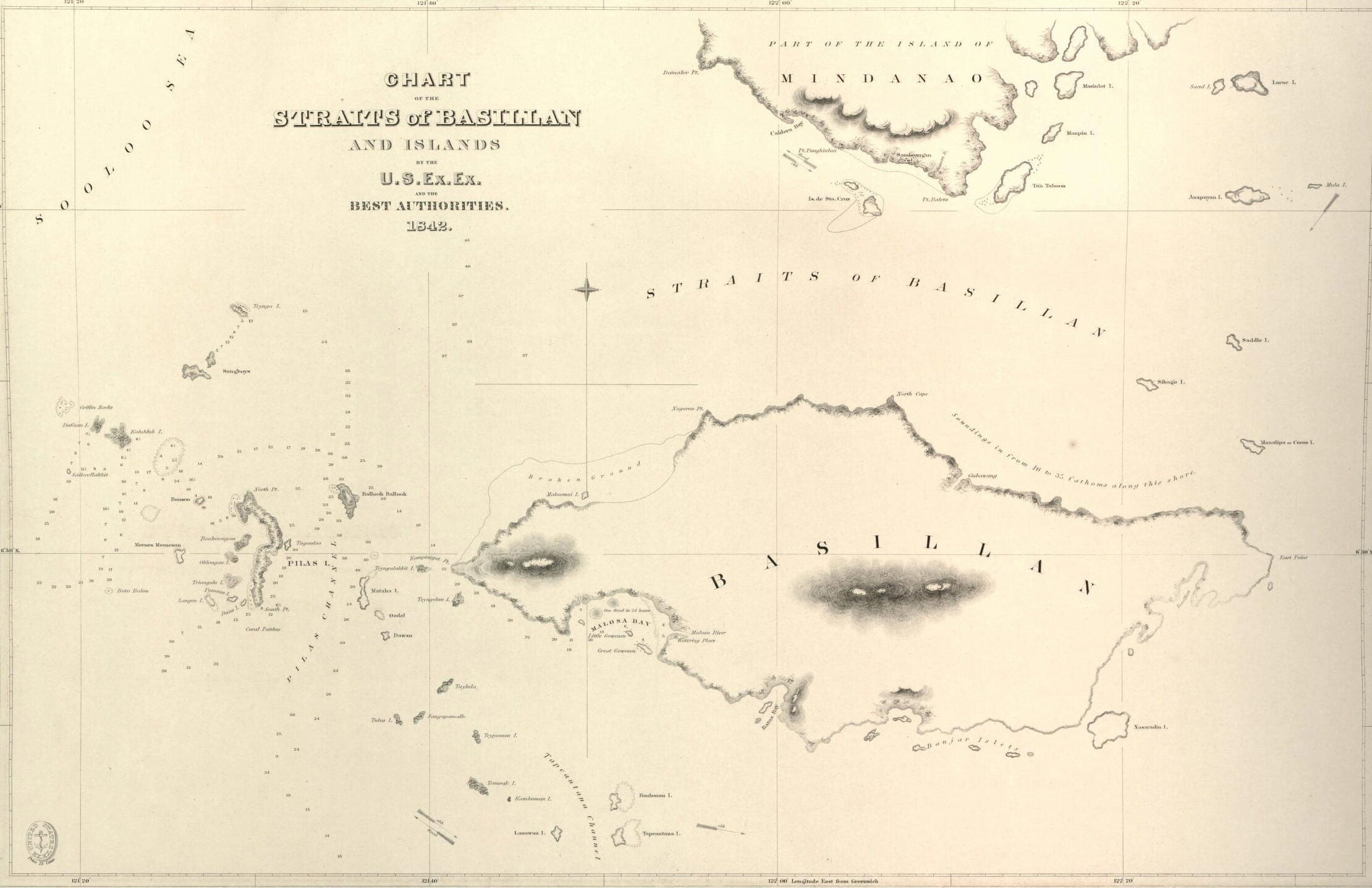
Atlas of the Narrative of the United States Exploring Expedition
This map of the Straits of Basillan and Islands was included in Charles Wilkes’ “The Narrative of the United States Exploring Expedition.”
Featured in:
Filipinx American Histories, Module 2
-
Audio
“We Are the Children”
Listen to a sample from Chris Iijima, Nobuko Miyamoyo, and Charlie Chin’s A Grain of Sand: Music for the Struggle by Asians in America (New Paredon Records, 1973), PAR01020. This was an album that expressed the political and cultural values of the Asian American Movement.
Featured in:
Filipinx American Histories, Module 1
-
Image
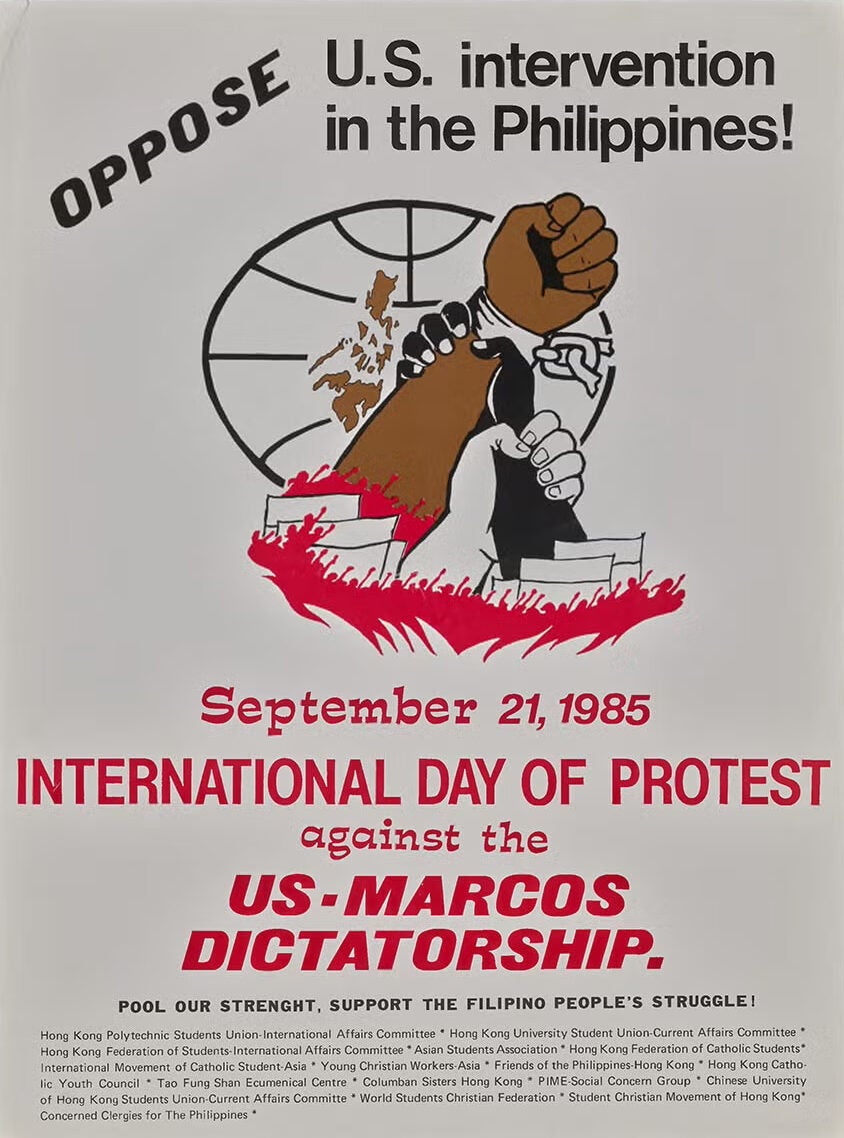
International Day of Protest: September 21, 1985
This 1985 International Day of Protest against the US-Marcos dictatorship was organized by a coalition of several international student groups on the anniversary of Marcos’ declaration of martial law.
Featured in:
Filipinx American Histories, Module 1
-
Text
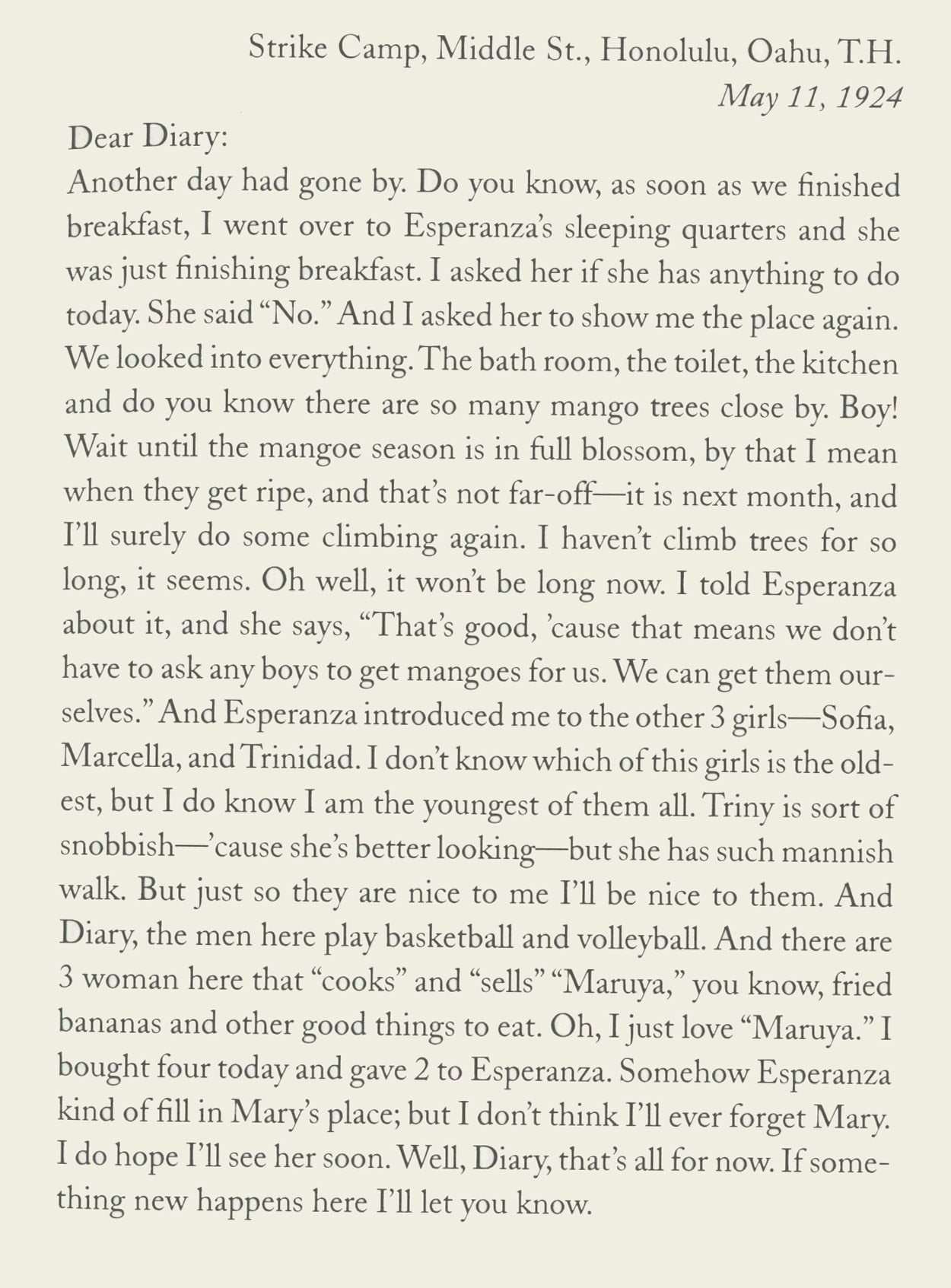
Diary entries from Angeles Monrayo’s Tomorrow’s Memories Page 17
Read the first few entries of Angeles Monrayo’s diary, published in Tomorrow’s Memories: A Diary, edited by Rizaline R. Raymundo (Honolulu: University of Hawaii Press, 2003), pp. 15-17.
Featured in:
Filipinx American Histories, Module 1