




Module 3: Asian Americans and the Moving Image, Part 2: Media Activism, Community Advocacy, and New Hollywood
Can pop culture combat racism toward Asian Americans?
The fight for narrative power has been a part of Asian American activism since the early days of visual media. Even at the dawn of Hollywood, Asian civic, labor, cultural, and advocacy organizations mounted protests over offensive screen portrayals: The role that made Sessue Hayakawa a superstar, his portrayal of a predatory ivory trader in The Cheat (1915), drew angry criticism from the Japanese American community when it was first announced. As a result, the director changed Hayakawa’s role in the film (although disappointingly the change did not make him less repugnant but simply switched his ethnicity from Japanese to Burmese).
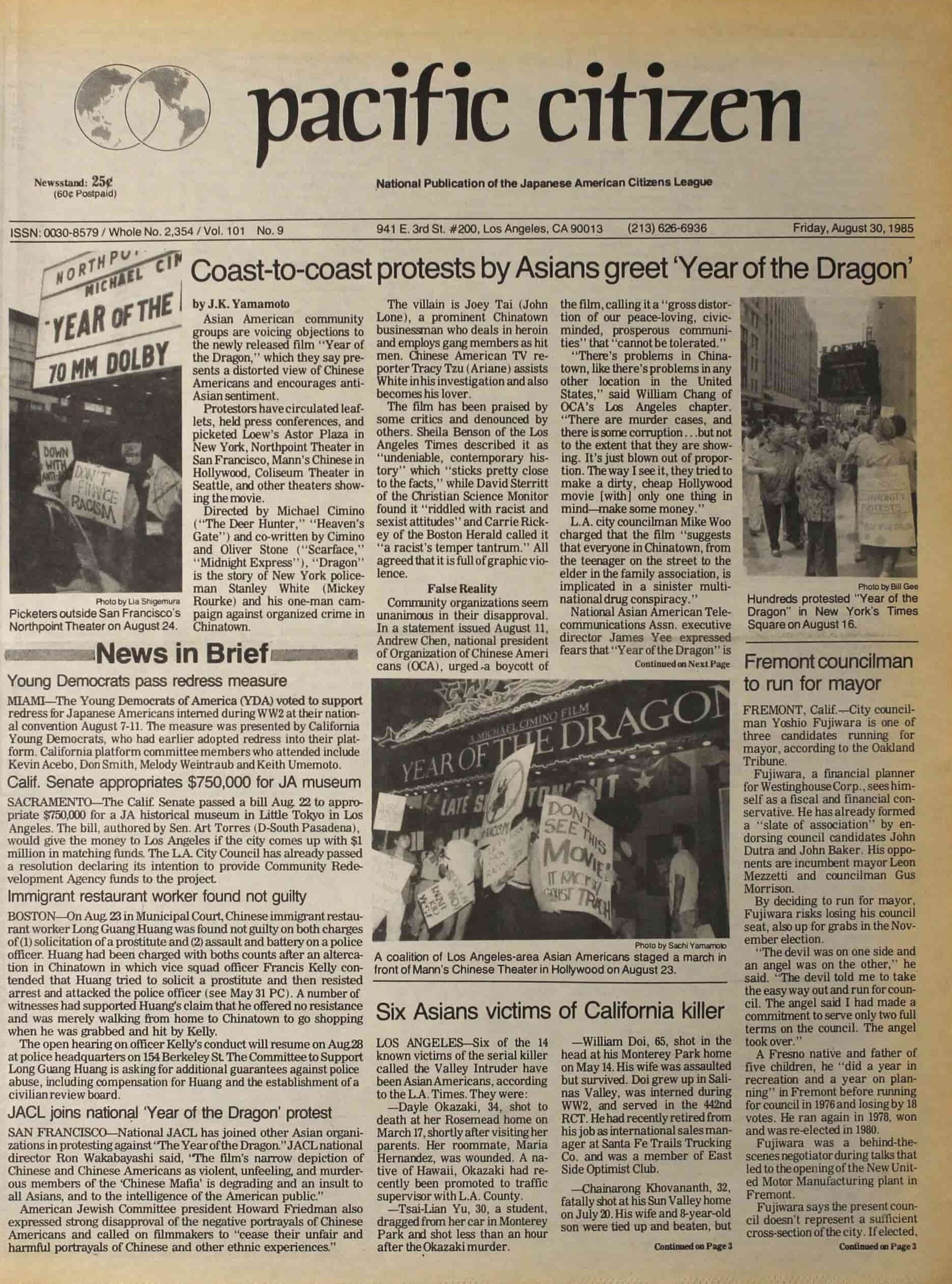
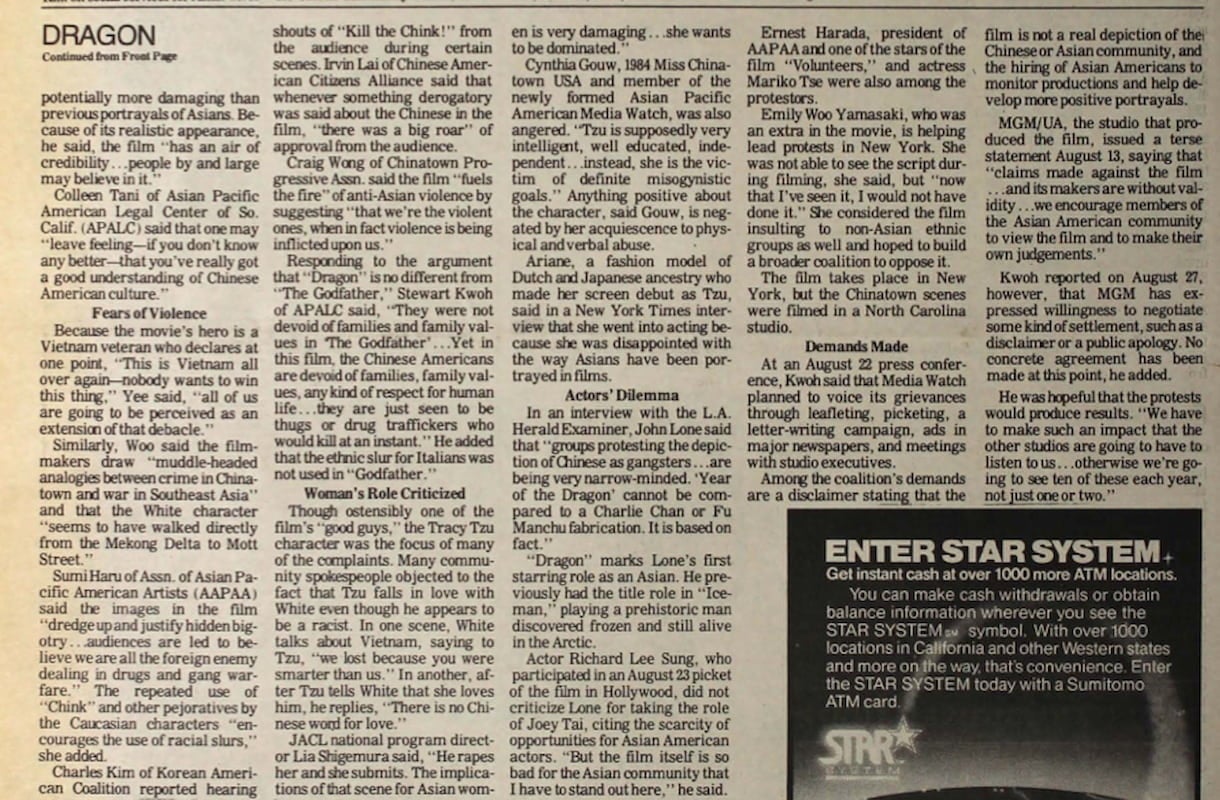
Since then, Asian American communities have organized to fight back against distorted portrayals in movies like Chinatown (1974), gangster movie Year of the Dragon (1985), and the anti-Japanese thrillers Black Rain (1989) and Rising Sun (1993).
This module explores how Asian American activists and communities have organized to advocate for better roles and more authentic stories in Hollywood.
Why has the media been such a critical space for activism in Asian American history?
In what ways do media images impact the real world experience of Asian Americans?
In what ways has the internet empowered people who didn’t have access to the tools to make visual media before?
Screens of Our Own
Ultimately, Asian America’s breakthroughs in media representation wouldn’t have been possible without strong community advocacy and support. For example, while the TV series Fresh Off the Boat aired its first season in 2015, individuals and nonprofit organizations hosted watch parties that in some cases drew over a thousand attendees. To promote the movie Crazy Rich Asians (2018) among Asian American communities, concerted efforts to buy out entire theaters contributed to its ultimate box-office success.
More to explore
Slideshow
PACIFIC CITIZEN: Coast-to-coast protests by Asians greet Year of the Dragon
Community organizations seem unanimous in their disapproval [of the movie Year of the Dragon]. In a statement issued August 11, Andrew Chen, national president of Organization of Chinese Americans (OCA), urged a boycott of the film, calling it a “gross distortion of our peace-loving, civic-minded, prosperous communities” that “cannot be tolerated.”
Community-based support has also been critical to the rise of Asian American independent cinema from the mid-1970s on by media arts organizations like Asian CineVision in New York, Visual Communications in Los Angeles, and the National Asian American Telecommunications Association (now the Center for Asian American Media) in San Francisco. These organizations have provided would-be Asian American film and video makers with training, funding support, and exhibition opportunities through film festivals, helping to launch the careers of filmmakers like Wayne Wang, Ang Lee, Mira Nair, Alice Wu, Tze Chun, and Tanuj Chopra, among many others.
The first major narrative work to come out of the Asian American indie movement was Wang’s Chan Is Missing (1982), a quirky, experimental detective movie set in and around New York Chinatown. Wang would go on to direct Hollywood’s first movie with an Asian American main cast since Flower Drum Song, called The Joy Luck Club (1993), based on Amy Tan’s bestselling novel. To overcome lack of studio marketing support, Joy Luck Club’s producers and cast encouraged Asian Americans to support the film by organizing group outings with families and friends. Driven by this community outreach, the 10-million-dollar budget film earned over 30 million dollars.
Indie films learned from these tactics and expanded on them. Gene Cajayon, director of the Filipino American coming-of-age film The Debut (2000), recruited volunteer street teams of young Filipino Americans to hang posters in heavily Filipino neighborhoods in major cities, while self-distributing his movie in rented theaters. The tactics worked: The Debut achieved critical and financial success.
A few years later, director Justin Lin—who would go on to helm the Fast and the Furious movie franchise—pursued similar tactics to promote Better Luck Tomorrow (2003), about a group of Asian American high schoolers who turn to crime. To ensure a successful opening weekend, Lin and his producers leveraged early social media to connect nationwide with young Asian Americans. The online organizing worked: Better Luck Tomorrow broke records for highest per-screen average, encouraging Paramount to expand its distribution to other cities.
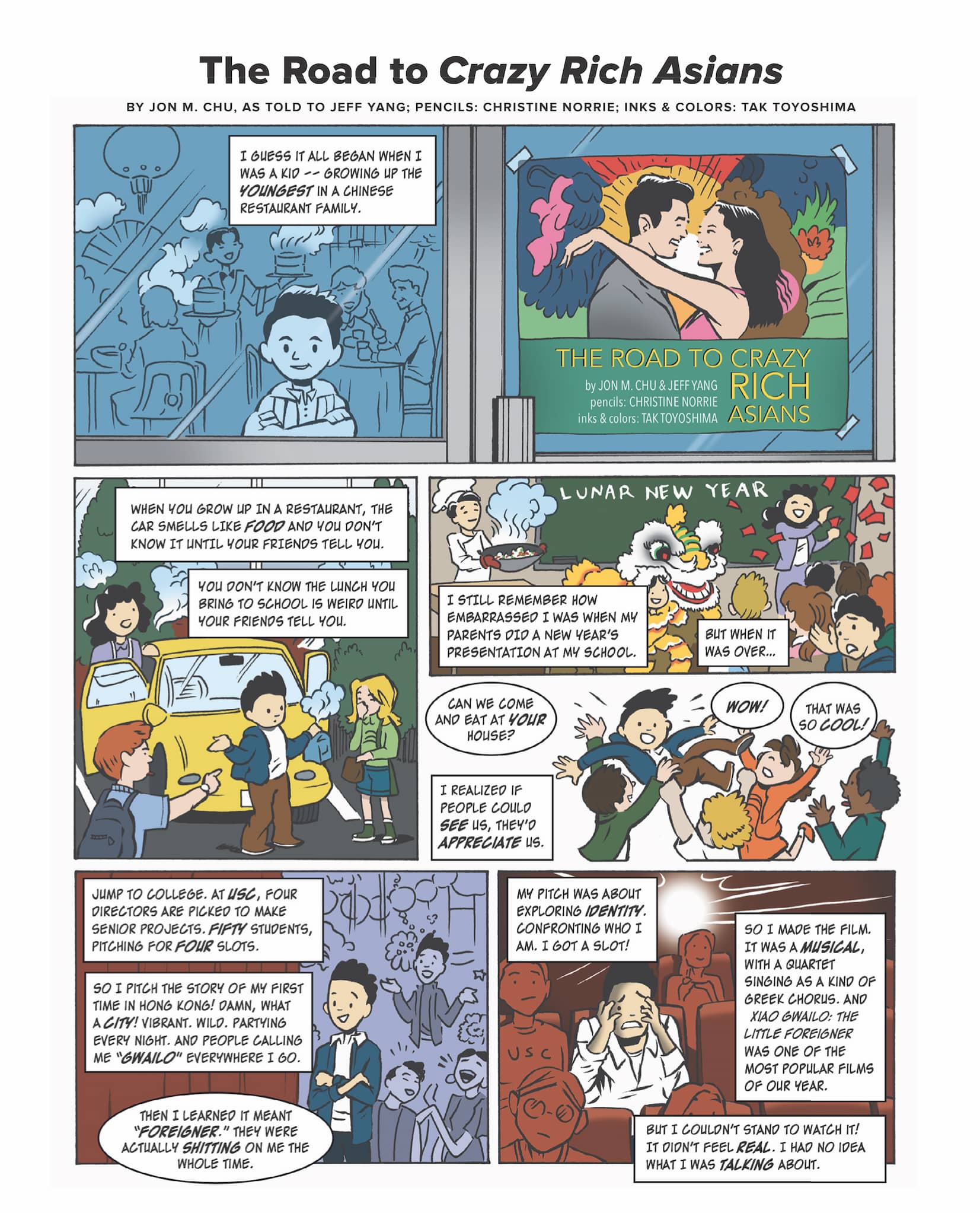
Image 25.03.03a — Page 1 of “The Road to Crazy Rich Asians” from the book RISE: A Pop History of Asian America from the Nineties to Now, by Jeff Yang, Phil Yu, and Philip Wang. Comic by Jon M. Chu, as told to Jeff Yang.
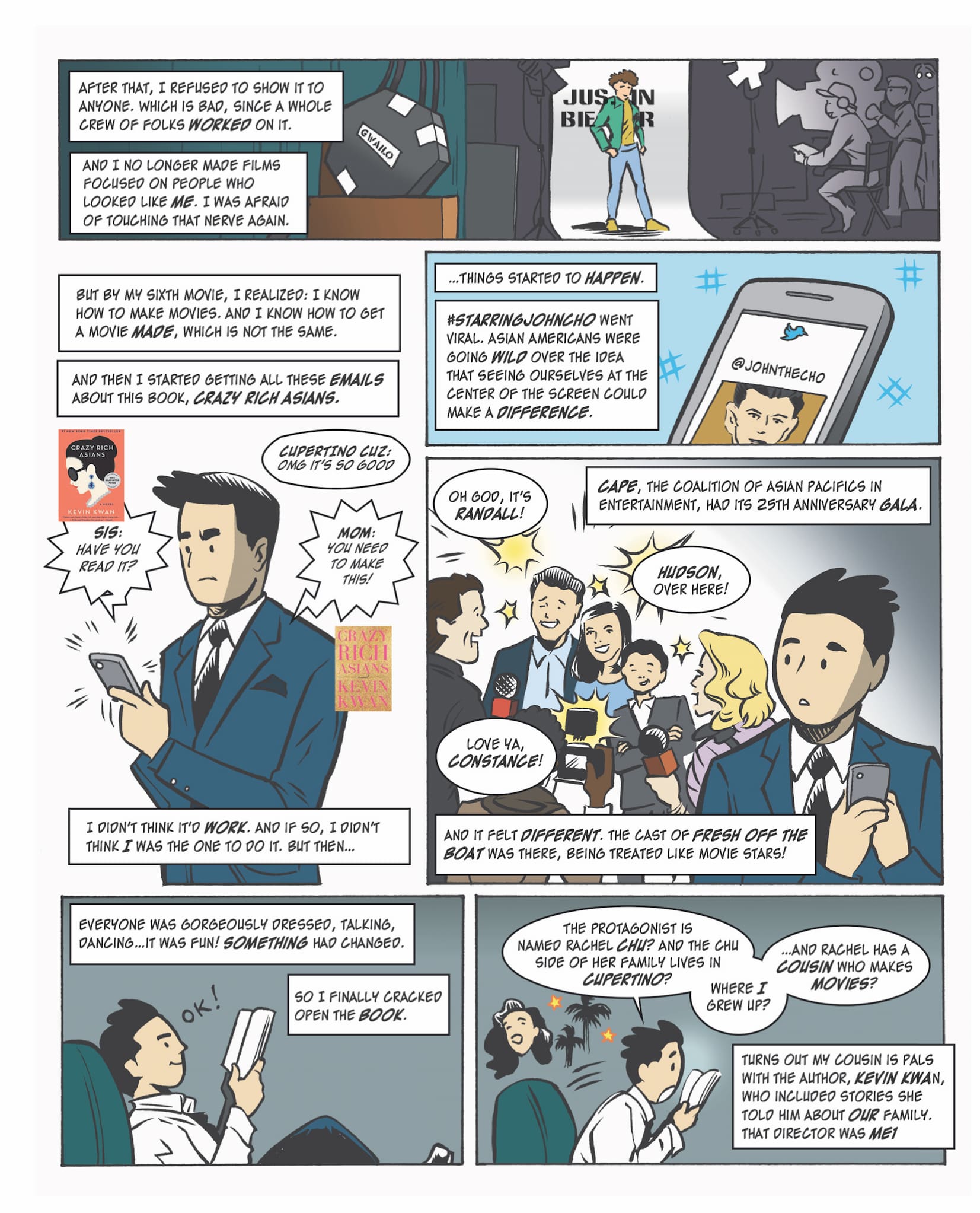
Image 25.03.03b — Page 2 of “The Road to Crazy Rich Asians” from the book RISE: A Pop History of Asian America from the Nineties to Now, by Jeff Yang, Phil Yu, and Philip Wang. Comic by Jon M. Chu, as told to Jeff Yang.
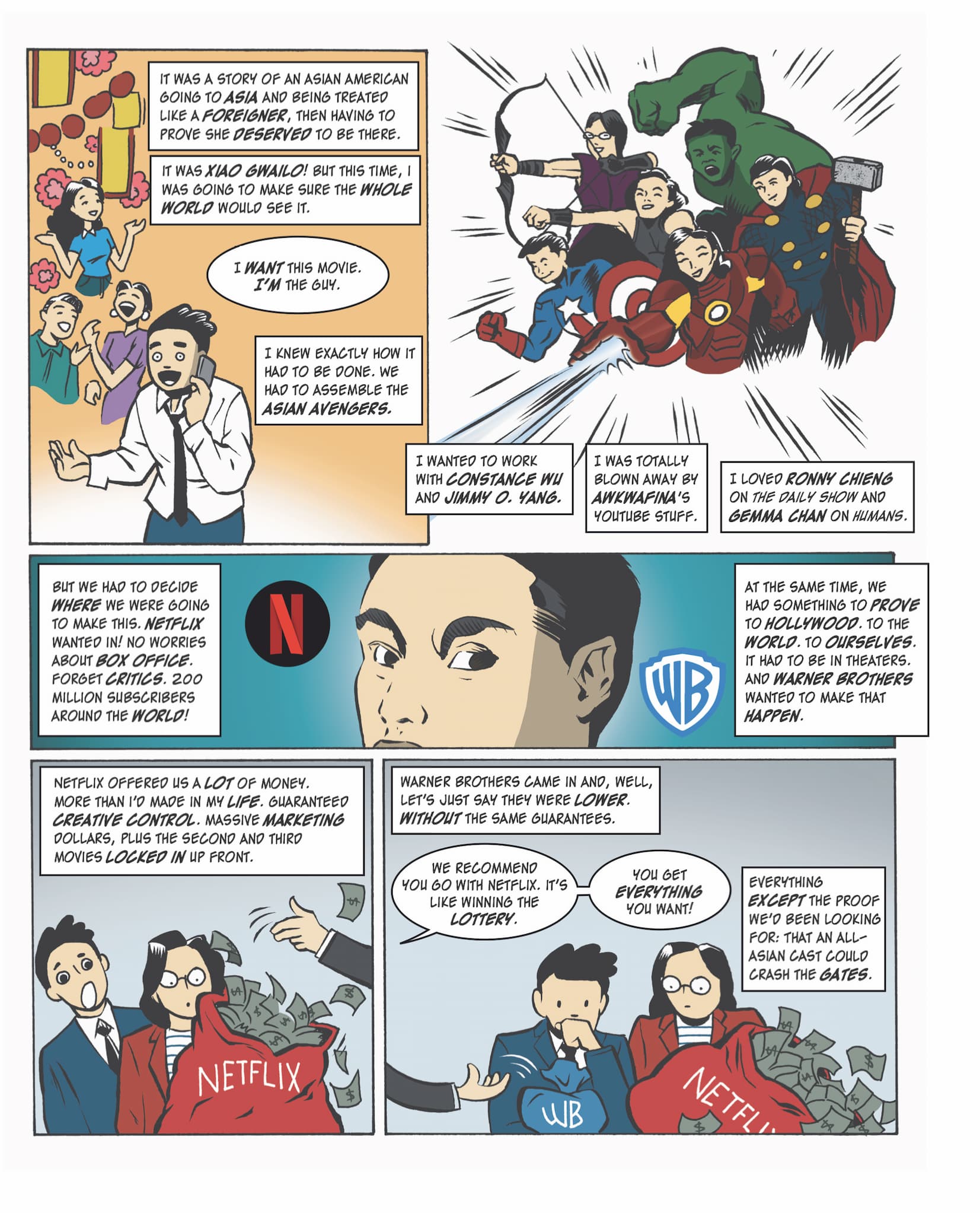
Image 25.03.03c — Page 3 of “The Road to Crazy Rich Asians” from the book RISE: A Pop History of Asian America from the Nineties to Now, by Jeff Yang, Phil Yu, and Philip Wang. Comic by Jon M. Chu, as told to Jeff Yang.
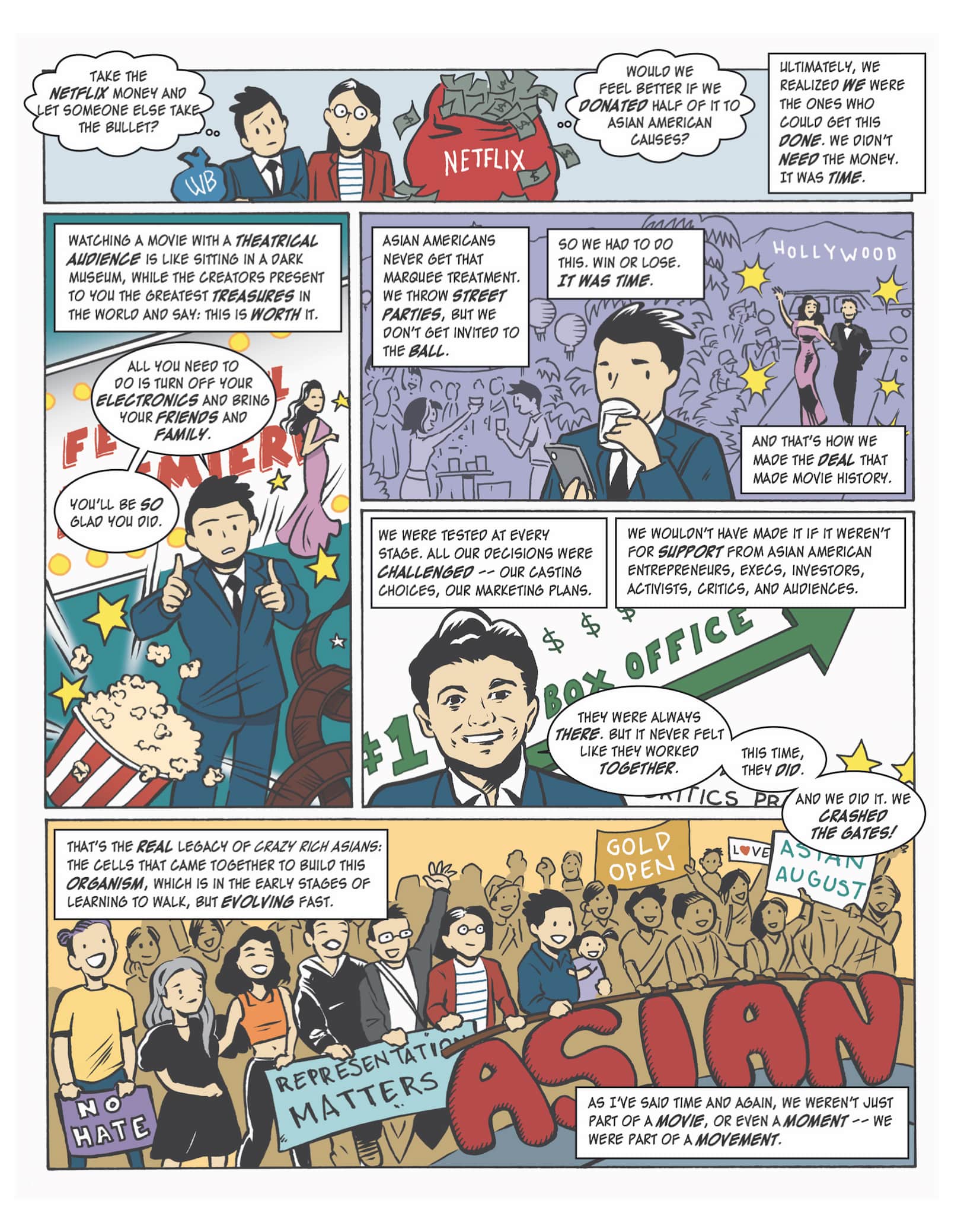
Image 25.03.03d — Page 4 of “The Road to Crazy Rich Asians” from the book RISE: A Pop History of Asian America from the Nineties to Now, by Jeff Yang, Phil Yu, and Philip Wang. Comic by Jon M. Chu, as told to Jeff Yang.




The incentive behind these community-organized campaigns to ensure success for Asian American projects is simple: By showing that Asian-centered stories can be profitable, organizers can encourage studios to make more of them. The culmination of this strategy came with the release of Jon M. Chu’s romantic comedy Crazy Rich Asians (2018).
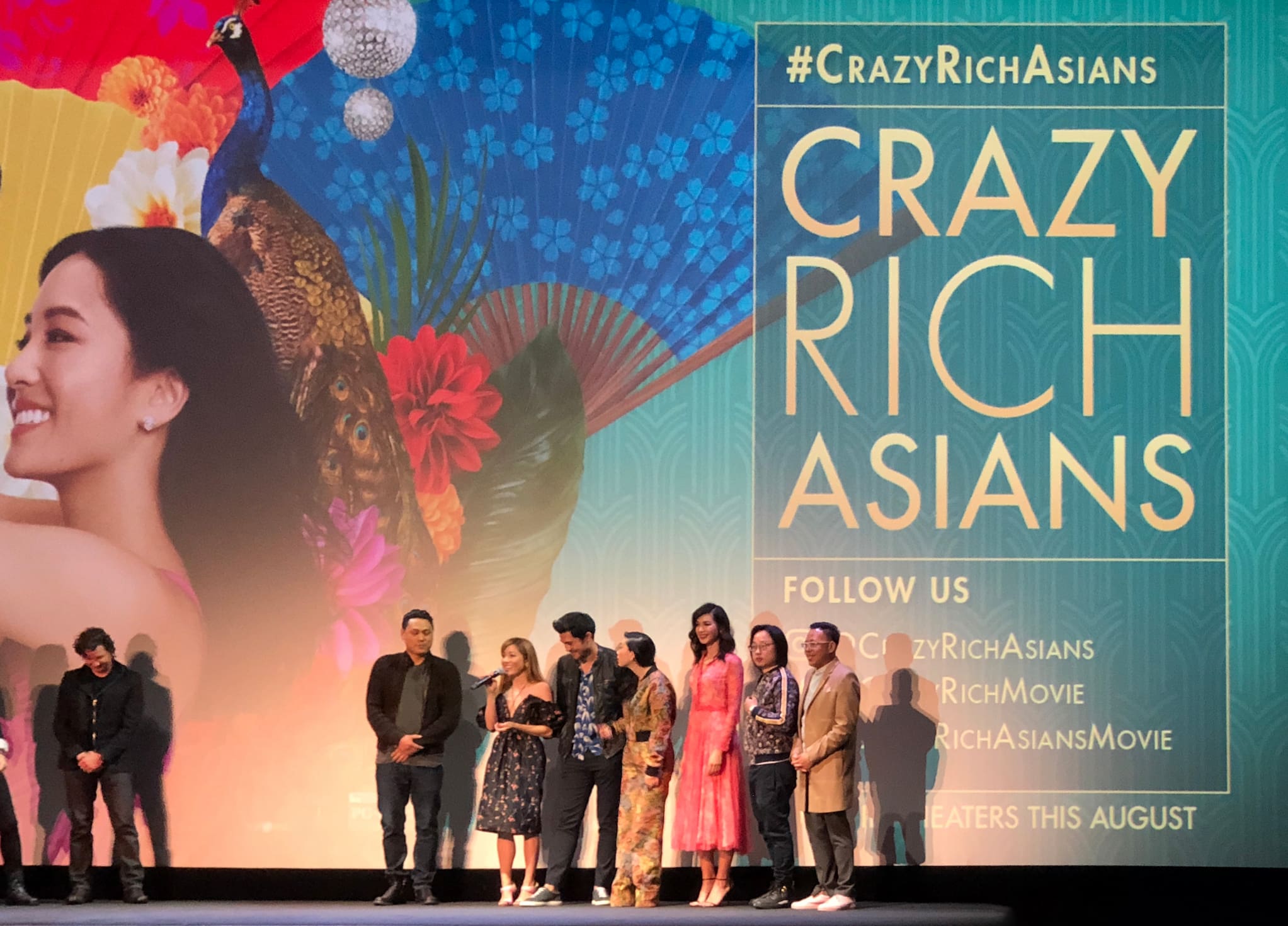
Recognizing that the movie represented a unique breakthrough opportunity for Asian Hollywood representation, Asian American entrepreneurs and business and community leaders gathered to ensure the film would have a “gold open,” buying out entire theaters, encouraging group and repeat purchases of tickets, and trending the hashtag “#GoldOpen” on social media. This led the movie to set a modern global box office record for a romantic comedy.

Image 25.03.04 — The stars of Crazy Rich Asians (2018) gather for its #GoldOpen premiere. Asian communities joined together to buy out screenings of the film, helping it to a first-place box-office opening weekend.
New Hollywood, New Media, New World
After Crazy Rich Asians proved that Asian stories starring English-speaking Asian actors had a large audience, Hollywood’s cynical resistance to such projects seemed to dissipate. Dozens of Asian-forward projects were suddenly greenlit (i.e., approved for production). Other factors also helped to change the landscape for Asian-centered TV and film in America.
One of these factors was the internet, which became a platform where anyone could create and distribute video and build huge audiences via YouTube and other platforms. YouTube in particular became a path to visibility and self-representation for Asian Americans, allowing them to bypass Hollywood’s closed gates and create their own content and stories. Asians would be among the site’s most popular and successful personalities, such as comedian Ryan Higa, makeup artist Michelle Phan, digital illusion creator Zach King, and sketch comedy creators Phil Wang and Wesley Chan of Wong Fu Productions, who’ve collectively amassed millions of followers and billions of views.
YouTube’s success paved the way for streaming video, leading to the rise of film and TV platforms like Netflix, Hulu, and Disney+. These and other streaming platforms accelerated the blurring of boundaries between global media markets. In early 2020, when the COVID-19 lockdown shut millions of Americans of all backgrounds into their homes, they quickly ran out of things to watch. So, they investigated new options—in particular, movies and TV from Asia.
Now, foreign language shows from Korea, India, Japan, and China are among the most viewed content among American audiences. Movies like The Farewell (2019), Minari (2020), and Daniel Kwan and Daniel Scheinert’s Everything Everywhere All at Once (2022) are winning awards and becoming hits—with casts, settings, and storylines that bring together Asians, Asian Americans, and members of the global Asian diaspora.
Reflection Questions
How have Asian Americans resisted stereotypical and xenophobic imagery in film and television?
Which movies and television shows represent milestones that helped to change how Asians and Asian Americans were depicted in popular visual media?
In what ways has the growing popularity of media from Asia helped provide new opportunities to Asian Americans?
Glossary terms in this module
diaspora Where it’s used
The broader network of people who have migrated from a particular region to other places in the world. Members of the diaspora can frequently serve as a cultural bridge between their overseas communities and their ancestral nations, acting as a vital mechanism for the global transmission of ideas, interests, fashions, and trends.
indie Where it’s used
Short for “independent” film, television, or other creative expression developed outside the commercial establishment (e.g., major television networks and movie studios). Indie media often is made possible by community and individual support, and it fills in the gaps left by companies motivated primarily by profit.
media arts organizations Where it’s used
Nonprofit groups dedicated to helping their communities learn how to tell and share their own stories, by educating emerging artists, helping creators find funding and support, and showcasing the movies, documentaries, and other media pieces they create.