





Four members of Far East Movement, an all-Asian American hip hop group, pose at awards show. The four men wear formal attire and sunglasses.
Module 5: Asian Americans in Music, Part 2: Pop, Rock, and Hip Hop
Can pop culture combat racism toward Asian Americans?
While Asian Americans performers quickly became accepted in the classical music landscape, it has been harder for Asian Americans to succeed in the world of popular music—including the genres of pop, rock, and hip hop.
Part of this difficulty is because classical music, largely instrumental, emphasizes appreciation of the technique and virtuosity of performances, regardless of the appearance and identity of the artists delivering them. By contrast, popular music genres invite a more visceral connection with the artists themselves, which asks audiences to identify with the performers and not just their music. This has made the visual image a key part of popular music, which has served as an obstacle for artists who don’t look like the majority of listeners.
This module looks at Asian American performers, creators, and achievements in pop, rock, and hip hop.
Who were some of the early Asian American pioneers in pop music, and why was it hard for them to be taken seriously as popular musicians?
Why was it easier for Asian Americans in the rock and pop genre to downplay or hide their cultural identities as they pursued their careers?
Why have so many Asian Americans been drawn to hip hop as a genre?
On the Radio
Many early Asian American pop pioneers found themselves commercialized as ethnic novelty acts, their talent eclipsed by positioning that emphasized their “exotic” heritage and appeal. Examples of such artists include Willie Mae Wong, baritone saxophonist with the popular 1940s jazz group the International Sweethearts of Rhythm, a big-band ensemble that was composed of sixteen teenaged women of diverse ethnic makeup. Wong’s actual last name was Lee, but she was pushed to change it to a more distinctively Chinese-sounding name to make her Asianness stand out.
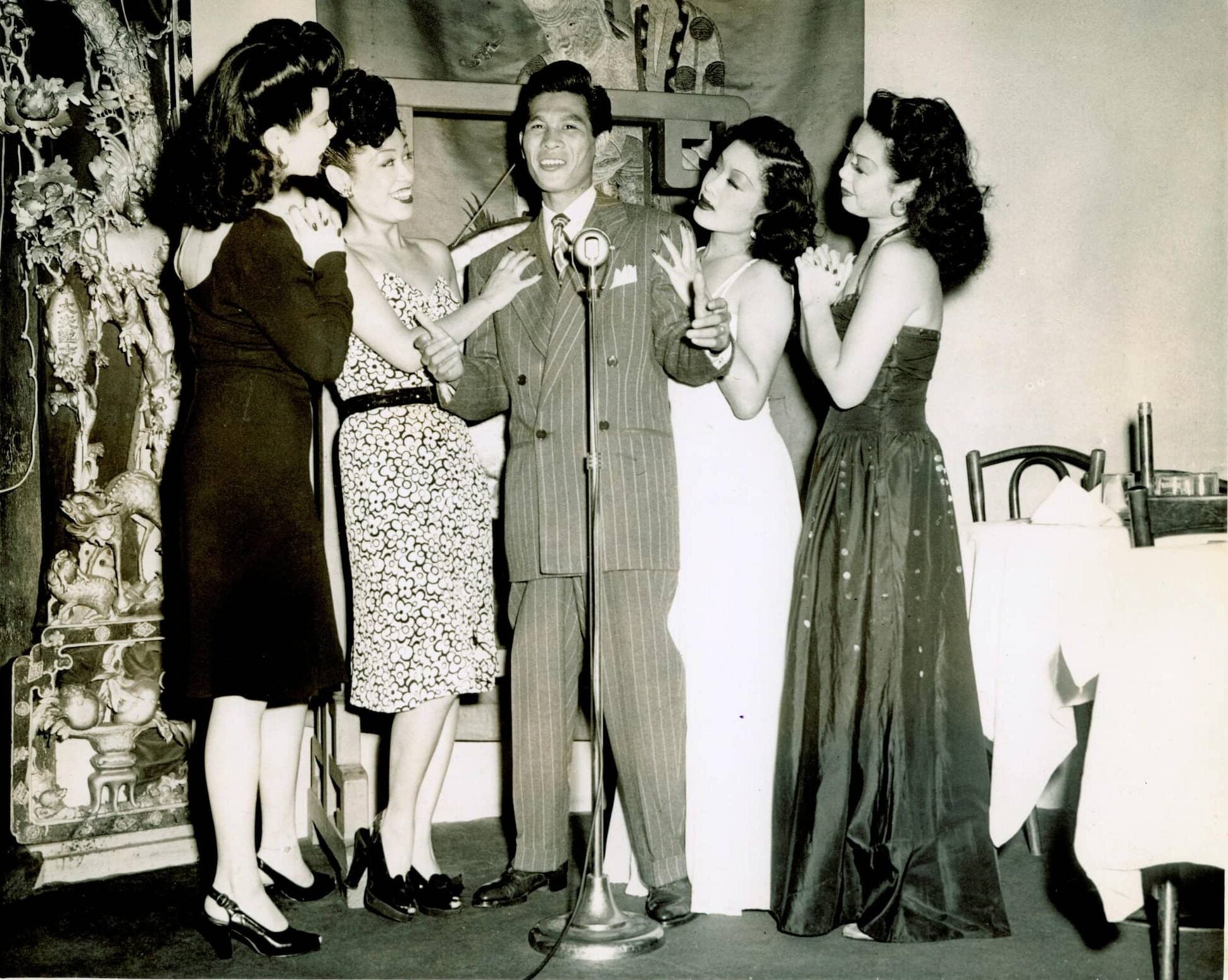
Image 25.05.01 — Larry Ching, billed as the “Chinese Frank Sinatra,” performs at Charlie Low’s legendary San Francisco nightclub Forbidden City, c.1942, part of the “Chop Suey Circuit” in the 1940s and 1950s.
The legendary Forbidden City nightclub in San Francisco Chinatown, owned by showman and restaurateur Charlie Low, presented a full nightly show featuring an all-Asian cast of dancers and musicians, including headliners like Larry Ching, Frances Chun, and Katy de la Cruz.
To make them more accessible to white audiences, Ching was billed as the “Chinese Frank Sinatra”; Chun as “America’s Outstanding Chinese Song Stylist”; and Katy de la Cruz as the “Queen of Filipino Jazz.” Forbidden City was one of a set of cabarets featuring Asian performers that was dubbed the “Chop Suey Circuit” in the 1940s and 1950s. Forbidden City inspired C. Y. Lee’s novel Flower Drum Song (1957), which became the source material for the successful Broadway musical by Rodgers and Hammerstein (1958 premier). The musical was later adapted into a classic Hollywood musical film in 1961.
In the 1960s, the Kim Sisters, a harmony trio that was actually composed of two sisters, Sook-ja (Sue) and Ai-ja (Aija), and their cousin Min-ja (Mia), began performing at US military clubs after the Korean War to earn money for their family. They were “discovered” by an American producer and migrated to the United States in 1959, where, dressed in signature tight-fitting Chinese dresses, they became a staple of the Las Vegas cabaret circuit and regulars on TV variety shows.
To the Beat of Our Own Drum: Breaking into Popular Music
Successful Asian American pop and rock artists who avoided the stereotypical framing common for other musicians were frequently multiracial artists who didn’t necessarily register as “Asian” to their fans, or who were members of successful groups with predominantly non-Asian members. In 1962, Filipino American Larry Ramos was the first Asian American to win a Grammy Award, as a backup singer and banjo player for the folk ensemble the New Christy Minstrels; he later had a number one Billboard hit, “Windy,” as guitarist and co-lead vocalist for the pop group The Association.
In 1970, Fanny—a rock-funk band co-founded by Filipino American sisters June (guitar and lead vocals) and Jean Millington—became the first all-woman group to release an album on a major label, after being signed to Reprise. Their rock cover of Marvin Gaye’s “Ain’t That Peculiar” hit number eighty five on the Billboard charts in 1972. In 1977, Japanese Irish Yvonne Elliman had a number one disco hit with “If I Can’t Have You,” which was featured on the soundtrack for the blockbuster movie Saturday Night Fever.
The launch of MTV led to a major transformation of popular music in the 1980s and 1990s, as music videos became a primary means by which audiences discovered new artists and consumed the work of established ones. Making visual identity a central part of pop music success had the effect of making it more challenging for Asian American pop artists to break into the commercial mainstream.
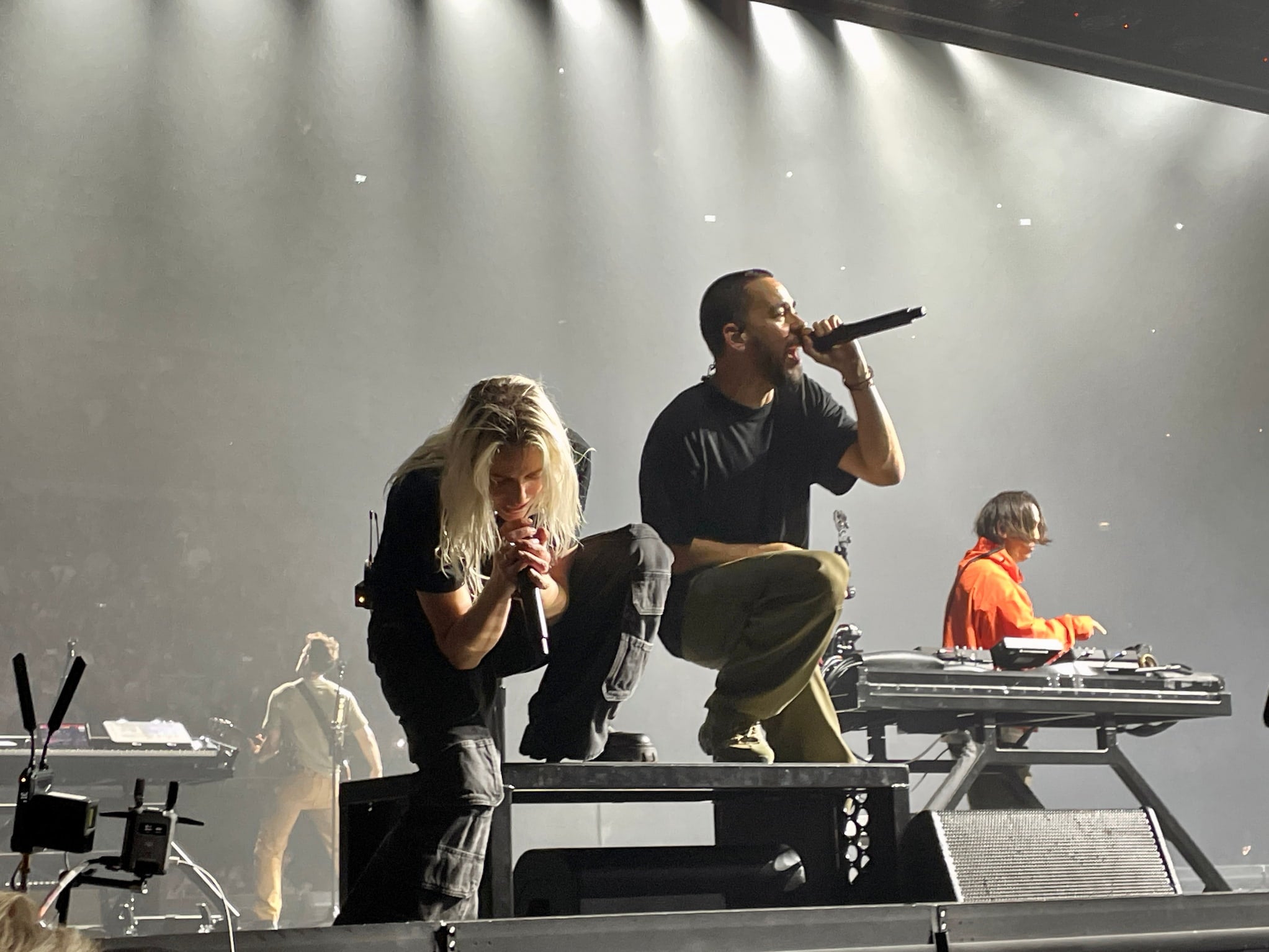
Image 25.05.04 — Linkin Park performing at the O2 Arena, London, during their 2024 Zero World Tour. The group includes Japanese American rapper Mike Shinoda (center), and Korean American DJ Joe Hahn (right).
Asian American pop and rock artists in the MTV era faced the dilemma that music labels didn’t know (or didn’t want to know) how to market Asian performers. As a result, while hugely successful groups like Smashing Pumpkins (Japanese American guitarist James Iha), No Doubt (British Indian American bassist Tony Kanal), Linkin Park (Japanese American rapper Mike Shinoda and Korean American DJ Joe Hahn), and the Pixies (Filipino American guitarist Joey Santiago) had Asian American members, all were fronted by non-Asian band members. British rocker Freddie Mercury, lead singer of Queen, born Farrokh Bulsara, was of Parsi-Indian heritage, but he did not publicize that fact.
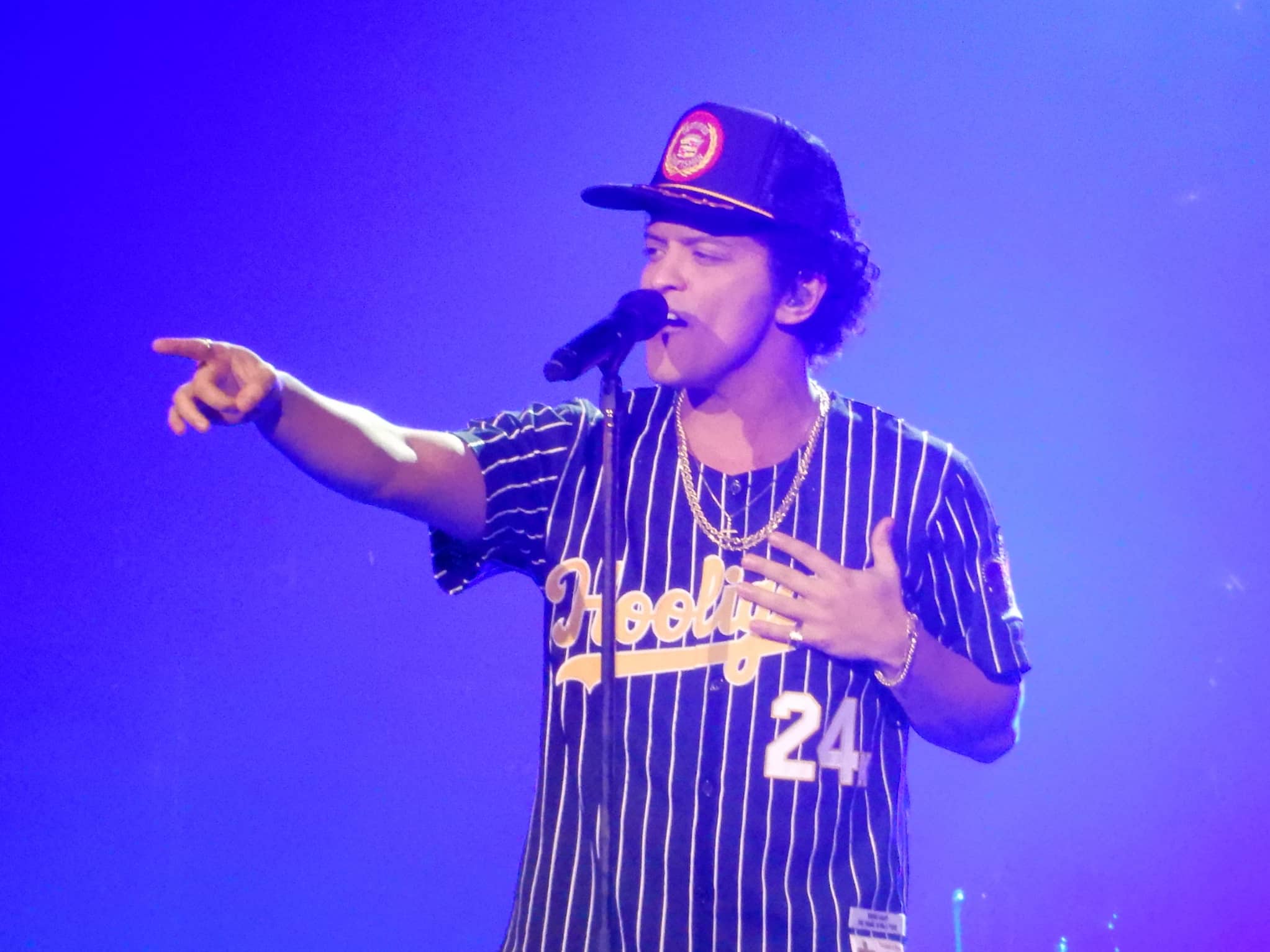
Image 25.05.05 — Bruno Mars performing live during his 24K Magic World Tour. It wasn’t until the early 2000s that an Asian American performer would find superstardom in pop music—though many didn’t know about his Filipino American roots.
It wasn’t until the early 2000s that an Asian American performer would find superstardom in American pop music—though many didn’t appear to know about his Filipino American roots. Peter Gene Hernandez, Jr., born and raised in Hawaiʻi, the child of a Puerto Rican father and Filipina mother, took the stage name “Bruno Mars” after a nickname he received as a child. He has since sold over 150 million records worldwide, making him one of the bestselling music artists of all time, with nine number one Billboard singles, beginning with 2010’s “Just the Way You Are.”
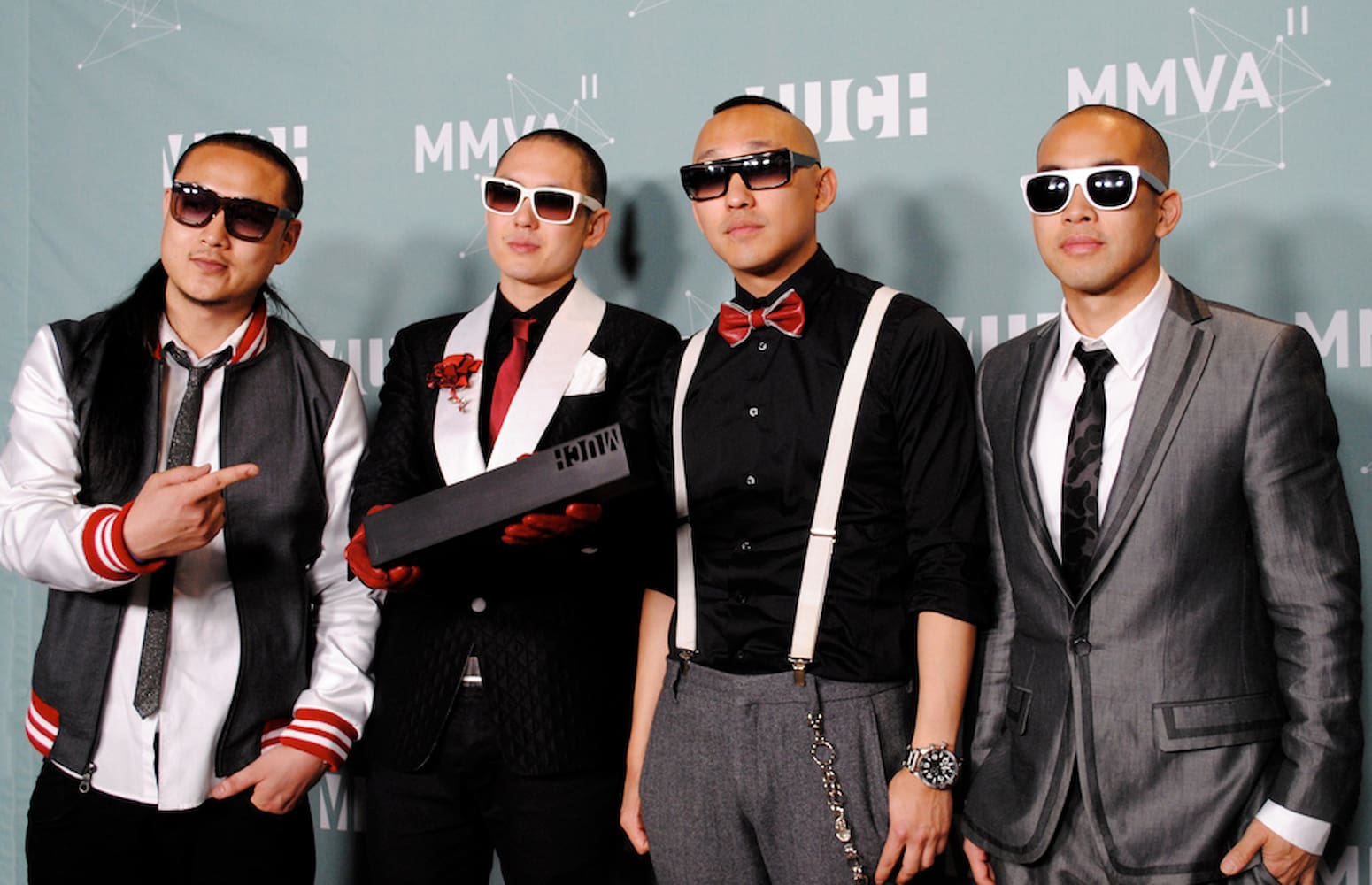
Image 25.05.06 — Far East Movement at the 2011 MuchMusic Video Awards. The all-Asian American hip hop/electronic dance group replaced Bruno Mars in the top spot on the Billboard charts, marking the first and only time that Asian Americans occupied the two top spots.
Right after Mars’s first number one hit, an all-Asian American hip hop/electronic dance group pushed him out of the top spot, marking the first and still only time in music history that Asian American acts have occupied the two top spots on the Billboard charts. The group was Far East Movement, founded by Japanese American Kevin Nishimura (Kev Nish) and Korean Americans James Roh (Prohgress), and Jae Choung (J-Splif). The song was “Like a G6,” a celebration of party culture in Los Angeles Koreatown that topped the Billboard charts, and that eventually reached double platinum sales status (2 million plus in sales).
Far East Movement would later partner with YouTubers Wong Fu Productions to launch International Secret Agents (ISA), a series of concerts highlighting Asian American indie pop and hip-hop artists, including many who had initially found audiences on YouTube, like Korean American David Choi, Filipino American AJ Rafael, and Japanese American Kina Grannis. ISA also featured artists who would become superstars in Korea, like Jay Park (born in Washington) and Epik High’s Tablo (Daniel Lee, Korean Canadian), as well as Mithra Jin and DJ Tukutz (Choi Jin and Kim Jeong-sik), who are both Korean.
Going Global: Asian Pop Crosses Over
These ISA performances were far from the first crossover from Asia into the United States—earlier examples include the Kim Sisters in the 1950s and Japanese crooner Kyu Sakamoto in 1963, the first Asian musician to have a number one hit with his song “Ue o Muite Arukō” (known as “Sukiyaki” in English-speaking markets), which sold over 13 million copies around the world. In 1979, the J-pop duo Pink Lady had a top 40 Billboard hit with “Kiss in the Dark,” which they somehow parlayed into a short-lived TV variety show with American comedian Jeff Altman: NBC’s Pink Lady and Jeff (1980).
But sustained US success for Asian artists wouldn’t come until the K-pop wave crashed onto American shores. Early K-pop crossover attempts like BOA, Rain, the mega-girl-group Girls Generation, and idol quintet Wonder Girls were treated as novelties. It took the ultimate novelty—comedy rapper Park Jae-sang, better known as PSY—to establish K-pop’s beachhead in America, with his 2012 viral mega-hit “Gangnam Style,” which was the first video on YouTube to reach one billion views, holding the record as the most viewed video ever on YouTube for the next half decade.
Though PSY’s success was a one-time phenomenon for the rapper outside South Korea, it nevertheless opened many doors for K-pop’s breakthrough, including SHINee, Girls’ Generation, BIGBANG, 2NE1, EXO, 2PM, and the Wonder Girls, who all began to become increasingly popular around the world. Most notably, BTS (Bangtan Sonyeondan or Bulletproof Boy Scouts) became the biggest music group in the world, followed by idol quartet Blackpink. In their footsteps came acts like aespa, (G)I-dle (now I-dle), Le Sserafim, NewJeans, Stray Kids, Enhypen, and ATEEZ.
Many of these groups had non-Korean members—some of them from the United States and other diaspora countries, others from other parts of Asia, like Japan and China. Blackpink’s lineup includes Lalisa Manobal (Lisa, from Thailand) and Roseanne Park (Rosé, a Korean New Zealander), alongside Korean members Jennie Kim (born in Korea, moved to New Zealand at the age of eight) and Ji-soo Kim. With K-pop management companies actively recruiting on a global basis, including extensively in the United States, the genre has become increasingly international and surprisingly diverse.
K-pop and the rise of streaming platforms like Spotify have helped broaden American tastes to become inclusive of more Asian, Asian diasporic, and Asian American popular musicians, including breakouts like Japanese American Mitski (Mitsuki Miyawaki); Korean Americans Karen O of the alt-rock band Yeah Yeah Yeahs, Amerie (Amerie Mi Marie Rogers Wilsom), and Michelle Zauner, better known as Japanese Breakfast; Filipino Americans Olivia Rodrigo and H.E.R. (Gabriella Sarmiento Wilson); and Indian American Sameer Gadhia (lead singer of Young the Giant).
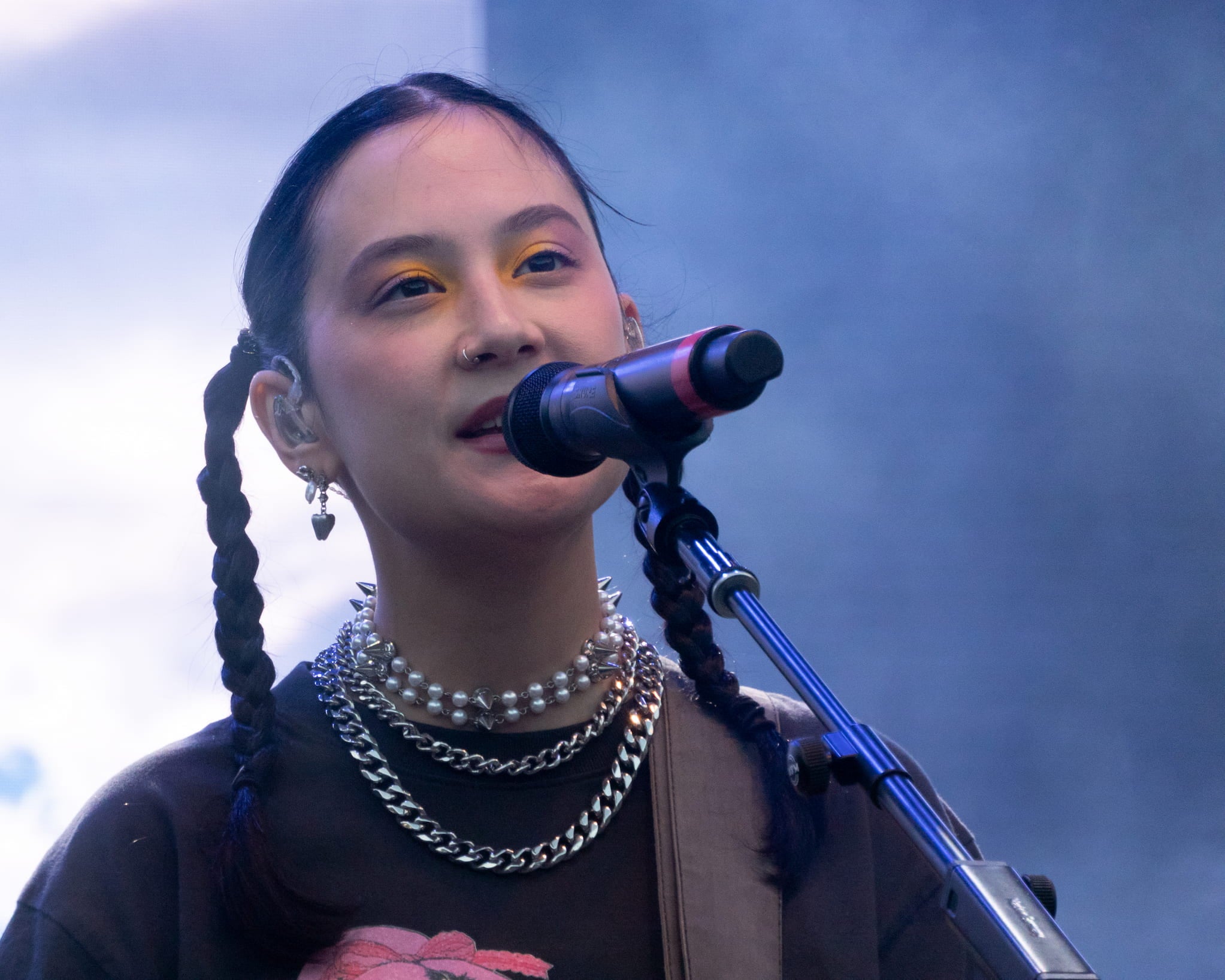
Image 25.05.09 — Michelle Zauner, also known as Japanese Breakfast, at the Day In Day Out Festival in Seattle, Washington, August 2022.
To leverage the growing globalization of Asian music, Sean Miyashiro and Jaeson Ma cofounded 88rising in 2015, a label and management company with an expressly Asian, Asian American, and Asian diaspora roster of artists including Japanese Australian singer-songwriter Joji (George Kusunoki Miller); Japanese schoolgirl punk band Atarashii Gakko!; Indonesian rapper Rich Brian (Brian Imanuel Soewarno); Korean rapper Keith Ape (Lee Dong-heun); Chinese rapper Jackson Wang (formerly of the South Korean boy band Got7); Korean American rapper Dumbfoundead (Jonathan Park); and K-pop girl group i-dle (formally known as “(G)I-dle”).
The groups collaborate musically and perform together at events like the company’s Head in the Clouds concert series, seeking to craft a musical form capable of reaching global youth audiences in the United States and in Asia, while leveraging the power of the internet to shape tastes, encourage discovery, and connect fandoms—which are some things that have allowed Asian American indie musicians to thrive in spaces like YouTube and TikTok.
And You Don’t Stop: Hip Hop and Cross-Cultural Connection
Over the past four decades, no musical form has been as central to the building of global cross-cultural bridges as hip hop, a genre that is quintessentially African American in origin, but multicultural in its popularity and participation.
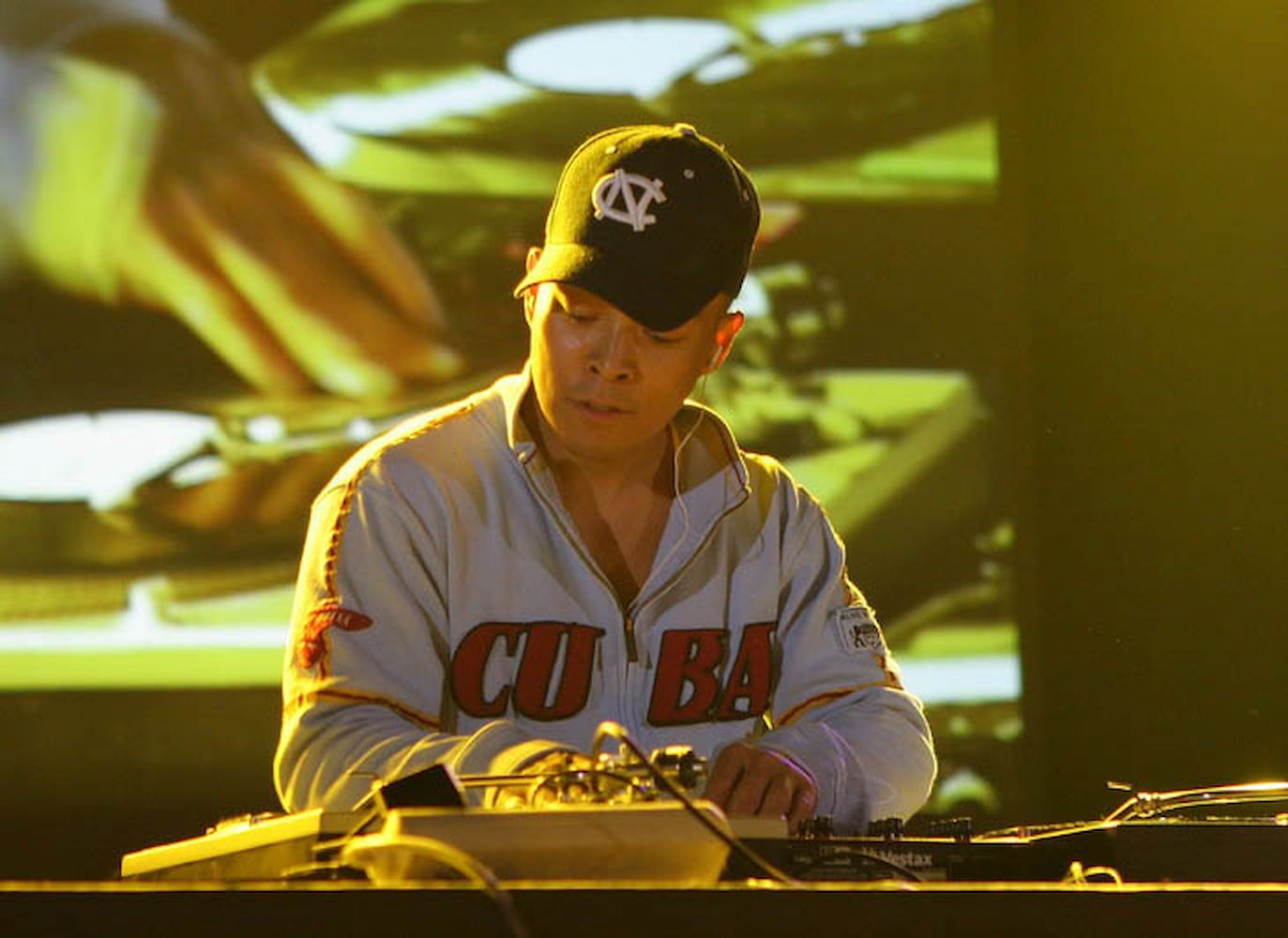
Image 25.05.10 — DJ Q-Bert at the Nuits Sonores festival (Lyon, France) in May 2006. The rise of hip hop in the Philippines paralleled and accelerated its popularity in Filipino communities back in the States.
One of the first places outside of the United States where hip hop took root was in the Philippines. In the 1980s, a local hip hop scene sprang up there, first in the vicinity of the country’s numerous American military bases—where Black and Latino servicemen exposed those living in nearby towns and barrios to music and breakdancing—and then in bigger urban areas like Manila.
The rise of hip hop in the Philippines paralleled and accelerated its popularity in Filipino communities back in the States, fueling the emergence of a thriving landscape of Filipino American rappers, b-boyers, and especially DJs, led by the likes of DJ Qbert (Richard Quitevis) and other members of the world-famous Invisibl Skratch Picklz DJ crew; Los Angeles-based Rhettmatic (Nazareth Nirza); and Queens-based DJ Kuttin Kandi (Candice Custodio-Tan), one of the best-known female DJs and member of the East Coast’s premier DJ crew 5th Platoon, along with DJ Neil Armstrong (Thomas Neil Rodriguez, tour DJ for Jay-Z from 2008-2010), Vinroc (Vincent Punsalan), and Roli Rho.
Asian American DJs have also thrived in the pop, alternative, and electronica music genres. Dan “The Automator” Nakamura has collaborated extensively with Kool Keith, Prince Paul (with whom he formed Handsome Boy Modeling School), Del Tha Funky Homosapien, and alternative supergroup Gorillaz. Steve Aoki, son of Benihana restaurant founder Rocky Aoki, is one of the most successful DJs on the EDM circuit. KSHMR (Indian American Niles Hollowell-Dhar) started off as part of the producing crew the Cataracs, who made the top-charting “Like a G6” with Far East Movement, before pivoting to DJing. Other top Asian American EDM DJs include Krewella, which consists of Pakistani American sisters Jahan and Yasmine Yousaf; Korean Americans TOKiMONSTA (Jennifer Lee) and Yultron (Yulton Lee); Filipino Americans Manila Killa (Chris Gavino), Gingee (Marjorie Light), and Sweater Beats (Antonio Cuna); and Vietnamese American Softest Hard (Angel Pham).
Asian Americans have also established themselves on the mic as emcees. In 1996, Mountain Brothers, consisting of Chinese Americans CHOPS (Scott Jung), Peril-L (Christopher Wang), and Styles Infinite (Steve Wei), became the first Asian American rap group signed to a major label, penning a contract with Ruffhouse Records.
Chinese American MC Jin (Jin Au-Yeung) had a legendary run as a battle rapper on the “Freestyle Friday” battle segment of BET’s hip hop music show 106 & Park, winning seven straight contests, before being inducted into the show’s Hall of Fame. Jin was the first Asian American rapper to release an album on a major record label, announcing his deal with Ruff Ryders as he was receiving his Freestyle Friday Hall of Fame honors. His album, The Rest Is History, reached number fifty-four on Billboard’s Top 200 albums chart.
The alt-rap trio Das Racist—Indian Americans MC Heems (Himanshu Suri), hype man Dapwell (Ashok Kondabolu, brother of comedian Hari Kondabolu), and Cuban American Kool A.D. (Victor Vazquez)—broke out when their 2008 song “Combination Pizza Hut and Taco Bell” went viral on the internet.
Philippines-born and San Francisco Bay Area-raised Ruby Ibarra released her first mixtape, Lost in Translation, in 2012, and she signed with indie label Beatrock Music for her debut studio album in 2015. Released in 2017, Circa91 focuses on generational trauma and the challenges faced by immigrants.
Numerous other hip hop icons have acknowledged and embraced their multiracial Asian roots, including Foxy Brown (Trinidadian Indo-Chinese American Inga DeCarlo Fung Marchand), Nicki Minaj (Onika Tanya Maraj, Black and Indian American), Tyga (Michael Ray Nguyen-Stevenson, Black Vietnamese American), Saweetie (Diamonté Quiava Valentin Harper, Black and Filipina-Chinese American), H.E.R. (Gabriella Sarmiento Wilson, Black and Filipina American), Anderson .Paak (Brandon Paak Anderson, Black and Korean American), and apl.de.ap of the Black Eyed Peas (Allan Pineda Lindo, Black and Filipino American).
K-pop as a medium is broadly indebted to hip hop, with the genre’s roots lying in a fusion of hip hop, R&B, British and US bubblegum pop, and native Korean musical styles like the bluesy folk music known as “trot.” Unsurprisingly, most K-pop boy and girl groups have at least one designated rapper within their lineups; for example, BTS has three—RM (“Rap Monster,” Kim Namjoon), J-Hope (Jung Hoseok), and Suga (Min Yoongi), while in the girl quartet Blackpink the role of designated rapper is occupied by Lisa.
What does the future look like for Asian, Asian diasporic and Asian American pop music? A glimpse of it may be in the 2024 megahit “APT” by Korean-New Zealander Rosé (Roseanne Park) of Blackpink, in a duet with Filipino-Puerto Rican American Bruno Mars. Sung in English and Korean, featuring a multiethnic pair of Asian/diasporic/American artists, the song rode its hugely successful music video to become the longest running number one song of 2024 on Billboard.
Or it may look like the soundtrack to K-Pop Demon Hunters (2025), the Netflix animated movie created by Maggie Kang, featuring a cast of Korean American and Korean Canadian voice actors. The film’s soundtrack featuring fictional bands Huntr/x and Saja Boys has had global success, with Huntr/x’s “Golden” becoming the first K-pop song ever to hit number one on the Billboard pop charts.
Reflection Questions
What has been the role of technology in changing musical tastes to create more opportunities for Asian and Asian American musicians to break into popular music?
How have stereotypes made it harder for Asians to break into pop, rock, and hip hop?
What has been the role of K-pop in changing the way Asians are seen—both in music and in society at large?
Glossary terms in this module
diaspora Where it’s used
The broader network of people who have migrated from a particular region to other places in the world. Members of the diaspora can frequently serve as a cultural bridge between their overseas communities and their ancestral nations, acting as a vital mechanism for the global transmission of ideas, interests, fashions, and trends.
exotic Where it’s used
The perception or portrayal of a thing as unusual or exciting because it seems to come from a strange and distant place, offering an experience that differs from the norms of its audience. On the one hand, many of us are drawn to novel and unfamiliar things and people. On the other hand, being seen as exotic also means being framed as foreign and as not belonging—which can make it easier to exclude or encourage hatred toward groups that are believed to be alien outsiders.
folk Where it’s used
Traditional creative forms that may not have fixed, written methods, or standards, and that are generally passed along from generation to generation through example and oral instruction rather than through formal training. Though folk arts are sometimes seen as simpler and less sophisticated than “fine” or “classical” arts, in reality they represent rich, complex bodies of work that reflect the deep history and collective identities of the populations from which they emerge.
indie Where it’s used
Short for “independent” film, television, or other creative expression developed outside the commercial establishment (e.g., major television networks and movie studios). Indie media often is made possible by community and individual support, and it fills in the gaps left by companies motivated primarily by profit.