





Module 7: Asian Americans in Sport and Competition, Part 2: International Play
Can pop culture combat racism toward Asian Americans?
Though professional team sports own the athletic spotlight for most Americans, other sports come to the fore during global events, such as the Grand Slam events of golf and tennis, the soccer World Cup, and, of course, the Olympics. Interest in these international competitions is often amplified by the opportunity for fans to root for athletes of their nation or of their ancestral heritage—a factor that organizers lean into during event promotion. This has some positive effects, such as increasing the connection that diasporic communities abroad have with their ancestral countries and with one another. But there are also negative effects: The hyper-patriotic nationalism surrounding these sporting events has sometimes erupted into racial or ethnic mockery and even violence.
At the same time, international athletics have offered a unique opportunity for many Asian Americans to succeed at the highest level, perhaps because international sports are by definition diverse and inclusive of people from a wide range of cultural backgrounds, reducing the impact of stereotypes in restricting Asian American participation. International athletics also includes more sports that emphasize individual, head-to-head competition, another aspect that may enhance participation from communities with less history of inclusion in organized team sports.
This module looks at the role of Asian American athletes in international athletic competition, particularly on the biggest sporting stage of the Olympic Games.
How do prominent forms of international sports competitions end up becoming a way for people of different countries to feel a sense of pride and diasporic connection?
What are the international sports in which Asian Americans have excelled?
What milestones have we seen in Asian American representation in international competition?
Competing for the Flag: Tennis and Golf
In tennis, where three of the four “Grand Slam” events take place abroad (the Australian Open, the French Open, and Wimbledon in the UK), American athletes regularly play against international competition in individual matches, as well as in team events like the Davis Cup and Billie Jean King Cup tournaments.

Image 25.07.01 — Michael Chang collapses after defeating world number one tennis player, Ivan Lendl, while cramping at the 1989 French Open where he famously used an underarm serve. At age seventeen, Chang would become the youngest men’s Grand Slam singles champion in history.
Taiwanese American Michael Chang was the first Asian American professional tennis player to break into the elite ranks of the game, rising to the rank of number two in the world in 1996. He was the youngest man in history to win a Grand Slam singles tournament, winning the 1989 French Open at the age of seventeen. In his fifteen-year career, Chang won a total of thirty-four singles titles on the ATP Tour, including seven Masters titles, and he was a three-time Grand Slam finalist, at the 1995 French Open and the 1996 Australian and US Opens.
Since then, the most notable Asian American tennis player has been Naomi Osaka, who was born to Japanese and Haitian American parents and who grew up in New York and Florida but chose as an adult to embrace her Japanese heritage and nationality, playing for Japan in international events.
In 2018, Osaka began a run of impressive victories, taking her first Grand Slam title at the US Open, followed by a win at the Australian Open the next year, while achieving the rank of number one in the world. She would go on to win the US Open again in 2020 and the Australian Open in 2021. Osaka would also be vocal about police violence against Black persons and about anti-Asian hate, using her platform to elevate these issues during and after the COVID-19 pandemic.
Golf is another sport in which athletes regularly compete internationally, and in which Asians and Asian Americans have a particularly strong presence. In the United States, golf is a pastime for 14 percent of all Asian Americans, which makes it unsurprising that many of the top golfers currently on the professional circuit, like Collin Morikawa (Chinese American and Japanese American), Danielle Kang (Korean American), and Rose Zhang (Chinese American) are Asian Americans. These athletes continue to forge a legacy alongside other Asian Americans who have established themselves as among the most celebrated golfers in modern history.

Image 25.07.02a — Korean American golfer Michelle Wie was the first Asian American woman golfer to achieve mass recognition. She went pro just before her sixteenth birthday in 2005, and won her first and only Major, the US Women’s Open, in 2014.

Image 25.07.02b — Arguably the most successful pro golfer of all time, Eldrick Tont “Tiger” Woods, is the son of an African American father and Thai-Chinese American mother. Woods coined the term Cablinasian to reference his identity, emphasizing his array of different cultural roots.


Arguably, the most successful pro golfer of all time, Eldrick Tont Woods, better known as Tiger Woods, is the son of African American father Earl Woods and Thai Chinese American mother Kultida Punsawad. In speaking with the media, Woods coined the term “Cablinasian” (a combination of Caucasian, Black, American Indian, and Asian) to reference his identity, emphasizing his array of different cultural roots.
Woods, a child golf prodigy who began playing the sport before age two, would go on a storied career, winning fifteen majors to date, including at one point winning four straight majors in a row (the four major golf tournaments are the Masters, the PGA Championship, the US Open, and the Open Championship), an achievement that is still referred to as the “Tiger Slam,” and racking up a total of eighty-two PGA Tour wins to date, more than anyone in history.
Born in Fiji to parents of Indian descent before relocating to the United States in 1995, Vijay Singh won his first major in 1998, the PGA Championship, and followed that up by winning the Masters two years later. Through the early 2000s, Singh was a persistent rival to Tiger Woods. His three majors wins and 34 PGA Tour event victories led to his being the youngest player ever inducted into the World Golf Hall of Fame.
Korean American Michelle Wie was the youngest player to ever qualify for a United States Golf Association (USGA) amateur championship at age ten, and later the youngest to qualify for an LPGA Tour event. She went pro just before her sixteenth birthday in 2005, and she won her first and only major, the US Women’s Open, in 2014. She was the first Asian American woman golfer to achieve mass recognition, in part because of her young start and early commitment to also playing in men’s tournaments, making her one of a handful of women to attempt to break the gender barrier in the sport.
Lighting the Torch: Asian Americans at the Olympics
No international event has been a greater platform for Asian American athletes than the Olympics, particularly those competing in sports without the year-round attention of the “big four” professional leagues. Notable Olympians include Filipina American Victoria Manalo Draves, who became the first Asian American to win Olympic gold, winning the women’s springboard and 10-meter platform diving events in the 1948 Olympics in London, and Korean American Sammy Lee, who two days after Draves’s victory earned a bronze medal in the men’s 3-meter springboard and a gold in the men’s 10-meter platform diving events. He would later win a second gold in 10-meter platform diving in the 1952 Helsinki Olympics.
Alexi Singh Grewal won a gold medal in road cycling at the 1984 Los Angeles Games, becoming the first American man to win an Olympic gold medal in road cycling and the first Indian American to win an Olympic medal. Chinese American Amy Chow won an individual silver medal on the uneven bars in 1996 in Atlanta, Georgia, and she was a key member of the United States gold-medal-winning gymnastics team that year. Four years later, she won a team bronze medal at the Sydney Olympics—awarded retroactively, after the Chinese team was disqualified for falsifying the age of one of its competitors. And Korean American Chloe Kim became the youngest woman to win a snowboarding gold medal, when at age seventeen she triumphed in the half-pipe event in the 2018 PyeongChang Olympics. She successfully defended her half-pipe gold medal in 2022’s Beijing Games.
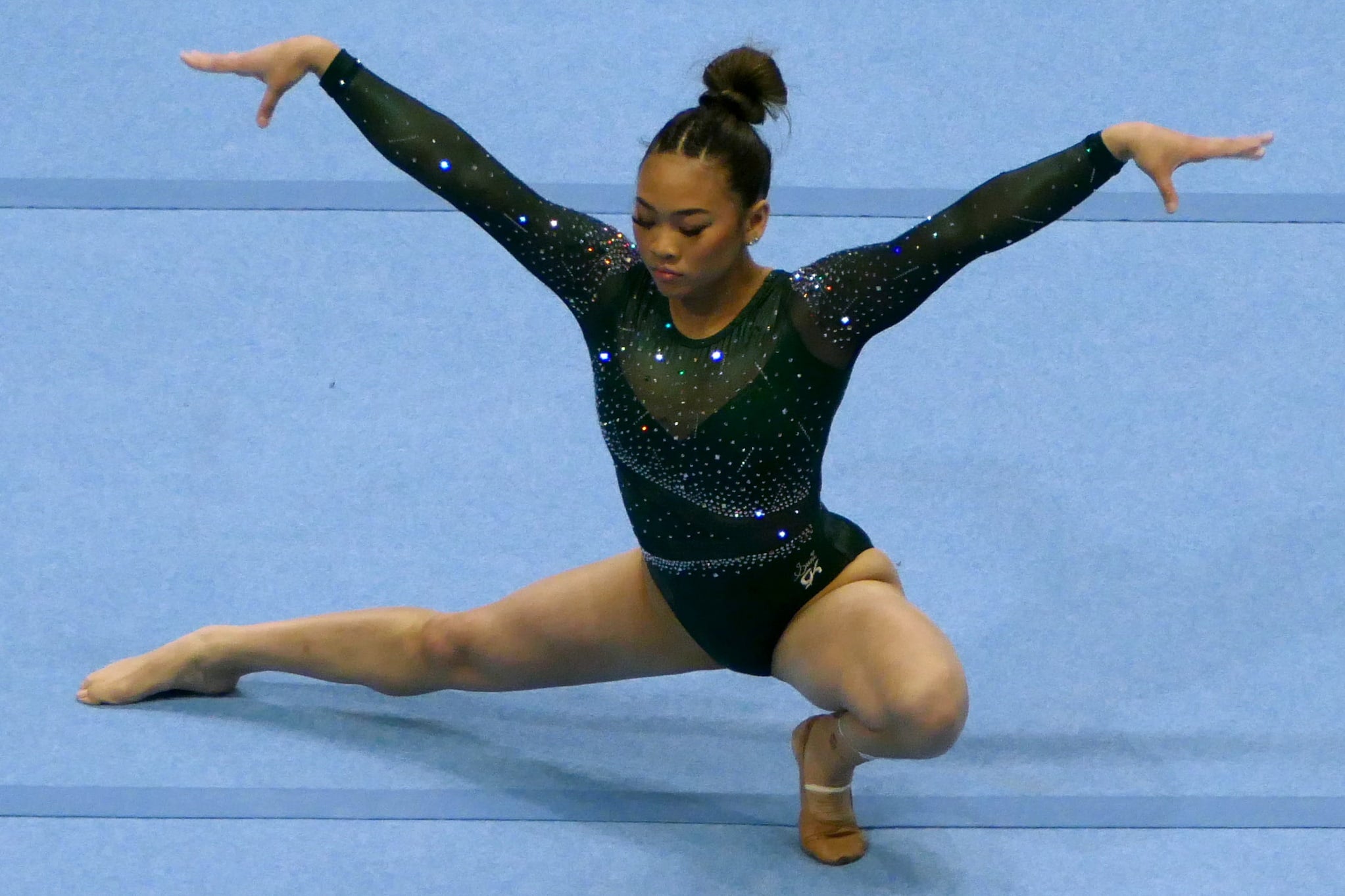
Image 25.07.03 — Gymnast Sunisa Lee, the first Hmong American to compete in the Olympic Games. Her six Olympic medals include two golds: the 2020 individual all-around and the 2024 Team competition.
Like Chow, Sunisa Lee helped Team USA to medal, winning the silver at the 2020 Olympics, while also winning the individual all-around gymnastics gold medal and the bronze medal in the uneven bars. In 2024, she went on to win bronze medals in the all-around and uneven bars, and she was a key part of Team USA’s gold victory. She was the first Hmong American to ever compete in the Olympic Games.
In 2002, Japanese American short-track speed skater Apolo Anton Ohno won a silver medal in the 1000-meter race and gold medal in the 1500-meter race in Salt Lake City; in 2006, in Turin, Italy, he won a bronze in the 100-meter, gold in the 500-meter, and bronze in the men’s 5000-meter relay; then in 2010 in Vancouver he won silver in the 1500-meter, finishing just ahead of Filipino American J.R. Celski. Both also won the bronze for Team USA in the 5000-meter relay, with their teammate, Korean American Simon Cho—marking the first time the team relay event was skated by a majority Asian American team.
The Legacy of Asian American Olympic Figure Skaters
But the Olympic sport where Asian Americans have most excelled over the past four decades is figure skating, due in part to the success of a series of inspirational champions.
In the 1980s, Taiwanese American skater Tiffany Chin enjoyed a meteoric rise in the sport—culminating in a silver medal in the 1984 US National Figure Skating Championship, and then a fourth place finish in the Sarajevo Olympics that same year, followed by a gold medal in the 1985 US Nationals and back-to-back bronzes in the World Championships. She has been frequently cited as a key inspiration for Japanese American champion Kristi Yamaguchi.
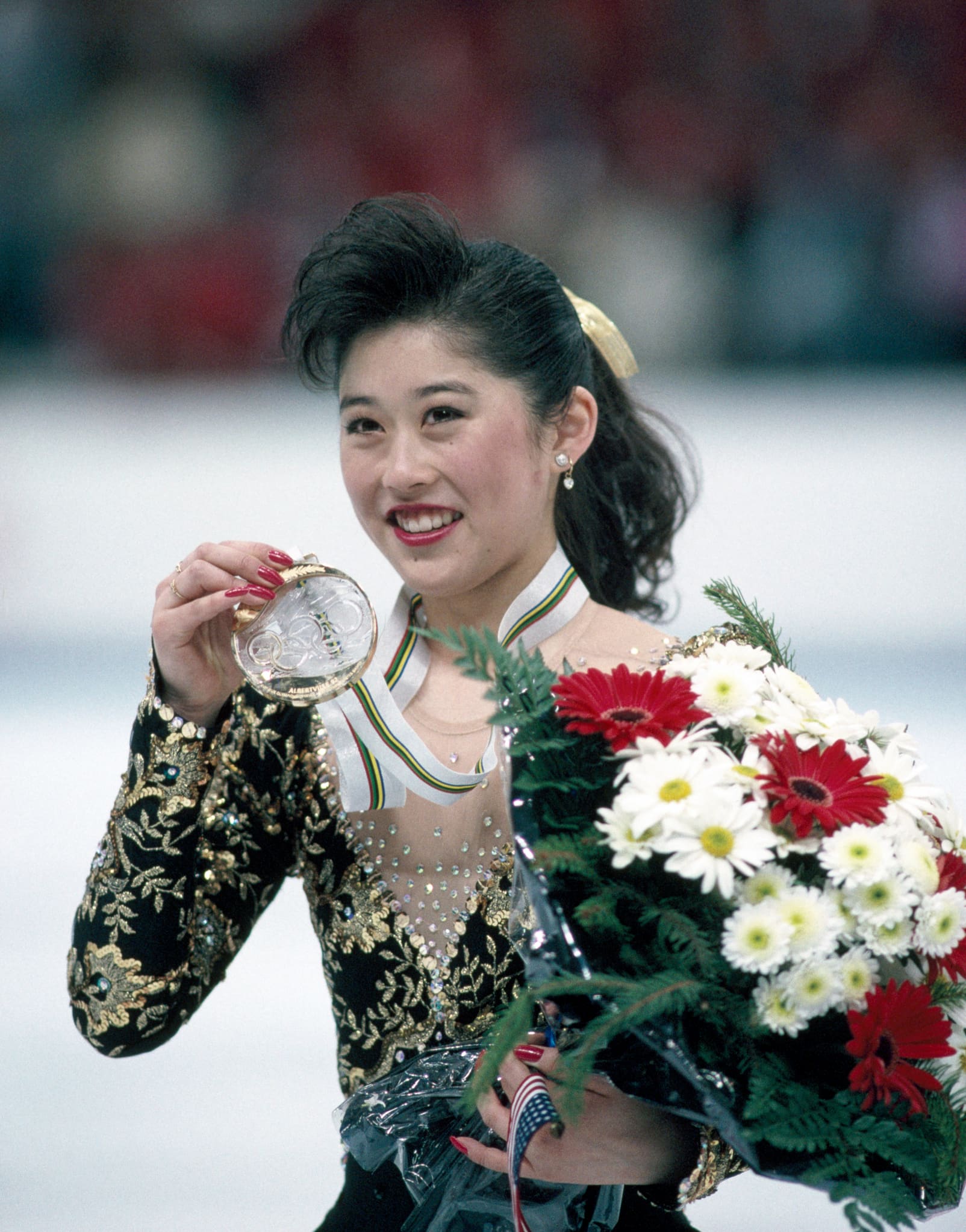
Yamaguchi started skating in part as rehabilitation after being born with bilateral clubfoot. Overcoming the pain of her disability, she began her competitive career as a pairs skater, winning a World Juniors gold medal in 1988 and gold medals at the US Nationals in 1989 and 1999, before she chose to focus on her singles skating. She subsequently won World Championship gold medals in 1991 and 1992 and the US National gold in 1992, earning a spot on Team USA at the 1992 Olympics in Albertville, France, where she won the gold—becoming the first Asian American in history to bring the United States an Olympic gold in skating.
And yet, after she won her gold medal, veteran sports writer Frank Deford wrote an essay for Newsweek where he mused, “What’s a good ole boy to do if there’s not only a Toyota in the driveway and a Sony in the bedroom and a Mitsubishi in the family room—but on the screen there, as the band plays the ‘Star-Spangled Banner,’ is the All-American girl of 1992, and her name is Yamaguchi?” 1
Image 25.07.04a — At the 1992 winter Olympics, Japanese American figure skater Kristi Yamaguchi became the first Asian American in history to bring the United States an Olympic gold in skating. Her achievement was still not immune from racist American sportswriting back home.
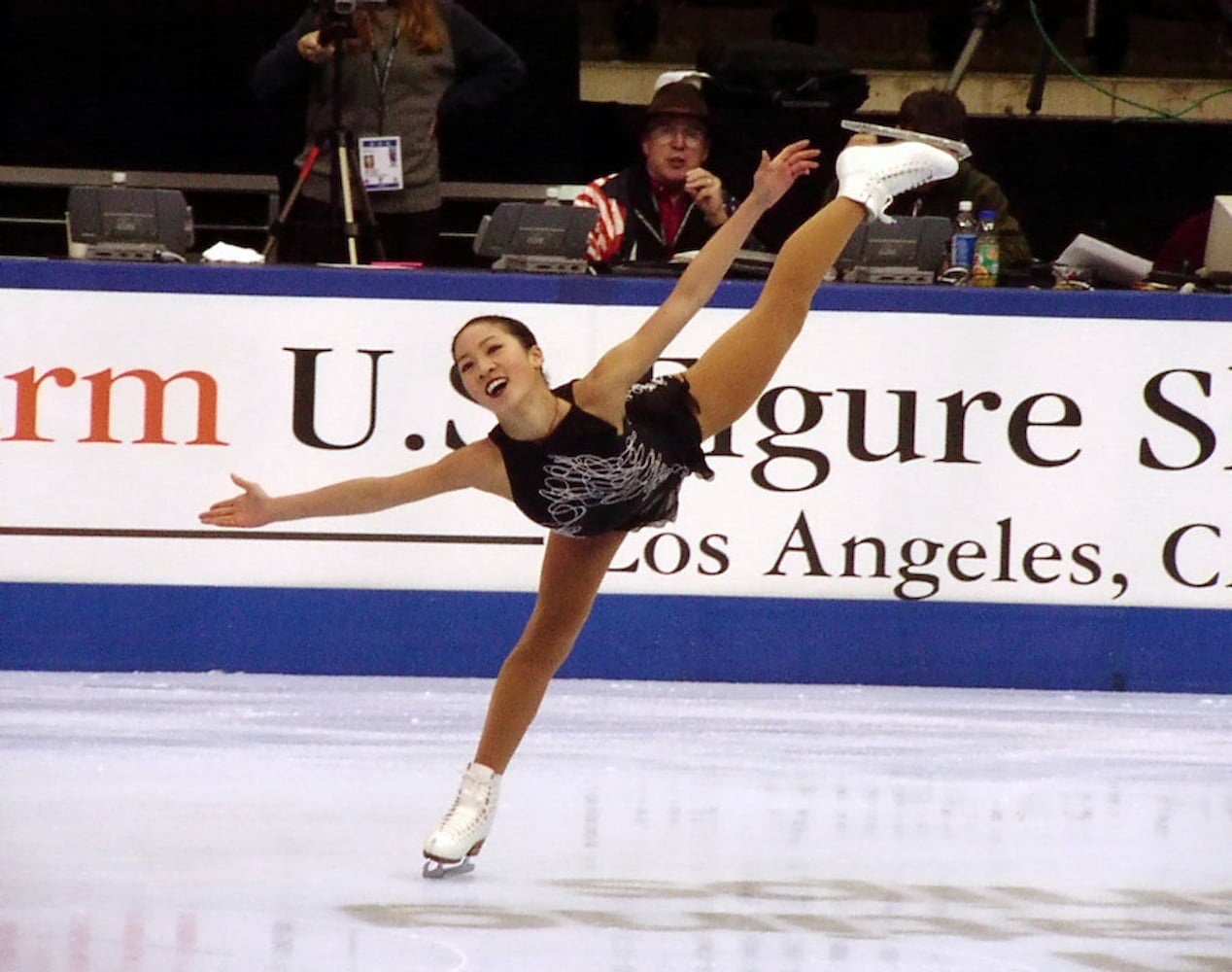
Image 25.07.04b — Michelle Kwan, the most decorated figure skater in US history, performing her signature spiral at a 2002 practice session in Los Angeles, California. She has called Yamaguchi her skating role model.


Chinese American Michelle Kwan has called Yamaguchi her skating role model. Kwan won nine US National gold medals, five World Championship golds, and two Olympic medals (the silver in Nagano in 1998 and the bronze in Salt Lake City in 2002). These achievements have made Kwan the most decorated figure skater in US history.
Kwan’s extraordinary record of achievement opened the dam. Now, figure skating has become a primary sport for young Asian Americans. At the 2018 PyeongChang Olympics, fully half of figure skating’s Team USA—seven out of fourteen—were of Asian descent, including Taiwanese American Karen Chen; Chinese American Nathan Chen; Chinese American ice dancer Madison Chock; Japanese American Mirai Nagasu; Chinese American Vincent Zhou; and Japanese American brother-and-sister ice dancers Maia and Alex Shibutani. Team USA won a bronze in PyeongChang, with the Shibutanis also winning an individual bronze in ice dancing.
In 2022, Karen Chen, Nathan Chen, Chock, and Zhou returned to the Olympics in Beijing. Though the Shibutanis had retired, Chinese American Alysa Liu (two-time US Nationals gold and one-time silver medalist and winner of a bronze at the World Championships) joined the team as a women’s singles skater. Team USA subsequently won its first-ever team gold medal (after a controversy that saw the Russian team, initially in first place, disqualified for doping), while Nathan Chen won an individual gold medal, setting a world record in the short program and landing five quadruple jumps in his extraordinary free skate.
At the 2026 Winter Olympics in Milano Cortina, Alysa Liu — who’d taken time off from skating for her mental health, and returned to it on her own terms when she found it fun again — won the women’s individual gold, with a performance that onlookers described as “sheer joy.”
Such wins continue to inspire Asian Americans to take the ice: According to US Figure Skating, four out of ten of the top US skaters now competing on the national and world circuit are Asian American.
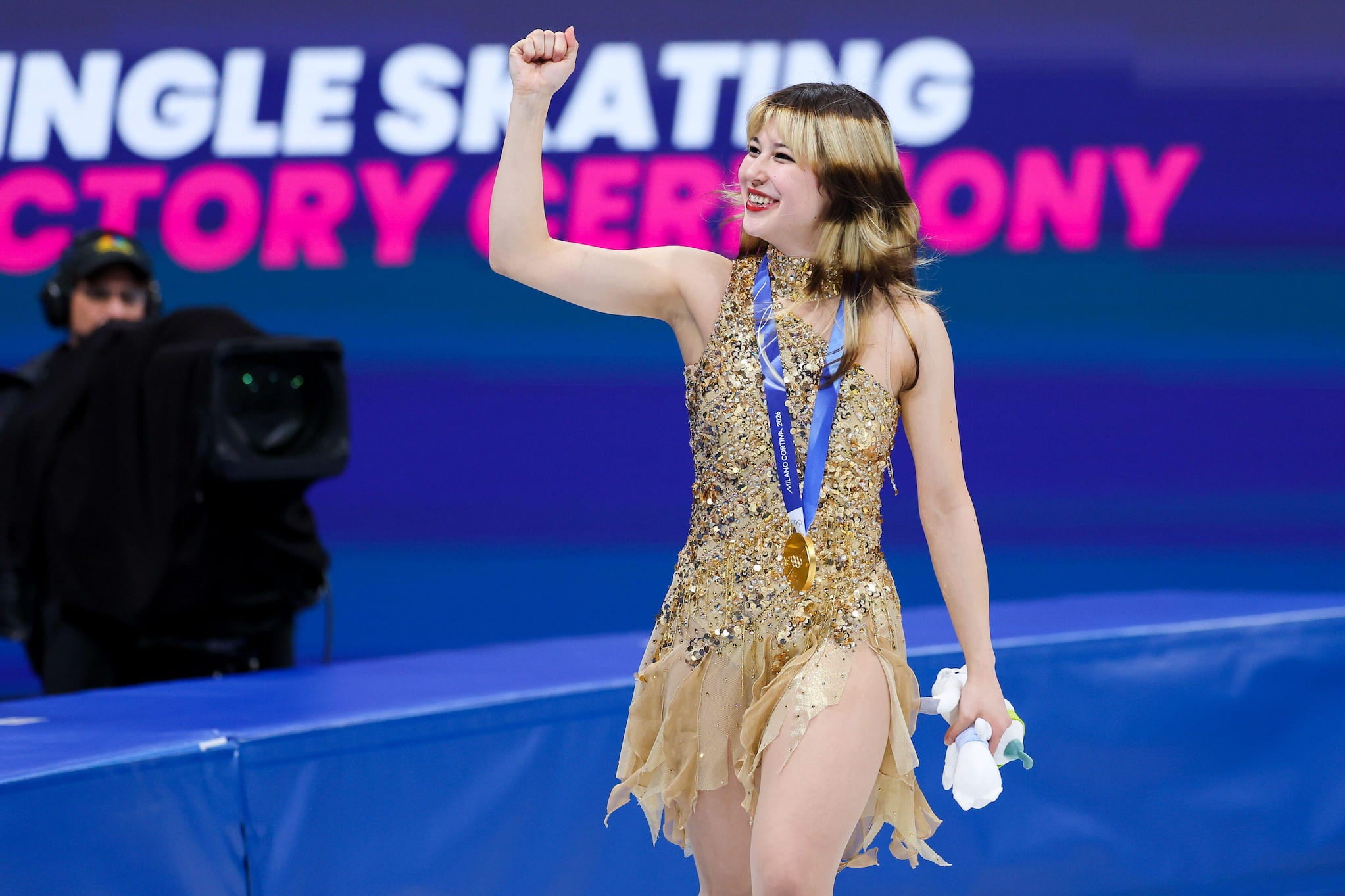
Image 25.07.05 — In 2026, UCLA Bruin Alysa Liu won two Olympic gold medals at the Milano Cortina games, becoming the first female American figure skater to win an individual gold in twenty-four years.
Reflection Questions
Why do sports serve as such a source of national and ethnic inspiration and pride?
Why are Asian Americans more likely to achieve high-level success in competitions between individual athletes like golf, singles tennis, and gymnastics versus big team sports like basketball, football, and baseball?
What are some of the reasons why Asian Americans have had such successful representation in figure skating in particular?
Glossary terms in this module
stereotype Where it’s used
Widely accepted but oversimplified, exaggerated, and often offensive images of or beliefs about particular categories of people—often those who are less well represented or less powerful in society. The preconceived ideas they create about the groups they represent can be harmful: for example, making people reflexively believe that members of those groups are dangerous, strange, or less capable than themselves.