





Seated in a boat, four male protestors in life vests are escorted from Kahoʻolawe’s Kūheʻeia Bay by a member of the U.S. Coast Guard.
Module 3: Kahoʻolawe: Rebirth of the Sacred
Can we learn from Kānaka ʻŌiwi and the practice of aloha to understand sovereignty among Indigenous peoples around the world?
Kahoʻolawe: Rebirth of a Sacred Island
Wehewehe mai nei kahi ao
Kū mai nā waʻa kaulua
Pue ke kanaka mai ka waʻa mai
Kūkulu ka iwi o ke ʻāina
ʻAilani Kohemaālamalama
Hoʻohiki kēia moku iā Kanaloa
Dawn is breaking
Two double-hulled canoes are sighted
The men cheer from the canoe
Land is sighted
To your left it is like heaven all lit up
We dedicate this island to Kanaloa 1
Imagine an island from which you can see all the other main Hawaiian islands (except Kauaʻi and Niʻihau) and the channels that run between them! Now, imagine how navigators were trained at its summit to hold in their memory the rising and setting of constellations in relation to the seasonal movement of the sun and where the north star sat over the horizon at night in relation to the Southern Cross. This training enabled navigators to intentionally find their way across the Pacific Ocean to other islands and return home to Hawaiʻi without any modern navigation instruments.
Imagine an island where universal time was observed and shrines and temples were built as structural calendars marking the daily and seasonal back and forth movement of the sun, from the Equinox north to the Tropic of Cancer, and south to the tropic of Capricorn. On this island, the community organized their lifeways in alignment with the cycles of nature.
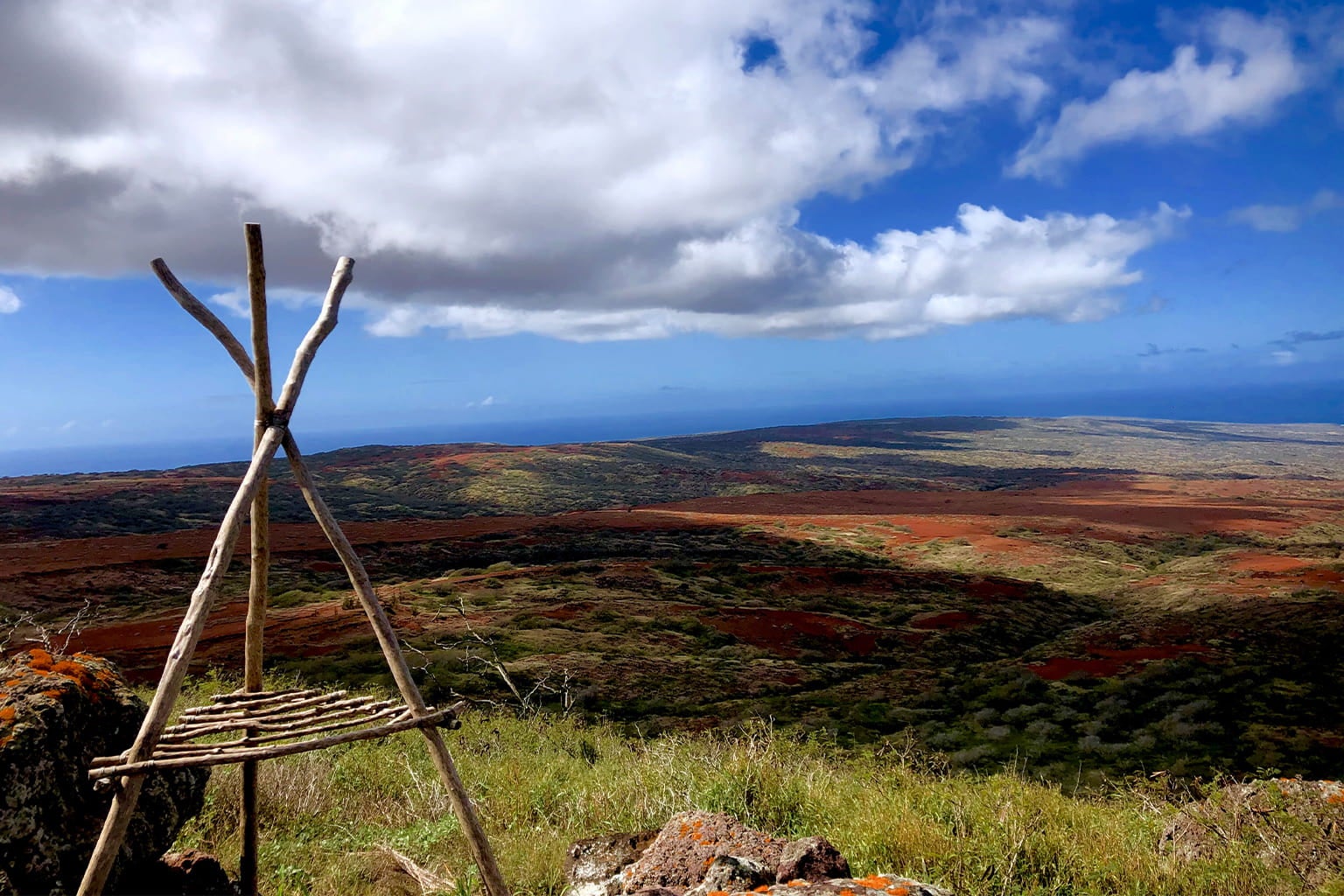
Image 22.03.01 — Left: A lele (offering platform) lashed together stands on Puʻu Moaʻulaiki, Kahoʻolawe. During the annual Makahiki harvest season, the lele bears hoʻokupu (offerings) to Lono, the Hawaiian god of agriculture.
How did Kahoʻolawe become a symbol of the renaissance of Kānaka ʻŌiwi culture?
How have Kānaka ʻŌiwi survived discrimination and injustices throughout the generations?
How has “aloha ‘aina” been used to empower Kānaka ʻŌiwi?
Center for Training of Navigators
We now call this island Kahoʻolawe, but Hawaiian ancestors honored this island as a body form of Kanaloa, the Hawaiian god of the sea, and named it Kohe Mālamalama o Kanaloa – The Shining Birth Canal of Kanaloa. Kahoʻolawe was an island known among Pacific navigators as a piko, or the center of Hawaiian navigation, and was an integral part of Pacific-wide navigation and wayfinding. It served as a portal to the realms across Ka Pae ʻĀina Hawaiʻi, the broad Pacific, the expansive universe, and into the depths of Indigenous ancestral scientific knowledge. In this module, we will learn how Kānaka ʻŌiwi have fought to restore stewardship over their land through Kahoʻolawe’s history.
Desecration, Erosion, and Bombing
Christianity led the converted chiefs to desecrate this island in the 1820s and 1830s by using it as a place to imprison those guilty of theft and adultery, and convert prisoners to Catholicism. At the time of the establishment of private land ownership during Ka Māhele (the dividing out of rights in the lands), King Kamehameha III claimed the island and then turned it over to the Hawaiian Kingdom and constitutional monarchy. Goats and sheep were ranched and the herds ate the grasses and native plants below the roots, exposing the soil to erosion from wind and rain. After a brief period of trying to restore the landscape, the territorial government leased the island out for cattle ranching, further degrading the landscape.
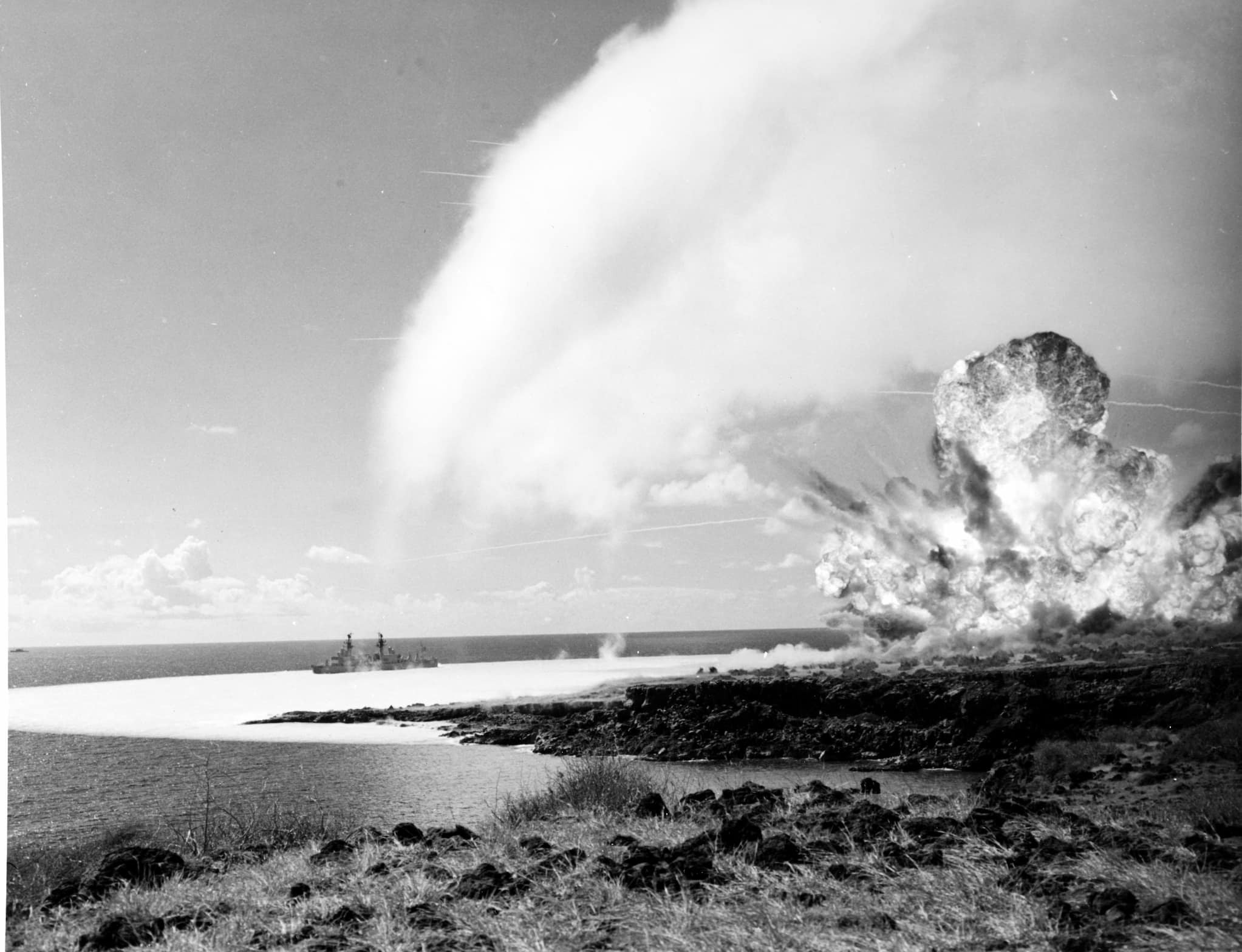
Image 22.03.02 — The US Navy detonated five hundred tons of TNT in each of three explosions on the southwestern tip of Kahoʻolawe in Operation Sailor Hat (1965) simulating an atomic bomb blast to test its effect on communications and ships anchored offshore.
In 1939, the US Navy leased the island from the ranch for live-fire training exercises. On the day after Pearl Harbor was bombed, the Navy took direct control of the entire island. During World War II, the island was called the “most shot at” island in the Pacific. Every battle to retake Pacific islands held by the Japanese military was first staged on Kahoʻolawe.
By September 1945, 150 Navy pilots, the crews of 532 major ships, and 350 Navy, Marine, and Army shore-fire control officers had trained at Kahoʻolawe. Another 730 service members had trained in joint signal operations on the island. During the Korean War, Navy carrier planes used Kahoʻolawe to practice airfield attacks and strafing runs on vehicle convoys and other mock North Korean targets.
In 1965, during the Cold War era, nuclear explosions were simulated with three detonations of five hundred tons of TNT. During the Vietnam War era, Navy and Marine Corps planes practiced attacks on surface-to-air missile sites, airfields, and radar stations. By the time of the Gulf War, live-fire training on the island was reduced, as the Navy shifted its primary training to other state-of-the-art electronic target ranges.
And so it seemed the island that Hawaiian ancestors looked upon as heaven lit up, as a sacred place to connect with the life forces of the ocean and the heavens, and to learn wayfinding from, was instead lost to the military. Like so many other places of abundance and reverence in Hawaiʻi, Kahoʻolawe had become off-limits, restricted, and prohibited to Kānaka ʻŌiwi. All that those on the surrounding islands seemed to know was that Kahoʻolawe was bombed and shot at. They could feel the impact of the bombs shaking their houses and see flares that lit up targets deep into the night.
Stop the Bombing
In January 1976, Kānaka ʻŌiwi staged an occupation of Kahoʻolawe as a means of drawing national attention to their desperate conditions. A bill to grant Kānaka ʻŌiwi monetary reparations for the illegal overthrow of the Hawaiian monarchy by US naval forces was pending in Congress.
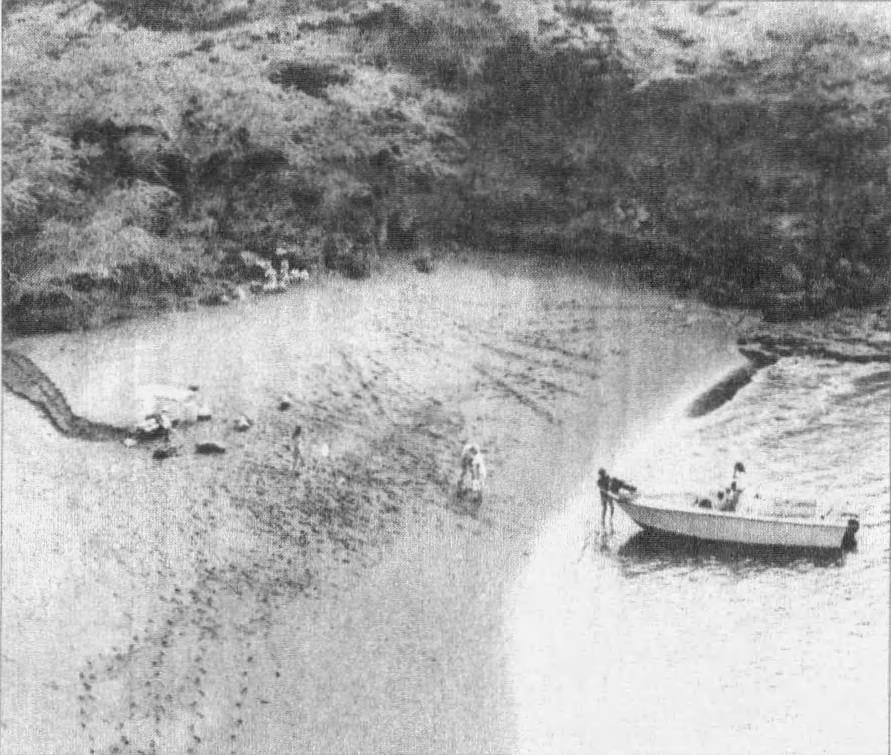
Image 22.03.03a — The group staging the occupation lands at Kahoʻolawe’s Kūheʻeia Bay in a move to direct national attention to the historic injustices and generational trauma of Kānaka ʻŌiwi since the illegal overthrow of the constitutional Hawaiian monarchy by the US in 1893.
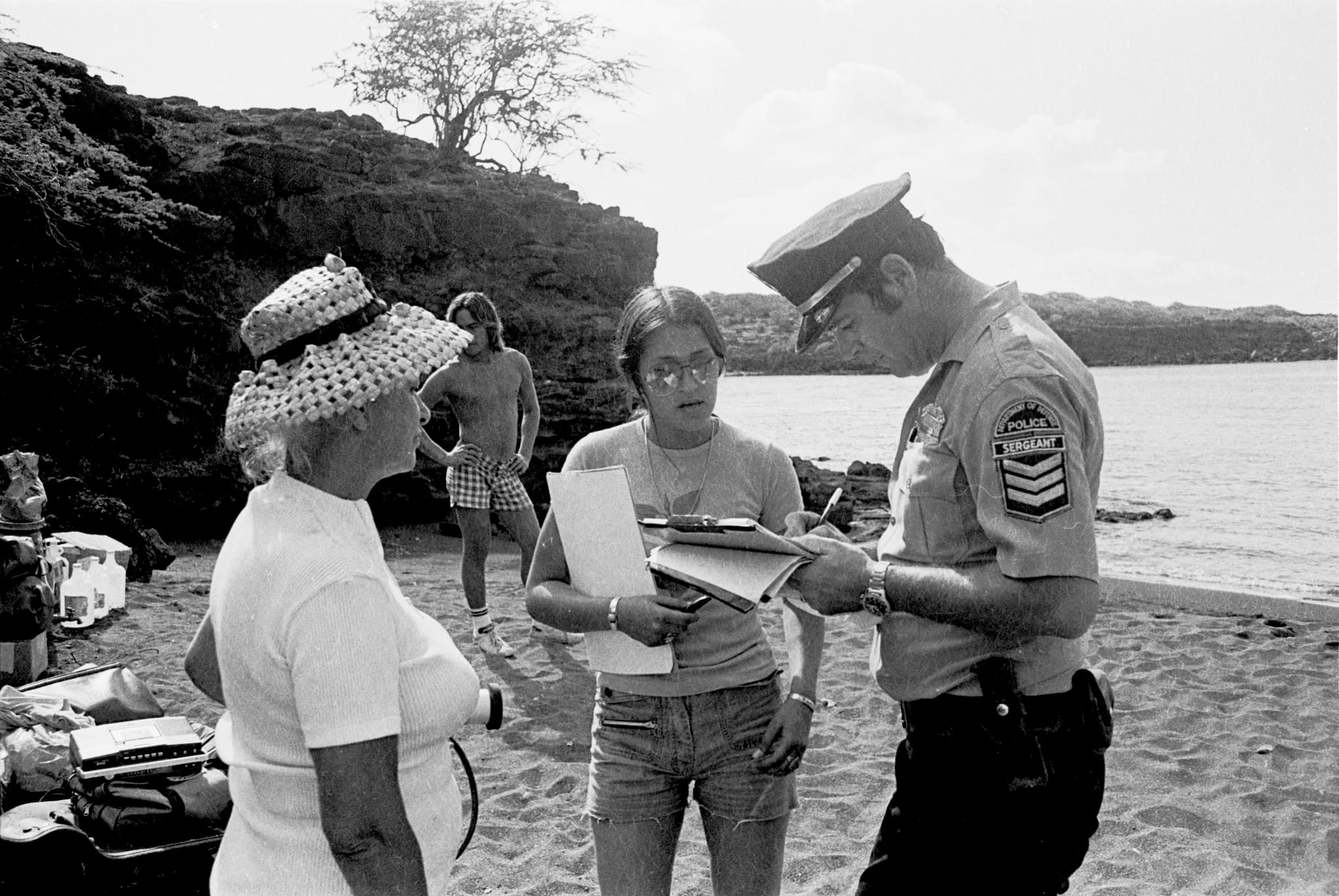
Image 22.03.03b — The police arrested seven of the nine. Pictured are Kupuna Ellen Miles (left), Karla Villabalba (middle), and Kimo Aluli (back). The final two members of the group, Dr. Noa Emmett Aluli and Walter Ritte, hid and remained on the island for two more days.

Image 22.03.03c — Group members Ian Lind (front left), Steve Morse (front right), and Gail Prejean (back left) are removed from Kahoʻolawe by unidentified Coast Guard crew members.



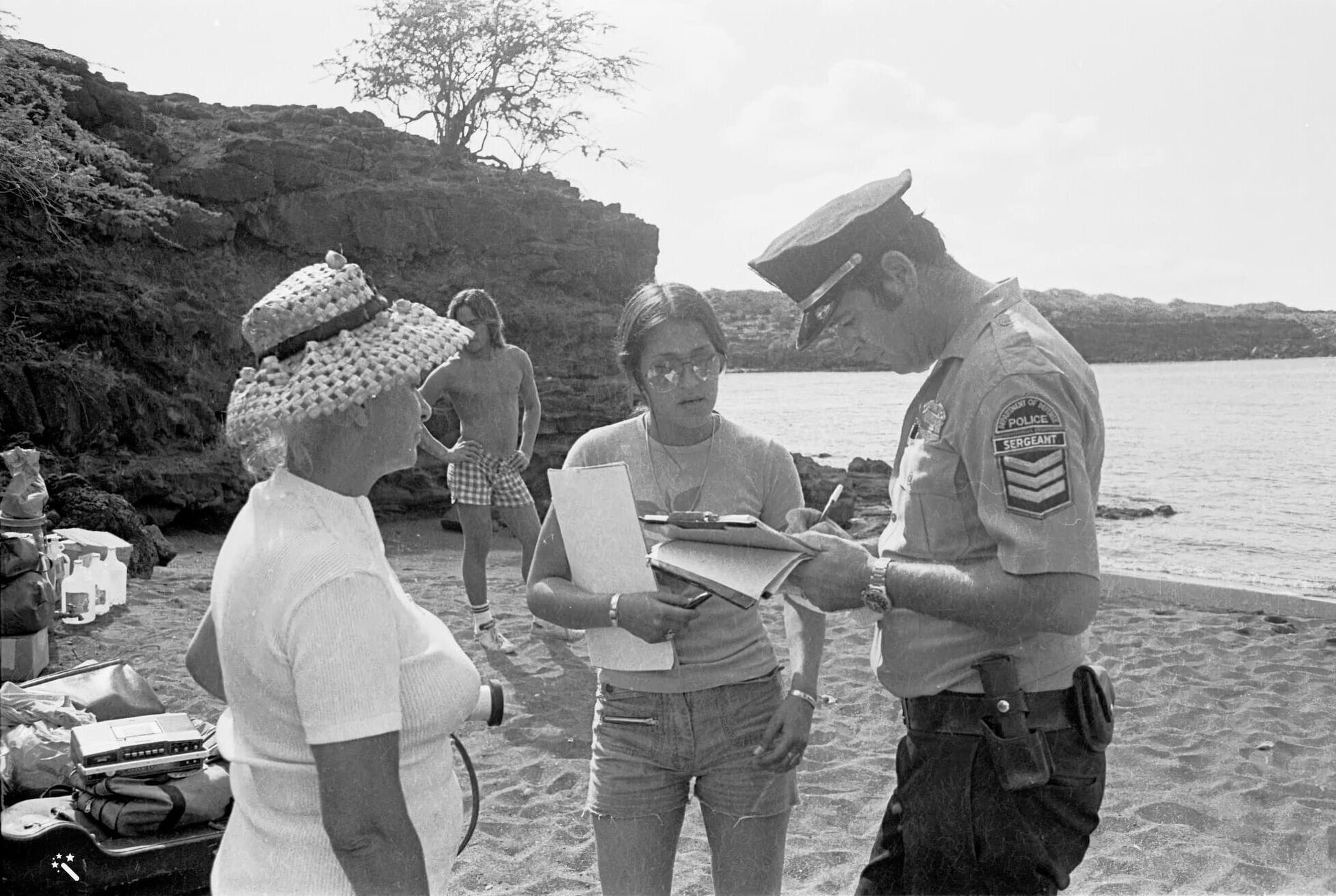
Image 22.03.03a — The police arrested seven of the nine. Pictured are Kupuna Ellen Miles (left), Karla Villabalba (middle), and Kimo Aluli (back). The final two members of the group, Dr. Noa Emmett Aluli and Walter Ritte, hid and remained on the island for two more days.
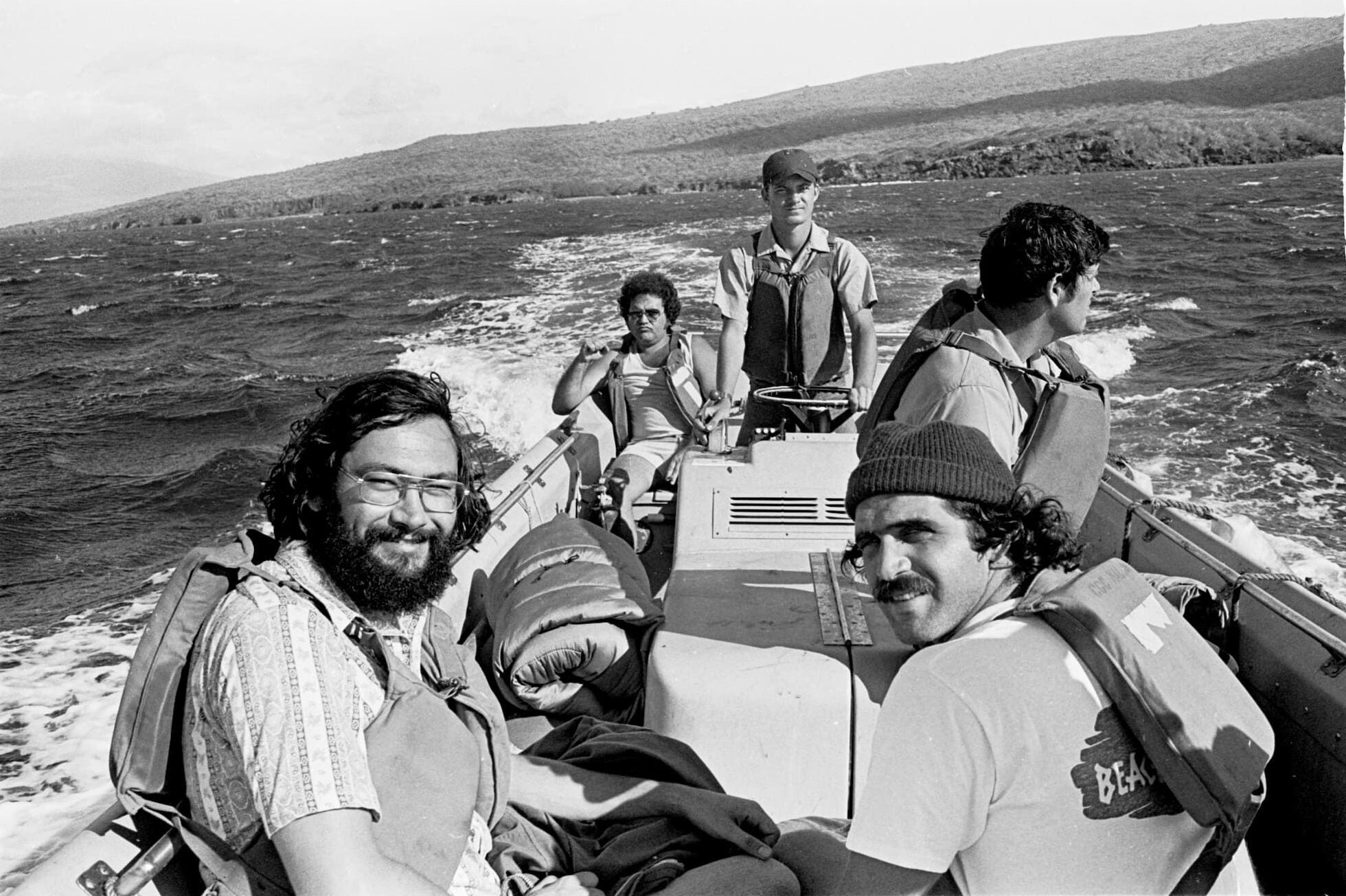
Image 22.03.03b — Group members Ian Lind (front left), Steve Morse (front right), and Gail Prejean (back left) are removed from Kahoʻolawe by unidentified Coast Guard crew members.


Nine persons in one boat made it past the Coast Guard blockade and actually landed on the island. While the Navy arrested the protesters, two remained hidden. Staying behind, they roamed the island for two days before being discovered and arrested. They witnessed vast destruction around the island, but, importantly, they experienced the presence of a deeply spiritual force. Kahoʻolawe revealed to them that it was not just a barren island for target practice.
Seeking an explanation for their spiritual experience on Kahoʻolawe, three of the protesters who landed sought out kūpuna (elders) on Molokaʻi and the other islands to gather their knowledge and memories of Kahoʻolawe. Gradually, the kūpuna revealed that Kahoʻolawe had served as a sanctuary for Kānaka ʻŌiwi spiritual customs and practices and training in navigation and wayfinding.
Chants, such as the one at the start of the module, and moʻolelo (histories) about Kahoʻolawe were shared, as well as the meaning of the island’s place names. Experiences in traditional fishing and harvesting of the island’s abundant marine resources were shared. The kūpuna advised them to organize in a Hawaiian manner, as an ‘ohana (extended family) for the island rather than as an association.
Through the course of this spiritual journey, of learning the oli (chants), kaʻao (stories) and moʻolelo of the island from the kūpuna, and of touching and walking the island through illegal occupations, and legal visits, an entirely new image of Kahoʻolawe as a sacred island began to emerge.
Aloha ʻĀina
With the knowledge that they had gained from the kūpuna, the three men began to organize the Protect Kahoʻolawe ʻOhana, around the slogan “aloha ‘aina” – love and respect of the land and all of nature. At one level, aloha ʻāina meant stopping the military assaults on the island. At another, it meant organizing and rallying for Hawaiian native rights and sovereignty to achieve the political standing and clout to protect the ‘aina. At the deepest level, it meant a spiritual dedication to honor and worship the Hawaiian deities who were the spiritual life of these forces of nature.
From 1976 through 1990, Protect Kahoʻolawe ʻOhana led Kānaka ʻŌiwi and the general public in protests to end the desecration of Kahoʻolawe. A series of illegal occupations of the Island led to arrests and lengthy and expensive court defenses.
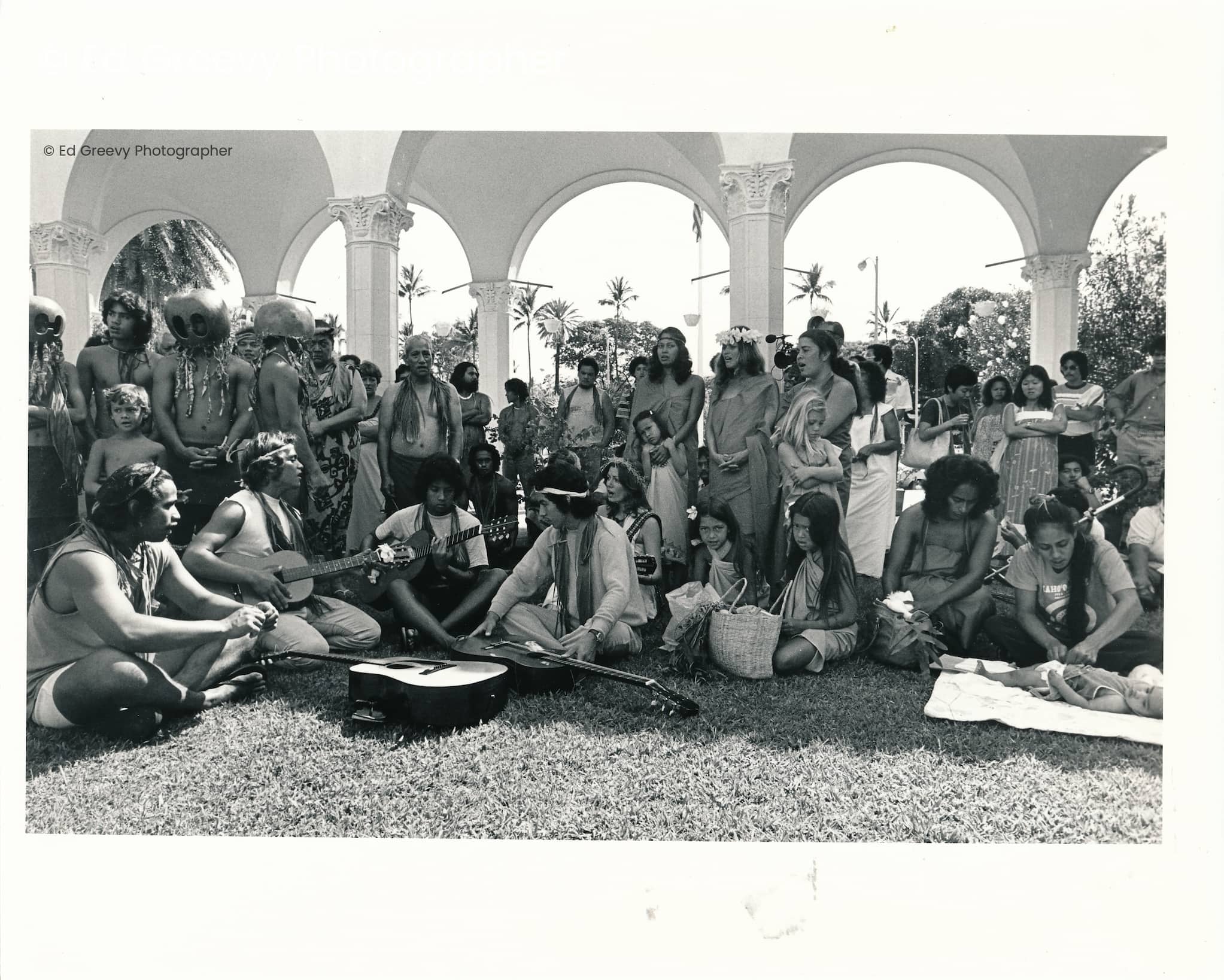
Image 22.03.04 — In 1976, Protect Kahoʻolawe ʻOhana members and their supporters demonstrated outside the federal courthouse in Honolulu. Many members were arrested for their efforts to stop military bombing on Kahoʻolawe and advocating for Hawaiian native rights.
Members were sentenced to imprisonment or barred from ever returning to the island. In some instances ‘Ohana members were criticized by family, friends, and the broader community for their activism. The hardest loss was the tragic disappearance of George Helm and Kimo Mitchell, in March 1977, in the waters surrounding the Island, during their protest of bombings.
In 1980, as the result of a civil suit filed by George Helm in 1976, Protect Kahoʻolawe ʻOhana made an out-of-court settlement with the US Navy, called a consent decree. The Navy was mandated to conform to the National Historic Preservation Act (NHPA) and to survey and develop a plan to protect historic sites, complexes, and features on the island. Under the Environmental Protection Act, the Navy was mandated to stop bombing the island for ten days each month, limit bombing and shelling to the central third of the island, clear two-thirds of the island of surface ordnance, eradicate the goats, and begin soil conservation and revegetation programs.
In compliance with the American Indian Religious Freedom Act of 1978, Protect Kahoʻolawe ʻOhana was acknowledged to be Ke Kahu O Ka ‘Āina, or Steward of the Land, and allowed access to the island for religious, cultural, and educational activities during four days each month for ten months of each year. This served as a critical turning point in the struggle to restore Kahoʻolawe to the people of Hawaiʻi. Isolating the bombardment to a third of the island, meant that two-thirds of the island could begin the healing process and be replanted with grasses and trees.
The ʻOhana began to take an average of sixty people to the island each month to work on erosion control and revegetation projects. Hiking trails were cleared, water catchments installed, and soil conservation and revegetation projects were initiated. Ancestral shrines and temples were re-dedicated and new cultural sites such as a traditional meeting house, a hula platform, and a memorial for kūpuna who had passed on were established.
Beginning in 1982, the ʻOhana revived the annual celebration of the Makahiki, harvest ceremonies in honor of Lono the Hawaiian god of agriculture. Strategically, the consent decree created the space for the ‘Ohana to jointly govern the island and expand the network of support to permanently end all military use of the island. That day finally came on October 22, 1990.
Lanakila! Victory!
In an effort to win votes in Hawaiʻi for a Republican candidate for the US Senate, President George H. W. Bush ordered all ordnance-delivery training on Kahoʻolawe to stop. In order to win support for the Democratic candidate, the Democrat senator from Hawaiʻi, Daniel K. Inouye, chair of the military appropriations committee, set up the Kahoʻolawe Island Conveyance Commission to conduct a two-year study and submit a report to Congress on the future use of the island.
Based on numerous studies, the Commission acknowledged that Kahoʻolawe was a national cultural treasure and recommended that the island be turned over to the State of Hawaiʻi to manage as a cultural preserve. The US Navy signed an agreement with the State of Hawaiʻi to clean up unexploded ordnance from 100 percent of the island’s surface and from 30 percent of the island’s subsurface to a depth of four feet.
The US Congress appropriated 460 million dollars for the Navy to fulfill this obligation. The contractor Parsons-UXB Joint Venture conducted what turned out to be the largest unexploded ordnance clean-up project in the history of the United States. Even greater than that of the Civil War battlegrounds.
Kahoʻolawe was turned over to the State of Hawaiʻi on May 7, 1994, in cultural ceremonies on the island of Maui. Under state law HRS 6-K, the State is to hold the island in trust and transfer management and control of the island and its waters to the sovereign Native Hawaiian entity upon its recognition by the United States and the State of Hawaiʻi.
By the end of the ten year cleanup, over ten million pounds of metal, 370 vehicles, and fourteen thousand tires were removed from the island and recycled. However, rather than clearing 100 percent of the island of unexploded ordnance, only 68 percent was cleared. Rather than clearing 30 percent of the island to a depth of four feet, the Navy contractor only cleared another 9 percent of the island’s subsurface.
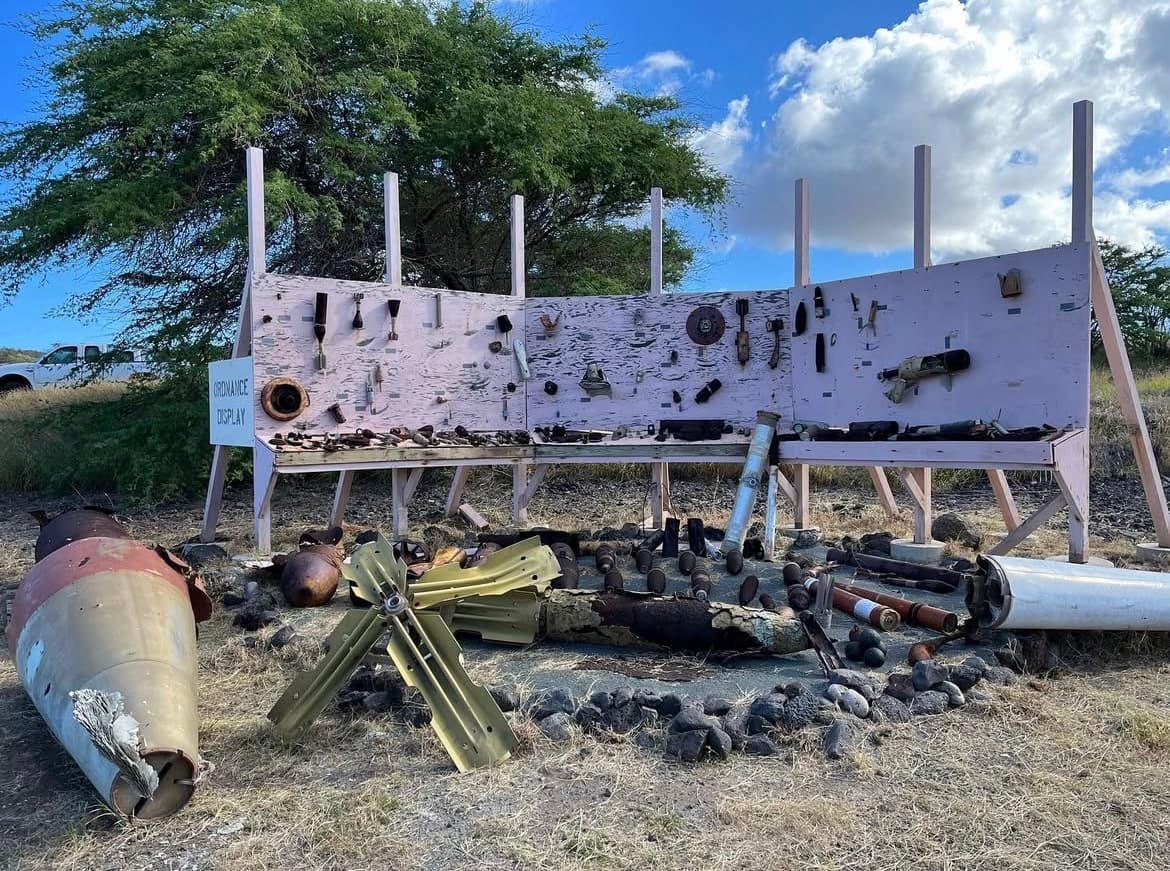
Image 22.03.05 — Between 1994 and 2004, the US Navy conducted the largest unexploded ordnance clean-up in US history on Kahoʻolawe. This photo shows bombs collected during the operation and on display on Kahoʻolawe.
32 percent of Kahoʻolawe still remains uncleared of unexploded ordnances. For areas not cleared to four feet, the Navy can only provide a 90 percent guarantee that they are 90 percent confident that 85 percent of ordnances were removed. This means that access to the island is managed and requires trained guides in the identification and avoidance of unexploded ordnances.
Moreover, given the danger of digging into 91 percent of the island that has not been cleared to a depth of four feet, the replanting and restoration of the island’s resources requires building up the soil rather than digging into it. Acknowledging these challenges, Protect Kahoʻolawe ʻOhana has made a continued commitment to heal the island for generations to come.
Imua Nā Pua! – Forward! New Generations!
The story of the healing of Kahoʻolawe is the story of a generation of Kānaka ʻŌiwi who assumed the responsibility to end the abuse of Kānaka ʻŌiwi lands, and in the process, reclaimed ancestral cultural and spiritual beliefs, customs, and practices. This is reflected in the words of the founder and leader of the Protect Kahoʻolawe ʻOhana, Dr. Noa Emmett Aluli:
On Kahoʻolawe we’ve been able to live together as Hawaiians. We’ve been able to practice the religion and to carry on the traditions we’ve learned from our kūpuna, our elders. In doing this, we connect to the land, and we connect to the gods. We call them back to the land and back to our lives . . . We commit for generations, not just for careers. We set things up now so that they’ll be carried on. We look ahead together so that many of us share the same vision and dream. To our next generations we say, Go with the spirit. Take the challenge. Learn something. Give back. 2
The work to heal the island will lead to the healing of Kānaka ʻŌiwi as a people and a nation.
Glossary terms in this module
aloha ʻāina Where it’s used
Love, respect, and care for the land, ocean, environment, and all of its resources. Aloha ʻāīna is also love, respect, and care for the natural elemental life forces that Kānaka ʻŌiwi honor as deities. Aloha ʻāīna also means nationalism, love for the Hawaiian nation.
consent decree Where it’s used
A legally binding, court-enforced settlement agreed by all parties and approved by a court.
constitutional monarchy Where it’s used
A system of government in which a monarchy (King/Queen) shares power with a constitutionally organized government.
hula Where it’s used
The cultural dance of Kānaka ʻŌiwi which manifests in many ancient and contemporary forms. Hula is at the heart of Kānaka ʻŌiwi culture.
occupied/occupation Where it’s used
The act of controlling a territory, region, or state through military means.
sovereignty Where it’s used
The ability of a country or a people to have independent freedom of action, such as making its own laws and rules, without external interference. For Indigenous peoples, sovereignty means having control of their lands and way of life, free from colonial control.
stewardship Where it’s used
A duty to provide sustainable management of lands by using Indigenous practices.