





Advocates of Hawaiian independence, dressed in matching Kū I Ka Pono t-shirts, march down the street holding Hawaiian flags.
Module 5: Aloha ʻĀina: Pathways of Sovereignty and Independence
Can we learn from Kānaka ʻŌiwi and the practice of aloha to understand sovereignty among Indigenous peoples around the world?
Kūpaʻa
Eia mai mākou
Nā pulapula o nei ʻāina
E kupu ai a nani
I ka uluwehiwehi
Here we are
The descendants of this land
Growing beautifully
In verdant splendor
Haʻaheo nā kupa ʻāina
Mai Kumukahi i Lehua
I ka nani kāhelahela
O nā kai ‘ewalu
Proud are the people
From Kumukahi to Lehua
Of the splendid expanse
Of the eight seas 1
This module discusses the quest of Kanaka ʻŌiwi to reestablish sovereignty and self-determination, which began on January 16, 1893 when US naval forces invaded Hawaiʻi in support of the illegal overthrow of the Hawaiian monarchy. It was inspired by the thoughts Queen Liliʻuokalani expressed in her writings and songs that have continued to be read and performed from one generation to the next.
How has aloha ‘āina guided Hawaiian sovereignty and independence movements?
What are pathways for Kānaka ʻŌiwi self-determination?
What is the significance of being on wahi kūpuna, or ancestral sites?
The Quest for Sovereignty and Independence
In the present day that quest is reinforced by the historical and contemporary injustices reflected in the low incomes, high unemployment rates, disparate incarceration rates, disproportionate reliance on public assistance, and poor health conditions of Kanaka ʻŌiwi in Hawaiʻi. It is provoked by legal suits seeking to dismantle Hawaiian land trusts established by Kanaka ʻŌiwi Aliʻi (chiefly rulers) and the US Congress, and those seeking to extinguish other Kanaka ʻŌiwi entitlements. The quest for sovereignty and self-determination has been nurtured by the renaissance of Kanaka ʻŌiwi language, music, hula, navigation, and spiritual practices.
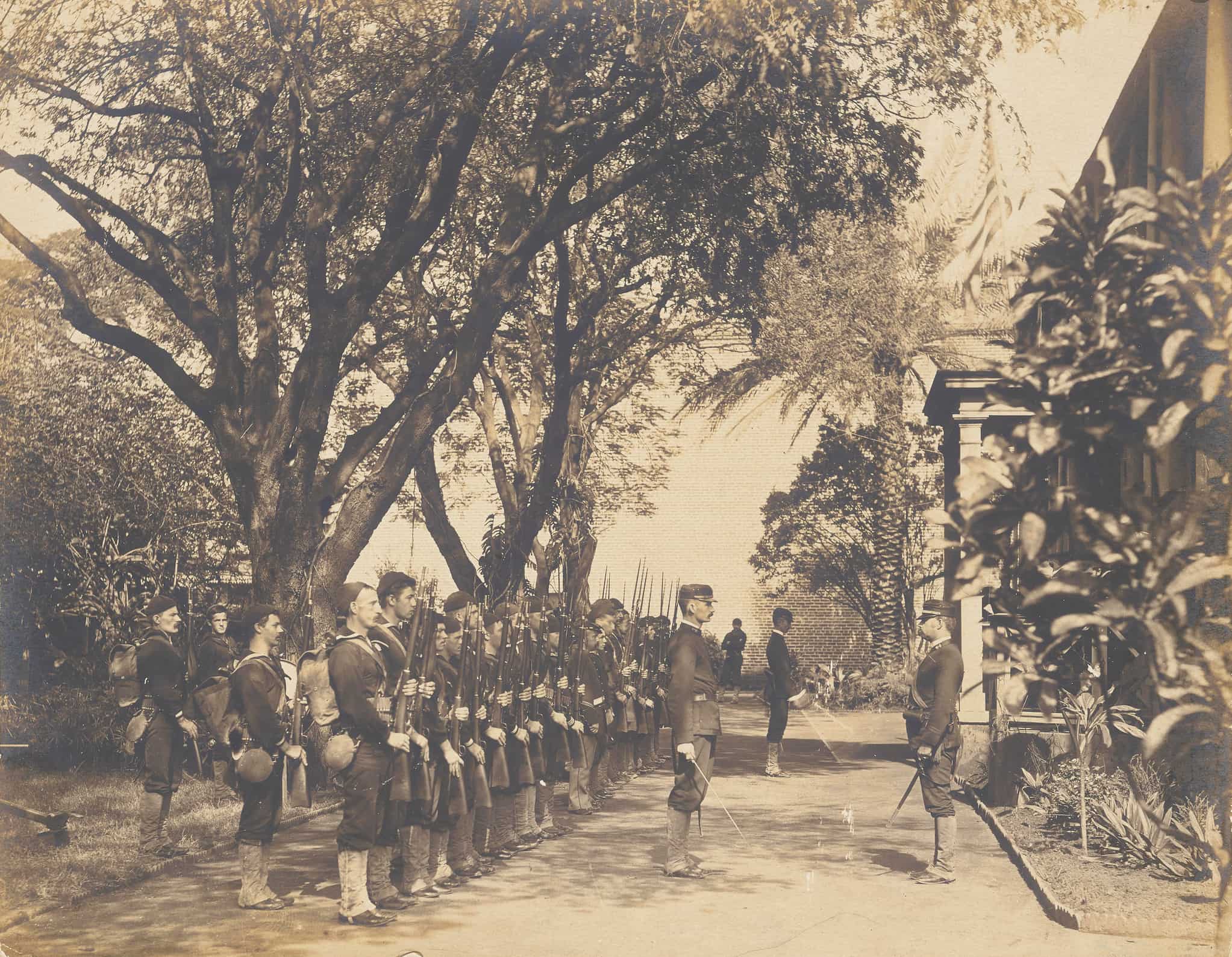
Image 22.05.01 — At 5:00 p.m. on January 16, 1893, a military force composed of 162 US Marines, armed with a gatling gun and a 37 millimeter revolving gun, invaded Hawaiʻi. Above, troops occupy the Arlington Hotel grounds adjacent to ʻIolani Palace.
The right of sovereignty has been instilled in the hearts and minds of Kanaka ʻŌiwi for generations. It is rooted in the traditional and customary exercise of an Indigenous sovereignty that evolved over more than seven centuries preceding contact and commerce with European, American and Asian nation-states. There are many pathways for Kanaka ʻŌiwi to achieve sovereignty and independence. The first is to exercise the right of self-governance by reestablishing a government for the Hawaiian nation.
The 1993 Apology Law, Public Law 103-150, states that both the President and the US Congress, “on the occasion of the 100th anniversary of the illegal overthrow of the Kingdom of Hawaii on January 17, 1893, acknowledges the historical significance of this event which resulted in the suppression of the inherent sovereignty of the Native Hawaiian people . . . and Apologizes to Native Hawaiians on behalf of the people of the United States for the overthrow of the Kingdom of Hawaiʻi on January 17, 1893, with the participation of agents and citizens of the United States, and the deprivation of the rights of Native Hawaiians to self-determination.” 2
This apology opened the way for Kanaka ʻŌiwi to aspire to self-governance as a nation within the US nation.
The Path to Reestablishing a Kānaka ʻŌiwi Government
The Governor and Hawaiʻi State Legislature have supported Kanaka ʻŌiwi sovereignty:
- 1993 Hawaiian Sovereignty Advisory Commission appointed to “seek counsel from the native Hawaiian people on how to be governed by an Indigenous sovereign nation of their own choosing.”
- 1994 Hawaiian Sovereignty Elections Council appointed to “hold a plebiscite in 1995 to determine the will of the Indigenous Hawaiian people to restore a nation of their own choosing.”
- July 1996, the Elections Council mailed 81,507 ballots asking “Shall the Hawaiian people elect delegates to propose a Native Hawaiian government?” Of the registered voters, 37 percent participated. Of these, 73.28 percent voted YES and 26.72 percent voted NO.
- 2011, the state legislature passed Act 195 that formally recognized Kanaka ʻŌiwi as the only Indigenous, aboriginal, maoli (native) people of Hawaiʻi. It established a Native Hawaiian Roll Commission and registered 122,785 Kanaka ʻŌiwi.
- February 26, 2016, an Aha, or convention, was held to draft a constitution for the Hawaiian nation. The preamble of the constitution states:
We, the Indigenous peoples of Hawaiʻi, descendants of our ancestral lands from time immemorial, share a common National identity, culture, language, traditions, history, and ancestry. We are a people who Aloha Akua, Aloha ʻĀina, and Aloha each other. We mālama all generations, from keiki to kūpuna, including those who have passed on and those yet to come. We mālama our ʻĀina and affirm our ancestral rights and Kuleana to all lands, waters, and resources of our islands and surrounding seas. We are united in our desire to cultivate the full expression of our traditions, customs, innovations, and beliefs of our living culture, while fostering the revitalization of ʻŌlelo Hawaiʻi, for we are a Nation that seeks Pono. 3
The work to ratify the 2016 Kumukanawai (Constitution) was suspended with the election of Donald Trump as US president and anticipated opposition to recognizing a Kānaka ʻŌiwi nation. In the years since, Kānaka ʻŌiwi have focused on living sovereignty, through the extension of stewardship over ancestral lands, cultural places, and fisheries described in the following section, and, as discussed at the start of the module, in the revitalization of Hawaiian language, arts, hula and sciences, such as wayfinding.
The Path to Independence
Kanaka ʻŌiwi also strove for independence for the state of Hawaiʻi as a multiethnic nation-state. Among the many groups undertaking this effort, three are prominent. The group calling itself the Nation-State of Hawaiʻi claims independent and sovereign status and seeks recognition by international governments. Under the leadership of Dennis “Bumpy” Kanahele, they have a lease to forty-five acres of public lands in Waimanalo, on the island of Oʻahu, where they have established a Puʻuhonua (sovereign sanctuary) and engage in sustainable economic activities.
The Hawaiian Kingdom Government in Occupation, led by Keanu Sai, asserts that the Kingdom of Hawaiʻi still exists, but it is occupied by the US. This independent “government” seeks to expose the US occupation of the nation of Hawaiʻi and ensure compliance with international law to end it.
The Reinstated Hawaiian Kingdom, led by Henry Noa, asserts the unextinguished inherent sovereignty of Kanaka ʻŌiwi as the basis for declaring that the government of the Hawaiian Kingdom is currently reinstated. According to Noa, the statement in the Apology Law, “Whereas, the Indigenous Hawaiian people never directly relinquished their claims to their inherent sovereignty as a people or over their national lands to the United States, either through their monarchy or through a plebiscite or referendum,” 4 provides evidence that the inherent sovereignty of the Hawaiʻi nation still exists, and has been reinstated through the efforts of his group.
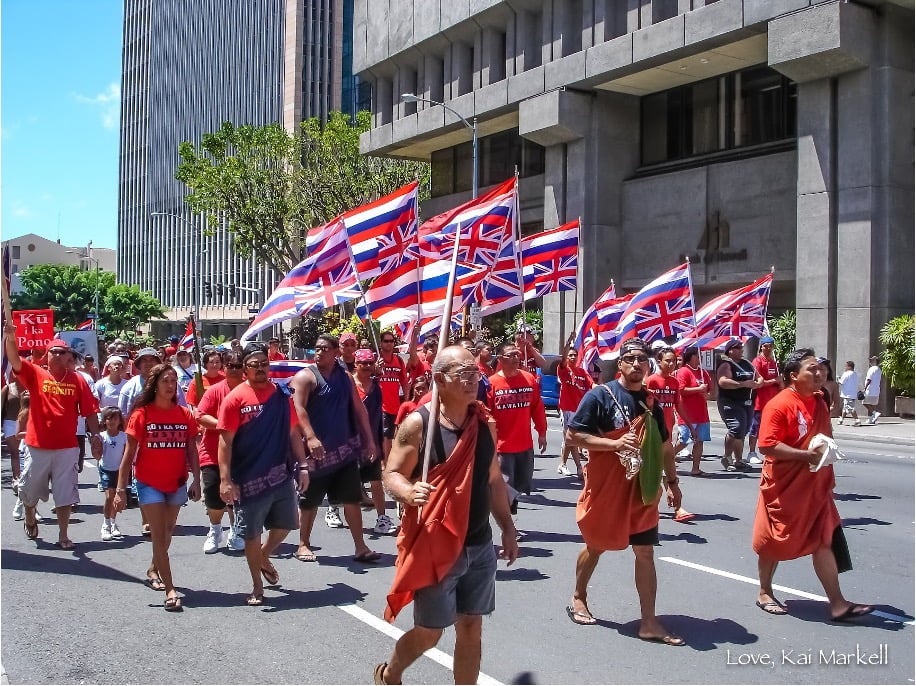
Image 22.05.02 — On January 17, 2009, the anniversary of the overthrow, five thousand Kānaka ʻŌiwi and advocates of Hawaiʻi independence marched to show their unity and support for Kanaka ʻŌiwi sovereignty and control of Kānaka ʻŌiwi land.
There are two main strategies for restoring the independence of Hawaiʻi. The first is to seek the decolonization of Hawaiʻi through the United Nations. In 1946, Hawaiʻi was inscribed by the UN Committee on non-self-governing territories with the right to exercise self-determination and self-governance.
In 1959 when Hawaiʻi voters chose to become the fiftieth US state in a vote, the US removed Hawaiʻi from the UN list. Independence advocates charge that the vote did not meet the standards of a free, fair, and informed process. They seek to reinscribe Hawaiʻi on the list of non-self-governing territories and hold a new vote. East Timor and Kanaky (New Caledonia) have each taken the path of reinscription to gain independence by holding a vote known as a plebiscite. French Polynesia has also begun this process.
The second strategy is to seek the de-occupation of Hawaiʻi under the international “law of war” process. The rationale here is that the US is effectively at war with the sovereign and independent Hawaiian Kingdom, and has illegally occupied the islands since 1893. Under international law, an illegal occupation and annexation cannot pass lawful title to the occupying power.
This strategy turns to the United Nations and other appropriate international forums to resolve the prolonged occupation of Hawaiʻi. The objective is to expose the occupation of the Hawaiian Kingdom within the framework of the 1907 Hague Conventions IV and V, and domestic statutes of the Hawaiian Kingdom, to provide a foundation for a transition and the ultimate end to the occupation.
Aloha ʻĀina: Living Sovereignty
In order to be sovereign, one must live and act sovereign. There are many communities in Hawaiʻi that co-manage ancestral trust and public lands and marine areas; thus, exercising sovereignty and laying the foundation for Kanaka ʻŌiwi sovereignty.
In 2018, sixty-five community aloha ʻāina organizations gathered with fifteen government agencies, land trusts, and private companies in the E Hoʻolau Kanaka ʻĀina Summit to discuss how to expand their work and increase their collective impact. Among the aloha ʻāina community organizations, there were fourteen that had formed before the 1970s, and fifty-one more that were formed by 2018.
These sixty-five organizations existed throughout the pae ʻāina archipelago. They co-managed the entire island of Kahoʻolawe, the Papahānaumokuākea Marine National Monument, and private and publicly-owned fishponds. They managed marine protected areas, including no-take zones and community-based subsistence fishing areas. They also managed farms and nurseries, as well as loʻi kalo taro cultivation systems, and served as curators for historic cultural sites.
Outside of the summit, many of these hui, community, private, and government groups work in effective networks across the pae ʻāina to coordinate collective action to pass laws, secure funding at the legislature, and provide adaptive co-management with government agencies and private land trusts. The overall coordinating organization is KUA (Kuaʻāina Ulu ʻAuamo). KUA means “back”:
Like a backbone that connects and supports. Kuaʻāina are the grassroots, rural peoples of Hawaiʻi nei. Ulu means to grow. ‘Auamo is the carrying stick held on multiple shoulders of laborers who share the burden of carrying something of great weight forward. By taking up the ʻauamo, our kuaʻāina communities share the sacred responsibility, or kuleana, to better Hawaiʻi. 5
KUA supports three networks that collectively manage legacy biocultural resources of Hawaiʻi.
The first network is E Alu Pū which includes thirty-two organizations as of 2025. The overall vision of E Alu Pū is “to nurture community kuleana—both the responsibility and the privilege—for the ʻāina where they live in order to ensure the vitality of resources for use by present and future generations.” 6
The second network is Hui Mālama Loko Iʻa, an expanding network of fishpond practitioners and organizations through the islands. “The Hui was formed as an opportunity for practitioners to empower each other and leverage their skills, knowledge and resources related to restoration and management of loko iʻa (traditional Hawaiian fishponds).” 7
The third network is the Limu Hui, “a network of elders, educators, and community members from across Hawaiʻi who gather, care for and work to restore native Hawaiian limu (seaweed) around the islands.” 8
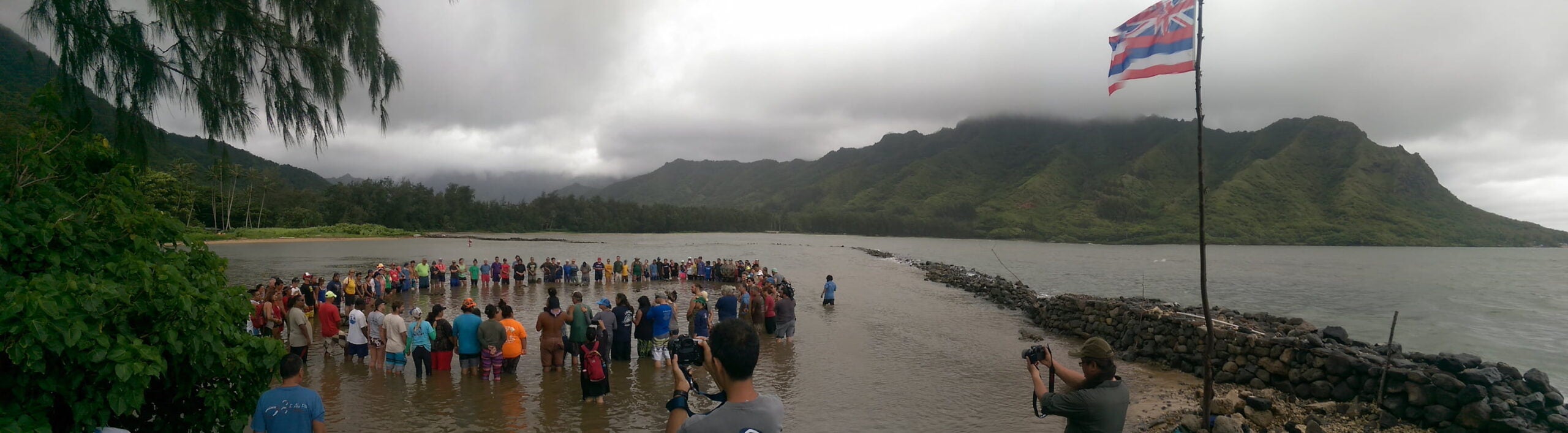
Image 22.05.03 — KUA’s E Alu Pū network provides support, education, and collaboration among thirty-two land stewardship organizations across the islands as of 2025. Pictured here is the closing ceremony for a global E Alu Pū gathering after restoration work at Huilua Fishpond in Kahana, Oʻahu.
Another outstanding community of aloha ʻāina practice is the MAʻO Organic Farms, with the mission of “building a future of māʻona, of plenty, by connecting youth and land through the daily practice of aloha ʻāina, empowering youth to succeed in college and secure sustaining careers, and growing organic produce that yields individual and communal vitality.” 9
The Health of the Land, is the Health of the People, is the Health of the Lāhui 10
A nation can only thrive if its people thrive. Kanaka ʻŌiwi have a life expectancy of 74.3 years compared to 80.9 for Hawaiʻi as a whole. Their heart disease, cancer, stroke, and diabetes mortality rates are substantially higher than the multi-ethnic population of Hawaiʻi as a whole. Given this, another important building block of Kanaka ʻŌiwi sovereignty is a healing network and health infrastructure. The Kanaka ʻŌiwi health network is comprised of the Queen’s Health System, founded in 1859 by King Kamehameha IV and Queen Emma, the Papa Ola Lōkahi islandwide Hawaiian Health Care System, and the Ahahui o nā Kauka Association of Native Hawaiian Physicians.
Mālama Wahi Kūpuna: Protecting Ancestral Cultural Sites
The roots of Kanaka ʻŌiwi are ancestral relationships experienced at cherished wahi kūpuna (ancestral places) throughout the islands. One of the important organizations protecting these places is Huliauapaʻa, founded in 2012. It is a non-profit organization with the purpose “to educate and empower students, communities, and professionals on the stewardship of Hawaiʻi’s wahi kūpuna.” 11
Huliauapaʻa collaborates with various community groups, educational institutions, landowners, and archaeological firms to provide education, training, and assistance in the preservation, stewardship, and management of cultural and historical sites throughout Hawaiʻi.” 12
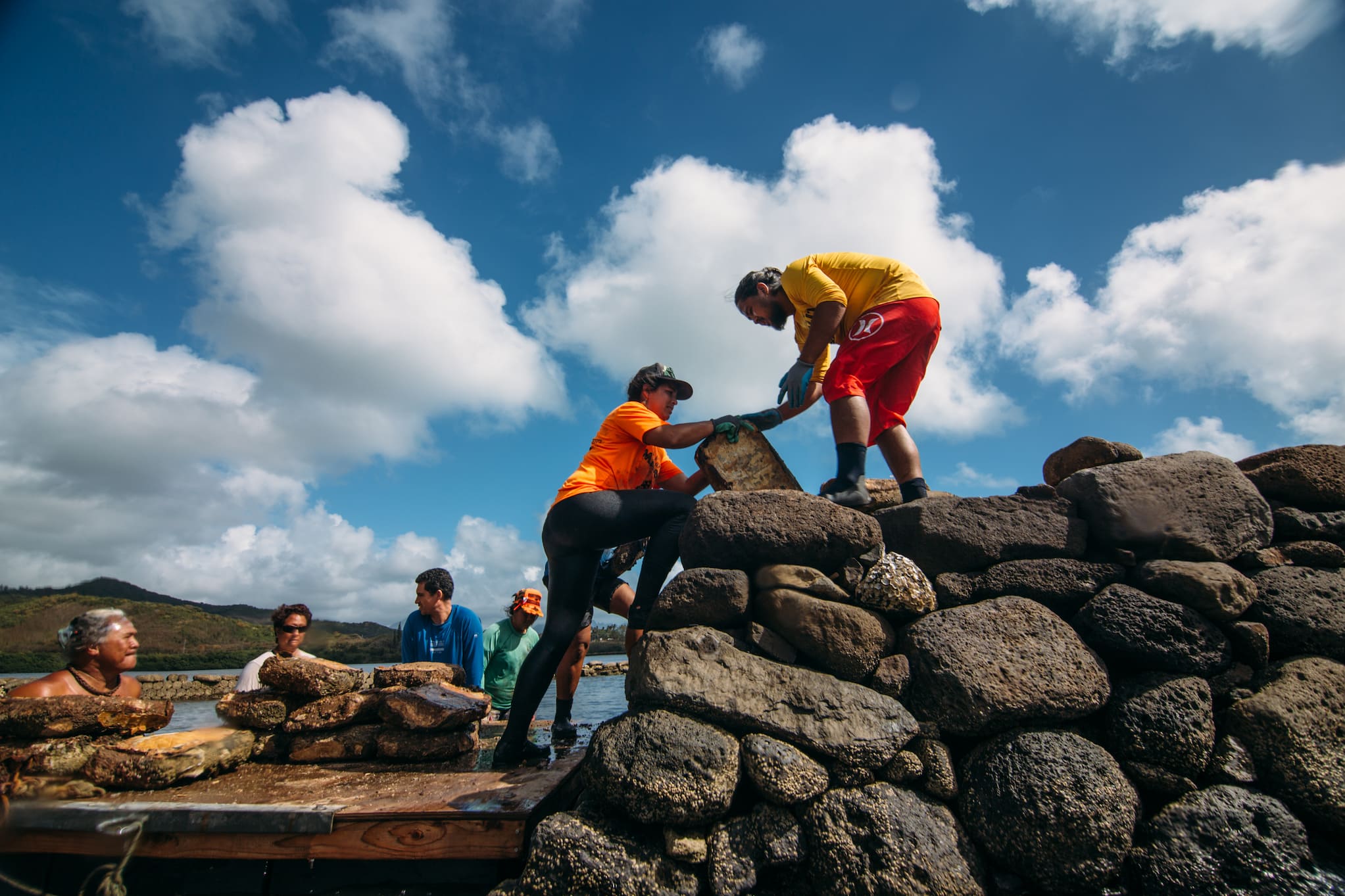
Image 22.05.04 — The non-profit organization Huliaupaʻa provides culturally based forms of innovative learning, leadership development, and collaborative networking to provide stewardship of Hawaiʻi’s wahi kūpuna (ancestral places). Huliaupaʻa also helped organize the Kaliʻupaʻakai Collective, an interdisciplinary community of wahi kūpuna advocates.
Huliauapaʻa organized the Kaliʻuokapaʻakai Collective as a community of practice to expand the collective impact of those with whom they are aligned. According to the Collective: “We must increase the opportunities and abilities of Native Hawaiians to re-vitalize relationships with wahi kūpuna through direct management of policy, resources, and practices. And all those that care for our wahi kūpuna must come together as a collective to elevate our kuleana and integrate more of a holistic worldview into Wahi Kūpuna Stewardship for the betterment of all in Hawaiʻi.” 13
Haʻina Ia Mai Ana Kapuana: The Story Continues . . . Let It Be Told
Kanaka ʻŌiwi songs close with the poetic phrase “Haʻina Ia Mai Ana Kapuana,” and so this moʻolelo of Hawaiʻi also comes to a close. Mahalo, thank you for your attention, interest and respect. Aloha … Aloha ʻāina.
Glossary terms in this module
aloha ʻāina Where it’s used
Love, respect, and care for the land, ocean, environment, and all of its elements. Aloha ʻāīna is also love, respect, and care for the natural elemental life forces that Kānaka ʻŌiwi honor as deities. Aloha ʻāīna also means nationalism, love for the Hawaiʻian nation.
annexation Where it’s used
The forceful takeover of a territory or country to become part of another country.
hula Where it’s used
The cultural dance of Kānaka ʻŌiwi which manifests in many ancient and contemporary forms. Hula is at the heart of Kānaka ʻŌiwi culture.
non-self-governing territories Where it’s used
A territory whose people have not yet attained a full measure of self-government. The United Nations established a list of places that meet this definition.
occupied/occupation Where it’s used
The act of controlling a territory, region, or state through military means.
self-determination Where it’s used
The right of a people to freely determine their political status and freely pursue their economic, social, and cultural development without external interference. This right is recognized by the United Nations and is an important aspect of human rights.
sovereignty Where it’s used
The ability of a country and a people to have independent freedom of action, such as making its own laws and rules, without external interference. For Indigenous peoples, sovereignty means having control of their lands and way of life, free from colonial control.
stewardship Where it’s used
A duty to sustainably manage lands by using Indigenous practices.
Endnotes
1 “Kūpaʻa,” by Ho‘okena, Nā Kai ʻEwalu, Ho’omau, Inc., 1993, written by Horace K. Dudoit III and Manu Boyd.
2 Pub. L. No. 103-150, 107 Stat. 1510 (1993).
3 “Constitution of the Native Hawaiian Nation,” accessed May 28, 2025, https://www.slideshare.net/slideshow/aha2016final-constitutionapproved-022616/58799322.
4 Pub. L. No. 103-150, 107 Stat. 1510 (1993).
5 “What’s In A Name?,” Kuaʻāina Ulu Auamo, accessed June 9, 2024, https://kuahawaii.org/e-alu-pu/.
6 Kuaʻāina Ulu Auamo, accessed June 9, 2024, https://kuahawaii.org/e-alu-pu/.
7 “Hui Mālama Loko Iʻa,” Kuaʻāina Ulu Auamo, accessed June 9, 2024, https://kuahawaii.org/huimalamalokoia/.
8 “The Limu Hui,” Kuaʻāina Ulu Auamo, accessed June 9, 2024, https://kuahawaii.org/limu-hui/.
9 “Our Mission,” MAʻO Organic Farms, accessed June 9, 2024, https://www.maoorganicfarms.org.
10 A saying of the esteemed Dr. Noa Emmett Aluli, a family practice physician and aloha ʻāina who helped found the Protect Kahoʻolawe ʻOhana.
11 “Our Mission,” Huliauapaʻa, https://www.huliauapaa.org/about.
12 “Who We Are,” Huliaupaʻa, https://www.huliauapaa.org/about.
13 “The Kaliʻupaʻakai Collective Report, Re-envisioning Wahi Kūpuna Stewardship in Hawaiʻi,” (Kali‘uokapa‘akai Collective, 2021), 7, https://www.kaliuokapaakai.org/_files/ugd/b43cf0_830ce961b6f541a5aff2cb4a265820d9.pdf.