





Two Korean women and child, dressed in traditional clothing, outside of San Francisco’s Angel Island Immigration Station.
Module 1: Overview
Have their ongoing ties with Korea impacted the lives of Korean Americans?
When many people think about Korean Americans today, the 1992 Los Angeles riots in California, also known as the Los Angeles Uprising, is one of the first things that comes to mind. Thanks to narrow and distorted mainstream media depictions of the Uprising, which Korean Americans refer to as Sa I Gu, Korean immigrants typically appeared as either powerless victims of urban violence or as racist interlopers exploiting Black and Brown communities for their own selfish gain. A closer look at history, however, offers additional perspectives and stories to this inaccurate and incomplete portrayal.
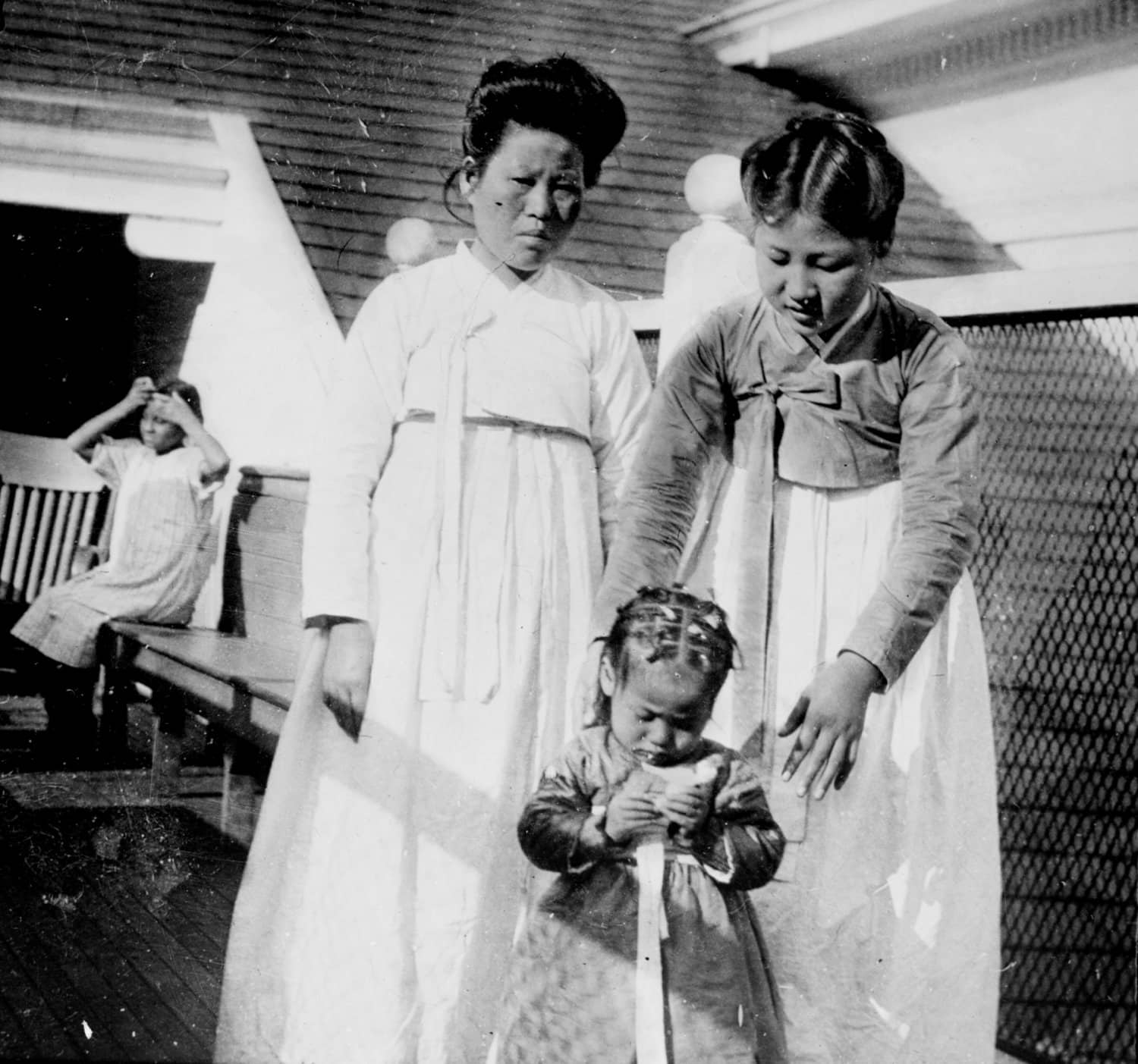
Image 14.01.01 — Two Korean women and a child dressed in traditional clothing at Angel Island Immigration Station. The Station, housed on Angel Island in San Francisco Bay, was active between 1910 and 1940.
From the first wave of Korean immigration to the United States at the dawn of the twentieth century, Koreans have organized and mobilized for international and local causes. Before 1945, that cause was for Korea’s independence from Japan. During the late 1970s and early 1980s, Koreans fought for justice on behalf of a wrongly incarcerated young man named Chol Soo Lee in San Francisco, California. After 1992, Korean immigrants in Los Angeles responded to their community’s massive uninsured property losses and abandonment by the police by investing more deeply in US politics and society.
This module provides an overview of how Korean migration to the United States was shaped by Japanese colonization of Korea and Koreans’ decades-long fight for independence. We will learn about the different waves of Korean immigration from 1903 to the present day, Korean Americans’ lives and experiences in the US upon resettlement, and the community’s growth as a result of key events like Sa I Gu.
What are the push and pull factors that led Koreans to immigrate to the United States?
How have Korean American demographics shifted over time?
How are Korean Americans depicted in the media?
Early Korean Immigration and Japan’s Colonization of Korea
The first significant wave of Korean migration to the United States took place in the early twentieth century. During this time, legislation such as the Page Act (1875) and Chinese Exclusion Act (1882) had cut off the supply of labor from China, discouraging the migration of Chinese women and workers. Demand for labor in the US increased, and American Protestant missionaries played a key role in Korean migration, acting as labor brokers to Hawaiʻi sugar planters seeking workers.
Approximately 7,226 Koreans had come to Hawaiʻi by 1905, including 637 women and 465 children. The large majority of these immigrants were young and unmarried men who migrated as sojourners—planning to work in the US for a few years, save money, and return to Korea. This migration strategy, called sojourning, was common for European immigrants; more than half of the immigrants who came from Italy in the nineteenth century, for example, went back to Europe.
The first wave of Korean migrants became the basis for some of the earliest Korean American communities, such as Pachappa Camp in Riverside, California, which is sometimes called “America’s first Koreatown.”
This period of Korean migration to the US ended with Japan’s formal annexation and colonization of the Korean peninsula in 1910–1945. Koreans became classified as Japanese colonial subjects and were subject to both strict Japanese emigration laws and exclusionary policies of the United States. Specifically, Koreans came under the terms of the 1907–1908 Gentlemen’s Agreement between the US and Japan, in which Japan agreed to restrict the migration of Japanese workers to the United States—in exchange for the US government’s promise to block San Francisco’s efforts to segregate Japanese and Korean students into a separate “Oriental” school.
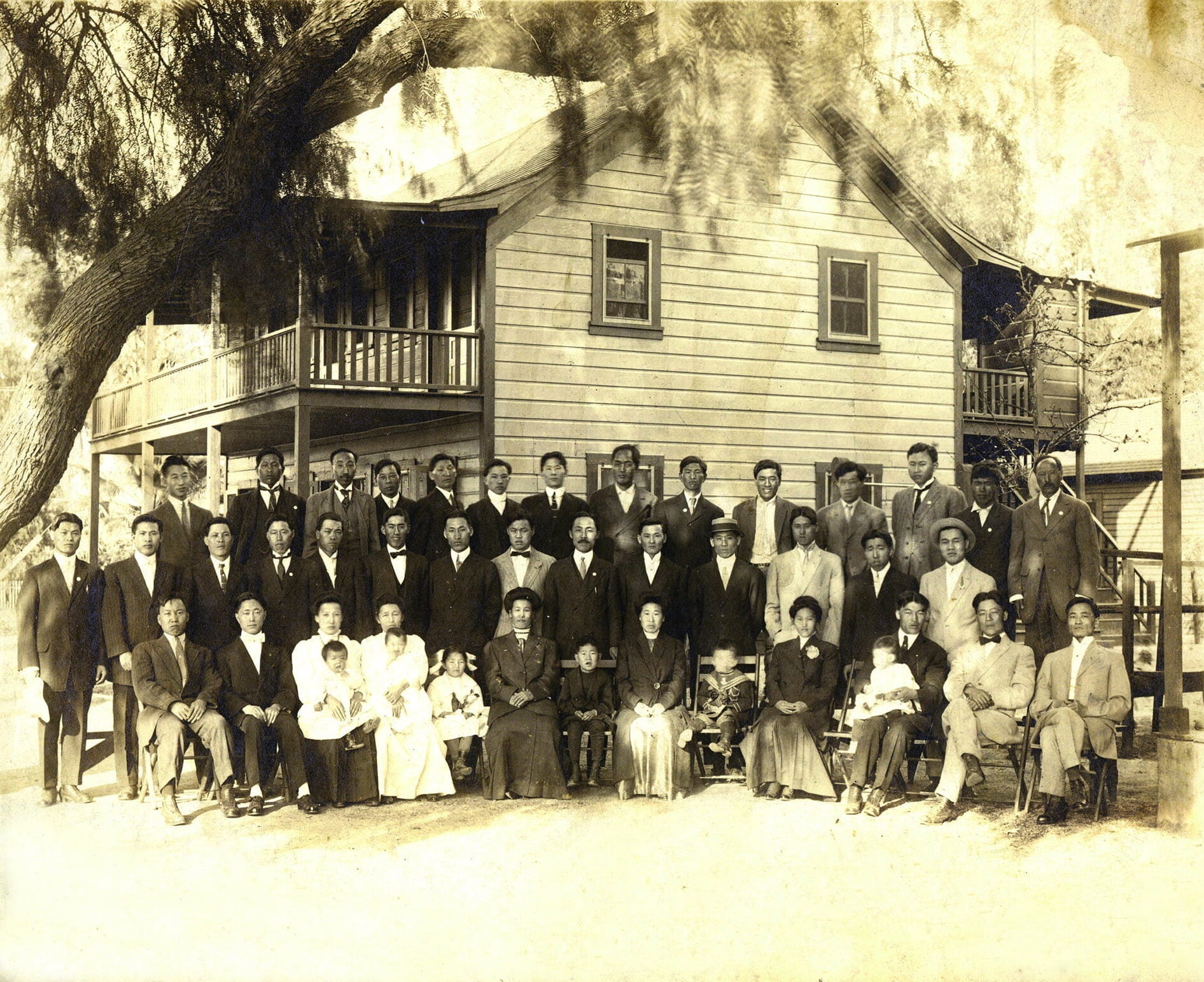
Image 14.01.03 — The Korean National Association of North America, pictured here at their 1911 meeting in Riverside, California, was an influential organization founded in support of promoting Korea’s independence from Japanese colonial rule.
Japan’s colonization of Korea also had the unintended effect of encouraging Koreans already living in the US to stay long term. Within a few years of annexing the peninsula, Japanese officials banned the Korean language, rewrote Korean history texts, and renamed Korean historic sites to reflect a new Japanese colonial identity. Koreans who resisted Japanese rule suffered harsh punishment and even death. Many Korean sojourners to the United States decided that they would rather stay in a foreign land than return to Korea to live under Japanese colonial rule. As a result, short-term migrants became long-term exiles in the US.
The Struggle for Korean Independence
The struggle for Korea’s independence from Japan shaped the lives of Koreans in the United States and structured their communities and organizations. Despite differences across age, political position, and class, most shared a deep desire for Korea’s liberation and a commitment to advance that goal however they could.
Witnessing the suppression of Korean identity by Japan, elders in the US strove to preserve their culture by teaching their children the Korean language and keeping their homeland alive in other myriad ways. Even those barely subsisting would give money and time to organizations formed to promote their homeland’s independence and raise awareness of Koreans’ plight under Japanese colonial rule. Established in 1908, the Korean National Association (KNA) was among the most important and influential of these; by World War I, KNA chapters were active in Honolulu, Los Angeles, and San Francisco, among other US cities. Affiliated members in Honolulu and San Francisco began publishing newspapers, which kept community members apprised of local events as well as news related to Korea.
In 1919, two hundred Korean community leaders from multiple organizations gathered in Philadelphia, Pennsylvania, for what they called the First Korean Congress. The goal of the meeting was to mobilize Koreans in the United States and win support from influential white Americans for the Korean independence movement. After marching in the streets of downtown Philadelphia, the delegation of Korean immigrants stood in Independence Hall for a public reading of the Korean Declaration of Independence, first proclaimed in 1919 by patriots in Korea and then disseminated among Koreans throughout the world. The declaration affirmed Korea as an independent state and Koreans as a self-governing people.
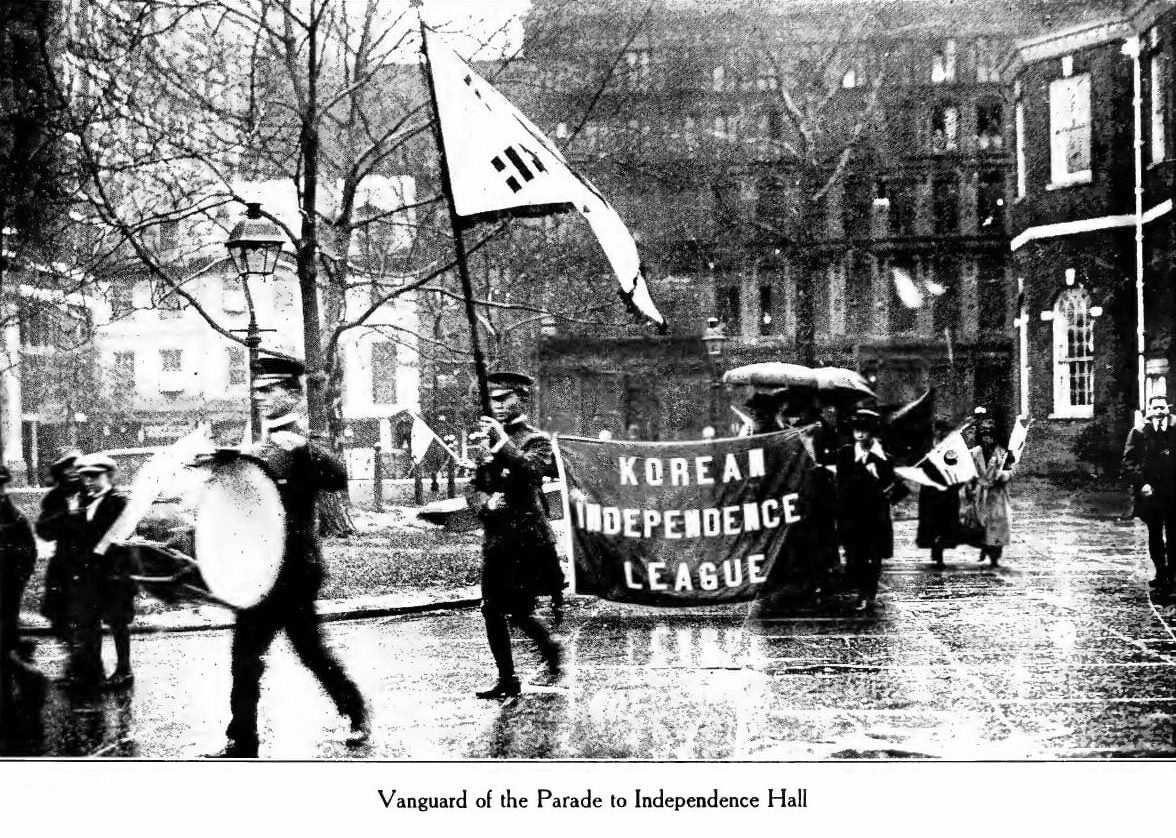
Image 14.01.04 — First Korean Congress in Philadelphia, Pennsylvania, April 1919. The goal of the meeting was to mobilize Koreans in the United States and win support from influential white Americans for the Korean independence cause.
Decades of organizing for Korean independence came to a head during World War II. After the attack on Pearl Harbor in Hawaiʻi by Japan, Korean Americans unanimously welcomed the United States’ formal entry into the war. But they soon found their physical resemblance to the Japanese made them easy targets of racial violence carried out in the name of American patriotism. Koreans were not incarcerated alongside Japanese Americans in concentration camps during World War II, but there were many hate crimes against Koreans by xenophobic perpetrators who saw little difference between Japanese, Korean, Chinese, and other Asian groups. Adding to this confusion was the Justice Department’s decision to classify Koreans as “enemy aliens” because of their status as Japanese colonial subjects. This infuriated Koreans in the continental US and in Hawaiʻi, especially because large Korean communities in these areas had been active in their homeland’s movement for independence from Japan.
Korean War and Cold War Migrations
The Korean War (1950–1953) gave rise to the next major wave of Korean migration to the United States. At the end of World War II, when Japan surrendered to the Allies in August 1945, many Koreans hoped their country would be able to self-govern and rebuild the political system on its own terms, but that was not the case. Between 1945 and 1950, foreign interference resulted in the division of the peninsula into a Communist North Korea with ties to the Soviet Union, and an anti-Communist South Korea supported by the United States. The two Korean governments went to war against one another with military support from other countries, displacing millions of Koreans.
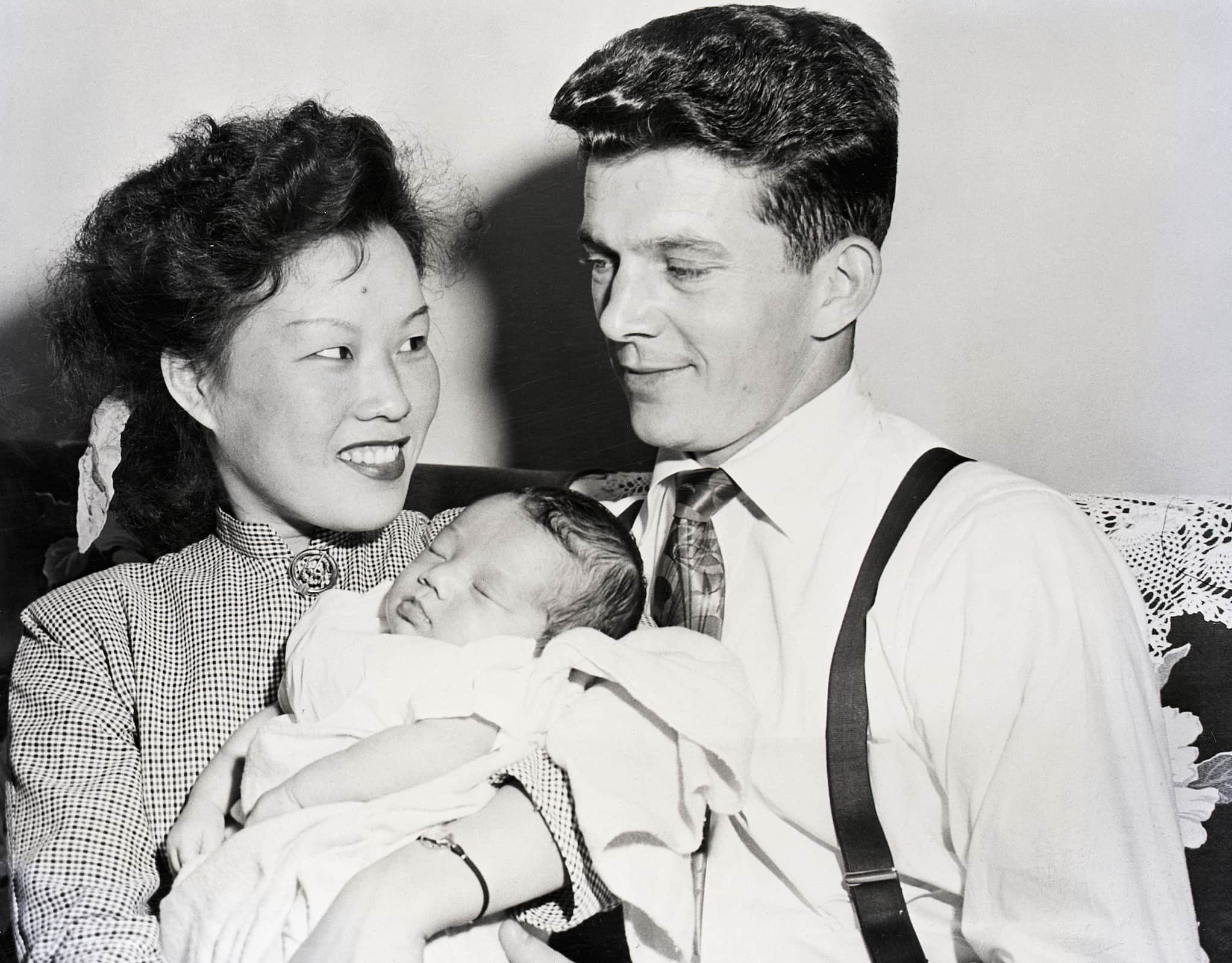
Image 14.01.05 — Sergeant Morgan and wife “Blue,” pictured in LIFE magazine in 1951, were part of the second major wave of Korean immigration as American soldiers began relationships with Korean women, sometimes bringing them back to the United States and having multiracial children.
During the Korean War, some American soldiers also started relationships with Korean women, and some married. Women and children thus made up the majority of Korean immigrants during the second wave. Between 1950 and 1965, approximately 7,700 women; 2,000 Korean children; and 3,500 multiracial “GI babies” entered the United States, some of them under the new 100-person quota for South Korean immigrants created by the McCarran-Walter Act of 1952, also known as the Immigration and Nationality Act of 1952.
In addition, a small number of professionals and over 6,000 Korean exchange students also came to the US between 1955 and 1965, as part of the American government’s efforts to recruit intellectuals and anti-Communist elites from Asia. Although these students and working professionals came as temporary visitors, 90 percent of them ultimately stayed in the US and made their home.
Post-1965 Korean Migrations
No single law has shaped Korean and broader Asian immigration to the US more than the Immigration and Nationality Act of 1965, also known as the Hart-Celler Act. Ending decades of legalized Asian exclusion in the US, the law replaced racist immigration quotas with a system that gave preference to immigrants based on family relationships and job skills. Following the passage of the act, the immigrant stream shifted from a European majority to a greater number from Asia and Latin America.
Political upheaval and civil unrest in Korea during this period also pushed young people to emigrate. Three-quarters of the Koreans who left their homeland after 1965 to seek better economic opportunities settled in the United States.
In contrast to their predecessors, many Koreans who comprised this third wave of immigration came from more privileged class and educational backgrounds. Not all pursued careers in the fields they had been trained for, however. Korean immigrants trained in nursing, engineering, and other specialized professions chose to open small businesses in the US instead. Many believed entrepreneurship offered greater economic mobility. Running their own businesses also meant fewer language and racial barriers in job hiring and promotion.
By the 1980s, about one in three Korean immigrants in the US operated a small, family-run business. These included liquor stores, small groceries, gas stations, dry cleaners, and other specialized service businesses. Many of these shops prospered, but it is also important to discuss how the Los Angeles Uprising and events of 1992 impacted Korean American businesses and immigrant communities.
By the 1990s, greater Southern California was home to the largest Korean American community in the US. Within Los Angeles alone, the Korean population grew from 8,900 in 1970 to nearly 150,000 by 1990. Constrained by language barriers, limited capital, and racism in the real estate market, many of the region’s Korean-owned businesses opened in predominantly Black or Black and Brown, economically disinvested neighborhoods, such as South Los Angeles. As the number of Korean businesses grew, conflicts erupted between Korean storekeepers and local Black residents. This was also the case in many cities across the country.
For example, in 1990, Black activists and residents of New York City’s Flatbush neighborhood in Brooklyn launched a boycott against two local Korean businesses after a physical altercation between a Haitian customer and a Korean storekeeper, who had accused the customer of stealing. The protest campaign became known as the Red Apple Boycott, and mainstream newspapers reported on the incident as a conflict between Black and Korean communities.
In addition to often sensationalized reporting in newspapers, popular culture also contributed to the national narratives and perceptions of Black-Korean conflict in the late 1980s and early 1990s. Films such as Spike Lee’s Do the Right Thing (1989) and songs like rapper Ice Cube’s “Black Korea” (1990) spoke to the tensions between Korean immigrant business owners and Black customers.
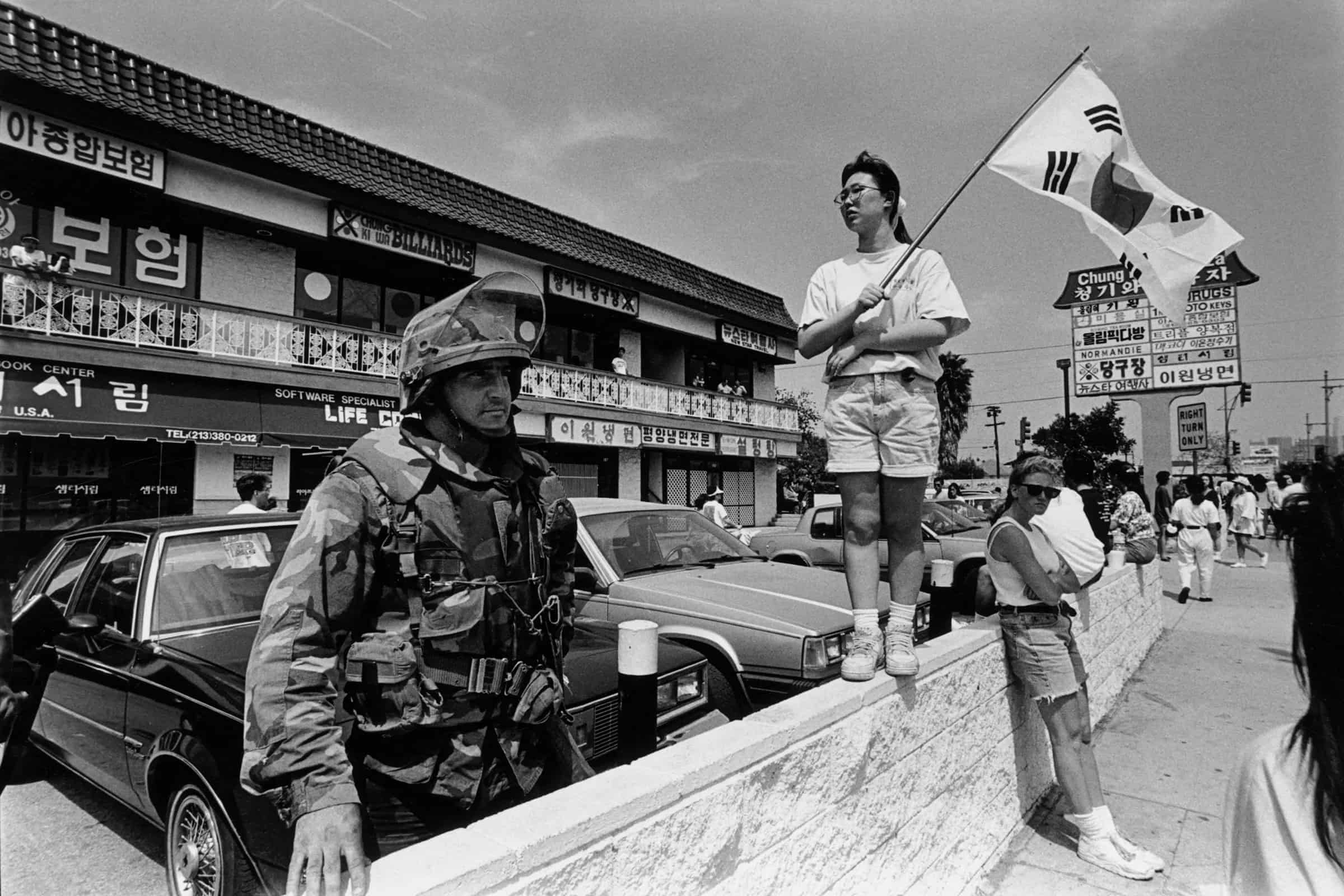
Image 14.01.06 — The Korean Pride Parade in the midst of the 1992 Los Angeles riots, also known as the Los Angeles Uprising, included the presence of the National Guard.
Sa I Gu and Post-1992 Migration
Los Angeles was the first site where tensions between Black and Korean communities boiled over. The Los Angeles Uprising began on April 29, 1992, following a jury’s acquittal of four white police officers who had violently beat Rodney King, a Black man, after a traffic stop. The public was angered by the jury’s decision, and people began protesting and rioting in South Los Angeles, Koreatown, and other areas throughout Los Angeles. After six days of civil unrest, sixty-three people died, more than two thousand people were injured, and thousands more were arrested. Many buildings had been set aflame and destroyed.
To this day, Koreans call the 1992 Uprising Sa I Gu, which means 4/29 (or April 29) in Korean, signifying the first day of the events. Of the 4,500 stores destroyed, more than 2,300 were Korean-owned or run, and nearly every building in Koreatown suffered damage. Tens of thousands of Korean Americans lost their livelihoods.
The targeting of Korean storekeepers after the King case reflected the community’s unresolved anger from events a year prior. In 1991 Soon Ja Du, the owner of Empire Liquor Market in South Los Angeles, shot and killed Latasha Harlins, a fifteen-year-old Black girl. Du testified that Harlins was shoplifting and that the shooting was in self-defense, but according to eyewitnesses and security camera footage, there was no evidence of shoplifting.
Du had shot Harlins in the back of the head when the teenager turned to leave the store. The case’s jury found Du guilty of voluntary manslaughter, a conviction that would have required a maximum of sixteen years in prison. But the judge gave Du probation, community service, and a fine instead. This outcome sparked protests and anger among Black communities, feelings that remained unresolved during the April 1992 Uprising.
Years later, Sa I Gu is still remembered as a painful but important event in the history of Korean Americans, not only in Los Angeles, but across the United States. The police did not protect Korean residents and shopkeepers during the riots, and the government offered no compensation for their businesses in the wake of the destruction. Many Koreans became disillusioned at their prospects in the US and left the country as a result.
The Uprising also raised important questions about how Asian Americans are perceived by the general public, and the ways in which Asian Americans can uphold or challenge racism and white supremacy. Many Koreans who stayed in the United States became more involved in American politics and institutions, both for their own protection and for the futures of their children. Professor and scholar Edward T. Chang explained that before 1992, many Koreans in the US saw themselves as Korean first; but after 1992, they began calling themselves Korean Americans.
Recent migrations of wealthier Koreans to the US have resulted in a more stratified Korean America, where the number of poor, working-class, and undocumented community members has risen alongside that of the rich and well-to-do. Following the Immigration Act of 1990, which favored well-educated migrants and those in specialized professions, more than 800,000 Koreans entered the US as temporary visitors, students, and H-1B temporary workers. While some stayed in the United States by adjusting their immigration status, a large number returned to Korea after completing school or working for a few years.
That said, not all migrants were able to gain permanent status; some lost their legal status as temporary workers and visitors when their visas expired, but remained in the US. Others entered the US by crossing borders without a visa or other permission from the immigration system. Today more than 200,000 undocumented Korean migrants make their home in the United States, contributing to the diversity and complexity of Korean American communities and their history of migration.
Korean Adoptees
International adoption, which began during the second wave of Korean migration, has significantly impacted Korean American communities in the US. Between 1951 and 1964, more than 5,300 Korean children were adopted into American families.
White American Christians such as Harry Holt and Pearl S. Buck took a prominent role in popularizing Korean adoption, as well as creating the systems and pushing for laws within the US Congress that facilitated it. While a small number of Black families adopted Korean children in the 1950s and 1960s, the efforts to popularize adoptions were aimed to attract white Christian families.
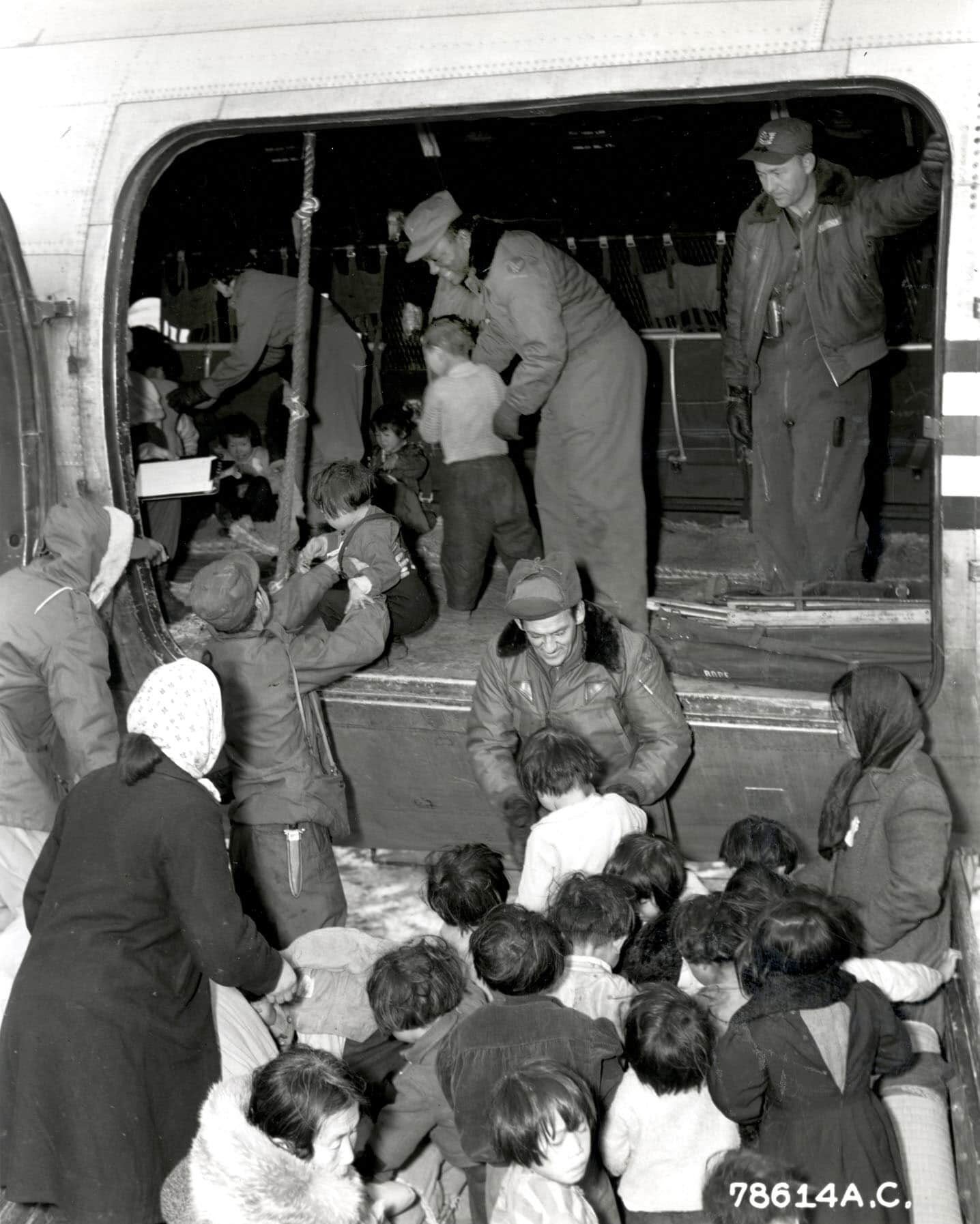
Image 14.01.07 — USAF Airmen give a helping hand in the aftermath of the Korean War. American families saw these images of Korean children and perceived them as in need of rescue.
For example, adoption agencies organized cultural productions depicting Korean children as desirable adoptees—especially Korean girls—to increase demand. In newsreels and print media, white Americans saw images of Korean children in orphanages and in the aftermath of the Korean War, and perceived them as in need of rescue.
In 1954, the Korean Children’s Choir toured the country, performing for packed theaters in fifty US cities. The choir visited the White House and appeared on the well-known television game show Name that Tune. The performances further influenced the public’s perception of Korean children as desirable and stoked potential adopters’ feelings of saviorism. Despite signs that these productions increased pressure on Korean women to relinquish their children to meet American demands, the South Korean government subsidized and publicized the choir, believing that supporting Korean adoption could also increase Americans’ support for Korea’s economy, democracy, and eventually independence.
Developments in both South Korea and the US supported the flow of Korean adoptees to the West. In the US, public demand for babies and children to adopt increased after World War II. Between 1945 and 1955, the number of prospective parents had outnumbered children available for adoption by as much as ten to one. At the same time, the South Korean government saved millions of dollars over time in social services by sending poor children to the United States instead of providing a robust safety net or welfare system for them and their families. In many ways, both governments benefited from the rise of Korean adoption into the United States.
As they grew older, Korean adoptees learned more about the complex history and conditions of their adoptions, and some were subject to unclear legal systems affecting their citizenship in the US. In the 1990s, Korean adoptees began gathering and connecting through their shared experiences, across the US and globally. In the following decades, they formed organizations, advocacy groups, and networks to support one another and raise awareness about the injustices of the transnational adoption system. Korean adoptees have also written memoirs and produced films revealing the diversity of their personal experiences and journeys.
Conclusion
Through a complex history of immigration and acceptance in US society, notions of what it means to be a Korean American are being expanded in many ways. Laws like the Immigration and Nationality Act of 1965 transformed Korean American livelihoods, and national narratives following Sa I Gu challenged communities to reconsider their roles in building collective power and solidarity. In addition, a growing mixed-race community has forced many to rethink their narrow understandings of Korean ethnic identity. Korean children adopted by mostly white American families also broadens our understanding of community and belonging.
At the same time, the global rise of Korean popular culture—or Hallyu (“Korean Wave”)—over the past two decades has raised Korea’s profile in ways that can sometimes complicate Korean American identity. As South Korean culture continues to be popular in the US and around the world, it remains to be seen how wider audiences will make sense of the complex relationship between Korean Americans and their Asian ancestral roots.
Glossary terms in this module
Hallyu Where it’s used
A term meaning “Korean Wave” that refers to the global spread of Korean popular culture since the 1990s.
H-1B temporary worker Where it’s used
A worker from a country outside of the US who is hired temporarily for a specialty occupation under a visa. H-1B temporary workers must have a bachelor’s degree or equivalent experience, and can apply for a green card to eventually attain citizenship.
Immigration and Nationality Act of 1965 Where it’s used
This act, also known as the Hart-Celler Act, officially ended the era of Asian Exclusion and created an immigration system based on family relationships and job skills. The law significantly changed the demographics of Asian immigrants.
Korean independence movement Where it’s used
A global movement in which Koreans across the US, China, Japan, and other sites fought to liberate Korea from Japanese colonial rule; it lasted from 1910 to 1945.
Sa I Gu Where it’s used
4/29 (or April 29) in Korean; Korean Americans use this term to refer to the 1992 Los Angeles Uprisings.
transnational adoption Where it’s used
The adoption of a child across national borders from one nation to another nation.