





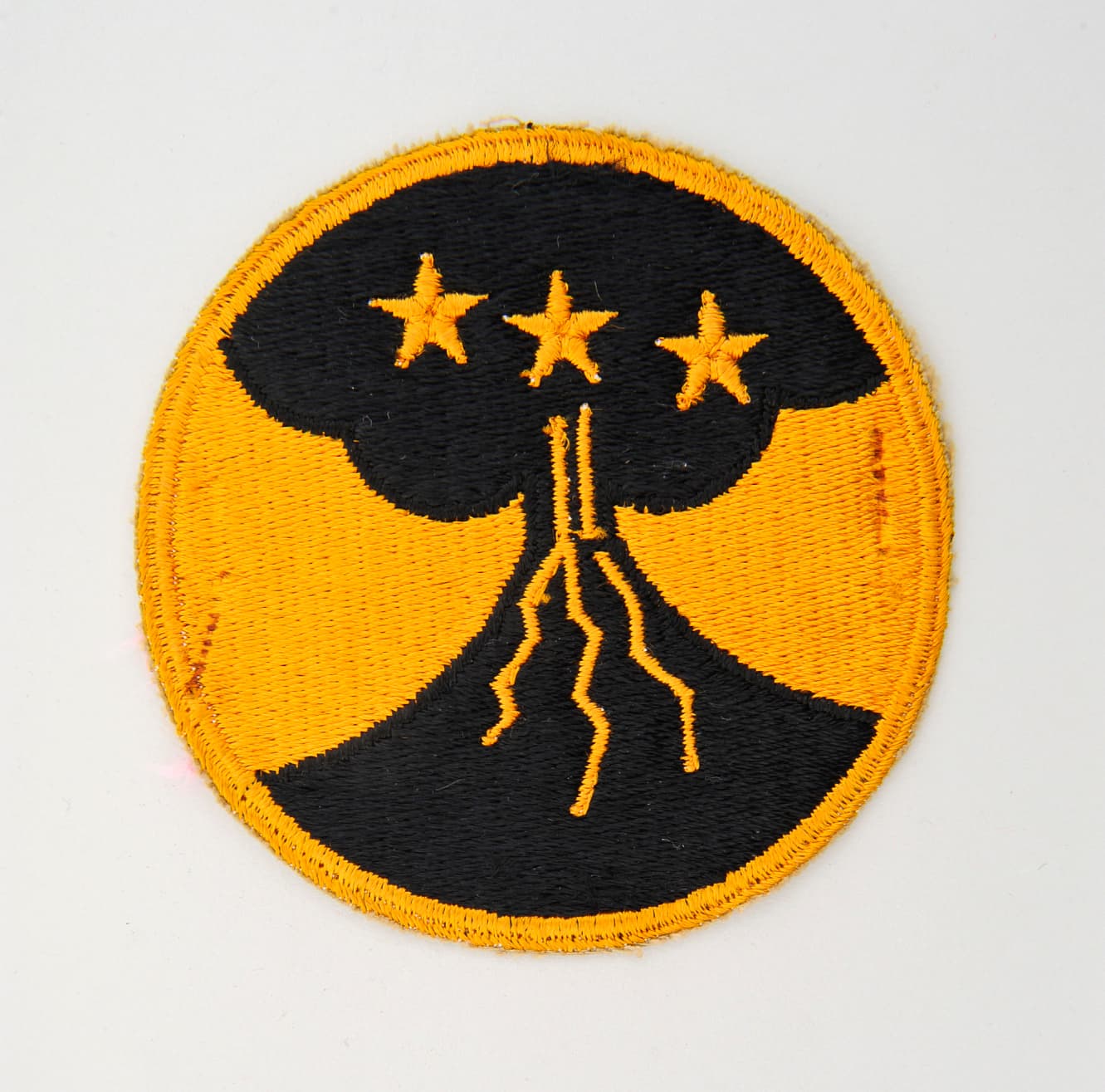
Module 4: First Filipino Infantry Regiment Insignia
Can everyday objects tell us something important about Filipinx American history or lives?

Image 10.04.01 — This is the shoulder sleeve insignia worn by members of the First Filipino Infantry Regiment, a US military unit primarily composed of Filipino Americans, 1942—1952. “Insignia,” National Museum of American History, AF.61624M.
As the United States entered World War II in 1941, thousands of Filipinos requested to enlist in the US military even though they were classified under law as “resident aliens,” and therefore unable to fight. US President Franklin Delano Roosevelt allowed for these men to be called up for service. Thus, the United States’ First Filipino Infantry Regiment formed. Members of this historic group wore a yellow and black insignia on their shoulder sleeves. This insignia helped military units easily identify each other on the ground, but it also made them vulnerable to being targeted by the opposition.
Moreover, designs, color, and symbols on insignia often tell a story about the unit that wears the item, associating fighters with a particular time, place, a person, or even a mythic animal. What story of the First Filipino Infantry Regiment does this insignia tell? In this module, we learn the meaning behind the insignia worn by Filipino American soldiers during World War II, and how Filipinos in the Philippines and the US experienced ideas of home and belonging.
What is a military insignia?
Who were the members of the First Filipino Infantry Regiment of World War II?
What does it mean to fight for one’s homeland?
Fighting for the Philippines from the United States
Historians estimate that one hundred thousand Filipinos were in the United States and Hawaiʻi, which was then a US territory, at the time of the Japanese attacks on Pearl Harbor and US bases in the Philippines in 1941. For Filipinos living in the US at the time, imagine where they considered home. Many joined the US armed forces to liberate the Philippines from Japan.
These Filipinos had been prohibited from enlisting because of the Tydings-McDuffie Act, a US law passed in 1934. The act promised eventual independence for the Philippines after a period of ten years, but it also set other provisions into motion. For example, it limited immigration from the Philippines to fifty persons per year and declared that “citizens of the Philippine Islands who are not citizens of the United States shall be considered as if they were aliens.” 1 Suddenly, Filipinos who had already arrived in the US and Hawaiʻi saw their status change from “US nationals” to “aliens.”
Although the Tydings-McDuffie Act prohibited Filipinos from enlisting in the US military, this changed at the onset of World War II. Then-president Franklin D. Roosevelt quickly revised the Selective Training and Service Act in 1941 so that Filipinos could join the war effort, and thousands did.
On April 1, 1942, the US Army activated the First Filipino Battalion at Camp San Luis Obispo in California, and the unit was later renamed the First Filipino Infantry Regiment. The regiment trained and was deployed to the Pacific, first to New Guinea in 1944 and then to the Philippines in 1945. They fought Japanese troops in the Philippine islands of Samar and Leyte. In addition to securing airstrips and conducting mop-up operations, the regiment also cleared highways and delivered supplies—similar to the labor they did in the US and Hawaiʻi.
Any soldier of the First Filipino Infantry Regiment could be identified by this small, yellow disc-shaped patch worn on the shoulder of his uniform. At the center of the patch is an image of an erupting volcano, Mount Mayon in the Philippines. Above the smoky eruption, the insignia patch depicts three stars, representing Luzon, the Visayas, and Mindanao—the three major island groups in the Philippines, known collectively as Luzviminda. For generations, the three stars have been an expression of national pride; also appearing on the national flag of the Philippines.
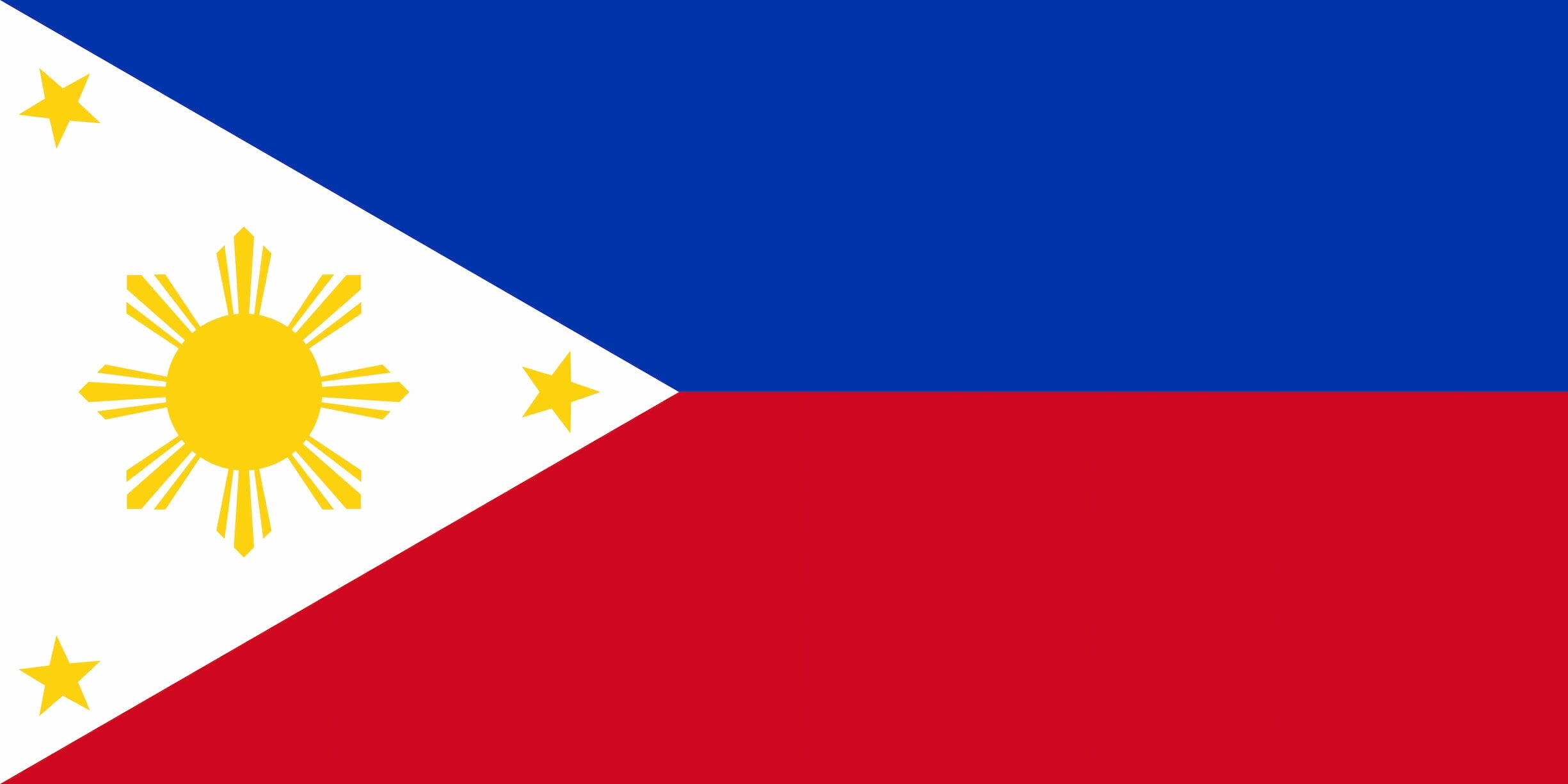
Image 10.04.02 — The national flag of the Philippines features three stars, representing Luzon, the Visayas, and Mindanao, the three major island groups in the Philippines.
The regiment’s insignia contained references to the Philippines, but what did it mean for a member of this unit to fight for their “homeland”? How did this insignia give the regiment a sense of belonging? What were the limitations of belonging for Filipinos in the US, Hawaiʻi, and the Philippines, which was still a US colony?
Fighting for “Homeland” Far from Home
Being a citizen of a place comes with a variety of benefits, such as access to education, voting, business ownership, and social services. Beyond the tangible benefits, citizenship gives people a sense of belonging to a place, whether they become citizens to that place through birth or migration. Citizens also take on responsibilities in service to the place to which they belong; in the United States, for example, citizens pay taxes and can enlist in the military.
Many people who migrate to the United States achieve citizenship through naturalization. After meeting the conditions of naturalization, a person must take an oath of allegiance where they “renounce … all allegiance and fidelity to any foreign prince, potentate, state, or sovereignty …” and that they will “bear arms on behalf of the United States when required by law” or “perform noncombatant service in the Armed Forces of the United States when required by law,” among other actions. 2
How did Filipinos in the United States and Hawaiʻi feel when news came of the attack on Manila during World War II? Even though many had been away from the Philippines for decades, what was their sense of “homeland”? And as many rushed to enlist, what did it mean to fight for the United States, which still possessed the Philippines as a colony?
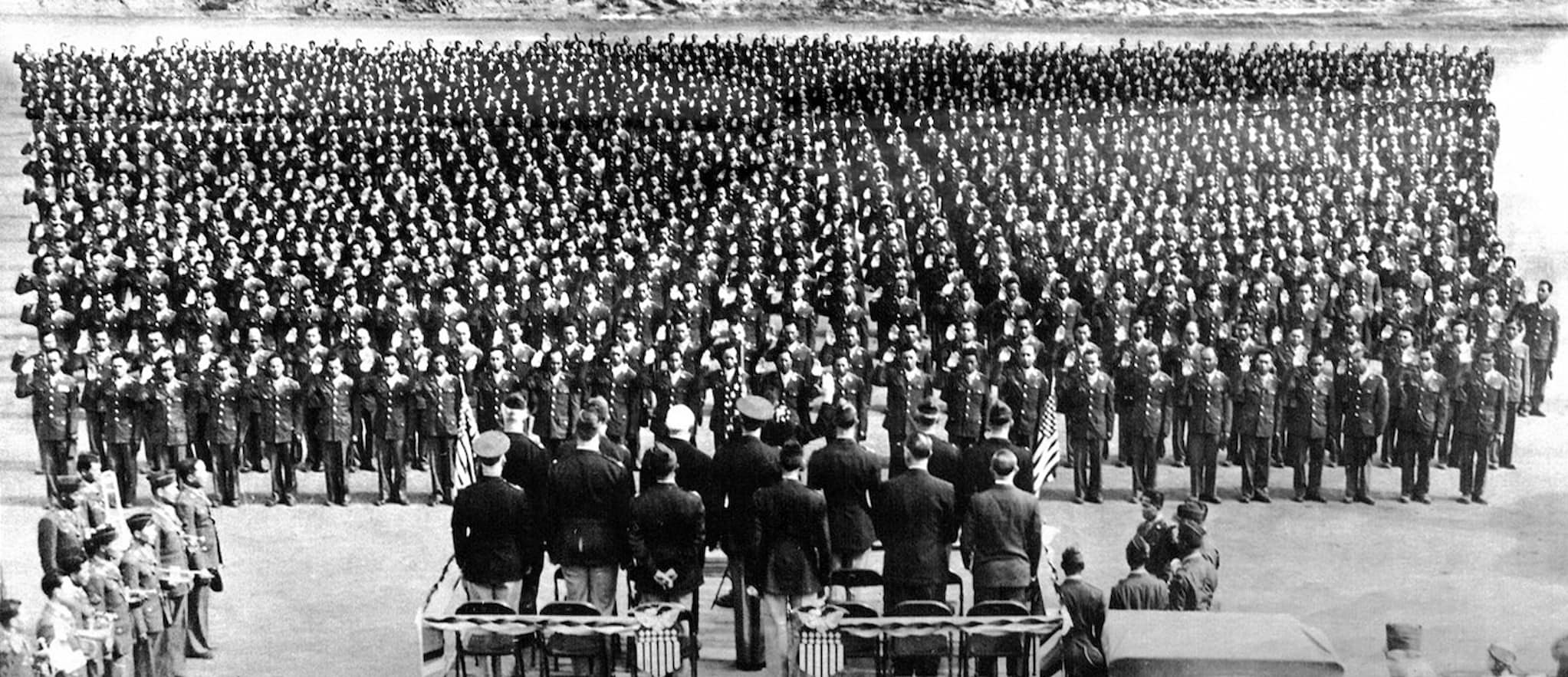
Image 10.04.03 — Naturalization ceremony at Camp Beale for one thousand soldiers in the First Filipino Infantry Regiment, 1943.
The uniform and special insignia that the First Filipino Infantry Regiment wore cannot answer all these questions, but they do give insight on the symbols that gave many of the enlisted soldiers a sense of belonging despite the complications of their status.
When the Japanese military attacked Pearl Harbor and Manila in 1941, thousands of Filipinos had been living and working in the United States and Hawaiʻi. They formed communities while working low-wage, dangerous jobs in Honolulu, Stockton, Los Angeles, and Seattle. Some had arrived in Hawaiʻi as early as 1906. While training for war, over a thousand Filipino soldiers received naturalization in a mass ceremony.
Fighting for “Homeland” at Home
In addition to Filipinos living overseas enlisting for the US war effort, Filipinos living in the Philippines also served the US during World War II. Over 250,000 Filipinos served alongside US forces in the Philippines. Many, like those who fought in the United States Army Forces in the Far East (USAFFE), were promised full US benefits. Their treatment also complicates the question of belonging to a place.
For these Filipino veterans in the Philippines, Congress invalidated the promise of benefits and belonging when it passed the Rescission Act of 1946. Congress claimed a lack of funding in the postwar budget, and even included language that Filipinos who served in the US armed forces would not be considered “veterans.” Denying this group the official status denied them Veterans Administration benefits. A total of sixty-six nations fought as US allies during World War II, but the Rescission Act only singled out Filipinos. On May 22, 1946, Resident Commissioner of the Philippines General Carlos P. Romulo spoke out against the Rescission Act, saying:
This is injustice. This is discrimination. It is un-American. The Filipino veterans, their families, and their government cannot believe that this is the treatment which the people of the United States will accord to the Filipino veterans who so valiantly withstood the brutal onslaught of the Japanese. They know America too well to think that this is the American attitude. 3
Denied recognition for their service, the veterans and their families and allies continued to advocate for themselves. These veterans lobbied elected officials, passed out petitions, and some even chained themselves to the White House fence. Through such activism, the US government gave some concessions, but with conditions. For example, a veteran could receive a one-time payment, but if accepted, they could not be awarded future benefits or citizenship. Time is currently running out for thousands of these surviving veterans, and the 1946 law is still active.
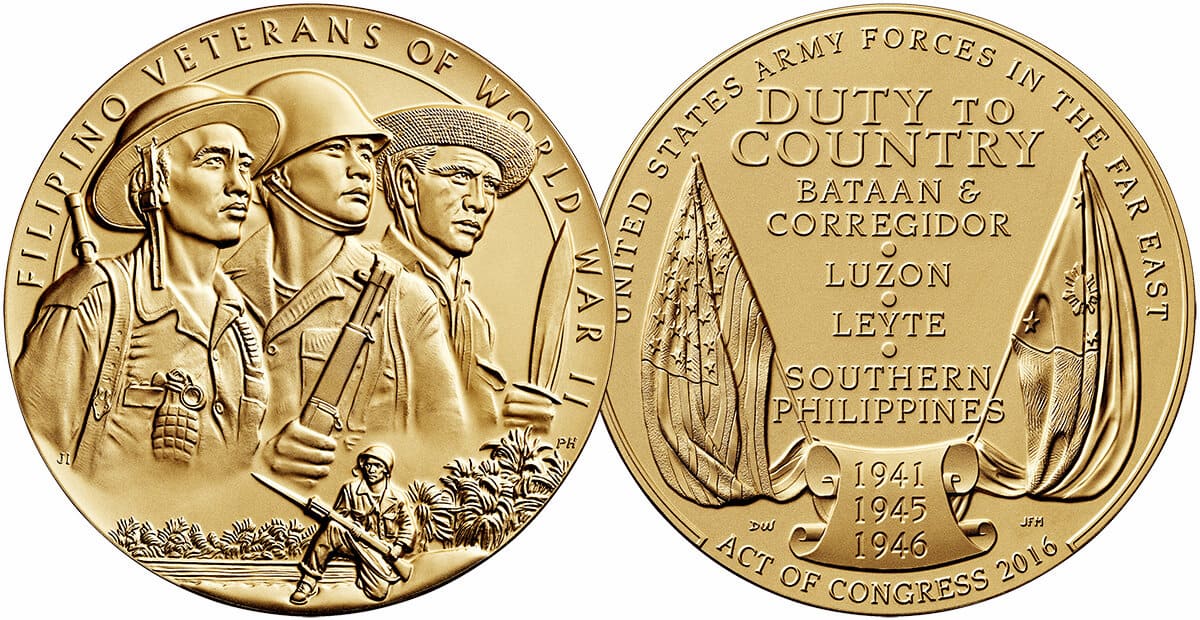
Image 10.04.05 — In 2017, US Congress collectively granted this Congressional Gold Medal to Filipino veterans in recognition of the more than 250,000 Filipino servicemen who fought alongside US forces throughout World War II.
Conclusion
While an insignia can evoke a sense of belonging, homeland, and place, colonization and restrictive laws have added additional complexities to the Filipino experience since long before World War II. Though Spain ruled the Philippines for centuries, Filipinos engaged in resistance and rebellion. In 1898, thousands of Filipinos gathered to witness the accumulation of these hundreds of years of resistance with the signing of the Philippine Declaration of Independence. As they unfurled their new flag and listened to their new national anthem, they proclaimed their liberation with language they borrowed from the US Declaration of Independence.
Despite this sense of connection from Filipinos, the United States refused to recognize the new nation, and instead claimed the Philippines as their own colony. It was not until the signing of the Treaty of Manila in 1946 that the US formally recognized the Philippines as an independent nation. In the long arc of Filipino and Filipino American histories, recognition plays a key role in defining what it means to belong.
Glossary terms in this module
rebellion Where it’s used
Acts of opposition that can be overt or hidden.
Endnotes
3 Carlos P. Romulo, “Benefits for Filipino Veterans,” Appendix to the Congressional Record, United States House of Representatives, May 22, 1946, A2859-2860.