





Round pin with an illustrated grape cluster in the center and A.W.O.C. above and N.F.W.A below.
Module 5: Agricultural Workers Organizing Committee (AWOC) and National Farm Workers Association (NFWA) Pin
Can everyday objects tell us something important about Filipinx American history or lives?
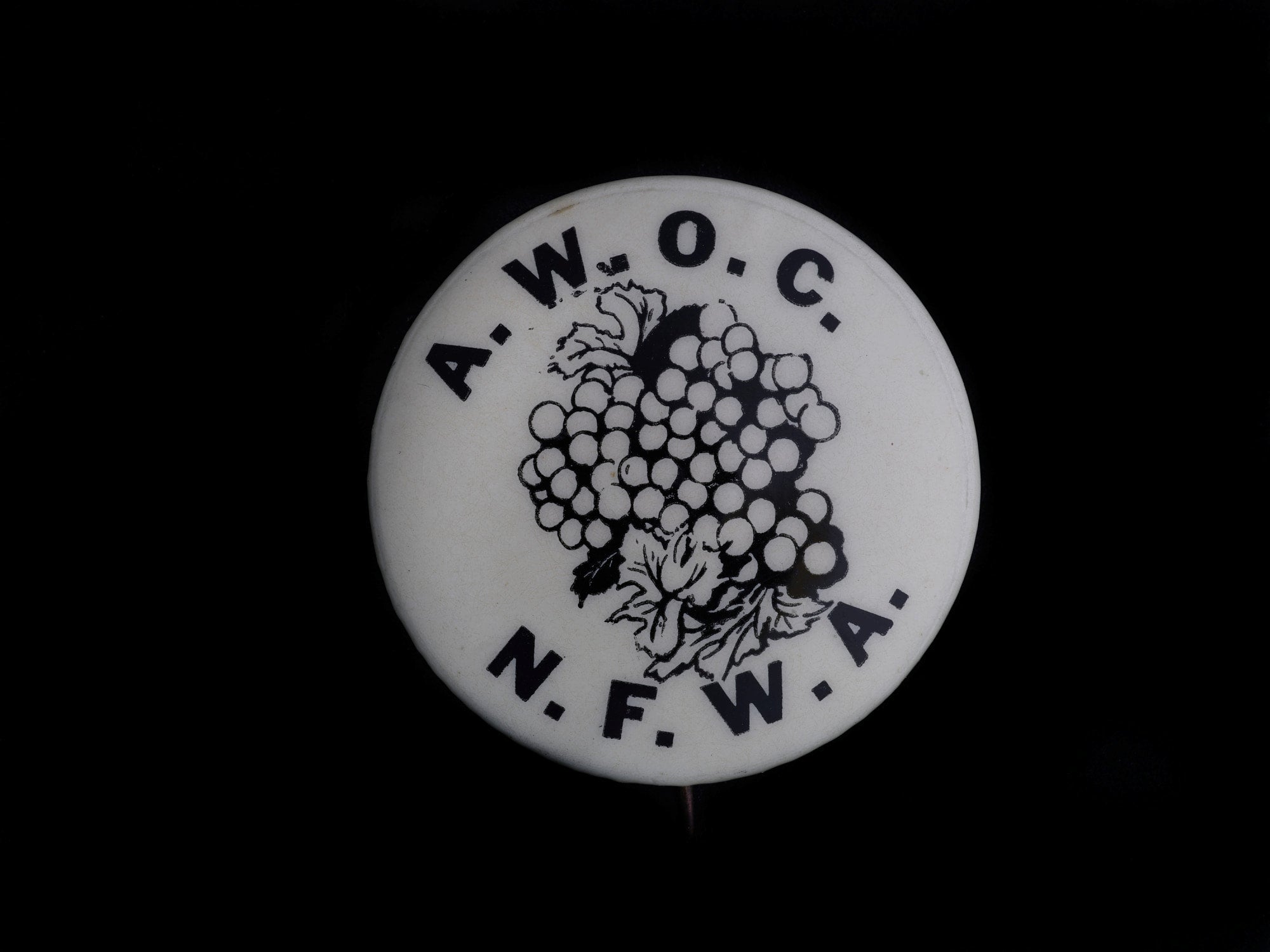
Image 10.05.01 — The pin features the initials of two labor unions involved in the creation of the United Farm Workers: the Filipino-led Agricultural Workers Organizing Committee and the Mexican-led National Farm Workers Association. The union initiated a nationwide grape boycott to pressure growers to improve wages and working conditions.
Throughout the twentieth century, Filipino and Mexican migrants were major players in farm labor in California. In Coachella and Delano, they performed backbreaking labor ensuring bountiful harvests of crops like grapes and asparagus. The farmworkers often worked long hours for low pay, few benefits, and in unsafe conditions.
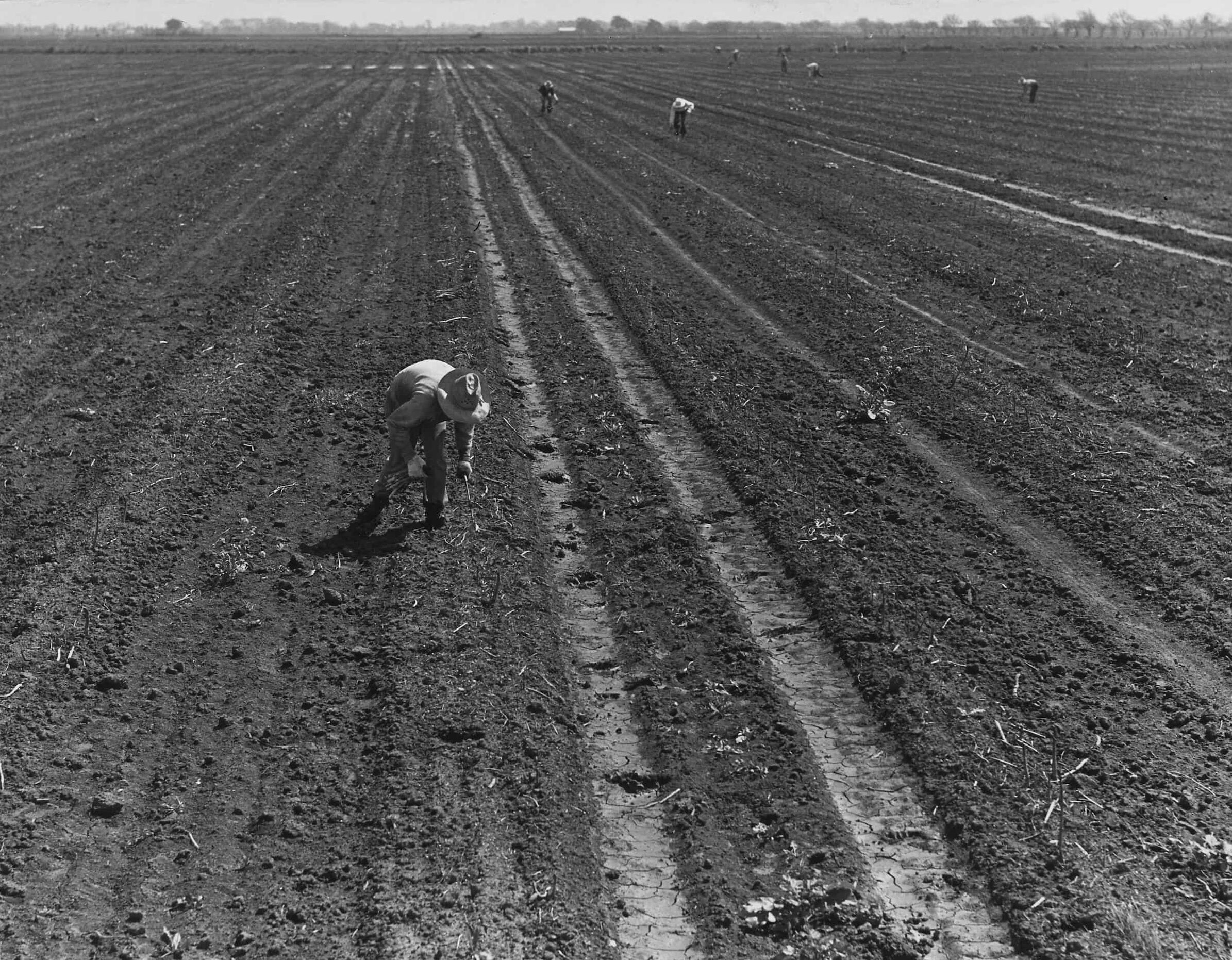
Image 10.05.02 — Filipino farmworkers cutting asparagus in Sacramento County, California, at one of the world’s largest asparagus fields.
Uniting the two groups and the unions that represented the workers before the Delano Grape Strike, one of the most important labor strikes in US history, was no easy feat. This lapel pin is part of a powerful story about Filipino American labor activism and solidarity.
The Agricultural Workers Organizing Committee (AWOC), and the National Farm Workers Association (NFWA), joined forces in 1965 for the Delano Grape Strike, as well as a nationwide boycott campaign, which continued for five years. The United Farm Workers Organizing Committee was formed in 1966 through this union merger.
Today, the United Farm Workers (UFW) is well-known for its organized labor activism, and its power was made possible by the 1960s grape boycott, and the crucial leadership of Filipinos from the AWOC.
In this module, we learn the history behind this seemingly simple lapel pin, which was used by union members and supporters during the Delano Grape Strike, a non-violent direct action campaign.
What is a lapel pin?
What was the Agricultural Workers Organizing Committee?
What is non-violent direct action?
Following the Crop
Born in San Nicolas, in the province of Pangasinan, activist Larry Itliong first traveled from the Philippines to the United States in 1929 with dreams of continuing his education. For Itliong and thousands of other Filipino migrants, the timing was disastrous and many would not receive the US education they thought awaited them. The US was in the Great Depression, and unemployment rates reached 25 percent. Companies and business owners however welcomed workers from anywhere in the world because they knew migrants would accept low wages. This angered many white people, who blamed their difficulty in finding work on the recently arrived labor migrants.
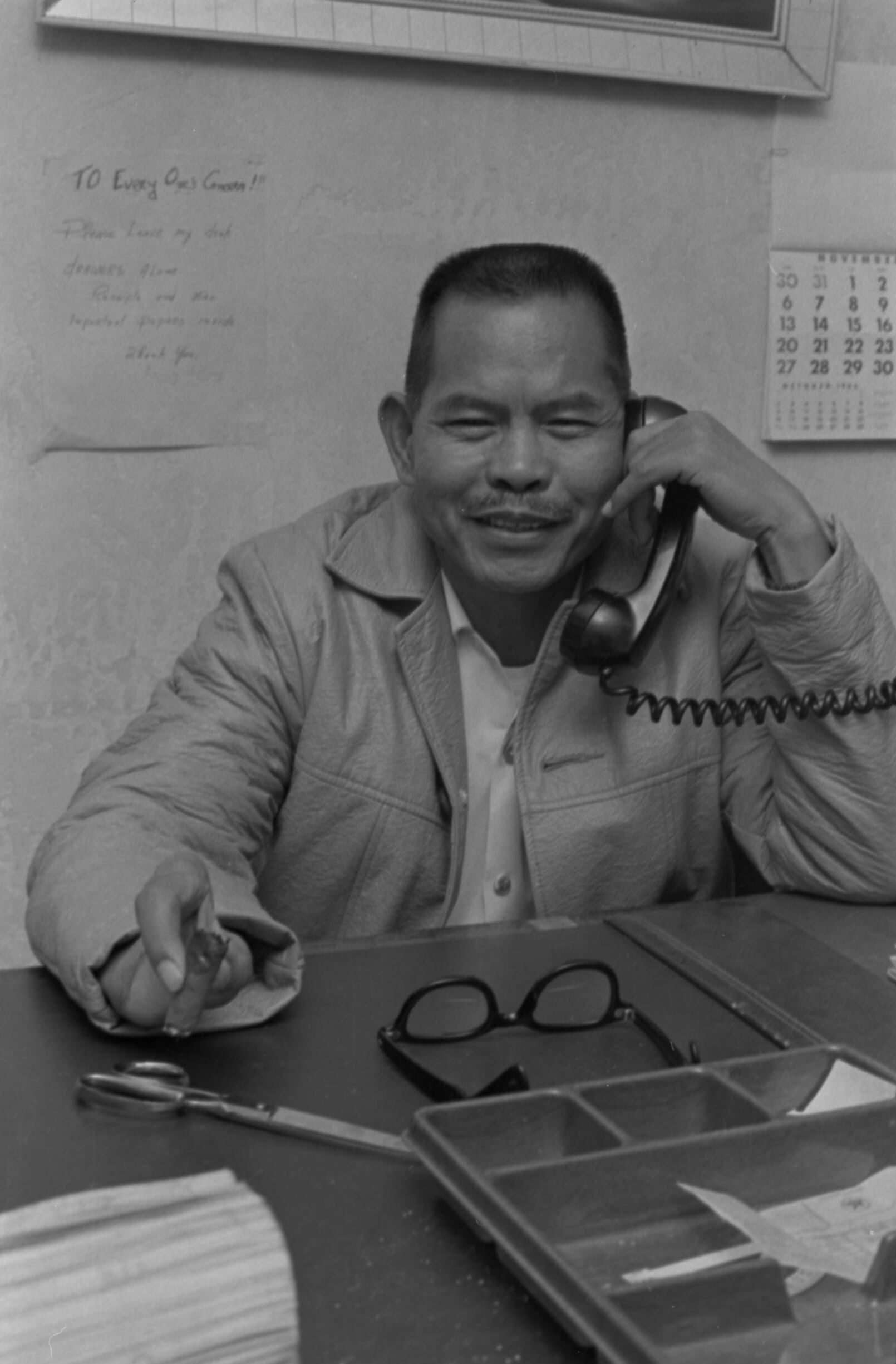
Image 10.05.03 — Labor leader and Filipino American farmworker Larry Itliong talks on the phone in Delano, California, 1966.
Faced with these hardships and systemic barriers, Itliong began organizing with workers soon after he arrived in the United States. He “followed the crop” with other agricultural workers by settling at an area’s labor camps for a season, harvesting the area’s produce, and then moving on to another location the next season’s harvest. This constant movement was disruptive to families of farmworkers, as they could not settle in a permanent home. Children often worked with their parents in the fields. Housing and labor camps varied in degrees of comfort, cleanliness, and safety.
Itliong worked his way through a network of farms and canneries that stretched from San Diego, California, to Anchorage, Alaska—advocating for worker’s protections and power. In 1930 he was part of a group of striking lettuce workers in Monroe, Washington. Three years later, he joined another action for higher wages and better working conditions in Salinas, California. After traveling north to Seattle, Washington, Itliong organized with cannery workers who eventually formed the United Cannery, Agricultural, Packing, and Allied Workers of America.
Itliong continued organizing through 1965, a crucial year in labor organizing history. In May 1965, as a leader in the Agricultural Workers Organizing Committee he helped coordinate a ten-day strike of one thousand union members in California’s Coachella Valley. The mostly-Filipino workforce demanded a fifteen-cent wage increase and won it. Itliong and his team then took the lessons of this victory a hundred miles north to Delano.
The Delano Grape Strike
On September 8, 1965, Itliong and eight hundred Filipino farmworkers walked out of ten Delano grape vineyards, demanding a wage increase from 1.25 dollars to 1.40 dollars. They hoped that the National Farm Workers Association, which had a predominantly Mexican membership, would join the Filipinos. Historically, employers often encouraged and depended on ethnic groups to cross each other’s picket lines and work against each other during strikes. NFWA leaders, César Chávez and Dolores Huerta, thought about participating in the strike, but Chávez was hesitant to join, thinking he needed another two years to organize NFWA workers, who tended to be much younger than the Filipino laborers and often traveled back and forth across the US-Mexico border.
Many of the Filipino farmworkers in AWOC had been working the fields for decades, at ages where most Americans were already considering retirement. From the 1920s to the 1960s, Filipino workers gained four decades of hardheaded experience striking against employers, challenging harassment from corporations and even other unions. From their perspective, waiting two years was not an option. In a 1965 interview, Larry Itliong explained that the workers made others wealthy, but they themselves did not receive enough benefits, often struggling to even eat. “We feel that these people should be entitled to some recognition for the efforts that they have given these growers in making him what he is today,” Itliong said. 1
On September 16, 1965, the NFWA finally voted to join their fellow Filipino workers. As the two organizations merged to become the United Farm Workers, Itliong and Huerta assumed leadership roles, with Chávez as the union’s president. The Delano Grape Strike, as well as the UFW-led grape boycott, lasted for five years and generated national and international attention. The strike led to a contract that affected ten thousand workers and continues to serve as a model of interracial and interethnic coalition-building.
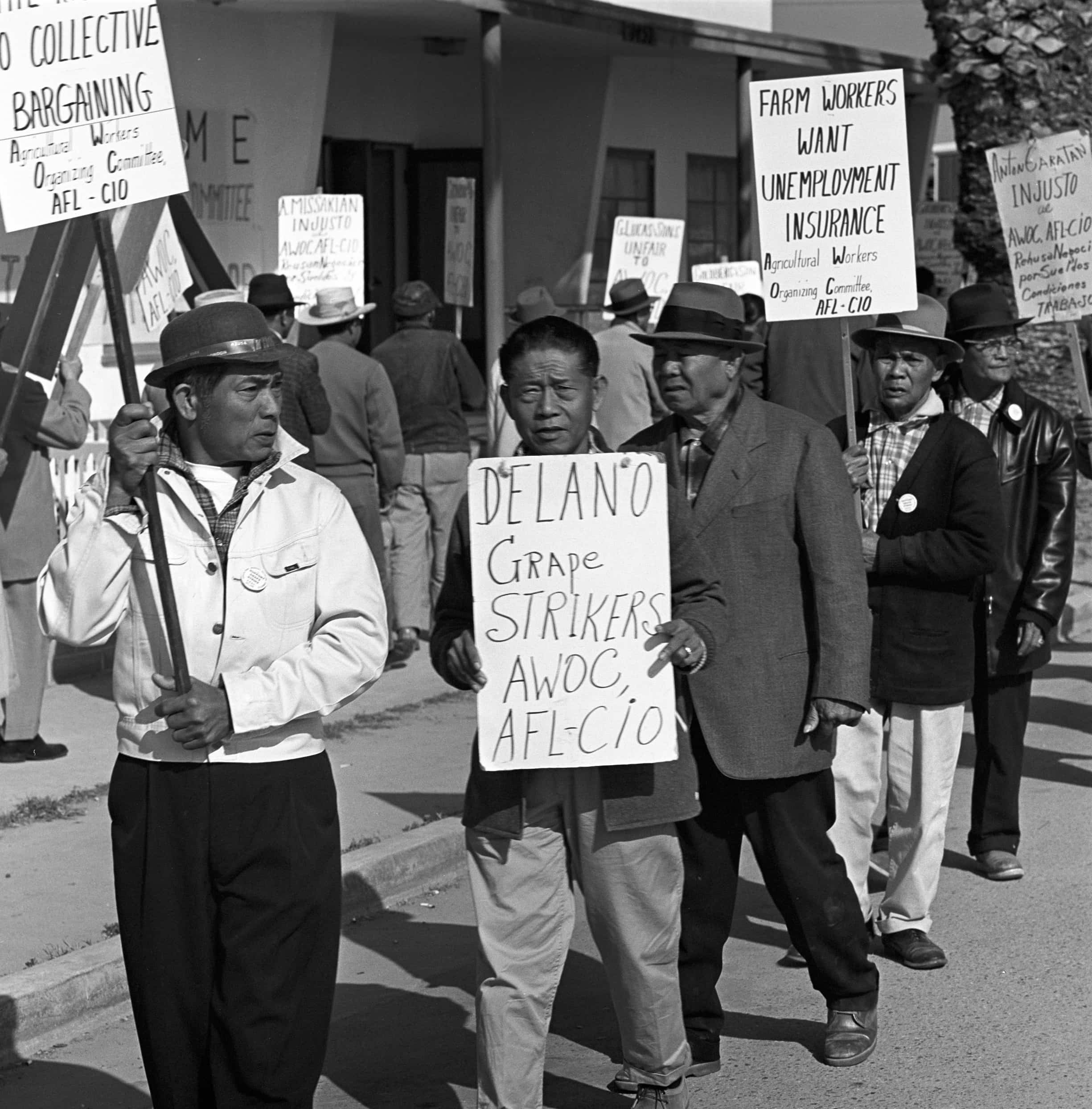
Image 10.05.04 — Members of the Agricultural Workers Organizing Committee (AWOC) picketing during the Delano Grape Strike in 1965.
Wearing the AWOC and NFWA lapel pin, like the one featured in this module, was one way that both strikers and allies showed their support for the farmworkers’ cause. The illustration of a large bunch of grapes in the middle of the pin reminded consumers to support the grape boycott, and this particular pin could have been worn during actual marches and hunger strikes.
Non-violent Direct Action
In addition to the unfair wages and poor working conditions, Filipino farmworkers faced violence throughout their journeys from crop to crop. Local residents and laborers of different ethnicities and law enforcement often bullied, beat, and intimidated them. And while there are many historical instances of militant Filipino resistance to oppression (for example, Module 2 examines the homemade rifle and the significance of guerilla warfare in the struggle for an independent Philippines), Filipino Americans used a variety of tactics in the twentieth century to change their circumstances.
In addition to Larry Itliong, Filipino labor activists like Pablo Manlapit, Chris Mensalvas, Philip Vera Cruz, and many more engaged in a range of non-violent direct actions to challenge corporations for better work conditions and wages. Nonviolence was a philosophy that saw relationships between people and groups, and their responsibilities to each other. These Filipino leaders are part of a long legacy of organizers around the world—including Martin Luther King, Jr. and César Chávez—who demanded change through boycotts, public shaming, walkouts, strikes, marches, hunger strikes, sit-ins, collective singing, and theatrical productions and skits.
The simple AWOC and NFWA lapel pin commemorates the extraordinary efforts to build solidarity between diverse groups in order to win big for farmworkers in California and beyond.
Glossary terms in this module
Boycott Where it’s used
A non-violent tactic involving the withholding of cooperation from purchasing goods or participating in events in order to effect change.
nonviolent direct action Where it’s used
Actions or movements that seek to disrupt exploitative conditions through non-violent means; for example: boycotts, walkouts, strikes, and marches.
Endnotes
1 Interview with Larry Itliong, Stanford Oral History Collections, KZSU Project South Interviews, 1965.