





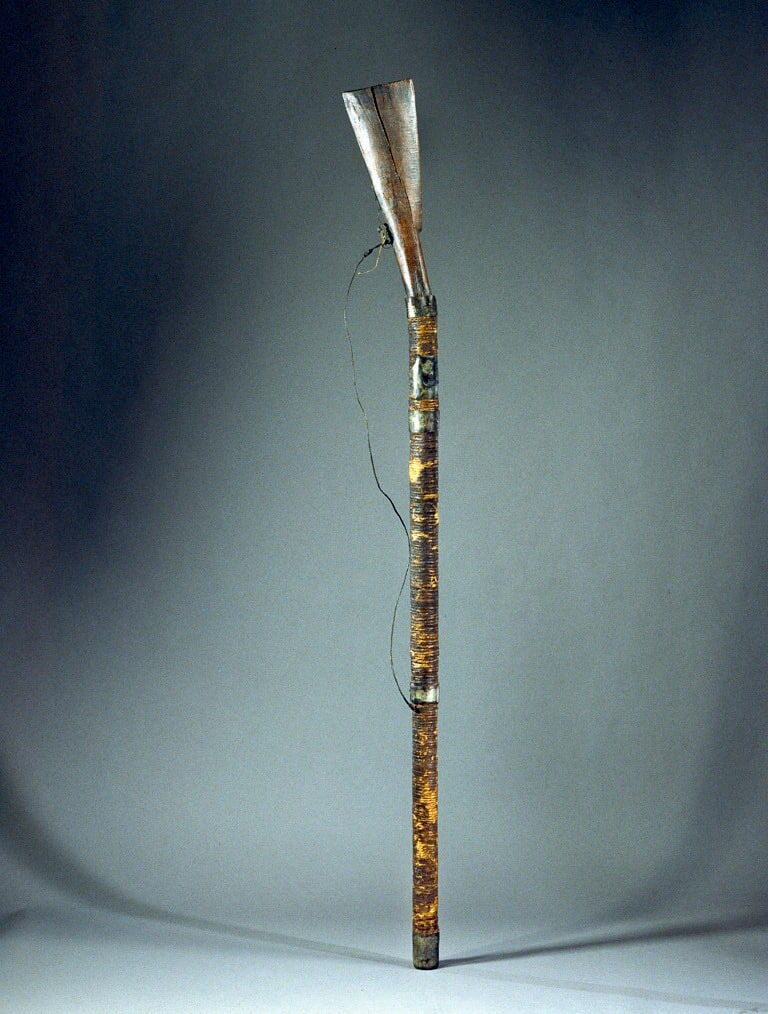
Module 3: Filipino Homemade Rifle
Can everyday objects tell us something important about Filipinx American history or lives?

Image 10.03.01 — During the US-Philippine War (1899—1913), Filipino soldiers resorted to making their own firearms and ammunition. This homemade rifle dates to 1900. “Homemade Filipino Gun,” National Museum of American History, AF.NM367.
Filipinos have a long tradition of fighting for their freedoms. One of the most dramatic examples of this occurred during the US-Philippine War, an understudied military conflict in US history. While the Spanish-American war that preceded it only lasted a few months, the US-Philippine War spanned several years, starting in 1899. It officially ended in 1902, but in reality the fighting continued in various parts of the country until 1913. Many Filipinos, faced with blockades and weapon shortages, used guerrilla tactics and constructed makeshift devices to keep their struggle for liberation going.
In this module, we learn about Philippine sovereignty and their armed resistance against both Spain and the United States through a homemade rifle. This weapon is direct evidence of anti-colonial resistance.
What can homemade objects from this time period tell us about liberation?
What were Filipinos fighting for during the US-Philippine War?
What is a war for national liberation?
Independence and Improvised Weapons
In 1892, Filipino revolutionaries created the Katipunan, an organization founded to separate from Spain, which had formally ruled the archipelago since 1565. For hundreds of years, there had been many rebellions throughout the islands against foreign rule. When the Katipunan launched a mass uprising in 1896, it grew into a full-scale revolution. On June 12, 1898, armed forces, led by Emilio Aguinaldo, declared the Philippines a free and independent nation. Spain did not recognize the Philippine Declaration of Independence, and so Filipinos appealed to the United States for help in overthrowing Spanish colonial rule. US naval forces, led by Admiral George Dewey, destroyed a Spanish fleet in the Battle of Manila Bay. However, instead of supporting Filipinos seeking independence, the US transported more troops to the Philippines. It became clear that the United States intended to take the islands for themselves.
The Philippine Revolution was soon followed by the US-Philippine War. On February 4, 1899, two soldiers from the 1st Nebraska Infantry Regiment opened fire, and war broke out between the US and Filipino armed forces. Albert Beveridge, a US senator from Indiana, justified this war in his speech to Congress in 1900:
Just beyond the Philippines are China’s illimitable markets. … The Pacific is our ocean. … The Philippines give us a base at the door of all the East. … Most future wars will be conflicts for commerce. The power that rules the Pacific, therefore, is the power that rules the world. And, with the Philippines, that power is and will forever be the American Republic. 1
The Philippine army faced major challenges in this war of liberation from the beginning. Admiral Dewey’s blockade of Philippine harbors made it impossible for Filipinos to receive arms and ammunition in the islands. Short on supplies, the Philippine standing forces eventually switched to guerrilla tactics.
They improvised by making their own arms and ammunition, using knives and arrows, setting traps based on their knowledge of the terrain, and even poisoning the food and drink stocks of the enemy. Writer and historian Luis H. Francia described their dire conditions and lack of weaponry: “Only half of the estimated 80,000 Filipino soldiers had rifles, with the other half relying on bolos (machetes), spears, and homemade guns.” 2
Thus, the homemade nature of Philippine weaponry and ammunition was borne out of necessity. Military historians noted how Filipinos were forced to make their own gunpowder and shell casings. The standing army’s switch to guerilla warfare tactics would inspire and be analyzed by revolutionaries and reactionaries alike in decades to come as “the war of the flea.” 3
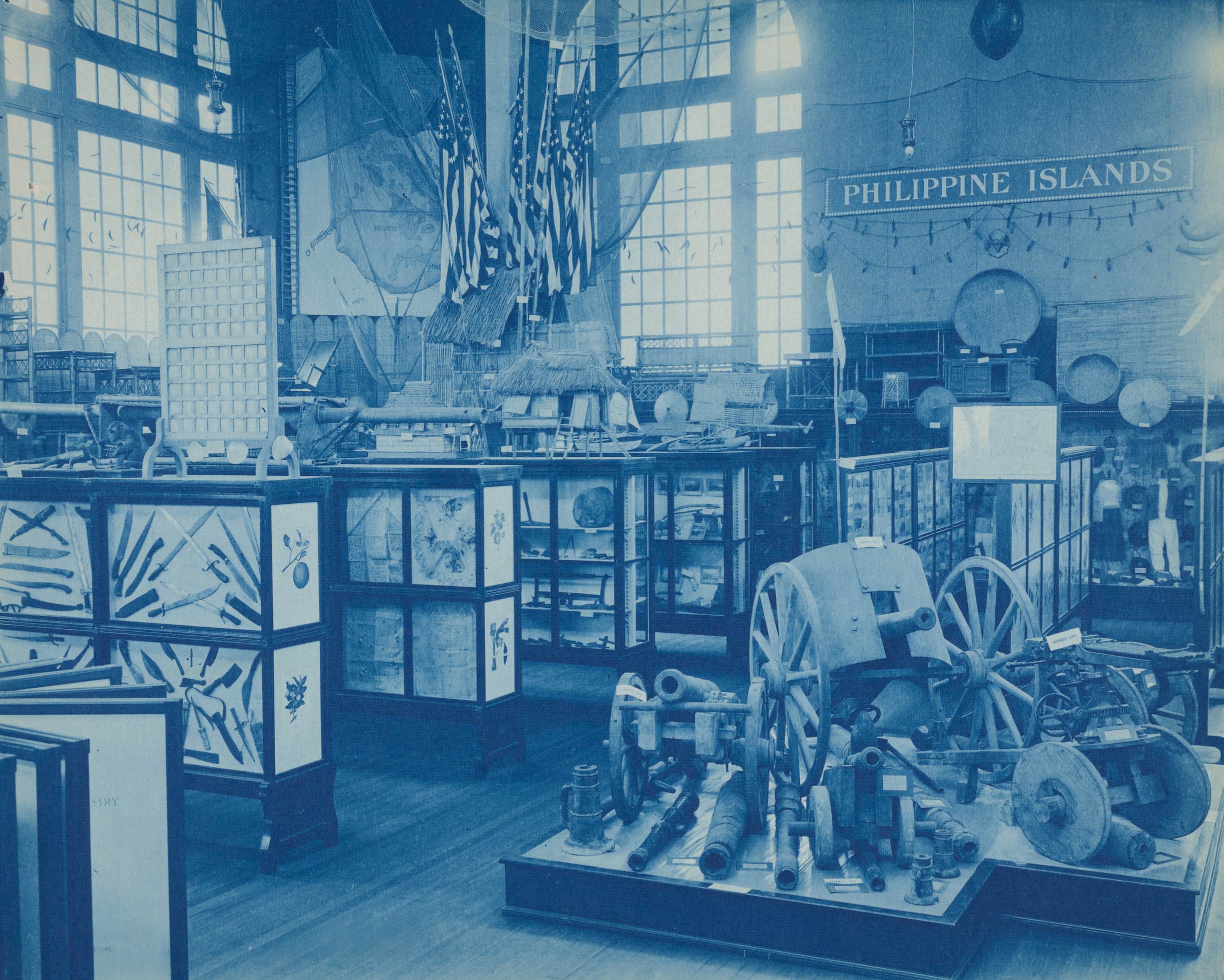
Image 10.03.02 — Philippine Islands exhibit on display at the Pan-American Exposition, Buffalo, New York, 1901.
War Acquisitions
The Smithsonian also played a role in war and colonization in the Philippines. In 1900, the institution tasked Frank Hilder, a former British officer, to collect objects for an exhibition. Hilder did not receive donations of artifacts from consenting, sovereign people, but rather from combatants who looted active war scenes. Over a period of six weeks, Hilder and his assistants gathered nearly one thousand items from the Philippines, many of which would be put on display at the Pan-American Exposition, a world’s fair that took place in Buffalo, New York, in 1901. Among the objects taken were skulls of Filipinos, agricultural products, uniforms, insignia, and homemade weapons.
Even though the US declared an end to the war in 1902, armed revolutionaries persisted for at least another decade. Even at his execution in 1907, Philippine general Macario Sakay, affirmed his belief in the cause and shouted:
I want to tell you that we are not bandits and robbers, as the Americans have accused us, but members of the revolutionary force that defended our mother country the Philippines! Farewell! Long live the Republic and may our independence be born in the future! 4
In the case of the Filipino revolutions of the late 1800s, armed resistance against the Spanish and US empires has been well-documented as challenging Western powers’ colonial rule.
Histories and Legacies of Revolutionary Violence
The homemade rifle featured in this module was created during the US-Philippine War and can be understood against a larger backdrop of Philippine history, one marked by peoples’ struggles for power. While all-out revolutions may be rare, rebellions against foreign rule have been common. In addition to learning about the homemade rifle, it is important to understand the history of armed uprisings in the Philippines.
The Spanish colonial period (1521–1898) began with a violent act of resistance. Under Spanish authority, Ferdinand Magellan sailed to the Philippines. Refusing to be ruled by a foreign authority, local chief Lapu-Lapu killed Magellan in the shallow waters near Mactan island in 1521. Another impactful event during the colonial period took place in 1872, when Spanish authorities publicly executed three local Filipino priests: Mariano Gómes, José Burgos, and Jacinto Zamora. The government accused them of being connected to the Cavite Mutiny, an uprising of Filipino military personnel against colonial rule. The priests became known collectively as GOMBURZA and were honored as martyrs following their execution. These events, among others, would lead to an independence movement in the Philippines.
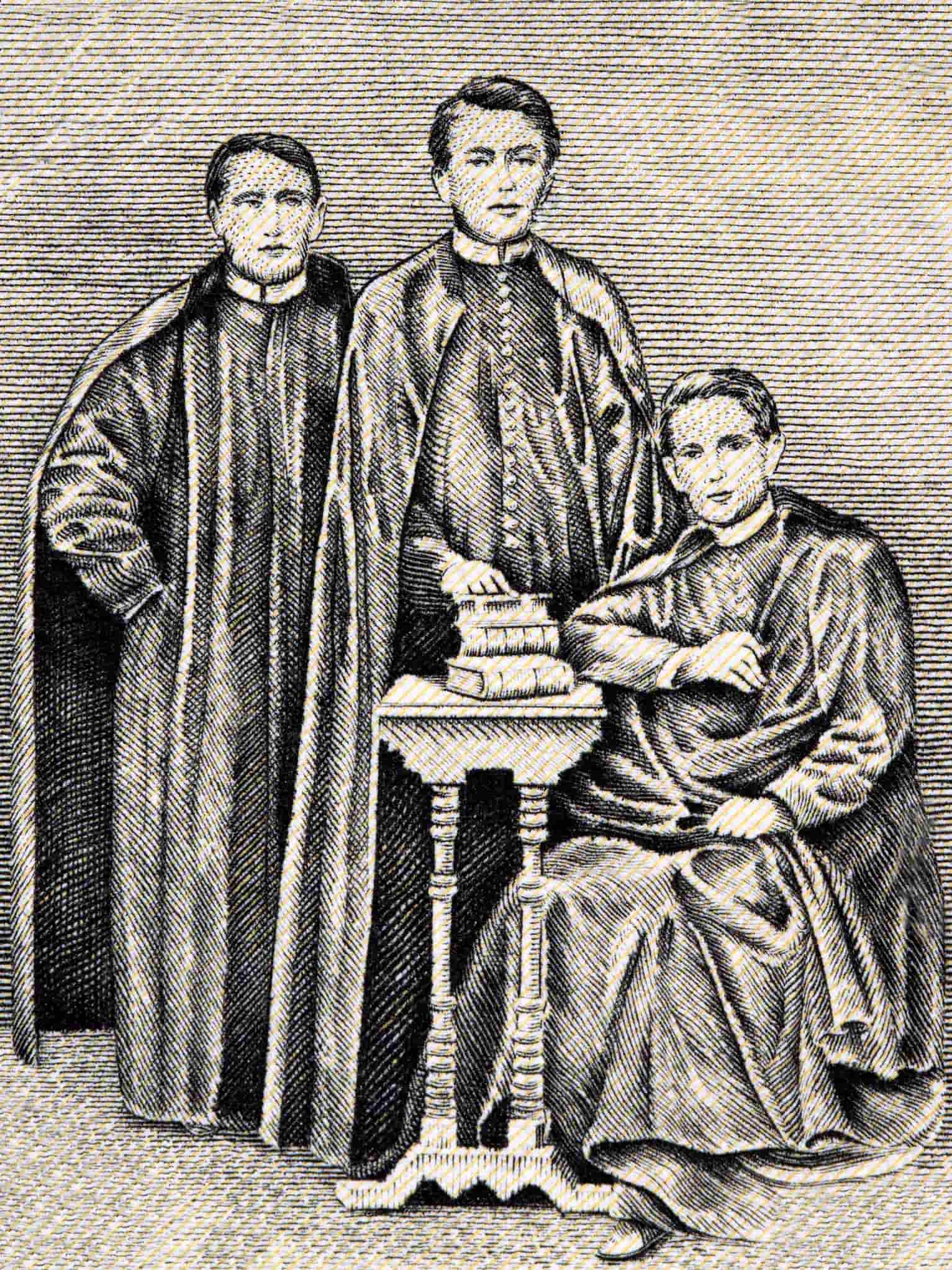
Image 10.03.03 — Mariano Gómes, José Burgos, and Jacinto Zamora were three local priests publicly executed by Spanish colonial authorities for their alleged connection to the Cavite Mutiny. Their execution is widely recognized as a key event leading up to the Philippine Revolution.
Resistance movements continued into the late nineteenth century. Elite Filipino males studying and working in Europe, like author and physician José Rizal, formed the Propaganda Movement demanding political reforms from the Spanish. However, their tactics shifted when the Philippine Revolution (1896—1898) launched. Led by Andrés Bonifacio and other members of the Katipunan, the movement secured more political gains across the archipelago. Members of the Propaganda Movement moved from their calls for reform and instead supported national liberation through armed resistance. Even after the Philippines declared their independence from Spain in 1989, and experienced the subsequent US annexation, the movements continued.
The Homemade Rifle and Continued Resistance
Shortly after the Philippines defeated Spanish forces that colonized the archipelago for hundreds of years, Filipinos had to confront US forces seeking to overtake the newly independent lands. Low on ammunition, supplies, and personnel, Filipinos switched their approach. Instead of standing as a uniformed army against US forces, they adopted guerrilla warfare strategies. The homemade rifle is an example of this change in tactic.
Throughout the US colonial period (1898–1946), Filipinos continued using guerrilla warfare to gain control of their land. When Japan occupied the Philippines during World War II (1942–1945), Filipino communists in rural villages founded Hukbong Bayan Laban sa Hapon (People’s Army Against Japan).
Many other Filipino resistance groups formed through the twentieth century. After World War II, the armed wing of the Communist Party of the Philippines, the New People’s Army, founded in 1969, continued to wage guerrilla warfare to further aims of rural-based resistance and the building of mass support. In the southern Philippines, the Moro National Liberation Front was founded in 1972, after decades of challenges to land homesteading by Filipinos from central and northern regions.
In 1972, President Ferdinand Marcos placed the country under military rule. This period, which lasted until 1981, outlawed dissent in media, trade unions, and other sectors. Despite this takeover and censorship of mass communications, people found creative ways to resist—through music, film, and theater, as well as armed, underground actions. Filipinos in the United States formed a range of groups with different aims, such as the National Committee for the Restoration of Civil Liberties in the Philippines.
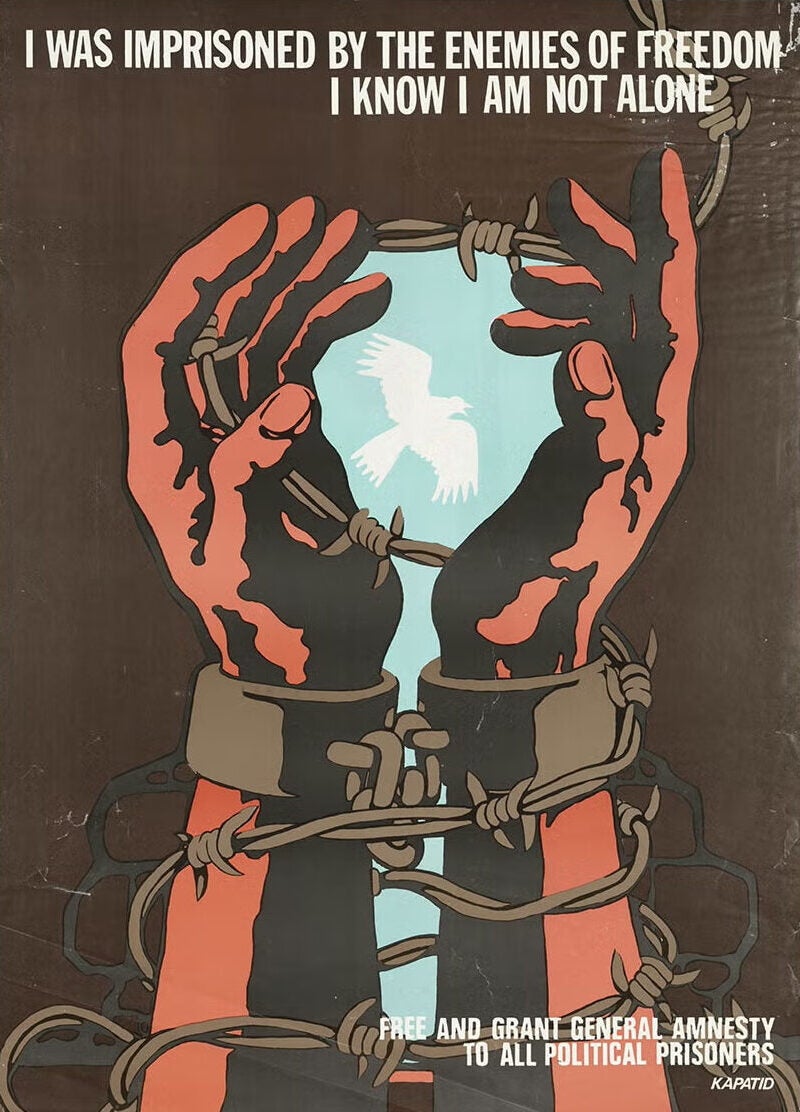
Image 10.03.04a — Kapatid, a support group for families of political prisoners, created this poster advocating for the release of all political prisoners such as those deemed ‘enemies of the state’ by the Marcos dictatorship.
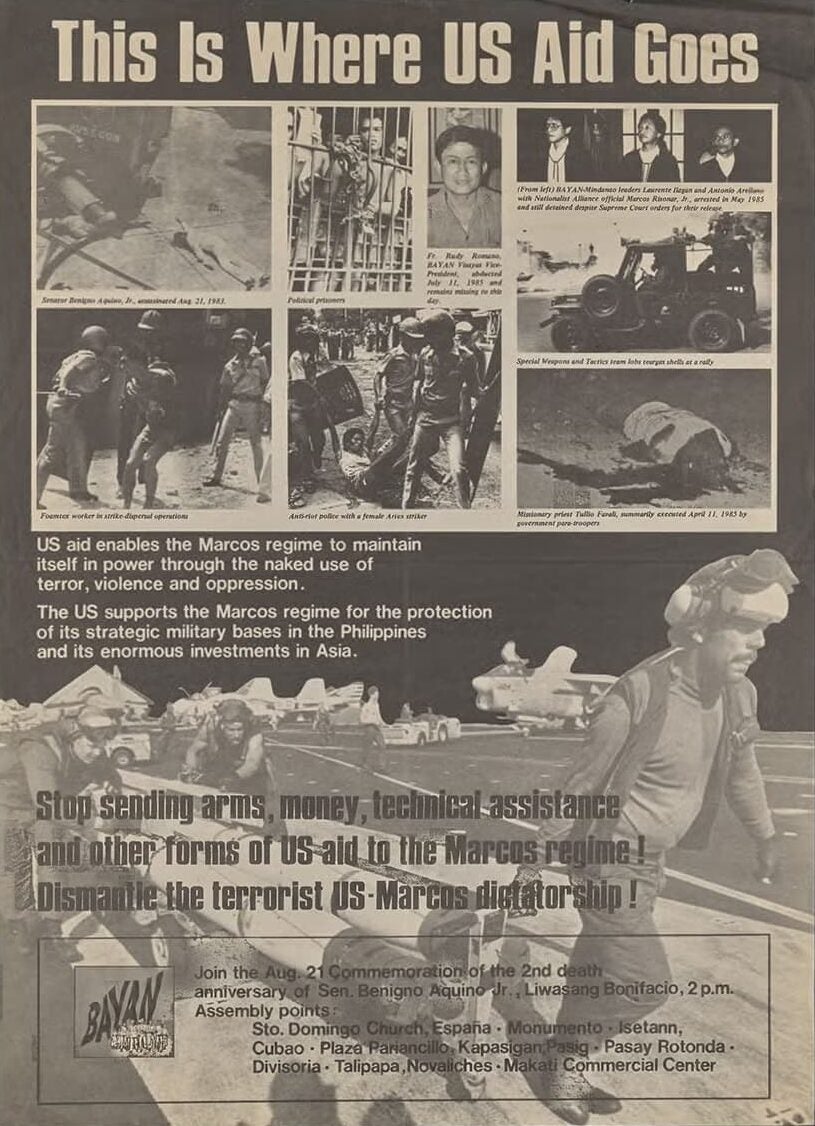
Image 10.03.04b — Filipino American activist organization BAYAN distributed this poster to highlight the relationship between US military funding and the violence and oppression experienced under the Marcos dictatorship.
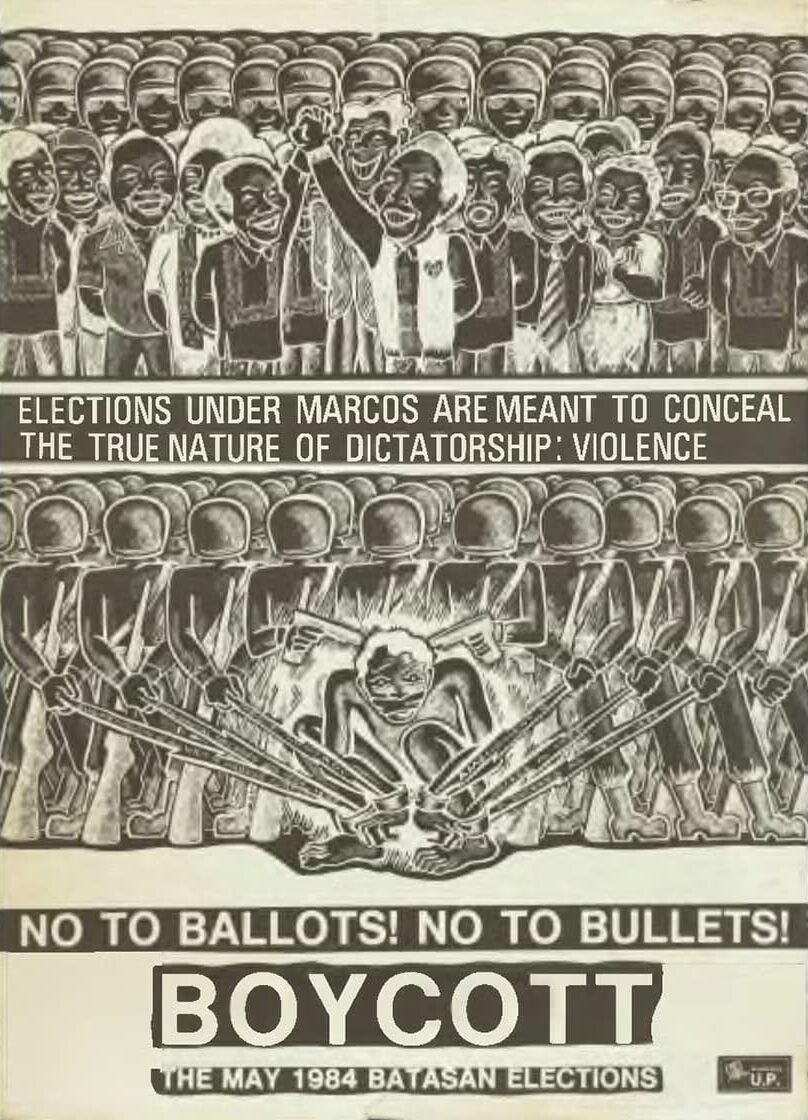
Image 10.03.04c — This poster was created by the student political organization Kaakbay UP, calling for a boycott of the 1984 election under Marcos.



Legacies of War
The legacy of the US-Philippine War had a lasting impact on Filipinos in the Philippines and those who resettled in the United States and Hawaiʻi. For many years, the United States’ largest military installations outside the US were in the Philippines. Subic Bay Naval Station, and Clark Air Base, spanned more than two hundred square miles each. These military bases impacted local and global communities alike.
With these military bases, the US was able to project military power and control in parts of Asia. Locally, US-controlled bases meant quick suppression of rebel forces throughout the Philippines. Globally, the US military was able to exert force in places like Korea (1950s), and ship weapons to soldiers fighting in the Vietnam War in the (1970s) and the Gulf War (1990s).
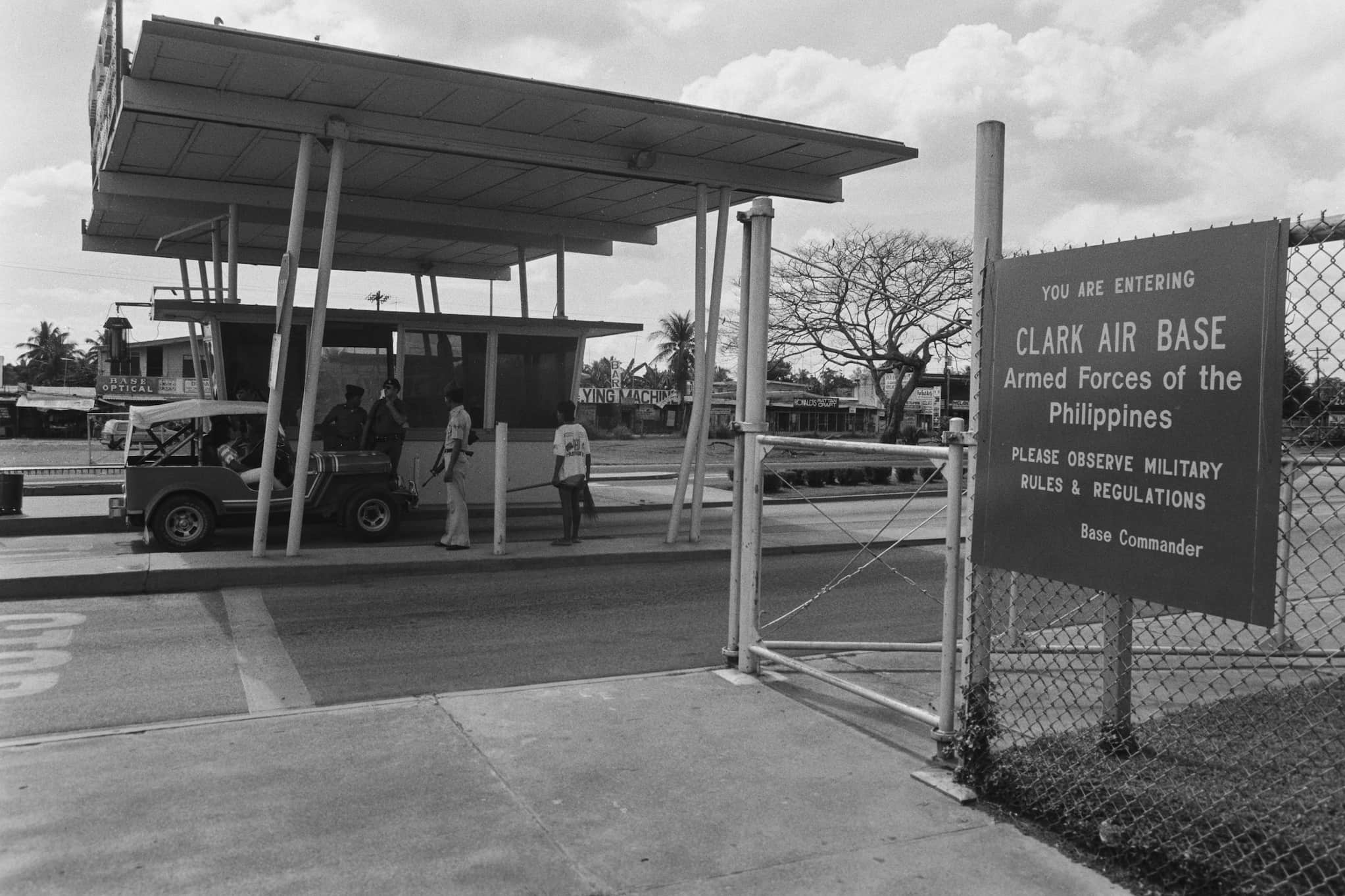
Image 10.03.05 — The Clark Air Base on Luzon Island, once the largest US military air base outside of the States, was a stronghold for both Philippine and American forces during World War II. Later, it became a key strategic hub for US operations during the Vietnam War.
The presence of these bases also made the Philippines vulnerable. It is no accident that at the same time the Japanese military targeted the US naval base at Pearl Harbor in Hawaiʻi in 1941, they also targeted US bases in the Philippines in the hours that followed. Military bases take a human toll on local civilians and climates. This has been true in the Philippines, as well as in Korea, Japan, and Okinawa.
In 2021, the International Criminal Court began investigating reports of thousands of executions of Filipinos during a “War on Drugs” campaign in the Philippines since 2016. Then-President Rodrigo Duterte used this anti-drug mission to kill and disappear Filipinos all around the country. Even before his presidency, during his twenty-two years as mayor of Davao City, Duterte expressed his support for the extrajudicial killings of people involved in drug activity. Journalists, human rights activists, and agencies had documented these deaths since the early 2000s. All together, these myriad reports and documents provided substantial evidence against human rights abuses and became important to the memories of all who were needlessly murdered under Duterte’s rule.
In connecting the homemade rifle to a longer history of Filipino resistance, we can see how this object can represent many stories. As Filipina journalist Maria Ressa wrote, resistance is a collective effort. Ressa, arrested in 2019 by the Philippine government for her reporting and criticism of Duterte’s policies, was awarded the Nobel Peace Prize in 2021 for her dedication to press freedom and democracy. “You can’t do it alone. You have to create a team, strengthen your area of influence. Then connect the bright spots and weave a mesh together.” 5
Glossary terms in this module
armed resistance Where it’s used
Organized actions and movements that seek to disrupt exploitative conditions using violence; armed resistance is often used by Indigenous populations to resist the oppressive conditions of imperialism and/or colonialism.
guerrilla warfare Where it’s used
A tactic of war, often referred to as irregular, that is characterized by small units attacking much larger forces using ambush in order to wear down the opponent.
Katipunan Where it’s used
A revolutionary group that challenged Spanish colonial rule in the Philippines, 1892-1897.
rebellion Where it’s used
Acts of opposition that can be overt or hidden.
revolution Where it’s used
Instances of social, political, or cultural change.
Endnotes
1 Albert J. Beveridge, “Our Philippine Policy,” Congressional Record, United States Senate, January 9, 1900, 704—711.
2 Luis H. Francia, History of the Philippines: From Indios Bravos to Filipinos (Overlook Press, 2010), 138.
3 Robert Taber, The War of the Flea: A Study of Guerrilla Warfare, Theory, and Practice (Lyle Stuart, 1965).