





Exhibit photo of a white cotton crescent-shaped nursing cap against a black background.
Module 6: Nurse’s Cap
Can everyday objects tell us something important about Filipinx American history or lives?
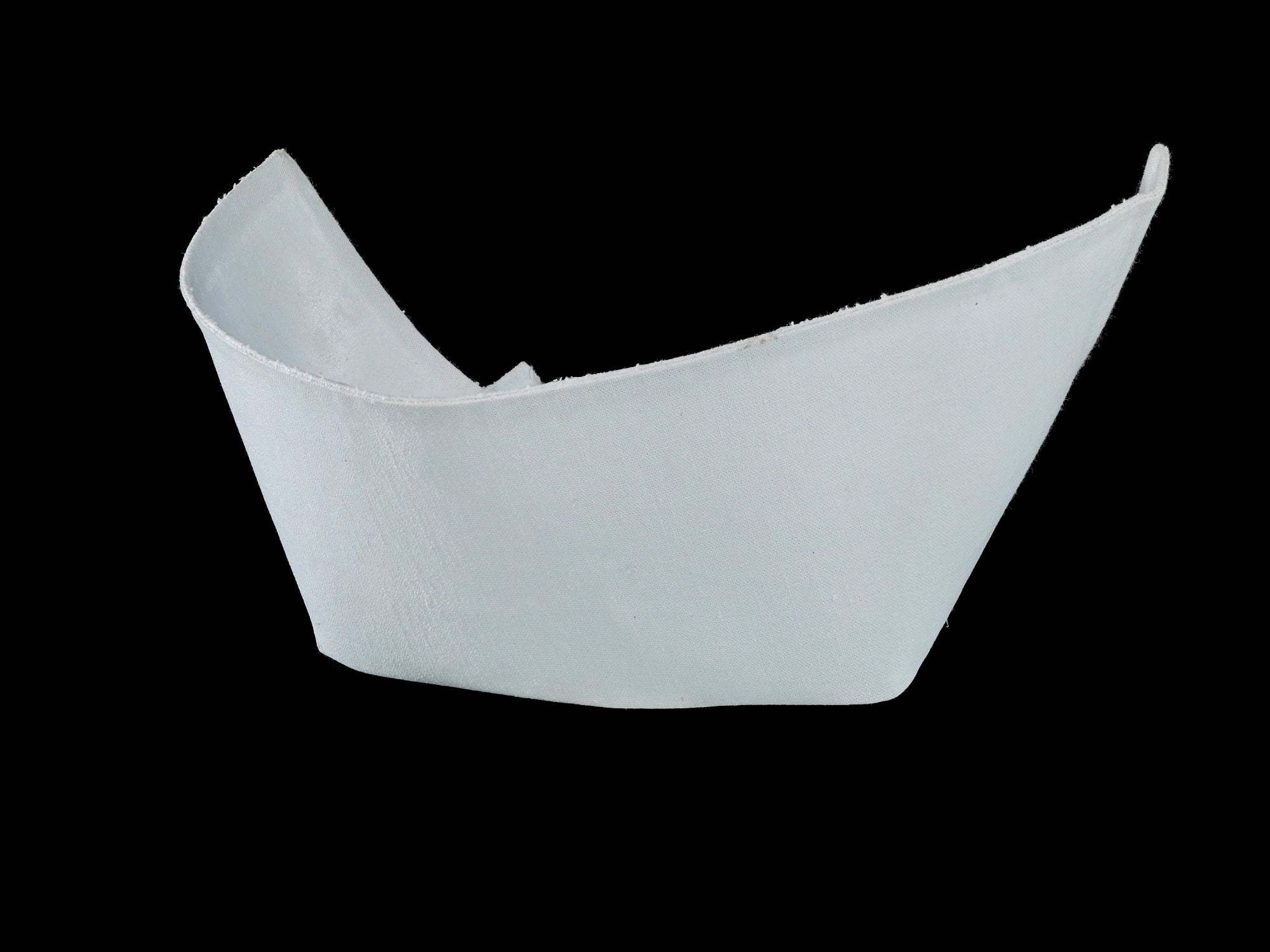
Image 10.06.01 — Maria Jayme received this nurse’s cap during her graduation capping ceremony. In 1994, she immigrated to the United States and worked as a registered nurse in Florida. Between 1965 and 1988, more than seventy thousand foreign nurses came to the United States.
Maria Reyna Jayme Legaspi was born in General Santos City in the Philippines. In 1991, Legaspi graduated from the San Pedro College of Nursing in Davao City and received this nurse’s cap during the capping ceremony. In 1994, Legaspi came to Jacksonville, Florida, on an H-1 visa, for immigrants who worked as nurses or other specialized jobs. US hospitals issued these temporary visas and would renew them on a yearly basis. For nurses with an H-1 visa, passing the National Council Licensure Examination (NCLEX) could be the next step toward getting a US permanent resident card (also known as a green card). Those who did not pass the exam would have to rely on their employer to renew their visas. Fortunately for Legaspi, she passed her exam in 1997.
Legaspi was not the only nurse in her family. Her relative, Rizalita Legaspi Aniel, graduated from nursing school in 1976, and worked as a registered nurse in the intensive care unit at Mary Johnston Hospital in the Philippines before she was recruited by a Miami-based hospital and immigrated to the US. While Legaspi followed in her family’s footsteps to become a nurse, her story belongs to an even longer legacy of Filipino nurses in the US, one that begins in 1907.
Since the nineteenth century, women nurses wore these caps as part of their uniforms to keep their hair pinned back and so that others could easily identify them in a hospital or other medical setting. Although wearing a nurse’s cap was no longer common practice by the time Legaspi received hers, it was still an important symbol for graduates. Furthermore, Legaspi’s cap sparks a discussion about the high rate and history of Filipinos in nursing—part of an even longer history of US imperialism, which this module investigates.
What is a nurse’s cap?
Who is Maria Reyna Jayme Legaspi and what was her experience as a Filipina nurse in the United States?
How is the history of Filipino nurses part of the global experience of an “empire of care”?
“Your Cap is a Passport”
There is a common stereotype in the US that all Filipinos are nurses or inherently caregivers. But this notion obscures a history of US colonization that created a system where Filipinos became nurses in order to fill labor shortages in the US.
A few years after the US acquired the Philippines as a territory from Spain in 1899, the United States government created nursing schools in the Philippines. The 1903 Pensionado Act also allowed Filipinos to receive nursing education in the US. With this training, Filipino nurses filled shortages during World War I, when diseases like tuberculosis and typhoid circulated widely. In 1928, Filipino nurses established the Philippine Nurses Association in New York.
At the end of World War II, the United States experienced another nursing labor shortage. The 1948 Exchange Visitor Program helped to address the need for more workers. The program allowed two-year stays to foreign students and skilled laborers, and hospitals then began recruiting outside of the US.
To recruit globally, the American Nurses Association (ANA) published a brochure in 1962 entitled “Your Cap Is a Passport.” The document featured women from different countries wearing nurse’s caps. The ANA connected the nursing profession to the promise of travel without restriction to the US—a bonus for workers and the companies who hired them. The nurse’s cap became a symbol of mobility.
The passage of the 1965 Immigration and Nationality Act vastly changed immigration patterns in the United States. Some scholars estimate that more than seventy thousand nurses from other countries immigrated, and the majority came from countries in Asia. And of those countries, the Philippines outnumbered all others, with twenty thousand nurses who traveled to the US.
An “Empire of Care”
The nursing cap represents a career pathway that created many opportunities for people, especially women, in the Philippines and other countries. With a nursing credential, people in the Philippines could travel to the Americas and Europe and earn a much higher standard of living than at home. In 1965, a young student leafing through the Philippine Journal of Nursing could see an advertisement from the Manila Educational and Exchange Placement Service that said, “We can’t promise you’ll find happiness, but we can help you chase it all over the place.” 1 The service claimed to have placed eight thousand nurses in many places in the world. Who could resist such a tempting offer?
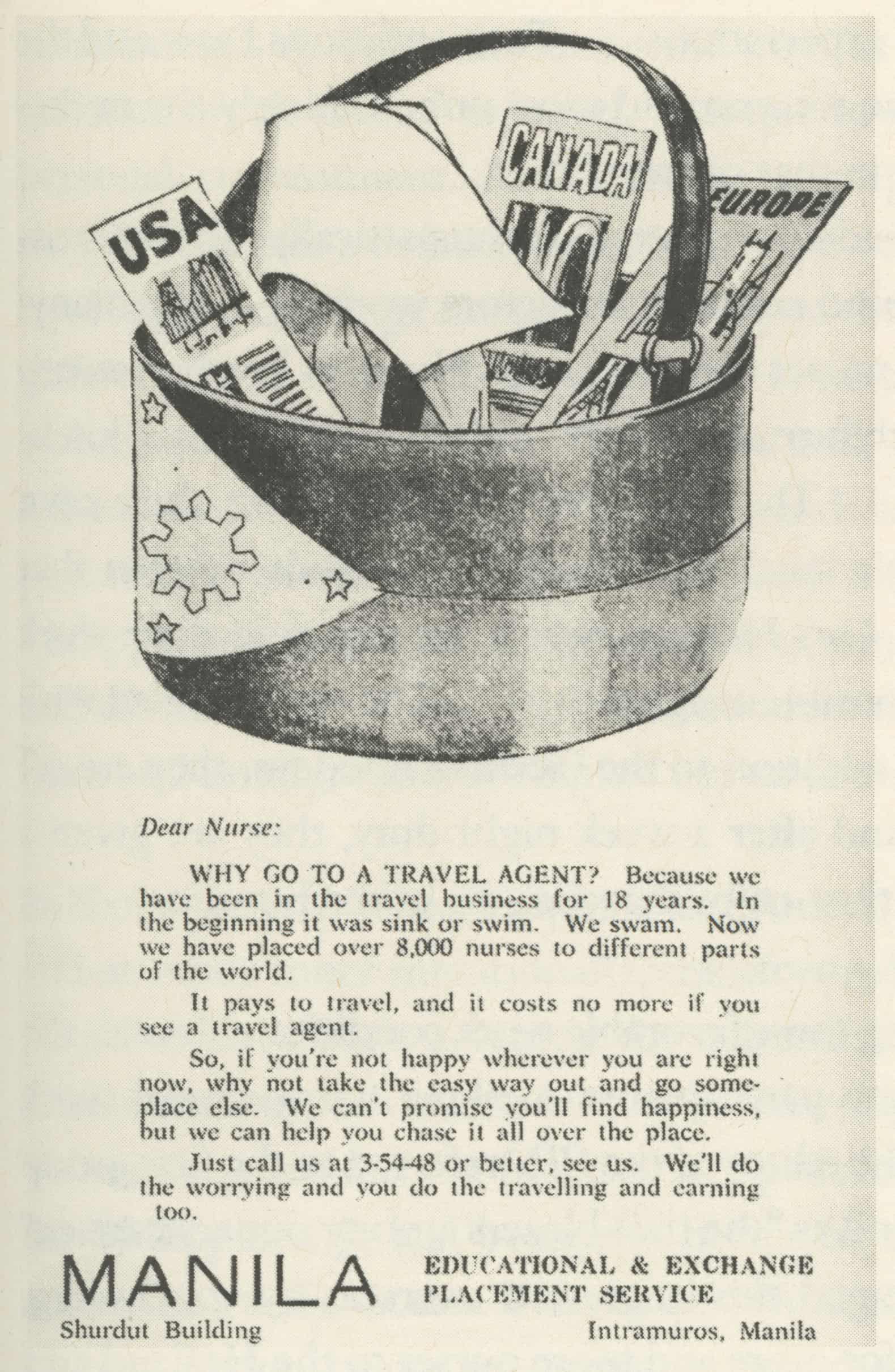
Image 10.06.02 — This ad for the Manila Educational and Exchange Placement Service from a 1965 issue of the Philippine Journal of Nursing encourages nurses to work abroad by framing nursing as a way to travel the world while earning money.
Professor and author Catherine Ceniza Choy studies the history of Filipino nursing. Choy relates the large numbers of Filipino nurses in the US with the history of US imperialism. While career pathways to nursing and other health care professions created many opportunities for people in US colonies and territories, it also worsened global inequalities in health care. Choy’s research reveals that people in “developing countries” go in the thousands to work as health care professionals in countries with the highest living standards. Countries exporting health care professionals employ only 15 percent of the world’s nurses, while the majority of nurses are located in richer countries. Therefore, the countries providing quality health care do not have quality health care themselves due to this unequal relationship.
This is what Choy calls an “Empire of Care,” in which legacies of imperialism affect international nurse migration patterns. Filipino nurses were a desirable workforce in part because of the US training programs created while the Philippines was a US territory. Filipino nurses were able to speak English and could often work in the US without much additional paperwork because of their status as US nationals. Even though this career pathway could help individual nurses send money home to their families in the Philippines, it didn’t resolve the issue of why a nurse would need to send money back in the first place.
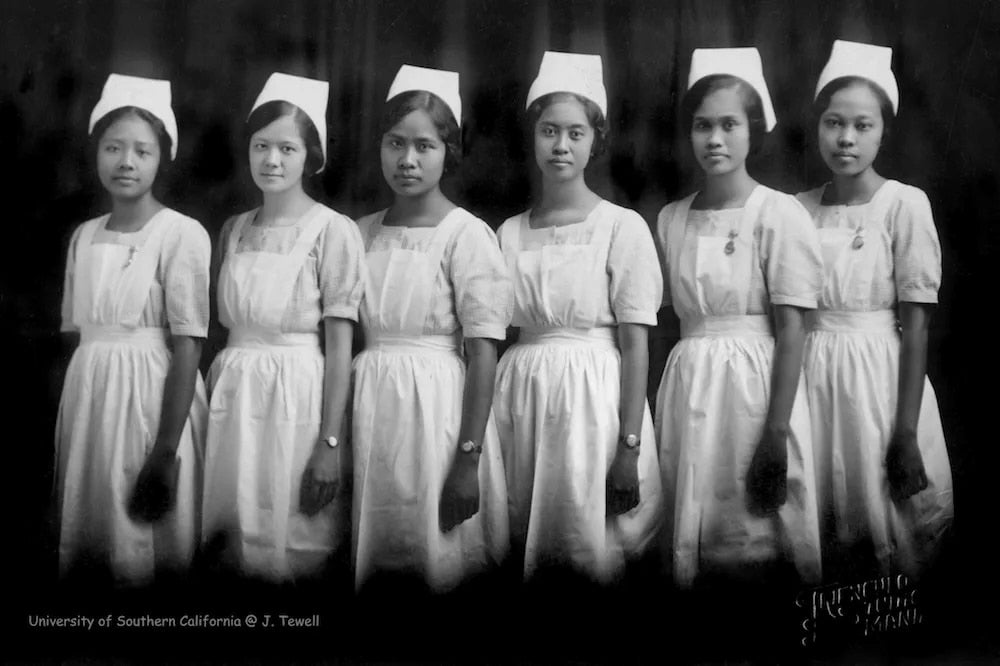
Image 10.06.03 — A photo of the 1929 Nursing class at St. Paul’s Hospital, Intramuros, Manila, Philippines.
The “empire of care” continues to this day, with Filipinos migrating to the US for jobs in nursing. Unfortunately, inequalities in health care also persist, as has been clearly demonstrated with the recent global pandemic. At the onset of the COVID-19 pandemic in early 2020, Filipino nurse migrants played a key role on the frontlines, providing care to the US and other parts of the world. Later that year, National Nurses United released a report documenting 1,718 health care worker deaths as of September 2020. According to the report, Filipinos comprise 4 percent of the total registered nurses in the United States, but represented 31.5 percent of all registered nurses who died of COVID-19 and related complications. Because the US government failed to track and disclose COVID-19 data, these shocking numbers had not been readily available to the public.
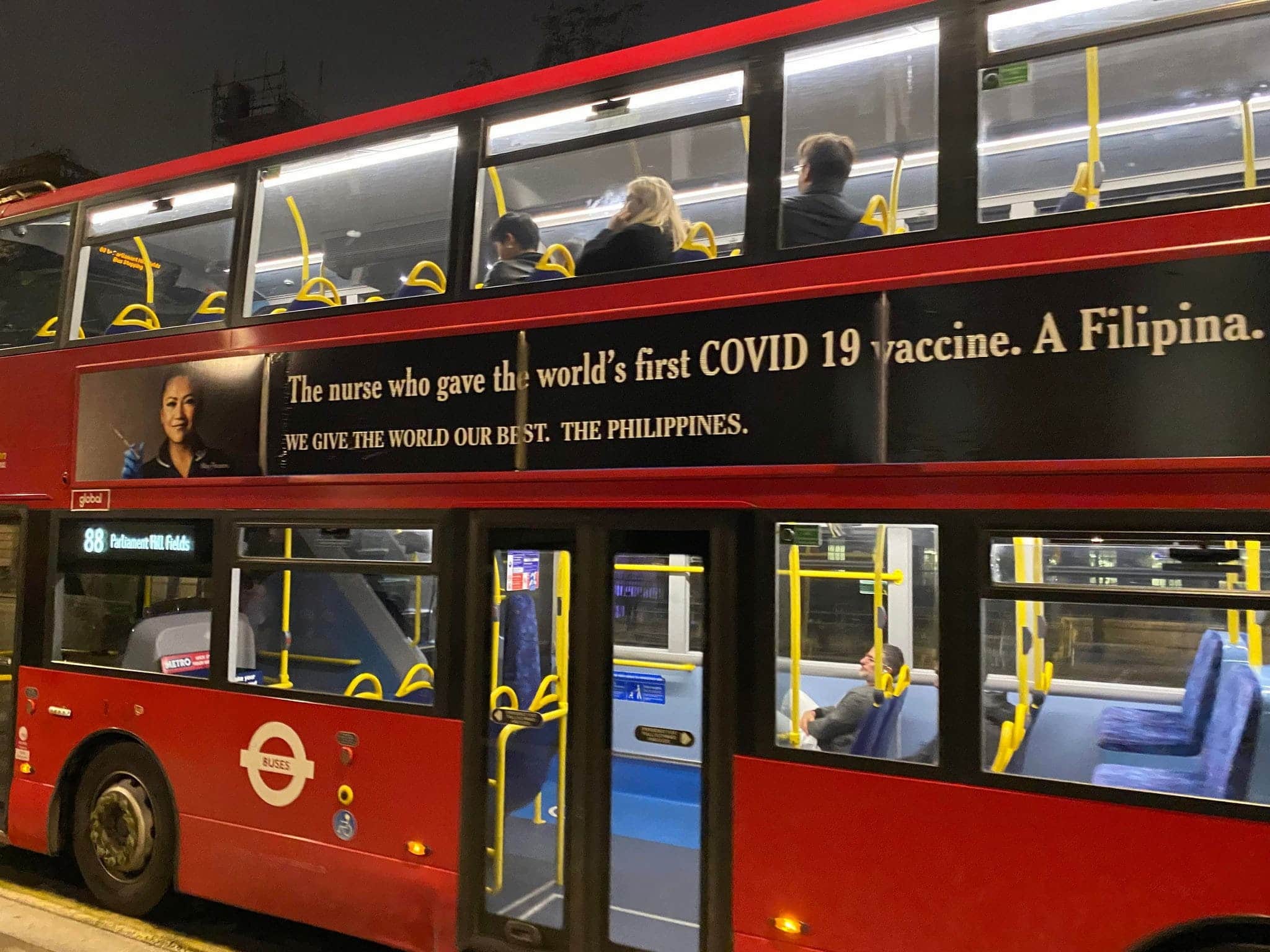
Image 10.06.04 — A bus advertisement in London from the Philippines’ Department of Tourism featuring Filipina British nurse May Parsons. The ad campaign aimed to highlight the achievements and contributions of Filipino workers abroad.
The Legacy of Filipina Nurses
Choy’s research also reminds us of the significance of women’s experiences in Filipino American history. For many years, only Filipinas could be US-trained nurses, and account for the majority of Filipino nurses in the US to this day.
While much of early twentieth century Filipino American history centers the voices of Filipino activists such as Larry Itliong and Carlos Bulosan, this period of labor history is incomplete without Filipina nurses, who have also organized for meaningful changes to their working conditions. In the 1970s these nurses started national organizations like the Federation of Philippine Nurses Association, the National Alliance for Fair Licensure of Foreign Nurse Graduates, and the Foreign Nurse Defense Fund. These groups challenged culturally biased recruitment practices, licensing exams, and other unfair policies. In addition to their important roles in health care, they created coalitions and built relationships with each other through these organizations.

Image 10.06.05 — The logo for the Philippine Nurses Association of America (PNA), founded in 1922 by Anastacia Giron-Tupas.
Filipino American history includes Filipinas in nursing, such as Anastacia Giron-Tupas, who helped establish the Philippine Nurses Association and created a formal network of support for Filipino nurses in the 1920s.
Part of this long and important history are the stories of thousands of Filipina nurses—including Maria Reyna Jayme Legaspi—who embarked on impactful, transnational journeys for their careers. Back in 1991 when Legaspi received her nurse’s cap, it marked the end of one chapter of her life and the start of many more. Equipped with her training and education, Legaspi found a pathway to migrate to the United States. The nurse’s cap symbolizes the continuation of her family’s history in nursing, and of a longer legacy of Filipino nursing in the United States, which started about one hundred years before Legaspi herself graduated from nursing school.
Endnotes
1 Catherine Ceniza Choy, Empire of Care: Nursing and Migration in Filipino American History (Duke University Press, 2003), 91.