





Seven Japanese American men in three piece suits, trench coats, and hats, stand in front of M. Furuya Company. Japanese goods are in window displays.
Module 1: Entrepreneurship and Asian American Business
Have Asian Americans who are successful at business achieved the “American Dream?”
One of the best-known agriculturalists in the twentieth century was Ushijima Kinji, or George Shima, who immigrated to the United States in 1889 and became known as the Potato King. Shima purchased swampland in California at a low price because white farmers considered the soil unsuitable for farming. There, he grew a type of potato that became so popular that, by 1909, his farm grew more potatoes than any farm in the world.
Shima was one of many Japanese American farmers in the West who bolstered the agricultural production of the region. However, his success story ended when envious white settlers attempted to seize the land for their own profit and use. Starting in California in 1913, state governments began passing alien land laws, prohibiting “aliens ineligible to citizenship” from owning land. As the only group that could not become naturalized citizens, the phrase clearly targeted Asian immigrant populations.
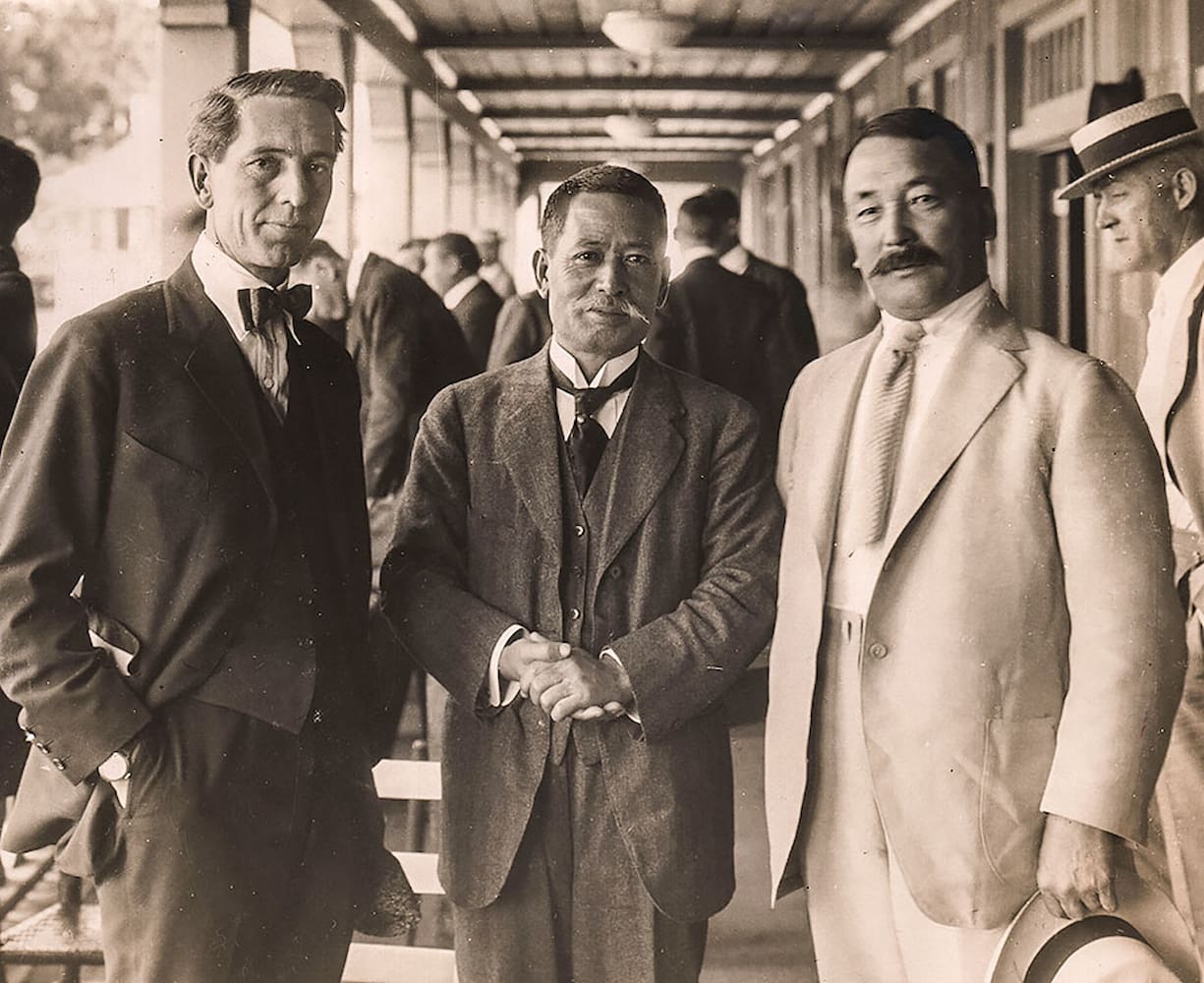
Image 28.01.01 — The economic success of Japanese immigrant George Shima’s potato farm earned him the title, “Potato King.” Shima (right) became the first Japanese American millionaire.
Shima is an example of an entrepreneur—someone who takes on the financial risk of running a business or creating an innovation. Many Asian Americans became entrepreneurs to escape exploitative working conditions, while others saw entrepreneurship as a way to overcome language, racial prejudice and other barriers to greater economic mobility.
In this module, we learn how Asian American businesses and entrepreneurs helped form communities. We also consider how structural racism, including racist laws and policies, have affected Asian American financial success.
What is an entrepreneur?
What are the historic, geographic, and demographic features of Asian American entrepreneurs and their businesses?
How does the myth of self-reliance conceal their lived realities?
Early Entrepreneurs
Most Asian immigrants in the United States prior to the twentieth century were laborers. While they had limited access to economic capital, many found ways to start businesses. Some entered sectors that had low start-up costs, such as operating hand laundries. Others had family and ethnic community resources to help raise money to start a business.
Because they could not access commercial or private banks, many aspiring entrepreneurs turned to community resources such as rotating credit associations. Widely used across the globe, rotating credit associations formed as an informal method of saving and lending. A group of people contribute to a pot of money, and members take turns to receive the whole sum. Korean immigrants referred to such pooling of resources as a “kye.” Japanese immigrants called it “tanomoshi” and Chinese immigrants referred to it as “hui.” In the late nineteenth into the early twentieth century, Asian Americans were able to start in agriculture because of these rotating credit associations.
When state governments began to pass alien land laws in 1913, Japanese American agriculturalists navigated around these laws by passing their land to their American-born children, who were citizens by birth. State lawmakers then attempted to prohibit this strategy with more policies, and in some cases the states were successful. Japanese Americans fought back in courts of law, leading to important court precedents such as the California Supreme Court case of Estate of Tetsubumi Yano (1922). It was not until 1952, however, that the US Supreme Court ruled in Sei Fujii v. California (1952) that the alien land laws violated the Constitution’s Fourteenth Amendment’s equal protection clause.
Early Community Economic Resources
In the face of these hostilities, Asian American communities formed organizations for mutual support and collective action. Such organizations included:
- The Chinese Consolidated Benevolent Association, also called the Chinese Six Companies, formed in San Francisco in 1883, combining six huiguan or regional associations. The Chinese Consolidated Benevolent Association supported Lee Wick in his landmark court case.
- The Hindustani Farmers Company formed in the 1920s to support Punjabi cantaloupe growers in the Imperial Valley in Southern California.
- Some organizations fostered transnational networks for business, such as Chinese jinshanzhuang, which functioned as trading companies between China and the United States.
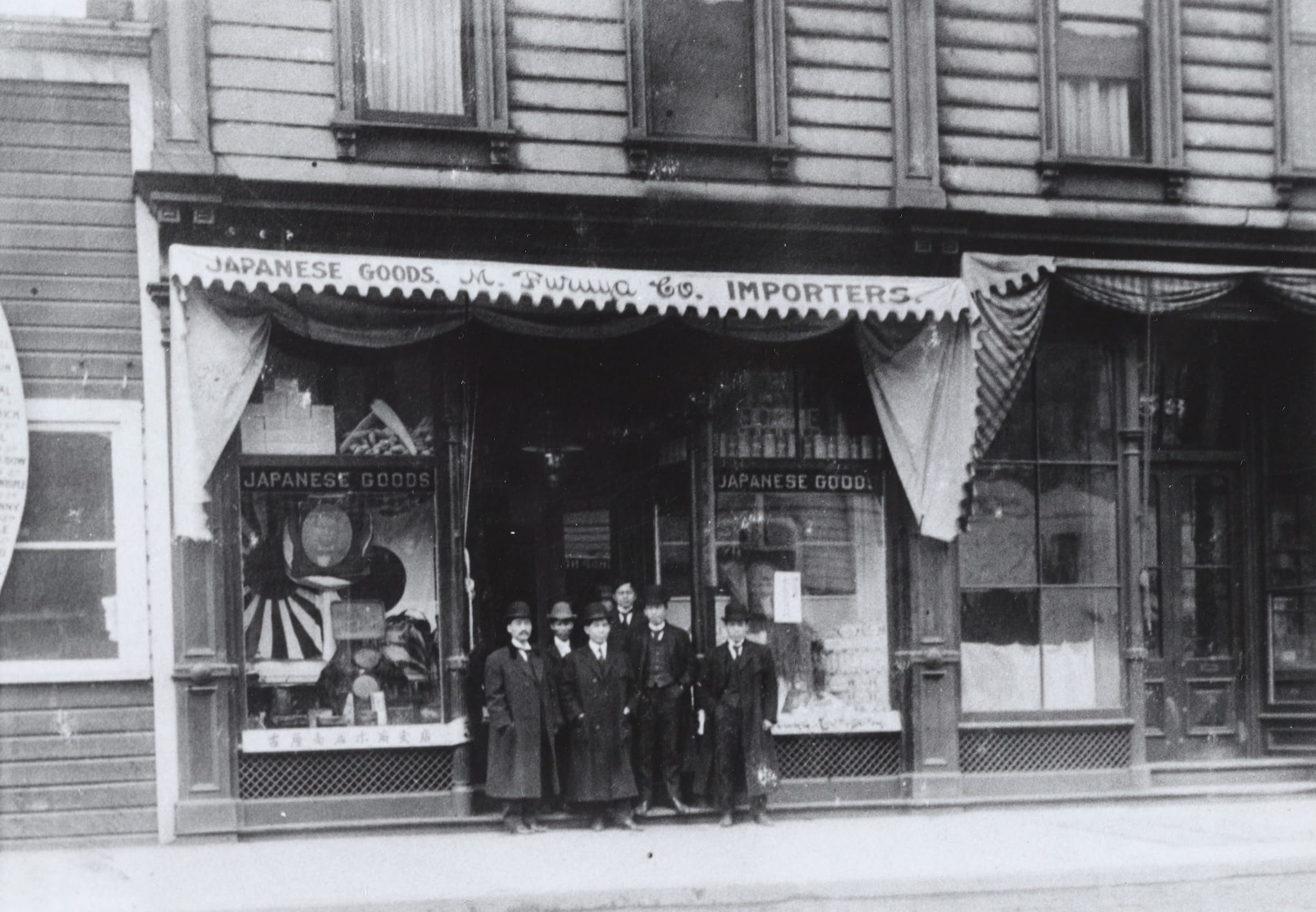
Image 28.01.03 — A photograph of a branch of Furuya Shoten, a Japanese American goods store established by Japanese immigrant Masajiro Furuya. The store catered to Japanese American communities in Seattle, Washington, and surrounding areas.
The growth of ethnic communities and urbanization also aided in the development of Asian American businesses. This was especially true for those catering to their ethnic communities, whose shared language and culture gave them an edge in providing services like medicines and food. Cities supported a diverse array of businesses in ethnic enclaves like Chinatowns, Manilatowns, Cambodia Towns and Little Indias in big and small cities across the country. The formation of these ethnic enclaves persisted into the post-1965 era and developed as the Asian American population grew. These ethnic communities have continued to provide important sources of support and sustenance for Asian Americans and ethnic businesses.
After World War II, US foreign and immigration policies, such as the Hart-Celler Immigration Act of 1965, led to greater numbers of Asian professionals coming to the United States. But despite their backgrounds and higher education, some challenges remained very much the same as those of their Asian American predecessors. Many new Asian immigrants were unable to find jobs comparable to their education. They also experienced language barriers and racism in the American labor market. Like Asian Americans of the past, some turned to entrepreneurship to gain greater control over their economic lives. And like their predecessors, many of their strategies were the same—the use of rotating credit associations, reliance on family labor and resources, and collective action with co-ethnics.
Modern Entrepreneurs: Asian American Small Businesses
By the mid-twentieth century, some Asian American employers began to make inroads into certain industries. For example, some moved into the garment industry in New York City. Starting in the 1940s, the second generation of Chinese Americans—the sons and daughters of Chinese Americans who had run small businesses like laundries—began investing family capital to become owners in the garment manufacturing industry. This industry employed large numbers of Chinese co-ethnics. By the early 1990s, Korean Americans had also entered the garment industry. They supported Asian American designers, including New York-based designers like Phillip Lim and Alice Cheng.
The number of Asian immigrant businesses increased in the United States in the post-1965 era. Their circumstances and places of origin reflected American imperial wars abroad and policies like the Hart-Celler Immigration Act of 1965. For example, it was during and after the American War in Vietnam that substantial numbers of Southeast Asian refugees began arriving in the United States. And the abolishment of the national-origins quota system in favor of family reunification and skilled workers led to increased immigration from Asia and the Americas. This included many from India, China, Philippines and Korea.
Over time, the small business activities of Asian American entrepreneurs grew to be synonymous with certain sectors such as motels, retailers, grocery stores, nail salons, and donut shops. For example, as the American leisure industry grew with the expansion of the federal highway system, Asian Indians expanded and developed the budget motel industry starting in the mid-1900s. By 2000, Asian Indian immigrants, mostly from the Gujarat region of India, owned between 50 and 60 percent of the motel chains in the United States.
In the 1980s, many Korean Americans in New York City became prominent as fish retailers and drycleaning business owners, replacing the Chinese American laundries that had declined after retail washing machines became more readily available in the post–World War II period. Korean Americans also pioneered the twenty-four-hour grocery, which developed after buying green groceries from retiring white ethnic Jewish and Italian immigrants or from establishing their own grocery shops.
Korean American women business owners in the New York City metropolitan area did the same with nail salons and personal services previously run by Russian Jewish immigrants. Then they expanded the beauty business into facial care and spa operations. Nationally, Vietnamese Americans have become increasingly dominant in the nail salon industry since the late 1970s, drawing inspiration from Black culture and opening in Black neighborhoods, at times in collaboration with Black entrepreneurs. A prominent pioneer was Olivett Robinson and Charlie Vo’s nail salon chain called Mantrap Nails. This chain began in South Los Angeles in 1983 and has been recognized as pioneering a path for other Vietnamese entrepreneurs to follow into the industry.
Listen to
An interview with Adele Free Pham
Adele Free Pham: One of the women is Vietnamese, and the other one is African American. And I really believe this was where the Vietnamese found their footing in the nail salon industry – right? – because they brought the price down to a point where working-class women could afford this luxury. And Black women just brought an art to it, right?
Audio 28.01.04 — In an interview with National Public Radio (NPR), Adele Free Pham explores her curiosity on how Vietnamese nail salons entered Black neighborhoods by filming with Mantrap Nails founders, Olivett Robinson and Charlie Vo. Their partnership marked a major shift in nail culture shaped by Black and Vietnamese women.
Another example of Asian Americans influencing a business sector is the story of Ted Ngoy. He was a Cambodian American refugee who arrived in the United States in 1975 with his family, and who eventually opened a donut shop. Ngoy later expanded his donut shop into a chain, helping other Cambodian families to open their own. By the 1990s, Cambodian donut shops numbered over 2,400 in California, and Ngoy had made his pink donut boxes synonymous with donuts themselves, earning the name “Donut King.” Ngoy’s story has been used as an example of the American Dream, including by Ngoy himself. But his story is also an example of the volatility of entrepreneurship: Ngoy, colored by newfound fame and economic wealth, eventually lost his fortune and was forced to return to Cambodia to rebuild his life.
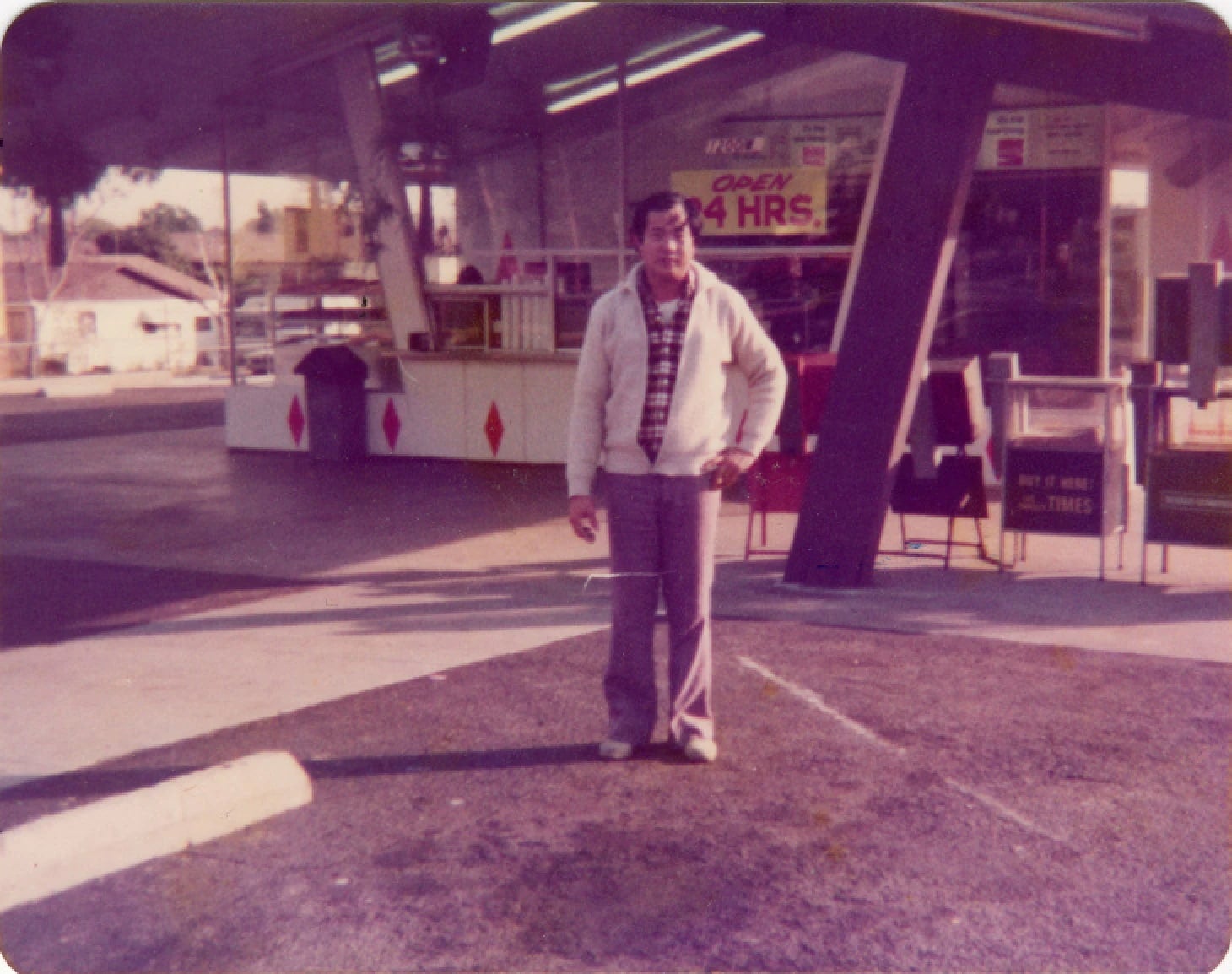
Image 28.01.05 — Before earning the title “Donut King” with his multi-million dollar donut empire, Ted Ngoy came to the US as a Cambodian refugee. This Ngoy Family photograph published by LAist captures Ngoy in 1977, standing in front of the first shop he bought in La Habra, California.
Over the years, some Asian American business owners did not abide by contemporary labor laws and practices, instead underpaying and overworking their workers. Others took advantage of the marginalized statuses of their labor force, particularly those who were women, undocumented, or had limited English proficiency. In the infamous case of Thai garment workers in El Monte, California, during the 1990s, seventy-two Thai nationals, mostly women, were found captive by Thai labor trafficking employers. This case of modern day slavery led to changes in state and federal law, including the Victims of Trafficking and Violence Protection Act of 2000.
Business Intermediaries: Challenges and Consequences
Some Asian Americans, mainly immigrants, opened businesses in communities that were badly impacted by the deindustrialization of the late 1900s, when the loss of manufacturing industries left high rates of poverty and economic losses in especially Black communities. In Los Angeles, for example, parts of South LA had been abandoned by major retailers and grocery chains, with banks refusing loans in certain “redlined” areas, and discrimination by business and financing agencies resulting in a lack of Black-owned businesses in predominantly Black neighborhoods.
Recently arrived Korean immigrants started many small businesses, particularly liquor stores in South LA and elsewhere, with savings they brought with them or borrowed through ‘kye,’ or rotating credit systems. But many did not speak English well and most had very little understanding of the culture and history of Black America. Incidents of harassment and targeting of Asian American business owners combined with acts of disrespect towards Black customers and surrounding crime often undermined community attempts to build mutual understanding and solidarity around shared visions and values.
In the late 1980s and early 1990s in New York City, Korean American retail businesses began replacing white-owned businesses in minority neighborhoods. They became “middlemen” or intermediaries between largely white suppliers and Black communities. During this time, Korean American owners became the targets of verbal threats, physical violence, boycotts, and arson. Increased tensions were exacerbated by “mutual prejudice, language barriers, and cultural differences.” 1 In response, many Korean American entrepreneurs turned to ethnic associations for support. One of these associations, the Korean Small Business Service Center, was founded in 1985 by Sung Soo Kim, who worked to politically mobilize the Korean American business community in New York.
Boycotts organized against Korean American businesses were a response to a host of problems that went beyond interpersonal relations, but were a result of dreams denied in the Black community. Redlining by banks, housing and job discrimination, heavy police surveillance, and lack of city services and programs added to historic inequalities, particularly in long established Black communities like South Los Angeles, California.
In 1991, Soon Ja Du, a Korean American liquor store owner in a predominately Black neighborhood in South Los Angeles, shot and killed fifteen-year-old Latasha Harlins after a confrontation in Du’s store. Du was convicted of voluntary manslaughter, but she received no prison time. This angered many, especially in Los Angeles’s Black community, as a serious injustice of the court.
That same year, four white Los Angeles police officers were videotaped beating Rodney King, a Black driver. On April 29, 1992, after the officers were found not guilty, these events came to a violent apex in the form of the Los Angeles Uprising, which led to the burning of Los Angeles’s Koreatown and the destruction of 2,400 businesses, most of which were Korean American-owned.
More than sixty people died in the Los Angeles Uprising, which is referred to in Korean as Sa I Gu (literally 4-2-9) to indicate the date of the Uprising, April 29. Among those killed included eighteen-year-old Edward Song Lee, who was trying to protect shops from being looted and was inadvertently shot by another Korean American.
This tragedy captures many contradictions of the American Dream. Hard work and perseverance are not enough to achieve financial success when living in a society fraught with racial, economic, and political problems embedded in the structure of cities and the histories that precede them.
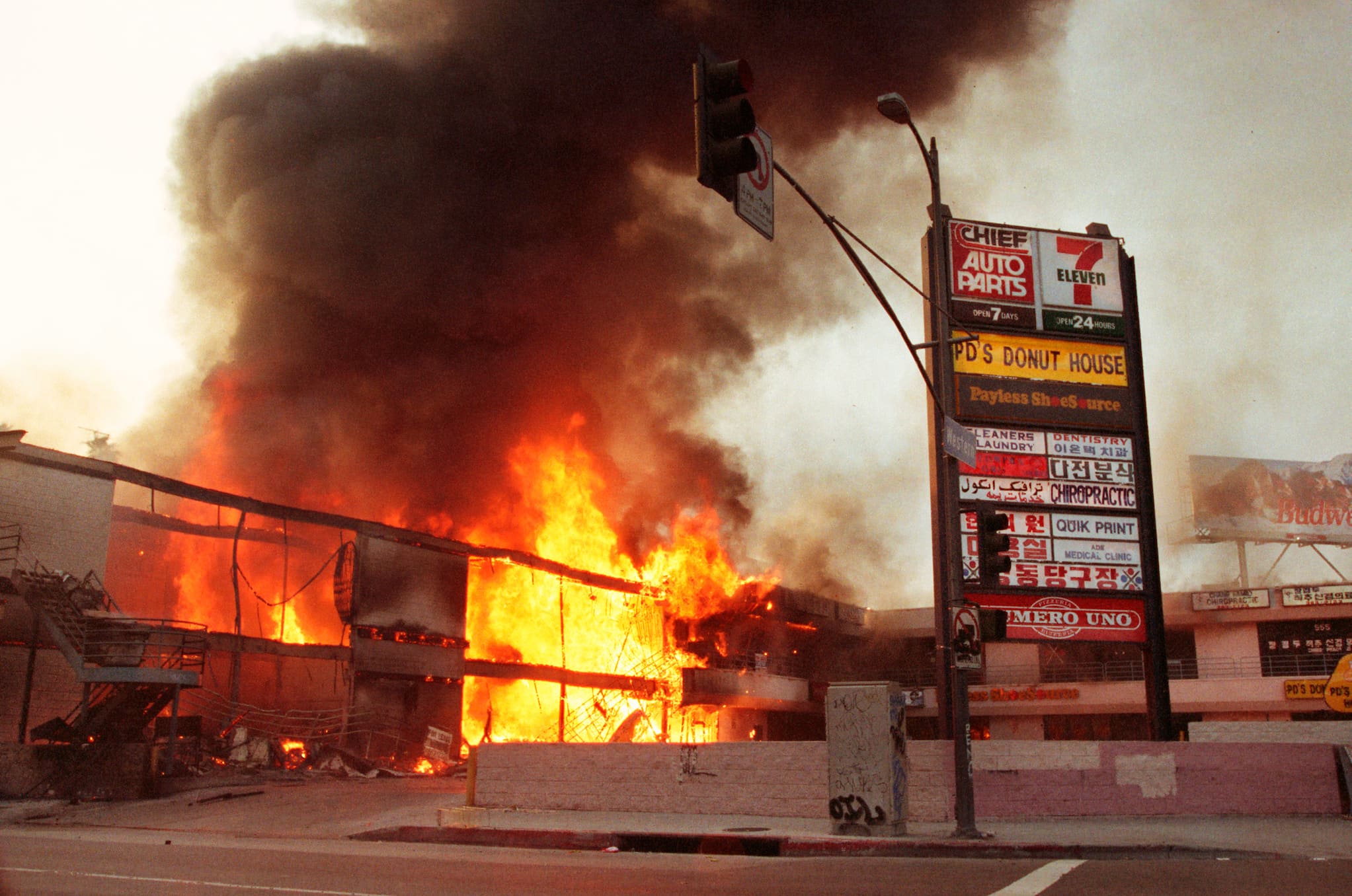
Image 28.01.06a — The Los Angeles Uprising erupted on April 29, 1992. The event is referred to in Korean as Sa I Gu (literally 4-2-9) to indicate April 29. Shown in this image is a corner shopping center during the burning of Koreatown on the third day of the Uprising.
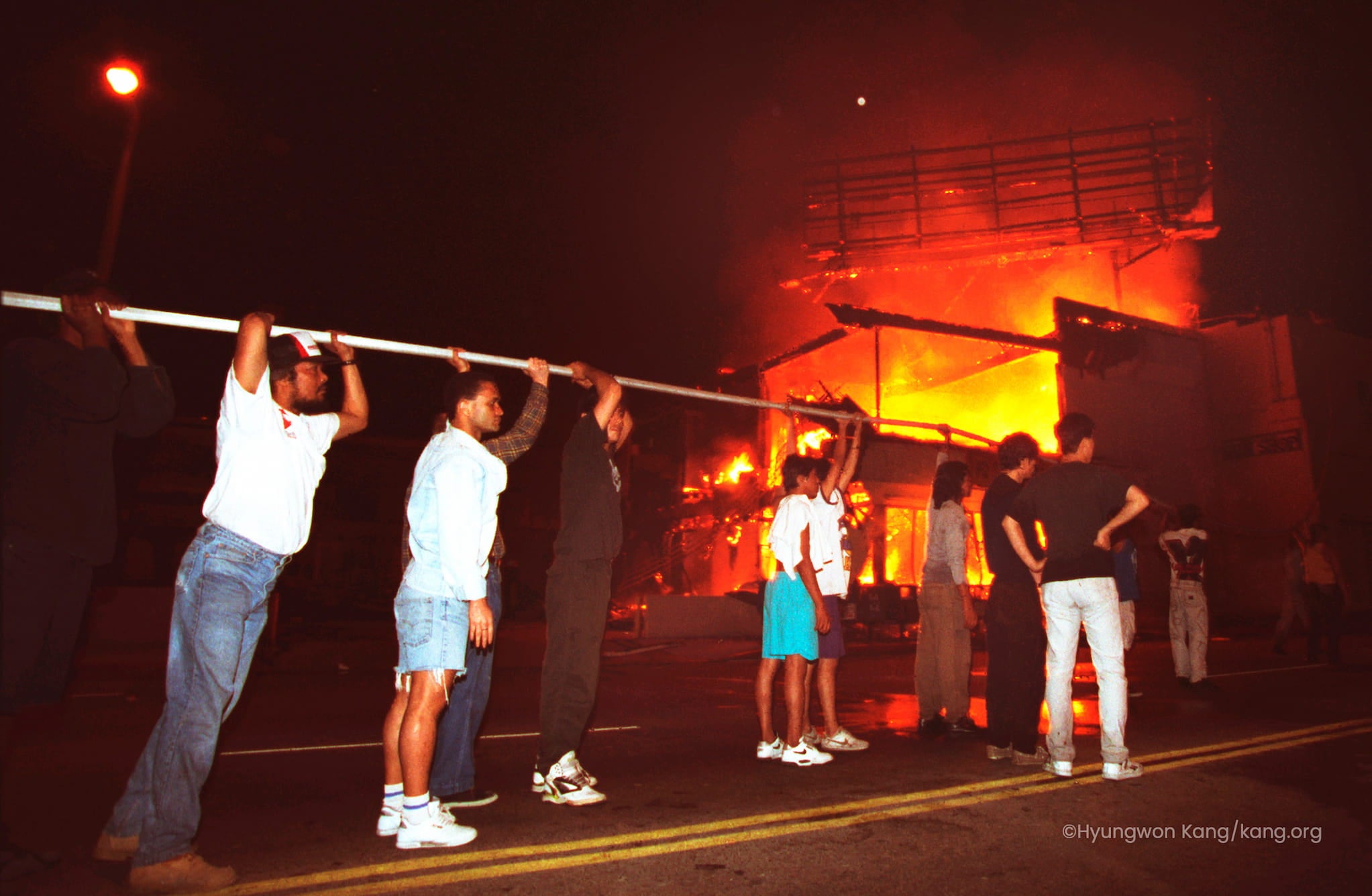
Image 28.01.06b — Community members help to extinguish fires engulfing a shopping center at the intersection of Western Avenue and Sixth Street. The shopping center was one of 2,400 businesses, most of which were Korean American-owned, destroyed during the Los Angeles Uprising.
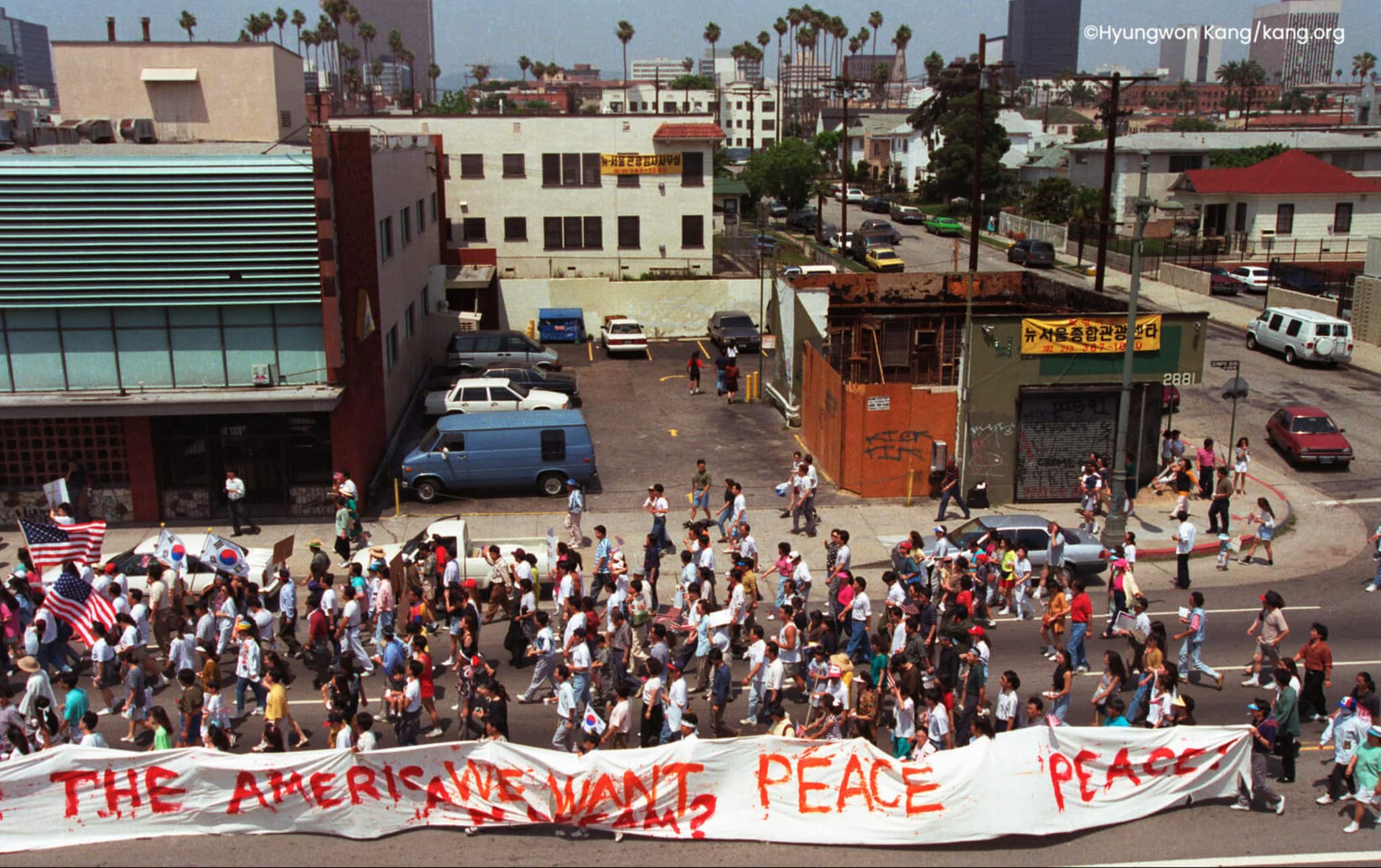
Image 28.01.06c — Demonstrators called for peace in Koreatown on May 2, 1992, marking four days of destruction and, by the end of the Los Angeles Uprising, over sixty deaths.



Asian American Small Businesses and the American Dream
This module highlights some of the challenges that have faced Asian American entrepreneurs. These challenges arise from their position in the labor market. These include:
- The circumstances of their migration, such as education, location and savings
- Navigating everyday discrimination from customers, bankers, landlords and others
- Being the intermediary between suppliers and their customer base, oftentimes in lower-income communities
In 2020, Asian Americans and Pacific Islanders owned over three million businesses, which is around 11 percent of businesses in the US while making up around 7 percent of the population. Historically, they have had more employees and higher sales on average compared to white-owned businesses, likely due to a higher level of education, more startup funds, and stronger community support.
Generally speaking, small businesses account for over one-third of the country’s economic output and over 99 percent of all US businesses. Around one-quarter are family owned ‘mom and pop’ shops. Business failures are not uncommon for entrepreneurs. About half of all new businesses fail after the first five years. Long hours and limited earnings make small business ownership a challenge for many.
While many entrepreneurs feel that being an independent business owner gives them an identity they strive for, their lived experiences provide valuable insights into the complications and contradictions of achieving the American Dream.
Glossary terms in this module
alien land laws Where it’s used
Laws enacted by California and other Western states in 1913 and 1920 that banned the purchase of land to “aliens ineligible to citizenship,” specifically targeting Asian immigrants, especially Japanese immigrants.
American Dream Where it’s used
The ideal that the United States is the land of opportunity where anyone can attain a successful and prosperous life, regardless of socioeconomic status.
capital Where it’s used
Money or possessions that are valuable and beneficial to its owner, typically used to generate more wealth.
collective action Where it’s used
A group of people coming together to organize and mobilize towards a common goal.
entrepreneur Where it’s used
A person who takes a financial risk and makes money from starting a business.
Hart-Celler Immigration Act Where it’s used
Also known as the Immigration and Nationality Act of 1965, this landmark federal law ended national-origin quotas and opened immigration to individuals regardless of race, sex, nationality, or place of birth, and introduced a preference system based on professional qualifications and family ties.
income Where it’s used
Money received on a regular basis from one’s labor or capital possessions.
rotating credit association Where it’s used
A method of saving and lending money where members collectively contribute money and take turns withdrawing it.
structural racism Where it’s used
Deeply embedded practices and patterns of racial discrimination within a society’s laws, policies, housing, media, healthcare, criminal justice system, education, and employment, among other fields.
wealth Where it’s used
Abundant possession of capital and/or money.
Endnotes
1 Pyong Gap Min, Ethnic Solidarity for Economic Survival: Korean Greengrocers in New York City (Russell Sage Foundation, 2008), 76, 80.