



PEOPLE AND EVERYDAY LIFE
Asian American and Pacific Islander Disability and Wellness
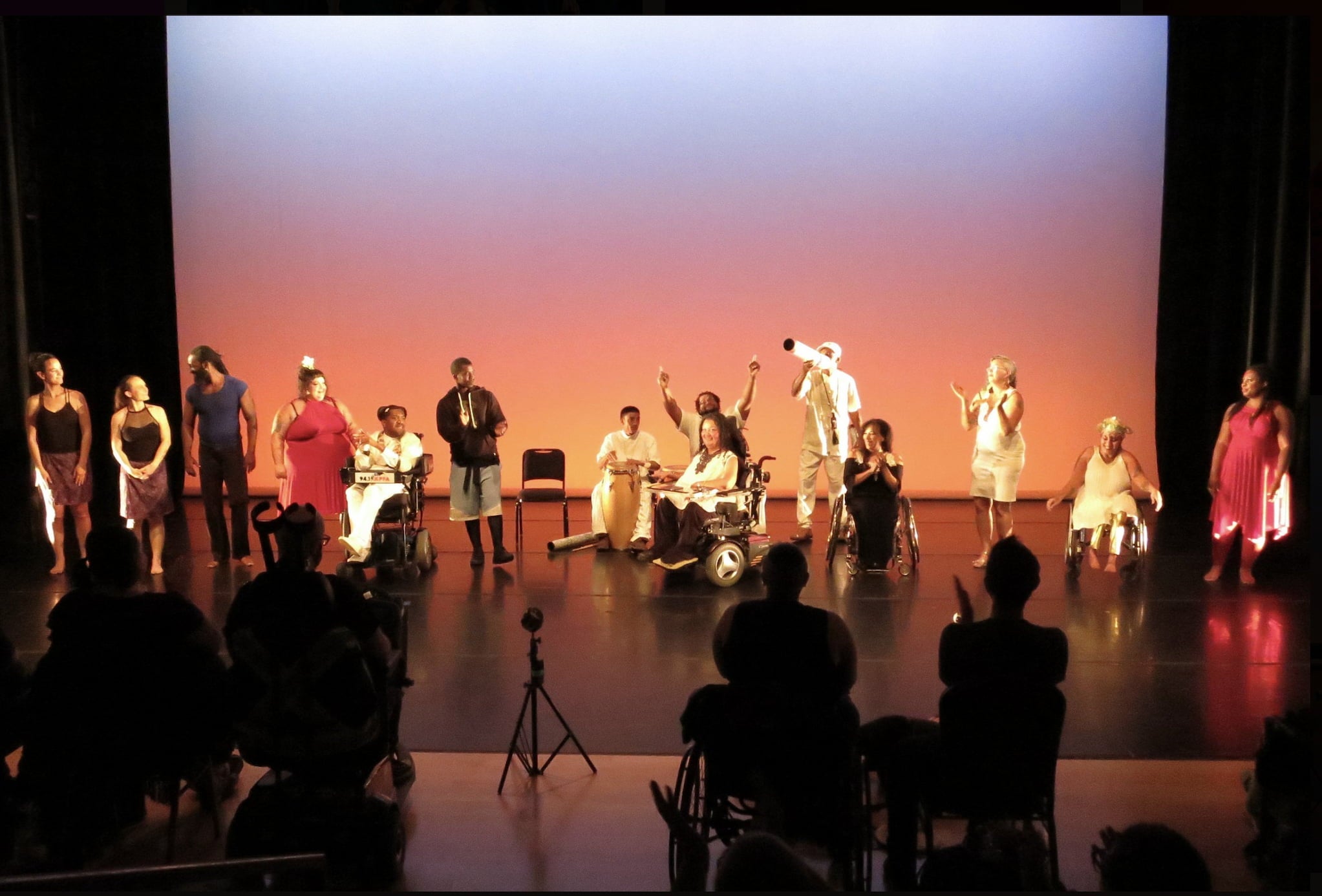
How have Asian American and Pacific Islander communities defined disability and wellness on their own terms?
Chapter objectives
- Learn key concepts such as disability, ableism, un/wellness, and mutual aid through an Asian American and Pacific Islander lens.
- Understand how Asian American and Pacific Islander unwellness is connected to social systems in US society.
- Explore connections of Asian American and Pacific Islander disability and illness to disability justice initiatives.
This chapter investigates how people understand disability, illness, and race, and how institutions and communities shape definitions of disability and un/wellness. We highlight how privilege, power, and justice relate to disability with a focus on Asian American and Pacific Islander communities. The history of disability studies, disability activism and rights, and disability justice is discussed, alongside concepts of the model minority, warrior mentality, and mutual aid. The history featured in this chapter illustrates how those classified as “Asian” have been subject to medical gaslighting, displacement, incarceration, and infrastructural neglect. The chapter explores debilitating systems, the process of disablement, media representations, care work, and disability justice, an activist framework developed in response to medical and governmental approaches to disability. The chapter also highlights Asian American and Pacific Islander activists, scholar-educators, and community organizers who have contributed to disability justice.
Modules in this chapter
Disability, Mutual Aid, and Modern Pandemics
Overview: Asian American and Pacific Islander Disability and Illness
Representations of Asian American and Pacific Islander Bodies, Disability, and Race
A History of Exclusion of People With Disabilities
Imagining Disability Justice
Disability, Mutual Aid, and Modern Pandemics
Overview: Asian American and Pacific Islander Disability and Illness
Representations of Asian American and Pacific Islander Bodies, Disability, and Race
A History of Exclusion of People With Disabilities
Imagining Disability Justice
Chapter Sources
“A Brief History of the Disability Rights Movement.” Anti Defamation League, March 5, 2017. www.adl.org/education/resources/backgrounders/disability-rights-movement.
Anesi, Juliann. “Action Makes a Difference: Creating Inclusive Spaces through Advocacy Work in Sāmoa” (Chapter 6), In Global perspectives on disability activism and advocacy, edited by Karen Soldatic and Kelley Johnson. Routledge, 2019: 83-96.
Asian Americans with Disabilities Initiative. The Asian Americans with Disabilities Resource Guide, 2022. https://www.ppmd.org/wp-content/uploads/2022/03/AADI2022ResourceGuide-011222.pdf.
Baik, Crystal, Diane Wong, Vivian Truong, Minju Bae, Preeti Sharma, Lena Sze, Amita Manghnani, and Mi Hyun Yoon. “To Write in Unwellness: Documenting A/P/A Voices.” Journal of Asian American Studies 25, no. 3 (2022): 493–515. doi:10.1353/jaas.2022.0038.
Banerjee, Puloma. “Ugly Law: When the US Banned Unsightly Individuals from Coming Out in Public.” STSTWMedia, March 2019.
https://www.ststworld.com/ugly-law/.
Berne, Patricia, Aurora Levins Morales, David Langstaff, and Sins Invalid. “Ten principles of disability justice.” WSQ: Women’s Studies Quarterly 46, no. 1 (2018): 227–230.
Berne, Patty and Stacey Milbern. “My Body Doesn’t Oppress Me, Society Does.” No Body Is Disposable, produced by Sins Invalid and the Barnard Center for Research on Women. Directed and produced by Dean Spade and Hope Dector, May 8, 2017. Video, 5 min., 8 sec. https://bcrw.barnard.edu/no-body-is-disposable-series/.
Campbell, Fiona Kumari. Contours of Ableism: The production of disability and abledness. Palgrave McMillan, 2009. https://doi.org/10.1057/9780230245181.
Chen, Mel Y., Allison Kafer, Eunjung Kim, and Julie Avril Minich, eds. Crip Genealogies. Duke University Press, 2023.
Choy, Catherine Ceniza. “The COVID Era is the Latest Episode of Medical Scapegoating of Asian Immigrants.” History News Network. August 7, 2022. Accessed August 30, 2023. https://hnn.us/article/183624.