





Module 3: Representations of Asian American and Pacific Islander Bodies, Disability, and Race
How have Asian American and Pacific Islander communities defined disability and wellness on their own terms?
This module examines the negative impact of stereotypes on health and wellness. It discusses the myth of Asian Americans as a model minority and its links to medical gaslighting and masking, or the practice of hiding one’s disability. This module also highlights how activists with disabilities have actively challenged the erasure and representation of Asian Americans and Pacific Islanders with disabilities through creating and producing their own stories.
US newspapers, magazines, films, and political speech reinforced negative stereotypes about Asian immigrants who were historically depicted as dirty, ugly, and dangerous. Pacific Islanders were also stereotyped as either promiscuous island maidens or hypermasculine “savage” warriors, admired for athletic prowess but not considered fully intelligent. In the late twentieth century, the concept of Asians as the “model minority” gained popularity with the influx of educated professionals from India, Taiwan, and other parts of Asia after 1965.
Hyperproductive bodies, dutiful workers, and academic success were emphasized as the foundation for social mobility. Some Asian Americans internalized the model minority concept as a path to assimilation and acceptance in the US, but the idea also exacerbated racial divisions, intensified masking and the denial of disabilities, and negatively affected mental and physical health. Long-held stereotypes continue to exacerbate harm and violence against Asian American and Pacific Islander bodies.
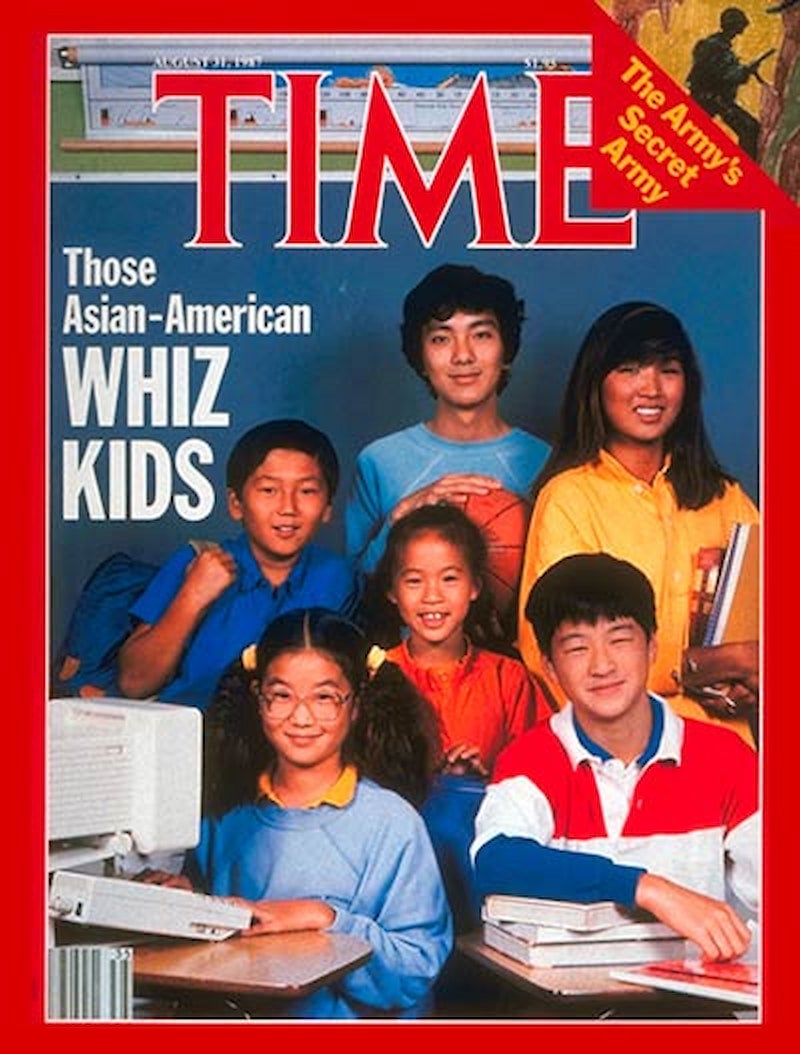
Image 30.03.01 — This 1987 cover of TIME illustrates the mainstream misperception of Asians as the “model minority” during the influx of educated professionals immigrating from Asia to the US after 1965.
What media representations of Asian American and Pacific Islander disability exist?
How do media stereotypes affect public health, disability, and wellness?
In what specific ways do racial assumptions and social and economic disparities affect the (medical) treatment of Asian American and Pacific Islander people?
Ableism and Model Minorities
Retired Professor Sucheng Chan was one of the first Asian American scholars to write about living with disability. Her 1989 autobiographical essay discusses the moral model of disability and ableism in Asia and how she navigated US educational spaces as a disabled Asian American woman. Debilitated by polio and pneumonia at age four, Chan was unable to walk without assistance. During the 1940s, no school in Shanghai, China, would accept her as a student because of her limited mobility.
Chan describes how Confucian ideas supported the moral model of disability, which interprets illness, neurodivergence, or disability as a kind of punishment for bad behavior, past sins, “karma,” or bad luck. Chan’s father’s friends often connected her childhood illness with her father’s past, and Chan’s father internalized this blame and repeatedly apologized that his youthful choices had caused his daughter’s misfortune.
Undaunted by ableism, racism, or sexism, Chan became the first faculty member to chair a department of Asian American Studies at a US research university. She also became a founding editor of the first book series in Asian American studies and was the first Asian American in the University of California system to hold the title and rank of provost.
Despite Chan’s successful career, ableism, negative beliefs associated with illness, and internalized stigma still contribute to silencing about disability in Asian American and Pacific Islander communities, but attitudes are also changing.
Disability, neurodivergence, and mental health are often misunderstood and denied in Asian American and Pacific Islander communities due to anxiety and the stigma attached to asking for help or seeking therapy. Intensifying this silence and invisibility is the widespread tendency to misconstrue mental distress or illness as a weakness or a personal failure.
Filmmaker Ann Hu, whose daughter’s dyslexia inspired her 2021 film Confetti, offers some insight into why Asian Americans are often under-diagnosed in relation to learning disabilities:
“Asian families tend to believe that children can power through their learning problems by working harder, as that was my belief as well for a long time…Seeing how [my daughter] Michelle struggles…every day was truly a heartbreaking experience for me. Often Michelle would pretend that she understood the question just to help me feel less stressed.” 1
Michelle’s behavior is an example of masking: ways that people try to hide their disability or to deny their limitations in order to gain approval or to not cause “trouble.” Masking takes a heavy toll on the energy and capacity of people with disabilities and also reinforces ableism and invisibility. Hu eventually found a school that changed her daughter’s life and transformed her perspective from being a stressed, anxious parent to understanding that some learn differently.

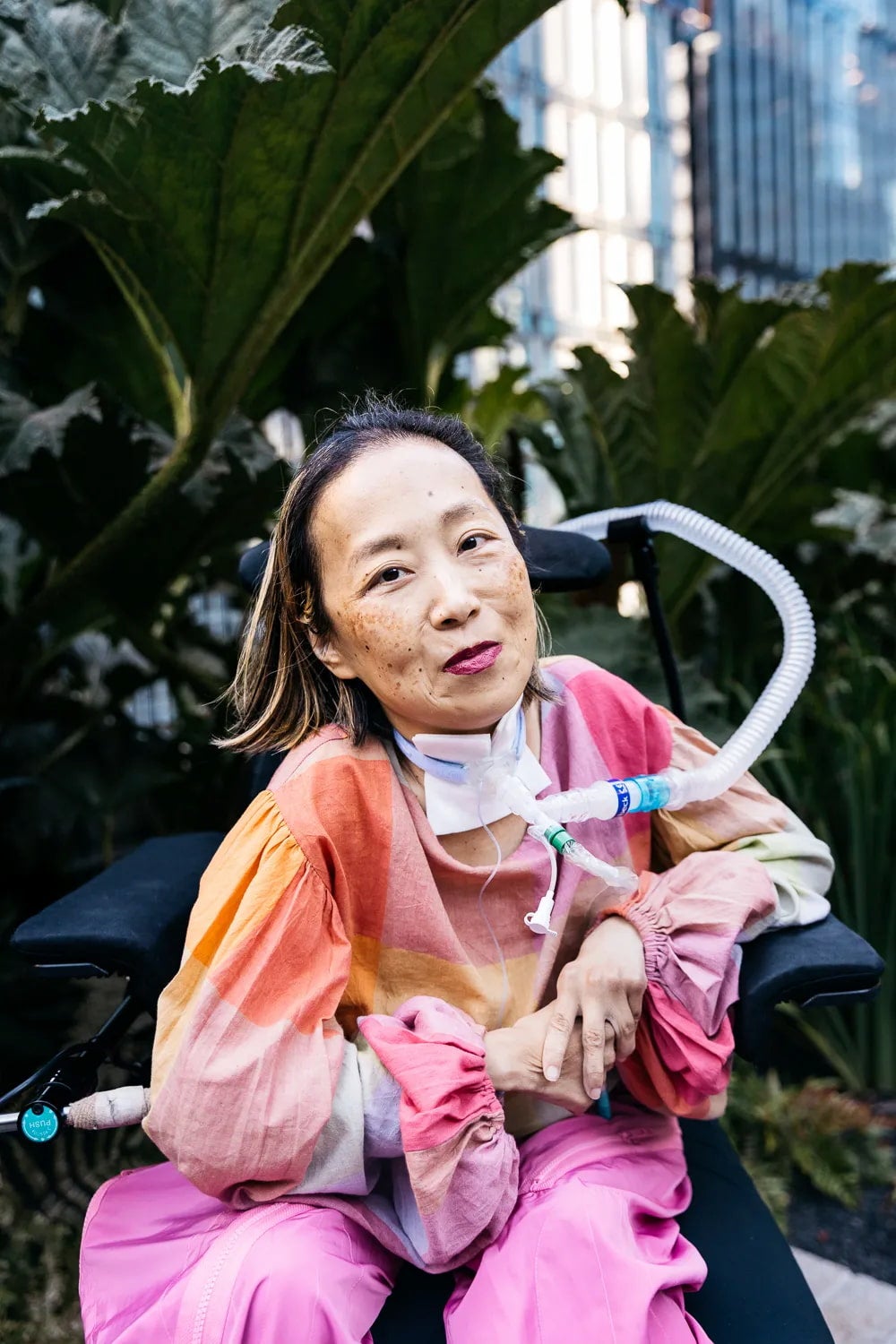
Image 30.03.02 — As founder and project coordinator of the Disability Visibility Project, activist-ancestor Alice Wong (1974–2025) amplified countless stories of people with disabilities.
Activist-ancestor Alice Wong (1974–2025), who self-identified as a “disabled cyborg,” started the Disability Visibility Project in 2014 to combat stereotypes and internalized stigma that factor into Asian American and Pacific Islander invisibility and popular misunderstandings about people with disabilities.
Wong shared her own experiences of being a disabled Chinese American growing up in the predominantly white Midwest in her 2022 memoir, Year of the Tiger: An Activist’s Life. As an editor, podcaster, producer, and archivist, she amplified countless stories of people with disabilities. In one 2016 talk, Wong recounted the words of a person named Esther on the erasure of Asian Americans and Pacific Islanders with disabilities:
“I don’t think people think we exist. The model minority myth is so pervasive that AAPIs with disabilities are erased from all communities … there’s also a huge shame factor that has to do with the different cultures …that prevents AAPIs with disabilities and their families from being outspoken within the “mainstream” disability community and society in general.” 2
Ethnic Studies scholar Eliza Noh has long asserted that the “model minority is not doing well.” 3 Noh’s research and autobiographical essays illustrate how the racial stereotype punishes those who may feel inadequate with a damaging sense of failure and low self-esteem that can lead to self-harm or suicide; she also highlights how even Asian Americans who apparently “succeed” or survive might also pay a high price in terms of mental health and physical well-being.
Ableism and racism operate together. Korean American scholar James Kyung-Jin Lee unpacks how the model minority functions as a “dangerous identity formation” in which Asian Americans are assumed to be exceptionally disciplined and healthy, immune to vulnerabilities and risk. 4 Racial stereotyping by medical or service providers and internalized assumptions can prevent Asian Americans and Pacific Islanders from accessing the care or support that they need.
As stated above, Pacific Islanders are often stereotyped as aggressive, represented as “savage,” “primitive,” fierce athletes, or muscular action heroes. The stereotype of Pacific Islanders as hypermasculine, unruly, or potentially dangerous not only invisibilizes disability but also justifies increased policing of Pacific Islander communities and mistreatment of their children as adults during confrontations.
More to explore
Medical Gaslighting
Ableism combined with implicit bias can prevent Asian Americans and Pacific Islanders from getting educational assistance or other services. Medical racism can also lead to medical gaslighting or neglect.
Medical gaslighting refers to medical professionals telling patients or their caregivers that their knowledge, experiences, and observations are false, which can lead people to question what they know to be true about their own bodyminds or their loved ones.
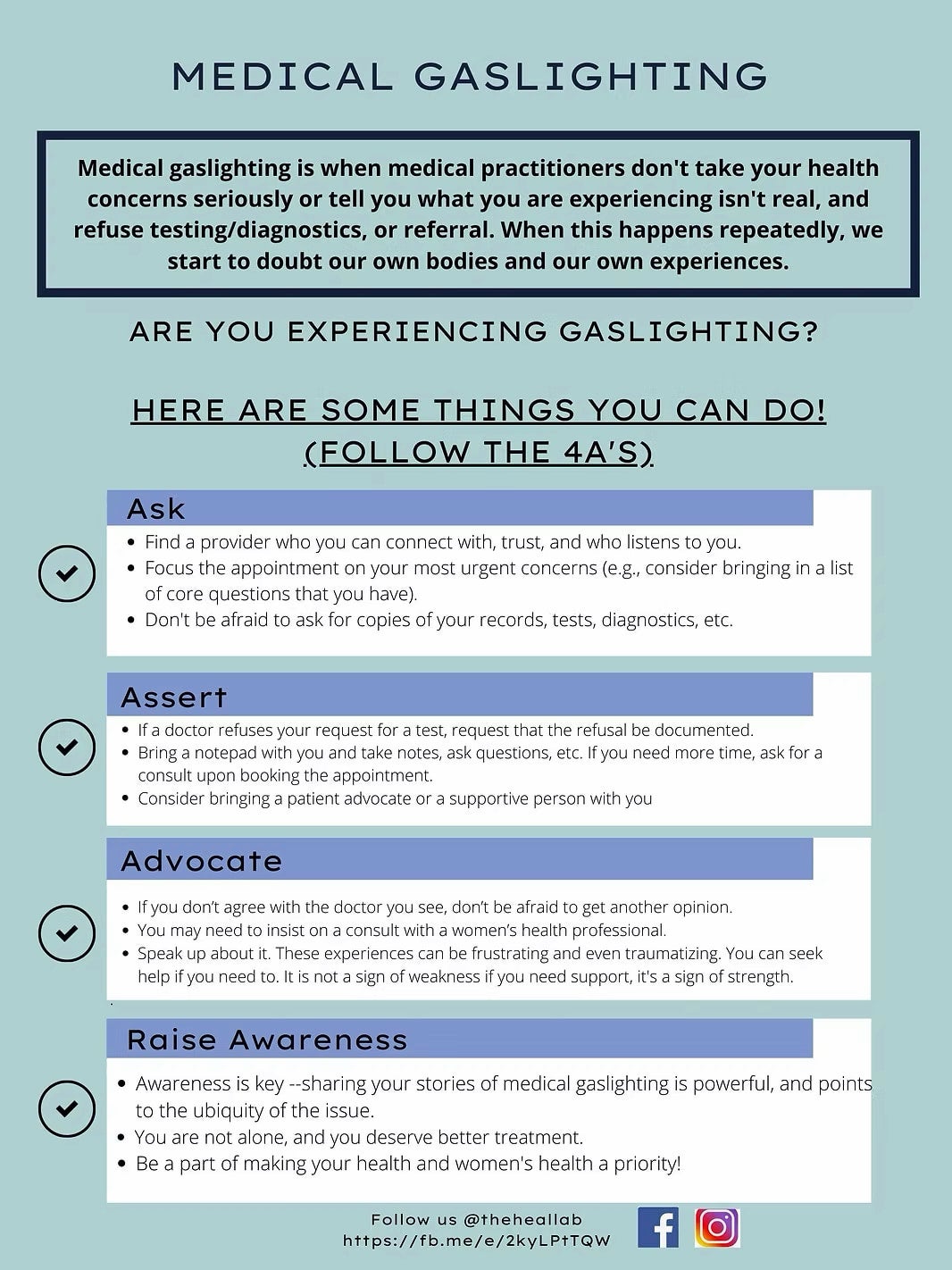
Text 30.03.04 — This infographic created by the Health Experiences and Longevity Lab (HEAL) defines “medical gaslighting” and outlines four responses.
Korean American student Jennifer Lee encountered medical gaslighting and resisted it with community organizing. Lee had long suspected that something was going on with her body, but doctors repeatedly told her that it was all in her head. After several genetic panels finally identified a chronic autoimmune condition, one doctor told Lee if she were white, then he would have screened her for Crohn’s immediately—because Asians are presumed not to have Crohn’s.
Lee realized that her perceived race had negatively impacted her diagnosis and medical treatment. Lee’s experiences motivated her to start the Asian American with Disabilities Initiative (AADI), a youth-led non-profit organization which seeks to empower people with disabilities and to change public understanding through advocacy work and information.
In a similar fashion, Meenakshi Das, an Indian immigrant software engineer and founder of Working with Disabilities, recalls that when she was trying to get disability accommodations in college, one professor asserted that “all Indians excel in math” as “geniuses,” so accommodations were unnecessary. This kind of model minority stereotyping and racial profiling can intensify masking and an avoidance of asking for help or accommodations even when needed.
Because most medical professionals have limited or no training in ethnic studies, they may minimize symptoms or ignore details in certain patients. This is partly why many immigrants, Asian Americans, and Pacific Islanders might avoid doctors. Native Hawaiians and Pacific Islanders report widespread mistrust toward providers who tend to blame them for medical problems, dismiss their cultural traditions, or ignore their concerns.
Pacific Islanders also explain that cultural expectations of strength (sometimes reinforced by an internalized “warrior mentality”) and a lack of resources continue to be serious barriers to seeking care. They link these social and economic barriers to high rates of suicide, substance use, and overdose deaths within their communities. Negative experiences related to skin color, appearance, precarious economic/insurance status, and scarce resources also contribute to a Pacific Islanders’ reluctance to seek medical care or to ask for disability accommodations.
Media Representations: Creating Visibility
Most do not know Dorothy “Dot” Chiyoko Sueoka Casterline (1928–2023), a pioneering Deaf Japanese American linguist and researcher who helped to codify American Sign Language (ASL). Born to parents of Japanese descent, Sueoka Casterline grew up in Honolulu, Hawaiʻi, and attended the Diamond Head School for the Deaf and the Blind after losing her hearing at age thirteen. Since deaf people were not allowed to drive in Hawaiʻi, Casterline worked with the Honolulu police to have those restrictions changed when she was a teenager in the early 1950s.
In addition to being the first student from Hawaiʻi to receive a degree from Gallaudet College in Washington, DC, she was recruited as a student-researcher based on her keen attention to detail and transcription skills. She became the first faculty of color at Gallaudet and co-authored A Dictionary of American Sign Language on Linguistic Principles (1965), a foundational text which established ASL as a distinct language with its own rules.
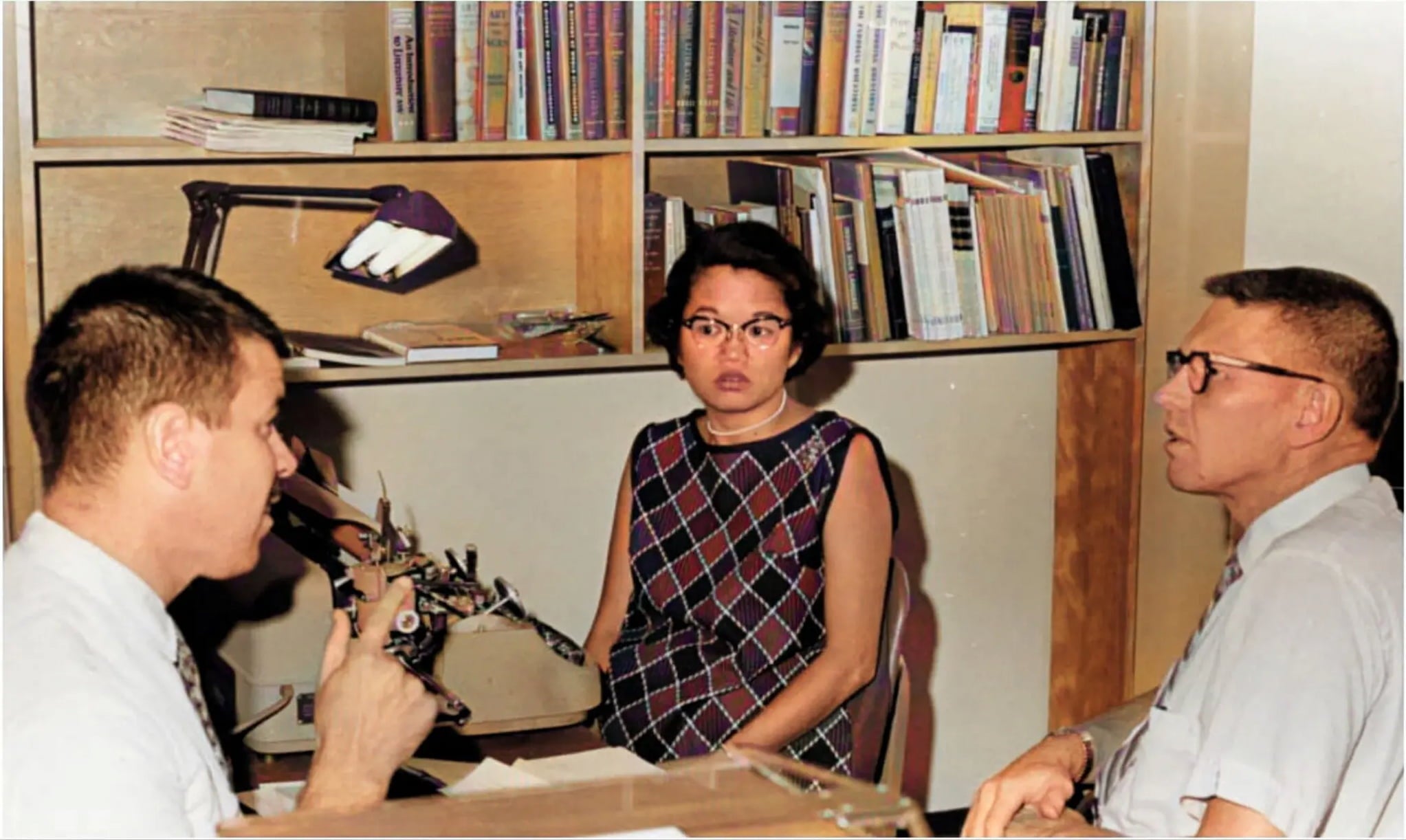
Image 30.03.06 — Dorothy “Dot” Chiyoko Sueoka Casterline at Gallaudet University in 1962. In addition to being the first student from Hawaiʻi to earn a degree there, Casterline also became the school’s first faculty of color and co-authored A Dictionary of American Sign Language on Linguistic Principles (1965).
Despite Casterline’s notable contributions to the development of ASL, Christine Sun Kim’s experience with the 2020 Superbowl illustrates how Asian Americans with disabilities still face limited media representation. When Fox Sports contracted Kim to sign “America, The Beautiful” and “The Star-Spangled Banner” at Super Bowl LIV, she was honored to be the first deaf Asian American artist to perform at the widely publicized event.
During the live broadcast, Fox Sports showed only two seconds of Kim’s charismatic ASL performance. Although the National Association of the Deaf (NAD) later shared Kim’s full performance on YouTube, she characterized the Superbowl as a missed opportunity in terms of media representation and inclusiveness. In a New York Times op-ed, Kim not only described the experience as a huge disappointment but also connected the limited visibility in mainstream media to unnecessary violence against people with disabilities.
A tragic example of challenges faced by Asian Americans with disabilities was the preventable 2026 death of Nurul Amin Shah Alam, a nearly blind Rohingya refugee from Myanmar. Unable to speak English and using a curtain rod as a walking stick, Alam was arrested for trespassing on private property and then jailed for not complying with officers’ commands to drop the rod. Alam tragically died in Buffalo, New York, after federal immigration authorities released him miles from his home on a freezing cold night without informing his family or lawyer.
As mentioned earlier, Chinese American ancestor Alice Wong also advocated for more representation for people with disabilities as a media producer and editor. Wong’s Disability Visibility Project was supplemented by her Disability Visibility podcast in 2017. In addition to her memoir, she edited three books that featured people with disabilities. Wong partnered with other Asian American activists with disabilities such as Mia Mingus and Sandy Ho to launch community-based projects such as disabledwriters.com, #CripTheVote, and #AccessIsLove. Wong’s influential work and Disability Visibility Project continue to inspire storytellers with disabilities, even after her passing.
Conclusion
This module examined the negative impact of the model minority myth and the persistence of harmful stereotyping, invisibility, and popular images that perpetuate ableism and racism. In the twenty-first century, new stories and art produced by people with disabilities have expanded the public understanding of being disabled and Asian American or Pacific Islander. Increased representation in popular media, activism, and advocacy have challenged some of the erasure, misunderstanding, and stereotyping around unwellness, Asian American and Pacific Islander mental health, and being disabled or chronically ill. This module concluded by highlighting some Asian Americans who have helped increase representations of people with disabilities.
Glossary terms in this module
ableism Where it’s used
Beliefs or practices that discriminate against those with disabilities. It is rooted in socially constructed ideas of normalcy, productivity, desirability, and intelligence that are taught through language, media, policies, and laws.
activism Where it’s used
An action or collective process, such as a strike, march, protest, legislation, or policy campaign by an individual or groups to bring about material, political, and/or ideological changes to the status quo.
bodymind Where it’s used
A concept used in disability studies that asserts that mental and physical processes give rise to and affect each other, and therefore should not be separated as binary terms (body vs. mind).
disability Where it’s used
Challenges or limitations in physical or cognitive functioning that can be either temporary, permanent, invisible, or visible. How a person experiences these challenges is related to not only individual factors but also social structures, institutions, and government policies.
masking Where it’s used
The ways that people try to hide their disability or to deny physical or cognitive limitations in order to gain approval, to fit in, or “pass as normal” so as to not cause “trouble” to others.
model minority myth Where it’s used
A social construct that frames certain minorities, predominantly Asian Americans, as more academically and professionally hard-working, adaptable, and more successful than other races and ethnicities. This myth perpetuates harmful consequences, such as creating a divide between Asian Americans and other non-white racial groups, particularly Black and Latinx people. It also fails to account for the diversity within Asian American communities.
stereotype Where it’s used
Generalized beliefs about a group of people based on one characteristic. Typically, stereotypes perpetuate harmful discourse about groups of people and are rooted in false and often racist beliefs.
Endnotes
1 Victoria Namkung, “Why Asian American kids are under-diagnosed when it comes to learning disabilities,” NBC News, October 1, 2021, https://www.nbcnews.com/news/asian-america/asian-american-kids-are-diagnosed-comes-learning-disabilities-rcna2425.
2 Alice Wong, “Asian Pacific Americans with Disabilities: Our Stories, Our Lives,” 9th Jacobus tenBroek Disability Law Symposium, March 31, 2016, https://disabilityvisibilityproject.com/2016/03/20/apa/.
3 Lisa Park, “A Letter to My Sister,” in Making More Waves: New Writing by Asian American
Women, ed. Elaine Kim, Lilia Villanueva, and Asian Women United of California (Beacon Press, 1997), 6; Eliza Noh published this 1997 essay and its 25th anniversary version under the pseudonym Lisa Park.
4 James Kyung-Jin Lee, Pedagogies of Woundedness: Illness, Memoir, and the Ends of the Model Minority (Temple University Press, 2021), 7, 19.