





Module 2: Overview: Asian American and Pacific Islander Disability and Illness
How have Asian American and Pacific Islander communities defined disability and wellness on their own terms?
“There is no reason for us to feel shame for who we are.
We were born into this world exactly as we are. We are who we were meant to be.“
– Stacey Park Milbern 1
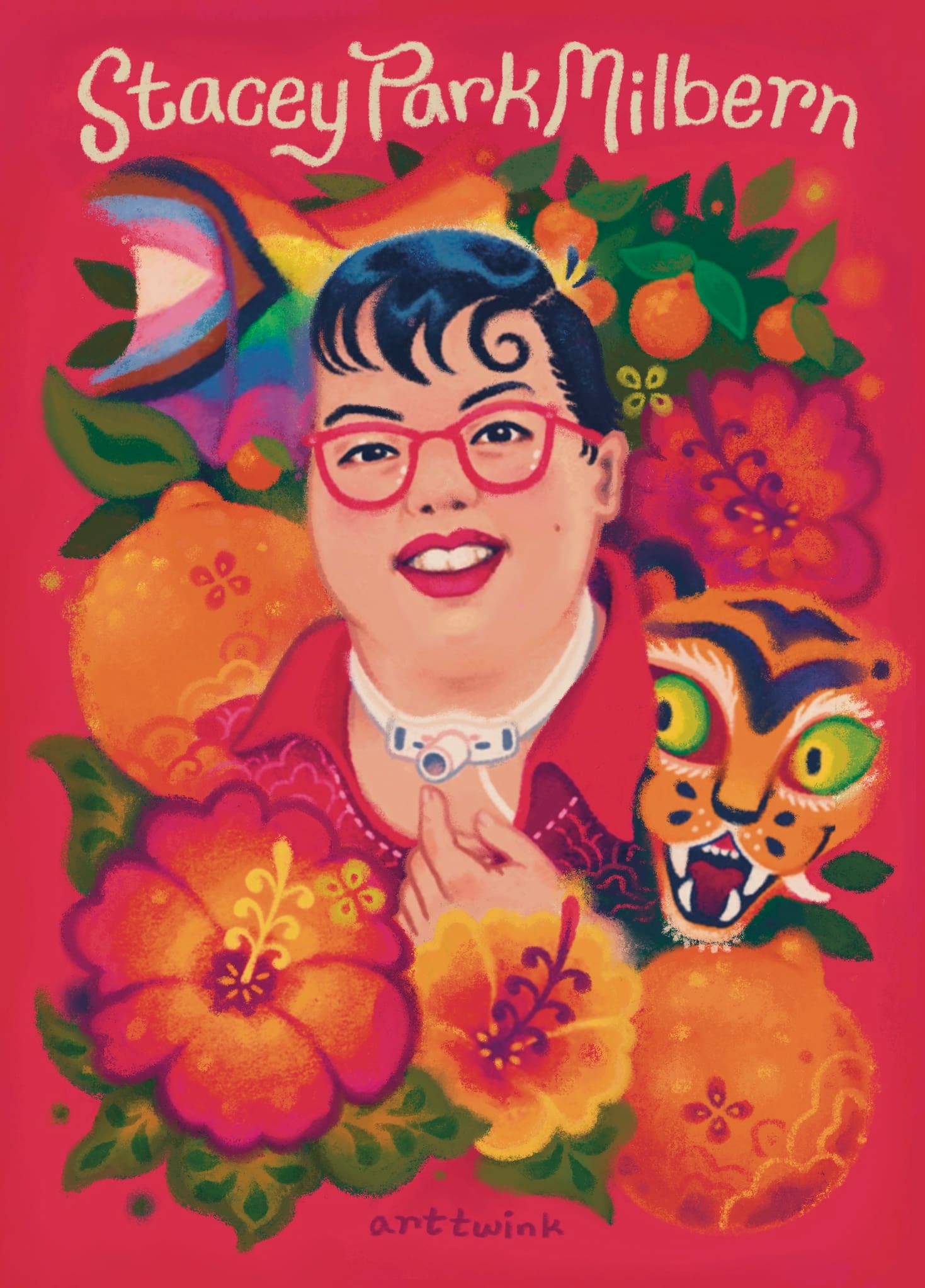
Image 30.02.01 — Korean American disability justice activist Stacey Park Milbern (1987–2020), illustrated by Bengali American artist Art Twink. For her activism and work as a co-founder of Disability Justice, Milbern was commemorated as the first female wheelchair user featured on a US quarter.
What is disability? That depends on who is doing the defining and for what purpose, as each stakeholder focuses on different factors. Disability is defined by persons with disability themselves, governmental and non-governmental organizations, and by researchers, activists, and advocates. This chapter emphasizes that definitions and conceptions of disability are not fixed nor unchanging across time, location, and culture. The meaning changes depending upon the context and who is using the term. Two people with the same diagnosis may not share the same experiences, and each person with a disability may define their experiences in different ways.
The World Health Organization’s (WHO) World Report on Disability states that disability is part of being human. Sixty-one million adults in the United States live with a disability. Disability can affect anyone at any age. More than 25 percent of young adults will become disabled before reaching retirement age. Every person is likely to experience challenges or limitations in functioning at some point in their lives.
This module provides a history of how concepts of disability have changed over time and offers an overview of Asian American and Pacific Islander populations with disabilities. It introduces the academic field of disability studies and further explores the concept of “disability justice” as a twenty-first century political movement started by people with disabilities to center the right to determine one’s future, interdependence, and intersectionality. The concept centers the lives of Black, brown, queer, and trans disabled people as whole and recognizes their leadership and knowledge as valuable. Disability justice is also a political vision that aims to work together across differences to achieve collective access and liberation, where no one is disposable or left behind.
How do definitions of disability vary across time, interest groups, institutions, and communities?
How has ableism impacted changes in the definitions of disability?
How have Asian Americans and Pacific Islanders influenced the definitions of disability?
Multiple Definitions and Models of Disability
People understand disability in varying ways. Institutional definitions of disability tend to center impairment in reference to physical capabilities or capacity. WHO defines disability as a limitation of bodily or cognitive functions—such as inability to hear or see, or conditions such as dyslexia or autism. Disability is also shaped by environmental and interpersonal factors, such as inability to access buildings or transportation, interpersonal or institutional discrimination, negative attitudes, limited social support, and forced displacement. Beyond one’s body and biology, environmental and structural conditions can shape “disablement,” or how a person or population experiences institutional or material barriers that limit or handicap them from fully participating in society.
People with disabilities have long fought for basic human rights, access, and accommodations needed for independent living. The first comprehensive US civil rights law focused on those with disabilities was the Americans with Disabilities Act (ADA) of 1990, which applies to people who have physical or mental impairment that substantially limits one or more life activities. This definition includes people who have a history of impairment that may be invisible or not immediately evident.
After activists helped to bring attention to discrimination and exclusion in the 1960s and 1970s, programs to understand disability were created at universities. In contrast to the medical model of disability that focuses on diagnosis and stresses “fixing” the impairment or “curing” the illness, disability activists and researchers emphasize the social construction model: analyzing social systems that create conditions of inequity, discrimination, and disablement, rather than thinking of disability only as an individual illness or a biological problem.
Since the 1990s, scholars in ethnic and legal studies have looked more closely at how people can face more than one kind of unfair treatment at the same time. The interdisciplinary academic field of disability studies has also adopted the analytical lens of intersectionality to examine how people can be disadvantaged by multiple systems of oppression simultaneously. The social model of disability challenges ableism and examines how commonly accepted ideas about what is “normal,” smart, attractive, or sane can shape how people experience disability.
Disability studies and disability justice activists approach disability as a social problem that requires collective action. In a 2017 conversation with another co-founder of disability justice Patricia “Patty” Berne, organizer Stacey Park Milbern emphasized that disability is a condition tied to structural conditions, not just based on one’s body: “If I’m in a place where my access needs are being met, then my impairment isn’t so significant.” 2 Milbern’s statement as a wheelchair user illustrates the social construction model of disability. She notes how institutional structures sometimes function as barriers that limit participation for some and thus can intensify disablement.
Author and educator Leah Lakshmi Piepzna-Samarasinha defines disability justice as mutual aid, interdependence, access for all, and collective liberation where freedom is enjoyed by everyone together. While disability justice was first conceptualized as a political vision in 2005, community-focused care work, such as collective action and mutual aid, is not a new practice but one with a long history.
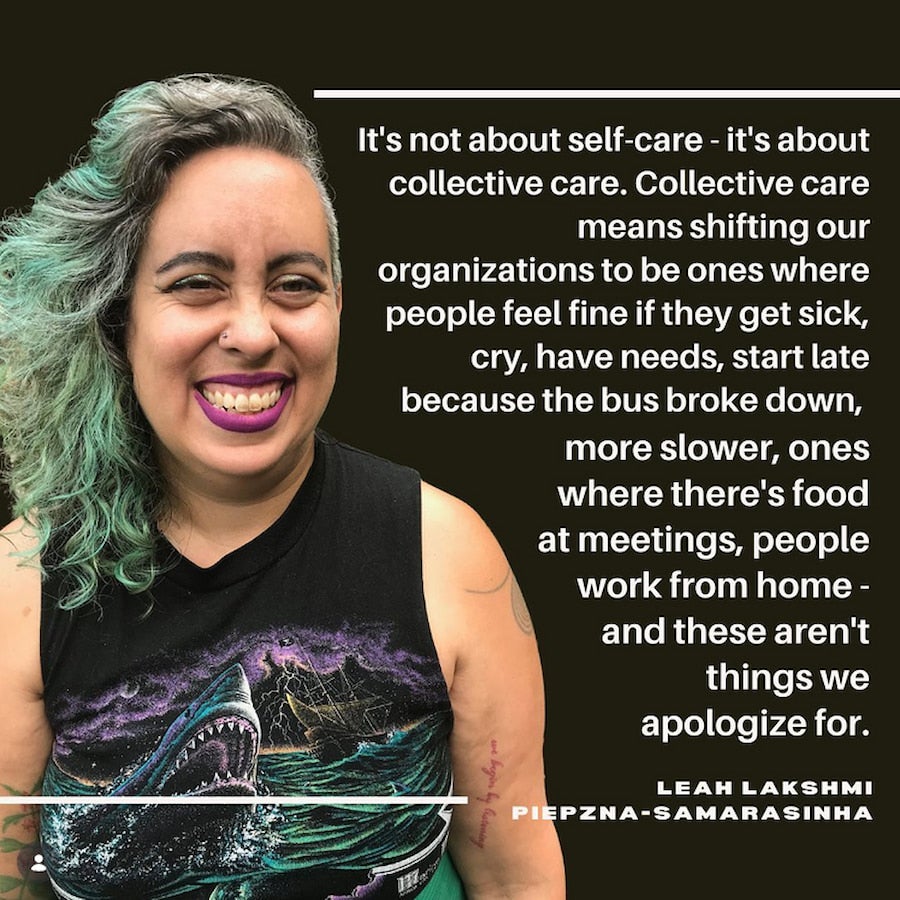
Image 30.02.03 — Activist, author, and educator Leah Lakshmi Piepzna-Samarasinha is shown in a graphic created by the National Equity Project and posted on Instagram. The quote highlights her stance on collective care.
Mutual aid has been practiced within immigrant, working-class, and marginalized communities as a means of survival outside of formal exchanges under capitalism and during times of hardship or crisis. Korean American activist Milbern explains, “My ancestors knew that asking after one another and making sure folks had what they need (what we might understand as collective access) was the only way to work together… the best shot at staying alive.” 3
Various Asian American and Pacific Islander scholars have joined these disability justice activists in highlighting how disability and chronic illnesses should be understood as more than an individual problem. Scholar Mimi Khúc coined the term “differential unwellness” to emphasize that everyone experiences disablement in different ways and to varying degrees. Differential experiences are not only shaped by one’s bodymind and circumstances, but also by institutions such as schools or workplaces.
Crystal Mun-hye Baik and other Asian American historians used the phrase “dwelling in unwellness” to describe the collective care and mutual aid they practiced with each other during the COVID-19 stay-at-home years (2020–2022); this orientation allowed them to explore connections between individual and public health, racism, and social conditions that intensify inequity.
The Concept of Ableism
Ableism shapes individual prejudice and social practices by classifying those with disability as “less,” a threat, or undeserving of rights and privileges. Ableism justifies discrimination based on a preference for able-bodied persons; it is a system that reinforces narrow ideas of what is “normal,” healthy, ideal, or productive by devaluing bodyminds that are different. According to neuroqueer educator Talila “TL” Lewis, ableism is a system rooted in assigning different values to individual characteristics, which are then tied to access and resources. Differences related to birth place, culture, ancestry, appearance, language, religion, age, (re)productive capacity, and the ability to excel and behave in specific ways are used to determine who gets certain rights or social benefits.
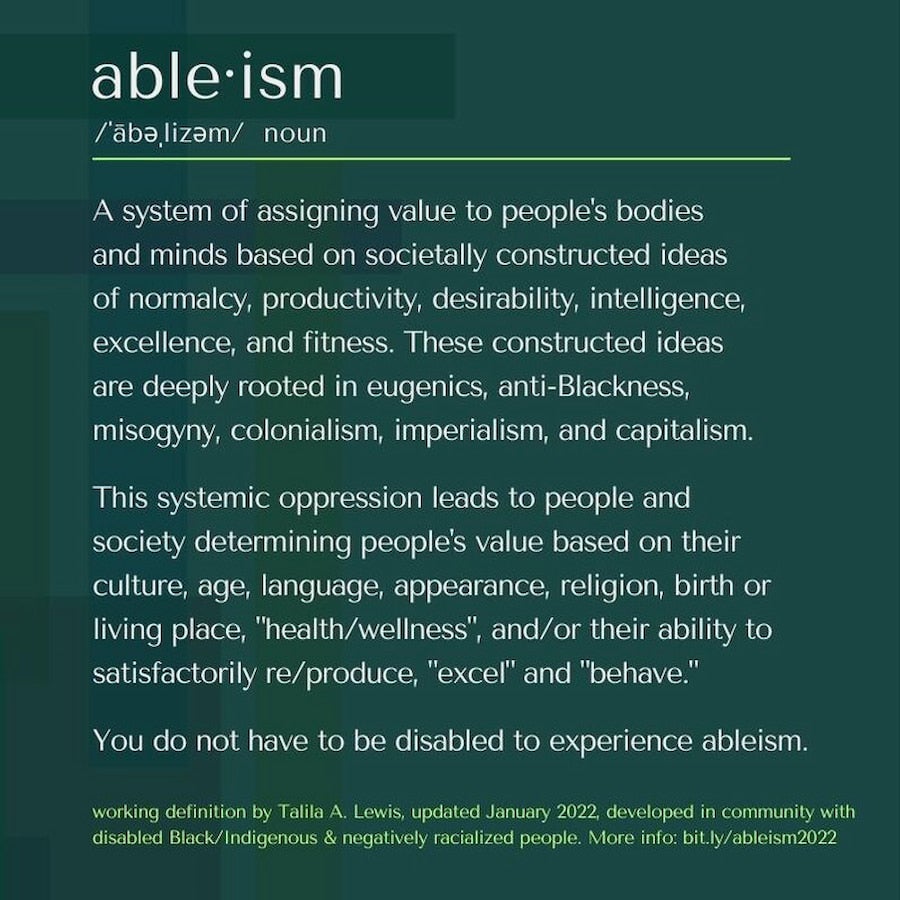
Text 30.02.04 — A working definition of ableism developed by neuroqueer educator Talila “TL” Lewis, in community with disabled Black/Indigenous and negatively racialized people.
Ableism ranks humans within a superior/inferior hierarchy: disabled bodies are inferior, deficient, or broken, and able bodies are superior, idealized, independent, and productive. The former may be pitied, persecuted, hidden away, incarcerated, or made invisible, while the latter are desired and have greater access to resources and socioeconomic privileges. One example of ableism is in the history of public education. Various countries did not consider children with disabilities as needing an education. In the US, it was not until 1975 when the Education for All Handicapped Children Act (EHA), later called the Individuals with Disabilities Education Act (IDEA), ensured that children with disabilities could access a public education.
While the 1990 ADA legislation provides education and employment accommodations in the United States, institutions may still fail to offer necessary services and legal accommodations to workers, students, or people with less perceptible disabilities, such as those who have diabetes, multiple chemical sensitivities (MCS), or inherited conditions like Ehlers-Danlos Syndrome (EDS).
Historically, local codes, later dubbed “Ugly Laws,” illustrate legalized ableism and overlapping systems of exclusion. From the 1860s to the 1970s, Ugly Laws criminalized those who were considered “unfit” for public interaction and were enforced in cities like San Francisco, Portland, Denver, Chicago, Omaha, and New Orleans. Originally known as “unsightly beggar ordinances,” Ugly Laws justified the removal of those persons who were considered “too ugly” from public spaces, such as people who were unhoused, or simply poor.
Ugly Laws classified certain bodies as “disgusting” and labeled some people as too “terrifying” for public view. These codes enabled police to target people who were diseased, maimed, mutilated, or “in any way deformed,” including veterans, survivors of war, and single mothers with sick children. Those profiled under these ableist laws were arrested, fined, or forced out of town. Ugly Laws justified selective punishment of people who were disabled. They could be incarcerated in asylums, prisons, or work farms. In some cases, state physicians surgically sterilized people who were declared “feeble-minded” and “unfit” to bear children. These are some ways in which ableism became normalized through government policies.
Ableism affects everyone. Disability studies scholar Fiona Campbell explains that from birth, everyone “emerges into a world where he/she receives messages that to be disabled is to be less than.” 4 In other words, one does not need to have personal limitations to experience ableism. Disability justice activists and disability studies scholars advocate understanding the systemic nature of ableism and rethinking disability, so that living with a disability is not viewed as a personal failure or as inherently negative or tragic.
Asian Americans and Pacific Islanders with Disabilities
The Centers for Disease Control and Prevention estimate one in ten Asian Americans and one in six Native Hawaiian and Pacific Islanders have a disability. Among American Indians and Alaska Natives, three in ten are estimated to have a disability.
Disability can result from a variety of factors, including disease, environment, or genetics. These variations are evident in three notable Asian American politicians with disabilities: Daniel Ken Inouye, Mazie Keiko Hirono, and Tammy Duckworth. Senator Inouye served as a Hawaiʻi senator from 1963 to 2012. Mazie Keiko Hirono, who first served as a Representative for Hawaiʻi in 2007, became senator for the state starting in 2013. Tammy Duckworth first served as a Representative for Illinois in 2013 and was elected to serve as state senator in 2017.
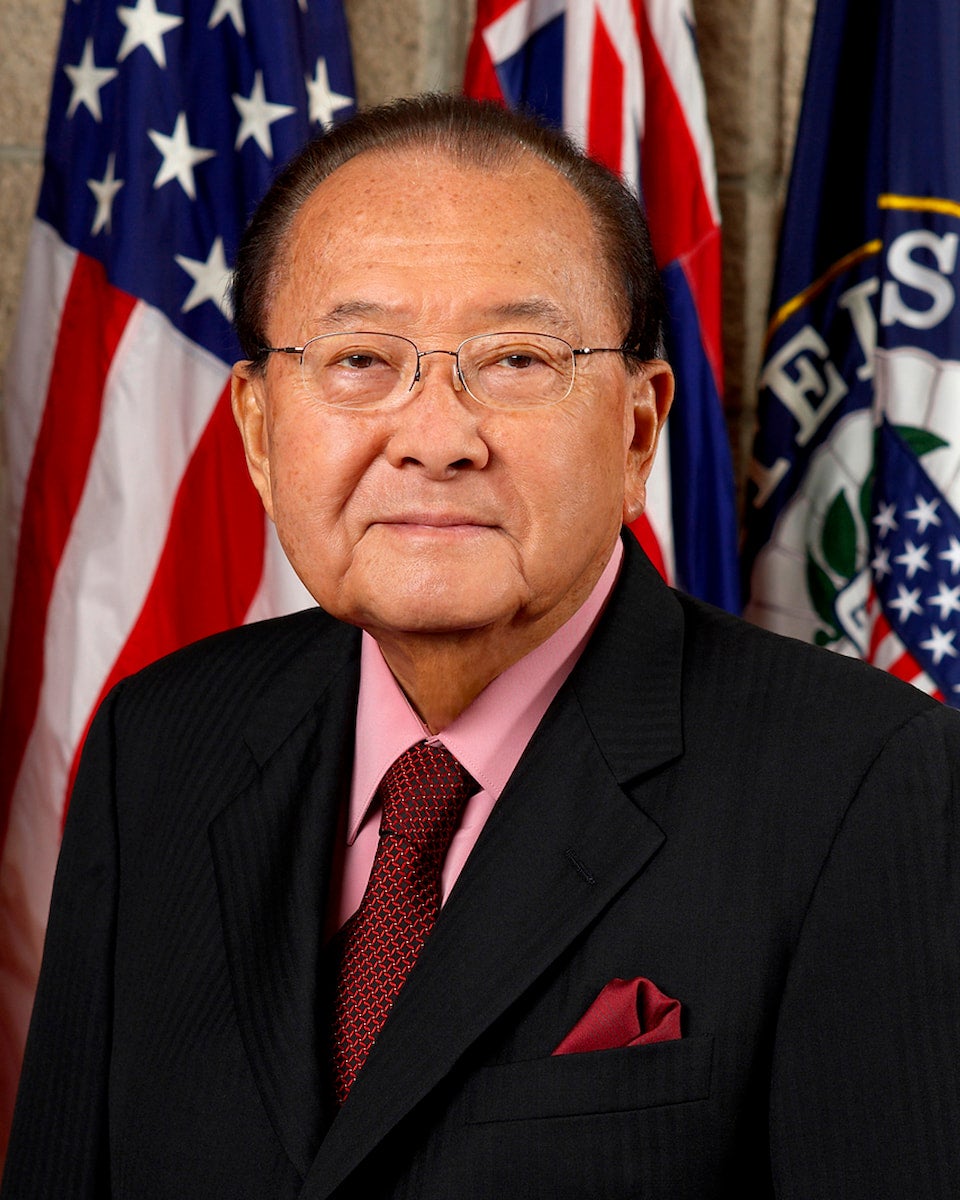
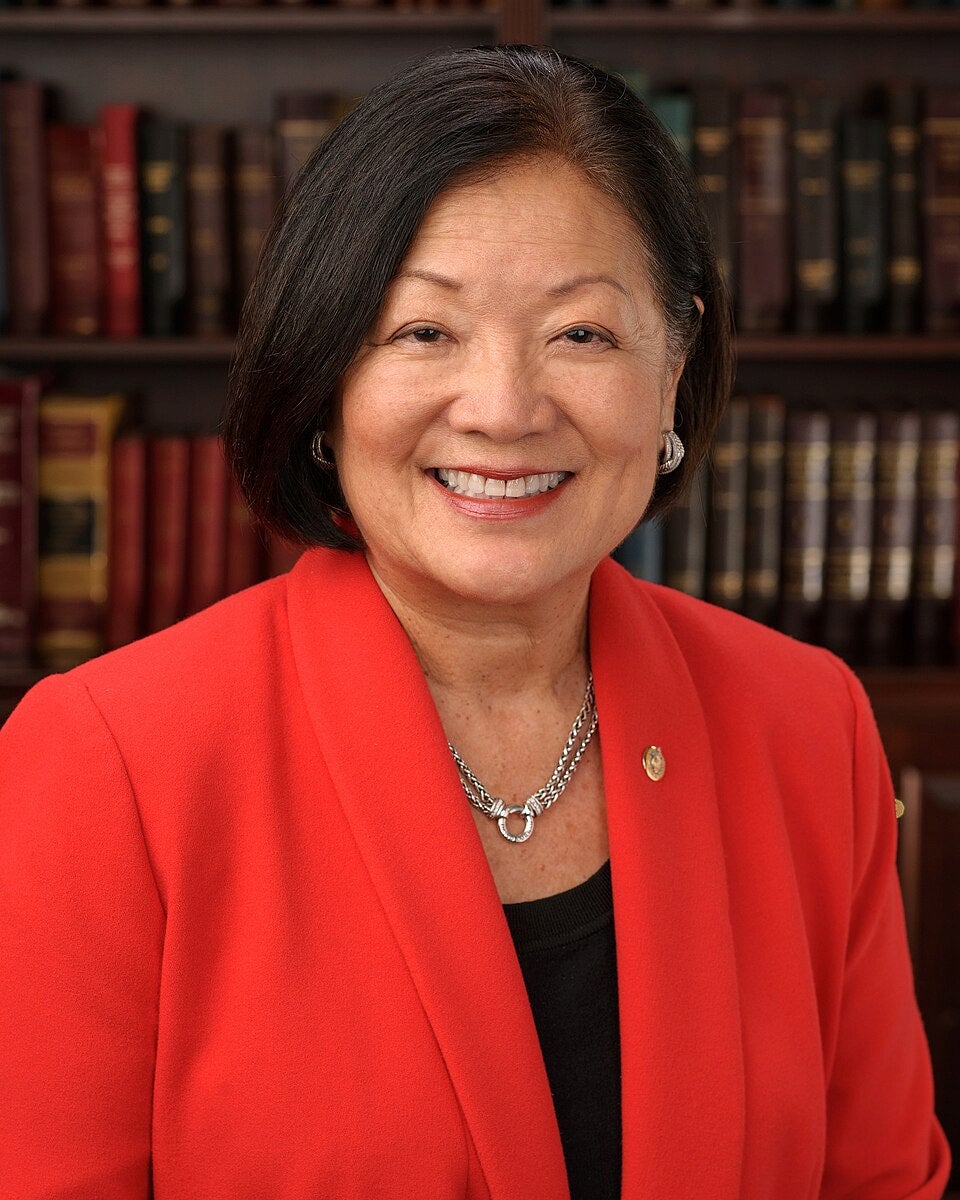
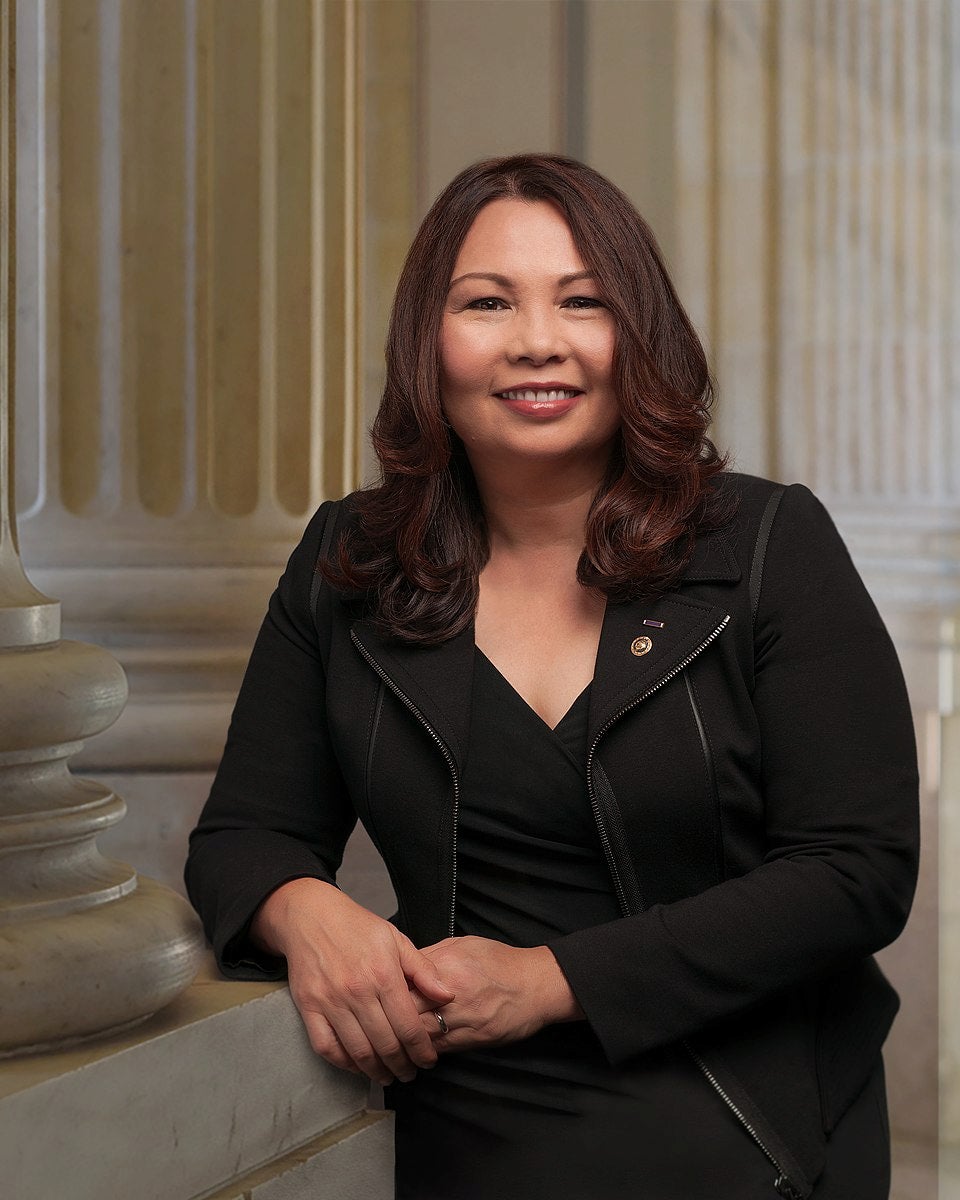
Image 30.02.05–07 — As Asian American politicians with disabilities in Congress, Daniel Inouye (left), Mazie Hirono (center), and Tammy Duckworth (right) have transformed mindsets and policies related to disability rights, increased access, and improved accommodations for people with disabilities.
Both Inouye and Duckworth lost limbs through military combat while enlisted in the US Army, while Hirono was temporarily disabled while fighting cancer during her Senate service. A veteran of the 442nd Infantry Regiment, Inouye was one of the most decorated veterans of World War II and a highly influential Japanese American politician who demanded equality and advocated for policies supporting people with disabilities. Duckworth was the first US Senator to give birth during her term in Congress and inspired a landmark resolution that now allows parents to bring newborn infants into the Senate chamber. While undergoing cancer treatment, Hirono continued to work in Congress and participated in votes on proposed legislation.
These Asian American politicians with disabilities in Congress transformed not only mindsets, but also policies related to disability rights, increased access, and improved accommodations for people with disabilities.
In 2019, more than 1.3 million Asian Americans lived with a physical, sensory, or cognitive disability. More than 1.5 million people live with some form of disability in twenty-two Pacific Island countries and US territories. Asian American and Pacific Islander persons with disabilities are the most underemployed and least paid in the US. Similarly, people with disabilities in the Pacific are also overrepresented among those living in poverty, while being underrepresented in decision-making in social, economic, and public life. These inequities highlight how Pacific Islanders with disabilities are particularly marginalized and vulnerable.
Conclusion
This module reviewed varying definitions of disability and how the understanding of disability has changed: from an individual problem (medical model) to more focus on social systems (social construction model). This module also defines ableism and introduces readers to disability studies and disability justice as a twenty-first century political movement centered on mutual aid, collective care, and collective liberation. In addition to an overview of Asian American and Pacific Islander populations with disabilities, this module highlighted notable Asian American activists with disabilities, Asian American politicians with disabilities, and Asian American scholars working in disability studies today.
Glossary terms in this module
ableism Where it’s used
Beliefs or practices that discriminate against those with disabilities. It is rooted in socially constructed ideas of normalcy, productivity, desirability, and intelligence that are taught through language, media, policies, and laws.
bodymind Where it’s used
A concept used in disability studies that asserts that mental and physical processes give rise to and affect each other, and therefore should not be separated as binary terms (body vs. mind).
disability Where it’s used
Challenges or limitations in physical or cognitive functioning that can be either temporary, permanent, invisible, or visible. How a person experiences these challenges is related to not only individual factors but also social structures, institutions, and government policies.
disability justice Where it’s used
A form of activism and community building that centers the lives of Black, brown, queer, and trans disabled people as whole and recognizes their leadership and knowledge as valuable. It is also a political vision that challenges multiple, overlapping systems of unfairness, prioritizes interdependence, aims to work together across differences and political movements to achieve collective access where no one is left behind.
impairment Where it’s used
A condition of the body or mind that makes it challenging or difficult for a person to do certain activities or to interact with the world around them.
intersectionality Where it’s used
Conceptualized by legal scholar Kimberlé Crenshaw in 1989 as a way of understanding how various forms of inequality operate together and exacerbate each other. The term refers to overlapping systems of oppression that were not addressed adequately in the law or dominant ways of thinking about inequalities.
mutual aid Where it’s used
A voluntary exchange of resources and services, such as people sharing and exchanging resources outside of official state channels or institutions. Different from charity, mutual aid centers on networks of cooperative reciprocity and relations of collective care. It is a form of activism that challenges the shortcomings of state institutions where they fail to keep communities safe.
Ugly Laws Where it’s used
An umbrella term, invented in 1975, to refer to various local ordinances which classified certain populations as “terrifying” and too “disruptive” for the public sphere. Also known as “unsightly beggar ordinances,” Ugly Laws enabled the arrest, incarceration, and forced disappearance of already marginalized people and those with a disability. This late twentieth-century term refers retroactively to discriminatory laws that date back to the European Middle Ages, and were enforced in the United States from the 1800s until the 1970s.
Endnotes
1 Patty Berne and Stacey Milbern, “My Body Doesn’t Oppress Me, Society Does,” No Body Is Disposable, produced by Sins Invalid and the Barnard Center for Research on Women, video by Dean Spade and Hope Dector, May 8, 2017, https://bcrw.barnard.edu/no-body-is-disposable-series/.
2 Berne and Milbern, “My Body Doesn’t Oppress Me, Society Does.”