



Module 1: Disability, Mutual Aid, and Modern Pandemics
How have Asian American and Pacific Islander communities defined disability and wellness on their own terms?
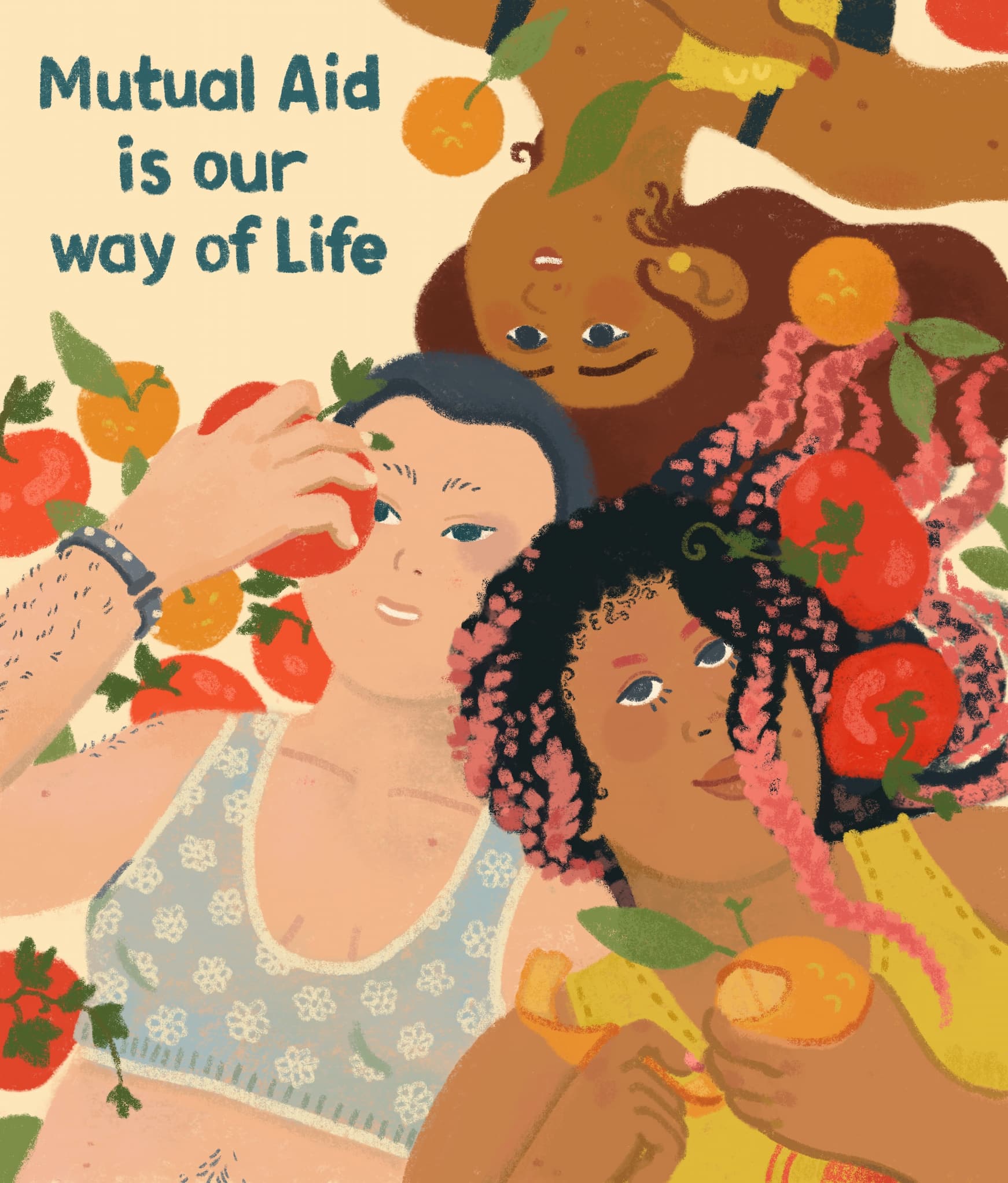
In a 2020 Instagram post, Bengali American artist Art Twink explained mutual aid as a form of collective survival:
“…for disabled folks, folks of color & many marginalized communities, mutual aid has been our way of life—of survival—long before the pandemic… look to marginalized communities to lead & to learn from as you look to revolutionize your ways of life & redistributing resources & power.”
Communities and activists have created ways to care for each other when federal or state policies fail to meet basic needs or to protect public health. Through voluntary, community-based networks of reciprocity and collaboration, mutual aid is not only a key aspect of disability justice, but also an important means of resilience and collective endurance.
This module focuses on the racial profiling of infectious diseases which can exacerbate institutional mismanagement and cause missteps in dealing with major pandemics. It also introduces mutual aid as a form of “crip knowledge” and solidarity that counters structural inequality, ableism, racism, and institutional neglect.

Image 30.01.01 — This illustration by Bengali American artist Art Twink depicts the importance of mutual aid as a way of life for disabled people, people of color, and other marginalized communities.
How is race connected to modern pandemics?
To what extent does medical racism affect Asian American and Pacific Islander communities?
How do mutual aid organizations support Asian American and Pacific Islander peoples with disabilities?
Pandemics and Blame
Asian American and Pacific Islander populations have been scapegoated in various disease outbreaks in North America, including the bubonic plague in the late 1800s and early 1900s, the SARS outbreak from 2002 to 2004, and the COVID-19 pandemic in the second decade of the twenty-first century. In 2020, the World Health Organization, UNICEF, and the International Federation of Red Cross and Red Crescent Societies advised against the use of geographic references when referring to diseases, because such language intensifies racial profiling.
Yet, then President Donald Trump, other Republican politicians, and conservative pundits repeatedly blamed China for COVID-19, which had the effect of inciting racism. The repetition and use of phrases like “China virus” and “Wuhan virus” encouraged scapegoating of Asians as the source of coronavirus infection, fueling an alarming rise in anti-Asian hostility, discrimination, violence, and hate crimes.
Medical racism during the COVID-19 pandemic operated in multiple directions. Although health care workers were celebrated for their courageous front-line labor, a Korean American doctor was interrogated about where he was from and then kicked out of a gas station in Martinsville, Indiana, after workers misidentified him as Chinese.
Non-Asian patients refused to be treated by nurses or doctors who appeared Asian. Thai American scholar Jenny Ungbha Korn recounts how a dozen white male first-responders in Alabama were reluctant to help or touch Korn’s immigrant mother although she was clearly in distress, having difficulty breathing, and unable to walk.
In the first months of 2020, over a thousand acts of violence against Asia Americans were reported in more than thirty-two states. Korean American scholar James Kyung-Jin Lee writes that this rise in anti-Asian hate intensified a sense of Asian American “woundedness.”
Disability justice advocate Mia Ives-Rublee states that while people who are disabled always contend with ableism and the pressure to find a “cure” or “fix,” immigrants and Asian Americans with disabilities have historically felt a double bind of having to prove their right to exist or belong by working hard. Ives-Rublee, a disabled adoptee and wheelchair user, shared how this intersection of ableism and racism can contribute to internalizing the model minority myth and denying disability: “putting our heads down and not complaining and working hard and being that American success story.”
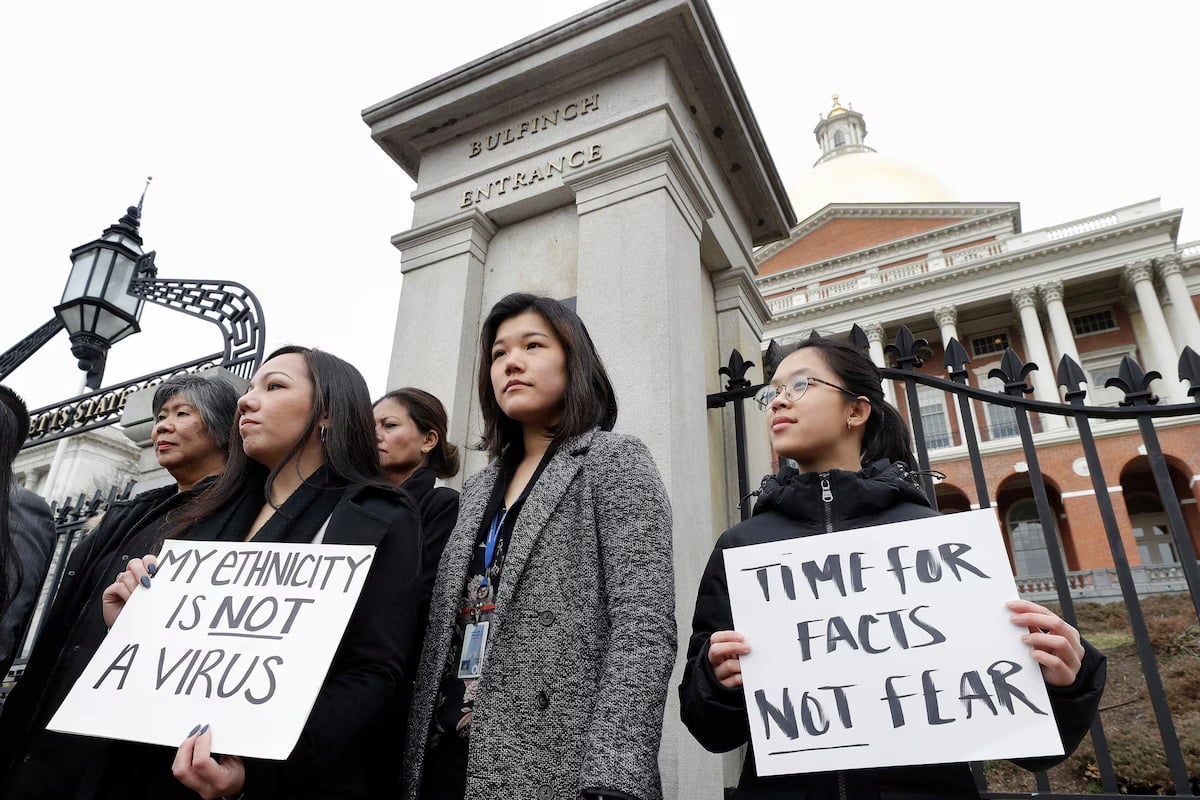
Image 30.01.02 — Protestors stand outside the Boston State House during a 2020 demonstration in objection to anti-Asian rhetoric and misinformation surrounding the COVID-19 virus.
While the uptick of violence during COVID-19-related isolation was related to racism, the association of Asian bodies with disease is not new. Since the first waves of mass migration of Asians to the United States, immigrants have resisted medical racism and scapegoating. Poems etched into the walls of Angel Island by Chinese detainees in the early 1900s illustrate the humiliation of immigrants and their sense of outrage at being dehumanized by state agents and medical professionals. One of these poems read:
“I cannot bear to describe the harsh treatment by the doctors.
Being stabbed for blood samples and examined for hookworms was even more pitiful.
After taking the medicine, I also drank liquid,
Like a dumb person eating the huanglian.” 1
Mutual Aid, Crip Wisdom, and Collective Care
People with disabilities have countered structural inequality, racism, and institutional abandonment through mutual aid, a form of solidarity and care based on voluntary exchanges of resources and services for collective good or common benefit. Unlike charity, mutual aid is an alternative to institutional or state assistance and is not unique to people with disabilities. People ask for what they need and contribute what they can.
Mutual aid has long functioned as a way to get around barriers and scarcity inherent in contemporary social welfare and healthcare systems. Disability justice advocate and author Leah Lakshmi Piepzna-Samarasinha explains, “Disabled people keep each other alive all the time… We were keeping each other alive before COVID and we will continue to keep each other alive.” 2 Mutual aid is important not only as a form of political participation that fosters long-term resilience, but also as a cultivation of skill-sharing, care work, and reciprocity that enables collective survival during crises like pandemics, natural disasters, or government abuse.
One notable example of disabled mutual aid was initiated by a co-founder of the disability justice movement. Korean American activist and ancestor Stacey Park Milbern started the Disability Justice Culture Club (DJCC) in 2011 with four other queer, disabled people of color to bring together and to support people with disabilities, to share “crip kindness,” and to promote disability justice.
In a conversation with Milbern that explores the ways in which the reclaimed slur and self-identifier “crip” signals not only political resistance but also collective relationships, Piepzna-Samarasinha defines the concept of “crip kindness” as proactive generosity, being attentive to each other’s needs, and sharing of skills and resources:
“the wealth and skill where we notice each other’s pain face and offer a chair, ask in a low-key way if we can help with a service task, sit without speaking … raise thousands of dollars for someone to buy an accessible van, or mail a stranger our extra prescription. It’s collective noticing and collective hustle. It’s being witnessed. It’s being allowed to relax, expand, just be.” 3
As a mode of interpersonal care often practiced among people with disabilities, crip kindness and sharing of crip wealth function as “invisiblized” forms of disabled knowledge exchange, service, and labor. They are forms of mutual aid and reciprocity that operate independent of formal organizations or monetary compensation.
Based in Milbern’s home in East Oakland, California, the DJCC initially provided support to those who lost electricity during the 2019 wildfires. Through the hashtag campaign #PowerToLive, the DJCC established a network where people could share power and charge their wheelchairs or life-sustaining equipment at houses that still had electricity. The organization also crowdsourced information about how to store insulin without refrigeration and other information related to surviving in toxic environmental conditions.
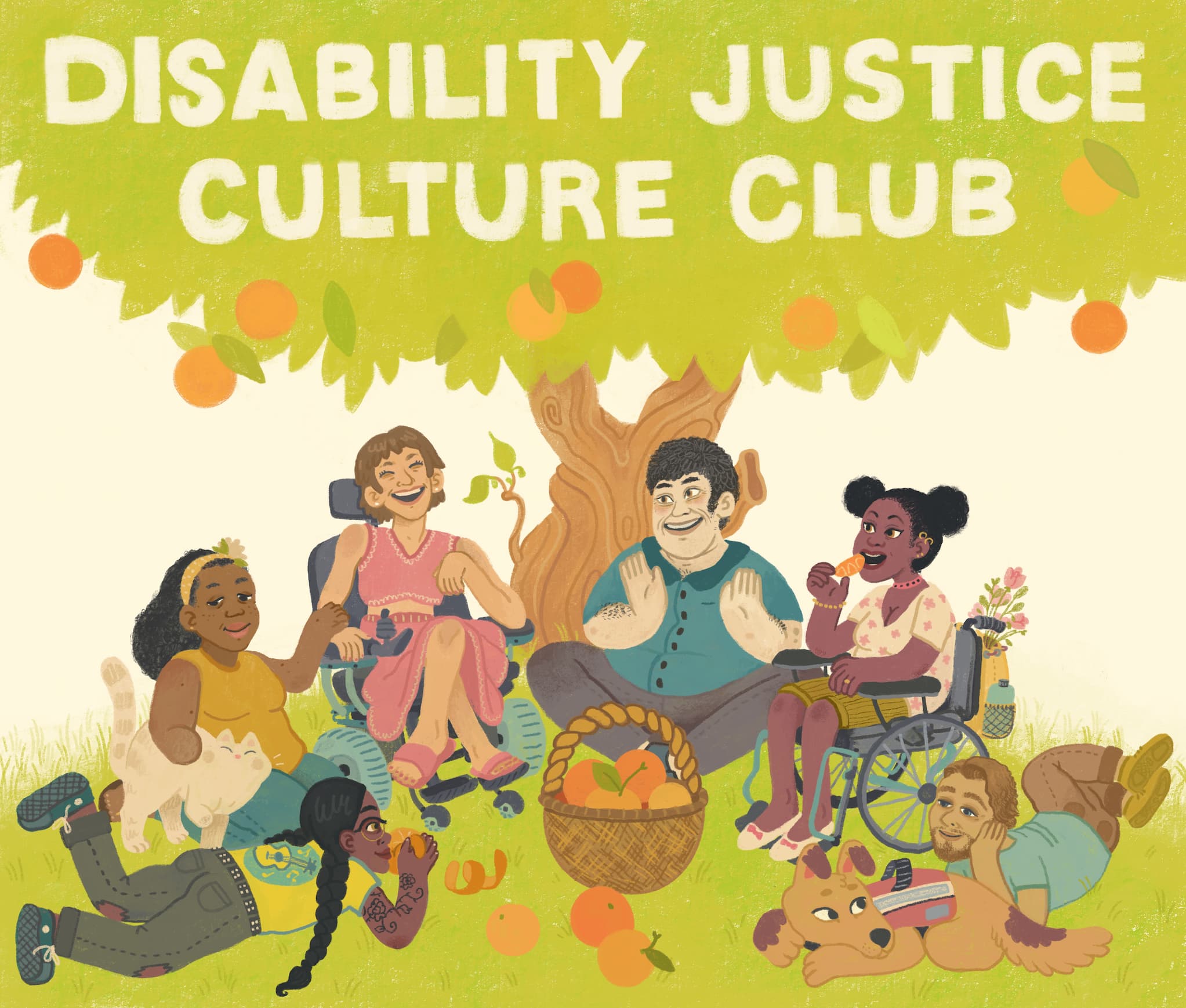
Image 30.01.03 — Bengali American artist Art Twink created this image for the Disability Justice Culture Club (DJCC), a collective founded by Stacey Park Milbern in 2011 of disabled and neurodivergent Queer, Trans, Black, Indigenous, and People of Color (QTBIPOC) who cultivate disability justice, interdependent community, and joyful resistance.
In 2020, the DJCC turned their attention to COVID-19. Building on disabled wisdom, or what Milbern called “crip—or crippled— wisdom,” the DJCC created and assembled homemade prevention kits that included homemade hand sanitizer, disinfectant, emergency vitamin mix, gloves, respiratory masks, and gloves. 4 The DJCC distributed these resources to local encampments of unhoused people with the assistance of community partners and more than 160 volunteers.
During the COVID pandemic and beyond, many Asian American and Pacific Islander community organizations sought to address increased race-based hostility, misinformation, and meeting basic needs. In California, the community organization Empowering Pacific Islander Communities (EPIC) mobilized to support Pacific Islander communities in the Los Angeles area by focusing on multigenerational families and protecting the vulnerable and elderly.
EPIC distributed information guides about social distancing and held food drives while also bringing medical professionals together with community churches to provide vaccines, support, and information in various Pacific Islander languages such Hawaiian, Samoan, Tongan, and Fijian. These mutual aid efforts slowed down the spread of the virus and saved people’s lives.
In New York City, the Asian American Feminist Collective (AAFC) created the digital zine Asian American Feminist Antibodies: Care in the Time of Coronavirus as an archive of Asian American political mobilization and a form of feminist media activism. The zine assembled information about mutual aid, first-hand accounts of experiences with racism connected to COVID-19, community care worksheets, recipes, and tips for resiliency.
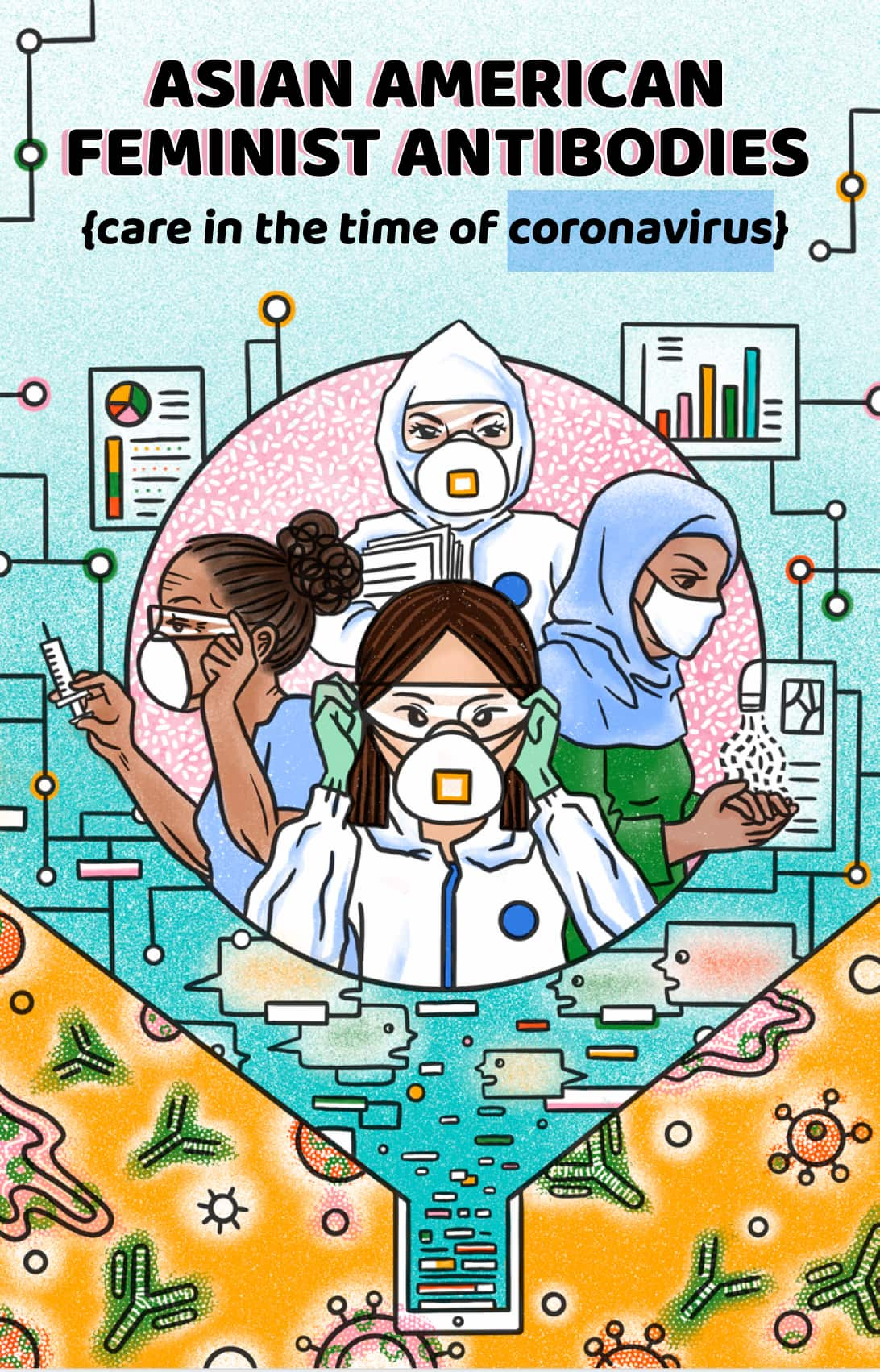
Image 30.01.04 — Cover of digital zine Asian American Feminist Antibodies: Care in the Time of Coronavirus (2020), created by the Asian American Feminist Collective, in collaboration with Bluestockings NYC.
AAPI Women Lead was another community-based organization that also organized mutual aid to support Asian elders. In 2022, AAPI Women Lead assembled more than nine hundred COVID-19 testing and PPE kits and donated masks to Bay Area communities in California. To support older immigrants who might lack English fluency or mobility, AAPI Women Lead members also printed bilingual instructions, provided verbal translations, and instructed older Asian Americans on how to test for COVID and how to use PPE properly.
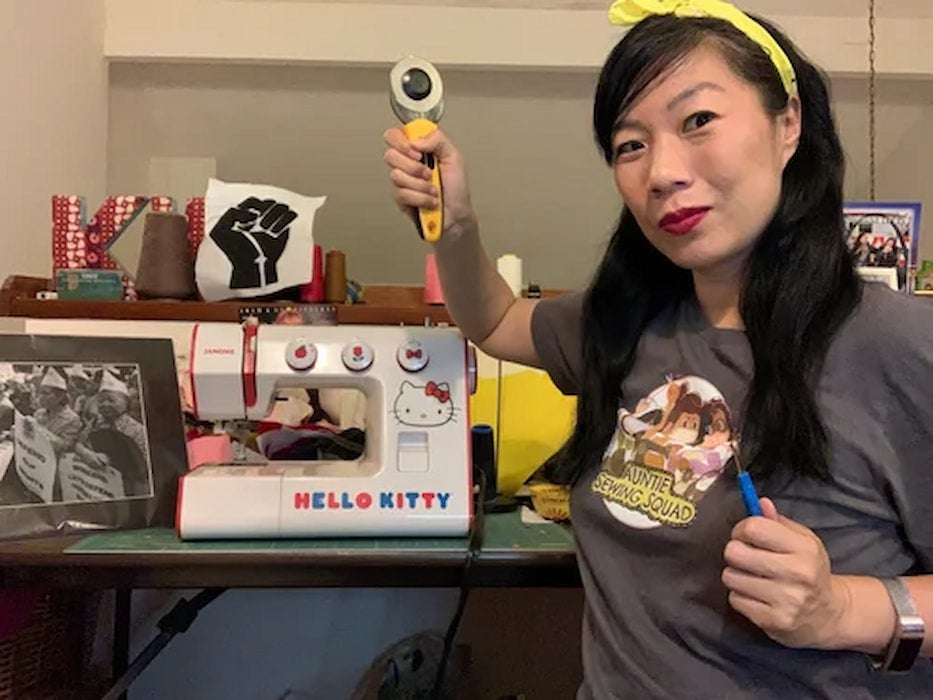
In March 2020, Chinese American artist Kristina Wong started the Auntie Sewing Squad, an informal Facebook group of volunteers who sewed and distributed cloth masks. The purposely funny acronym (ASS) and the title of “Sweatshop Overlord” were two ways that Wong infused humor into endless hours of uncompensated volunteer labor during a time of intensified racism and heightened anxiety. Hundreds joined ASS’s collective effort, and many were Asian American and Pacific Islander women.
Wong and other ASS “Aunties” collected supplies, made, and distributed more than three hundred thousand cloth masks across the United States to frontline workers and other vulnerable groups such as agricultural workers and Native American communities; they also took care of each other by sending each other food and care packages, while doing this life-saving volunteer work.
Although they retired from mask-making in late 2021, the ASS continued their mutual aid support to impoverished Native American communities, migrant families at the border, survivors of the 2023 Maui fires, local food banks, and communities who continue to be affected by food insecurity, crises, poverty, and toxic conditions.
More to explore
Slideshow
Auntie Sewing Squad
In early 2020, Chinese American comedian and artist Kristina Wong started the Auntie Sewing Squad (ASS), an informal volunteer group who sewed cloth masks in their homes to give away to frontline workers and those most at risk for COVID.
Although members of EPIC, AAFC, AAPI Women Lead, and ASS are not all disabled, these organizations practiced collective care and interdependence in ways that resonate with disability justice and what Milbern and Piepzna-Samarasinha call crip wisdom, crip kindness, and crip wealth. These organizations prioritized the lives of those who were most vulnerable and supported Pacific Islanders, Asian Americans, and others most disabled by institutional abandonment.
Mutual aid is a matter of saving lives, redistributing resources, and building community. It fosters collective care instead of prioritizing individualism or profit. Mutual aid counters neglect by government and institutions and seeks to center human needs during times of crisis, hardship, or scarcity.
Mutual aid empowers individuals to make a difference despite scarcity in resources or an absence of formal support. Rather than relying upon institutions that treat people with disabilities as social burdens, passive, pitiful, or unable to help themselves, these examples of mutual aid demonstrate how commitment to interdependence, intersectionality, and solidarity can build a more inclusive community for Asian American and Pacific Islanders with disabilities.
Conclusion
This module highlighted how blaming pandemics on a specific race or geographical area has led to violence, hate crimes, and discrimination. When social institutions fail or fall short, mutual aid becomes a way for communities to support those who are most vulnerable and to share resources for collective survival.
Showcasing examples of mutual aid during the COVID-19 pandemic, this module demonstrates how people with disabilities, crip knowledge, and crip wealth can contribute to the resilience of Asian American and Pacific Islander communities. Meanwhile, disability advocates continue to organize for improved and supportive institutions, services, and programs. Working together toward disability justice, especially during a pandemic and disaster, also encourages communities of color to build solidarity and interdependence across differences in race, ability, or circumstance. The creativity and determination of these organizations and individuals provide important lessons for our survival and well-being.
Glossary terms in this module
ableism Where it’s used
Beliefs or practices that discriminate against those with disabilities. It is rooted in socially constructed ideas of normalcy, productivity, desirability, and intelligence that are taught through language, media, policies, and laws.
activism Where it’s used
An action or collective process, such as a strike, march, protest, legislation, or policy campaign by an individual or groups to bring about material, political, and/or ideological changes to the status quo.
crip Where it’s used
A shortened form of “cripple” that was originally used as a derogatory slur. The term is now actively being reclaimed by disability activist communities as an empowering self-identifier (sometimes spelled “krip”) that signals both political resistance and affiliation with a collective of people, relationships, and behaviors that exist beyond norms.
disability Where it’s used
Challenges or limitations in physical or cognitive functioning that can be either temporary, permanent, invisible, or visible. How a person experiences these challenges is related to not only individual factors but also social structures, institutions, and government policies.
disability justice Where it’s used
A form of activism and community building that centers the lives of Black, brown, queer, and trans disabled people as whole and recognizes their leadership and knowledge as valuable. It is also a political vision that challenges multiple, overlapping systems of unfairness, prioritizes interdependence, aims to work together across differences and political movements to achieve collective access where no one is left behind.
intersectionality Where it’s used
Conceptualized by legal scholar Kimberlé Crenshaw in 1989 as a way of understanding how various forms of inequality operate together and exacerbate each other. The term refers to overlapping systems of oppression that were not addressed adequately in the law or dominant ways of thinking about inequalities.
model minority myth Where it’s used
A social construct that frames certain minorities, predominantly Asian Americans, as more academically and professionally hard-working, adaptable, and more successful than other races and ethnicities. This myth perpetuates harmful consequences, such as creating a divide between Asian Americans and other non-white racial groups, particularly Black and Latinx people. It also fails to account for the diversity within Asian American communities.
mutual aid Where it’s used
A voluntary exchange of resources and services, such as people sharing and exchanging resources outside of official state channels or institutions. Different from charity, mutual aid centers on networks of cooperative reciprocity and relations of collective care. It is a form of activism that challenges the shortcomings of state institutions where they fail to keep communities safe.
Endnotes
1 Angel Island Immigration Station Poetry Finder, “Island 95,” https://www.aiisf.org/finder.
2 Leah Lakshmi Piepzna-Samarasinha, “‘Disabled people keep each other alive all the time’ says Leah Lakshmi Piepzna-Samarasinha,” Disability in America: In Partnership with Ford Foundation, posted October 13, 2021, by Washington Post Live, 3:37, https://www.youtube.com/watch?v=hH2K735DIL0.
3 Stacey Park Milbern and Leah Lakshmi Piepzna-Samarasinha, “Crip Lineages, Crip Futures: A Conversation by Stacey Park Milbern and Leah Lakshmi Piepzna-Samarasinha,” Crip Genealogies, eds. Mel Y. Chen, Alison Kafer, Eunjung Kim, and Julie Avril Minich (Duke University Press, 2023), 111.
4 Matthew Green, “‘Coronavirus: How These Disabled Activists Are Taking Matters Into Their Own (Sanitized) Hands,” KQED, Mar 17, 2020, https://www.kqed.org/news/11806414/coronavirus-how-these-disabled-activists-are-taking-matters-into-their-own-sanitized-hands.