





Module 5: Imagining Disability Justice
How have Asian American and Pacific Islander communities defined disability and wellness on their own terms?
This module examines the differences between disability activism in the twentieth century and disability justice in the twenty-first century. It unpacks terms such as disability studies, disability rights, and disability justice. Just as there are numerous definitions of disability, there are many approaches to disability justice. The module focuses on how the disability community has resisted ableist policies, practices, and stereotypes by focusing on art, policy, scholarly research, and lived experiences.
The module also highlights the definition of disability justice that comes from principles written by activist-artists with disabilities and the future that Sins Invalid incubates. Founded by disabled people of color in 2005, Sins Invalid is a disability justice-based performance project that celebrates disabled people and centers disabled Black, Indigenous, people of color, and queer, trans, and nonbinary disabled people. It prioritizes leadership of disabled people of color, queer and gender non-conforming disabled people. Sins Invalid also provides disability justice training and collaborates with other movement-building projects.
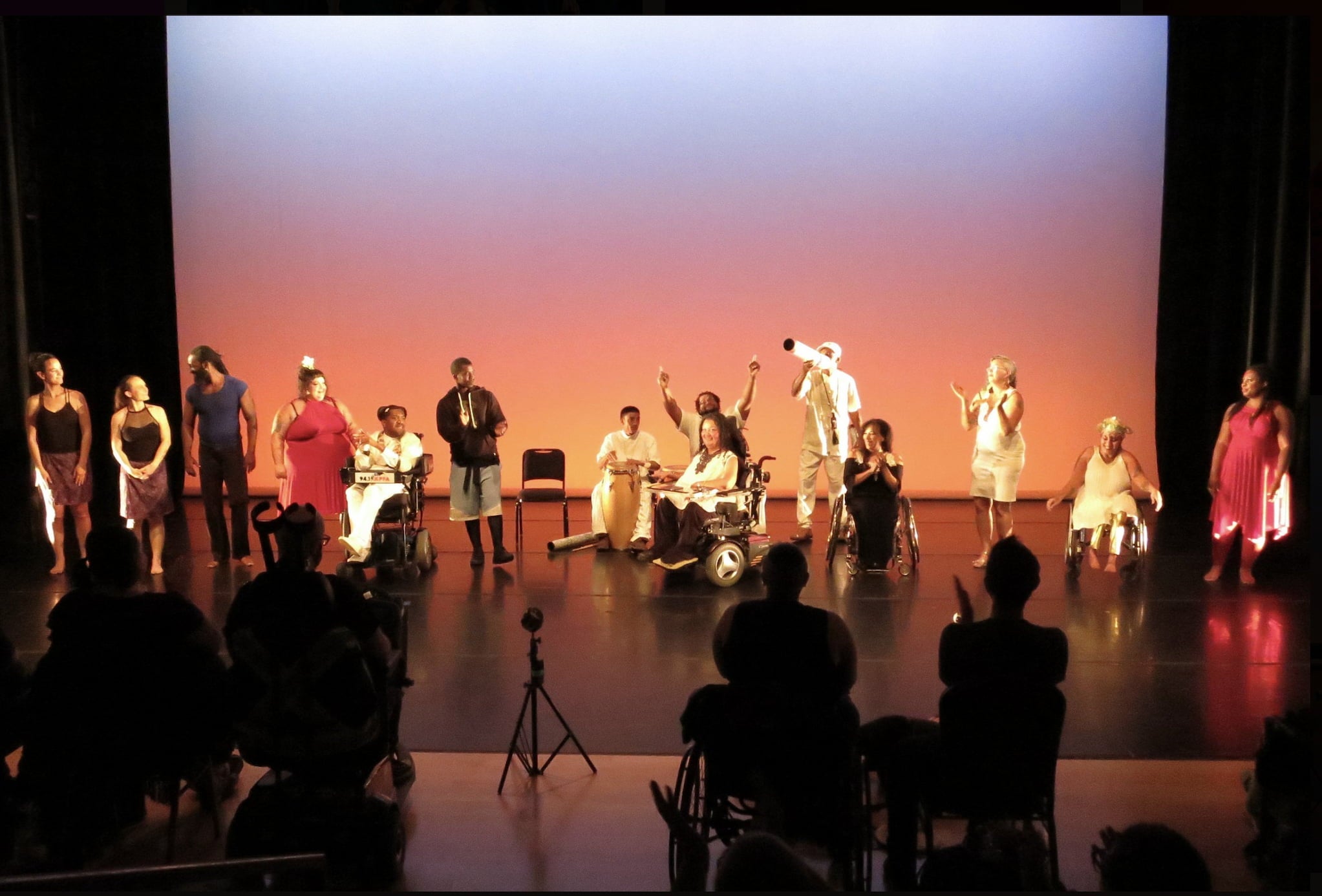
Image 30.05.01 — Queer Japanese Haitian American artist, director, and co-founder Patty Berne (center, woman wearing a white blouse and sitting in a wheelchair) with performers during a Sins Invalid production.
What are examples of disability justice?
How is disability justice connected to disability rights movements?
How do you imagine disability justice in your community?
Disability Activism
In the 1960s, activists with disabilities, advocates, and scholars focused on access and legal recognition as a way to secure human and civil rights for people with disabilities. Most of this political work focused on passing laws to counter discrimination and to mandate institutional support and accessibility. Some important examples are legislation providing assistive technology or requiring accommodations such as ramps or Braille signage. Twentieth-century activism also focused on visibility, social services, and independent living for people and communities with disabilities. Organized campaigns and protests by people with disabilities and their allies shaped federal policies, such as the American Disability Act and Section 504 of the 1973 Rehabilitation Act. The purpose of these federal laws is to protect disabled people from discrimination and to facilitate a more inclusive society.
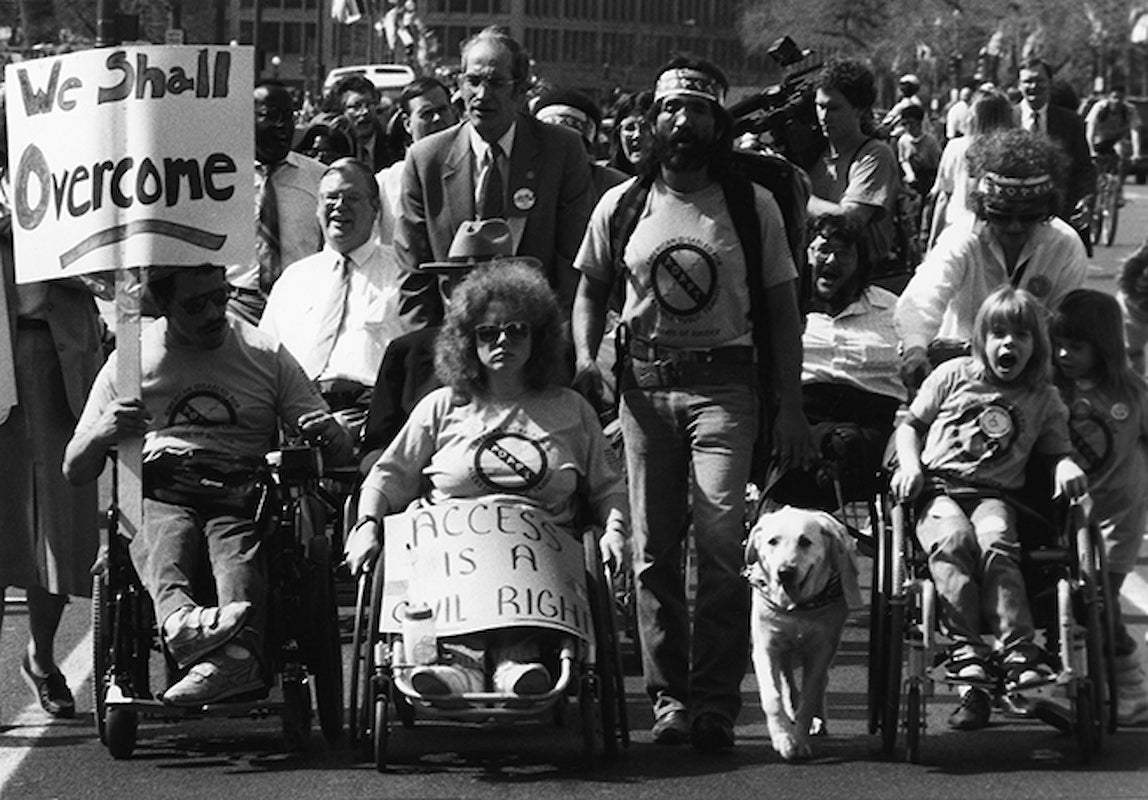
Image 30.05.02 — Protestors at the Wheels of Justice March on March 12, 1990, in Washington, DC, push for the passing of the American Disability Act (ADA). The efforts of organized activism by people with disabilities led to the signing of the ADA into law on July 26, 1990.
Disability Studies
Recent turns in disability studies emphasizes that the collective well-being of those with disabilities will increase access and well-being of ALL people. Critical disability studies involves connecting disability research with disability justice activism, community scholarship, and grassroots organizing. There is also deepened discussion about what is considered abled/fit/healthy or disabled/unfit/sick and how images, language, institutions, and ideology shape cultural definitions of “wellness,” or what is “normal” or sane.
Disability Justice
In 2005, three Asian American women with disabilities, Patricia “Patty” Berne, Stacey Park Milbern, and Mia Mingus, conceptualized the framework of disability justice to address how those who were experiencing multiple, intersecting dynamics of disability, race, class, gender, and sexuality were not always acknowledged or included in either disability rights or disability studies conversations. Working with Berne, Milbern, and Mingus in the project of disability justice were other disabled activists and scholars Leroy F. Moore Jr., Eli Clare, Sebastian Margaret, Aurora Levins Morales, and Billie Rain.
This collective advocated for more diverse representation and research that offered a wider spectrum of lived experiences of disability. The new political vision of disability justice challenged inequality, the academic field of disability studies, and limited representations of who is disabled, while also working to foreground the value and potential of all people regardless of ability.
Disability justice rejects the ideas that rights or legislation are the only solutions to discrimination or inequality and that one has to be productive in the same way as non-disabled people to have value and worth. Instead, disability justice work seeks to highlight how social systems and conditions devalue disabled people and stigmatize those who are different.
The disability justice movement created more inclusive models of organizing. Disability justice insists on the leadership of those who are most impacted and regards people with disabilities not only as whole, but also as having knowledge and skills that can contribute to collective survival and sustainability. It centers sick and disabled queer and trans people of color (SDQTPOC) as decision-makers and cultural producers.
Also in 2005, Patricia “Patty” Berne, who was a Japanese Haitian American queer artist with a disability, and Leroy F. Moore Jr., co-created Sins Invalid, a performance project and collective that explained the new political vision by publishing the “10 Principles of Disability Justice.” These principles include leadership by SDQTPOC, intersectionality, solidarity across different movements and different types of disability, interdependence, access, and collective liberation where no one is left behind. These ten organizing principles and the formation of Sins Invalid marked a shift away from prioritizing rights and laws as the primary form of protection to the community-based activism and creativity that is known today as disability justice.
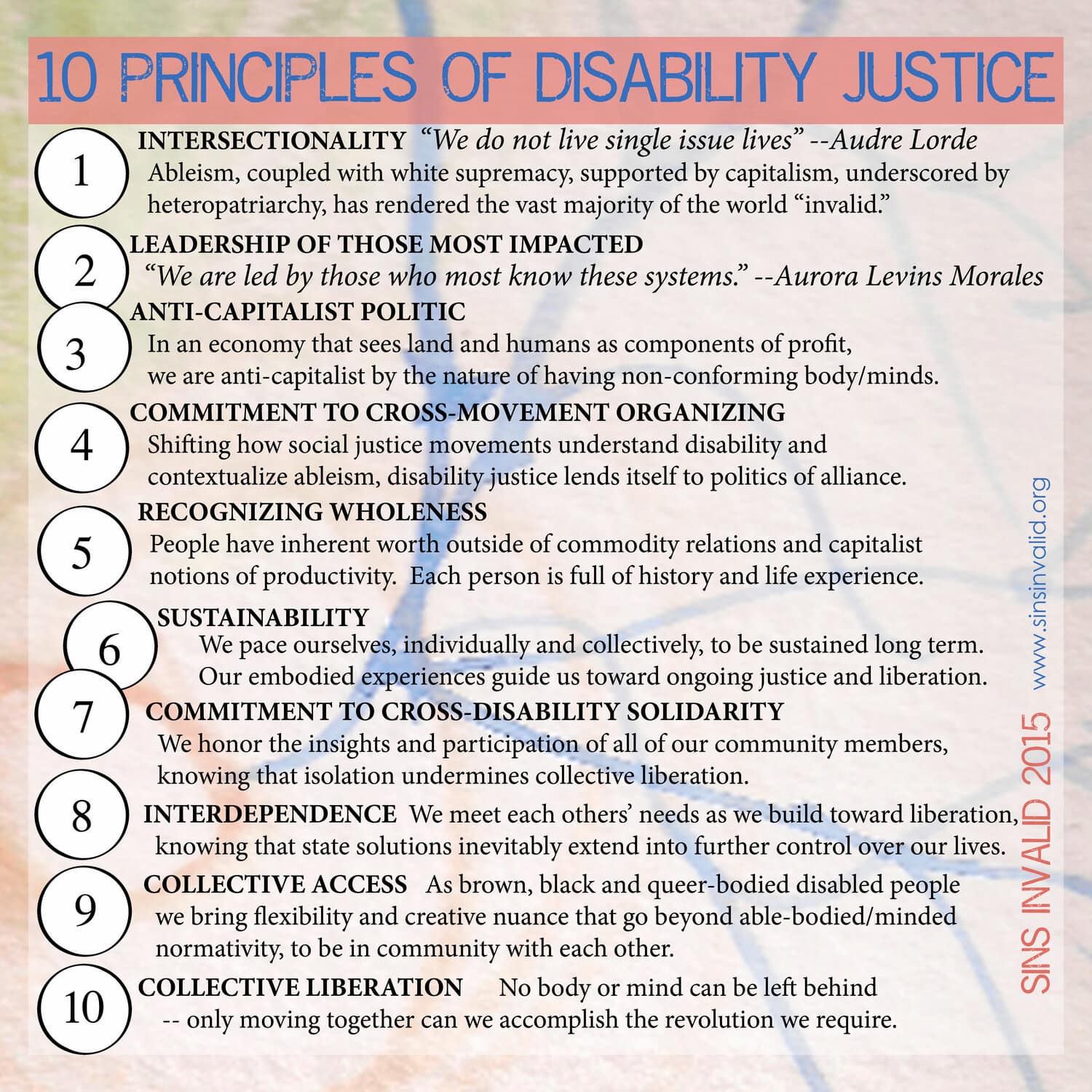
Image 30.05.03 — This infographic created by Sins Invalid in 2015 lists the “10 Principles of Disability Justice” and their definitions.
The following section illustrates other examples of activism and organizing related to Asian Americans and Pacific Islanders with disabilities. The creation of new services, new assistive technologies, and new storytellers have helped to expand access and visibility for more community members.
In 2019, Child of Deaf Adults (CODA) Gabriella Wong started a tech non-profit and developed AccesSOS as a free, accessible app to connect more people, like her deaf parents, to emergency services. When Wong’s father was in a car accident, he had no way to reach emergency services other than to text Wong to call 911. After Wong’s father almost died on another occasion, when his spleen ruptured, Wong sought to fix a social issue that most might consider an individual problem.
Wong developed a mobile text-to-911 app to make emergency services more accessible. Even though thirty-seven million Americans cannot hear or speak, only 49 percent of US 911 call centers provide text service, and 70 percent of people cannot text for emergency help. 1 While the 911 call system is accessible to people who can speak clearly and understand English, roughly sixty-five million Americans did not have access to life-saving emergency help (people with hearing disabilities and those with limited English). 2 Wong’s AccesSOS provides multiple language and disability-inclusive options to help a larger population reach emergency services.
Disability justice aims not only to widen access but also to create forms of collective empowerment and community. Asian American storytellers such as Jen Soriano, the daughter of a neurosurgeon, and physician Rupa Marya have contributed to disability justice by exploring connections between disability and social structures, illness, and transgenerational trauma. Soriano’s Nervous and Marya’s Inflamed combine personal stories and cultural history and link together structural conditions with individual bodyminds, illness, and chronic conditions. Similarly, invisible illness advocate Shruti Shivaramakrishnan, who was educated in the United States, uses comics on social media (@chronicallymeh on Instagram) and her blog to share resources and information about navigating life with chronic pain and complex trauma.
These insightful narratives resonate with the work of Korean American artist Johanna Hedva whose “Sick Woman Theory” (2016) emphasizes how our bodies carry historical trauma and declares that sometimes “it is the world itself that is making and keeping us sick.” 3 These activists, artists, and writers seek to fill gaps in knowledge about disability and race and to address a wider spectrum of community needs. Through their work, they have created tools and stories that matter for people with disabilities.
Imagining Disability Justice
Beyond Sins Invalid, other activists and organizations have sought to support and to center Asian Americans and Pacific Islanders with disabilities. Korean American undergraduate student Jennifer Lee founded the Asian Americans with Disabilities Initiative (AADI) in 2021 after being diagnosed with Crohn’s disease. Undaunted by lack of support from professors, administrators, and grantmakers, Lee and a small team of volunteers created an online space for Asian Americans with disabilities.
In a little over one year, AADI became a youth-led non-profit organization, focused on uplifting and advocating for those living with a disability. In 2022, AADI released an online resource guide to counter ableism and invisibility. With first-person testimonials and peer-reviewed research, AADI’s eighty-page digital guide also features profiles of notable disabled Asian American changemakers, definitions of key concepts and terms, and need-to-know information for allies.
In the Pacific Islands, Nuanua O Le Alofa (or NOLA) is a Samoan self-advocacy organization that centers people with disabilities and is recognized as the national civil society focal point of disability. Started in 2001, NOLA is the only organization in Sāmoa that is governed and led by persons with disabilities. An example of solidarity across differences, the organization was formed from the Samoa Blind Persons Association (SBPA), the Deaf Association of Samoa (DAS), Persons with Physical Disabilities Association of Samoa (PPDAS), along with three subgroups focused on intellectual psychosocial disabilities, youth with disabilities, and women with disabilities. By 2023, it had over 1,500 members with diverse disabilities across Independent Sāmoa’s four inhabited islands.
NOLA priorities include working to ensure fundamental human rights and more representation in government, employment, and healthcare support. NOLA also emphasizes language and representation by promoting terminology such as manaʻoa faʻapitoa or “special needs,” instead of labeling a person with disabilities as ma’i or sick, since these terms are not only outdated but also derogatory.
When NOLA was first established, activist-ancestor Louise Tasileta Leauanae worked as its first Treasurer. After 2005, she served as a NOLA representative at the Pacific Disability Forum in Fiji, was a member of the Sāmoa Task Force, an advisory group to the Samoan Parliament, became NOLA’s Assistant Coordinator in 2006, and later worked as the organization’s Programme Coordinator. After Leauanae’s passing, NOLA’s office manager remembered Leauanae’s close relationship with blind members of NOLA: “even though she has to work neutrally, she has a special place for the people who are blind,” and she was “dearly missed in that group.”
Leauanae emphasized interdependence and the collective nature of disability justice. Her assertions that “disability advocacy work is for everyone” and that “disability work and inclusive education is for everyone” echo the politics demonstrated by other activists featured in this chapter and highlight how disability justice issues should concern everyone. 4
These are a few of the examples that highlight the disability justice work that Asian American and Pacific Islander communities are imagining and then implementing based on community members’ needs.
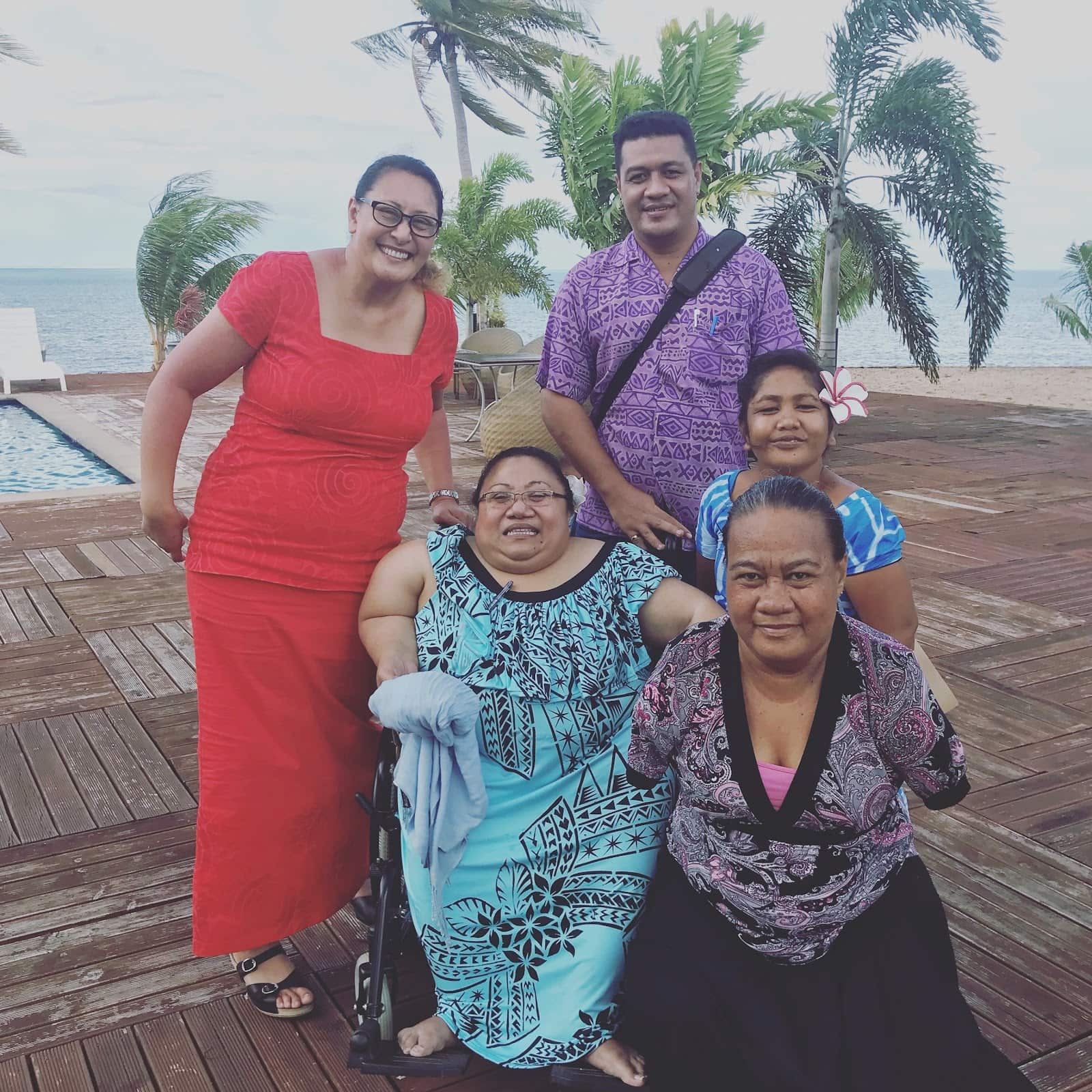
Image 30.05.05 — Louise Tasileta Leauanae (center, in wheelchair) was one of the founding members of Nuanua O Le Alofa (NOLA). Her advocacy work fostered representation of people with disabilities in decision-making in Sāmoa and the Pacific Islands. Louise became an ancestor in 2018 at the age of forty-five.
Conclusion
Every person can contribute to making a more accessible and livable world. This module discusses the history of disability rights activism, the academic field of disability studies, and the disability justice movement. It also highlights ongoing activism against ableism, stigma, and discrimination. People with disabilities and chronic illnesses continue to educate, organize, and collaborate in ways that center justice, education and collective wellness. The examples in this module highlight Asian Americans and Pacific Islanders making change and reimagining justice in their communities—which signals a hopeful future that is more inclusive and based in reciprocity.
Finally, Asian American and Pacific Islander people with disabilities continue to work toward changing people’s understanding of difference and disability and to prioritize care and interdependence over profit. They have created digital technologies, organizations, and communities to support different bodyminds and those who are most vulnerable. Disability justice invites us to imagine and dream of a different world and future—one more equitable and compassionate than what we currently face.
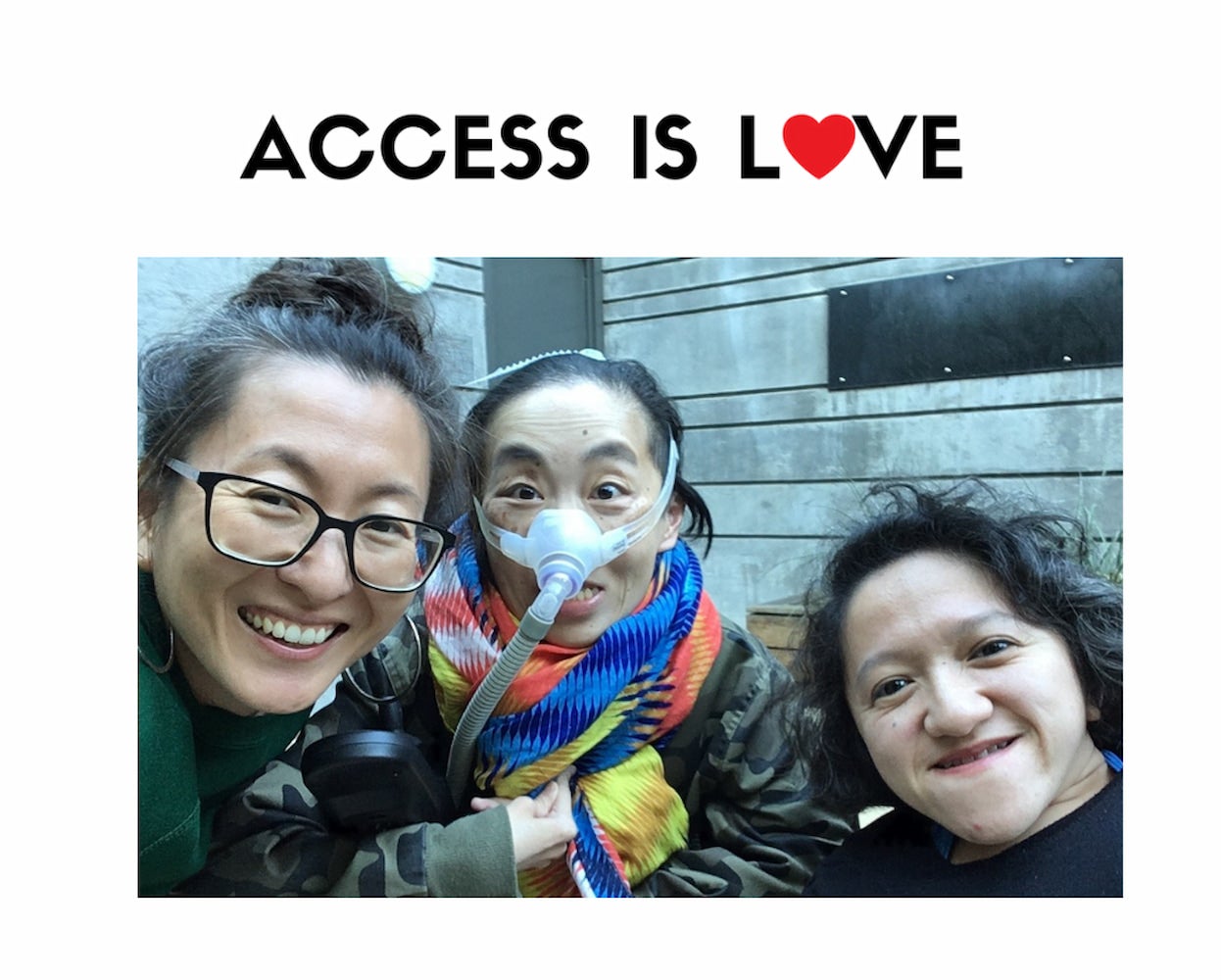
During her keynote for the 2018 Disability Intersectionality Summit, activist, educator, and Korean adoptee writer Mia Mingus shared this inspiring view: “Disability justice is simply another term for love. So is solidarity and access. This work for liberation is simply a practice of love—one of the deepest and most profound there is. And the creation of this space is an act of love. 5

Image 30.05.06 — Disability justice activists (left to right) Mia Mingus, Alice Wong, and Sandy Ho started the Access Is Love Project with the “aim to help build a world where accessibility is understood as an act of love.”
Glossary terms in this module
ableism Where it’s used
Beliefs or practices that discriminate against those with disabilities. It is rooted in socially constructed ideas of normalcy, productivity, desirability, and intelligence that are taught through language, media, policies, and laws.
activism Where it’s used
An action or collective process, such as a strike, march, protest, legislation, or policy campaign by an individual or groups to bring about material, political, and/or ideological changes to the status quo.
bodymind Where it’s used
A concept used in disability studies that asserts that mental and physical processes give rise to and affect each other, and therefore should not be separated as binary terms (body vs. mind).
disability Where it’s used
Challenges or limitations in physical or cognitive functioning that can be either temporary, permanent, invisible, or visible. How a person experiences these challenges is related to not only individual factors but also social structures, institutions, and government policies.
disability justice Where it’s used
A form of activism and community building that centers the lives of Black, brown, queer, and trans disabled people as whole and recognizes their leadership and knowledge as valuable. It is also a political vision that challenges multiple, overlapping systems of unfairness, prioritizes interdependence, aims to work together across differences and different political movements to achieve collective access where no one is left behind.
intersectionality Where it’s used
Conceptualized by legal scholar Kimberlé Crenshaw in 1989 as a way of understanding how various forms of inequality operate together and exacerbate each other. The term refers to overlapping systems of oppression that were not addressed adequately in the law or dominant ways of thinking about inequalities.
stereotype Where it’s used
Generalized beliefs about a group of people based on one characteristic. Typically, stereotypes perpetuate harmful discourse about groups of people and are rooted in false and often racist beliefs.
Endnotes
1 Shannon Farley, “She’s Making Emergency Help Accessible Through Text-to-911,”
Fast Forward/Forbes, Nov 11, 2020.
2 Farley, “She’s Making Emergency Help Accessible Through Text-to-911.”
3 Johanna Hedva, “Sick Woman Theory,” Topical Cream, March 12, 2022, https://topicalcream.org/features/sick-woman-theory/.
4 Personal communication with author, February 7, 2013, also cited in Juliann Anesi, “Action Makes a Difference,” in K. Soldatic and K. Johnson, eds., Global Perspectives on Disability Activism and Advocacy: Our Way, 1st Edition (Routledge, 2019), 85.
5 Mia Mingus, “‘Disability Justice’ Is Simply Another Term for Love,” keynote speech at Disability Intersectionality Summit, Massachusetts Institute of Technology, posted October 26, 2018, by Disability Intersectionality Summit, Youtube, 27:25, https://www.youtube.com/watch?v=lm21KpsNk1s.