



Search the Media Repository
Discover the curated images, videos, and primary sources featured throughout Foundations and Futures
History is more than just text on a page; it is the photographs, voices, and artifacts of the people who lived it. The images and recordings featured across Foundations and Futures are part of a meticulously curated media repository. Whether you are building a lesson plan or investigating an artifact, you can use this database to trace the provenance of our media: discover who created an asset, the historical context behind it, and how it can be used to bring Asian American and Pacific Islander experiences into your classroom.
Multimedia
Chapters
-
Image
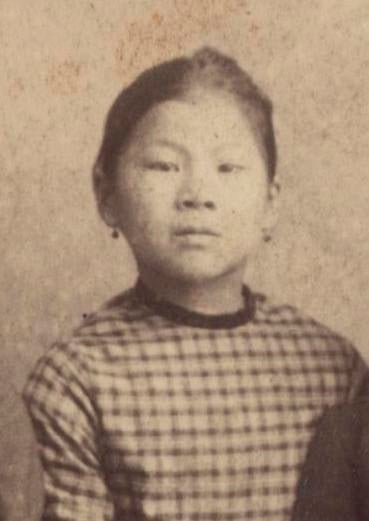
Portrait of Mamie Tape
Portrait of Mamie Tape, circa 1884.
-
Image
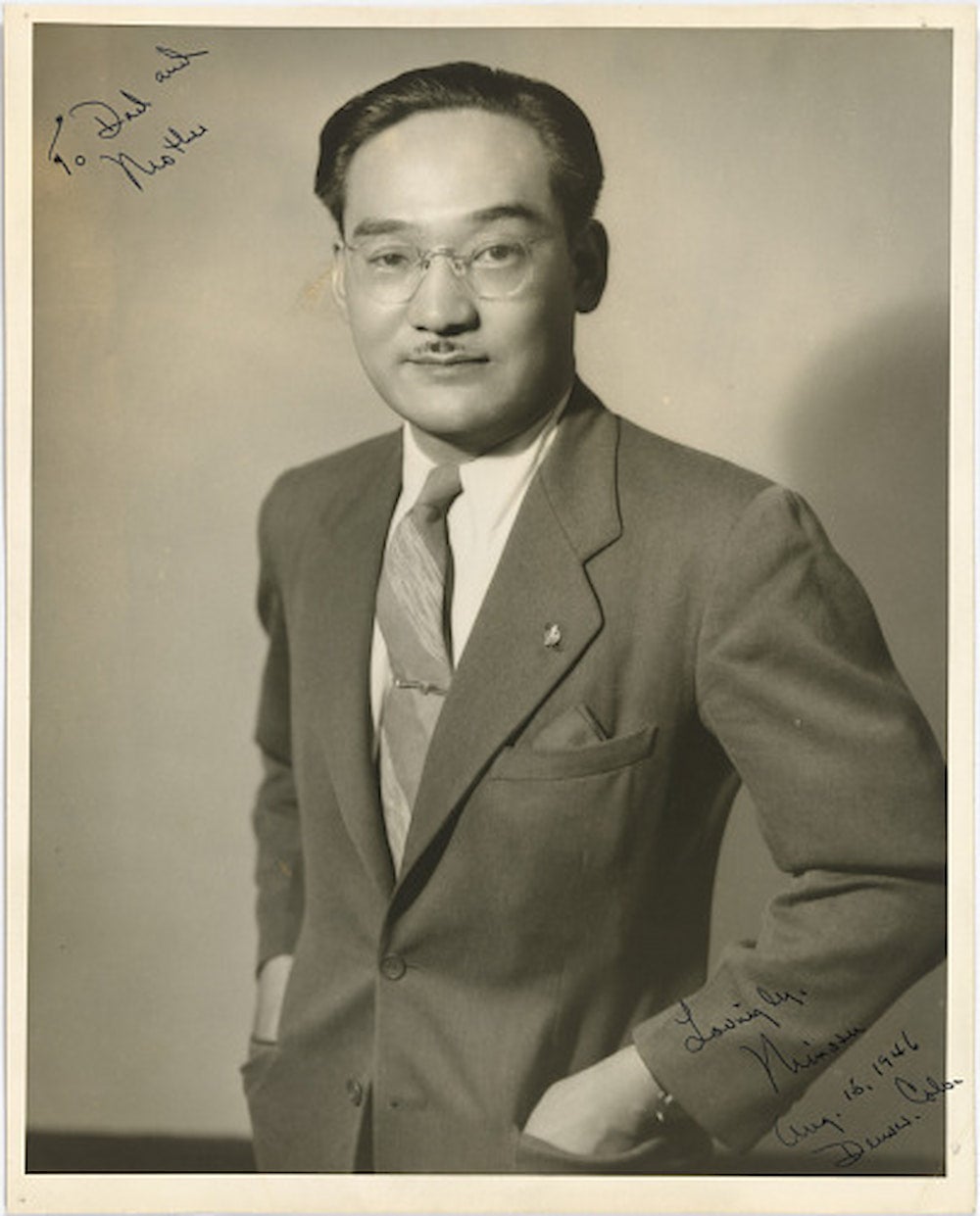
Minoru Yasui
From left to right, top to bottom: Min Yasui, Gordon Hirabayashi, Fred Korematsu, and Mitsuye Endo brought lawsuits challenging government violations of Japanese Americans’ civil liberties.
-
Video
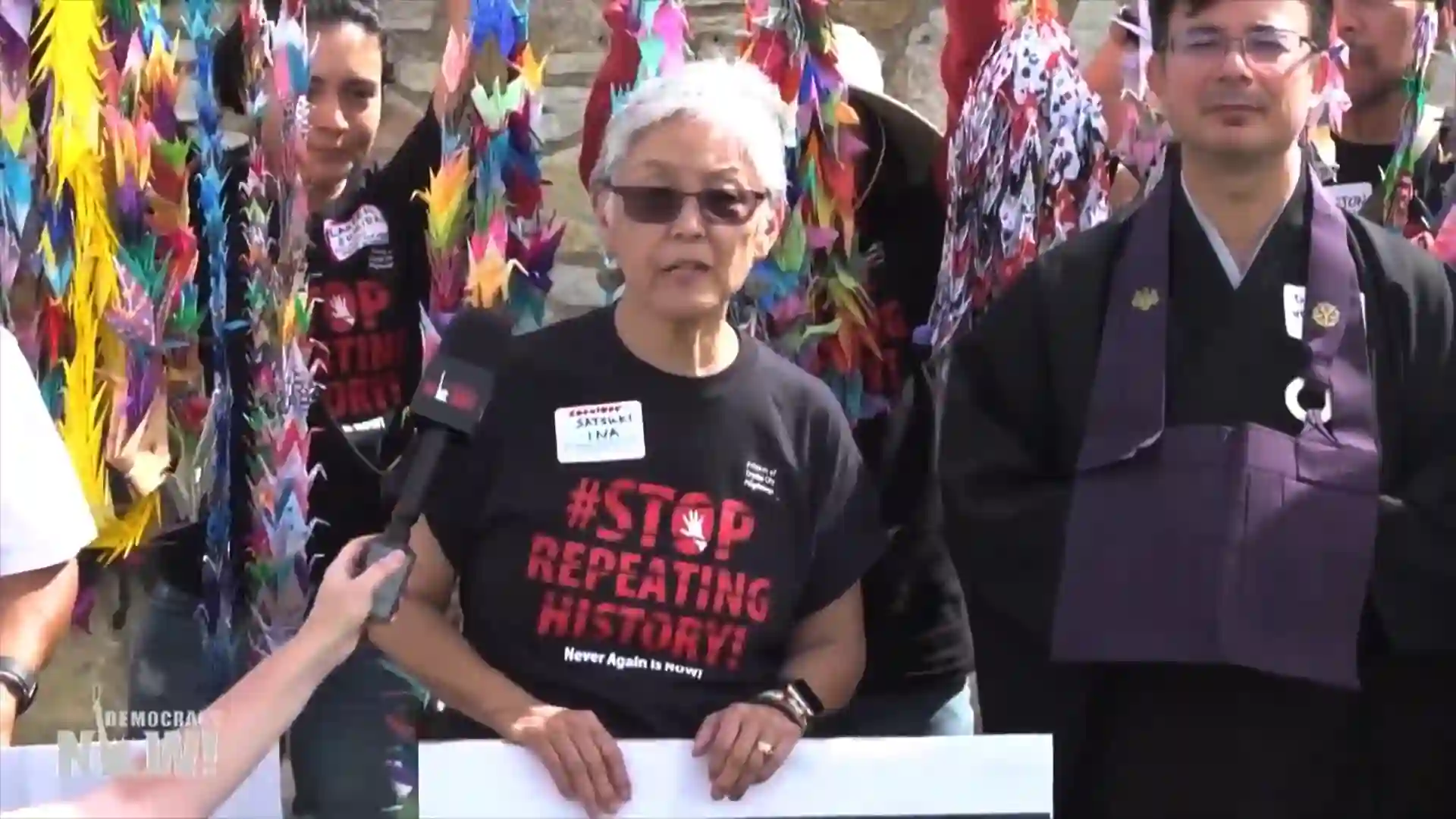
Protesting Contemporary Detention Centers
Soon after the Dilley protest, the Trump administration announced plans to indefinitely imprison hundreds of immigrant children at Fort Sill, Oklahoma. That locale had a bitter history for Japanese Americans, because the United States imprisoned seven hundred Issei men there during World War II. A guard shot one of them dead. Tsuru for Solidarity organized a protest at Fort Sill featuring five Japanese American elders who had been incarcerated in US concentration camps during World War II. One week after the protest, the Trump administration announced that it would not detain migrant children at Fort Sill. This video documents the protest.
-
Image
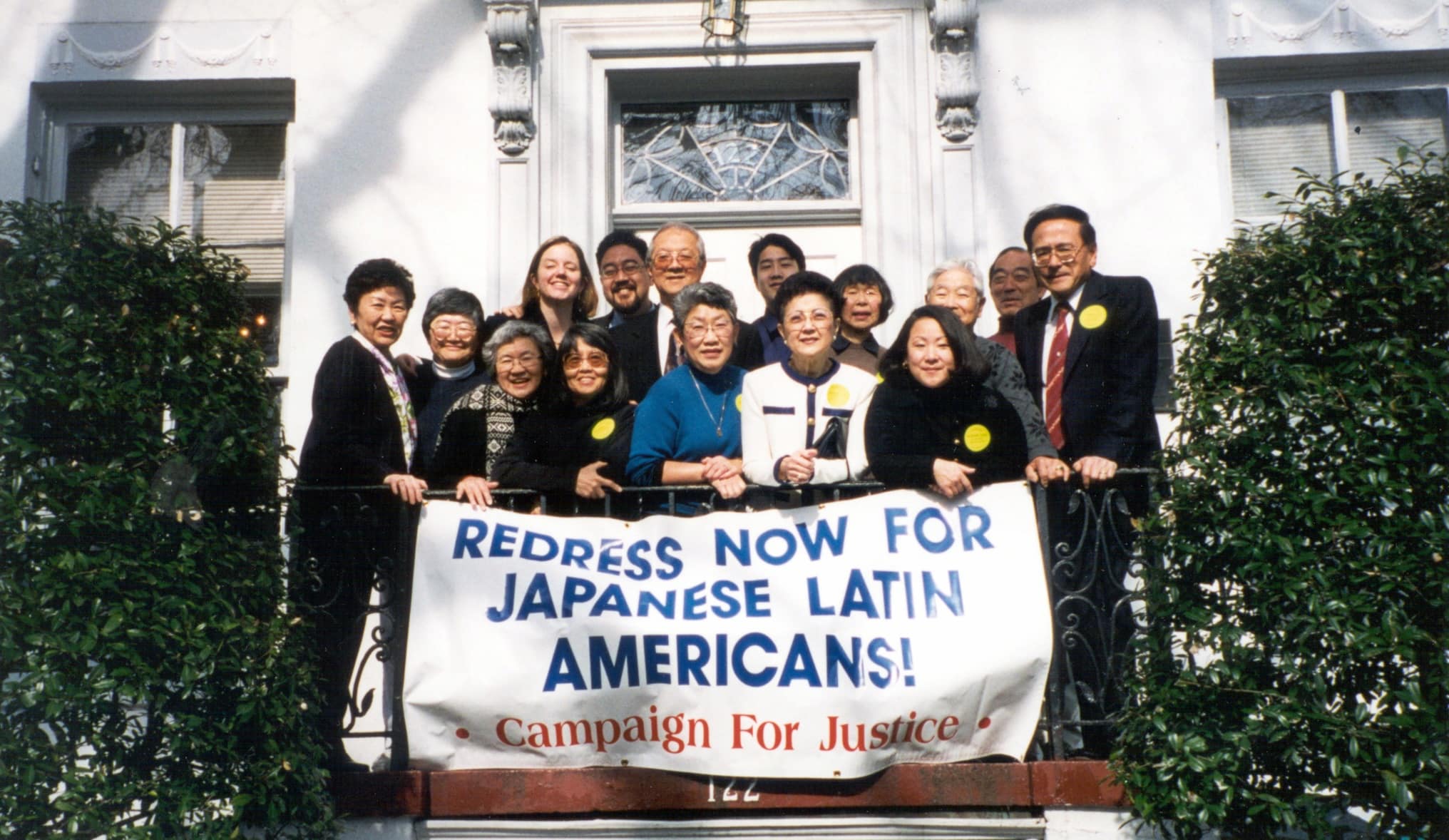
Campaign for Justice
Members of Campaign for Justice, a group formed in 1996 to advocate for redress for Japanese Latin Americans who were deported from their countries during World War II and interned in the United States.
-
Image
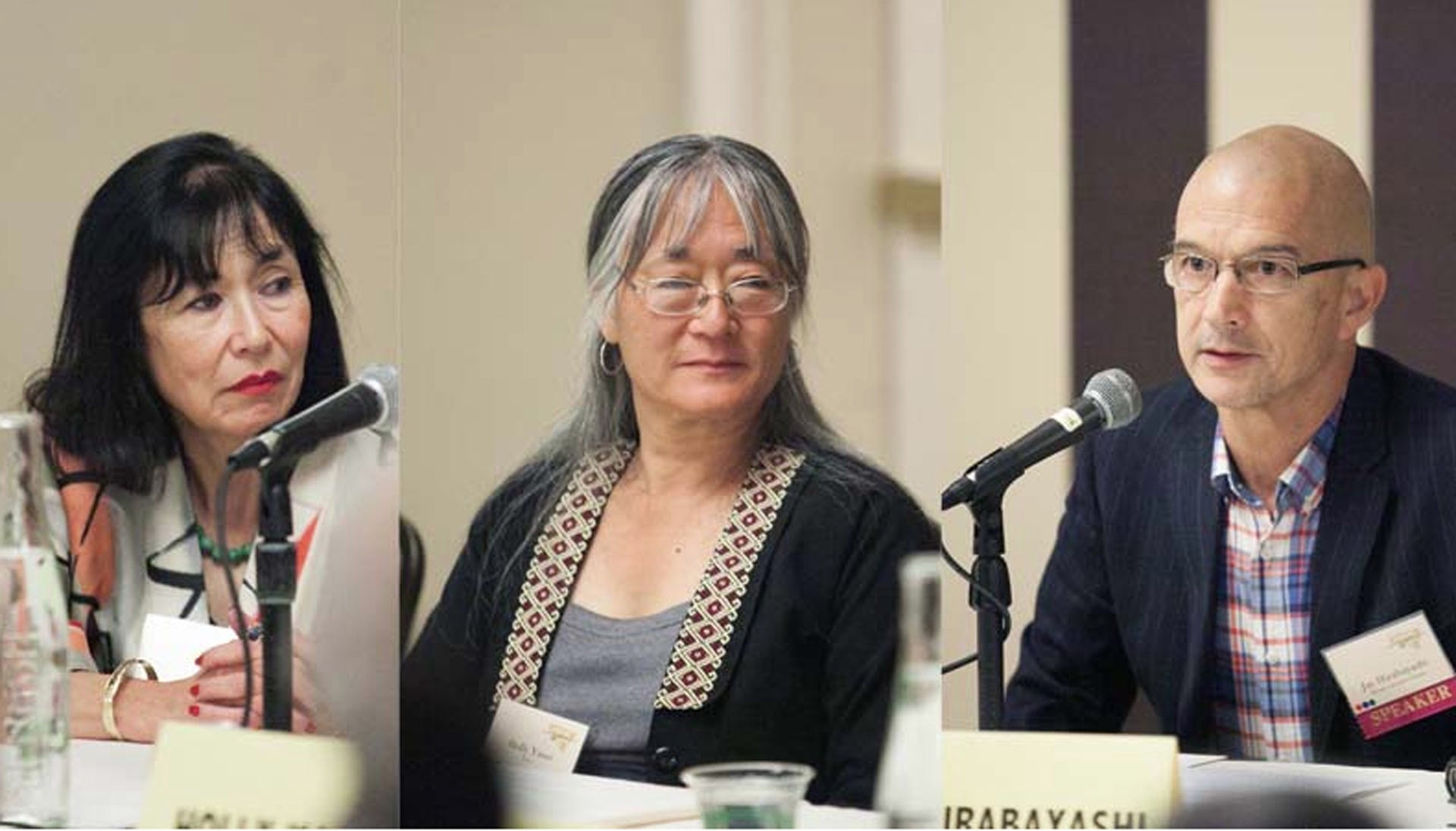
Karen Korematsu, Holly Yasui, and Jay Hirabayashi
In 2017, President Trump issued an executive order banning people from several Muslim-majority countries from entering the United States. Karen Korematsu, Holly Yasui, and Jay Hirabayashi, children of three men who filed lawsuits challenging the violation of their rights during World War II, submitted a legal brief to the US Supreme Court in a lawsuit challenging President Trump’s travel ban.
-
Text
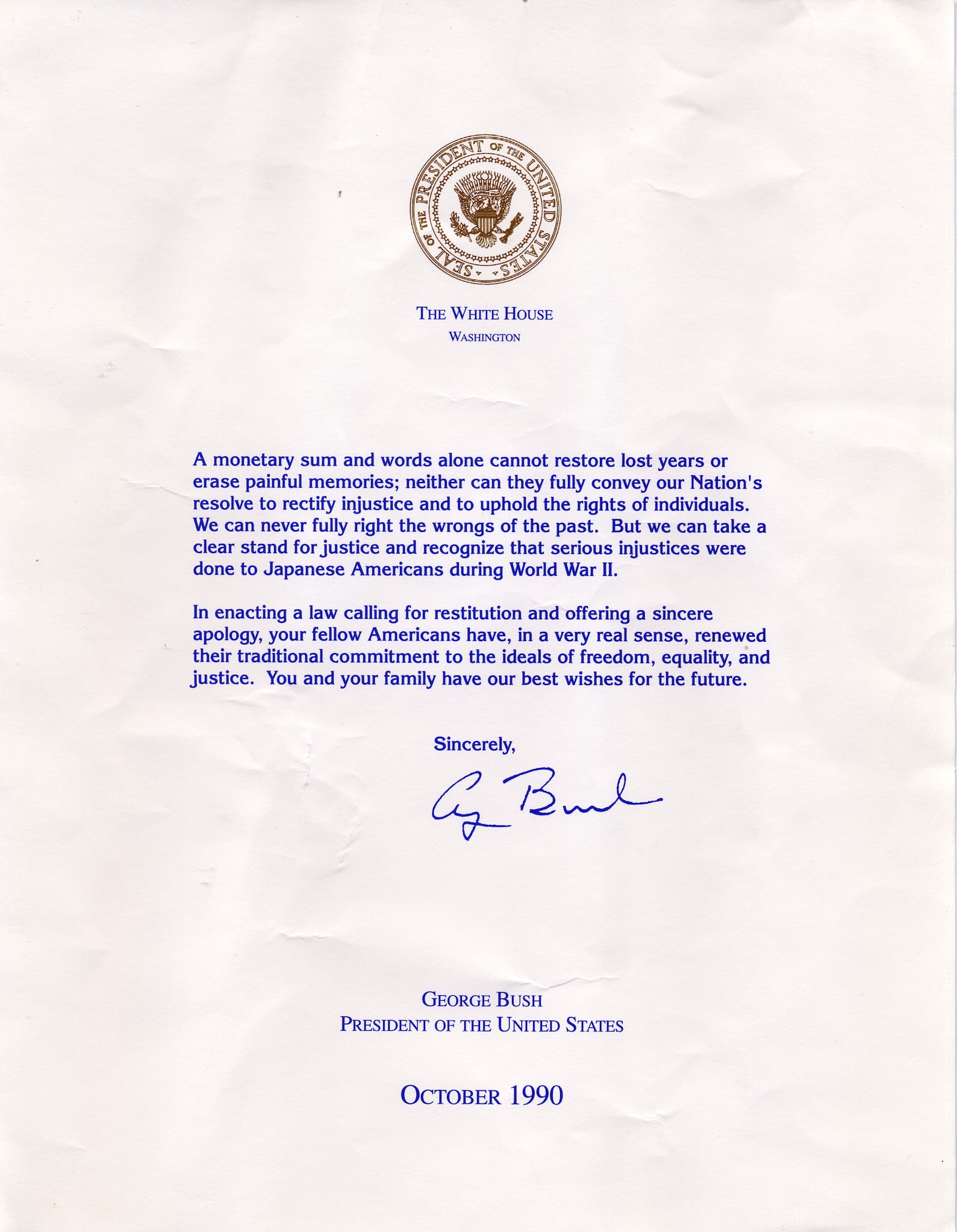
U.S. Government Written Apology
Japanese Americans who had been wrongfully imprisoned during World War II received this formal apology from the US government.
-
Image
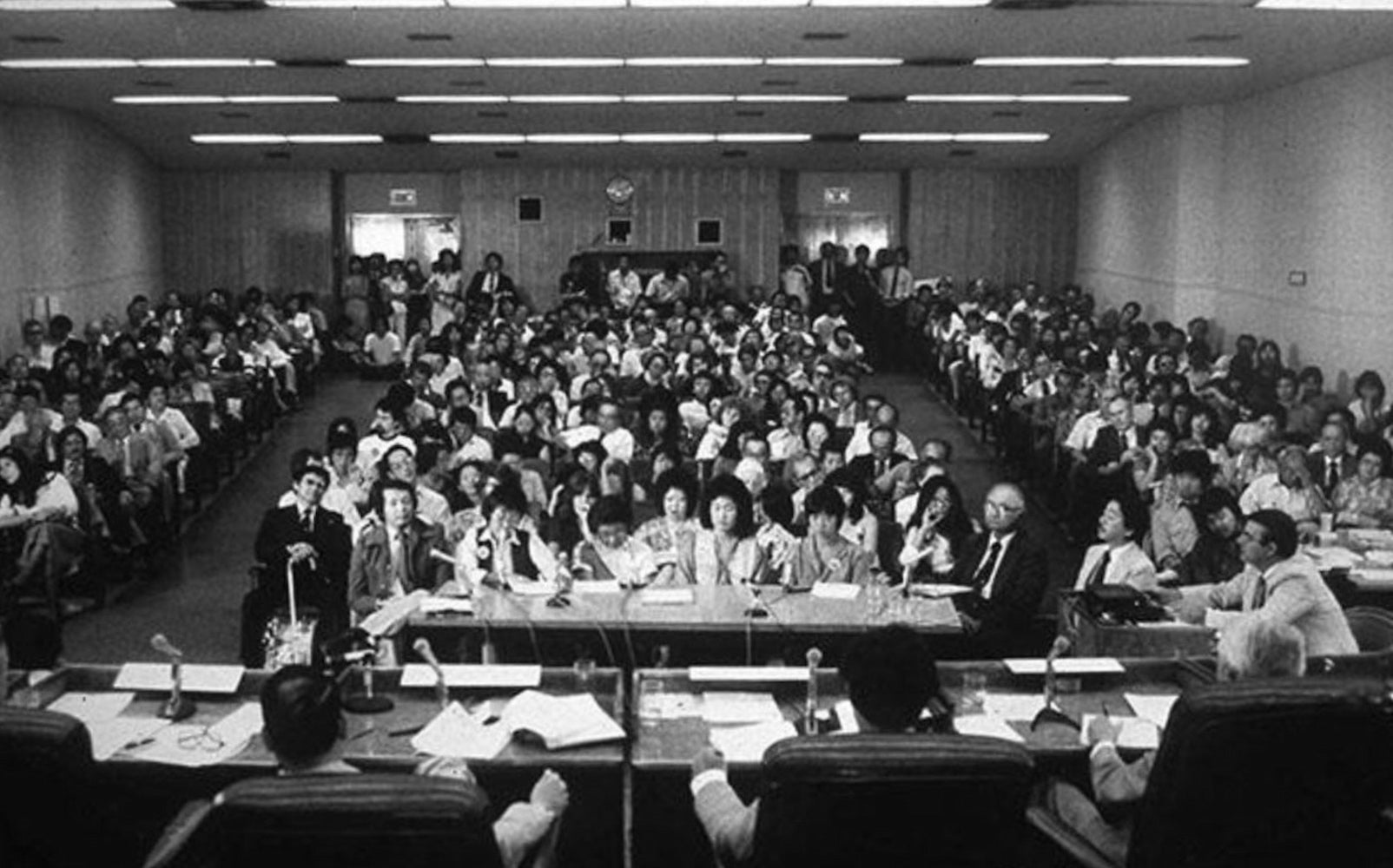
L.A. Commission Hearing
The Commission on the Wartime Relocation and Internment of Civilians held hearings throughout the United States, including in Los Angeles from August 4–6, 1981, during which 153 people testified. Each hearing was packed like this one.
-
Image
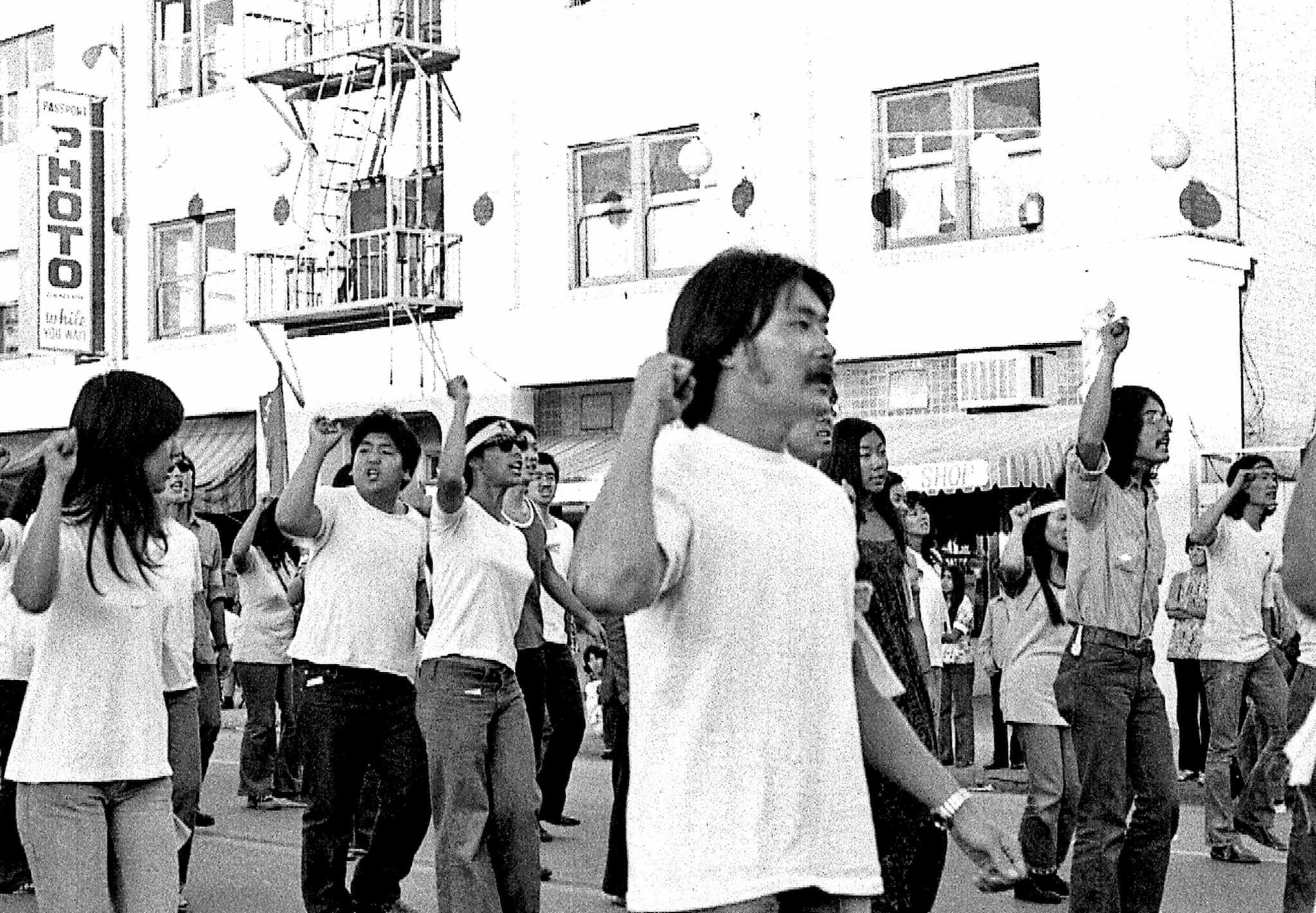
Van Troi Anti-Imperialist Youth Brigade protesting the Vietnam War at the Nisei Week Parade, in Los Angeles Little Tokyo, California, 1972. Photo by Mary Uyematsu Kao, Rockin’ the Boat: Flashbacks of the 1970s Asian Movement, p. 114.
Inspired by the civil rights movement of the 1950s and 1960s and protests against the Vietnam War in the 1960s and 1970s, many Sansei became politically active, like these young Japanese Americans in 1972 opposing US militarism.
-
Image
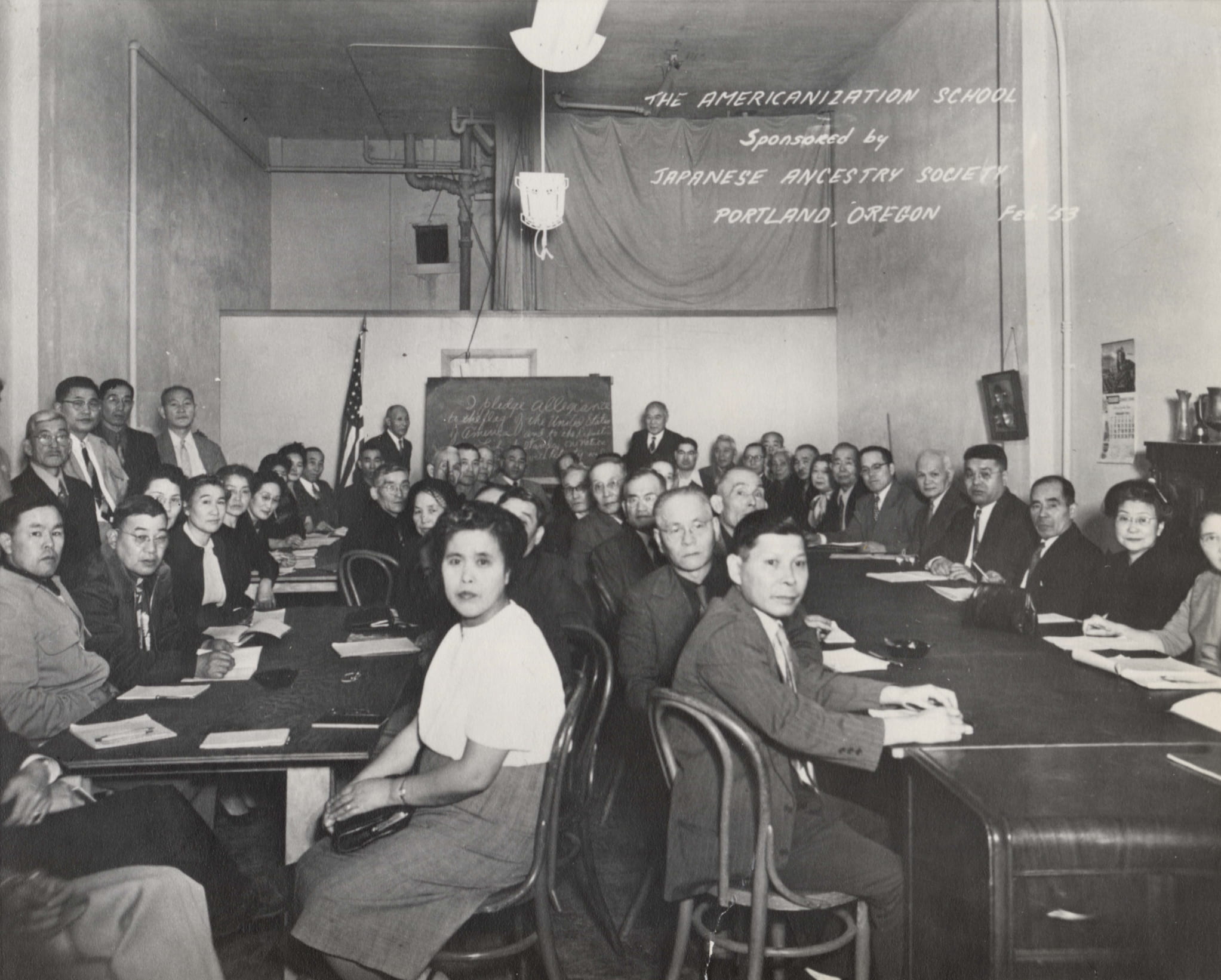
The Americanization School
Thousands of Issei became US citizens after the federal government, in 1952, allowed them to naturalize. Masuo Yasui taught classes for other Issei, like those pictured here in a Portland “Americanization” school, so that they could obtain the English-language skills and knowledge of American history and government necessary to pass their citizenship tests.
-
Image
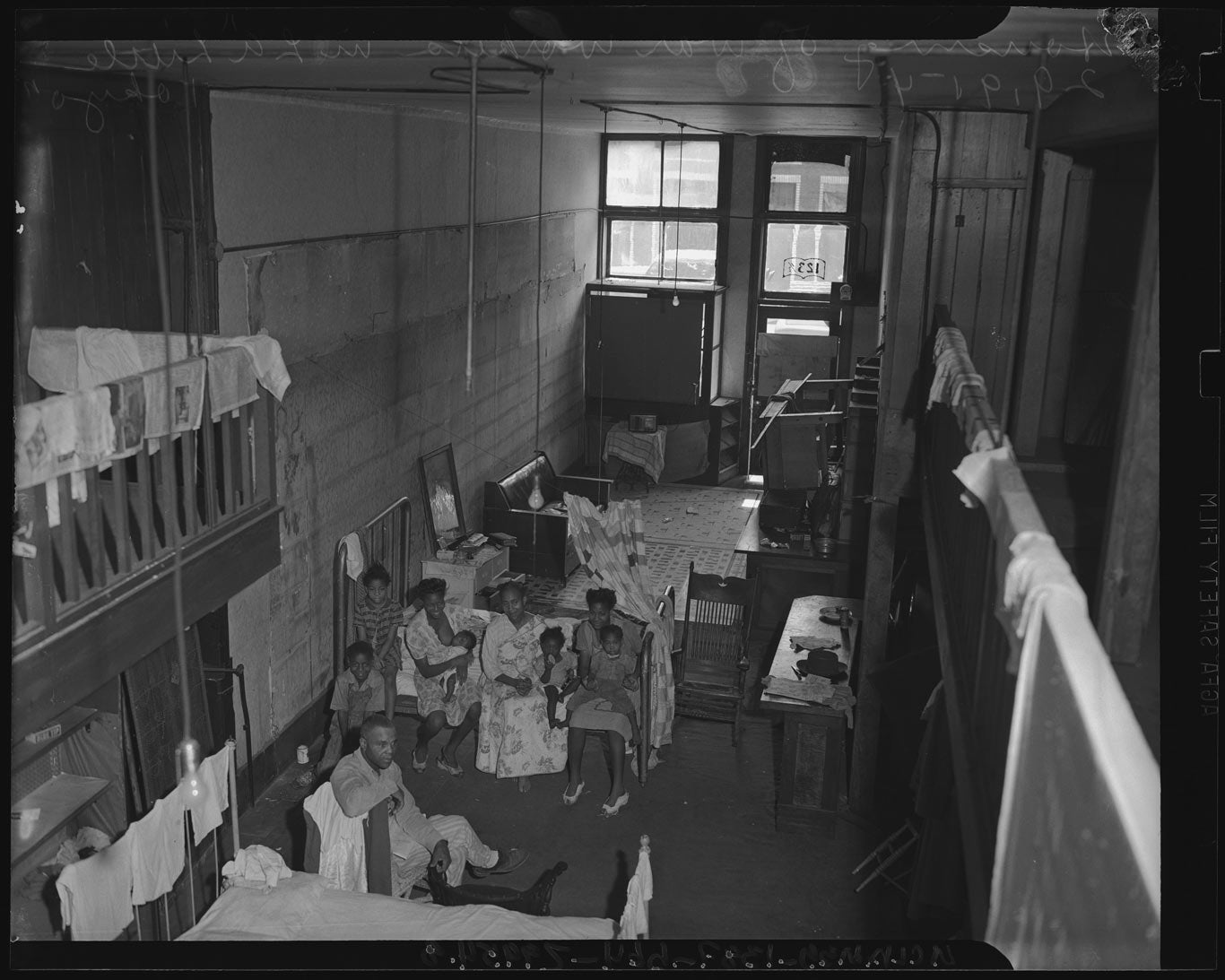
Little Tokyo’s Bronzeville
Little Tokyo in Los Angeles was dubbed “Bronzeville” during World War II, as African American families and workers moved into the empty homes and businesses previously occupied by the Japanese American community. Pictured: Interior view of makeshift housing for an African American family in Little Tokyo, Los Angeles.