



Search the Media Repository
Discover the curated images, videos, and primary sources featured throughout Foundations and Futures
History is more than just text on a page; it is the photographs, voices, and artifacts of the people who lived it. The images and recordings featured across Foundations and Futures are part of a meticulously curated media repository. Whether you are building a lesson plan or investigating an artifact, you can use this database to trace the provenance of our media: discover who created an asset, the historical context behind it, and how it can be used to bring Asian American and Pacific Islander experiences into your classroom.
Multimedia
Chapters
-
Text
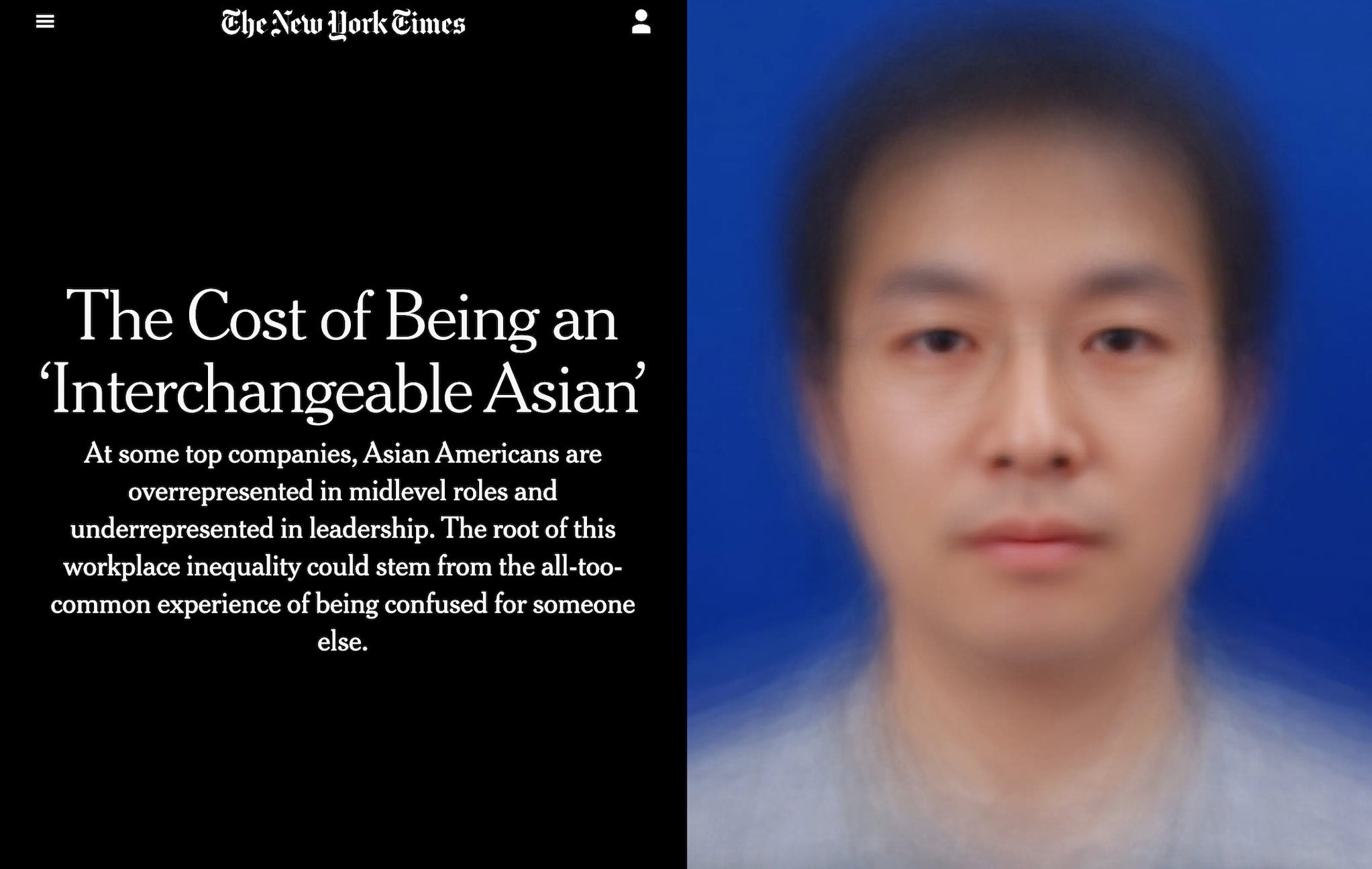
“The Cost Of Being an ‘Interchangeable Asian'”
Brian X. Chen’s New York Times article exploring the phenomenon often referred to, humorously, as “all look same.”
Featured in:
Asian American Popular Culture, Module 1
-
Image
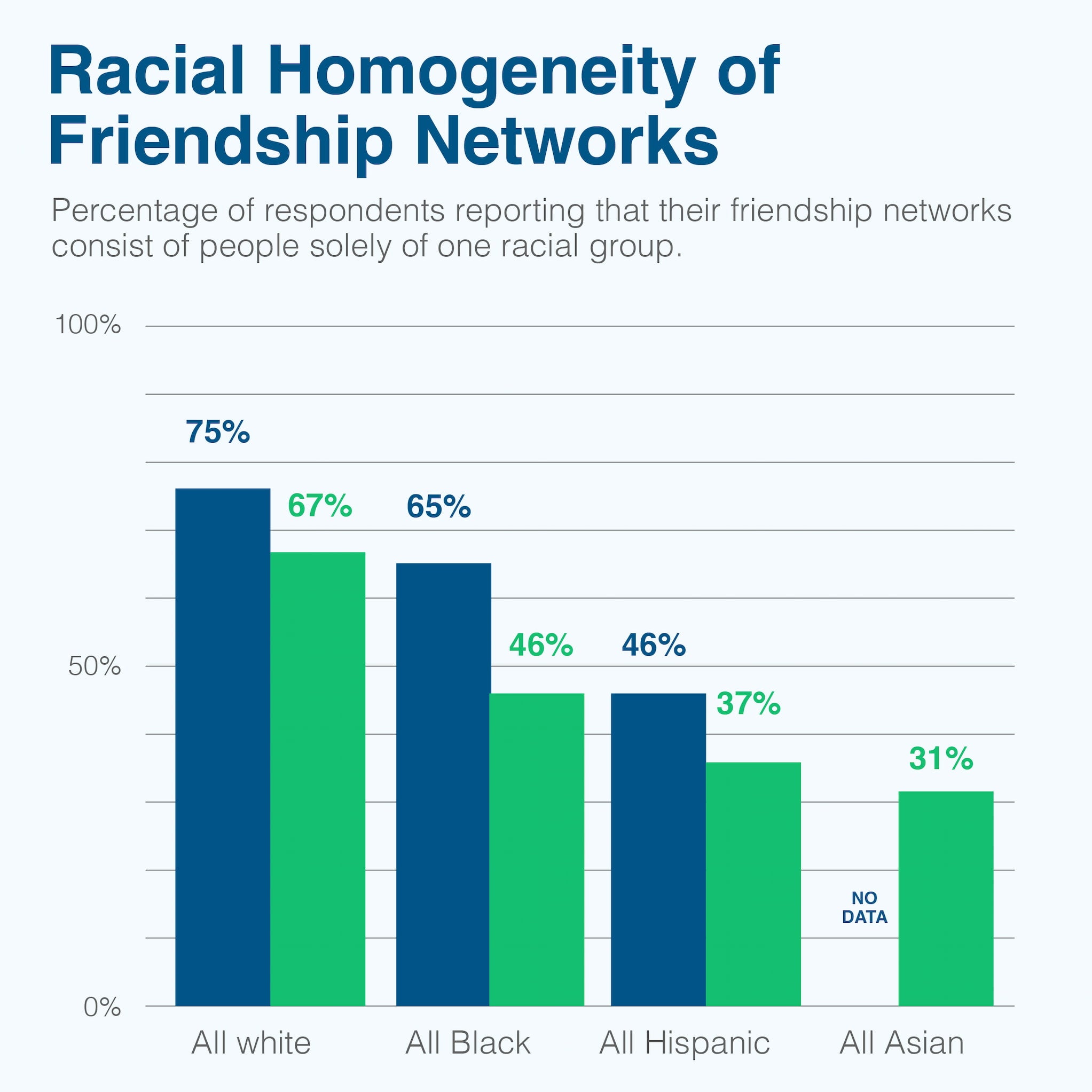
Racial Homogeneity of Friendship Networks
While racial homogeneity in friendship networks has decreased from 2013 – 2022, the average non-Asian American does not have a single AAPI friend within their core social networks. (Source: PRRI 2022 Social Networks Survey (Public Religion Research Institute))
Featured in:
Asian American Popular Culture, Module 1
-
Image
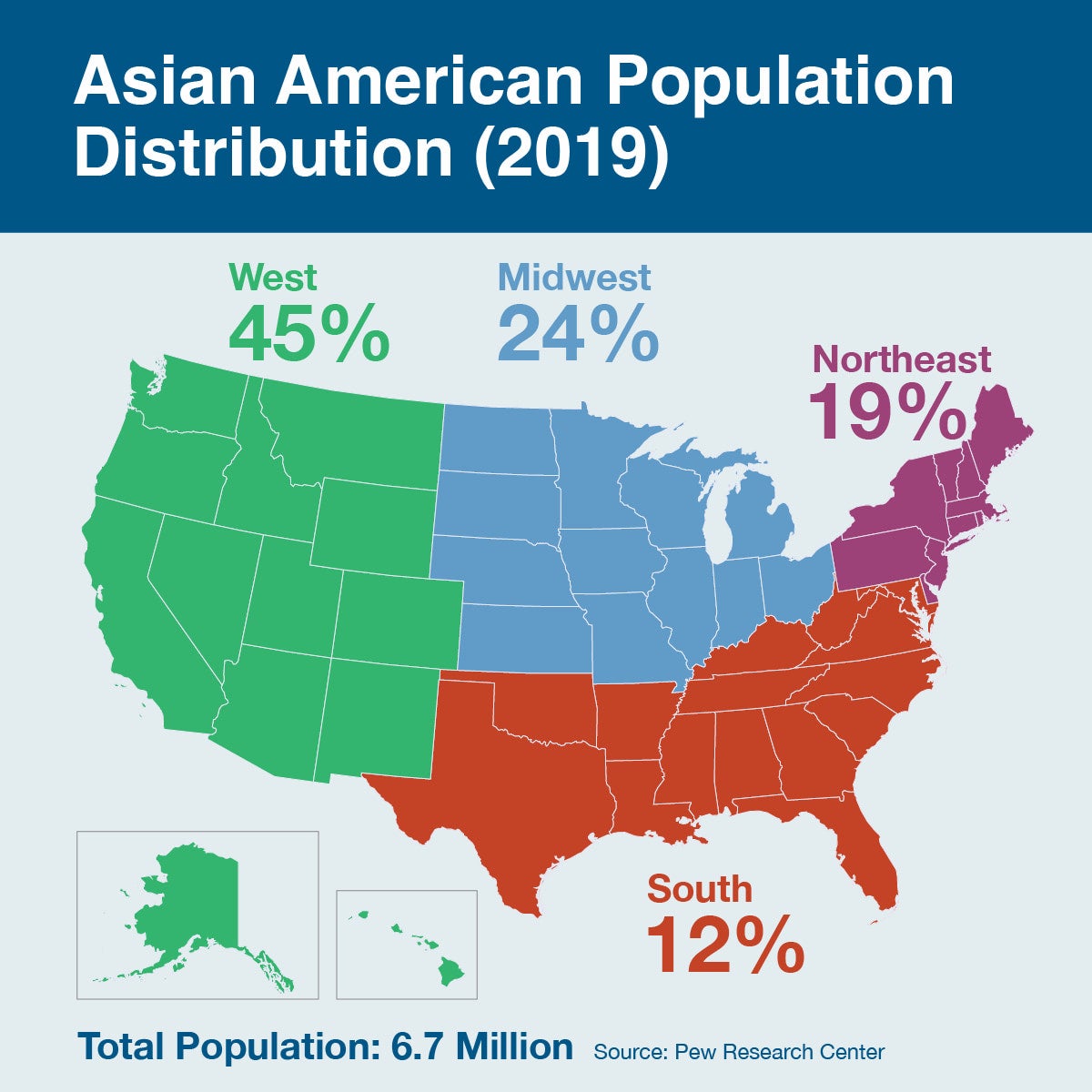
Asian American Population Distribution in the US
Nearly half (45 percent) of Asian Americans live in the western United States, with 30 percent in California alone. (Source: Pew Research Center Analysis of 2017-2019 American Community Survey (IPUMS))
Featured in:
Asian American Popular Culture, Module 1
-
Image
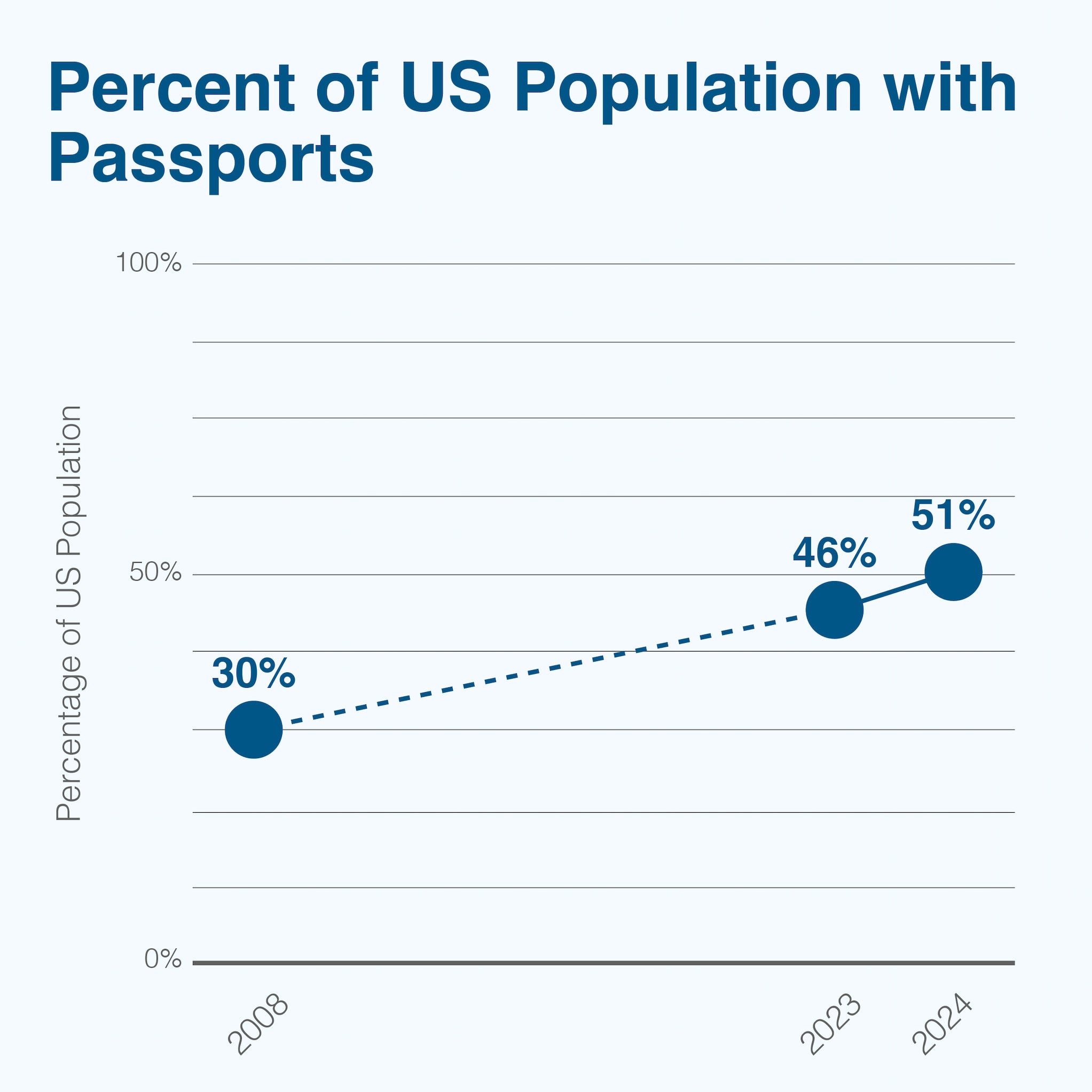
Percent of US Population With Passports
The percentage of Americans with passports has increased from thirty percent in 2008 to fifty-one percent in 2024 totalling over 171 million valid passports in circulation. (Source: US Department of State)
Featured in:
Asian American Popular Culture, Module 1
-
Text
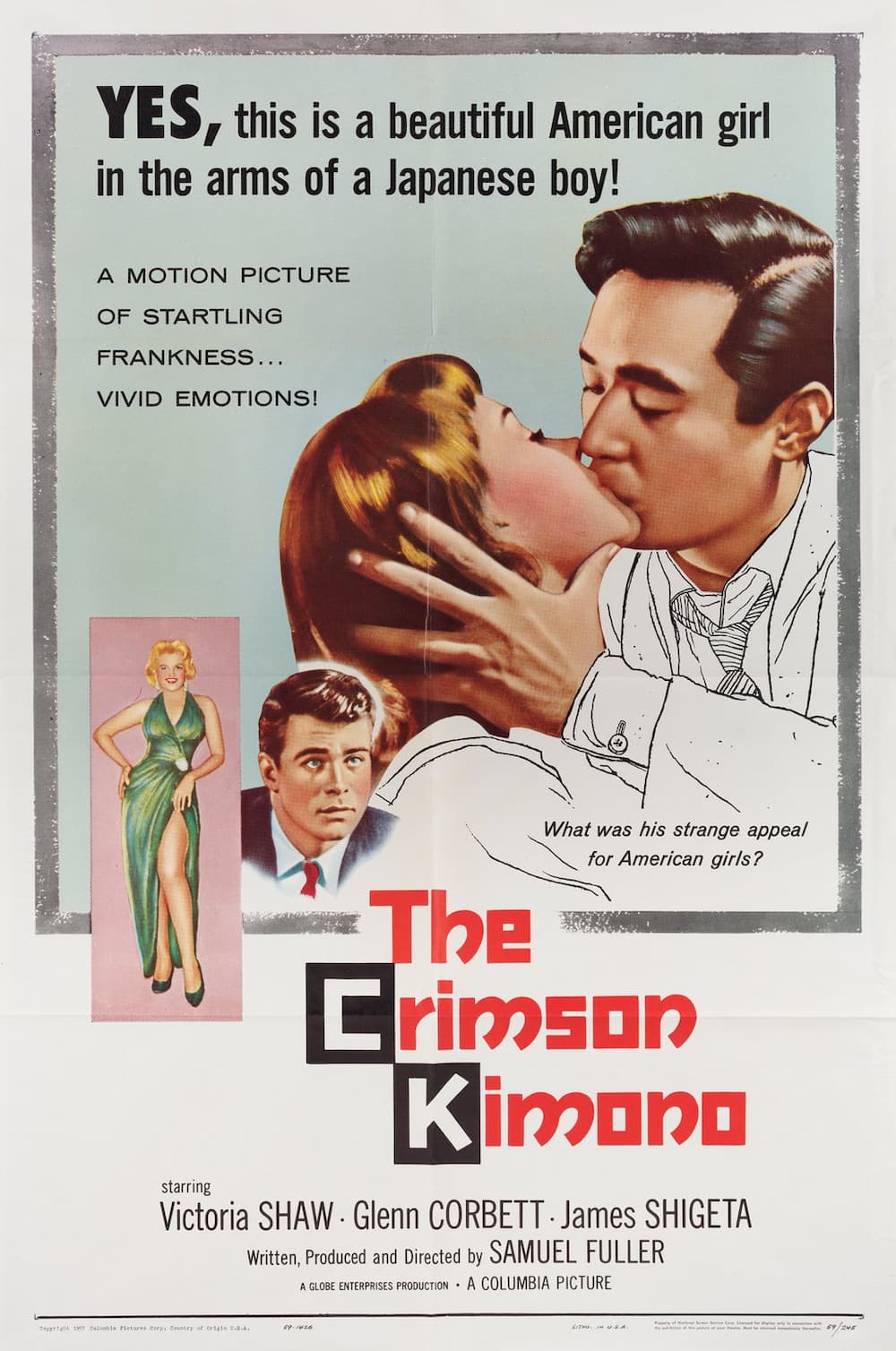
The Crimson Kimono Poster
The theatrical poster for Samuel Fuller’s The Crimson Kimono (1959). As the civil rights movement was budding, pop culture reflected the reality of interracial relationships in a way that was broadly accessible and, for a growing number of people, acceptable.
Featured in:
Asian American Popular Culture, Module 1
-
Image
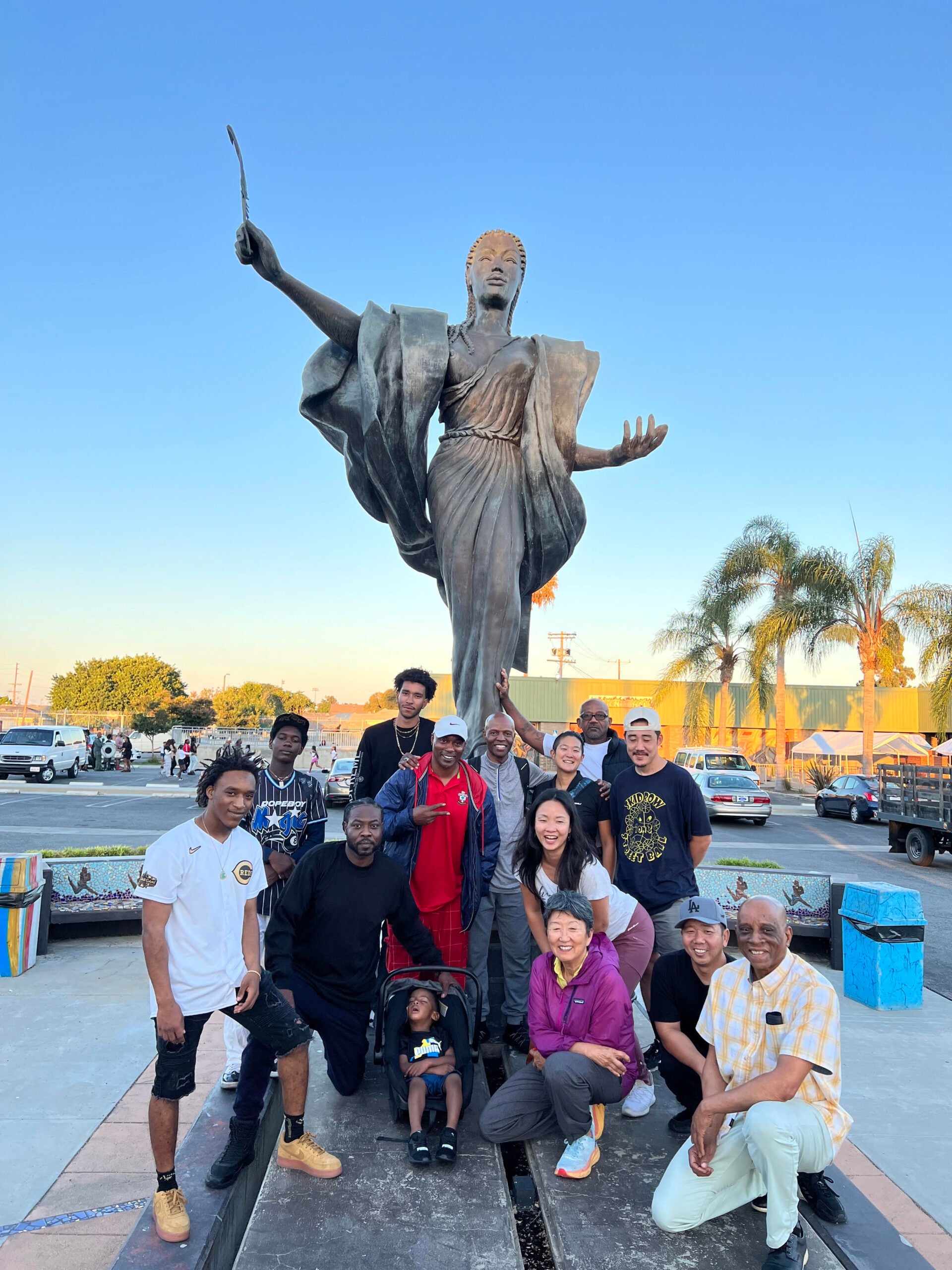
LA Race Parxis Network
The LA Race Praxis Network poses at the Mother of Humanity statue at the Watts Labor and Community Center in Los Angeles, 2024. The network is a group that has been doing healing and service together since the killing of George Floyd and anti-Asian hate incidents during the COVID-19 pandemic.
Featured in:
Sa I Gu: Los Angeles, 1992, Module 5
-
Image
-
Image
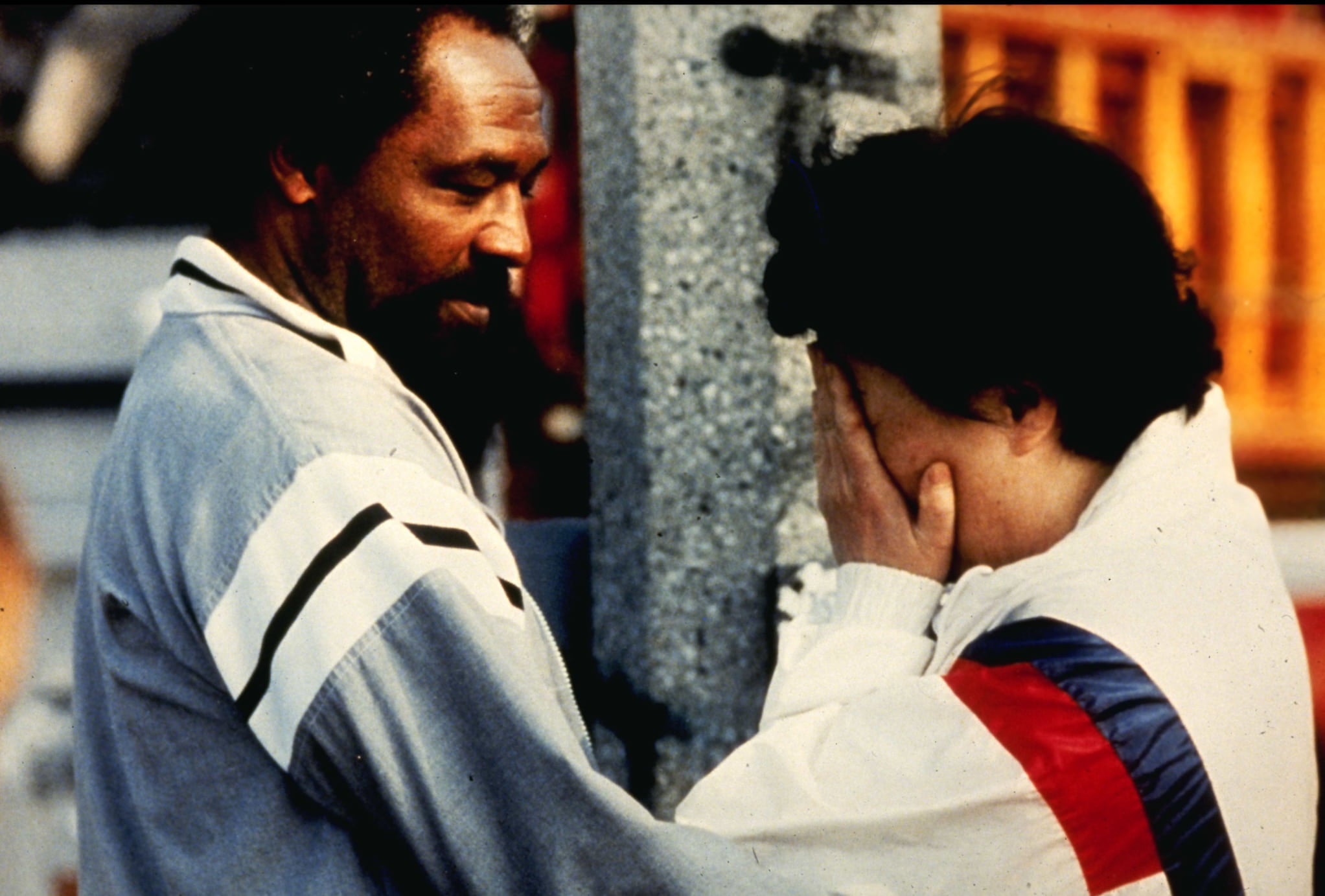
Koreatown Solidarity
A man comforts a distraught store owner after her store is destroyed, one of the many displays of compassion and comfort among residents during the civil unrest.
Featured in:
Sa I Gu: Los Angeles, 1992, Module 5
-
Text
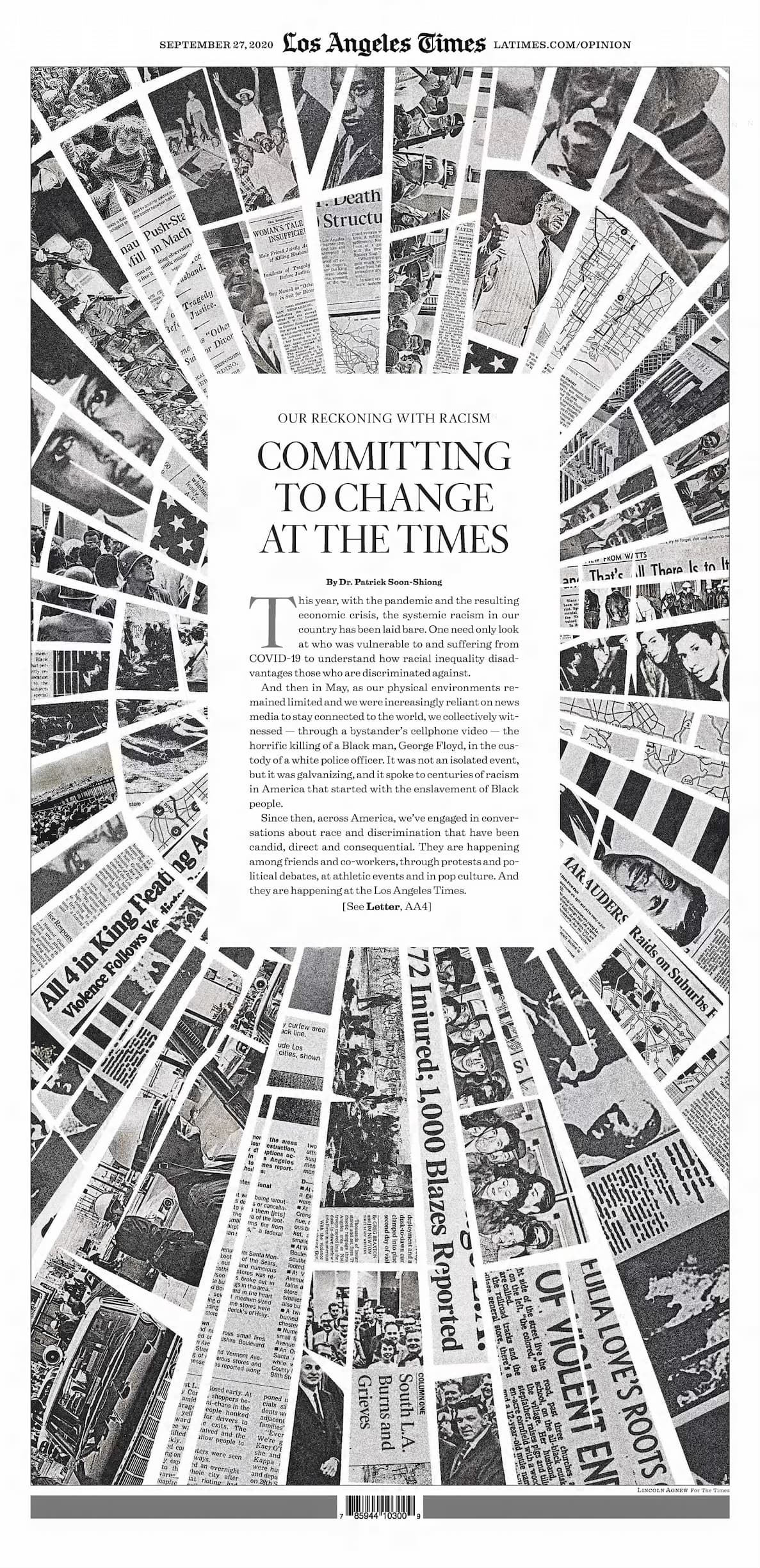
L.A. Times Apology of Biased Reporting
During 2020’s Black Lives Matter and Stop AAPI Hate protests, the Los Angeles Times editorial board published an apology for its history of biased reporting, including the 1992 Los Angeles uprising, vowing to improve coverage and hire more diverse staffers.
Featured in:
Sa I Gu: Los Angeles, 1992, Module 5
-
Image
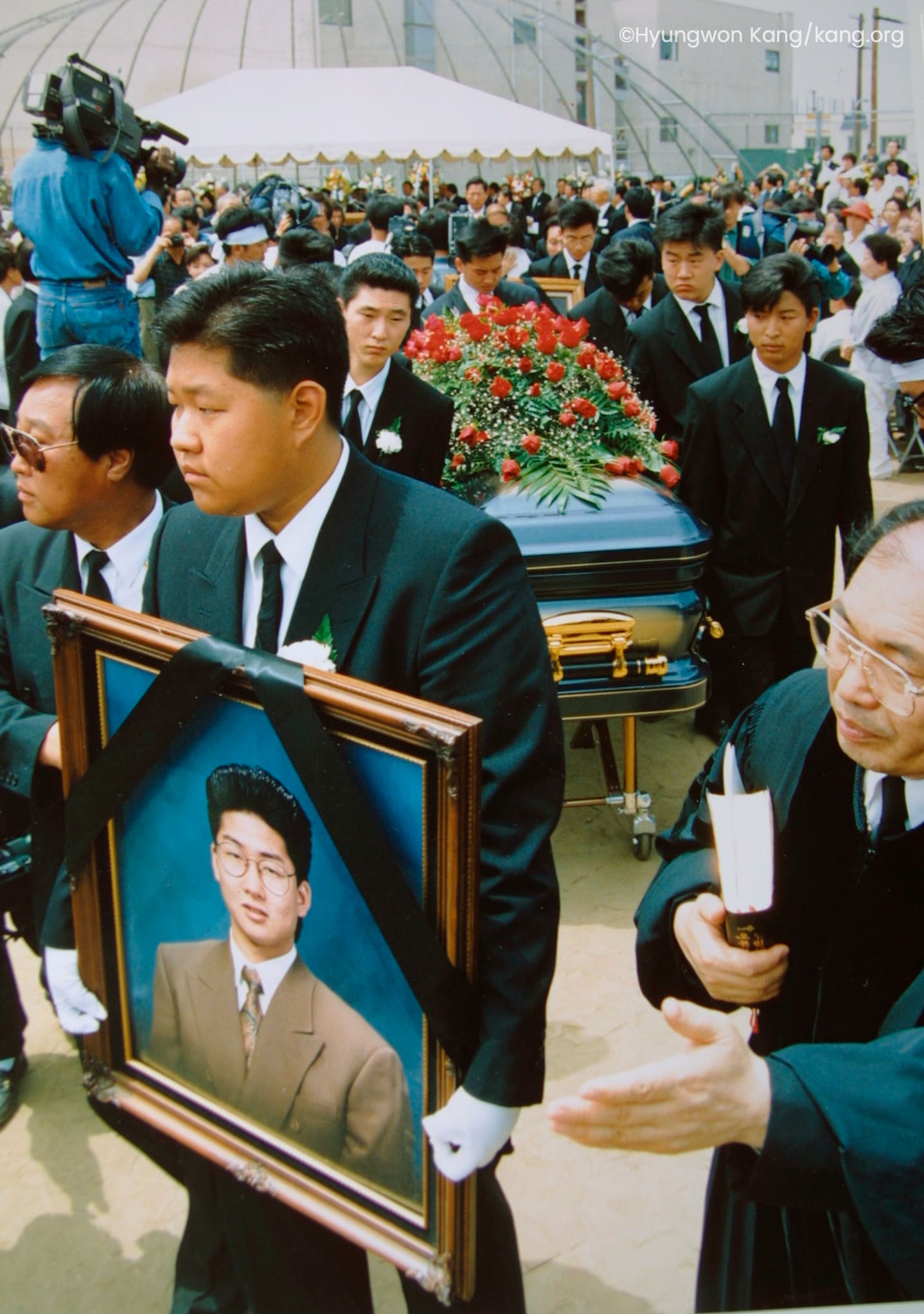
Edward Jae Song Lee’s Funeral
Edward Jae Song Lee’s coffin follows a young pallbearer carrying his portrait as family and friends head to his final resting place at the Forest Lawn Memorial Park cemetery in the Hollywood Hills.
Featured in:
Sa I Gu: Los Angeles, 1992, Module 5
-
Text
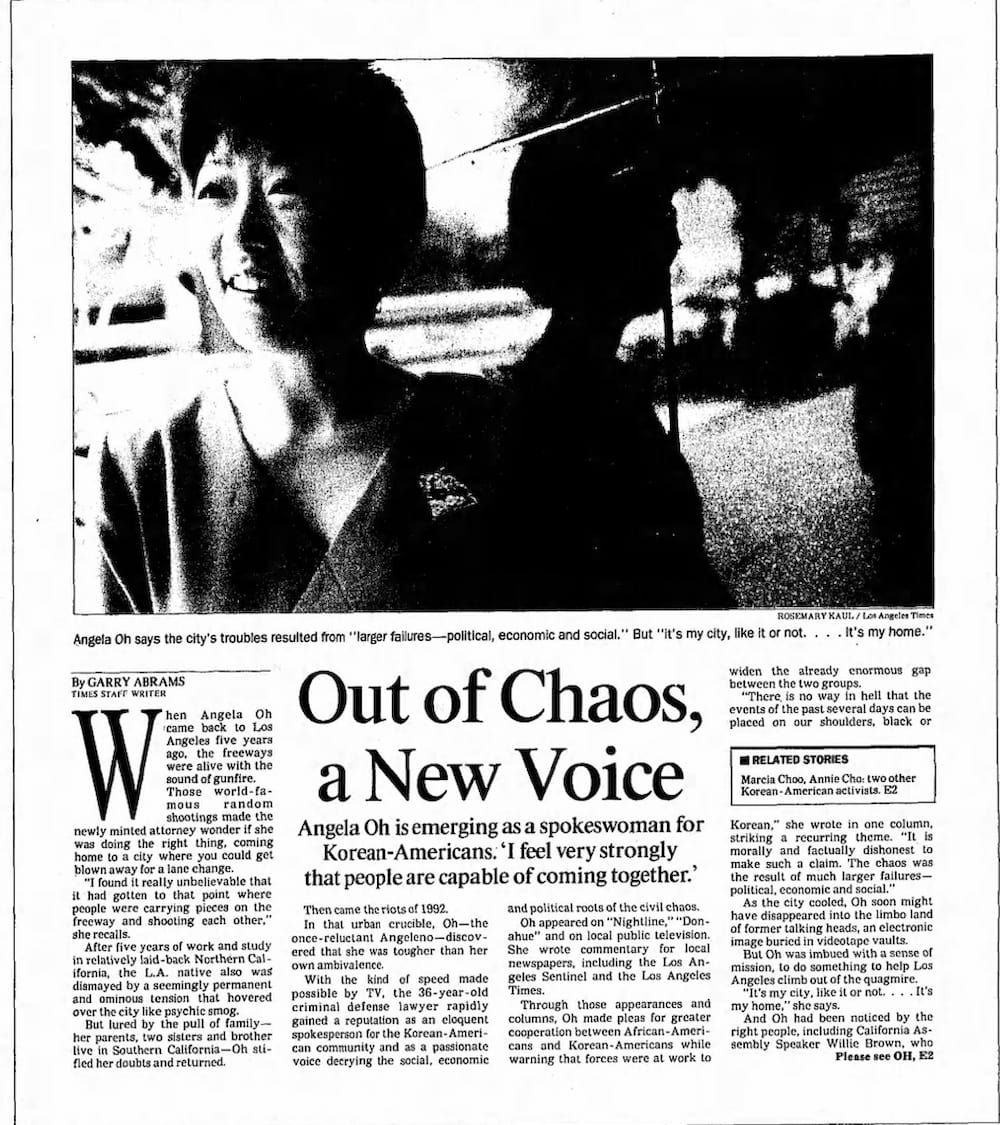
“Out of Chaos, A New Voice”
On May 6, 1992, 36-year-old criminal defense attorney Angela Oh gained national prominence as the voice of the Korean American community after her ground-breaking Nightline interview with ABC news anchor Ted Koppel about the Los Angeles uprising.
Featured in:
Sa I Gu: Los Angeles, 1992, Module 5
-
Video
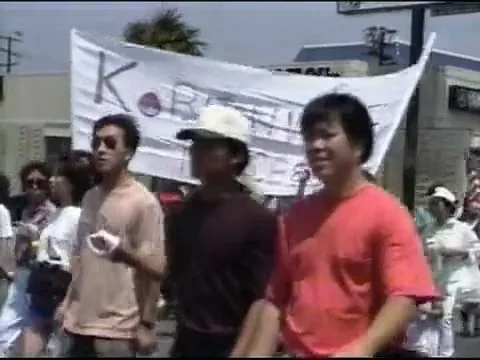
“We Want Peace!”
Crowds of community members march through the streets during the Koreatown peace rally chanting, “WE WANT PEACE!”
Featured in:
Sa I Gu: Los Angeles, 1992, Module 5
-
Image
Koreatown Peace Rally
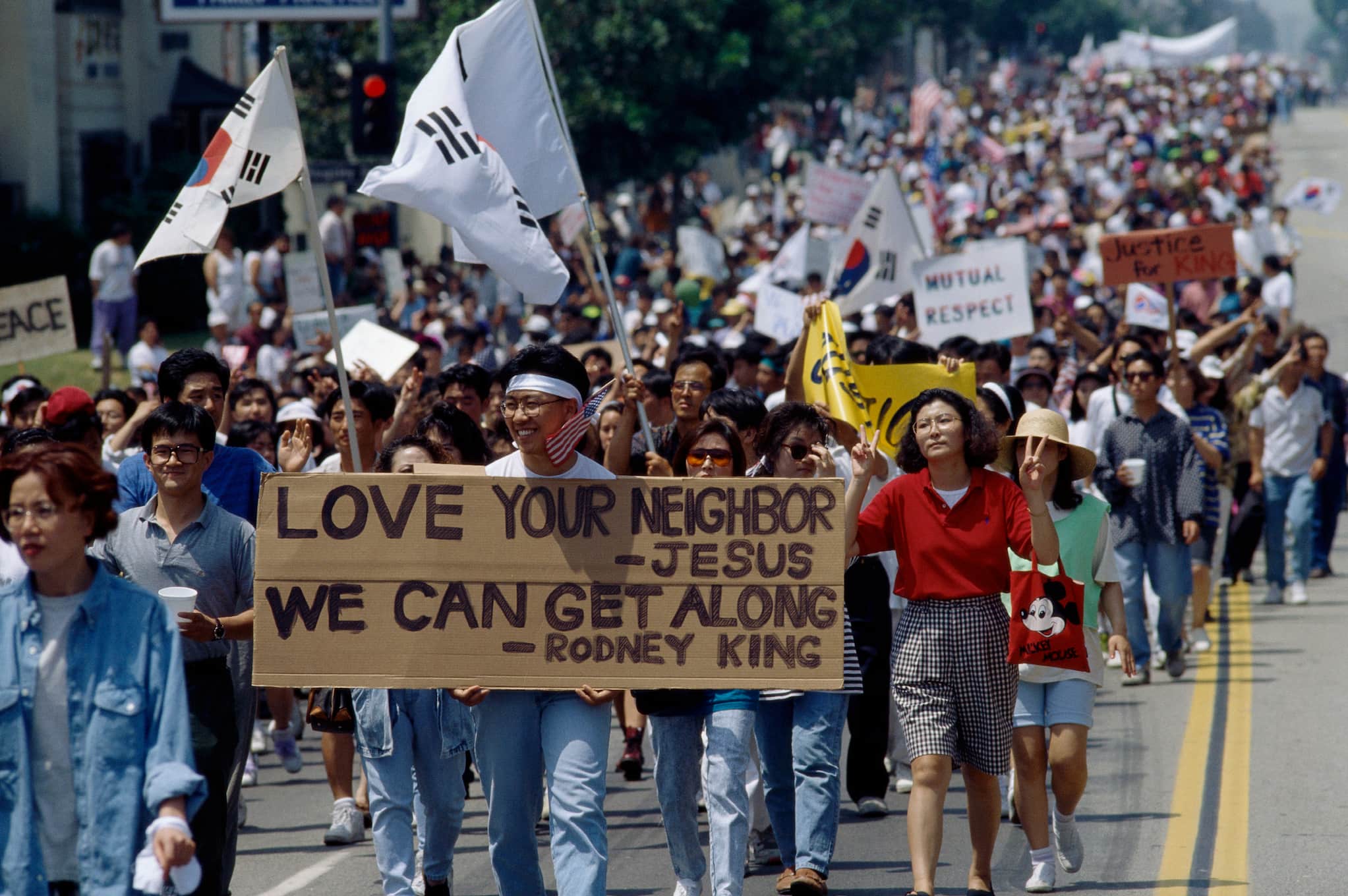
Thirty thousand Korean Americans attended a May 2, 1992 Koreatown peace rally holding signs supporting Rodney King and condemning racism. This was the largest gathering of Korean Americans ever in the country, inspiring a future generation of activists and politicians.
Featured in:
Sa I Gu: Los Angeles, 1992, Module 5
-
Image
Rodney King Portrait 1992 Press Conference
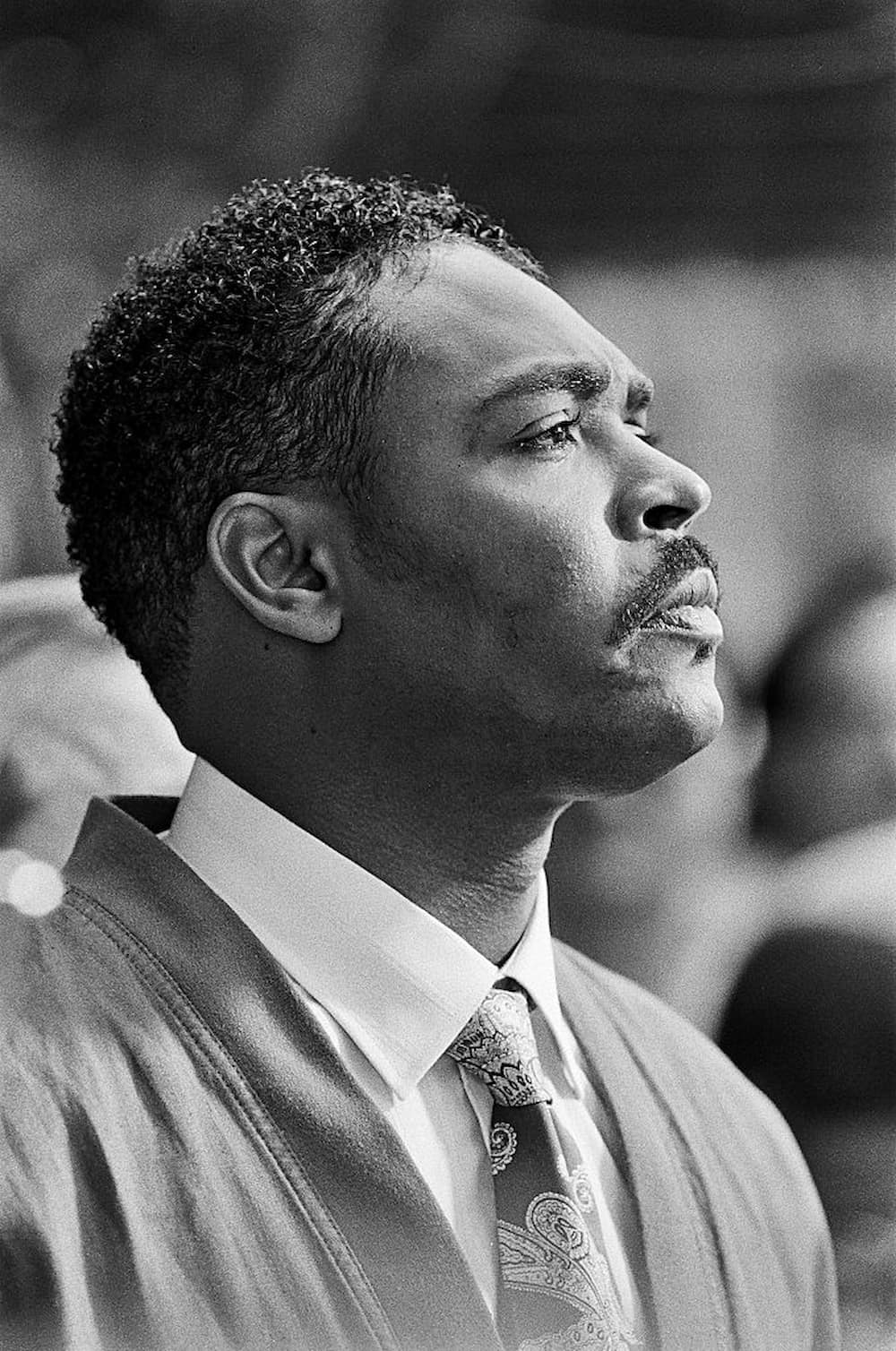
During a press conference on May 1, 1992, Rodney King chose to speak from his heart instead of reading an official statement prepared by his attorneys. “Can we all get along?” he asked.
Featured in:
Sa I Gu: Los Angeles, 1992, Module 5
-
Image
Burning Koreatown Shopping Mall
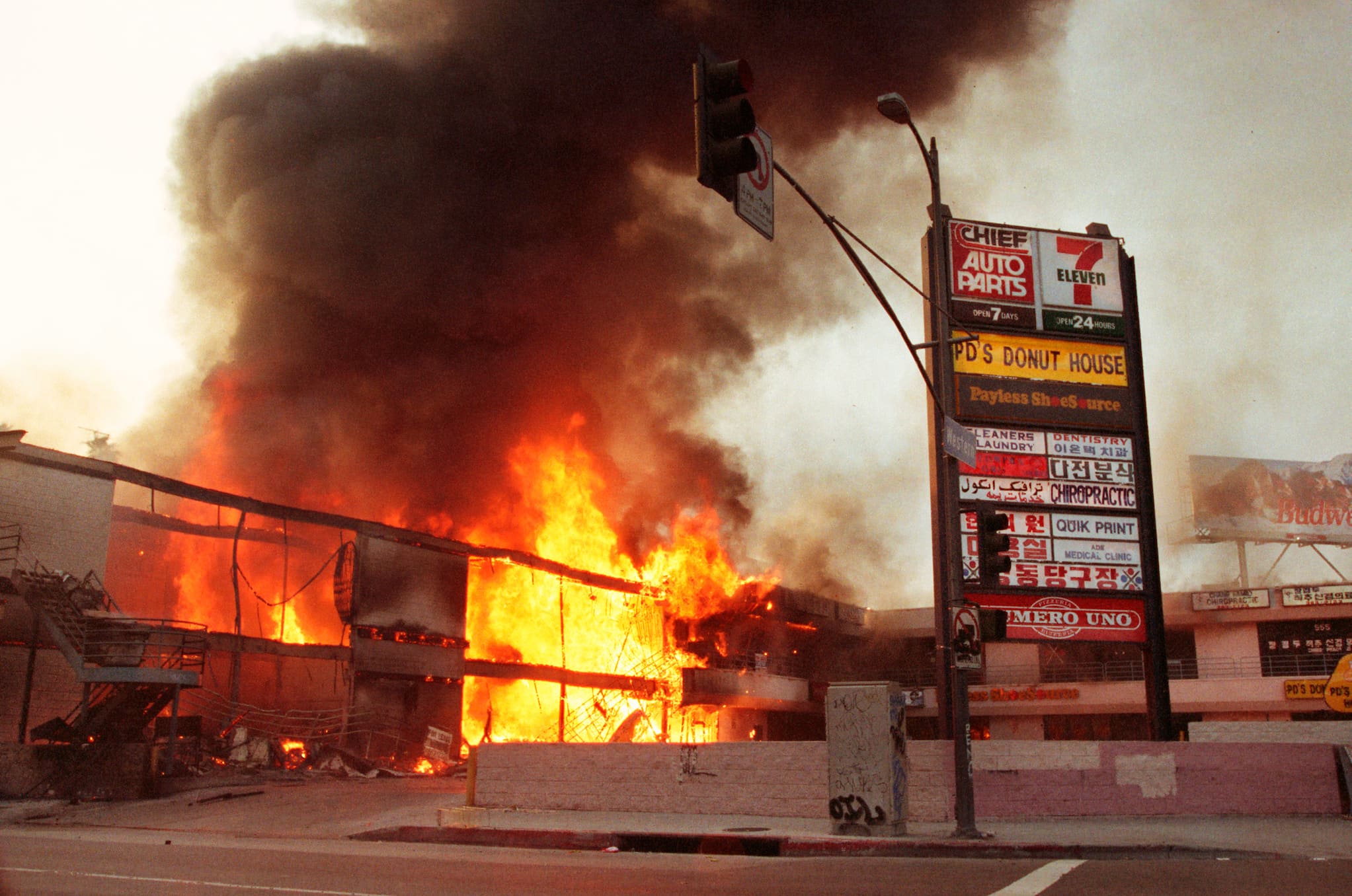
An out-of-control fire destroys a Koreatown shopping mall on the corner of 6th Street and Western Avenue, leaving nothing but a skeletal frame.
Featured in:
Sa I Gu: Los Angeles, 1992, Module 4
-
Image
Gun Purchase in Koreatown
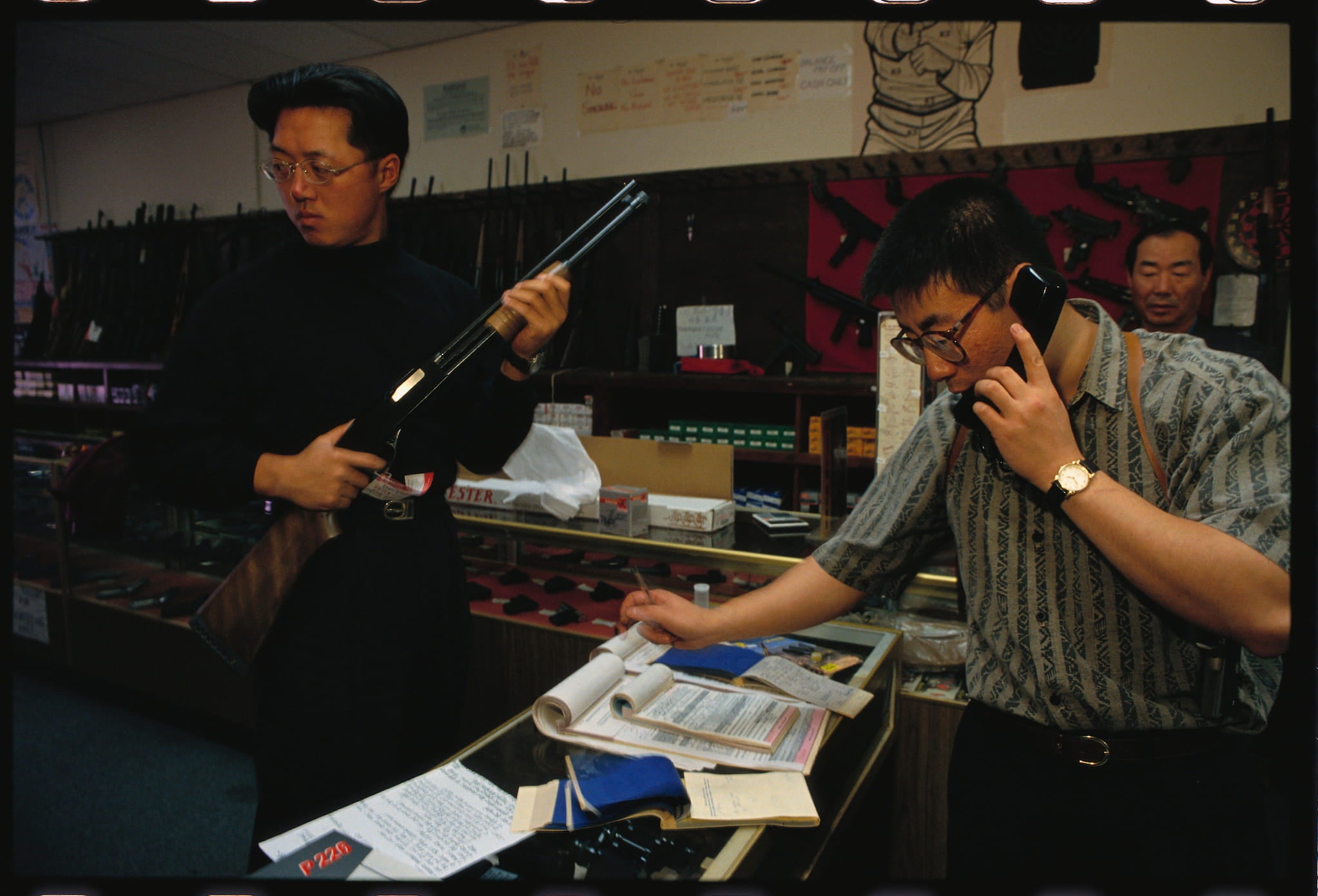
After the police were unable to contain the violence in Koreatown, Korean American store owners armed themselves to protect their stores. Above, a man purchases a gun at a shop on Western Ave.
Featured in:
Sa I Gu: Los Angeles, 1992, Module 4
-
Image
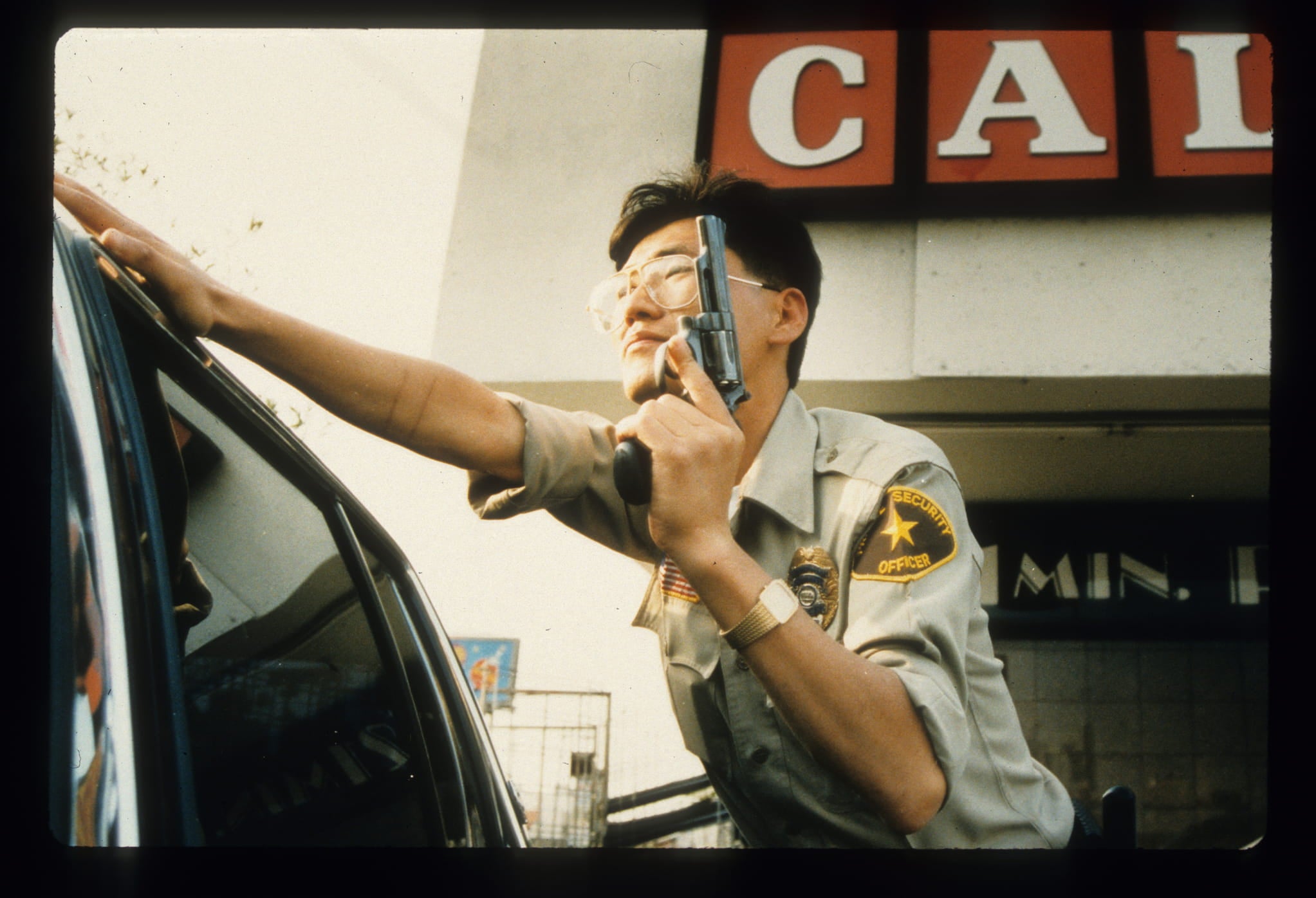
Armed Security Guard in Koreatown
An armed security guard keeps watch outside of a mini-mall in Koreatown.
Featured in:
Sa I Gu: Los Angeles, 1992, Module 4
-
Video
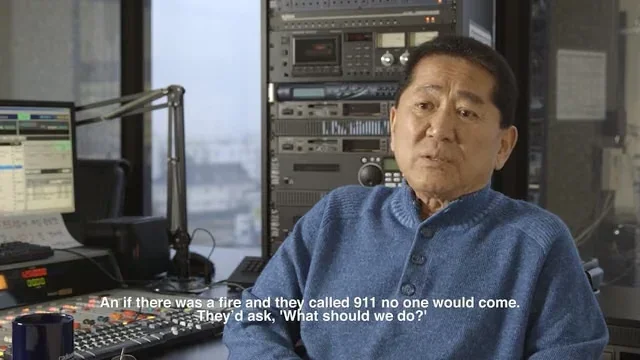
Interview with Radio Korea Announcer
Richard Choi, Radio Korea announcer, describes the broadcasting power of the station during the 1992 uprisings: “Radio Korea was their only lifeline […] I’d venture to say that if 100,000 Koreans were living in LA, 100,000 people were listening to Radio Korea.”
Featured in:
Sa I Gu: Los Angeles, 1992, Module 4
-
Image
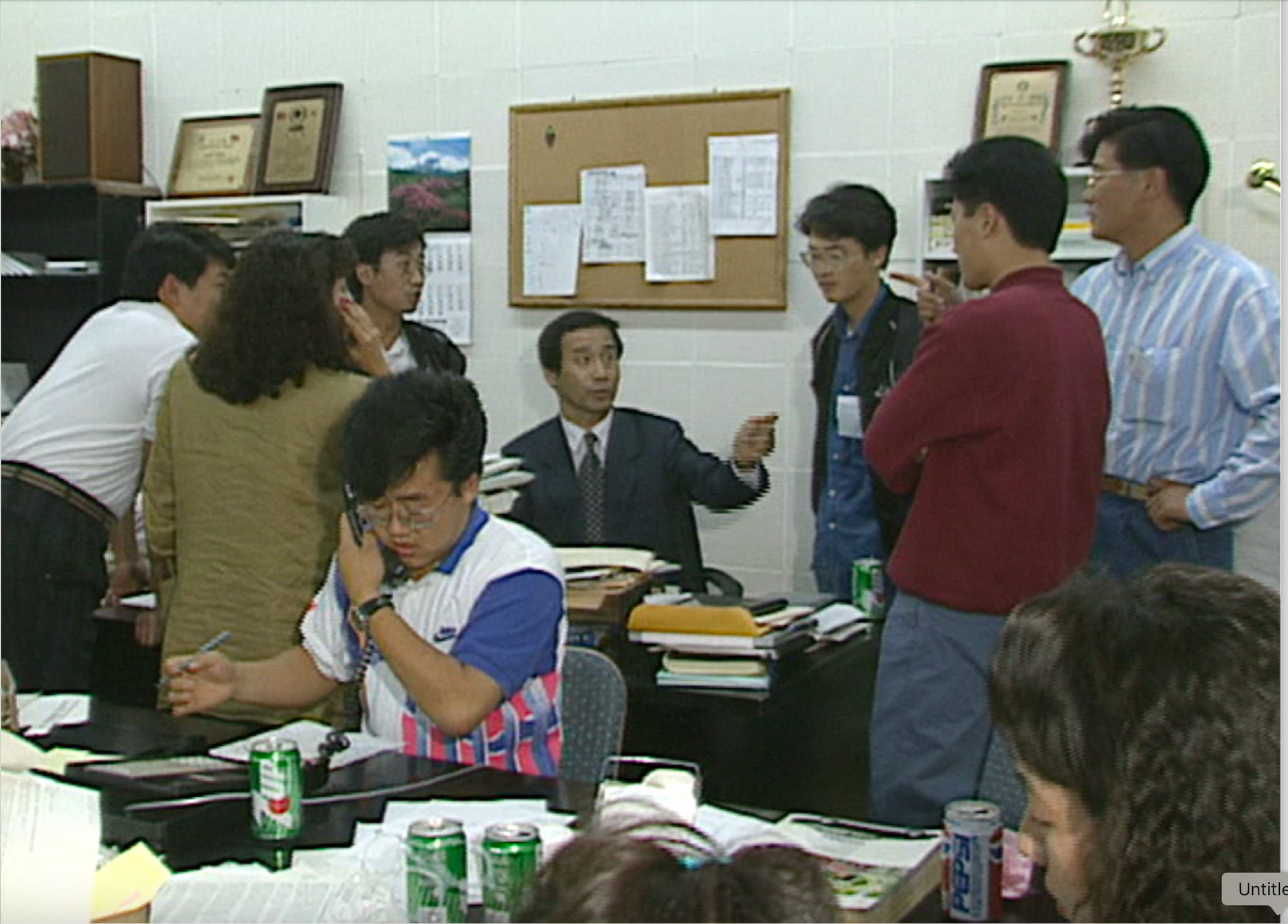
Radio Korea Staffers Meet
Korean restaurant owners delivered bowls of seolleongtang bone broth to feed Radio Korea reporters working nonstop. Radio Korea set up emergency supplies in the parking lot to help storeowners in need.
Featured in:
Sa I Gu: Los Angeles, 1992, Module 4
-
Image
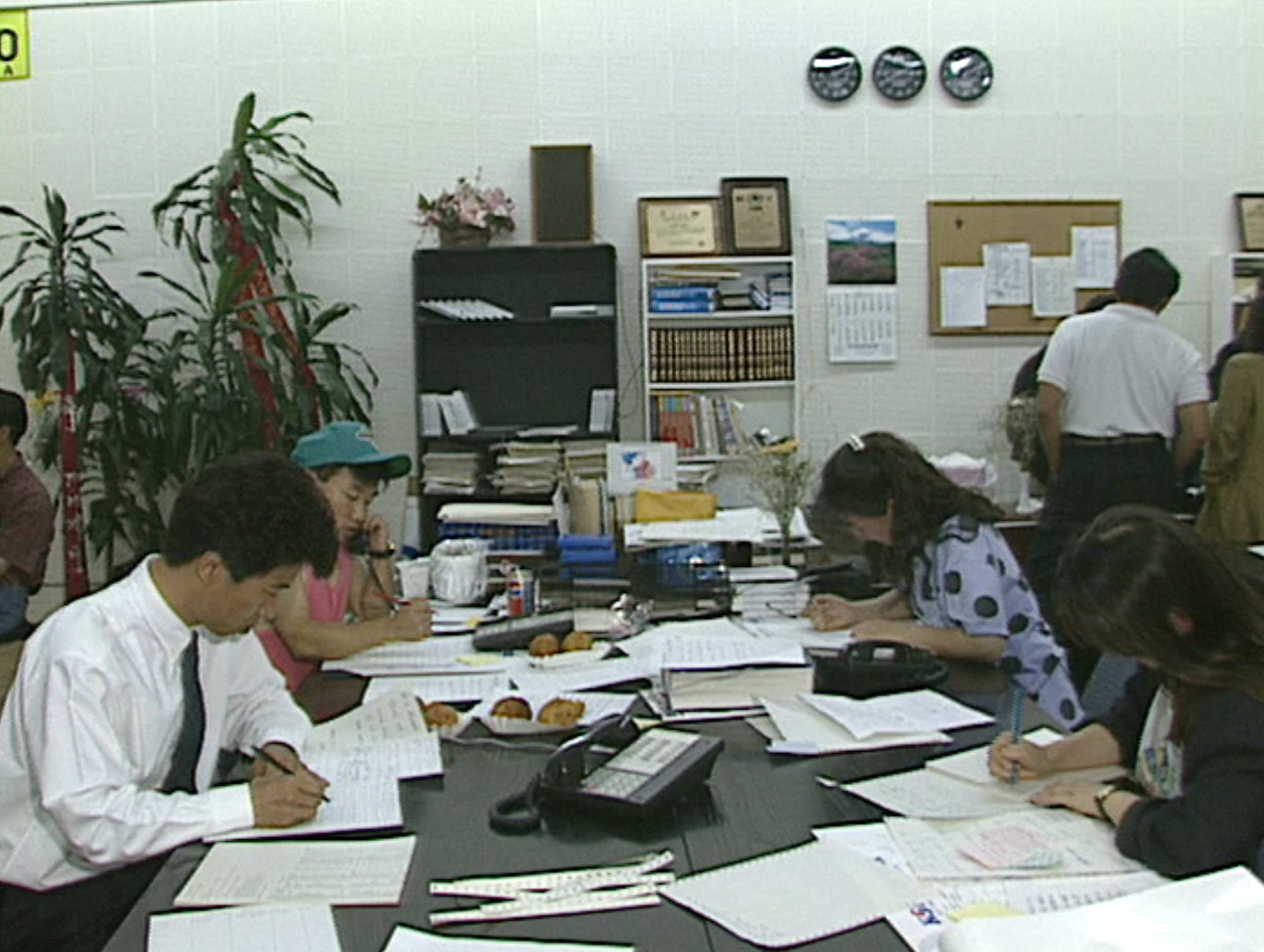
Radio Korea Staffers
Radio Korea staffers slept overnight in the office as they worked 24 hours a day to field calls.
Featured in:
Sa I Gu: Los Angeles, 1992, Module 4