





Module 3: The Taste of Success
Have Asian Americans who are successful at business achieved the “American Dream?”
In 1820, a Chinese immigrant from Macao arrived in New York City. Later known as Norman Asing, he was one of the first Chinese people to enter the United States. By trade, Asing was an entrepreneur. After moving to California, he eventually opened a restaurant, Macao and Woosung, in San Francisco’s Chinatown. It is considered one of the first Chinese restaurants in the United States.
In the context of anti-Asian violence and discrimination, it was quite a feat at the time to open such an ethnically visible institution as a Chinese restaurant. As historian Yong Chen has argued, “Gastronomy was one of the few areas where the Chinese could find some solace and a source of pride. For Chinese Americans, defending their foodways was to defend their community and culture.” 1
Food has been an important way Asian Americans have been able to start businesses. Although food nourishes people and ethnic food often connects diasporic people, food is also only possible through labor—people grow, harvest, prepare, cook, and serve food.
In this module, we learn about the history of Chinese restaurants, Asian Americans in the food industry, and a Hawaiian farming cooperative that challenges us to think about success as a collective effort.
How have Asian American communities reinterpreted the American Dream?
How is Asian Americans’ evolving collective consciousness evident in the history of ethnic Asian food and related businesses, past and present?
How do the history and traditions of Native Hawaiians and Hawaiʻi’s natural resources offer an alternate definition of success centering on care for the environment and community well-being?
Chinese Restaurants
Chinese restaurants have become part of the American cultural landscape, changing the palate and definition of American food. As early as the 1890s, chop suey, a distinctly Chinese American dish, became known on both the West and East Coasts. By the 1920s, non-Chinese people began to patronize Chinese restaurants in greater numbers. Chinese restaurants were not only important for Asian Americans; they also served as affordable and welcoming spaces for African American and Jewish communities. By 1985, there were over thirty thousand Chinese restaurants in the United States.

Image 28.03.01 — Children looking at the menu of the Chun King Inn, an American-style Chinese restaurant that opened as part of the 1964–1965 New York World’s Fair.
The history of Chinese restaurants also reflects larger trends in the history of Asian American businesses, including:
- The growth of the Asian population
- Ties between food and cultural ethnic identity
- The role of business associations
- The significance of ethnic enclaves
By the mid-twentieth century and later, the sector began to see differentiation between high-end and low-end establishments with the creation of upscale Chinese restaurants like Shun Lee Dynasty (established in 1965, New York City) by chef T. T. Wang, and Mr Chow (established in 1974, Los Angeles) by restaurateur Michael Chow. This period also saw the birth of the largest Chinese American fast food chain, Panda Express, founded in 1983 by Andrew and Peggy Cherng.
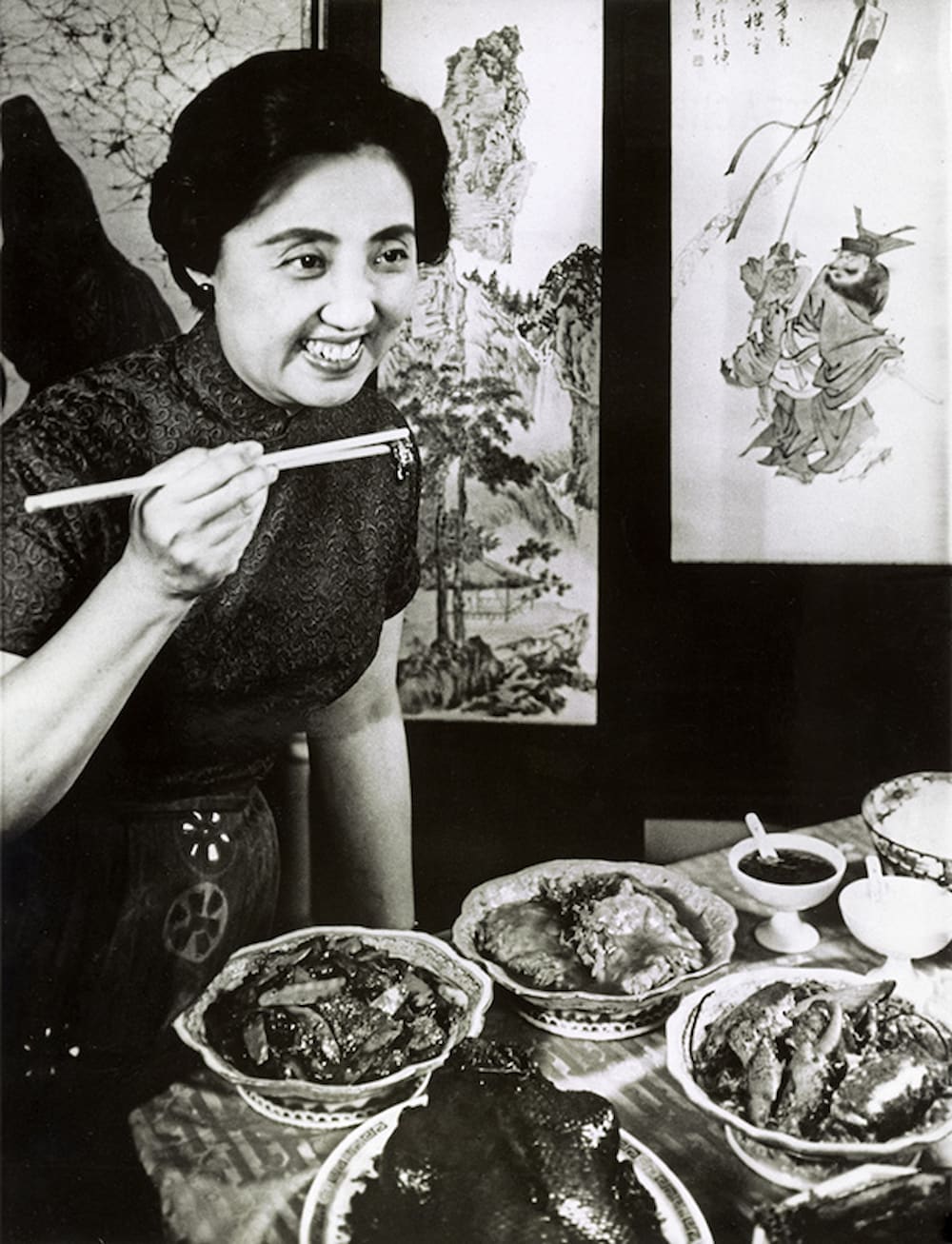
In addition to restaurants, cookbooks have also become influential to American cuisine. Since the 1940s, Chinese American women have been especially instrumental in expanding the definition of American cuisine through the writing of Chinese culinary cookbooks, such as Eileen Yin-Fei Lo, who wrote The Dim Sum Book (1981), and Joyce Chen, owner of Joyce Chen Restaurant in Cambridge, Massachusetts. Chen also helped bring education about Chinese cooking to television when she became the “first woman of color to host a nationally syndicated instructional cooking program” in 1966 with “Joyce Chen Cooks.” 2

Image 28.03.02 — Joyce Chen sampling her dishes in 1967. Through her restaurant in Cambridge, Massachusetts, and her educational TV cooking show, Joyce Chen Cooks, Chen was deeply influential in the expansion of Chinese cuisine in the US.
Asian Americans in the Modern Food Industry
Over the course of the twentieth and twenty-first centuries, the path created by early Chinese restaurants led the way for other Asian Americans to enter the food scene in different ways. For example, some American-born children of entrepreneurs have returned to small business after careers as white-collar professionals. Significantly, the ethnic food industry remains an important space for multiple generations of Asian American entrepreneurs, including:
- James Martin and Leonard Nombris, the father-and-son team of Da Bald Guy in Oʻahu, Hawaiʻi
- Terry Aguinaldo and Romy Aguinaldo’s Romy’s Kahuku Prawns & Fish, both based in Oʻahu, Hawaiʻi
- Donut King Ted Ngoy’s great-niece, Mayly Tao, the self-named Donut Princess and proprietor of DK’s Donuts and Bakery in Santa Monica, California
Since the late twentieth century, Asian ethnic grocery chains have also experienced enormous growth. Examples include:
- H Mart, now a national chain with an international presence, was originally founded in 1982 by Il Yeon Kwon as a small twenty-four-hour grocery in Queens, New York, called Han Ah Reum.
- Patel Brothers, which began as a single family business in Chicago in 1974 by Indian American entrepreneurs Mafat and Tulsi Patel and Tulsi’s wife, Aruna, remains the largest Indian grocery chain in the United States.
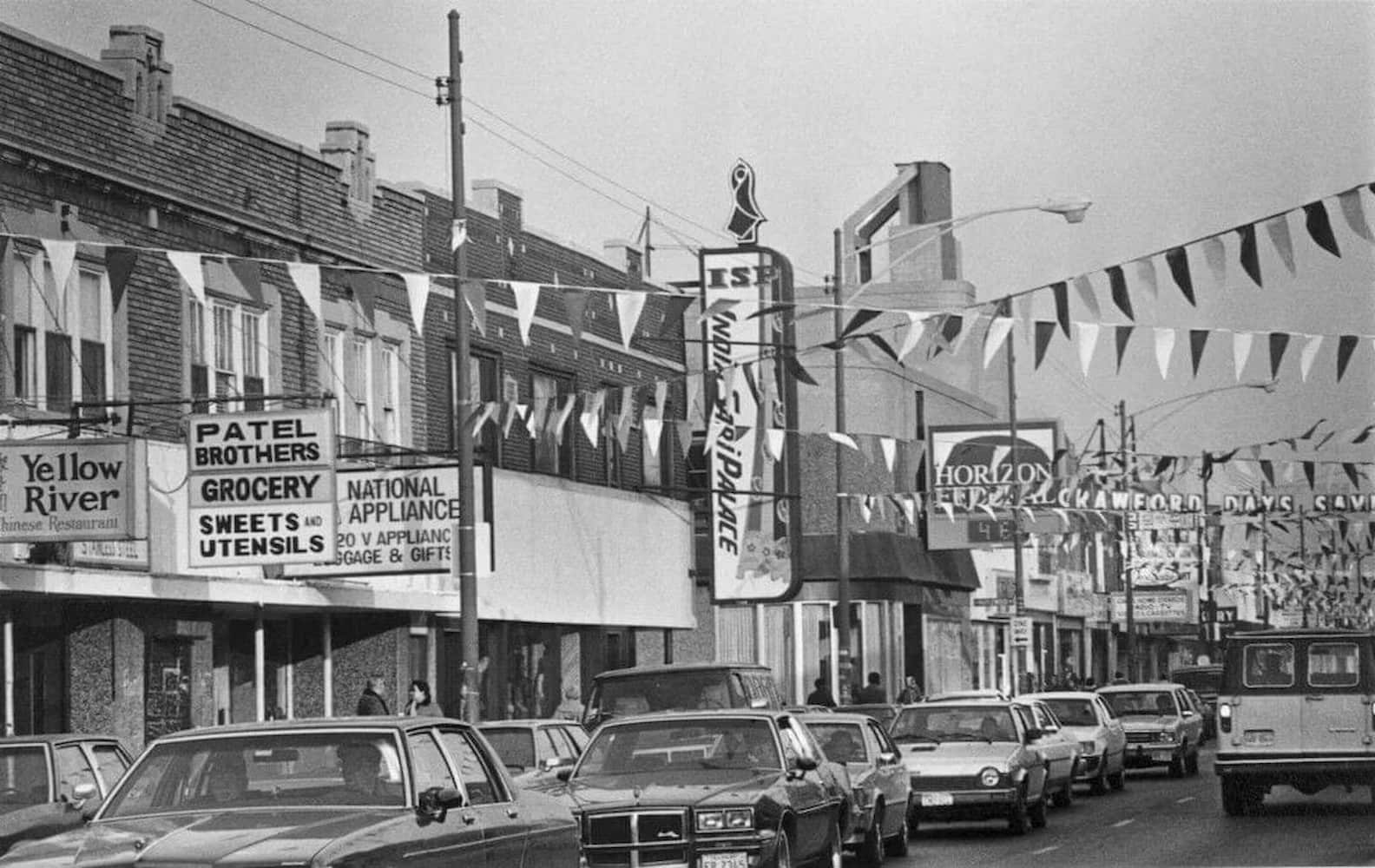
Image 28.03.03 — The original Patel Brothers location on Devon Avenue in Chicago, Illinois, 1984, has since grown into the largest Indian grocery chain in the United States.
Whether it be in farming, running markets, or cooking, working in the food industry is often labor intensive. Even small, family-led businesses sometimes underpay or exploit their workers. However, some Asian Americans are trying to change the food industry in the United States through collective ownership. For example, after about a decade of managing operations and baking at Proof Bakery in Los Angeles, California, Na Young Ma wanted to sell the business. But instead of selling it to a single owner, she transferred the business to its workers, who had dedicated years to helping Proof grow.
Now, instead of one person owning the Proof Bakery, all the workers share power to make financial and operational decisions. This is called a workers’ cooperative. Other collectives have started small, sustainable farms to feed their local communities and to move away from corporate models of agriculture. These models are not unique to Asian American communities; in fact, many are a return to structures that existed before the founding of the United States. For Native Hawaiians and other Pacific Islanders, and even early Asian immigrants, shared management of land and natural resources was a common practice to ensure collective and holistic well-being.
Food Sovereignty and the ʻUlu Cooperative
Most of this chapter has focused on the history of Asian Americans and their businesses. Native Hawaiian and Pacific Islander communities have different historical and cultural inheritances than Asian Americans. Like Native Americans of the Americas, Native Hawaiians have sought sovereignty over their land and consider the United States to be an occupying force that has taken control of their land and resources. For generations, Indigenous peoples have resisted in various ways. Some have attempted to reclaim the land as sacred, cultural, and spiritual, addressing issues of food security, sustainability, and the preservation of natural resources as part of the larger goal of sovereignty.
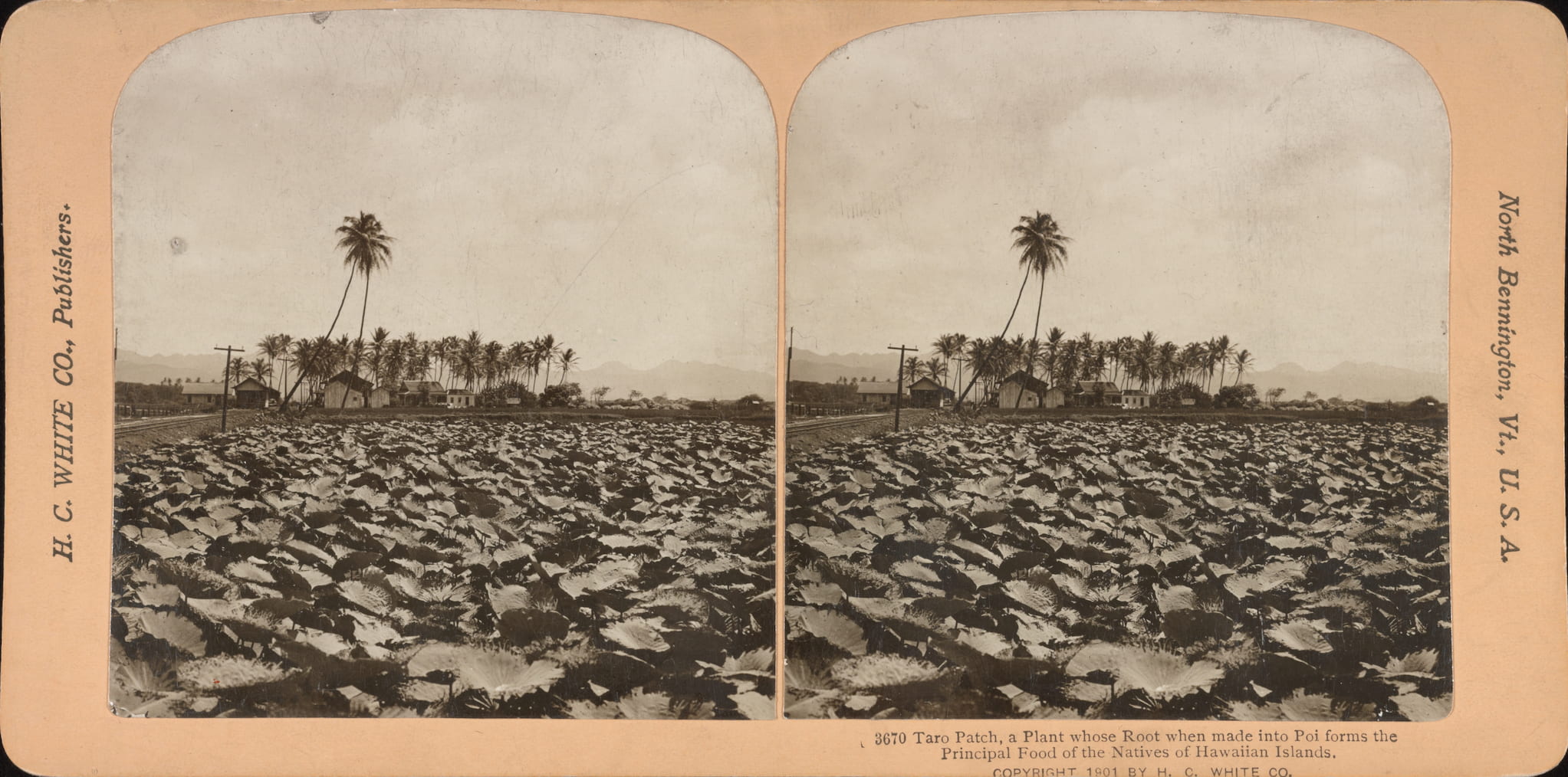
Image 28.03.04a — A taro field, or loʻi kalo in Hawaiʻi, 1902. The taro root farmed from these lands is made into poi, a staple in Native Hawaiian cuisine, which is prepared by mashing cooked taro into a paste and consumed fresh immediately or fermented over time.
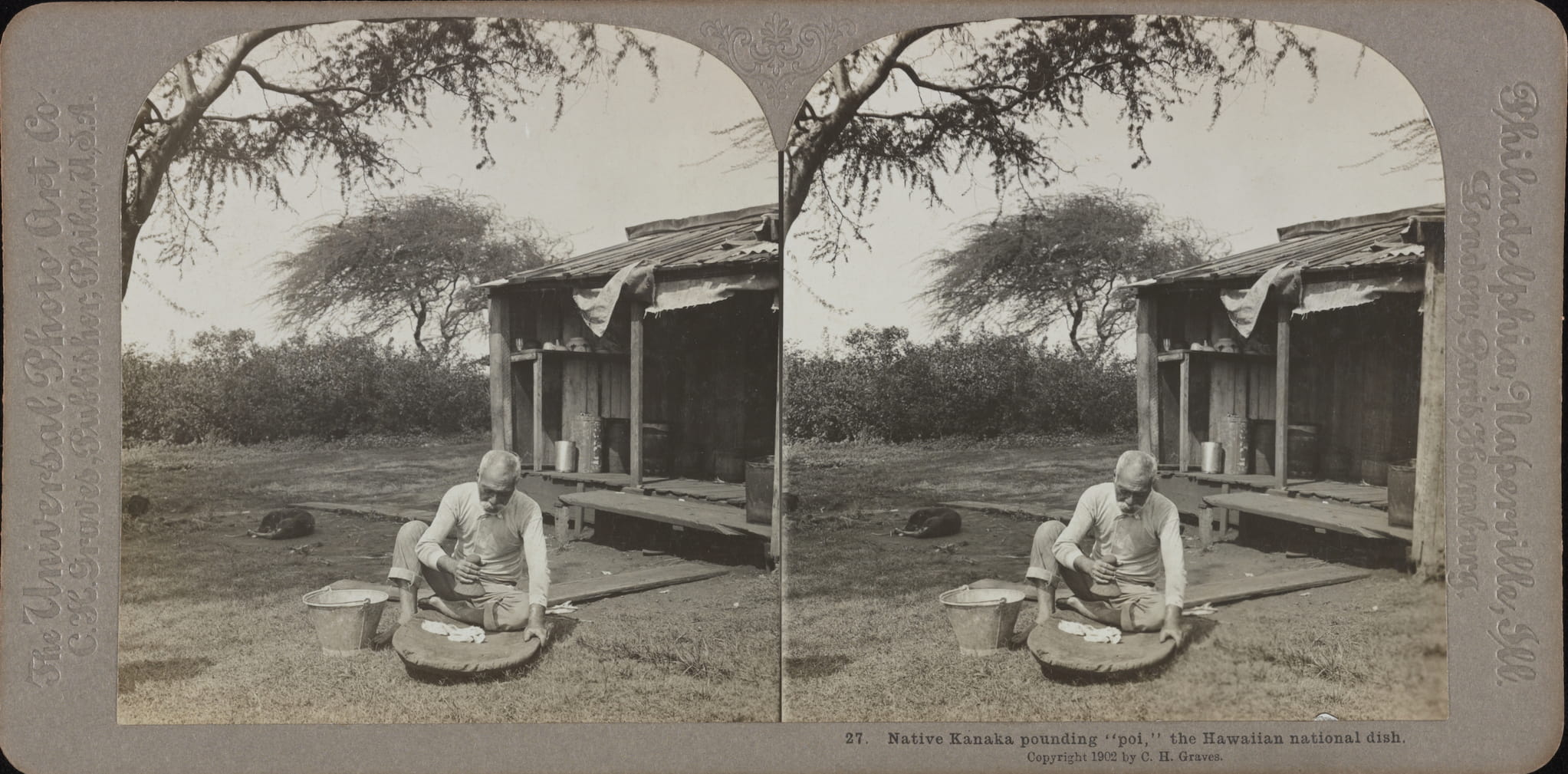
Image 28.03.04b — A Native Hawaiian man pounding taro into a paste for poi in 1902. Still prevalent in Native Hawaiian cuisine today, taro has a spiritual and storied meaning that connects the Hawaiian people to the land.


When American and European settlers took over the land in Hawaiʻi, they disrupted the ecosystem and Native Hawaiian food systems by reconstructing the land for profitable crops such as sugar cane. When settlers seize Indigenous land, they often control what people can eat. Important and sacred sustenance like kalo (taro), once abundant in Hawaiʻi, became scarce as settlers used the land and water for their own profit motivated agricultural pursuits. Many Native Hawaiians have turned to collective action to undo the damage.
One example is the Hawaii ʻUlu Cooperative. Founded in 2016, the group’s aim is to restore the bounty of Hawaiian staple crops such as kalo and ʻulu (breadfruit). Small farms work together in a cooperative to ensure the crops are grown ethically and sustainably to benefit the local community. As a farming cooperative, these small business owners are shifting away from the exploitative and extractive plantation system. The ʻUlu Cooperative assists members with manufacturing and marketing, and it furthers local food education at Kamehameha Schools that has historically provided education to Native Hawaiians.
The ʻUlu Cooperative is an example of food sovereignty, or the “right to healthy and culturally appropriate foods produced through ecologically sound and sustainable methods.” This differs greatly from the current realities of food in Hawaiʻi, where over 85 percent of food is imported. The cooperative is one of many collective efforts to reclaim the land and cultural traditions of Hawaiʻi.
Collective Success
The story of the American Dream is so powerful that it has encouraged generations of Asians to immigrate to the United States. Many of these people imagined becoming “rags to riches” success stories only to experience the difficult realities of structural racism, which barred many of them from accumulating economic wealth. While some individuals were able to become wealthy, the myth of the American Dream tends to obscure the fact that many more have been shut out from economic stability, let alone economic success. The myth that anyone can make it if they work hard enough ignores the many structures—such as laws and policies—that make it difficult for many people to achieve the American Dream. These success stories become elevated, overshadowing the bitter truth that many live simply trying to make ends meet.
If one person’s success comes at the expense of someone else’s dignity, sovereignty, or well-being, should it be celebrated? Collective action challenges us to think of success as bigger than one person’s financial stability. It teaches us that overcoming struggle is not only about individual grit or resilience, but rather a transformation of systems that are built to keep people unequal. What can we achieve if we act together?
Glossary terms in this module
American Dream Where it’s used
The ideal that the United States is the land of opportunity where anyone can attain a successful and prosperous life, regardless of socioeconomic status.
collective action Where it’s used
A group of people coming together to organize and mobilize towards a common goal.
cooperative Where it’s used
An enterprise or organization owned and operated by a group of people in order to attain their economic, social, and cultural needs and desires.
economic wealth Where it’s used
Abundant possession of assets such as property, money or other types of resources that can be used, exchanged or sold.
entrepreneur Where it’s used
A person who takes a financial risk and makes money from starting a business.
structural racism Where it’s used
Deeply embedded practices and patterns of racial discrimination within a society’s laws, policies, housing, media, healthcare, criminal justice system, education, and employment, among other fields.