




Sunrise on the beach of Ofu, American Sāmoa. Mountains are on the left with palm trees at the base and large rocks on the shore.
Module 1: Overview: Samoans in the United States
Have Samoans benefitted from their “enduring friendship” with the United States?
Sāmoa, an archipelago in the middle of the Pacific Ocean, has many creation origin stories. One involves Tagaloalagi, creator of the universe, looking down from his place in the sky. Tuli, his son, while flying in the shape of a bird across the surface of the ocean, could not find a place to rest, returned to his father and complained about it. Tagaloalagi then threw down a rock, forming Manuʻatele, a land mass for Tuli and himself to rest on.
Tagaloalagi thought it would be great to have even more resting places in the ocean and divided the rock further into fourteen islands and two coral atolls, creating the islands of Sāmoa—the sacred center. The Samoan people thrived as ocean-goers, grounded in faʻasāmoa, the Samoan way. But how did people get from this cluster of islands created by Tagaloalagi in the middle of the Pacific Ocean to the United States, and who exactly are Samoans?
This module introduces us to Samoan people, where they are from, and how a group of islands in the Pacific Ocean is connected to the United States. This module also introduces the concept of faʻasāmoa and discusses how cultural values and practices continue and thrive in Samoan communities in diaspora.
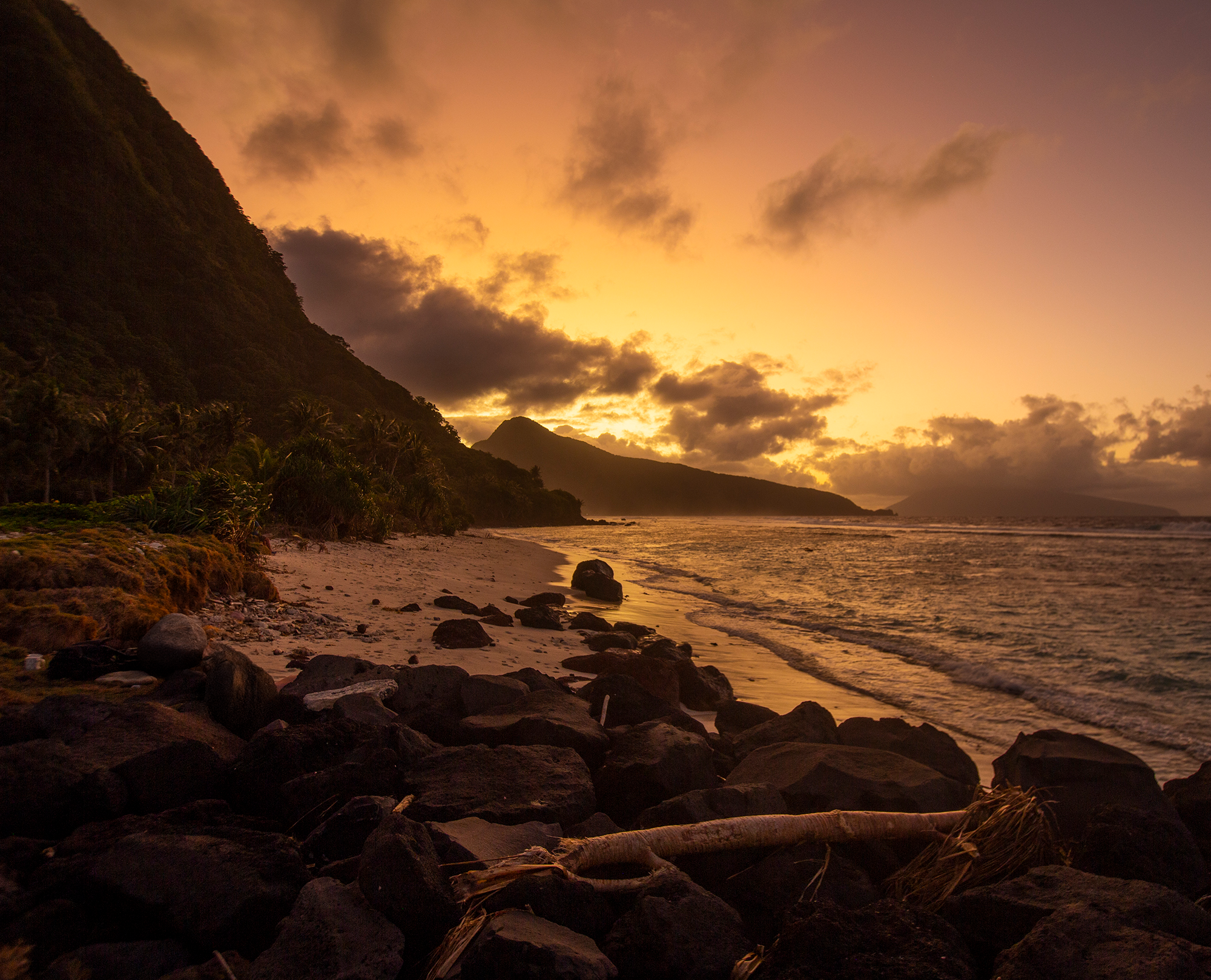
Image 24.01.01 — Sun rising over Ofu island from one of the Manuʻa Islands in American Sāmoa.
More to explore
Who are Samoans?
How are Samoans connected to the US?
How are Samoan customs and values practiced in Samoan communities in the diaspora?
Parting of the Sāmoa Islands
Today, the islands of Sāmoa are divided into two jurisdictions—the Independent State of Sāmoa to the west, a sovereign nation, and American Sāmoa (also known as Amerika Sāmoa) to the east, a territory of America. While faʻasāmoa or Samoan culture unites the Samoan islands, the separation of Sāmoa and American Sāmoa reveals the long history of colonialism and militarism that has occurred in the Pacific Ocean.
With its resource rich location great for various crops and deep harbors for naval ships, the Sāmoa islands were seen as a strategic site for economic and military powers in the late eighteenth and early nineteenth centuries. Germany, England, and the United States all took interest in the islands, with each world power creating various trade and military outposts. The US Navy has been in Sāmoa since their first official visit in 1838. In 1900, matai (chiefs) ceded the islands of Tutuila and Aunuʻu to the United States, followed by the Manuʻa Islands in 1904. Combined, they officially became the US territory of American Sāmoa.
American Sāmoa was overseen by the US Navy from 1900 to 1950. Since then, it has been administered by the US Department of the Interior. This relationship between the United States and American Sāmoa has been described as an “enduring friendship” of protection. 1
Today, Aunuʻu, Taʻū, Ofu, Olosega (together called the Manuʻa Islands), along with Tutuila island and the Rose and Swains atolls, make up the US territory of American Sāmoa. As a US territory, American Samoans are classified as US nationals, meaning they have many of the same rights as US citizens—but not all rights. American Samoans are unable to vote in US elections, run for political office, or serve on a jury. Unlike people of other US territories such as Guåhan (Guam) and Puerto Rico, American Samoans are the only group of US nationals that have never petitioned the US Congress for American citizenship.
More to explore
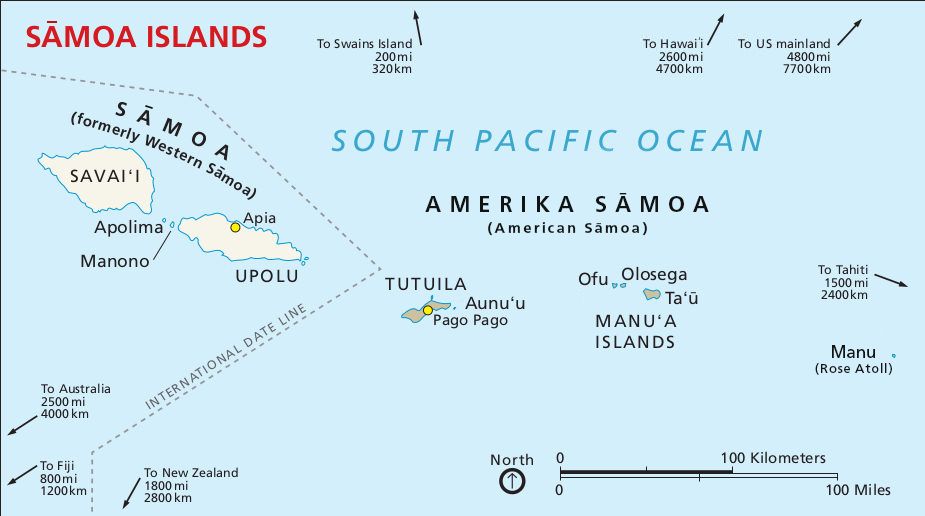
Image 24.01.02 — Map of Sāmoa Islands. The Independent State of Sāmoa, consisting of the main islands of Savaiʻi and Upolu, is on the left. American Sāmoa (US territory), with the capital island of Tutuila, is on the right.
The islands of Upolu, Savaiʻi, Manono, and Apolima were under German colonial rule from 1899 to 1914 until New Zealand seized German Sāmoa and claimed it as Western Sāmoa. It later gained independence from New Zealand in 1961. The two countries signed the Treaty of Friendship in 1962, ratifying their special relationship and the commitment of both to the welfare of Samoan people. In 1997, the country’s name officially changed to the Independent State of Sāmoa (commonly referred to as Sāmoa). This name change was contentious among American Samoans who felt it diminished their own Samoan identity, at least by name.
Beyond the Archipelago
Today, more Samoan people live outside the islands of Sāmoa in the diaspora than in Sāmoa and American Sāmoa combined. The Samoan population in Sāmoa is just over 205,000, and just over 49,000 in American Sāmoa. In contrast, there are over 240,000 Samoans living in the United States, over 180,000 living in New Zealand, and many living further afield in Asia, Europe, and beyond.
These numbers help to paint a picture of where Samoans live across the globe. They also highlight the importance of migration for Samoan people, as many either migrated or had parents or grandparents who migrated to cities like San Francisco, Los Angeles, Honolulu, or Auckland. Samoan migration often follows the pathways that were established through the colonization of the islands. Those born on American Sāmoa tended to migrate to the United States, or “stateside,” having free entry as US nationals. In contrast, those born in Sāmoa tended to migrate to New Zealand, given the special relationship their government at home had with the government there.
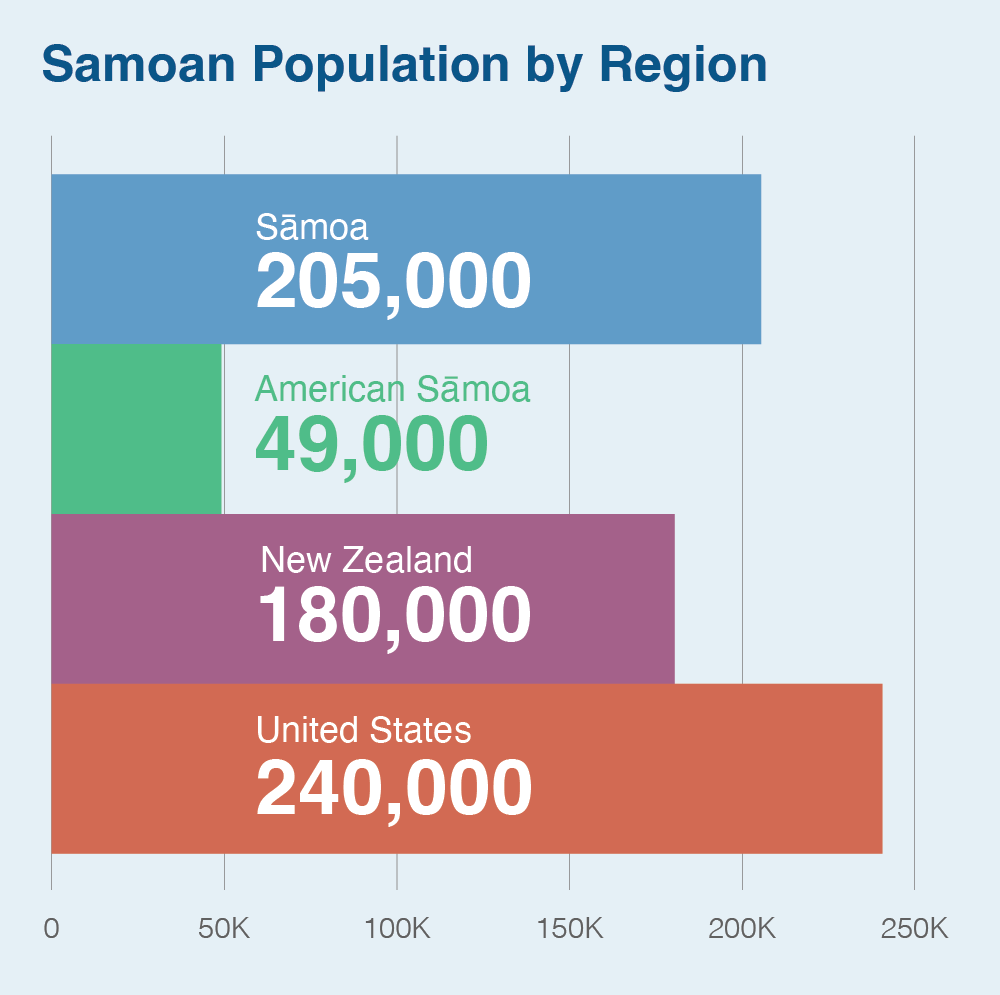
Image 24.01.03 — The Samoan population is widespread. Here we see the populations in Sāmoa, American Sāmoa, New Zealand, and the United States (c. 2025). (Sources: The Samoa Bureau of Statistics, US Census Bureau, and Stats NZ)
Moving from a Samoan village to a big urban city can be a cultural shock. While many migrant communities have visions of opportunity and potential, they often meet the harsh realities of invisibility, poverty, unfamiliar social customs, cold weather, and other hardships. They find themselves without the communities and customs they are used to, all while navigating a new way of life in the diaspora. In the state of California, organizations like The Office of Samoan Affairs of California, Inc. (founded in 1976), and the Samoan Community Development Center (founded in 1991), help support the needs of Samoan communities new to the US. These, and other like-minded organizations, run programs to help Samoan people and other Pacific Islander communities thrive.
The Samoan Way
One of the struggles for Samoan people in the diaspora is building a community where one can learn faʻasāmoa, the way of thinking about Samoan culture that encompasses language, customs, practices and values that shape who Samoans are. Key cultural values include alofa (love), faʻaaloalo (respect), and tautua (service). These values lie at the heart of faʻasāmoa and help to explain why Samoan culture places so much importance on family and community. Faʻasāmoa prioritizes the collective good over the individual.
From a Samoan worldview, people act in love and service to others, their families and communities, rather than in their own self-interest. This connects to another Samoan value of reciprocity. In practice, reciprocity means that part of belonging to the collective is carrying out one’s ceremonial and family obligations. For Samoans, a person’s place within the bigger collective is where they draw their own individual identity from—not the other way around.
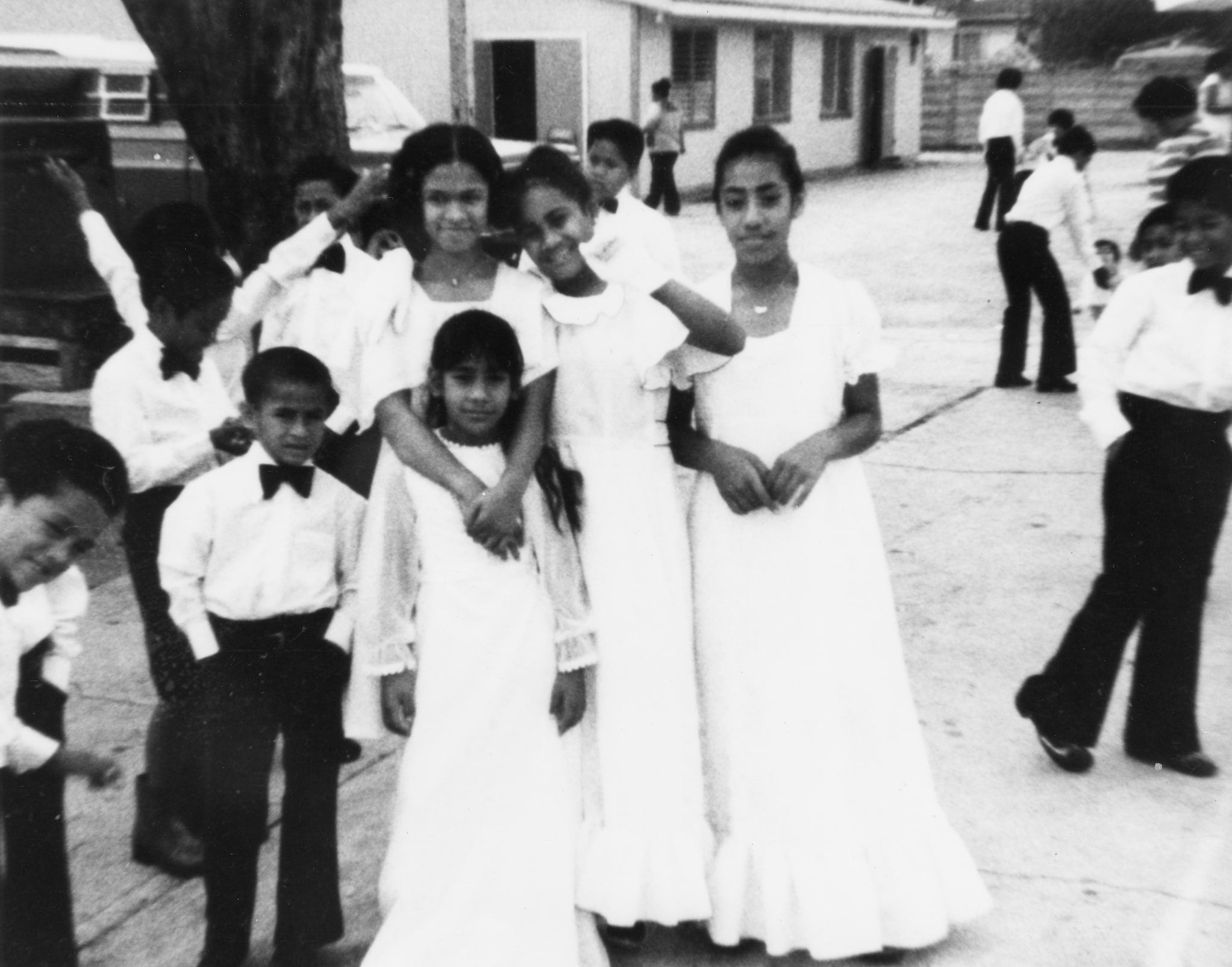
Image 24.01.04a — White Sunday at the First Samoan Congregational Christian Church in Carson, California, 1977. White Sunday is a Samoan holiday which celebrates children. The children wear white and perform for their families and the congregation.
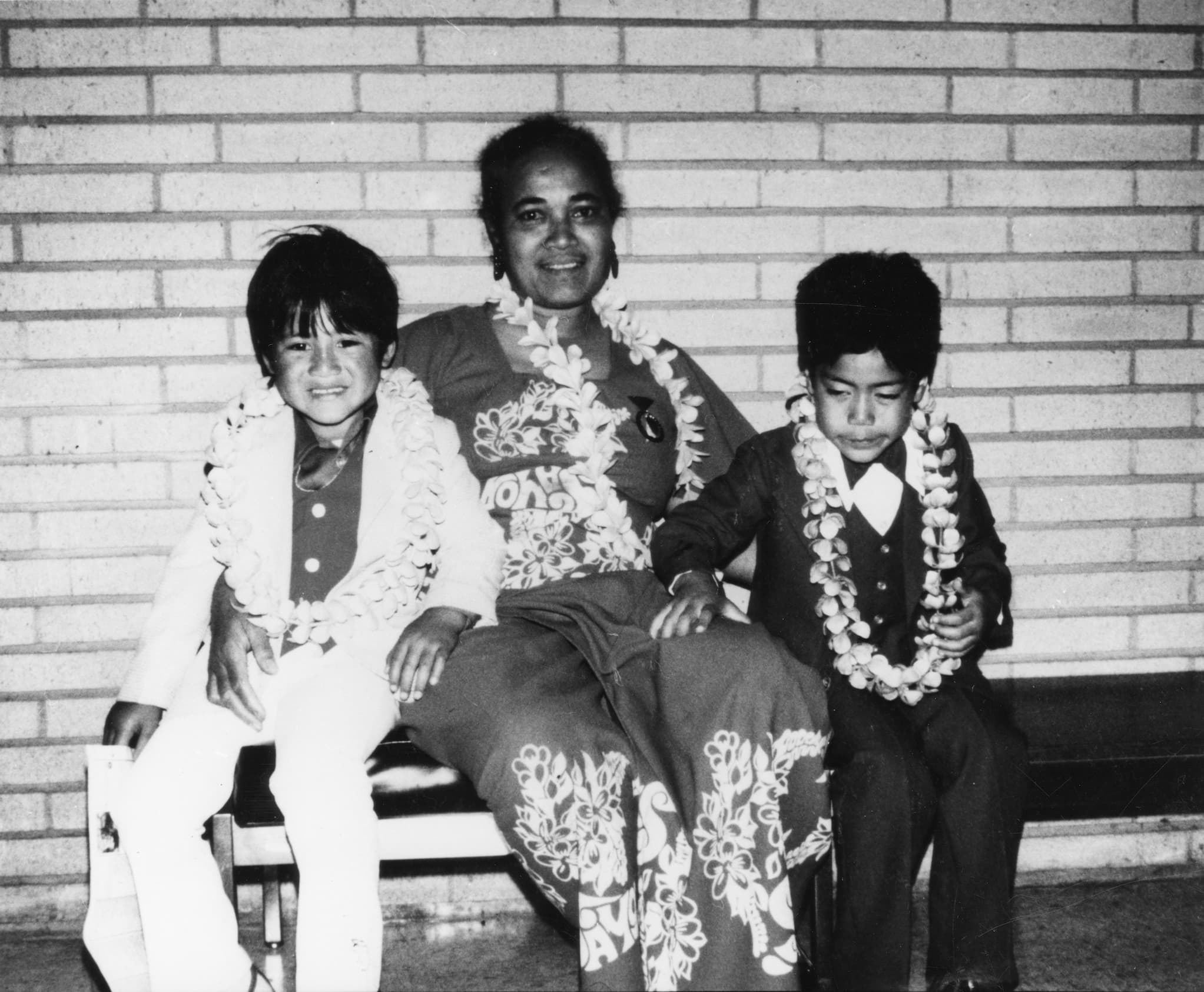
Image 24.01.04b — Brothers Terence (left, in white suit) and Trant (right) with their mother’s cousin, Senira (center), sit at a Methodist church hall in Los Angeles, California, 1979. All three have received an ʻula.


Given the emphasis of collectivism within faʻasāmoa, building communities as places where the collective can thrive becomes significant to the Samoan migrant community in the diaspora. There are several ways that Samoan people have built community, including through church. While the Samoan islands have their own cosmology, including Indigenous deities such as Tagaloalagi, today many Samoan people are Christians. Samoan churches of various denominations are important places of gathering and communing. Often, church members and leaders combine faʻasāmoa with Christianity, making church both a place of worship and cultural hub where Samoan language, cuisine, and practices are nurtured.
Civic clubs are another example of community organizing that offers a chance for Samoans to gather and nurture faʻasāmoa. Clubs aren’t just relegated to the community; student-led Samoan, Polynesian, and Pacific clubs exist in middle schools, high schools and universities. These clubs serve as places for gathering, dancing, and singing, celebrating Samoan and Pacific Islander cultural expression. This youth-led community organizing has also been formed around social issues, as we see with the Pacific Climate Warriors, who combine community building with advocacy and social justice. Coming together is a cultural practice, and while it may look different outside of the village context, it still perseveres.
Other cultural practices, such as language, music, dance, and tattooing, are also core elements of faʻasāmoa. Beyond church pews and community centers, elements of Samoan culture can be seen from on the football field, the wrestling ring, and even on American Idol. Football quarterback Tua Tagovailoa proudly carries his cultural tattoos, and the professional wrestling duo, The Usos, incorporate Samoan language in their tag team name (uso means brother). Winner of American Idol (Season 21), William “Iam” Guy Tongi, sang Samoan musician Spawnbreezie’s song on national television. Samoans today are practicing and drawing on their culture in a number of ways, and when we look carefully, references to Samoan culture are all around us.
More to explore
Video
00:26
Iam Tongi
Eighteen year old Iam Tongi stirred the judges emotions during his initial American Idol (Season 21) audition singing James Blunt’s Monsters. The Oʻahu born teenager went on to win more than just the judges’ hearts; television audiences voted him into the winning spot. Tongi was the first Pacific Island winner of American Idol. During the season Tongi sang songs by a number of Pacific artists, including Spawnbreezie and Kolohe Kai. While on the show, Tongi spoke proudly of his Tongan and Samoan heritage and his experience growing up in Hawaiʻi.
While Samoans who call the United States home may be small in number, they have made their presence known. Samoans in the US are categorized as “Native Hawaiian or Other Pacific Islander” in the US Census. Some Samoan organizations participate as part of advocacy, government, and research activities within “Asian American and Pacific Islander” coalitions. Yet, Samoans are also important Indigenous people with their own unique Samoan worldview and culture—faʻasāmoa. While the connection or friendship between the islands of Sāmoa and the US is somewhat complicated, and life for Samoans in the US has not always been smooth sailing, the Samoan people continue to find ways to make America home.
Glossary terms in this module
colonization Where it’s used
The act in which a group or country brings a region and its Indigenous people under its domination and control.
diaspora Where it’s used
The dispersal, movement, migration, or scattering of a people from their established or ancestral homeland.
Indigenous Where it’s used
Refers to someone or something that originates from a region, predating colonialism.
militarism Where it’s used
The ideology that a country should maintain a strong military power and be prepared to use it aggressively to secure its interests.
Endnotes
1 Mark Gilbert, “The United States and Samoa – An Enduring Friendship,” U.S Embassy in Samoa, accessed November 15, 2023, https://ws.usembassy.gov/the-united-states-and-samoa-an-enduring-friendship-2/.