




A Samoan dance troupe, wearing floral printed lavalavas and lei with no shirts, perform in front of elders and peers inside a gymnasium.
Module 4: Culture and Cheehoos: Samoan Diasporic Identities
Have Samoans benefitted from their “enduring friendship” with the United States?
Have you ever been at a celebration or gathering and heard that otherworldly “cheeeeeeehooo”—and wondered what it was? This iconic showering of love, is a faʻaumu and a Samoan expression of excitement. At one time, it was a call used to signal readiness in battle. Its continued use today is an example of the way that Samoan people have maintained their cultural practices in the diaspora.
Since the 1950s, Samoans in America have made homes across the US, moving from the islands of Sāmoa and American Sāmoa to various places across the United States. They have built community, faced harsh realities, kept their culture alive, and expressed their Samoan identity in the US.
In this module, we explore some of the ways that Samoans have continued to maintain their cultural identity. Sometimes this might look the same as it would in the Samoan islands, and at other times it might look uniquely American with a local twist. Both matter as cultural expression, adding to the complexity of Samoan identity and culture.
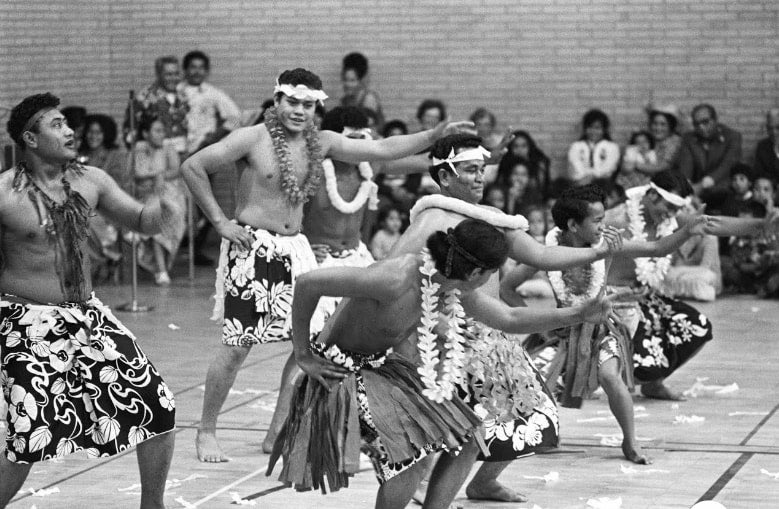
Image 24.04.01a — A Samoan dance troupe performs for community elders and peers at a large celebration in Carson, California, 1972.
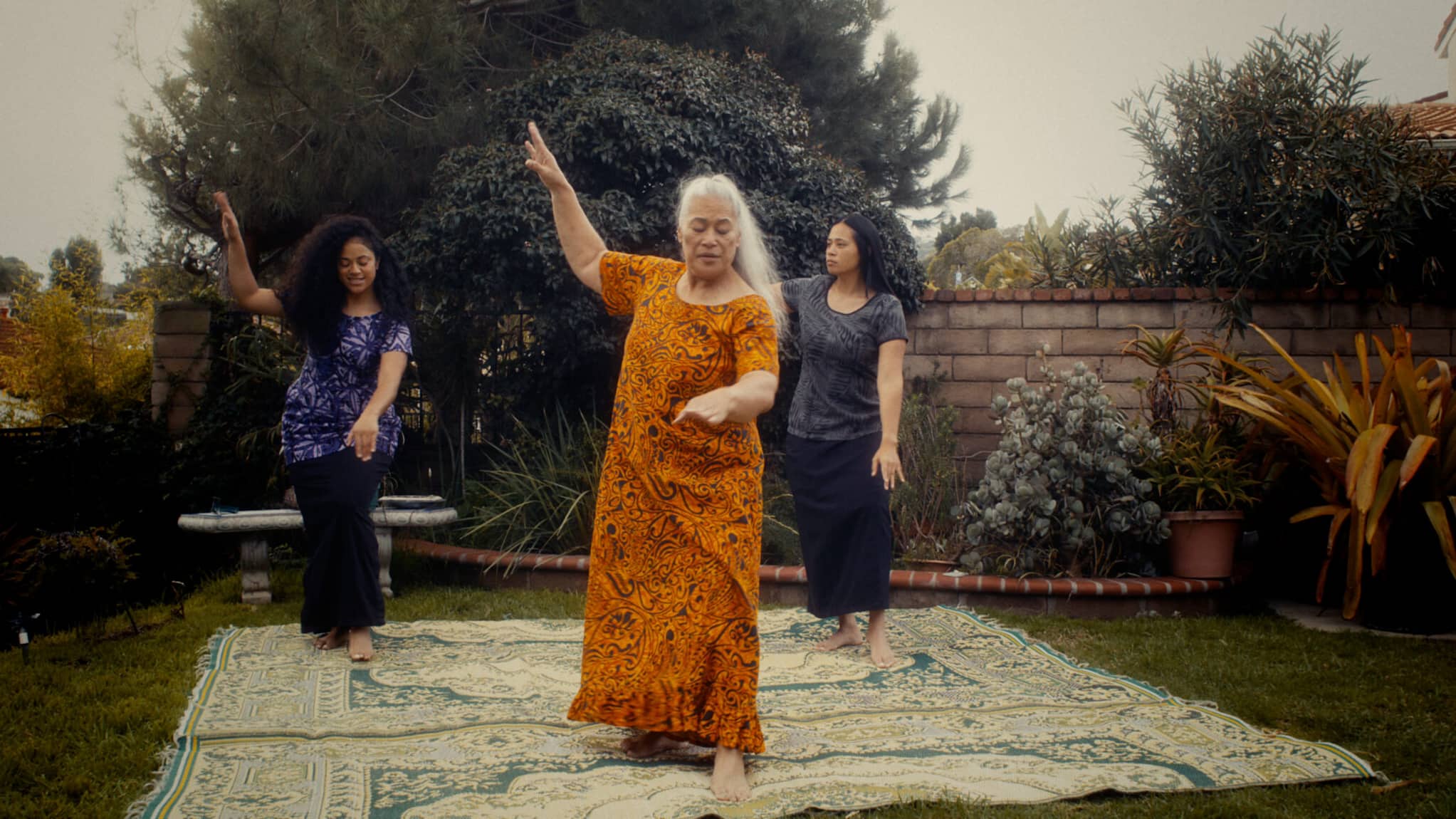
Image 24.04.01b — A still from Honestine Paʻala-Fraser’s English and Samoan language short film Come Together (2024). The short film is inspired by the 1978 documentary Omai Fa’atasi: Samoa Mo Samoa.


How do Samoans keep their culture and identity alive in diaspora?
How is Indigeneity maintained, “off island”?
Why is resisting assimilation important for indigenous people in diaspora?
Reclamations
An important way that Samoans maintain their cultural identity is through reclamation; the process of taking back control of a custom, word, or right that has been altered or taken away by another force. For example, Christian settlers defined gender as a binary—either man or woman. Samoan culture has a more expansive understanding of gender and sexuality. Within faʻasāmoa there is a third gender, faʻafafine, which translates to “in the manner of a woman.” Many faʻafafine have long reclaimed this identity which has been suppressed throughout colonization.
In 2009, women of color who identified as transgender or faʻafafine founded UTOPIA Washington. In addition to offering support for resources such as housing, employment, and culturally competent healthcare, UTOPIA Washington also collected faʻafafine stories to create an historical archive. The group understands that reclaiming faʻafafine is connected to a broader movement of queer and transgender liberation in the US. This articulation of their own identity and sense of self, importantly, reminds us that Samoan identities are intersectional and multilayered.
Telling stories about faʻafafine is a way to reclaim this identity and illustrate the complexities of Samoan experiences. Next Goal Wins (2023) is a film about the American Sāmoa national soccer team’s efforts to claim a victory. Jaiyah, a faʻafafine soccer player on the team, butts heads with the team’s unenthusiastic new coach. This character is based on the real life story of Jaiyah Saelua who, at fifteen, made her professional soccer debut playing on the American Sāmoa national team during the 2006 World Cup qualifiers.
While faʻafafine and other queer, trans, non-binary, and gender fluid people are leading the way to reclaiming these identities, the broader Samoan community is still reckoning with the long-standing historical exclusion of these identities in the US.
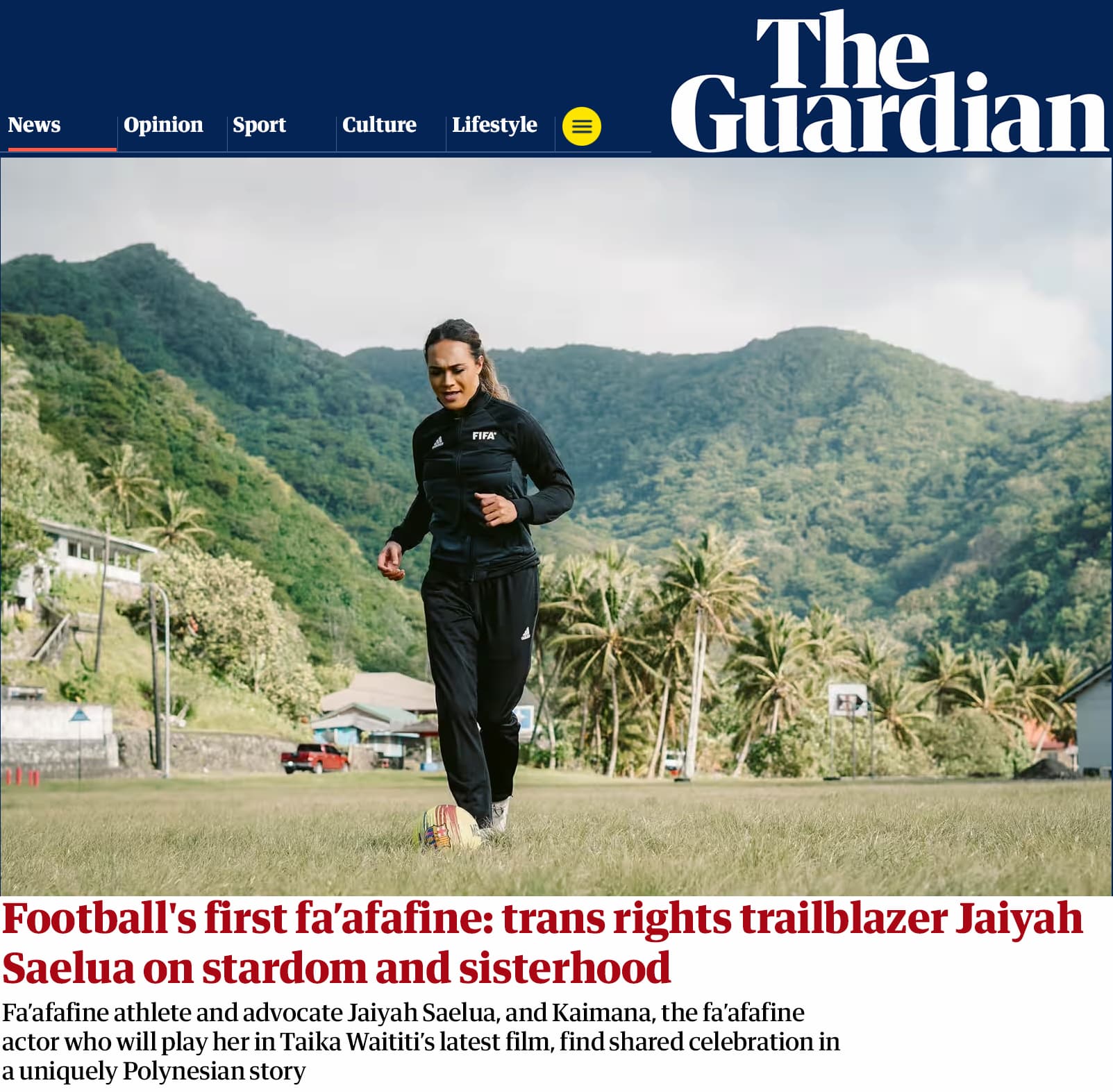
Image 24.04.02 — Jaiyah Saelua, a member of the American Samoan national soccer team whose life inspired the 2023 film Next Goal Wins, practices football drills at Fagaʻalu Park in American Sāmoa.
Tatau
While some cultural knowledge and practices must be reclaimed, other practices remain unbroken by colonial forces. In Sāmoa, tatau (tattooing) remains an unbroken customary practice. However, for those in the diaspora the practice fell out of use, particularly in societies where tattoos are either not approved, discouraged, or do not carry the same traditional meaning. Many in the Samoan diaspora have now reclaimed or modified tatau to maintain a deeper connection to Sāmoa.
In Samoan cosmology, Taema and Tilafaiga, two conjoined twins, brought the art of tatau to Sāmoa from Fiji. The twins swam while carrying tatau tools and singing the chant, “Tattoo the women, not the men.” However, they became distracted by a clam shell at the bottom of the ocean and dove down for a closer look. As they returned to the surface the chant changed to “tattoo the men and not the women.”
In the story of how tatau spread to Sāmoa, we see the interconnectedness of Pacific Island worlds and understand why the customary tatau for men and women vary. Men’s tatau, the malofie (or sometimes peʻa), is more dense and covers a significant area of the torso from the waist to the knees. Women’s tatau is called the malu, and covers the thighs down to just below the knee, with much more negative space than men’s.
While many people, including a significant number of people in the diaspora, choose to receive traditional tatau designs, contemporary tattoos inspired by customary motifs are also common. In the 1990s, taulima and tauvae, arm and ankle bands, were popularized as contemporary tatau. Their size and placement meant that they could be hidden under a shirt or pants to adhere to workplace norms at the time. In the 2000s, athletes popularized bigger tattoos such as full sleeves ones. Samoan rugby player and boxer Sonny Bill Williams is amongst the first people to make the Samoan sleeve famous. His tufuga tatau (tattoo artist) was Steve Ma Ching. Tatau has personal significance for the wearer. Many say that it helps to reconnect them to their ancestry or maintain their roles within faʻasāmoa. It is a personal way of maintaining a Samoan identity.
Tatau can also signal to others that someone is Samoan. In some contexts, the various forms of tatau are synonymous with Samoan ancestry. For communities in the diaspora, the visual nature of tatau can be an important way to avoid assimilating into the main culture and to differentiate from other ethnic groups. Samoan author Albert Wendt once described seeing someone in an urban center with tatau wearing Nike shoes. He described this person as a “tatau-ed post-colonial body.” Wendt was reflecting on how visually distinguishing oneself as Samoan in the diaspora becomes a mixture of all the influences we align ourselves with, from something customary like tatau, to contemporary fashion choices.
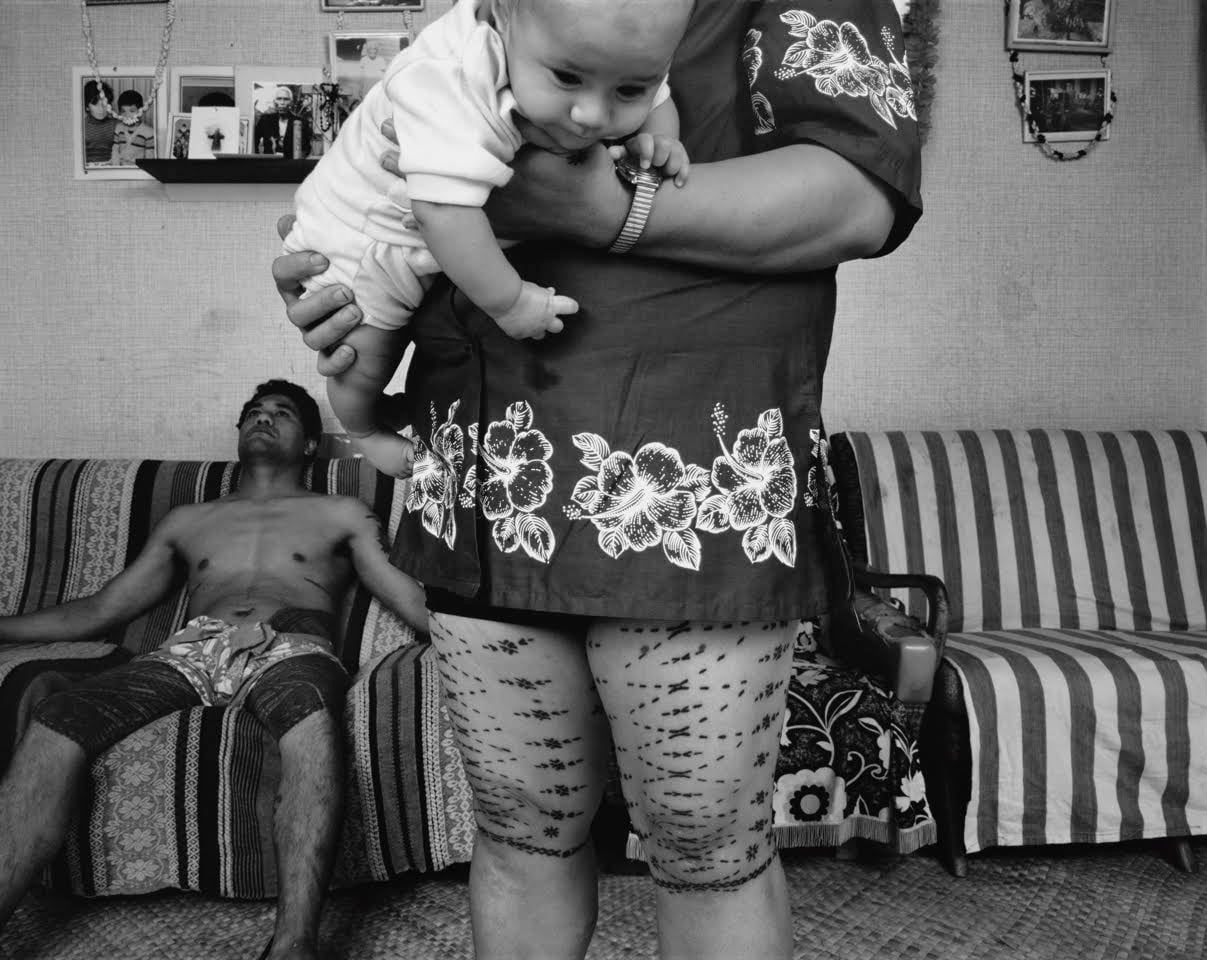
Image 24.04.04 — Epifania Suluʻape photographed in Auckland, New Zealand, with the women’s tatau, called the malu, covering the thighs, with Tufuga tatatau: Suʻa Suluʻape Paulo II. Photograph by Mark Adams.
Music and Dance
Music and dance are another way that culture and identity are maintained in the diaspora. Dance is filled with aesthetic values and symbolism, which makes it distinct from one society to another. In Pacific contexts, dance has always played an important role in the social and ceremonial life of Pacific people. As Papua New Guinean dancer Julia Mageʻau Gray explains, a flick of the wrist or a head tilt can be the same dance move an ancestor hundreds or thousands of years before also did. Like tatau, dance and song can also constitute unbroken cultural practices.
Music and dance within faʻasāmoa is largely a collective practice. Diasporic communal spaces like church, civic groups, and Samoan, Polynesian and Pacific Islander high school and college clubs are often the first training grounds for Samoan musicians and dancers.
Today we see Samoan dancers and musicians express their cultural and artistic identities through more popular outlets. Emmy-winning Samoan hip-hop choreographer Parris Goebel, for example, opened Nike’s Goddess Awakened show at Paris Haute Couture Week in 2023, with a siva Sāmoa, a traditional Samoan dance set to the song “O le Taualuga.”
More to explore
Image
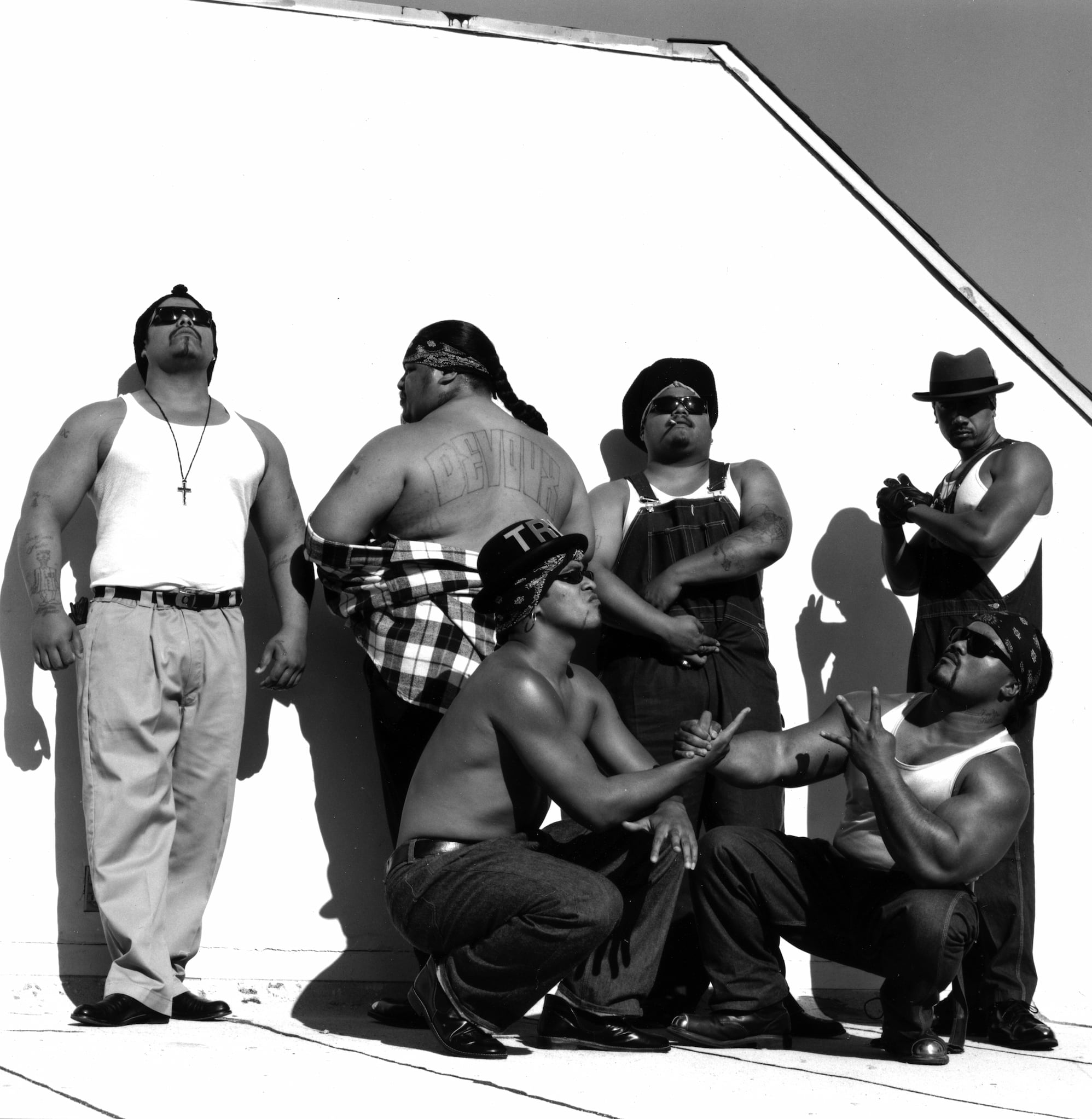
Boo-Yaa T.R.I.B.E
The rap group Boo-Yaa T.R.I.B.E. from Carson, California, burst onto the hip hop scene in the late 1980s. At the time Samoan people were active listeners of hip hop music. However, there were not many producing and making music.
Samoans have found ways to express themselves through popular forms of music, thus, widening ideas of Samoan identity—not only for themselves, but their fans as well. Samoan musicians span a wide variety of genres. Mavis Rivers (1929–1992) was a jazz singer who was nominated for a Grammy in 1960. The hip-hop band Boo-Yaa T.R.I.B.E. started in the 1980s, while the drill and rap group Onefour became active in the 2010s. Reggae performer William “Iam” Guy Tongi won American Idol in 2023. Each of these musicians formed their own unique expressions of self through their music, and expanded how we might think of Samoan identity.
Food
Preparing and eating Samoan food is another important way that Samoans have kept their culture thriving. Learning to cook the dishes of nanas and papas—like sapasui, koko alaisa, and ‘oka—helps preserve the knowledge and traditions that come with these cultural flavors. Additionally, eating is communal, making food another way that Samoan people come together and share with each other.
The giving of garlands is a significant cultural practice, and in the diaspora it is kept alive through the giving of ʻula lole (candy leis). ʻUla lole are garlands made with candy and connected together through plastic tubing, cellophane and ribbon. They are given in moments of accomplishment and celebration, like graduations.
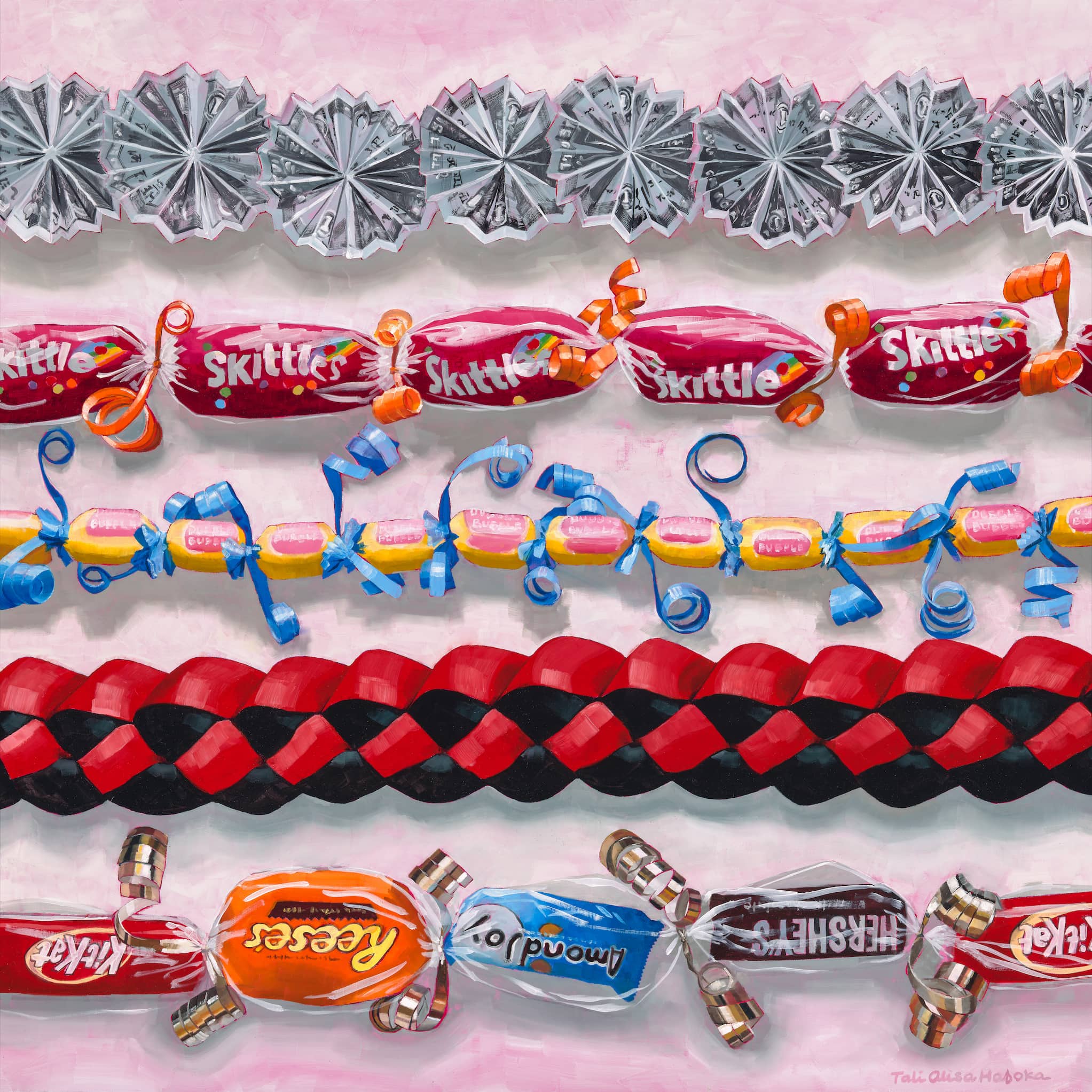
Image 24.04.07a — Tali Alisa Hafoka is an artist of mixed Samoan heritage. This painting of ʻula lole (candy leis) depicts a Samoan cultural practice in diaspora. These leis include American bills and an array of mass-produced American candies.
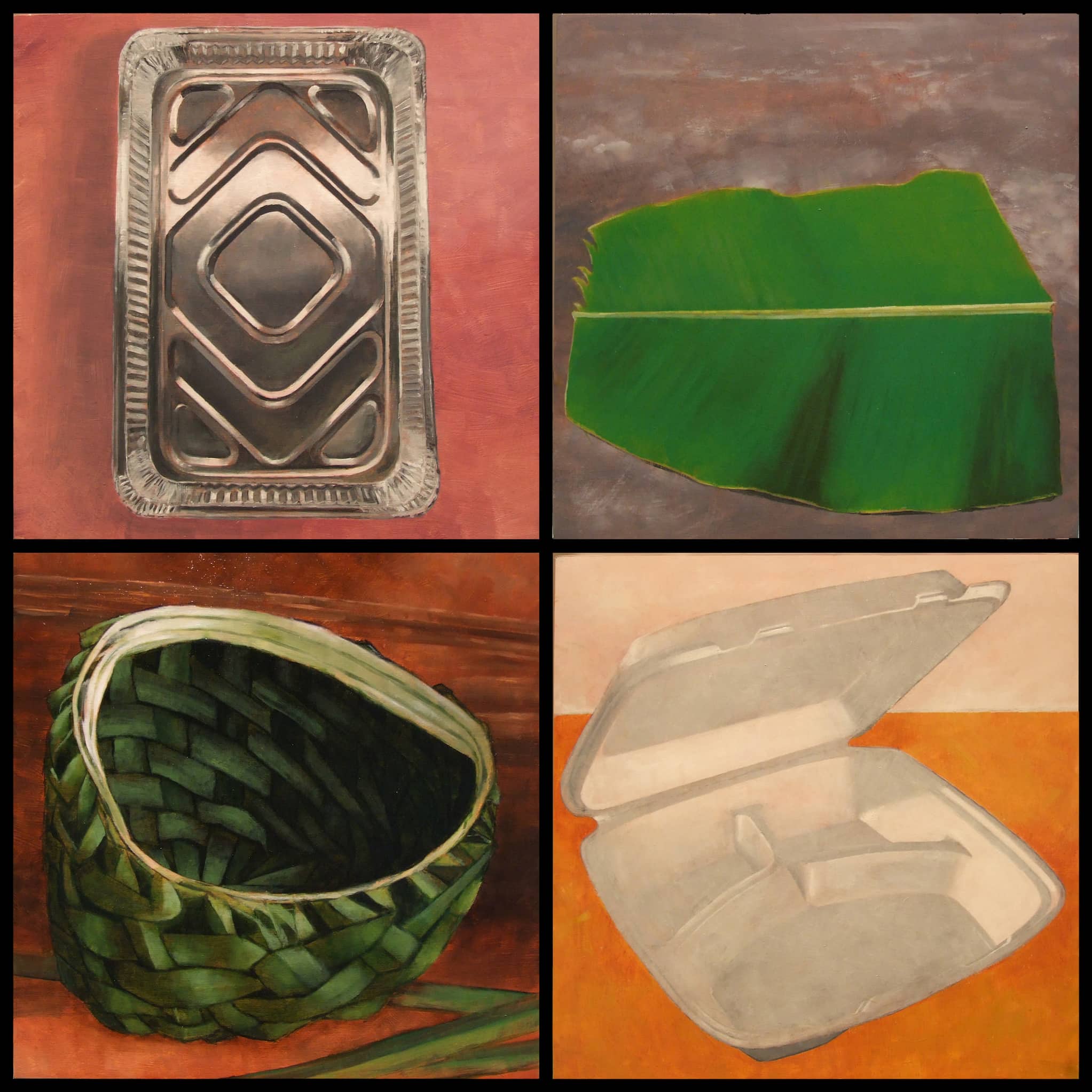
Image 24.04.07b — This group of paintings by Tali Alisa Hafoka centers on containers, connecting different ways of presenting and serving Samoan food, between traditional and mass-produced styles. The clamshell plate (bottom right) is a common mode of food presentation at important Samoan community events.

Despite a long and complex military and colonial relationship between Sāmoa and the United States, Samoans in the US have maintained their culture and identity in a wide range of ways across various spheres. Maintaining Indigenous Samoan culture, fa’asāmoa, is important to a lot of people, and that’s how the Samoan people have resisted assimilation. Importantly, what that looks like can take a myriad of forms. It can be new Gen Z expressions of culture, taking language classes, or making space for the multiple ways that exist to be Samoan. Whatever way Samoans choose to maintain their culture in the future, undoubtedly it will be grounded in faʻasāmoa. Samoan indigeneity stands firm regardless of where Samoans choose to make home.
Glossary terms in this module
colonization Where it’s used
The act in which a group or country brings a region and its Indigenous people under its domination and control.
diaspora Where it’s used
The dispersal, movement, migration, or scattering of a people from their established or ancestral homeland.
Indigenous Where it’s used
Refers to someone or something that originates from a region, predating colonialism.