




A group of women gather in New York City street with one arm raised above their heads. They stand with signs, including one reading “Adhikaar.”
Module 2: New Immigrant Communities of Queens, New York City
Does place matter in becoming a community?
Queens, New York is referred to as “The World’s Borough” because of its unparalleled racial, ethnic, linguistic, and cultural diversity–an outcome of the Immigration and Nationality Act of 1965. In fact, the Guinness Book of World Records describes the 2.3 million people of Queens as the “most diverse urban area on the planet” with its 190 nationalities and 360 languages and dialects. New immigration from Asia and the Pacific to Queens continues to drive up these numbers today, as nearly one in two Asian American and Pacific Islander New Yorkers–roughly six hundred thousand people–reside in Queens.
The hyperdiversity of Queens’s Asian American and Pacific Islander population distinguishes this borough’s lifestyle and neighborhoods from New York City’s other four boroughs of Brooklyn, Manhattan, The Bronx, and Staten Island. In addition to the sizable Chinese, Korean, Filipino, and South Asian populations, Queens is home to an overwhelming majority of Indo-Caribbean and Himalayan New Yorkers.
This module focuses on the dynamic Indo-Caribbean and Himalayan immigrant communities in Queens. These two communities represent a growing population of the Guayanese and Trinidadian immigrants concentrated in neighborhoods such as Richmond Hill and Ozark Park as well as the Himalayan immigrants of “Little Tibet” and Nepalese backgrounds in Jackson Heights. These two communities have established vibrant cultural centers and social institutions, representing the intersection of foodways, economics, and spirituality.
What does it mean to be a global neighborhood? How does Queens represent this model?
To what extent do community-based organizations contribute to redefining immigrant places to create a sense of home?
In what ways do social services promote community building in these organizations and institutions?
Global Neighborhoods
Queens New York is a global neighborhood whose immigrant communities represent numerous global regions in its racial and ethnic diverse makeup. Spatially, Queens’s densely populated global neighborhoods are connected by an above ground subway line – the 7 train – often referred to as the “International Express.” In their book International Express: New Yorkers on the 7 Train, sociologists Stéphane Tonnelat and William Kornblum detail the diversity aboard Queens’s International Express as part of their ethnographic findings.
Like many areas in major US metropolitan areas, Queens’s global neighborhoods have seen new commercial and residential developments that contribute to an affordability crisis for immigrant residents and small business owners. Real estate developers are trying to capitalize on the neighborhood’s subway stops by investing in properties that connect the Queens’ neighborhoods of Woodside, Sunnyside, Elmhurst, Jackson Heights, Corona, and Flushing.
An example of the hyperdiversity found in Queens, Jackson Heights stands out as the neighborhood with a broad range of human differences, not just in terms of demographic traits but in lifestyles, activities, attitudes, and ways of thinking. A panoply of sounds, Jackson Heights incorporates the dialects of Latin American and South Asian languages, including Tibetan (e.g. Ü-Tsang Tibetan and Amdo Tibetan) and Nepali (e.g. Newari, Thakai, and Ghale) languages. Indeed, Jackson Heights’s Diversity Plaza is a site regarded as the “ground zero for new immigrants,” and serves as a vital public square for community gatherings and actions.
In 2015, for example, hundreds of people gathered in Diversity Plaza to honor the victims of a devastating earthquake in Nepal. One of the attendees was world-famous fashion designer Prabal Gurung, a Nepali New Yorker who designed former First Lady Michelle Obama’s 2010 Correspondent Dinner gown. Gurung helped raise money for earthquake assistance by requesting a twenty dollar donation from those who wanted to take a photograph with him. The New York Times architecture critic Michael Kimmelman also produced a photo essay, “Jackson Heights: Global Town Square,” in 2020 that includes a virtual tour of this vibrant neighborhood.
Indo-Caribbean Communities
The Indo-Caribbean and Himalayan communities in Queens represent a double migration, as many of them immigrated to the United States from countries other than their home countries. Indo-Caribbeans are descendants of Asian Indians, who were recruited as indentured servants to replace enslaved Africans on plantations in the British, Dutch, and French colonies of Guyana, Trinidad and Tobago, and Suriname from the late 1830s to the early 1900s. Indo-Caribbeans share a history of labor migration to such Caribbean countries subjected to European imperialism. Such complex migration labor routes account for a rich and complex identity, both as members of the Caribbean and South Asian diaspora.
During her undergraduate studies at Queens College, Anlisa Outar co-founded the Queens College Guyanese Student Association in order to represent the Indo-Caribbean lived experiences that did not identify with existing campus student clubs. The inadequacy of the broad racial categories like “Asian” or “African American” fails to capture the complex racial and cultural identities of Indo-Caribbeans that is a mixture of Caribbean, African, West Indian, and Indigenous cultures. Part of the difficulty stems from the limitations of data collection efforts, including the federal census.
The Constitutional mandate of the federal census taken every ten years is to ensure fair political apportionment, which means that the undercount of Indo-Caribbeans has serious consequences for political representation and the proportionate allocation of public resources. The Asian American Legal and Education Defense Fund filed a lawsuit in December 2023, because the New York City Redistricting Commission failed to establish a City Council district that would protect the voting rights of Indo-Caribbeans residing in the Queens neighborhoods of Richmond Hill, South Ozone Park, and Ozone Park.
Tibetan Communities
Queens is home to two of the largest Himalayan immigrant populations of Tibetans and Nepalis in the United States. Tibet lost its independence in 1959, and the Dalai Lama established a home in India where many Tibetan refugees settled. Generations of Tibetans born in India and neighboring countries, such as Nepal and Bhutan, have immigrated to New York City where the diasporic community represents the largest number of Tibetans residing in the United States. The overwhelming majority of Himalayan New Yorkers are concentrated in four neighborhoods—Jackson Heights, Woodside, Sunnyside, and Elmhurst—and thus located along the International Express subway line of Queens.
Losar is the first day of the first month of the Tibetan lunar calendar, and is the most important holiday in Himalayan countries. Many Tibetan men in Queens are employed as for hire vehicles (FHV) drivers and need to abide by New York City’s alternate side parking rules, which prevents them from enjoying Losar festivities.
The suspension of alternate side parking rules is not only an important policy issue pertaining to economic livelihood, but it also represents the city’s official affirmation of the social identity and culture of its sizable Tibetan and Himalayan communities. In 2025, City Council members Julie Won and Shekar Krishnan, elected representatives of Queens’s global neighborhoods, celebrated the passage of their bill to suspend alternate side parking rules on Losar.
Nepalese Communities
The Nepali community is the seventh-largest Asian ethnic group in Queens, numbering nearly thirteen thousand, which represents 90 percent of Nepali New Yorkers. In other words, Nepalese both live and work in Queens, as can be evidenced through the numerous Nepali-owned restaurants that are concentrated along Roosevelt Avenue in Jackson Heights. Indeed, Roosevelt Avenue is known as a global food mecca, world famous for restaurants and street vendors selling authentic foods from homelands in Asia and Latin America. This includes momos, a pan-Himalayan meat-filled dumpling. In 2012 a Jackson Heights resident founded the Momo Crawl as a way to support immigrant-owned businesses and invite friends to sample momos at the numerous Roosevelt Avenue Nepali and Tibetan restaurants.
The Momo Crawl has also added to the hyperdiverse richness in Jackson Heights through the inclusion of cultural performances and food competitions. Nepali restaurant Banh Cha Ghar won the contest two years in a row in 2003 and 2004 and was awarded a wrestling-style yak hide championship belt, adorned with a gold-painted momo and a stone from Mount Everest.
Yamuna Hamal Shrestha is the owner of Banh Cha Ghar and was featured in a 2023 New York Times article on rising commercial rents, which poses a tremendous burden for immigrant small business owners. Even as private investors and several business partners provided the capital necessary for Shrestha to open her restaurant in the 2010s, she works eighteen hours daily, shopping for supplies, preparing food, and even working the front of the restaurant. The Momo Crawl is currently organized by Students for a Free Tibet to help raise funds to support the organization’s activities.
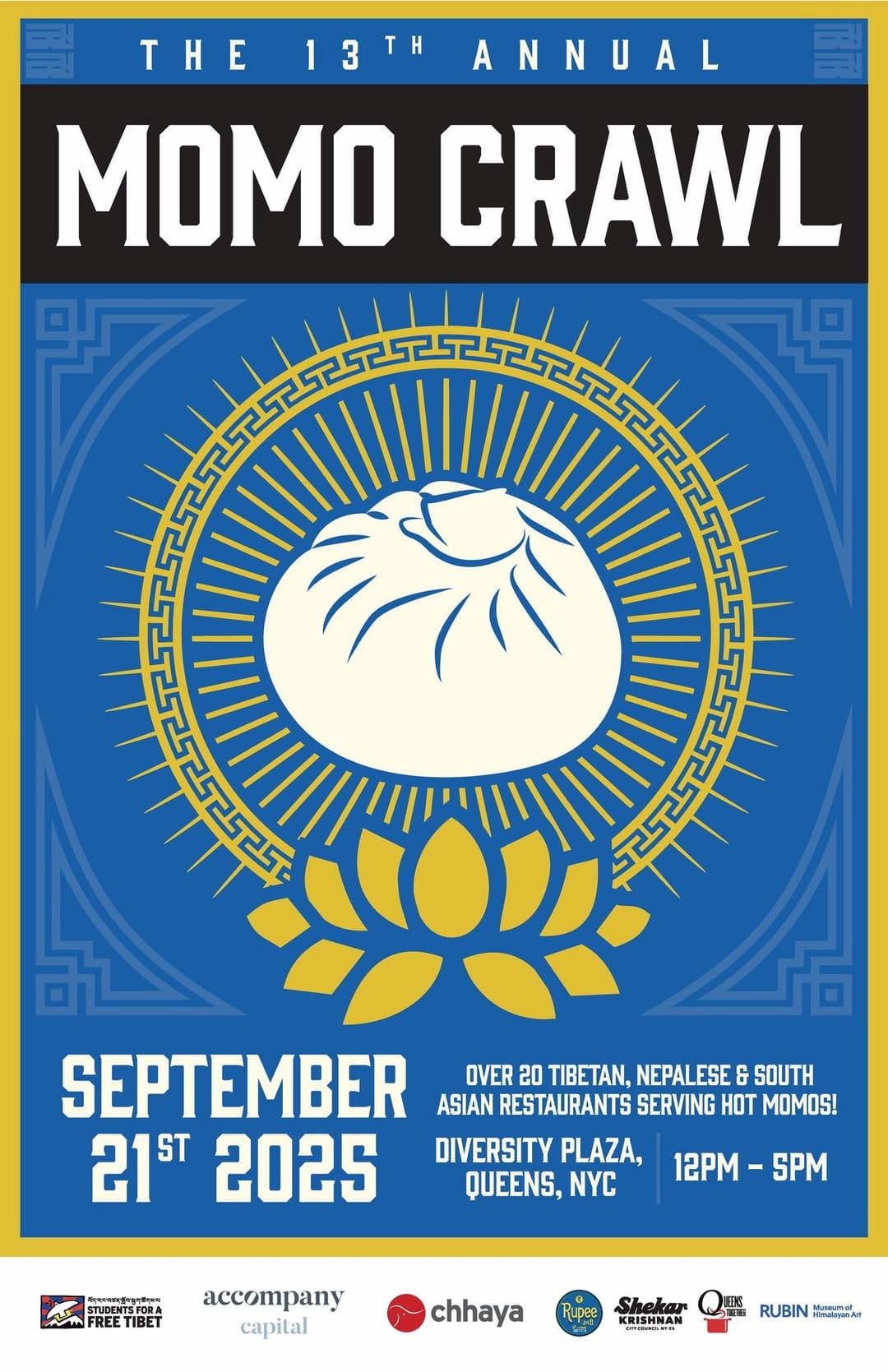
Image 39.02.02 — A flyer for the 13th annual Momo Crawl in 2025. Hosted in Queens, NYC, attendees ate from and supported over twenty local Tibetan, Nepalese, and South Asian restaurants.
Placemaking
Community-based organizations , small businesses, and institutions such as places of worship contribute to creating and defining immigrant places and a sense of home. Organizations, particularly nonprofits, provide vital social services, including immigration services, job training, tax preparation assistance, public assistance, small business support, housing and homeownership counseling, as well as educational classes and cultural activities that promote community preservation and building. These place-based organizations anchor and support social and community identity, advocate for community concerns, facilitate civic engagement, and also maintain transnational social ties.
For the past twenty-five years, Chhaya Community Development Corporation (CDC) has supported the economic well-being of Queens’s diasporic and diverse South Asian and Indo-Caribbean communities by working for housing stability and other initiatives. Nonprofit community development corporations, such as Chhaya CDC, aim to improve the life of neighborhood residents through initiatives such as social services, affordable housing, and job training. In 2019, Chhaya CDC opened a second office in Richmond Hill on Liberty Avenue, the commercial heart of the Indo-Caribbean community. In 2005, Adhikaar—the word for “rights” in Nepali—was established as a women-led, workers justice center in Woodside, Queens. Adhikaar worked with Cornell University’s School of Industrial and Labor Relations to study the working conditions in the nail salon industry, a gendered service industry heavily reliant on Asian immigrants, including Nepali women.
The photo of the ribbon cutting shows Executive Director Annetta Seecharran in the center, with City Council Member Adrienne Adams on her left. Chhaya CDC led the city-wide Basement Apartment Safe for Everyone (BASE) campaign to address New York City’s affordable housing crisis. The group worked to legalize and upgrade fire and flood-prone basement apartments and other types of accessory dwelling units, or existing housing structures converted into separate living spaces, common in immigrant-dense neighborhoods.
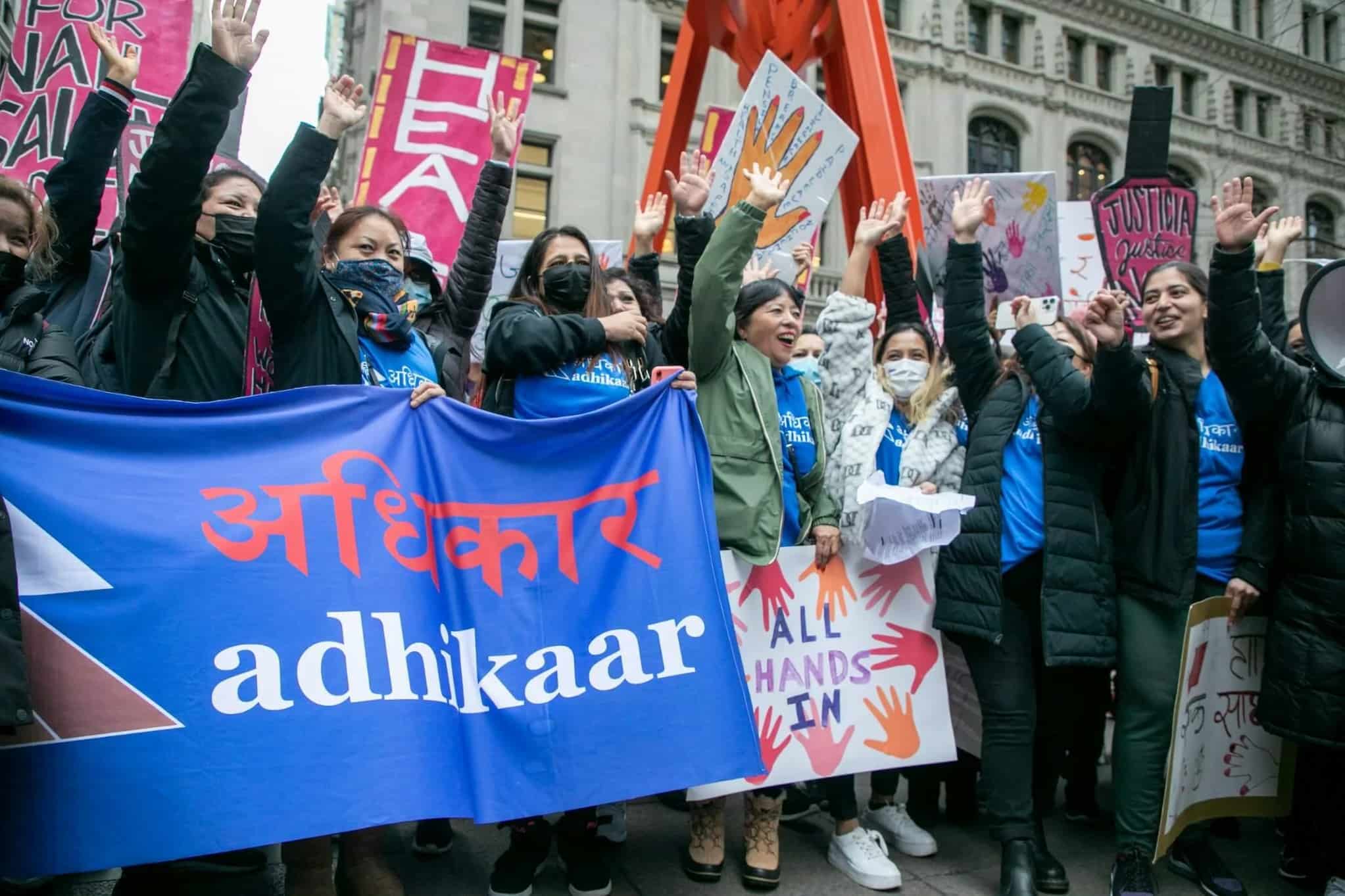
Image 39.02.03 — In 2023, Adhikaar organized the NYC Women’s Workers March as a part of the New York Healthy Nail Salon Coalition. Their #AllHandsIn campaign aimed to spread awareness about protections for nail salon workers and improving industry safety standards.
Other community stakeholders, including local activists, organizations, and institutions, also help make these neighborhood spaces and their identities richer through placemaking practices, such as street namings, public art installations, and commemorations of cultural holidays. To honor Richmond Hill’s Indo-Caribbean community, for example, the intersection of Lefferts Avenue and Liberty Avenue, which is the main commercial corridor, was renamed Little Guyana Avenue in June 2021.
But individuals do not need to be local to Queens in order to become ambassadors for their communities. Indo-Guyanese couple Rita and Khrisna Sukaran created a YouTube channel, It’s Your Local Family Rita & Khrisna🇬🇾, to share their unique perspectives and cultural backgrounds with more than six thousand followers. The Sukarans posted several video clips of Liberty Avenue, including a recent visit to eat lunch at a Chinese Caribbean restaurant, Tropical Jade 2, and to purchase fresh coconut juice from a street vendor.
The Tibetan Community of New York and New Jersey is the largest Tibetan American nonprofit organization in the United States. Its mission is to support the survival of Tibetan culture, its identity, and to enhance the quality of life for all Tibetans living in the local community. The group has made such an impact in the neighborhood that the street in front of its new office was co-named “Tibet Way.”
Lhakar, which translates to “White Wednesday,” is a grassroots movement to preserve Tibetan identity, language, and culture. For Queens’s Tibetan community, Lhakar includes community gatherings at an Elmhurst playground to dance Gorshey, a traditional circle dance. As Queens native Tsetan Namdol explained in a 2023 article in The Gothamist, “We don’t have a country, so Gorshey really brings us all together.” Placemaking not only designates a public space with cultural and social identity and significance, but it can also build community by creating a public commons, a safe space for gatherings, such as Diversity Plaza in Jackson Heights.
Chhaya CDC is collaborating with Hive Public Space and StudioFōr to design and activate an underutilized park, Lt. Frank McConnell Park, in South Richmond Hill. As Ayesha Agha explained in a 2024 video, “There’s something unique about this area, about the people that live here. If you have no space, and if you have a space that is not marked or somehow differentiated from another space, it’s very difficult to figure out when something happens, where do we gather?”
Concentrated in Queens’ global neighborhoods, Indo-Caribbean and Himalayan New Yorkers are actively engaged in building community through placemaking, small business entrepreneurship, and advocacy for political representation.
Glossary terms in this module
Immigration and Nationality Act of 1965 Where it’s used
Also known as the Hart–Celler Act or the 1965 Immigration Act, a landmark federal law that ended national-origin quotas and opened immigration to individuals regardless of race, sex, nationality, or place of birth, and introduced a preference system based on professional qualifications and family ties.
diasporic community Where it’s used
A group of people that have migrated to various regions in the world who share an ancestral homeland, and maintain material and sentimental ties to their homelands.
global neighborhood Where it’s used
A spatially-bounded, diverse immigrant neighborhood, distinguished by transnational organizations (hometown associations) and institutions (e.g., banks) that facilitate the cross-border flow of labor and capital.
hyperdiversity Where it’s used
Extraordinarily high levels of demographic diversity in race, ethnicity, and language.
placemaking Where it’s used
The social production of neighborhood spaces and markers through initiatives such as public art, festivals, and co-naming of streets with local individual heroes or important organizations.
public commons Where it’s used
Cultural, natural, or spatial spaces or resources available to all community members.