





Outdoor strip mall with “Vietnamtown Center” sign on exterior wall and signs for businesses below. Flagpoles on either side fly South Vietnamese flags.
Module 1: Vietnamese Americans in the Texas Gulf
Does place matter in becoming a community?
Texas is a state made up of a mosaic of cultures and is therefore sometimes described as the “Third Coast” of the US along the Gulf of Mexico. With its vibrant culture and rich natural resources, the ebb and flow of Texan history is shaped by immigration. A significant wave of Vietnamese refugee immigrants to the state in the late twentieth century was intricately connected to the events of the US involvement in the Vietnam War.
Vietnamese Americans have made significant contributions to the social and economic landscape in Texas, particularly in industries such as fishing and shrimping. This module explores how Vietnamese Americans have shaped Texas by infusing local culture with their ethnic heritage and establishing a lasting presence that reflects both their resilience and entrepreneurial spirit.
How did the Vietnam War and the US refugee resettlement process influence the migration of Vietnamese communities to Texas?
In what ways have Vietnamese Americans contributed to the social and economic life of the Gulf Coast of the US, especially through industries like fishing and shrimping?
How have Vietnamese American communities in Texas been impacted by the decline in demand for domestic seafood and the aftermath of environmental disasters?
Major Cities
Following the end of the Vietnam War in 1975, Houston, Texas, became a primary destination for Vietnamese refugees seeking new beginnings. The city’s affordable cost of living, economic opportunities, and established Asian American communities made it an attractive choice. Its warm and humid climate also resembled the tropical environment of Vietnam.
The initial wave of Vietnamese refugees coming to Houston settled in areas like Allen Parkway Village and Midtown, both of which offered affordable housing and proximity to downtown. Midtown, in particular, evolved into a vibrant enclave known as “Little Saigon,” characterized by Vietnamese-owned businesses, restaurants, and cultural centers. Plazas such as “Vietnam Town Center” marked the thriving businesses. The flag of South Vietnam, which is yellow with three red stripes, is often depicted throughout the area. This area became a hub for the Vietnamese community, creating a sense of belonging and cultural preservation.
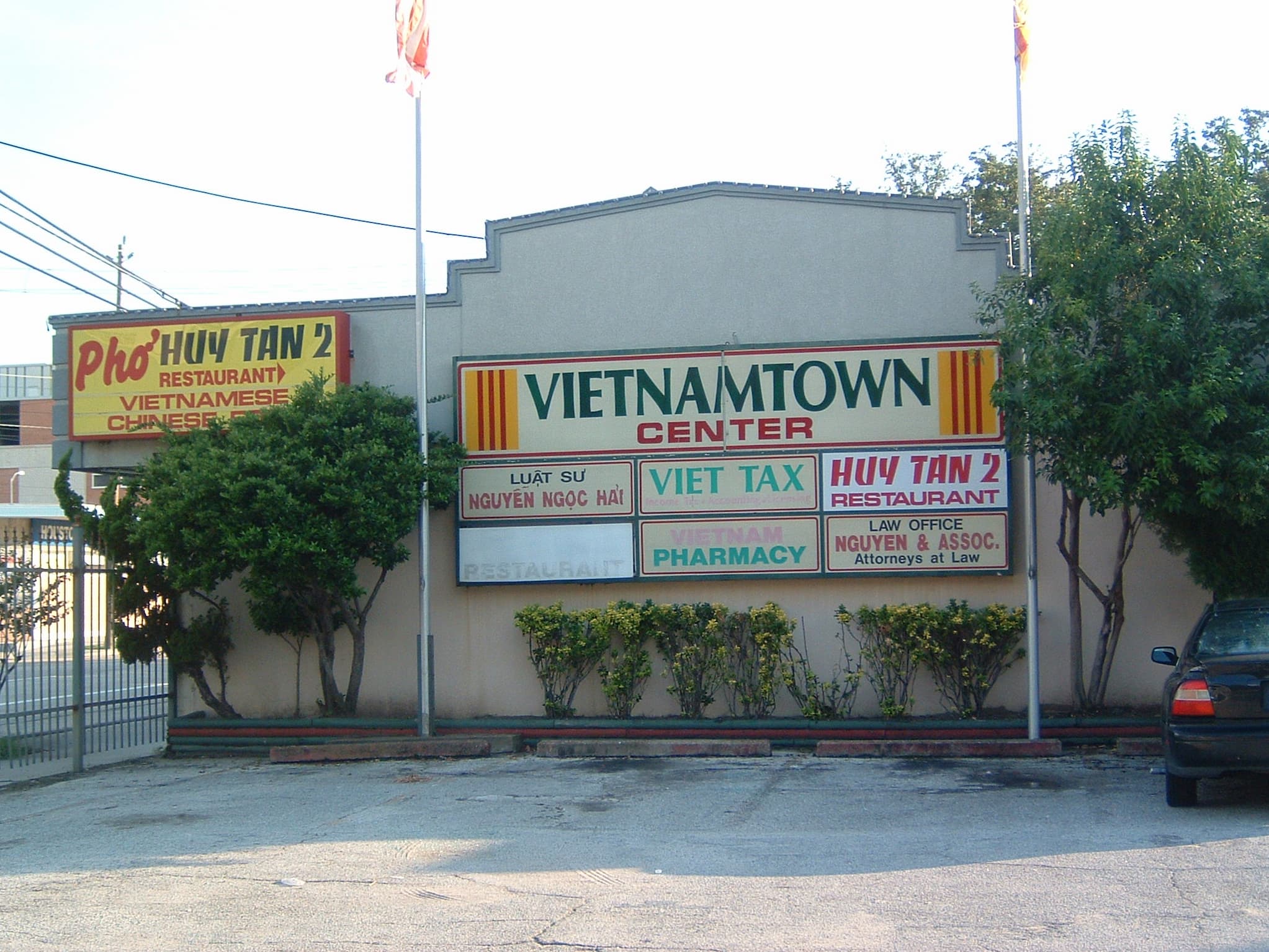
Image 39.01.01 — Houston’s first Little Saigon was located in the downtown area. The flag of South Vietnam—yellow with three red stripes—is often depicted throughout the area.
As the community grew, the Vietnamese American community expanded in Southwest Houston and became a modern Little Saigon centered on the bustling commercial district featuring Vietnamese businesses, restaurants, and cultural institutions. The area along Bellaire Boulevard, extending west of Beltway 8, transformed into a hub of Vietnamese commerce and culture. The development of this ethnic enclave further solidified the Vietnamese presence in Houston and contributed to the city’s multicultural identity. As of 2019, the Greater Houston area is home to approximately 143,000 Vietnamese Americans, making it one of the largest Vietnamese communities in the US.
Immigrant entrepreneurship established a variety of businesses including restaurants, grocery stores, medical and legal offices, and community centers that cater to the needs of the Vietnamese population. The area also serves as a point of introduction of Vietnamese culture to the broader Houston community. Moreover, a Vietnam War memorial was unveiled in Little Saigon in 2005, designed by architect Nghiep Nguyen, which has since become a prominent landmark and a focal point for cultural gatherings.
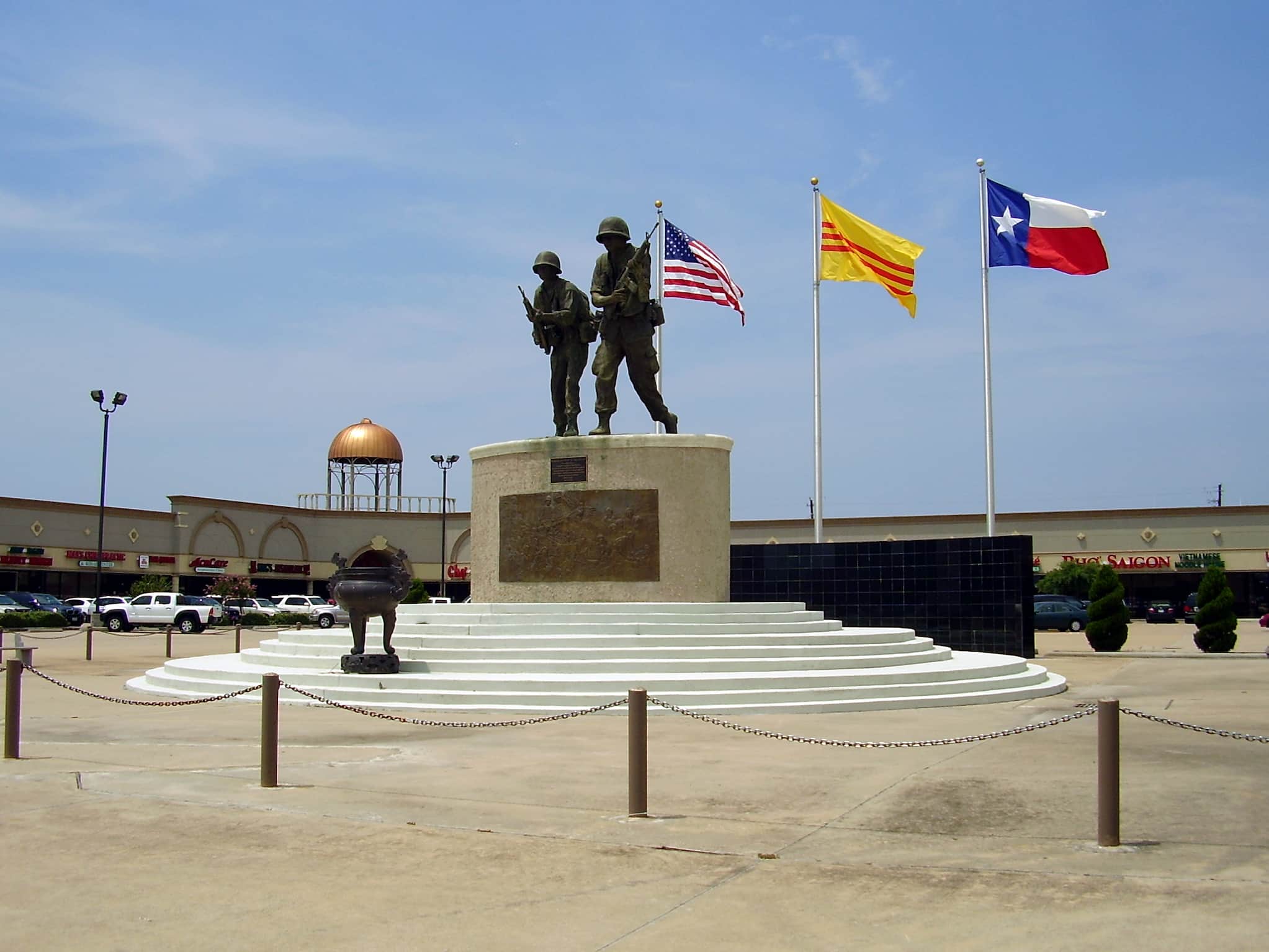
Image 39.01.02 — The Vietnam War Memorial in Houston, Texas, features a twenty-seven-foot copper statue of two soldiers—one Vietnamese, one American—standing side by side, symbolizing their joint fight for South Vietnam’s freedom.
Like Houston, the Vietnamese American community in Dallas, Texas, has grown significantly since the initial arrival of refugees following the Vietnam War. Over the years, the Vietnamese American population in the Dallas-Fort Worth (DFW) area has continued to grow. As of 2020, the DFW area was home to nearly 85,000 individuals of Vietnamese origin. Communities have developed in various parts of the metroplex, including Garland, Arlington, and East Dallas. In Garland, for instance, Vietnamese American residents have established businesses and community centers along Walnut Street.
In addition to contributions in the cultural and economic landscape of Dallas, religious institutions—such as St. Peter Vietnamese Catholic Church, established in 1998—serve as centers for cultural preservation and community gatherings. Organizations such as the Dallas Asian American Historical Society (DAAHS) preserve and amplify the legacy of Asian Americans in the Dallas area. Stephanie Drenka and Denise Johnson founded the DAAHS in April 2022 to focus on researching and documenting the histories of Asian American communities, including Vietnamese Americans.
Another notable organization is the Vietnamese Americans for Mutual Assistance and Services (VAMAS), a charity and nonprofit focused on serving the Vietnamese community and Asian Americans in the Dallas-Fort Worth area. VAMAS operates independently of religious affiliations or political parties, ensuring inclusivity and unity within its mission.
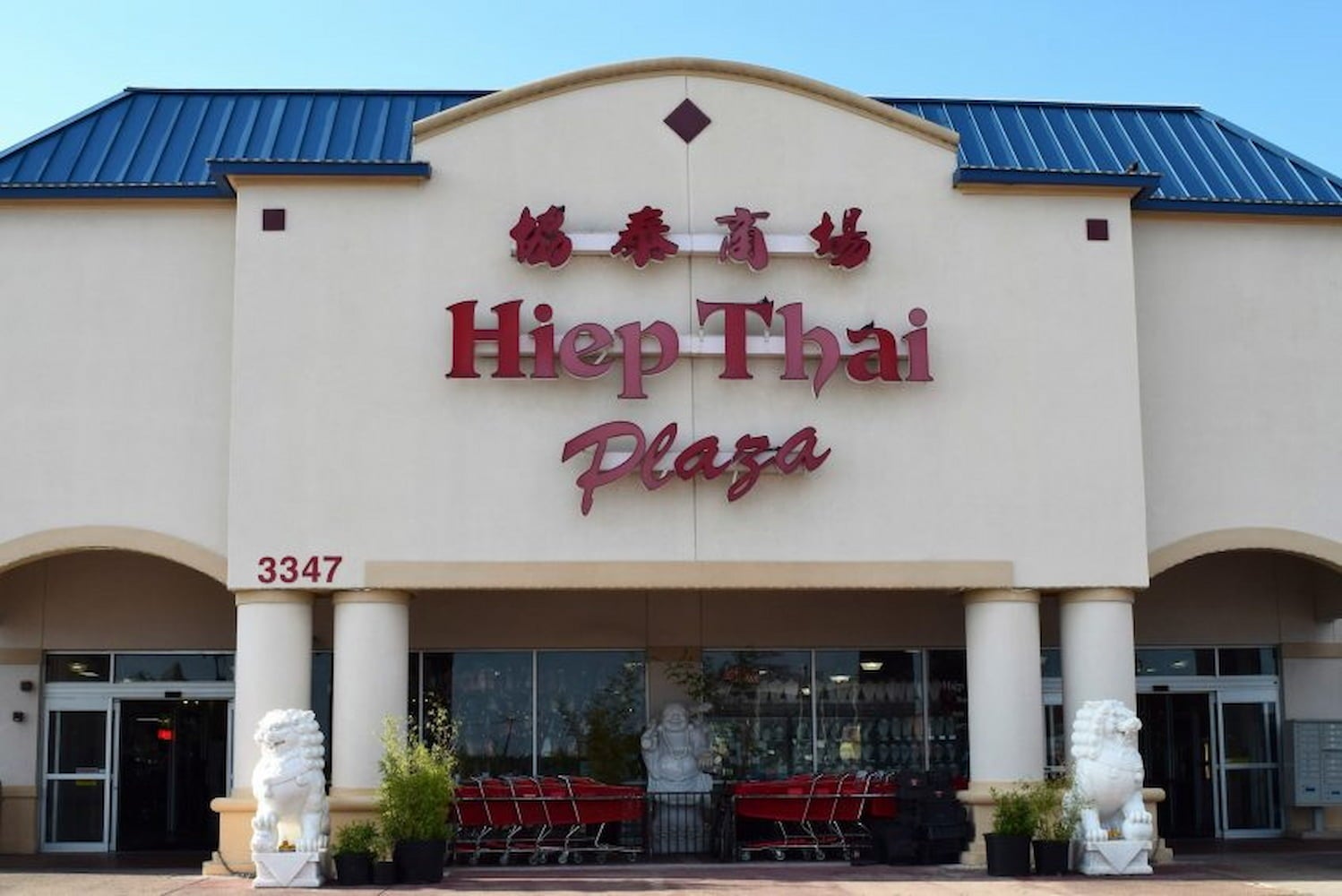
Image 39.01.03 — Hiep Thai Plaza in Garland, Texas, is a bustling shopping center for the Vietnamese community of Dallas.
Small Fishing Towns
The fishing and shrimping industries have long been vital to Texas’s Gulf Coast economy, providing livelihoods for countless families. Vietnamese Americans have played an increasingly prominent role in these sectors, particularly following their migration in the aftermath of the Vietnam War. Arriving in the 1970s and 1980s, many refugees found work in the fishing industry, leveraging skills and knowledge gained from their homeland.
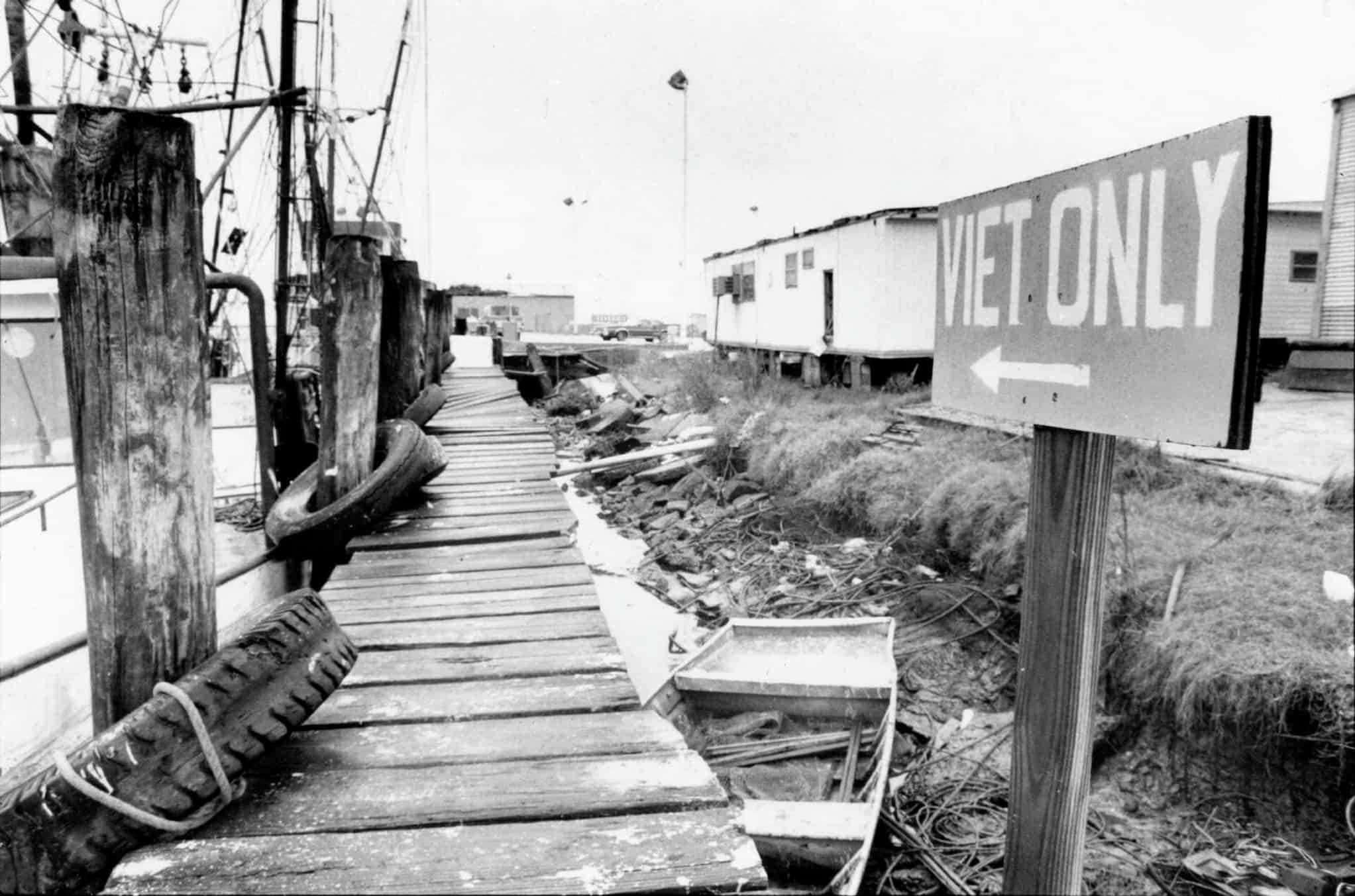
Image 39.01.04 — A fishing boat pier in Port Arthur, Texas, is designated as ‘Viet Only’ c. 1980.
In Vietnam, fishing and aquaculture are integral parts of life, often passed down through generations. This deep-rooted tradition enables many Vietnamese immigrants to transition smoothly into the Gulf’s fisheries. In the late 1970s and early 1980s, Vietnamese American fishermen encountered significant challenges in the local shrimping industry because white fishermen viewed the newcomers as economic competitors. These tensions were exacerbated by cultural misunderstandings and racial prejudices, partly stemming from negative perceptions of Vietnamese people during and after the Vietnam War. As a result, Vietnamese immigrants were often subjected to derogatory terms such as “Viet Cong” and “gook,” reflecting lingering wartime animosities.
Gradually, the situation escalated into violent confrontations. In 1979 in Seadrift, Texas, Billy Joe Aplin, a white crabberman, was in a dispute over crabbing territory with Vietnamese refugees. The altercation turned violent and ultimately resulted in the shooting death of Aplin, leading to further hostilities, including the burning of Vietnamese-owned boats and homes. By 1981 some white fishermen sought assistance from the Ku Klux Klan (KKK), an American far-right and white supremacist group, to intimidate Vietnamese fishermen. The KKK organized rallies and boat parades, displaying weapons and effigies to threaten the Vietnamese community.
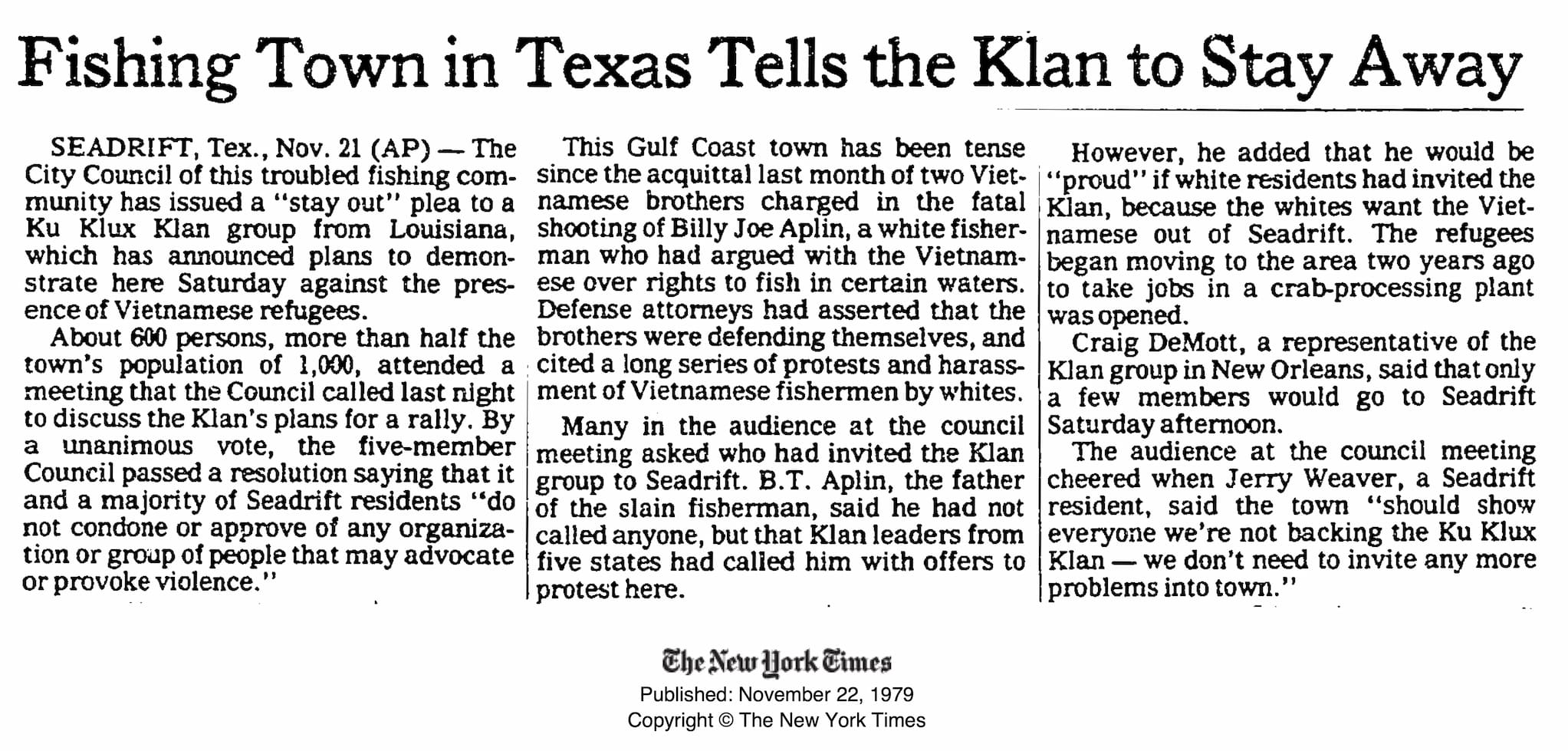
Text 39.01.05 — A New York Times story covers the tensions between Vietnamese refugee fishermen and white fishermen in Seadrift, Texas. While the City Council unanimously voted to condemn a planned Ku Klux Klan rally in the town, some community members welcomed their presence.
In response to these threats, the Vietnamese Fishermen’s Association, supported by the Southern Poverty Law Center, filed a lawsuit against the KKK. The court ruled in favor of the Vietnamese fishermen, issuing an injunction that prohibited the KKK from engaging in acts of violence and intimidation against them. This legal victory allowed Vietnamese fishermen to continue their work without fear of harassment.
Following the lawsuit, Vietnamese American fishermen experienced a period of economic success in the shrimping industry. They expanded their operations, acquired more boats and equipment, and established seafood businesses. By the mid-1990s, however, environmental concerns due to overfishing led the Texas Parks and Wildlife Department to implement measures to reduce shrimping licenses.
This development posed new challenges for Vietnamese fishermen, many of whom lacked alternative employment opportunities due to language barriers and limited skills outside the fishing industry. In addition, competition from seafood imports, beginning in the early 2000s, made it economically difficult to earn a living wage. Shrimp imports from China, Brazil, Thailand, and Vietnam continue to offer more affordable options for American consumers. A majority of Vietnamese shrimpers have now left the industry, and few remain working on the water.
As Vietnamese Americans established themselves in the fishing and shrimping industries, they also began to transform these sectors significantly. Many started their own businesses, such as shrimp processing plants, seafood markets, and seafood restaurants. These enterprises not only created jobs within the Vietnamese community, but also provided employment opportunities for other residents, contributing to the economic growth and cultural creativity of the region and beyond.
One notable example is the emergence of Viet-Cajun cuisine. The fusion of Vietnamese and Cajun culinary traditions led to the creation of seafood boils. Restaurants such as Cajun Kitchen of Houston and Mike’s Seafood of Sugar Land, Texas, were founded by Vietnamese Americans, and they exemplify the best of this fusion with dishes that combine Cajun spices with Vietnamese culinary techniques. The chain known as the “Boiling Crab” was also founded in Seadrift, Texas, and eventually spread across the country, becoming a prominent dining establishment in Southern California’s Vietnamese community.
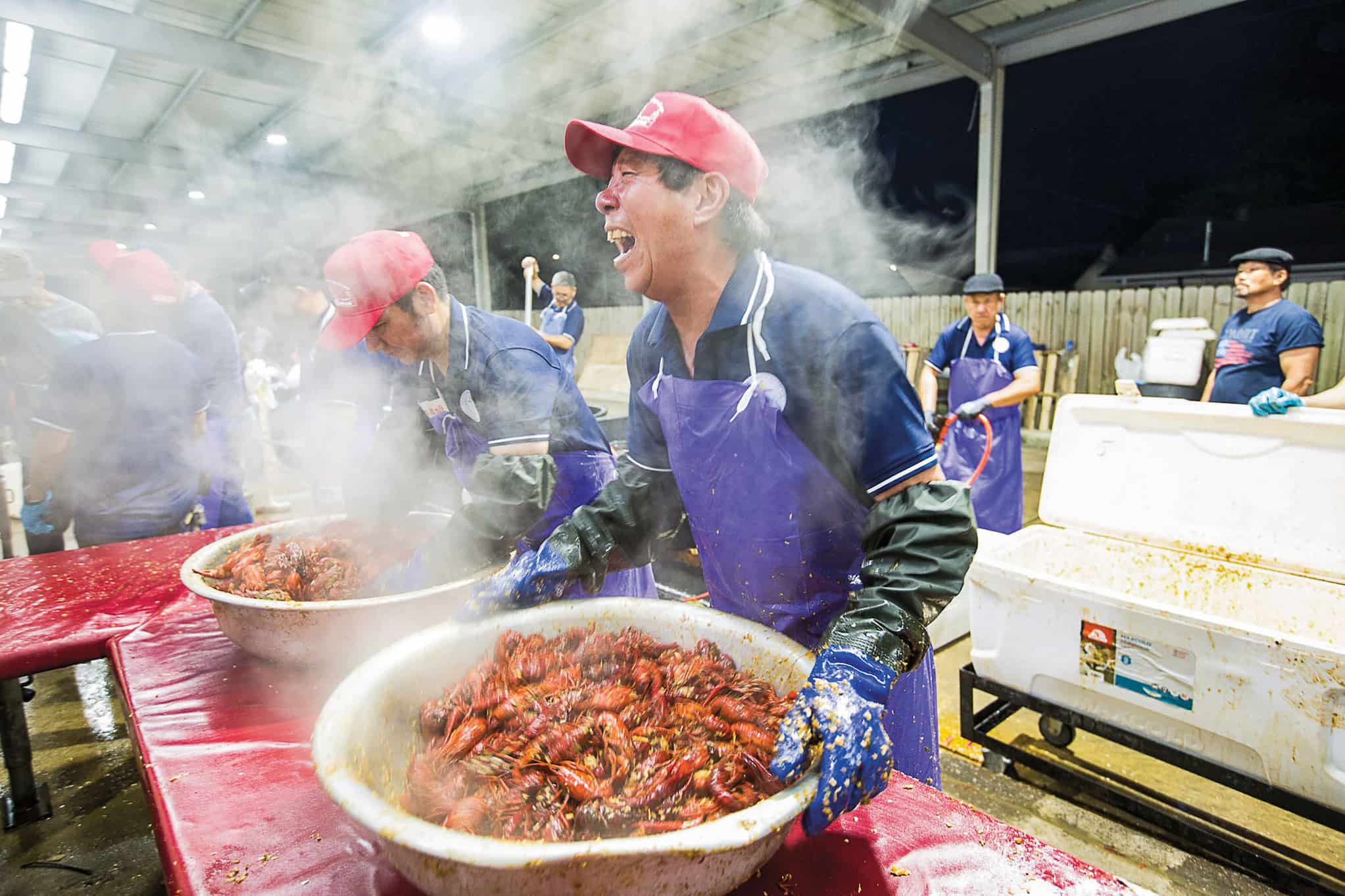
Image 39.01.06 — Chef/Owner Trong Nguyen of Crawfish & Noodles is considered a pioneer of Viet-Cajun cuisine in Houston, Texas. A self-taught chef, Nguyen was a James Beard Award finalist for Best Chef: Texas in 2020, reflecting the cuisine’s important impact on the region.
Challenges Then and Now
Despite their contributions, Vietnamese Americans in Texas have faced various challenges, including discrimination, language barriers, and economic hardships. Environmental issues and disasters were particularly devastating for workers, including those who work in the nail salon industry and those in the fishing and shrimping industries.
Vietnamese Americans in Texas are embedded in the nail salon industry, as they own and operate a majority of the establishments. Workers in these salons, however, often face health risks due to exposure to hazardous and toxic materials. Nail salon products frequently contain chemicals such as toluene, formaldehyde, and dibutyl phthalate, collectively known as the “toxic trio.” Exposure to these substances can lead to various health issues, including respiratory problems, skin disorders, and neurological effects. Additionally, nail technicians are at risk for musculoskeletal problems from repetitive motions and awkward postures.
The US Environmental Protection Agency (EPA), a federal agency responsible for protecting human health and the environment, has initiated workforce programs to educate nail salon workers and protect them from potential chemical hazards and to promote safer workplace practices. EPA Region 6 in Dallas collaborated with local communities to develop guidelines aimed at protecting the health of nail salon workers.
Despite these efforts, challenges persist. Many Vietnamese nail salon workers have limited English proficiency, making it difficult to understand safety guidelines and material safety data sheets, which are often only available in English. Additionally, the prevalence of small, family-owned businesses with language barriers may not always adhere to safety regulations. Community organizations have been instrumental in advocating for the health and safety of Vietnamese nail salon workers. The Asian American Health Coalition in Houston, for example, has collaborated with the EPA to provide training and resources tailored to the Vietnamese community.
Vietnamese American communities also face challenges related to climate catastrophes that impact coastal towns in Southern Texas. Hurricane Katrina devastated New Orleans, Louisiana, in 2005 and prompted a significant influx of evacuees into Houston, Texas. Among them were Vietnamese Americans who had previously established vibrant communities in New Orleans. Houston’s existing Vietnamese population, particularly in areas like Asiatown along Bellaire Boulevard, played a crucial role in welcoming and assisting these newcomers. Community centers like the Hong Kong Mall on Bellaire provided strong social networks within the Vietnamese American community to facilitate the integration of evacuees, providing housing, employment opportunities, and emotional support.
This communal solidarity was instrumental in helping evacuees rebuild their lives in Houston. A large portion of the Vietnamese Americans arriving in Houston migrated to fishing towns along the Texas coast to resume their livelihoods, primarily as shrimpers and fishermen in the Gulf of Mexico. In a short five years, their livelihoods were once again disrupted when the 2010 Deepwater Horizon spill occurred.
The Deepwater Horizon Oil Spill released nearly five million barrels of oil into the Gulf of Mexico, severely affecting marine life and the fishing industry to this day. Vietnamese American fishermen, who relied on these waters for both commercial and personal use, faced significant challenges. They testified before Congress alongside the Southern Shrimp Alliance, seeking federal assistance.
British Petroleum (BP), the company responsible for the spill, established a twenty billion dollar compensation fund managed by the Gulf Coast Claims Facility (GCCF). Many Vietnamese fishermen encountered difficulties accessing these funds, however, due to language barriers and a lack of formal documentation for their subsistence lifestyles, which often involved informal trade and lacked official records.
Community leaders attempted to address these issues by using affidavits and estimating market values for lost seafood, but many claims were still denied. They filed over sixteen thousand claims, but only had enough documentation for a few to be approved. Any further claims had to go through court mediation, a process that was intended to prevent fraud but which also added complexity. Grassroots organizations, legal advocates, and Vietnamese community members continue to fight for fair compensation over a decade after the spill.
Conclusion
The Vietnamese American communities in Texas are multifaceted, weaving together threads of tradition, innovation, and community spirit. From transforming the fishing and shrimping industries to enriching the region’s culinary landscape, they have left an indelible mark on the social and economic life of the Gulf Coast; and the culture, cuisine, and community of Vietnamese Americans continue to shape the identity of this vibrant region. Their story is one of survival, resilience, and growth—a testament to the power of cultural exchange and the enduring spirit of immigrant communities in the United States. An understanding of the contributions of Vietnamese refugees in the Gulf Coast helps to gain insight into the broader narrative of Texas and its multicultural society, where diverse cultures come together to create something greater than the sum of their parts.
Glossary terms in this module
Bellaire Boulevard Where it’s used
A major thoroughfare in Houston, Texas, known for its concentration of Vietnamese-owned businesses and cultural institutions.
Deepwater Horizon Oil Spill Where it’s used
Occurring in April 2010, this was the largest marine oil spill to date and a major environmental disaster, where an explosion on an oil rig caused millions of barrels of oil to spill into the Gulf of Mexico. The oil company British Petroleum (BP) was responsible, and as a result marine life and local industries were severely impacted.
ethnic enclave Where it’s used
A geographical area where an ethnic group is clustered and has formed a community that is socially and economically distinct from the majority group.
Gulf Coast Where it’s used
The southern coastline of the United States, where the coasts of Texas, Louisiana, Mississippi, Alabama, and Florida meet the Gulf of Mexico.
Gulf Coast Claims Facility (GCCF) Where it’s used
A twenty billion dollar fund established by the oil company British Petroleum (BP) to compensate individuals, businesses, and environmental resources affected by the 2010 Deepwater Horizon Oil Spill.
immigrant entrepreneurship Where it’s used
The process by which immigrants establish and operate businesses in their host countries, thereby contributing to economic growth and cultural diversity.
Little Saigon Where it’s used
A nickname for Vietnamese ethnic enclaves in various cities, notably in Houston, Texas, where Vietnamese businesses and cultural centers are concentrated.
refugee Where it’s used
Someone, or a group of people who have been forced to flee their native country due to war, violence, persecution, or natural disaster and are unable or unwilling to return.
shrimping industry Where it’s used
A sector of the fishing industry focused on catching shrimp that is significant in the Gulf Coast economy, and notably influenced by Vietnamese American workers.
toxic trio Where it’s used
A term referring to three hazardous chemicals—toluene, formaldehyde, and dibutyl phthalate—commonly found in nail salon products and associated with health risks.
Viet-Cajun cuisine Where it’s used
A fusion of Vietnamese and Cajun culinary traditions, exemplified by dishes like seafood boils that combine flavors from both cultures.
Vietnam War Where it’s used
A conflict lasting from 1955 to 1975 in Vietnam, Laos, and Cambodia, in which North Vietnam and its Communist allies fought against South Vietnam and its principal ally, the United States.