





Two food service workers, masked and with hair coverings, prepare skewered meat on grill in outdoor tent. Beside them are more food vendors in tents.
Module 3: Places and Spaces
Have Thai Americans found or created a home in the United States?
On the evening of January 28, 1983, residents of North Hollywood, California, gathered at City Hall for a zoning public hearing on Wat Thai of Los Angeles (วัดไทยลอสแองเจลิส). The wat had outgrown its original location, a single-family home in a different neighborhood. Thanks to a large donation from Punsak “Paul” Sosothikul, one of the heirs of a shoe business empire in Thailand, as well as smaller contributions from Thais both in Thailand and the US, the Wat could move to North Hollywood.
However, not everyone in North Hollywood welcomed Wat Thai of Los Angeles. Two months prior, a long-time resident of the neighborhood submitted a complaint to the zoning commissioner, calling the large crowds attending cultural and religious activities at the wat a “nuisance.” Although the leadership tried talking to and addressing the concerns of their neighbors, residents and the zoning board were not moved. Thai Americans and their predominantly white neighbors had conflicting views of suburban life and religious spaces.
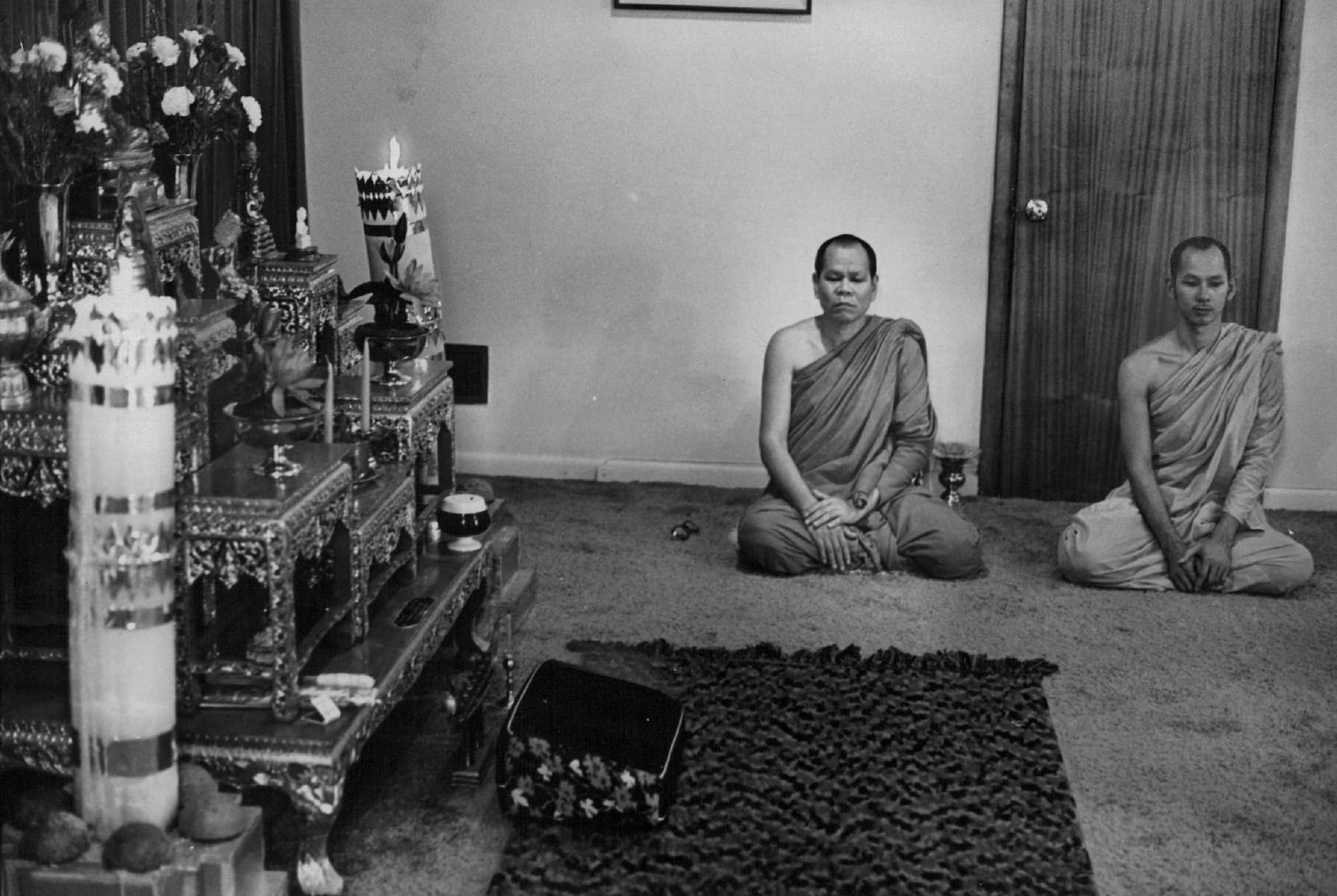
Image 18.03.01 — After the dedication of the new wat in Denver, Colorado in 1976, named Wat Buddhawararam, Phramahasobhin Sopako and Phramahachuan Charitdhammamo were the first two monks assigned to serve religious duties there.
This module is about the importance of the wat and other gathering spaces for the Thai diaspora in the US, and how such spaces connect Thais to each other, to surrounding communities, and to Thais in Thailand. We learn why these community spaces were not always welcome in the suburban neighborhoods in which they were built.
How do Thais find each other, and where do they gather?
What are some examples of Thai American spaces, and how do they help to build community?
What happens when Thai spaces face prejudice from surrounding communities?
Wat Thais in Suburban America
As the Thai population grew rapidly post-1965, it spread from city limits into suburbs. Everywhere Thais settled, they built wats. This was true of the Los Angeles Thai community of the 1970s; Thais were the fastest growing ethnic population in the San Fernando Valley, especially in the area surrounding the newly established Wat Thai in North Hollywood. Wats in the diaspora, whether in the US or elsewhere in the world, typically begin as single-family homes in suburbs.
Once they outgrew the space—or were pushed out by their neighbors—the community collected donations to move into a newer, larger space nearby. This pattern of relocation was common all throughout the US. Thais in Boston, Massachusetts, and Tampa, Florida, for example, built larger wats on rural land outside city limits after the early 2000s.
Wats are a transnational space, where the global meets the local in the following ways:
- First, they connect Thais in diaspora to Thais in Thailand, who support wat construction through donations.
- Second, they connect other Southeast Asian Therevada Buddhists to join Thais in religious and cultural celebrations.
- Third, they are public spaces that Thais use to showcase and teach others about their religion and culture.
Wats were significant hubs for social, religious, and cultural life for Thais, so it is no surprise that once built, wats drew more Thais to move to the area. These wats did not only attract Thais, either. Early Thai wats also served as spiritual and cultural centers for other Theravada Buddhists from Southeast Asia.
Thai, Lao, and Cambodian Buddhists all share the same Pali prayers and similar religious ceremonies and holy days. Thai, Lao, and Cambodian people often convene at wats to celebrate Visakha Puja on the sixth full moon, or the Solar New Year Songkran in April. In fact, Thai, Lao, and Khmer (Cambodian) speakers all use the same word—wat—to refer to Buddhist and Hindu temples.
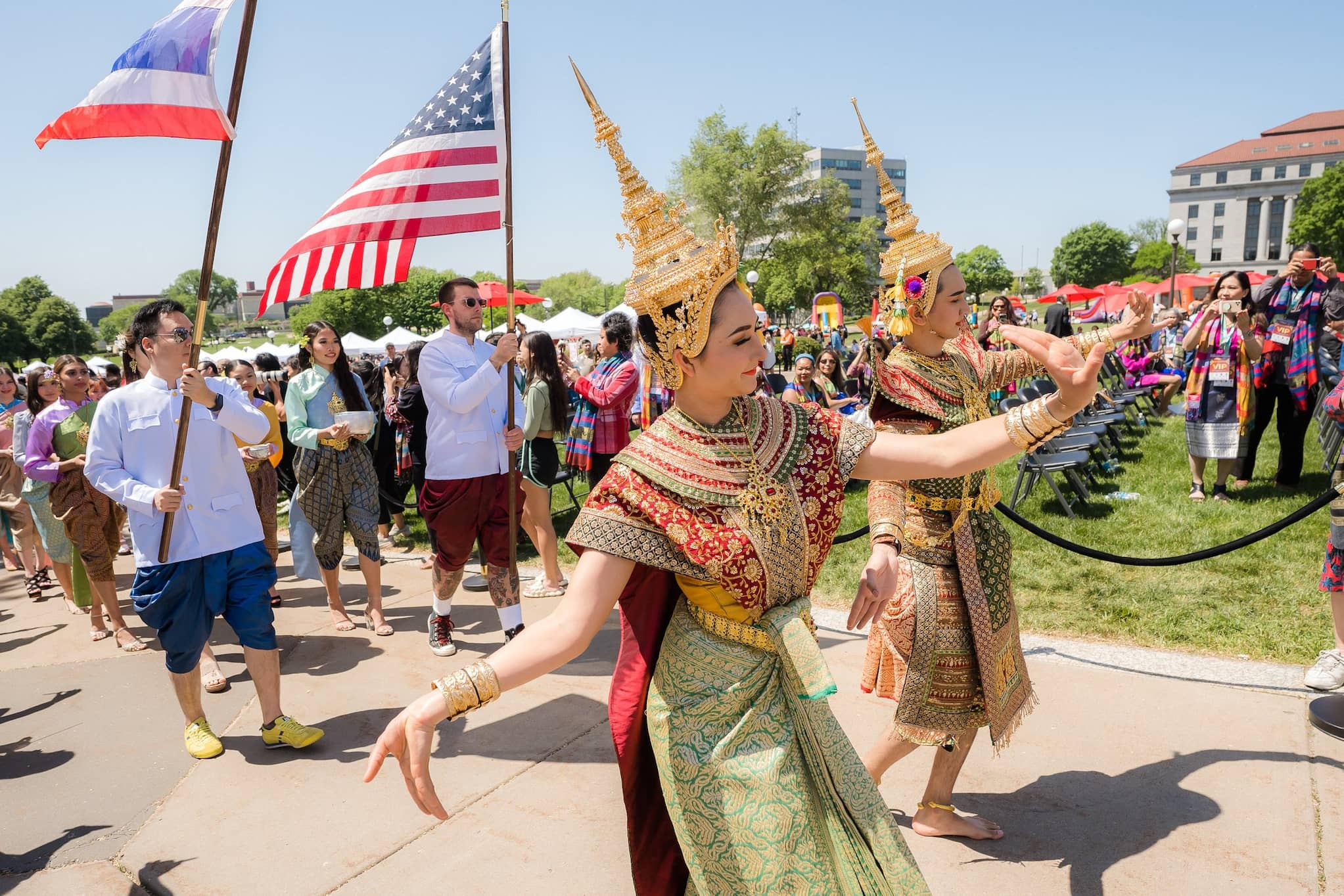
Image 18.03.02 — At the Minnesota Songkran Festival, Thai dancers perform as flags for both the United States and Thailand are marched behind them.
Building Thai wats in the United States was not just a Thai American affair. Thais in Thailand often contributed with donations, as this helped them tham boon, or “make merit.” Merit is one of the fundamental concepts of Theravada Buddhism, and practitioners try to create as much merit as possible within each lifetime. Thai wats in diaspora are thus transnational spaces.
Moreover, other people outside of the Thai community visited Thai wats because of their weekend markets. Thais are aware that their cuisine serves as a main entry point to cultural tolerance and understanding. Most Thai wats in the US have Sunday markets that offer “authentic” Thai food.
Food has been a way for others to learn a bit about Thai culture and see Thais as distinct from other Asians. Many visit Thai wats expecting to have an “inside look” at Thai culture and a taste of “real” Thai food. Ironically, Thai food and the “strong smells” became an area of complaint from the unhappy residents.
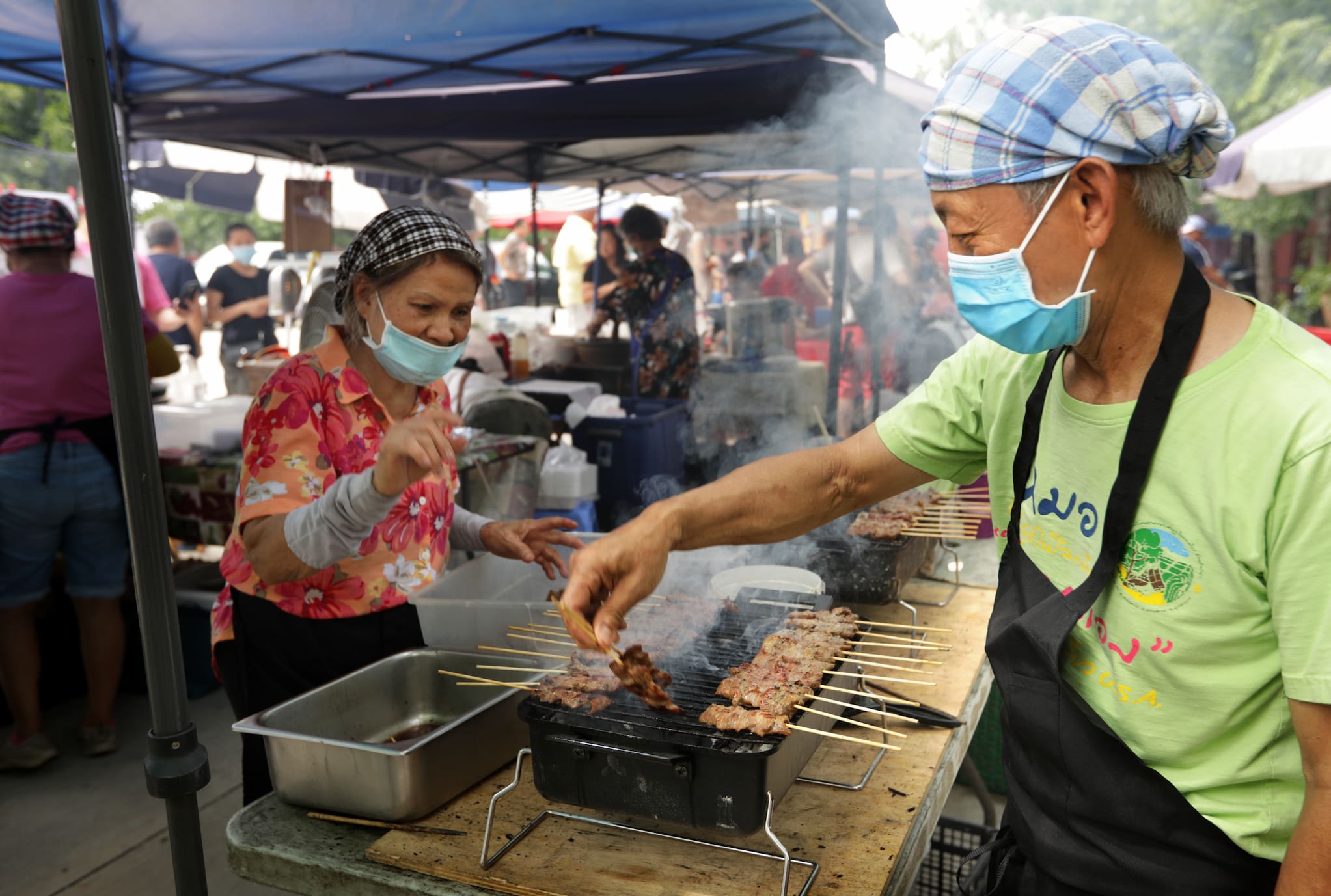
Image 18.03.03a — Every Sunday, the Buddhist Center of Dallas, Texas, hosts a Thai Street Food Market featuring various vendors preparing Thai cuisine.
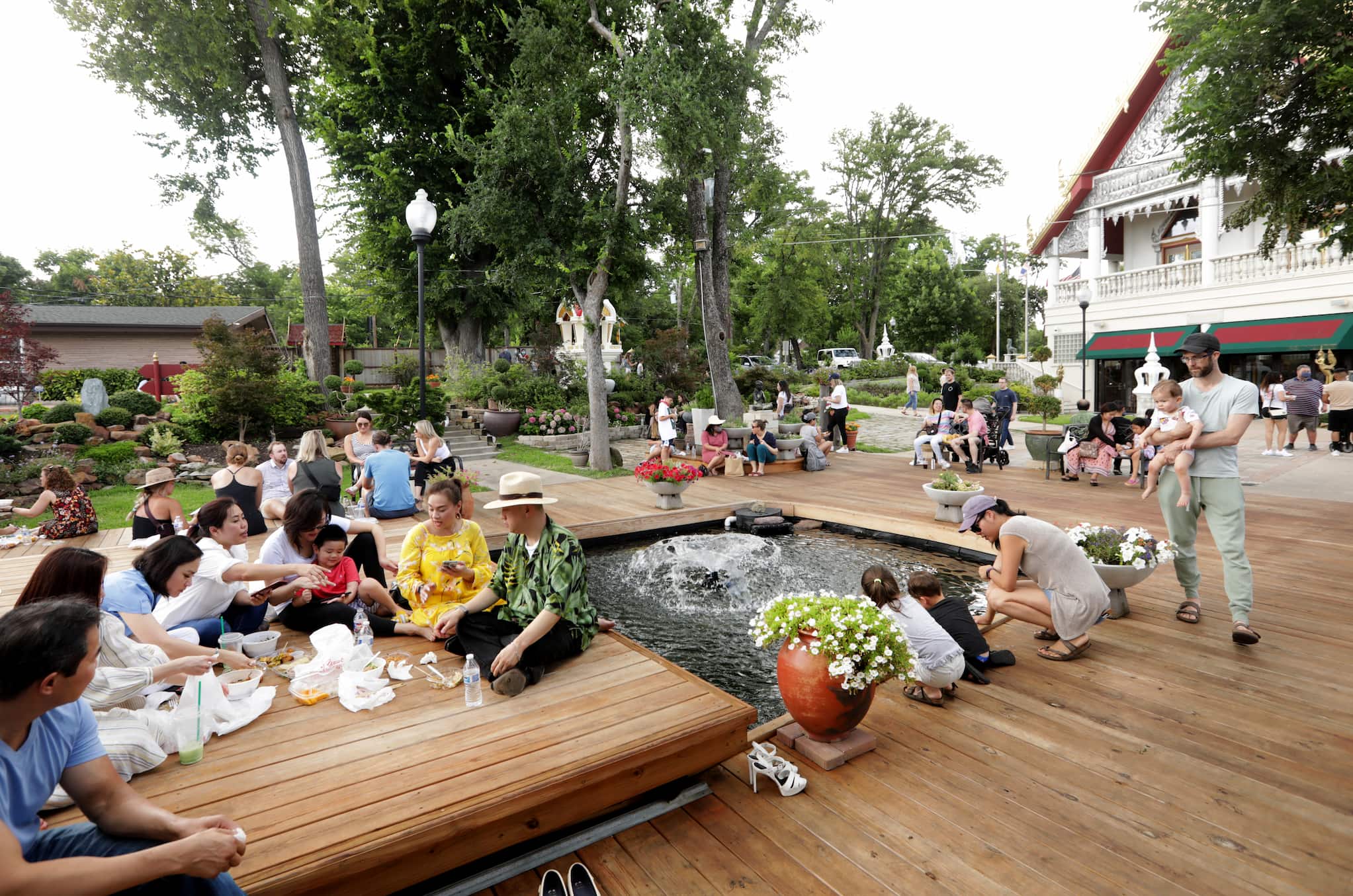
Image 18.03.03b — Community members at the Sunday Thai Street Food Market gather throughout the Buddhist Center of Dallas, Texas, to eat and relax.
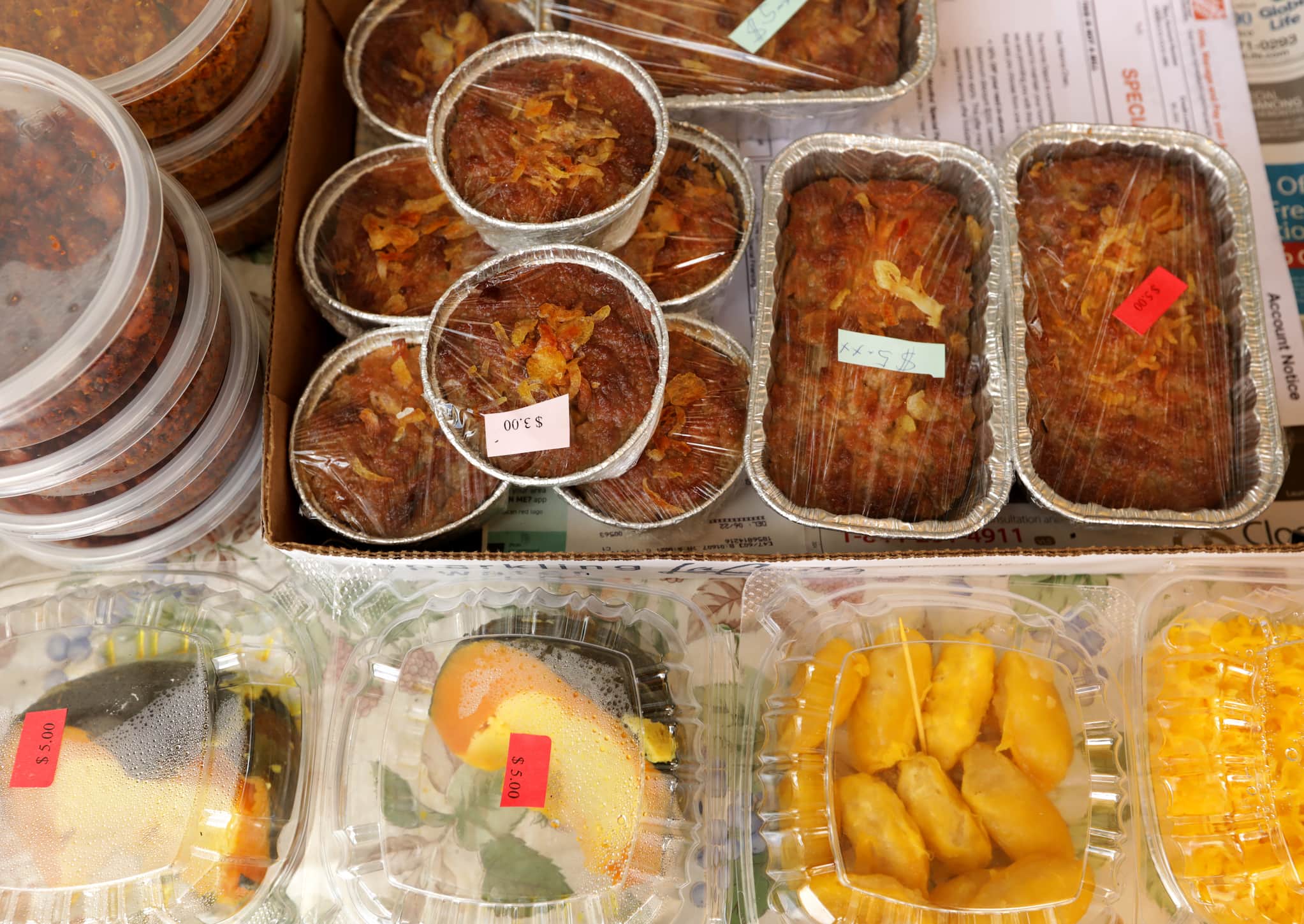
Image 18.03.03c — Various prepared foods on sale at the Sunday Thai Street Food Market.



Zoning and Regulations
North Hollywood was not the only neighborhood that attempted to stop a Thai wat from operating in their neighborhood. In 2008 a predominately white group of residents in Berkeley, California, complained that a Thai wat was a nuisance and lowered their quality of life. Like in North Hollywood, these residents used zoning and regulations language to file their complaints to the city. They also mentioned lack of parking, noise levels, and “strong smells” as reasons to shut down the local wat.
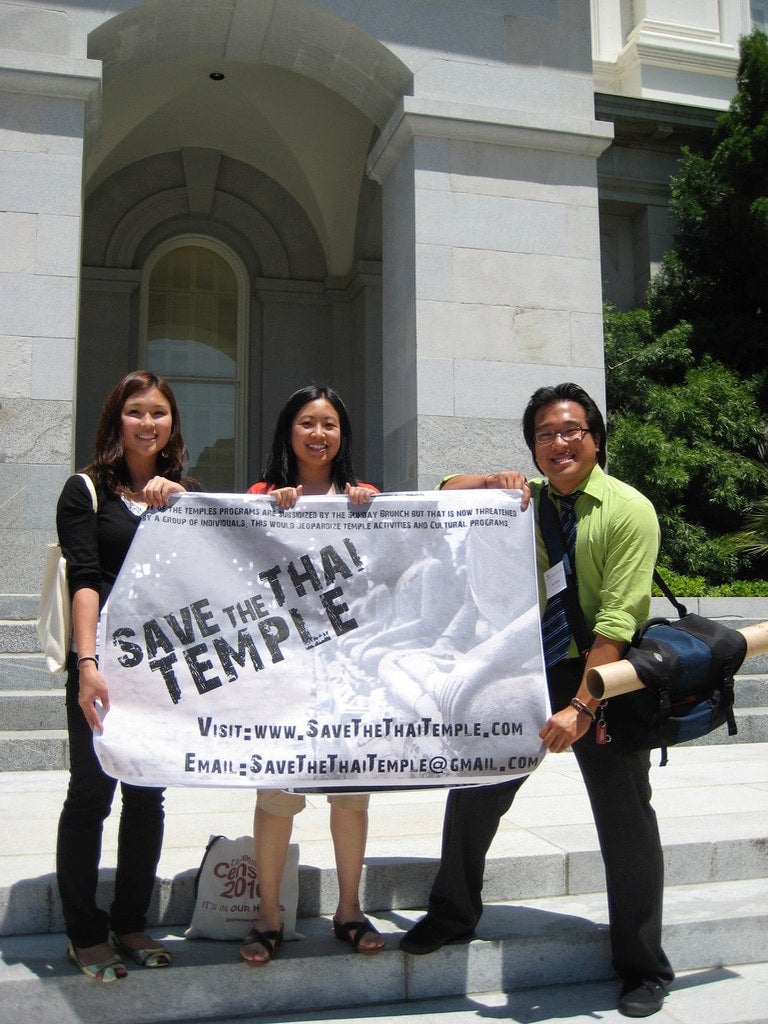
Image 18.03.04 — Thais gather to support Wat Mongkolratanaram when neighbors sought to limit the weekly public brunch.
Residents used language in zoning policy to make their demands seem neutral. They often said they preferred localities that were “low occupancy” and “slow growth,” referring to the rapid influx of multigenerational families of newcomers. Zoning language, however, has never been neutral, especially in suburbs where race and class shape zoning laws. Historically, white landowners influenced policies such as restrictive racial covenants to keep Black people out. Some current laws may seem “common sense,” but regulations are often applied to keep certain communities out.
Historian Mark Padoongpatt studies Thai suburban communities. He observes that tensions grew between Thais and other neighbors because Thai wats function differently than white religious spaces. These residents expected a Buddhist temple to be a quiet place for prayer or meditation. Additionally, many suburban neighborhoods tend to value privately controlled land use over spaces for public use.
For Thais, wats have been the lively, beating hearts of their communities—a place where they can connect with other Thais, hold cultural events, and celebrate holidays together. While wats did also serve as places for prayer and meditation, the crowds they drew in for celebrations, festivals, and other community gatherings put them in the realm of public space. Thai wats threatened suburban values of private, quiet land use.
Wat Schools
As wats grew, so did their transnational role in the Thai diaspora. The first public schools in Thailand were also founded at wats, so it seemed natural to Thais in diaspora to do the same at their local wats. Throughout the 1980s, many wats opened weekend schools.
Wherever they are located, wat schools support Thais in diaspora to connect to “Thainess” and Thailand. At wat schools, Thai American youths learn how to be Thai in diaspora through language, performing arts, and cultural and religious celebrations. Mothers of enrolled students serve as physical links to Thailand and “Thainess” for their children by volunteering as weekend school language teachers, dance teachers, and administrators.
The schools connect Thais in diaspora to Thais in Thailand—and non-Thais to Thais. Additionally, many students are mixed-race with one Thai parent, and a majority of wat schools receive some funding from the Thai Ministry of Foreign Affairs, which is responsible for fostering the relationship between Thailand and other nations.
The performance troupes associated with these schools, too, have transnational roles. They regularly perform at various cultural events as representatives of Thai peoples and cultures. These same students also perform when in Thailand as participants of the many “return to Thailand” trips supported by the Ministry of Foreign Affairs. On these trips, Thai Americans are exposed to Thai culture in a way regular tourists may not be, seeing traditional performances, visiting royal palaces, and meeting with political dignitaries.
“Thainess” was connected to Thais both in the US and in Thailand through these schools and performance troupes. For example, during a 2016 trip for Midwest Thai Americans, the sponsors staged a music battle between students from a Chicago weekend school with students from a nearby local school.
The “battle” was held at the Thai Airways auditorium in Bangkok. After the battle concluded, the judges declared a tie between the two student groups. The symbolic significance of having Thai Americans literally compete with Thais through traditional music, then declaring a tie was quite clear: Thai Americans are just as Thai as the Thais in Thailand.
Today, there are over thirty community-based schools teaching Thai language, dance, and culture across the US.
Spaces of Belonging
Wats are not the only Thai religious spaces in the diaspora. Churches and mosques also offer valuable community spaces where Thais in diaspora can feel a sense of belonging. However, some Thai Christians and Muslims may turn to wats for certain resources.
In Thailand, 5 to 10 percent of Thais practice other religions, making Thai Christians and Muslims a minority. In the United States, their minority status is even more layered. Thai Christians and Muslims are religious minorities within the Thai diaspora. Thais are an underrepresented minority within the Southeast Asian diaspora.
Southeast Asians, in turn, are a minority group within the umbrella category of Asian Americans. Asian Americans are racial minorities in the US. Census data on religious affiliation is collected on a voluntary basis, so it’s difficult to determine the number of Thai Christians and Muslims in the United States.
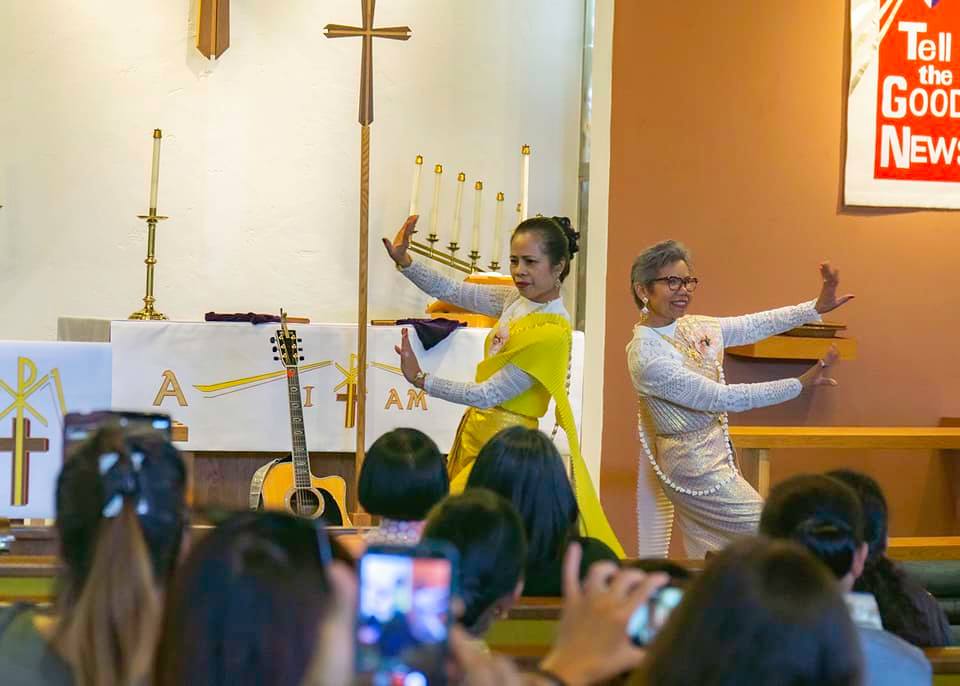
Image 18.03.06 — Congregants perform a Thai style dance to a Thai hymn during Sunday worship at the Thai Christian Church in California.
Despite the lack of such data, Thai churches exist in the United States. They were established later than Thai wats and are much less numerous. In the Chicago metropolitan area, for example, there are five wats, but only two Thai churches. Perhaps it is because Thai Christians can attend existing churches in their area without having to build their own, or perhaps they rarely achieve critical mass to raise the necessary funds to create their own spaces.
Therefore, most Thai congregations in the US share facilities with other congregations, and services are always conducted in both Thai and English. This is the case for the Thai Christian Church of Washington, DC. Despite having a Thai lead pastor, services are both in Thai and English because the congregation meets within an existing church building and shares the space with other congregations. This may change soon since the congregation bought the land in 2017 in the hopes of building their own church.
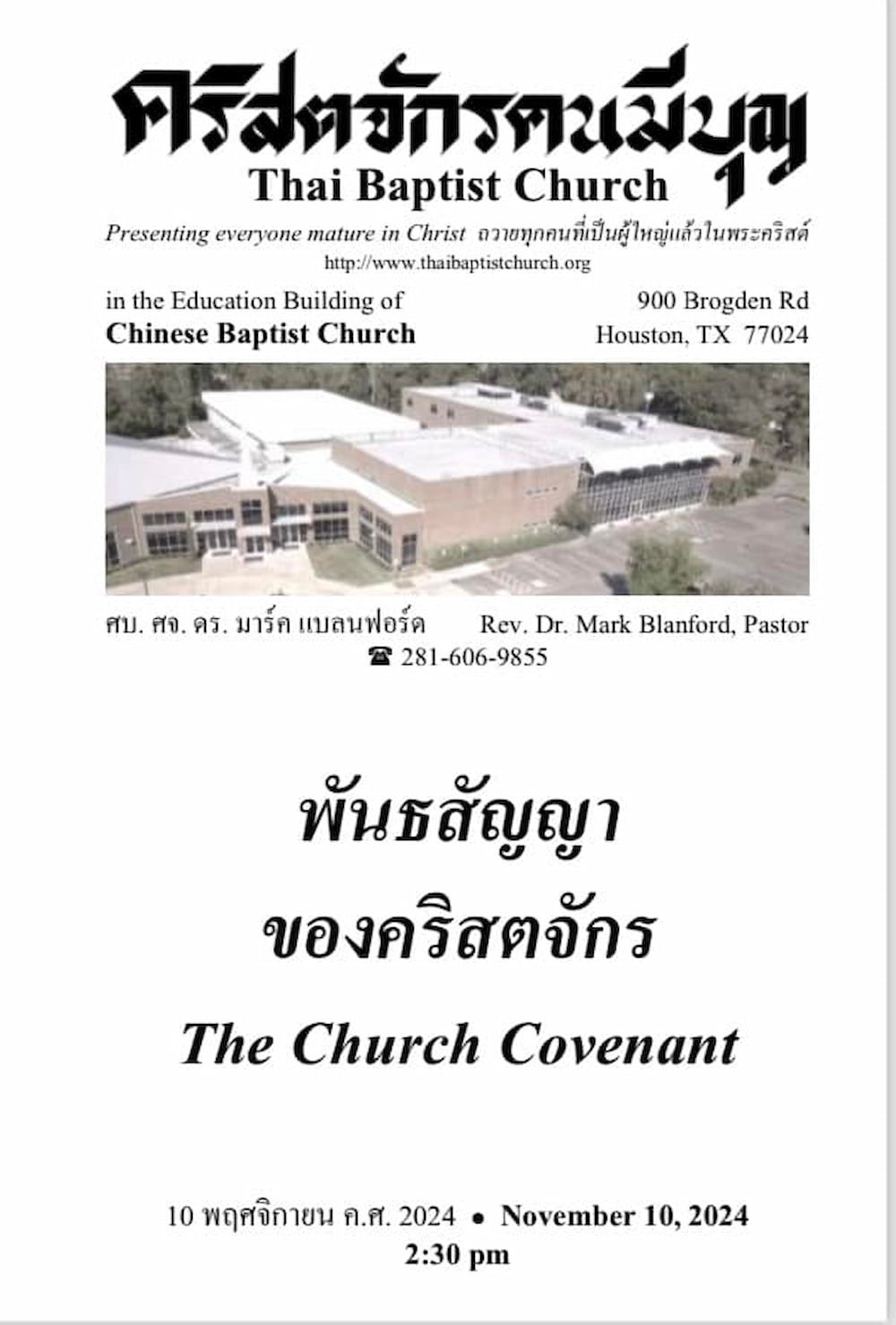
Image 18.03.07 — This invitation from a Thai Baptist church located in Houston, Texas, includes text in both English and Thai. Christians are religious minorities in Thailand. The last Thai census shows that approximately one percent of Thais are Christians.
Only one Thai masjid, or mosque, exists in the US at the time of this writing—Masjid Al-Fatiha of America—and it’s located in Azusa, California. Rahmat and Sukatee Phyakul met in the 1960s at their workplace in Bangkok. Rahmat quickly fell in love with both his future wife and her religion. They arrived in Los Angeles shortly after the passing of the Immigration and Nationality Act of 1965 to pursue their education, and they quickly realized they were, in effect, a minority within a minority of a minority in the US.
Being Muslims in the Thai diaspora meant they were hyper-invisible in the American ethnic landscape, so the couple decided to create their own space and founded the Masjid Al-Fatiha of America in 1998. Today, non-Thais outnumber Thais at the mosque’s prayers and other events, including the multilingual Eid-Al-Fitr to commemorate the end of the Holy Month of Ramadan.
The churches and masjid, like Wat Thais, are transnational spaces where Thais and non-Thais come together for religious observances and cultural celebrations. But unlike the wats, weekend language and culture schools are not a common part of Thai churches or the masjid.
Some Thai Christians and Muslims do enroll their children at the nearby wat schools and even participate in some cultural events there, but not the religious celebrations. Alternatively, some may only attend the weekend markets to enjoy the food and entertainment, while others do not attend any events at the wats at all due to their religious beliefs.
Conclusion
Wats, churches, and masjids are examples of spaces where Thais built a sense of belonging. While Thai community members felt connected to each other, these spaces were a focal point of othering for local residents who had ideas of what—and who—belonged in a suburban neighborhood.
Despite legal cases lodged against them by their neighbors, both the North Hollywood and Berkeley Wat Thais continue their activities, celebrations, and weekend markets. Their success provides a blueprint for how to appease neighbors, navigate zoning regulations, and support the founding of more wats, masjids, and other spaces of belonging.
In the next module, we’ll learn about the complex and diverse ways of being Thai and Thai American within the context of the Asian American ethnic landscape, including how being perceived or not perceived as Asians affect the Thai American communities.
Glossary terms in this module
diaspora Where it’s used
The dispersal, movement, migration, or scattering of a people from their established or ancestral homeland.
Immigration and Nationality Act of 1965 Where it’s used
This act, also known as the Hart-Celler Act, officially ended the era of Asian Exclusion and created an immigration system based on family relationships and job skills. The law significantly changed the demographics of Asian immigrants in the US.
masjid Where it’s used
Also known as “mosque” in English. A place of prayer for Muslims. Thais use the Arabic word “masjid” to refer to what English speakers call a “mosque.”
transnational Where it’s used
Extending or operating across national borders.
wat Where it’s used
“Buddhist temple” in the Thai language.
zoning policy Where it’s used
Local and city laws that regulate how property can be used in certain areas.