





Crowd of people, most of whom wear face masks, gathers outside with signs reading “Justice for Vicha” alongside digital portrait of Ratanapakdee.
Module 4: Unity and Division
Have Thai Americans found or created a home in the United States?
Early on the morning of January 28, 2021, Vicha Ratanapakdee prepared for his daily walk despite his daughter’s insistence that he stay inside due to escalating racially motivated violence targeting elderly Asian Americans during the COVID-19 pandemic. Vicha was keen to regain his strength and stamina after a series of recent heart surgeries and still went out on his walks.
When he did not return at his usual time, his daughter Monthanus called his tablet to check on him. A police officer answered the call and shared that her father had suffered severe trauma and was in the hospital. Vicha died two days later from injuries. His attack was captured by a door camera and nineteen-year-old Antoine Watson was arrested and charged with assault, murder, and elder abuse.
Vicha’s death is often cited as the fuse that lit the #stopasianhate movement. This movement led to multiple rallies and protests across the US in 2021, during a time when various parts of the country were easing shelter-in-place restrictions. Nearly two years after his death on Saturday, October 1, 2022, the City of San Francisco memorialized Vicha’s death by renaming the Sonora Lane staircase where he was killed as Vicha Ratanapakdee Way.

Image 18.04.01a — This portrait of Vicha Ratanapakdee served as a reference photo for several illustrations, posters, and murals created and circulated throughout the Justice for Vicha and #stopasianhate movements following his death in 2021.

Image 18.04.01b — A widely circulated illustration of Vicha Ratanapakdee by Los Angeles-based artist Jonathan Chang.
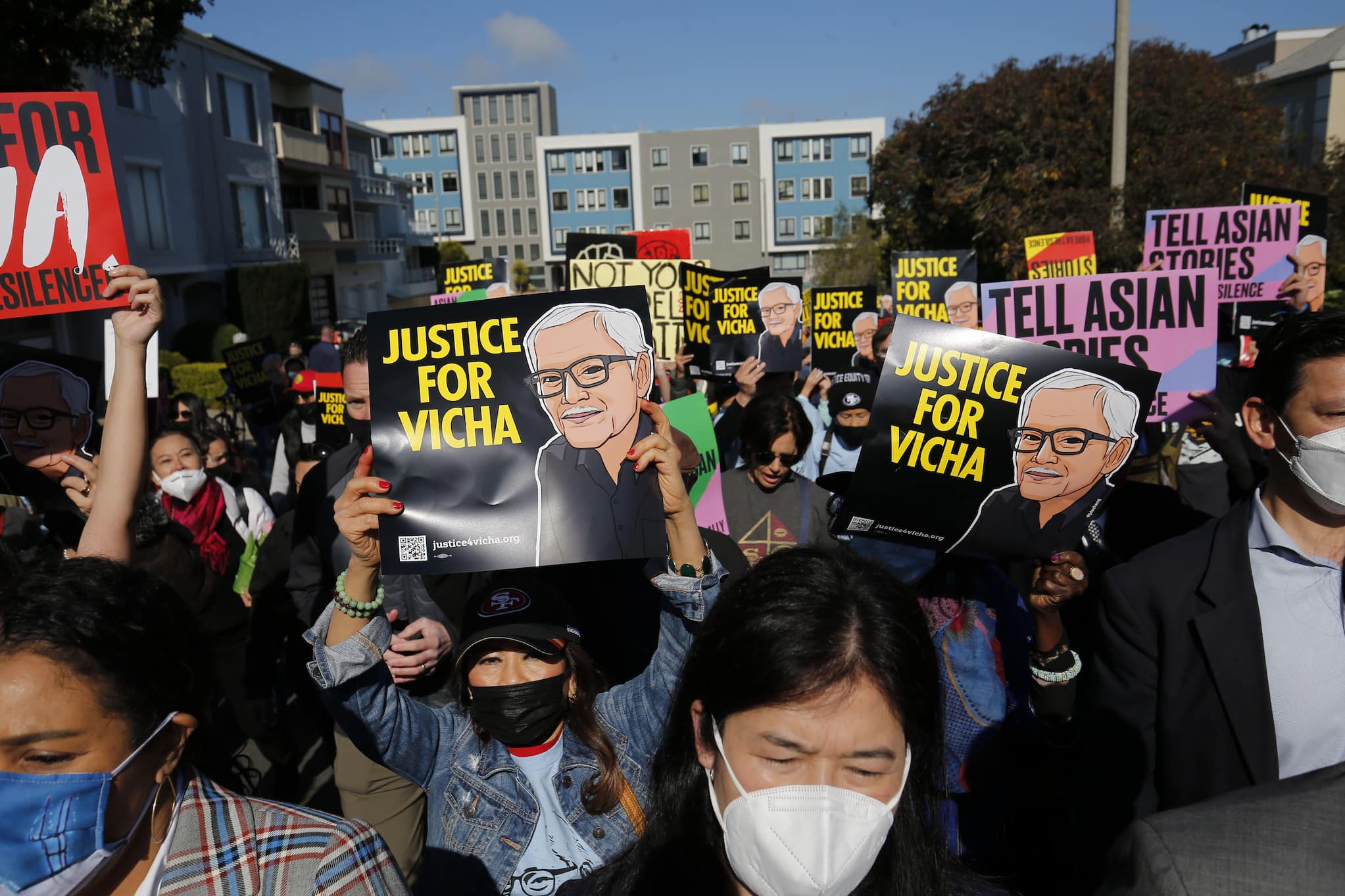
Image 18.04.01c — At a 2022 Asian Justice Rally in San Francisco, California, a crowd holds up signs prominently featuring Chang’s portrait of Vicha, alongside bold text calling for “JUSTICE FOR VICHA.”
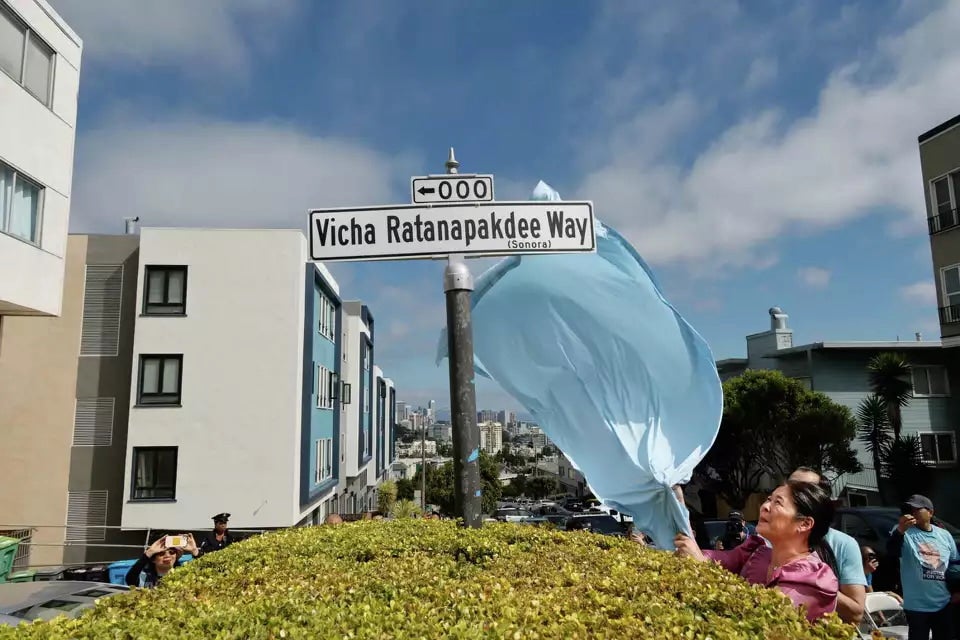
Image 18.04.01d — The newly renamed Vicha Ratanapakdee Way in San Francisco, California, being unveiled by Vicha’s daughter Montanus.




This module considers how Thai Americans do—and do not—fit within a broader Asian American category, and how “Thainess” is a complicated identity in both the diaspora and in Thailand. We will learn how an official definition of “Thainess” was created and fortified in government policies during the twentieth century and how such policies affect those who are not ethnic Thais.
Who was Uncle/Grandpa Vicha, and how did he help to catalyze the #stopasianhate movement?
How does racialization and oppression of Asians affect Thai Americans?
How have Thai Americans contributed to the harmful ideas of “model minorities” and “proximity to whiteness”?
Thais as Asians
Vicha’s family believes that the crime was racially motivated as he died during a time of heightened anti-Asian sentiments and violence, particularly toward the elderly, during the COVID-19 pandemic. Several studies, including those from the Pew Research Center and the Center for the Study of Hate and Extremism, reported an exponential increase in anti-Asian hate crimes, especially in areas with higher Asian populations, such as in San Francisco and New York.
At no point was Vicha’s death presented or thought to be anti-Thai. The Thai government, of course, saw things differently, and on February 3, 2021, the Thai Ministry of Foreign Affairs issued a travel advisory for Thais travelling to the US, citing Vicha’s attack as an example of increased danger toward Thai nationals.
The discourse at the anti-Asian protest that Vicha’s death triggered quickly shifted toward the more politically entangled anti-Chinese sentiments, fueled by then President Trump who repeatedly referred to the coronavirus as “The Chinese Virus.” Attempts to criticize the administration’s nomenclature as racist or racially motivated by the American media, diplomatic corps, Chinese officials, and Asian Americans were met with objection and denial.
That the death of a Thai elder was the match that lit the flame of protests did not make Thai Americans more visible within the Asian American landscapes. Rather, Vicha became Asian in his death, his Thainess almost entirely subsumed in the #stopasianhate movement and protests as one of the many examples of anti-Asian violence.
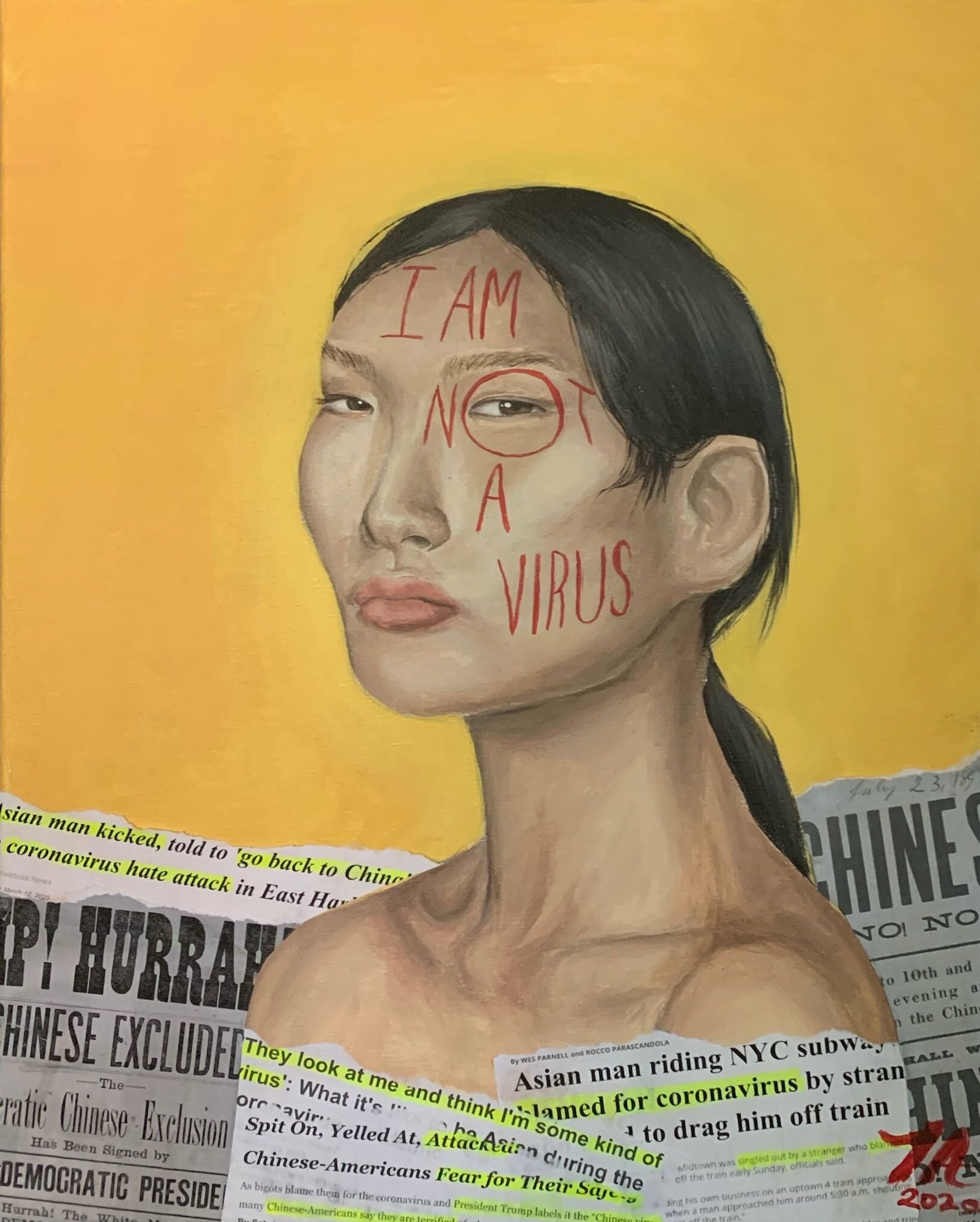
Image 18.04.02 — Thai American artist Tarina Amaralikit created this artwork during the #stopasianhate movement. The piece won the top prize for Mixed Media at the 2020 Maryland’s 6th District Congressional Art Competition.
People who self-identify as Asian Americans may not be perceived or categorized as “Asians” by others. Geographically, the continent of Asia includes forty-eight countries. So, what does it mean to define Thais as Asians or Asian Americans?
A quick internet search shows that stereotypes about Thailand and Thai people are paradoxical. Thais and Thailand are associated with pristine beaches, beautiful temples, and majestic elephants, as well as sex workers, ladyboys (pejorative term for trans women), and wild Full Moon Parties. Depictions in movies, such as The Beach (2000) and Hangover 2 (2011), and the song “One Night in Bangkok” (1984) confirm the research results.
Associations of Thais and Thailand with wild parties and sex workers can be traced back to the Vietnam War, when Thailand served as the official rest and relaxation site for the US armed forces. The Bangkok redlight districts, where bars and sex workers were concentrated, were the Thai government’s attempts to contain unruly American soldiers who were on leave to a specific area in the city in hopes of limiting their contact with Thais. When the soldiers returned to the US, they brought with them their stories and impressions of Thailand, which were based on these designated party zones.
The soldiers also brought their appetite for Thai food back with them to the US. Thais use food to create visibility within the American ethnic landscape and imagination, differentiating themselves from other types of Asians. Visibility outside of food is more complicated. Thais must take extra steps to intentionally label themselves as Thai, or they will be absorbed into the monolith category of Asian, which is what happened with Vicha after his death.
Even gaining visibility within the US Census, a platform that specifically seeks to categorize Americans, is a two-step process. Thais must first identify themselves as “Other Asian,” then write in “Thai” in the space provided, lest they get lumped into the “Other Asian” group. Reporting oneself as Thai in the US Census is a complicated process.
Diversity in the Diaspora
The latest reports show that there are more than seventy ethnic groups and more than seventy living languages being spoken within the political borders of the Kingdom of Thailand. Though the level of diversity in the diaspora is likely not comparable to that of Thailand, it’s reasonable to assume that Thai Americans come from various linguistic, cultural, and ethnic backgrounds.
Recall that many early Thai American organizations were formed based on regional affiliations. Most notably, there were and are no regional organizations in the US for Thais from the Central Plains. This is because they have always been, and continue to be, the most numerous group in the diaspora. Additionally, they were the ones who benefitted the most from the skill preference in the Immigration and Nationality Act of 1965.
At the time of the law’s passing, all but one university was located in the Central Plains, giving Thais from that region an advantage over those from elsewhere to meet the skill preference for US entry. Not only that, they also enjoy a privileged position within the Thai American landscape. Central Thai dominance was particularly apparent during the 2010 Census outreach campaign.
Just three miles from Wat Thai Los Angeles sits another temple that serves Buddhists from Thailand, but it was founded many years later. The signs at the entryway and on temple grounds at the Mon Temple of Los Angeles show three languages: Mon, Thai, and English.
Mon (มอญ) is one of the many languages of Thailand. Thai and Mon are not mutually intelligible, meaning that Mon speakers cannot understand Thai, and Thai speakers cannot understand Mon. Historical records show that the Mons fled war to settle in what is now Thailand at least two centuries ago, mostly in provinces west and north of the capital, Bangkok. Their distinct culture and way of dress are depicted in several Buddhist temple murals from that era.
Nevertheless, when time came to encourage participation in the 2010 Census, the Thai Complete Count campaign, a group of community advocates, set up a booth at one of the cultural events held at the Los Angeles Mon Temple. Passersby were lured to the 10×10 tent by giveaways with 2010 branding. Once there, volunteers encouraged them to identify themselves as Thai on the Census, using the two steps outlined above.
When asked why the attendees should claim to be Thai when they were in fact ethnic Mon and had purposefully made efforts to attend a Mon event, volunteers echoed the 1940s’ nationalist sentiment that “we were all Thais.” Similar outreach efforts were repeated at other cultural and religious events throughout the US.
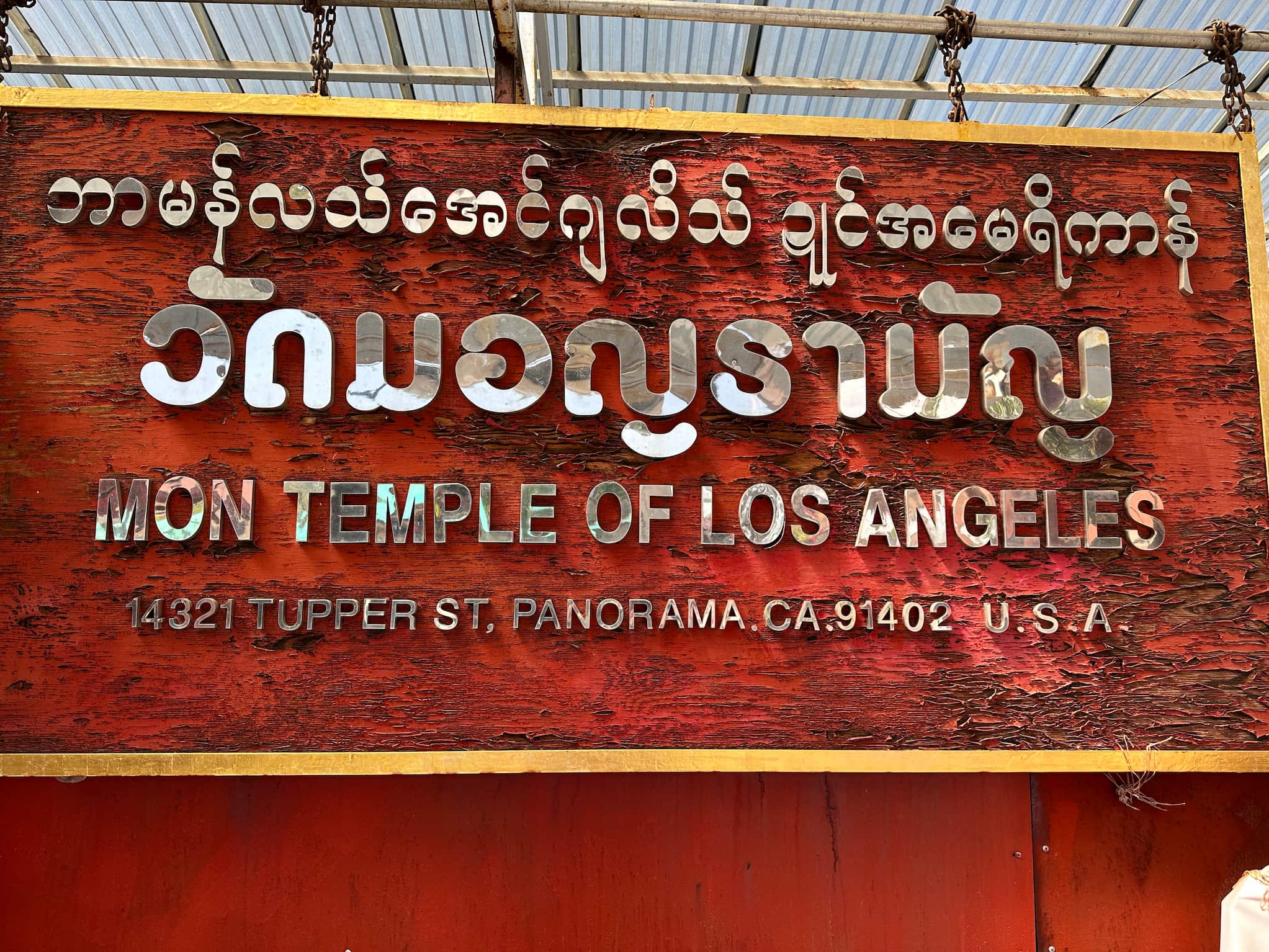
Image 18.04.03 — A sign at Mon Temple of Los Angeles in Thai, English, and Mon.
To further complicate the matter of being counted as “Thai” in the US, the Census conflates the Thai language with the Lao language in their data. The two languages do share a level of intelligibility, like Spanish and Portuguese, in that Thai and Lao speakers would be able to understand each other with some effort. But the linguistic situation in Thailand is much more complicated. Interestingly, there are three times more ethnic Lao and speakers of the Lao language in Thailand than there are in the country of Laos, located on the eastern side of the Mekhong River (แม่น้ำโขง).
Also, on the Thai side of the Mekhong River are over one million Khmer (เขมร) speakers who were historically part of the same empire as those in Cambodia. The Khmer ethnic and linguistic identity remain a strong part of those living in the provinces bordering Cambodia. Farther south, over one million speakers of Malay, who were historically part of the same Sultanate, live along the borders of Thailand and Malaysia. Malays are the ethnic majority in the southernmost provinces of Thailand and are also overwhelmingly Muslims.
Language and Identity
Muslims form a significant part of the population in Northern and Central Thailand too, though their linguistic, religious, and ethnic lineage differ from those in the South. Along the northern and western mountainous regions bordering Laos and Myanmar live millions of people from the Karen, Hmong, Lahu, Akha, and many other ethnic groups who do not share cultural or linguistic practices with the Thai ethnic majority in the Central Plains.
Meanwhile, people with Chinese ancestry have been continuously emigrating to the area now called Thailand for the past several hundred years. These people form the ethnic majority in many pockets of the capital city Bangkok and other urban centers. Their Chineseness, along with other linguistic and ethnic customs, were banned from being expressed under the same repressive policies in the 1940s. And similar to how Thainess is subsumed by Asianness in the US, Chineseness, along with many other ethnicities, were forced under the umbrella of Thainess in Thailand.
As Bui Porntip said during the 1988 Miss Universe Pageant, “You don’t have to live in Thailand to be Thai.” Conversely, simply living in Thailand, having family from Thailand, or speaking Thai also does not make someone Thai. What is a Thai person? How does this understanding of Thainess translate in the US diaspora where, as was the case with Vicha’s death, even the dominant version of Thainess is not particularly visible? And, what happens to already invisible peoples in Thailand after they leave the country to build a home elsewhere? There is no easy answer to any of these questions, and one would receive a wide range of answers depending on each person’s perspective.
End of Siam, Start of Thailand
In the Thai diaspora, mainstream Thainess aligns with the Thai nationalistic ideals built by twentieth-century military regimes. Thainess, itself, began abruptly on June 24, 1939, when the Phibunsongkhram military government rebranded the Kingdom of Siam as Thailand and declared all people living within her borders as Thai. The declaration legally banned naming ethnic groups in all contexts and specifically ordered Thais to stop identifying themselves along ethnic, religious, and/or regional lines, despite great linguistic, cultural, and ethnic diversity among the population.
One year later, the regime declared the Central Thai dialect the national language and banned the use of other dialects and languages in schools and other official contexts. When Phibunsongkhram was overthrown in 1957 by a pro-monarchy regime, Thainess was defined by a trinity created by the last absolute monarch, King Vajiravudh, or Rama VI. The three pillars of Thainess became Nation, Religion, and King.
During his short reign between 1910 and 1925, Rama VI wrote several scathing essays that persecuted ethnic Chinese living in the kingdom at the time, describing them as the “Jews of the Orient.” 1 Less than two decades later, all “Thais” were required to have Thai names as part of the nation-building agenda of the pre-World War II military rule. Those with non-Thai names could not apply for government jobs, and Chinese schools were closed and accused of being breeding grounds for Communists.
Thai Americans and Civic Engagement
What happens when Thais move to a more powerful nation like the US? The first generation of Thais, the pioneer group who emigrated to the US between 1945 and the 1970s, often assumed they would return to Thailand after a few years abroad, and they were not welcomed or eligible to fully participate in American society. According to the latest US Census report, Asian Americans are the fastest-growing racial group and had the largest increase in the number of eligible voters for the 2020 election.
The 2019 American Community Survey reports 76 percent of self-identified Thais were foreign-born and, of those, over half are US citizens who are eligible to vote. However, voter registration and participation are still understood to be low within the Thai communities.
One can catch glimpses of Thai American civic participation through their engagement, or lack thereof, with various political issues. During the Black Lives Matter (BLM) protests of 2020, for example, a group of Thais and Thai Americans collaborated to translate the Letter for Black Lives into Thai. Voice of America Thai edition, a state-run news agency founded as part of the US Office of War Information in 1942, did a two-part feature on Thai views and involvement within the BLM movement, interviewing prominent Thai American community leaders, scholars, and those who participated in the protests.
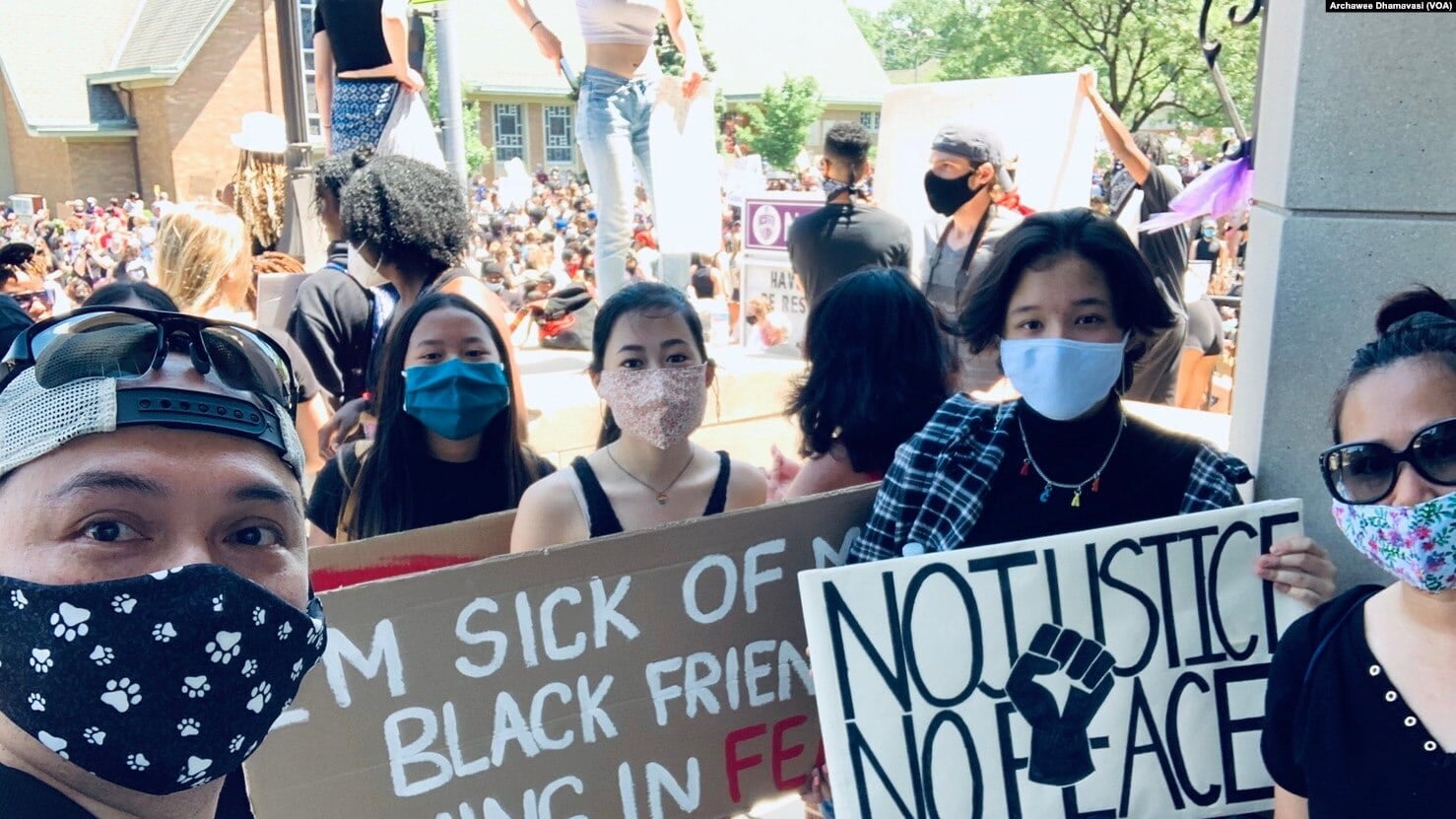
Image 18.04.04 — Thai Americans were among the many groups who participated in Black Lives Matter rallies. US-born Thais are more likely to participate in political protests and events than Thais that emigrated to the US whose political involvement and philanthropic work are focused on Thailand.
Social media comments on the news piece from both the diaspora and from Thailand were overwhelmingly negative. Many commenters perpetuated the same anti-Black sentiments that BLM founders were fighting. Comments from Thais in the US expressed negative views toward Thais who participated in the protests as not having “minded their own business,” implying that racial tensions in the US did not affect Thai Americans.
Some even went as far as branding Thai American protestors as ingrates, or at the very least impolite guests, who are protesting their host and benefactor, though details on the benefits Thai Americans have received were not provided. The latter sentiment echoes the “forever foreigner” or “perpetual foreigner” stereotype.
Thai American engagement, unsurprisingly, was stronger in the #stopasianhate movement and protests, presumably because of Vicha’s death. Vigils were held at several Thai communities, and Thai Americans came together to tham boon and to pray for Vicha in wats and churches. But the level of engagement did not translate into widespread solidarity, coalition, or participation in other race-related issues or protests. Lack of participation may not be entirely due to political apathy.
Many Thais in the US have precarious legal status. Consequently, the participation in protests, and possible legal consequences of such participation, may have threatened their lives in more immediate and concrete ways than institutional racism and anti-Asian sentiments.
Conclusion
There are just as many ways to be Thai as there are ways to be American. Though constructed for nationalist means by a military regime in the 1940s, Thainess has come to have its own meaning, both in Thailand and in the diaspora.
In Thailand, Thainess has historically meant the suppression of all other cultures, while in the US, Thainess means learning the Thai language, Thai performing arts, and practicing one’s religion in a Thai way, however that is defined. Being Thai in the US also means being Asian and all that comes with it, whether good or bad.
In the next module, we learn how a new generation of Thai Americans are defining Thainess for themselves, for their communities, and in the media.
Glossary terms in this module
diaspora Where it’s used
The dispersal, movement, migration, or scattering of a people from their established or ancestral homeland.
Immigration and Nationality Act of 1965 Where it’s used
This act, also known as the Hart-Celler Act, officially ended the era of Asian Exclusion and created an immigration system based on family relationships and job skills. The law significantly changed the demographics of Asian immigrants in the US.
nationalist Where it’s used
The attitude of having a strong attachment and loyalty to a nation. In some cases, nationalist sentiments can seek to erase the experiences of minority ethnic groups under the purpose of unity.
wat Where it’s used
“Buddhist temple” in the Thai language.
Endnotes
1 Wasana Wongsurawat, “Beyond Jews of the Orient: A New Interpretation of the Problematic Relationship between the Thai State and Its Ethnic Chinese Community,” Positions: Asia Critique 24, no. 2 (2016): 555.