





Vincent Chin, a Chinese American man wearing a printed tie and black suit jacket, crouches in front row of group photo with similarly dressed friends.
Module 1: Who Was Vincent Chin?
Did the killing of Vincent Chin and the activism it sparked change what it means to be Asian American?
On the warm summer evening of June 19, 1982, at a Chinese restaurant just north of Detroit, Michigan, Vincent Chin, a dapper waiter, cheerfully bid his coworkers a good night. The twenty seven year old said that his friends were picking him up to celebrate his last days as a bachelor. They would all be there for his wedding day, only nine days later, along with everyone he and his family knew—more than four hundred guests.
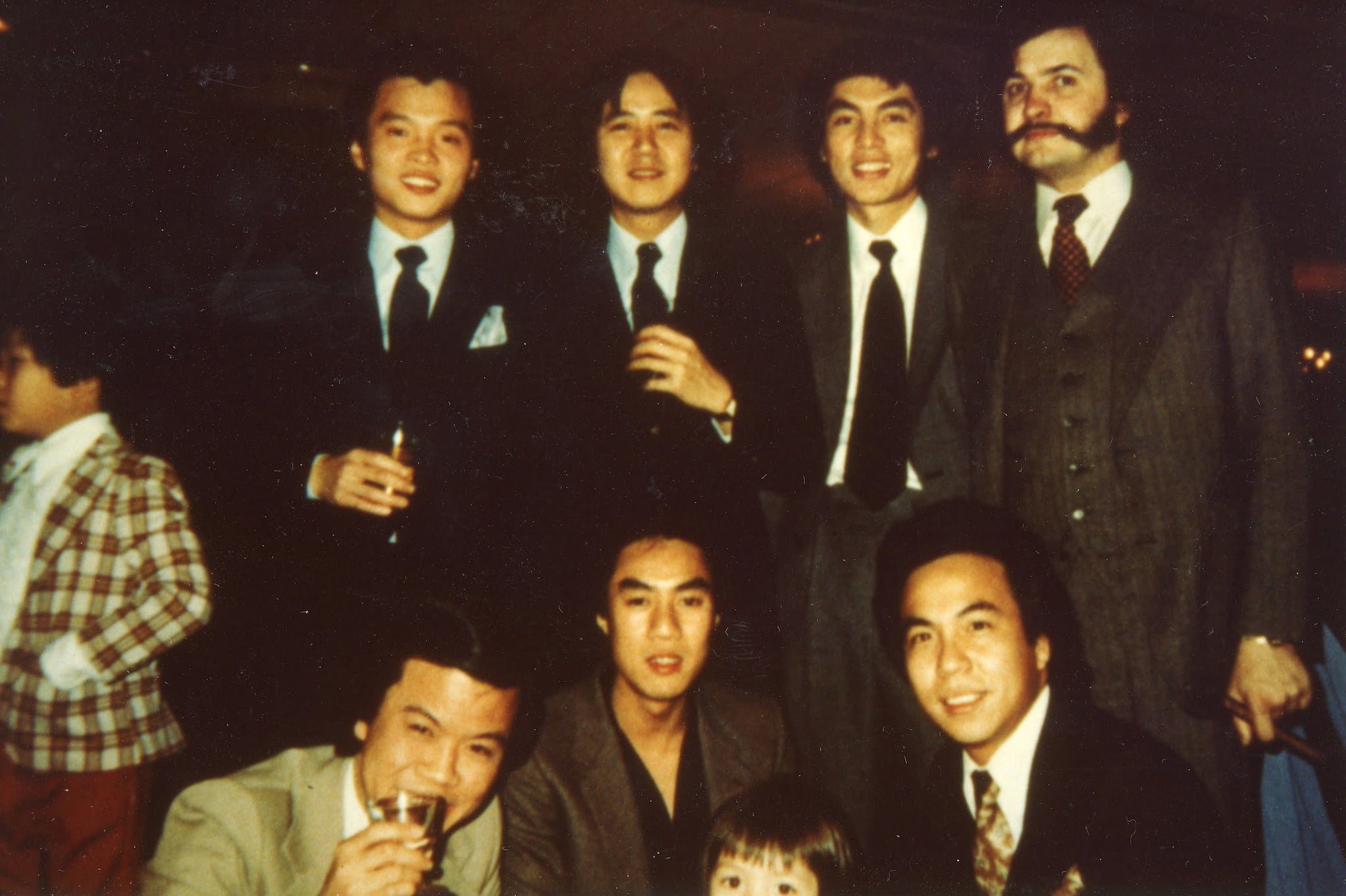
Image 43.01.01 — Vincent Chin (first row, far right) became a confident and well-liked young man who had many friends, as shown in this photo taken at one of the many celebrations in the close-knit Chinatown-based community of Detroit.
That day that had begun so bright with promise would end in a terrible tragedy: murder. No one imagined that Vincent Chin’s name would become a rallying cry and a symbol for decades to come, or that Asian Americans would launch a movement for social justice because of what happened to him. His story would live on, long after his untimely death.
This module is an overview of who Vincent Chin was, how and why he was murdered, and the social justice movement that was launched among Asian Americans due to the unjust outcome in the courts.
Who was Vincent Chin, and what happened to him in June 1982?
How did law enforcement and the court system treat Vincent Chin and the men who attacked him?
Why did the Asian American community become angry over injustice for Vincent Chin?
Being Asian in America or Becoming Asian American
Vincent’s life growing up in the Detroit area was strikingly similar to many other Chinese immigrant families, at a time in the latter twentieth century when two out of three Chinese and Asians in the US were immigrants born outside of the country. Vincent’s mother Lily King Fong Yu and father David C. W. Hing Chin were from the Guangdong province in southern China, the region from which many other Chinese Americans of the exclusion era originated.
David C. W. Hing Chin migrated from China, in 1922, at the age of seventeen, settling in Detroit. In those days, Chinese women were largely prohibited from immigrating to the US because of discriminatory immigration laws during the exclusion era. But Vincent’s father had been one of the eighteen thousand Chinese American GIs in the US Army during World War II, and the federal government changed exclusionary immigration policy to allow veterans to become naturalized US citizens and to bring “war brides” from China to the US.
David went to his home province of Guangdong, where he met Lily King Fong Yu, a smart, attractive twenty seven year old from Kaiping, which was located near Taishan, where David was from. Because David and Lily were from the same region in China, they spoke the same Chinese dialect and shared the culture of southern China. Lily agreed to marry the Chinese American GI, and the couple began life together in Michigan in 1948.
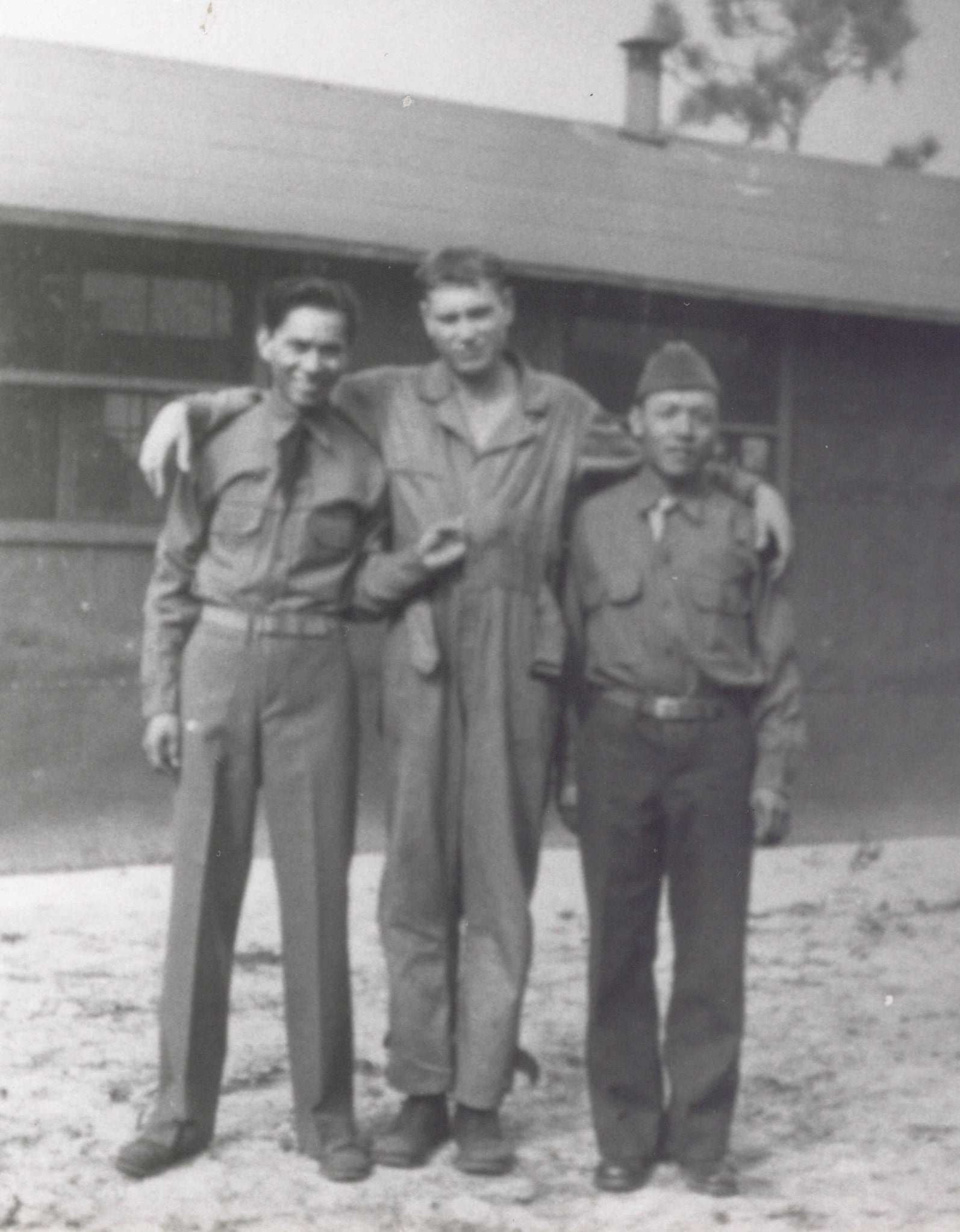
Image 43.01.02 — “David” C.W. Hing Chin (right, with cap), Vincent’s father, served as a GI in the US Army during World War II. He posthumously received a Congressional Gold Medal of Honor for his service in 2024, alongside many other previously unrecognized Chinese American veterans.
David had a small laundry business in Highland Park, Michigan, washing people’s clothes for a few cents a piece. Lily joined him, living in the back of the shop. Laundry work didn’t require knowing much English, which was appealing to immigrants. On the other hand, it was hard labor, and some weeks they only earned a few dollars for their efforts.
Most Chinese immigrants could unfortunately only find work in laundries and restaurants even in the mid-twentieth century. Additionally, Lily soon discovered that some of her family’s warnings had been true when she was subjected to racist taunts and discrimination from time to time. However, she kept her head high because nothing deterred her from starting a family with David.
Lily and David were eager to start a family, but then they learned that they could not get pregnant. As a result, they decided to adopt from an orphanage in the same region of Guangdong province in southern China where they were from. That’s when the couple saw the picture of a little boy they would name Vincent. They thought he looked sweet and intelligent so they soon initiated international adoption proceedings, which took a few years to complete. By then, Vincent, who was born in 1955, was six years old, ready to start the first grade when he joined Lily and David at their Highland Park home.
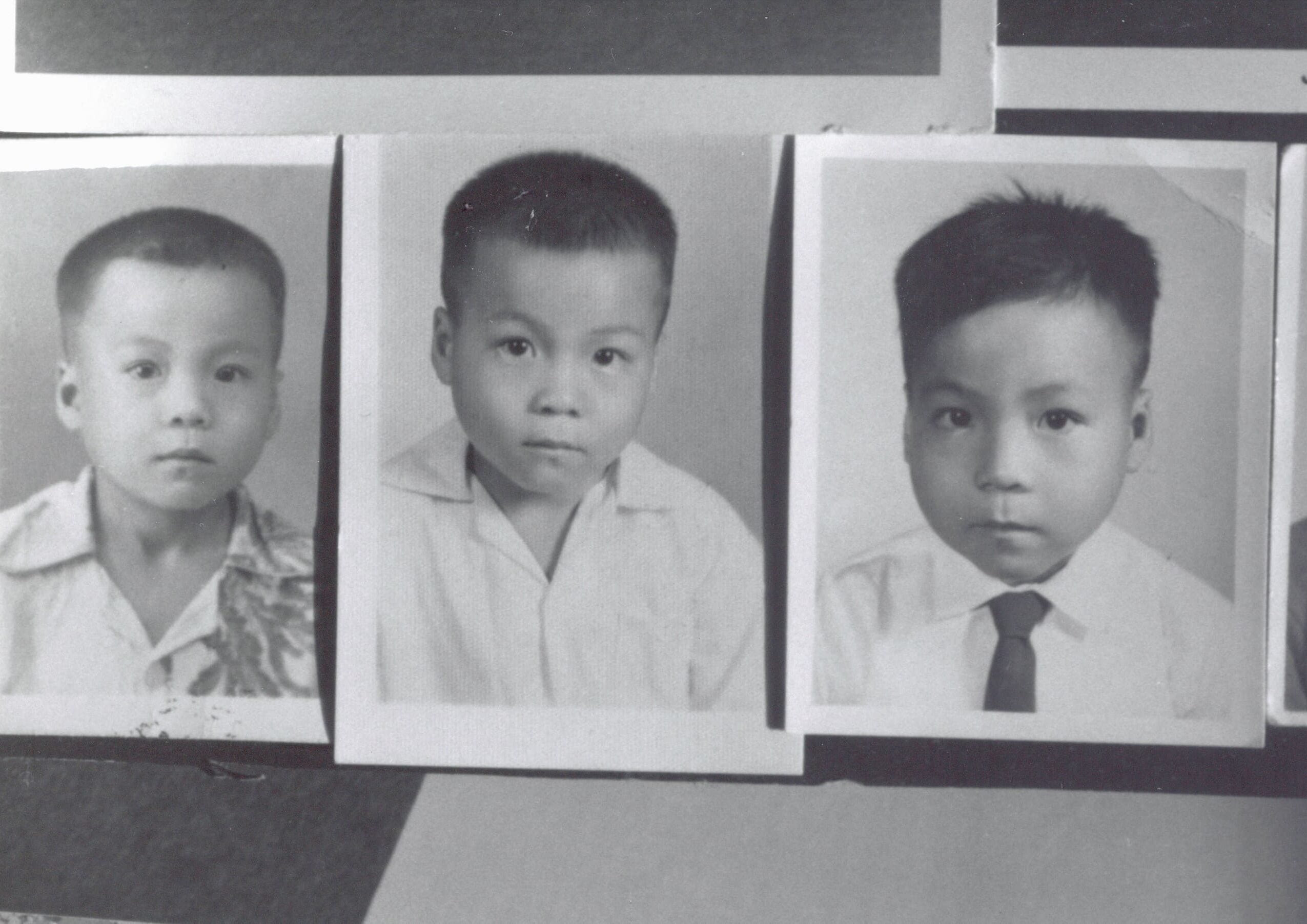
Image 43.01.03a — Lily and her husband were drawn to the picture of a little boy in a Chinese orphanage. Though arranging the international adoption took a few years, they stayed connected to their intended son through additional photos that the orphanage sent.
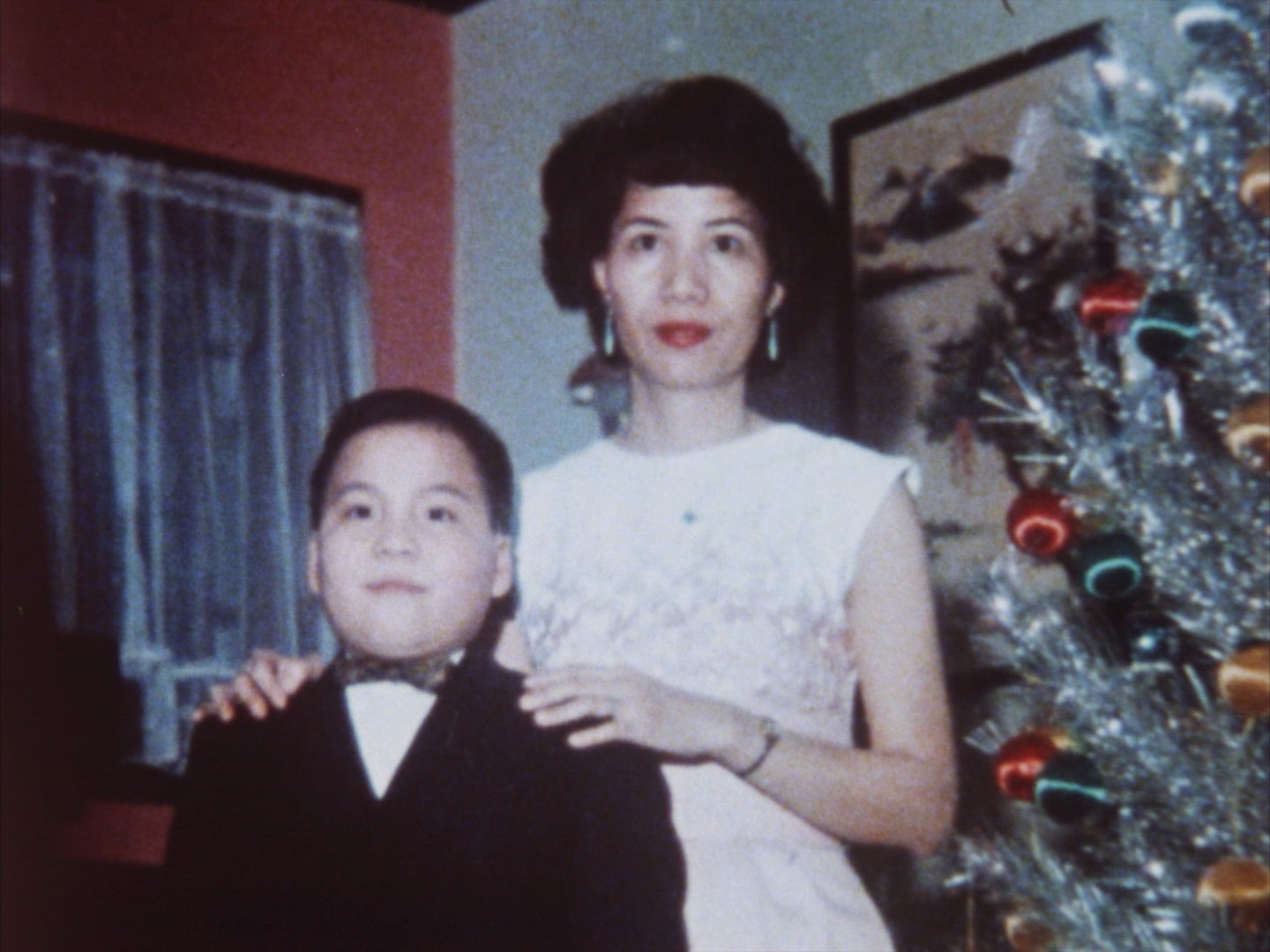
Image 43.01.03b — By all accounts, young Vincent thrived under the loving care of his doting adoptive parents, shown here with his mother Lily when he was about eight years old.


On his first day of school, Vincent met Gary Koivu, a classmate who remembered when the teacher introduced Vincent to the first grade class. “He looked so scared—a new school and a new country, it was understandable.” 1 Young Vincent learned to speak English readily, and the two boys became best friends, playing football and running track, sharing comic books, and going to the library, where Vincent, an avid reader, would check out stacks of novels.
By the time Vincent was a teenager, he had long ago overcome the shyness that his friend remembered. Vincent loved to tease the younger Chinese American kids whom his family associated with—the children of other waiters, cooks, and laundry workers, like Vincent’s mother and father. He was a favorite “elder brother” to the other children, playing practical jokes on them and always having something funny to say that would put others at ease and make them laugh. “Vincent was outgoing, funny, confident, always smiling,” observed Koivu. “Vincent could connect with anyone.” 2
Though Vincent adapted well to life as an American, becoming a naturalized citizen as soon as he was eligible, his Chinese heritage was ever-present. He spoke the Toisan (Taishan) dialect at home with his parents as well as with others in the Chinese American community. He knew that life for families like his was far from easy. His parents worked from early morning to late at night washing, ironing, and packing clothes, making very little profit. Few Chinese people were ever hired for the high-paying union jobs at the automobile factories and other related industries that dominated Detroit. Instead, Chinese Americans in Detroit and across the US were relegated to low wage work.
After Vincent graduated from Oak Park High School in 1973, he decided to go to work and attend college part-time. During the day he worked as a draftsman with an engineering firm, only a few blocks from his home in the nearby Detroit suburb of Oak Park. Computer technology was still new then, and he was learning to do computer-aided design at work while taking classes at Control Data Institute.
On some nights he also worked part-time as a waiter at the Golden Star Chinese restaurant in Ferndale, not far from his home. Outside of work, Vincent’s father often took him to a men’s social club in Detroit’s Chinatown, where working class Chinese folks from nearby laundries and restaurants would play cards and socialize. Vincent later joined the Chinatown club himself, becoming one of its younger generation members.
Vincent met his bride-to-be, Vikki Wong, at a dance in 1979. She was also part of the Detroit area’s Chinese working class community. “I could tell they got along very well,” said Gary Koivu. 3 Vincent was smitten and wrote a poem to Vikki that he published in the classified section of the Detroit Free Press on Valentine’s Day in 1979.
After dating for a year, they got engaged, setting their wedding date for June 1982. Unfortunately, Vincent’s father, David, died seven months before Vincent’s wedding day, so Vincent and Vikki began house-hunting so his mother, Lily, could live with them after they got married.
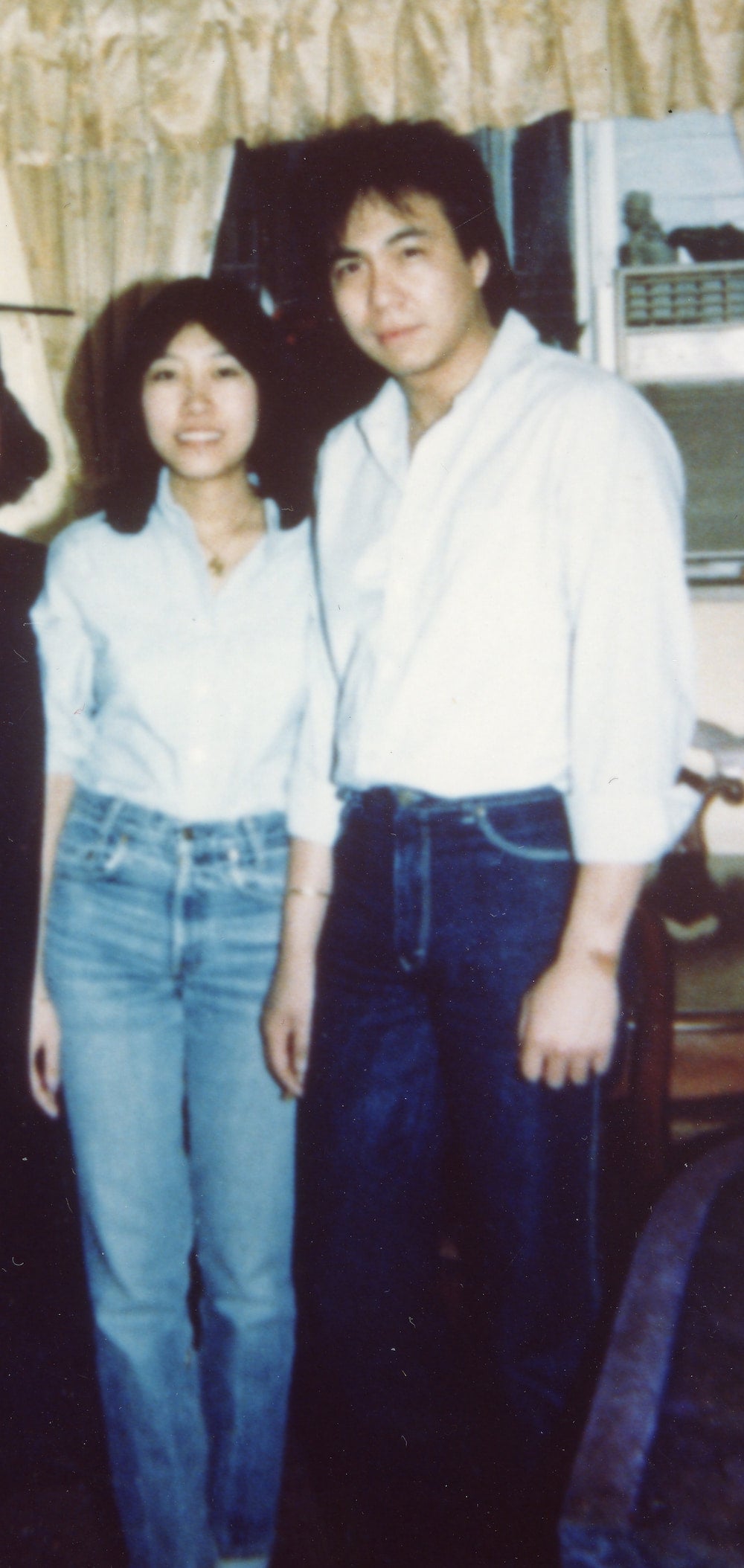
Image 43.01.05 — Vincent Chin and his fiancée Vikki Wong were to be married only days after his bachelor party, when he was savagely and fatally beaten. Their four hundred wedding guests went to Vincent’s funeral instead.
Vincent Chin’s Legacy
On June 19, 1982, Vincent went to work the dinner shift at the Golden Star Restaurant. Before leaving for work, he told his widowed mother, Lily, that he’d be home late because he was going to some strip clubs for his bachelor party. She chided him. “You’re getting married, you shouldn’t go to those places.” He gave his mother a hug and said, “Don’t worry, it’s my last time.” Lily admonished, “Don’t say ‘last time,’ that’s bad luck!” 4
Lily Chin had reason to be concerned for her son. Detroit and much of the Midwest were heavily dependent on the automobile industry and other manufacturing, and ever since the mid-1970s, there had been massive layoffs because of oil crises that raised gas prices so high that people could not afford to drive gas-guzzling American cars. Instead, fuel-efficient German and Japanese cars were in demand. By 1982, Detroit’s economy was in a state of collapse as the US struggled with a recession, and many people lost their jobs, homes, cars, and their futures, wondering if they’d ever work again to support their families. Frustrated and angry, people searched for the cause of their misery.
Eager to deflect blame, politicians, auto company CEOs, and even the United Auto Workers union that represented auto workers (known as UAW) pointed to a convenient scapegoat: they blamed Japan for building fuel-efficient cars—but not Germany, which was famous for producing many fuel-efficient cars. Through the news and public media, they declared that Japan was once again at war with the US, and a “new Pearl Harbor” demanded action. They even called for another nuclear bomb to be dropped on Japan. It wasn’t long before this anti-Japanese sentiment and scapegoating led to an intense climate of anti-Asian hate, especially in Detroit.
Gary picked Vincent up after his work at the Golden Star, and they met up with two other friends, Bob Sirosky and Jimmy Choi (a Chinese Canadian who worked part-time as a waiter with Vincent). They were ready for his bachelor party, a night of celebrating at striptease bars, where scantily clad women danced for tips in front of leering men.
One of their stops was at a bar in Highland Park, not far from where Vincent lived when he first came to the US. There, Vincent’s friends tipped dancers heavily so they would perform in front of the groom. Unbeknownst to them, two white autoworkers entered the bar and sat across from the group. Witnesses said that one of them directed racial slurs at Vincent and that he said, “It’s because of you [***] that we’re out of work,” even though neither man was unemployed.
Normally easy-going, Vincent stood up and said, “Don’t call me a [***],” and then pushed or punched his taunter, which turned into a fight between the groom-to-be and the two white men. 5 Both groups were thrown out of the bar. As they stood in the parking lot, the two white men pulled out a baseball bat to attack Vincent and his Chinese friend Jimmy Choi. They didn’t bother Gary or Bob, who were white. Seeing the weapon, Vincent and Jimmy ran away trying to escape the threat of violence.
When Vincent and Jimmy outran them, the two men with the bat went into their car to hunt them down. They paid off a local passerby to help them “find the Chinese,” and the trio eventually spotted Vincent and Jimmy sitting on the curb of the busy main street, waiting for their friends in front of a packed McDonald’s. 6 The stalkers surprised the seated men. One man held Vincent down while the other swung at his head with the baseball bat “with full force, full contact,” according to an off-duty police officer who stopped the attacker at gunpoint. 7
As they waited for the ambulance, Jimmy cradled his friend’s fractured head, and Vincent whispered, “It’s not fair.” 8 At the hospital, Vincent didn’t regain consciousness and was removed from life support. Just days later, on June 23, 1983, he passed away.
As news spread of Vincent’s death, his friends and coworkers found it hard to believe that the funny, easy-going friend they knew could become angry enough to get into a fight. They were sure that something seriously offensive must have been said to provoke him. As Gene Blair (Vincent’s supervisor at his daytime job with the engineering firm) noted, “There really wasn’t anybody he didn’t get along with. He was extremely smart and very energetic. He had potential. He was on his way.” 9
Instead of attending Vincent’s joyous wedding ceremony, his four hundred wedding guests went to his funeral.
The baseball bat killing of Vincent Chin was witnessed by several dozen people, including two security guards who were off-duty police officers. The two white perpetrators pleaded guilty to the killing. Vincent’s family and friends, the dancers at the nightclub, other witnesses, and even the killers expected that they would be sentenced to prison for their actions.
However, nine months later, the sentencing judge, Charles Kaufman, set the two white killers free with probation and a 3,000-dollar fine, payable in monthly installments. He later explained, “These are not the kind of men you send to jail” because they have steady jobs. He added, “You fit the punishment to the criminal, not to the crime.” 10
In Detroit, where Black people who were accused of minor infractions often received jail time, Judge Kaufman’s sentence sent shockwaves throughout the city. For Asian Americans, the unjust sentence only underscored the wrongful anti-Asian bias that had remained rampant in the US for decades. These Asian Americans recalled how Congress had enacted a law to single out and discriminate against Chinese people, in 1882, through the Chinese Exclusion Act. At that time, ethnic cleansing, killings, and mass lynchings of Chinese people went unpunished because American society attached no value to a Chinese American’s life.
A great tidal wave of outrage emerged as Asian Americans spoke out and united, calling for civil rights, with Vincent’s mother Lily serving as the movement’s moral leader. This broad-based pan-Asian, multiracial campaign dedicated to justice for all was a first for Asian Americans. With Detroit as its epicenter, it had national and international reach, receiving significant media coverage. In the process of demanding justice for Vincent Chin, the campaign made changes that impacted all Americans. It broadened the protections against hate crimes, extended victim compensation, and changed court procedures to protect victims, all while giving Asian Americans visibility and a voice to advocate for change.
Glossary terms in this module
civil rights Where it’s used
Personal rights guaranteed and protected by the US Constitution and laws, which include protection from unlawful discrimination, including on the basis of race, national origin, disability, age, religion, gender, or sexuality.
exclusion era Where it’s used
The period from 1882 to 1943 in which US laws and policies severely restricted Asian immigrants from entering the US and denied pathways to citizenship. The era started with the passing of the Chinese Exclusion Act of 1882, which was considered the first significant piece of legislation to restrict immigration into the US. During this era, there were some exemptions to exclusion, such as merchants, family members, and students.
hate crime Where it’s used
A term used to describe the political alliance of people and groups from different Asian ethnic backgrounds.
pan-Asian Where it’s used
A term used to describe the political alliance of people and groups from different Asian ethnic backgrounds.
probation Where it’s used
The release of an offender from detention, followed by a period of supervision. Probation is given as an alternative to prison.
scapegoat Where it’s used
A set of people who are wrongly assigned blame for a problem, typically those whose social status makes them vulnerable to violence and makes addressing or correcting the error very challenging.
unions Where it’s used
An organization formed by workers, typically from the same industry or company, for the purpose of maintaining and improving the conditions of their workplace. It is important to understand that while unions are important for ensuring better working conditions for workers, American unions have historically been anti-immigrant.
Endnotes
1 Gary Koivu, interview in Who Killed Vincent Chin?.
2 Koivu, interview in Who Killed Vincent Chin?.
3 Koivu, interview in Who Killed Vincent Chin?.
4 Lily Chin, interview in Who Killed Vincent Chin?.
5 Racine Colwell, interview in Who Killed Vincent Chin?, 0:54:30–0:54:50.
6 Jimmy Perry, interview in Who Killed Vincent Chin?, 0:02:44–003:37.
7 Police witness, interview in Who Killed Vincent Chin?.
8 Helen Zia, The Case for Vincent Chin, A Tragedy in American Justice: The Official Statement of American Citizens for Justice), 2.
9 Paula Yoo, From a Whisper to a Rallying Cry: The Killing of Vincent Chin and the Trial That Galvanized the Asian American Movement, 37.
10 Zia and Vincent Chin Institute, Legacy Guide, 14–15.


