





Module 5: The Continued Impact and Legacy of Vincent Chin’s Story
Did the killing of Vincent Chin and the activism it sparked change what it means to be Asian American?
The Asian American civil rights movement to protest the racism and injustice enacted against Vincent Chin, his family, and the entire Asian American community put a name on the societal problem of anti-Asian hate and its long history in the United States. The movement opened the door for Asian Americans to join with other Americans to ensure civil rights and justice for all.
This module discusses how much has changed for Asian Americans and how there remains much more to be done: the legacy of and lessons from the justice for Vincent Chin movement are still very relevant.
What did the Vincent Chin movement accomplish, and who in America was impacted?
What are the connections and lessons we can draw from Asian American activism in the 1980s to inspire us today?
How do you think prejudice and hate can be reduced or prevented in the US?
Bringing Awareness to Anti-Asian Racism
In the 1980s, most Americans were completely unaware of the fact that Asian Americans made up a vibrant part of the country’s diverse population and of the long history of discrimination towards people from Asia. The civil rights movement for Vincent Chin opened the door to change those misperceptions. What began as a single-focus campaign about one injustice quickly broadened when Detroit’s Asian American activists immediately hit a blank wall: Everyone they met with, from reporters to liberal lawyers to government officials, had little to no awareness about Americans like Vincent Chin whose ancestors came from across the Pacific Ocean.
When Vincent Chin was killed, Asian Americans were nearly invisible in the media, except as occasional one-dimensional stereotypes, including the “model minority” myth that Asian people don’t have any problems with racism or discrimination, and the “Yellow Peril” belief that Asians are foreigners and probably enemy invaders. Those dominant prejudiced views may have influenced the sentencing Detroit judge and jury in Cincinnati to set Vincent Chin’s killers free, because they didn’t recognize any racial language in “It’s because of you motherf***s that we’re out of work” or “Get the Chinese.”
While hurtful slurs and bigoted language about some societal groups may be commonly acknowledged, anti-Asian language is rarely recognized. The recent video of North Purdue University’s chancellor making “ching-chong” noises at the 2022 commencement ceremony with his board of trustees laughing along shows how normalized this treatment has become. When there is no accountability for prejudice and bigotry, hateful situations may also arise: not long after the North Purdue University incident, an Indian graduate student at Valparaiso University was killed. At Indiana University-Bloomington, a Chinese American undergraduate survived being stabbed in the head; almost two years later, her attacker was convicted of a racially-motivated hate crime.
Yet discrimination can occur without any words or identifiable slurs at all. For Asian Americans, the harmful “model minority” stereotype and even the lack of acknowledgment of anti-Asian hate speech set a higher bar for Asian Americans to counter anti-Asian racism. As a result, some disbelievers and racism deniers openly claim that anti-Asian hate does not exist.
For example, decades after Ronald Ebens admitted he had killed Vincent Chin, his former defense attorney continued to claim that Vincent Chin likely died from striking his head on the pavement, not from Ebens’ baseball bat. In 1999, a white male theater critic at the Washington Post cited Ebens’ attorney in his review to dismiss and invalidate a prize-winning play about Vincent Chin, Carry the Tiger to the Mountain, by actor and playwright Cherylene Lee.
While Vincent Chin’s name put a name and face on anti-Asian violence, he was not the only victim. After the movement against anti-Asian violence began in the 1980s, many other terrible incidents of anti-Asian hate and violence have been tracked, including cases in which law enforcement, journalists, and the general public have failed to acknowledge or even deny that race had anything to do with the violence.
In 1989, following a mass shooting at an elementary school in Stockton, California, where 80 percent of the students were Southeast Asian children of refugees, the police chief immediately told the news that race wasn’t a factor. The community demanded an investigation, which revealed that the white shooter had ties to extremist groups and held anti-Asian views.
In current times, the day after the March 16, 2021, mass shooting in Atlanta, local police asserted that no racism was involved because the killer told them that he was just having a “bad day”—as though his hunt to find Asian-run spas had no relevance. 1 Over the years many other similar examples have been documented.
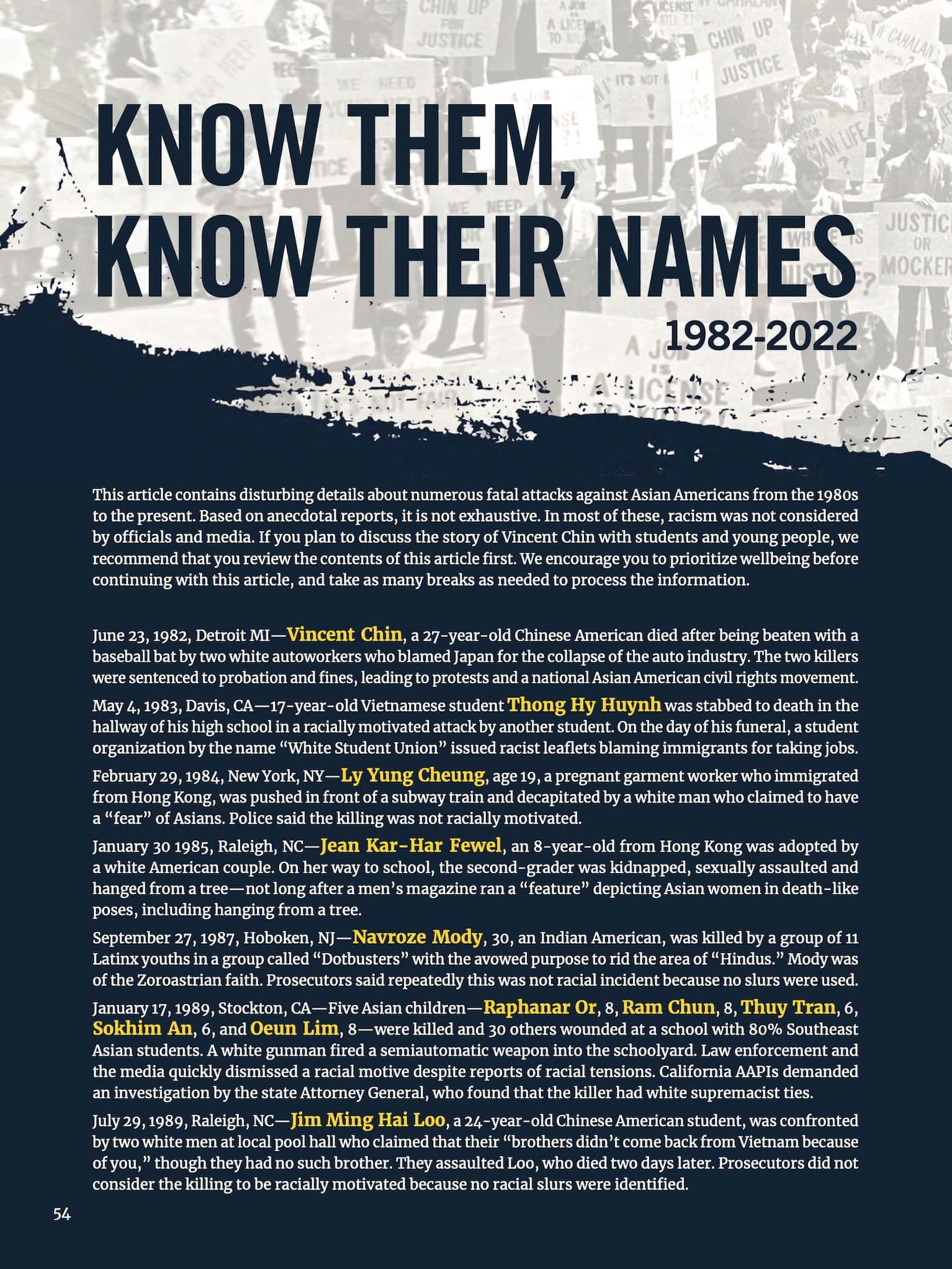
Text 43.05.02 — Though Vincent Chin’s case is a landmark of anti-Asian violence, many other Asian Americans have been harmed, with a few more listed here. Even today, racism against Asians is often denied and ignored by authorities, media, and society in general.
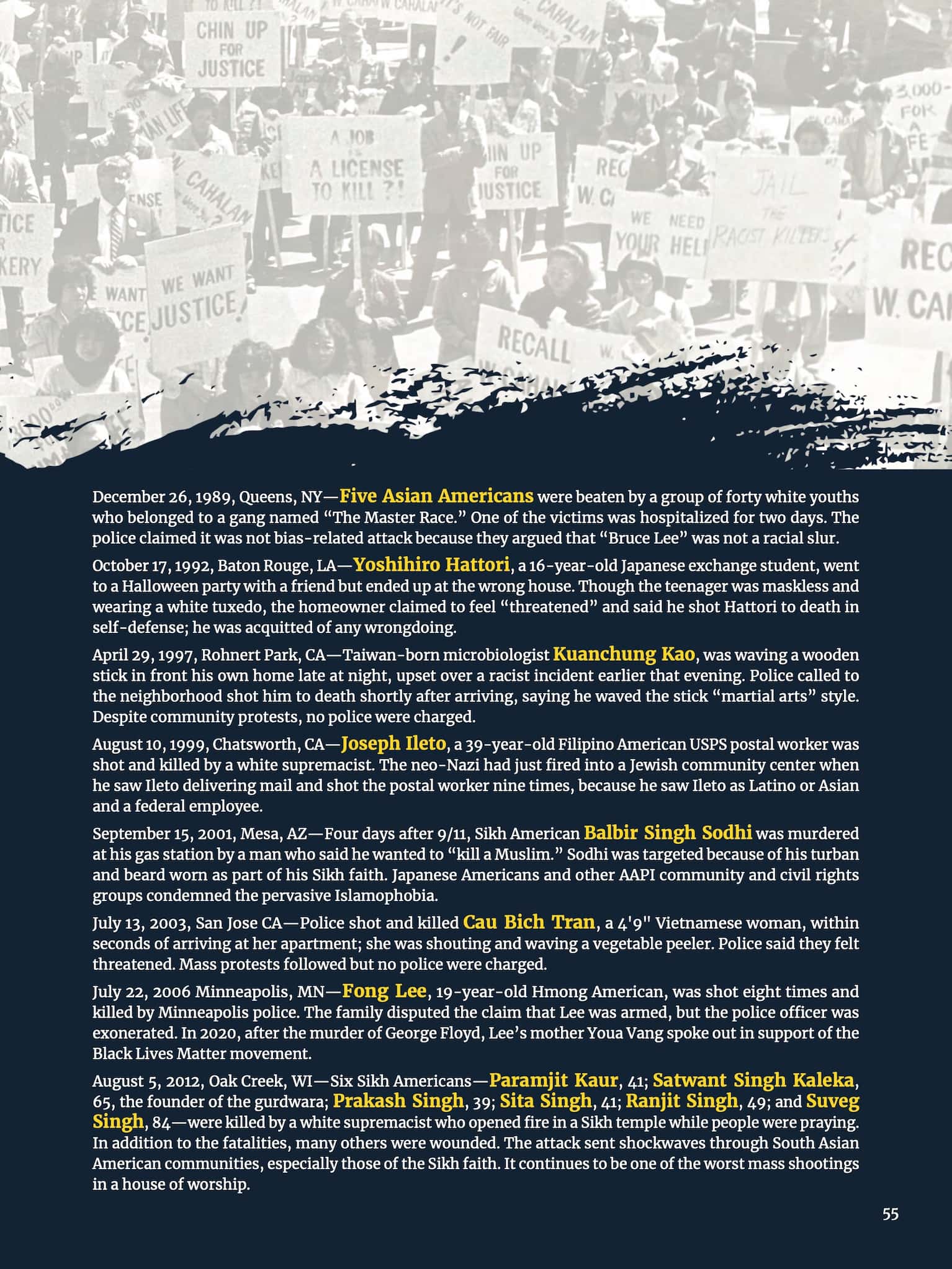
Text 43.05.02 — Though Vincent Chin’s case is a landmark of anti-Asian violence, many other Asian Americans have been harmed, with a few more listed here. Even today, racism against Asians is often denied and ignored by authorities, media, and society in general.
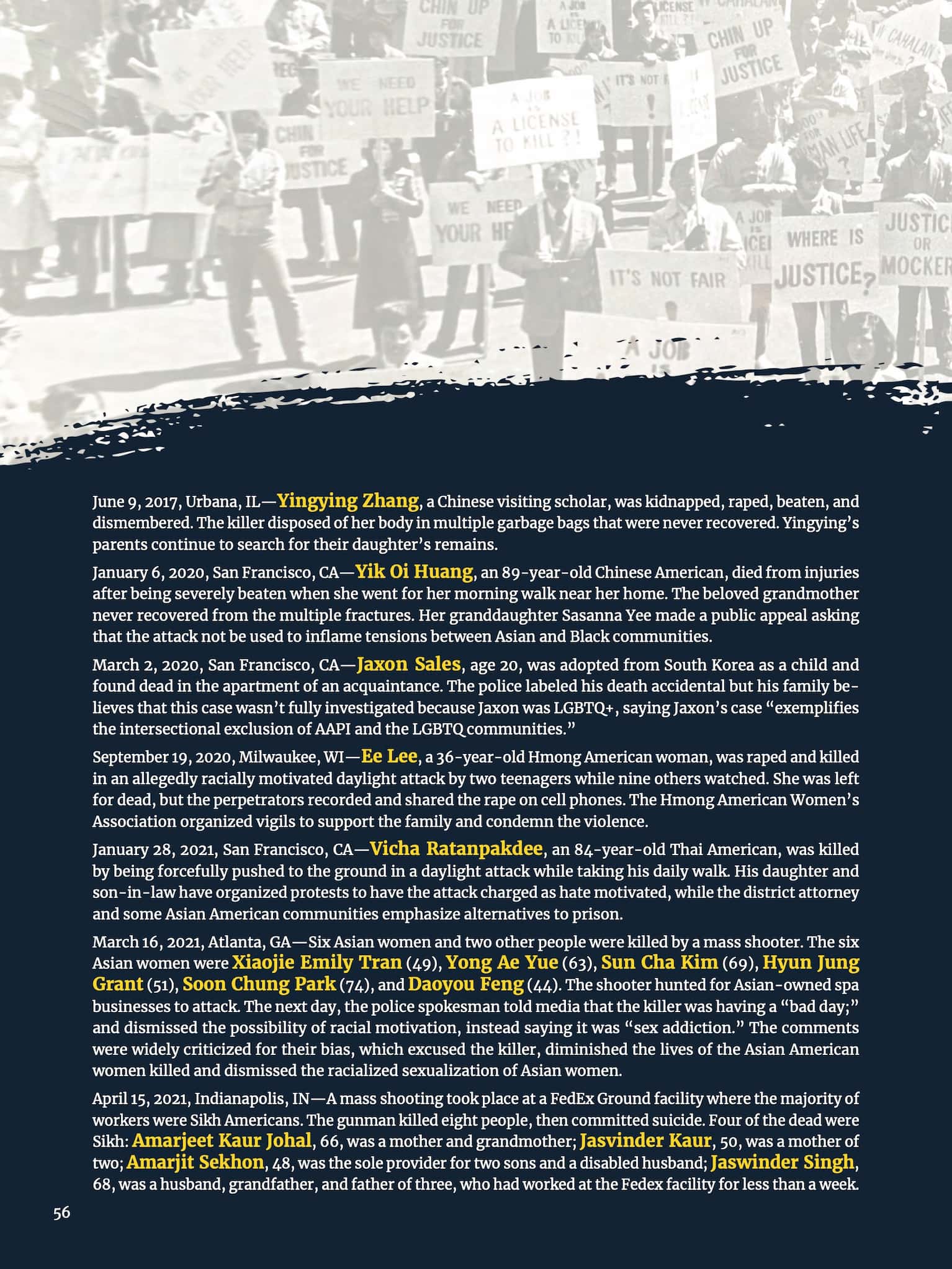
Text 43.05.02 — Though Vincent Chin’s case is a landmark of anti-Asian violence, many other Asian Americans have been harmed, with a few more listed here. Even today, racism against Asians is often denied and ignored by authorities, media, and society in general.
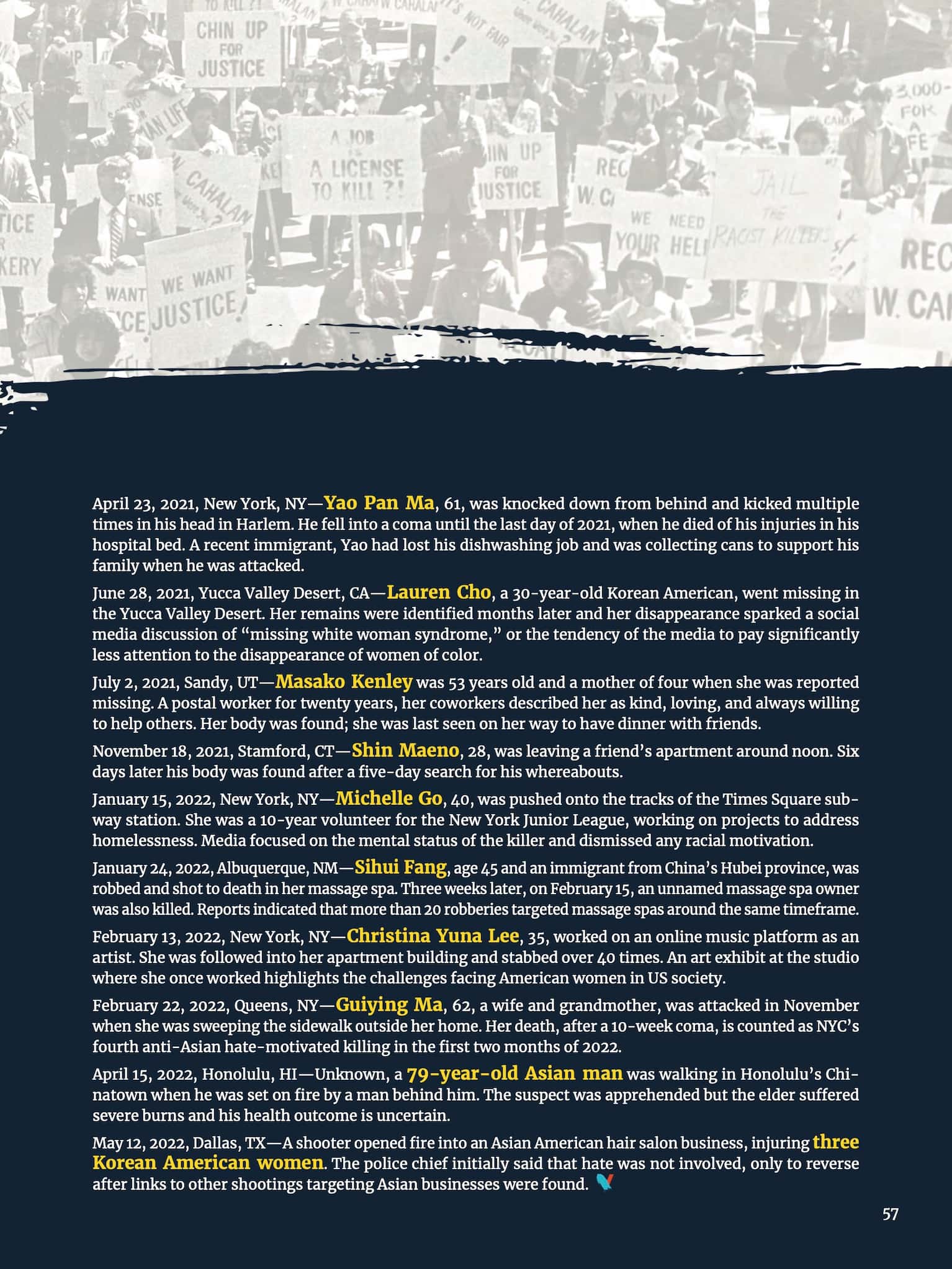
Text 43.05.02 — Though Vincent Chin’s case is a landmark of anti-Asian violence, many other Asian Americans have been harmed, with a few more listed here. Even today, racism against Asians is often denied and ignored by authorities, media, and society in general.




How the Vincent Chin Case Impacts All Americans
The Vincent Chin civil rights movement for justice offers important lessons that show how people can join together to make positive change in the legal system to fight injustice through educating people that do not acknowledge anti-Asian racism. The Asian American activists who came together in 1982 never imagined that their fight for justice for Vincent Chin would continue to make a difference decades later, but their actions made long-lasting changes in law and in societal attitudes, creating a positive impact for all Americans.
For example, victims rights laws benefit Americans of all backgrounds, and the Vincent Chin justice movement advanced victims rights. When Judge Charles Kaufman sentenced Chin’s killers to probation, there was no one present to speak for the victim—prosecutors didn’t bother to show up in court, and they didn’t inform the Chin family of the sentencing.
The judge did not even require the perpetrators to pay for the funeral of the person they killed; his widowed mother, Lily Chin, had to pay for all the medical and funeral costs. Vincent Chin’s case became part of the victim’s rights movement that allowed crime victims to make statements about the harm they experienced and to receive compensation. When that legislative effort in Michigan moved forward, some referred to it as the “Vincent Chin rule,” and today all fifty states allow victim impact statements at some phase of the sentencing process.

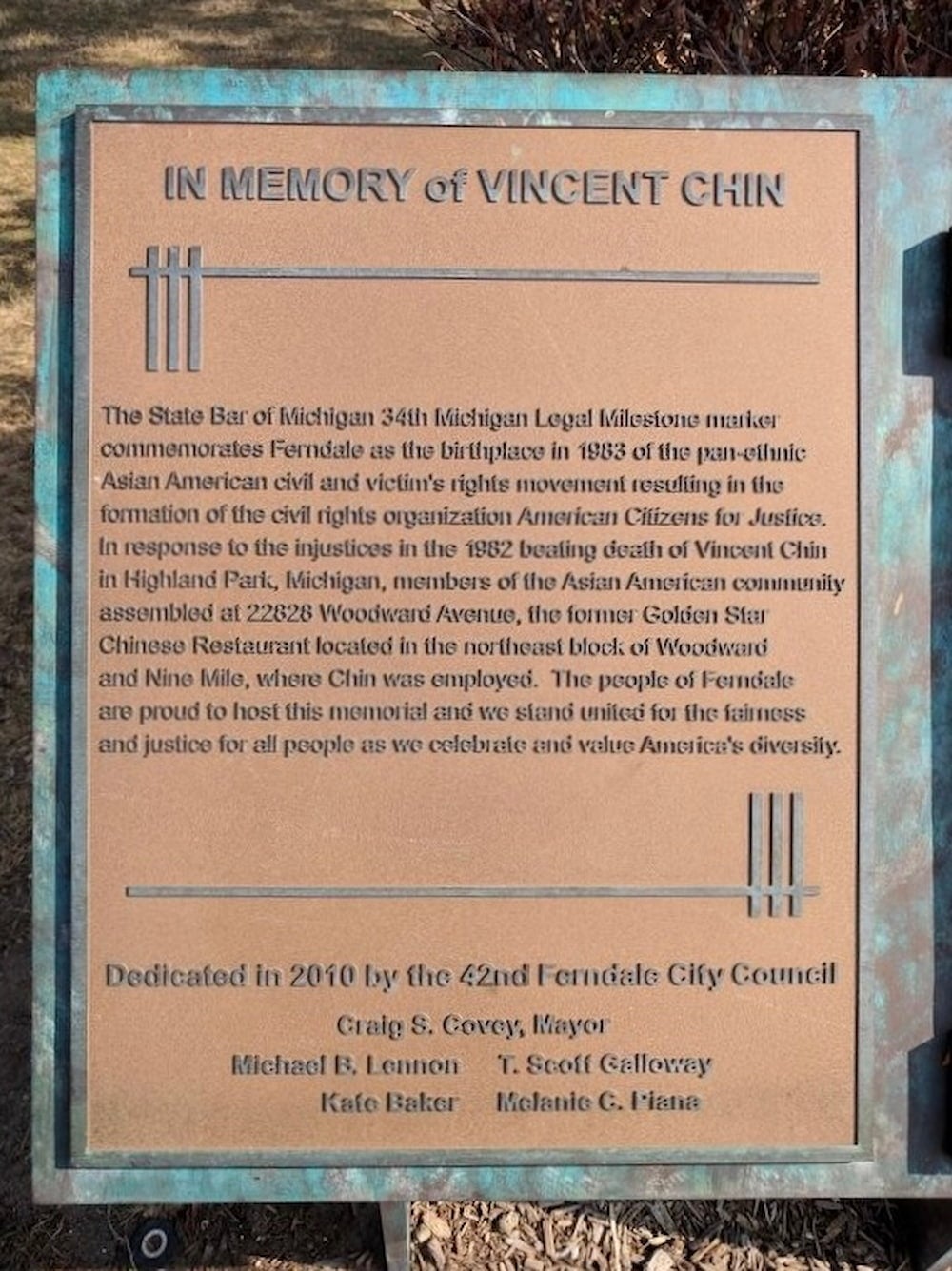
Image 43.05.03 — On Woodward Avenue, a main thoroughfare of greater Detroit, this historic plaque honors the memory of Vincent Chin in the median at the intersection of Nine Mile Road in Ferndale, across from the building Vincent had worked as a waiter.
Hate crimes protection laws were also strengthened because of the Vincent Chin movement. Initially some white civil rights lawyers claimed that Asian Americans and immigrants should not be protected by federal civil rights law, incorrectly stating that Asians were not in America in the 1800s. They argued that those nineteenth-century laws were written to protect Black people, not Asian Americans and immigrants.
However, through media and education, Detroit’s Asian American community activists succeeded in convincing the US Department of Justice to apply the civil rights laws on behalf of Vincent Chin, an Asian American and an immigrant. The Vincent Chin case helped broaden the scope of civil rights and hate crimes protections. After Congress passed the James Byrd and Matthew Shephard Hate Crimes Law in 2010, federal civil rights law was broadened to protect all people who may be targeted because of their perceived gender, sexual orientation, or disability.
The Vincent Chin Movement Reveals Today’s Faultlines
In 2023, twenty-four million people identified themselves as Asian American, comprising 7 percent of the US population. Because Asian Americans are the fastest growing racial group in America, this number and proportion continues to rise. By comparison, in the 1980s the Asian American population had surpassed 1 percent of the US population for the first time, according to the census.
Yet the same harmful stereotypes and general ignorance of Asian Americans that dominated the 1980s continue to prevail, even as the Asian American population has grown significantly. As a result, the general discrimination of Asian American communities in US culture persists, including the invisibility of their history, voices, concerns, and existence. Surveys show that when American respondents are asked to name a prominent Asian American of any background, the most common answer is “Don’t Know.” However, the risk of anti-Asian racism is significant because, when Americans are asked about the greatest threat to the US, the vast majority answer, “China.”
The Vincent Chin movement has shown that, just as anti-Japan fervor led to anti-Asian violence in the 1980s, the anti-Asian hostility in the twenty-first century has been nurtured by a decade of political rhetoric about the China threat. Then, at the end of 2019, the outbreak of COVID-19 in China triggered an intense wave of anti-Asian violence in the US as well as other countries, which was exacerbated and spread by constant anti-China sentiment from politicians, including from the White House.
A single community website, StopAAPIHate.org documented more than 11,000 hate incidents from March 2020 through March 2022, and more than two-thirds of the victims have been women, girls, and elderly Asian Americans. The COVID-19 pandemic unleashed a pandemic of anti-Asian racism and violence that has served as a potent reminder of how far we still have to go.
Contemporary anti-Asian hostility has also been fueled by anti-immigrant politics and the federal government’s aggressive campaigns in search of Chinese spies. Numerous false criminal charges have been made against thousands of Chinese Americans, many of which were proven to be groundless. The Trump administration’s “China Initiative” touted by his former FBI director Christopher Wray accelerated the pace of unsubstantiated investigations, arrests, and prosecutions of Chinese Americans.
Yet, anti-Asian racism is not limited to East Asian Americans. In the wake of September 11, 2001, there were numerous attacks and killings of people who “look Muslim” due to the rise of Islamophobia towards Arab, Middle Eastern, Muslim, and South Asian Americans. On August 5, 2012, a heavily armed white gunman with ties to neo-Nazis entered a busy Sikh gurdwara and began shooting, killing seven temple-goers.
Anti-Muslim policies, such as the 2017 federal “Muslim Ban” barring people from majority Muslim countries from entering the US, continue to equate Muslims with terrorists and perpetuate Islamophobic attacks. In April 2021, just a month after the mass shootings of six East Asian women and two other bystanders in Atlanta, another mass shooter went to a Fedex facility in Indianapolis, where a majority of employees are South Asian, killing eight people, including four Sikh Americans.
Looking forward, tensions between the US and China, as well as in the Middle East and Western Asia, show no signs of slowing down. Until education, public culture, and stronger policies in the US can promote understanding and awareness about Asian Americans and other marginalized peoples, prejudice and hate are likely to continue harming and impacting Asian Americans of every ethnicity.
The Vincent Chin Movement and Its Path to Action
The Vincent Chin movement also showed how communities can fight to stop repeating history. In the 1980s, Asian Americans came together in a new civil rights movement, joining Black people, Jew communities, Arab Americans, Latine groups, and other people of diverse faiths, genders, and backgrounds. The justice for Vincent Chin movement inspired and continues to inspire new generations of young people to become community organizers. Some of the most prominent advocacy groups standing up against anti-Asian hate today were created because of the Vincent Chin movement, including the Asian Americans Advancing Justice organizations in Washington, DC; Los Angeles, California; Chicago, Illinois; and Atlanta, Georgia.
The Asian American communities of this millennium are in a much better position than previous generations to counter the challenge of anti-Asian bigotry. The Asian American population of the 2020s is more than 800 percent larger than that in the 1980s, when Asian Americans were less than 2 percent of the American population. Plus, Asian American voices are strengthened by a growing infrastructure of activists, leaders, and organizations who are more empowered to take on thorny issues.
A growing confidence in the role that Asian Americans play in US society can be seen in the very words used to describe today’s challenges: In the 1980s, Asian Americans decried anti-Asian “sentiment”—a euphemistic reference to a “feeling” or “attitude.” In response to today’s violence, more unflinching, pointed language calls out anti-Asian “prejudice,” “bias,” “intolerance,” “hate,” “racism,” and any number of words that more precisely and unapologetically capture the violence that Asians in America have been facing.
Technological change has also shaped new generations of activists. In the 1980s, there were no mobile phones or internet to inform and connect diverse and separate Asian American communities. Today, Asian Americans armed with smartphone cameras and social media are building solidarity to resist anti-Asian hate on the heels of COVID-19. Additionally, Asian American community activists use several Asian languages to document, validate, and raise awareness about the existence of anti-Asian violence.
Social media and the internet have also highlighted how Asian Americans are standing with Black, Latinx, and Indigenous communities to fight “systemic” racism—in laws, government and private institutions, and professional practices—beyond individual prejudice, especially in the face of police killings of Black Americans and other people of color, including Asian Americans. Asian American activists are debating how to ensure safety of Asian American communities while also questioning the role of the police in society as well as the racism that is embedded in government and private entities with a vested interest in the construction and maintenance of prisons.
However, it is important to view social media with a critical lens, because it has also been used to perpetuate divisions between different racial and ethnic groups, such as when videos of Black assailants assaulting Asian Americans go viral and are amplified by the media. These kinds of videos create and spread false narratives about anti-Asian violence, even though two separate studies have shown that the majority of anti-Asian hate assaults are committed by white males, not by Black people. Divisiveness keeps communities apart, preventing them from coming together to fight for their common needs, such as safe and livable communities.
Vincent Chin’s Legacy for the Future
The Vincent Chin story offers a counter narrative of solidarity between many different peoples who came together to fight for civil rights and justice for all—in a movement led by Asian Americans. Looking forward, these lessons offer valuable tools as we deal with climate disasters, wars, and growing fears that rising US and China tensions could turn into military action. History and the Vincent Chin movement have shown us that any of these factors can lead to the blaming and targeting of vulnerable groups, including Asian Americans who have been continually portrayed as the “enemy within.”
In 1983, Asian Americans overcame their fears to join together, organize, and use their collective voices to speak out against injustice and bigotry. By educating news media and reaching out to other communities, the Vincent Chin movement and Asian Americans and Pacific Islanders today can break through some of the stereotyping that has been so harmful to Asians in America and bring about changes that benefit all Americans today.
In public policy, the Vincent Chin movement helped to advance victim impact statements and victims’ rights, as well as to expand hate crimes protections to protect broader groups of Americans, including identity groups based on gender, sexual orientation, and disability. In response to the Vincent Chin movement, court procedures in Michigan were changed to require the presence of a prosecutor when a sentence is rendered. Nationwide, victim impact laws have given victims the opportunity to speak about their loss. These procedures were intended to reduce the likelihood of similar institutional failures that Vincent Chin’s case encountered. Additionally, new advocacy organizations and generations of activists have been inspired to raise their voices, fight for democracy, and create positive change—all part of the legacy of Vincent Chin.
One of the biggest differences between the 1980s and today’s America is the growing numbers and voices of Asian Americans who refuse to be blamed and ignored, demanding an end to hate violence and injustice. The advances made and the legacy from peoples’ movements to counter hate violence towards all people must never be taken for granted.
In 2023, the Vincent Chin Institute was established to continue the Vincent Chin movement’s legacy. By sharing stories and lessons of solidarity in the fight for justice and equity, new generations of young people can embrace the human dignity of all people and continue to grow, evolve, and take on the challenges of tomorrow.
Note: The Vincent Chin Institute can be found at vincentchin.org.
Glossary terms in this module
civil rights Where it’s used
Personal rights guaranteed and protected by the US Constitution and laws, which include protection from unlawful discrimination, including on the basis of race, color, national origin, disability, age, religion, or sex (including pregnancy, sexual orientation, and gender identity).
hate crime Where it’s used
A criminal offense towards a victim on the basis of race, religion, national origin, gender identity, sexual orientation, or disability. These can include assaults, harassment, murder, and theft. Not all hate incidents will be considered hate crimes because no law is broken. In some cases, a criminal offense may not be considered a hate crime under the law because law enforcement and courts might not understand or recognize discriminatory behaviors and may not believe there is sufficient evidence to prove that hate was involved.
probation Where it’s used
The release of an offender from detention, followed by a period of supervision. Probation is given as an alternative to prison.
solidarity Where it’s used
A political, cultural, and collective stance that recognizes the mutual responsibility and support that is necessary to achieve change. Solidarity taps into the power in numbers and considers the collective interests of communities.
victim impact statement Where it’s used
A statement given in court describing the emotional, physical, and financial impact a person or group has suffered as a direct result of a crime. Victim impact statements can be written or oral statements.