





Lily Chin at podium in front of “Justice for Vincent Chin” banner and addresses audience. Seated behind her is Jesse Jackson, a Black man in suit.
Module 4: Building a Pan-Asian American Civil Rights Movement
Did the killing of Vincent Chin and the activism it sparked change what it means to be Asian American?
The movement to overturn the injustice in the Vincent Chin case brought together a wide-ranging diversity of Asian American ethnicities and alliances with other people of color and people of conscience—not just in Detroit, but across the country, and even internationally.
This module is about how the Vincent Chin case, for the first time, showed how Asian Americans in solidarity could overcome the forces of tradition and fear of the unknown, particularly in the highly racialized political arena. Asian Americans were finally joining together to correct perceived injustices.
What difficulties did the Asian American community face as they tried to bring people together and deal with media, political systems, and the courts?
Are there stereotypes and assumptions about Asian and Asian American people that the organizers had to address?
How did community activists use organizing, education, and media to win support and challenge misperceptions about Asian Americans and racism?
Complicating Solidarity and Unity Building
It would be magical thinking or a make-believe fairy tale to suggest that these people and groups came together seamlessly. An important lesson from the Vincent Chin movement is that people, united, can overcome adversity together and achieve great change for the betterment of many people. However, there was nothing quick, easy, or simple about pulling together this movement. Additionally, even when people are able to come together for a common cause, such unity is challenging to maintain.
For example, the diversity of Asian American communities, on the one hand, offers a great source of strength and inspiration. On the other hand, it can also keep people apart, complicating efforts to build unity. It was rare for the highly-educated suburban Mandarin speakers to be aligned so closely with Cantonese-speaking Chinatown merchants, waiters, and blue collar workers. Numerous differences in language, culture, class, and kinship bonds had to be overcome. As ACJ expanded its media outreach and fundraising efforts to pay for legal strategy, personality differences and ambitions needed to be managed.
There were also sharp political differences: Many Chinatown business owners were fervently anti-Communist, while other Chinese American community groups openly supported the People’s Republic of China, a Communist country. Rarely would such political views be represented in the same place without open hostility. In San Francisco, California, with its large and politically engaged Chinese American population, rival groups tried to elbow each other off the stage during a highly publicized media event, featuring Lily Chin and ACJ.
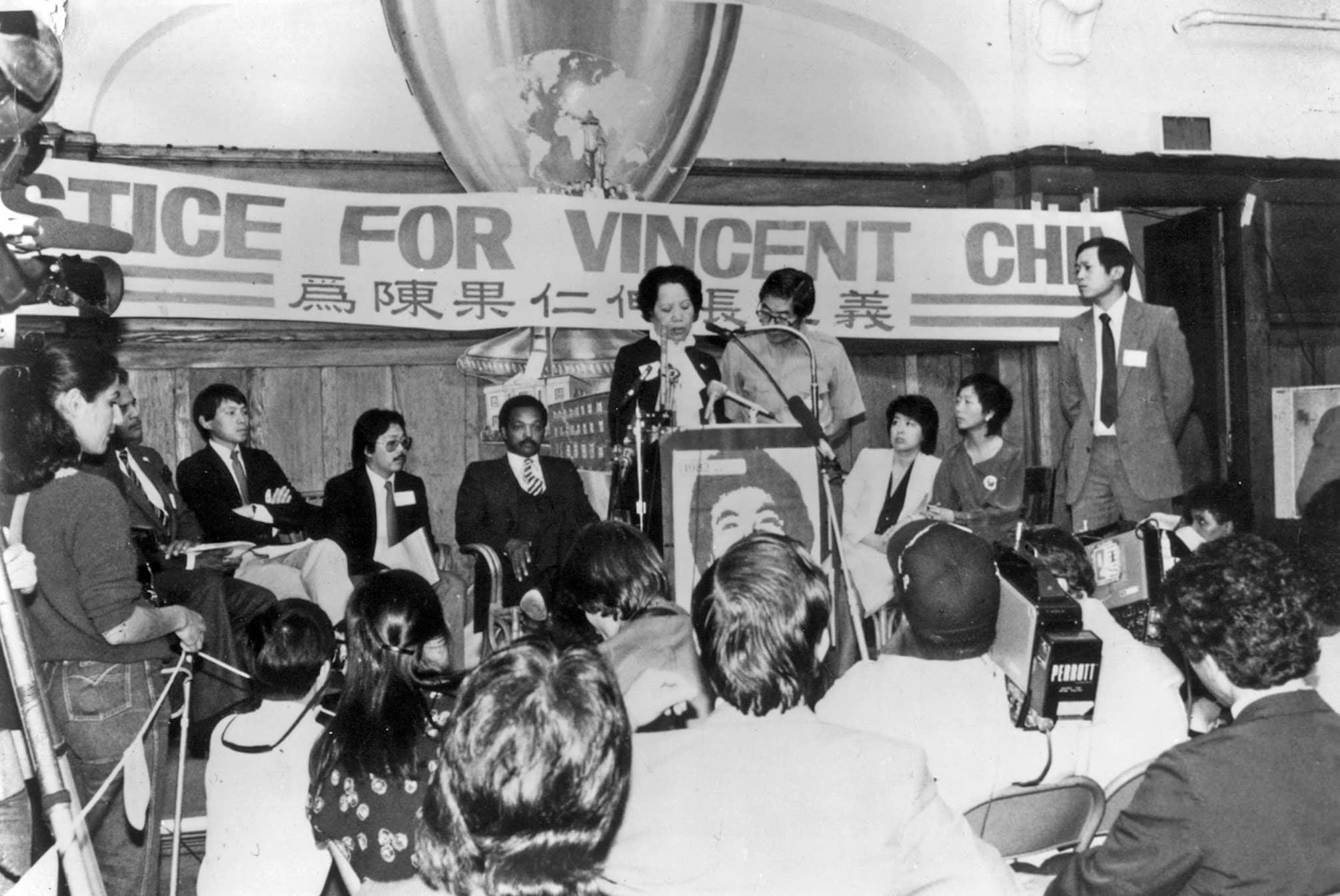
Image 43.04.01 — In a show of Black-Asian solidarity, Rev. Jesse Jackson (center back row, seated) stops at San Francisco’s Cameron House during his 1984 presidential campaign to support Lily Chin, Vincent’s mother (standing at podium), and the national civil rights campaign for justice that began in Detroit.
In addition to trying to keep peace among the Chinese American groups, ACJ continued to actively reach out to other Asian ethnicities, sometimes encountering other cultural conflicts over gender roles. For example, Detroit’s growing Korean community was represented by two large groups: the Korean Society of Greater Detroit, and the Korean American Women’s Association, whose members were the Korean wives of non-Korean GIs who had been stationed in Korea. These two groups had rarely worked together—until the Vincent Chin case.
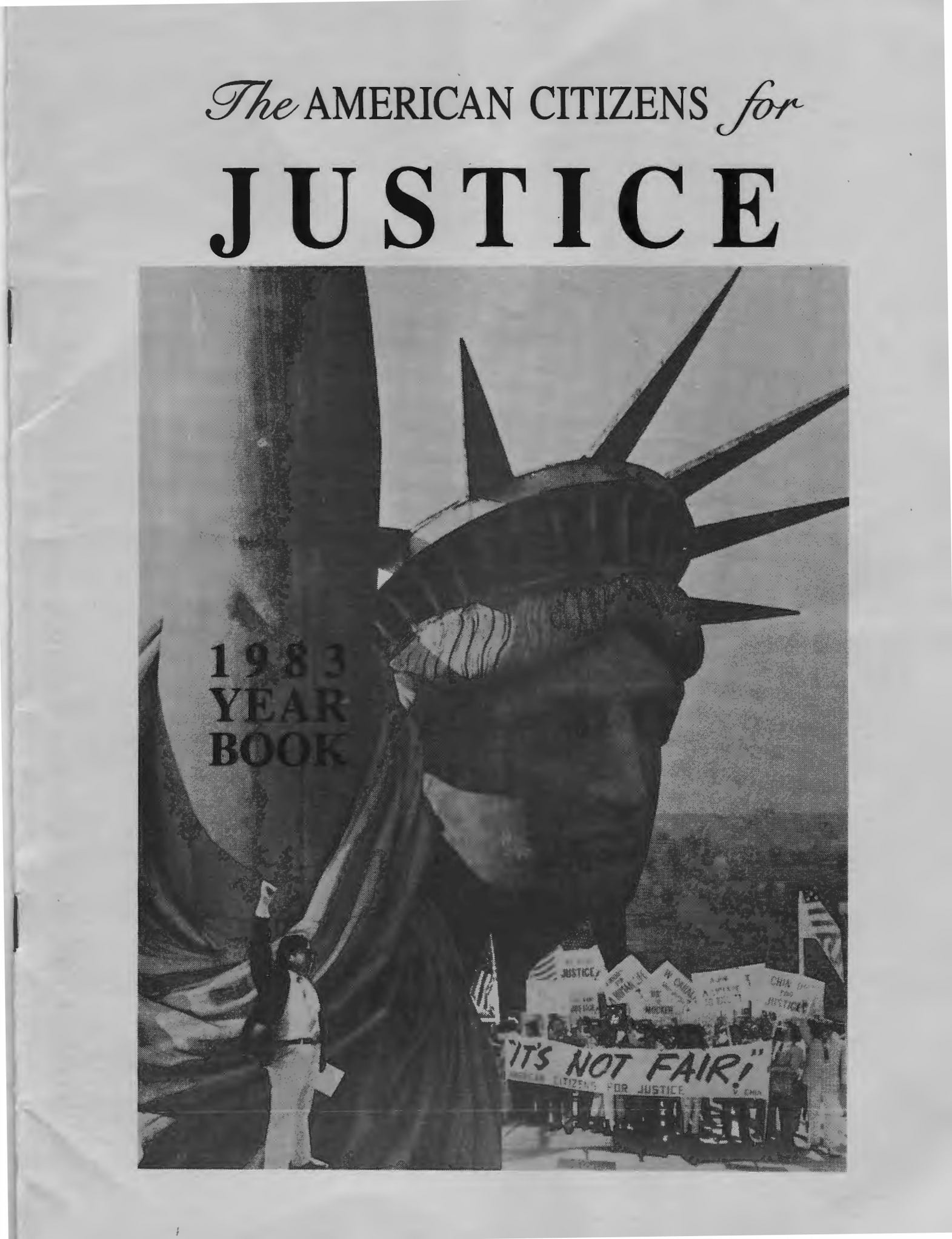
Text 43.04.02 — The newly formed pan-Asian civil rights organization reached out to every Asian ethnic group it could find. Within weeks, the broad list of endorsing groups showed that a multi-ethnic, pan-Asian advocacy movement under the umbrella concept “Asian American” was possible.
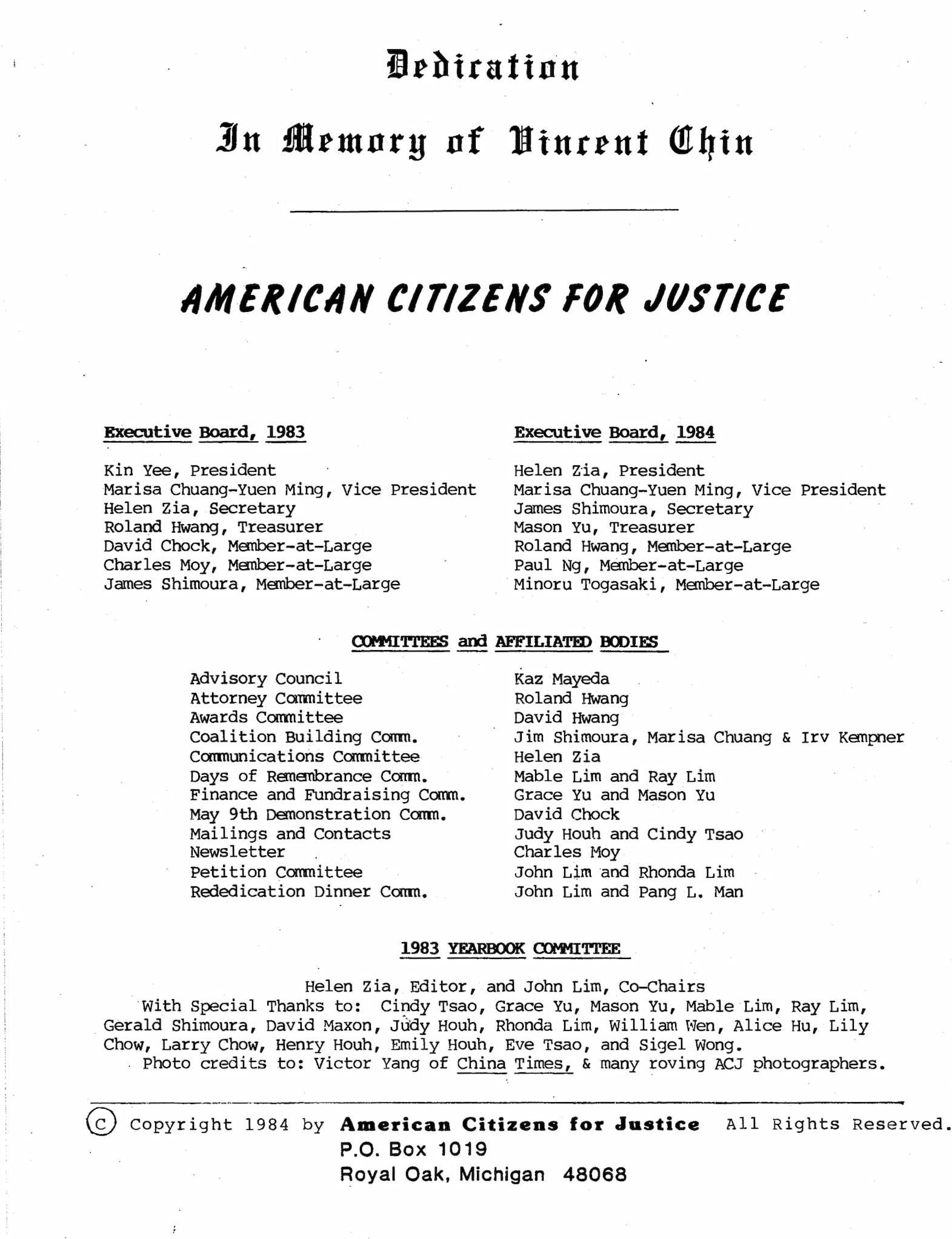
Text 43.04.02 — The newly formed pan-Asian civil rights organization reached out to every Asian ethnic group it could find. Within weeks, the broad list of endorsing groups showed that a multi-ethnic, pan-Asian advocacy movement under the umbrella concept “Asian American” was possible.
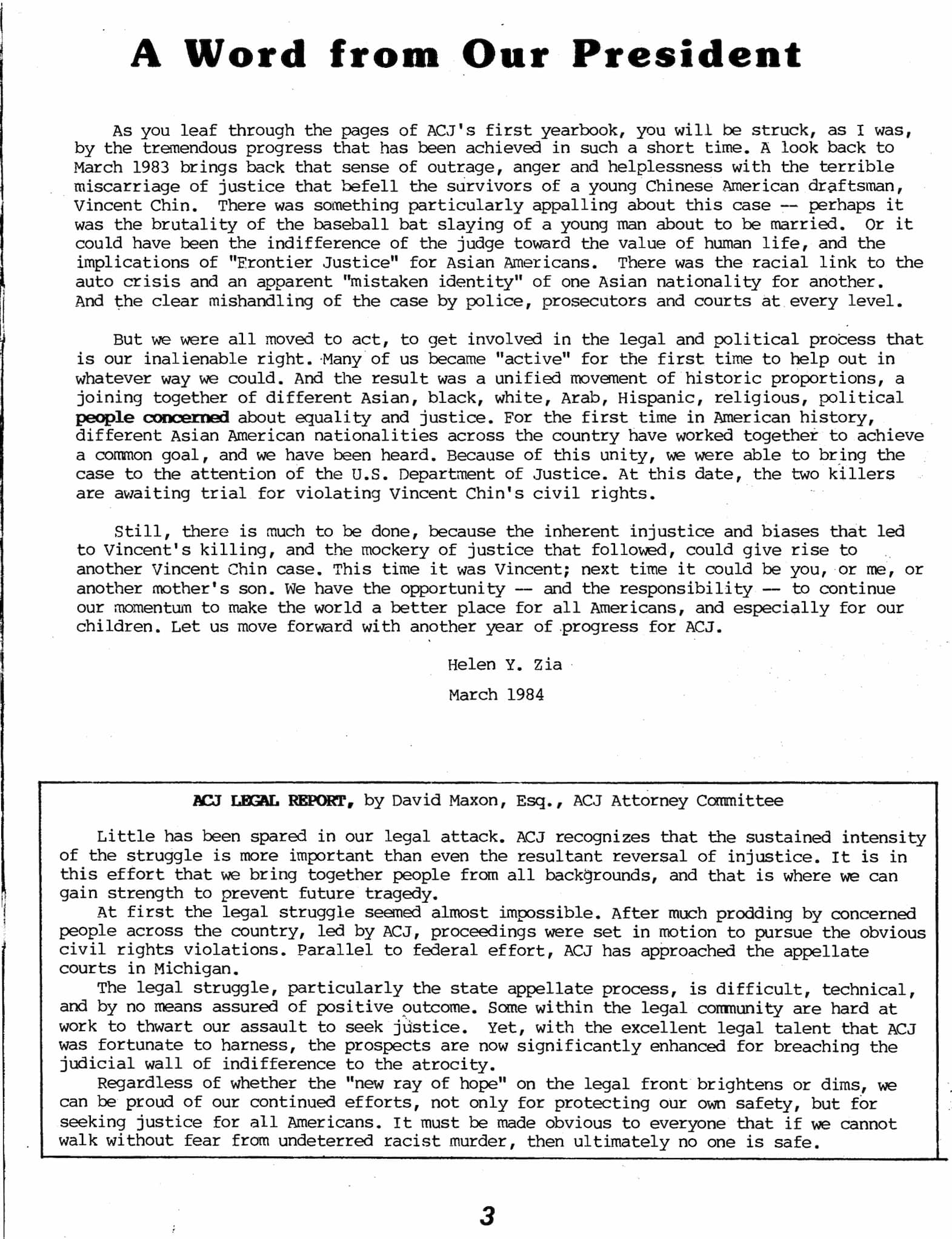
Text 43.04.02 — The newly formed pan-Asian civil rights organization reached out to every Asian ethnic group it could find. Within weeks, the broad list of endorsing groups showed that a multi-ethnic, pan-Asian advocacy movement under the umbrella concept “Asian American” was possible.
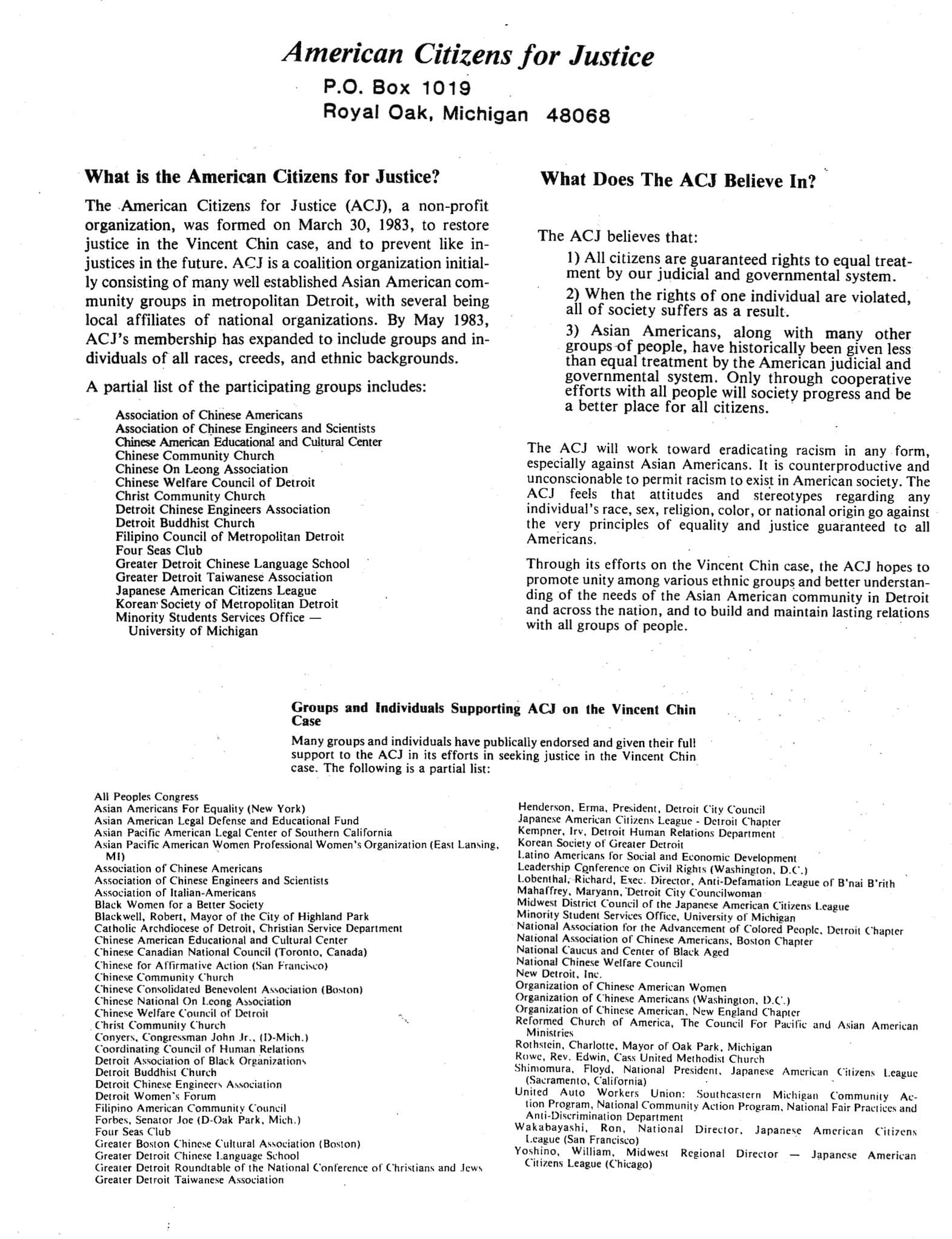
Text 43.04.02 — The newly formed pan-Asian civil rights organization reached out to every Asian ethnic group it could find. Within weeks, the broad list of endorsing groups showed that a multi-ethnic, pan-Asian advocacy movement under the umbrella concept “Asian American” was possible.




Of course, the benefits and learnings from the interethnic and cross-racial alliances far outweighed the downsides. The pan-Asian outreach to other ethnic communities had a positive impact on their collective political awareness. For example, as Detroit Asian Americans were mobilizing around Vincent Chin’s case, the Japanese American community throughout the US was waging a national campaign to expose and redress the harms caused by their mass incarceration during World War II. Their community’s relationships with Congressperson Norman Mineta and other Congressional leaders were invaluable in getting the federal government to pay attention to the Detroit-based campaign for justice.
In addition, the Filipino and South Asian populations at the time were more sizable than any of the other Asian ethnicities in Michigan, and both had well established connections with both Republican and Democratic parties. Their active involvement in the electoral arena made it clear to other Asian American groups why they all needed to get engaged in politics, rather than shy away from civic engagement because of lack of confidence in English proficiency, unfamiliarity with or distrust of American politics, and other concerns.
Addressing Community Anxiety and Prejudice
Even as the leaders and spokespeople of ACJ stepped forward to speak openly about anti-Asian racism, many Asian American were unsure about speaking out: They had been treated as invisible for so long. It was hard to see how Asians in America fit into the national dialogue on racism when race in America had long been viewed only in a two-toned binary: Black and white.
Through numerous open community meetings, Detroit’s Asian American activists created the space for people to air their questions and differences about where Asian people fit in America’s racial dynamics. Some asked: If race is such a volatile topic for white and Black Americans, why should Asian Americans step in, to face potential wrath from either or both? Would Asians get labeled troublemakers, the way Black Americans often have been labeled for speaking out? If ACJ stepped out of the shadows to make waves, would the community face even more targeting?
In response to these and other community concerns, the Vincent Chin movement leaders offered straight-forward answers: Yes, a civil rights suit by its very definition would mean getting involved in race politics. But staying silent was not an alternative. Silence would not protect Asian Americans from the racial hostility all around them, just as it had not kept Vincent Chin safe from becoming a target.
Asian American community members also stood up in these public meetings to share their views, including stories about their own experiences with discrimination. “I’ve worked hard for my company for 40 years,” said one auto industry engineer who stood up at a community meeting. “I was always passed over for promotions because I’m Chinese. So I had to train many young white boys to be my boss. I never complained, but inside, I was burning up. This time, I must speak out. What happened in Vincent Chin’s case is not fair. What is the point of silence if our children can be killed and treated like this?” 1
Mixing It Up: Black, White, and Asian
To reach Detroit’s Black communities, Asian American organizers went to meetings of community organizations and churches, met with Black leaders in Congress and local politics, and even appeared on a popular Black radio talk show that drew frank comments from listeners. Some were pleased to hear Asian Americans were speaking out about injustice and equality. Others asked if Asians were just trying to “ride the coattails” of African Americans. Still others charged Asian people with prejudice towards Black people.
The ACJ representatives tried to answer questions forthrightly, for example, acknowledging that anti-Black prejudice existed among some but not all Asian Americans, and committing to educate pan-Asian communities about the central role of Black people in the fight for civil rights. These meetings and talk shows also offered an opportunity to discuss the history and role of Asian Americans in fighting Chinese exclusion, Japanese incarceration, and other racist policies as well as stereotypes that were used to pit Asians against Black people and others through “divide and conquer” strategies.
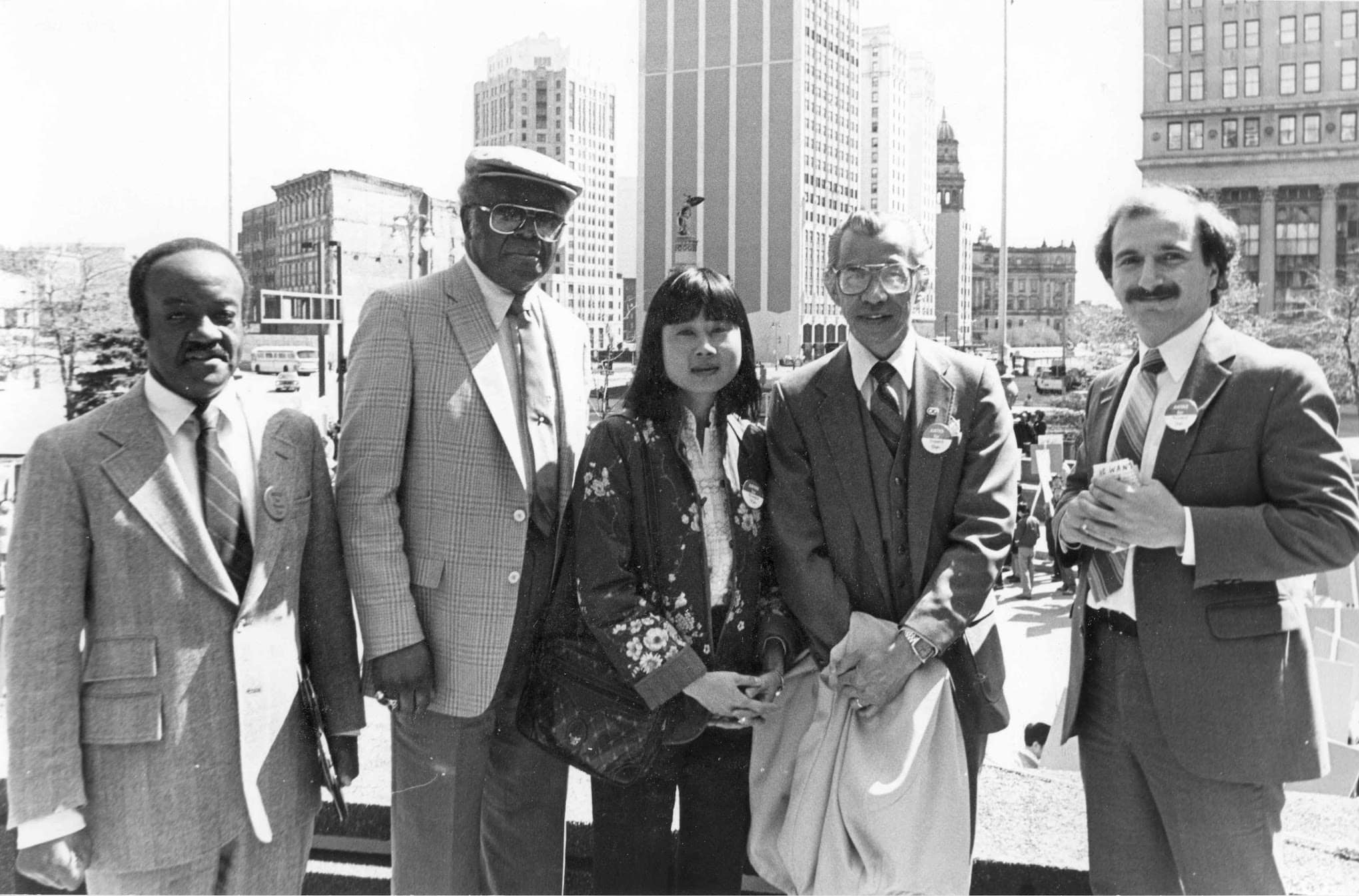
Image 43.04.03 — The 1983 Asian American-led rally had multiracial, cross-cultural, and inter-faith support, including (left to right) Winston Lang, NAACP Detroit; Horace Sheffield Jr., founder of Detroit Association of Black Organizations; attorney Liza Chan; and Kin Yee, first president of American Citizens for Justice.
When ACJ reached out to white, European American communities, their reaction included a mix of support, indifference, and resistance. Some people complained about “yet another minority group” talking about racism. Other people believed that Asian Americans do not experience discrimination or “real” racism—pointing to the “model minority” stereotype, which wrongly depicts Asian Americans as the perfect, good minority who are almost like white people.
For those who believed in the model minority myth, they thought that Asian Americans had no legitimate place in discussions of racism. This harmful stereotype has become so prevalent today that many Asian Americans who have internalized its inaccurate generalizations. At a time when communities continue to struggle against anti-Asian hate and other community concerns, believing in this myth is especially harmful for Asian Americans.
Distorting and Misrepresenting Asian American Racialization
Backlash from white community members increased after ACJ and journalists found a witness to the fight between Chin and his attackers at the bar. A dancer at the bar, Racine Colwell, told interviewers on camera that she heard Ronald Ebens, one of the white perpetrators who attacked Vincent Chin, say, “It’s because of you motherf***s that we’re out of work.” 2
Among the many missteps and oversights by law enforcement and the legal system in prosecuting Vincent Chin’s case, the police had failed to investigate why the killers attacked Chin in the first place. Liza Chan, ACJ’s attorney, uncovered additional details, including how Ebens paid a local man to help “find the Chinese” as the two white men drove through the streets to hunt for Vincent and his Chinese friend (all while not bothering Vincent’s white buddies). In that racially fraught climate, with hateful anti-Japanese sentiment in the news every day, this new information made the case’s connection to racism clear.
With these revelations, the Asian American organizers publicly declared that Vincent Chin was killed because of his race, and they called for a federal civil rights investigation. White backlash was immediate. Angry white conservatives called into radio talk shows, furious that racism was brought into the picture. “What does race have to do with this?” one caller told the Detroit News hotline. 3
White liberals were the most skeptical. A constitutional law professor at Wayne State University, Robert Sedler, argued that civil rights laws were enacted in the 1800s to protect African Americans, not Asians—because, he wrongly claimed, Asians were not in America then. He also said that “Asians are considered white.” 4 Like many other white mainstream Americans then, Sedler allowed his ignorance of American history and the diversity of Americans to render Asian Americans invisible in the law.
Others tried to discredit the Asian American activists for speaking out and organizing, as though Asians participating in the democratic process were suspect. The executive director of the American Civil Liberties Union (ACLU) of Michigan, Howard Simon, dismissed Asian American civil rights concerns, accusing them of advocating for more incarceration and harsh “mandatory sentencing” of criminals.
Similarly, the Detroit chapter of the National Lawyers Guild (NLG)—another self-described progressive legal group—decided that Vincent Chin’s killing had nothing to do with racism, even though they knew nothing about the actual facts of the case. However, other chapters of the ACLU and NLG in California and elsewhere were more familiar with America’s history of mob violence and racist anti-Asian laws. They countered the Michigan chapters and rallied the ACLU and NLG at the national level to endorse the Detroit Asian Americans’ call for a civil rights investigation.
There were other more subtle ways that some influential whites used their power to oppose and undermine the Asian American civil rights movement. Don Ball, an older white reporter for the Detroit News, covered the Vincent Chin story and declared that witness Colwell’s account was irrelevant, because, he wrote, such statements were “flimsy evidence that Chin’s slaying was racially motivated.” 5 Ball continued to write other news articles that asserted there was no racism against Vincent Chin. Years later, a retired Ball wrote that he never believed race was a factor, revealing the biases he held while writing news stories.
What the Civil Rights Trials Revealed
Federal trial proceedings took place in Detroit, from late 1983 through 1984, charging Ronald Ebens and Michael Nitz with violating Vincent Chin’s civil rights. On June 28, 1984, a twelve-person jury found Ebens guilty. Nitz, who was believed not to have said anything racist, was acquitted. In the documentary film, Who Killed Vincent Chin?, the jury foreperson explained on camera that Racine Colwell’s testimony—particularly her statement that she had heard Ebens say, “It’s because of you motherf***s that we’re out of work”—was the decisive factor to the jury in finding Ebens guilty. To people familiar with the auto industry, it was clear that “you motherf***s” meant Japanese people and those who looked like them. Ebens was sentenced to twenty years in prison by Judge Taylor.
However, Ebens’ lawyers won a retrial on appeal in 1986, and a new trial was ordered to be held in Cincinnati—an Ohio city with a reputation for conservative Southern sensibilities without the racial consciousness of Detroit and its civil rights history.
If Asians were hard to find in Detroit, they were nearly invisible in Cincinnati. When the jury selection process for the new trial began on April 20, 1987, potential jurors were interrogated on their exposure to Asian people, using race-based screening questions that are no longer permitted in American courts: “Do you have any contact with ‘Orientals’? What is the nature of your contact?” They were asked these questions, as though they had been infected by a deadly virus. 6
The responses to these questions were even more revealing. Out of about 180 Cincinnati citizens in the jury pool, only nineteen had ever encountered an Asian American, whether at work or the local Chinese take-out restaurant. A white woman who said she had Asian American friends was dismissed from serving as a juror. A woman whose daughter had Asian friends, as well as a Black man who had served in Korea were also dismissed. No one was asked if contact with white people might be prejudicial. The jury that was eventually selected was mostly white, male, and blue collar—just like Ebens. The jury foreperson had worked as a machinist for thirty years before he was laid off.
It was disappointing, but not surprising when the jury reached a “Not guilty” verdict on May 1, 1987, nearly five years after Vincent Chin was killed. The racial fault lines encountered by the movement for justice for Vincent Chin revealed just how widespread the ignorance against Asian Americans was that prevented them from participating in politics as full Americans. More importantly, this verdict showed that Asian Americans were not being recognized as fully human.
Even today, with more than eleven thousand anti-Asian incidents reported to StopAAPIhate.org during the COVID-19 pandemic, Asian Americans continue to be dehumanized by ignorance and bigotry. This is evident, for example, when Atlanta police said that the 2021 mass shooting and targeting of Asian American women had nothing to do with the victims’ race, and the white shooter was just “having a bad day.” 7
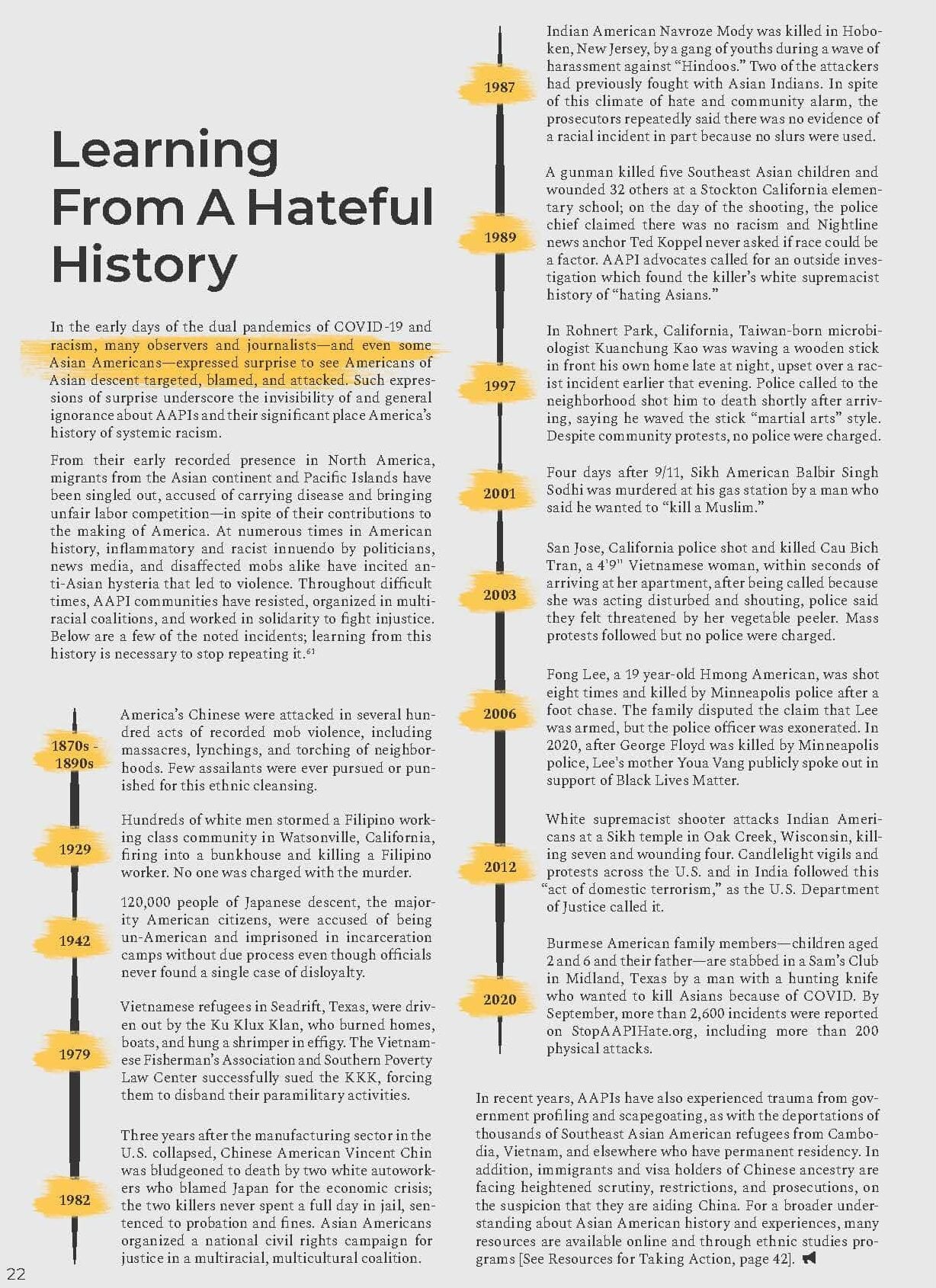
Text 43.04.05 — Created by One Nation Commission, this timeline traces a few of the notable dates in the long thread of anti-Asian violence and prejudice that preceded the massive wave of hate that accompanied the COVID-19 pandemic, when Asian American communities were blamed by some for the virus.
Despite the challenges faced by activists seeking justice for Vincent Chin, the movement was crucial for setting a powerful example and inspiring Asian Americans throughout the US to speak out for their communities through pan-ethnic and multiracial solidarity. Through such solidarity work, Asian Americans can challenge bigotry and racism, disrupt stereotypes and false narratives, and replace ignorance with public education and awareness. By organizing and building an advocacy network, they can empower Asian American communities to be full participants in American democracy.
Glossary terms in this module
civil rights Where it’s used
Personal rights guaranteed and protected by the US Constitution and laws, which include protection from unlawful discrimination, including on the basis of race, color, national origin, disability, age, religion, or sex (including pregnancy, sexual orientation, and gender identity).
pan-Asian Where it’s used
A term used to describe the political alliance of people and groups from different Asian ethnic backgrounds.
solidarity Where it’s used
A political, cultural, and collective stance that recognizes the mutual responsibility and support that is necessary to achieve change. Solidarity taps into the power in numbers and considers the collective interests of communities.