





Mary Harrison Lee mugshot, front facing and in profile. Lee wears a floral print dress with short hair and the mugshot board around her neck.
Module 4: The Fight for Civil Rights
Are Asian Americans who live in the United States South impacted by their experiences in the South?
In New Orleans in 1892, Homer Plessy boarded a train car designated only for white passengers. Plessy, who was a mixed-race Black man, purposely violated a Louisiana segregationist law in an act of civil disobedience. Police arrested him and brought him to trial. He appealed, and his case went to the Supreme Court in 1896.
As the court formed their arguments in Plessy v. Ferguson, Justice John Marshall Harlan considered the rights and social privileges of Chinese passengers. At the time, Chinese people could not naturalize as US citizens, nor could they emigrate freely. Despite these restrictions, they could still ride the “whites-only” cars. For Harlan, this inconsistency proved that Louisiana’s law denied the rights of some US citizens, including those who were Black.
Much of the formation and history of the South involved slavery and segregation. Asian Americans held uncertain placement in a racial hierarchy that placed white people at the top and Black people at the bottom. They faced different treatment across the South during the Jim Crow era. Asian Americans had to make decisions for their safety in segregated spaces.
While some felt comfortable in “whites-only” areas, others opted for the “colored” areas. Before the civil rights era, Asian Americans played a key role not only in questioning and exposing problems of segregation, but in advocating for their own rights and the rights of other people of color.
In this module, we will learn about how Asian Americans navigated school segregation and laws against interracial marriage. Furthermore, we will explore how Asian Americans participated in the civil rights movement across the South.
How did Asian Americans navigate the racially segregated South?
Why did legal cases about Asian Americans position them in varying ways as white-adjacent or non-white?
What role did Asian Americans play in the fight for civil rights across the South?
School Segregation
In 1924, nine-year-old Martha Lum and her sister Berda started school at Rosedale Consolidated High School, a “whites-only” school in Rosedale, Mississippi. At the lunch break, they were told that they could not continue at the school and would instead have to attend the “colored” school, as the school for African Americans was known. Because the “colored” school was less resourced than the “whites-only” school,” Martha and Berda’s father sued to send Martha to Rosedale. (Only Martha was named in the court papers.)
The lower courts were divided over how to define who was “colored.” The Supreme Court ultimately ruled in Lum v. Rice that Mississippi was not obligated to keep separate schools for children of every race, and Martha was not entitled to attend a white public school.
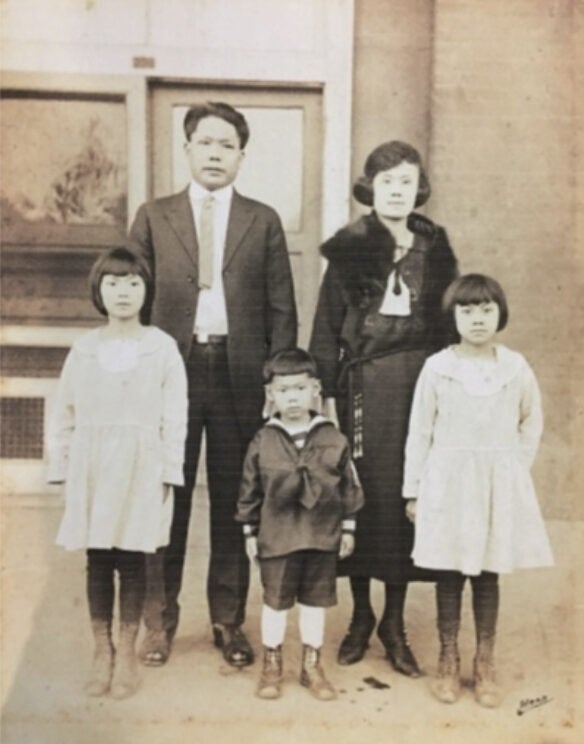
Image 29.04.01 — Martha and Berda Lum with their parents, date unknown, but presumed to be a year or two before the 1924 Supreme Court decision Lum v. Rice that determined that Mississippi could exclude Chinese from whites-only schools.
Rather than send their children to a less resourced school, the Lums and other Chinese Americans in the Delta moved away to Memphis or Arkansas or other locales where their children would be accepted into white schools. In Cleveland, Mississippi, many children attended a Chinese-only mission school. About thirty years later, the Supreme Court struck down segregation as the law of the land in Brown v. Board of Education (1954). This ended the legal question of where Asians could go to school in the South, though informal segregation among schools continued.
Chinese Americans, and Asian Americans more broadly, handled their social position in highly segregated areas of the South in complex ways. Describing this population as “between” Black and white does not fully capture the complexities of migration, segregation, and community-making.
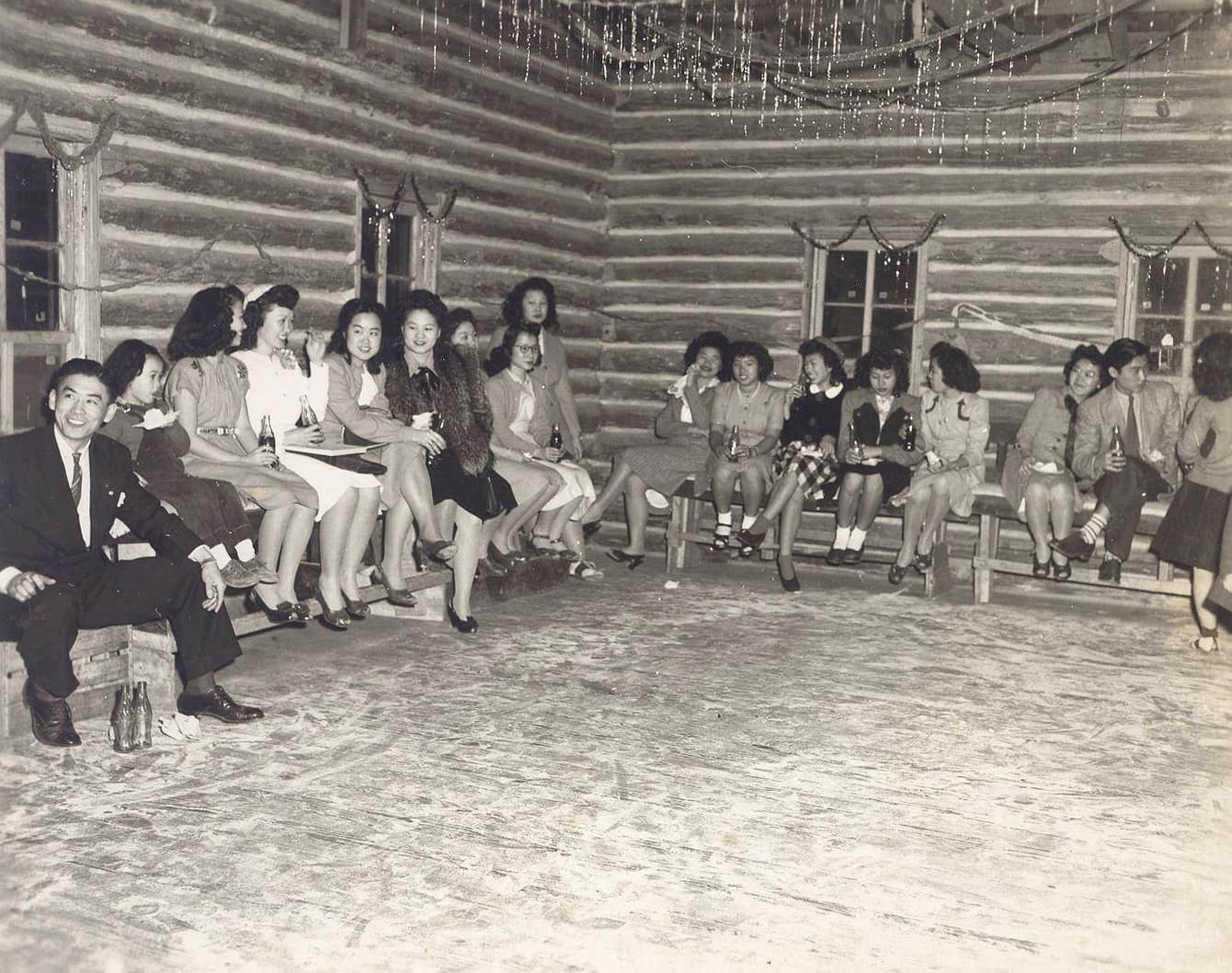
Image 29.04.02a — This all-Chinese American dance in 1946 was a safe space for young Chinese Americans to dance together and perhaps look for future partners during the era of segregation.
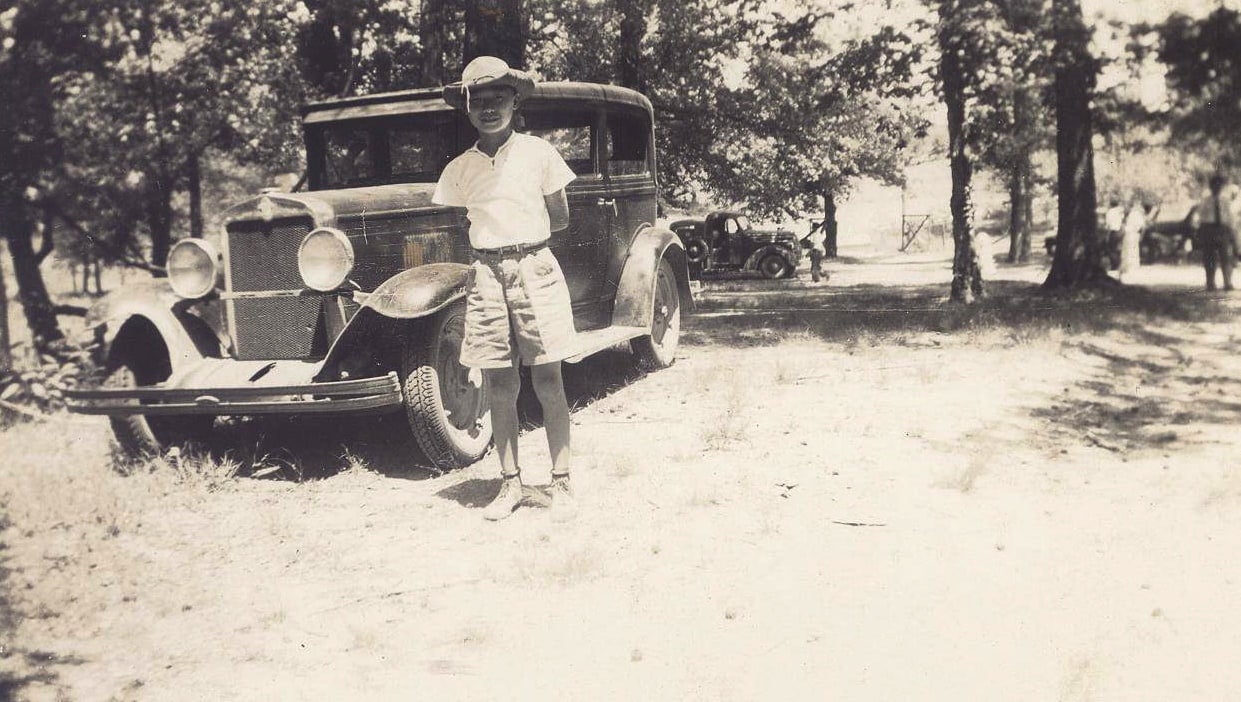
Image 29.04.02b — Pershing Wong stands in front of a car in 1938 in Rosedale, Mississippi. As for African Americans, cars provided a means for transportation that avoided segregated waiting rooms and transport and often, for Asian Americans, the very localized question of which room or seats to use.


Interracial Marriage
Several states across the country had limited marriage between Black people and white people. In the late nineteenth century, some states expanded their prohibition of interracial marriage, banning unions between white and Asian people, who were described in laws with terms like “Mongolian” or “Malay.”
Ham Say Naim was a Chinese-born sailor whose US visa permitted him “shore leaves,” or time to spend on land. On a shore leave in Virginia in 1952, he met Ruby Elaine Lamberth, a white US-born citizen with two daughters. They married shortly after in North Carolina, because the state had not restricted marriage between white and Asian people.
Ham then applied for citizenship, but his application languished without response. At the time, the US government became suspicious of Chinese immigrants, particularly sailors, due to China’s recent Communist takeover. After a year of marriage, Ruby requested an annulment. The couple went to court, and the Supreme Court of Virginia upheld Ruby’s request, stating that it was illegal for the couple to marry in another state to elude laws prohibiting interracial marriage.
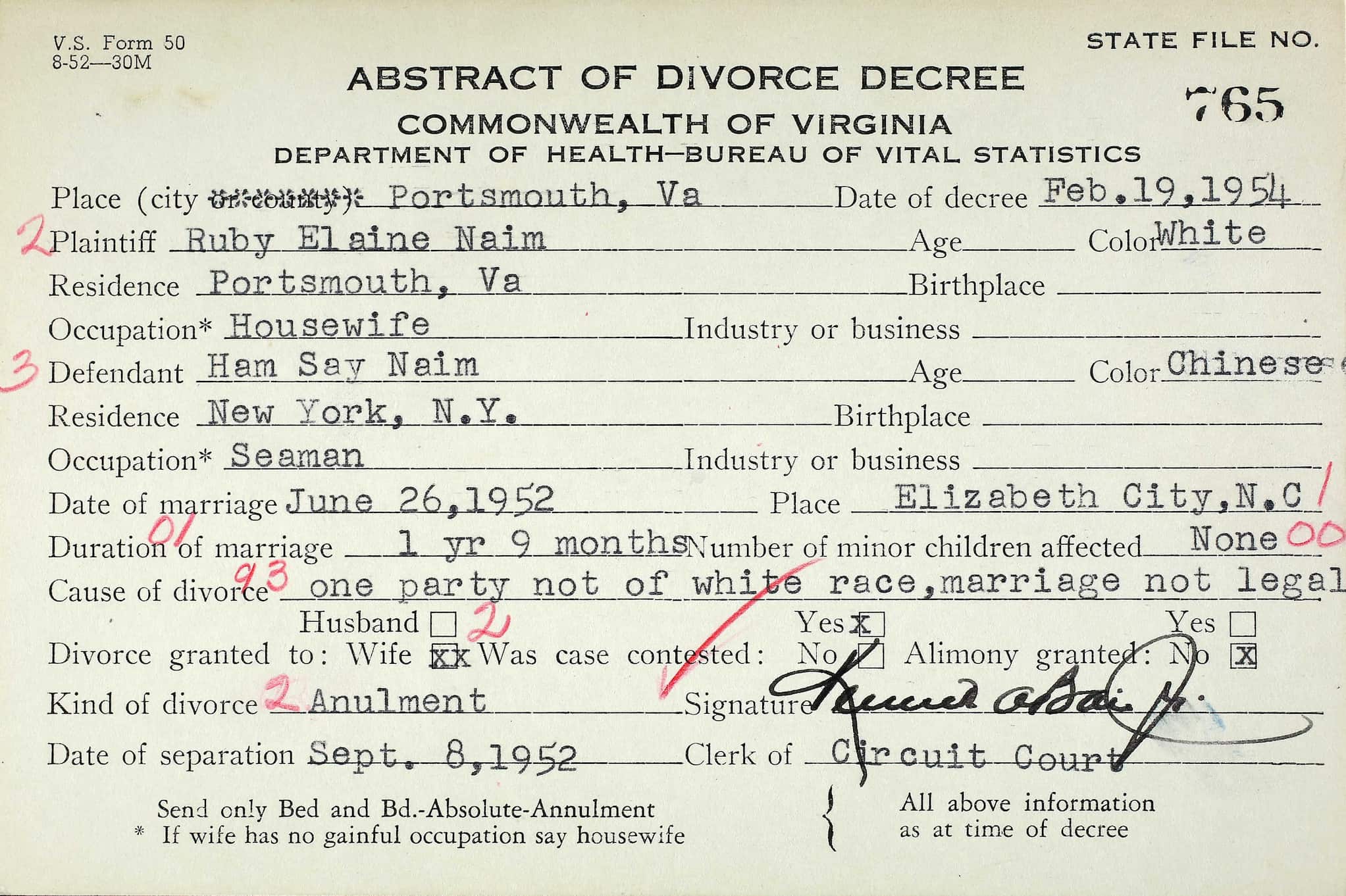
Image 29.04.03 — This document annulling the marriage of Ruby and Ham Say Naim lists his “color” as Chinese, and the cause of divorce as “one party not of white race, marriage not legal.” Interracial marriages were explicitly prohibited in many Southern states.
The intersecting complications of citizenship and interracial marriage likely placed stress on the Naims’ brief marriage. But these conditions also allowed Ruby to end the marriage. Naim v. Naim could have become a test case for the legality of interracial marriage nationwide, but the Supreme Court declined to hear it. Asian Americans across the country struggled with different interracial marriage laws, which slowly were contested in the West. It was not until a Supreme Court decision in Loving v. Virginia (1967) that interracial marriage was legalized nationwide.
Fighting for Rights
During and after World War II, the growing US economy and its status as a world superpower led to even more heated conversations about equality. The growing Asian American population started to engage in more protest and activism to claim civil rights for themselves and others. Asian Americans already living in the South became civil rights activists, while others traveled to the South to join efforts to desegregate the South and uphold voting access for Black people. Many risked their lives for their belief in racial equality.
Kei Kaneda, then known as Kay or Kayelise, arrived in Chapel Hill to attend the University of North Carolina in 1946. Kei and her family, originally from Stockton, California, had been incarcerated in the Rohwer camp in Arkansas during World War II. Most of the family resettled in Philadelphia, while Kaneda pursued her studies first in Virginia and then North Carolina. When Kaneda arrived, she joined a student group called the Snuffbuckets, an activist group associated with the progressive Presbyterian Church of Chapel Hill and its influential minister.
The Snuffbuckets led integration efforts in the town and state, often facing violent attacks. In one case, a large mob of white men ran them out of Columbia, North Carolina, where they were helping to build the headquarters of a Black credit union. Kaneda’s experiences led to a lifelong commitment to activist efforts, up to her leadership of the New England Japanese American Citizens League during the redress era for the Japanese American incarceration.
Several individuals joined the Civil Rights Movement of the deep South in the 1960s, most coming from Hawaiʻi or the West Coast to join groups such as the Student Nonviolent Coordinating Committee, the Southern Christian Leadership Conference, and the Delta Ministry.
Mary Magdalene Harrison (later Lee), an adoptee born in the Philippines and raised in Mississippi, attended Tougaloo College, a historically Black college and important hub for civil rights activity in Mississippi. In 1961, she went on a Freedom Ride to desegregate transportation and was arrested at the bus waiting room in Jackson, Mississippi. When police detained her, she refused to admit her ethnicity for fear of being separated from her companion, a Black woman.
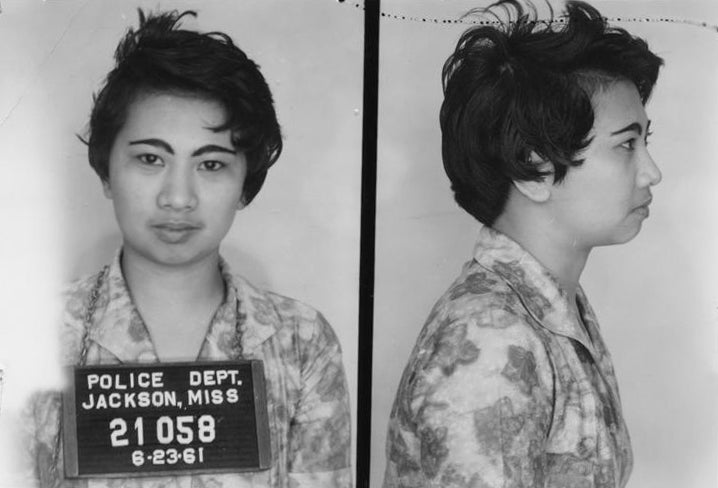
Image 29.04.04 — A mug shot of Freedom Rider Mary Harrison (later Lee), a Tougaloo College student, after she and three other activists were arrested in 1961 in a bus waiting room in Jackson, Mississippi, for violating segregation laws.
Listen to
An interview with Mary Harrison Lee
Mary Harrison Lee: It was just a way of life that you had to accept. You weren’t happy about it, but you lived it because that was it. But being in the NAACP, you begin to see that there’s a possibility that there could be some changes made. And once the Freedom Riders started coming through, then you knew that there was a change that was going to be made. And we had to be a part of it.
We were scared, but we knew we had to do it. We had to go through with it. And even during the time that we were being housed at the college, Jackson State, we—the fear was there, but the determination was there also. We knew that it was time for a change and we had to be a part of that change. It wasn’t just for us, but it was for our children and our grandchildren.
We wanted them to have a better life than what we had had. We wanted them to be able to go where they wanted to go and do what they wanted to do without being segregated. And that was our main goal, to make it better for the future generations.
Audio 29.04.05 — Mary Harrison Lee recollects how she became involved in the civil rights actions against segregated transportation, and her experience of being arrested and jailed in Jackson, Mississippi.
Two Tougaloo faculty members also joined efforts to desegregate Jackson. Hamid Kizilbash, from Pakistan, and Savithri Chattopadhyay, from India, took Black students into segregated cinemas and restaurants. The owners of one restaurant became confused when South Asians brought Black companions with them, so they banned South Asian customers.
In 1964, Ram Manohar Lohia, a prominent Indian independence activist and member of the Indian parliament, attempted to desegregate that same restaurant. Lohia was a diplomat, and whites-only businesses in the South often served African and Asian diplomats as an exception. Police removed him from the restaurant and arrested him, and soon after the US State Department apologized to the Indian Embassy.
Only a few days later, Kizilbash was attacked violently as he drove several Tougaloo activists from a meeting about voter registration. A mob of cars and trucks suddenly blocked his car’s path. When he rolled down his window, people grabbed him and beat his head with a billy club. Reverend Ed King, the college chaplain who was also in the car, convinced the lynch mob that Kizilbash was Lohia, the diplomat the mob had probably seen in the news.
King told them that if the driver died, they would face severe repercussions for killing a foreigner and diplomat. After they escaped, his companions escorted Kizilbash to the governor’s mansion. The governor had claimed there was no racial violence in the state. Dripping blood on the marble steps of the mansion, Kizilbash and the others were turned away.
Fellow activist Joan Trumpauer Mulholland described this episode as the closest she felt she came to death during her civil rights work, and infamously, three weeks later, three civil rights workers were murdered nearby.
More to explore
Audio
07:05
At the Heart of the Civil Rights Movement
Kiyoshi Kuromiya, who had been born in a Japanese American concentration camp in Heart Mountain, Wyoming, during World War II, was one of the activists who came to work in the South. He was part of diner sit-ins organized by the Congress of Racial Equality (CORE) in Maryland in which groups of activists would sit in whites-only diners and ask to be served. Kuromiya, Martin Luther King, Jr., and others were assaulted by police in Birmingham, Alabama, when working to register Black voters.
Continued Struggle for Civil Rights
The Civil Rights Act of 1964 outlawed segregation, but the fight for civil rights and equity continued across the country. In 2023, the Sikh Coalition joined other organizations to advocate for hate crime legislation in South Carolina—one of only three states without a hate crime law.
Many have turned to education policy to foster cultural understanding and end prejudice. In Texas, advocates pushed for education about Sikh cultural and religious traditions starting in 2010. In 2023, Florida mandated inclusion of Asian American and Pacific Islander studies in curricula. Alabama, Mississippi, Virginia, and Washington, DC, also have Asian American and Pacific Islander studies topics in their curricular standards. However, these mandates and standards are increasingly under attack.
Although Florida supported the inclusion of Asian American and Pacific Islander topics in their public education, the state also banned Advanced Placement (AP) African American Studies courses. In Texas, the consideration of Asian American and Pacific Islander studies was postponed from 2022 to 2025. These differing outcomes raise questions about solidarity, allyship, and implementation. Grassroots activists, community leaders, and legislators continue to fight for civil rights, civic engagement, and representation across the South.

Image 29.04.08 — In 2022, Ayaan Moledina, then thirteen years old, was one of many community members who advocated for the inclusion of Asian American histories in Texas social studies curricula. After the initiative ran into heated opposition, its formal consideration was deferred for years.
Glossary terms in this module
Brown v. Board of Education Where it’s used
A landmark 1954 Supreme Court case examining the segregation of public education, initiated by an African American family in Kansas. The decision unanimously ended legal segregation of public facilities.