




The displayed Khmer Rouge uniforms consist of black long-sleeved shirts and pants with a red checkered woven cloth tied at the neck.
Module 3: Genocide and State Violence
Did Cambodian Americans attain justice for the harms of war and genocide?
My husband is the last historian. The others were found out by Angkar early on, taken beyond fields, to black holes, dark corners of temples, some say, to Ratanakiri, then thrown into Laos, some say. Nobody can know they were our friends, not now, not in Year Zero. Now alone, he can’t help his research. I hear him in secret…. His song of labyrinths stops when a spy passes our hut…. They have the many eyes of a pineapple.
– Monica Sok, excerpted from “I am Rachana,” A Nail the Evening Hangs On 1
In the poem “I am Rachana,” poet Monica Sok takes on the imagined voice of Rachana, a singer and wife to Rithisal, the historian introduced in the earlier poem “The Radio Host Goes into Hiding.” Through Rachana, Sok illustrates the lived experience of Khmer Rouge policy from 1975 to 1979 during the Cambodian Genocide. “Angkar,” meaning “The Organization,” referred to the initially secret ruling body of the Khmer Rouge government, led by the politician and dictator Pol Pot. “Year Zero,” a term popularized by French writer Francois Ponchaud, refers to the Khmer Rouge policy dictating the destruction and replacement of existing culture and traditions, and the beginning of a new society from scratch.
State violence in Cambodia from 1975 to 1979 has been referred to by many names. In addition to Year Zero, the period of Khmer Rouge terror has been referred to as the Cambodian Genocide, Cambodian Auto-Genocide, Cambodia’s Holocaust, and Cambodia’s Killing Fields. For many survivors of Khmer Rouge rule, the historical period is referred to as “samay Pol Pot,” meaning the “Pol Pot era” or “time of Pol Pot.”
The debate around what to call the state violence in Cambodia reflects the limits of law and, specifically, international law. What becomes law is dependent on transnational context and global relationships of power. The law is always incomplete and cannot account for the full range of human experience. As discussed in previous modules, after World War II, international law was revised and modern laws of war were developed. One of the emerging concepts was the idea of genocide, enshrined in the United Nations Convention on the Prevention and Punishment of the Crime of Genocide (UN Genocide Convention), adopted on December 9, 1948.
This module addresses the topics of genocide and state violence, which help us to better understand the meanings of genocide in international law. We learn about the conditions that shaped experiences of the Cambodian Holocaust of 1975–1979. The module also explores the everyday actions that people living under state violence took in order to survive.
What was the Cambodian Holocaust?
According to international law, what is “genocide”?
How did Cambodians respond to and survive state violence?
Genocide and International Law
Polish-Jewish lawyer Raphaël Lemkin is popularly known as the “father” of the term “genocide,” coined in his 1944 book, Axis Rule in Occupied Europe. Lemkin conceptualized the crime of genocide broadly, as not just mass killing or expression of hatred, but the set of actions taken to produce destruction of a group of human beings—what he called “social collectivities.”
In Axis Rule, Lemkin noted that genocide was frequently committed with the intention of destroying political groups, such as Nazi destruction of Communist activities, and incarceration of political prisoners. As Lemkin began campaigning for genocide’s recognition as a crime under international law however, he narrowed his earlier definition regarding the conditions that likely lead to genocidal violence. Rather than reflecting a more universal understanding of the reasons for mass violence, what became the UN Genocide Convention reflected a Cold War compromise by delegates representing the most powerful nation-states at the time, specifically the US and Soviet Union.
More to explore
Image
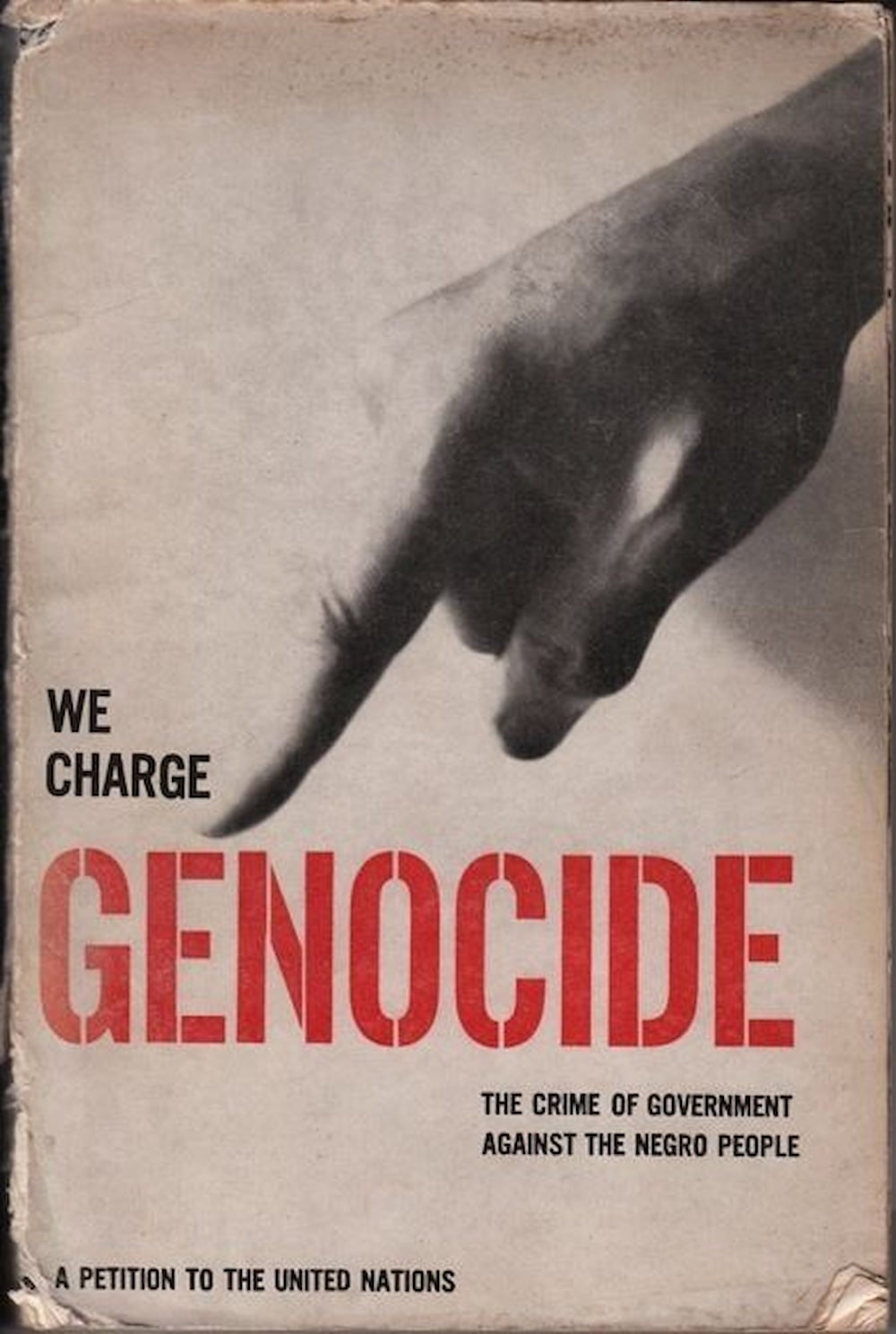
We Charge Genocide
In 1951, the Civil Rights Congress presented a petition to the United Nations in Paris that charged the US with committing genocide against its African American population. Drawing on the 1948 UN Genocide Convention’s definition of genocide, We Charge Genocide laid out a meticulously researched case.
The Convention defined genocide as any of five “acts committed with the intent to destroy, in whole or in part, a national, ethnical, racial or religious group.” These include:
- Killing members of the group
- Causing serious bodily or mental harm
- Inflicting on the group conditions of life resulting in its physical destruction
- Imposing measures intended to prevent births
- Forcibly transferring children to another group
Signatories to the Convention vowed to prevent and punish genocide, a crime under international law, “whether committed in time of peace or in time of war.” 3
In Cambodia, the targeting of ethnic groups such as the Cham and Vietnamese during the Khmer Rouge regime would be considered acts of genocide under international law. Most of the killing of the ethnic Khmer population, however, would not be defined as such. Lemkin’s original formulation of genocide accounted for persecution against political groups and destruction of a human group’s way of life. It is this expansive definition that aligns with a more complete understanding of the devastation of the Khmer Rouge’s rule in Cambodia.
Although political groups are absent from the rule of law, scholars argue that genocides and mass killings should be understood as political acts relating to questions of power. Genocidal violence is not natural, primordial, or determined by cultural characteristics, and it does not “just happen.” Genocide results from a combination of historical conditions and acts initiated with political motives and objectives in mind. The Cambodian Holocaust may now be synonymous with “the tragedy of Cambodian history.” However, as evidenced by the discussion of local and global conditions, and political decisions made by historical actors in the next section, genocide and the rise of the Pol Pot group were not inevitable.
Communism and the Rise of Pol Pot
The emergence of nationalist movements for independence in Cambodia began during French colonialism in Indochina. The Khmer Issarak (“Independent Khmers”) were a group of revolutionary nationalists in Cambodia. During the First Indochina War (1946–1964), the Khmer Issarak fought alongside the Viet Minh (League for the Independence of Vietnam) against French colonial troops. After initially welcoming the returning French after World War II, Prince Norodom Sihanouk became increasingly invested in Cambodian independence.
After diplomatic negotiations, Sihanouk declared Cambodian independence on November 9, 1953. Although Sihanouk’s nationalism was defined by a foreign policy of neutrality, his domestic policies were often contradictory and repressive, including the banning of Khmer newspapers. In response, half of Cambodia’s communists fled for exile in Hanoi, Vietnam, and the members that remained in Cambodia either deferred to Sihanouk’s policies, were jailed, or disappeared.
During the 1960s the Communist Party of Kampuchea (CPK) was small, with members in exile abroad and others the members of guerilla groups scattered throughout the countryside. Sihanouk pejoratively coined the term “Khmer Rouges,” French for “red Khmers,” to refer to all leftist groups. This became popularized as “Khmer Rouge” in English and now the term widely associated with the Pol Pot regime.
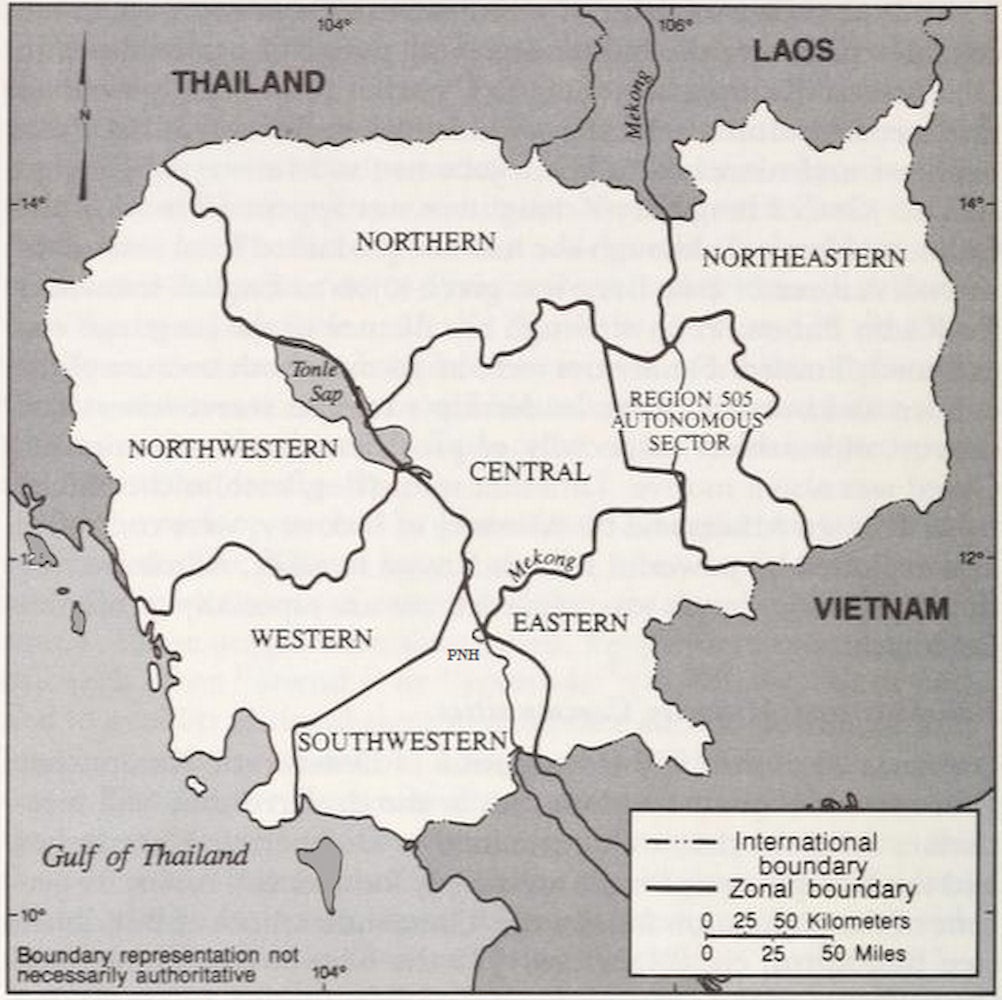
Image 08.03.02 — After the Lon Nol coup of 1970, during the Cambodian Civil War, the Khmer Rouge divided the country into geographic zones. These zones would become administrative divisions during the period of Democratic Kampuchea from 1975 to 1979.
As early as the mid-1960s, three major political factions appeared in the Cambodian Communist movement:
- The first faction consisted of Vietnamese-aligned veteran leadership, largely from rural and Buddhist backgrounds, who saw the Cambodian struggle as an international one. Relatively moderate, this group was largely trained by Vietnamese in the Khmer Issarak movement or in Vietnam. Many were the first to be eliminated in the early 1970s.
- The second faction was attracted to the ideology of China’s Cultural Revolution and included students and teachers.
- The third faction was a national chauvinist group led by Paris-trained militants, including Pol Pot (known as Saloth Sar at the time), Ieng Sary, and Son Sen, who eventually became central leadership of the CPK. Many came from elite or middle-class backgrounds and were highly educated. Quietly slipping away from their teaching jobs in the capital to the northeast, this group began planning an armed rebellion against the Sihanouk regime.
In 1965, large numbers of American troops began arriving in Vietnam and war came to neutral Cambodia. Civil war broke out in the countryside. In 1970, pro-US Lon Nol overthrew Sihanouk in a military coup, Sihanouk aligned himself with the CPK, and the Kingdom of Cambodia became the Khmer Republic. Cambodia became increasingly caught up in the war in Vietnam, and Lon Nol’s army massacred thousands of Cambodia’s ethnic Vietnamese residents.
The Pol Pot group gained the decisive upper hand during the height of US bombing in Cambodia. Hundreds of thousands of Cambodians were killed or wounded, and whole towns and villages were razed by B-52 bombing. The extension of the Vietnam War into Cambodia devastated the rural economy, with rice production plummeting from 3.8 million tons to less than one million, ushering in eventual starvation. The country’s urban centers swelled with displaced people, and Phnom Penh’s population grew from about half a million to almost two million by 1974.
The US bombing transformed many in the revolutionary army, especially the young peasant cadre, who would become the full-time youth militia most loyal to the Khmer Rouge cause. An interviewee tells political scientist Khatharya Um:
The ten-to-twelve-year-old youth were the worst. They called themselves mit bang [elder comrade] and would count our heads with a club. If one person were missing from the group, the leader of the group would be pulled out, made to kneel down and be executed immediately in front of everyone.” 4
In 1973 Pol Pot achieved the position of CPK Party leader and began purges in earnest. US bombs and Pol Pot massacres decimated revolutionary cadres, leaving a political vacuum in many localities that was filled by ever harsher groups of revolutionaries. Lon Nol’s government was defeated, and by 1977, the Pol Pot group had full control over Cambodia’s Communist Party and the national government.
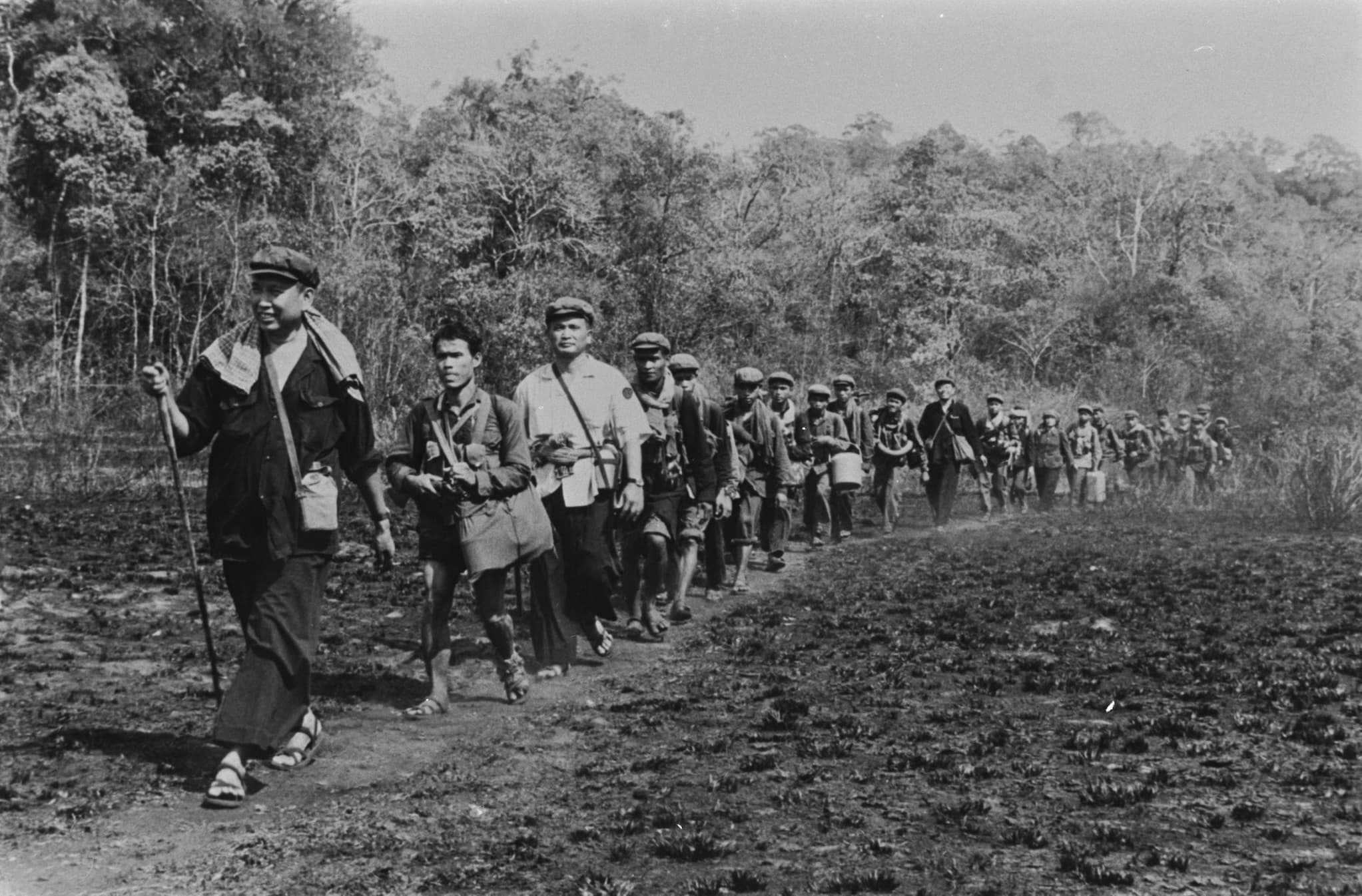
Image 08.03.03 — The Communist leader Pol Pot (far left) and members of the Khmer Rouge in May 1979. The regime, defined by militarism, racism, and territorial expansion, was responsible for the horrific Cambodian Holocaust that claimed the lives of up to two million people.
Democratic Kampuchea and the Killing Fields
On April 17, 1975 Cambodia’s capital was taken by revolutionary troops, including Khmer Rouge cadres of the Pol Pot group. Phnom Penh was evacuated, followed by the evacuation of other cities. These relocations resulted in greater government control over citizens and became a hallmark of the Pol Pot regime. Roeun Sam recalls her experience as a fourteen-year-old during Khmer Rouge rule:
I was at so many camps, and again they moved me. Here my job was to fix the same dams that supplied water to the rice fields. If there was too much water the rice would spoil and die. If this happened we would be punished and not get any rice. Sometimes I had to dig in the small creek in order to get clay for the dam. I was very small, and I had to swim to get the clay out of the creek bed. 5
Listen to
The National Anthem of Democratic Kampuchea under the Khmer Rouge
(Singing in Khmer.)
Audio 08.03.04 — “Dap Prampi Mesa Moha Chokchey” was proclaimed the national anthem of Democratic Kampuchea under the Khmer Rouge on January 5, 1976. Although some claim that Pol Pot himself might have written the piece, its origins remain unknown.
The Khmer Republic became a new state called Democratic Kampuchea. Khmer Rouge leaders labeled urban populations “new people,” and forcibly settled them among rural “base people” in the countryside. “New people” were put to work in labor camps without wages or rights, and the country was divided into new administrative zones.
The regime under Pol Pot was defined by militarism, racism, and territorial expansion. Its goal was to rapidly build Cambodia into a developed industrial country. The regime abolished domestic markets, wages, and currency. Zones were administered by armed forces rather than by civilian cadres. Full-time youth militia stationed in each village, sometimes numbering in the hundreds, lived separately from peasant communities and were capable of brutal repression. Khmer Rouge cadres frequently resorted to capital punishment for minor infractions to compel compliance. After receiving news of her first husband’s death, Mrs. Sophat describes such tactics to anthropologist Aihwa Ong:
His entire family died; not even a niece or nephew survived. They killed all of them. We didn’t dare keep any of his pictures or addresses or anything. Otherwise, the Khmer Rouge would have killed my entire family. I buried his passport at Tuol Andet. I didn’t dare keep it for fear it would cost my life and those of his children. 6
The philosophy of the Khmer Rouge central committee was an extreme form of “self-sufficiency” and paranoia. They saw Vietnam as Cambodia’s “hereditary enemy” and defined Cambodians not fully aligned with their regime as traitors, “Khmer bodies with Vietnamese minds.” People were executed for being “Vietnamese spies” and enemies of the revolution.
No one was spared suffering during the Cambodian Holocaust, although the severity of treatment varied across region and time. The Khmer Rouge rounded up and killed thousands of Lon Nol officials, army officers, soldiers, and schoolteachers. A series of mass purges took place within the Communist Party and included the arrest and killing of large numbers of base people related to purged local officials.
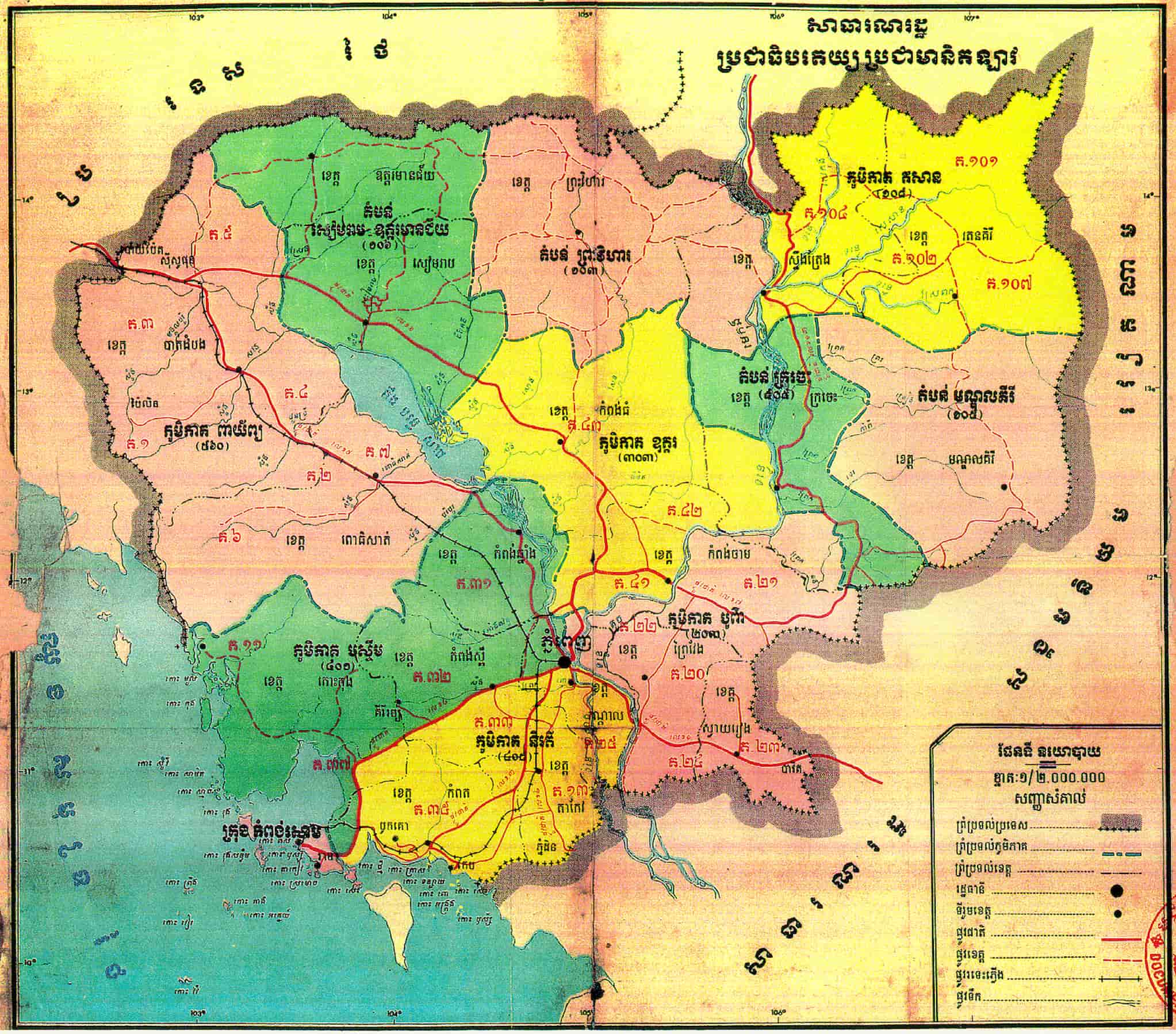
Image 08.03.05 — This map was first published by Democratic Kampuchea’s Ministry of Education in a 1977 Khmer Rouge text that described the regime’s administrative and political geography for a level-two elementary class.
Forced relocation usually accompanied large-scale purges. For instance, in 1978, forty thousand village inhabitants and local cadres were rounded up from the Eastern Zone and moved to the harsh environment of the Western Zone. Vast numbers of people starved, and others were exterminated. Refugees who fled to Vietnam told Australian journalist Wilfred Burchett that they had not been harassed by regular armed forces, but lived in terror of a young, ruthless militia group they called the “blackshirts.”
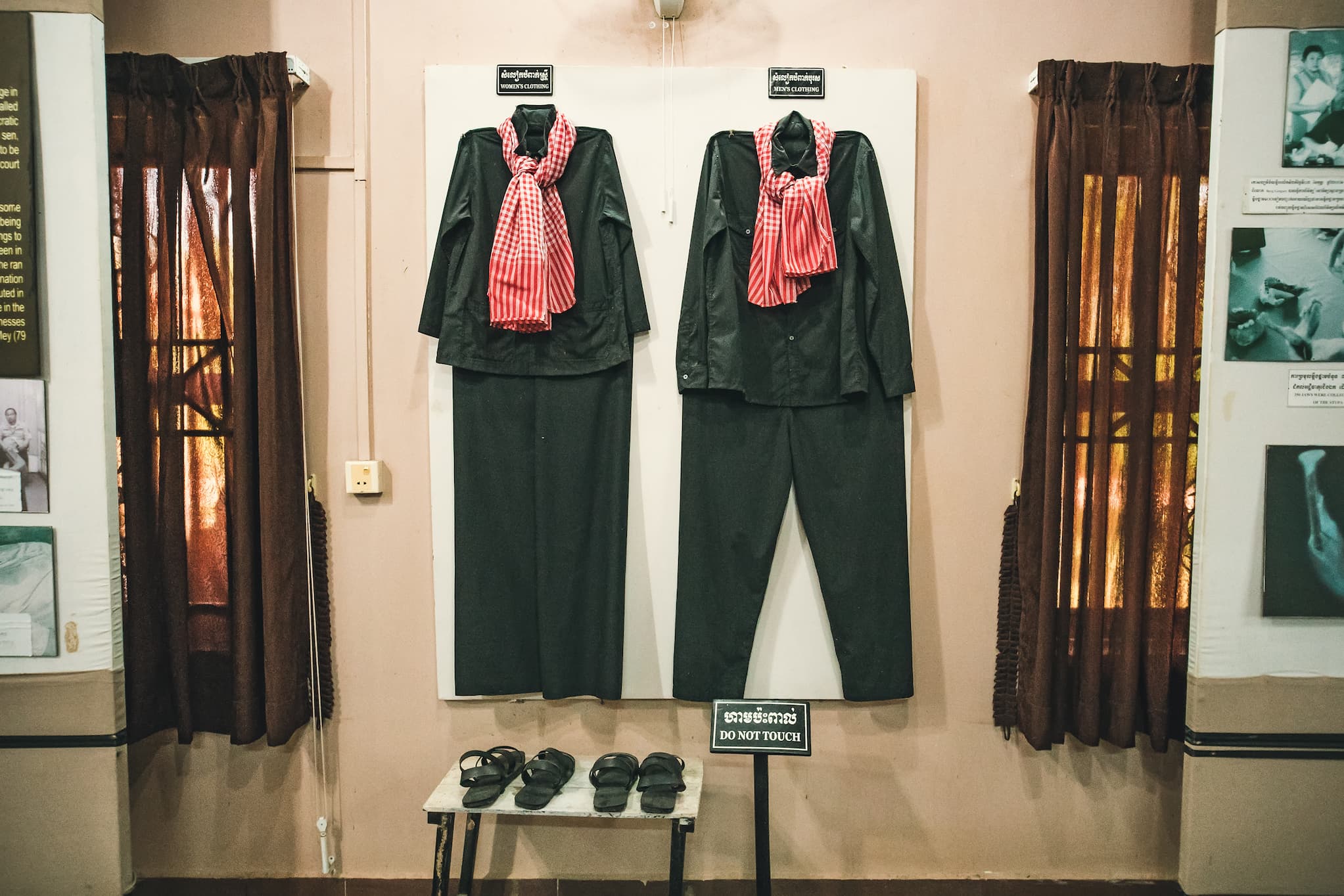
Image 08.03.06 — Khmer Rouge uniforms on display at the museum of Choeung Ek, near Phnom Penh in Cambodia. The shapeless, black, gender-neutral clothes were inspired by peasant garb and were required for men, women, and children enrolled in Khmer Rouge militias.
The Khmer Rouge’s security network was vast, ranging from makeshift village prisons to the highly structured S-21 (Tuol Sleng) interrogation center. S-21 was only one of 196 formally organized prisons that have been uncovered. Many more detention centers and unmarked prisons existed during the period of Democratic Kampuchea. In these prisons, hundreds of thousands of former soldiers, intellectuals, professionals, and others were imprisoned, tortured, and killed.
The year 1977 marked the Khmer Rouge’s increased border wars with Vietnam. These violent clashes with Vietnam happened as internal fears and paranoia regarding plots against the regime ramped up. The intensity of attacks against Vietnam and Vietnamese villages increased alongside ever-wider internal purges and Cambodian civilian deaths from overworking, starvation, disease, and denial of medical care. From 1975 to 1979 approximately 1.5 to two million people died during the Cambodian Holocaust.
State Violence and Everyday Survival (Author’s Personal Story)
In an oral history interview that I conducted in 2009 with the assistance of my sister, Sokunthea Chhun, my sister asked our father, “Did they [the Khmer Rouge] say anything to threaten you?”
He responded, “They just said… work. You work hard then… your life is longer. If you don’t obey the organization, your life is short…. They say… [in Khmer] if you want to live, plant the koh tree.”
Listen to
Heang Chhun on surveillance and fear during the Cambodian Genocide
Lina Chhun: (Speaking in Khmer.) Did they ever say anything to threaten you, or what did they say?
Heang Chhun: They just said that work, you work hard, then you, then you, your life longer. If you don’t obey the organization, your life short.
Lina Chhun: (Speaking in Khmer.)
Heang Chhun: (Speaking in Khmer.) — Like, cannot talk. If you want to live longer, you’re not supposed to talk, just work.
Lina Chhun: (Speaking in Khmer.)
Heang Chhun: (Speaking in Khmer.)
Audio 08.03.07 — This clip is excerpted from an oral history interview with the author’s father, Heang Chhun, conducted in 2009. In this discussion of surveillance and fear during the Cambodian Genocide, he explains the importance and value of silence to survival.
The word “koh” in Khmer is both the word for the kapok tree and for “mute.” My father’s reference reflects documented expressions of the value of silence from 1975 to 1979 in Cambodia. If Cambodians wanted to escape suspicion and stay alive, they had to obey Angkar and remain silent about the violent realities of life under the regime—quickly learning to “plant the koh tree.”
It can be easy to distance ourselves from historical violence. Atrocities like state terror and genocide feel far from our own everyday experiences, and we often look on in disbelief when we see evidence of mass violence. To work against the dehumanization that happens when we see survivors as only victims or heroes of their circumstances, we need to understand how individuals engage in everyday practices of survival. This module ends with examples that appear in my father’s story of the Cambodian Holocaust. His story does not stand in for all experiences of the genocide, nor is it exceptional. Rather, these examples reflect a few of the common and creative practices people engaged in to survive under constraints of absolute violence.
One example of adaptive silence was the practice of hiding one’s former occupation before the Khmer Rouge took power. My father describes how and why he hid his previous occupation as a soldier in the Lon Nol army:
Because when… the Khmer Rouge know that we are… military, something like that… they will… kill us immediately. So… I always tell them that I’m… a taxi driver. I… just like someone work for… small money for a living.
If the Khmer Rouge identified you as “threatening” to the revolution, you could be quickly and brutally executed. Former soldiers and intellectuals were targeted as enemies of the state. To survive, Cambodians crafted new life stories in place of the old.
My father’s narrative also illustrates daily acts of compromise that he and other survivors practiced as they grappled with malnutrition and the severe rationing of food resulting from a policy of collective eating:
But a lot of people steal a lot. Like me, like I steal the palm… tree water. I would steal up the tree and drink the palm water at nighttime, like that…. Like I sleep, like in the middle of the night, I go up, drink it, and come back, sleep. [Background laughter] Almost every night so the sugar, the, the sugar taste make me healthy.
In response to hunger and the possibility of starvation, many Cambodians risked death by secretly obtaining food in a variety of creative ways.
Listen to
Heang Chhun on the threat of starvation
Heang Chhun: They evacuated us to the countryside and they—they forced us to work like 15 or 16 hours per day. That, and might provide a little bit of food. Like usually we eat one (speaking Khmer) in that time, they used for 50 people or something like that. It’s very small and we almost died, but a lot of people still alive like me. Like, I steal the palm tree water. (Speaking in Khmer.)
Lina Chhun: (Speaking in Khmer.)
Heang Chhun: (Speaking in Khmer) –Usually do the same like… (speaking khmer) what way, I do the same back. I didn’t want them to recognize that someone steal it. Like I sleep in the middle of the night, I go up, drink it, and come back sleep. Almost every night, so the sugar—the sugar taste make me healthy.
Audio 08.03.08 — In this clip, the author’s father transitions from discussing the strict rationing of food and the threat of starvation during the Cambodian Genocide to talking about the clandestine practice of “stealing” he utilized in order to survive.
Later in the interview, my sister asks, “Was it only you, or did you see other people steal, too?” My father responded:
Yeah, most people steal…. But we, we not know each other and sometime we see some people do it but we don’t, we keep quiet because if we talk or told the authority they will kill them… or kill us, just, just to be living, every people do by their way… their own way.
Listen to
Heang Chhun on constrained choices
Lina Chhun’s Sister: (Speaking in Khmer.)
Heang Chhun: Yeah, we scared, but if I not steal, I so weak, I cannot work. And if you cannot work, you will die, why a lot of people die, because no energy. When we drink the palm juice, we have energy.
Lina Chhun’s Sister: (Speaking in Khmer.)
Heang Chhun: Yeah, more people steal, but we—we not know each other. And sometimes we see some people do it, but we don’t—we keep quiet because if we talk or told the authority, they will kill them or will kill—will kill us. Just, just to be living, every people do by their way. Their own way.
Audio 08.03.09 — In this clip, the author’s father considers the importance of context and constrained choices to the actions he and others took during that time. Moving away from inflexible measures of right and wrong, he makes space for a more complete understanding of different experiences of violence.
Here, silence emerges as a practice that protects both the individual and others who are secretly obtaining food. This example is also illustrative of the small acts of solidarity that can emerge between people under even the most constrained of circumstances. Small acts of care in the form of secrecy, or “turning a blind eye,” may not appear significant at first, but insomuch as they go unnoticed, these acts may provide necessary opportunities to see a way through the darkest of times. Arn Yan describes his mother’s courage:
I survived the Khmer Rouge largely because my mother really cared about me. She stole rice and vegetables. When she knew I had stolen something, she told me not to do it again. She said, “I am old and I will be dead someday. I don’t want you to die.” Even though she stole every day, there still wasn’t enough for us to eat. Luckily, we are alive today, and we lost only my father and my brother. 7
Glossary terms in this module
collective eating Where it’s used
One of the defining policies during Khmer Rouge rule in Cambodia, where communal dining halls and the strict rationing of food were introduced to monitor and exert greater control over people’s actions.
colonialism Where it’s used
When one country takes partial or complete control over another country economically and politically, exploiting its natural resources for profit. The colonizer forces their beliefs and way of life onto the colonized.
genocide Where it’s used
A term combining the Greek genos, meaning “race,” and the Latin cīda, meaning “killer” or “act of killing.” It refers to a set of actions taken with intent to produce the destruction in whole or in part of a national, racial, ethnic, or religious group.
Khmer Rouge Where it’s used
Also known as the Communist Party of Kampuchea, the Khmer Rouge party was led by Pol Pot and ruled over Cambodia from 1975 to 1979. During this time, the Khmer Rouge renamed the country Democratic Kampuchea, and enacted a totalitarian regime responsible for the Cambodian Holocaust.
refugee Where it’s used
Someone, or a group of people who have been forced to flee their native country due to war, violence, or persecution, and are unable or not willing to return.
The Cambodian Holocaust Where it’s used
The period of state violence perpetuated by the Khmer Rouge government of Cambodia, led by Pol Pot, from 1975 to 1979. During this time, up to two million Cambodians died from the effects of starvation, disease, illness, torture, or murder.
The Cold War Where it’s used
Beginning at the end of World War II and ending with the fall of the Soviet Union in 1989, the Cold War was a period of indirect war and rivalry between the United States and Soviet Union (USSR), and their allies. Though there was no direct fighting between the US and USSR, their rivalry brought forth numerous proxy wars in various regions, particularly in East and Southeast Asia. Typically characterized through arms races and the prevention of communism, the Cold War can also be understood as a global phenomenon that affected countries around the world, with significant consequences for decolonizing countries in Asia.
transnational Where it’s used
Extending beyond national borders and countries.
UN Genocide Convention Where it’s used
Also known as the United Nations Convention on the Prevention and Punishment of the Crime of Genocide, this was an international treaty adopted on Devember 9, 1948 that criminalized and defined genocide under international law following the horrendous events of World War II and its aftermath.
Year Zero Where it’s used
Beginning in 1975, this term was popularized by the French writer Francois Ponchaud to refer to the Khmer Rouge policy of dictating the destruction and replacement of all existing culture and traditions, and the beginning of a new society from scratch.
Endnotes
1 Monica Sok, “I am Rachana,” A Nail the Evening Hangs On (Copper Canyon Press, 2020), 47.
Monica Sok, excerpts from “I am Rachana,” from A Nail the Evening Hangs On. Copyright © 2020 by Monica Sok. Used with the permission of The Permissions Company, LLC on behalf of Copper Canyon Press, coppercanyonpress.org. All rights reserved.
2 Douglas Irvin-Erickson, Raphaël Lemkin and the Concept of Genocide (Philadelphia: University of Pennsylvania Press, 2016), 208.
3 United Nations, Convention on the Prevention and Punishment of the Crime of Genocide (1948), Article II.
4 Khatharya Um, From the Land of Shadows: War, Revolution, and the Making of the Cambodian Diaspora (New York University Press, 2015), 42.
5 Roeun Sam, “Living in the Darkness,” in Children of Cambodia’s Killing Fields: Memoirs by Survivors, eds. Dith Pran and Kim DePaul (Yale University Press, 1997), 77.
6 Aihwa Ong, Buddha is Hiding: Refugees, Citizenship, the New America (University of California Press, 2003), 44.
7 Arn Yan, “My Mother’s Courage,” in Children of Cambodia’s Killing Fields: Memoirs by Survivors, eds. Dith Pran and Kim DePaul (Yale University Press, 1997), 141.