





Module 4: Korean War
Have US wars forced Asian American and Pacific Islander communities to become who they are, or have these communities defined themselves on their own terms?
“We were brothers under the same sky
Until a short time ago…”
– Cho-Chi-hun 1
Cho-Chi-hun’s poem, “At Tabuwon,” describes the ongoing tales and travails of the millions of families separated, or yisan kajok, by the Korean War. With no peace treaty, this war has never ended officially, even though a ceasefire was signed in July 1953 and a DMZ (demilitarized zone) was created to buffer the divided country. The Korean War (1950–1953) was the first major armed conflict of the Cold War, occurring post-World War II (WWII).
The Cold War (1945-1991) was a sustained geopolitical conflict between the world’s main global super powers: the United States and its “first world” allies, versus the Soviet Union and its “second world” Eastern bloc countries. This global struggle between capitalism and Communism consisted of ideological turmoil and a nuclear arms race that did not result in any “hot” wars between the two sides over the course of forty-six years. However, several proxy wars (conflict between two nations that are not directly fighting each other) did spread across several countries including Korea, Vietnam, and other Southeast Asian nations.
This module discusses the causes and impacts of the Korean War, including the flows of displaced Koreans migrants to the United States. We will examine how the marginalized communities of military brides and young adoptees equally built new lives in the US despite the displacement, devastation, and despair they faced in the aftermath of the separation from their home or birth country.
How did Cold War geopolitics justify the United States presence in Korea?
To what extent did the Korean War create new flows of immigration into the US?
How does the adoption of Korean orphans and other children by American and European families tell another story about the Korean American experience?
Division of the Korean Peninsula
The Korean War partly stemmed from the post-WWII partition of the Korean Peninsula into two zones at the 38th parallel. After a thirty-six year occupation by Japan, it was ordered on August 15, 1945, to immediately leave the Korean Peninsula when Emperor Hirohito signed Japan’s surrender to General MacArthur of the US. The land was split between a US-controlled South and a Soviet-controlled North until the Korean people were deemed ready to self-govern. Within three years, both regions formed their own governments: Kim Il-Sung led the Communist North (Democratic People’s Republic of Korea), while Syngman Rhee led the pro-US South (Republic of Korea). On June 25, 1950, the Korean War began when North Korean troops crossed the 38th parallel and invaded the South, aiming to unify the peninsula under their control.
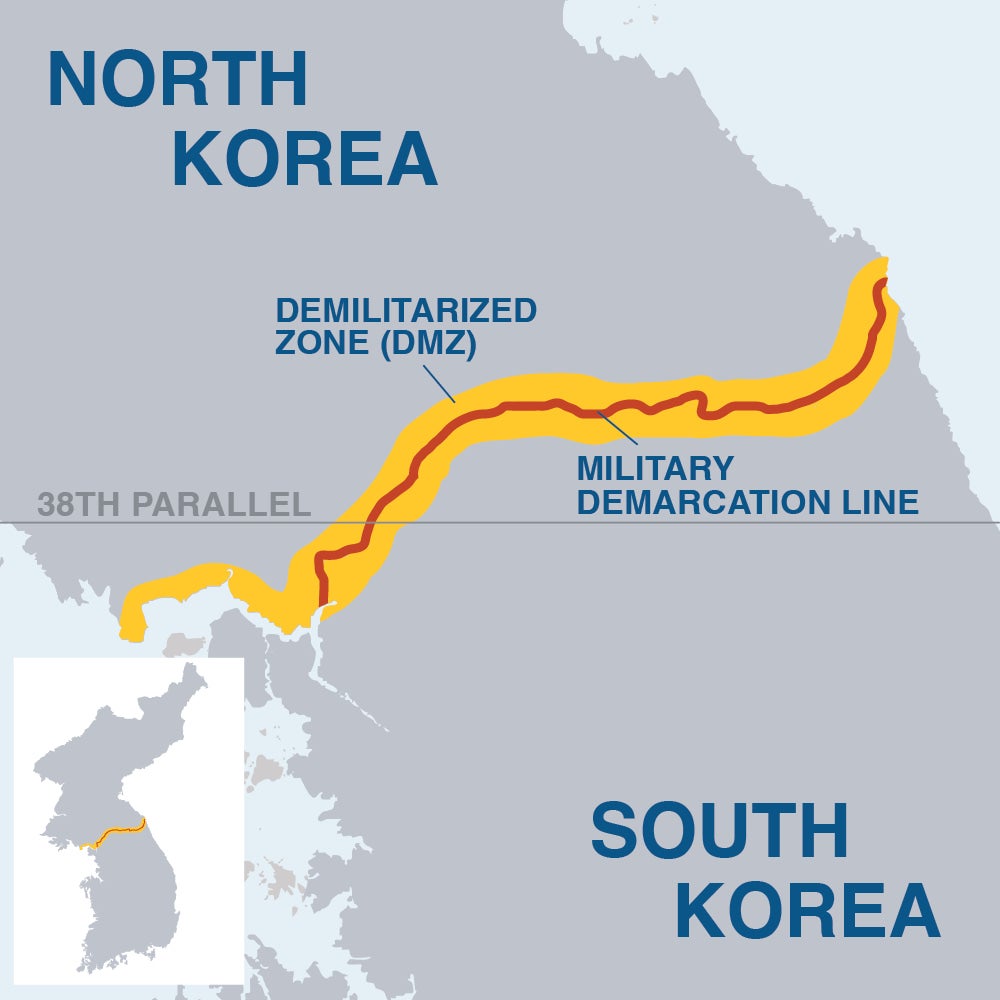
Image 05.04.01 — The Demilitarized Zone (DMZ) at the 38th parallel separating North Korea from South Korea was established by the Armistice Agreement in 1953.
The original terms of the international trusteeship stipulated there would be national elections, but when neither side could agree on conditions, outright civil war erupted. The United Nations and United States perceived the North to be a threat because a Communist victory would mean increased Soviet-influence in Asia. Fearing this would lessen American capitalism’s global influence, they mobilized to help the ill-prepared South fight the North.
The war came to a tenuous close in 1953 when the North and South signed an armistice, or truce—not peace—agreement. As Cho-Chi-hun’s poem demonstrates, families on both sides of the partition have been unfairly pitted against each other, and denied their hopes for personal or political reunification across the Korean peninsula.
New Flows of Migration to the US
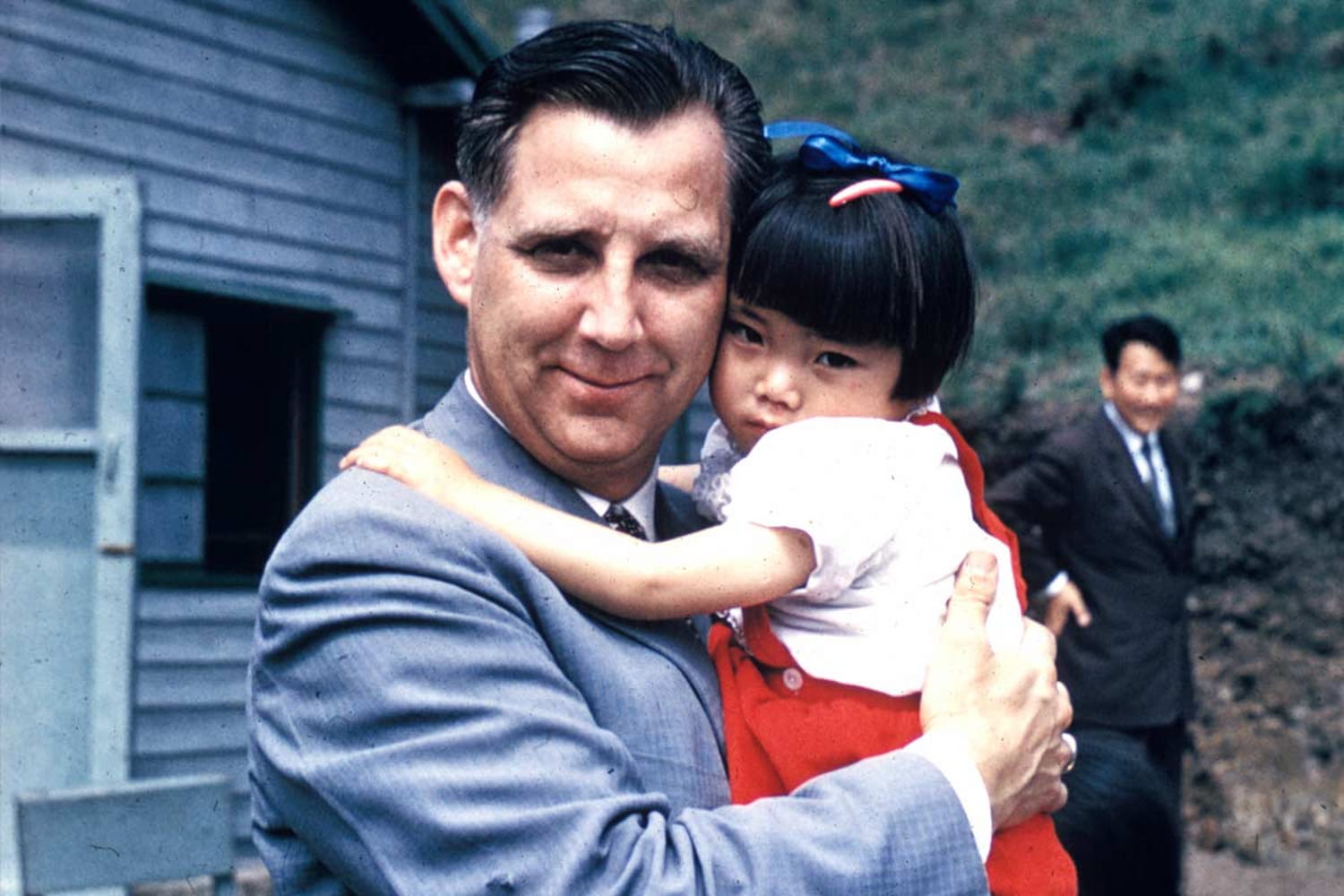
Deann Borshay Liem is an Emmy Award-winning documentary filmmaker who explores the Korean War and its lasting impact. In many respects, she was an all-American kid growing up in the 1960s in a solidly middle-class, white nuclear family. Old home movies captured her enjoying Easter egg hunts and Halloween. She was popular, too, having been elected homecoming queen and class president in high school. Meanwhile, Mrs. Vaughn, was also a paragon of American domesticity common at the time. She was the dutiful wife of a military veteran who was busy raising three kids.
What distinguished Deann and Mrs. Vaughn from their white peers is that both were recent Korean immigrants to the United States. Deann, born Kang Ok Jin, is a transracial adoptee, while Mrs. Vaughn was a “military bride” of an American serviceman stationed in South Korea. Both were part of a new wave of Asian immigrants whose presence in the US was a direct result of American domination in Asia after WWII. US military presence increased in the Asia-Pacific region after the Korean War, and set the stage for new, gendered migration flows to the US.
In the shadow of America’s military bases abroad, a variety of intimate relationships developed in what were called “camptowns.” Korean women worked in these American camptowns, with jobs ranging from civilian employees to sex work. Sex work commonly appeared around military installations where personnel often took advantage of the subjugated status of local women. Although work in the camptowns were a means of survival for the economically displaced, these women faced immense stigma and were deemed social outcasts.
Similar to Japanese women in US-occupied Japan post-WWII, Korean women who married American GI servicemen often faced scorn from both societies. Korean society often disparaged these so-called “war brides” as prostitutes, while Americans viewed them with suspicion, and at times with outright racism. Regardless of how Korean women came into contact with American soldiers, they faced rancor and distrust from both societies.
Noted by historians as the second wave of Korean American migration (1950-1964), this movement was a consequence of the Korean War and the US military presence in South Korea. Nearly a hundred thousand military brides from Korea immigrated to the US from the end of WWII to the end of the century. They navigated a complex world often marked by racism, isolation, and displacement. Despite these challenges, they formed close-knit communities, frequently gathering for Korean church services and social events to support one another in a new country.
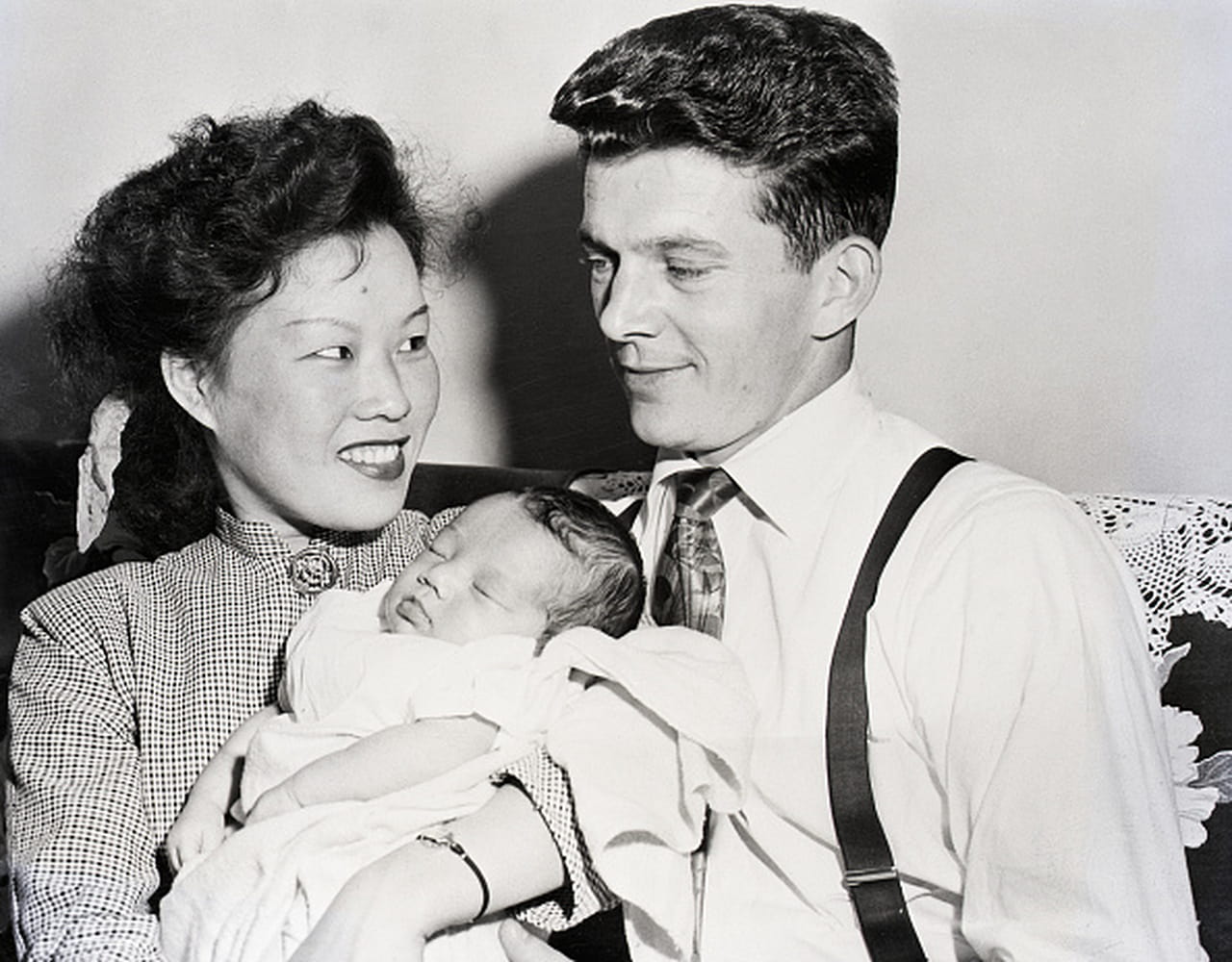
Image 05.04.02 — Sergeant Johnnie Morgan (right) with his Korean wife, Yoong Soon (left), and their newborn daughter Yvonne Arlene. Nearly 100,000 military brides from Korea immigrated to the United States between the end of World War II and the end of the twentieth century.
In addition to military brides, the war catalyzed a mass relocation of Korean and orphaned mixed-race children, many of whom suffered due to unfortunate circumstances, such as deaths of their parents, starvation, separation, and desertion by the American servicemen fathers. Due to the efforts of American missionaries and adoption agencies like Holt International, the transracial adoption of Korean children became a common phenomenon, peaking during the 1970s and 1980s among white American families.
The South Korean government promoted adoption to address the country’s economic struggles. It provided a means to remove already stigmatized or otherwise marginalized children. It was at this time, in 1957, when Deann (Kang) was born. Thousands of miles away, Arnold and Alveen Borshay, captivated by stories of needy Korean children, began to exchange letters with Kang. This set into motion a migration story that would become one of about fifteen thousand transnational adoptions between 1953 and 1962. The vast majority of this first wave of Korean adoptees to the West came to the US and were considered refugees. By 1961, they entered under a special provision for transnational adoptees.
Racialization Within and Outside of the Korean Community
These new immigrants represented a departure from earlier waves of Korean immigration that had come to Hawaiʻi and California before WWII. That first wave was largely concentrated in plantation work or agriculture, and leveraged their distance from Korea as a staging ground for independence activities against the repressive Japanese rule. In contrast, military brides and transracial adoptees had to bear the ostracism of both mainstream society and Korean immigrant communities, which viewed them as racial outsiders and reminders of the trauma of the Korean War.
One of Mrs. Vaughn’s contemporaries reflected that, “It’s hard to associate with Americans [because] they call us Oriental, Oriental girl,” referencing a term laden with negative stereotypes of Asians. 2 Another military bride recalled facing such criticism: “Those internationally married women were all yankee whores, they’ve never been educated…That’s how Korean society sees us, that’s their perspective.” 3
Women Creating New Lives
Despite the scorn they faced, military brides created new lives on their own terms, often finding community with each other. Whether in more formal organizations like the Korean International Daughters Society, or informal networks of friends found on military bases or churches, these groups have helped military brides find fellowship and solidarity. By raising funds for mixed-race orphans in Korea and promoting Korean culture in the US, these women challenge stereotypes of military brides as victims or traitors. Sometimes their gatherings offer the only opportunities to speak Korean, eat Korean food, or reminisce about their lives before immigrating. They also provide a support network for wives who may have suffered from domestic violence.
Individually, this wave of women have staked out new lives by obtaining greater education or opening their own businesses. Mrs. Vaughn, for example, took classes at her local community college and was determined to overcome the language barrier. She recalled with pride that learning was “so thrilling…I’ve improved [and] earned this much knowledge.” 4 Armed with those skills and her previous training in cosmetology, she opened up her own beauty shop at home.
Similarly, Korean transracial adoptees have crafted identities that transcend the ways both Korean and American societies have framed their very presence. Phrases like “Help Heal a Child’s Broken Heart” or “Sponsor a Needy, Neglected Korean Orphan” pulled at the heart strings of American families and created a very specific image of adoptees. Even the most sympathetic supporters of adoption viewed adoptees through a reductive lens, making them into pitiable figures requiring charity and salvation through American benevolence.
By contrast, the adoptees themselves have explored a far more complex identity in a variety of creative and artistic venues. They have reclaimed their Korean identity while also grappling with the racial hierarchies they still encounter despite the promise of integration into mainstream society. Their stories also challenge the view that America’s practice of transnational adoption excused or justified the brutalities and displacement caused by the Korean War.
Image 05.04.03a — Reverend Everett Swanson founded the Everett Swanson Evangelistic Association (now called Compassion International) in 1952 to advocate for adopting Koreans orphaned during the war.

Deann, for example, began to research her family history in greater depth and produced the documentary First Person Plural (2000), about her own story. In the course of investigating her adoption, she made two startling discoveries. First, she was not orphaned as she was led to believe, but was rather given up for adoption by her impoverished birth mother. Second, she discovered that she was actually sent to America in place of another child, Cha Jung Hee, whose biological family reclaimed her.
Deann’s life in many respects was turned upside down and compelled her to think about the contingencies and contentions between the life she lived in the US, and the life she saw she had left behind. Wanting to learn more about her past, she felt an immense sense of guilt: “For a long time, I couldn’t talk to my American parents about my Korean family,” she noted, “because I felt like I was somehow being disloyal to them.” 5 Deann eventually reunited with her relatives in Kunsan, Korea, but not without grappling with the ambiguities of reconciling two families, complex histories, and multiple identities.
Conclusion
The Korean War was a manifestation of larger geopolitical tensions between the United States and the Soviet Union during the Cold War. This ultimately increased America’s presence in Asia and led to new waves of Asian migration to the United States. American camptowns in Korea remain an enduring example, as the presence of military camptowns and the complex of relationships between American soldiers and Korean women set a second wave of migration to the US in motion. Though often derided by US and Korean society, military brides and young adoptees created their own identities and communities.
Glossary terms in this module
capitalism Where it’s used
An economic system where the means of production, such as land, factories, and resources, are privately owned by individuals or corporations with the goal of generating profit, and in which goods and services are produced with labor purchased in exchange for wages. Under capitalism, economic power and wealth tend to concentrate among those who own capital, contributing to persistent social class divisions and inequalities.
Cold War Where it’s used
The Cold War, lasting from the end of World War II in 1945 to the collapse of the Soviet Union in 1991, was a global conflict of ideology and influence between the United States and the Soviet Union, and their allies. Although the two superpowers never fought directly, their rivalry fueled numerous proxy wars—especially in East and Southeast Asia—and shaped global politics, particularly affecting decolonizing nations in Asia.
Communism Where it’s used
Developed by Karl Marx in 1848, Communism is a political economic system and ideology where property and the means of production are owned collectively in a classless society.
empire Where it’s used
A group of countries or regions under the political rule of one single country or person. The ruling country typically exercises power over a territory by using military force, economic pressure, and political control to colonize and govern foreign lands for its own benefit.