





A collage of President Obama at a podium with the American flag behind him, and Kamala Harris smiling and waving.
Module 5: Multiracial Identity Formation and Expression
Does learning about the experiences of multiracial Pacific Islanders and Asian Americans reveal ways to combat racism?
Do multiracial individuals consider themselves to be minorities or people of color? What factors affect their identities, including those who are not part white, or dual-minority biracials? Is it how they look? Is it who raises them? Their neighborhoods and the schools they attended? To answer these questions, we turn to first-person narratives from members of these communities who are attempting to answer the central question: “What are you?”
In this module, we discuss the factors that shape multiracial identity formation to understand some of the reasons why Pacific Islanders and Asian Americans with multiple ancestries may identify in the ways that they do. We focus on the diversity of their experiences by listening to their voices. At the same time, what are the unique experiences of dual-minority biracials, from film stars who walk the red carpet to your classmates? Through examples from the writings by multiracial Pacific Islanders and Asian Americans and academic scholarship, this module explores racial identity and questions of belonging.
What are the unique experiences of multiracial people, including dual-minority biracials?
What factors shape multiracial identity formation?
How do multiracial Pacific Islanders and Asian Americans express their identities?
Factors Shaping Multiracial Identity Formation
Our identity is both a choice and something other people impose on us; at the same time, our identities often shape our experiences in the world. For instance, I (the author of the chapter) may usually identify as a multiracial white and Indian woman of color. However, at the airport, the Transportation Security Administration (TSA) may view me as Middle Eastern based on my appearance and, therefore, treat me as a potential threat who requires an additional pat-down.
Identity is a choice, but it is also externally imposed. While all people experience the duality of how we see ourselves compared to how others view us, multiracial people additionally face the expectation of monoracialism, or the assumption that people belong to only one racial category.
The field of Critical Mixed Race Studies, where academic experts study and write about multiracial people, provides us with tested theories about what shapes how multiracial people see themselves and their identities over time. One of the key documents in this field is the “Bill of Rights for People of Mixed Heritage,” created by Maria Root. Among these rights, Dr. Root includes, “I have the right to identify differently than how my parents identify me,” and, “I have the right to have loyalties and identification with more than one group of people.” 1 This bill captures some of the commonalities that many, though likely not all, multiracial people express sharing.
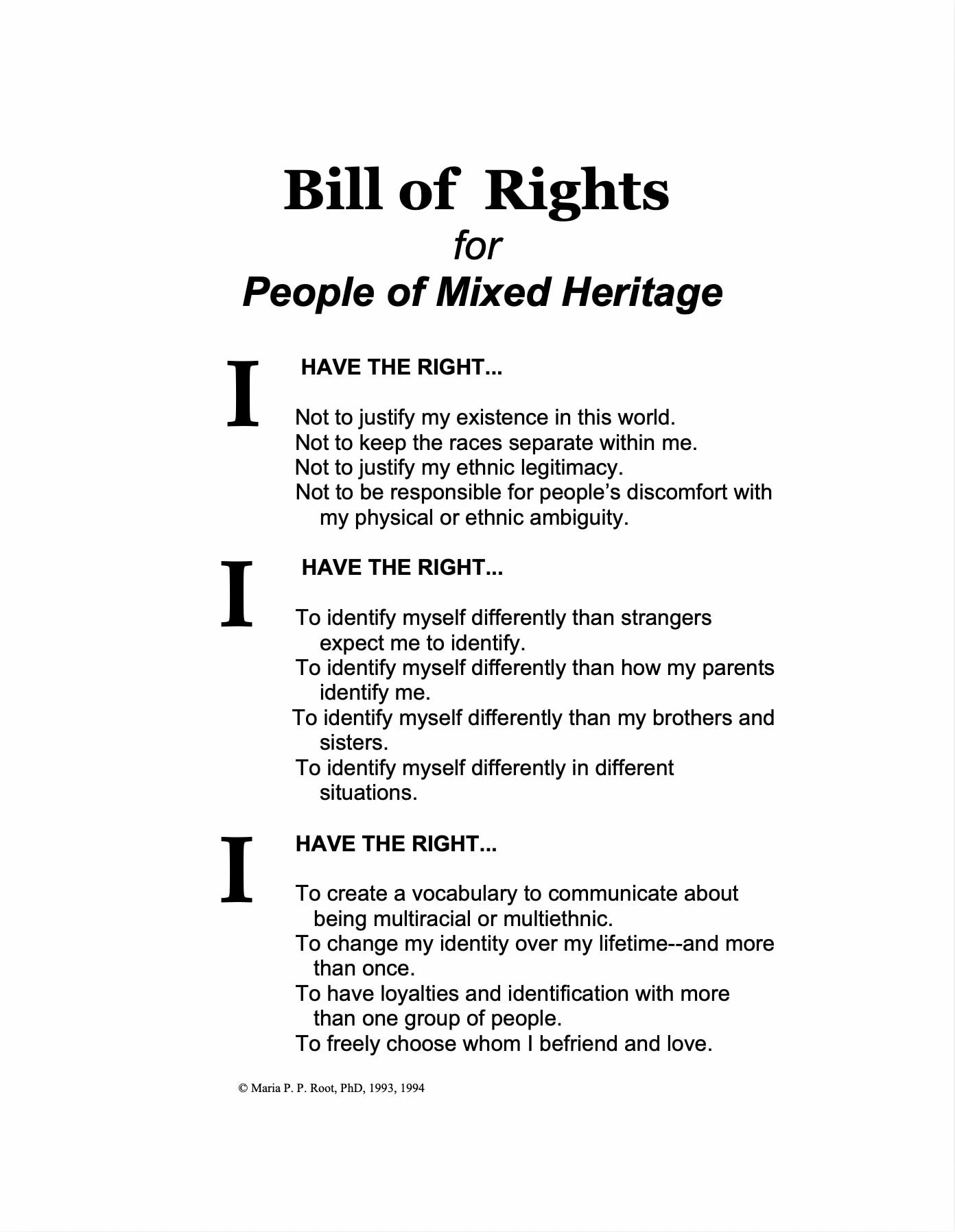
Image 34.05.01 — “Bill of Rights for People of Mixed Heritage” by Maria Root expresses commonalities among multiracial people.
Drawing from the scholarship on multiracial people, we can identify the key factors that shape multiracial identity.
Multiracial Identity Choices
Critical Mixed Race Studies scholars have developed several theories about how multiracial people identify, stemming from their research on the lives of multiracial people. Five of these theories are presented here, drawn primarily from Dr. Maria Root and other scholars in the field. For some multiracial readers, these may resonate; for others, you may not recognize yourself in them. In either case, it’s helpful to learn what research has observed as general patterns.
Multiracial people are often faced with the following choices:
- Accept the identity that society assigns to you: In this view, there isn’t really a choice in identity—it is based on how others view us. For example, I would identify as “Middle Eastern” or “Italian” because that’s how others perceive me, even though I’m Indian and white.
- Choose a single identity: For instance, one could identify with only one ancestry. In this case, I would identify only as South Asian. I could try to identify only as white, but like most multiracial people who don’t “look white,” I do not have this option. This often means denying one parent and their ancestors, and one could still be questioned about belonging “fully” to one’s chosen group.
- Choose a mixed identity: People who make this choice often highlight their multiracialism and acknowledge their multiple ancestries. I tend to do this by saying that my father is Indian and my mother is Russian Jewish, or white. Other people might interpret individuals who claim a mixed identity as lacking loyalty to a group or attempting to be “more white” by simply acknowledging their white ancestry.
- Choose a new identity: In this case, I could say I was “multiracial” but not state my various ancestries. In other cases, people may say they are “human” to sidestep racial categories altogether.
- Choose a white only (or Black only) identity: Part-white multiracials, especially those who are white-appearing, may choose to identify as white only. I could attempt to say I am only white, but others may challenge this choice based on how I look. While this might mean aligning oneself with whiteness and its associated privileges, it also denies one’s relationship to communities of color. On the other hand, many Black Americans and Native Hawaiians identify as Black or Hawaiian only, despite their European and other ancestries they may have.
These are only some of the ways that multiracial people express their agency, and people identify in ways that make the most sense to them.
Multiracial identification can reflect a political decision about one’s commitments to various communities. It seems important to challenge the idea that multiracial people are “race traitors” who do not want to be people of color. This erroneous idea not only ignores mixed people who do not have white ancestry, but also denies that one can claim one’s white parent and other ancestors while still being part of communities of color.
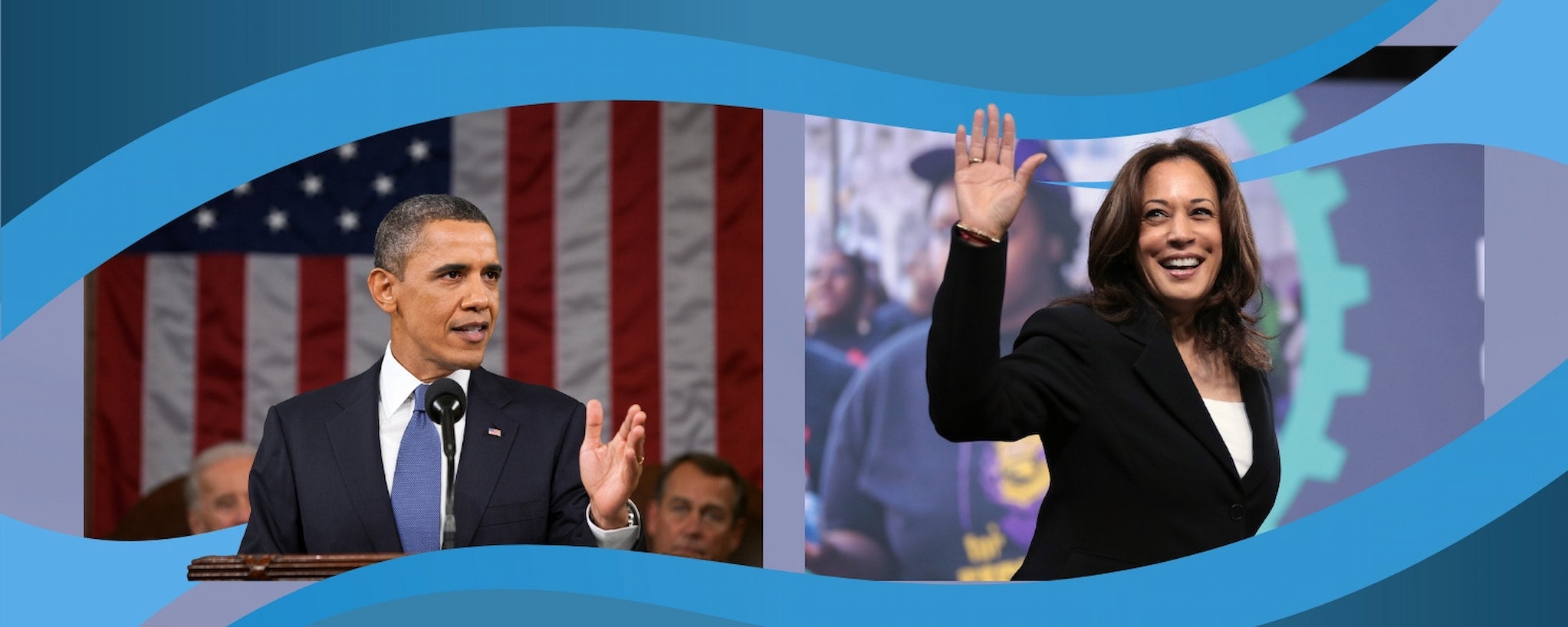
Image 34.05.02 — Throughout their respective presidential campaigns, President Barack Obama (left) and Vice President Kamala Harris (right) were accused of using their multiracial heritage to win voters who shared their racial identities.
Factors Affecting Multiracial Identity Formation
Scholars also study the factors that shape how multiracial people identify racially. They include the influence of the family environment on a child, including whether both parents or just one raises a child. In the former case, a child may identify with the race of the parent of the same gender. In the latter case, the person may identify with the race of that single parent. Or, if they have a negative experience, they may try to distinguish themselves from that parent (some transracial adoptees also face these experiences). Being exposed to various community members also shapes one’s cultural capital, or knowledge about one’s cultural practices. Participating in one’s community can affirm a person’s identification with that community.
An additional factor shaping identity formation is geography: where were you born and what communities raised you? Are you from a place where multiracialism is the norm, such as in Hawaiʻi, or are you from a place like Maine, where monoracial whiteness is the norm?
“Looking mixed” and physical appearance are also key factors that shape multiracial identity, as they influence interactions with others. Phenotype, or the outward expression of one’s genes, is a highly complicated process; this is why siblings and even twins may choose different identities.
People don’t always “look like” all their ancestries. Not all multiracial people “look mixed”; that is, not all multiracial people are ethnically ambiguous, and not all people who “look mixed” are multiracial. For example, someone who is Mexican and Chinese may “look Latino” (and Latinos also have multiple ancestries!); someone who is Black and Indian may look “only Black”; someone who is white and Korean may be white-appearing or may “look Latina,” based on features and other self-expressions. Simply put, there is huge diversity within our human-made categories of race and the outward expression of our genetic makeup.
Studies of multiracial siblings, including twins, who look unalike—different shades of skin, hair textures, eye color, or other features—highlight the effects of having different life experiences based on outward appearance. In addition, one’s gender also shapes multiracial identity. Whereas part-white multiracial men may identify with their nonwhite ancestry because of ideas about the masculinity of men of color, their sisters may be denigrated for not conforming to white beauty standards.
Pacific Islander Experiences
There is no single multiracial experience, and multiracial people from different backgrounds face distinct experiences. For example, part-Black people who appear Black, such as some Black Samoans, can experience anti-Black racism—even from family members—as well as face questions of belonging to their Black and Samoan families and communities. On the other hand, afakasis, or mixed-race Samoans who may have a white family member, will not face anti-Black racism, even if their cultural competency and loyalties may also be questioned.
In the Pacific, part-Black Hawaiians may face the assumption that they are in the US military, or that they are not from Hawaiʻi, and thus are not local. This is because people are not aware of the long history of Black people in the Islands and this can discredit their genealogical Indigenous connection to Hawaiʻi. In addition, some Black Hawaiians have described the anti-Black racism they’ve faced from family members, from their Asian teachers at school, and from their haole coworkers in professional workplaces. Thus, while people with multiple ancestries share commonalities, there is no experience common to all multiracial people for physiological, social, and historical reasons.
Identity Is Not Fixed
Along with these and other factors that shape identity formation—class background, school peers, and more—there are recurring experiences that many multiracial people face. Not fitting into set racial categories or looking “ethnically ambiguous”—which may be an experience of monoracial people, as well—means facing the question of “What are you?” repeatedly. They learn to express themselves through social interactions, and multiracial people have developed a range of creative responses to this question, from refusing to answer to playing guessing games.
The key point is that identity is not fixed. Rather, it is created through a process and negotiation between one’s self-identification and the identities placed on them by others. In addition, one’s identity can often lead to material consequences: The racial categories that multiracial people are placed in by others affect their life chances–for example, Black-appearing mixed people may face more police surveillance or workplace discrimination. It also shapes dating and marital choices.
Identity formation is a fluid process that changes over the course of people’s lives. The way they look also interacts with other self-expressions, such as their names, choice of mannerisms, clothing and hairstyles, language fluency, and cultural knowledge. In addition to the factors shaping how multiracials may identify racially, people with multiple ancestries may identify differently in different contexts or express situational identities.
Conclusion
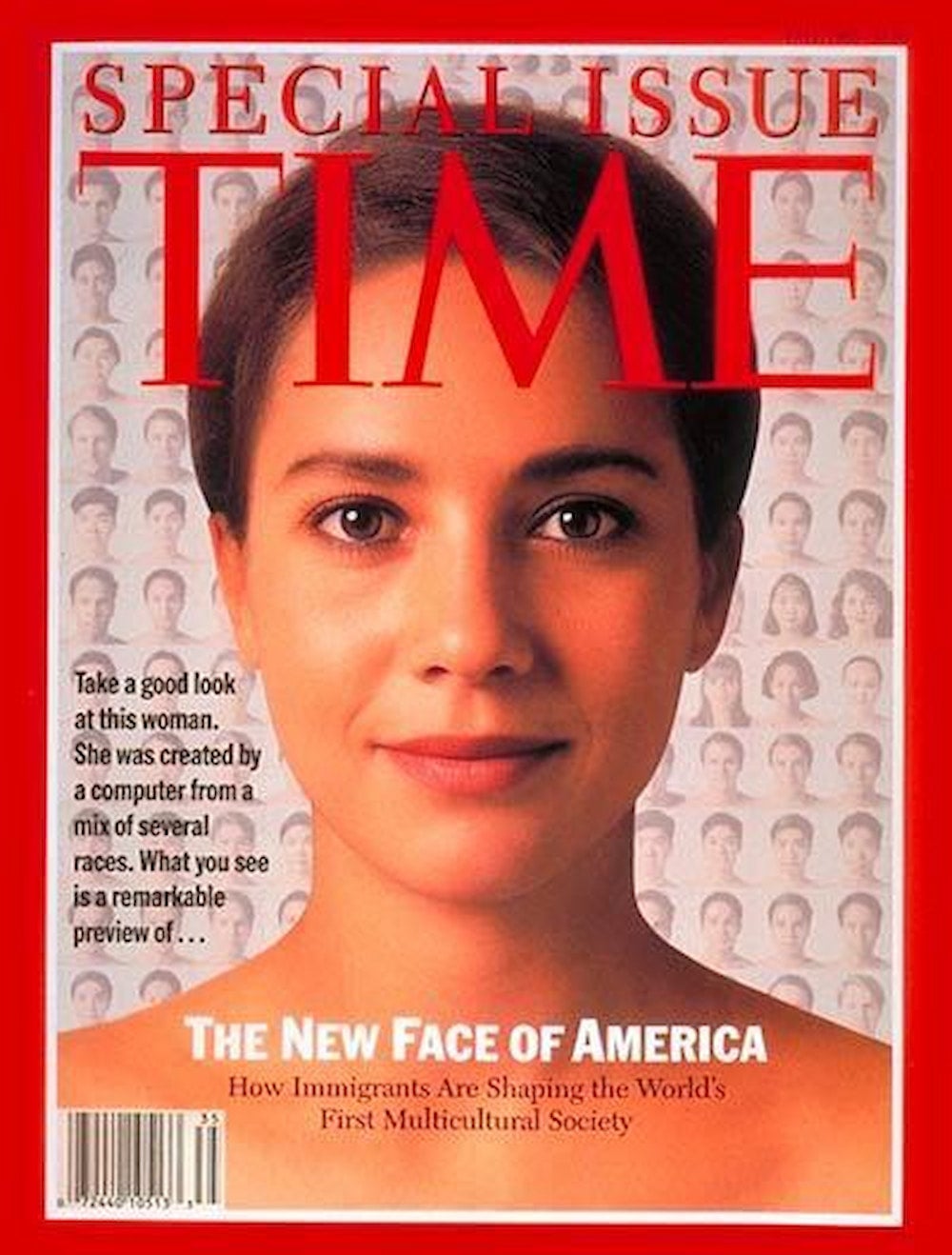
Image 34.05.04 — A TIME magazine cover from 1993 featuring a computer-generated picture of a multiethnic woman signaled the multiracial future of America.
Identity is just the beginning of our exploration. We complete this module by considering what multiracial people can teach us about race and how—despite the law, fears of racial mixing, stereotypes, and representations—multiracial people must move from a focus on identities to a cultivation of identifications: What are one’s relations and obligations to various communities?
Multiracialism has the potential to question seemingly natural racial categories and monoracism. It can also disrupt racism—but it hasn’t necessarily done so.
Although the media likes to portray racially mixed people as evidence of the end of race and racism, it is important to remain conscious of racial hierarchies that multiracials can benefit from and even perpetuate. Colorism, or the higher status placed on those with a fairer complexion, and anti-Black sentiments exist in most American communities. A multiracial Black person may benefit from colorism within their community while also experiencing anti-Black racism at work. Thus, multiracial people are wise to be aware of their relationships and political commitments to other communities of color.
People who identify with more than one race, including multiracial Pacific Islanders and Asian Americans, are the fastest-growing population in the United States. Scholars inform us about the factors that shape the identities of these populations and their various choices and experiences. We also know that multiracial individuals have the potential to disrupt deeply ingrained ideas about race. Learning more about these histories and these groups can help us all understand society more deeply. We can use our individual agency to shape how we are represented and expand how Americans think about race.

Image 34.05.05 — Rising Gen Z stars (left to right) Iam Tongi, Havana Rose Liu, Olivia Rodrigo, Auliʻi Cravalho, Charlie Bushnell, and Lola Tung are among the next fast-growing generation representing multiracial Pacific Islanders and Asian Americans in pop culture.
Glossary terms in this module
afakasi Where it’s used
A Samoan word developed in the context of Europeans’ (primarily German) presence in Sāmoa, initially meaning “half-caste.” The term generally refers to people of mixed ancestry in Sāmoa, especially those with (Indigenous) Samoan and European ancestry. Some people find this term problematic, whereas others consider it descriptive.
agency Where it’s used
The ability and capacity of an individual to make their own choices regarding their lives, beliefs, and actions.
dual-minority biracials Where it’s used
Multiracial people who do not have a white parent. People also use the term “dual-minority multiracials.”
monoracialism Where it’s used
The false assumption that individuals have only one racial identity, and that identity is the same as their parents’ identities. This assumption can lead to monoracism.
monoracism Where it’s used
A specific form of oppression against people who do not fit into or identify with only one racial category, including racial misidentification, an assumption that one is disloyal or untrustworthy, or assumption that one uses their racial backgrounds only for strategic gain.
multiracial Where it’s used
People who identify with more than one racial background, including people whose parents identify with different racial backgrounds.
race Where it’s used
A term referring to a system of power; a process by which people in power divide humans into various groups, often based on phenotype or “looks” and ancestry. Racial groups are placed on a hierarchy and are valued differently.
stereotype Where it’s used
Generalized beliefs about a group of people based on a flattened and repeated characterization often spread through controlling images. Stereotypes, both “positive” and “negative,” are harmful one-dimensional depictions of an entire group of people, often rooted in false and racist beliefs.
Endnotes
1 Maria Root, “Bill of Rights for People of Mixed Heritage,” in The Multiracial Experience: Racial Borders as the New Frontier, ed. Maria Root (Sage Publications, 1996), 4–14.