





Jet Li holds Aaliyah’s wrist while she makes a fist for the 2000 film Romeo Must Die.
Module 4: Controlling Images and Self-Representation in Film and Media
Does learning about the experiences of multiracial Pacific Islanders and Asian Americans reveal ways to combat racism?
Mainstream media shapes our ideas about different groups, including multiracial Pacific Islanders and Asian Americans. Sources like Hollywood and the news media produce controlling images, or repeated images that normalize stereotypes that are used to justify the oppression of certain groups of people.
In this module, we review the major stereotypes about Pacific Islanders and Asian Americans, and learn how the media creates these repeated images and their impacts on interracial relationships. We also explore the self-representations of Pacific Islanders and Asian Americans of mixed ancestry who provide alternatives to stereotypes through their films and memoirs. Self-representations may not always change structures of inequality, but they can help change an audience’s awareness of who multiracial people are.
What are the historical ideas and stereotypes of multiracial people in the United States?
How are ideas of race, gender, and sexuality depicted in mainstream media like Hollywood films?
How do some multiracial artists express their identities and concerns in response to Hollywood’s “controlling images” of Pacific Islanders and Asian Americans?
Racial Stereotypes
The US media often celebrates multiracial people as the face of the new millennium by drawing upon several recurring representations. For instance, consider whether you can recall seeing any of the following images of ethnically ambiguous people in the news, on television, or in movies:
- They are evidence of consensual interracial love
- Their characters challenge the existence of racism
- They are depicted as cosmopolitan citizens
- They tend to be young, beige, and beautiful
Contemporary ideas about mixed Pacific Islanders and Asian Americans emerge from past images of multiracial characters that were based mainly on a simple Black-versus-white view of race. Popular representations and so-called “scientific” ideas about race worked together with laws as part of a legacy of European and American colonialism in Africa and Asia. For example, early travel writers characterized Africans as “savages,” or as the “missing link” between humans and apes, treating them as less than human, and erasing the existence and humanity of people who were both Black and white.
These stereotypes about Africans included claims about their sexuality, instincts, and connection to nature. Europeans applied these ideas to the continent of Africa as well as to Black people, using them to “justify” the colonization of Africa and the development of slavery.
Our “choices” in love may not be so colorblind after all. These stereotypes “do work” in shaping our ideas about people based on gender and race. As a result, contemporary marriage patterns may still reflect old ideas about race. These dynamics also help explain the growing number of multiracial people in the US.
Orientalism
Colonial ideas of race have also affected Asians. Ideas about Asian people as passive, feminine, and docile come from what Palestinian American scholar Edward Said described as Orientalism. Orientalism is a thought system created and enacted by the West to justify its colonization of Asia. Historically, it included the notion that the West was the opposite of the East (or Asia), that the West (the Occident) was powerful, masculine, and modern, while the East was weak, feminine, and backward.
These Orientalist notions now “stick” to Asian bodies, so that people assume Asians are feminine, passive, and docile. This overlaps with many Americans’ ideas of Asian Americans as either ideal women or less-than-ideal men.
Many years ago, in an online forum about interracial dating, one poster wrote:
I don’t have a problem with interracial dating as long as 2 people really care for each other. What I do have a problem with is when I see beautiful asian women who go out with guys of other races who are losers. Why do so many asian women go out with men below their level? I know a lot of white guys who try to go for asian women because they think they are easy and will put out. On the flip side, there are white women who normally wouldn’t think of asian guys as dating material. 1
Another commenter responded to a post titled “Yellow Fever”:
i get the feeling that these white guys only go for asian girls because they see them as “exotic” and different from “the norm.” basically, they’re just looking for some arm candy, and *any* asian girl will do (just because she’s asian). this undermines asian women everywhere…because basically the majority of these guys are only interested in asian women because, well, we’re asian. not because we’re intelligent…not because we have many things in common with them…but because we’re asian 2
Have you heard similar ideas in your social circles? Or perhaps you’ve heard of the “Oxford Study,” which initially analyzed the kinds of white male-Asian female relationships popularized by films like The World of Suzie Wong (1960), which contribute to how we think of Asian women’s desirability? Since the publication of the Oxford Study in 2010, people have used “The Oxford Study” to refer colloquially to Asian women’s preference for white men. These ideas may be rooted in history but they still circulate as ways people think about Asian American men and women, including the idea that Asian American women are sexually desirable.
The hypersexualization of Asian women, or the idea that Asian American women are exceptionally feminine and therefore sexually attractive, goes along with another false idea: that Asian men are also feminized, or less masculine, and are therefore emasculated and sexually undesirable.
The media shapes these perceptions. Why is it that in Black/Asian buddy movie franchises, like the Jackie Chan/Chris Tucker Rush Hour series, the Asian lead is often portrayed as buffoonish, comedic, and never “gets the girl.” This is because movies often cast Asian and Asian American men as foreigners who play comic and non-romantic roles.
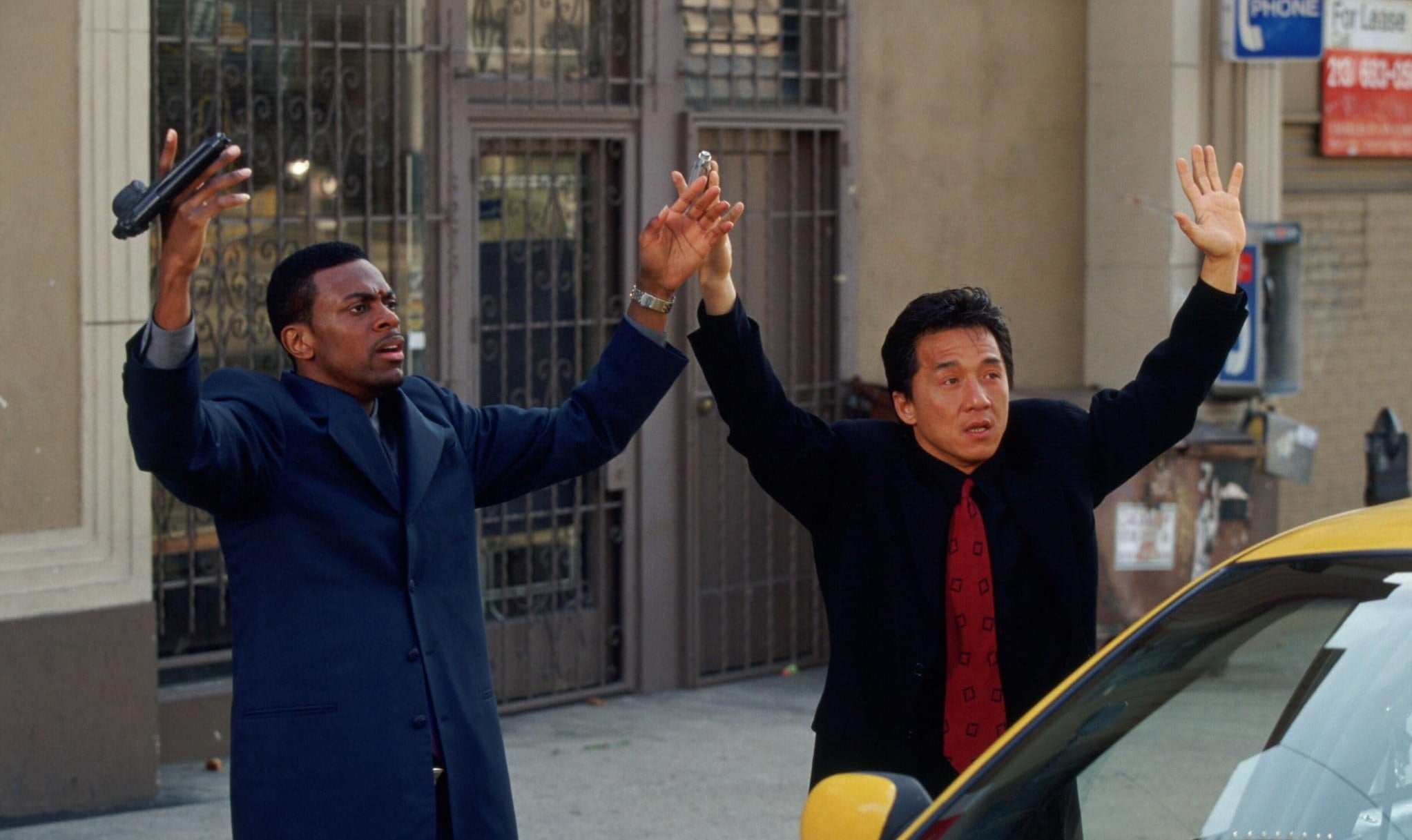
Image 34.04.02 — Chris Tucker (left) and Jackie Chan (right) in the 1998 film Rush Hour.
To see how these ideas work, consider a similar set of false beliefs used to justify slavery. Mainstream media portrays both Black men and women as hypermasculine and casts Black actors in repeated roles that emphasize the body, such as the athlete or entertainer—even though Black people work in every sector of society. These stereotypes impact Black marriage rates, including their low rates of interracial marriage.
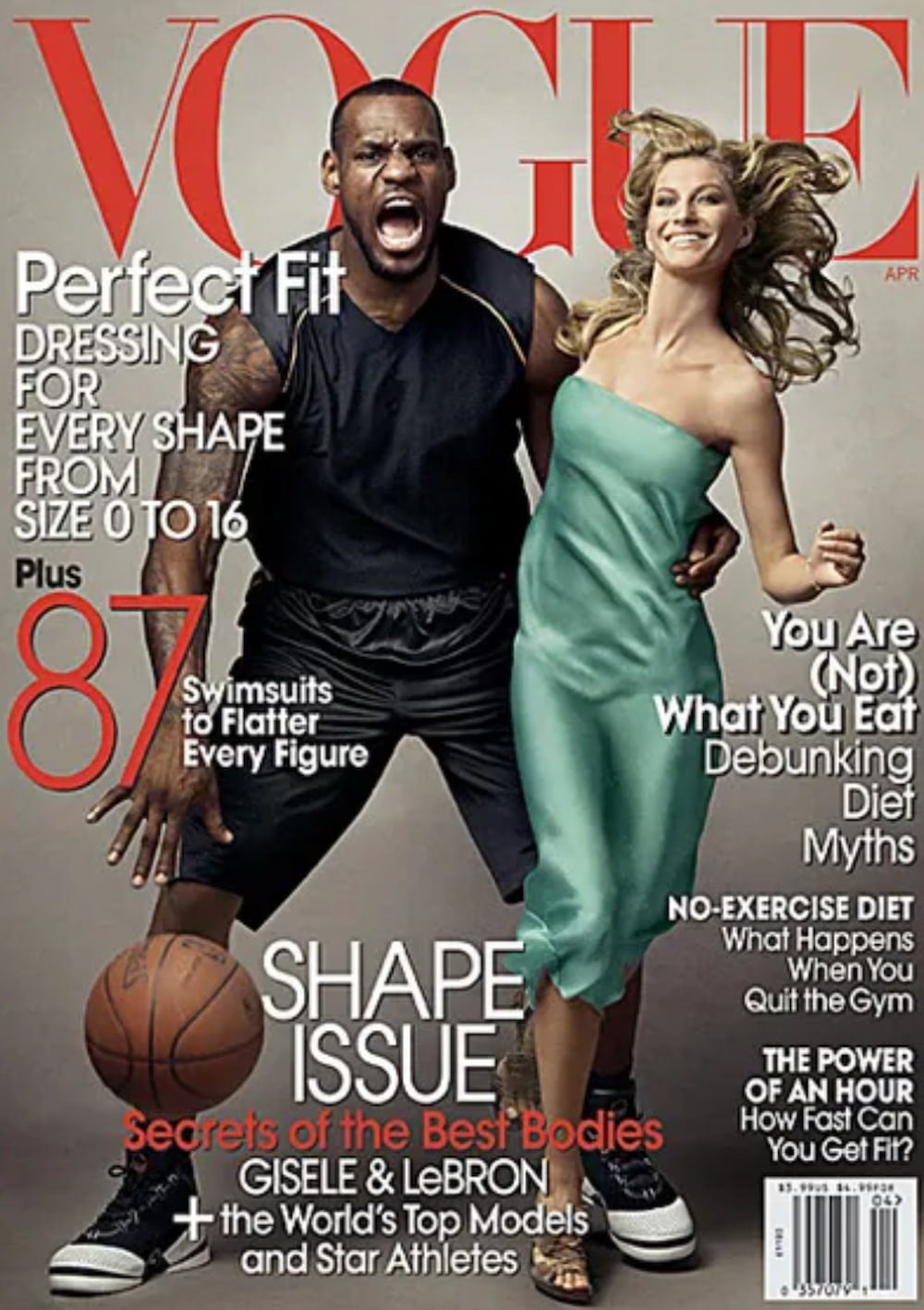
Image 34.04.03 — Basketball star LeBron James (left) and supermodel Gisele Bundchen (right) pose together on the cover of the April 2008 issue of Vogue. The image generated controversy, as many saw a perpetuation of harmful racial stereotypes featuring James, a Black man, and Bundchen, a white woman.
Pacific Islanders—specifically Samoan men, who are significantly represented in the National Football League (NFL), including stars like Junior Seau and Troy Polamalu (known for his athletic ability and flowing hair)—are often imbued with a racialized masculinity that overlaps with ideas of Black masculinity. People often describe Samoan men’s large, muscular bodies and their physical abilities. Like Black men, Samoan men are also often criminalized, viewed perhaps as being members of gangs in Southern California, for example.
Theories About Multiracial People
Historically, mainstream media has framed the experiences of Black/white multiracials through the story of the “tragic mulatto,” a historical trope portraying them as depressed or doomed to unhappy lives because they were unable to fit into society. However, we now see the media celebrating beige (but not too dark) multiracial young people as representatives of the beauty of mixed children. They often depict young multiracials as a “bridge” between communities, cultures, and nations.
The media also now features mixed Asian/white newscasters, and TV shows cast ethnically ambiguous or part-Black multiracial actors to promote a positive image of millennial multiracialism. At first glance, these mainstream images look like they have moved from “negative” to “positive,” but the idea of controlling images shows how they still turn into repeated stereotypes that serve certain purposes rather than reflecting people’s full, real lives.
Over time, social scientists developed theories about multiracial people, shifting from “hybrid degeneracy” to “hybrid vigor”—borrowed from the characterization that some crossbred plants are superior or stronger than their “pure”parentage. Another theory, the “Marginal Man,” can be seen in the writing of the first Asian author published in North America. Sui Sin Far (born Edith Maude Eaton) was the daughter of a Chinese mother and a British white father. In 1909, she wrote, “I give my right hand to the Occidentals and my left to the Orientals, hoping between them they will not utterly destroy the insignificant ‘connecting link.’” 3
Such an idea—that multiracials live on the edge of society rather than at its center—highlights a long-standing description of mixed-ancestry individuals as in-between or never fully accepted in any of their communities. Mass media, such as film and television, have helped spread and reinforce these kinds of controlling images.
Media Depictions of Race and Multiracialism
Mainstream media produces controlling images that portray Asian men and women in the same types of roles, while also underrepresenting Pacific Islanders. Hollywood and television cast these groups in secondary roles that support white leads. These Orientalist representations have a historical legacy that comes to life on the silver screen. Through repetition, controlling images inform what we believe to be “normal” about groups of people.
Asian actors are often portrayed in movies about war. Hollywood is a primary developer of controlling images used to justify US-led wars in Japan, Korea, Vietnam, Cambodia, Iraq, and Afghanistan. Asian and Asian American actors are cast as foreigners, including as docile Asian women who need to be “saved” by white men. For instance, the 1960 movie The World of Suzie Wong, referenced earlier as the focus of “the Oxford Study,” features Chinese and white actress Nancy Kwan playing a bar girl in Hong Kong. Suzie meets a white American architect, Robert Lomax (played by William Holden), who ultimately must “save” Suzie from her wretched conditions.
Even though Robert and Suzie get married in the movie, most films with Asian men and non-Asian women do not end with romance. Consider Jet Li, a Chinese-born Singaporean martial arts actor who played the leading role in Romeo Must Die. His character falls for a businessman’s daughter, played by Black musician and actress Aaliyah. While the story is based on Shakespeare’s Romeo and Juliet, viewers noticed that Li and Aaliyah never kiss. The filmmakers had cut out the scene and replaced it with a hug instead, erasing the possibility of a sensual Asian male.
These examples reflect repeated Orientalist stereotypes of Asian men and women. They inform our ideas about these groups, based on fictional representations. Perhaps this raises a question: If not in Hollywood, where can one look to challenge these images and learn more about the complexity of multiracial people?
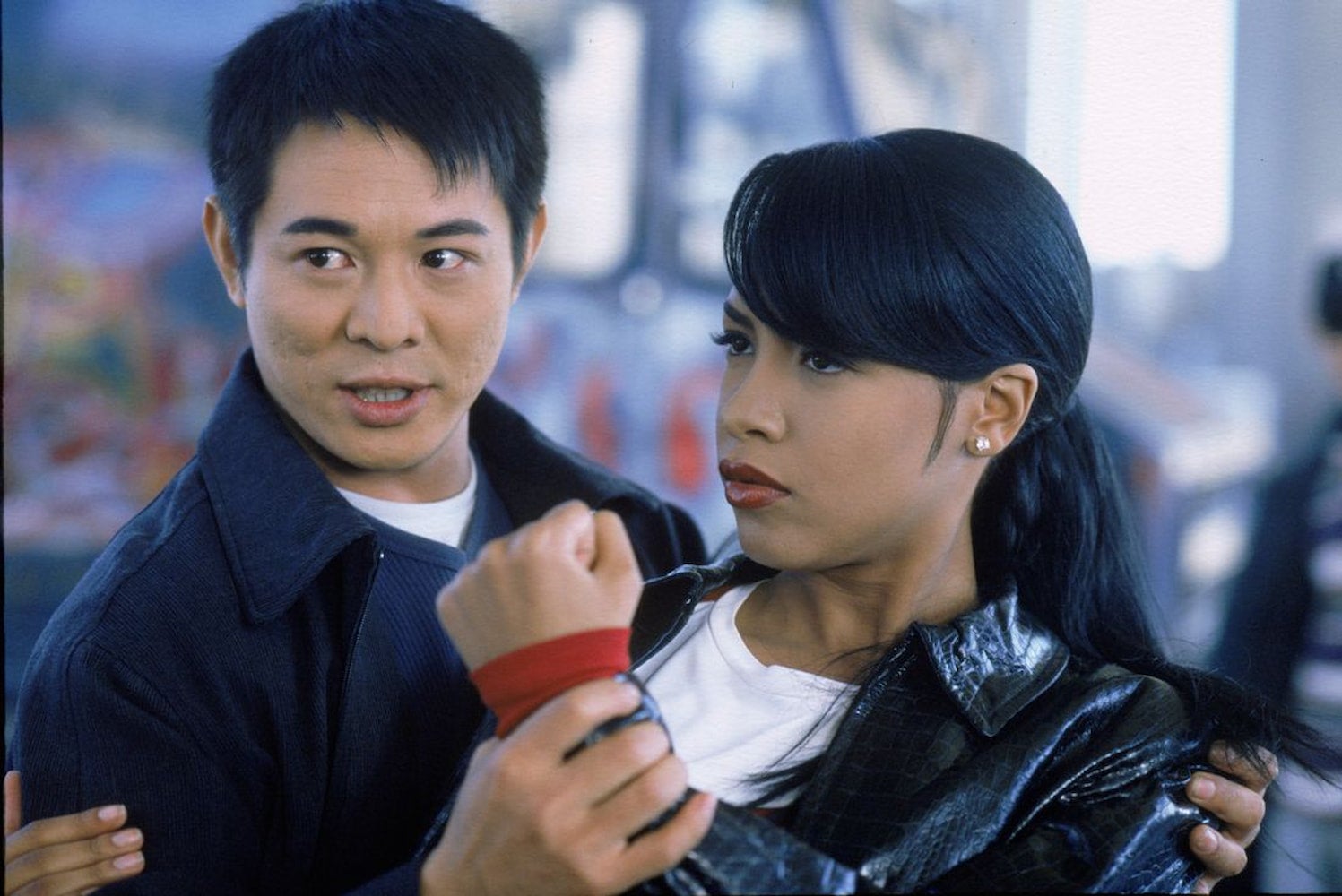
Image 34.04.04 — Actors Jet Li (left) and Aaliyah (right) in Romeo Must Die (2000), an adaptation of the Shakespearean tragedy with a martial-arts twist. However, instead of featuring star-crossed lovers, the filmmakers replaced the characters’ romantic scene with one featuring a platonic hug.
Self-Depictions in Memoir
Memoir, a written historical account of one’s own life, a medium that multiracial people have used to provide alternatives to stereotypes and tell their own stories. The list of memoirs by young multiracial Pacific Islanders and Asian Americans is long and growing. They include Michelle Zauner’s New York Times bestseller Crying in H Mart (did you know Zauner is also the lead singer of the indie band Japanese Breakfast?), and Black-Chinese-Hawaiian-trans activist Janet Mock’s book, Redefining Realness.
Writers like Zauner and Mock draw on their memories to describe growing up in mixed households, the difficulties they faced with families and friends, and figuring out their identities. Zauner’s book recounts her Korean mother’s battle with cancer and, like so many other Asian American memoirs, highlights the importance of food. White fathers, including Zauner’s, do not always take center stage in these books, although they inform how the authors reckon with their identities.
Michelle Zauner grew up in Eugene, Oregon, and in her memoir, she expresses an experience common to biracial people when she describes a school day experience: After a classmate incorrectly tries to guess her background (“Are you Chinese?” “Are you Japanese?”), the person demands, “Well, what are you then?” Zauner realizes, “There was something in my face that other people deciphered as a thing displaced from its origin, like I was some kind of alien or exotic fruit.” 4
Janet Mock, who has written two memoirs, grew up as a trans girl in Honolulu, Hawaiʻi, shuttling between the homes of her African American father and Chinese Hawaiian mother. Her first book, Redefining Realness, tells the story of her coming of age as a young trans person, a process deeply entwined with her racial identity.
By writing memoirs, these authors use their agency to tell their own stories. As Mock writes, “Self-definition and self-determination is about the varied decisions we make to compose and journey toward ourselves, about the audacity and strength to proclaim, create, and evolve into who we know ourselves to be.” 5 Inspired by Mock’s words, perhaps you might consider writing a mini memoir? It could expand the flattened images the mainstream media disseminates decade after decade.
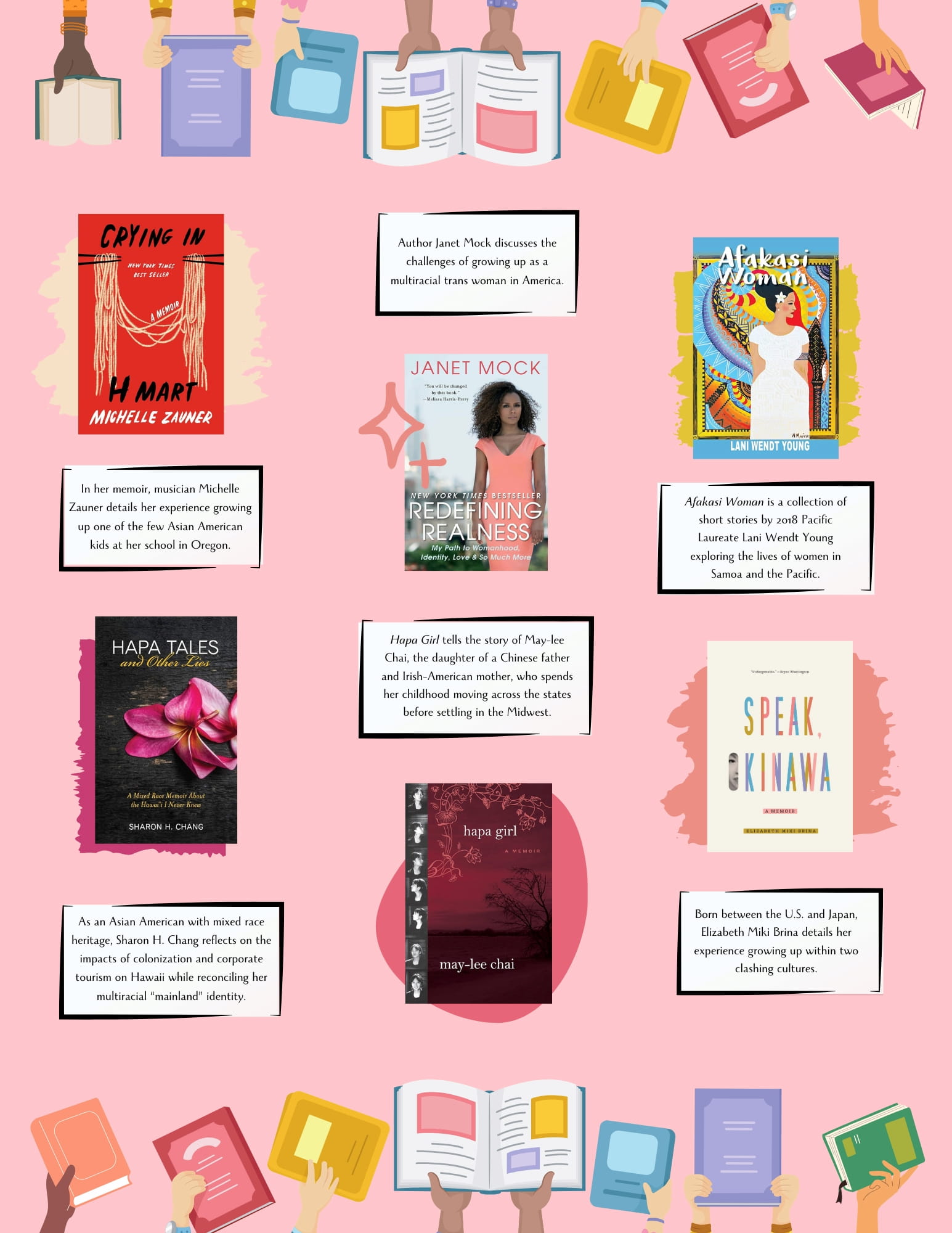
Image 34.04.05 — Multiracial authors such as Michelle Zauner, Sharon H. Chang, Janet Mock, May-lee Chai, Lani Wendt Young, and Elizabeth Miki Brina have had success sharing their experiences and personal stories through memoirs.
Conclusion
Popular culture can be a source of enjoyment, but it also shapes our understanding of different racial groups through the repetition of the characters and stories. How often do we see Asian American actors playing nerdy or funny roles, and usually with a “foreign” accent? What emerges from these images, roles, and storylines? Likewise, what roles do Pacific Islander celebrities like Dwayne “The Rock” Johnson and Jason Momoa play and how do they reflect ideas about mixed Pacific Islander men?
These images are not random; powerful media industries create and repeat these stereotypes so often that they start to feel so normal that we may fail to notice them. Over time, these normalized stereotypes get used to explain or excuse inequalities in society, instead of pushing us to question them.
Hollywood may cast people into certain roles, but multiracial individuals like Michelle Zauner and Janet Mock are actively reshaping how they are seen by telling their own stories. By not only questioning what we see in mainstream media but also seeking out and engaging deeply with the writing, music, and art of multiracial Pacific Islander and Asian Americans, we gain a richer understanding by hearing their own voices.
Glossary terms in this module
agency Where it’s used
The ability and capacity of an individual to make their own choices regarding their lives, beliefs, and actions.
controlling images Where it’s used
Repeated images, often in popular media, that normalize stereotypes that are used to “justify” the oppression of certain groups of people. Examples of controlling images include representations of hyperfeminized Asian women and depictions of Pacific Islander men as fierce warriors.
hybrid degeneracy Where it’s used
The idea that multiracial offspring are less genetically fit than their parents, and that the offspring will eventually die out. Popularized in the early twentieth century, this idea argued that multiracial people would “dilute” the white race and would produce children who were less capable—biologically as well as socially and physically—than monoracial people.
hybrid vigor Where it’s used
Defined as the process of crossbreeding different plants and animals to create an offspring superior to its parents within the field of genetics. In the context of multiracial people, this concept argues for the “superiority” of multiracial people compared to their monoracial counterparts or ancestors.
multiracial Where it’s used
People who identify with more than one racial background, including people whose parents identify with different racial backgrounds.
Orientalism Where it’s used
A theory to describe the Western world’s stereotyped perspective of the East, or the “Orient.” Orientalist scholarship, history, art, literature, and other media portray the East, or Asia, as weak, subservient, and exotic, while comparing it to the West (the “Occident”) as powerful, heroic, and modern.
race Where it’s used
A term referring to a system of power; a process by which people in power divide humans into various groups, often based on phenotype or “looks” and ancestry. Racial groups are placed on a hierarchy and are valued differently.
stereotype Where it’s used
Generalized beliefs about a group of people based on a flattened and repeated characterization often spread through controlling images. Stereotypes, both “positive” and “negative,” are harmful one-dimensional depictions of an entire group of people, often rooted in false and racist beliefs.