



Search the Media Repository
Discover the curated images, videos, and primary sources featured throughout Foundations and Futures
History is more than just text on a page; it is the photographs, voices, and artifacts of the people who lived it. The images and recordings featured across Foundations and Futures are part of a meticulously curated media repository. Whether you are building a lesson plan or investigating an artifact, you can use this database to trace the provenance of our media: discover who created an asset, the historical context behind it, and how it can be used to bring Asian American and Pacific Islander experiences into your classroom.
Multimedia
Chapters
-
Video
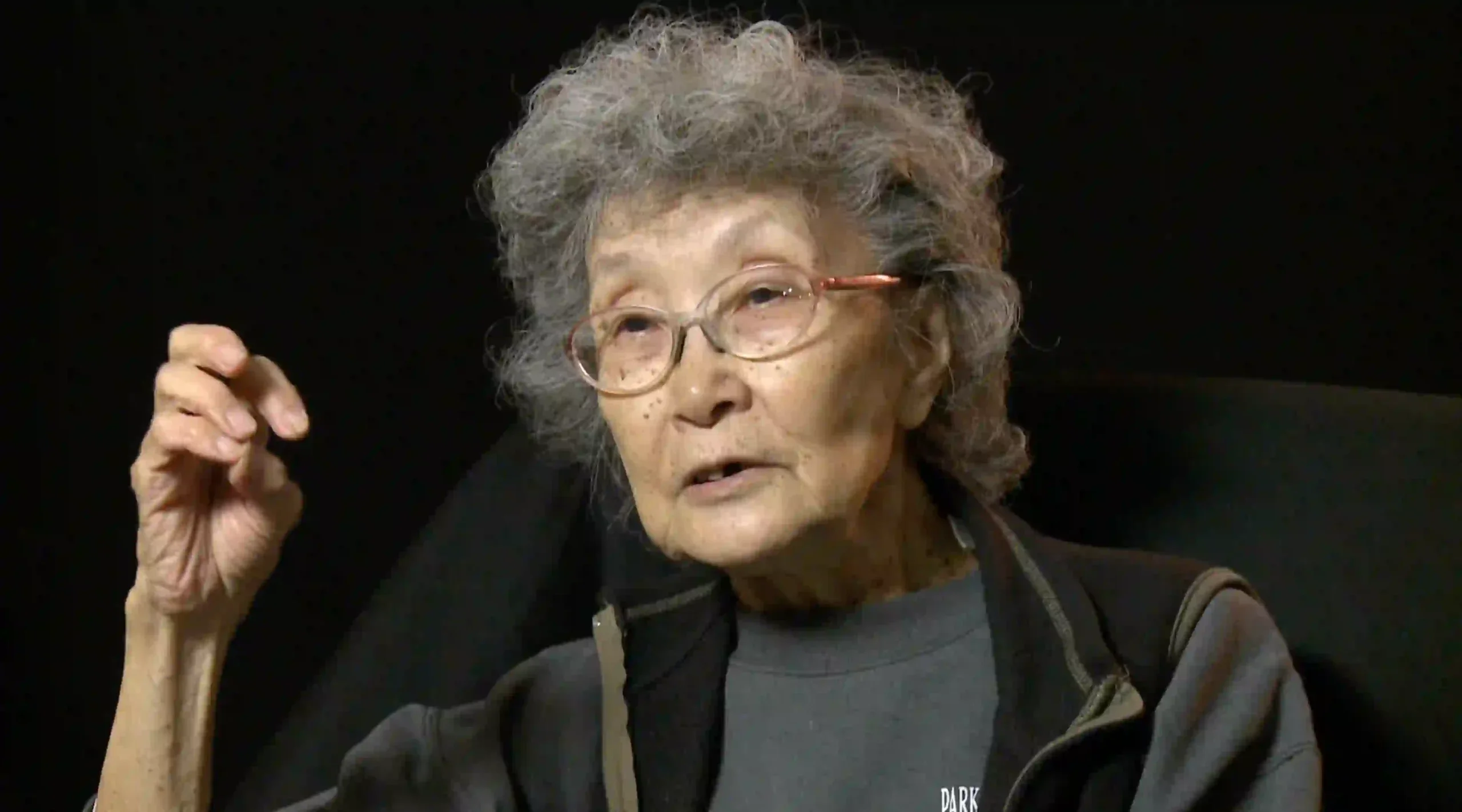
Yuri Kochiyama Interview
Listen to Yuri Kochiyama in her own words. In this interview with her biographer, Yuri describes her first job waitressing in New York while learning about the lives of her southern Black coworkers and the discrimination they experienced.
-
Image
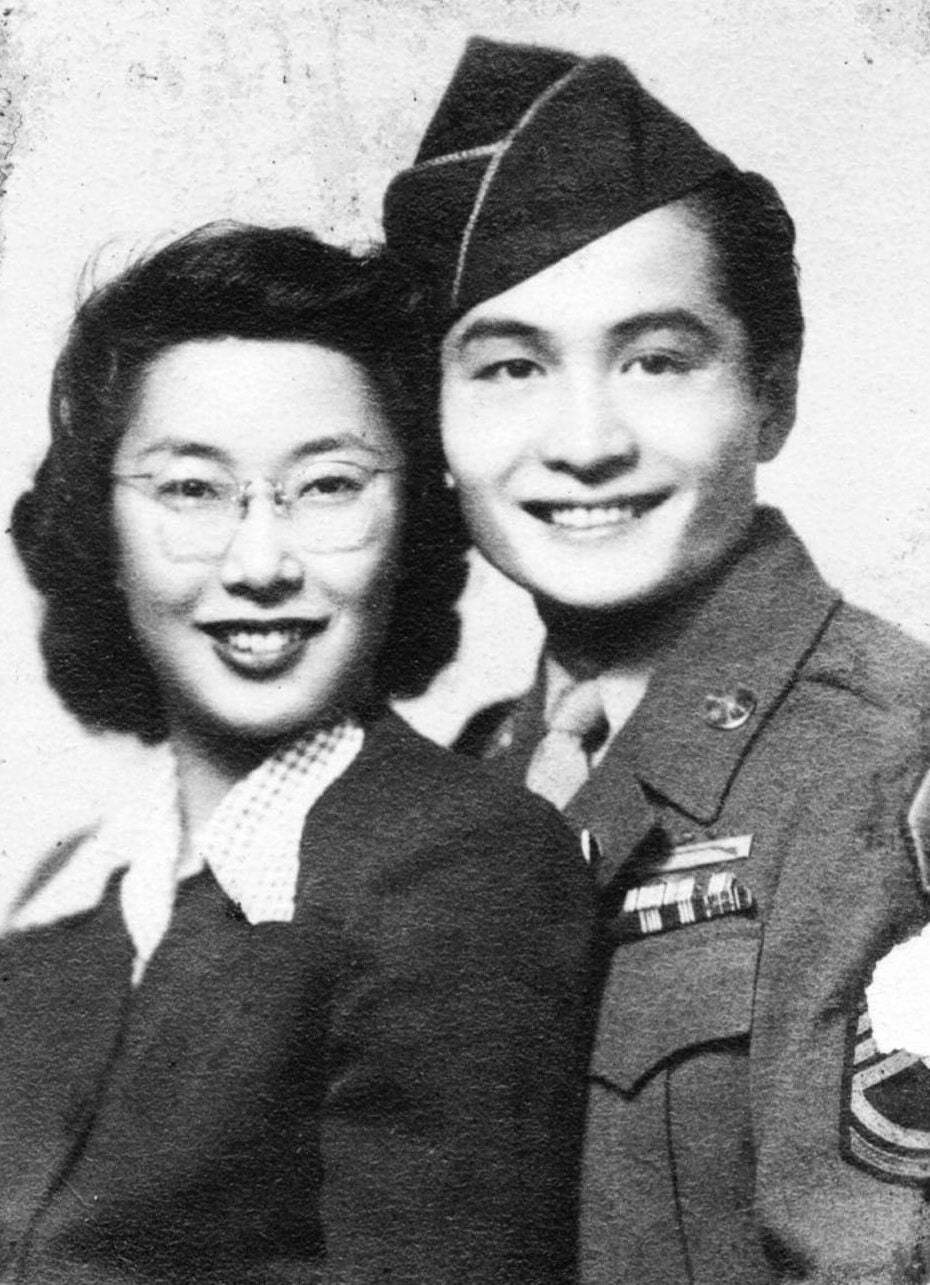
Bill and Yuri’s Wedding Day
Bill and Yuri in New York City on their wedding day, February 9, 1946.
-
Text
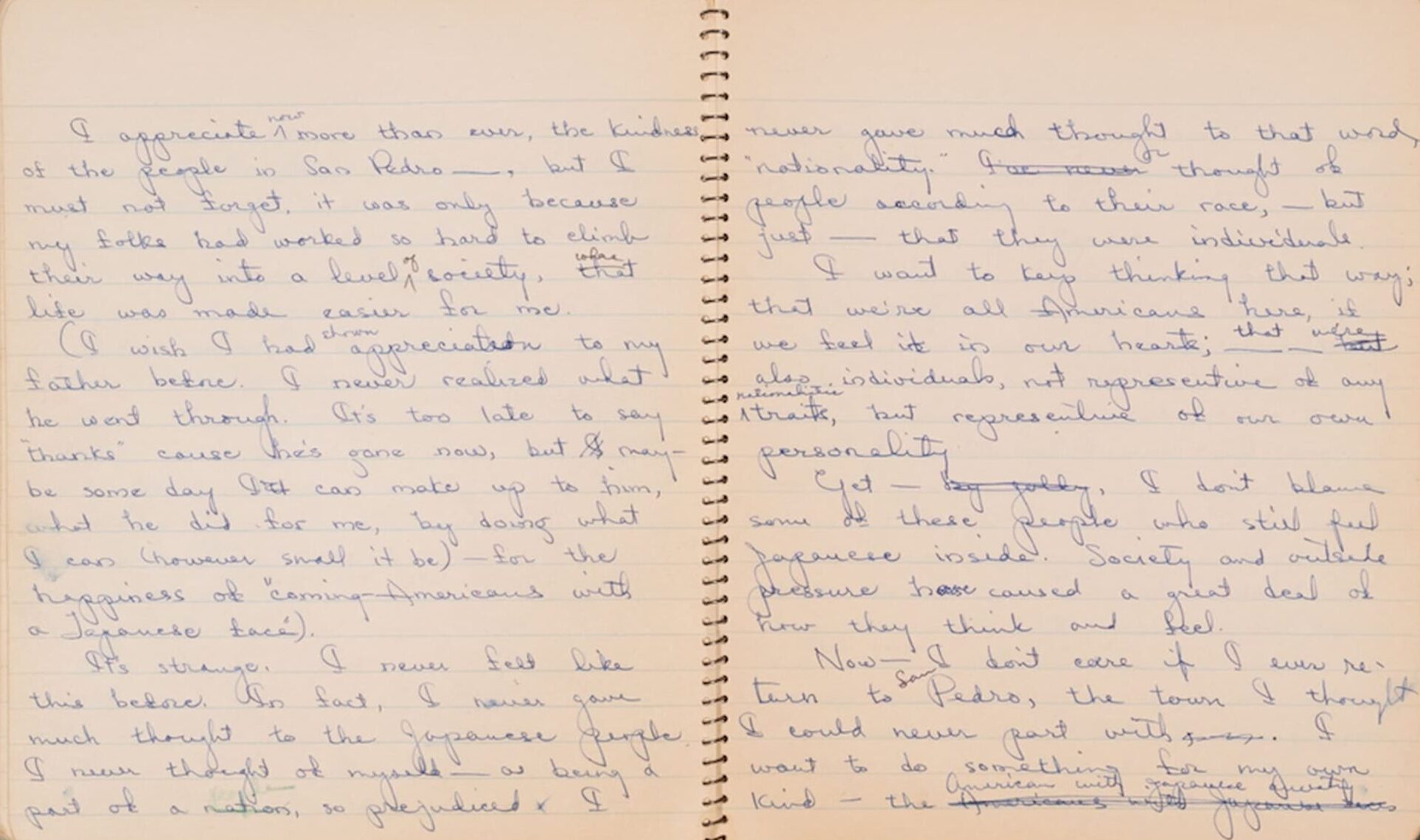
May 1942 Diary Entry
This entry from Yuri’s concentration camp diary from May 12, 1942 shows her struggling to remain patriotic while recognizing American prejudice against her community. What can we learn about how ideas about race can change?
-
Image
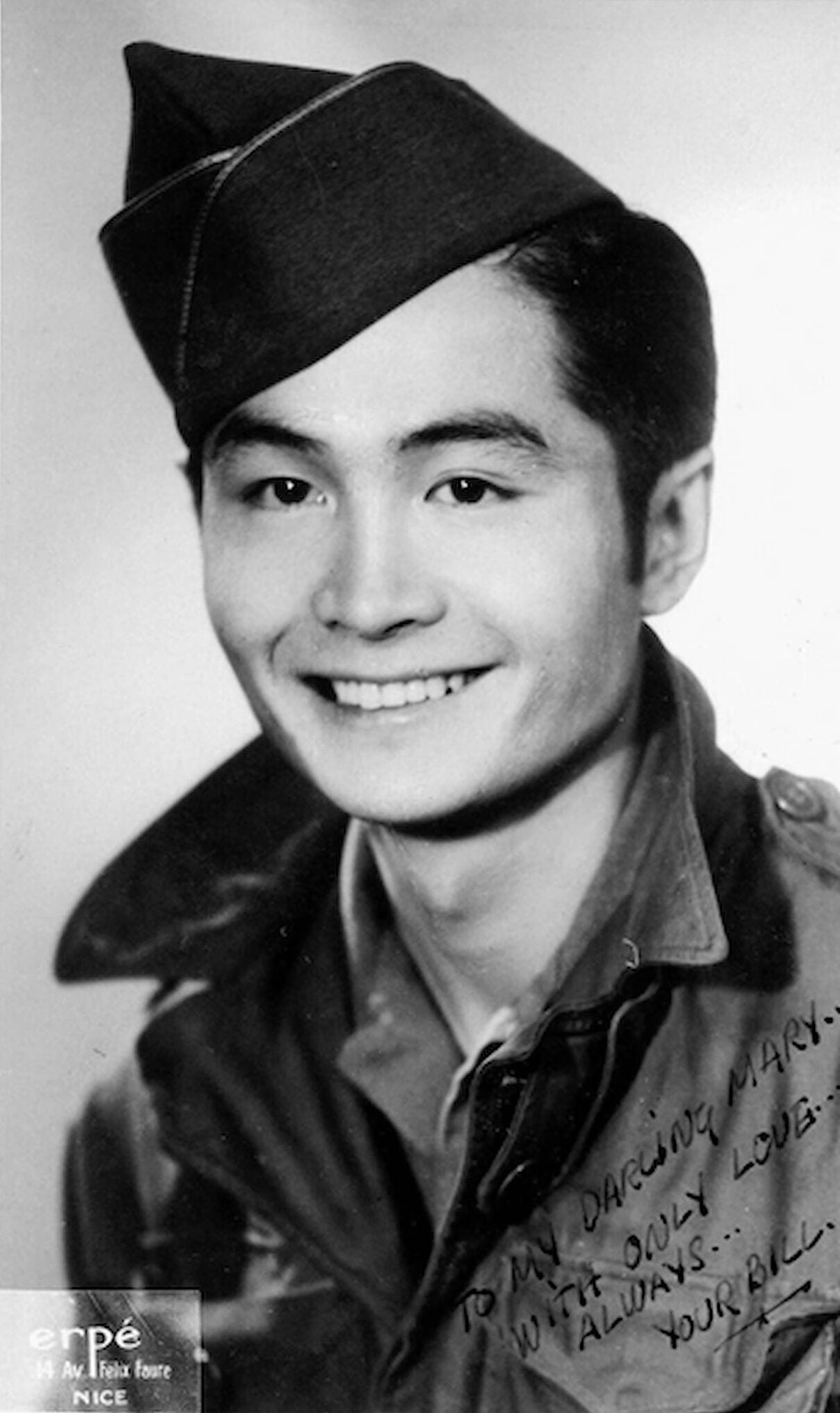
Bill Kochiyama
Yuri met her future husband, Bill Kochiyama, a soldier in the US Army, while working at the USO in the Jerome, Arkansas concentration camp. They endured the long distance while he was on the battlefield overseas. Letters helped to ease the separation.
-
Image
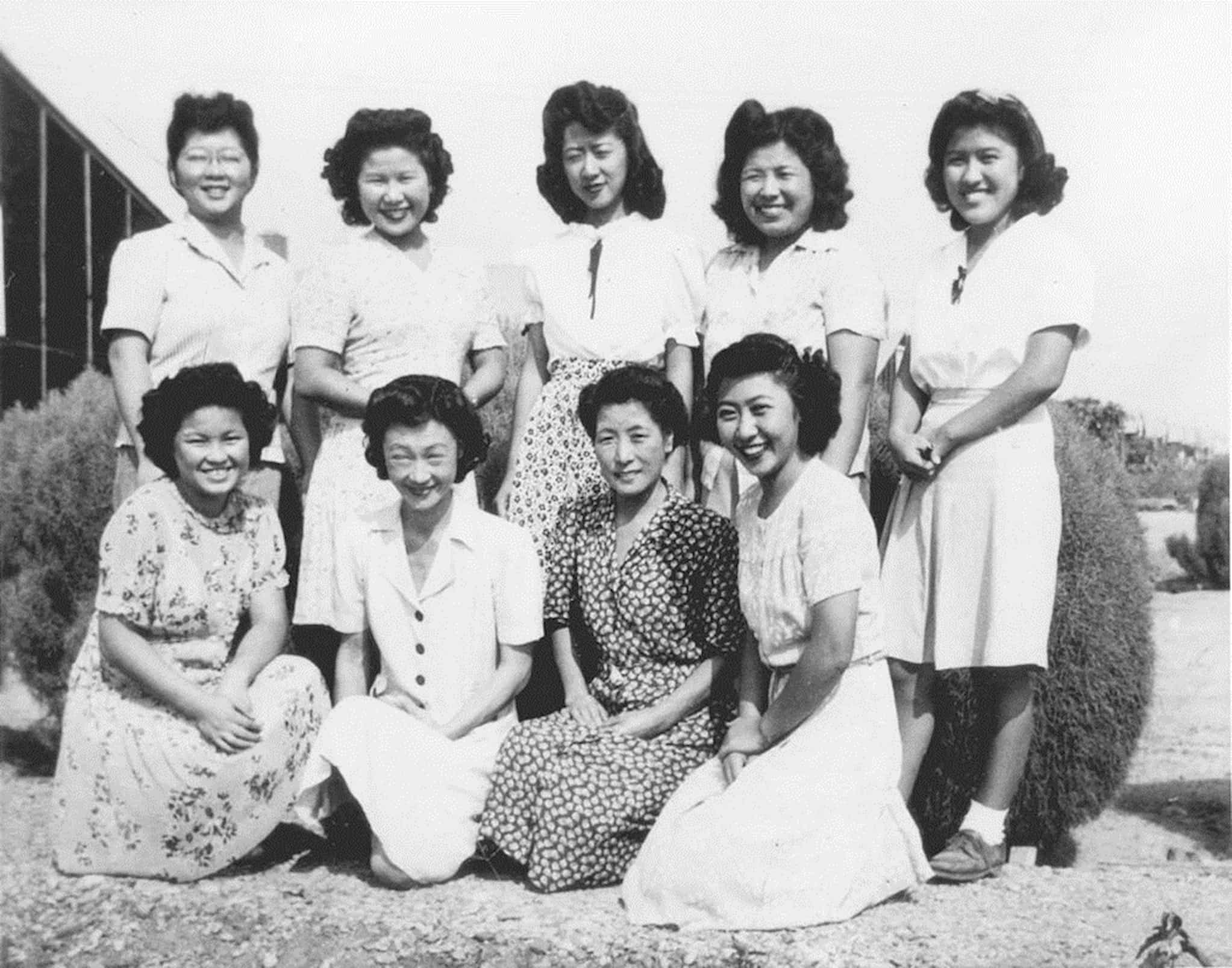
The Senior Crusaders
Yuri’s mother (kneeling, second from right) with the Senior Crusaders, a group Yuri organized to write letters to Japanese American soldiers overseas during WWII. Photographed at Jerome, Arkansas concentration camp, c. 1944.
-
Image
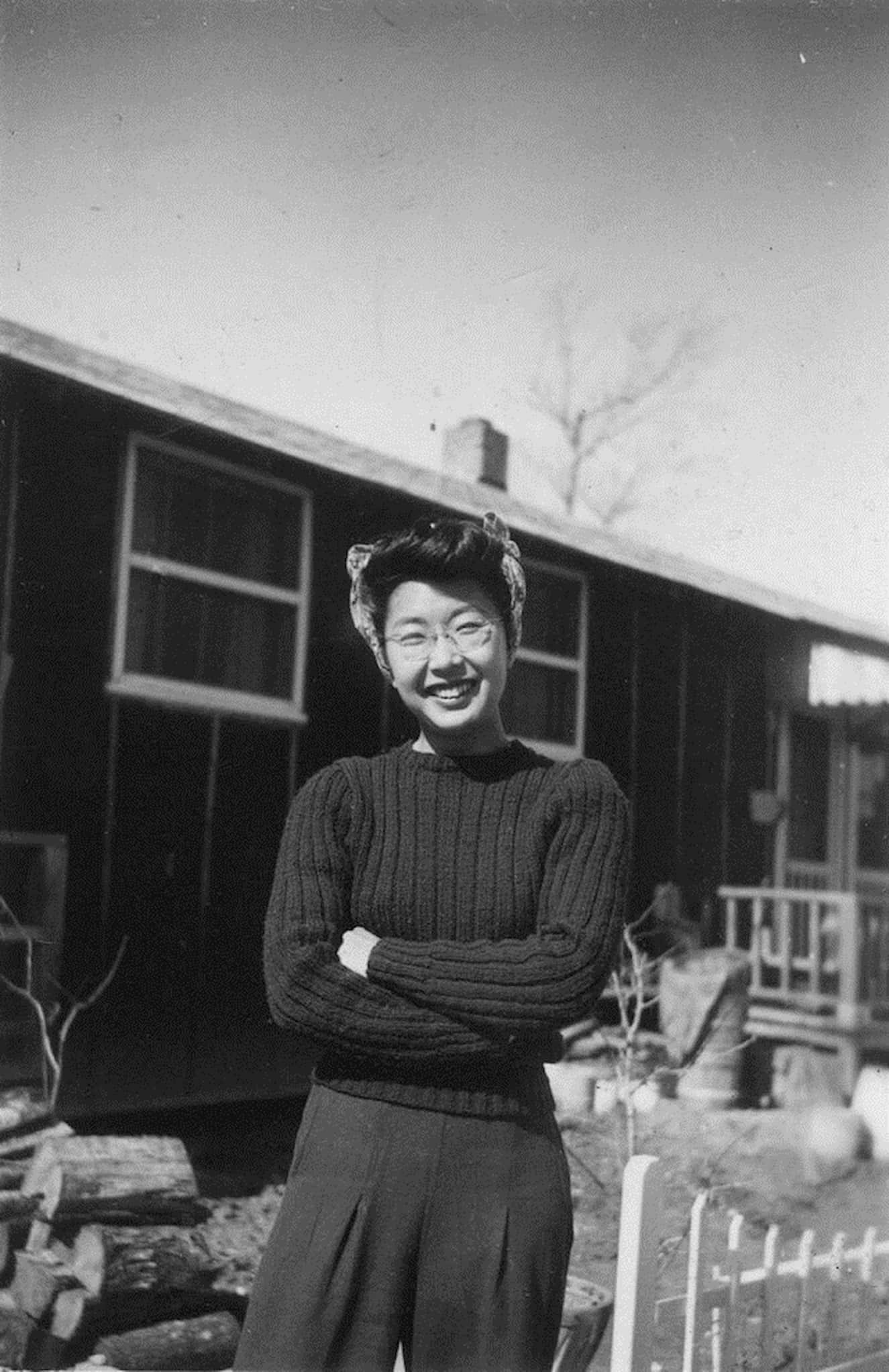
Yuri Kochiyama at the Santa Anita Assembly Center
Yuri Kochiyama, around age 21, in front of a barracks at Santa Anita, where Japanese Americans were forced to live in small and barren units, c. 1942.
-
Image
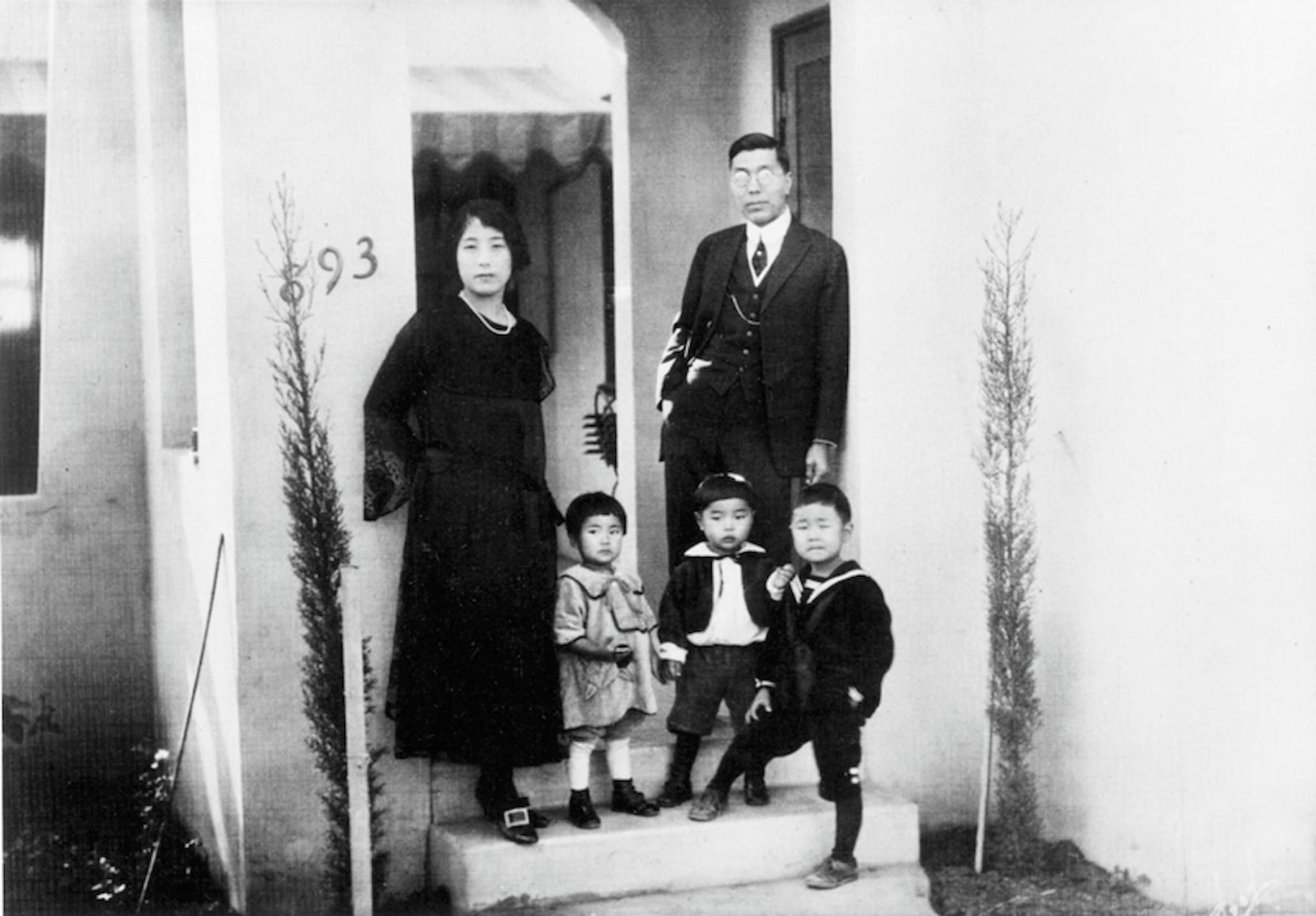
The Nakahara Family
The Nakahara family, with children Yuri (left) and brothers Peter and Art in San Pedro, c. 1924. Despite their middle-class lifestyle, racial segregation laws limited where they could live.
-
Image
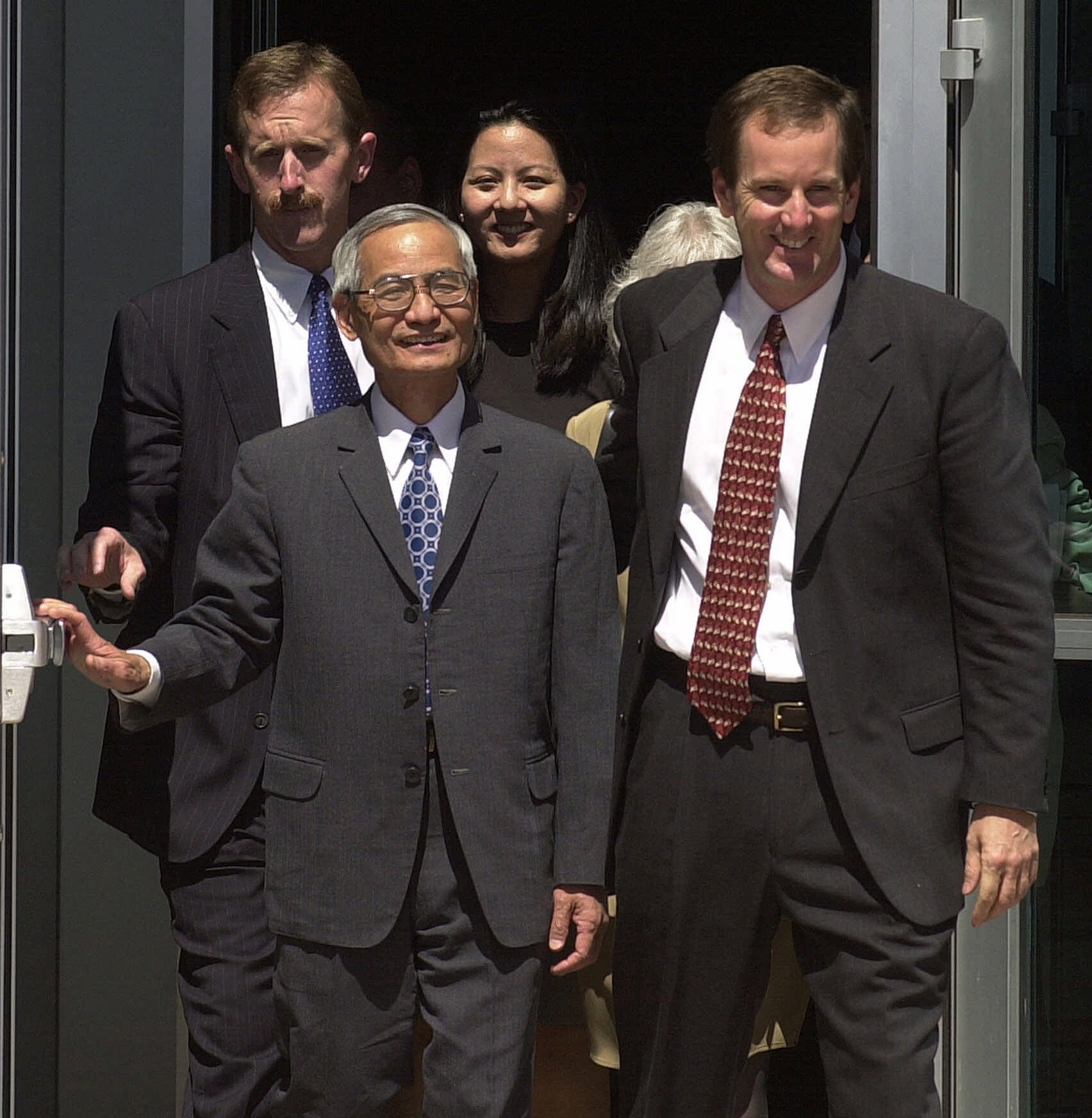
Wen Ho Lee Outside Courthouse
Wen Ho Lee outside a federal courthouse on September, 13, 2000, after his release from prison upon reaching a plea agreement. Lee was a scientist at Los Alamos National Laboratory accused of spying for the Chinese.
-

Image
National Review Cover
The cover of National Review from March 24, 1997 depicting (left to right) then Vice-President Al Gore, President Bill Clinton, and First Lady Hillary Clinton as Chinese stereotypes.
-
Image
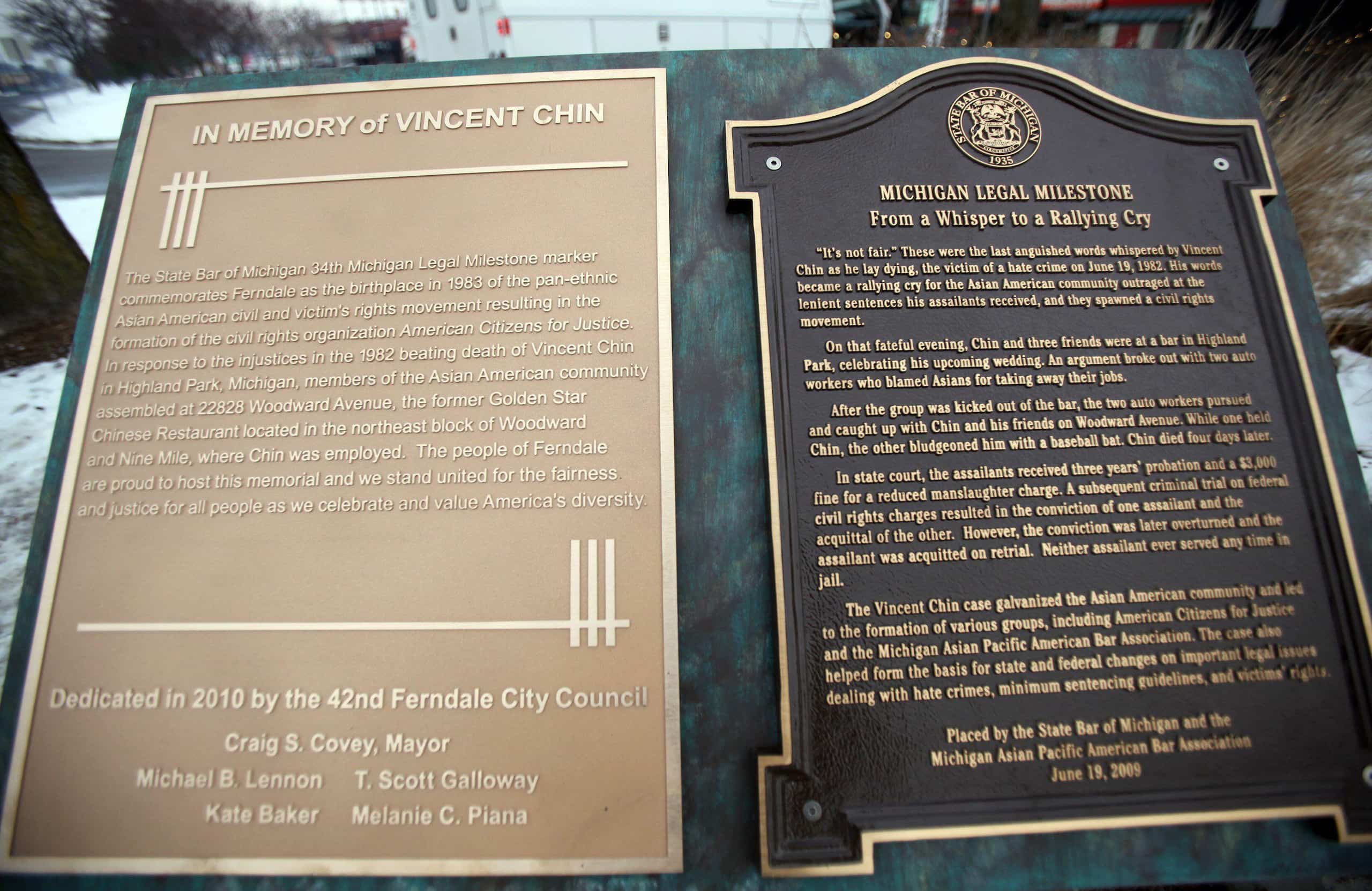
Vincent Chin Memorial Plaque
Vincent Chin’s murder is a reminder of the tragic consequences of racial scapegoating, but it also demonstrates the possibilities for solidarity and social justice.
-
Text
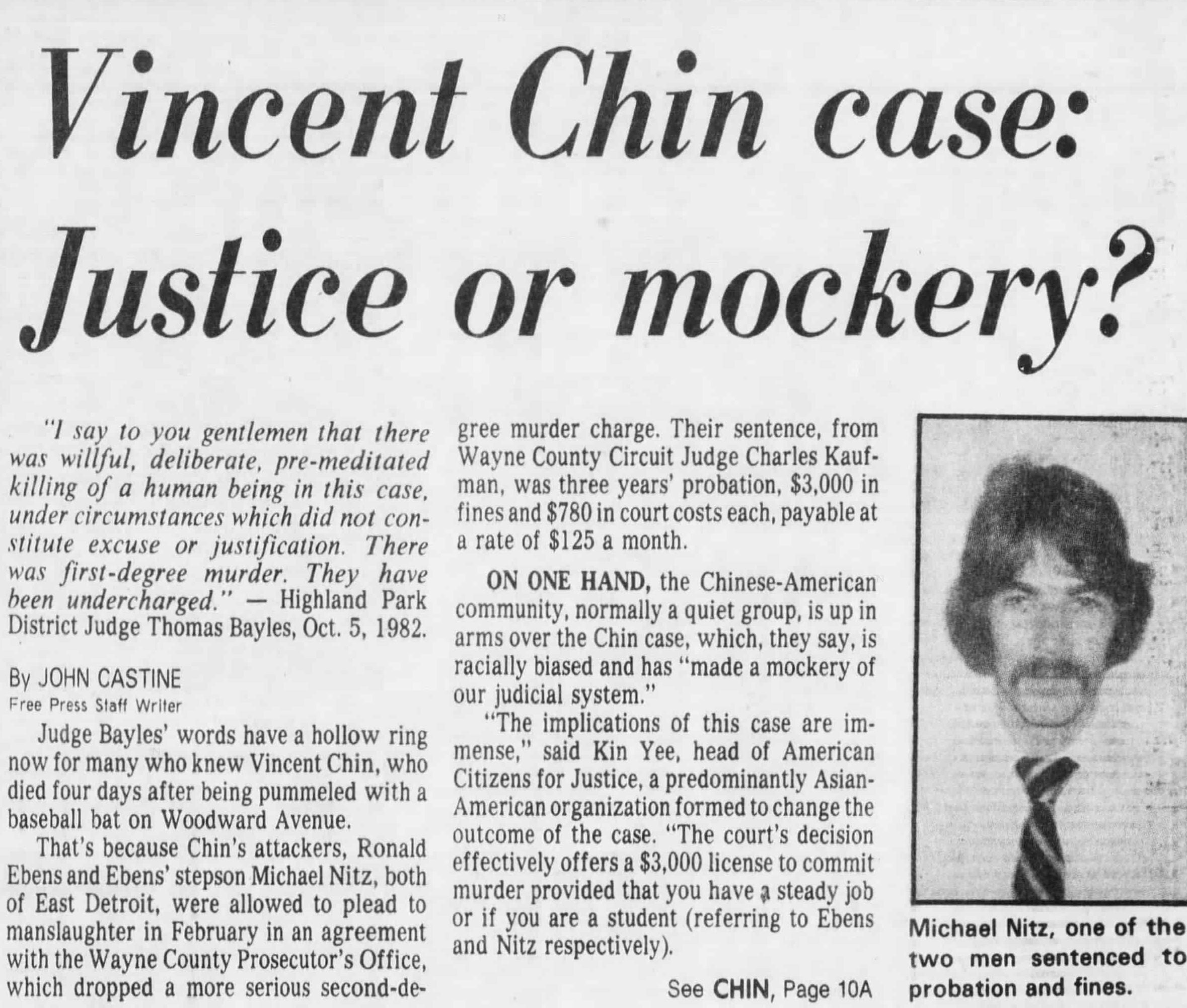
“Vincent Chin case: Justice or mockery?”
The injustice of the Vincent Chin case ultimately galvanized an Asian American solidarity movement led by activists Helen Zia and Liza Chan.
-
Video
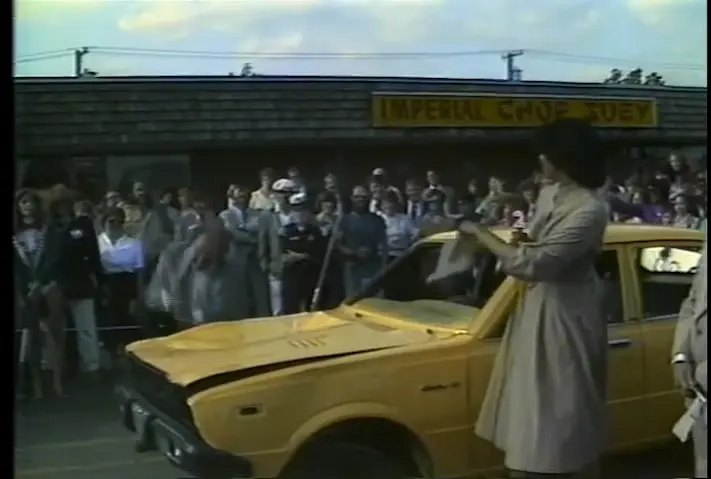
Toyota Bashing in Detroit
A fundraiser in Southfield, Michigan allowed people to line up and bludgeon a Japanese-made Toyota with a sledgehammer. Anti-Japanese sentiment in Detroit ran high due to the floundering of the US auto industry in the face of Japanese automotive success.
-
Text
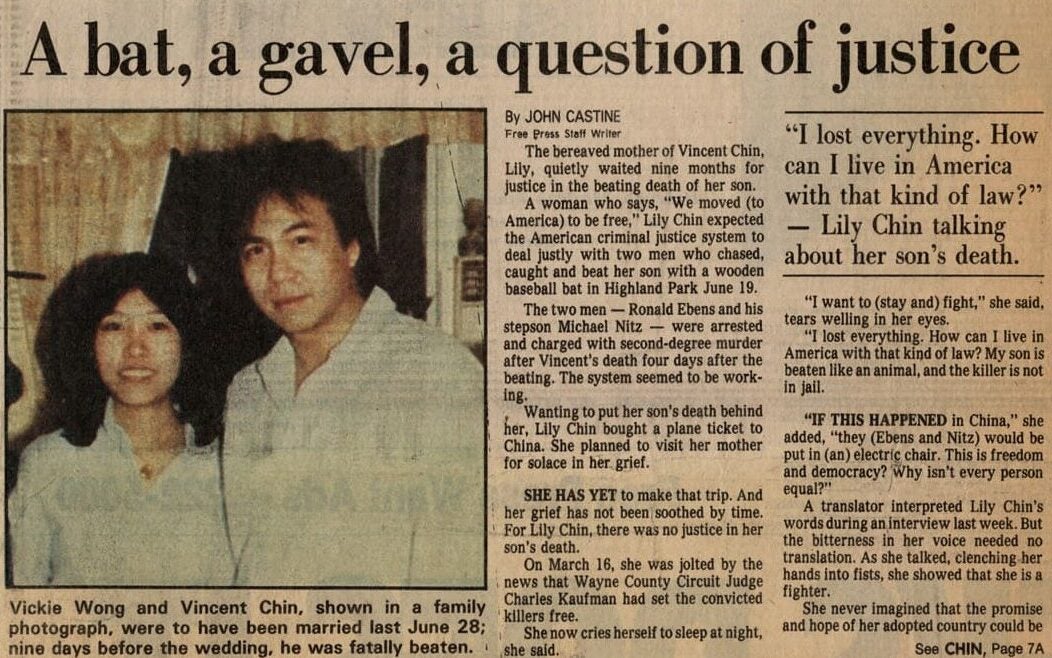
“A bat, a gavel, a question of justice”
Vincent Chin was engaged to marry Vikki Wong nine days before he was beaten to death. His killers were charged with second degree murder, but were ultimately sentenced to three years of probation and a fine. They received no jail time.
-
Image
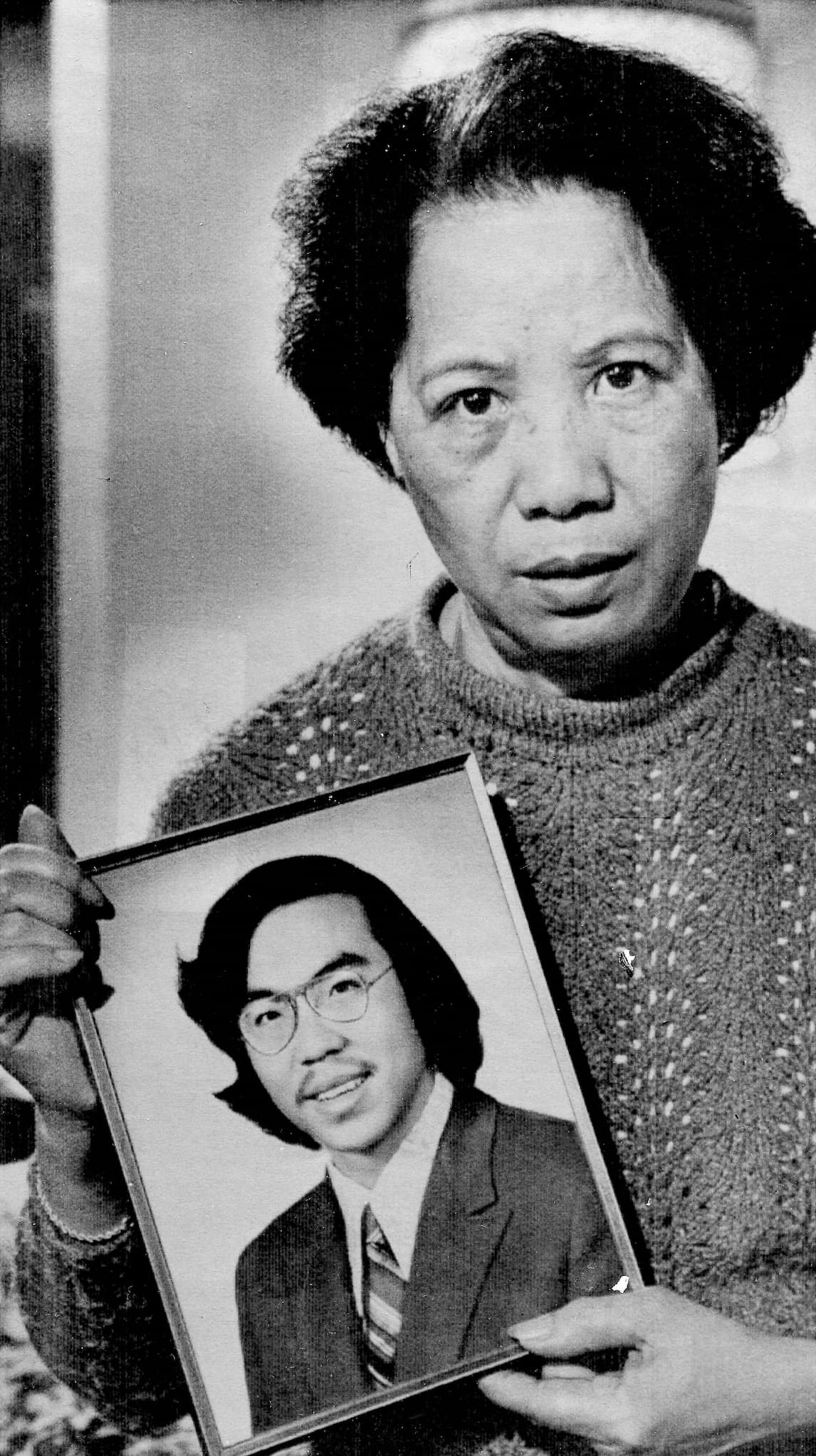
Lily Chin With Photo of Vincent Chin
Lily Chin holds up a portrait of her son Vincent, who was killed on the night of his bachelor party in 1982 in Highland Park, Michigan, the victim of a hate crime.
-
Video
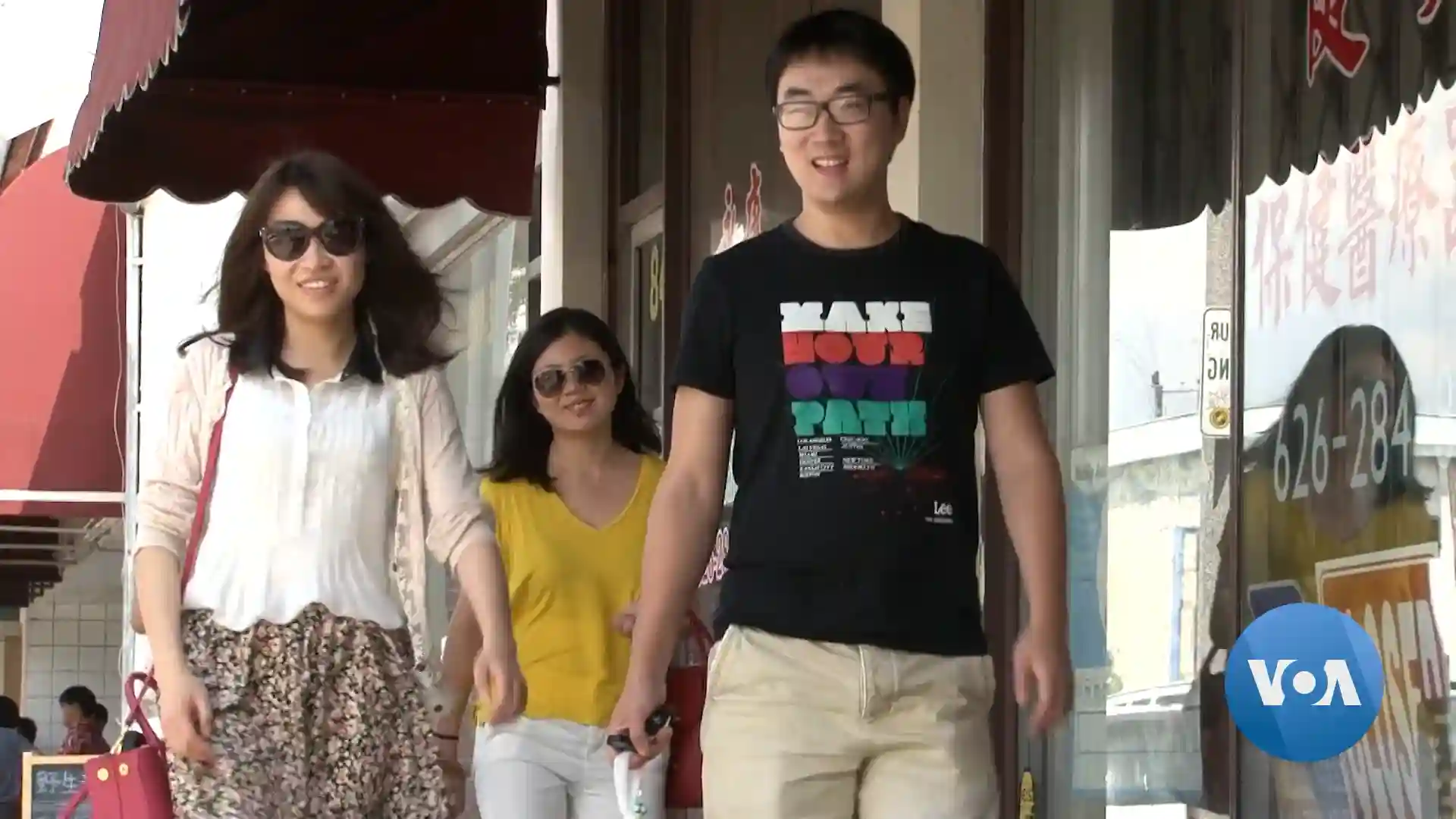
California’s San Gabriel Valley a Mecca for Asian Americans
Since the 1980s, Taiwanese immigration has transformed the San Gabriel Valley and made Chinese-speaking residents the majority in some of its cities.
-
Image
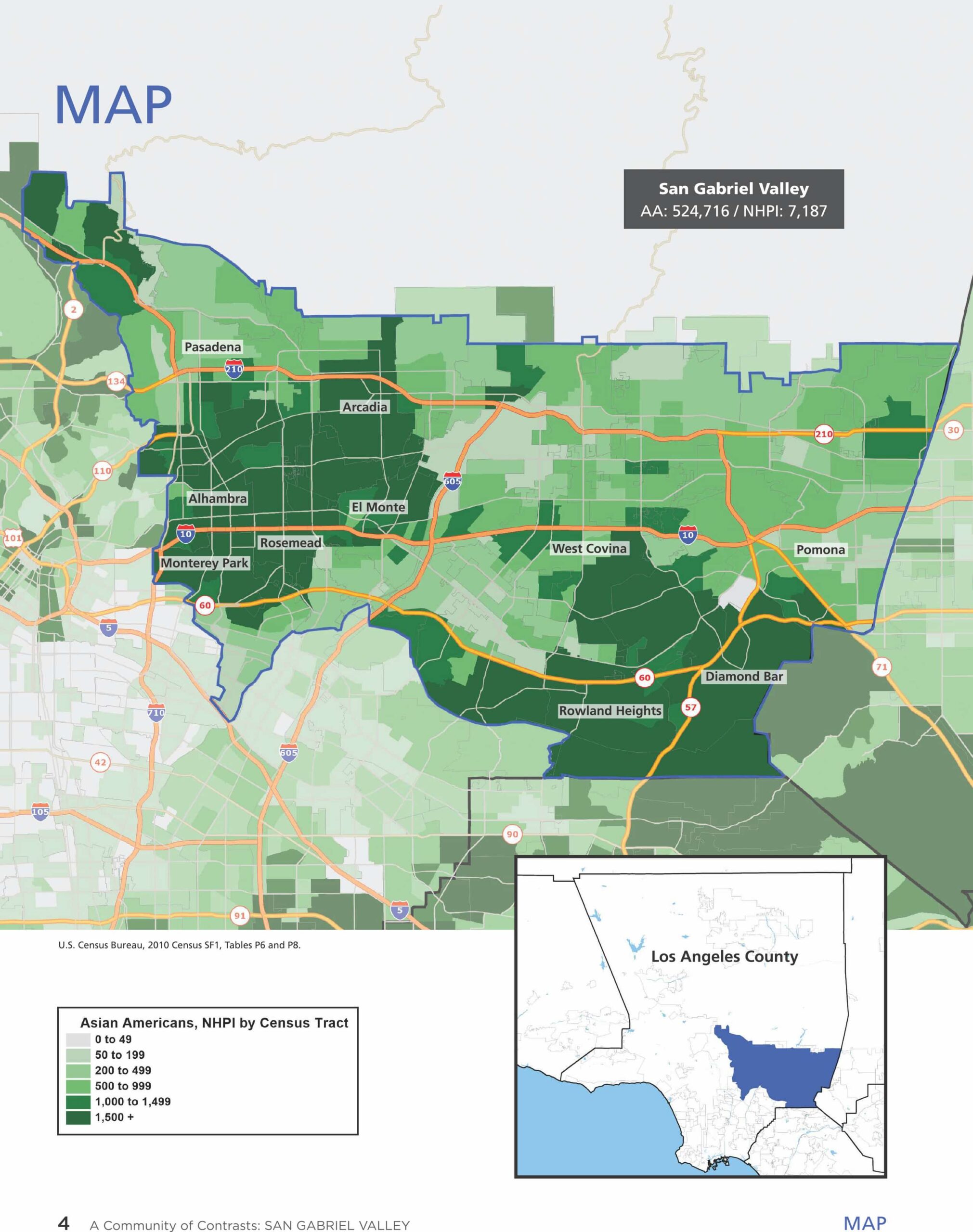
Asian American Communities Across the San Gabriel Valley
This map, based on US Census Data from 2010, shows the distribution of Asian American communities across the San Gabriel Valley. (Source: Asian Americans Advancing Justice)
-
Image
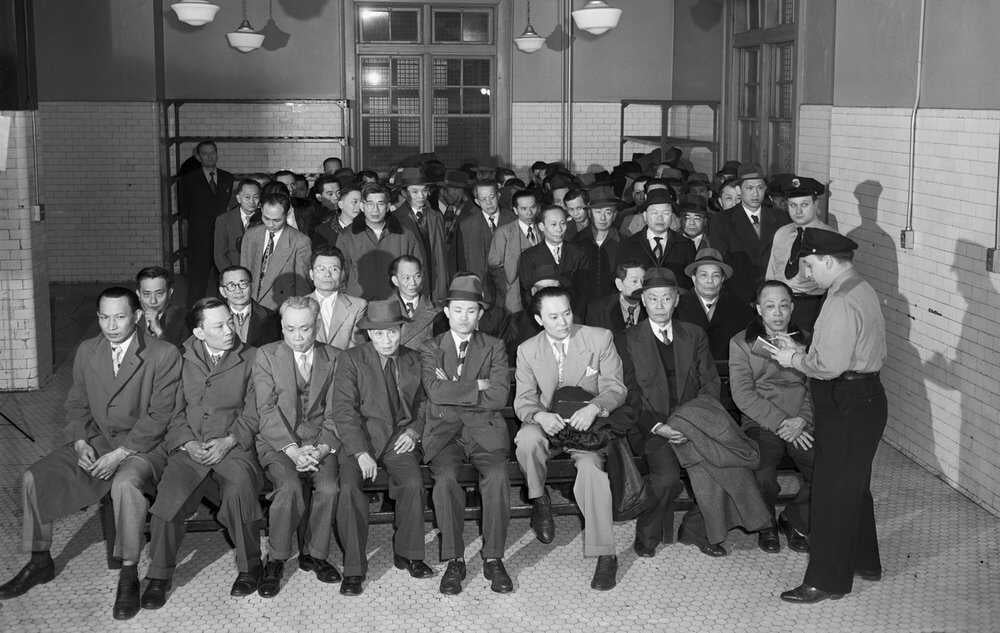
Chinese Immigrants Being Questioned
US immigration officers interrogating Chinese immigrants suspected of being Communists or deserted seamen, Ellis Island, New York, January 31, 1951.
-
Image
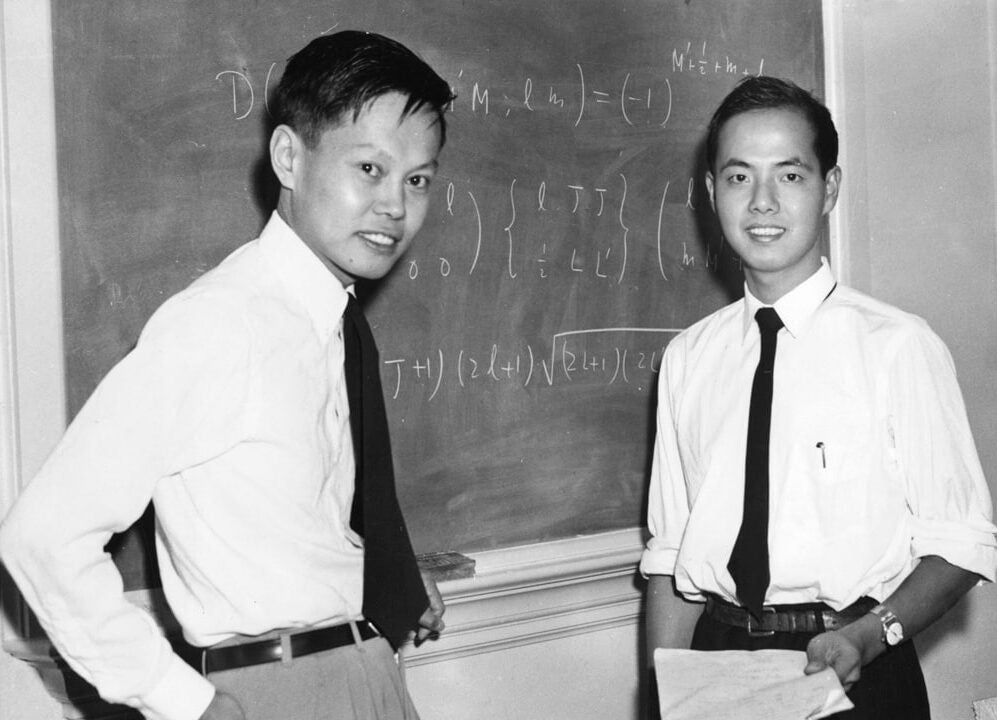
Chinese-Born Physicists
Chinese-born physicists Chen Ning Yang and Tsung-Dao Lee studied and researched at American universities. They were awarded the 1957 Nobel Prize in Physics.
-
Text
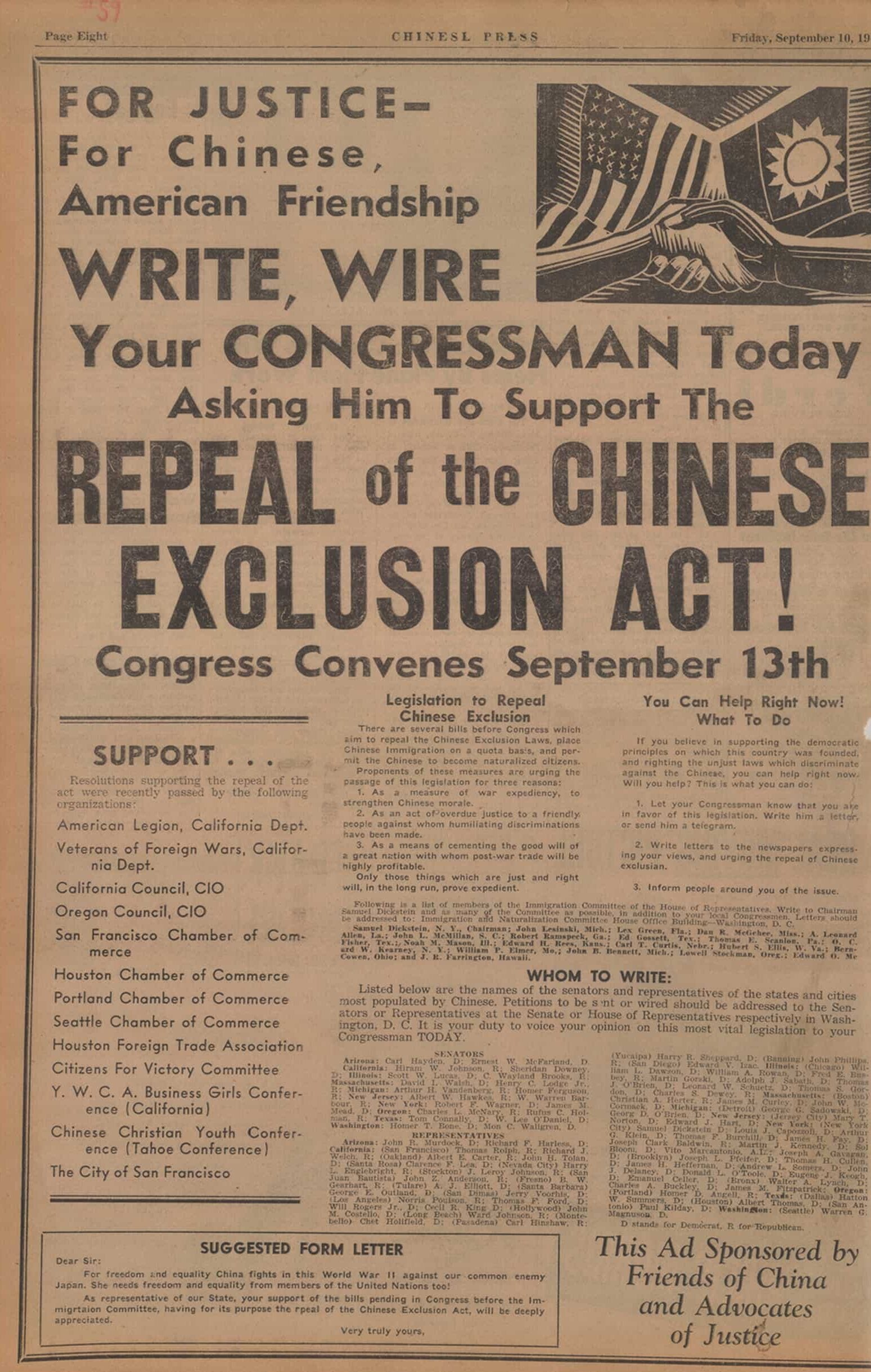
Repeal of the Chinese Exclusion Act
A Chinese Press advertisement from September 10, 1943 asking readers to lobby Congressional representatives to support the repeal of the Chinese Exclusion Act.
-
Image
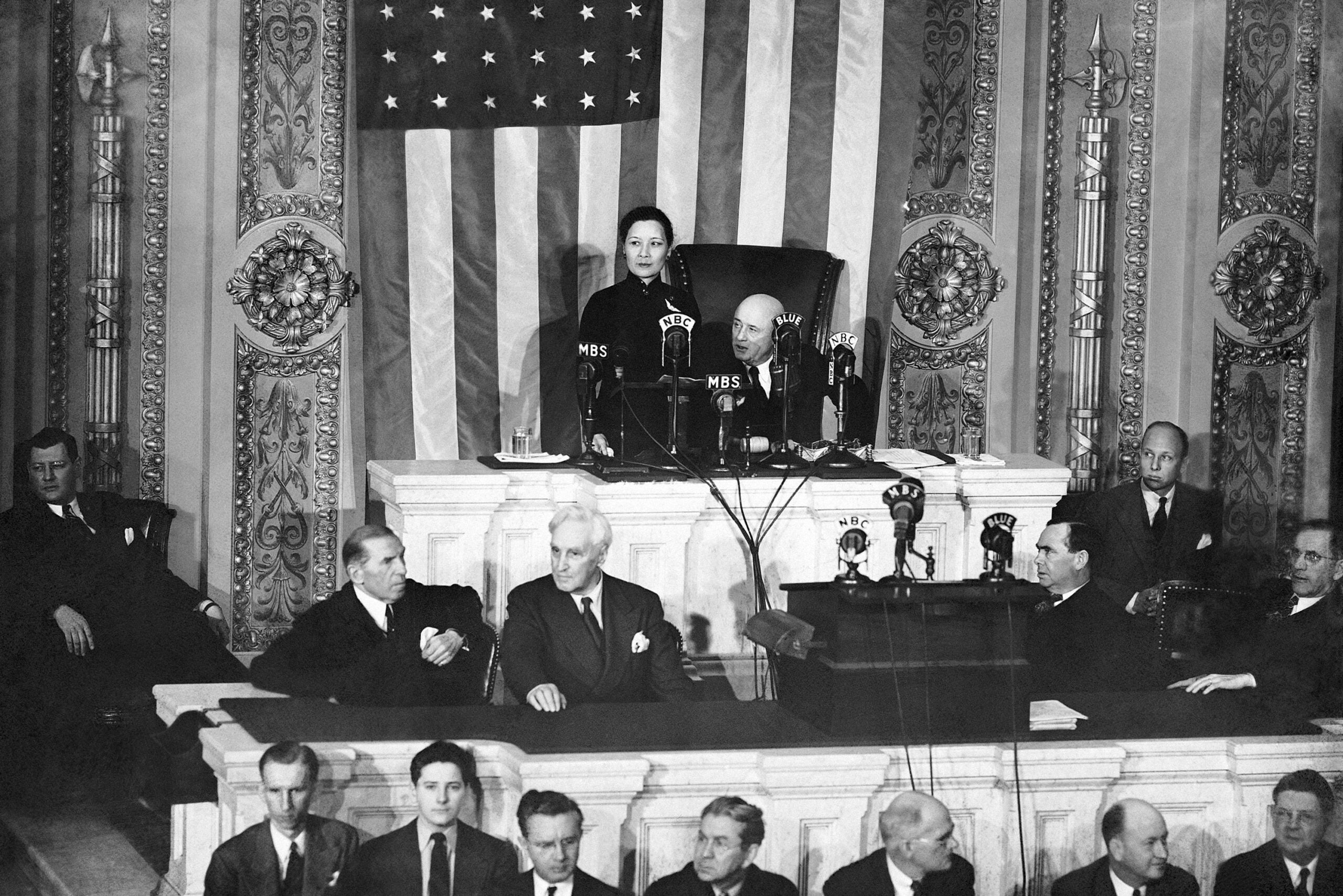
Madame Chiang Kai-shek in the U.S.
Madame Chiang Kai-shek, wife of China’s Nationalist leader, addresses the House of Representatives on Feb. 18, 1943 to encourage military cooperation between the US and China against Japan.