



Search the Media Repository
Discover the curated images, videos, and primary sources featured throughout Foundations and Futures
History is more than just text on a page; it is the photographs, voices, and artifacts of the people who lived it. The images and recordings featured across Foundations and Futures are part of a meticulously curated media repository. Whether you are building a lesson plan or investigating an artifact, you can use this database to trace the provenance of our media: discover who created an asset, the historical context behind it, and how it can be used to bring Asian American and Pacific Islander experiences into your classroom.
Multimedia
Chapters
-
Image
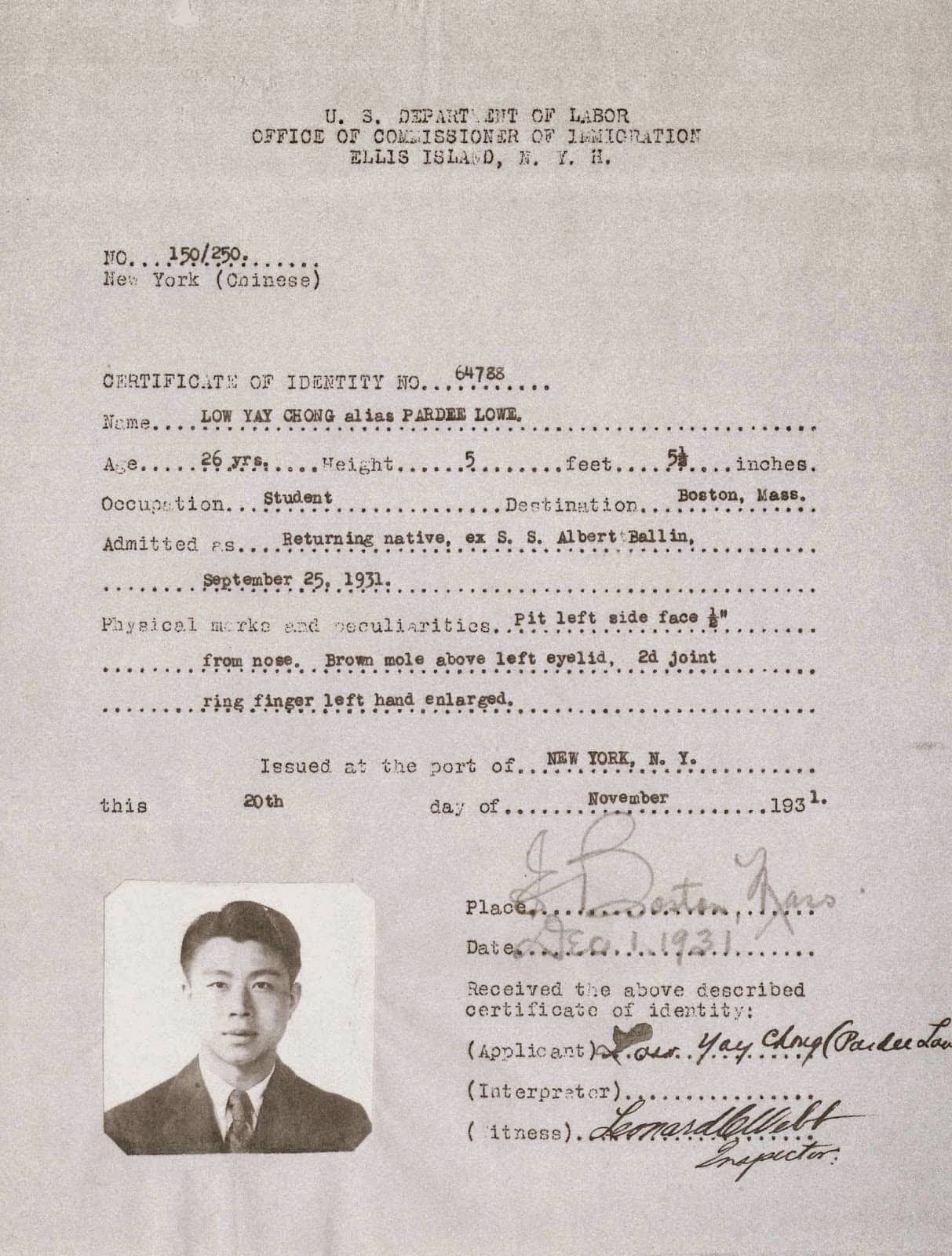
Pardee Lowe’s Ceritficate of Identity
Pardee Lowe in a 1931 US immigration form designating him a “returning native” from overseas travel. Despite graduating from Stanford University and Harvard Business School, Lowe struggled to find work in the early 1930’s due to racial discrimination.
-
Image
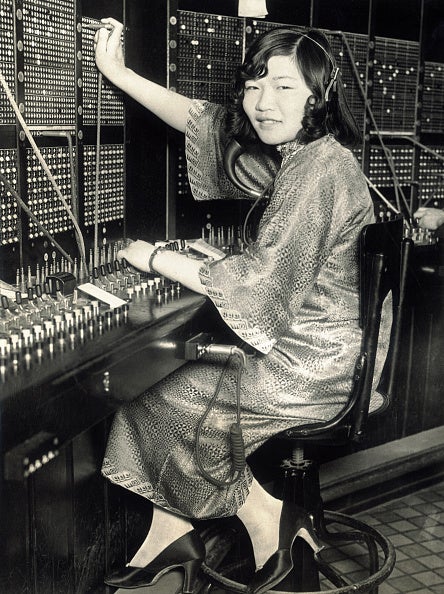
Harriett Ng Phone Operator
Harriett Ng, an operator at the Chinese Telephone Exchange, date unknown. Chinese American women who were fluent in English and multiple Chinese dialects became operators for the San Francisco Chinatown Telephone Exchange.
-
Image
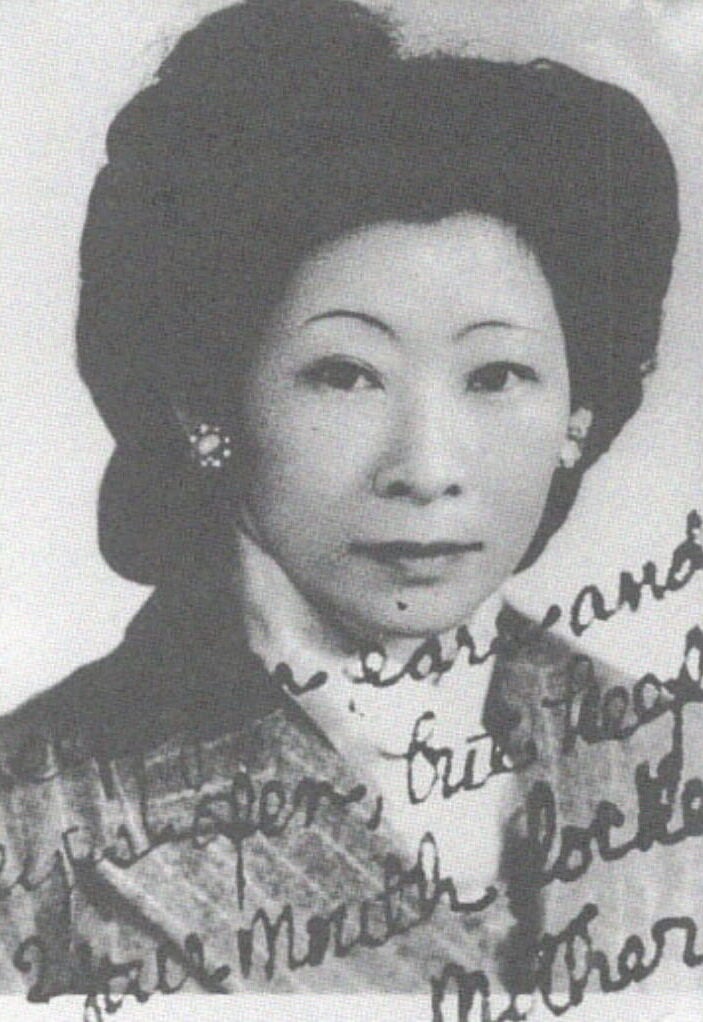
Flora Belle Jan
Chinese American journalist and poet Flora Belle Jan in the 1930s. “My parents have wanted me to grow up a good Chinese girl,” she said, “but I am an American and I can’t accept all the old Chinese ways and ideas.
-
Image
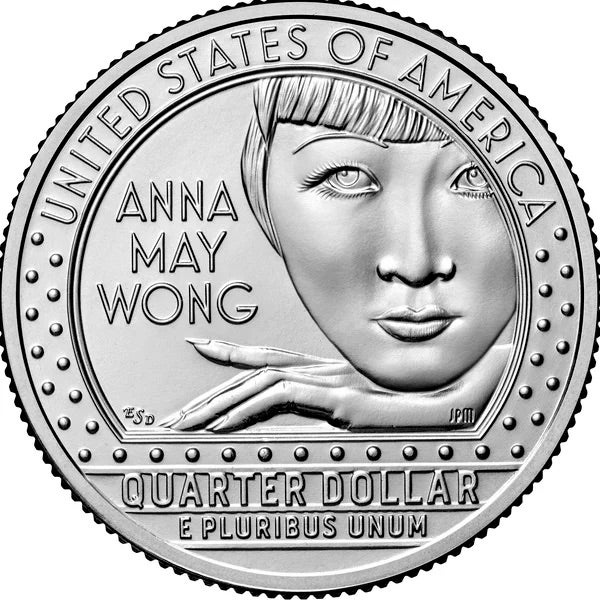
Anna May Wong Quarter
Anna May Wong’s inspiring legacy includes becoming the first Asian American to be featured on US currency when the US Mint issued a quarter bearing her name and likeness in October 2022.
-
Video
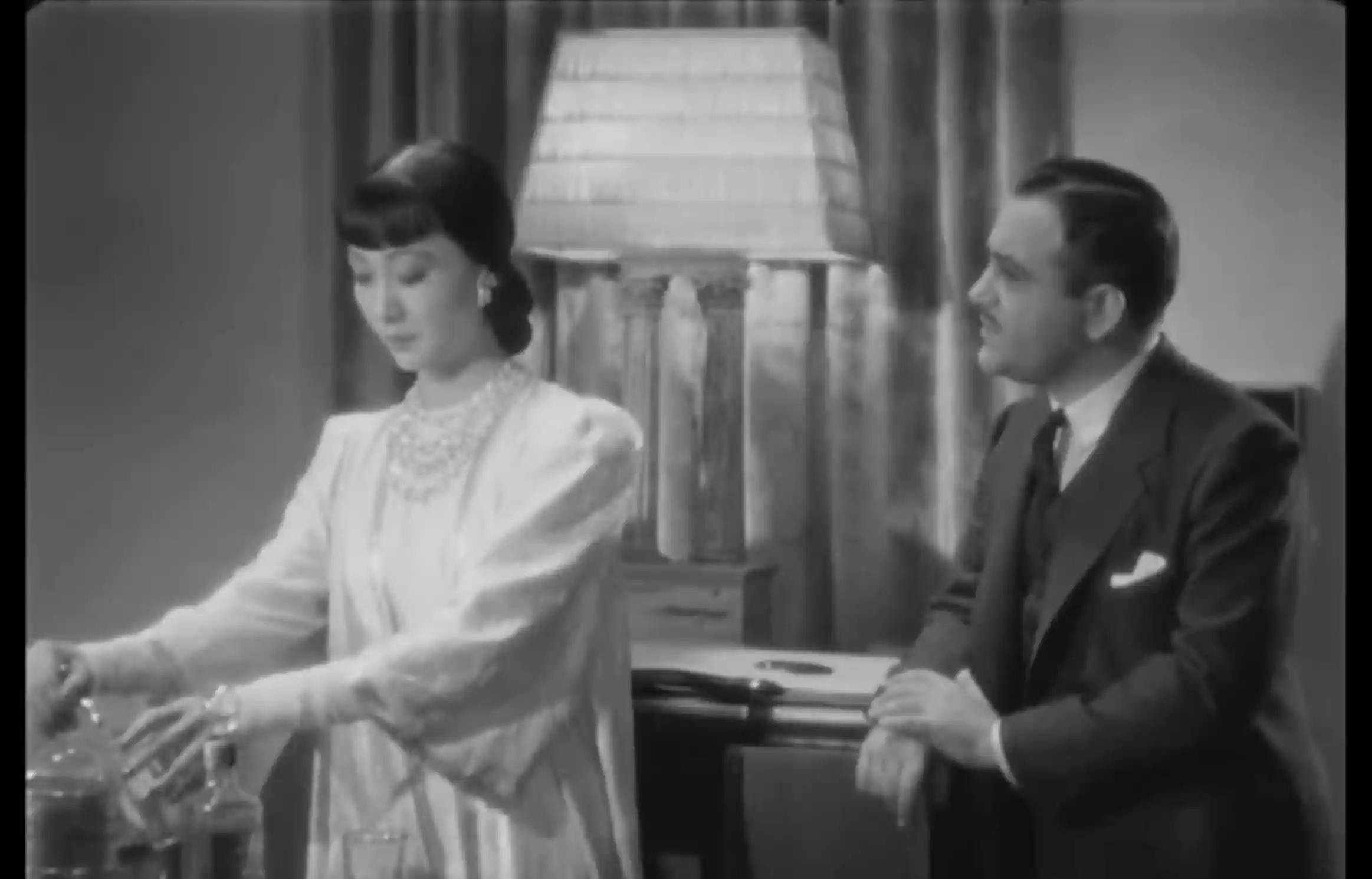
Dangerous to Know
Anna May Wong starring opposite Akim Tamiroff in Paramount Pictures’ Dangerous to Know (1938). Wong relentlessly pushed for greater representation and fewer stereotypical roles for Asian Americans in film.
-
Text
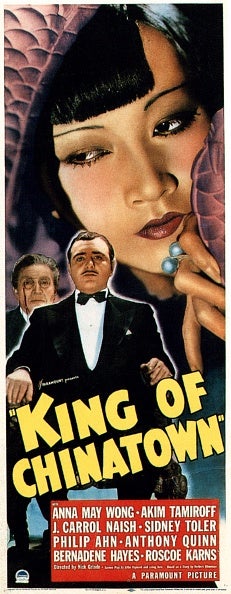
King of Chinatown
Acknowledged as Hollywood’s first Asian American film star, Anna May Wong had top billing in 1939’s King of Chinatown. Disillusioned by Hollywood’s practice of “yellowface,” or casting white actors for Asian roles, she left the US for a time to work in Europe.
-
Text
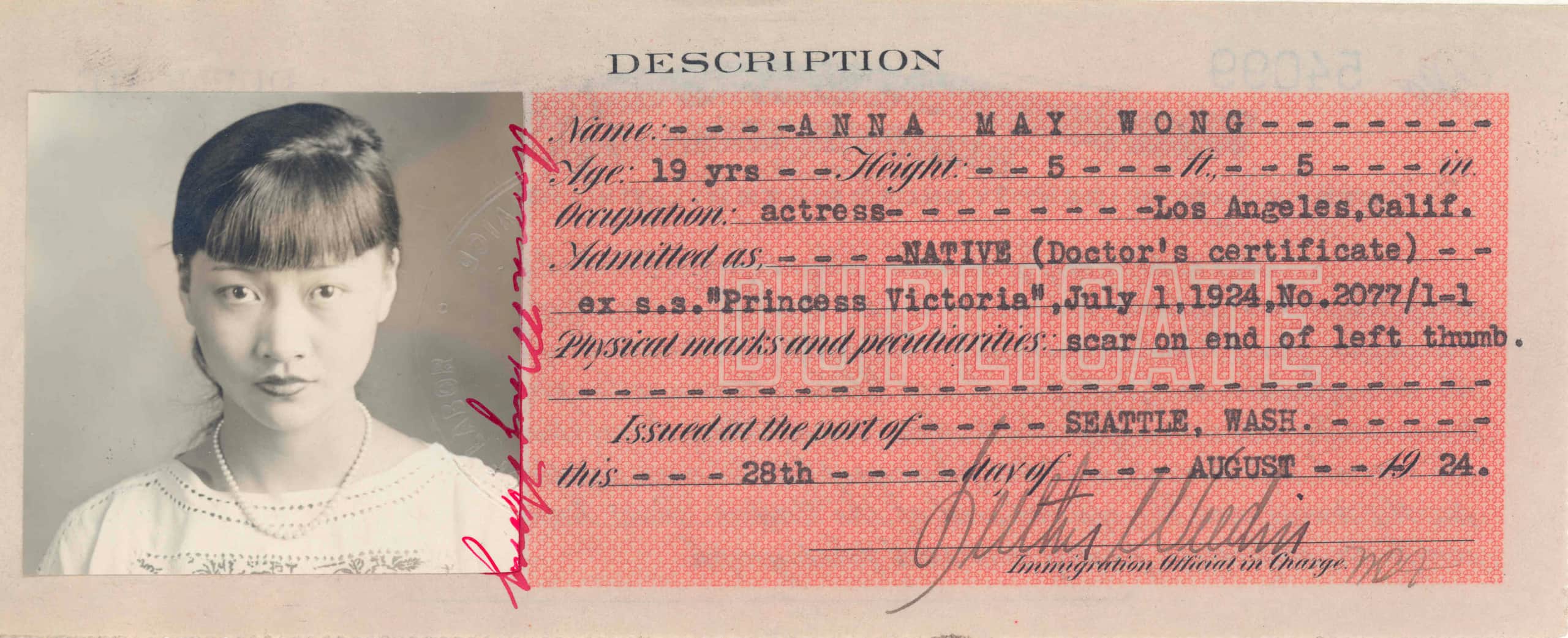
Anna May Wong’s Certificate of Identity
Anna May Wong’s 1924 US Certificate of Identity, at age nineteen, indicating her as “native.” Red certificates were issued to Chinese nationals and Chinese Americans entering the United States under the Chinese Exclusion Act of 1882.
-
Image
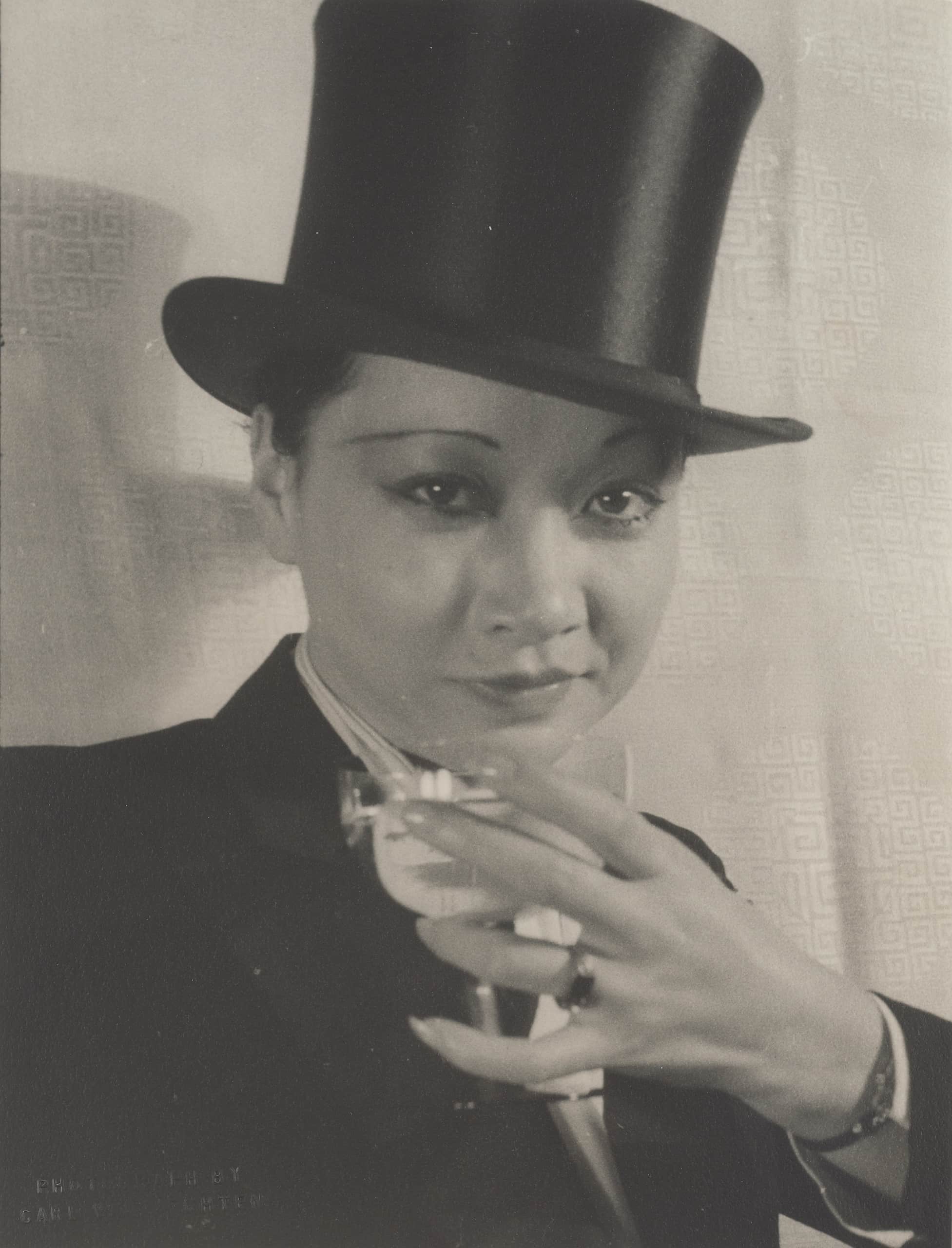
Anna May Wong
Born in Los Angeles in 1905, Anna May Wong (born Wong Liu Tsong) had a storied career that spanned over sixty films. In the face of racial discrimination in Hollywood, she rose to international fame as a film and TV icon.
-
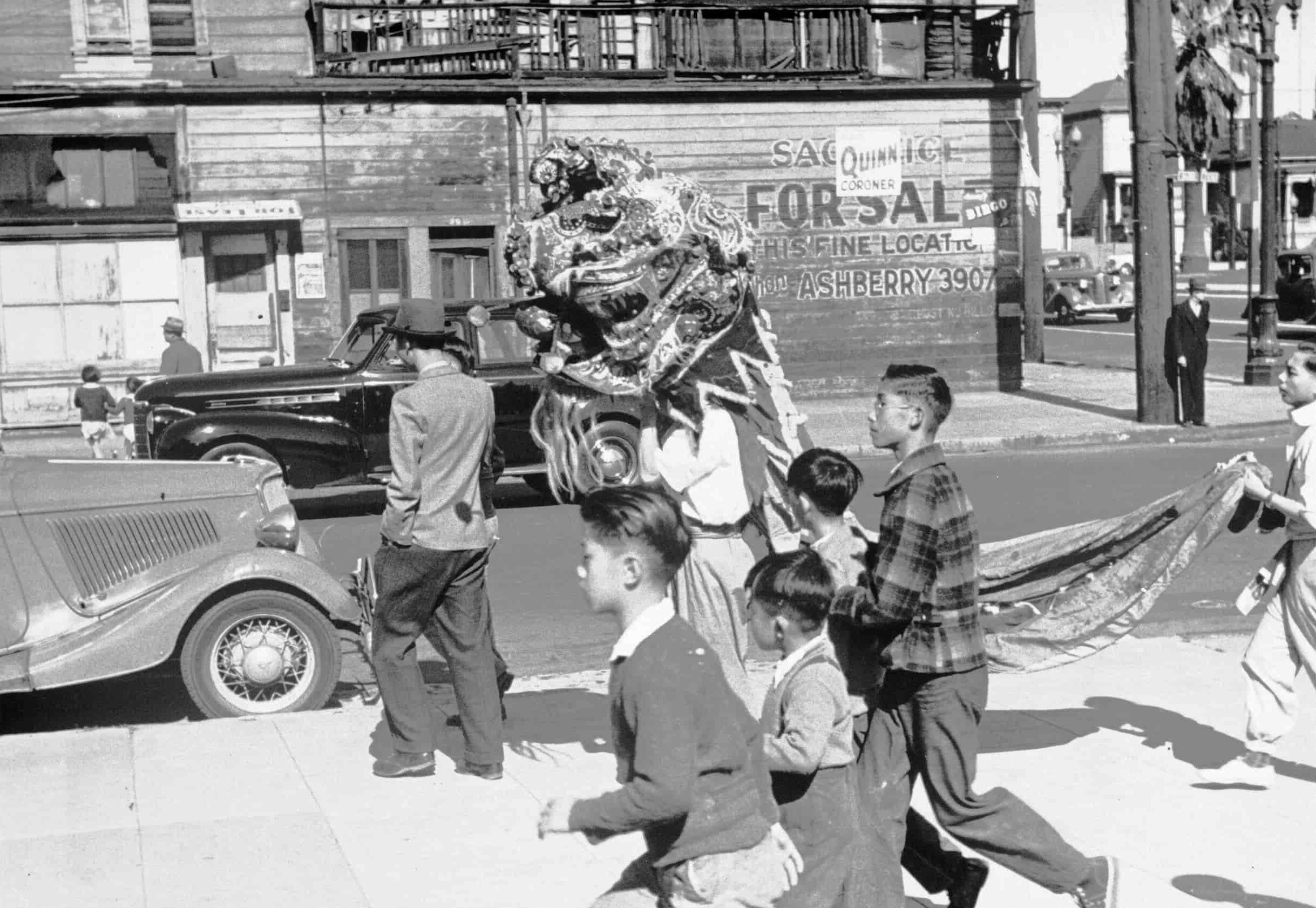
Image
Chinese American Boys In Chinatown
Chinese American boys in a San Francisco Chinatown parade along Sixth Street, c. 1936.
-
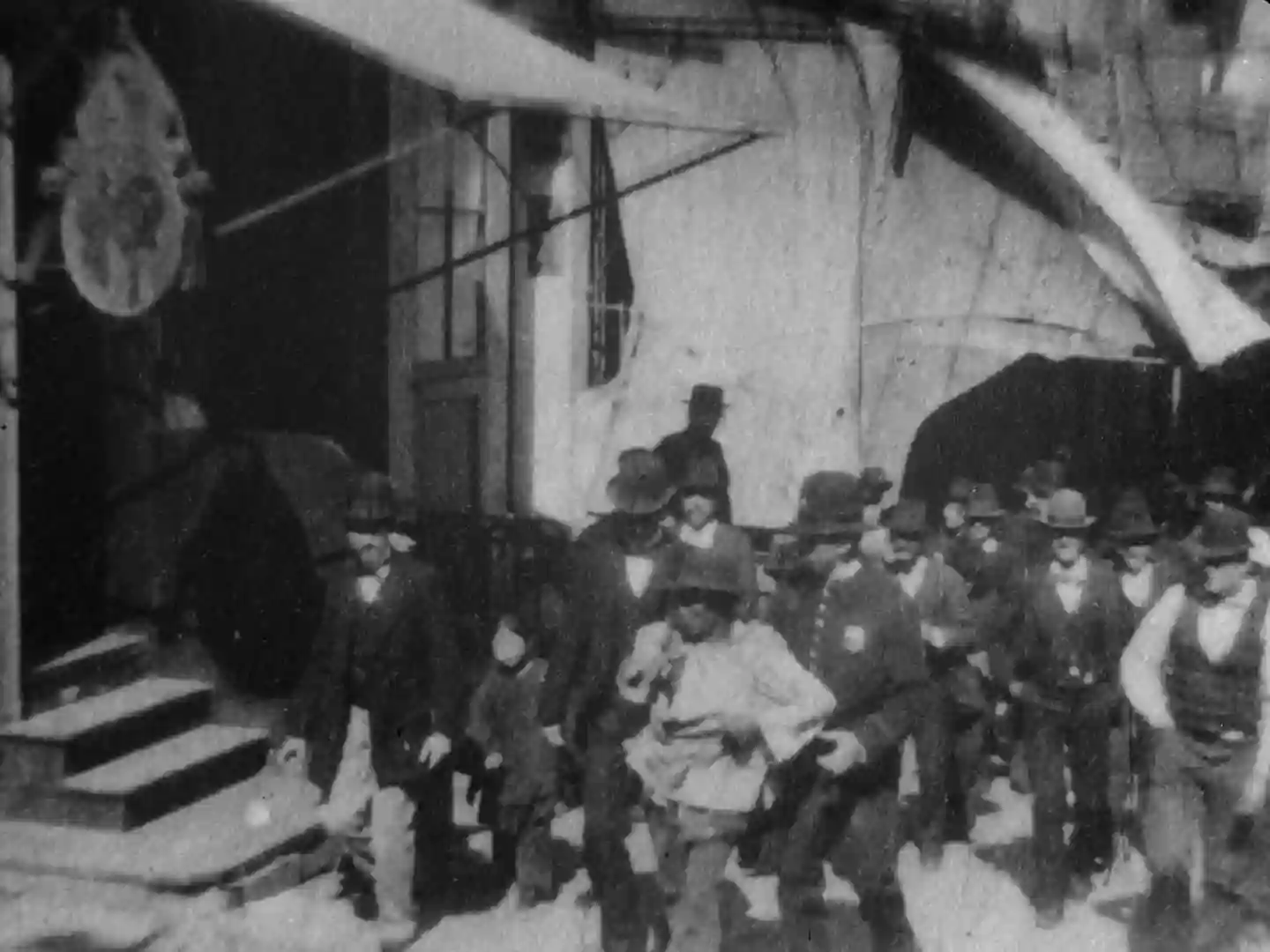
Video
Arrest in Chinatown
This 1897 film shows the arrest of a Chinese man in San Francisco Chinatown, watched by a crowd of onlookers.
-
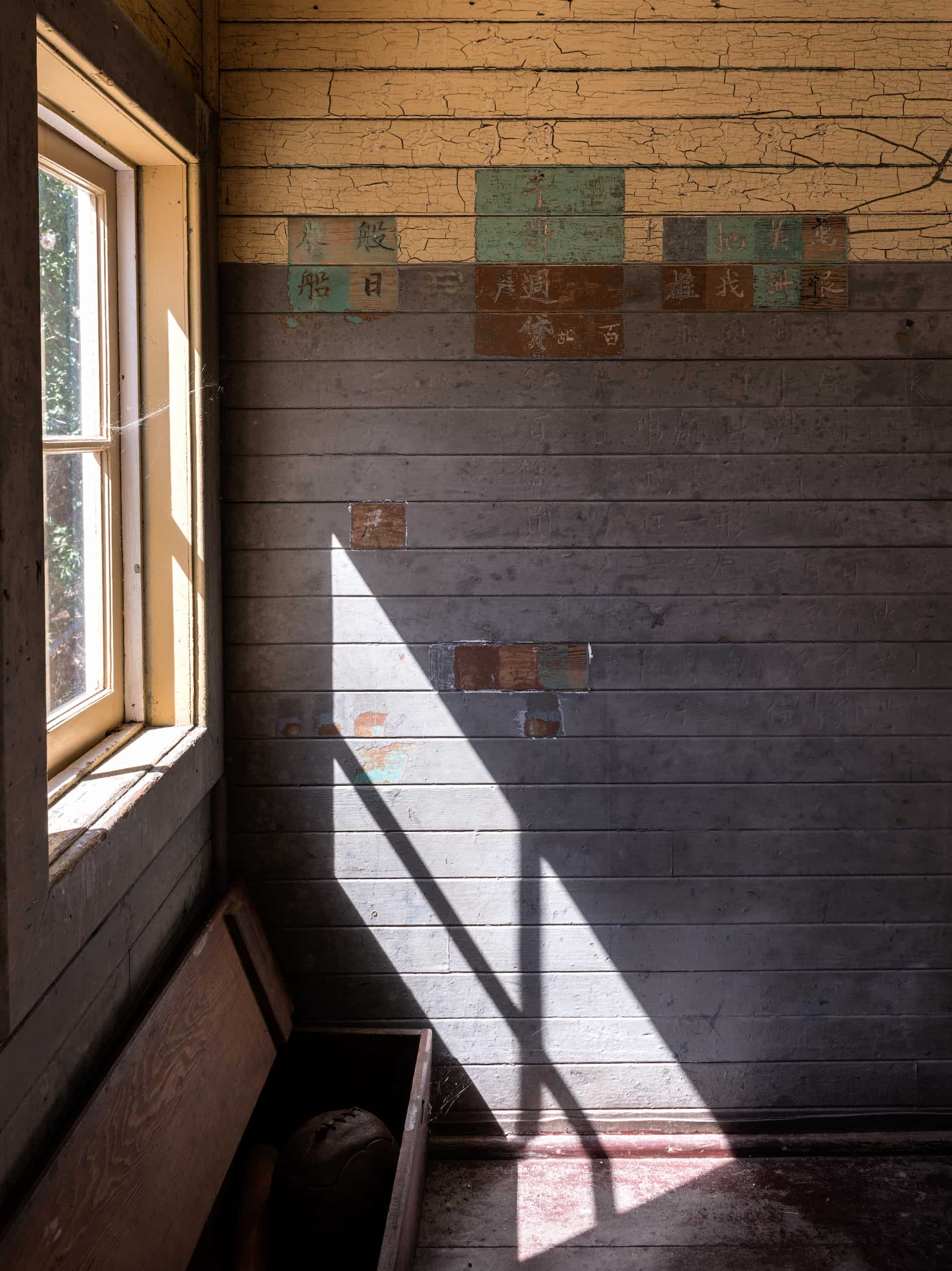
Image
Interior of Angel Island Immigration Station
Chinese detainees on Angel Island painted and carved poems of despair on barracks walls. More than 200 of them are still visible today
-
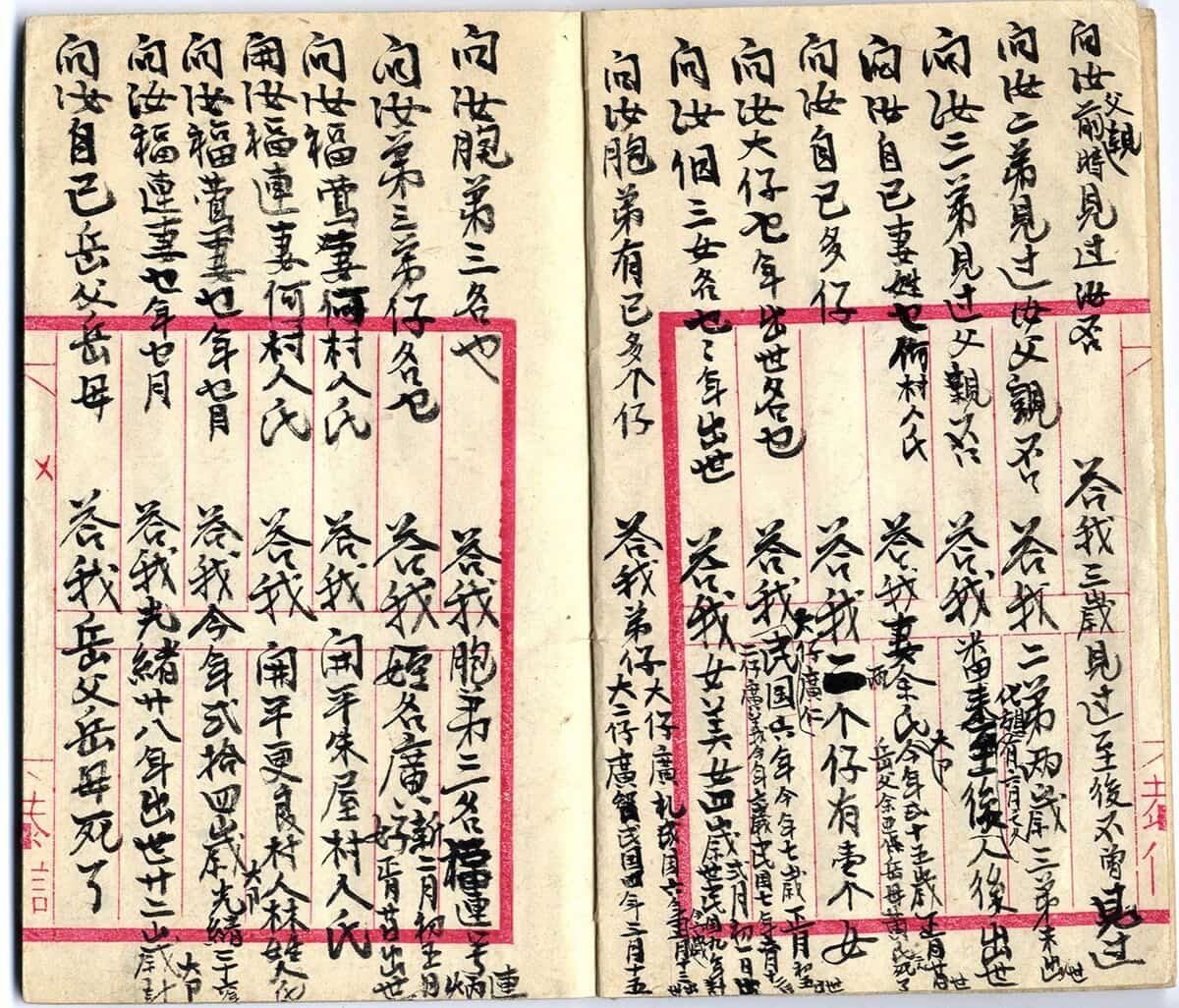
Text
A Chinese Exclusion Act Coaching Book
A study aid or coaching guide to successfully pass through US immigration interrogation from the 1920s found among the papers of Fook Wing Chung.
-
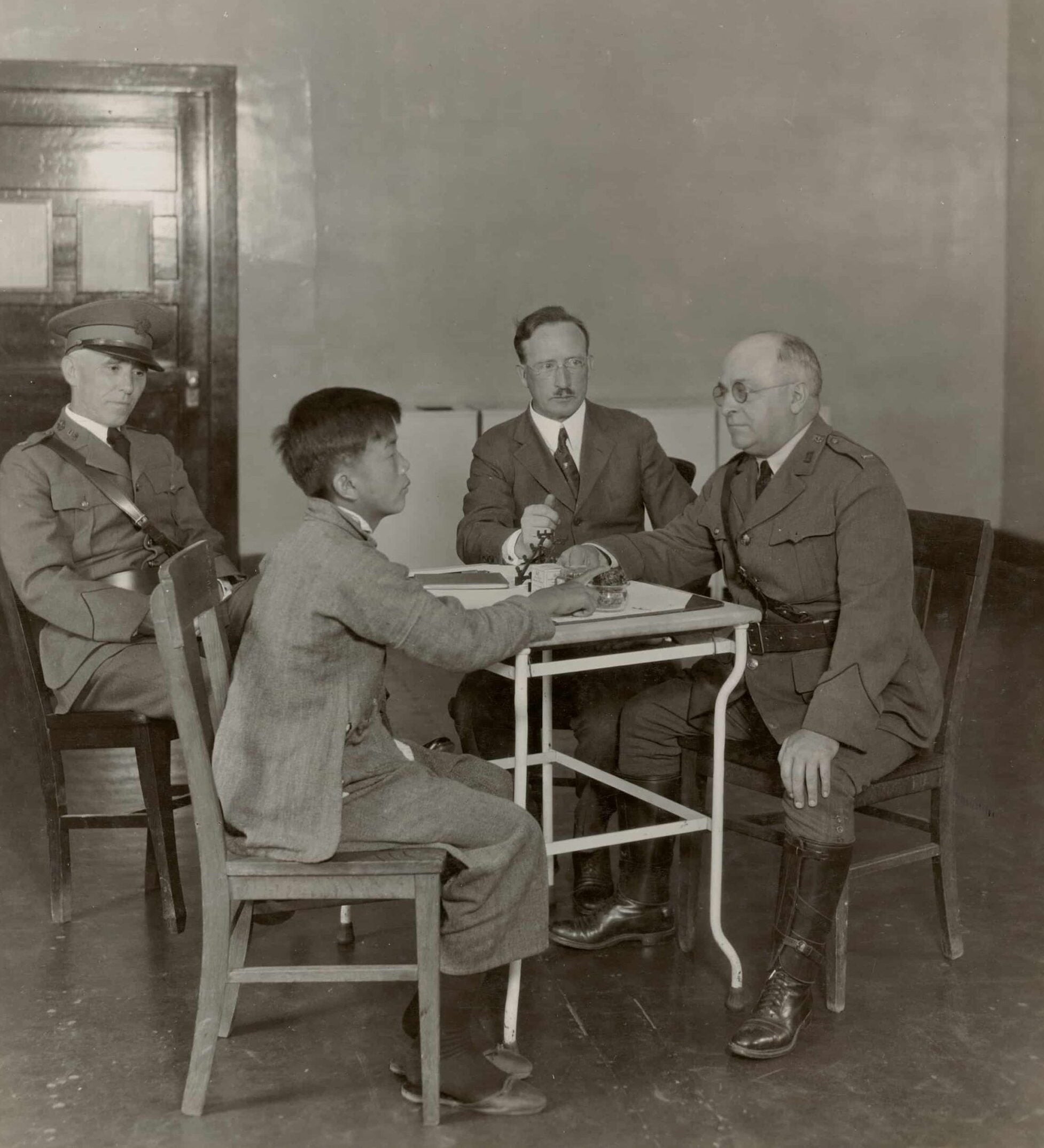
Image
Interrogation on Angel Island
Chinese applicant at interrogation, Angel Island, 1923. Officials often suspected fraudulent applications and questioned immigrants about specific details related to families or villages to detect false stories.
-
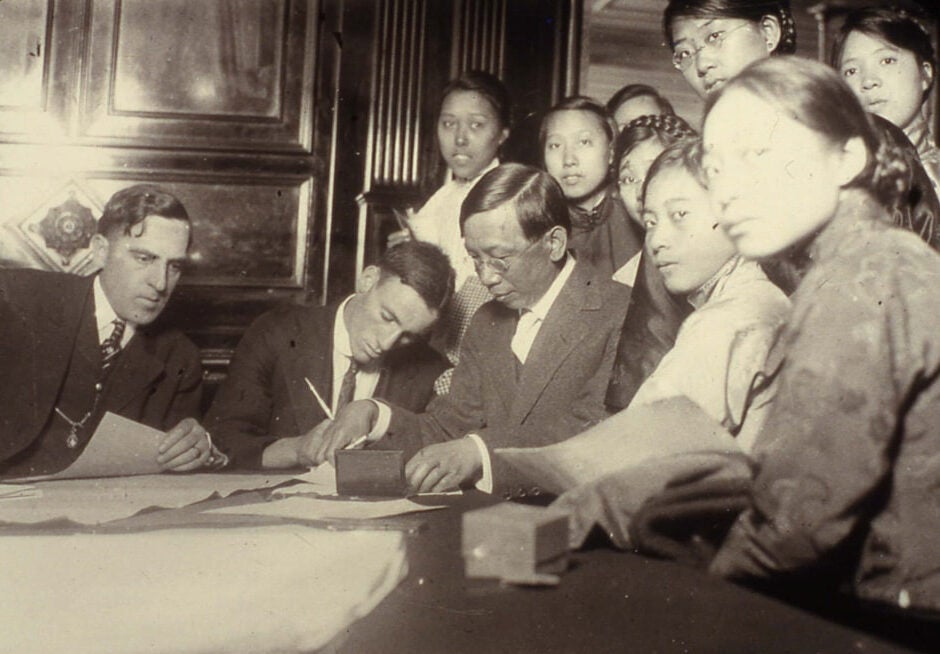
Image
Processing Paperwork on Angel Island
Officials processing paperwork, Angel Island. Chinese exclusion laws allowed some non-laborer immigrants to enter the United States, but required substantial proof and documents.
-
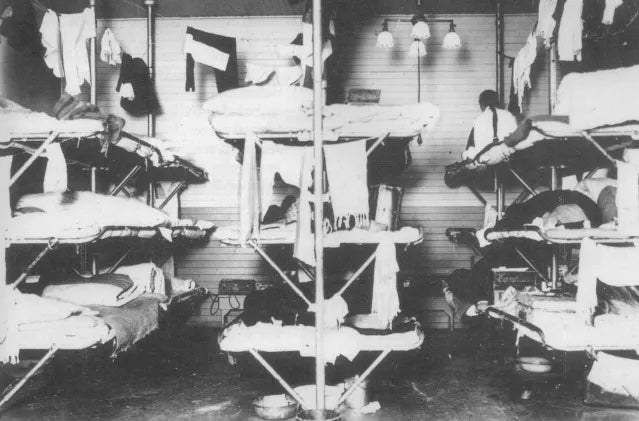
Image
Dormitory on Angel Island
A Chinese men’s dormitory on Angel Island, 1910. Detained immigrants stayed in overcrowded, poorly ventilated rooms with rows of metal bunk beds set two feet apart.
-

Image
Angel Island Immigration Station
Angel Island Immigration Station. From 1882-1910, Chinese immigrating to San Francisco were detained at Angel Island while hoping to gain entry to the United States.
-
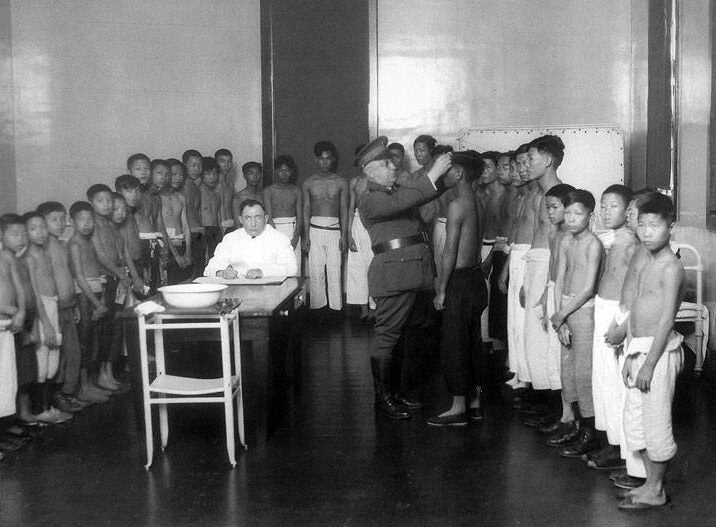
Image
Medical Examination at Angel Island
A medical examination of Chinese immigrants at Angel Island Immigration Station. These exams were extremely physically invasive, and personal belongings such as letters were often confiscated.
-
Image
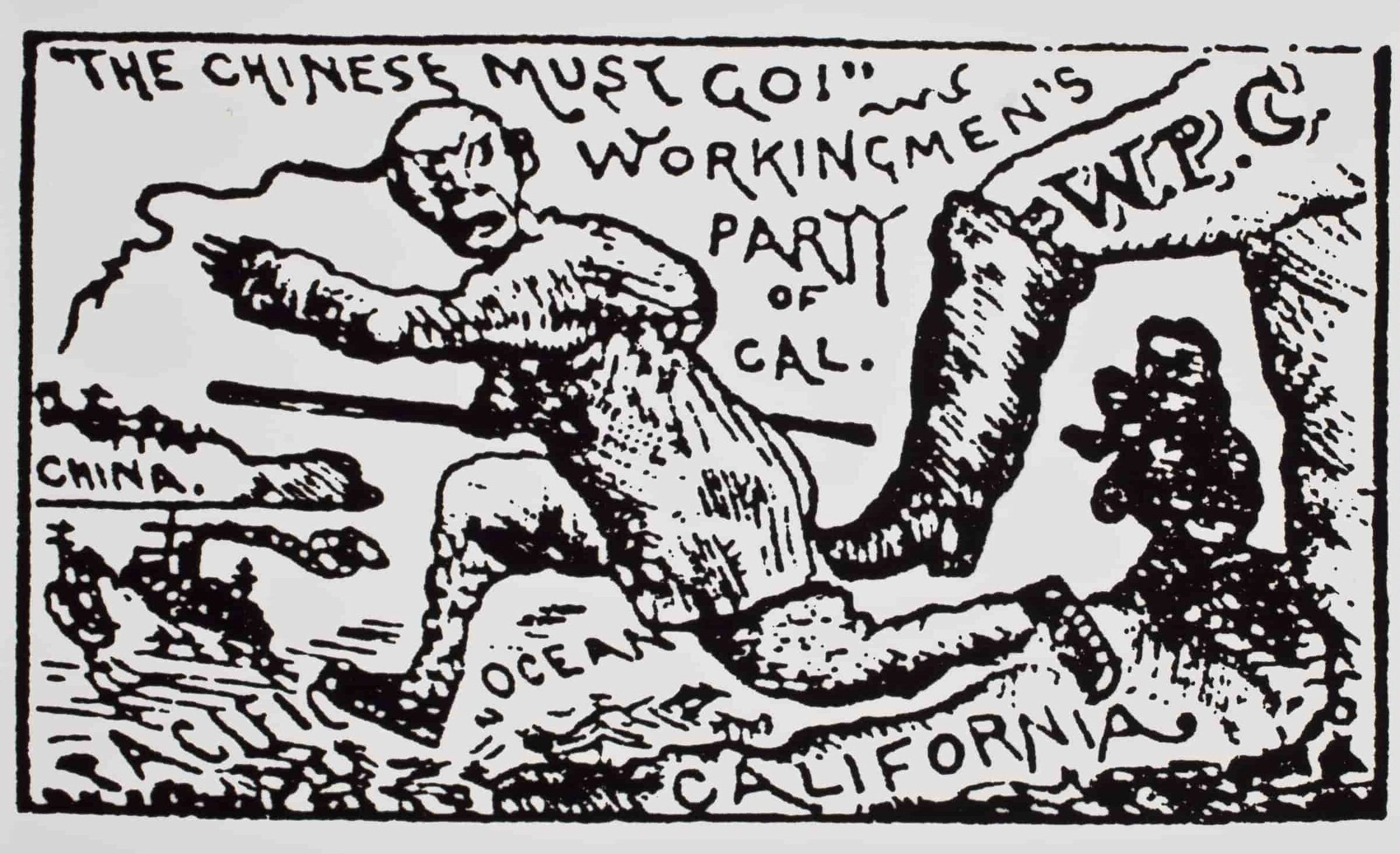
Workingman’s Party of Guerneville
A political cartoon for the Workingmen’s Party of Guerneville, California, 1879 featured the phrase “The Chinese Must Go!”
-
Image
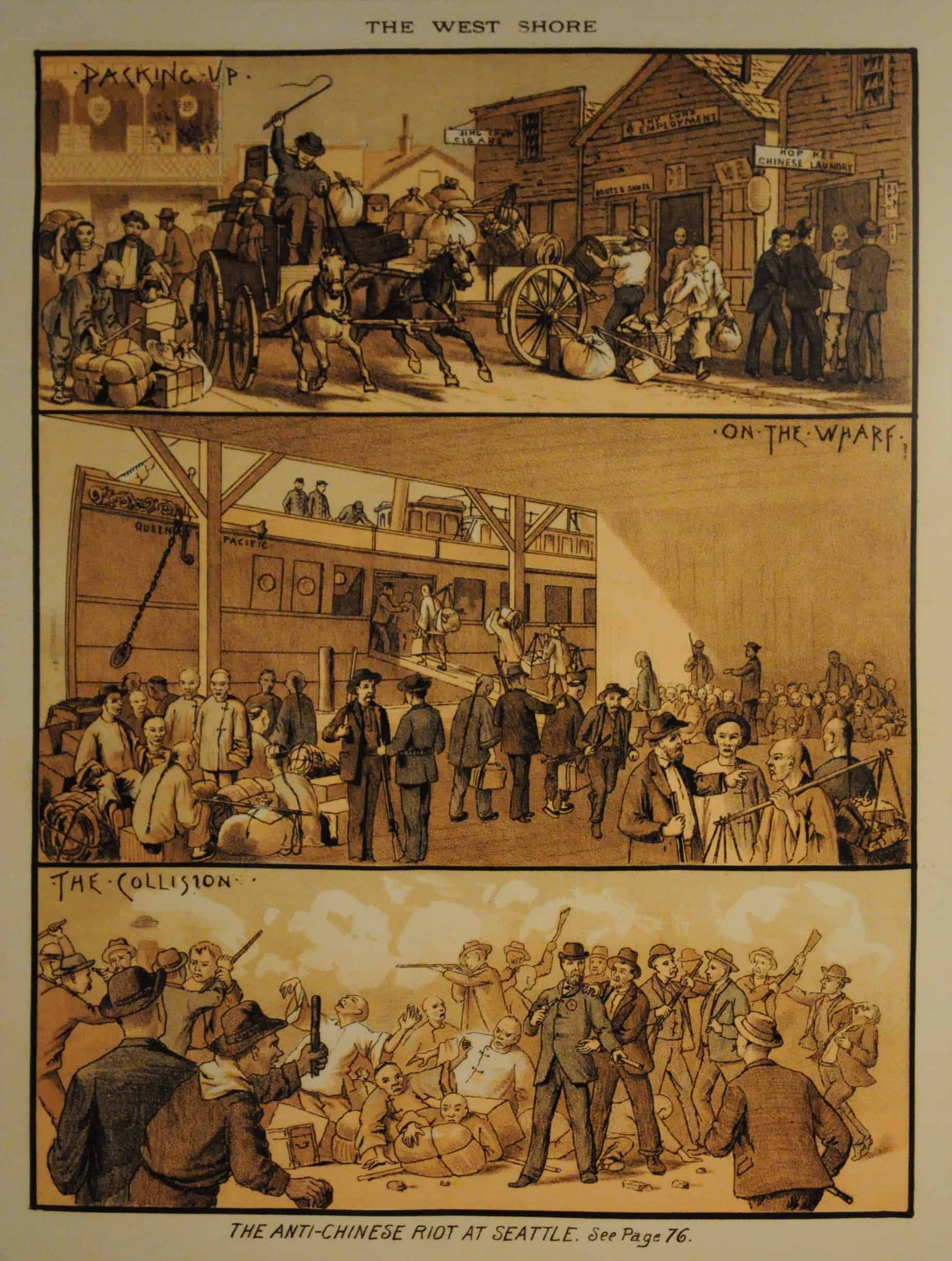
Anti-Chinese Riots in Seattle
Artist’s conception of the 1886 anti-Chinese riot in Seattle. The three panels are titled (top to bottom) “Packing Up”, “On the Wharf”, and “The Collision.”
-
Image
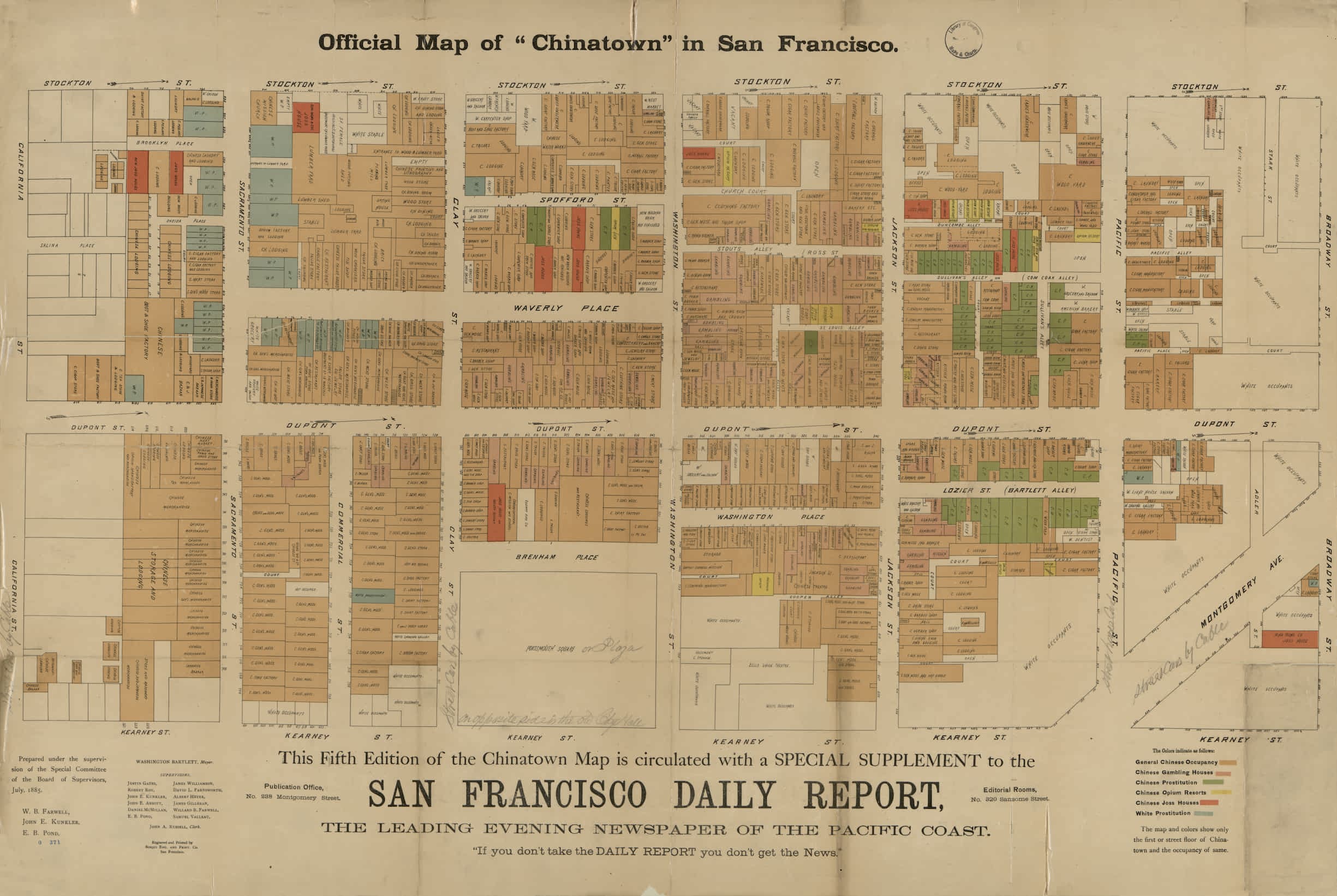
Official Map of San Francisco Chinatown
An “Official Map of San Francisco Chinatown” from 1885 shows names of owners, businesses, “Chinese occupancy,” “Chinese gambling houses,” and “White occupants.”