





Older Chinese man riding a bicycle past a multistory strip mall in background.
Module 7: Chinese America Today
Is it possible to be both Chinese and American?
This module considers how recent Chinese American history remains central to the history of American cities and development of suburbs, labor relations and the economy, international relations (especially as China became a global superpower), and public health responses to epidemic disease.
The complex history of Chinese Americans has shaped and expanded the community’s understanding of cultural identity. In the mid-nineteenth century, most Chinese immigrants arrived from southern China, but today, Chinese Americans trace their lineage back to a wide variety of places. In addition to mainland China, some have connections to Taiwan, Hong Kong, Macao, Vietnam, Cambodia, Malaysia, and other countries and regions. Since the passage of the Immigration and Nationality Act of 1965, which ended the previous quota system, the Chinese American community has grown thirteen-fold. According to the US Census, Chinese Americans represent the ninth largest ethnic population in the country. The US also boasts the largest population of ethnically Chinese people outside of China. Of the approximately five million Chinese people living in the US, over half are foreign-born.
Given these extraordinary numbers, Chinese American history remains central to the history of America. Chinese Americans have shaped cities, suburbs, labor relations, the US economy, international relations, and public health responses to epidemic disease.
How have Chinese Americans shaped recent American history?
What are the factors behind the shifting demographics of Chinese immigrants after 1965 and how do they differ from earlier generations?
What challenges do Chinese Americans face today?
Post-1965 Chinese America
The Immigration and Nationality Act of 1965 reshaped and expanded the Chinese American community, allowing for more diversity especially in terms of education and income. The Chinese American community also dispersed across the country, remaining mainly in metropolitan areas but also moving to suburbs and smaller cities.
The Immigration and Nationality Act ended the quota system that limited the number of immigrants from specific countries. The 1965 law restructured the system by giving priority to educated and skilled workers and allowed US citizens to sponsor their family members.
Today, a quarter of the Chinese American population has four or more years of college education. Income levels also vary greatly among them. According to 2022 data from the Pew Research Center, Chinese American households had the highest income inequality compared to other Asian groups in the US, with those at the top 10 percent earning over nineteen times as much as low-income households in the bottom 10 percent.
In addition, Chinese Americans have resettled in a wide range of locations, beyond the Chinatowns where early immigrants built communities. Most Chinese Americans today live in the metropolitan areas of New York, Los Angeles, and San Francisco. There are large populations in the western United States, especially in California and Hawaiʻi. Outside the Western US, there are significant communities in Boston, Massachusetts; Washington, DC; Chicago, Illinois; and Houston, Texas. Even though some Chinese communities have moved away from Chinatowns, these neighborhoods still remain important, central locations for Chinese Americans, providing jobs, goods, and services to the community.
“Ethnoburbs”
About half of Chinese Americans live in suburbs, which are residential neighborhoods farther away from city centers. In some cases, communities relocated to suburbs after city planners forcibly displaced them from urban Chinatowns starting in the 1970s. These planners created “urban renewal” projects with the goal of modernizing cities, but these projects often came at the expense of historic immigrant and Black neighborhoods. In cities like Boston, Massachusetts; Philadelphia, Pennsylvania; and Houston, Texas, city planners built highways and transit centers through Chinese neighborhoods. Planners in Boise, Idaho, destroyed the city’s Chinatown to build a shopping mall.
Geographer Wei Li noticed this pattern of Chinese Americans moving to suburbs, establishing residences, and opening businesses in these areas. Li called this type of neighborhood an “ethnoburb.” Even though ethnic populations are not always the majority in these neighborhoods, their presence in the suburb is still significant and influential.
The formation of ethnoburbs is not always a peaceful process however. For example, white and Latino residents in Monterey Park, a suburb of Los Angeles, opposed the initial influx of Chinese residents in the 1980s. Clearly targeting the Chinese community, the city passed an ordinance mandating every business have English language signs. The city attorney eventually deemed the ordinance to be unconstitutional.
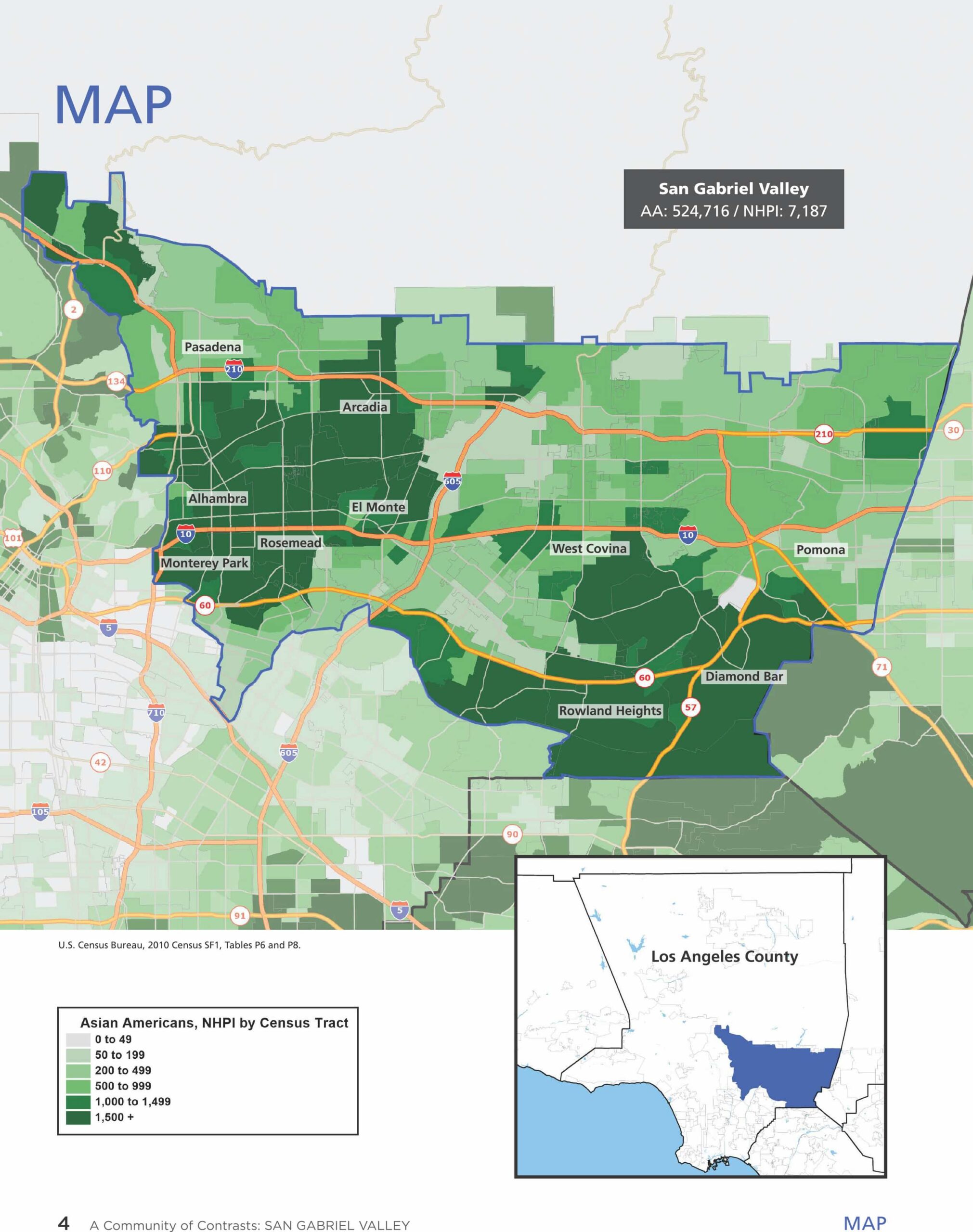
Image 09.07.01 — This map, based on US Census Data from 2010, shows the distribution of Asian American communities across the San Gabriel Valley, California. (Source: Asian Americans Advancing Justice Southern California)
Because of the diversity of class, education, culture, and dialects within the Chinese American community, there can sometimes be tensions within it. For example, middle-class immigrants from Hong Kong and Taiwan and working-class immigrants from China and Southeast Asia have had disagreements and conflicts over business interests and community needs.
Despite these tensions, many Chinese groups in the US have worked together and with other communities. For example, in a Houston, Texas suburb in 1983, Chinese American developers opened a major Asian grocery store. This attracted other Chinese Americans to open businesses nearby. Soon Vietnamese American businesses also opened. Houston residents refer to this neighborhood as “Asiatown” instead of “Chinatown.” Ethnoburbs have also given Chinese Americans political representation, launching the careers of politicians like Congress members Judy Chu (San Gabriel Valley, California) and Grace Meng (Queens, New York).
Deindustrialization
In the late nineteenth century, Chinese workers contributed to the industrial era including constructing railroads and working in factories. Starting in the 1960s, however, this industrial economy changed as the country began moving manufacturing overseas. By the 1970s, the US decreased its manufacturing of large, heavy objects like cars and moved into high-tech industries like computers and biochemical products. Factory closures and anti-union laws ended the possibility of upward mobility for many “blue collar” workers in the US whose jobs consisted of manual labor and skilled trades.
These workers first blamed Japan and later China—countries where US companies outsourced manufacturing jobs. For factory laborers out of work during a struggling economy, many felt frustrated seeing Asian countries prosper in these industries. The US struggled to compete globally as an economic power during this period of deindustrialization, which led to paranoia that Asian governments were infiltrating US politics to further weaken its global position. These various factors affected US attitudes and stereotypes about the Asian American population, including Chinese Americans.
There were feelings of resentment in the US against Asia and Asian Americans during times of economic downturn. Resentment often combined with the incorrect assumption that Asians had “taken away their jobs.” The reality was that US companies and the government abandoned them in favor of cheaper and less regulated manufacturing opportunities abroad. But this reality was not clear for the public, who found it difficult to fight against powerful politicians and corporations. Instead, some white Americans blamed Asian Americans generally, resorting to racist beliefs and actions, and sometimes even violence.
In 1982, a twenty-seven-year-old Chinese American man named Vincent Chin became a victim of racist violence. Chin lived near Detroit, Michigan, which had once been the center of the American automobile industry. Known as the “Motor City,” its auto workers prospered in the height of US car manufacturing between the 1920s and 1940s. The industry began to decline soon after, and starting in the late 1970s, Japan’s automobile industry rose to power. To salvage what was left of the US auto industry, manufacturers tried to encourage the public to “Buy American.” During this national campaign, union auto workers vented their frustration by bashing Japanese cars with sledgehammers.
These racist actions and sentiment became known as “Japan bashing,” which turned violent one evening in June while Vincent Chin was out with friends to celebrate his upcoming wedding. Two white auto workers saw him and thought he was Japanese. They chased Chin, taunted him with racial slurs, and beat him to death with a baseball bat. Law enforcement did little to bring justice to Chin and his family, but Chinese American activists rallied together.
Under the leadership of Vincent’s mother, Lily Chin, journalist Helen Zia and lawyer Liza Chan, Vincent Chin’s murderers were brought to court. Chin’s tragic story reveals how Chinese Americans and Asian Americans became the scapegoat for white resentment in a faltering economy. The community’s activism in response to his murder also demonstrated the growing solidarity and social justice movements among Asian Americans and other racial groups.
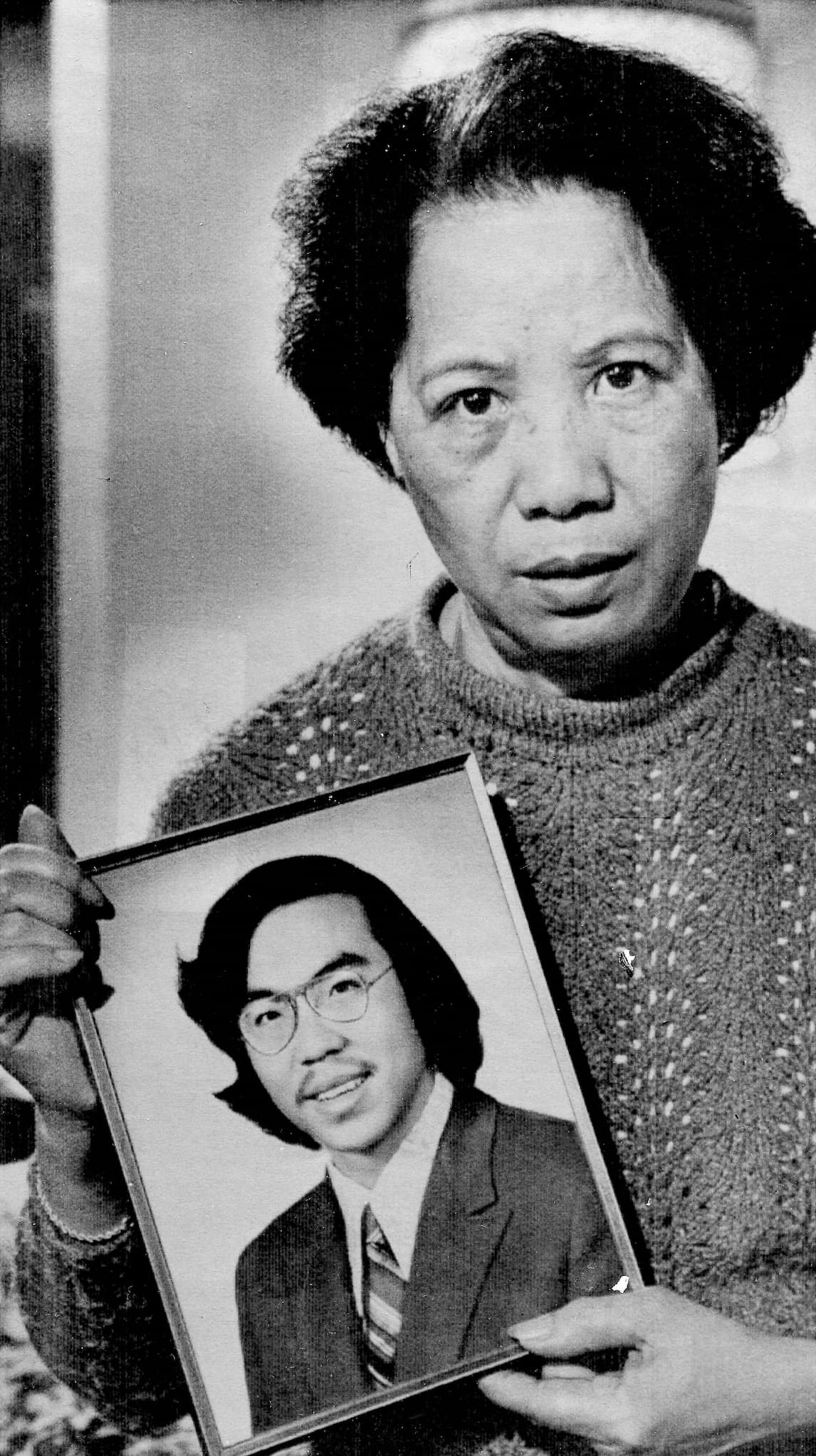
Image 09.07.03a — Lily Chin holds up a portrait of her son, Vincent, who was killed on the night of his bachelor party in 1982 in Highland Park, Michigan, the victim of a hate crime.
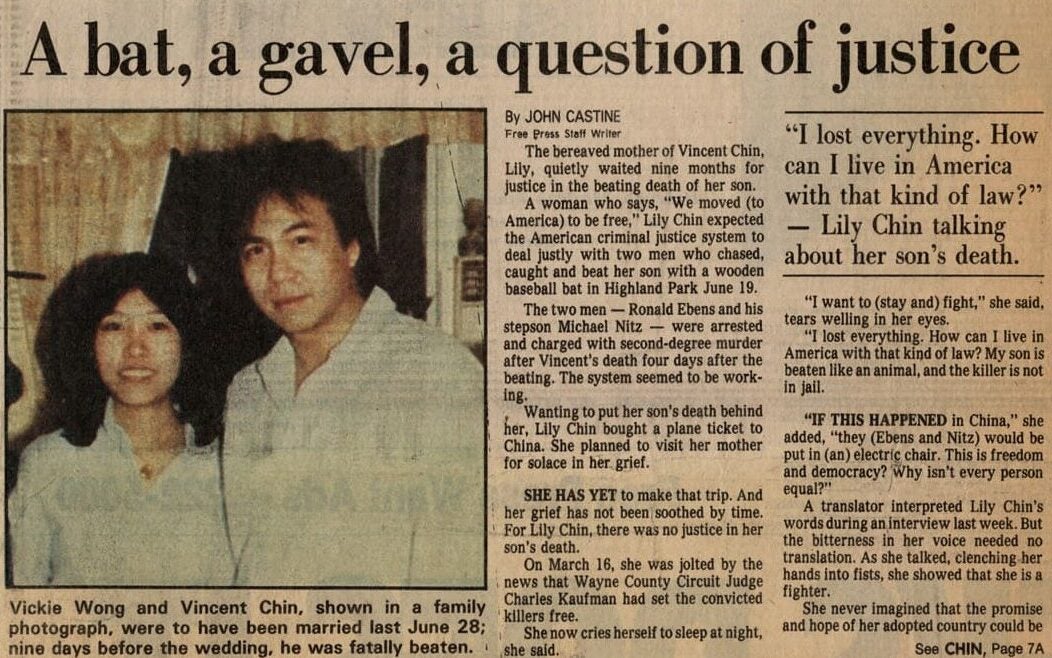
Image 09.07.03b — Vincent Chin was engaged to marry Vikki Wong nine days before he was beaten to death. His killers were charged with second degree murder, but were ultimately sentenced to three years of probation and a fine. They received no jail time.
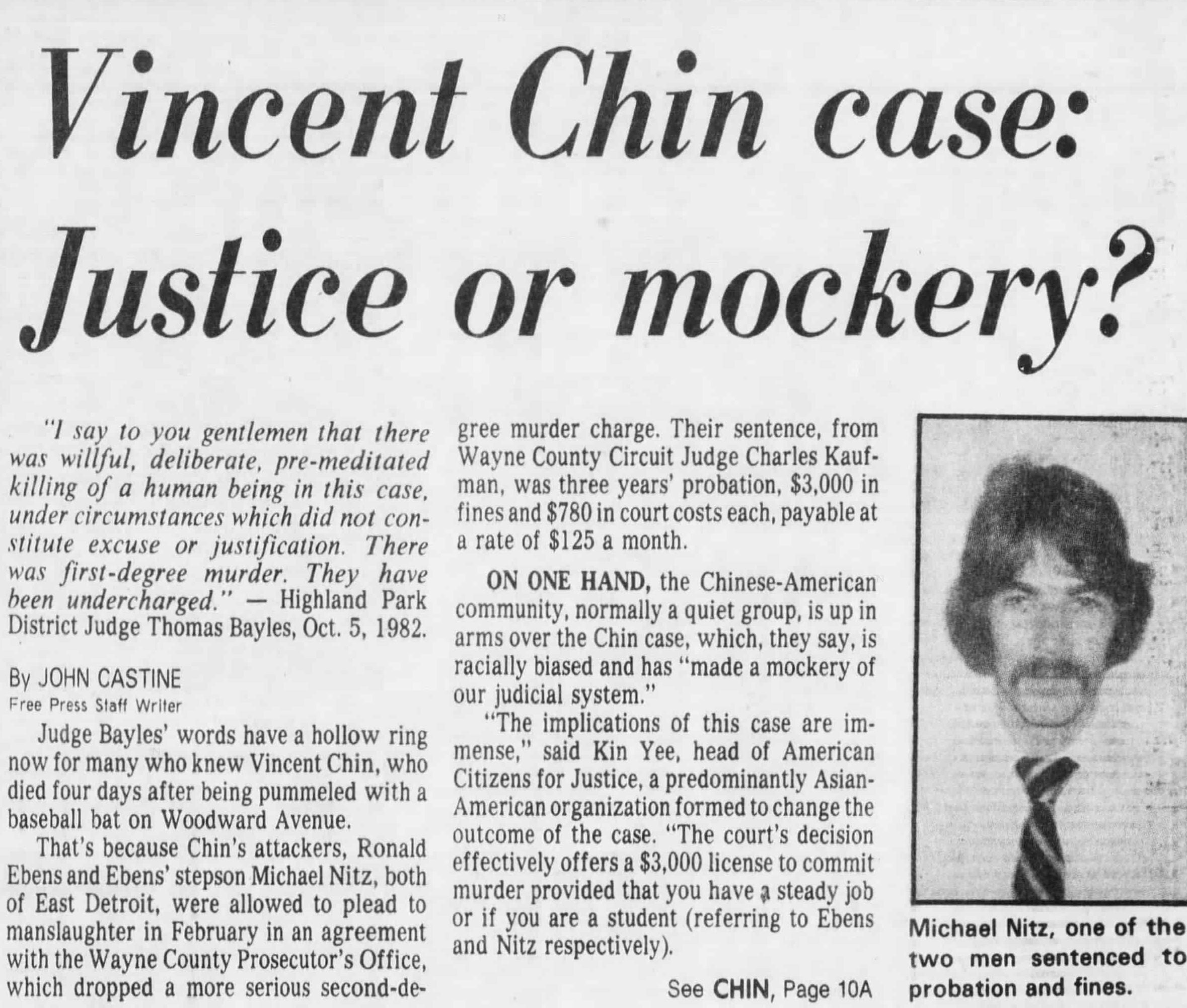
Image 09.07.03d — The injustice of the Vincent Chin case ultimately galvanized an Asian American solidarity movement led by activists Helen Zia and Liza Chan.
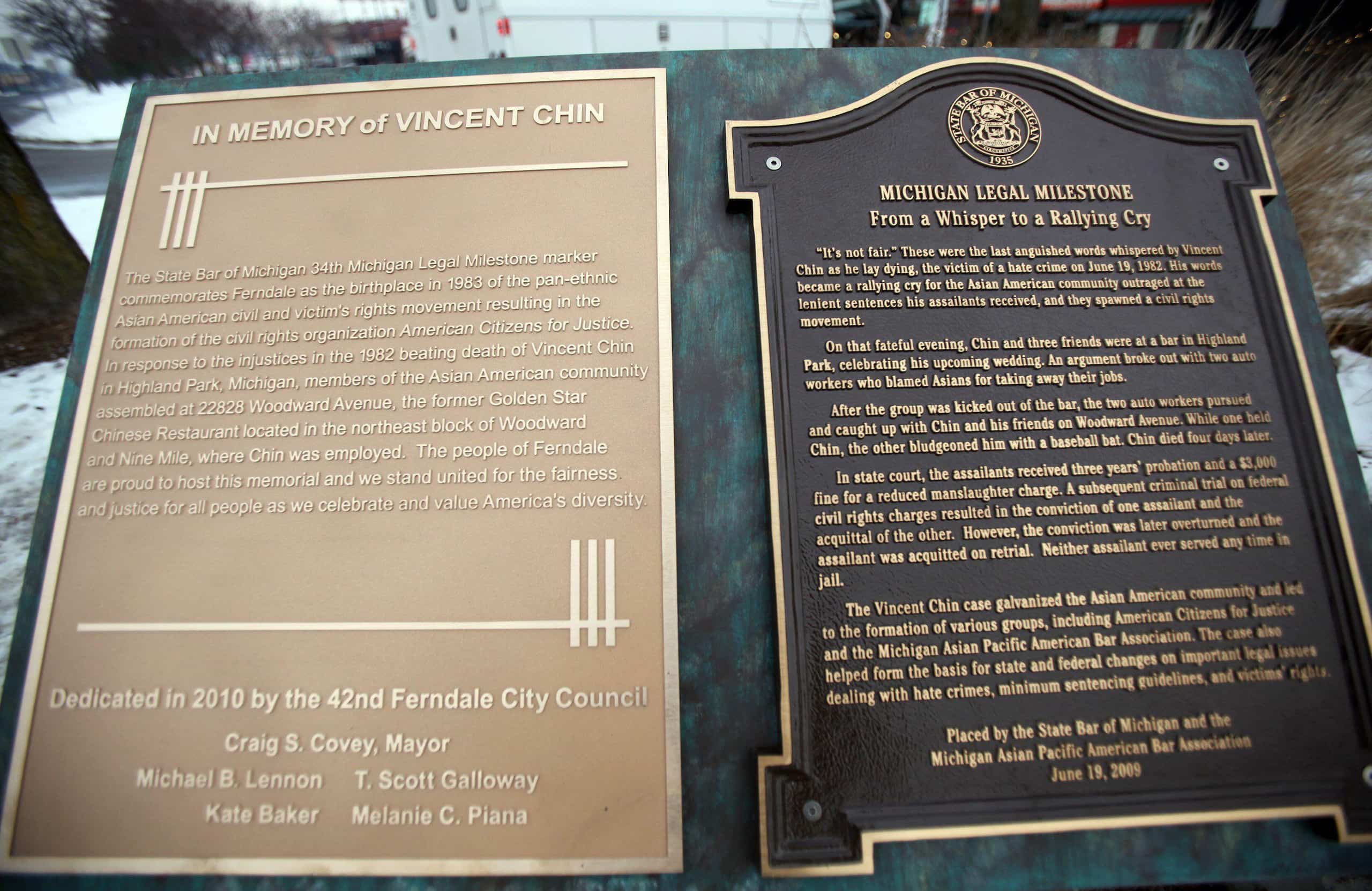
Image 09.07.03e — Vincent Chin’s murder is a reminder of the tragic consequences of racial scapegoating, but it also demonstrates the possibilities for solidarity and social justice.




US-China Relations and Chinese Americans
Relations between China and the United States continue to impact Chinese American experiences in important ways, particularly for those who hold positions of power. By the 1990s, the US had become concerned with economic competition with China, and anti-Communist rhetoric mixed with anti-Asian resentment.
During this time, rumors circulated that China was influencing American politicians. For example, in 1996, a magazine called The National Review depicted President Bill Clinton and Vice President Al Gore as “The Manchurian Candidates,” a reference to a fictional novel and film in which Communists from China and the Soviet Union brainwash an American soldier. In this story, the soldier unknowingly becomes a key player in a plot to assassinate a US presidential candidate. By referring to Clinton and Gore this way, the magazine implied that Communist China had influenced their political decisions. Public discourse circulated false stories that Chinese donors gave the president and vice president money in exchange for political favors. Racial stereotypes and fear of China spread, thus impacting presidential elections.
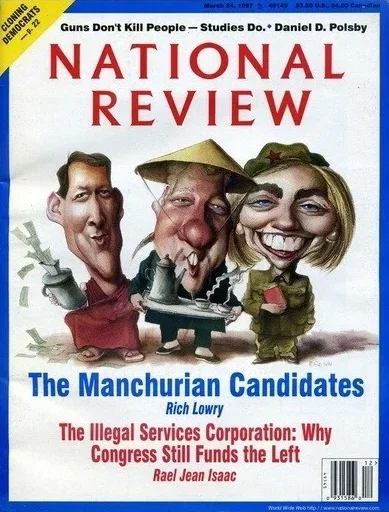
Image 09.07.04 — The cover of National Review from March 24, 1997, depicting (left to right) then Vice-President Al Gore, President Bill Clinton, and First Lady Hillary Clinton as Chinese stereotypes.
This fear also impacted Chinese Americans, particularly government scientists. In 1999, the US Department of Energy accused Wen Ho Lee, a sixty-year-old scientist, of spying for China. Lee had immigrated to the US from Taiwan in 1965 and was a naturalized citizen. The University of California hired him in 1978 to work at the Los Alamos National Laboratories in New Mexico, where scientists developed the first atomic bomb and conducted other top-secret nuclear research. American media reporting on the case, however, focused on his Chinese ancestry and past travels to China.
Throughout his nine-month ordeal, Lee maintained his innocence. The federal case against him was weak and began to unravel when key witnesses retracted their testimonies. There was no evidence that any information leaked from Los Alamos to China. In 2003, Wen Ho Lee wrote a memoir about his experiences called My Country Versus Me. By referring to the United States as “my country,” Lee expressed his feelings of patriotism and allegiance and the betrayal he felt by the country’s suspicions and accusations against him. Decades later, other Chinese Americans scientists would continue to experience similar discrimination.
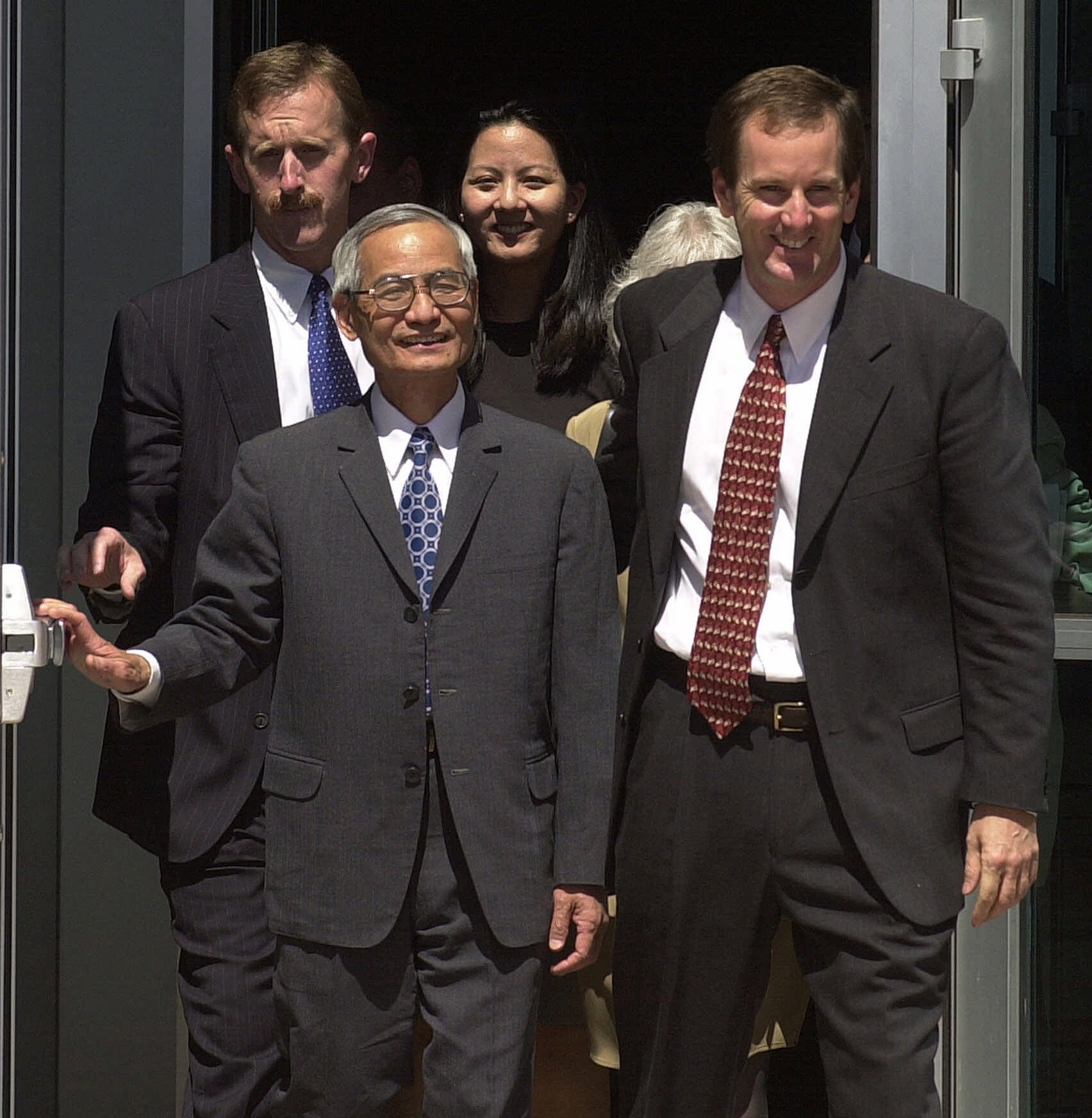
Image 09.07.05 — Wen Ho Lee outside a federal courthouse on September 13, 2000, after his release from prison upon reaching a plea agreement. Lee was a scientist at Los Alamos National Laboratory accused of spying for the Chinese.
In 2018, under Donald Trump’s presidency, scientists with ties to China once again became targets. The US Department of Justice started a program called the “China Initiative,” surveilling and investigating hundreds of Chinese scientists and academics.
As part of the program, the National Institutes of Health (NIH) surveilled almost 250 scientists, and over forty percent lost their jobs as a result. They were banned from receiving NIH funding, a policy that impacted their careers and research. The initiative ended four years later, but many scientists who were surveilled are still affected by the trauma it caused. In the end, the China Initiative only found fourteen scientists who failed to disclose an affiliation with institutions in China, but none were found guilty of spying or transferring US intellectual property to China.
These examples of government surveillance and suspicion demonstrate the conditional belonging some Chinese Americans experience in the US. While these scientists were able to make strides in their careers and contributed to scientific and technological advancement for the United States, this “success” was not enough to protect them from being targets of racial discrimination. In fact, their intelligence was used against them; having such valuable information that they could share to an adversary of the US made them potentially dangerous.
Conditional belonging is a fragile position to hold. For some periods of time, cultural groups can be included, supported, and even celebrated, but at any point, people in powerful positions can take all those things away.
COVID-19 and Anti-Chinese Racism
In 2020, scientists in Wuhan, China, discovered the COVID-19 virus, which rapidly spread to become a global pandemic. In the US, this resulted in an increase in racist rhetoric scapegoating China—and by extension, Asians and Asian Americans—as well as anti-Asian violence.
Fear, uncertainty, and lack of information about the virus quickly turned into racist harassment. On January 30, 2020, Facebook and email users circulated a fake letter that named five local businesses in Los Angeles, California whose employees were infected with COVID-19. The letter included the logo of the Los Angeles County Department of Public Health and other organizations. Out of the five named businesses, three sold Asian food, leading people to imply that these Asian businesses were dangerous and at fault.
The US government was slow to respond to the pandemic. Instead of implementing quarantines, financially supporting people during lockdowns, providing personal protective equipment, or giving the public information about best practices to stop the spread, President Donald Trump turned to scapegoating China. While thousands died in isolation and hospitals, ambulances, and funeral homes were filled over capacity, Trump gave speeches where he referred to COVID-19 as the “China virus” or “Kung flu.” This rhetoric both minimized the severity of the virus and encouraged the public to associate their fear and anxiety with China.
A spike in anti-Asian violence that primarily targeted Asian American elders and women rose around this time. In response, Asian Americans mobilized and created structures to gather data and protect community members. An example is a nonprofit organization called Stop AAPI Hate was formed to gather data on anti-Asian hate during the pandemic. Between 2020 and 2021, people self-reported more than nine thousand incidents of verbal harassment and other attacks against Asian Americans, principally on public streets and in businesses.
Conclusion
Chinese American history spans over 170 years. This population helped build and connect the United States through the railroad system and other industries in the late nineteenth century, joined the army and contributed to the allied efforts during World War II, and advanced science and technology from the 1960s until today. During this long history, Chinese Americans have faced segregation, discrimination, violence, and racism; and yet their communities persisted. They found ways to immigrate despite exclusion laws, made their own businesses when companies refused to employ them, and built their own hospitals and support networks when US society abandoned them. Today, the community includes a diverse range of nationalities, educational backgrounds, and classes, all navigating—and expanding—what it means to be Chinese American.
Glossary terms in this module
deindustrialization Where it’s used
A process in which a place or economy that focuses on industrial production shifts to another form of production, which often causes widespread unemployment. Starting in the 1960s, US corporations began moving manufacturing overseas to places such as countries in Asia, where labor was cheaper and less regulated. This decision cost millions of Americans their jobs and started a new wave of anti-Asian sentiment.
ethnoburb Where it’s used
A suburb where non-white ethnic groups have concentrated and in some cases constitute a majority of residents.
Immigration and Nationality Act of 1965 Where it’s used
This act, also known as the Hart-Celler Act, abolished discriminatory national origins quotas and replaced it with an immigration system based on family relationships and job skills. The law significantly increased the numbers of Asian immigrants.
scapegoat Where it’s used
A set of people who are wrongly assigned blame for a problem, typically those whose social status makes them vulnerable to violence and makes addressing or correcting the error very challenging.