



Search the Media Repository
Discover the curated images, videos, and primary sources featured throughout Foundations and Futures
History is more than just text on a page; it is the photographs, voices, and artifacts of the people who lived it. The images and recordings featured across Foundations and Futures are part of a meticulously curated media repository. Whether you are building a lesson plan or investigating an artifact, you can use this database to trace the provenance of our media: discover who created an asset, the historical context behind it, and how it can be used to bring Asian American and Pacific Islander experiences into your classroom.
Multimedia
Chapters
-
Image
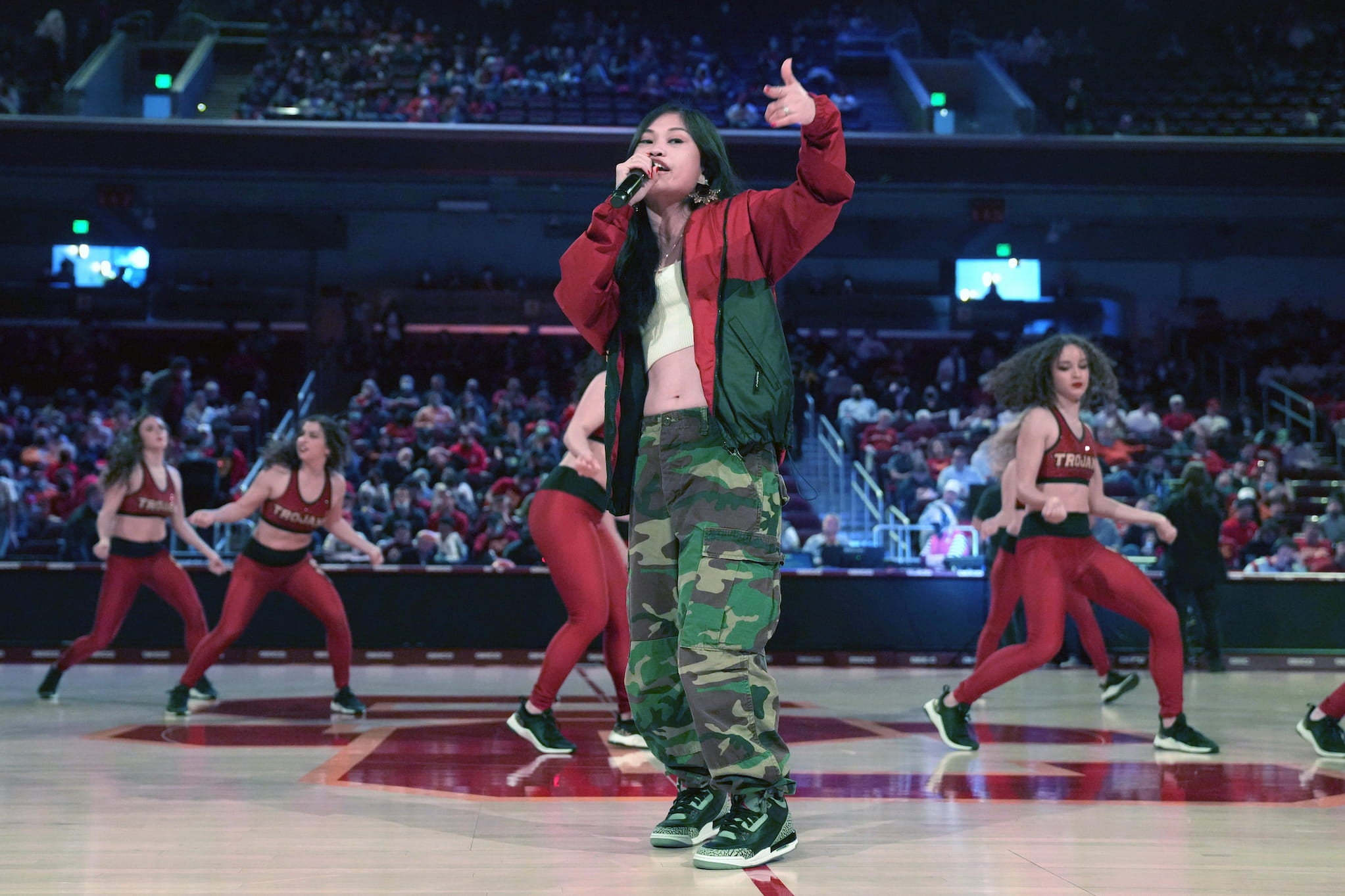
Ruby Ibarra
Ruby Ibarra is a Pilipina American rapper, producer, and director who often performs in English, Tagalog, and Bisaya.
Featured in:
Asian American Activism, Module 1
-
Image
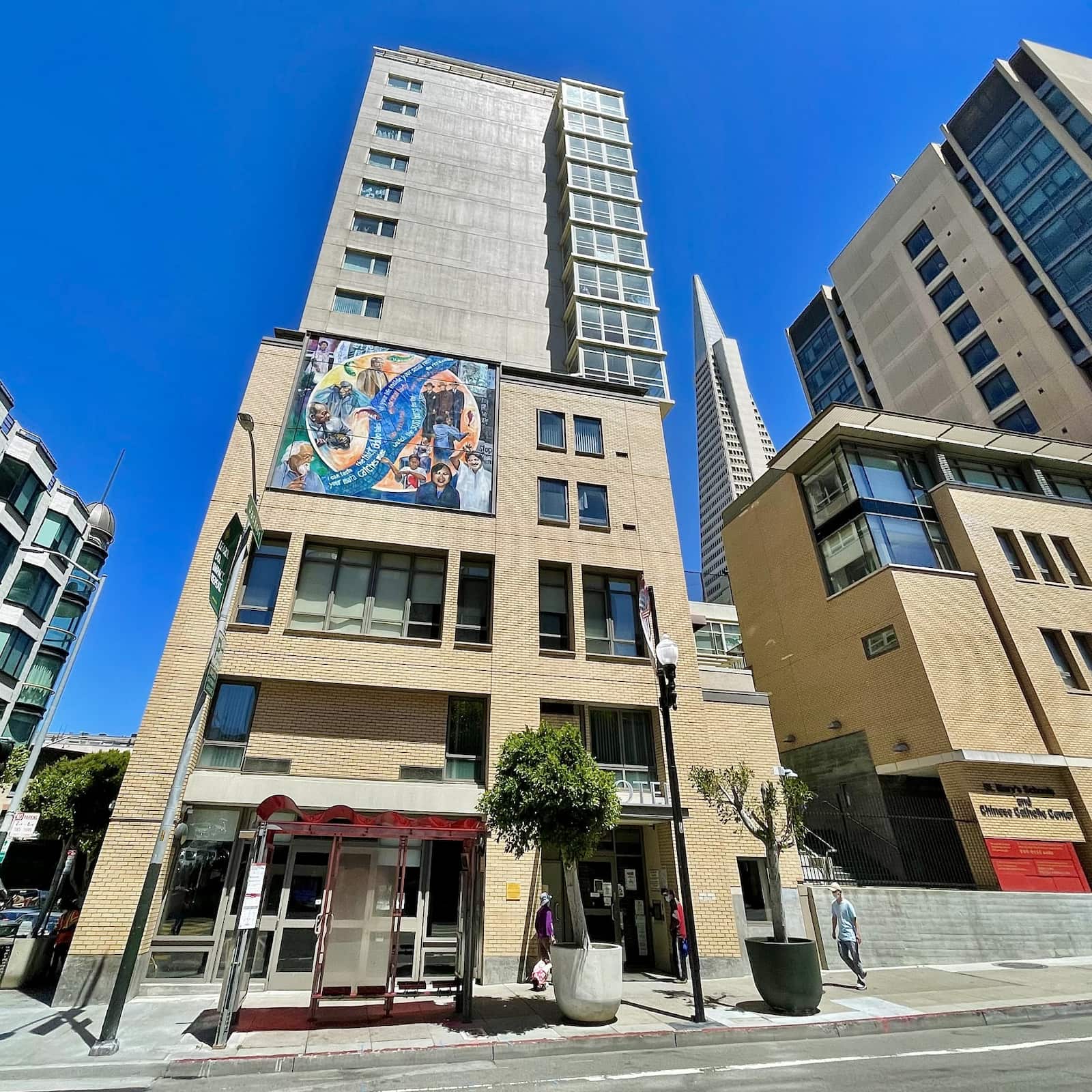
International Hotel Manilatown Center in 2005
Community efforts led to the 2005 completion of the International Hotel Manilatown Center low-income senior housing, which includes a community center, a historical display commemorating the original I-Hotel, and a mural depicting activists fighting to preserve affordable housing in San Francisco.
Featured in:
Asian American Activism, Module 1
-
Video
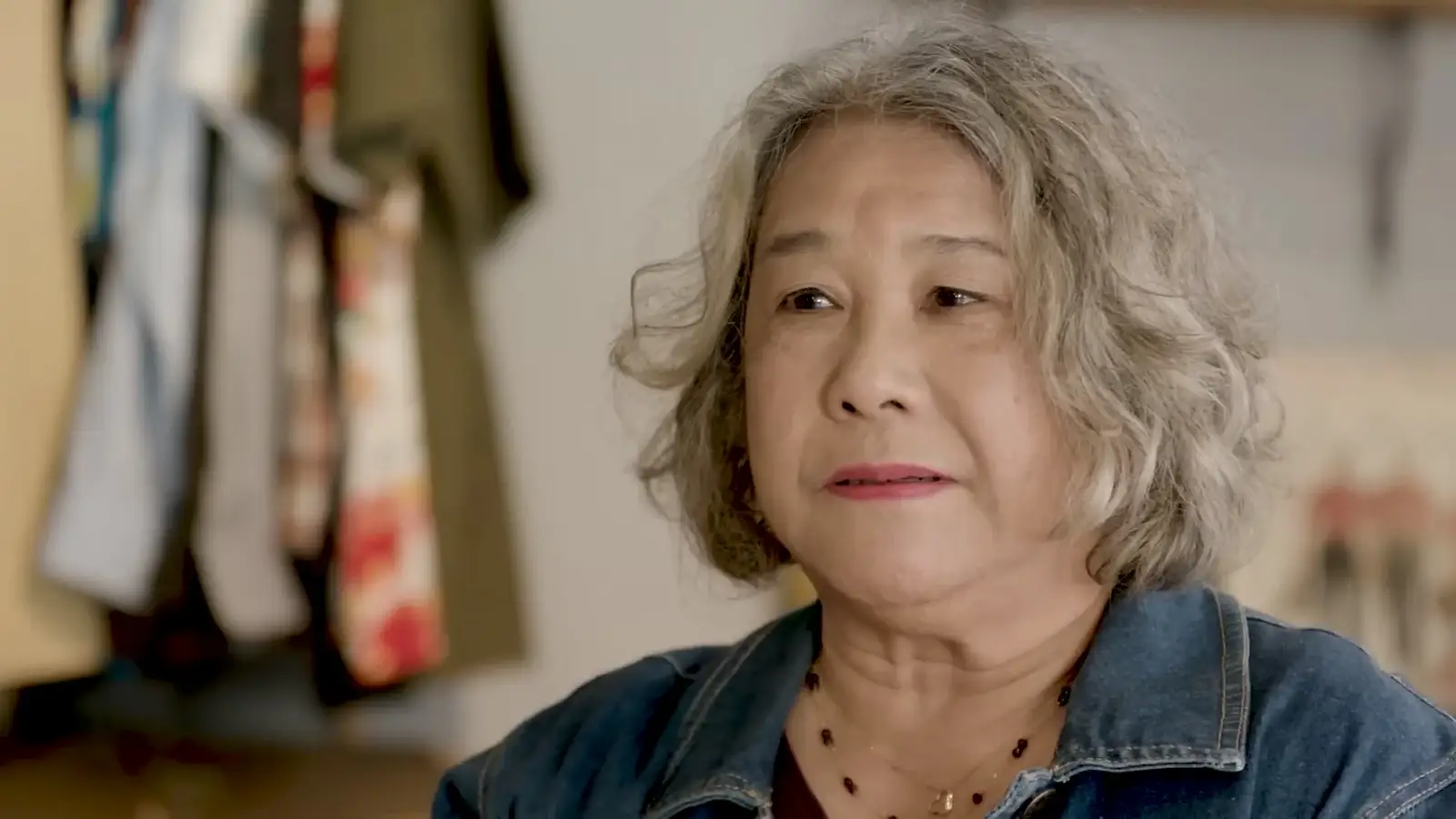
Estella Habal Video Excerpt
Union of Democratic Filipinos (KDP) organizer Estella Habal describes the night of the I-Hotel Evictions, when two thousand activists protested outside the hotel.
Featured in:
Asian American Activism, Module 1
-
Image
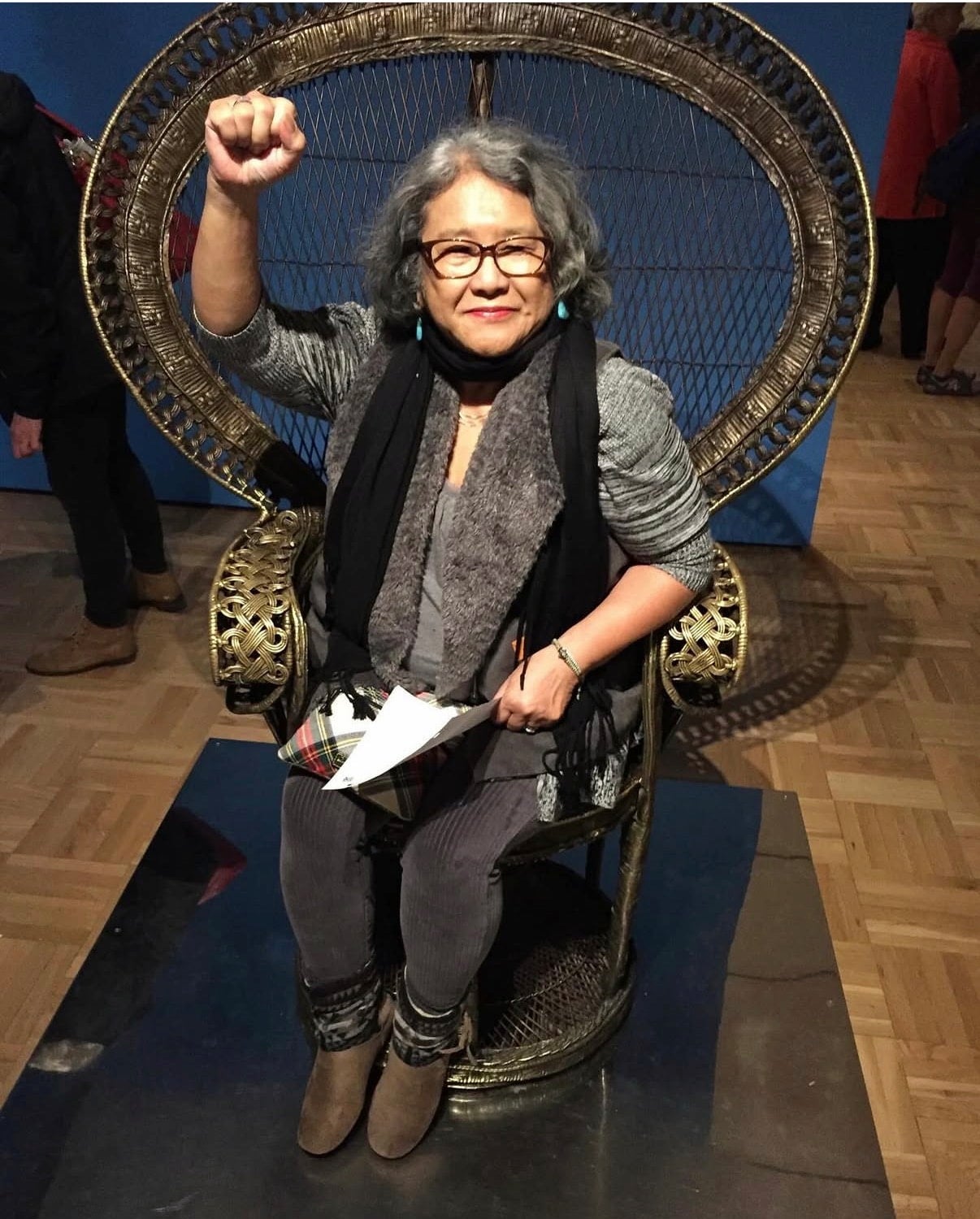
Estella Habal
Estella Habal was a full-time Union of Democratic Filipinos (KDP) organizer during the International Hotel struggle to resist evictions and gentrification.
Featured in:
Asian American Activism, Module 1
-
Image
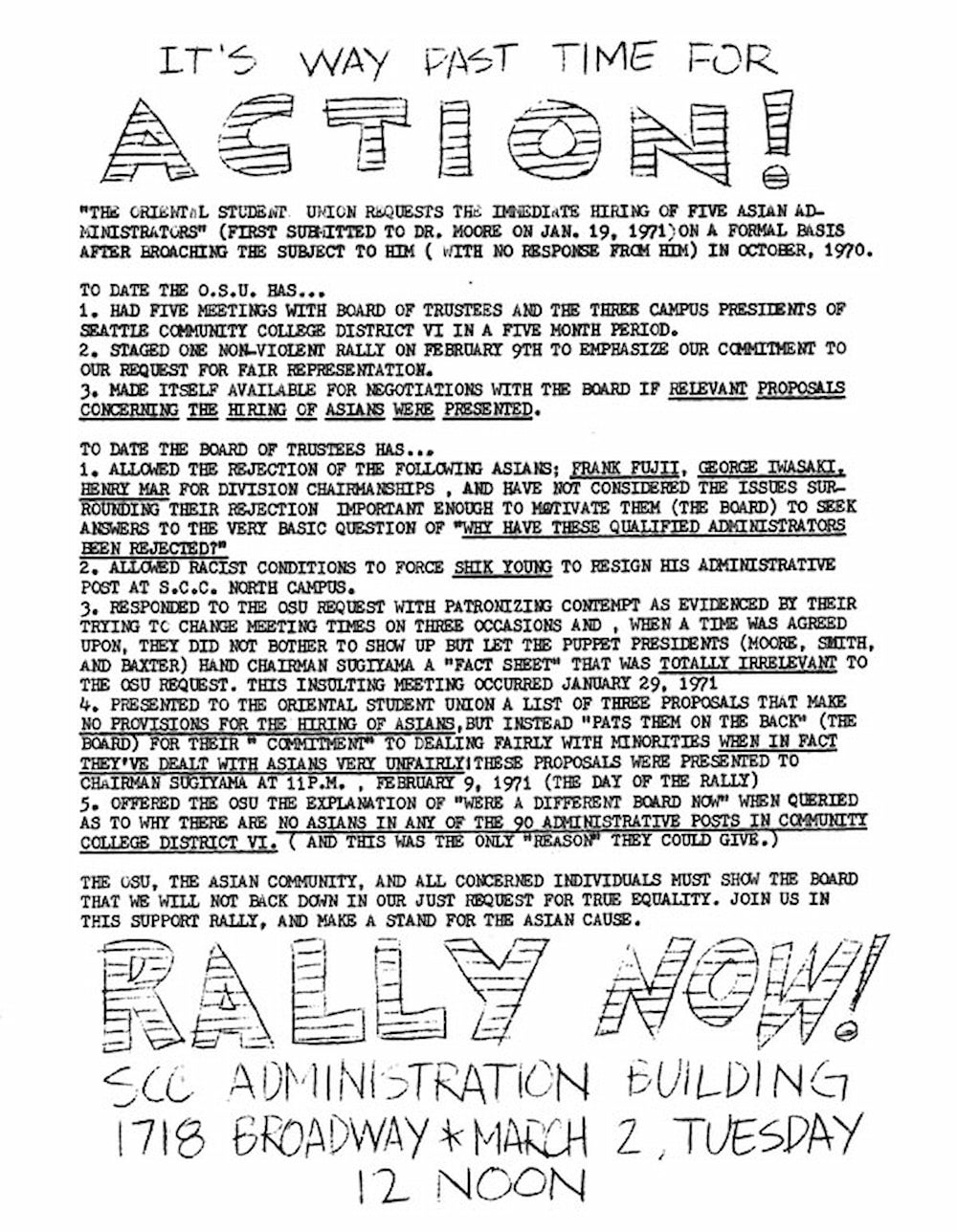
Oriental Student Union Flyer
Read It’s Way Past Time for Action, created by Asian American activists at the Oriental Student Union (OSU). What actions did OSU take before organizing the sit-in? What led them to this more high-profile action?
Featured in:
Asian American Activism, Module 1
-
Image
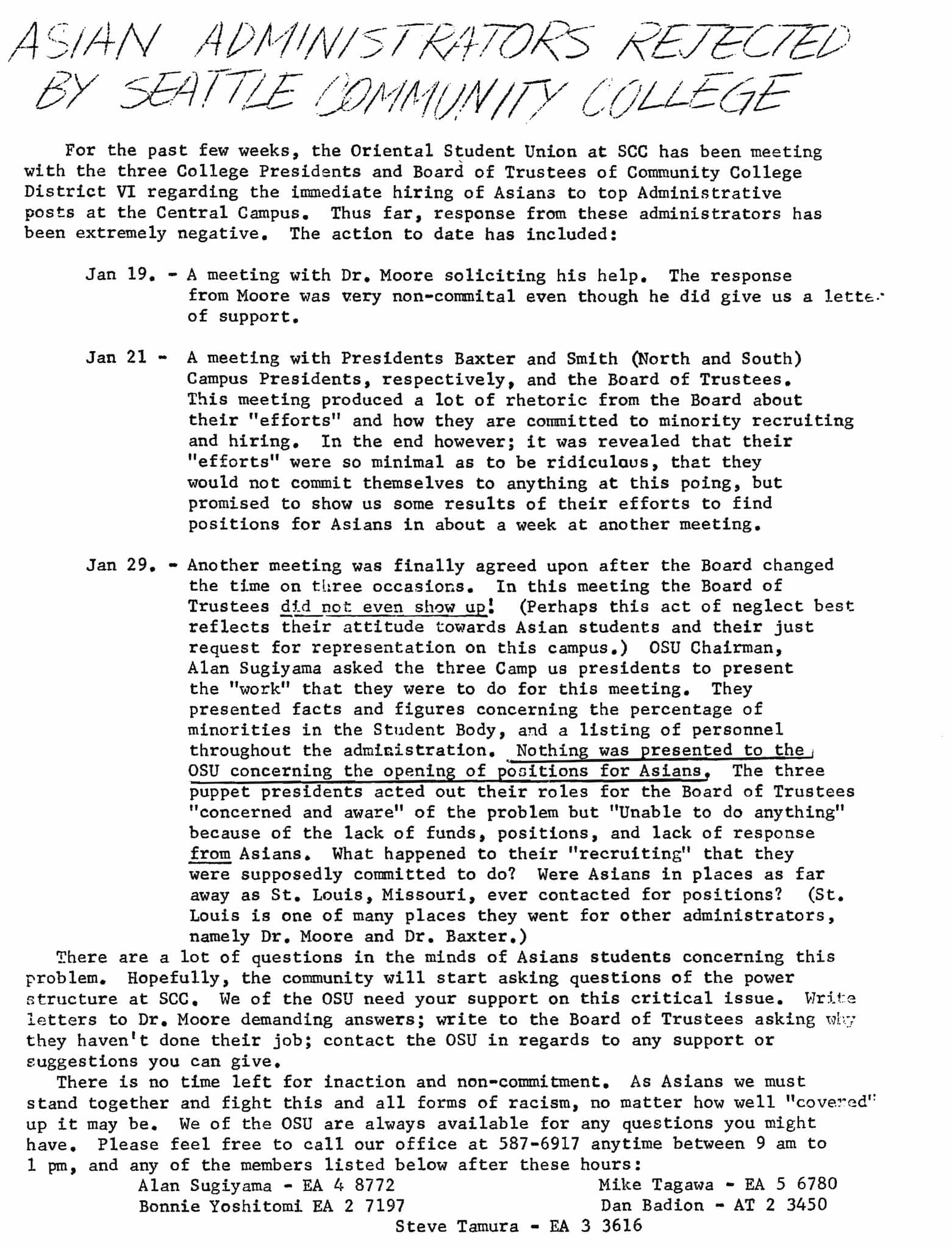
Oriental Student Union Bulletin Number 4, p2
Read the Oriental Student Union (OSU) Bulletin Number 4, “Racism Remains at SCCC?!” What do you notice about what the OSU was demanding and why? What kind of obstacles did they face?
Featured in:
Asian American Activism, Module 1
-
Image
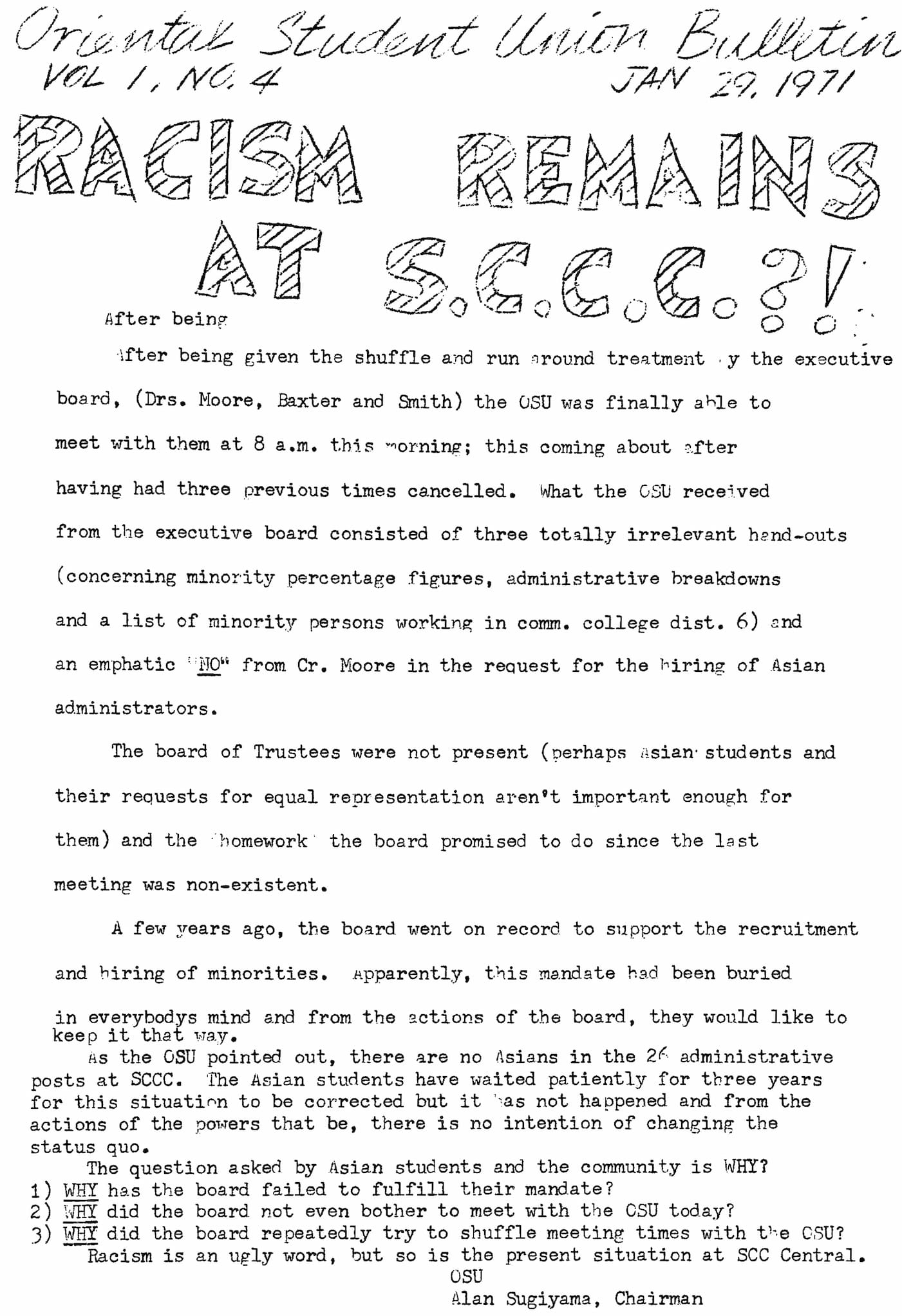
Oriental Student Union Bulletin Number 4, p1
Read the Oriental Student Union (OSU) Bulletin Number 4, “Racism Remains at SCCC?!” What do you notice about what the OSU was demanding and why? What kind of obstacles did they face?
Featured in:
Asian American Activism, Module 1
-
Video
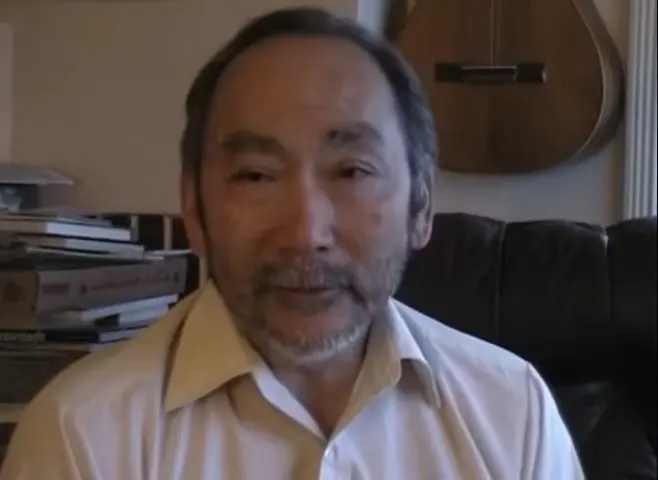
Mike Tagawa Oral History
Listen to Mike Tagawa talking about how he grew up with people from diverse backgrounds—Chinese, Japanese, Koreans, Black, Native American, Jewish—all living together and getting along.
Featured in:
Asian American Activism, Module 1
-
Video
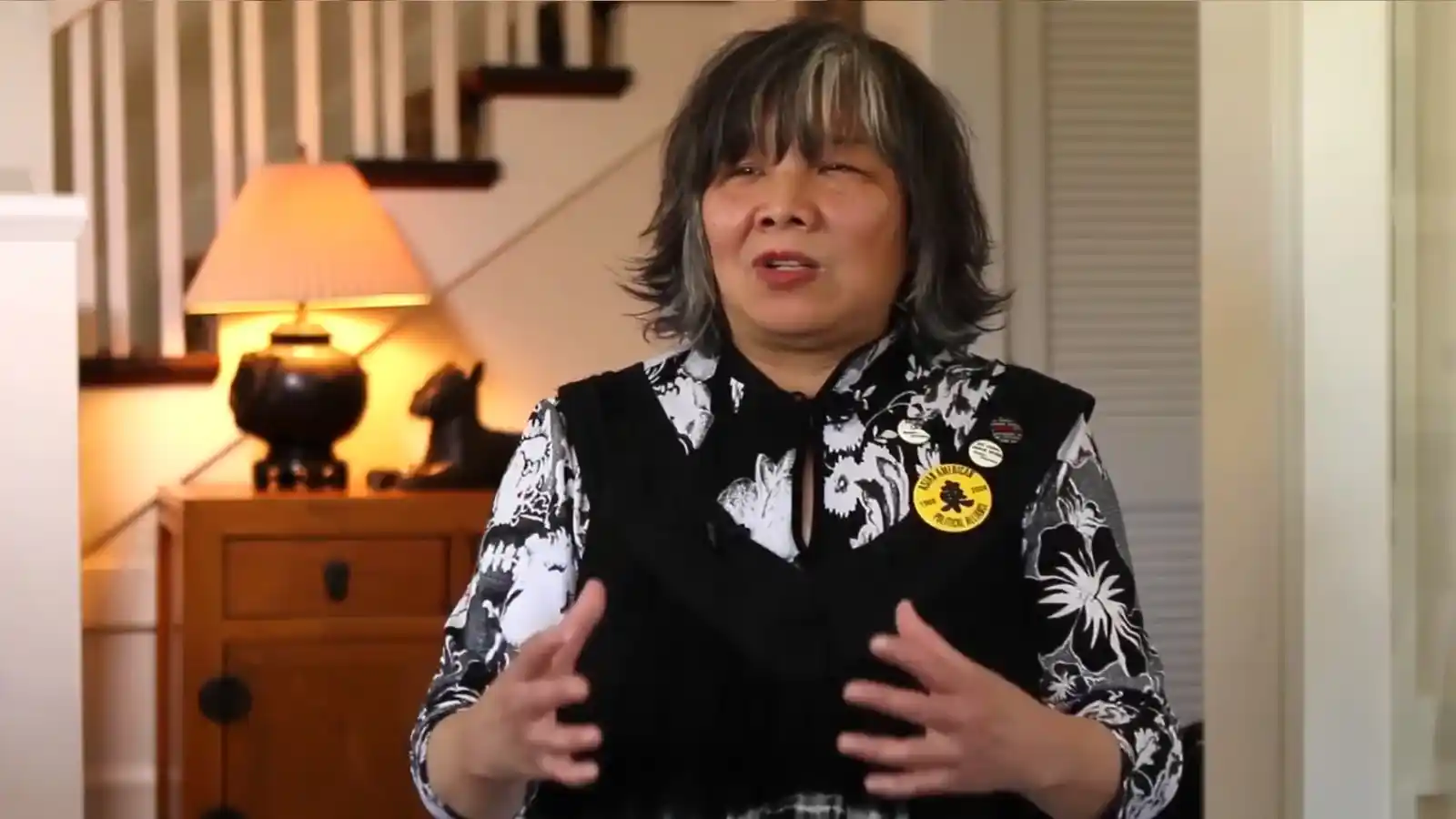
Vicci Wong Oral History
Hear Vicci Wong talk about AAPA in her own words. Why was it important to her and AAPA members to start an organization working for Asian American justice and liberation?
Featured in:
Asian American Activism, Module 1
-
Image
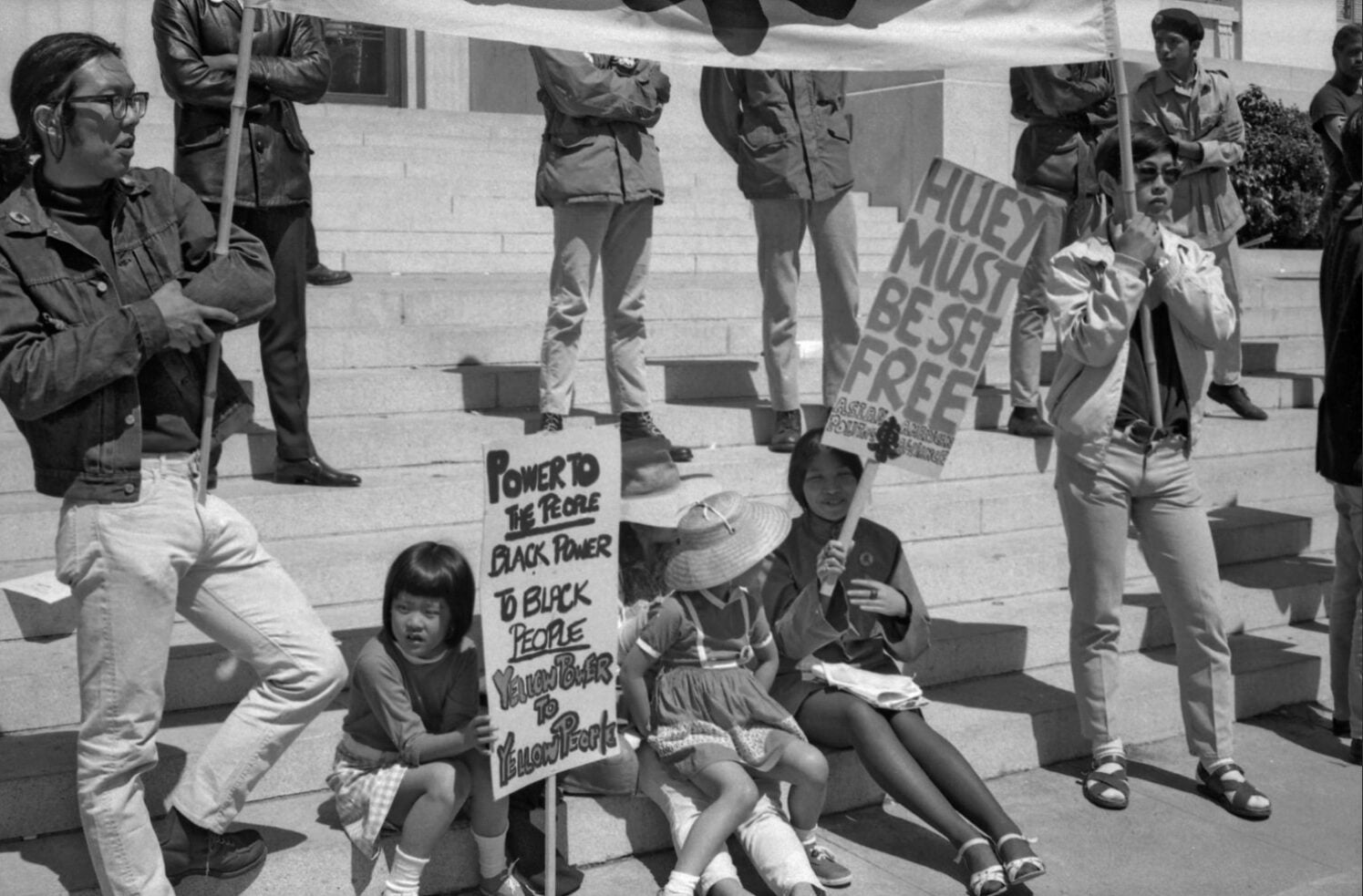
Young Vicci Wong at a Huey Newton demonstration, Oakland 1968
Vicci Wong (right) takes a break from the demonstration in support of Huey Newton, co-founder of the Black Panther Party, at his trial in Oakland, California, July 1968.
Featured in:
Asian American Activism, Module 1
-
Video
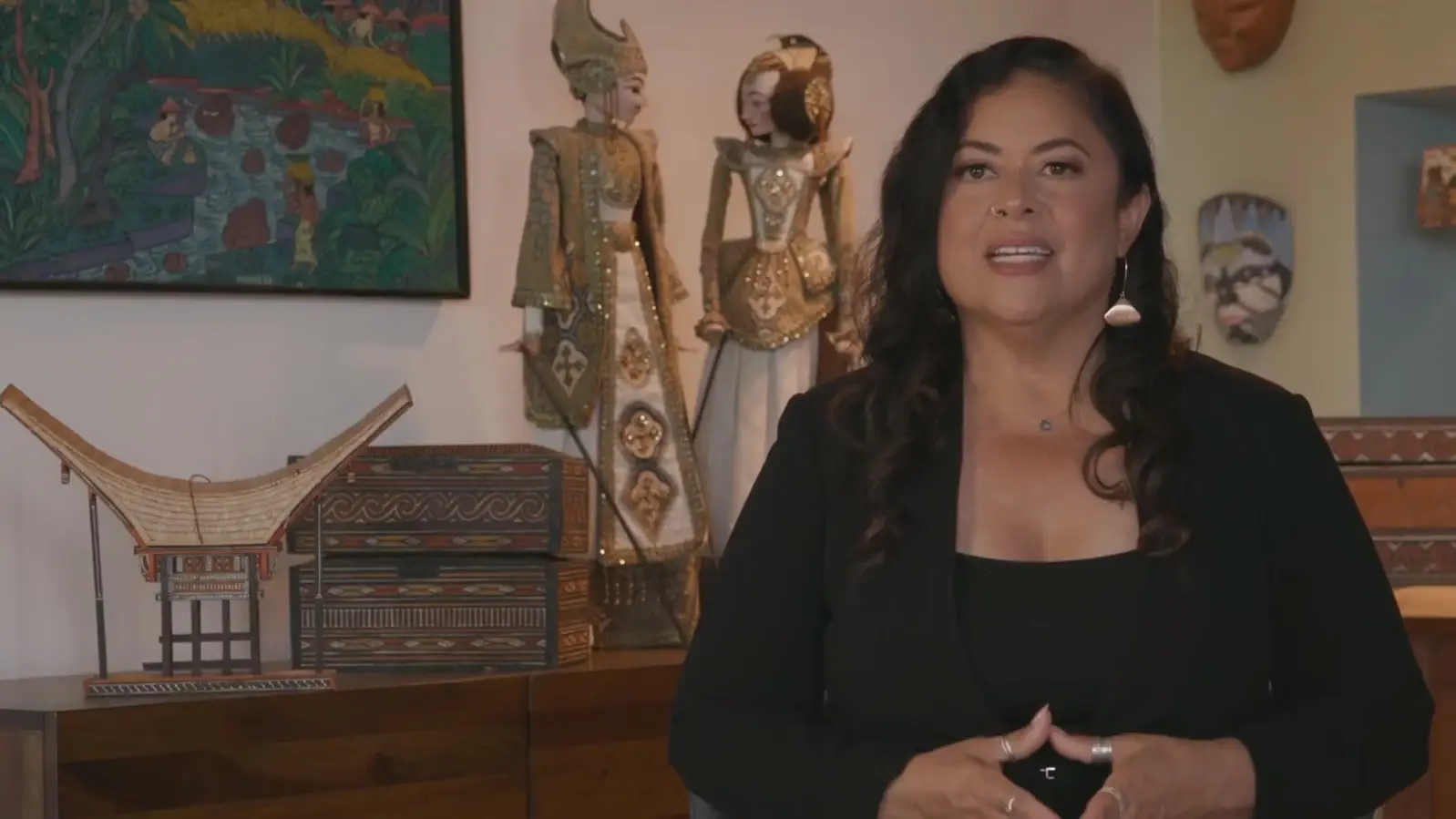
Maya speaks about world of peace education
Hear more to Maya’s story and journey in the world of peace education
-
Video
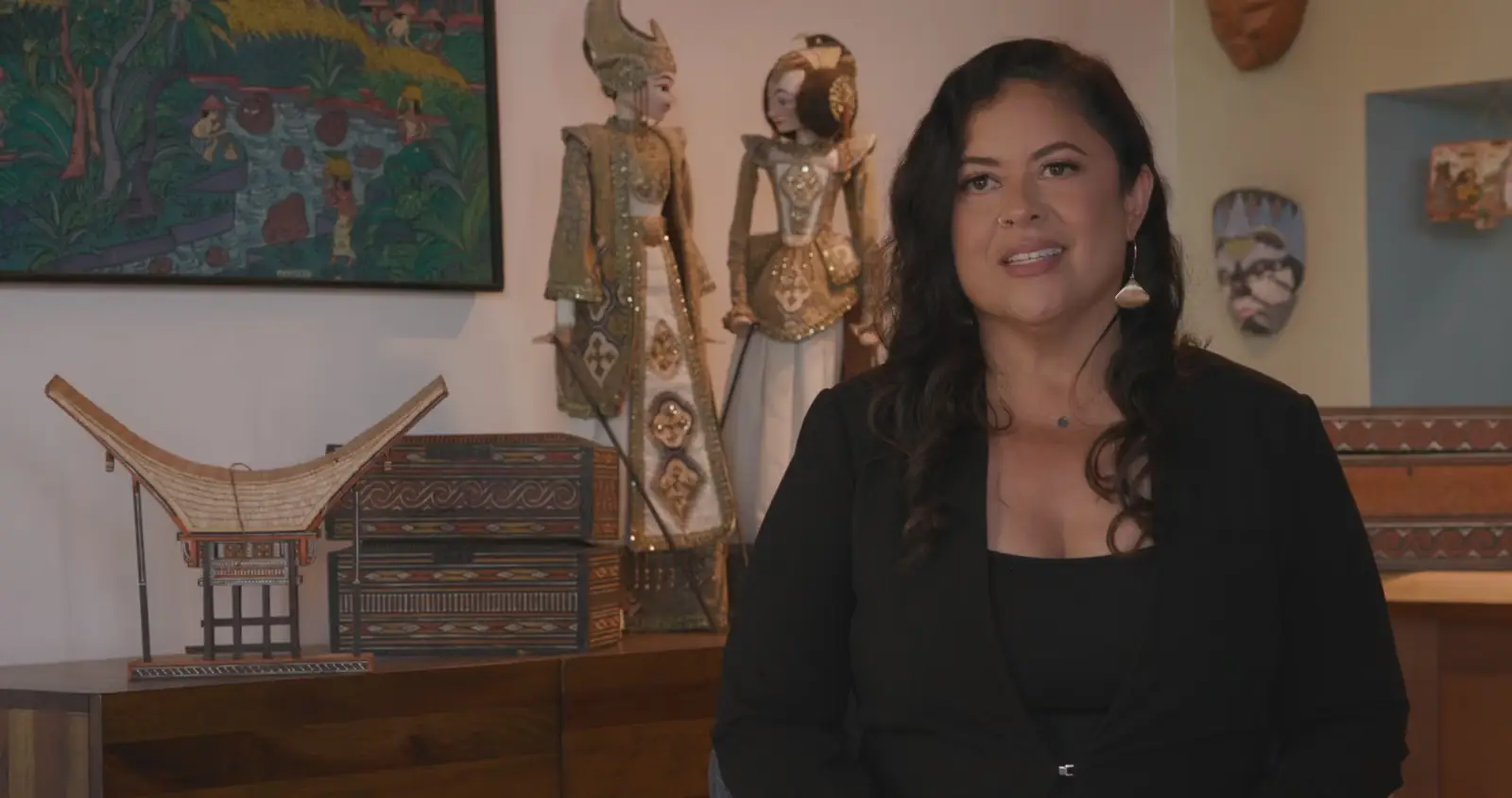
Maya’s message to Indonesian Americans or Indonesians
Listen to the message that Maya has to share with any Indonesian Americans or Indonesians watching right now.
-
Image
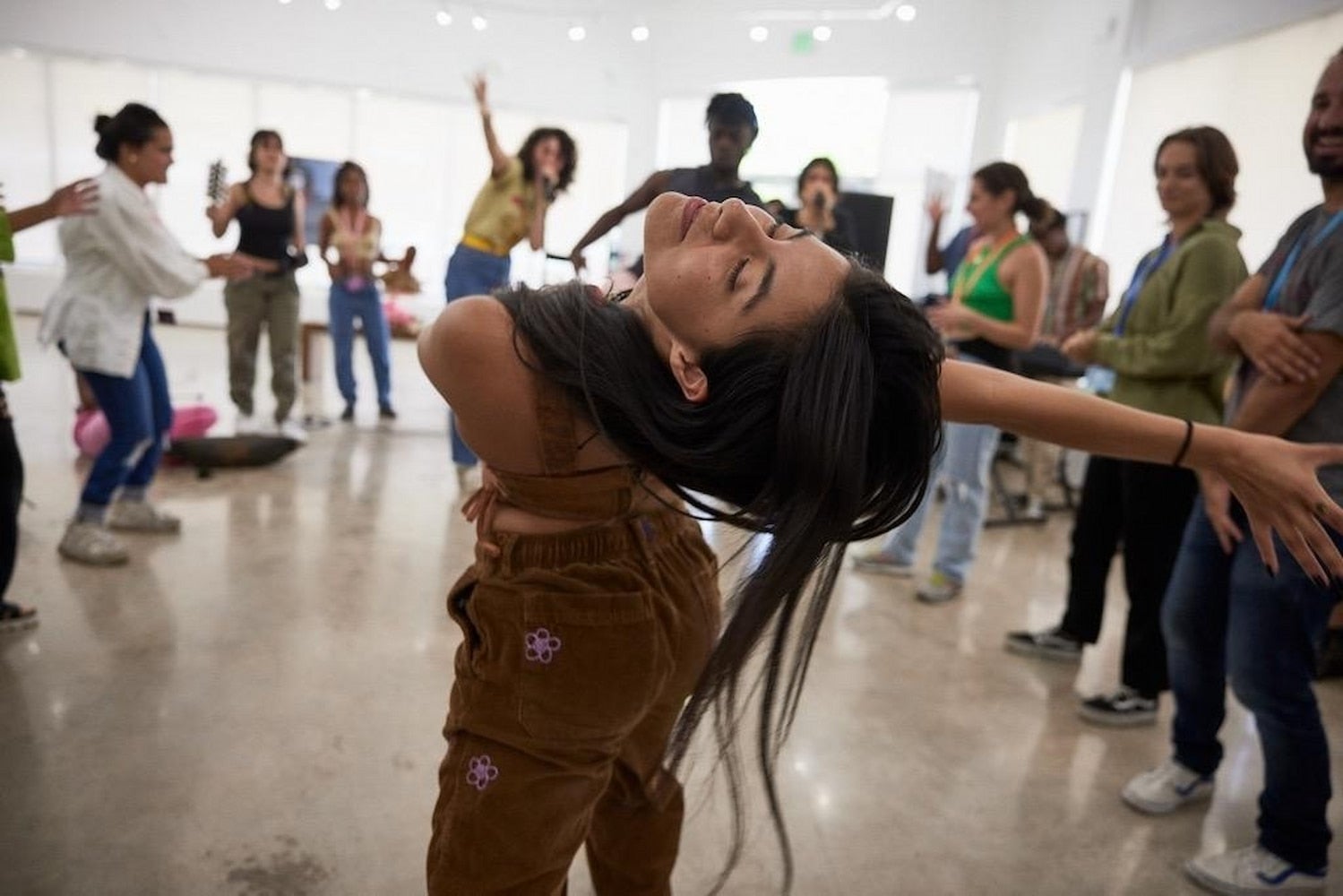
Peace Studio Dancer
Maya believes in the power of art to create transformative social change, one of the reasons she cofounded her nonprofit organization, the Peace Studio.
-
Image
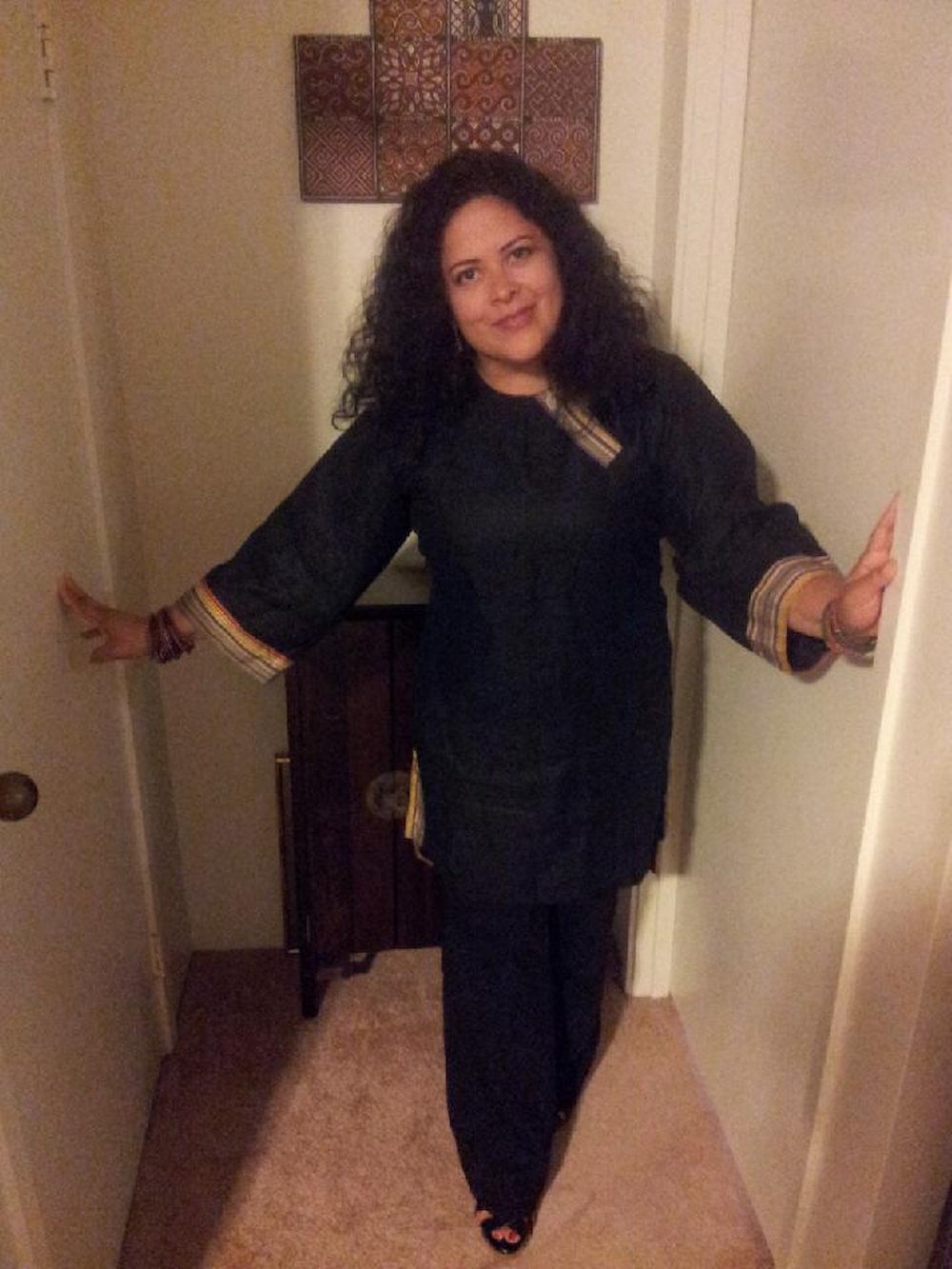
Maya in a contemporary Toraja outfit
Maya in a contemporary Toraja outfit in honor of her brother Barack Obama’s Presidential inauguration in 2009. (The Toraja people are from South Sulawesi.) Maya’s Indonesian heritage is an integral part of her life.
-
Video
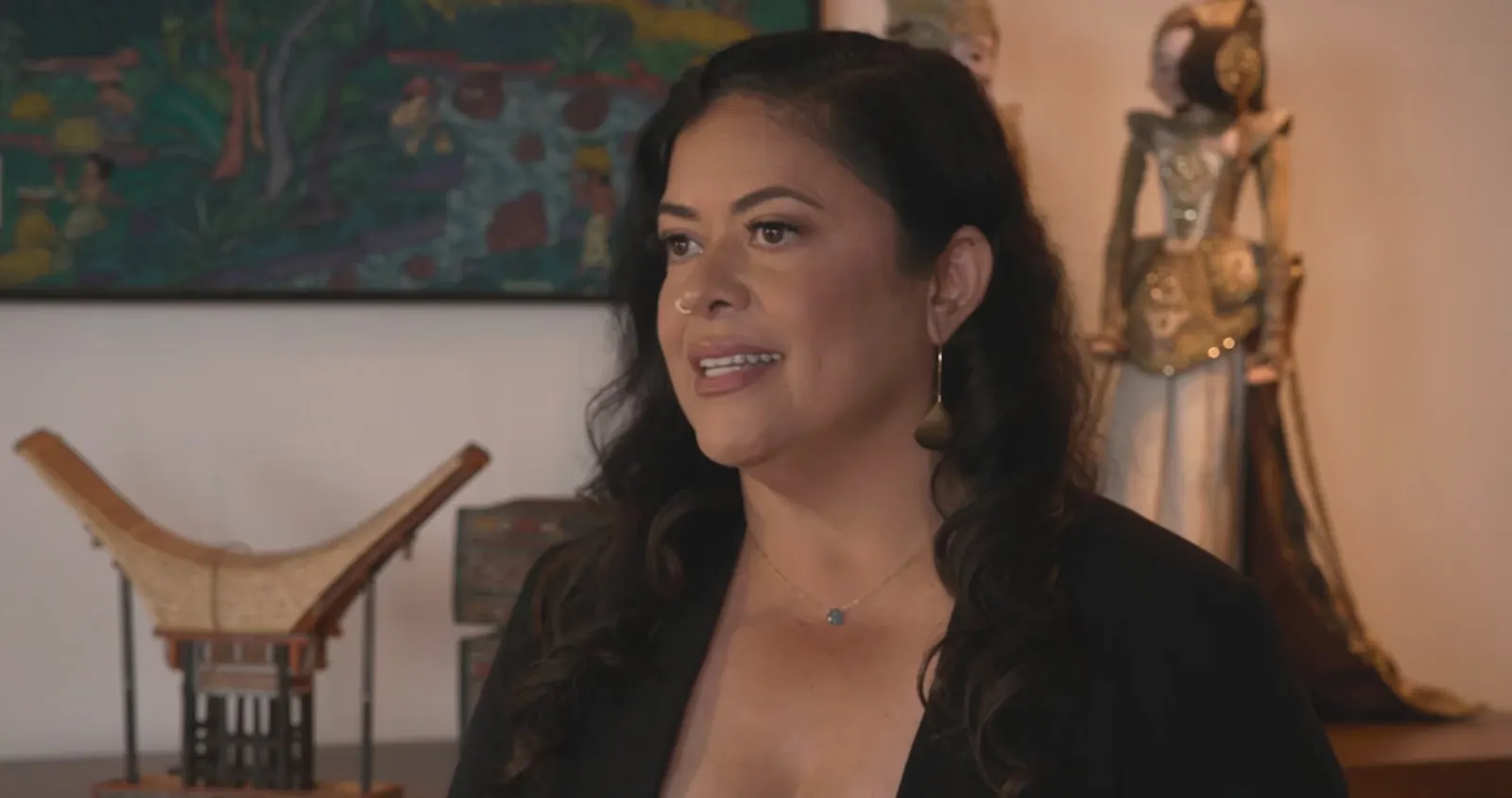
Maya talks about her identity as an Indonesian American
Watch Maya talk about her identity as an Indonesian American, and growing up with two cultures.
-
Image
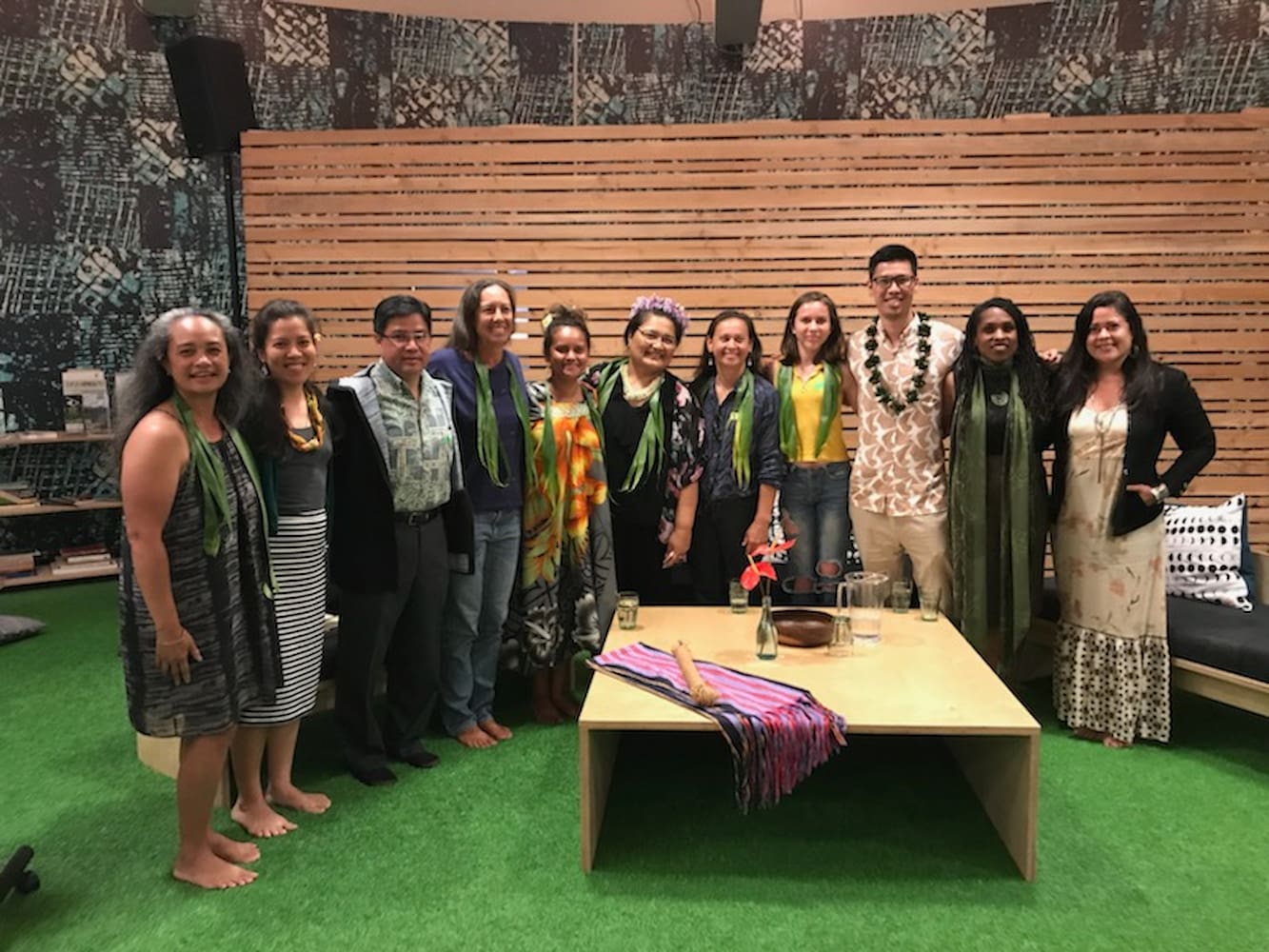
Ceeds of Peace program
Ceeds of Peace program at the Wai Wai Collective. Maya is on the far right.
-
Image
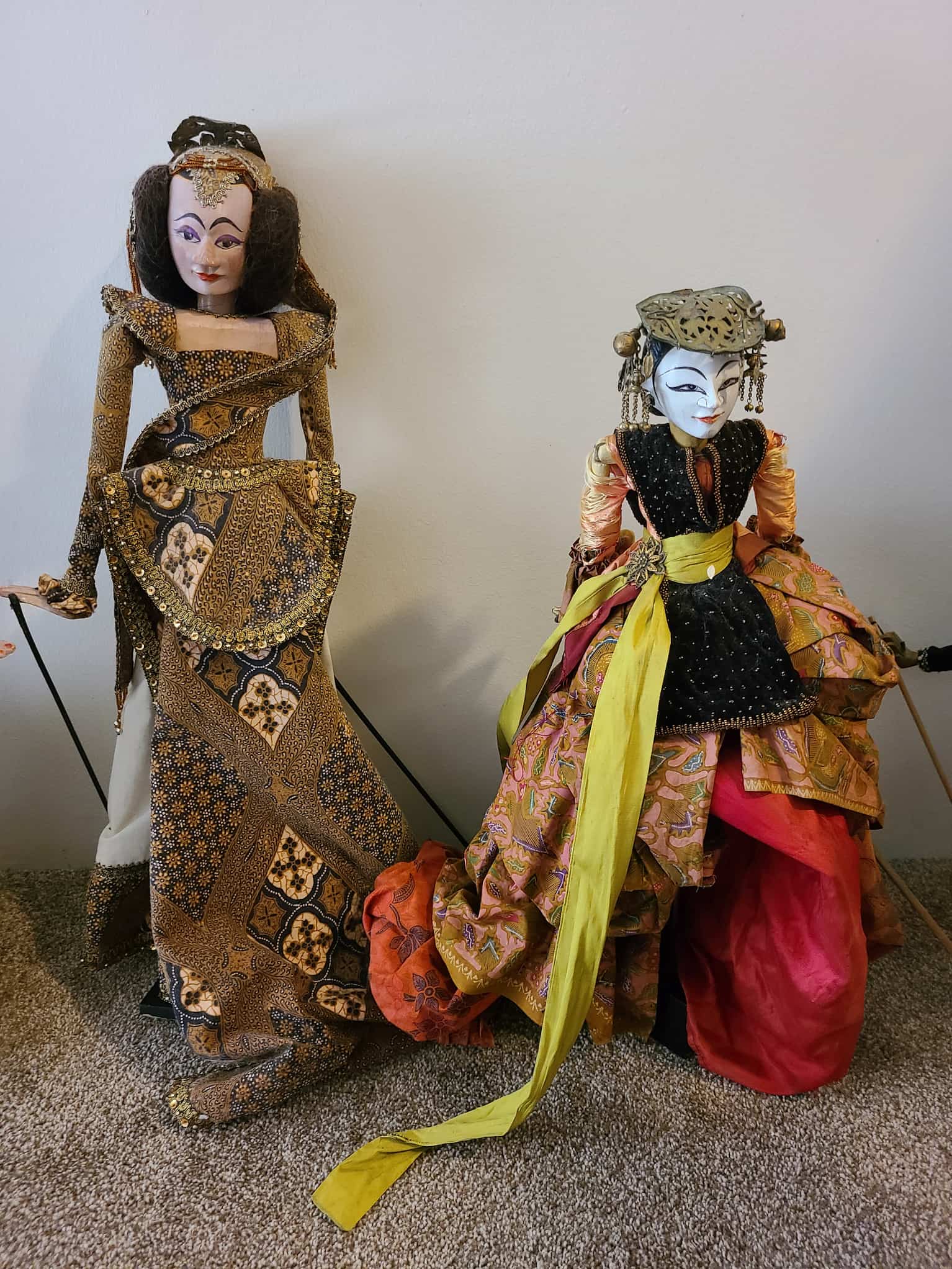
Wayang golek, traditional wooden puppets
Examples of wayang golek, traditional wooden puppets in which the puppeteer uses a central rod in the puppet’s body and sticks attached the puppet’s arm in different performances. These puppets are displayed in Maya’s home and represent her connection to Indonesia and the importance of art in our everyday lives.
-
Image
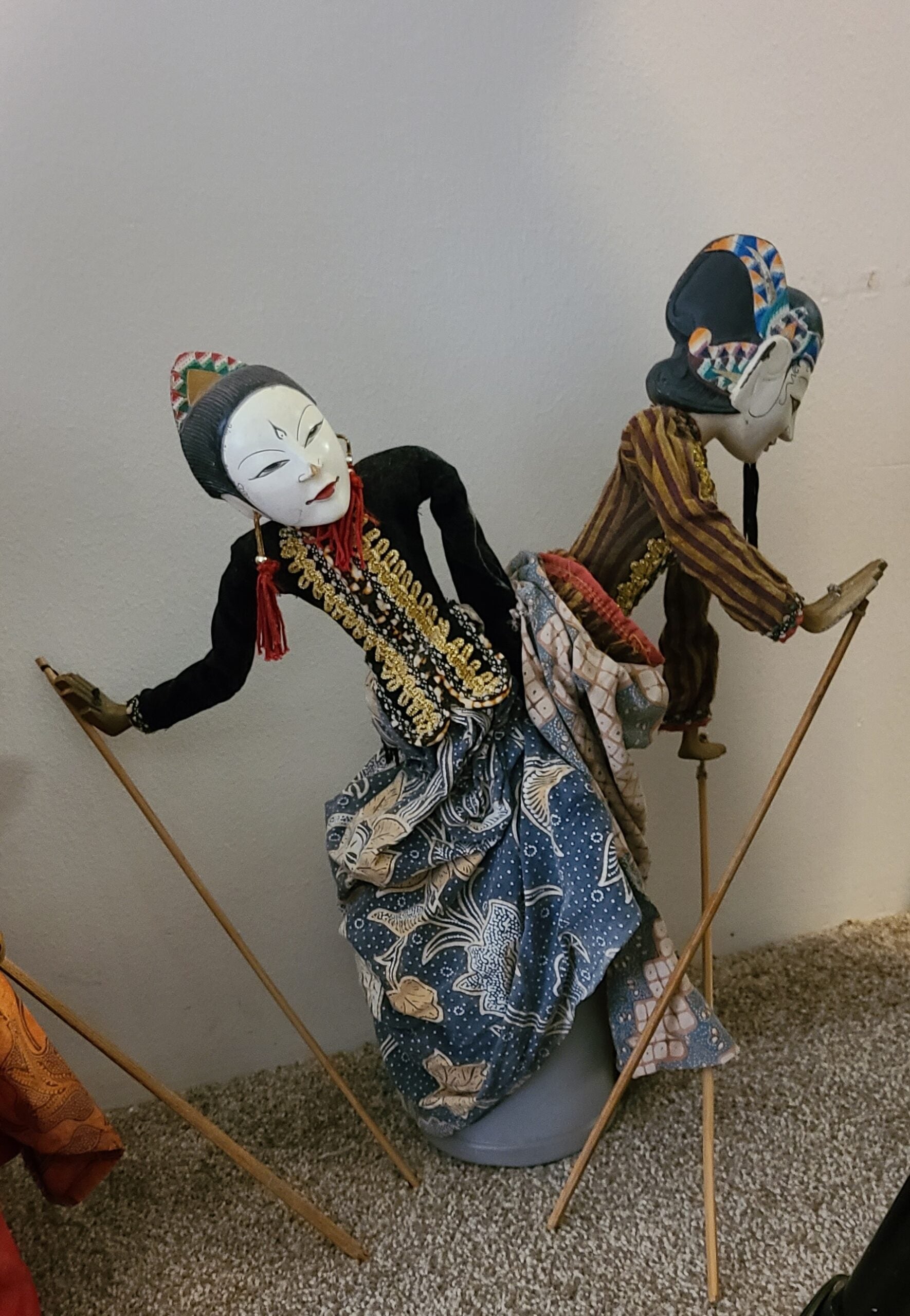
Wayang golek, traditional wooden puppets
Examples of wayang golek, traditional wooden puppets in which the puppeteer uses a central rod in the puppet’s body and sticks attached the puppet’s arm in different performances. These puppets also are displayed in Maya’s home and represent her connection to Indonesia and the importance of art in our everyday lives.
-
Image
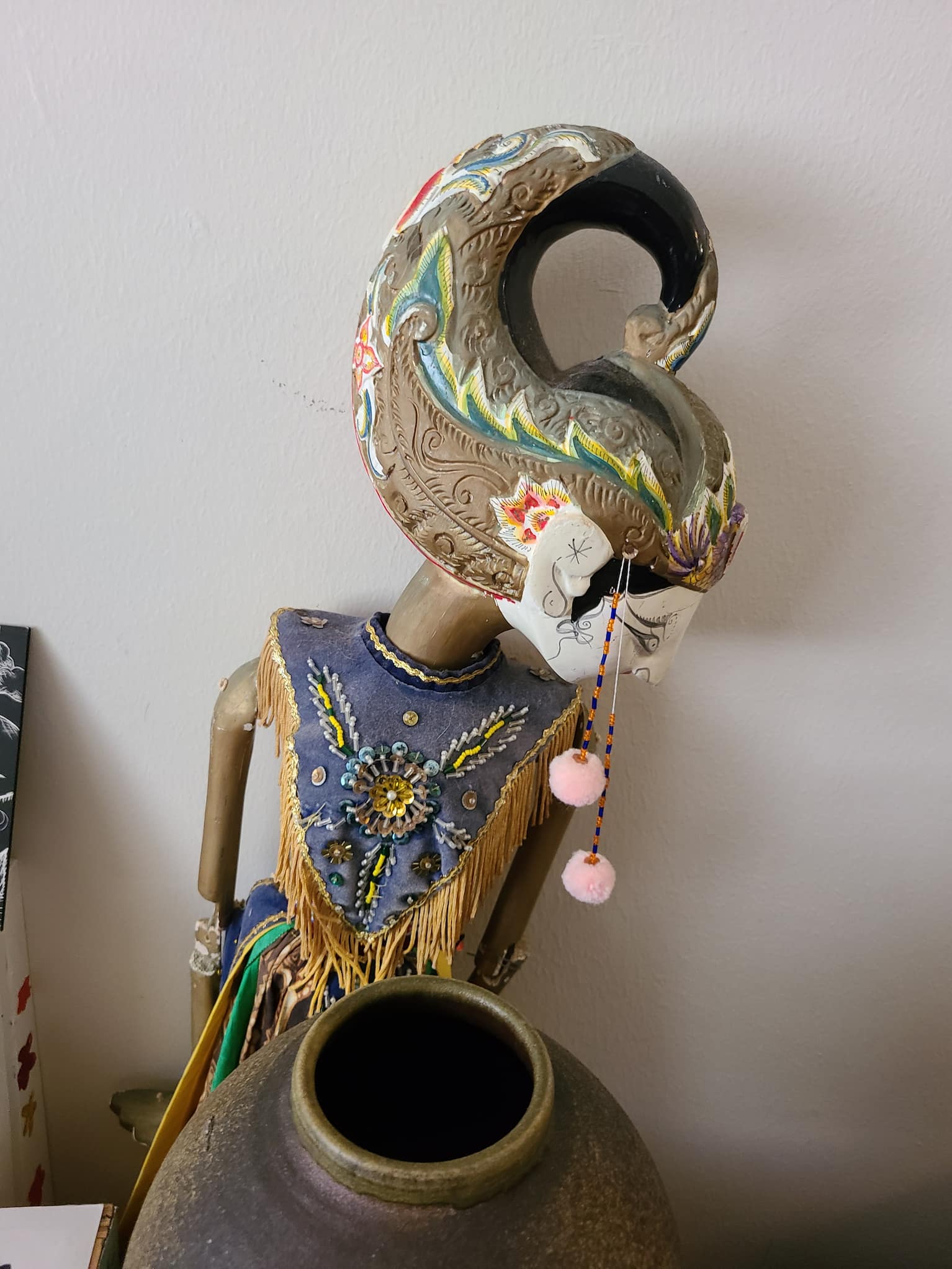
Wayang golek, traditional wooden puppets
Examples of wayang golek, traditional wooden puppets in which the puppeteer uses a central rod in the puppet’s body and sticks attached the puppet’s arm in different performances. These puppets are displayed in Maya’s home and represent her connection to Indonesia and the importance of art in our everyday lives.
-
Image
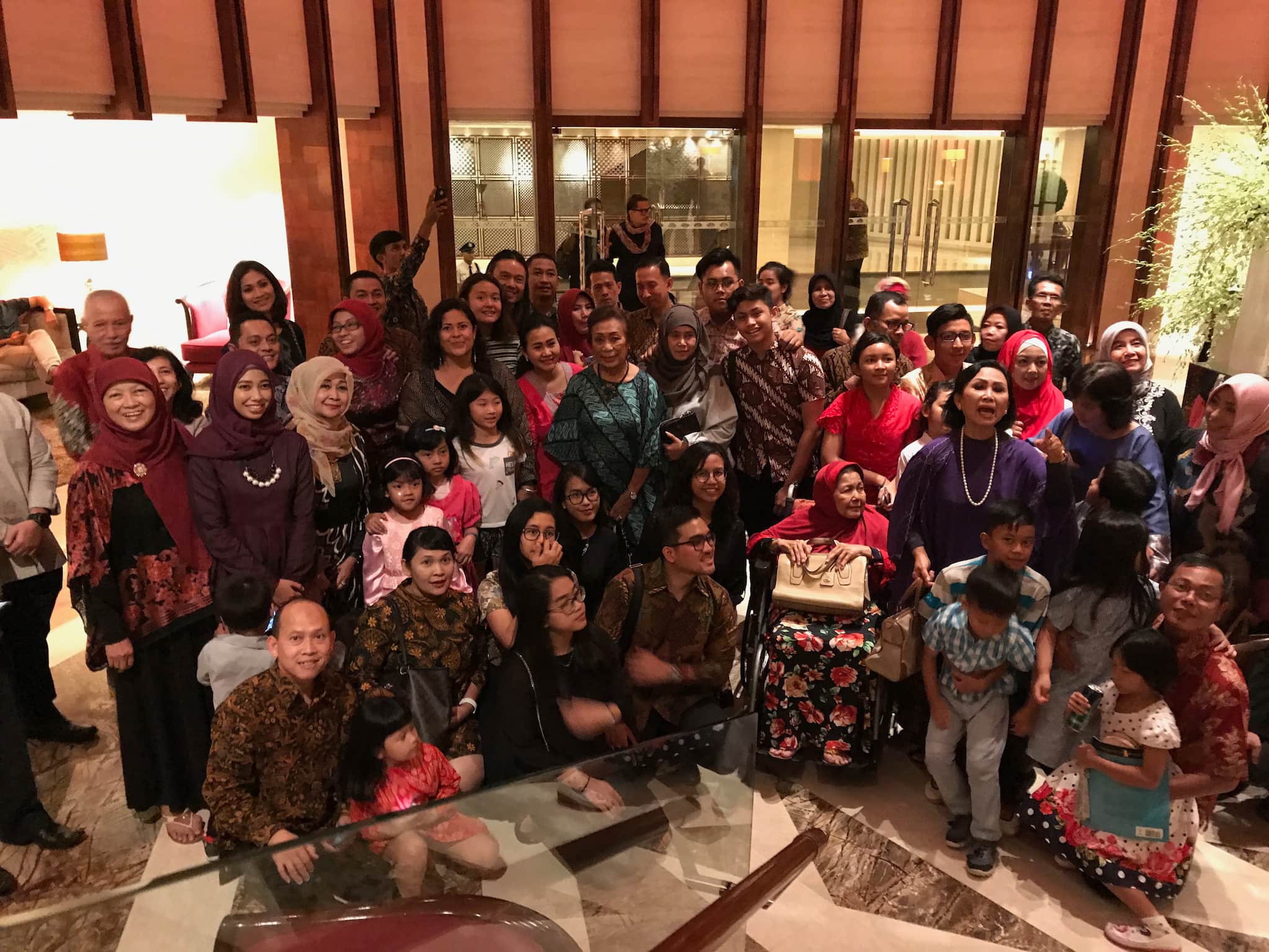
Maya’s family reunion, 2018
Maya and her extended family in Jakarta at a 2018 family reunion. Maya is standing left of center toward the back.