





A waʻa kaulua, or Hawaiian double-hulled voyaging canoe, with red and blue sails, sails across the ocean on a sunny cloudless day.
Module 4: Flourishing of Kānaka ʻŌiwi Culture
Can we learn from Kānaka ʻŌiwi and the practice of aloha to understand sovereignty among Indigenous peoples around the world?
E Mau – Let’s Strive
E mau ko kākou lāhui e hoʻomau
E mau ko kākou ʻōlelo e hoʻomau
E mau ka hana pono o ka ʻāina
I mau ka ea o ka ʻāina i ka pono
I ka pono o ka ʻāina
Letʻs strive to keep our nation alive, letʻs strive
Letʻs strive to keep our language alive, letʻs strive
Letʻs strive to preserve the good and just work for
the land
Land is sighted
So that the life/sovereignty of the land and nation
will endure through judicious rule
Endure, through the judicious rule of the land and
the nation 1
The composer of this 1941 song, Alvin Kaleolani Isaacs, Sr., was a popular musician, singer, bandleader, and recording artist. While the lyrics of this song are Hawaiian and written in a traditional chant style, the melody is American jazz contemporary to 1941. “E Mau,” popular in its day, expressed the ongoing hope and aspiration of Kānaka ʻŌiwi to flourish and thrive as a distinct people, with a unique language, history, culture, and ancestral land base. At the same time, the song shows how Kānaka ʻŌiwi found ways to express their aspiration to perpetuate the language and culture while adapting to American popular culture.
When Isaacs premiered the song at the Royal Hawaiian Hotel where his band played, he was fired, showing the lack of tolerance toward Kānaka ʻŌiwi by the Americans who dominated Hawaiʻi.
During the 1970s, there was a cultural renaissance sparked by the activism around Kahoʻolawe and inspired by the proven genius of ʻŌiwi ancestors who intentionally and repeatedly navigated across thousands of miles of ocean from and to Hawaiʻi. This renaissance celebrated ʻŌiwi language, music, culture, and songs with messages of resistance to American domination and promoted pride in being Hawaiian.
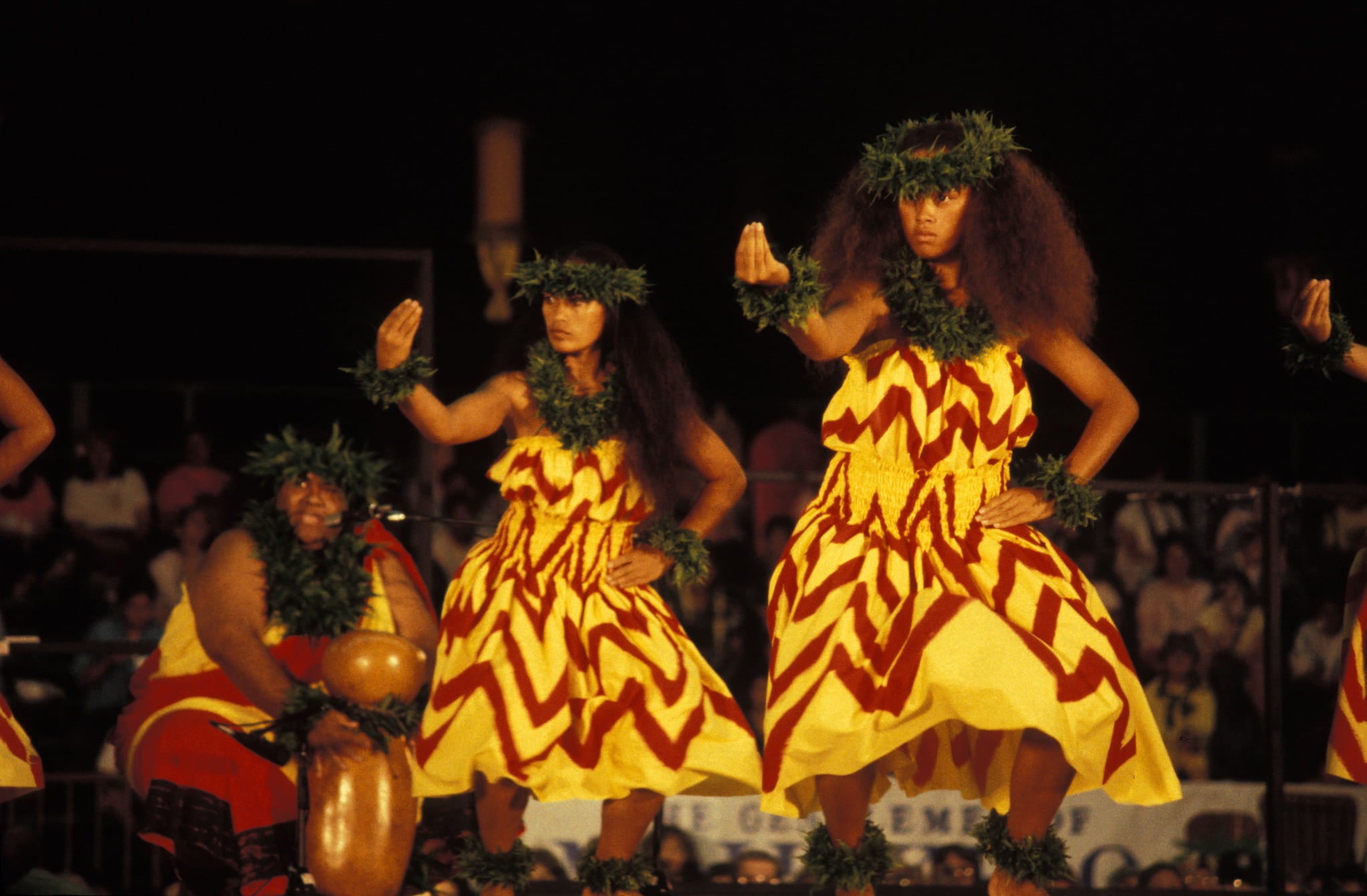
Image 22.04.02 — Traditional Hawaiian hula, hula kahiko, became popular again as Hawaiians returned to their ancestral roots, beginning in the 1970s. Pictured: performers in the Kahiko category at the Merrie Monarch Festival.
Hawaiian music and traditional hula flourished with an expansion of the annual Merrie Monarch Hula Festival honoring King David Kalākaua, the Prince Lot Hula Festival, and the Kamehameha Day hula and oli (chant) competition. The popularity of Hawaiian music soared with concerts almost every week and Hawaiian music radio stations on each island. At the heart of this renaissance was the remarkable recovery of ʻŌlelo Hawaiʻi from the edge of extinction. This module explores the importance of Hawaiian language and culture, and how Kānaka ʻŌiwi have revived these practices.
What is the importance of language and culture for Kānaka ʻŌiwi?
What are the various ways that Kānaka ʻŌiwi have revived their language and cultural practices?
What does the Hawaiian renaissance demonstrate about the persistence and resilience of Indigenous peoples and cultures?
Ola ka ʻŌlelo Hawaiʻi: The Hawaiian Language Lives!
A well-known ʻōlelo noʻeau (Kānaka ʻŌiwi proverb) states: I ka ‘ōlelo no ke ola, i ka ‘ōlelo no ka make. In language there is life and in language there is death. 2 Language is an important source of knowledge about Indigenous values and knowledge.
In the early nineteenth century, ʻŌlelo Hawaiʻi was the primary language for commerce, government, and education in Hawaiʻi. Literacy in ʻŌlelo Hawaiʻi was 90 percent. By 1896, three years after the illegal overthrow of the Hawaiian Kingdom and constitutional monarchy the Republic of Hawaiʻi proclaimed English as the sole language of instruction in public schools.
Children were punished for speaking even one word of Hawaiian in school. Nevertheless, Hawaiian language newspapers continued to be popular among speakers of ʻŌlelo Hawaiʻi. By 1987, only two thousand native speakers remained; most in their sixties and seventies. A mere thirty children under the age of five were native speakers, and nearly all came from the lone remaining Hawaiian-speaking community on the island of Niʻihau.
In 1978, through the advocacy of Kānaka ʻŌiwi, the Hawaiʻi State Constitution was amended to specify that “English and Hawaiian shall be the official languages” of the state. In 1983, inspired by Māori (Aotearoa-New Zealand) immersion preschools, Hawaiian language advocates led by university faculty and kuaʻāina (country folk) from rural communities, particularly Niʻihau and Hawaiʻi Island, established Hawaiian immersion schools called Pūnana Leo, meaning “language nest.” Thanks to the efforts of the dedicated Pūnana Leo families, the 1896 English-only law was finally amended to allow “special projects” using Hawaiian language.
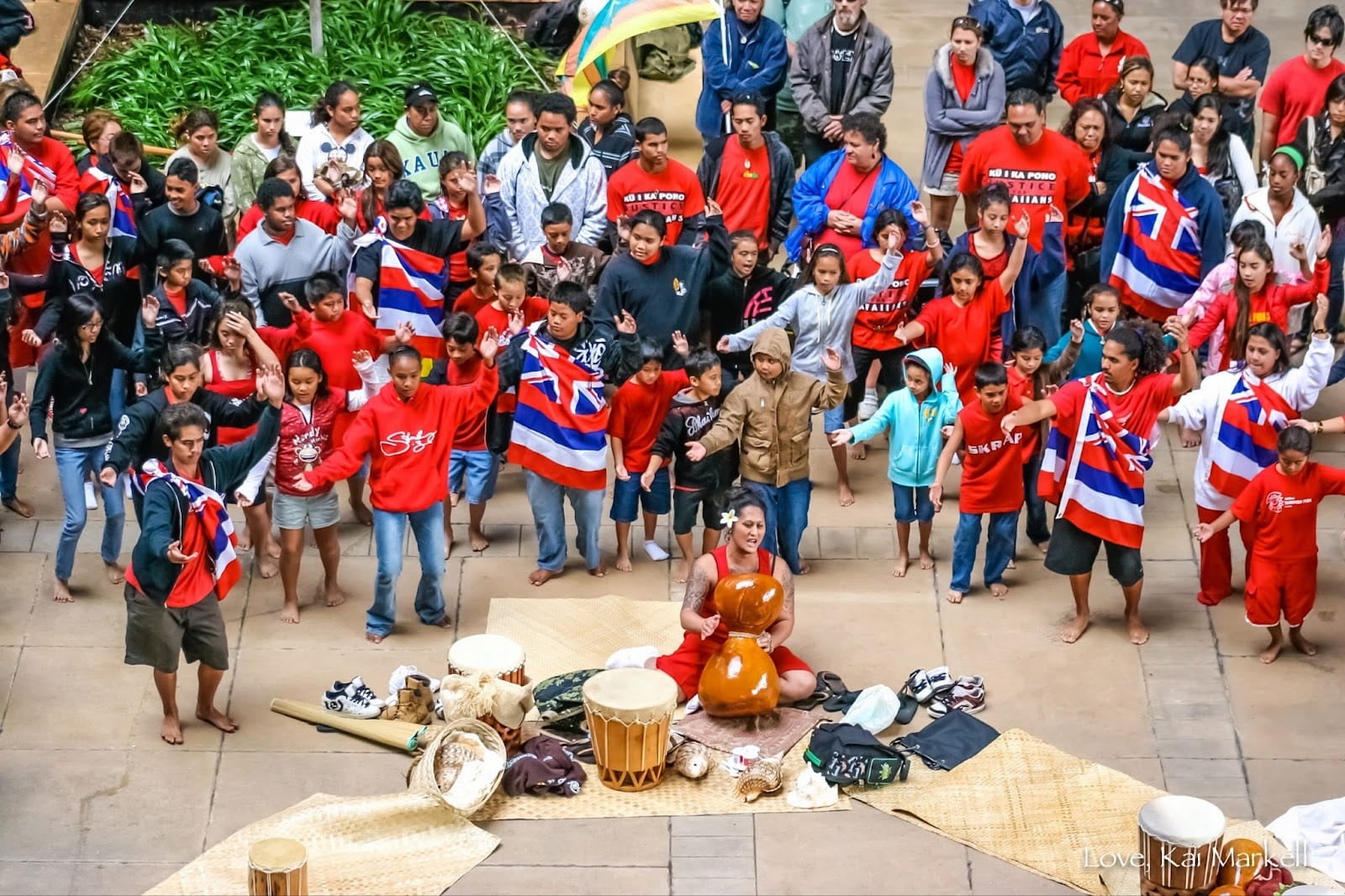
Image 22.04.03 — The Hawaiian language was rescued from extinction through Hawaiian language immersion and charter schools, along with dedicated parents and teachers united by their shared commitment to revive Hawaiian language.
Navigation and Voyage
In an effort to demonstrate and revive the Pacific celestial navigation tradition, the Polynesian Voyaging Society and the Hōkūleʻa (Star of Gladness) constructed a sixty-foot long replica of a Polynesian double hulled canoe. In 1976, the Hōkūleʻa, with the guidance of Micronesian master navigator Mau Piailug, completed its first voyage to Tahiti and back to Hawaiʻi using traditional celestial wayfinding to navigate. This inspired young Hawaiians, including Nainoa Thompson, to train as and become the first Hawaiian navigators in centuries.
Thompson navigated his own successful voyage to Tahiti and back in 1980. Hōkūleʻa stimulated interest in canoe building, celestial navigation, and voyaging in Hawaiʻi and islands across the Pacific. From 2013 to 2019, Hōkūleʻa and its sister canoe, Hikianalia, made an around-the-world voyage with the mission of navigating “toward a healthy and sustainable future for ourselves, our home—the Hawaiian Islands—and our Island Earth.”

Image 22.04.04 — The waʻa kaulua double hulled voyaging canoe replica Hōkūleʻa demonstrated that Kānaka ʻŌiwi ancestors intentionally sailed between Hawaiʻi and Tahiti and throughout Polynesia. Working with Master Navigator Mau Piailug, the Polynesian Voyaging Society revived Hawaiian wayfinding.
In June 2023, the Polynesian Voyaging Society launched its fifteenth major voyage—Moananuiākea, A Voyage for Oceans, A Voyage for Earth, 2023–2027. It was planned as a journey around and throughout the Pacific. Unfortunately, the August 2023 Lahaina wildfire led the Hōkūleʻa to suspend the voyage and focus on the recovery of her families from Lahaina.
Hula
Hula, despite a complicated relationship with American colonization and the spread of Christianity, was also revived during the contemporary renaissance of Hawaiian culture. In January 1778, Captain James Cook became the earliest European known to see a hula performance, and the artist on his voyage, John Webber, drew the first images of hula seen outside of Hawaiʻi. Hula pahu (hula accompanied by a drum) originated with ritual movements designated as haʻa. It was danced with bent knees and performed as part of religious ceremonies at large heiau (temples). However, there are many accounts that hula was performed by everyone—old and young, and by aliʻi chiefs and makaʻāinana commoners alike.
Beginning in 1820, American Calvinist missionaries were allowed to settle in Hawaiʻi and teach, preach, and convert Kanaka ʻŌiwi to their religious beliefs. Hula continued to thrive for a time. However, the missionaries considered the hula indecent and believed it led to the neglect of work and drew the people away from the study of scriptures.
Despite the missionaries’ racist and condescending attitudes toward Kanaka ʻŌiwi, Aliʻi Nui Kaʻahumanu, one of King Kamehameha I’s wives, converted to Christianity. In 1825, she issued an order banning public performances of hula. However, away from the missions and Christian chiefs, the hula continued to be taught and practiced. Mary Kawena Pukui notes, “here and there in remote country places the people kept up with their dancing. Small groups trained under a master, thus preserving many of the old meles [songs/chants] which have come down to the present day.” 3
In the 1860s, hula was openly advanced by some aliʻi who supported knowledgeable kumu (teachers and masters) and dancers. For instance, Prince Lot was said to have permitted and even encouraged the revival of some old Hawaiian customs such as the hula and kahuna (experts of a particular field, including healers) practices. Queen Emma, wife of Kamehameha IV, was honored with hula and chant as she journeyed throughout the islands, especially after the death of her young son and husband.
Hula, along with other Hawaiian arts, enjoyed a renaissance beginning in 1874 with the reign of King David Kalākaua. For the coronation of King Kalākaua and Queen Kapiʻolani, more than 260 hula and oli were performed by over fifty dancers and chanters. In 1886, for the King’s Jubilee (fiftieth birthday), hula was performed over a two-week period. When Kalākaua returned from a two-week trip, another hula celebration followed.
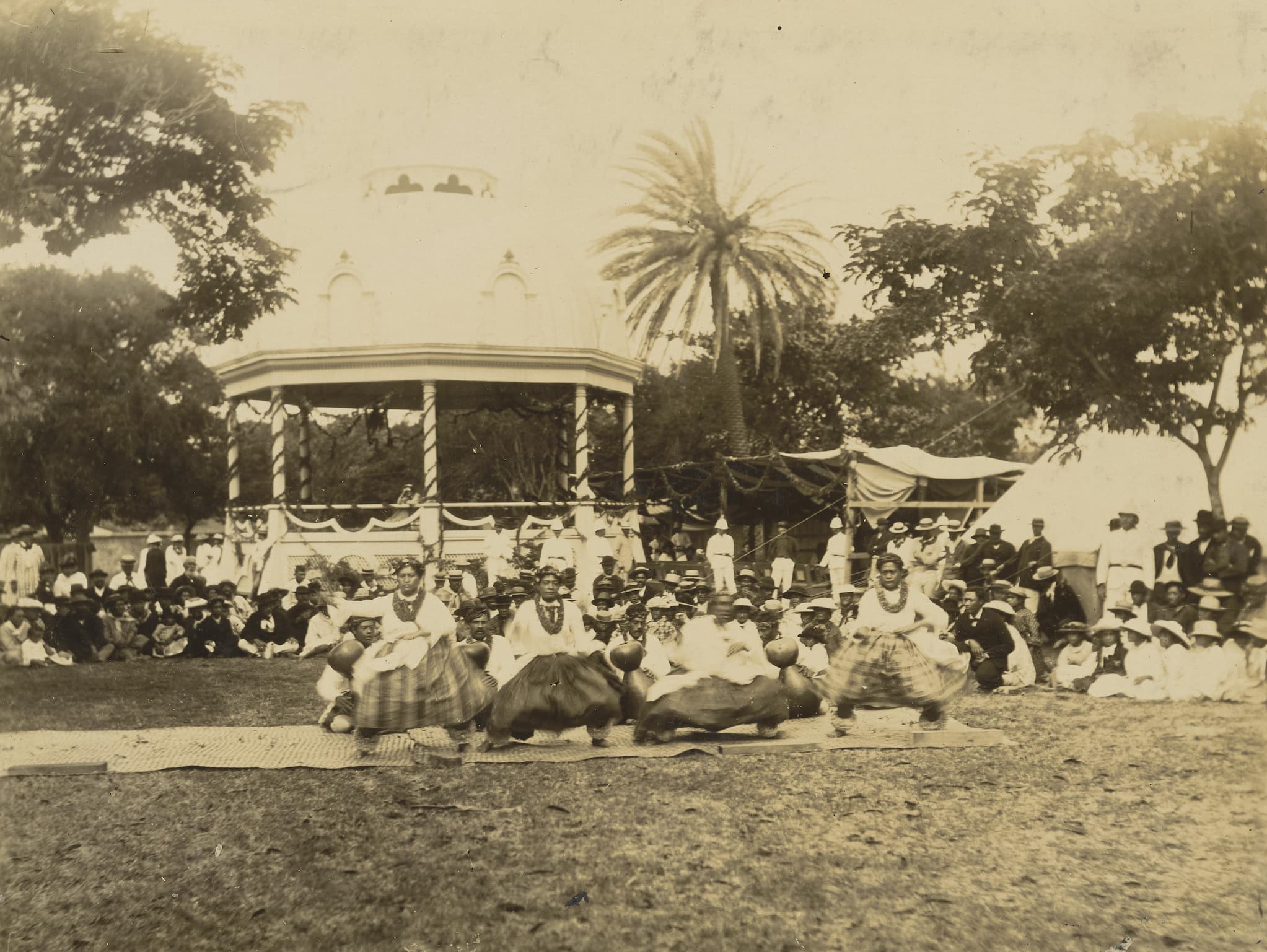
Image 22.04.05 — Hula dancers from Hanapēpē, Kauaʻi, perform at King Kalākaua’s forty-ninth birthday celebration on November 18, 1885. Under Kalākaua’s reign, hula was revived and celebrated as part of a renaissance of Hawaiian arts.
Early in the twentieth century hula experienced a resurgence once again. However, this type of hula was very different from its predecessor as its primary purpose was to entertain visitors. Instead of giving in and allowing traditional hula to die, in the 1920s and 1930s, some kumu began to teach and perform traditional hula in Waikīkī. Others on neighboring islands exclusively taught hula to their extended family.
In the 1960s and 1970s, the reawakening of Hawaiian consciousness fueled the interest in traditional hula. Maiki Aiu Lake, who had studied with Lokalia Montgomery and Mary Kawena Pukui, went through an ʻuniki (graduation) ceremony under Montgomery to become a kumu hula. She saw it as her responsibility to pass on her knowledge and graduate kumu hula who could continue teaching.
From this one kumu have come many respected kumu hula who started their own hālau hula (school or hall where hula is taught) in the 1970s and 1980s. From this second generation of kumu have come a third generation of graduates who are now establishing their own hālau. At the other end of the archipelago, the Pele ʻaihaʻa hula tradition continues through the Edith Kanakaʻole family line and Hālau o Kekuhi (a classical hula dance company). Similarly, the Beamer (an important multigenerational musical family) tradition remains strong in the Waimea-Kōhala area of Hawaiʻi Island. The island of Molokaʻi also claims its own unique hula style and origins, as exemplified by Kumu Hula John Kaimikaua and his hālau.
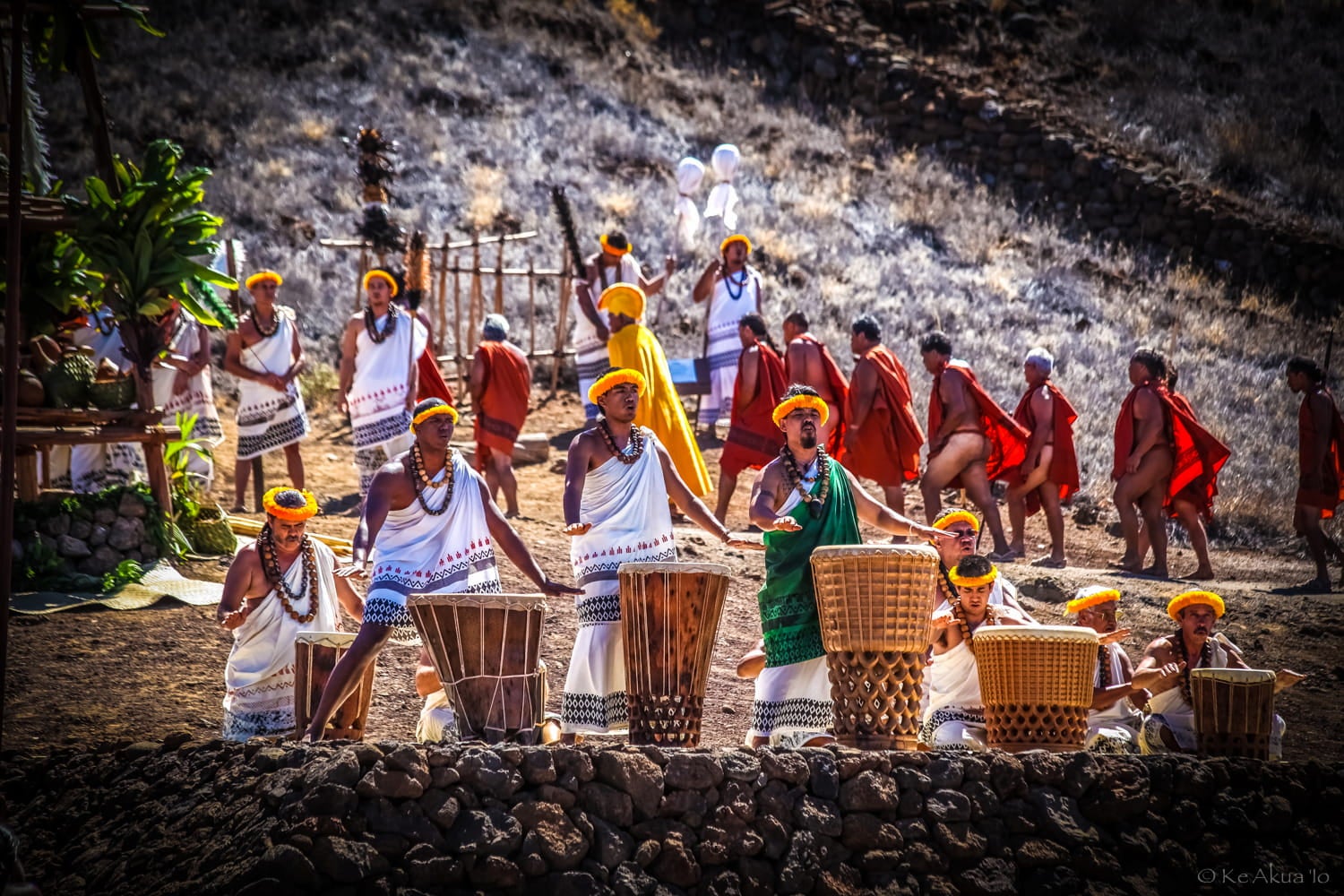
Image 22.04.06 — Men of Hālau Mele conduct hula pahu for the Hoʻokuʻikahi ceremonies at Puʻukoholā heiau. Hālau Mele was founded by John Keolamakaʻāinana Lake, who was trained by Maiki Aiu Lake.
In 1964, the Merrie Monarch Festival began in Hilo to honor King David Kalākaua while also attracting visitors to the sleepy Hawaiʻi Island town. In its fifty years of existence, the hula festival has garnered national and international attention. Thousands of people now participate, attend, or watch on their TV and computer screens, dances that were created hundreds of years ago as well as those created in contemporary times.
Although the Merrie Monarch Festival is the most well-known hula competition, other competitions and celebrations of hula are widespread. These include the Malia Craver Hula Kahiko Competition for middle and high schools, the Kamehameha Day Chant and Hula Competition every June, the Prince Lot Hula Festival held in July, and the Queen Liliʻuokalani Keiki (children’s) Hula Competition every August.
Hula is but one expression of Indigenous values and ways of knowing and of being with the land and one another, all of which can benefit peoples and places around the world. Although the basic core of hula has remained unchanged for centuries, as with other cultural practices, each generation contributes its own experience and wisdom, thus increasing the well of knowledge and understanding to be passed on to the next generation.
Glossary terms in this module
constitutional monarchy Where it’s used
A system of government in which a monarchy (King/Queen) shares power with a constitutionally organized government.
hula Where it’s used
The cultural dance of Kānaka ʻŌiwi which manifests in many ancient and contemporary forms. Hula is at the heart of Kānaka ʻŌiwi culture.
Endnotes
3 Mary Kawena Pukui, “The Hula, Hawaii’s Own Dance,” in Hula: Historical Perspectives, ed. Dorothy B. Barrere, Mary Kawena Pukui, and Marion Kelly (Bishop Museum Press, 1980), 70.