




Cartoon with Uncle Sam, a white man dressed in stars and stripes of U.S. flag, who looms over brown children wearing names of different countries.
Module 3: Environmental Justice, Settler Colonialism, and a Pacific Worldview
Does having an Asian American in the US House of Representatives positively impact the lives of Asian Americans?
Growing up in Hawaiʻi shaped how Patsy Mink thought about the world around her. She once wrote to a colleague, “I feel the people of Hawaii clearly recognize the importance and value of our natural resources.” 1 In a newsletter, she further explained the significance of living on an island. “Those who have lived in an island environment where the interaction of the elements is perhaps more readily apparent than elsewhere, have a greater awareness of the interdependence of man and his surroundings.” 2
Patsy Mink’s upbringing and worldview shaped her commitment to environmental justice, which included achieving clean, healthy surroundings for communities. Environmental justice advocates recognize that certain communities, such as Indigenous peoples, people of color, or people living in poverty, tend to be disproportionately impacted by environmental hazards. These communities tend to live and work close to pollution, toxic wastes, pesticides, and extreme weather. To achieve environmental justice, these communities must be a part of the solution.
In this module, we learn about the connections between settler colonialism and environmental justice from a Pacific World perspective. Specifically, we focus on the fight to stop US military weapons testing on a sacred Hawaiian island, and how Patsy Mink leveraged her position in Congress to support Indigenous activists for this cause.
Why did Patsy Mink become an advocate for environmental justice?
How do environmental factors disadvantage and harm some groups of people more than others?
How does one’s location shape our understanding of environmental justice?
Settler Colonialism in the Pacific
Although many people describe Hawaiʻi as an island paradise, the islands have also been subjected to settler colonialism, commercial development, and militarization. In 1893, European and US residents took over the Hawaiian Kingdom and forced the annexation of the Hawaiian islands as a territory five years later. Taking the land away from the Indigenous peoples of the islands has had long-term, devastating effects on the people and land.
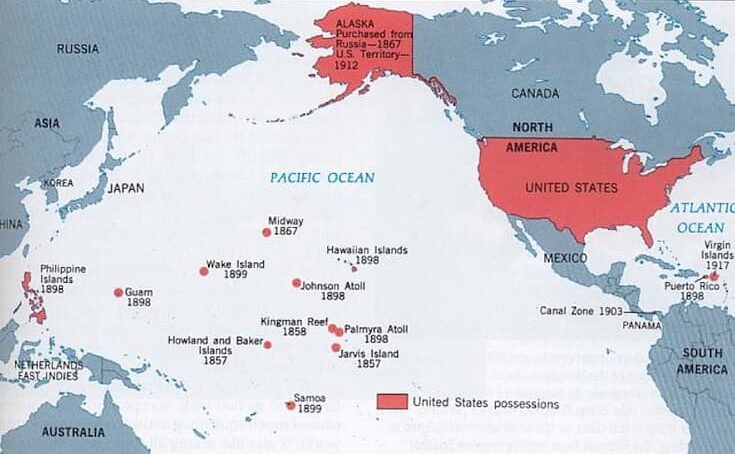
Image 36.03.01 — This map of the US Pacific and the Caribbean shows the dates in which the US acquired territories.
The US took control of the island, dispossessing Native Hawaiians of their land in a process called settler colonialism. Settlers transformed the land into a plantation economic system, prioritizing land and water, not for people, but for profit. They relied on pesticides to maximize how much they could grow, which affected the diverse ecosystem of the islands.
Moreover, settlers created a tourist industry, also using land and water for hotels and leisure activities, decreasing access to Native Hawaiians. Finally, the US military ran training exercises and tested weapons for the War in Vietnam and for the Cold War more broadly. All this impacted the environment and people of the islands.
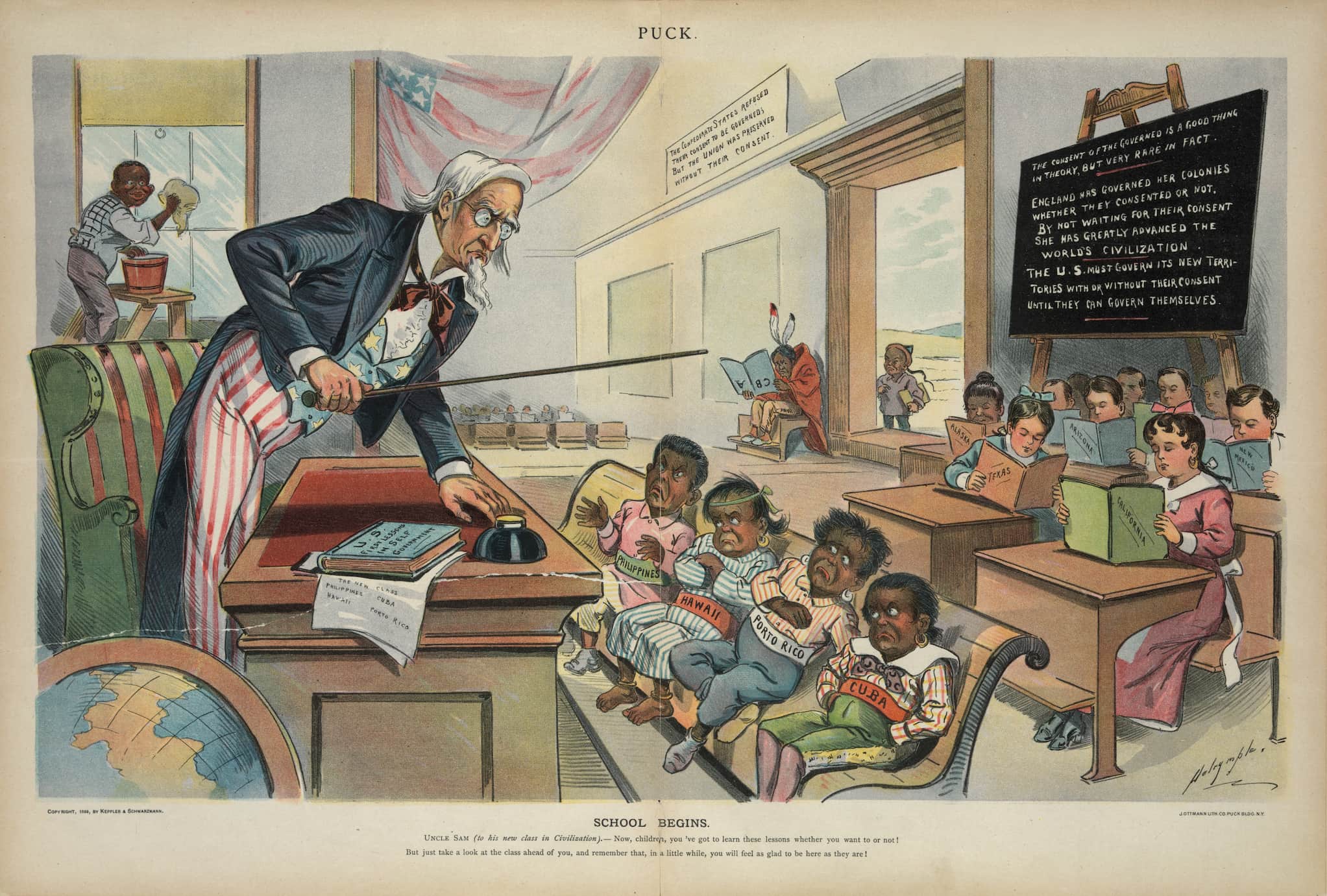
Image 36.03.02 — In this depiction, the territories taken over and controlled by the US after the Spanish American War (Puerto Rico, Cuba, Guam, and the Philippines) are shown as inferior, dark, defiant, barbaric characters reflecting the racism within the pro imperialist perspective.
One example of the impact of settler colonialism is the years of military testing on Kaho’olawe. The smallest of eight major Hawaiian islands, Kaho’olawe has been an important site for Native Hawaiian and other Pacific Islanders for a thousand years. Some Hawaiians lived in settlements across the island, and others navigated to Kaho’olawe, also known as Kanaloa or Kohemalamalama, on voyages between Hawaiʻi and Polynesian islands. Native Hawaiians also had religious and cultural ceremonies on Kaho’olawe.
However, starting in the 1940s, the US Navy regularly used Kaho’olawe as a bombing range. The bombs also landed on nearby Maui. Other military exercises threatened the lives of people who took boats out near testing sites. In 1965 the Navy simulated an atomic blast, dropping five hundred tons of TNT off the island’s shore. Soon after, unexploded bombs were discovered, including a 500-pound bomb on Maui, a well-populated island.
Reclaiming Kahoʻolawe
The treatment of Kahoʻolawe demonstrates the contrast between settler colonialist and Native Hawaiian worldviews, and how each treats the land, people, and environment. Native Hawaiians regard land and water as intimately connected to people, and tending to the ecosystem is a part of their spiritual values. Native Hawaiian activists emphasize the concept of “Aloha ‘Āina,” which roughly translates as “to cherish and care for the land.” 3 Settler colonialists treat land and water as property for profit and power, which is how Kahoʻolawe became a military testing site.
The movement to stop military testing on Kahoʻolawe became part of a broader movement for Native Hawaiian sovereignty. The island served as a “spiritual center,” the “physical incarnation of the sea god Kanaloa, born of the union of Papa, earth mother, and Wakea, sky father.” 4 As Native Hawaiians continued to revive their cultural, political, and spiritual values and reclaim their land rights, they staged many protests on the island.
Although Patsy Mink was not Native Hawaiian, she respected Native Hawaiian activists who demanded the return of their lands. She used her position in Congress to amplify their voices to the government. She supported activists when they demanded land reparations, or compensation for and repair of the damage the US Navy had done on Kahoʻolawe. Mink pushed for a full congressional hearing and asserted the importance of compensating Native Hawaiians for taking their land.
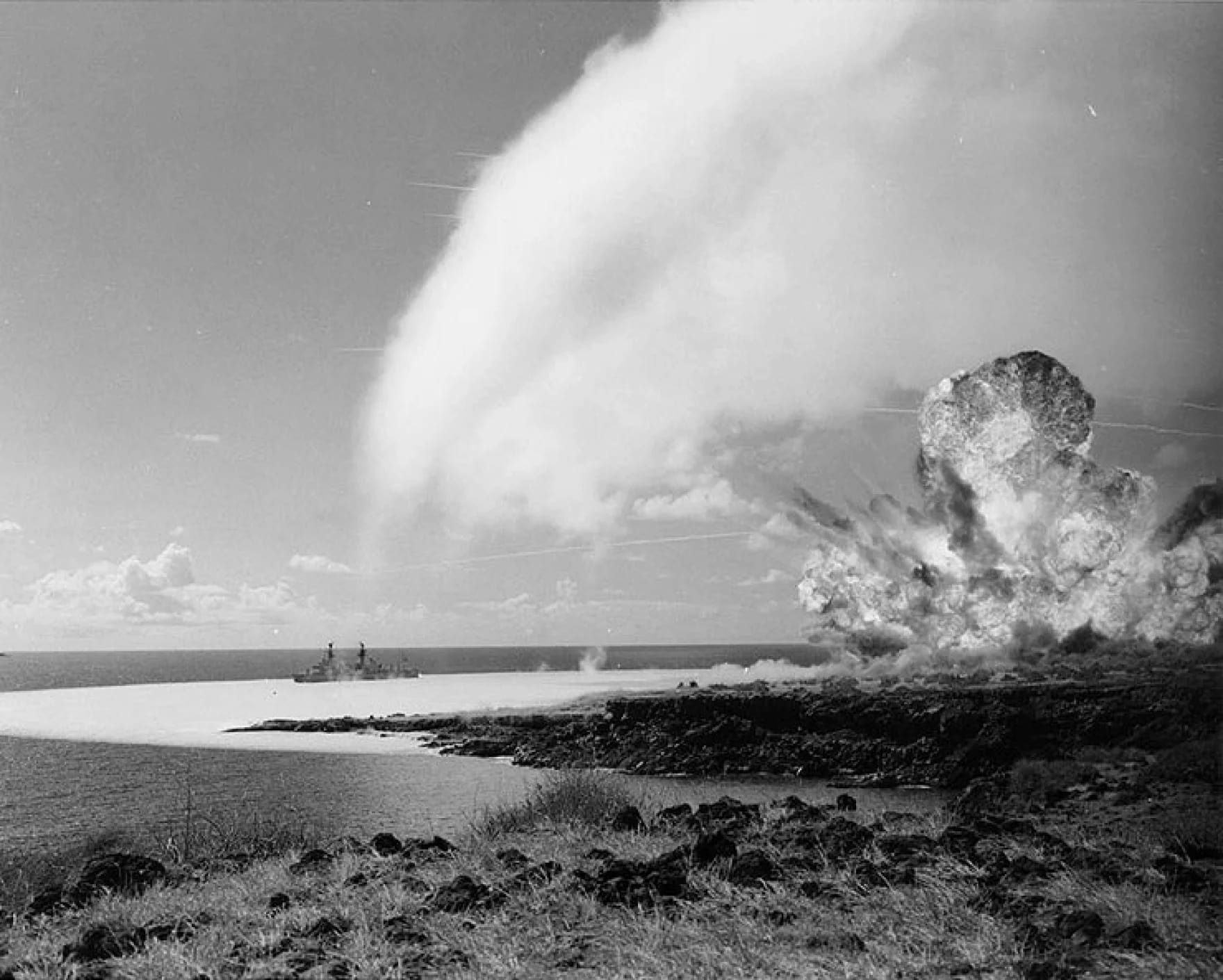
Image 36.03.03a — The movement to stop military testing on Kahoʻolawe became part of a broader movement for Native Hawaiian sovereignty. In the modern era, the forty-five square mile area has been dubbed “the most shot island in the world.”
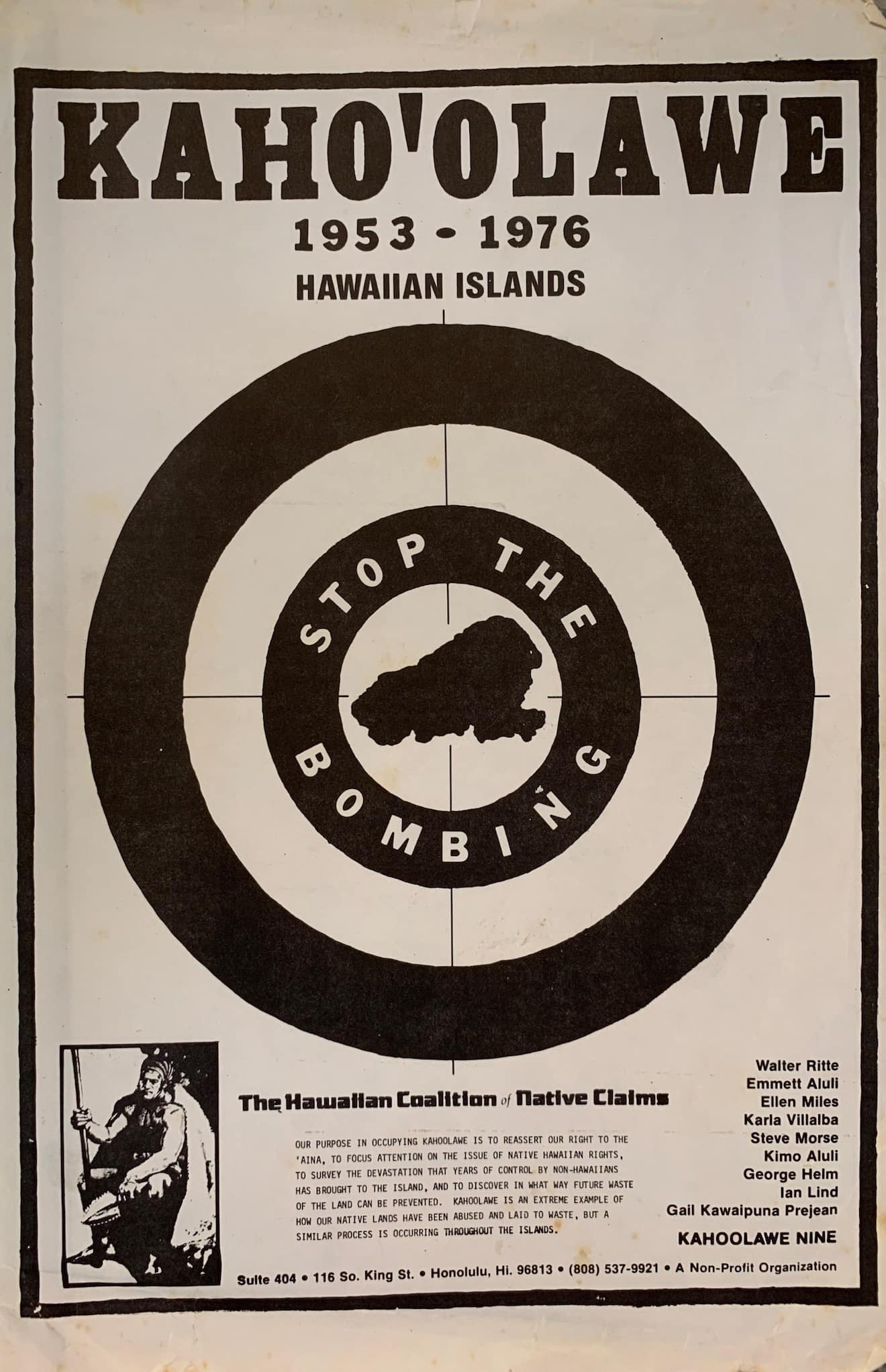
Image 36.03.03b — The Protect Kahoʻolawe ʻOhana movement spread as a grassroots and island-led initiative representing Native Hawaiian rights. Together, Patsy Mink and the Native activists in Hawaiʻi sought to protect the environment from bombing and excessive commercial development.
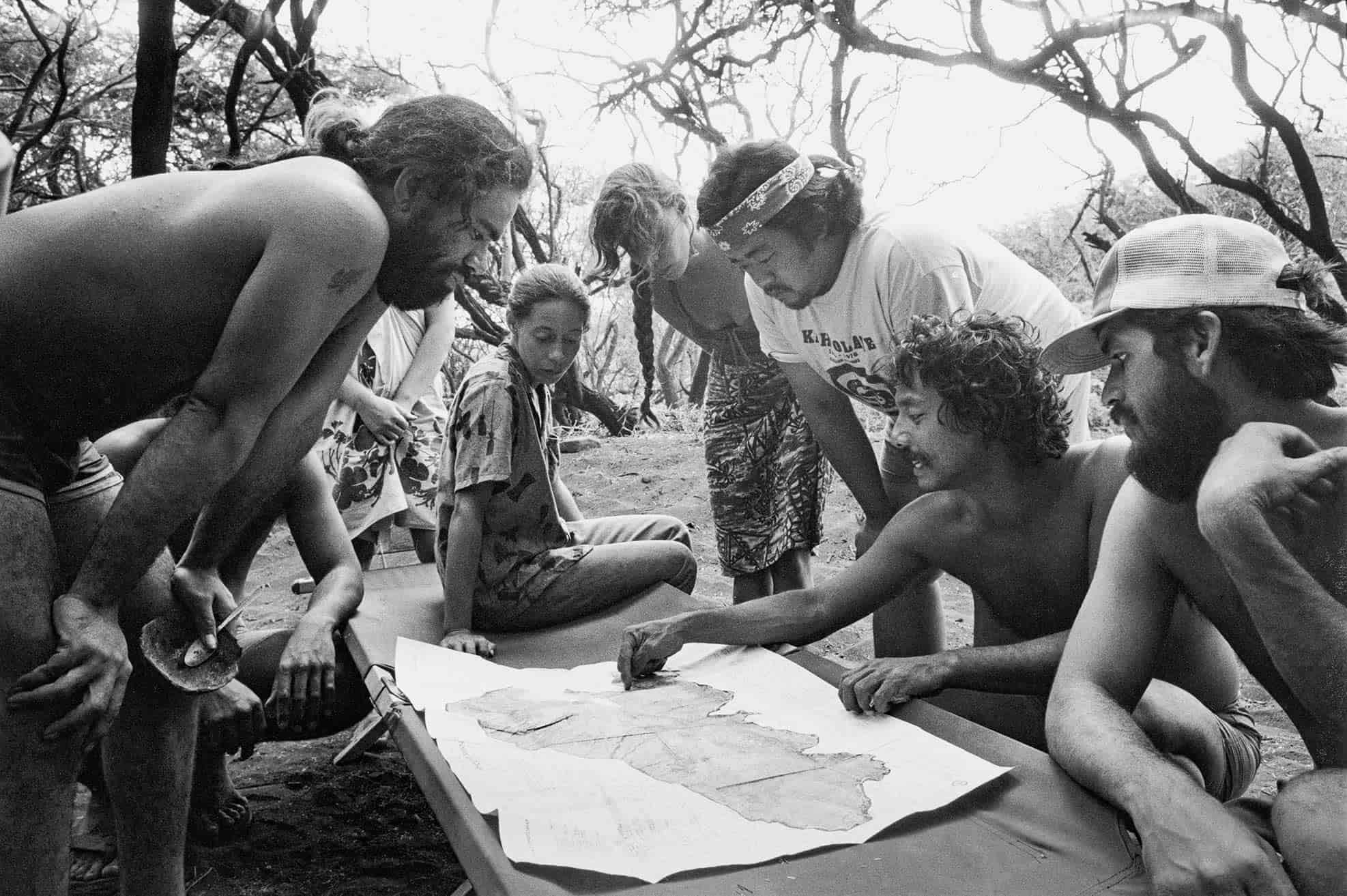
Image 36.03.03c — Grassroots activists prepare to survey Kahoʻolawe in 1976. Thanks in part to Mink’s advocacy, Congress finally voted to return the sacred land back to Hawaiʻi and end military testing there in 1993 after decades of sustained resistance.



Patsy Mink’s values did not always align with Native Hawaiians seeking sovereignty. For example, she advocated for Hawaiʻi to become a state rather than its own independent nation. Despite these differences, she did understand that the overthrow of the Hawaiian Kingdom was illegal, and she respected Native Hawaiian activists. Using her position of power within the US government, she was able to get more people in government to listen to Native Hawaiians and to advocate for the return of Kahoʻolawe to them.
After decades of sustained Native Hawaiian resistance, Congress finally voted to return Kahoʻolawe back to Hawaiʻi and to end weapons testing there in 1993. The US Navy spent ten years removing unexploded ordnances on the island, but about 25 percent of the island still remains unsafe because of unexploded bombs. To this day, many in Hawaiʻi are committed to restoring the land and its ecosystem.
A Pacific Worldview
A Pacific Worldview is an understanding that the lands and waters across the Pacific are interconnected. The US government valued the strategic importance of the Pacific for political and military purposes. In contrast, Patsy Mink and the Native activists in Hawaiʻi and elsewhere sought to protect the environment from bombing and excessive commercial development. They saw their local efforts as part of a broader movement to protect the land, water, and peoples across the Pacific and beyond.
The settler-colonial takeover of Hawai‘i is not an isolated phenomenon. During the mid-to-late nineteenth century, the US military established outposts across the Caribbean and Pacific Ocean in order to expand economic and political influence. Having commercial island outposts, such as American Sāmoa, Guåhan (Guam), and the Philippines, enabled the US to control the Pacific, which became important as the US sought to curb the spread of Communism in Asia throughout the twentieth century.
Indigenous sovereignty movements have also mobilized on these islands, often linking shared struggles against the occupation of their lands. An Indigenous respect for land and water, which values these resources as spiritual and genealogical kin, would transform Hawai‘i and the broader Pacific, orienting these islands away from the values of settler colonialism, commercial development, and militarization.
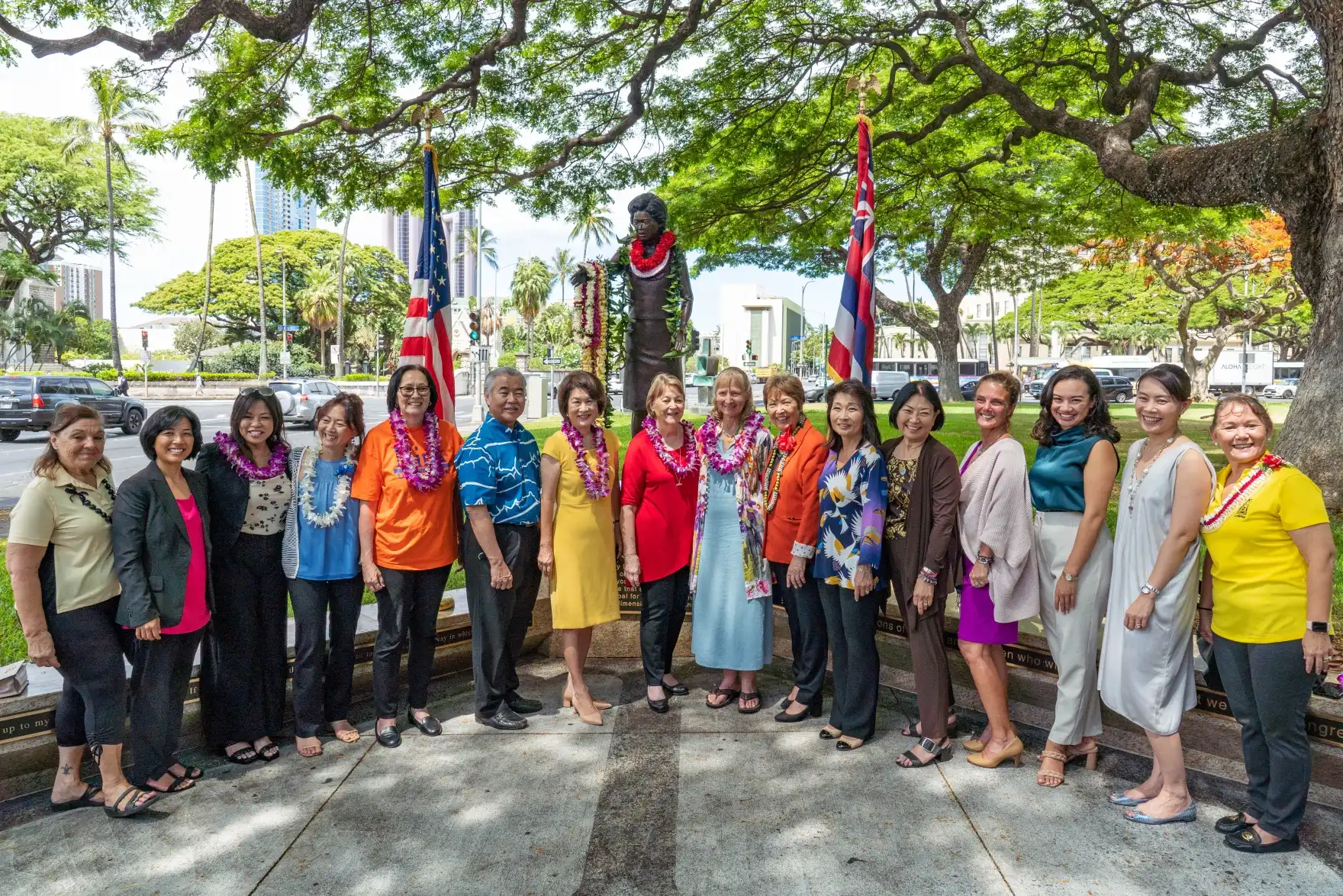
Image 36.03.04 — With her many contributions to the Hawaiian people and the land, a statue of Mink was erected in front of the Hawaiʻi State Library. She continues to be represented by both the American and Hawaiian flag, surrounded by past and present local communities.
Because Patsy Mink held a Pacific Worldview, she understood the importance of returning and repairing the land to Native Hawaiians. She used her position in Congress to get other powerful government figures involved. This helped Native Hawaiians continue their long struggle to reclaim Kahoʻolawe.
Reflection Question
Who are the Indigenous communities in the area where you live? What can you learn about this community?
Glossary terms in this module
Cold War Where it’s used
The decades after World War II when the United States and its allies struggled against the Soviet Union and their allies for global power.
commercial development Where it’s used
The use of land and water for profit, such as hotels and other parts of the tourism industry.
environmental justice Where it’s used
A term that recognizes that certain communities (people of color, Indigenous peoples, and those who are economically disadvantaged) tend to be disproportionately impacted by environmental hazards. Because of where these communities tend to live and work, they are exposed to a greater degree to pollution, toxic wastes, pesticides, and/or extreme weather and temperatures. Seeking environmental justice means recognizing and addressing these disproportionate harms.
militarization Where it’s used
A process of increasing military presence and prioritizing military control over a territory.
Pacific Worldview Where it’s used
The understanding that the lands and waters across the Pacific are interconnected.
settler colonialism Where it’s used
A colonial process in which Indigenous peoples are displaced by invading settlers who take possession of the land.
sovereignty Where it’s used
The ability of a country and/or a people to have independent freedom of action, such as making their own laws and rules, without external interference. For Indigenous peoples, sovereignty means having control of their lands and way of life, free from colonial control.
Endnotes
1 Patsy T. Mink, April 15, 1976, “Letter to T. C. Yim,” Patsy T. Mink Papers, Box 244, folder 9, Library of Congress, Manuscript Division, Washington, D.C.
2 Friends for Patsy Mink for U.S. Senate Committee, n.d., “Patsy T. Mink, U.S. Congress: Hawaii’s Concerned Voice for Our Environment,” Patsy T. Mink Papers, Box 232, folder 3.
3 Jonathan Osorio, “Hawaiian Souls,” in A Nation Rising: Hawaiian Movements for Life, Land, and Sovereignty, eds. Noelani Goodyear-Kaʻōpua, Ikaika Hussey, and Erin Kahunawaikaʻala Wright, 146.
4 Mansel G. Blackford, Pathways to the Present: U.S. Development and Its Consequences in the Pacific (University of Hawaiʻi Press, 2007), 30.